

The global distribution of fatal pesticide self-poisoning: Systematic review
Open accessThe DOI matches its Crossref record; 100 of the 102 references it cites were found in a registry or an index.
Abstract
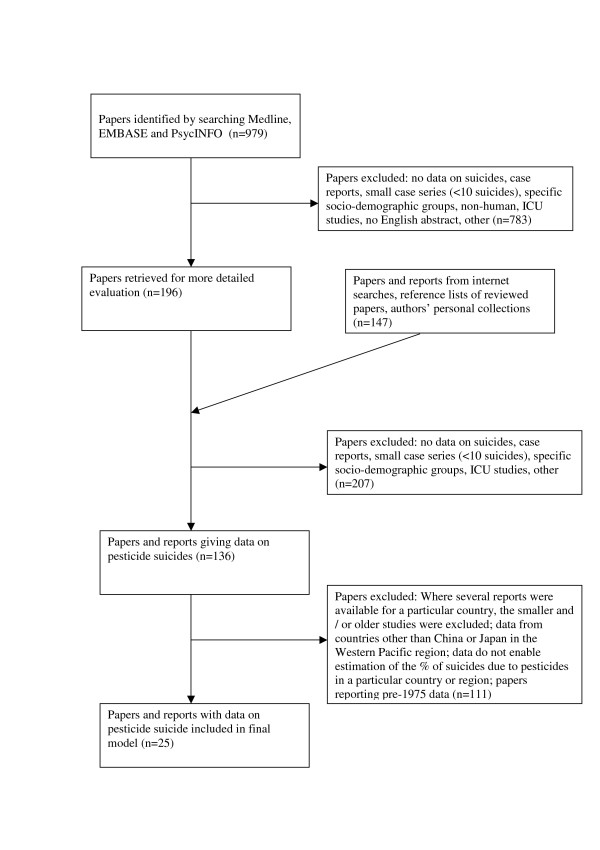
Background: Evidence is accumulating that pesticide self-poisoning is one of the most commonly used methods of suicide worldwide, but the magnitude of the problem and the global distribution of these deaths is unknown. Methods: We have systematically reviewed the worldwide literature to estimate the number of pesticide suicides in each of the World Health Organisation's six regions and the global burden of fatal self-poisoning with pesticides. We used the following data sources: Medline, EMBASE and psycINFO (1990–2007), papers cited in publications retrieved, the worldwide web (using Google) and our personal collections of papers and books. Our aim was to identify papers enabling us to estimate the proportion of a country's suicides due to pesticide self-poisoning. Results: We conservatively estimate that there are 258,234 (plausible range 233,997 to 325,907) deaths from pesticide self-poisoning worldwide each year, accounting for 30% (range 27% to 37%) of suicides globally. Official data from India probably underestimate the incidence of suicides; applying evidence-based corrections to India's official data, our estimate for world suicides using pesticides increases to 371,594 (range 347,357 to 439,267). The proportion of all suicides using pesticides varies from 4% in the European Region to over 50% in the Western Pacific Region but this proportion is not concordant with the volume of pesticides sold in each region; it is the pattern of pesticide use and the toxicity of the products, not the quantity used, that influences the likelihood they will be used in acts of fatal self-harm. Conclusion: Pesticide self-poisoning accounts for about one-third of the world's suicides. Epidemiological and toxicological data suggest that many of these deaths might be prevented if (a) the use of pesticides most toxic to humans was restricted, (b) pesticides could be safely stored in rural communities, and (c) the accessibility and quality of care for poisoning could be improved.
Overview
The claims and statistics of this paper haven’t been checked yet.
Free: it reads the open-access text and checks the first 5 claims that cite a source we can check. Create a free account to check every claim.
Integrity signals
Registry
Cites
Statistics
Figures
Verification
Claims the paper makes
The claims and statistics of this paper haven’t been checked yet.
Free: it reads the open-access text and checks the first 5 claims that cite a source we can check. Create a free account to check every claim.
Claims other papers make about this one
Each is checked against this paper’s own text: does it say what the citing paper says it does?
The source backs part of the claim, not all of it — or backs it for a different population, condition or comparison.
In the citing paper
“Pesticide ingestion was employed in approximately one-third of suicides worldwide, mostly in rural Asia and Latin America.(138)”
From Improving Suicide Prevention Through Evidence-Based Strategies: A Systematic Review (2021) · cites this paper as [138]
Experimental — accuracy not yet measuredThe source backs part of the claim, not all of it — or backs it for a different population, condition or comparison.
In the citing paper
“Pesticides are highly lethal, the leading suicide method worldwide, and the decline in suicide deaths worldwide is largely due to restricting access to pesticides where those deaths happen, namely in rural China,(138, 158) India(129) and Sri Lanka.(159)”
From Improving Suicide Prevention Through Evidence-Based Strategies: A Systematic Review (2021) · cites this paper as [138]
Experimental — accuracy not yet measured
Self-check
Percentages, sums and reported differences re-computed from the paper’s own numbers.
The self-check needs the paper’s full text.
Citations
Cites
Risk factors for suicide in China: a national case-control psychological autopsy study
Phillips, M. R., Yang, G., Zhang, Y., Wang, L., Ji, H., & Zhou, M. (2002) · The Lancet · doi:10.1016/s0140-6736(02)11681-3 · Cited by 928 · cited 2×
“7%) 47,720 to 82,680 Western Pacific A 155 35,000 1,050 (3%) 1,050 to 1,050 [68] B 1,562 296,000 183,520 (62%) 171,680 to 195,360 [70] Sub-total (W Pacific) 331,000 184,570 (55.”
Self-citationPatterns and problems of deliberate self-poisoning in the developing world
Eddleston, M. (2000) · QJM · doi:10.1093/qjmed/93.11.715 · Cited by 828 · cited 1×
“OP insecticides appear to be the most commonly ingested pesticides in rural Asia, accounting for around two thirds of cases[77].”
Self-citationSuicide rates in China, 1995–99
Phillips, M. R., Li, X., & Zhang, Y. (2002) · The Lancet · doi:10.1016/s0140-6736(02)07954-0 · Cited by 800 · cited 10×
“In our internet searches we particularly focused on identifying data for those countries in each of the six WHO regions that are likely to make the greatest contribution to the world burden of pesticide suicides because of their large populations: Nigeria and Ethiopia (Africa); United States of America, Brazil and Mex…”
InfluentialSelf-citationSuicide by intentional ingestion of pesticides: a continuing tragedy in developing countries
Gunnell, D., & Eddleston, M. (2003) · International Journal of Epidemiology · doi:10.1093/ije/dyg307 · Cited by 643 · cited 3×
“Recent extrapolations of data from a few countries in Asia suggest that there may be 300,000 suicides by deliberate ingestion of pesticides annually in this region alone[6,7].”
Self-citationPhillips, M. R., Li, X., Zhang, Y., & Eddleston, M. (2002) · The Lancet · doi:10.1016/s0140-6736(02)09269-3 · Cited by 382 · cited 1×
“Recent detailed studies of rural India suggest that the true number of suicides may be 2–3 fold higher than official estimates and concentrated in rural areas where pesticide poisoning is common[67,64] a pattern that is also found in China [ 74 ].”
BackgroundSelf-citationRUBENSTEIN, R. (1958) · Archives of Neurology And Psychiatry · doi:10.1001/archneurpsyc.1958.02340010121011 · Cited by 382
Eddleston, M., Eyer, P., Worek, F., Mohamed, F., Senarathna, L., von Meyer, L., Juszczak, E., Hittarage, A., Azhar, S., Dissanayake, W., et al. (2005) · The Lancet · doi:10.1016/s0140-6736(05)67598-8 · Cited by 369 · cited 1×
“Paraquat and aluminium phosphide self-poisoning have case-fatality in excess of 70%[10] [11] whereas case fatality for the organophosphorus (OP) insecticides dimethoate and chlorpyrifos are 23% and 8% respectively.[76] Based on the crude assumption that overall case fatality following pesticide self-poisoning worldwid…”
Self-citationKonradsen, F., van der Hoek, W., Cole, D. C., Hutchinson, G., Daisley, H., Singh, S., & Eddleston, M. (2003) · Toxicology · doi:10.1016/s0300-483x(03)00339-1 · Cited by 322 · cited 1×
“Restricting access to the most toxic pesticides is of paramount importance to reduce the number of severe selfpoisoning episodes[86].”
Self-citationSuicides in young people in rural southern India
Aaron, R., Joseph, A., Abraham, S., Muliyil, J., George, K., Prasad, J., Minz, S., Abraham, V. J., & Bose, A. (2004) · The Lancet · doi:10.1016/s0140-6736(04)15896-0 · Cited by 298 · cited 1×
“40% of the suicides in 15–19 year olds used pesticides in 1992–2001 [93] Lalwani et al.”
Pesticide poisoning in south India: opportunities for prevention and improved medical management
Srinivas Rao, C., Venkateswarlu, V., Surender, T., Eddleston, M., & Buckley, N. A. (2005) · Tropical Medicine & International Health · doi:10.1111/j.1365-3156.2005.01412.x · Cited by 228 · cited 1×
“Depending on the particular OP ingested, around 20–30% of patients require intubation [78,79].”
Self-citationRespiratory failure in acute organophosphorus pesticide self-poisoning
Eddleston, M., Mohamed, F., Davies, J. O. J., Eyer, P., Worek, F., Sheriff, M. H. R., & Buckley, N. A. (2006) · QJM: An International Journal of Medicine · doi:10.1093/qjmed/hcl065 · Cited by 209 · cited 2×
“Depending on the particular OP ingested, around 20–30% of patients require intubation [78,79].”
Self-citationDeliberate self harm in Sri Lanka: an overlooked tragedy in the developing world
Eddleston, M., Sheriff, M. H. R., & Hawton, K. (1998) · BMJ · doi:10.1136/bmj.317.7151.133 · Cited by 186 · cited 2×
“The number of deaths from pesticide self-poisoning under-estimates the true burden on health services of pesticide related self-harm[75].”
Self-citationRisk factors for completed suicides: a case–control study from Bangalore, India
Gururaj, G., Isaac, M. K., Subbakrishna, D. K., & Ranjani, R. (2004) · Injury Control and Safety Promotion · doi:10.1080/156609704/233/289706 · Cited by 177
Evaluation of suicide rates in rural India using verbal autopsies, 1994-9
Joseph, A., Abraham, S., Muliyil, J. P., George, K., Prasad, J., Minz, S., Abraham, V. J., & Jacob, K. S. (2003) · BMJ · doi:10.1136/bmj.326.7399.1121 · Cited by 164 · cited 4×
“Bhatia et al [92] Not stated (n=55) Delhi (urban and rural areas) Only 13% of suicides had self-poisoned (all substances) Joseph et al [64] 1994-9 (n=609) Villages in Kaniyambadi (rural), Tamil Nadu 95 per 100,000 45% self-poisoning (all substances).”
InfluentialSuicide rates in rural Tamil Nadu, South India: Verbal autopsy of 39 000 deaths in 1997–98
Gajalakshmi, V., & Peto, R. (2007) · International Journal of Epidemiology · doi:10.1093/ije/dyl308 · Cited by 155
How are nations trying to prevent suicide? An analysis of national suicide prevention strategies
Taylor, S. J., Kingdom, D., & Jenkins, R. (1997) · Acta Psychiatrica Scandinavica · doi:10.1111/j.1600-0447.1997.tb10132.x · Cited by 151 · cited 1×
“A central component of suicide prevention strategies is restricting access to lethal means [2]; this is because impulsive acts of self-harm in persons with a low intent to die may, nevertheless, be fatal if high-lethality methods are easily accessible [3,4].”
Understanding the unique characteristics of suicide in China: national psychological autopsy study.
Yang, G., Phillips, M. R., Zhou, M., Wang, L., Zhang, Y.-P., & Xu, D. (2005) · PubMed · Cited by 138
Self-citationSuicide in India—A four year retrospective study
Mohanty, S., Sahu, G., Mohanty, M. K., & Patnaik, M. (2007) · Journal of Forensic and Legal Medicine · doi:10.1016/j.jcfm.2006.05.007 · Cited by 138
A Restrospective Study of Poisoning in Tehran
Abdollahi, M., Jalali, N., Sabzevari, O., Hoseini, R., & Ghanea, T. (1997) · Journal of Toxicology: Clinical Toxicology · doi:10.3109/15563659709043371 · Cited by 133 · cited 1×
“…intervals around the proportion of suicides due to pesticides in the country whose data were used for estimate in this stratum most populous country in the EMR-B stratum, support the view that pesticides are likely to make an important contribution to mortality from suicide in that country [39,40].”
An epidemiological study of poisoning in northern Islamic Republic of Iran
Moghadamnia, A. A., & Abdollahi, M. (2002) · Eastern Mediterranean Health Journal · doi:10.26719/2002.8.1.88 · Cited by 131 · cited 1×
“most populous country in the EMR-B stratum, support the view that pesticides are likely to make an important contribution to mortality from suicide in that country [39,40].”
Carreño, T. P., Hernández, A. F., & Villanueva, E. (1996) · Forensic Science International · doi:10.1016/0379-0738(96)01895-6 · Cited by 131 · cited 3×
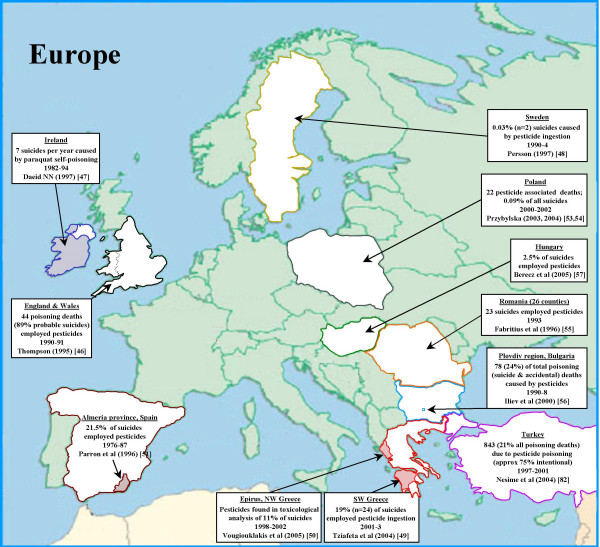
“Our estimates for the Europe-A stratum were based on data for England & Wales, Ireland, Sweden, Greece and Spain [46-51]; the Europe-B stratum on data from Turkey [52], Poland [53,54], Romania[55], and Bulgaria [56]; and stratum-C on data from Hungary [57].”
Suicide, suicide attempts and pesticides: a major hidden public health problem
Bertolote, J. (2006) · Bulletin of the World Health Organization · doi:10.2471/blt.06.030668 · Cited by 131 · cited 1×
“The WHO reports that pesticides are now the most common method of suicide worldwide[8].”
CONNER, K. R., PHILLIPS, M. R., MELDRUM, S., KNOX, K. L., ZHANG, Y., & YANG, G. (2005) · Psychological Medicine · doi:10.1017/s003329170500454x · Cited by 130 · cited 1×
“A central component of suicide prevention strategies is restricting access to lethal means [2]; this is because impulsive acts of self-harm in persons with a low intent to die may, nevertheless, be fatal if high-lethality methods are easily accessible [3,4].”
Self-citationHealth problems of pesticide usage in the Third World.
Jeyaratnam, J. (1985) · Occupational and Environmental Medicine · doi:10.1136/oem.42.8.505 · Cited by 129 · cited 2×
“Based on studies carried out in Sri Lanka, in 1984 Jeyaratnam estimated there were 220,000 pesticide related deaths every year worldwide, most of which were suicides [5].”
Incidence & outcome of aluminium phosphide poisoning in a hospital study.
Chugh, S. N., Dushyant, Ram, S., Arora, B., & Malhotra, K. C. (1991) · PubMed · Cited by 121
Buckley, N. A., Karalliedde, L., Dawson, A., Senanayake, N., & Eddleston, M. (2004) · Journal of Toxicology: Clinical Toxicology · doi:10.1081/clt-120028756 · Cited by 120 · cited 3×
“Recent extrapolations of data from a few countries in Asia suggest that there may be 300,000 suicides by deliberate ingestion of pesticides annually in this region alone[6,7].”
Self-citationOccupational pesticide intoxications among farmers in Bolivia: a cross-sectional study
Jørs, E., Morant, R. C., Condarco, G., Huici, O., Lander, F., Bælum, J., & Konradsen, F. (2006) · Environmental Health · doi:10.1186/1476-069x-5-10 · Cited by 111
Self-citationThe Pattern of Suicide in Pakistan
Khan, M. M., & Reza, H. (2000) · Crisis · doi:10.1027//0227-5910.21.1.31 · Cited by 108 · cited 3×
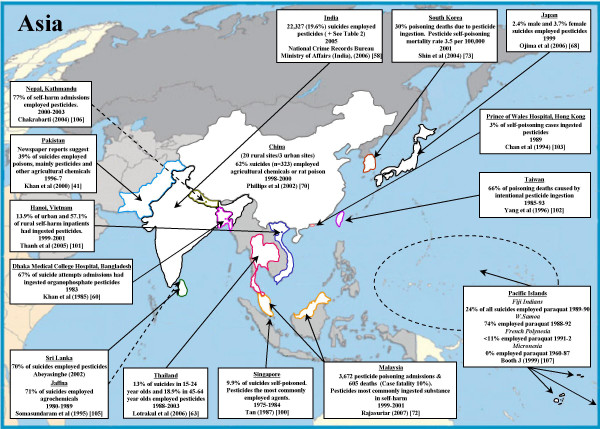
“The only national source of data on suicide methods identified was a review of newspaper reports based on police inquiries in Pakistan 1996–7 [41]: poisons were used in 39% of the 306 reported suicides and the authors state that organophosphorus pesticides and other agricultural chemicals were the main poisons used.”
Taiwan National Poison Center: Epidemiologic Data 1985–1993
Yang, C., Wu, J.-F., Ong, H.-C., Hung, S.-C., Kuo, Y.-P., Sa, C.-H., Chen, S.-S., & Deng, J. (1996) · Journal of Toxicology Clinical Toxicology · doi:10.3109/15563659609013825 · Cited by 104
Rates and Factors Associated with Suicide in Kaniyambadi Block, Tamil Nadu, South India, 2000–2002
Prasad, J., Abraham, V. J., Minz, S., Abraham, S., Joseph, A., Muliyil, J. P., George, K., & Jacob, K. S. (2006) · International Journal of Social Psychiatry · doi:10.1177/0020764006061253 · Cited by 98
Methods used for parasuicide: results of the WHO/EURO Multicentre Study on Parasuicide
Michel, K., Ballinari, P., Bille‐Brahe, U., Bjerke, T., Crepet, P., Leo, D. D., Häring, C., Hawton, K., Kerkhof, A. J. F. M., Lönnqvist, J. K., et al. (2000) · Social Psychiatry and Psychiatric Epidemiology · doi:10.1007/s001270050198 · Cited by 98 · cited 2×
“Hungary was an exception to this pattern; in the town of Szeged around 17% of selfharm episodes involved pesticides [45].”
BackgroundMedical management of deliberate drug overdose: A neglected area for suicide prevention?
Gunnell, D. (2004) · Emergency Medicine Journal · doi:10.1136/emj.2003.000935 · Cited by 91 · cited 1×
“5%[8] but in rural areas of Sri Lanka it is 7%.”
Self-citationComparative Study about Methods of Suicide between Japan and the United States
Ojima, T., Nakamura, Y., & Detels, R. (2004) · Journal of Epidemiology · doi:10.2188/jea.14.187 · Cited by 87 · cited 2×
“7%) 47,720 to 82,680 Western Pacific A 155 35,000 1,050 (3%) 1,050 to 1,050 [68] B 1,562 296,000 183,520 (62%) 171,680 to 195,360 [70] Sub-total (W Pacific) 331,000 184,570 (55.”
Suicides in Northern India: Comparison of trends and review of literature
Sharma, B. R., Gupta, M., Sharma, A. K., Sharma, S., Gupta, N., Relhan, N., & Singh, H. (2006) · Journal of Forensic and Legal Medicine · doi:10.1016/j.jcfm.2006.08.009 · Cited by 82 · cited 1×
“[98] 1996–2005 (n = 1421) Chandigarh (rural and urban) Aluminium phosphide accounts for 24% of all suicides; organophosphorus and organochlorine products 10% Gajalakshmi et al.”
Gender Differences in Nonfatal Suicidal Behavior in Pakistan: Significance of Sociocultural Factors
Khan, M. M., & Reza, H. (1998) · Suicide and Life-Threatening Behavior · doi:10.1111/j.1943-278x.1998.tb00626.x · Cited by 82 · cited 1×
“This assertion is supported by findings from the Aga Khan University Hospital in Karachi, Pakistan indicating that between 1989–1995 organophosphorus pesticide poisoning accounted for 21% of self-harm admissions[42].”
Psychosocial Profile of Suicide Ideators, Attempters and Completers in India
Bhatia, M. S., Aggarwal, N. K., & Aggarwal, B. B. L. (2000) · International Journal of Social Psychiatry · doi:10.1177/002076400004600301 · Cited by 77 · cited 1×
“[92] Not stated (n = 55) Delhi (urban and rural areas) Only 13% of suicides had selfpoisoned (all substances) Joseph et al.”
Eddleston, M., Buckley, N. A., Gunnell, D., Dawson, A. H., & Konradsen, F. (2006) · Injury Prevention · doi:10.1136/ip.2006.012641 · Cited by 77 · cited 1×
“To further reduce the case-fatality from pesticide self-harm investments are needed to improve quality, affordability and accessibility of health care close to the affected communities.[87] A feature of pesticide suicides is that many patients reach hospital alive, providing opportunities for resuscitation.”
Self-citationEddelston, M. (2006) · Bulletin of the World Health Organization · doi:10.2471/blt.05.025379 · Cited by 73
Self-citationPoisoning in Zimbabwe: a survey of eight major referral hospitals
Tagwireyi, D., BALL, D. E., & Nhachi, C. F. B. (2002) · Journal of Applied Toxicology · doi:10.1002/jat.832 · Cited by 70 · cited 1×
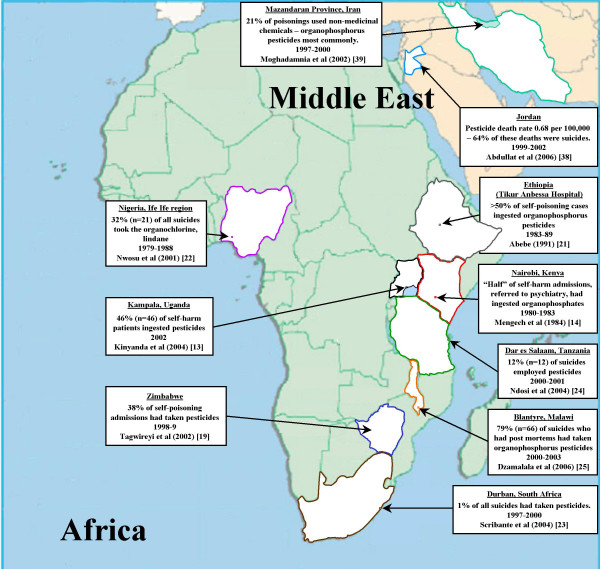
“Data on hospital admissions (fatal and non-fatal) for self-poisoning indicate that pesticides were used in 46% of episodes in Kampala (Uganda) in 2002,[13] about 50% in Nairobi (Kenya, 1980–3) [14], 3%–30% in Nigeria in the 1970s– 80s [15-17], about 40% in the major hospitals in Zimbabwe in the 1980s and 90s [18,19],…”
Suicide in Thailand during the period 1998–2003
LOTRAKUL, M. (2006) · Psychiatry and Clinical Neurosciences · doi:10.1111/j.1440-1819.2006.01465.x · Cited by 67 · cited 3×
“National data from Thailand (1998–2003) indicate that approximately 16% of suicides died from agricultural chemical poisoning[63].”
InfluentialEconomic burden of illness from pesticide poisonings in highland Ecuador
Cole, D. C., Carpio, F., & León, N. (2000) · Revista Panamericana de Salud Pública · doi:10.1590/s1020-49892000000800007 · Cited by 66 · cited 1×
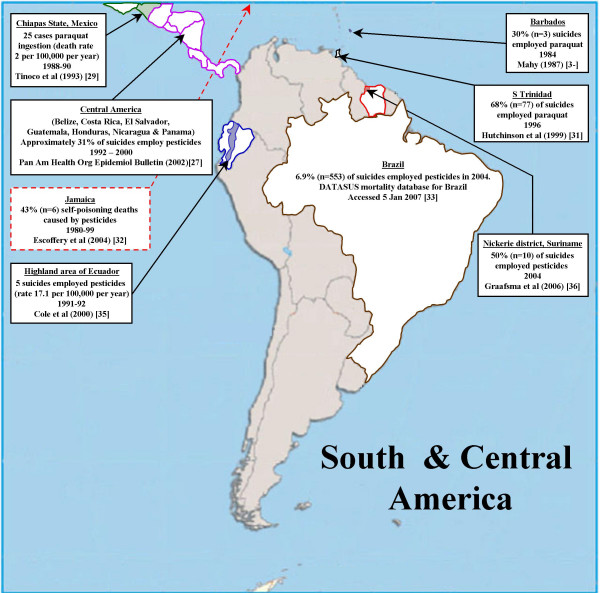
“Data for rural areas of Ecuador (5 pesticide suicides) [35] and Suriname (10 out of 20 suicides employed pesticides)[36] indicate that a high proportion of suicides in these areas employ pesticides.”
Deliberate self-harm as seen in Kampala, Uganda
Kinyanda, E., Hjelmeland, H., & Musisi, S. (2004) · Social Psychiatry and Psychiatric Epidemiology · doi:10.1007/s00127-004-0748-2 · Cited by 65
War and suicide in northern Sri Lanka
Somasundaram, D. J., & Rajadurai, S. (1995) · Acta Psychiatrica Scandinavica · doi:10.1111/j.1600-0447.1995.tb09733.x · Cited by 65 · cited 1×
“Somasundaram et al 1995[104] Jaffna, Sri Lanka 1980-1989 Agrochemicals used in 71% of suicides”
General practitioner prescribing patterns in Babol city, Islamic Republic of Iran
Moghadamnia, A. A., Mirbolooki, M., & Aghili, M. B. (2002) · Eastern Mediterranean Health Journal · doi:10.26719/2002.8.4-5.550 · Cited by 65
Suicide and Parasuicide in a Hill Resort in Malaysia
Maniam, T. (1988) · British Journal of Psychiatry · doi:10.1192/bjp.153.2.222 · Cited by 63
Mortality rate and years of life lost from unintentional injury and suicide in South India
Bose, A., Konradsen, F., John, J. K., Suganthy, P., Muliyil, J., & Abraham, S. (2006) · Tropical Medicine & International Health · doi:10.1111/j.1365-3156.2006.01707.x · Cited by 62 · cited 4×
“Reasonable estimate of Indian suicide rate from these data: 40 per 100,000 (lower limit: 10 per 100,000 Indian Police Statistics [58]); upper limit 80 per 100,000 Tamil Nadu [64] [65] [66] [67].”
InfluentialSelf-citationGd, S., Verma, B., & Dn, M. (1990) · PubMed Central · Cited by 60
PACIFIC ISLAND SUICIDE IN COMPARATIVE PERSPECTIVE
BOOTH, H. (1999) · Journal of Biosocial Science · doi:10.1017/s0021932099004332 · Cited by 58 · cited 1×
“0% employed paraquat 1960-87 Booth J (1999) [107] Asia”
Epidemiologic Characteristics of Death by Poisoning in 1991-2001 in Korea
Shin, S. D., Suh, G. J., Rhee, J. E., Sung, J., & Kim, J. (2004) · Journal of Korean Medical Science · doi:10.3346/jkms.2004.19.2.186 · Cited by 57 · cited 1×
“In South Korea over 20% of all suicides are due to self-poisoning with pesticides [73].”
Attempted suicide: AN EGYPTIAN INVESTIGATION
Okasha, A., & Lotaif, F. (1979) · Acta Psychiatrica Scandinavica · doi:10.1111/j.1600-0447.1979.tb00266.x · Cited by 55
La mortalidad por suicidios: México 1990-2001
Puentes-Rosas, E., López-Nieto, L., & Martínez-Monroy, T. (2004) · Revista Panamericana de Salud Pública · doi:10.1590/s1020-49892004000800005 · Cited by 55 · cited 1×
“…mortality data for Mexico, the largest country in Central America, indicating that poisoning (all substances) accounts for 5.9% of male and 27.5% of female suicides [28]; although in one area of rural Mexico death rates from paraquat poisoning in 1988–90 were around 2 per 100,000 per year [29].”
InfluentialProfile of unnatural deaths in Manipal, Southern India 1994–2004
Kumar, T. S. M., Kanchan, T., Yoganarasimha, K., & Kumar, G. (2005) · Journal of Clinical Forensic Medicine · doi:10.1016/j.jcfm.2005.10.005 · Cited by 54 · cited 1×
“[96] 1994–2004 (n = 441) Mannipal (rural) >55% insecticides Prasad et al.”
Suicide among children and adolescents in south Delhi (1991–2000)
Lalwani, S., Sharma, G., Kabra, S. K., Girdhar, S., & Dogra, T. D. (2004) · The Indian Journal of Pediatrics · doi:10.1007/bf02730657 · Cited by 52 · cited 1×
“[94] 1991–2000 (n = 222) New Delhi (urban) 10–18 year olds: poisoning accounted for 49% of male and 37% female suicides.”
Pesticide self-poisoning: thinking outside the box
Konradsen, F., Dawson, A. H., Eddleston, M., & Gunnell, D. (2007) · The Lancet · doi:10.1016/s0140-6736(07)60085-3 · Cited by 52 · cited 1×
“Industry led initiatives are to be welcomed, but national and international health policy makers should recognise that they may not focus on those aspects of the problem most likely to reduce mortality [85].”
Self-citationProfile of poisoning admissions in Malaysia
Rajasuriar, R., Awang, R., Hashim, S., & Rahmat, H. (2007) · Human & Experimental Toxicology · doi:10.1177/0960327107071857 · Cited by 52 · cited 3×
“Recently published national data for Malaysia show that pesticides accounted for 605 deaths (mostly self-inflicted) amongst people admitted to hospital for poisoning between 1999–2001[72].”
InfluentialAttempted suicide in Hanoi, Vietnam
Thanh, H. T. T., Jiang, G., Van, T. N., Minh, D. P. T., Rosling, H., & Wasserman, D. (2004) · Social Psychiatry and Psychiatric Epidemiology · doi:10.1007/s00127-005-0849-6 · Cited by 50 · cited 1×
“Thanh et al (2005) [101] Nepal, Kathmandu”
Profile of suicide in Dar es Salaam
Ndosi, N. K., Mbonde, M., & Lyamuya, E. F. (2004) · East African Medical Journal · doi:10.4314/eamj.v81i4.9157 · Cited by 49 · cited 3×
“Only 1% (13/1018) of suicides in Durban, South Africa in 1997–2002[23]) employed pesticides; 12% (12/100) of suicides in Dar es Salaam, Tanzania in 2001–2 employed pesticides [24]; and 79% (66/84) of suicides in Malawi in 2000–3 employed pesticides[25].”
Tentativas de suicídio em um hospital geral no Rio de Janeiro, Brasil
Werneck, G. L., Hasselmann, M. H., Phebo, L., Vieira, D. E., & Gomes, V. L. D. O. (2006) · Cadernos de Saúde Pública · doi:10.1590/s0102-311x2006001000026 · Cited by 48 · cited 1×
“In one study over half of all hospital admissions for self-harm to a General Hospital in Rio de Janeiro had taken pesticides[34].”
High Rates of Paraquat‐Induced Suicide in Southern Trinidad
Hutchinson, G., Daisley, H., Simeon, D., Simmonds, V., Shetty, M., & Lynn, D. (1999) · Suicide and Life-Threatening Behavior · doi:10.1111/j.1943-278x.1999.tb01055.x · Cited by 48
The pattern of poisoning in urban zimbabwe
Nhachi, C. F. B., & Kasilo, O. M. J. (1992) · Journal of Applied Toxicology · doi:10.1002/jat.2550120612 · Cited by 45 · cited 1×
“Data on hospital admissions (fatal and non-fatal) for self-poisoning indicate that pesticides were used in 46% of episodes in Kampala (Uganda) in 2002,[13] about 50% in Nairobi (Kenya, 1980–3) [14], 3%–30% in Nigeria in the 1970s– 80s [15-17], about 40% in the major hospitals in Zimbabwe in the 1980s and 90s [18,19],…”
High Rates of Suicide and Attempted Suicide Using Pesticides in Nickerie, Suriname, South America
Graafsma, T., Kerkhof, A., Gibson, D., Badloe, R., & van de Beek, L. M. (2006) · Crisis · doi:10.1027/0227-5910.27.2.77 · Cited by 43 · cited 6×
“Our estimates of pesticide suicide in the Americas are based on data from the USA (stratum A), Brazil (stratum B), Suriname (stratum B) and the Central American Isth-mus (stratum B), countries comprising 59% of the population of the region [26,33,36,27].”
InfluentialEpidemiology of suicide in Faisalabad.
Saeed, A., Bashir, M. Z., Khan, D., Iqbal, J., Raja, K. S., & Rehman, A. (2002) · PubMed · Cited by 42
Suicide in Blantyre, Malawi (2000–2003)
Dzamalala, C. P., Milner, D. A., & Liomba, N. G. (2005) · Journal of Clinical Forensic Medicine · doi:10.1016/j.jcfm.2005.08.006 · Cited by 41 · cited 3×
“Africa D 311 15,000 4,950 (33%) 3,300 to 6, 900 [22] E 361 19,000 2,850 (15%) 1,900 to 15,010 [23] [24] [25]”
The Epidemiology of Deliberate Self-harm
Odejide, A. O., Williams, A., OHAERI, J. U., & Ikuesan, B. A. (1986) · The British Journal of Psychiatry · doi:10.1192/bjp.149.6.734 · Cited by 41 · cited 1×
“Data on hospital admissions (fatal and non-fatal) for self-poisoning indicate that pesticides were used in 46% of episodes in Kampala (Uganda) in 2002,[13] about 50% in Nairobi (Kenya, 1980–3) [14], 3%–30% in Nigeria in the 1970s– 80s [15-17], about 40% in the major hospitals in Zimbabwe in the 1980s and 90s [18,19],…”
Pattern of suicides in Ile-Ife, Nigeria.
Nwosu, S. O., & Odesanmi, W. O. (2001) · PubMed · Cited by 40
Suicide and attempted suicide--China, 1990-2002.
(2004) · PubMed · Cited by 40
Restriction of access to methods of suicide as a means of suicide prevention
Hawton, K. (2005) · Prevention and Treatment of Suicidal Behaviour: · doi:10.1093/med/9780198529767.003.0016 · Cited by 39 · cited 1×
“A central component of suicide prevention strategies is restricting access to lethal means [2]; this is because impulsive acts of self-harm in persons with a low intent to die may, nevertheless, be fatal if high-lethality methods are easily accessible [3,4].”
Organophosphate pesticide poisoning in 50 Ethiopian patients.
Abebe, M. (1991) · PubMed · Cited by 36
Deaths from pesticide poisoning in England and Wales 1990-1991
Thompson, J. P., Casey, P. B., & Vale, A. (1995) · Human & Experimental Toxicology · doi:10.1177/096032719501400509 · Cited by 34 · cited 4×
“Our estimates for the Europe-A stratum were based on data for England & Wales, Ireland, Sweden, Greece and Spain [46-51]; the Europe-B stratum on data from Turkey [52], Poland [53,54], Romania[55], and Bulgaria [56]; and stratum-C on data from Hungary [57].”
InfluentialNandi, D. N., Mukherjee, S., Banerjee, G., Boral, G. C., Chowdhury, A. N., & Bose, J. L. (1979) · Indian Journal of Psychiatry · Cited by 34
Epidemiologic situation of acute pesticide poisoning in Central America, 1992-2000.
Henao, S., & Arbeláez, M. P. (2002) · PubMed · Cited by 32
Vougiouklakis, T., Boumba, V. A., Mitselou, A., Peschos, D., & Gerontopoulos, K. (2005) · Medicine Science and the Law · doi:10.1258/rsmmsl.45.1.39 · Cited by 31 · cited 1×
“For Europe-A stratum there were estimates of pesticide suicides from rural areas of Spain[51] and Greece [50,49]; to avoid placing too much weight on rural areas, we used the lower estimate – 10% (9/90) based on data from north west Greece [50].”
Pesticide mortality in the United States 1979-1998.
Langley, R. L., & Sumner, D. D. (2002) · PubMed · Cited by 31
The vulnerability of Indian women to suicide a field-study.
Banerjee, G., Nandi, D. N., Nandi, S., Sarkar, S., Boral, G. C., & Ghosh, A. (1990) · Europe PMC (PubMed Central) · Cited by 30
Reduced completed suicide rate in Hungary from 1990 to 2001: Relation to suicide methods
Berecz, R., Cáceres, M. C., SZLIVKA, A., Dorado, P., Bartók, E., Peñas‐Lledó, E., LLerena, A., & Degrell, I. (2005) · Journal of Affective Disorders · doi:10.1016/j.jad.2005.07.005 · Cited by 29 · cited 1×
“Our estimates for the Europe-A stratum were based on data for England & Wales, Ireland, Sweden, Greece and Spain [46-51]; the Europe-B stratum on data from Turkey [52], Poland [53,54], Romania[55], and Bulgaria [56]; and stratum-C on data from Hungary [57].”
Agricultural and horticultural pesticides fatal poisoning; The Jordanian experience 1999–2002
Abdullat, E. M., Hadidi, M. S., Al-Hadidi, N. A., AL-Nsour, T. S., & Hadidi, K. A. (2006) · Journal of Clinical Forensic Medicine · doi:10.1016/j.jcfm.2006.06.011 · Cited by 29 · cited 3×
“In Jordan (population 5.1 million 1999–2002) – the only country in the EMR-B stratum with national pesticide suicide data – there were 90 pesticide suicides between 1999–2002, resulting in an estimated suicide rate by pesticide ingestion of 0.44 per 100,000[38].”
InfluentialScribante, L., Blumenthal, R., Saayman, G., & Roos, J. L. (2004) · American Journal of Forensic Medicine & Pathology · doi:10.1097/01.paf.0000113862.03302.1d · Cited by 26 · cited 3×
“[22] Only 1% (13/ 1018) of suicides in Durban, South Africa in 1997-2002[23]) employed pesticides; 12% (12/100) of suicides in Dar es Salaam, Tanzania in 2001-2 employed pesticides [24]; and 79% (66/84) of suicides in Malawi in 2000-3 employed pesticides.”
Paraquat Poisoning in Southern Mexico: A Report of 25 Cases
Tinoco, R., Tinoco-Ojanguren, R., Parsonnet, J., & Halperin, D. C. (1993) · Archives of Environmental Health An International Journal · doi:10.1080/00039896.1993.9938398 · Cited by 24 · cited 1×
“5% of female suicides [28]; although in one area of rural Mexico death rates from paraquat poisoning in 1988–90 were around 2 per 100,000 per year [29].”
Drugs and Suicide Attempts in Benin City, Nigeria
Eferakeya, A. E. (1984) · The British Journal of Psychiatry · doi:10.1192/bjp.145.1.70 · Cited by 23 · cited 1×
“Data on hospital admissions (fatal and non-fatal) for self-poisoning indicate that pesticides were used in 46% of episodes in Kampala (Uganda) in 2002,[13] about 50% in Nairobi (Kenya, 1980–3) [14], 3%–30% in Nigeria in the 1970s– 80s [15-17], about 40% in the major hospitals in Zimbabwe in the 1980s and 90s [18,19],…”
Retrospective study of suicide cases admitted in Nepal Medical College Teaching Hospital.
Chakrabarti, K., & Devkota, K. C. (2004) · PubMed · Cited by 23
Suicides in Trakya Region, Turkey, from 1984 to 2004
AZMAK, A. D. (2006) · Medicine, Science and the Law · doi:10.1258/rsmmsl.46.1.19 · Cited by 22
The changing pattern of paraquat poisoning: an epidemiologic study.
Fitzgerald, G. R., Barniville, G., Flanagan, M. D., Silke, B., Carmody, M., & O'Dwyer, W. F. (1978) · PubMed · Cited by 21
Acute pesticide poisoning related deaths in Turkey.
Yaycı, N. O., Başer, L., İnanıcı, M. A., Cantürk, G., Çolak, B., & Karapirli, M. (2004) · PubMed · Cited by 17
ESCOFFERY, C. T., & SHIRLEY, S. E. (2004) · Medicine, Science and the Law · doi:10.1258/rsmmsl.44.2.116 · Cited by 16 · cited 2×
“In contrast, data from Barbados[30], Trinidad[31]and Jamaica[32]indicate pesticides account for a high proportion of suicides in those countries (see Figure 3).”
ResultBombay experience in intensive respiratory care over 6 years.
Kamat, S. R., Heera, S., Potdar, P., Shah, S. V., Bhambure, N. M., & Mahashur, A. A. (1989) · PubMed · Cited by 14
Hospital admissions due to acute poisoning in the New Territories, Hong Kong.
Chan, T. Y. K., & Critchley, J. A. (1994) · PubMed · Cited by 13
A study of suicide in Madurai.
Ganapathi, M. N., & Rao, A. V. (1966) · PubMed · Cited by 13
Review of Clinical Pharmacology and Pharmacokinetics - International Edition
(2023) · Review of Clinical Pharmacology and Pharmacokinetics - International Edition · doi:10.61873/rcppie1987 · Cited by 12
Attempted suicide (parasuicide) in Nairobi, Kenya
Mengech, H. N. K. A., & DHADPHALE, M. (1984) · Acta Psychiatrica Scandinavica · doi:10.1111/j.1600-0447.1984.tb02513.x · Cited by 11 · cited 1×
“Data on hospital admissions (fatal and non-fatal) for self-poisoning indicate that pesticides were used in 46% of episodes in Kampala (Uganda) in 2002,[13] about 50% in Nairobi (Kenya, 1980–3) [14], 3%–30% in Nigeria in the 1970s– 80s [15-17], about 40% in the major hospitals in Zimbabwe in the 1980s and 90s [18,19],…”
Suicidal poisoning deaths in Singapore 1975-1984.
Ct, T. (1987) · PubMed · Cited by 11
[Poisoning caused by chemicals for plant protection in Poland in 2002].
Przybylska, A. (2004) · PubMed · Cited by 8
Pesticide poisoning in Sweden--actual situation and changes over a 10 year period.
Persson, H., Palmborg, M., Irestedt, B., & Westberg, U. (1997) · PubMed · Cited by 8
Fabritius, K. (1996) · Toxicology Letters · doi:10.1016/0378-4274(96)03739-3 · Cited by 6 · cited 3×
“The proportion is lower in Romania [ 55 ] where 1% (104/9,660) of suicides between 1990–1993 employed pesticides.”
InfluentialIliev, Y. T., Akabaliev, V., & Doychinov, I. (2000) · PubMed · Cited by 3
Completed suicide in Barbados.
Mahy, G. E. (1987) · PubMed · Cited by 3
Suicide amongst the agricultural sector in Ireland; 1982-1994.
Daéid, N. N. (1997) · PubMed · Cited by 3
Analysis of admissions to the medical intensive care unit of a teaching hospital in Addis Ababa.
Bahta, Y. W., & Fikreyesus, Y. (1988) · PubMed · Cited by 2
Smit, L. A. M. (2002) · Digital Library Of The Commons Repository (Indiana University) · Cited by 1
[Poisoning caused by chemicals for plant protection in Poland in 2001].
Przybylska, A. (2003) · PubMed · Cited by 1
Research works printed but not linked: 6
- Obembe A Ilechukwu STC Tunwashe OL Odukoya O Self poisoning as seen in Lagos University Teaching Hospital: A Four Year Review The Nigerian Medical Practitioner 1986 11 49 53
- WHO Mental Health and Substance Abuse Facts and Figures Suicide Prevention: Emerging from Darkness 2007 South East Asia: WHO
- Khan N Poisoning in a medical unit of Dhaka Medical College Hospital in 1983 Bangladesh Medical Journal 1985 14 9 12
- Heijnen H WHO Bangladesh: International Programme OnChemical Safety 2001
- World Health Organization and IASP International Association for Suicide Prevention Safer Access to Pesticides: Community Interventions 2006 Geneva: Management of Mental and Brain Disorders, Department of Mental Health and Substance Abuse World Health Organization
- Kumar P Sharma SL Suicides in rural Punjab 2006 Punjab: Institute for Development and Communication (IDC)
Cited by
Exposure to pesticides and the associated human health effects
Kim, K.-H., Kabir, E., & Jahan, S. A. (2017) · Science of The Total Environment · doi:10.1016/j.scitotenv.2016.09.009 · Cited by 2,140
Chemical Pesticides and Human Health: The Urgent Need for a New Concept in Agriculture
Nicolopoulou-Stamati, P., Maipas, S., Kotampasi, C., Stamatis, P., & Hens, L. (2016) · Frontiers in Public Health · doi:10.3389/fpubh.2016.00148 · Cited by 1,880
“Furthermore, high occupational, accidental, or intentional exposure to pesticides can result in hospitalization and death (1, 31).”
BackgroundHawton, K., & van Heeringen, K. (2009) · The Lancet · doi:10.1016/s0140-6736(09)60372-x · Cited by 1,671
Berg, G. (2009) · Applied Microbiology and Biotechnology · doi:10.1007/s00253-009-2092-7 · Cited by 1,648
“, the improper use of chemical pesticides and fertilizers, create a long list of environmental and health problems (Gunnell et al. 2007; Leach and Mumford 2008).”
Background
Metadata
- Authors
- Gunnell, D., Eddleston, M., Phillips, M. R., & Konradsen, F.
- Affiliations
- University of Bristol (GB)
- South Asian Clinical Toxicology Research Collaboration (LK)
- Beijing HuiLongGuan Hospital (CN)
- University of Copenhagen (DK)
- Corresponding author
- Gunnell, David
- Venue
- BMC Public Health
- Published
- 2007-12
- Volume
- 7
- Issue
- 1
- Pages
- 357-357
- ISSN
- 1471-2458 (ISSN-L)
- PMC
- PMC2262093
- OpenAlex
- W2149111967
- Cited by
- 969
- References
- 102
- Citations by year
- 2026: 32 · 2025: 41 · 2024: 36 · 2023: 54 · 2022: 63 · 2021: 65 · 2020: 72 · 2019: 66 · 2018: 57 · 2017: 118 · 2016: 60 · 2015: 55 · 2014: 49 · 2013: 50 · 2012: 35
- FWCI
- 4.43
- Type
- journal article
- Language
- en
- Open access
- gold
- doi.org
- Licence
- cc-by
- creativecommons.org/licenses/by/2.0 (tdm)
- creativecommons.org/licenses/by/2.0 (vor, 20 d)
- Locations
- BMC Public Health (publishedVersion, cc-by)
- PubMed Central (publishedVersion, cc-by)
- PubMed (publishedVersion)
- DOAJ (DOAJ: Directory of Open Access Journals) (submittedVersion)
- Research at the University of Copenhagen (University of Copenhagen) (submittedVersion)
- Bristol Research (University of Bristol) (submittedVersion)
- Topics
- Social Sciences › Psychology › Clinical Psychology › Suicide and Self-Harm Studies
- Life Sciences › Pharmacology, Toxicology and Pharmaceutics › Toxicology › Pesticide Exposure and Toxicity
- Social Sciences › Sociology and Political Science › Homicide, Infanticide, and Child Abuse
- Keywords
- pesticide self-poisoning, pesticide suicide, suicide, global burden of disease, WHO regions, pesticide toxicity, pesticide storage
- MeSH terms
- Suicide Prevention, Humans, Pesticides, Poisoning, Safety, Suicide, Global Health, Incidence
About these checks
Registry, retraction, Cites and statistics results are computed, not judged, with one exception: a printed reference that no index lists is read once by a model before it counts as a citation error. Claims are extracted by a model and kept only when their quote appears verbatim in the text; each cited source is then checked, with a model’s help, for whether it says what the claim relies on. Those verdicts can be wrong — read the claim’s quote and the cited source before relying on one.
Statistics and arithmetic are recomputed, not judged.
Confidence bands are shown only for fields calibrated on our annotated test set. None is calibrated yet, so no band is shown.
What counts as a claim ›How we measure confidence ›How we check this ›
Are you an author, or do you see a problem with this page? Request a review
Data sources
Bibliographic data: Semantic Scholar, OpenAlex, Crossref.
Contains information from the Semantic Scholar Academic Graph Datasets, made available under the ODC Attribution License (ODC-BY 1.0).
Semantic Scholar’s data is described in: Kinney, R., et al. (2023). The Semantic Scholar Open Data Platform. arXiv:2301.10140.
