

The global distribution of fatal pesticide self-poisoning: Systematic review
Open accessThe DOI matches its Crossref record; 100 of the 102 references it cites were found in a registry or an index.
Abstract
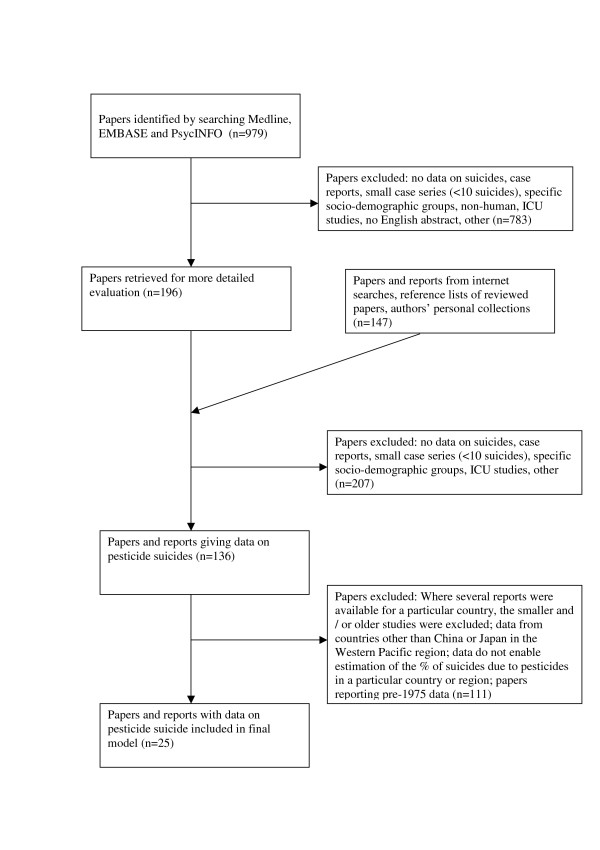
Background: Evidence is accumulating that pesticide self-poisoning is one of the most commonly used methods of suicide worldwide, but the magnitude of the problem and the global distribution of these deaths is unknown. Methods: We have systematically reviewed the worldwide literature to estimate the number of pesticide suicides in each of the World Health Organisation's six regions and the global burden of fatal self-poisoning with pesticides. We used the following data sources: Medline, EMBASE and psycINFO (1990–2007), papers cited in publications retrieved, the worldwide web (using Google) and our personal collections of papers and books. Our aim was to identify papers enabling us to estimate the proportion of a country's suicides due to pesticide self-poisoning. Results: We conservatively estimate that there are 258,234 (plausible range 233,997 to 325,907) deaths from pesticide self-poisoning worldwide each year, accounting for 30% (range 27% to 37%) of suicides globally. Official data from India probably underestimate the incidence of suicides; applying evidence-based corrections to India's official data, our estimate for world suicides using pesticides increases to 371,594 (range 347,357 to 439,267). The proportion of all suicides using pesticides varies from 4% in the European Region to over 50% in the Western Pacific Region but this proportion is not concordant with the volume of pesticides sold in each region; it is the pattern of pesticide use and the toxicity of the products, not the quantity used, that influences the likelihood they will be used in acts of fatal self-harm. Conclusion: Pesticide self-poisoning accounts for about one-third of the world's suicides. Epidemiological and toxicological data suggest that many of these deaths might be prevented if (a) the use of pesticides most toxic to humans was restricted, (b) pesticides could be safely stored in rural communities, and (c) the accessibility and quality of care for poisoning could be improved.
Overview
The claims and statistics of this paper haven’t been checked yet.
Free: it reads the open-access text and checks the first 5 claims that cite a source we can check. Create a free account to check every claim.
Integrity signals
Registry
Cites
Statistics
Figures
Verification
Claims the paper makes
The claims and statistics of this paper haven’t been checked yet.
Free: it reads the open-access text and checks the first 5 claims that cite a source we can check. Create a free account to check every claim.
Claims other papers make about this one
Each is checked against this paper’s own text: does it say what the citing paper says it does?
The source backs part of the claim, not all of it — or backs it for a different population, condition or comparison.
In the citing paper
“Pesticide ingestion was employed in approximately one-third of suicides worldwide, mostly in rural Asia and Latin America.(138)”
From Improving Suicide Prevention Through Evidence-Based Strategies: A Systematic Review (2021) · cites this paper as [138]
Experimental — accuracy not yet measuredThe source backs part of the claim, not all of it — or backs it for a different population, condition or comparison.
In the citing paper
“Pesticides are highly lethal, the leading suicide method worldwide, and the decline in suicide deaths worldwide is largely due to restricting access to pesticides where those deaths happen, namely in rural China,(138, 158) India(129) and Sri Lanka.(159)”
From Improving Suicide Prevention Through Evidence-Based Strategies: A Systematic Review (2021) · cites this paper as [138]
Experimental — accuracy not yet measured
Self-check
Percentages, sums and reported differences re-computed from the paper’s own numbers.
The self-check needs the paper’s full text.
Citations
Cites
Risk factors for suicide in China: a national case-control psychological autopsy study
Phillips, M. R., Yang, G., Zhang, Y., Wang, L., Ji, H., & Zhou, M. (2002) · The Lancet · doi:10.1016/s0140-6736(02)11681-3 · Cited by 928 · cited 2×
“7%) 47,720 to 82,680 Western Pacific A 155 35,000 1,050 (3%) 1,050 to 1,050 [68] B 1,562 296,000 183,520 (62%) 171,680 to 195,360 [70] Sub-total (W Pacific) 331,000 184,570 (55.”
Self-citationPatterns and problems of deliberate self-poisoning in the developing world
Eddleston, M. (2000) · QJM · doi:10.1093/qjmed/93.11.715 · Cited by 828 · cited 1×
“OP insecticides appear to be the most commonly ingested pesticides in rural Asia, accounting for around two thirds of cases[77].”
Self-citationSuicide rates in China, 1995–99
Phillips, M. R., Li, X., & Zhang, Y. (2002) · The Lancet · doi:10.1016/s0140-6736(02)07954-0 · Cited by 800 · cited 10×
“In our internet searches we particularly focused on identifying data for those countries in each of the six WHO regions that are likely to make the greatest contribution to the world burden of pesticide suicides because of their large populations: Nigeria and Ethiopia (Africa); United States of America, Brazil and Mex…”
InfluentialSelf-citationSuicide by intentional ingestion of pesticides: a continuing tragedy in developing countries
Gunnell, D., & Eddleston, M. (2003) · International Journal of Epidemiology · doi:10.1093/ije/dyg307 · Cited by 643 · cited 3×
“Recent extrapolations of data from a few countries in Asia suggest that there may be 300,000 suicides by deliberate ingestion of pesticides annually in this region alone[6,7].”
Self-citationPhillips, M. R., Li, X., Zhang, Y., & Eddleston, M. (2002) · The Lancet · doi:10.1016/s0140-6736(02)09269-3 · Cited by 382 · cited 1×
“Recent detailed studies of rural India suggest that the true number of suicides may be 2–3 fold higher than official estimates and concentrated in rural areas where pesticide poisoning is common[67,64] a pattern that is also found in China [ 74 ].”
BackgroundSelf-citationRUBENSTEIN, R. (1958) · Archives of Neurology And Psychiatry · doi:10.1001/archneurpsyc.1958.02340010121011 · Cited by 382
Eddleston, M., Eyer, P., Worek, F., Mohamed, F., Senarathna, L., von Meyer, L., Juszczak, E., Hittarage, A., Azhar, S., Dissanayake, W., et al. (2005) · The Lancet · doi:10.1016/s0140-6736(05)67598-8 · Cited by 369 · cited 1×
“Paraquat and aluminium phosphide self-poisoning have case-fatality in excess of 70%[10] [11] whereas case fatality for the organophosphorus (OP) insecticides dimethoate and chlorpyrifos are 23% and 8% respectively.[76] Based on the crude assumption that overall case fatality following pesticide self-poisoning worldwid…”
Self-citationKonradsen, F., van der Hoek, W., Cole, D. C., Hutchinson, G., Daisley, H., Singh, S., & Eddleston, M. (2003) · Toxicology · doi:10.1016/s0300-483x(03)00339-1 · Cited by 322 · cited 1×
“Restricting access to the most toxic pesticides is of paramount importance to reduce the number of severe selfpoisoning episodes[86].”
Self-citationSuicides in young people in rural southern India
Aaron, R., Joseph, A., Abraham, S., Muliyil, J., George, K., Prasad, J., Minz, S., Abraham, V. J., & Bose, A. (2004) · The Lancet · doi:10.1016/s0140-6736(04)15896-0 · Cited by 298 · cited 1×
“40% of the suicides in 15–19 year olds used pesticides in 1992–2001 [93] Lalwani et al.”
Pesticide poisoning in south India: opportunities for prevention and improved medical management
Srinivas Rao, C., Venkateswarlu, V., Surender, T., Eddleston, M., & Buckley, N. A. (2005) · Tropical Medicine & International Health · doi:10.1111/j.1365-3156.2005.01412.x · Cited by 228 · cited 1×
“Depending on the particular OP ingested, around 20–30% of patients require intubation [78,79].”
Self-citation
Research works printed but not linked: 6
- Obembe A Ilechukwu STC Tunwashe OL Odukoya O Self poisoning as seen in Lagos University Teaching Hospital: A Four Year Review The Nigerian Medical Practitioner 1986 11 49 53
- WHO Mental Health and Substance Abuse Facts and Figures Suicide Prevention: Emerging from Darkness 2007 South East Asia: WHO
- Khan N Poisoning in a medical unit of Dhaka Medical College Hospital in 1983 Bangladesh Medical Journal 1985 14 9 12
- Heijnen H WHO Bangladesh: International Programme OnChemical Safety 2001
- World Health Organization and IASP International Association for Suicide Prevention Safer Access to Pesticides: Community Interventions 2006 Geneva: Management of Mental and Brain Disorders, Department of Mental Health and Substance Abuse World Health Organization
- Kumar P Sharma SL Suicides in rural Punjab 2006 Punjab: Institute for Development and Communication (IDC)
Cited by
Exposure to pesticides and the associated human health effects
Kim, K.-H., Kabir, E., & Jahan, S. A. (2017) · Science of The Total Environment · doi:10.1016/j.scitotenv.2016.09.009 · Cited by 2,140
Chemical Pesticides and Human Health: The Urgent Need for a New Concept in Agriculture
Nicolopoulou-Stamati, P., Maipas, S., Kotampasi, C., Stamatis, P., & Hens, L. (2016) · Frontiers in Public Health · doi:10.3389/fpubh.2016.00148 · Cited by 1,880
“Furthermore, high occupational, accidental, or intentional exposure to pesticides can result in hospitalization and death (1, 31).”
BackgroundHawton, K., & van Heeringen, K. (2009) · The Lancet · doi:10.1016/s0140-6736(09)60372-x · Cited by 1,671
Berg, G. (2009) · Applied Microbiology and Biotechnology · doi:10.1007/s00253-009-2092-7 · Cited by 1,648
“, the improper use of chemical pesticides and fertilizers, create a long list of environmental and health problems (Gunnell et al. 2007; Leach and Mumford 2008).”
BackgroundA Handbook for the Study of Mental Health Second Edition
Scheid, T. L., & Brown, T. N. (2009) · Cited by 1,324
Naghavi, M. (2019) · BMJ · doi:10.1136/bmj.l94 · Cited by 1,043
A review on graphene-based nanocomposites for electrochemical and fluorescent biosensors
Krishnan, S. K., Singh, E., Singh, P., Meyyappan, M., & Nalwa, H. S. (2019) · RSC Advances · doi:10.1039/c8ra09577a · Cited by 785
Yadav, I. C., Devi, N. L., Syed, J. H., Cheng, Z., Li, J., Zhang, G., & Jones, K. C. (2015) · Science of The Total Environment · doi:10.1016/j.scitotenv.2014.12.041 · Cited by 664
Improving Suicide Prevention Through Evidence-Based Strategies: A Systematic Review
Mann, J. J., Michel, C. A., & Auerbach, R. P. (2021) · American Journal of Psychiatry · doi:10.1176/appi.ajp.2020.20060864 · Cited by 655
Global Burden of Disease Pediatrics Collaboration, Kyu, H. H., Pinho, C., Wagner, J. A., Brown, J. C., Bertozzi-Villa, A., Charlson, F. J., Coffeng, L. E., Dandona, L., Erskine, H. E., et al. (2016) · JAMA Pediatrics · doi:10.1001/jamapediatrics.2015.4276 · Cited by 618
Self-citationBoedeker, W., Watts, M., Clausing, P., & Marquez, E. (2020) · BMC Public Health · doi:10.1186/s12889-020-09939-0 · Cited by 579
RetractedGlobal trends in pesticides: A looming threat and viable alternatives
Sharma, A., Shukla, A., Attri, K., Kumar, M., Kumar, P., Suttee, A., Singh, G., Barnwal, R. P., & Singla, N. (2020) · Ecotoxicology and Environmental Safety · doi:10.1016/j.ecoenv.2020.110812 · Cited by 570
Rosenfield, S., & Mouzon, D. (2013) · Handbooks of Sociology and Social Research · doi:10.1007/978-94-007-4276-5_14 · Cited by 494
Means restriction for suicide prevention
Yip, P. S., Caine, E., Yousuf, S., Chang, S.-S., Wu, K. C.-C., & Chen, Y.-Y. (2012) · The Lancet · doi:10.1016/s0140-6736(12)60521-2 · Cited by 551
The global burden of fatal self-poisoning with pesticides 2006-15: Systematic review
Mew, E. J., Padmanathan, P., Konradsen, F., Eddleston, M., Chang, S.-S., Phillips, M. R., & Gunnell, D. (2017) · Journal of Affective Disorders · doi:10.1016/j.jad.2017.05.002 · Cited by 530
Self-citationKnowns and unknowns on burden of disease due to chemicals: a systematic review
Prüss-Ustün, A., Vickers, C., Haefliger, P., & Bertollini, R. (2011) · Environmental Health · doi:10.1186/1476-069x-10-9 · Cited by 397
“Total unintentional poisonings would amount to 346,000 deaths and 7,445,000 DALYs[12] 2004; C [13]”
BackgroundMethodInfluentialQi, W., Qi, W., Xiong, D., & Long, M. (2022) · Molecules · doi:10.3390/molecules27196545 · Cited by 365
Khursheed, A., Rather, M. A., Jain, V., Wani, A. R., Rasool, S., Nazir, R., Malik, N. A., & Majid, S. A. (2022) · Microbial Pathogenesis · doi:10.1016/j.micpath.2022.105854 · Cited by 322
Suicide in Asia: Opportunities and Challenges
Chen, Y.-Y., Chien-Chang Wu, K., Yousuf, S., & Yip, P. S. F. (2012) · Epidemiologic Reviews · doi:10.1093/epirev/mxr025 · Cited by 348
Neurotoxicity in acute and repeated organophosphate exposure
Naughton, S. X., & Terry, A. V. (2018) · Toxicology · doi:10.1016/j.tox.2018.08.011 · Cited by 330
Acute Human Lethal Toxicity of Agricultural Pesticides: A Prospective Cohort Study
Dawson, A. H., Eddleston, M., Senarathna, L., Mohamed, F., Gawarammana, I., Bowe, S. J., Manuweera, G., & Buckley, N. A. (2010) · PLoS Medicine · doi:10.1371/journal.pmed.1000357 · Cited by 332
“These deaths are responsible for about a third of suicides globally [1]; the World Health Organization (WHO) now recognizes pesticide poisoning to be the single most important means of suicide worldwide [3].”
BackgroundSelf-citationOrganophosphate and Carbamate Poisoning
King, A. M., & Aaron, C. K. (2015) · Emergency Medicine Clinics of North America · doi:10.1016/j.emc.2014.09.010 · Cited by 319
“They are a particular problem in the developing world, where highly toxic pesticides are readily available and are used in the suicides of hundreds of thousands of people every year.(2) With an estimated case fatality rate of 10% to 20%, the subsequent health care burden of those who do not die after a suicidal ingest…”
BackgroundLink, B. G., & Phelan, J. C. (2013) · Handbooks of Sociology and Social Research · doi:10.1007/978-94-007-4276-5_25 · Cited by 269
Pesticides, Environmental Pollution, and Health
Özkara, A., Akyil, D., & Konuk, M. (2016) · Environmental Health Risk - Hazardous Factors to Living Species · doi:10.5772/63094 · Cited by 284
“Annually, 3 million cases of acute poisoning have been reported from pesticide exposure, resulting in the deaths of 250 to 370,000 people every year [45,46].”
BackgroundThe Hidden and External Costs of Pesticide Use
Bourguet, D., & Guillemaud, T. (2016) · Sustainable Agriculture Reviews · doi:10.1007/978-3-319-26777-7_2 · Cited by 265
Burke, R. D., Todd, S. W., Lumsden, E., Mullins, R. J., Mamczarz, J., Fawcett, W. P., Gullapalli, R. P., Randall, W. R., Pereira, E. F. R., & Albuquerque, E. X. (2017) · Journal of Neurochemistry · doi:10.1111/jnc.14077 · Cited by 253
“However, they are particularly insidious in developing countries, where OP insecticides are readily available, poorly regulated, and account for hundreds of thousands of deaths every year (Buckley et al. 2004; Gunnell et al. 2007).”
BackgroundSpider-Venom Peptides as Bioinsecticides
Windley, M. J., Herzig, V., Dziemborowicz, S. A., Hardy, M. C., King, G. F., & Nicholson, G. M. (2012) · Toxins · doi:10.3390/toxins4030191 · Cited by 251
“These deaths are responsible for about a third of suicides globally [24] and the World Health Organization (WHO) now recognizes pesticide poisoning to be the single most important means of suicide worldwide [26].”
BackgroundGunnell, D., Knipe, D., Chang, S.-S., Pearson, M., Konradsen, F., Lee, W. J., & Eddleston, M. (2017) · The Lancet Global Health · doi:10.1016/s2214-109x(17)30299-1 · Cited by 246
Self-citationVijayakumar, L. (2015) · Indian Journal of Psychiatry · doi:10.4103/0019-5545.161484 · Cited by 242
“[26] state that 30% of suicides globally are by pesticide self‑poisoning.”
Drought tolerance improvement in plants: an endophytic bacterial approach
Ullah, A., Nisar, M., Ali, H., Hazrat, A., Hayat, K., Keerio, A. A., Ihsan, M., Laiq, M., Ullah, S., Fahad, S., et al. (2019) · Applied Microbiology and Biotechnology · doi:10.1007/s00253-019-10045-4 · Cited by 237
“…being used in agriculture for crop production are expensive and non-renewable, e.g., the inappropriate inputs of fertilizers and pesticides may lead to the production of greenhouse gases and create various environmental and human health problems (Gunnell et al. 2007; Pretty and Bharucha 2014).”
BackgroundSuicidal behaviour across the African continent: a review of the literature
Mars, B., Burrows, S., Hjelmeland, H., & Gunnell, D. (2014) · BMC Public Health · doi:10.1186/1471-2458-14-606 · Cited by 223
“Studies from India, China and Sri Lanka indicate that rural areas have exceptionally high rates of suicide [62-64], most likely due to easy access to pesticides combined with poor access to medical facilities and ineffective treatments.”
BackgroundSelf-citationControlling Access to Suicide Means
Sarchiapone, M., Mandelli, L., Iosue, M., Andrisano, C., & Roy, A. (2011) · International Journal of Environmental Research and Public Health · doi:10.3390/ijerph8124550 · Cited by 222
“Self-poisoning with certain commonly-used pesticides is highly lethal and is the most common means of suicide in many countries [36].”
BackgroundPesticides, History, and Classification
Abubakar, Y., Tijjani, H., Egbuna, C., Adetunji, C. O., Kala, S., Kryeziu, T. L., Ifemeje, J. C., & Patrick-Iwuanyanwu, K. C. (2020) · Natural Remedies for Pest, Disease and Weed Control · doi:10.1016/b978-0-12-819304-4.00003-8 · Cited by 170
Bonvoisin, T., Utyasheva, L., Knipe, D., Gunnell, D., & Eddleston, M. (2020) · BMC Public Health · doi:10.1186/s12889-020-8339-z · Cited by 201
“Self-poisoning with pesticides accounts for 14-20% of global suicides, an estimated 110,000-168,000 deaths each year [1], down from an estimated 371,000 in the late 1990s [2].”
BackgroundSelf-citationOximes for acute organophosphate pesticide poisoning
Buckley, N. A., Eddleston, M., Li, Y., Bevan, M., & Robertson, J. (2011) · Cochrane Database of Systematic Reviews · doi:10.1002/14651858.cd005085.pub2 · Cited by 213
Self-citationOrganophosphorus compounds and oximes: a critical review
Worek, F., Thiermann, H., & Wille, T. (2020) · Archives of Toxicology · doi:10.1007/s00204-020-02797-0 · Cited by 196
Hulse, E. J., Davies, J. O. J., Simpson, A. J., Sciuto, A. M., & Eddleston, M. (2014) · American Journal of Respiratory and Critical Care Medicine · doi:10.1164/rccm.201406-1150ci · Cited by 189
Self-citationOlisah, C., Okoh, O. O., & Okoh, A. I. (2020) · Heliyon · doi:10.1016/j.heliyon.2020.e03518 · Cited by 162
“Various problems resulting from pesticides found (especially the organochlorine types) in the environment have been reported in Asia, America, Europe and Africa (Hoh and Hites, 2004; Gunnell et al., 2007; Ali et al., 2013; Elibariki and Maguta, 2017).”
BackgroundPralidoxime in Acute Organophosphorus Insecticide Poisoning—A Randomised Controlled Trial
Eddleston, M., Eyer, P., Worek, F., Juszczak, E., Alder, N., Mohamed, F., Senarathna, L., Hittarage, A., Azher, S., Jeganathan, K., et al. (2009) · PLoS Medicine · doi:10.1371/journal.pmed.1000104 · Cited by 170
“Organophosphorus (OP) insecticide poisoning is a major global clinical problem, killing an estimated 200,000 people each year [1,2].”
BackgroundSelf-citationCarter, G., Page, A., Large, M., Hetrick, S., Milner, A. J., Bendit, N., Walton, C., Draper, B., Hazell, P., Fortune, S., et al. (2016) · Australian & New Zealand Journal of Psychiatry · doi:10.1177/0004867416661039 · Cited by 167
“•• A medium-sized (n = 239) three-arm trial in China (Wei et al., 2013) compared (1) group CBT, (2) supportive counselling delivered over the phone (12 calls over 3 months) and (3) no intervention in patients who attended EDs after suicide attempts.”
BackgroundInfluentialOximes in organophosphate poisoning: 60 years of hope and despair
Worek, F., Thiermann, H., & Wille, T. (2016) · Chemico-Biological Interactions · doi:10.1016/j.cbi.2016.04.032 · Cited by 165
Karunarathne, A., Gunnell, D., Konradsen, F., & Eddleston, M. (2020) · Clinical Toxicology · doi:10.1080/15563650.2019.1662433 · Cited by 160
“From a review of Medline and Embase databases from inception, we identified three studies that estimated the global burden of pesticide suicides [16,28,29].”
BackgroundSelf-citationFactors associated with the farmer suicide crisis in India
Merriott, D. (2016) · Journal of Epidemiology and Global Health · doi:10.1016/j.jegh.2016.03.003 · Cited by 155
“[44] A review of studies estimating the suicide rates in different regions of India – A total of 40/100,000 (considered a ‘‘reasonable” national estimate as of 2007) – Finds that some studies report rates 3 higher than the official figures in those regions, and adjusts the overall estimate to more reflect estimates fr…”
The growing concern of chlorpyrifos exposures on human and environmental health
Nandi, N. K., Vyas, A., Akhtar, M. J., & Kumar, B. (2022) · Pesticide Biochemistry and Physiology · doi:10.1016/j.pestbp.2022.105138 · Cited by 159
The value of novel oximes for treatment of poisoning by organophosphorus compounds
Worek, F., & Thiermann, H. (2013) · Pharmacology & Therapeutics · doi:10.1016/j.pharmthera.2013.04.009 · Cited by 159
Detoxification of Organophosphate Poisoning Using Nanoparticle Bioscavengers
Pang, Z., Hu, C. J., Fang, R. H., Luk, B. T., Gao, W., Wang, F., Chuluun‐Erdene, E., Angsantikul, P., Thamphiwatana, S., Lu, W., et al. (2015) · ACS Nano · doi:10.1021/acsnano.5b02132 · Cited by 156
“There is an estimated 750 000 to 3 million global cases of OP poisonings per year, with hundreds of thousands of annual fatalities.(1,2) Because of their strong toxicity to humans, many OPs are applied in chemical warfare, serving”
Knipe, D. W., Chang, S.-S., Dawson, A., Eddleston, M., Konradsen, F., Metcalfe, C., & Gunnell, D. (2017) · PLOS ONE · doi:10.1371/journal.pone.0172893 · Cited by 152
“Roughly 30% of all suicide deaths are due to pesticide poisoning, with a substantial proportion (40%) of pesticide related suicides occurring in South-East Asia [2].”
BackgroundSelf-citationOrganophosphorus nerve agent poisoning: managing the poisoned patient
Hulse, E. J., Haslam, J. D., Emmett, S. R., & Woolley, T. (2019) · British Journal of Anaesthesia · doi:10.1016/j.bja.2019.04.061 · Cited by 151
Masson, P., & Nachon, F. (2017) · Journal of Neurochemistry · doi:10.1111/jnc.14026 · Cited by 149
“According to the WHO, accidental and self-poisoning cause some 3 000 000 intoxications worldwide per year and more than 200 000 deaths (Gunnell et al. 2007).”
BackgroundNon-suicidal self-injury in developing countries: A review
Thippaiah, S. M., Nanjappa, M. S., Gude, J. G., Voyiaziakis, E., Patwa, S. A., Birur, B., & Pandurangi, A. K. (2020) · International Journal of Social Psychiatry · doi:10.1177/0020764020943627 · Cited by 167
“Suicide by intentional pesticide ingestion primarily occurs in rural areas of the low and middle-income countries of Africa, Central America, Southeast Asia and the Western Pacific (Gunnell et al., 2007).”
BackgroundImpact of paraquat regulation on suicide in South Korea
Cha, E. S., Chang, S.-S., Gunnell, D., Eddleston, M., Khang, Y.-H., & Lee, W. J. (2016) · International Journal of Epidemiology · doi:10.1093/ije/dyv304 · Cited by 142
Self-citationPage, A., Liu, S., Gunnell, D., Astell-Burt, T., Feng, X., Wang, L., & Zhou, M. (2017) · Journal of Affective Disorders · doi:10.1016/j.jad.2016.10.047 · Cited by 141
Self-citationA review on the microbial degradation of chlorpyrifos and its metabolite TCP
Bose, S., Kumar, P. S., & Vo, D. N. (2021) · Chemosphere · doi:10.1016/j.chemosphere.2021.131447 · Cited by 144
Socioeconomic inequalities in suicidal ideation, parasuicides, and completed suicides in South Korea
Kim, M., Jung‐Choi, K., Jun, H., & Kawachi, I. I. (2010) · Social Science & Medicine · doi:10.1016/j.socscimed.2010.01.004 · Cited by 140
Chowdhury, F. R., Dewan, G., Verma, V. R., Knipe, D. W., Isha, I. T., Faiz, M. A., Gunnell, D. J., & Eddleston, M. (2018) · International Journal of Epidemiology · doi:10.1093/ije/dyx157 · Cited by 130
Self-citationPattern and outcome of acute poisoning cases in a tertiary care hospital in Karnataka, India
Ramesha, K., Rao, K. B. H., & Kumar, G. (2009) · Indian Journal of Critical Care Medicine · doi:10.4103/0972-5229.58541 · Cited by 133
“[2] With the progress in the industrial and agricultural fi eld and advances in medical sciences a vast number of insecticides have become available, which on exposure may produce severe toxicity.”
InfluentialKlingelschmidt, J., Milner, A., Khireddine-Medouni, I., Witt, K., Alexopoulos, E. C., Toivanen, S., LaMontagne, A. D., Chastang, J.-F., & Niedhammer, I. (2018) · Scandinavian Journal of Work, Environment & Health · doi:10.5271/sjweh.3682 · Cited by 124
“In low/middle-income countries, suicide involving pesticides has been largely reported among farmers, especially in Asia, including Western Pacific and South East Asia regions (68).”
BackgroundToxicology of organophosphorus compounds in view of an increasing terrorist threat
Worek, F., Wille, T., Koller, M., & Thiermann, H. (2016) · Archives of Toxicology · doi:10.1007/s00204-016-1772-1 · Cited by 128
“The high incidence of suicidal OP pesticide poisoning with more than 250,000 fatal cases per year worldwide (Gunnell et al. 2007) initiated efforts to ban highly toxic OP pesticides.”
BackgroundRani, M., & Shanker, U. (2017) · International Journal of Environmental Science and Technology · doi:10.1007/s13762-017-1512-y · Cited by 132
Karami‐Mohajeri, S., Ahmadipour, A., Rahimi, H. R., & Abdollahi, M. R. (2017) · Archives of Industrial Hygiene and Toxicology · doi:10.1515/aiht-2017-68-2989 · Cited by 136
“Acute poisoning with OPs is a global threat to human health that causes more than 100,000 deaths a year (5, 6).”
BackgroundJensen, H. K., Konradsen, F., Jørs, E., Petersen, J. H., & Dalsgaard, A. (2010) · Journal of Toxicology · doi:10.1155/2011/639814 · Cited by 152
“Hindawi Publishing Corporation Journal of Toxicology Volume 2011, Article ID 639814, 8 pages doi:10.1155/2011/639814”
BackgroundInfluentialSelf-citationAcute organophosphorus poisoning
Chowdhary, S., Bhattacharyya, R., & Banerjee, D. (2014) · Clinica Chimica Acta · doi:10.1016/j.cca.2014.01.024 · Cited by 149
“Poisoning with pesticides is the fourth most cause of mortality in rural India because of agriculture based economy, poverty and easy availability of pesticides [23–26].”
BackgroundThe changing global face of suicide
Phillips, M. R., & Cheng, H. G. (2012) · The Lancet · doi:10.1016/s0140-6736(12)60913-1 · Cited by 131
Self-citationA role for solvents in the toxicity of agricultural organophosphorus pesticides
Eddleston, M., Street, J. M., Self, I., Thompson, A. P., King, T., Williams, N., Naredo, G., Dissanayake, K. N., Yu, L., Worek, F., et al. (2012) · Toxicology · doi:10.1016/j.tox.2012.02.005 · Cited by 134
Self-citationPereira, E. F. R., Aracava, Y., DeTolla, L. J., Beecham, E. J., Basinger, G. W., Wakayama, E. J., & Albuquerque, E. X. (2014) · Journal of Pharmacology and Experimental Therapeutics · doi:10.1124/jpet.114.214932 · Cited by 138
“Just as alarming are the conservative estimates that pesticide self-poisoning worldwide accounts for more than 250,000 deaths per year, which corresponds to about one-third of the world’s suicide cases (Gunnell et al., 2007).”
BackgroundRathod, A. L., & Garg, R. K. (2017) · Journal of Forensic and Legal Medicine · doi:10.1016/j.jflm.2017.02.003 · Cited by 120
“Newborn children can be 65-164 times more vulnerable than adults to the chlorpyrifos because the Paraoxonasesterase (PON1) enzyme respon sible for detoxifying chlorpyrifos is present at very low levels in child ren under the age of 2 year, it may be 3-to-4 fold lower than their mothers [45].”
BackgroundChang, S., Sterne, J. A. C., Lu, T., & Gunnell, D. (2009) · Social Psychiatry and Psychiatric Epidemiology · doi:10.1007/s00127-009-0049-x · Cited by 115
“Our finding that suicides are ‘hidden’ amongst deaths classified as accidental pesticide poisoning in official statistics has implications for investigating the impact of pesticide regulations on suicide prevention in the regions where many poisoning deaths involve pesticides [ 13 ].”
BackgroundSelf-citationA global perspective on the magnitude of suicide mortality
Bertolote, J. M., & Fleischmann, A. (2009) · Oxford Textbook of Suicidology and Suicide Prevention · doi:10.1093/med/9780198570059.003.0014 · Cited by 113
Pesticides toxicity in fish: Histopathological and hemato-biochemical aspects – A review
Rohani, M. F. (2023) · Emerging contaminants · doi:10.1016/j.emcon.2023.100234 · Cited by 140
Suicide Kills More Than 10,000 People Every Year in Bangladesh
Mashreky, S. R., Rahman, F., & Rahman, A. (2013) · Archives of Suicide Research · doi:10.1080/13811118.2013.801809 · Cited by 126
Rethinking the Role of Mental Illness in Suicide
Phillips, M. R. (2010) · American Journal of Psychiatry · doi:10.1176/appi.ajp.2010.10040589 · Cited by 122
Self-citationSuicide Misclassification in an International Context: Revisitation and Update
Rockett, I. R. H., Kapusta, N. D., & Bhandari, R. (2011) · Suicidology online · Cited by 131
Sam, K. G., Kondabolu, K., Pati, D., Kamath, A., Kumar, G., & Rao, P. G. (2009) · Journal of Forensic and Legal Medicine · doi:10.1016/j.jflm.2008.12.004 · Cited by 121
Suicide Prevention: State of the Art Review
Stone, D. M., & Crosby, A. E. (2014) · American Journal of Lifestyle Medicine · doi:10.1177/1559827614551130 · Cited by 103
Guignet, M. A., Dhakal, K., Flannery, B. M., Hobson, B. A., Żółkowska, D., Dhir, A., Bruun, D. A., Li, S., Wahab, A., Harvey, D. J., et al. (2019) · Neurobiology of Disease · doi:10.1016/j.nbd.2019.03.019 · Cited by 115
“Acute intoxication with OP pesticides is estimated to cause> 3 million life-threatening human poisonings each year, and over 250,000 deaths from self-poisoning, the latter accounting for about one-third of the world's suicide cases (Gunnell et al., 2007; Mew et al., 2017; Pereira et al., 2014).”
Suicide methods in children and adolescents
Kõlves, K., & Leo, D. D. (2016) · European Child & Adolescent Psychiatry · doi:10.1007/s00787-016-0865-y · Cited by 125
Examining the role of sex in self-injurious thoughts and behaviors
Fox, K. R., Millner, A. J., Mukerji, C. E., & Nock, M. K. (2018) · Clinical Psychology Review · doi:10.1016/j.cpr.2017.09.009 · Cited by 99
“Higher availability of these toxic pesticides, paired with lower availability of medical services, may lead to higher rates of suicide mortality from pesticide poisoning (e.g., Eddleston, 2000; Gunnell et al., 2007; Phillips, Yang, et al., 2002).”
BackgroundZajac, A., Kukawka, R., Pawlowska-Zygarowicz, A., Stolarska, O., & Śmiglak, M. (2018) · Green Chemistry · doi:10.1039/c8gc01424h · Cited by 97
Pesticide lifecycle management in agriculture and public health: Where are the gaps?
van den Berg, H., Gu, B., Beatrice, G., Kohlschmid, E., Al-Eryani, S. M. A., Bezerra, H. S. D. S., Nagpal, B. N., Chanda, E., Gasimov, E., Velayudhan, R., et al. (2020) · The Science of The Total Environment · doi:10.1016/j.scitotenv.2020.140598 · Cited by 107
Dhananjayan, V., Jayakumar, S., & Ravichandran, B. (2019) · Springer eBooks · doi:10.1007/978-3-030-23396-9_1 · Cited by 117
A Cross-Sectional Study of Pesticide Use and Knowledge of Smallholder Potato Farmers in Uganda
Okonya, J. S., & Kroschel, J. (2015) · BioMed Research International · doi:10.1155/2015/759049 · Cited by 95
“Though no cases of deaths were reported in this study, pesticide self-poisoning accounts for about one-third of the world’s suicides [38].”
BackgroundSchenk, G., Mateen, I., Ng, T.-K., Pedroso, M. M., Mitić, N., Jafelicci, M., Marques, R. F. C., Gahan, L. R., & Ollis, D. L. (2016) · Coordination Chemistry Reviews · doi:10.1016/j.ccr.2016.03.006 · Cited by 95
A Narrative Review of Acute Adult Poisoning in Iran.
Alinejad, S., Zamani, N., Abdollahi, M. R., & Mehrpour, O. (2017) · PubMed Central · Cited by 124
Rajasekaran, S., & Tiwari, R. R. (2021) · Critical Reviews in Toxicology · doi:10.1080/10408444.2020.1864721 · Cited by 94
“Pesticide self-poisoning accounts for about one-third of suicides globally, and the proportion of all suicides using pesticides varies from region to region (Gunnell et al. 2007).”
BackgroundJacquet, P., Daudé, D., Bzdrenga, J., Masson, P., Elias, M. H., & Chabrière, É. (2016) · Environmental Science and Pollution Research · doi:10.1007/s11356-016-6143-1 · Cited by 93
“…and water) pollutants (Jaipieam et al. 2009), and their use is estimated to lead to 3million intoxications, yielding to 300,000 deaths in the world every year, the main part of these being ascribable to suicides due to deliberate ingestion of pesticides (Gunnell et al. 2007; Patel et al. 2012).”
Acute poisoning in Shenyang, China: a retrospective and descriptive study from 2012 to 2016
Zhang, Y., Yu, B., Wang, N., & Li, T. (2018) · BMJ Open · doi:10.1136/bmjopen-2018-021881 · Cited by 91
“Lastly, relevant policies and regulations should be formulated and initiated immediately to restrict access to toxic agents, especially pesticides due to their high toxicity.(5)”
Preventing deaths from pesticide self-poisoning—learning from Sri Lanka's success
Knipe, D. W., Gunnell, D., & Eddleston, M. (2017) · The Lancet Global Health · doi:10.1016/s2214-109x(17)30208-5 · Cited by 90
Self-citationVolatile organic compounds in the interaction between plants and beneficial microorganisms
Russo, A., Pollastri, S., Ruocco, M., Monti, M. M., & Loreto, F. (2022) · Journal of Plant Interactions · doi:10.1080/17429145.2022.2107243 · Cited by 97
“…agricultural practices, including wide use of chemical pesticides and fertilizers, are currently performed, causing a drastic loss of biodiversity as well as environmental and health problems (Gunnell et al. 2007; Leach and Mumford 2008; Önder, Ceyhan, and Kahraman 2011; Brühl and Zaller 2019).”
BackgroundKumar, U., Raj, S., Sreenikethanam, A., Maddheshiya, R., Kumari, S., Han, S. S., Kapoor, K. K., Bhaskar, R., Bajhaiya, A. K., & Gahlot, D. K. (2023) · Agronomy · doi:10.3390/agronomy13071804 · Cited by 94
Kim, S. Y., Kim, M.-H., Kawachi, I., & Cho, Y. (2011) · Crisis · doi:10.1027/0227-5910/a000046 · Cited by 90
The atlas of dialkylphosphates; assessment of cumulative human organophosphorus pesticides’ exposure
Kavvalakis, M. P., & Tsatsakis, A. M. (2011) · Forensic Science International · doi:10.1016/j.forsciint.2011.10.019 · Cited by 105
“Those who have deliberately ingested organophosphates in a suicide attempt, suffer acute exposure usually due to a substantial dose and the multifactor-affected outcome is based mainly on the quantity of pesticide ingested and the time interval between the suicide attempt and hospitalization [63,64].”
BackgroundSalm, P., Taylor, P. J., Roberts, D. M., & de Silva, J. (2009) · Journal of Chromatography B · doi:10.1016/j.jchromb.2008.12.066 · Cited by 98
Zhu, J., Chen, Q., Kutsanedzie, F. Y. H., Yang, M., Ouyang, Q., & Jiang, H. (2017) · Analytical Methods · doi:10.1039/c7ay01637a · Cited by 89
Loha, K. M., Lamoree, M. H., Weiss, J. M., & de Boer, J. (2018) · Crop Protection · doi:10.1016/j.cropro.2018.06.014 · Cited by 100
Cha, E. S., Khang, Y., & Lee, W. J. (2014) · PLoS ONE · doi:10.1371/journal.pone.0095299 · Cited by 92
“Approximately 350,000– 440,000 annual suicides by means of deliberate pesticide poisoning have been estimated to occur worldwide [2], and the numbers of victims of nonfatal pesticide poisoning are assumed to be much greater.”
BackgroundBalbuena, P., Li, W., & Ehrich, M. F. (2010) · NeuroToxicology · doi:10.1016/j.neuro.2010.10.004 · Cited by 94
“Malathion is a common cause of poisoning in underdeveloped countries and sporadically in agricultural areas of developed nations (Eddleston et al., 2008; Gunnell et al., 2007).”
BackgroundEnvironmental factors shaping the diversity of bacterial communities that promote rice production
Wu, Z., Liu, Q., Li, Z., Cheng, W. S., Jimin, S., Guo, Z., Li, Y., Zhou, J., Meng, D., Li, H., et al. (2018) · BMC Microbiology · doi:10.1186/s12866-018-1174-z · Cited by 93
“the improper use of chemical fertilizers and pesticides [3], have triggered a series of environmental problems [4, 5].”
BackgroundRahman, M., Hoque, M. S., Bhowmik, S., Ferdousi, S., Kabiraz, M. P., & van Brakel, M. (2021) · Heliyon · doi:10.1016/j.heliyon.2021.e06390 · Cited by 86
“2 Moreover, the intentional or accidental exposure of pesticides to the human body can cause serious illness or even death (Gunnell et al., 2007).”
BackgroundShanbhag, V., Sukumar, C. A., & Shastry, A. B. (2019) · Indian Journal of Critical Care Medicine · doi:10.5005/jp-journals-10071-23306 · Cited by 81
Metadata
- Authors
- Gunnell, D., Eddleston, M., Phillips, M. R., & Konradsen, F.
- Affiliations
- University of Bristol (GB)
- South Asian Clinical Toxicology Research Collaboration (LK)
- Beijing HuiLongGuan Hospital (CN)
- University of Copenhagen (DK)
- Corresponding author
- Gunnell, David
- Venue
- BMC Public Health
- Published
- 2007-12
- Volume
- 7
- Issue
- 1
- Pages
- 357-357
- ISSN
- 1471-2458 (ISSN-L)
- PMC
- PMC2262093
- OpenAlex
- W2149111967
- Cited by
- 969
- References
- 102
- Citations by year
- 2026: 32 · 2025: 41 · 2024: 36 · 2023: 54 · 2022: 63 · 2021: 65 · 2020: 72 · 2019: 66 · 2018: 57 · 2017: 118 · 2016: 60 · 2015: 55 · 2014: 49 · 2013: 50 · 2012: 35
- FWCI
- 4.43
- Type
- journal article
- Language
- en
- Open access
- gold
- doi.org
- Licence
- cc-by
- creativecommons.org/licenses/by/2.0 (tdm)
- creativecommons.org/licenses/by/2.0 (vor, 20 d)
- Locations
- BMC Public Health (publishedVersion, cc-by)
- PubMed Central (publishedVersion, cc-by)
- PubMed (publishedVersion)
- DOAJ (DOAJ: Directory of Open Access Journals) (submittedVersion)
- Research at the University of Copenhagen (University of Copenhagen) (submittedVersion)
- Bristol Research (University of Bristol) (submittedVersion)
- Topics
- Social Sciences › Psychology › Clinical Psychology › Suicide and Self-Harm Studies
- Life Sciences › Pharmacology, Toxicology and Pharmaceutics › Toxicology › Pesticide Exposure and Toxicity
- Social Sciences › Sociology and Political Science › Homicide, Infanticide, and Child Abuse
- Keywords
- pesticide self-poisoning, pesticide suicide, suicide, global burden of disease, WHO regions, pesticide toxicity, pesticide storage
- MeSH terms
- Suicide Prevention, Humans, Pesticides, Poisoning, Safety, Suicide, Global Health, Incidence
About these checks
Registry, retraction, Cites and statistics results are computed, not judged, with one exception: a printed reference that no index lists is read once by a model before it counts as a citation error. Claims are extracted by a model and kept only when their quote appears verbatim in the text; each cited source is then checked, with a model’s help, for whether it says what the claim relies on. Those verdicts can be wrong — read the claim’s quote and the cited source before relying on one.
Statistics and arithmetic are recomputed, not judged.
Confidence bands are shown only for fields calibrated on our annotated test set. None is calibrated yet, so no band is shown.
What counts as a claim ›How we measure confidence ›How we check this ›
Are you an author, or do you see a problem with this page? Request a review
Data sources
Bibliographic data: Semantic Scholar, OpenAlex, Crossref.
Contains information from the Semantic Scholar Academic Graph Datasets, made available under the ODC Attribution License (ODC-BY 1.0).
Semantic Scholar’s data is described in: Kinney, R., et al. (2023). The Semantic Scholar Open Data Platform. arXiv:2301.10140.
