

The Edinburgh Postnatal Depression Scale: translation and validation for a Greek sample
Open accessThe DOI matches its Crossref record; 45 of the 47 references it cites were found in a registry or an index.
Abstract
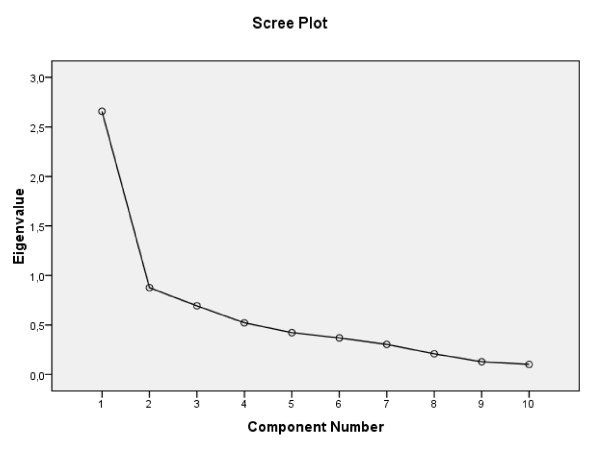
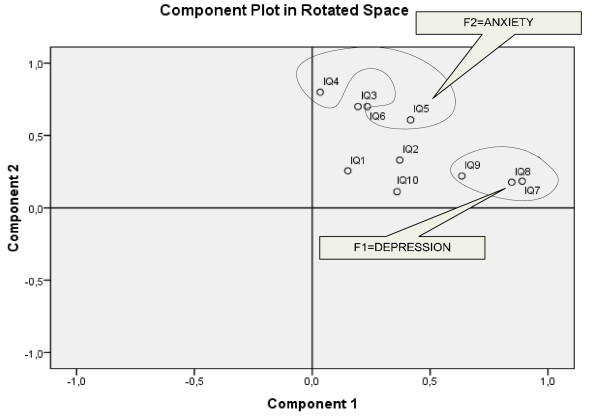
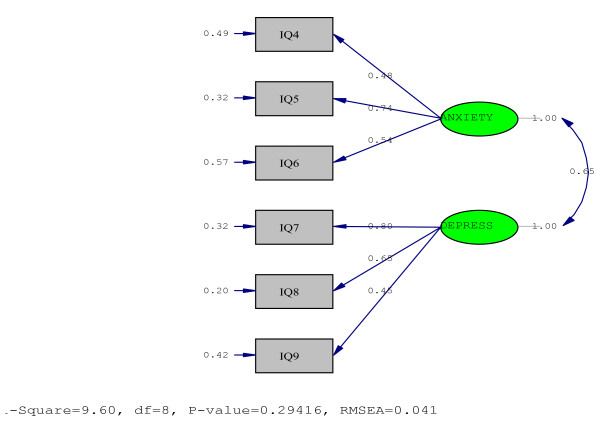
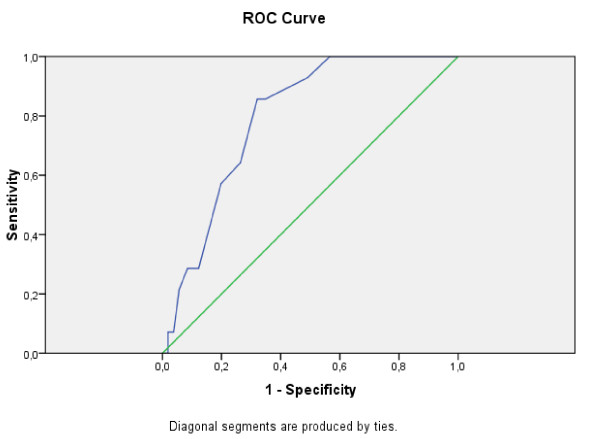
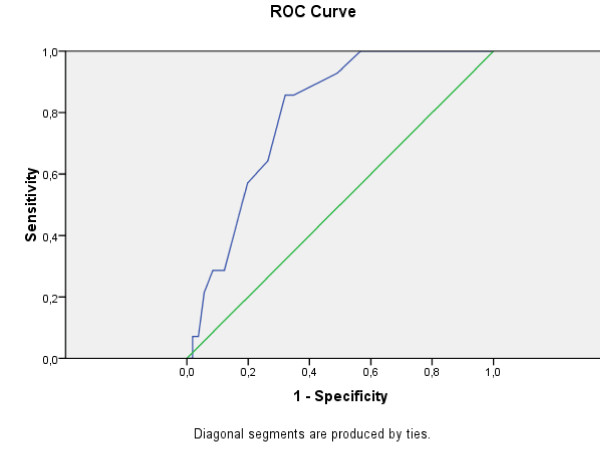
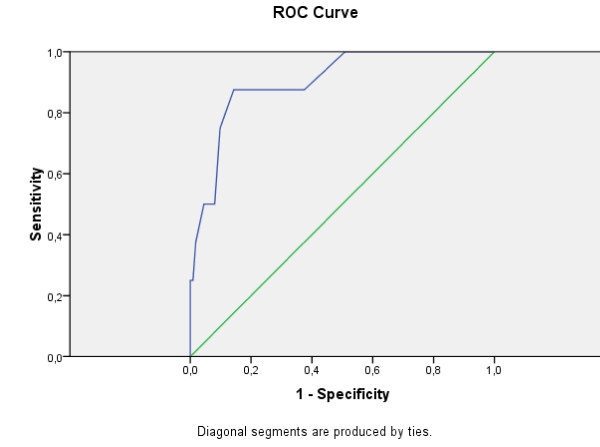
BACKGROUND: Edinburgh Postnatal Depression Scale (EPDS) is an important screening instrument that is used routinely with mothers during the postpartum period for early identification of postnatal depression. The purpose of this study was to validate the Greek version of EPDS along with sensitivity, specificity and predictive values. METHODS: 120 mothers within 12 weeks postpartum were recruited from the perinatal care registers of the Maternity Departments of 4 Hospitals of Heraklion municipality, Greece. EPDS and Beck Depression Inventory-II (BDI-II) surveys were administered in random order to the mothers. Each mother was diagnosed with depression according to the validated Greek version of BDI-II. The psychometric measurements that were performed included: two independent samples t-tests, One-way analysis of variance (ANOVA), reliability coefficients, Explanatory factor analysis using a Varimax rotation and Principal Components Method. Confirmatory analysis -known as structural equation modelling- of principal components was conducted by LISREL (Linear Structural Relations). A receiver operating characteristic (ROC) analysis was carried out to evaluate the global functioning of the scale. RESULTS: 8 (6.7%) of the mothers were diagnosed with major postnatal depression, 14 (11.7%) with moderate and 38 (31.7%) with mild depression on the basis of BDI-II scores. The internal consistency of the EPDS Greek version -using Chronbach's alpha coefficient- was found 0.804 and that of Guttman split-half coefficient 0.742. Our findings confirm the multidimensionality of EPDS, demonstrating a two-factor structure which contained subscales reflecting depressive symptoms and anxiety. The Confirmatory Factor analysis demonstrated that the two factor model offered a very good fit to our data. The area under ROC curve AUC was found 0.7470 and the logistic estimate for the threshold score of 8/9 fitted the model sensitivity at 76.7% and model specificity at 68.3%. CONCLUSION: Our data confirm the validity of the Greek version of the EPDS in identifying postnatal depression. The Greek EPDS scale could be used as a useful instrument in both clinical practice and research.
Overview
The claims and statistics of this paper haven’t been checked yet.
Free: it reads the open-access text and checks the first 5 claims that cite a source we can check. Create a free account to check every claim.
Integrity signals
Registry
Cites
Statistics
Figures
Verification
Claims the paper makes
The claims and statistics of this paper haven’t been checked yet.
Free: it reads the open-access text and checks the first 5 claims that cite a source we can check. Create a free account to check every claim.
Self-check
Percentages, sums and reported differences re-computed from the paper’s own numbers.
The self-check needs the paper’s full text.
Citations
Cites
Hu, L., & Bentler, P. M. (1999) · Structural Equation Modeling A Multidisciplinary Journal · doi:10.1080/10705519909540118 · Cited by 108,788
Tabachnick, B. G., & Fidell, L. S. (1983) · Cited by 80,058
An inventory for measuring depression
BECK, A. T. (1961) · Archives of General Psychiatry · doi:10.1001/archpsyc.1961.01710120031004 · Cited by 38,032 · cited 1×
“The recent revision of the BDI was used [19].”
MethodDetection of Postnatal Depression: Development of the 10-item Edinburgh Postnatal Depression Scale
Cox, J. L., Holden, J. M., & Sagovsky, R. (1987) · British Journal of Psychiatry · doi:10.1192/bjp.150.6.782 · Cited by 14,183
The application of electronic computers to factor analysis
Kaiser, H. F. (1960) · Educational and Psychological Measurement · doi:10.1177/001316446002000116 · Cited by 12,459 · cited 1×
“7 criteria: (a) eigenvalue >1 [21]; (b) variables should load > 0.”
Multivariate Statistical Methods
(2008) · Encyclopedia of Public Health · doi:10.1007/978-1-4020-5614-7_2263 · Cited by 5,580
Rates and risk of postpartum depression – a meta-analysis
O'hara, M. W., & Swain, A. M. (1996) · International Review of Psychiatry · doi:10.3109/09540269609037816 · Cited by 3,116 · cited 3×
“Since the profound effect of untreated postnatal depression is well documented [1-3,5,6], in clinical settings, identification of postnatal depression can be improved by increasing awareness and skills of health professionals in screening through the use of specific questionnaires, like EPDS.”
BackgroundResultMultivariate Statistical Methods.
Clarke, G. M., & Morrison, D. F. (1977) · Journal of the Royal Statistical Society. Series A (General) · doi:10.2307/2344930 · Cited by 2,165
The Validation of the Edinburgh Post-natal Depression Scale on a Community Sample
Murray, L., & Carothers, A. D. (1990) · British Journal of Psychiatry · doi:10.1192/bjp.157.2.288 · Cited by 885
A Controlled Study of the Onset, Duration and Prevalence of Postnatal Depression
Cox, J. L., Murray, D., & Chapman, G. (1993) · British Journal of Psychiatry · doi:10.1192/bjp.163.1.27 · Cited by 765
Research works printed but not linked: 4
- Bowling A Research Methods in Health: Investigating health and health services 2002 2 Maidenhead England: Open University Press
- Beck AT Steer RA Brown GK BDI-II manual 1996 San Antonio: The Psychological Corporation
- Jiireskog KG Sorbom D LISREL VI: analysis of linear structural relationships by maximum likelihood, instrumental variables, and least squares methods 1986 Department of Statistics, University of Uppsala, Sweden
- Okano T Murata M Masuji F Tamaki R Nomura J Miyaoka H Kitamura K Validation and reliability of a Japanese version of the EPDS Arch Psychiatr Diagn Clin Eval 1996 7 525 533
Cited by
Items 201–246 of 246
af Ugglas, A., & Pairman, S. (2023) · European Journal of Midwifery · doi:10.18332/ejm/172285
Espejord, S., Auberg, S. H., Kvitno, T. K., Risa, C. F., & Lukasse, M. (2023) · European Journal of Midwifery · doi:10.18332/ejm/172189
Suárez-Cortés, M., Molina‐Rodríguez, A., Postigo-Mota, F., Castaño-Molina, M. D. L. Á., & Pérez-Muñoz, V. (2023) · European Journal of Midwifery · doi:10.18332/ejm/172489
Episiotomy rates in Greek population using the Robson classification system
Giaxi, P., Gourounti, K., Vivilaki, V. G., & Lykeridou, A. (2023) · European Journal of Midwifery · doi:10.18332/ejm/172540
Self-citationExploring the emotions of midwifery students in Greece and the U.K using art as a medium
Dale-Porter, K. (2023) · European Journal of Midwifery · doi:10.18332/ejm/172461
The correlation between midwifery-led support and psychosocial support with breastfeeding duration
Tsolaridou, E. P., Mrvoljak-Theodoropoulou, I., Vogiatzoglou, M., Dagla, C., Antoniou, E., & Dagla, M. (2023) · European Journal of Midwifery · doi:10.18332/ejm/172468
Student midwives’ experiences on using a Hands-off Approach in breastfeeding counselling
Zidarič, T. S., & Skubic, M. (2023) · European Journal of Midwifery · doi:10.18332/ejm/172016
Jepsen, I., Thisted, M. H., & Nielsen, L. S. (2023) · European Journal of Midwifery · doi:10.18332/ejm/172558
Headaches and depressive symptoms among pregnant population
Karagianni, M. A., Bala, C., & Vivilaki, V. G. (2023) · European Journal of Midwifery · doi:10.18332/ejm/172462
Self-citationDevelopment of midwifery education in Iceland – experiences and challenges
Sigurðardóttir, V. L., & Gottfreðsdóttir, H. (2023) · European Journal of Midwifery · doi:10.18332/ejm/174118
Peer learning at a prenatal ward- beneficial for students and clinical preceptors
Göransson, T., Kolenovic, C., Kruljac, M., & Ekelin, M. (2023) · European Journal of Midwifery · doi:10.18332/ejm/172142
Development of web-based support for clinical supervisors of midwifery students
Persson, M., & Malm, M. C. (2023) · European Journal of Midwifery · doi:10.18332/ejm/172395
Midwifes’ educational program in a public maternity hospital, the past, the presence and the future
Dritsakou, K. (2023) · European Journal of Midwifery · doi:10.18332/ejm/172557
Häsänen, M., Sakellari, Ε., Lagiou, A., Félix, T., Oliveira, M., Bacatum, C. M. J., Savola, E., Lähteenmäki, E., Koutavelis, E., Natsia, M., et al. (2023) · European Journal of Midwifery · doi:10.18332/ejm/172202
Introduction of the health promoting project - Mental health counseling in perinatal period
Piirimäe, E. (2023) · European Journal of Midwifery · doi:10.18332/ejm/172264
Dilcen, H. Y., Bilişli, Y., Ada, G., & Bulut, E. (2023) · European Journal of Midwifery · doi:10.18332/ejm/172527
Empowering future midwives: Midwifery education in Slovenia
Zidarič, T. S., & Skubic, M. (2023) · European Journal of Midwifery · doi:10.18332/ejm/174123
Schlüter-Cruse, M., & Schumann, M. (2023) · European Journal of Midwifery · doi:10.18332/ejm/172322
Birch, A. R., Sudron, C., Davies, T. A., & McKay, M. J. (2023) · European Journal of Midwifery · doi:10.18332/ejm/172276
A toolbox to improve simulation training in midwifery education
Egenberg, S., Gard, E. J., af Ugglas, A., & Elvemo, H. (2023) · European Journal of Midwifery · doi:10.18332/ejm/172538 · Cited by 1
Perceived well-being factors of student midwives at the Midwifery Academy Amsterdam Groningen
Heerema, L. R., van Hoogen, M., Kool, L. E., & Jong, E. F. (2023) · European Journal of Midwifery · doi:10.18332/ejm/172056
Cesarean section in Greece: A retrospective analysis according to Robson classification
Giaxi, P., Vivilaki, V. G., Gourounti, K., & Lykeridou, A. (2023) · European Journal of Midwifery · doi:10.18332/ejm/172539
Self-citationVik, E. S., Sande, A. K., Austbø, S., Kolstad, S. E., Moen, I. H., Schytt, E., Nilsen, R. M., & Aasheim, V. (2023) · European Journal of Midwifery · doi:10.18332/ejm/172402
Sakellari, Ε., Häsänen, M., Lagiou, A., Kangas, M., Kankaanpää, M., Nyberg, J., Vuoristo, M., Turunen, T., Modhwadia, H., Pinto, M. L. S.-M. D. C., et al. (2023) · European Journal of Midwifery · doi:10.18332/ejm/171984
Satisfaction measured by the Satisfaction with Life Scale in case of the experience of an IVF cycle
Moutzouri, M., Sarantaki, A., & Gourounti, K. (2023) · European Journal of Midwifery · doi:10.18332/ejm/172476
Hands off, eyes on: Student midwives’ education on normal birth
Branchini, L., Catanzaro, S., Bertini, V., Simonazzi, G., Tarlazzi, E., & Parma, D. (2023) · European Journal of Midwifery · doi:10.18332/ejm/172256
Andraščíková, Š., Rybárová, Ľ., Zhultakova, S., Schlosserová, A., Galdunová, H., Gábor, M., & Havrilova, S. (2023) · European Journal of Midwifery · doi:10.18332/ejm/171960
From midwifery competencies on sexual wellbeing to teaching and training midwives on sexuality
Geuens, S., & Vermeulen, J. (2023) · European Journal of Midwifery · doi:10.18332/ejm/172980 · Cited by 1
Social profile and young women's views on egg freezing without medical indication
Bogiatzi, I., Barbounaki, S. G., & Sarantaki, A. (2023) · European Journal of Midwifery · doi:10.18332/ejm/172330
Climate impacts on health – communicating with care
Ganapathy, D. (2023) · European Journal of Midwifery · doi:10.18332/ejm/172976
Neonatal palliative care in the intensive care unit
Kiouki, K., & Nanou, C. (2023) · European Journal of Midwifery · doi:10.18332/ejm/172312
SimBegin in midwifery education - An introduction to student driven simulation
Folkvord, S. E., Borlaug, T., & Risa, C. F. (2023) · European Journal of Midwifery · doi:10.18332/ejm/172958
KIZILKAYA, T., & Dolgun, G. (2023) · European Journal of Midwifery · doi:10.18332/ejm/172301
Female sexual satisfaction: What midwives know?
Porfyridou, O. I. (2023) · European Journal of Midwifery · doi:10.18332/ejm/172470
A dialogue tool supporting health professionals to communicate about loss and grief with children
Tency, I., Longueville, M., & Cornelissen, E. (2023) · European Journal of Midwifery · doi:10.18332/ejm/172151
Tsiligkeridou, S., Lykeridou, A., Xanthos, T. T., & Gourounti, K. (2023) · European Journal of Midwifery · doi:10.18332/ejm/174186
Medical manual for emergencies related to the use of psychoactive substances
Nikolaou, K., Kokkolis, K., & Botsi, C. (2023) · European Journal of Midwifery · doi:10.18332/ejm/172551
Mortensen, B. M., Badzi, C. D., Hassan, S., Henriksen, L., Mensah, G. P., Masri, H., Valle, A.-K., & Khalil, M. (2023) · European Journal of Midwifery · doi:10.18332/ejm/172953
Using digital technology: Educating midwives about neurodiversity
Edwards, E., Smith, M., & Bower, H. (2023) · European Journal of Midwifery · doi:10.18332/ejm/171948
Psychometric Properties of the Greek Version of the Perinatal Anxiety Screening Scale
Dagla, M., Mrvoljak-Theodoropoulou, I., Daglas, V., Antoniou, E., Mouchtari, I., Dagla, C., Sotiropoulou, D., Tsolaridou, E. P., & Karagianni, D. (2025) · Cureus · doi:10.7759/cureus.86979
Koutra, K., Mouatsou, C., Margetaki, K., Mavroeides, G., & Chatzi, L. (2026) · Healthcare · doi:10.3390/healthcare14060745
“The EPDS has demonstrated strong psychometric properties across perinatal populations [15,16] and has been validated for use in Greece [17,18].”
Skeva, R., Androulakis, E., Koraka, A., Fofila, M. E., Chatzea, V., & Sifaki-Pistolla, D. I. (2026) · Applied Sciences · doi:10.3390/app16094173
Cordahi, C. C., Rhayem, K., Kassab, A., Zarzour, M., Dirani, E., Hachem, C. E., & Khalil, R. B. (2026) · Research Square · doi:10.21203/rs.3.rs-9239992/v1
Shadows of the Storm: Hurricane Sandy and Prenatal Stress
Seema, M., Afoakwah, C., & Byrnes, J. (2026) · Springer eBooks · doi:10.1007/978-981-92-3745-6_3
Tatsiopoulou, P., Drogouti, E., Alvanou, A., Holeva, V., Parlapani, E., Kostouli, V., Tsakalidis, C., & Athanasiadis, L. (2026) · Journal of Neonatal Nursing · doi:10.1016/j.jnn.2026.101983
Roumeliotaki, T., Koutra, K., Chatzi, L., Kritsotakis, G., Benetou, V., & Symvoulakis, E. K. (2026) · Epidemiologia · doi:10.3390/epidemiologia7060157
Metadata
- Authors
- Vivilaki, V. G., Dafermos, V., Kogevinas, M., Bitsios, P., & Lionis, C.
- Affiliations
- University of Crete (GR)
- Corresponding author
- Vivilaki, Victoria G
- Venue
- BMC Public Health
- Published
- 2009-09-09
- Volume
- 9
- Issue
- 1
- Pages
- 329-329
- ISSN
- 1471-2458 (ISSN-L)
- PMC
- PMC2748079
- OpenAlex
- W2138936061
- Cited by
- 100
- References
- 47
- Citations by year
- 2026: 7 · 2025: 7 · 2024: 4 · 2023: 8 · 2022: 7 · 2021: 11 · 2020: 7 · 2019: 4 · 2018: 2 · 2017: 6 · 2016: 7 · 2015: 5 · 2014: 6 · 2013: 4 · 2012: 5
- FWCI
- 4.68
- Type
- journal article
- Language
- en
- Open access
- gold
- doi.org
- Licence
- cc-by
- creativecommons.org/licenses/by/2.0 (tdm)
- Locations
- BMC Public Health (publishedVersion, cc-by)
- PubMed Central (publishedVersion, cc-by)
- PubMed (publishedVersion)
- DOAJ (DOAJ: Directory of Open Access Journals) (submittedVersion)
- Funders
- University of Crete
- Topics
- Health Sciences › Medicine › Public Health, Environmental and Occupational Health › Maternal Mental Health During Pregnancy and Postpartum
- Social Sciences › Psychology › Experimental and Cognitive Psychology › Anxiety, Depression, Psychometrics, Treatment, Cognitive Processes
- Social Sciences › Decision Sciences › Management Science and Operations Research › Psychometric Methodologies and Testing
- Keywords
- Edinburgh Postnatal Depression Scale, postpartum depression, Greek translation, psychometric validation, screening tool, Beck Depression Inventory-II, internal consistency, factor structure, diagnostic accuracy, postpartum women, anxiety symptoms
- MeSH terms
- Analysis of Variance, Female, Greece, Humans, Pilot Projects, Psychometrics, Sensitivity and Specificity, Depression, Postpartum
About these checks
Registry, retraction, Cites and statistics results are computed, not judged, with one exception: a printed reference that no index lists is read once by a model before it counts as a citation error. Claims are extracted by a model and kept only when their quote appears verbatim in the text; each cited source is then checked, with a model’s help, for whether it says what the claim relies on. Those verdicts can be wrong — read the claim’s quote and the cited source before relying on one.
Statistics and arithmetic are recomputed, not judged.
Confidence bands are shown only for fields calibrated on our annotated test set. None is calibrated yet, so no band is shown.
What counts as a claim ›How we measure confidence ›How we check this ›
Are you an author, or do you see a problem with this page? Request a review
Data sources
Bibliographic data: Semantic Scholar, OpenAlex, Crossref.
Contains information from the Semantic Scholar Academic Graph Datasets, made available under the ODC Attribution License (ODC-BY 1.0).
Semantic Scholar’s data is described in: Kinney, R., et al. (2023). The Semantic Scholar Open Data Platform. arXiv:2301.10140.
