

Preliminary study on the effect of parenteral naloxone, alone and in association with calcium gluconate, on bone healing in an ovine “drill hole”? model system
Open accessThe DOI matches its Crossref record; 31 of the 32 references it cites were found in a registry or an index.
Abstract
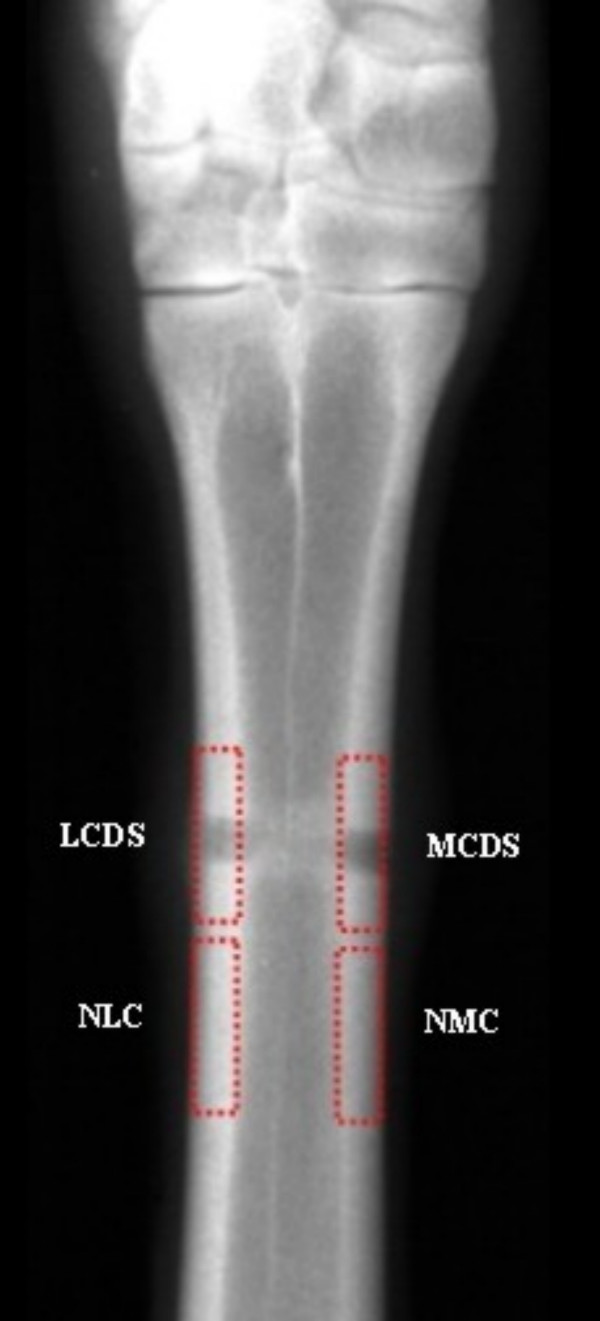
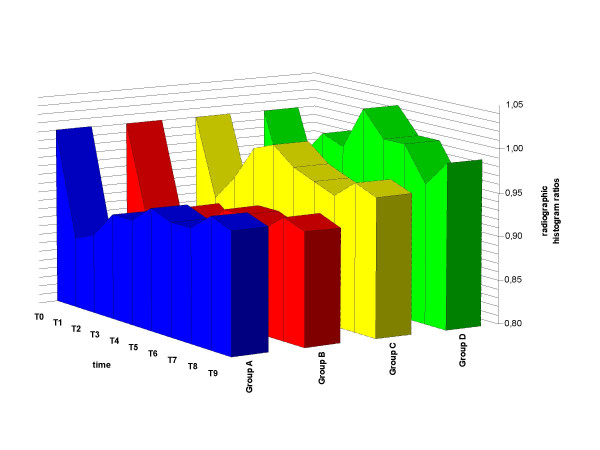
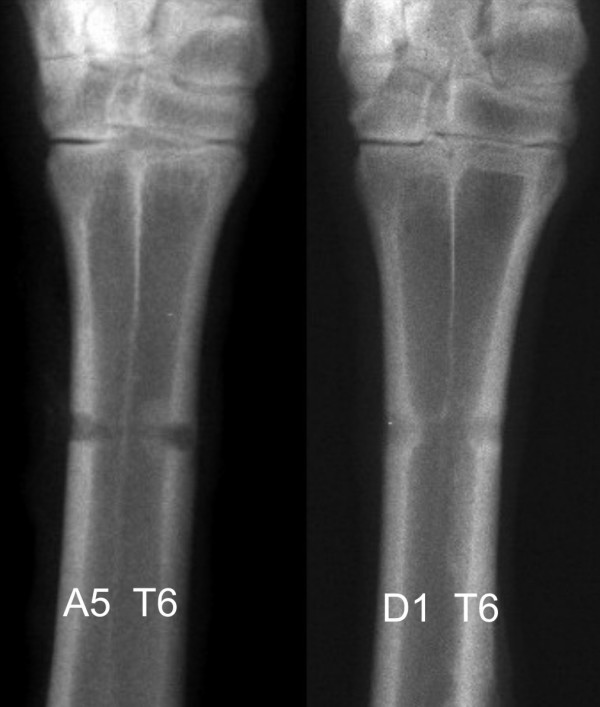
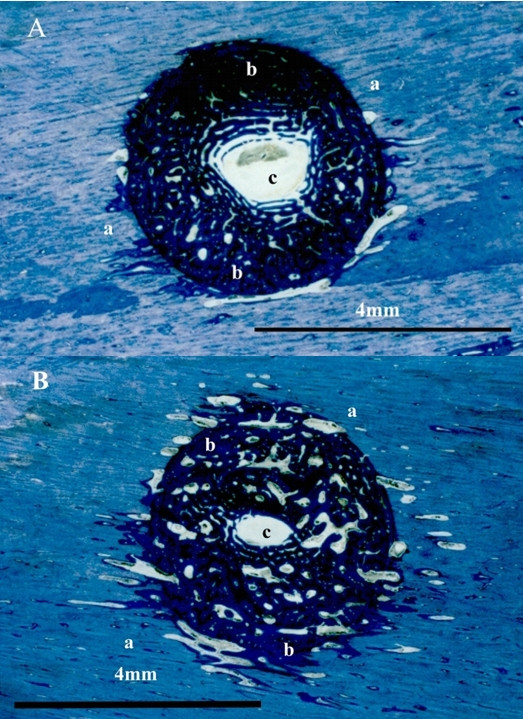
BACKGROUND: Several diseases affect bone healing and physiology. Many drugs that are commonly used in orthopaedics as "analgesics" or anti-inflammatory agents impair bone healing. Stressful conditions are associated with decreased serum osteocalcin concentration. High endorphin levels alter calcium metabolism, blocking the membrane channels by which calcium normally enters cells. The consequent decrease of intracellular calcium impairs the activities of calcium-related enzymes. Naloxone is a pure opioid antagonist. Morphine-induced osteocalcin inhibition was abolished when osteoblasts were incubated with naloxone. Naloxone restored the altered cellular and tissue physiology by removing beta-endorphins from specific receptors. However, this is only possible if the circulating Ca concentration is adequate. The aim of the present study was to evaluate the efficacy of parenteral naloxone administration in inducing fast mineralization and callus remodelling in a group of sheep with a standardised bone lesion. METHODS: Twenty ewes were randomly assigned to 4 treatment groups. Group A acted as control, group B received a solution of calcium gluconate, group C a solution of naloxone, and group D a solution of calcium gluconate and naloxone. A transverse hole was drilled in the left metacarpus, including both cortices, then parenteral treatment was administered intramuscularly, daily for four weeks. Healing was evaluated by weekly radiographic examination for eight weeks. For quantitative evaluation, the ratio of the radiographic bone density between the drill area and the adjacent cortical bone was calculated. After eight weeks the sheep were slaughtered and a sample of bone was collected for histopathology RESULTS: Group D showed a higher radiographic ratio than the other groups. Sheep not treated with naloxone showed a persistently lower ratio in the lateral than the medial cortex (P < 0.01). Histopathology of bone samples showed more caverns and fewer osteoblasts in group D than in the other groups (P </= 0.001). CONCLUSION: A low-dose parenteral regimen of naloxone enhances mineralization and remodelling of the callus in healing cortical defects in sheep, especially if associated with calcium gluconate.
Overview
The claims and statistics of this paper haven’t been checked yet.
Free: it reads the open-access text and checks the first 5 claims that cite a source we can check. Create a free account to check every claim.
Integrity signals
Registry
Cites
Statistics
Figures
Verification
Claims the paper makes
The claims and statistics of this paper haven’t been checked yet.
Free: it reads the open-access text and checks the first 5 claims that cite a source we can check. Create a free account to check every claim.
Claims other papers make about this one
Each is checked against this paper’s own text: does it say what the citing paper says it does?
The cited source says what the claim attributes to it.
In the citing paper
“In contrast, low doses of naloxone enhanced bone mineralization and callus formation of a cortical defect induced in a sheep model (228).”
From Exogenous Opioids and the Human Endocrine System: An Endocrine Society Scientific Statement (2024) · cites this paper as [228]
Self-check
Percentages, sums and reported differences re-computed from the paper’s own numbers.
The self-check needs the paper’s full text.
Citations
Cites
A JOURNAL OF PHARMACOLOGY AND EXPERIMENTAL THERAPEUTICS
(1909) · Journal of the American Medical Association · doi:10.1001/jama.1909.02550020033007 · Cited by 7,866
Effects of Mechanical Factors on the Fracture Healing Process
Claes, L. E., Heigele, C. A., Neidlinger-Wilke, C., Kaspar, D., Seidl, W., Margevicius, K. J., & Augat, P. (1998) · Clinical Orthopaedics and Related Research · doi:10.1097/00003086-199810001-00015 · Cited by 705
Farm Animal Behaviour and Welfare
Webster, A. J. F. (1990) · British Veterinary Journal · doi:10.1016/0007-1935(90)90067-d · Cited by 638
Farm Animal Behaviour and Welfare
Fraser, A. F., & Broom, D. M. (1990) · Medical Entomology and Zoology · Cited by 627
Disease mechanisms in small animal surgery
Bojrab, M. J., Smeak, D. D., & Bloomberg, M. (1993) · Lea & Febiger eBooks · Cited by 454
(2019) · Wiley eBooks · doi:10.1002/9781119108757 · Cited by 449
Carter, D. R., Blenman, P. R., & Beaupré, G. S. (1988) · Journal of Orthopaedic Research · doi:10.1002/jor.1100060517 · Cited by 406
Gerstenfeld, L. C., Thiede, M., Seibert, K., Mielke, C., Phippard, D., Svagr, B., Cullinane, D., & Einhorn, T. A. (2003) · Journal of Orthopaedic Research · doi:10.1016/s0736-0266(03)00003-2 · Cited by 348
Veterinary Pharmacology and Therapeutics
Dowling, P. M. (1996) · Europe PMC (PubMed Central) · Cited by 334
Biocompatibility and resorption of a brushite calcium phosphate cement
Theiss, F., Apelt, D., Brand, B., Kutter, A., Zlinszky, K., Bohner, M., Matter, S., Frei, C., Auer, J. A., & von Rechenberg, B. (2005) · Biomaterials · doi:10.1016/j.biomaterials.2004.11.056 · Cited by 304
Claes, L., Eckert‐Hübner, K., & Augat, P. (2002) · Journal of Orthopaedic Research · doi:10.1016/s0736-0266(02)00044-x · Cited by 279
The narcotic antagonist naloxone enhances clinical pain
LEVINE, J. D., GORDON, N. C., JONES, R. T., & FIELDS, H. L. (1978) · Nature · doi:10.1038/272826a0 · Cited by 261
Effects of different osteopromotive membrane porosities on experimental bone neogenesis in rats
Zellin, G. (1996) · Biomaterials · doi:10.1016/0142-9612(96)86739-1 · Cited by 102
Pérez-Castrillón, J. L., Olmos, J. M., Gómez, J. J., Barrallo, A., Riancho, J. A., Perera, L., Valero, C., Amado, J. A., & González-Macías, J. (2000) · Neuroendocrinology · doi:10.1159/000054586 · Cited by 99
Local inhibition of inflammatory pain by naloxone and its N-methyl quarternary analogue
Rios, L., & Jacob, J. (1983) · European Journal of Pharmacology · doi:10.1016/0014-2999(83)90317-5 · Cited by 60
Principles of Fracture Treatment
Auer, J. A. (2018) · Elsevier eBooks · doi:10.1016/b978-0-323-48420-6.00077-6 · Cited by 56
Method of administration determines the effect of naloxone on pain
Levine, J. D., & Gordon, N. C. (1986) · Brain Research · doi:10.1016/0006-8993(86)91653-7 · Cited by 54
Stress decreases the serum level of osteocalcin
Napal, J. J., Amado, J. A., Riancho, J. A., Olmos, J. M., & González-Macías, J. (1993) · Bone and Mineral · doi:10.1016/s0169-6009(08)80013-x · Cited by 50
Risselada, M., Kramer, M., de Rooster, H., Taeymans, O., Verleyen, P., & van Bree, H. (2005) · Veterinary Surgery · doi:10.1111/j.1532-950x.2005.00017.x · Cited by 50
Taiwo, Y. O., Basbaum, A. I., Perry, F., & Levine, J. D. (1989) · Journal of Pharmacology and Experimental Therapeutics · doi:10.1016/s0022-3565(25)23274-8 · Cited by 47
Bauss, F., Schenk, R., Hört, S., Müller‐Beckmann, B., & Sponer, G. (2004) · Journal of Pharmacological and Toxicological Methods · doi:10.1016/j.vascn.2003.11.003 · Cited by 46
Directional dependence of osteoblastic calcium response to mechanical stimuli
ADACHI, T., Sato, K., & Tomita, Y. (2003) · Biomechanics and Modeling in Mechanobiology · doi:10.1007/s10237-003-0029-0 · Cited by 43
High Levels of Endorphin and Related Pathologies of Veterinary Concern. A Review
Sciorsci, R. L., Bianchi, P. I., & Minoia, P. (2000) · Immunopharmacology and Immunotoxicology · doi:10.3109/08923970009016428 · Cited by 27
Naloxone-induced analgesia in diabetic mice
Kamei, J., Kawashima, N., & Kasuya, Y. (1992) · European Journal of Pharmacology · doi:10.1016/0014-2999(92)90424-3 · Cited by 24
Fisiologia degli animali domestici con elementi di etologia
Aguggini, G., Beghelli, V., & Giulio, L. (2002) · Cited by 24
Sole, F. D., Guerra, L., Bagorda, A., Reshkin, S. J., Albrizio, M., Minoia, P., & Casavola, V. (2001) · Nephron Experimental Nephrology · doi:10.1159/000052630 · Cited by 21
Minoia, P., & Sciorsci, R. L. (2001) · Current Drug Targets - Immune Endocrine & Metabolic Disorders · doi:10.2174/1568005310101020131 · Cited by 19
Tsuruoka, M., Hiruma, Y., & Willis, W. D. (1997) · Brain Research · doi:10.1016/s0006-8993(97)00509-x · Cited by 15
Radasch, R. M. (2004) · Elsevier eBooks · doi:10.1016/b978-1-56053-579-9.50066-4 · Cited by 12
Naloxone behaves as opioid agonist/antagonist in clonal cultures of mouse bone marrow cells
Krianac-Bengez, L., Boranić, M., & Testa, N. (1995) · Biomedicine & Pharmacotherapy · doi:10.1016/0753-3322(96)82574-1 · Cited by 9
Tissue regeneration in bone defects adjacent to endosseous implants: an experimental pilot study.
Vicente, J. C. D., López-Arranz, E., & López‐Arranz, J. S. (2000) · PubMed · Cited by 9
Minoia, P., & Sciorsci, R. L. (2001) · Current Drug Targets - Immune, Endocrine & Metabolic Disorders · doi:10.2174/1568008013341505
Research works printed but not linked: 1
- 21. Engelhardt P, Gasser JA, LEICA HistoDur: A resin specifically designed for the histology of mineralized tissues. In Leica Appli- cations Brief Basel, Switzerland: Sandoz Pharma Ltd, Osteoporosis Research; 1995:4002.
Cited by
New advances in musculoskeletal pain
Bove, S. E., Flatters, S. J. L., Inglis, J. J., & Mantyh, P. W. (2008) · Brain Research Reviews · doi:10.1016/j.brainresrev.2008.12.012 · Cited by 84
Jiménez‐Andrade, J. M., Bloom, A. P., Mantyh, W. G., Koewler, N. J., Freeman, K. T., DeLong, D. M., Ghilardi, J. R., Kuskowski, M. A., & Mantyh, P. W. (2009) · Neuroscience · doi:10.1016/j.neuroscience.2009.05.065 · Cited by 68
The Effect of Opioids, Alcohol, and Nonsteroidal Anti-inflammatory Drugs on Fracture Union
Richards, C. J., Graf, K. W., & Mashru, R. P. (2017) · Orthopedic Clinics of North America · doi:10.1016/j.ocl.2017.06.002 · Cited by 64
The effect of opiates on bone formation and bone healing
Coluzzi, F., Scerpa, M. S., & Centanni, M. (2020) · Current Osteoporosis Reports · doi:10.1007/s11914-020-00585-4 · Cited by 55
Endogenous opiates and behavior: 2007
Bodnar, R. J. (2008) · Peptides · doi:10.1016/j.peptides.2008.09.007 · Cited by 72
Metadata
- Authors
- Petrizzi, L., Mariscoli, M., Valbonetti, L., Varasano, V., Langhoff, J. D., & Von Rechenberg, B.
- Affiliations
- University of Teramo (IT)
- University of Zurich (CH)
- Corresponding author
- Petrizzi, Lucio
- Venue
- BMC Musculoskeletal Disorders
- Published
- 2007-05-22
- Volume
- 8
- Issue
- 1
- Pages
- 43-43
- ISSN
- 1471-2474 (ISSN-L)
- PMC
- PMC1891106
- OpenAlex
- W2170570288
- Cited by
- 21
- References
- 32
- Citations by year
- 2026: 1 · 2025: 1 · 2024: 1 · 2023: 1 · 2021: 1 · 2020: 4 · 2019: 1 · 2017: 1 · 2016: 4 · 2015: 2
- FWCI
- 0.53
- Type
- journal article
- Language
- en
- Open access
- gold
- doi.org
- Licence
- Locations
- BMC Musculoskeletal Disorders (publishedVersion, cc-by)
- PubMed Central (publishedVersion, cc-by)
- PubMed (publishedVersion)
- Zurich Open Repository and Archive (University of Zurich) (acceptedVersion, cc-by)
- DOAJ (DOAJ: Directory of Open Access Journals) (submittedVersion)
- UniTERAMO Research Catalog (University of Teramo) (submittedVersion)
- Zurich Open Repository and Archive (University of Zurich) (submittedVersion, cc-by)
- Zurich Open Repository and Archive (University of Zurich)
- Funders
- Universität Zürich
- Topics
- Life Sciences › Biochemistry, Genetics and Molecular Biology › Molecular Biology › Bone Metabolism and Diseases
- Health Sciences › Medicine › Orthopedics and Sports Medicine › Bone fractures and treatments
- Health Sciences › Medicine › Orthopedics and Sports Medicine › Bone health and osteoporosis research
- Keywords
- naloxone, calcium gluconate, bone regeneration, bone mineralization, sheep, endorphins, opioid antagonists, cortical bone defect, osteoblasts, intramuscular administration
- MeSH terms
- Animals, Bone and Bones, Calcium Gluconate, Disease Models, Animal, Drug Therapy, Combination, Female, Injections, Intramuscular, Metacarpus, Naloxone, Narcotic Antagonists, Osteogenesis, Radiography, Sheep, Fracture Healing
About these checks
Registry, retraction, Cites and statistics results are computed, not judged, with one exception: a printed reference that no index lists is read once by a model before it counts as a citation error. Claims are extracted by a model and kept only when their quote appears verbatim in the text; each cited source is then checked, with a model’s help, for whether it says what the claim relies on. Those verdicts can be wrong — read the claim’s quote and the cited source before relying on one.
Statistics and arithmetic are recomputed, not judged.
Confidence bands are shown only for fields calibrated on our annotated test set. None is calibrated yet, so no band is shown.
What counts as a claim ›How we measure confidence ›How we check this ›
Are you an author, or do you see a problem with this page? Request a review
Data sources
Bibliographic data: Semantic Scholar, OpenAlex, Crossref.
Contains information from the Semantic Scholar Academic Graph Datasets, made available under the ODC Attribution License (ODC-BY 1.0).
Semantic Scholar’s data is described in: Kinney, R., et al. (2023). The Semantic Scholar Open Data Platform. arXiv:2301.10140.
