

VEGF signaling mediates bladder neuroplasticity and inflammation in response to BCG
Open accessThe DOI matches its Crossref record; 65 of the 65 references it cites were found in a registry or an index.
Abstract
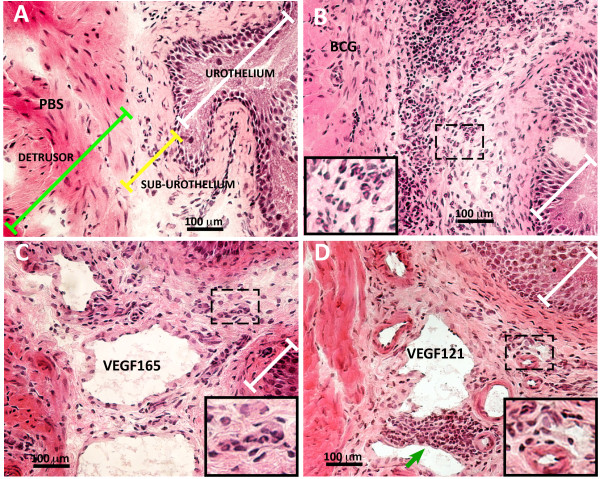
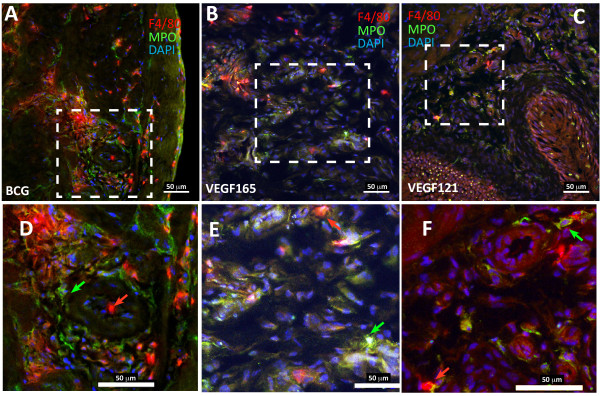
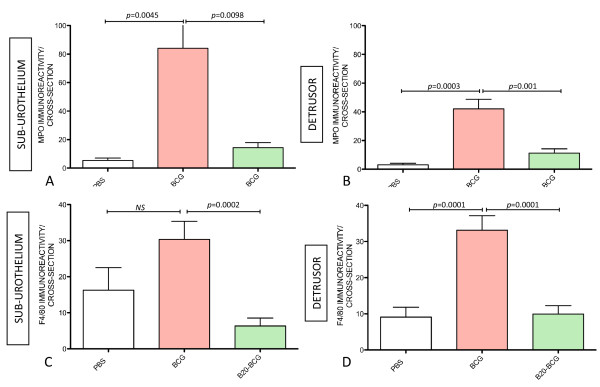
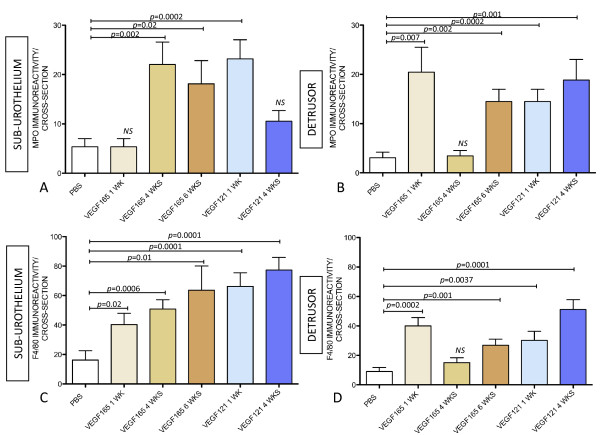
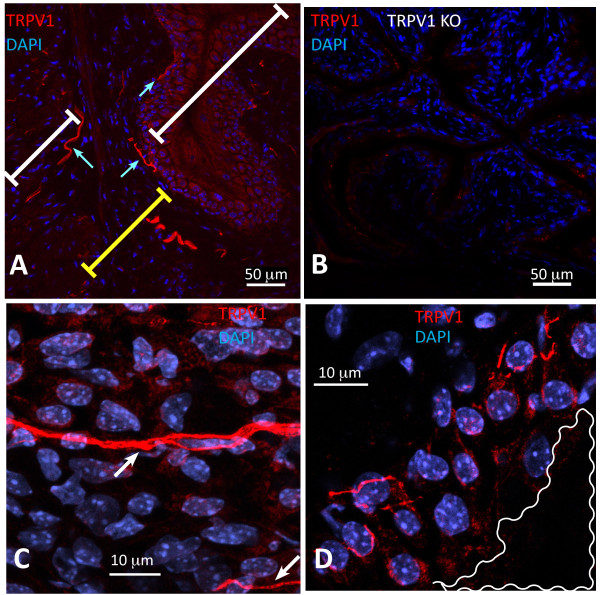
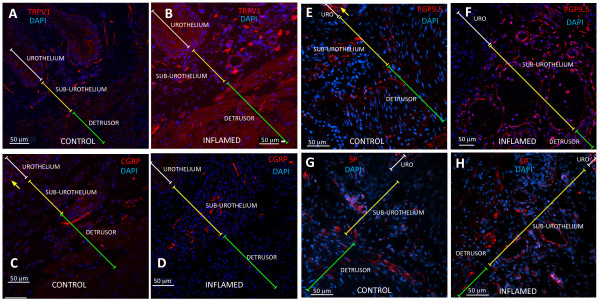
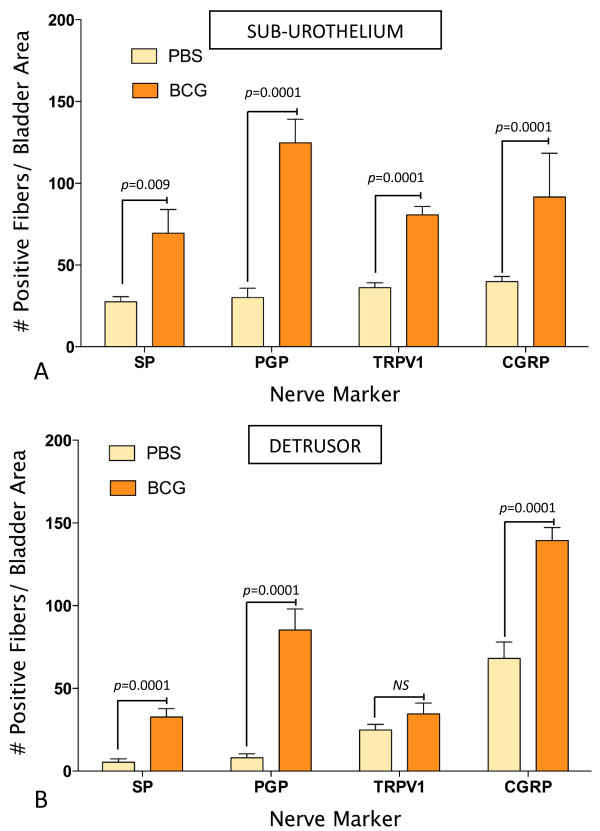
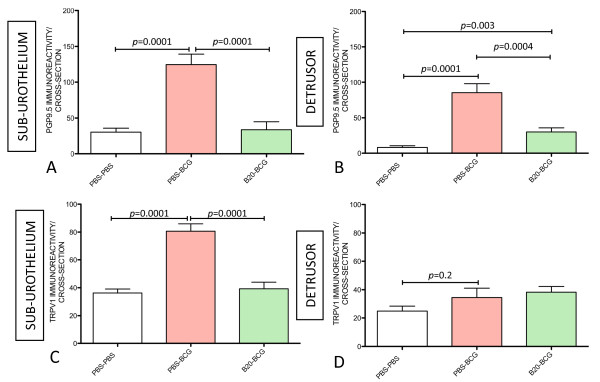
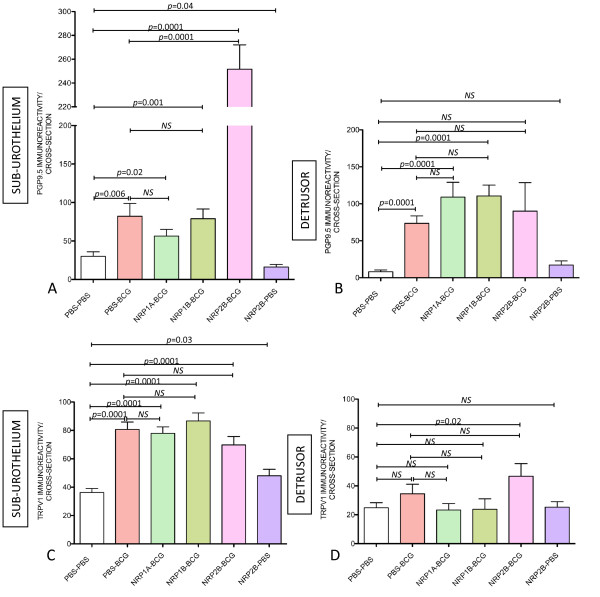
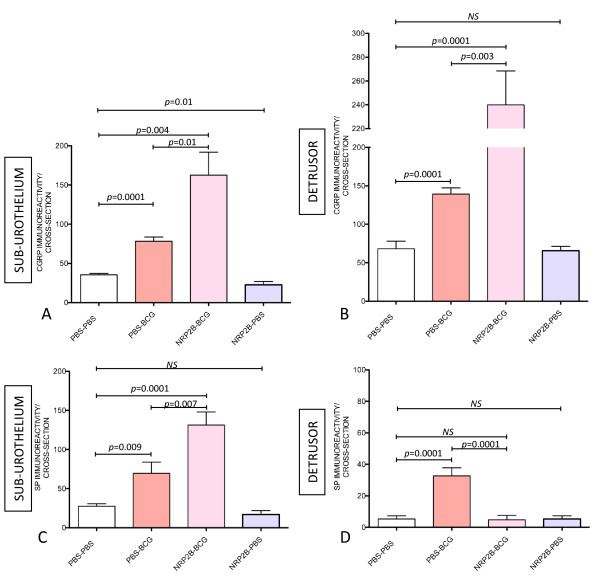
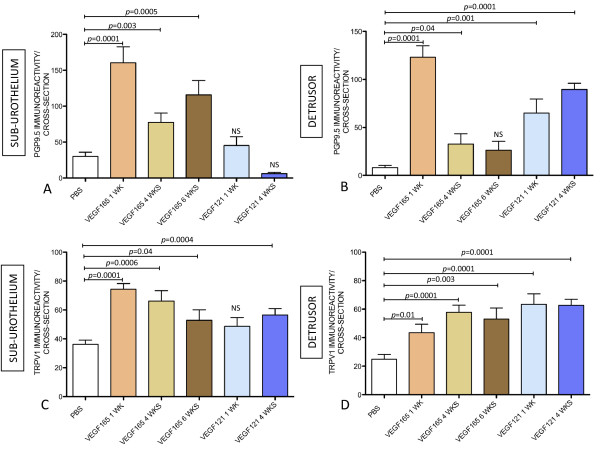
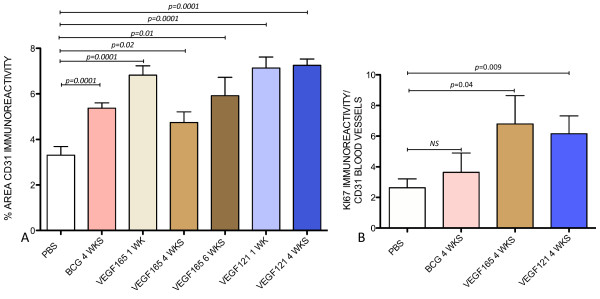
BACKGROUND: This work tests the hypothesis that increased levels of vascular endothelial growth factor (VEGF) observed during bladder inflammation modulates nerve plasticity. METHODS: Chronic inflammation was induced by intravesical instillations of Bacillus Calmette-Guérin (BCG) into the urinary bladder and the density of nerves expressing the transient receptor potential vanilloid subfamily 1 (TRPV1) or pan-neuronal marker PGP9.5 was used to quantify alterations in peripheral nerve plasticity. Some mice were treated with B20, a VEGF neutralizing antibody to reduce the participation of VEGF. Additional mice were treated systemically with antibodies engineered to specifically block the binding of VEGF to NRP1 (anti-NRP1B) and NRP2 (NRP2B), or the binding of semaphorins to NRP1 (anti-NRP1 A) to diminish activity of axon guidance molecules such as neuropilins (NRPs) and semaphorins (SEMAs). To confirm that VEGF is capable of inducing inflammation and neuronal plasticity, another group of mice was instilled with recombinant VEGF165 or VEGF121 into the urinary bladder. RESULTS: The major finding of this work was that chronic BCG instillation resulted in inflammation and an overwhelming increase in both PGP9.5 and TRPV1 immunoreactivity, primarily in the sub-urothelium of the urinary bladder. Treatment of mice with anti-VEGF neutralizing antibody (B20) abolished the effect of BCG on inflammation and nerve density.NRP1A and NRP1B antibodies, known to reduce BCG-induced inflammation, failed to block BCG-induced increase in nerve fibers. However, the NRP2B antibody dramatically potentiated the effects of BCG in increasing PGP9.5-, TRPV1-, substance P (SP)-, and calcitonin gene-related peptide (CGRP)-immunoreactivity (IR). Finally, instillation of VEGF121 or VEGF165 into the mouse bladder recapitulated the effects of BCG and resulted in a significant inflammation and increase in nerve density. CONCLUSIONS: For the first time, evidence is being presented supporting that chronic BCG instillation into the mouse bladder promotes a significant increase in peripheral nerve density that was mimicked by VEGF instillation. Effects of BCG were abolished by pre-treatment with neutralizing VEGF antibody. The present results implicate the VEGF pathway as a key modulator of inflammation and nerve plasticity, introduces a new animal model for investigation of VEGF-induced nerve plasticity, and suggests putative mechanisms underlying this phenomenon.
Overview
The claims and statistics of this paper haven’t been checked yet.
Free: it reads the open-access text and checks the first 5 claims that cite a source we can check. Create a free account to check every claim.
Integrity signals
Registry
Cites
Statistics
Figures
Verification
Claims the paper makes
The claims and statistics of this paper haven’t been checked yet.
Free: it reads the open-access text and checks the first 5 claims that cite a source we can check. Create a free account to check every claim.
Claims other papers make about this one
Each is checked against this paper’s own text: does it say what the citing paper says it does?
The source backs part of the claim, not all of it — or backs it for a different population, condition or comparison.
In the citing paper
“Results revealed that the main signaling pathways involved in the targets of PⅡ acting on pain were associated with inflammation (Saban et al., 2011, Park et al., 2011, Zhang et al., 2021, Lai et al., 2017, Yang et al., 2022, Dai et al., 2020).”
From Picroside Ⅱ attenuates neuropathic pain by regulating inflammation and spinal excitatory synaptic transmission (2024) · cites this paper as Saban et al., 2011
Experimental — accuracy not yet measured
Self-check
Percentages, sums and reported differences re-computed from the paper’s own numbers.
The self-check needs the paper’s full text.
Citations
Cites
Soker, S., Takashima, S., Miao, H. Q., Neufeld, G., & Klagsbrun, M. (1998) · Cell · doi:10.1016/s0092-8674(00)81402-6 · Cited by 2,463
Common mechanisms of nerve and blood vessel wiring
Carmeliet, P., & Tessier-Lavigne, M. (2005) · Nature · doi:10.1038/nature03875 · Cited by 1,085 · cited 2×
“In this context, many proteins that were originally discovered to be required for axon guidance have recently been implicated in the development of the vascular [10] and lymphatic systems [11].”
BackgroundChen, H., Chédotal, A., He, Z., Goodman, C. S., & Tessier-Lavigne, M. (1997) · Neuron · doi:10.1016/s0896-6273(00)80371-2 · Cited by 663
Mukouyama, Y.-S., Shin, D., Britsch, S., Taniguchi, M., & Anderson, D. J. (2002) · Cell · doi:10.1016/s0092-8674(02)00757-2 · Cited by 658
Abnormal lymphatic vessel development in neuropilin 2 mutant mice
Yuan, L., Moyon, D., Pardanaud, L., Bréant, C., Karkkainen, M. J., Alitalo, K., & Eichmann, A. (2002) · Development · doi:10.1242/dev.129.20.4797 · Cited by 632
Yazdani, U., & Terman, J. R. (2006) · Genome biology · doi:10.1186/gb-2006-7-3-211 · Cited by 537
Blocking Neuropilin-1 Function Has an Additive Effect with Anti-VEGF to Inhibit Tumor Growth
Pan, Q., Chanthery, Y., Liang, W.-C., Stawicki, S., Mak, J., Rathore, N., Tong, R. K., Kowalski, J., Yee, S. F., Pacheco, G., et al. (2007) · Cancer Cell · doi:10.1016/j.ccr.2006.10.018 · Cited by 532
Blood vessels and nerves: common signals, pathways and diseases
Carmeliet, P. (2003) · Nature Reviews Genetics · doi:10.1038/nrg1158 · Cited by 516
Messersmith, E. K., Leonardo, E. D., Shatz, C. J., Tessier-Lavigne, M., Goodman, C. S., & Kolodkin, A. L. (1995) · Neuron · doi:10.1016/0896-6273(95)90333-x · Cited by 503
Frontline: Neuropilin‐1: a surface marker of regulatory T cells
Bruder, D., Probst‐Kepper, M., Westendorf, A. M., Geffers, R., Beissert, S., Loser, K., von Boehmer, H., Buer, J., & Hansen, W. (2004) · European Journal of Immunology · doi:10.1002/eji.200324799 · Cited by 453
Research works printed but not linked: 1
- Pereira Lopes FR Lisboa BC Frattini F Almeida FM Tomaz MA Matsumoto PK Langone F Lora S Melo PA Borojevic R Han SW Martinez AM Enhancement of sciatic-nerve regeneration after VEGF gene therapy Neuropathol Appl Neurobiol 2011 21208251
Cited by
Peng, C., Jhang, J., Shie, J., & Kuo, H. (2013) · Urology · doi:10.1016/j.urology.2013.09.003 · Cited by 65
Astaxanthin alleviates neuropathic pain by inhibiting the MAPKs and NF-κB pathways
Zhao, L., Tao, X., & Song, T. (2021) · European Journal of Pharmacology · doi:10.1016/j.ejphar.2021.174575 · Cited by 53
Transient receptor potential channels in bladder function
Avelino, A., Charrua, A., Frias, B., Cruz, C. D., Boudes, M., Ridder, D. J. M. K. D., & Cruz, F. (2012) · Acta Physiologica · doi:10.1111/apha.12021 · Cited by 50
Self-citationRole of neurogenic inflammation in local communication in the visceral mucosa
Birder, L. A., & Kullmann, F. A. (2018) · Seminars in Immunopathology · doi:10.1007/s00281-018-0674-0 · Cited by 46
Malykhina, A. P., Lei, Q., Erickson, C. S., Epstein, M. L., Saban, M. R., Davis, C. A., & Saban, R. (2012) · BMC Physiology · doi:10.1186/1472-6793-12-15 · Cited by 46
Self-citationCichoń, N., Bijak, M., Czarny, P. L., Miller, E. D., Synowiec, E., Śliwiński, T., & Saluk, J. (2018) · Frontiers in Aging Neuroscience · doi:10.3389/fnagi.2018.00294 · Cited by 43
SETD6 regulates NF-κB signaling in urothelial cell survival: Implications for bladder cancer
Mukherjee, N. Z., Cardenas, E. R., Bedolla, R. G., & Ghosh, R. (2017) · Oncotarget · doi:10.18632/oncotarget.14750 · Cited by 37
Okinami, T., Imamura, M., Nishikawa, N., Negoro, H., Sugino, Y., Yoshimura, K., Kanematsu, A., Hashitani, H., & Ogawa, O. (2014) · PLoS ONE · doi:10.1371/journal.pone.0104216 · Cited by 35
Lai, H. H., Shen, B., Vijairania, P., Zhang, X., Vogt, S. K., & Gereau, R. W. (2017) · British Journal of Urology · doi:10.1111/bju.13924 · Cited by 33
Angiogenic factors, bladder neuroplasticity and interstitial cystitis-new pathobiological insights.
Saban, R. (2015) · PubMed Central · doi:10.3978/j.issn.2223-4683.2015.08.05 · Cited by 31
Self-citationTooke, K., Girard, B. M., & Vizzard, M. A. (2019) · American Journal of Physiology-Renal Physiology · doi:10.1152/ajprenal.00083.2019 · Cited by 26
Dang, K., Bielefeldt, K., & Gebhart, G. F. (2013) · Journal of Neurophysiology · doi:10.1152/jn.00945.2012 · Cited by 22
Włodarczyk, L., Cichoń, N., Karbownik, M. S., Saso, L., Saluk, J., & Miller, E. D. (2023) · Brain Sciences · doi:10.3390/brainsci13060846 · Cited by 20
In utero and lactational PCB exposure drives anatomic changes in the juvenile mouse bladder
Keil, K. P., Kennedy, C., Sethi, S., Valenzuela, A. E., Nunez, A., Wang, K., Wang, Z., Wang, P., Spiegelhoff, A., Puschner, B., et al. (2021) · Current Research in Toxicology · doi:10.1016/j.crtox.2021.01.002 · Cited by 16
Self-citationXie, A. X., Iguchi, N., Clarkson, T. C., & Malykhina, A. P. (2022) · PLoS ONE · doi:10.1371/journal.pone.0262769 · Cited by 15
Girard, B. M., Malley, S. E., May, V., & Vizzard, M. A. (2016) · Journal of Molecular Neuroscience · doi:10.1007/s12031-016-0774-z · Cited by 14
Assessing bladder hyper-permeability biomarkers in vivo using molecularly-targeted MRI.
Towner, R. A., Smith, N., Saunders, D., Lerner, M. R., Meerveld, B. G., & Hurst, R. E. (2020) · PubMed Central · Cited by 14
Self-citationSoriano, A., Andy, U. U., Hassani, D. B., WHITMORE, K. E., Harvie, H. S., Malykhina, A. P., & Arya, L. A. (2020) · Urogynecology · doi:10.1097/spv.0000000000000951 · Cited by 14
de Rijk, M. M., Wolf‐Johnston, A., Kullmann, F. A., Maringer, K. V., Sims‐Lucas, S., van Koeveringe, G. A., Rodríguez, L. V., & Birder, L. A. (2022) · International Neurourology Journal · doi:10.5213/inj.2244118.059 · Cited by 12
The Role of Urinary VEGF in Observational Studies of BPS/IC Patients: A Systematic Review
Abreu‐Mendes, P., Costa, A., Charrua, A., Pinto, R. A., & Cruz, F. (2022) · Diagnostics · doi:10.3390/diagnostics12051037 · Cited by 11
Self-citationAbdelgalil, A. I., Yassin, A. M., Khattab, M. S., Abdelnaby, E. A., Marouf, S., Farghali, H. A. M. A., & Emam, I. A. (2024) · Scientific Reports · doi:10.1038/s41598-024-63760-y · Cited by 9
Duan, D., Wang, L., Feng, Y., Hu, D., & Cui, D. (2024) · Canadian Journal of Physiology and Pharmacology · doi:10.1139/cjpp-2023-0171 · Cited by 3
Yesupatham, S. K., Malykhina, A. P., & Xie, A. X. (2025) · Physiological Genomics · doi:10.1152/physiolgenomics.00066.2025 · Cited by 3
Иманвердиева, Н. А., & Башкина, О. А. (2024) · The Russian Archives of Internal Medicine · doi:10.20514/2226-6704-2024-14-3-197-205 · Cited by 3
Signaling pathways related to interstitial cystitis
Wang, H., Liu, S., Sun, Y., & Wang, L. (2026) · Frontiers in Immunology · doi:10.3389/fimmu.2026.1774072 · Cited by 2
Interactive control of the lower urinary tract: translational models in functional and neuro-urology
de Rijk, M. M. (2023) · Research Publications (Maastricht University) · doi:10.26481/dis.20230328mr · Cited by 1
Mediators Of Bladder Dysfunction In A Rat Model Of Cyclophosphamide-Induced Cystitis
Beča, K. I. K. (2021) · ScholarWorks -A service of University of Vermont Libraries (University of Vermont) · Cited by 1
ROLE OF VASCULAR ENDOTHELIAL GROWTH FACTOR IN THE PATHOGENESIS OF ATOPIC DERMATITIS IN CHILDREN
Lebedenko, A. A., Евгеньевна, С. О., Kislov, E. O., Katysheva, Y. I., & Botsman, E. A. (2017) · Journal of Volgograd State Medical University · doi:10.19163/1994-9480-2017-3(63)-64-66 · Cited by 1
VALUES OF VASCULAR ENDOTHELIAL GROWTH FACTOR IN THE PATHOGENESIS OF ATOPIC DERMATITIS IN CHILDREN
Lebedenko, A. A., Евгеньевна, С. О., Kislov, E. O., Katysheva, Y. I., & Botsman, E. A. (2018) · Journal of Volgograd State Medical University · doi:10.19163/1994-9480-2018-3(67)-121-123 · Cited by 1
Non-Neuronal ATP : Regulation of Release and Action in the Bladder
Grundy, L. (2014) · e-publications@bond (Bond University) · Cited by 1
Role of the vascular endohelial growth factor in bladder pain syndrome/interstitial cystitis
Pereira, A. J. D. R. (2012) · Portuguese National Funding Agency for Science, Research and Technology (RCAAP Project by FCT) · doi:10.34626/mqmy-r413
Study of the genetic factors predisposing to the development of psoriasis
Lvov, A. N., Katunina, O. R., Znamenskaya, L. F., Валентиновна, М. А., Egorova, Y. Y., INOYATOVA, L. A., HAIRULLIN, R. F., & Волков, И. А. (2012) · Vestnik dermatologii i venerologii · doi:10.25208/vdv680
Mendes, P. F. P. D. A. (2025) · Portuguese National Funding Agency for Science, Research and Technology (RCAAP Project by FCT)
Assessing In Vivo Bladder Urothelial Hyper-Permeability: Preclinical and Clinical Implications
Towner, R. A., Saunders, D., & Smith, N. (2020) · Current Bladder Dysfunction Reports · doi:10.1007/s11884-020-00616-x
Metadata
- Authors
- Saban, M. R., Davis, C. A., Avelino, A., Cruz, F., Maier, J., Bjorling, D. E., Sferra, T. J., Hurst, R. E., & Saban, R.
- Affiliations
- University of Oklahoma Health Sciences Center (US)
- Hospital de São João (PT)
- Oklahoma Medical Research Foundation (US)
- University of Wisconsin–Madison (US)
- Corresponding author
- Saban, Ricardo
- Venue
- BMC Physiology
- Published
- 2011
- Volume
- 11
- Issue
- 1
- Pages
- 16
- ISSN
- 1472-6793 (ISSN-L)
- PMC
- PMC3226567
- OpenAlex
- W2006428440
- Semantic Scholar
- cf6a2f8b8abb6ce046da5a6cf66d9aeaa9168181
- Cited by
- 31
- References
- 65
- Citations by year
- 2026: 1 · 2024: 2 · 2023: 3 · 2022: 3 · 2021: 2 · 2020: 3 · 2019: 1 · 2018: 3 · 2017: 3 · 2016: 1 · 2015: 1 · 2014: 2 · 2013: 2 · 2012: 4
- FWCI
- 3.08
- Type
- journal article
- Language
- en
- Open access
- hybrid
- doi.org
- Licence
- cc-by
- Locations
- BMC Physiology (publishedVersion, cc-by)
- PubMed Central (publishedVersion, cc-by)
- PubMed (publishedVersion)
- DOAJ (DOAJ: Directory of Open Access Journals) (submittedVersion)
- Funders
- U.S. Department of Defense
- National Institute of Diabetes and Digestive and Kidney Diseases (R56DK066101, 2-R56-DK66101)
- Topics
- Health Sciences › Medicine › Urology › Urinary Bladder and Prostate Research
- Health Sciences › Medicine › Surgery › Bladder and Urothelial Cancer Treatments
- Health Sciences › Medicine › Physiology (medical) › Pain Mechanisms and Treatments
- Keywords
- VEGF signaling, neurogenic bladder, TRPV1, PGP 9.5, neuropilin-1, neuropilin-2, semaphorins, axon guidance, VEGF neutralizing antibody, substance P, calcitonin gene-related peptide, VEGF165, VEGF121
- MeSH terms
- Animals, BCG Vaccine, Urinary Bladder, Calcitonin, Female, Inflammation, Mice, Inbred C57BL, Neuronal Plasticity, Protein Precursors, Recombinant Proteins, Substance P, Signal Transduction, Urothelium, Neuropilins, Neuropilin-1, Neuropilin-2, Semaphorins, Vascular Endothelial Growth Factor A, Ubiquitin Thiolesterase, TRPV Cation Channels, Mice, Antibodies, Neutralizing
About these checks
Registry, retraction, Cites and statistics results are computed, not judged, with one exception: a printed reference that no index lists is read once by a model before it counts as a citation error. Claims are extracted by a model and kept only when their quote appears verbatim in the text; each cited source is then checked, with a model’s help, for whether it says what the claim relies on. Those verdicts can be wrong — read the claim’s quote and the cited source before relying on one.
Statistics and arithmetic are recomputed, not judged.
Confidence bands are shown only for fields calibrated on our annotated test set. None is calibrated yet, so no band is shown.
What counts as a claim ›How we measure confidence ›How we check this ›
Are you an author, or do you see a problem with this page? Request a review
Data sources
Bibliographic data: Semantic Scholar, OpenAlex, Crossref.
Contains information from the Semantic Scholar Academic Graph Datasets, made available under the ODC Attribution License (ODC-BY 1.0).
Semantic Scholar’s data is described in: Kinney, R., et al. (2023). The Semantic Scholar Open Data Platform. arXiv:2301.10140.
