

Evaluation of resident attitudes and self-reported competencies in health advocacy
Open accessThe DOI matches its Crossref record; 11 of the 12 references it cites were found in a registry or an index; 3 of the 13 sources its claims cite were checked for support.
Abstract
Background: The CanMEDS Health Advocate role, one of seven roles mandated by the Royal College of Physicians and Surgeons Canada, pertains to a physician's responsibility to use their expertise and influence to advance the wellbeing of patients, communities, and populations. We conducted our study to examine resident attitudes and self-reported competencies related to health advocacy, due to limited information in the literature on this topic. Methods: We conducted a pilot experience with seven internal medicine residents participating in a community health promotion event. The residents provided narrative feedback after the event and the information was used to generate items for a health advocacy survey. Face validity was established by having the same residents review the survey. Content validity was established by inviting an expert physician panel to review the survey. The refined survey was then distributed to a cohort of core Internal Medicine residents electronically after attendance at an academic retreat teaching residents about advocacy through didactic sessions. Results: The survey was completed by 76 residents with a response rate of 68%. The majority agreed to accept an advocacy role for societal health needs beyond caring for individual patients. Most confirmed their ability to identify health determinants and reaffirmed the inherent requirements for health advocacy. While involvement in health advocacy was common during high school and undergraduate studies, 76% of residents reported no current engagement in advocacy activity, and 36% were undecided if they would engage in advocacy during their remaining time as residents, fellows or staff. The common barriers reported were insufficient time, rest and stress. Conclusions: Medical residents endorsed the role of health advocate and reported proficiency in determining the medical and bio-psychosocial determinants of individuals and communities. Few residents, however, were actively involved in health advocacy beyond an individual level during residency due to multiple barriers. Further studies should address these barriers to advocacy and identify the reasons for the discordance we found between advocacy endorsement and lack of engagement.
Overview
CoChat Summary
TL;DR
This 2008 survey of University of British Columbia internal medicine residents found strong endorsement of the CanMEDS health advocate role and self-reported competency in identifying health determinants, but low current engagement in advocacy. Residents cited insufficient time, rest, and stress as main barriers.
Key findings
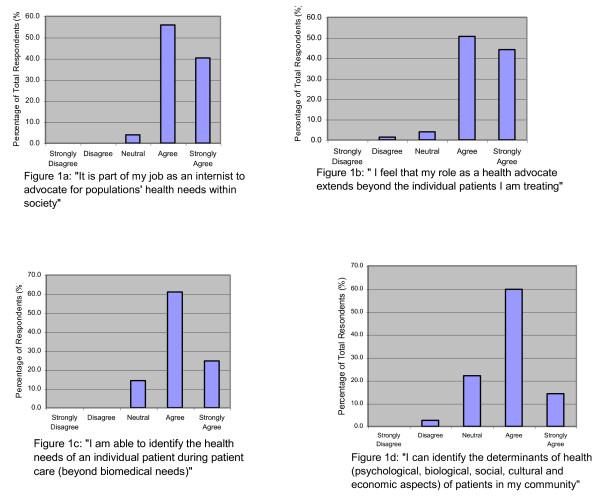
- 96% of respondents agreed or strongly agreed that advocating for populations’ health needs is part of their job, and 95% felt their health advocate role extended beyond individual patients.
- 86% agreed or strongly agreed they could identify an individual patient’s health needs beyond biomedical needs, while 75% said they could identify community determinants of health.
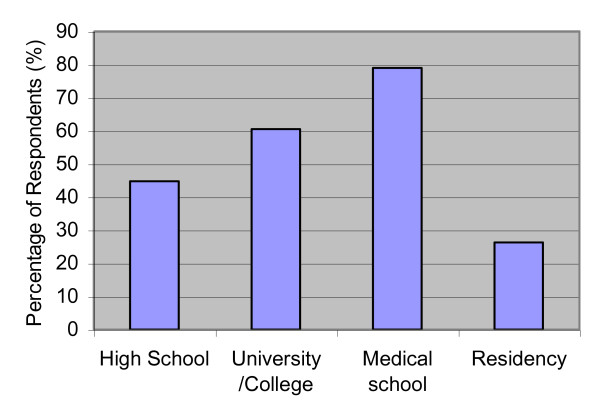
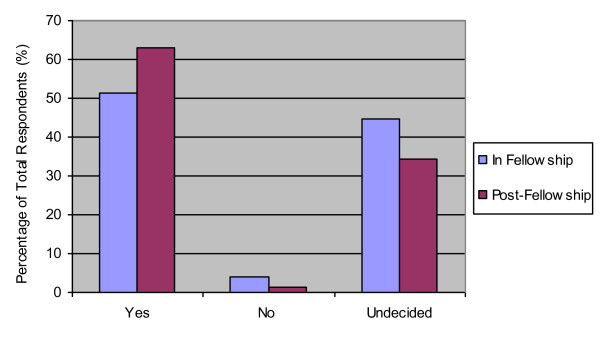
- 74% reported no current engagement in advocacy activity (the abstract states 76%); participation reportedly rose from high school to university to medical school, then dropped sharply during residency. 45% were undecided about engaging during fellowship and 34% post-fellowship.
- Common barriers reported in free-text comments were insufficient time, insufficient rest, and excess stress during residency.
Methods
- Pilot experience in 2008: 7 internal medicine residents participated in a community health promotion event in Vancouver’s downtown eastside, performing blood pressure measurements and cardiovascular risk counseling for 200 Cantonese-speaking older adults; their narrative feedback generated a 20-item Health Advocacy Questionnaire.
- Face validity was established by the same 7 residents; content validity by a 4-internist expert panel. The survey was distributed electronically to 111 core Internal Medicine residents after an “Advocacy in Action” academic retreat.
- 76 residents completed the survey (68% response rate; 32 PGY-1, 22 PGY-2, 22 PGY-3). Likert items were reported as percentages; open-ended comments were analyzed by thematic content analysis using Atlas.ti version 6.0.
Limitations
- The paper states: self-assessed competence was used as a surrogate for competency but has not been validated for this purpose; no data were available from non-respondents; and recall of prior advocacy engagement is susceptible to recall bias.
- Evident from the text: the study is a single-institution, single-specialty survey conducted immediately after an advocacy retreat, which may limit generalizability and may have influenced responses.
- Evident from the text: the reported percentage of residents not currently engaging in advocacy differs between the abstract (76%) and results (74%).
Model-written summary. Check it against the paper before relying on it.
Integrity signals
Registry
Cites
Statistics
Figures
Verification
Claims the paper makes
3 Valid · 0 Not valid · 7 Not checked · 25 Own results and interpretations
Every source the paper cites for this claim was checked and supports it.
In the paper
“In general, most graduates felt well prepared in the role of medical expert and over half felt adequately taught in the CanMEDS roles of communicator, collaborator, scholar, and professional.”
§ Evaluation of resident attitudes and self-reported competencies in health advocacy > Background
What the sources say
- Supportedcites [4] Card SE Snell L O'Brien B Are Canadian General Internal Medicine training program graduates well prepared for their future careers? BMC Med Educ 2006 6 56 10.1186/1472-6920-6-56 17112385 PMC1664564 source
Table 2 in the Results (page not specified) shows that a majority of respondents rated their preparation highly in 10 of 12 medical-expert skills. Preparation was lower for medical problems of pregnancy and pain management, but the overall pattern supports the claim that most graduates felt well prepared in this role. (LLM, conf=0.88)
plain- Asserted: passes — The authors put it forward as true.
- Checkable: passes — It can be checked against evidence.
- Load-bearing: unclear — It is unclear whether the paper’s conclusions depend on it.
- Based: passes — The paper gives a reason why it holds.
- Supported
A result the paper reports from its own data — it cites no other source for it, so there is none to check. The quote shows it is in the paper.
In the paper
“Specifically, 96% of residents agreed or strongly agreed that it was part of their job to advocate for populations' health needs within society (Figure 1a).”
§ Evaluation of resident attitudes and self-reported competencies in health advocacy > Results > Baseline attitudes and self-reported competencies in health advocacy
plain- Asserted: passes — The authors put it forward as true.
- Checkable: passes — It can be checked against evidence.
- Load-bearing: unclear — It is unclear whether the paper’s conclusions depend on it.
- Based: passes — The paper gives a reason why it holds.
A result the paper reports from its own data — it cites no other source for it, so there is none to check. The quote shows it is in the paper.
In the paper
“Ninety-five percent of respondents felt their role as a health advocate extended beyond the individual patient(s) they were treating (Figure 1b).”
§ Evaluation of resident attitudes and self-reported competencies in health advocacy > Results > Baseline attitudes and self-reported competencies in health advocacy
plain- Asserted: passes — The authors put it forward as true.
- Checkable: passes — It can be checked against evidence.
- Load-bearing: unclear — It is unclear whether the paper’s conclusions depend on it.
- Based: passes — The paper gives a reason why it holds.
A result the paper reports from its own data — it cites no other source for it, so there is none to check. The quote shows it is in the paper.
In the paper
“Seventy-four percent of residents reported no current engagement in advocacy activity.”
- Also stated in: § Discussion · plain
“Seventy-four percent of residents stated that they were not currently engaging in health advocacy activities”
§ Evaluation of resident attitudes and self-reported competencies in health advocacy > Results > Engagement in health advocacy activities
plain- Asserted: passes — The authors put it forward as true.
- Checkable: passes — It can be checked against evidence.
- Load-bearing: passes — The paper’s conclusions depend on it.
- Based: passes — The paper gives a reason why it holds.
- Also stated in: § Discussion · plain
A result the paper reports from its own data — it cites no other source for it, so there is none to check. The quote shows it is in the paper.
In the paper
“while 75% said they could identify the determinants of health of (psychological, biological, social, cultural, economic aspects) of patients in their community (Figure 1d).”
§ Evaluation of resident attitudes and self-reported competencies in health advocacy > Results > Baseline attitudes and self-reported competencies in health advocacy
plain- Asserted: passes — The authors put it forward as true.
- Checkable: passes — It can be checked against evidence.
- Load-bearing: unclear — It is unclear whether the paper’s conclusions depend on it.
- Based: passes — The paper gives a reason why it holds.
17 more claims
Create a free account to see all 35 claims and every source verdict.
- Probably not a substantial claim. 11
- It may state two separate claims as one. 3
Claims other papers make about this one
Each is checked against this paper’s own text: does it say what the citing paper says it does?
The source backs part of the claim, not all of it — or backs it for a different population, condition or comparison.
In the citing paper
“Often trainees enter residency with prior experiences in advocacy and a desire to continue that work; however, this interest drops during residency. 8, 9”
From A Systematic Review of Advocacy Curricula in Graduate Medical Education (2019) · cites this paper as [8]
Experimental — accuracy not yet measuredThe cited source says what the claim attributes to it.
In the citing paper
“We designed the survey instrument to evaluate participants’ skills, attitudes, and past experiences with advocacy based on previously validated surveys in the existing literature [21,22].”
From Self-reported evaluation of competencies and attitudes by physicians-in-training before and after a single day legislative advocacy experience (2012) · cites this paper as [22]
In the citing paper
“Literature indicates that while most medical students, residents, and physicians recognize the need for physician advocacy, many report that they have neither the competency nor the training necessary to be effective advocates.”
From Building a Community-Centered Public Health Advocacy Training Program for Medical Students (2022) · cites this paper as [6]
Self-check
Percentages, sums and reported differences re-computed from the paper’s own numbers.
Each contradiction between two passages listed here was confirmed by an independent check.
Rated minor: it would not touch a result — a value no result rests on, a p-value that stays on the same side of the significance level, or a conflict that is clerical, resolved elsewhere in the paper, or outside its own findings.
In the paper
§ Evaluation of resident attitudes and self-reported competencies in health advocacy > Abstract > Results
“76% of residents reported no current engagement in advocacy activity”
§ Evaluation of resident attitudes and self-reported competencies in health advocacy > Results > Engagement in health advocacy activities
“Seventy-four percent of residents reported no current engagement in advocacy activity.”
Citations
Cites
The CanMEDS 2005 Physician Competency Framework
Frank, J. R. (2005) · Cited by 1,136
The CanMEDS initiative: implementing an outcomes-based framework of physician competencies
Frank, J. R., & Danoff, D. (2007) · Medical Teacher · doi:10.1080/01421590701746983 · Cited by 1,004 · cited 2×
“The role of ah ealth advocate, as per the CanMEDS 2005 framework, is defined as “physicians (who) responsibly use their expertise and influence to advance the health and well-being of individual patients, communities, and populations.”[ 5 ] The key competencies outlined in this framework are that physicians are able t…”
The CanMEDS 2005 Physician Competency Framework: Better standards. Better physicians. Better care.
Frank, J. R. (2005) · Medical Entomology and Zoology · Cited by 632
Perspective: Physician Advocacy: What Is It and How Do We Do It?
Earnest, M. A., Wong, S. L., & Federico, S. G. (2010) · Academic Medicine · doi:10.1097/acm.0b013e3181c40d40 · Cited by 301 · cited 1×
“Other hypotheses that have been suggested include a gradual erosion of altruism during residency resulting in poor engagement, and endorsement of advocacy because it is socially desirable, but not inherently believed [12].”
Stress in Medical Residency: Status Quo after a Decade of Reform?
Collier, V. U., McCue, J. D., Markus, A., & Smith, L. (2002) · Annals of Internal Medicine · doi:10.7326/0003-4819-136-5-200203050-00011 · Cited by 271
Verma, S., Flynn, L., & Seguin, R. (2005) · Academic Medicine · doi:10.1097/00001888-200501000-00024 · Cited by 112 · cited 2×
“A review of the literature on resident attitudes towards health advocacy revealed few published studies [7,8].”
Declaration of Professional Responsibility: Medicine's Social Contract with Humanity.
(2002) · PubMed · Cited by 73
Card, S. E., Snell, L., & O'Brien, B. (2006) · BMC Medical Education · doi:10.1186/1472-6920-6-56 · Cited by 69 · cited 1×
“In 2006, recent graduates of Canadian general internal medicine (GIM) programs were surveyed to determine whether they felt well prepared in different aspects of medicine for their future careers [4].”
Community-Based Advocacy Training: Applying Asset-Based Community Development in Resident Education
Hufford, L., West, D. C., Paterniti, D. A., & Pan, R. J. (2009) · Academic Medicine · doi:10.1097/acm.0b013e3181a426c8 · Cited by 53 · cited 4×
“A review of the literature on resident attitudes towards health advocacy revealed few published studies [7,8].”
InfluentialBergman, A. B. (2003) · Pediatrics · doi:10.1542/peds.112.2.414 · Cited by 16 · cited 1×
“Stafford et al. BMC Medical Education 2010, 10:82 http://www.biomedcentral.com/1472-6920/10/82 Page 5 of 7 resident stress [ 9-11 ].”
Research works printed but not linked: 2
- Frank JR Jabbour M Tugwell P Skills for the new millennium: report of the societal needs working group, CanMEDS 2000 Project Annals Royal College of Physicians and Surgeons of Canada 1996 29 206 216
- Frank JR Cole G Lee C Mikhael N Jabbour M Progress in paradigm shift: the RCPSC CanMEDS Implementation Survey 200312879288
Cited by
Dharamsi, S., Ho, A., Spadafora, S. M., & Woollard, R. (2011) · Academic Medicine · doi:10.1097/acm.0b013e318226b43b · Cited by 204
Hubinette, M., Dobson, S., Scott, I., & Sherbino, J. (2017) · Medical Teacher · doi:10.1080/0142159x.2017.1245853 · Cited by 151
“What is expected of physicians as health advocates ranges widely in its possible activities and applications (Chou et al. 2008; Flynn & Verma 2008; Stafford et al. 2010).”
BackgroundEducating Health Care Professionals on Human Trafficking
Grace, A. M., Lippert, S. C., Collins, K., Pineda, N., Tolani, A. T., Walker, R., Jeong, M., Trounce, M. B., Graham-Lamberts, C., Bersamin, M. M., et al. (2014) · Pediatric Emergency Care · doi:10.1097/pec.0000000000000287 · Cited by 99
A Systematic Review of Advocacy Curricula in Graduate Medical Education
Howell, B. A., Kristal, R. B., Whitmire, L. R., Gentry, M., Rabin, T. L., & Rosenbaum, J. (2019) · Journal of General Internal Medicine · doi:10.1007/s11606-019-05184-3 · Cited by 88
Perspective: Agency and Activism
Dobson, S., Voyer, S., & Regehr, G. (2012) · Academic Medicine · doi:10.1097/acm.0b013e3182621c25 · Cited by 78
Kennie‐Kaulbach, N., Farrell, B. J., Ward, N. M., Johnston, S., Gubbels, A., Eguale, T., Dolovich, L. R., Jorgenson, D. J., Waite, N. M., & Winslade, N. E. (2012) · BMC Family Practice · doi:10.1186/1471-2296-13-27 · Cited by 75
The state of health advocacy training in postgraduate medical education: a scoping review
McDonald, M., Lavelle, C., Wen, M., Sherbino, J., & Hulme, J. (2019) · Medical Education · doi:10.1111/medu.13929 · Cited by 69
From the Clinic to the Community: The Activities and Abilities of Effective Health Advocates
Dobson, S., Voyer, S., Hubinette, M., & Regehr, G. (2014) · Academic Medicine · doi:10.1097/acm.0000000000000588 · Cited by 51
Hubinette, M. M., Ajjawi, R., & Dharamsi, S. (2014) · Academic Medicine · doi:10.1097/acm.0000000000000479 · Cited by 43
Prevalence and Characteristics of Advocacy Curricula in U.S. Medical Schools
Brender, T. D., Plinke, W., Arora, V. M., & Zhu, J. M. (2021) · Academic Medicine · doi:10.1097/acm.0000000000004173 · Cited by 42
Advocacy Training for Residents: Insights From Tulane’s Internal Medicine Residency Program
Andrews, J., Jones, C., Tetrault, J., & Coontz, K. (2019) · Academic Medicine · doi:10.1097/acm.0000000000002500 · Cited by 40
Wang, J., Liu, H., Cui, X., Jiao, Y., & Chen, H. (2022) · Information Technology and People · doi:10.1108/itp-12-2020-0878 · Cited by 43
Ng, S., Lingard, L., Hibbert, K., Regan, S., Phelan, S., Stooke, R. K., Meston, C. N., Schryer, C. F., Manamperi, M., & Friesen, F. (2015) · Disability and Rehabilitation · doi:10.3109/09638288.2015.1021021 · Cited by 55
“rehabilitation and health professions [41–44].”
Exploring patients’ and physicians’ perspectives about competent health advocacy
LaDonna, K. A., Watling, C. J., Cristancho, S. M., & Burm, S. (2021) · Medical Education · doi:10.1111/medu.14408 · Cited by 38
Poulton, A., & Rose, H. (2015) · Canadian Medical Education Journal · doi:10.36834/cmej.36665 · Cited by 36
“Despite the majority of programs using ITERs and the tools provided by the RCPSC, there does not seem to be a gold (or even a bronze) standard for assessment, which is reflected in the decreased level of satisfaction surrounding the role among educators.(24)”
MethodAbbasi, M., Shirazi, M., Torkmandi, H., Homayoon, S., & Abdi, M. (2023) · BMC Medical Education · doi:10.1186/s12909-023-04695-2 · Cited by 69
“Students acknowledged that they would be more willing to participate in medico-legal advocacy programs in the future [47].”
BackgroundPuddester, D. G., Macdonald, C. J., Clements, D., Gaffney, J., & Wiesenfeld, L. (2015) · BMC Medical Education · doi:10.1186/s12909-015-0375-5 · Cited by 37
“Time is also listed as a reason for why residents don’t engage in health advocacy [5, 26].”
BackgroundNurse Knowledge and Engagement in Health Policy Making: Findings From a Pilot Study
Lewinski, A. A., & Simmons, L. A. (2018) · The Journal of Continuing Education in Nursing · doi:10.3928/00220124-20180813-06 · Cited by 31
‘We’ not ‘I’: health advocacy is a team sport
Hubinette, M., Dobson, S., Voyer, S., & Regehr, G. (2014) · Medical Education · doi:10.1111/medu.12523 · Cited by 33
Advocacy: Achieving Physician Competency
Fried, J. E., Shipman, S. A., & Sessums, L. L. (2019) · Journal of General Internal Medicine · doi:10.1007/s11606-019-05278-y · Cited by 26
Patel, M., Bathory, E., Scholnick, J., White-Davis, T., Choi, J., & Braganza, S. F. (2017) · Clinical Pediatrics · doi:10.1177/0009922817728697 · Cited by 30
The teaching and learning of health advocacy in an Australian medical school
Douglas, A., Mak, D. B., Bulsara, C., Macey, D. J., & Samarawickrema, I. (2018) · International Journal of Medical Education · doi:10.5116/ijme.5a4b.6a15 · Cited by 29
Navigating complexity in team‐based clinical settings
LaDonna, K. A., Field, E., Watling, C., Lingard, L., Haddara, W. M. R., & Cristancho, S. (2018) · Medical Education · doi:10.1111/medu.13671 · Cited by 28
Predicting Levels of Policy Advocacy Engagement Among Acute-Care Health Professionals
Jansson, B. S., Nyamathi, A., Heidemann, G., Bird, M., Ward, C. R., Brown-Saltzman, K., Duan, L., & Kaplan, C. (2016) · Policy, Politics, & Nursing Practice · doi:10.1177/1527154416644836 · Cited by 20
Huntoon, K. M., McCluney, C. J., Wiley, E. A., Scannell, C. A., Bruno, R., & Stull, M. J. (2012) · BMC Medical Education · doi:10.1186/1472-6920-12-47 · Cited by 20
“We designed the survey instrument to evaluate participants’ skills, attitudes, and past experiences with advocacy based on previously validated surveys in the existing literature [21,22].”
MethodValidation of the Policy Advocacy Engagement Scale for frontline healthcare professionals
Jansson, B. S., Nyamathi, A., Heidemann, G., Duan, L., & Kaplan, C. (2017) · Nursing Ethics · doi:10.1177/0969733015603443 · Cited by 18
“In Canada, Stafford et al.(1) point out that advocacy is one of the seven roles mandated by the Canadian Royal College of Physicians and Surgeons.”
BackgroundFletcher, A., Chen, B., Benrimoh, D. A., Shemie, S. D., & Lubarsky, S. (2018) · Perspectives on Medical Education · doi:10.1007/s40037-018-0454-5 · Cited by 18
Intern preparedness for the CanMEDS roles and the Dunning-Kruger effect: a survey
Prozesky, D. R., Molwantwa, M. C., Nkomazana, O., & Kebaetse, M. B. (2019) · BMC Medical Education · doi:10.1186/s12909-019-1836-z · Cited by 21
Navigating the uncertainty of health advocacy teaching and evaluation from the trainee’s perspective
Endres, K., Burm, S., Weiman, D. I., Karol, D., Dudek, N., Cowley, L., & LaDonna, K. (2021) · Medical Teacher · doi:10.1080/0142159x.2021.1967905 · Cited by 23
“Can you describe a specific clinical rotation/experience your learners must undergo that you feel addresses the HA role? a) F/U: if they answer no, what are the implications of that? b) F/U: if they answer no, why do you think it’s not there? c) F/U: if they answer no, do you have a plan in place to change it. d) F/U:…”
BackgroundInfluentialPullagura, G. R., Violette, R., Houle, S. K. D., & Waite, N. M. (2020) · Canadian Pharmacists Journal / Revue des Pharmaciens du Canada · doi:10.1177/1715163520960744 · Cited by 21
“Self-reported measures have been previously used to gauge knowledge and competence of health care providers in other settings.(43-47) Our results illustrate pharmacists’ self-reported knowledge of influenza disease and its vaccine and their confidence and ability to identify, assess and address patient vaccine concern…”
ResultNot just ‘for’ but ‘with’: health advocacy as a partnership process
Hubinette, M., Dobson, S., & Regehr, G. (2015) · Medical Education · doi:10.1111/medu.12755 · Cited by 17
Formal Advocacy Curricula in Family Medicine Residencies: A CERA Survey of Program Directors
Coutinho, A. J., Nguyen, B.-M., Kelly, C., Lin, K. W., Gits, A., Crichlow, R., & Moreno, G. (2020) · Family Medicine · doi:10.22454/fammed.2020.591430 · Cited by 16
Hakim, J. C.-E., Black, A., Gruslin, A., & Fleming, N. A. (2013) · Journal of Obstetrics and Gynaecology Canada · doi:10.1016/s1701-2163(15)30913-0 · Cited by 18
Doctors on Values and Advocacy: A Qualitative and Evaluative Study
Gallagher, S., & Little, M. (2016) · Health Care Analysis · doi:10.1007/s10728-016-0322-6 · Cited by 17
Health Advocacy Competency: Integrating Social Outreach into Surgical Education
Ying, Y., & Seabrook, C. (2019) · Journal of Surgical Education · doi:10.1016/j.jsurg.2018.11.006 · Cited by 12
Genova, T. D., Valentino, P. L., Gosselin, R., & Bhanji, F. (2015) · Paediatrics & Child Health · doi:10.1093/pch/20.1.30 · Cited by 13
Griffiths, E. P., Tong, M. S., Teherani, A., & Garg, M. (2021) · Medical Teacher · doi:10.1080/0142159x.2021.1935829 · Cited by 14
“…Divisadero Street Room 535, San Francisco, CA 94115, USA 2021 Informa UK Limited, trading as Taylor & Francis Group shows that, despite considering advocacy important, few engage in advocacy activities due to barriers including lack of time and knowledge (Stafford et al. 2010; Garg et al. 2019).”
BackgroundKromme, N. M. H., Ahaus, K., Gans, R. O. B., & van de Wiel, H. B. M. (2022) · PLoS ONE · doi:10.1371/journal.pone.0273848 · Cited by 14
Establishing Triage Competencies and Verification Processes: A Survey Study
Wolf, L. A., Delao, A. M., Simon, C., & Jodelka, F. M. (2024) · Journal of Emergency Nursing · doi:10.1016/j.jen.2024.09.005 · Cited by 19
Building Resiliency in Community Development: The Experiences of Women in Rural Communities in Ghana
Gyan, C., & Kwakye, J. (2025) · Social Inclusion · doi:10.17645/si.8705 · Cited by 16
“By advocating for education, these women are ensuring that future generations have greater opportunities, thereby strengthening the long‐term resilience of their communities (Kodaman et al., 2016; Stafford et al., 2010).”
Vildbrad, M. D., & Lyhne, J. D. (2014) · Advances in Medical Education and Practice · doi:10.2147/amep.s74876 · Cited by 9
Building a Community-Centered Public Health Advocacy Training Program for Medical Students
Shankar, S., Phinney, R., Krapek, A., & Surapaneni, V. L. (2022) · Journal of Public Health Management & Practice · doi:10.1097/phh.0000000000001486 · Cited by 7
Knowledge of CanMEDS-Family Medicine roles: survey of Canadian family medicine residents.
Ng, V., Burke, C. A., & Narula, A. (2013) · PubMed · Cited by 7
A Call to Service: Social Justice Is a Public Health Issue
Donohoe, M., & Schiff, G. D. (2014) · The AMA Journal of Ethic · doi:10.1001/virtualmentor.2014.16.09.ecas2-1409 · Cited by 12
Legislative Advocacy: Evaluation of a Grand Rounds Intervention for Pediatricians
Bensen, R., Roman, H. K., Bersamin, M. M., Lu, Y., Horwitz, S. M., & Chamberlain, L. J. (2013) · Academic Pediatrics · doi:10.1016/j.acap.2013.08.004 · Cited by 7
Strowd, R. E., III, Saylor, D. R., Salas, R. M. E., Thorpe, R. J., Cruz, T. E., & Gamaldo, C. E. (2016) · Neurology Clinical Practice · doi:10.1212/cpj.0000000000000237 · Cited by 6
“Improve oneself 32 (11) 27 (12) 2 (5) 3 (12) 0.”
InfluentialBurm, S., Cristancho, S., Watling, C., & LaDonna, K. A. (2022) · Advances in Health Sciences Education · doi:10.1007/s10459-022-10162-2 · Cited by 7
Jansson, B. S., Nyamathi, A., Heidemann, G., Duan, L., & Kaplan, C. D. (2015) · Social Work in Health Care · doi:10.1080/00981389.2015.1054059 · Cited by 7
“The organization of medical care has changed markedly in the United States as many physicians have become employees of hospitals and as hospitals have increasingly been subject to evaluation of their care by national authorities and by ranking agencies (Committee on Quality of Health Care in America, 2001).”
BackgroundInfluentialVaassen, S., Essers, B. A. B., Stammen, L. A., Walsh, K., Kerssens, M., Evers, S., Heyligers, I. C., Stassen, L. P. S., van Mook, W., & Noben, C. Y. G. (2022) · BMJ Open · doi:10.1136/bmjopen-2021-060682 · Cited by 6
Posner, G., Finlayson, S., Luna, V., Miller, D., & Fung-Kee-Fung, M. (2015) · Journal of Obstetrics and Gynaecology Canada · doi:10.1016/s1701-2163(15)30202-4 · Cited by 4
Teaching Advocacy Through Community-Based Service Learning: A Scoping Review
Patel, M., Chahal, J., & Simpson, A. I. F. (2021) · Academic Psychiatry · doi:10.1007/s40596-021-01411-4 · Cited by 8
Brito, M. O., Dugdale, C. M., Collins-Ogle, M. D., et al. (2020) · Clinical Infectious Diseases · doi:10.1093/cid/ciaa1531 · Cited by 4
Shah, S. H., Clark, M. D., Hu, K., Shoener, J. A., Fogel, J., Kling, W. C., & Ronayne, J. (2017) · JMIR Medical Education · doi:10.2196/mededu.7730 · Cited by 4
“Questions 1 and 2 were adapted from Stafford et al [22], questions 3 through 5, 7, 8, and 10 through 13 were from Emil et al [21], and questions 6 and 9 are original to this study.”
MethodMoledina, A., Ruller, S., Halman, S., & Ying, Y. (2024) · BMC Medical Education · doi:10.1186/s12909-024-05961-7 · Cited by 4
An Op-Ed Writing Curriculum for Medical Students to Engage in Advocacy Through Public Writing
Krishnamoorthi, V. R., Johnson, D. Y., Asay, S., Beem, A., Vuppaladhadiam, L., Keegan, G. E., Zietowski, M. L., Chen, S. L., Jain, S., & Arora, V. M. (2024) · Journal of General Internal Medicine · doi:10.1007/s11606-024-08629-6 · Cited by 4
Pharmacy Students Practicing Health Advocate Competency Roles in Workplace-Based Training
Fazelipour, M., Dhatt, A., Sun, T., Nemir, A., & Wilbur, K. (2023) · American Journal of Pharmaceutical Education · doi:10.1016/j.ajpe.2023.100118 · Cited by 3
ID/HIV Physician Ambassadors: Advancing Policy to Improve Health
Brito, M. O., Dugdale, C. M., Collins-Ogle, M. D., et al. (2020) · Journal of the Pediatric Infectious Diseases Society · doi:10.1093/jpids/piaa128 · Cited by 3
Paediatric residents: The next generation of advocacy leaders
Gosselin-Papadopoulos, R., & Pang, R. (2016) · Paediatrics & Child Health · doi:10.1093/pch/21.5.255 · Cited by 3
“The lack of time, personal stressors and need for rest are perceived as barriers to further engagement (10).”
BackgroundAre Australian junior doctors failing to act as health advocates? A qualitative analysis
Maloney, D. P. D., Moodie, R., Daube, M., & Wilson, A. N. (2022) · Australian and New Zealand Journal of Public Health · doi:10.1111/1753-6405.13266 · Cited by 5
Guo, Y.-C., Liu, X., Wang, S.-Q., & Liu, J. (2025) · Aslib Journal of Information Management · doi:10.1108/ajim-12-2024-1010 · Cited by 2
Tseng, Z., Beltran, C. P., Eldam, A., & Ramani, S. (2025) · Teaching and Learning in Medicine · doi:10.1080/10401334.2025.2540847 · Cited by 2
“31 Mentorship has been reported to be effective in helping physicians learn new skills as well as empowering them to advocate.”
Health advocacy training in undergraduate medical education over 20 years: A scoping review
Spencer, K., Uebel, K., Mohan, D., & Pather, N. (2026) · Medical Teacher · doi:10.1080/0142159x.2026.2649963 · Cited by 2
“It is arguably described as one of the most difficult domains of medical education to teach, learn, assess, and evaluate [2].”
Kreffter, K., Götz, S., Lisak-Wahl, S., Nguyen, T. H., Dragano, N., & Weyers, S. (2021) · Journal of Public Health · doi:10.1007/s10389-021-01601-2 · Cited by 2
Chenli, M., & Abrokwah, E. (2021) · Journal of Psychology in Africa · doi:10.1080/14330237.2021.1952713 · Cited by 2
Dhara, A., & Fraser, S. (2024) · Canadian Medical Education Journal · doi:10.36834/cmej.75274 · Cited by 6
Rosser, M. L., McAndrew, T., & Thornton, K. M. (2017) · Clinical Obstetrics Gynecology and Reproductive Medicine · doi:10.15761/cogrm.1000180 · Cited by 2
“” Despite the recognition physician advocacy has received, to date, few studies have assessed women’s health advocacy knowledge for resident physicians [9-11].”
BackgroundAbdi, M., Norouzi, A., & Mafinejad, M. K. (2025) · International Journal of Clinical Practice · doi:10.1155/ijcp/5167920 · Cited by 2
Trivedi, B., Mares, A. C., Kattamuri, L. P. V., Reddy, S. B., Mukherjee, D., Harindranathan, P., Hechanova, L. A., Edwards, B., Dwivedi, A. K., & Deoker, A. (2025) · Journal of Investigative Medicine · doi:10.1177/10815589251406266 · Cited by 2
“18 At Tulane, residents expressed interest but lacked opportunities, prompting creation of an Advocacy and Leadership Track, though its success was not objectively measured.”
Knowledge of CanMEDS–Family Medicine roles
Ng, V., Burke, C. A., & Narula, A. (2013) · Canadian Family Physician · Cited by 1
Increasing Advocacy Awareness in Early Career Rheumatologists: A Web‐Based Educational Tool
Ban, B. H., Gokaraju, S., Worthing, A. B., Maher, K., Wright, G. C., & Kerr, G. S. (2022) · Arthritis Care & Research · doi:10.1002/acr.24719 · Cited by 1
“periods, and the additional stress of further training requirements (4).”
BackgroundTrivedi, B., Mares, A. C., Mukherjee, D., et al. (2023) · Research Square · doi:10.21203/rs.3.rs-3426316/v1 · Cited by 1
Cruickshank, M., & Law, M. (2014) · International Journal of Family Medicine · doi:10.1155/2014/458184
Kassam, A. (2011) · Canadian Medical Education Journal · doi:10.36834/cmej.36575
“Similar concerns about the Health Advocate role were shown in another study where Canadian faculty and residents did not fully understand the concept of health advocacy and more knowledge was required about how to teach and evaluate this role.(6,8,9) These findings suggest that further investigation into the current t…”
ResultETHICS CASE A Call to Service: Social Justice Is a Public Health Issue
Donohoe, M., & Schiff, G. D. (2014)
Internists' interactions with chronically ill patients: dilemmas and ambivalence toward their role
Kromme, N. M. H. (2023) · University of Groningen research database (University of Groningen / Centre for Information Technology) · doi:10.33612/diss.576013922
Sports advocacy and equity in sports
Pfister, B., Ruparell, S., & LaBella, C. R. (2023) · Elsevier eBooks · doi:10.1016/b978-0-323-99992-2.00049-9
Weiner, A. S. B., & Weiner, L. H. (2025) · FOCUS The Journal of Lifelong Learning in Psychiatry · doi:10.1176/appi.focus.20250006
Jing, L., Shan, W., Xu, T., Li, W., & Zhang, Y. (2026) · Industrial Management & Data Systems · doi:10.1108/imds-06-2025-0761 · Cited by 2
Awareness and Understanding of Saudi MEDS Competencies among Family Medicine Residents
Alqumaizi, A. K., Alosaimi, A. K., Alsahabi, B. K., et al. (2026) · Journal of Clinical Practice and Medical Research · doi:10.59324/jcpmr.2026.2(2).10
Hosseini, H., Sadati, A. K., Afshani, A., & Honarvar, B. (2026) · Payesh (Health Monitor) Journal · doi:10.66224/payesh.25.1.31
Colaneri, N., Griffiths, E. P., Teasdale, S., Jain, S., Charat, S., Santiago, C., Yamamoto, K., Binder, E., & Shankar, M. (2026) · Journal of General Internal Medicine · doi:10.1007/s11606-026-10717-8
Metadata
- Authors
- Stafford, S., Sedlak, T., Fok, M. C., & Wong, R. Y.
- Affiliations
- University of British Columbia (CA)
- Corresponding author
- Wong, Roger Y
- Venue
- BMC Medical Education
- Published
- 2010-11-18
- Volume
- 10
- Issue
- 1
- Pages
- 82-82
- ISSN
- 1472-6920 (ISSN-L)
- PMC
- PMC2999597
- OpenAlex
- W2049062401
- Semantic Scholar
- f1c9abb8c45a43fe49ad7003dcb2f0d4e8b8db8b
- Cited by
- 89
- References
- 12
- Citations by year
- 2026: 5 · 2025: 5 · 2024: 6 · 2023: 6 · 2022: 6 · 2021: 7 · 2020: 5 · 2019: 4 · 2018: 6 · 2017: 3 · 2016: 5 · 2015: 8 · 2014: 9 · 2013: 4 · 2012: 3
- FWCI
- 5.55
- Type
- journal article
- Language
- en
- Open access
- gold
- doi.org
- Licence
- Locations
- BMC Medical Education (publishedVersion, cc-by)
- PubMed (publishedVersion)
- PubMed Central (submittedVersion, cc-by)
- cIRcle (University of British Columbia) (submittedVersion, cc-by)
- DOAJ (DOAJ: Directory of Open Access Journals) (submittedVersion, cc-by-sa)
- Topics
- Health Sciences › Medicine › Pediatrics, Perinatology and Child Health › Child and Adolescent Health
- Health Sciences › Health Professions › General Health Professions › Ethics in medical practice
- Health Sciences › Medicine › Public Health, Environmental and Occupational Health › Public Health Policies and Education
- Keywords
- health advocacy, CanMEDS roles, medical residents, internal medicine residency, resident attitudes, self-reported competencies, barriers to advocacy, health determinants
- MeSH terms
- Attitude of Health Personnel, British Columbia, Clinical Competence, Curriculum, Data Collection, Health Promotion, Humans, Internal Medicine, Internship and Residency
About these checks
Registry, retraction, Cites and statistics results are computed, not judged, with one exception: a printed reference that no index lists is read once by a model before it counts as a citation error. Claims are extracted by a model and kept only when their quote appears verbatim in the text; each cited source is then checked, with a model’s help, for whether it says what the claim relies on. Those verdicts can be wrong — read the claim’s quote and the cited source before relying on one.
A language model drew the claims from the paper on 2026-10-10, under version 3 of the claim definition (model deepseek-v4.1-flash, prompt extract-v3).
A second model labelled each claim on 2026-10-10 (model jev-1.13-20260917, definition revision gold-guideline-v0.2).
Cited sources are checked with a language model’s help (gpt-6-sol).
Statistics and arithmetic are recomputed, not judged.
Confidence bands are shown only for fields calibrated on our annotated test set. None is calibrated yet, so no band is shown.
What counts as a claim ›How we measure confidence ›How we check this ›
Are you an author, or do you see a problem with this page? Request a review
Data sources
Bibliographic data: Semantic Scholar, OpenAlex, Crossref.
Contains information from the Semantic Scholar Academic Graph Datasets, made available under the ODC Attribution License (ODC-BY 1.0).
Semantic Scholar’s data is described in: Kinney, R., et al. (2023). The Semantic Scholar Open Data Platform. arXiv:2301.10140.
