

THE VAXED PROJECT: An Assessment of Immunization Education in Canadian Health Professional Programs
Open accessThe DOI matches its Crossref record; 17 of the 17 references it cites were found in a registry or an index.
Abstract
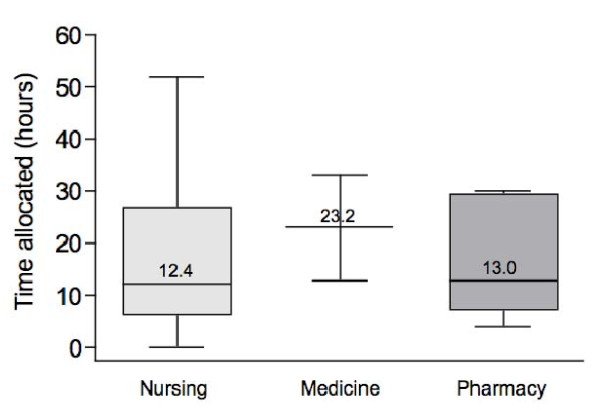
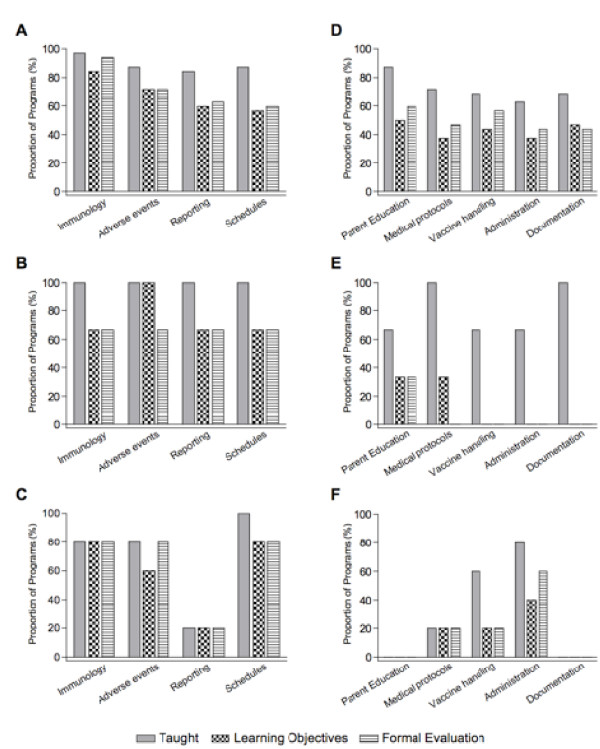
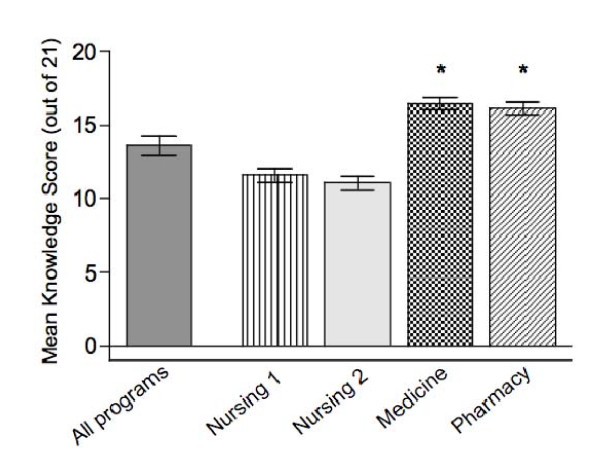
Background: Knowledge & attitudes of healthcare providers (HCP) have significant impact on frequency with which vaccines are offered & accepted but many HCP are ill equipped to make informed recommendations about vaccine merits & risks. We performed an assessment of the educational needs of trainees regarding immunization and used the information thus ascertained to develop multi-faceted, evaluable, educational tools which can be integrated into formal education curricula. Methods: (i) A questionnaire was sent to all Canadian nursing, medical & pharmacy schools to assess immunization-related curriculum content (ii) A 77-item web-based, validated questionnaire was emailed to final-year students in medicine, nursing, & pharmacy at two universities in Nova Scotia, Canada to assess knowledge, attitudes, & behaviors reflecting current immunization curriculum. Results: The curriculum review yielded responses from 18%, 48%, & 56% of medical, nursing, & pharmacy schools, respectively. Time spent on immunization content varied substantially between & within disciplines from <1 to >50 hrs. Most schools reported some content regarding vaccine preventable diseases, immunization practice & clinical skills but there was considerable variability and fewer schools had learning objectives or formal evaluation in these areas. 74% of respondents didn't feel comfortable discussing vaccine side effects with parents/patients & only 21% felt they received adequate teaching regarding immunization during training. Conclusions: Important gaps were identified in the knowledge of graduating nursing, medical, & pharmacy trainees regarding vaccine indications/contraindications, adverse events & safety. The national curriculum review revealed wide variability in immunization curriculum content & evaluation. There is clearly a need for educators to assess current curricula and adapt existing educational resources such as the Immunization Competencies for Health Professionals in Canada.
Overview
The claims and statistics of this paper haven’t been checked yet.
Free: it reads the open-access text and checks the first 5 claims that cite a source we can check. Create a free account to check every claim.
Integrity signals
Registry
Cites
Statistics
Figures
Verification
Claims the paper makes
The claims and statistics of this paper haven’t been checked yet.
Free: it reads the open-access text and checks the first 5 claims that cite a source we can check. Create a free account to check every claim.
Claims other papers make about this one
Each is checked against this paper’s own text: does it say what the citing paper says it does?
The cited source says what the claim attributes to it.
In the citing paper
“Despite varied levels of education across the three HCP learner disciplines, participants reported similar baseline scores on all three pre-VSG self-assessments, suggesting that the variable amounts of immunization-related training and clinical experiences in different HCP programs previously identified [22] does not result in any differences in HCP learner confidence or self-efficacy.”
Self-check
Percentages, sums and reported differences re-computed from the paper’s own numbers.
The self-check needs the paper’s full text.
Citations
Cites
Mail and internet surveys : the tailored design method
Dillman, D. A. (2007) · Cited by 9,587
Mail and Internet Surveys: The Tailored Design Method
Chisnall, P. M. (2007) · Journal of Advertising Research · doi:10.2501/s0021849907070232 · Cited by 3,219 · cited 2×
“Dillman DA: Mail and internet surveys: the tailored design method.”
MethodUnderimmunization Among Children: Effects of Vaccine Safety Concerns on Immunization Status
Gust, D. A., Strine, T. W., Maurice, E., Smith, P., Yusuf, H., Wilkinson, M., Battaglia, M., Wright, R., & Schwartz, B. (2004) · Pediatrics · doi:10.1542/peds.114.1.e16 · Cited by 293
Why do parents decide against immunization? The effect of health beliefs and health professionals
Smailbegovic, M. S., Laing, G. J., & Bedford, H. (2003) · Child: Care, Health and Development · doi:10.1046/j.1365-2214.2003.00347.x · Cited by 190
Factors underlying suboptimal childhood immunisation
Tickner, S., Leman, P. J., & Woodcock, A. J. (2006) · Vaccine · doi:10.1016/j.vaccine.2006.06.060 · Cited by 131 · cited 1×
“Public and provider confidence in vaccine efficacy, concern about potential side-effects, and lack of knowledge about vaccine contraindications are common reasons for non-compliance and have been shown to contribute to lower immunization coverage in both adult and pediatric populations [4-8].”
BackgroundInfluenza Vaccination of Healthcare Workers in the United States, 1989-2002
Walker, F. J., Singleton, J. A., Lu, P.-J., Wooten, K. G., & Strikas, R. A. (2006) · Infection Control and Hospital Epidemiology · doi:10.1086/501538 · Cited by 120 · cited 1×
“In 2007-2008 only 54% of direct care providers and 37% of support staff in acute care facilities in Nova Scotia received influenza vaccination; this rate is similar to published rates for providers in the United States and Canada [9-11].”
ResultAn internet-based survey on parental attitudes towards immunization
Heininger, U. (2006) · Vaccine · doi:10.1016/j.vaccine.2006.05.029 · Cited by 110 · cited 1×
“Public and provider confidence in vaccine efficacy, concern about potential side-effects, and lack of knowledge about vaccine contraindications are common reasons for non-compliance and have been shown to contribute to lower immunization coverage in both adult and pediatric populations [4-8].”
BackgroundWood, D., Pereyra, M. R., Halfon, N., Hamlin, J., & Grabowsky, M. (1995) · American Journal of Public Health · doi:10.2105/ajph.85.6.850 · Cited by 72
Physician Knowledge of Catch-up Regimens and Contraindications for Childhood Immunizations
Cohen, N. J., Lauderdale, D. S., Shete, P. B., Seal, J. B., & Daum, R. S. (2003) · PEDIATRICS · doi:10.1542/peds.111.5.925 · Cited by 68
A Canadian national survey of attitudes and knowledge regarding preventive vaccines
Ritvo, P., Irvine, J., Klar, N. S., Wilson, K. R., Brown, L., Bremner, K. E., Rinfret, A., Remis, R. S., & Krahn, M. D. (2003) · Journal of Immune Based Therapies and Vaccines · doi:10.1186/1476-8518-1-3 · Cited by 67
Research works printed but not linked: 1
- Public Health Agency of Canada Immunization competencies for health professionals 2008 Ottawa: Authority of the Minister of Health
Cited by
Vaccine Education of Medical Students: A Nationwide Cross-sectional Survey
Kernéis, S., Jacquet, C., Bannay, A., May, T., Launay, O., Verger, P., Pulcini, C., Abgueguen, P., Ansart, S., Bani‐Sadr, F., et al. (2017) · American Journal of Preventive Medicine · doi:10.1016/j.amepre.2017.01.014 · Cited by 151
Vaccine hesitancy in health-care providers in Western countries: a narrative review
Verger, P., Botelho-Nevers, É., Garrison, A., Gagnon, D., Gagneur, A., Gagneux‐Brunon, A., & Dubé, È. (2022) · Expert Review of Vaccines · doi:10.1080/14760584.2022.2056026 · Cited by 123
Knowledge and attitudes toward vaccination: A survey of Serbian students
Cvjetković, S., Stojković, V. J., & Tiosavljević, D. (2017) · Journal of Infection and Public Health · doi:10.1016/j.jiph.2017.05.008 · Cited by 105
Dybsand, L. L., Hall, K. J., & Carson, P. J. (2019) · BMC Medical Education · doi:10.1186/s12909-019-1678-8 · Cited by 108
“Research has shown that vaccine related knowledge varies substantially by HCP discipline, with a wide variability in immunization curriculum [10, 18, 21, 22].”
BackgroundMethodResultInfluentialVaccine hesitancy educational tools for healthcare providers and trainees: A scoping review
Lip, A., Pateman, M., Fullerton, M. M., Chen, H. M., Bailey, L., Houle, S., Davidson, S., & Constantinescu, C. (2023) · Vaccine · doi:10.1016/j.vaccine.2022.09.093 · Cited by 74
Awadh, A. I. J., Hassali, M. A., Allela, O. Q. B., Bux, S. H., Elkalmi, R. M., & Hadi, H. A. (2014) · BMC Public Health · doi:10.1186/1471-2458-14-1107 · Cited by 79
“Despite such global success and the proven impact on human health and life expectancy, vaccines are still under-utilized [5].”
BackgroundMethodBrown, V. B., Oluwatosin, O., Akinyemi, J. O., & Adeyemo, A. (2015) · Journal of Community Health · doi:10.1007/s10900-015-0092-3 · Cited by 58
Vaccination perception and coverage among healthcare students in France in 2019
Baldolli, A., Michon, J., Verdon, R., & Fournier, A. L. (2020) · BMC Medical Education · doi:10.1186/s12909-020-02426-5 · Cited by 42
“2% felt they received an adequate teaching about vaccines [24].”
BackgroundBuilding Confidence in Vaccines
Smith, J. C., Appleton, M., & MacDonald, N. E. (2012) · Advances in experimental medicine and biology · doi:10.1007/978-1-4614-4726-9_6 · Cited by 36
Berenson, A. B., Hirth, J. M., Chang, M., Kuo, Y., Richard, P. L., & Jones, D. L. (2021) · Human Vaccines & Immunotherapeutics · doi:10.1080/21645515.2020.1852871 · Cited by 30
“This is in agreement with prior studies(30,31) and has been attributed to variations in program curriculum.(30,32) Within programs, students further along in their training had higher levels of HPV knowledge.”
ResultGhandora, H., Halperin, B. A., Isenor, J. E., Taylor, B. A., Fullsack, P., Castri, A. M. D., & Halperin, S. A. (2018) · Human Vaccines & Immunotherapeutics · doi:10.1080/21645515.2018.1543523 · Cited by 29
Self-citationFirst year allopathic medical student attitudes about vaccination and vaccine hesitancy
Onello, E. C., Friedrichsen, S. C., Krafts, K., Simmons, G. E., Jr., & Diebel, K. W. (2019) · Vaccine · doi:10.1016/j.vaccine.2019.10.094 · Cited by 23
Assessing Primary Health Care Nurses’ Knowledge toward Immunizations: A Quantitative Study
Abdulla, E., Johnson, J. M., Munir, S., & O’Dwyer, R. (2020) · Journal of Public Health Research · doi:10.4081/jphr.2020.1716 · Cited by 22
POSITIVE AND NEGATIVE ACUTE PHASE REACTANTS IN SMOKERS
Helvacı, M. R., Altıntaşž, E., Yalçın, A., Muftuoglu, O. E., Abyad, A., & Pocock, L. (2022) · Middle East Journal of Nursing · doi:10.5742/mejn2021.9378026 · Cited by 21
A systematic review of pre-service training on vaccination and immunization
Tchoualeu, D. D., Fleming, M. K., & Traicoff, D. A. (2023) · Vaccine · doi:10.1016/j.vaccine.2023.03.062 · Cited by 21
“%) of the 21 articles felt they had not received adequate teaching on vaccines; [21,23,27,29,30,32,36] and 1 (5”
BackgroundEiden, A. L., Drakeley, S. C., Modi, K., Mackie, D. S., Bhatti, A. A., & DiFranzo, A. (2024) · Vaccine · doi:10.1016/j.vaccine.2024.126437 · Cited by 19
Sanftenberg, L., Roggendorf, H., Babucke, M., Breckwoldt, J., Gaertner, B., Hetzer, B., Lendeckel, A., Riemenschneider, H., Voigt, K., Keplinger, A., et al. (2019) · Journal of preventive medicine and hygiene · doi:10.15167/2421-4248/jpmh2020.61.1.1308 · Cited by 17
Medical Student Knowledge, Attitudes, and Practices Regarding Immunization
Deeva Berera Kimberly, M. (2012) · Journal of Vaccines & Vaccination · doi:10.4172/2157-7560.1000268 · Cited by 16
“We obtained permission to use knowledge, attitude, and practice questions from a previously validated instrument used in a study in Canada [8].”
BackgroundMethodInfluentialImmunization education for internal medicine residents: A cluster-randomized controlled trial
Whitaker, J. A., Poland, C. M., Beckman, T. J., Bundrick, J. B., Chaudhry, R., Grill, D. E., Halvorsen, A. J., Huber, J. M., Kasten, M. J., Mauck, K. F., et al. (2018) · Vaccine · doi:10.1016/j.vaccine.2018.02.082 · Cited by 14
Evaluation of a pilot immunization curriculum to meet competency training needs of medical residents
Shalansky, R. A., Wu, M., Shen, S. C., Furness, C. D., Morris, S. K., Reynolds, D. L., Wong, T., Pakes, B. N., & Crowcroft, N. S. (2020) · BMC Medical Education · doi:10.1186/s12909-020-02349-1 · Cited by 14
“A Canadian study, the VaxEd Project, conducted with nursing, medical and pharmacy school students found that 74% of participants did not feel comfortable discussing potential vaccine-related side effects, and only 21% felt that they received adequate immunization teaching [8].”
MethodHu, Y. (2015) · International Journal of Vaccines and Immunization · doi:10.16966/2470-9948.106 · Cited by 18
“Those migrant children whose mothers had suboptimal KAP level on immunization must be treated as the key group to maintain or improve vaccination coverage through effective interventions such as Reaching Every District (RED), out-reach vaccination services and health education [34-36].”
BackgroundKałucka, S., Dziankowska–Zaborszczyk, E., Grzegorczyk-Karolak, I., & Głowacka, A. (2020) · Vaccines · doi:10.3390/vaccines8030516 · Cited by 18
“Educational programs regarding vaccination in medical schools are intended to increase knowledge, the ability to talk about potential side effects, positive attitudes to vaccination, and building immunization confidence [54,55], because vaccinated students and HCWs have higher knowledge of the vaccine and influenza th…”
BackgroundSimulated Encounters With Vaccine-Hesitant Parents: Arts-Based Video Scenario and a Writing Exercise
Koski, K., Lehto, J. T., & Hakkarainen, K. (2018) · Journal of Medical Education and Curricular Development · doi:10.1177/2382120518790257 · Cited by 13
Knowledge and attitudes toward vaccination among Saudi medical students
Sahli, A., Mjrby, L., Alsrori, Z. M., Kamili, F., Althurwi, H., Zalah, A., Alharbi, H., & Alharbi, H. (2020) · Journal of Family Medicine and Primary Care · doi:10.4103/jfmpc.jfmpc_1061_19 · Cited by 12
“Previous research conducted on medical students recognized the importance of evaluating students’ knowledge and attitudes toward vaccines to plan targeted interventions to help equip students for future patient interaction regarding vaccination.[18,19]”
BackgroundResultMellucci, C., Tamburrano, A., Cassano, F., Galletti, C., Sguera, A., Damiani, G., & Laurenti, P. (2020) · International Journal of Environmental Research and Public Health · doi:10.3390/ijerph17197191 · Cited by 12
“From the literature, personal awareness and knowledge of the HCWs are considered the main factor for increasing vaccinations and spreading recommendations to the patients [12], as well as the self-protection of HCWs and the protection of family members or colleagues [13].”
BackgroundDoucette, E. J., Fullerton, M. M., Pateman, M., Lip, A., Houle, S. K. D., Kellner, J. D., Leal, J., MacDonald, S. E., McNeil, D., Tyerman, J., et al. (2024) · BMC Medical Education · doi:10.1186/s12909-024-05169-9 · Cited by 11
“…reported similar baseline scores on all three pre-VSG self-assessments, suggesting that the variable amounts of immunization-related training and clinical experiences in different HCP programs previously identified [22] does not result in any differences in HCP learner confidence or self-efficacy.”
ResultWhite, P. M., Alberti, H., Rowlands, G., Tang, E. Y. H., Gagnon, D., & Dubé, È. (2024) · Human Vaccines & Immunotherapeutics · doi:10.1080/21645515.2024.2397875 · Cited by 15
Ilogu, L. C., Lugovska, O., Vojtek, I., Prugnola, A., Callegaro, A., Mazzilli, S., & Damme, P. V. (2021) · Human Vaccines & Immunotherapeutics · doi:10.1080/21645515.2021.1938492 · Cited by 12
“Positive associations between vaccine knowledge and attitudes to vaccination have been shown previously in other studies.(5,9,23,28) We observed that vaccine knowledge, attitudes, and confidence, as well as the intent to vaccinate, were all influenced by age, with higher scores in older students, even though the agegr…”
ResultImmunization services offered in Québec (Canada) pharmacies
Sauvageau, C., Dubé, È., Bradet, R., Mondor, M., Lavoie, F., & Moisan, J. (2013) · Human Vaccines & Immunotherapeutics · doi:10.4161/hv.25186 · Cited by 11
“An assessment of immunization education in Canadian health professional programs showed important gaps in the knowledge of graduating pharmacy trainees regarding vaccine topics.(10) Little is published about immunization services in pharmacies in Canada.”
BackgroundA Needs-Based Analysis of Teaching on Vaccinations and COVID-19 in German Medical Schools
Baessler, F., Zafar, A., Mengler, K., Natus, R. N., Dutt, A. J., Kuhlmann, M., Çinkaya, E., & Hennes, S. (2022) · Vaccines · doi:10.3390/vaccines10060975 · Cited by 11
“However, our findings support previous studies that have pointed out a lack of teaching on the topic of vaccinations at medical schools in several countries [20,28,60,61], underlining the need to either include vaccine-related topics in the courses offered in the earlier semester or to introduce a separate well-design…”
ResultKnowledge and attitudes toward vaccination among Saudi medical students
Madkor, K. A., Somily, E. H. H., Najmi, A. H., Hakami, A. B. M., Alfaifi, M., Mashhour, K., Khabrani, A.-M. A., & Hamdi, M. Y. (2020) · Journal of Family Medicine and Primary Care · doi:10.4103/jfmpc.jfmpc_1015_19 · Cited by 10
“Previous research conducted on medical students recognized the importance of evaluating students’ knowledge and attitudes toward vaccines to plan targeted interventions to help equip students for future patient interaction regarding vaccination.[18,19]”
BackgroundResultAttitude towards Vaccination among Health Science Students before the COVID-19 Pandemic
Pérez‐Rivas, F. J., Ramón, D. G.-L., Ana, E.-G., Marques-Vieira, C. M. A., & Bazán, M. J. A. (2021) · Vaccines · doi:10.3390/vaccines9060644 · Cited by 13
“Studies similar to the present performed in Serbia [23], Florida (USA) [26] and Australia [27] obtained even more positive results, while others performed in the USA [25], Germany [28], Canada [24] and Italy [29] recorded fewer positive results.”
BackgroundResultUttekar, S., MacDonald, N. E., Orenstein, W. A., Danchin, M. H., Blaser, V., Thomson, A., Menning, L., Shimp, L., Rath, B. A., Limaye, R. J., et al. (2022) · Vaccine · doi:10.1016/j.vaccine.2022.11.061 · Cited by 10
Bazán, M. J. A., Gallego-Lastra, R. D., Marques-Vieira, C. M. A., López-López, C., Domínguez-Fernández, S., Rico‐Blázquez, M., & Pérez‐Rivas, F. J. (2022) · Vaccines · doi:10.3390/vaccines10020159 · Cited by 8
“The role played by health professionals with regard to doubts about vaccines is decisive [3,4].”
BackgroundSaitoh, A., Oku, H., Katsuta, T., Kamiya, H., Ishikawa, Y., Takaku, M., & Saitoh, A. (2024) · Vaccines · doi:10.3390/vaccines12121310 · Cited by 8
Chotta, N. A. S., Mgongo, M., Uriyo, J. G., Msuya, S. E., Stray‐Pedersen, B., & Stray‐Pedersen, A. (2019) · International Journal of Environmental Research and Public Health · doi:10.3390/ijerph16101676 · Cited by 8
“Among the studied population, only 21% felt they had adequate teaching on vaccines during their training and were confident in discussing the vaccine with the caretakers [23].”
BackgroundEvaluation of an Injection Training and Certification Program for Pharmacy Students
Banh, H. L., & Cor, K. (2014) · American Journal of Pharmaceutical Education · doi:10.5688/ajpe78482 · Cited by 8
“They found wide variation in curricula between the different professions and between programs of the same discipline.(5) In April 2010, the Alberta College of Pharmacists (ACP), a regulatory body governing pharmacists, pharmacy technicians, and pharmacies in Alberta, approved the University of Alberta Faculty of Pharm…”
BackgroundVaccination learning experiences of nursing students: a grounded theory study
Ildarabadi, E., Moonaghi, H. K., Heydari, A., Taghipour, A., & Abdollahimohammad, A. (2015) · Journal of Educational Evaluation for Health Professions · doi:10.3352/jeehp.2015.12.29 · Cited by 11
“[3], for example, reported that only 21% of the students believed that they received enough vaccination training, and Vorsters et al.”
Pérez‐Rivas, F. J., Gallego-Lastra, R. D., Marques-Vieira, C. M. A., López-López, C., Domínguez-Fernández, S., Rico‐Blázquez, M., & Bazán, M. J. A. (2022) · Vaccines · doi:10.3390/vaccines10020237 · Cited by 7
“general and vaccination programs in particular [11,12,17].”
BackgroundNursing practices in vaccination: An integrative review
Fagundes, L. G. D. S., Frota, O. P., & Silva, E. M. (2018) · Journal of Nursing Education and Practice · doi:10.5430/jnep.v8n8p128 · Cited by 7
“In Canada, a national study was carried out evaluating the content of the guidelines of the national curriculum for the training of health professionals on vaccination.[58] They observed a great variation of workload dedicated to this theme, which reflects knowledge gaps among future professionals.”
BackgroundImmunizations challenge healthcare personnel and affects immunization rates
Strohfus, P. K., Kim, S. C., Palma, S., Duke, R. A., Remington, R. E., & Roberts, C. (2016) · Applied Nursing Research · doi:10.1016/j.apnr.2016.11.005 · Cited by 9
“There are numerous studies asserting that vaccine administration incompetence affects vaccine efficacy and overall immunization rates (Middleman, Anding, & Tung, 2010; Ozdemir et al., 2012; Pelly et al., 2010).”
Backgroundda Costa, F. A., Martins, A. P., Veiga, F., Ramalhinho, I., Lobo, J. M. S., Rodrigues, L. M., Breitenfeld, L., Castro, M., Barata, P., Gómes, P., et al. (2020) · Pharmacy · doi:10.3390/pharmacy8010011 · Cited by 6
“20 Pelly, 2010 [39] Specific competences Assessing the immunization curriculum content in various schools, Pelly et al.”
BackgroundImmunization training for pharmacy students: a student-centered evaluation
Mills, S., Emmerton, L., & Sim, T. F. (2021) · Pharmacy Practice · doi:10.18549/pharmpract.2021.3.2427 · Cited by 6
Assessing and bridging the gap in vaccinology education: insights from Romanian medical universities
Neculau, A. E., Șovăilă, S., Dumitra, G. G., Pistol, A., Rogozea, L. M., & Lăcătuș, A. M. (2025) · BMC Medical Education · doi:10.1186/s12909-025-07184-w · Cited by 5
“Recent initiatives, such as the VACSATC project and IMMUNION [10], have sought to standardize vaccinol-ogy curricula across European medical schools, emphasizing the inclusion of core vaccination concepts for healthcare professionals [12].”
Knowledge, attitudes and perceptions of nursing students regarding vaccines
Suleman, M. H., Govender, S., Mhlongo, E. M., & Naidoo, K. (2024) · South African Family Practice · doi:10.4102/safp.v66i1.5825 · Cited by 5
“24 Studies globally report that vaccine advocacy and uptake by nurses was positively influenced by knowledge about vaccines.”
BackgroundInfluentialThe Vaccine Misinformation Landscape in Family Medicine
Middleton, D. B., Friedlander, M. P., Ge, Y., & Wolfe, R. M. (2013) · Springer eBooks · doi:10.1007/978-1-0716-5464-4_7 · Cited by 5
Serino, L., Maurici, M., D’Alò, G. L., Amadori, F., Terracciano, E., Zaratti, L., Franco, E., & Local Health Units Vaccination Group (2020) · Vaccines · doi:10.3390/vaccines8030514 · Cited by 5
Liu, X., Chen, Y., Dai, H., Li, R., Ding, Y., Wu, J., & Shi, X. (2024) · Infection and Drug Resistance · doi:10.2147/idr.s497624 · Cited by 4
Leshi, E., Pagkozidis, I., Exindari, M., Gioula, G., Chatzidimitriou, M., Tirodimos, I., Dardavesis, T. I., & Tsimtsiou, Z. (2024) · Vaccines · doi:10.3390/vaccines12070778 · Cited by 4
“Health professionals’ endorsement and recommendation is key in boosting vaccine uptake [3,6–8].”
BackgroundInfluentialYılmaz, H., Stephen, T., & Gundermann, C. (2024) · Nursing and Health Sciences · doi:10.1111/nhs.13179 · Cited by 4
Waheed, D.-E.-N., Mumba, M., Driwale, A., Bogale, M., Rujumba, J., Bakeera‐Kitaka, S., Lweya, T., Madhuri, A., Karafillakis, E., & Vorsters, A. (2024) · Vaccine · doi:10.1016/j.vaccine.2023.10.064 · Cited by 5
Knowledge, Attitude and Practice Regarding Immunization among Medical Students
Shrestha, R., Chhetri, P., Bhusal, C. K., Ruchal, R., Shrestha, S., & Shrestha, B. (2019) · Journal of Universal College of Medical Sciences · doi:10.3126/jucms.v7i1.24692 · Cited by 4
Doucette, E. J., Pateman, M., Fullerton, M. M., Lip, A., Houle, S. K. D., Kellner, J. D., Leal, J. R., MacDonald, S. E., McNeil, D. A., Davidson, S., et al. (2024) · Frontiers in Public Health · doi:10.3389/fpubh.2024.1408871 · Cited by 4
Training Residents and Medical Students to Overcome Parents’ Vaccine Hesitancy
Malhotra, A., & Whitley-Williams, P. N. (2023) · Pediatric Clinics of North America · doi:10.1016/j.pcl.2022.11.009 · Cited by 3
Vaccine Knowledge and Vaccine Attitudes of Undergraduate Nursing Students
Wilpstra, C. D. (2020) · Scholarship at UWindsor (University of Windsor) · Cited by 3
Kaur, A., Ray, A., Koshal, S. S., Quadri, S. F., Shersiya, M., Haldar, P., Kapur, S., Haseeb, M., & Roy, A. D. (2021) · medRxiv · doi:10.1101/2021.07.20.21260191 · Cited by 3
Quadri, S. F., Kaur, A., Ray, A., Koshal, S. S., Shersiya, M., Haldar, P., Kapur, S., Haseeb, M., & Roy, A. D. (2021) · medRxiv · doi:10.1101/2021.10.26.21265523 · Cited by 3
“The knowledge and attitude of health care staff drive the frequency with which vaccines are delivered and accepted amongst the public (Anastasi et al., 2009)(LP et al., 2010).”
BackgroundSkoy, E. T., Dybsand, L. L., Hall, K. J., & Carson, P. J. (2022) · Education in the Health Professions · doi:10.4103/ehp.ehp_30_21 · Cited by 2
Elzayat, M. A., Kassab, S. A., Mohamed, G. G., Moselhy, A. A., & El‐Gilany, A. (2025) · Journal of Public Health Research · doi:10.1177/22799036251362296 · Cited by 2
Singh, L., Saxena, P., & Faridi, M. M. A. (2022) · Asian Journal of Medical Sciences · doi:10.3126/ajms.v13i1.40048 · Cited by 2
Relationship Between Vaccine Knowledge and Attitudes of Undergraduate Nursing Students
Wilpstra, C. D., Ralph, J., Lafreniere, K. D., & Patrick, L. J. (2022) · Quality Advancement in Nursing Education - Avancées en formation infirmière · doi:10.17483/2368-6669.1318 · Cited by 2
“9% (Pelly et al., 2010), while graduating public health nursing students in Finland scored an average of 76% on a test of immunization knowledge (Nikula et al.”
BackgroundInfluentialSahana, K. S., Qadiri, G. J., & Saldanha, P. R. M. (2019) · Journal of Nepal Paediatric Society · doi:10.3126/jnps.v38i2.19586 · Cited by 2
Hossain, I., Mokaya, E. N., Mugoya, I., Olayinka, F., & Shimp, L. (2019) · World Journal of Vaccines · doi:10.4236/wjv.2019.94006 · Cited by 2
“94006 96 World Journal of Vaccines portant aspects of immunization services and thus are included in the immunization training [16] [17].”
BackgroundRefusal towards vaccination: a survey among Malay parents
Diah, N. M., Samsudin, S., Rehman, A., & Sedu, N. (2019) · The International Islamic University Malaysia Repository (The International Islamic University Malaysia) · Cited by 2
Jovanović, A., Maričić, J., Maric, G. D., & Pekmezovic, T. D. (2022) · Vojnosanitetski pregled · doi:10.2298/vsp220209038j · Cited by 2
Training in vaccinology of Spanish medical students
Tuells, J., Egoavil, C. M., Tuells, E. H., Catalá, O. L., Catalá, C. L., & Montagud, E. (2021) · ANALES RANM · doi:10.32440/ar.2021.138.03.org04 · Cited by 1
Leko, M., Vasilj, I., Perković, R., & Arapović, J. (2023) · Zdravstveni glasnik · doi:10.47960/2303-8616.2023.17.127 · Cited by 1
Rohova, M., Mihaylov, N. L., Dimova, A., & Pancheva, R. (2025) · Vaccines · doi:10.3390/vaccines13080804 · Cited by 1
“Knowledge serves as a significant predictor of vaccine-related attitudes, with evidence indicating a positive correlation between greater knowledge and more favorable perceptions of vaccination [8,34,36].”
Chávez, A. C. F., Andrés, J. M. A., Sánchez-Carmona, D. L., Hernán-García, C., & Franco, F. D. J. (2026) · Frontiers in Public Health · doi:10.3389/fpubh.2026.1707015 · Cited by 1
Rogers, A. J., Porada, K., & Weisgerber, M. C. (2020) · Academic Pediatrics · doi:10.1016/j.acap.2020.07.017 · Cited by 1
Johnson, J. M., Khraim, F., Wolsey, C., Chowdhury, N., Raihan, M. M. H., & Turin, T. C. (2022) · Middle East Journal of Nursing · doi:10.5742/mejn2021.9378025 · Cited by 1
Raikhel, A. V., Blau, K., Alberty, K., & Redinger, J. W. (2022) · Cureus · doi:10.7759/cureus.27079 · Cited by 1
“Despite this, vaccine training has been underinvested for trainees in adult medicine [11,12].”
BackgroundItaiwah, D. M. Z., Johnson, J. M., Abdulla, E., Forgrave, D., & Mohammed, S. (2023) · Middle East Journal of Nursing · doi:10.5742/mejn2023.9378030 · Cited by 1
Corticosteroids during Acute Painful Crises of Sickle Cell Diseases
Helvacı, M. R., Candan, E., Ceylan, A., Sencan, H., Abyad, A., & Pocock, L. (2023) · Middle East Journal of Nursing · doi:10.5742/mejn2023.9378033 · Cited by 1
Bilszta, J. L. C., & Nguyen, E. (2023) · Focus on Health Professional Education A Multi-Professional Journal · doi:10.11157/fohpe.v24i4.694 · Cited by 2
“…intervention was implemented (Afonso et al., 2017; Baessler et al., 2022; Caruso Brown et al., 2017; Dybsand et al., 2019; Kernéis et al., 2017; Pelly et al., 2010; Vorsters et al., 2010) or the intervention and objectives focused on improving vaccine knowledge rather than VH communication…”
BackgroundMethodBarriers to the Influenza Vaccination in Veterans
Floyd, Z. M. (2015) · ScholarWorks (Walden University)
Navarro-Peña, J. M., Cabrera-Pivaral, C. E., Covarrubias-Bermúdez, M. D. L. Á., & Zavala-González, M. A. (2016) · Vacunas · doi:10.1016/j.vacun.2016.08.002
Stavovi stanovništva o cijepljenju djece u Brčko distriktu BiH
Puška, A., & Šadić, S. (2018) · Journal of Applied Health Sciences · doi:10.24141/1/4/2/3 · Cited by 2
Banerjee, T., Malaviya, S., Alfonso, Y. N., Wedlock, P. T., Pariyo, G. W., Pasha, O., Constenla, D. O., Brenzel, L., Edoka, I., Hofman, K. J., et al. (2019) · Journal of Global Health Science · doi:10.35500/jghs.2019.1.e48
Immunization training modules: Identifying student nurse learning
Robinson, M. S., Bates, K., Luthy, K. E., Macintosh, J. L. B., & Beckstrand, R. L. (2023) · Journal of Nursing Education and Practice · doi:10.5430/jnep.v13n8p1
“broad variability in undergraduate training and self-rated competence (Pelly et al., 2010).”
BackgroundInfluentialChoudhury, A., & Handique, J. L. (2021) · International Journal of Health Sciences and Research · doi:10.52403/ijhsr.20210909
“[10] This study aims at identifying possible adverse effects of the newly introduced Covishield vaccine which can aid in spreading awareness regarding the side effects and how to manage them, thus reducing vaccine hesitancy among rest of the population.”
BackgroundMunir, S., Johnson, J. M., Smith, A. M., O'Dwyer, R., Masaba, A., Elawad, K., Ahmad, S., Abdulla, E., & Qudah, M. (2022) · Middle East Journal of Nursing · doi:10.5742/mejn2021.9378022
SMOKING CAUSES A LOW-GRADE SYSTEMIC INFLAMMATION IN THE HUMAN BODY
Helvacı, M. R., Salaz, S., Altıntaşž, E., Yalçın, A., Abyad, A., & Pocock, L. (2022) · Middle East Journal of Nursing · doi:10.5742/mejn2021.9378023
Mohamed, N., Johnson, J. M., Mutawa, M. A., & Forgrave, D. (2022) · Middle East Journal of Nursing · doi:10.5742/mejn2021.9378024
Evaluation of Medical Students’ Knowledge and Attitude Towards Vaccines
Ergin, A., Kılıç, B. B., & Gökdeniz, C. G. (2022) · Güncel Pediatri · doi:10.4274/jcp.2022.30316 · Cited by 3
Purple Urine Bag Syndrome: The Art of Purplish Mix of Blue and Red
Elghblawi, E. (2023) · Middle East Journal of Nursing · doi:10.5742/mejn2023.9378034
Depression causes various Inflammatory Processes in the Human Body
Helvacı, M. R., Candan, E., Ceylan, A., Sencan, H., Abyad, A., & Pocock, L. (2023) · Middle East Journal of Nursing · doi:10.5742/mejn2023.9378032
Blanco, M., Lowe, T., Mohamed, S., Ansar, S., & Johnson, J. M. (2023) · Middle East Journal of Nursing · doi:10.5742/mejn2023.9378031
Building public confidence in innovative mRNA vaccines
(2025) · Frontiers research topics · doi:10.3389/978-2-8325-5990-1
Doucette, E. J., Fullerton, M. M., Pateman, M., Lip, A., Houle, S. K. D., Kellner, J. D., Leal, J., MacDonald, S. E., McNeil, D. A., Tyerman, J. J., et al. (2024) · Figshare · doi:10.6084/m9.figshare.25287156
Additional file 1 of Vaccination perception and coverage among healthcare students in France in 2019
Baldolli, A., Michon, J., Verdon, R., & Fournier, A. L. (2020) · Figshare · doi:10.6084/m9.figshare.13468031
Doucette, E. J., Fullerton, M. M., Pateman, M., Lip, A., Houle, S. K. D., Kellner, J. D., Leal, J., MacDonald, S. E., McNeil, D. A., Tyerman, J. J., et al. (2024) · Figshare · doi:10.6084/m9.figshare.25286874
Doucette, E. J., Fullerton, M. M., Pateman, M., Lip, A., Houle, S. K. D., Kellner, J. D., Leal, J., MacDonald, S. E., McNeil, D. A., Tyerman, J. J., et al. (2024) · Figshare · doi:10.6084/m9.figshare.26685381
Doucette, E. J., Fullerton, M. M., Pateman, M., Lip, A., Houle, S. K. D., Kellner, J. D., Leal, J., MacDonald, S. E., McNeil, D. A., Tyerman, J. J., et al. (2024) · Figshare · doi:10.6084/m9.figshare.26685384
Immunization Training Modules: Identifying Student Nurse Learning
Bates, K. (2020) · ScholarsArchive (Brigham Young University)
Student Nurse Knowledge and Confidence Regarding Childhood Immunizations
Westergard, H. (2021) · ScholarsArchive (Brigham Young University)
Onello, E. C., Skildum, A. J., Fitzakerley, J. L., & Clarke, B. L. (2026) · MedEdPORTAL · doi:10.15766/mep_2374-8265.11577
Baakliny, M., Ghosn, N., Saleh, N., & Maison, P. (2026) · BMJ Open · doi:10.1136/bmjopen-2025-108295
Metadata
- Authors
- Pelly, L. P., Pierrynowski MacDougall, D. M., Halperin, B. A., Strang, R. A., Bowles, S. K., Baxendale, D. M., & McNeil, S. A.
- Affiliations
- Dalhousie University (CA)
- Government of Nova Scotia (CA)
- Corresponding author
- McNeil, Shelly A
- Venue
- BMC Medical Education
- Published
- 2010-11-26
- Volume
- 10
- Issue
- 1
- Pages
- 86-86
- ISSN
- 1472-6920 (ISSN-L)
- PMC
- PMC3002370
- OpenAlex
- W2087252594
- Cited by
- 85
- References
- 17
- Citations by year
- 2026: 3 · 2025: 3 · 2024: 14 · 2023: 5 · 2022: 12 · 2021: 8 · 2020: 13 · 2019: 8 · 2018: 5 · 2017: 2 · 2016: 2 · 2015: 4 · 2014: 2 · 2013: 2 · 2012: 2
- FWCI
- 1.27
- Type
- journal article
- Language
- en
- Open access
- gold
- doi.org
- Licence
- cc-by
- creativecommons.org/licenses/by/2.0 (tdm)
- creativecommons.org/licenses/by/2.0 (vor)
- Locations
- BMC Medical Education (publishedVersion, cc-by)
- PubMed Central (publishedVersion, cc-by)
- PubMed (publishedVersion)
- DOAJ (DOAJ: Directory of Open Access Journals) (submittedVersion, cc-by-sa)
- Topics
- Social Sciences › Education › Innovations in Medical Education
- Social Sciences › Health › Vaccine Coverage and Hesitancy
- Health Sciences › Health Professions › General Health Professions › Health and Medical Education
- Keywords
- immunization education, vaccine knowledge, medical students, nursing students, pharmacy students, vaccine hesitancy, vaccine adverse events, curriculum evaluation, educational needs assessment
- MeSH terms
- Canada, Clinical Competence, Curriculum, Education, Medical, Education, Nursing, Education, Pharmacy, Health Personnel, Influenza Vaccines, Health Knowledge, Attitudes, Practice, Vaccination
About these checks
Registry, retraction, Cites and statistics results are computed, not judged, with one exception: a printed reference that no index lists is read once by a model before it counts as a citation error. Claims are extracted by a model and kept only when their quote appears verbatim in the text; each cited source is then checked, with a model’s help, for whether it says what the claim relies on. Those verdicts can be wrong — read the claim’s quote and the cited source before relying on one.
Statistics and arithmetic are recomputed, not judged.
Confidence bands are shown only for fields calibrated on our annotated test set. None is calibrated yet, so no band is shown.
What counts as a claim ›How we measure confidence ›How we check this ›
Are you an author, or do you see a problem with this page? Request a review
Data sources
Bibliographic data: Semantic Scholar, OpenAlex, Crossref.
Contains information from the Semantic Scholar Academic Graph Datasets, made available under the ODC Attribution License (ODC-BY 1.0).
Semantic Scholar’s data is described in: Kinney, R., et al. (2023). The Semantic Scholar Open Data Platform. arXiv:2301.10140.
