

Strengthening district-based health reporting through the district health management information software system: the Ugandan experience
Open accessThe DOI matches its Crossref record; 7 of the 7 references it cites were found in a registry or an index.
Abstract
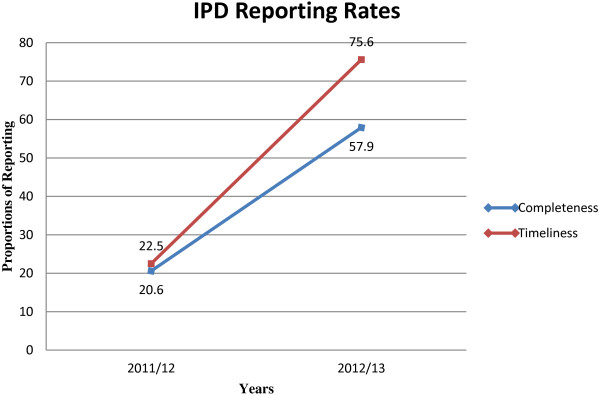
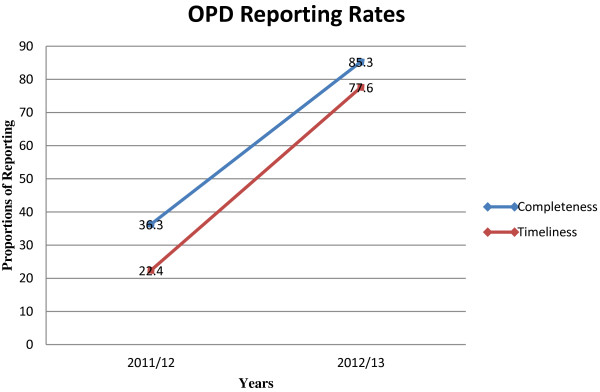
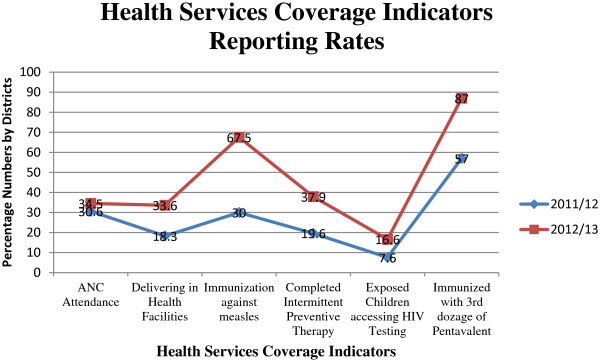
BACKGROUND: Untimely, incomplete and inaccurate data are common challenges in planning, monitoring and evaluation of health sector performance, and health service delivery in many sub-Saharan African settings. We document Uganda's experience in strengthening routine health data reporting through the roll-out of the District Health Management Information Software System version 2 (DHIS2). METHODS: DHIS2 was adopted at the national level in January 2011. The system was initially piloted in 4 districts, before it was rolled out to all the 112 districts by July 2012. As part of the roll-out process, 35 training workshops targeting 972 users were conducted throughout the country. Those trained included Records Assistants (168, 17.3%), District Health Officers (112, 11.5%), Health Management Information System Focal Persons (HMIS-FPs) (112, 11.5%), District Biostatisticians (107, 11%) and other health workers (473, 48.7%). To assess improvements in health reporting, we compared data on completeness and timeliness of outpatient and inpatient reporting for the period before (2011/12) and after (2012/13) the introduction of DHIS2. We reviewed data on the reporting of selected health service coverage indicators as a proxy for improved health reporting, and documented implementation challenges and lessons learned during the DHIS2 roll-out process. RESULTS: Completeness of outpatient reporting increased from 36.3% in 2011/12 to 85.3% in 2012/13 while timeliness of outpatient reporting increased from 22.4% to 77.6%. Similarly, completeness of inpatient reporting increased from 20.6% to 57.9% while timeliness of inpatient reporting increased from 22.5% to 75.6%. There was increased reporting on selected health coverage indicators (e.g. the reporting of one-year old children who were immunized with three doses of pentavelent vaccine increased from 57% in 2011/12 to 87% in 2012/13). Implementation challenges included limited access to computers and internet (34%), inadequate technical support (23%) and limited worker force (18%). CONCLUSION: Implementation of DHIS2 resulted in improved timeliness and completeness in reporting of routine outpatient, inpatient and health service usage data from the district to the national level. Continued onsite support supervision and mentorship and additional system/infrastructure enhancements, including internet connectivity, are needed to further enhance the performance of DHIS2.
Overview
The claims and statistics of this paper haven’t been checked yet.
Free: it reads the open-access text and checks the first 5 claims that cite a source we can check. Create a free account to check every claim.
Integrity signals
Registry
Cites
Statistics
Figures
Verification
Claims the paper makes
The claims and statistics of this paper haven’t been checked yet.
Free: it reads the open-access text and checks the first 5 claims that cite a source we can check. Create a free account to check every claim.
Claims other papers make about this one
Each is checked against this paper’s own text: does it say what the citing paper says it does?
The source backs part of the claim, not all of it — or backs it for a different population, condition or comparison.
In the citing paper
“An evaluation by Kibaru et al. [56] found dramatic improvements in routine reporting, with completeness increasing from 36% to 85% for monthly outpatient reports and 21% to 56% for inpatient reports by 2012/13.”
From Beyond pilotitis: taking digital health interventions to the national level in China and Uganda (2017) · cites this paper as [56]
Experimental — accuracy not yet measuredThe source backs part of the claim, not all of it — or backs it for a different population, condition or comparison.
In the citing paper
“However, consistent power blackouts, loss of internet connectivity and the presence of an unskilled health workforce hinder its uptake.”
From Barriers and opportunities to implementation of sustainable e-Health programmes in Uganda: A literature review (2017) · cites this paper as [64]
Experimental — accuracy not yet measuredThe source backs part of the claim, not all of it — or backs it for a different population, condition or comparison.
In the citing paper
“Similar challenges coupled with inadequate funding and resistance from health workers were encountered in Uganda during implementation of EMRs, such as OpenMRS, mTrack and DHIS2.”
From Barriers and opportunities to implementation of sustainable e-Health programmes in Uganda: A literature review (2017) · cites this paper as [64]
Experimental — accuracy not yet measuredThe cited source says what the claim attributes to it.
In the citing paper
“Kiberu et al. [56] also note that the MoH itself was routinely subject to electricity black-outs, which hindered access to the central server.”
From Beyond pilotitis: taking digital health interventions to the national level in China and Uganda (2017) · cites this paper as [56]
Self-check
Percentages, sums and reported differences re-computed from the paper’s own numbers.
The self-check needs the paper’s full text.
Citations
Cites
(2008) · PubMed · Cited by 237
Improving public health information: a data quality intervention in KwaZulu-Natal, South Africa
Mphatswe, W., Mate, K., Bennett, B., Ngidi, H., Reddy, J., Barker, P., & Rollins, N. (2012) · Bulletin of the World Health Organization · doi:10.2471/blt.11.092759 · Cited by 196 · cited 1×
“In South Africa, the implementation of a web-based data quality intervention improved data completeness from 26% before to 64% after the intervention; and improved overall accuracy of data from 37% at the first data audit to 65% at the third data audit [8].”
BackgroundChaulagai, C. N., Moyo, C. M., Koot, J., Moyo, H. B., Sambakunsi, T. C., Khunga, F. M., & Naphini, P. D. (2005) · Health Policy and Planning · doi:10.1093/heapol/czi044 · Cited by 191
Assessing the quality of data aggregated by antiretroviral treatment clinics in Malawi
Makombe, S. (2008) · Bulletin of the World Health Organization · doi:10.2471/blt.07.044685 · Cited by 104 · cited 3×
“This calls continuous support supervision to build health facility capacity to collect quality data to inform district and national level monitoring and planning [3].”
BackgroundManya, A. S., Braa, J. A., Titlestad, O. H., Øverland, L. H., & Mumo, J. M. (2016) · Cited by 49
DEVELOPMENT OF HMIS IN POOR COUNTRIES: UGANDA AS A CASE STUDY
Kintu, P., Nanyunja, M., Nzabanita, A., & Magoola, R. (2005) · Bioline International (Bioline International) · Cited by 29
The Impact of a Web-based Reporting System on the Collection of Medication Error Occurrence Data
Rudman, W. J., Bailey, J. H., Hope, C. J., Garrett, P., & Brown, C. A. (2005) · Cited by 12
Research works printed but not linked: 2
- Ayub MJB Lars Ø Ola D Jeremiah M Charles N National Roll out of District Health Information Software (DHIS 2) in Kenya IST-Africa 2012 Conference Proceedings
- Makumbi FE Okello C Mutebi A Wabwire-Mangen F Health Sector HIV/AIDs Response Review 2010 Kampala: Uganda Available at: http://danstan.me/HIVHSRReports/HIV%20HSR%20Final%20Reports(2)/HMIS%20Building%20Block%20Final%20Report%20Nov_2010.doc. Accessed March 7, 2014
Cited by
Dehnavieh, R., Haghdoost, A., Khosravi, A., Hoseinabadi, F., Rahimi, H., Poursheikhali, A., Khajehpour, N., Khajeh, Z., Mirshekari, N., Hasani, M., et al. (2019) · Health Information Management Journal · doi:10.1177/1833358318777713 · Cited by 259
“, 2013) Avoidance of precipitance The need to spend more time especially on planning and practising (Berntsen, 2015; Kiberu et al., 2014) Lack of time for practical exercise (Poppe, 2012) The definition of administrative structure The necessity of formation of the country team by the Ministry of Health in the early st…”
BackgroundMethodInfluentialBhattacharya, A. A., Umar, N., Audu, A., Felix, H., Allen, E., Schellenberg, J. R. M., & Marchant, T. (2019) · PLOS ONE · doi:10.1371/journal.pone.0211265 · Cited by 165
Beyond pilotitis: taking digital health interventions to the national level in China and Uganda
Huang, F., Blaschke, S., & Lucas, H. (2017) · Globalization and Health · doi:10.1186/s12992-017-0275-z · Cited by 182
“[56] also note that the MoH itself was routinely subject to electricity black-outs, which hindered access to the central server.”
BackgroundKiberu, V. M., Mars, M., & Scott, R. E. (2017) · African Journal of Primary Health Care & Family Medicine · doi:10.4102/phcfm.v9i1.1277 · Cited by 147
Self-citationMaïga, A., Jiwani, S. S., Mutua, M. K., Porth, T. A., Taylor, C. M., Asiki, G., Melesse, D. Y., Day, C., Strong, K. L., Faye, C. M., et al. (2019) · BMJ Global Health · doi:10.1136/bmjgh-2019-001849 · Cited by 129
Radin, A. K., Abutu, A. A., Okwero, M. A., Adler, M. R., Anyaike, C., Asiimwe, H. T., Behumbiize, P., Efuntoye, T. A., King, R. L., Nabitaka, L. K., et al. (2017) · JAIDS Journal of Acquired Immune Deficiency Syndromes · doi:10.1097/qai.0000000000001313 · Cited by 133
Begum, T., Khan, S. M., Adamou, B., Ferdous, J., Parvez, M. M., Islam, M. S., Kumkum, F. A., Rahman, A., & Anwar, I. (2020) · BMC Health Services Research · doi:10.1186/s12913-020-05322-2 · Cited by 130
Mboera, L. E. G., Rumisha, S. F., Mbata, D. D., Mremi, I. R., Lyimo, E. P., & Joachim, C. (2021) · BMC Health Services Research · doi:10.1186/s12913-021-06559-1 · Cited by 114
Hung, Y. W., Hoxha, K., Irwin, B. R., Law, M. R., & Grépin, K. A. (2020) · BMC Health Services Research · doi:10.1186/s12913-020-05660-1 · Cited by 116
Endriyas, M., Alano, A., Mekonnen, E., Ayele, S., Kelaye, T., Shiferaw, M. S., Misganaw, T., Samuel, T., Hailemariam, T., & Hailu, S. (2019) · BMC Health Services Research · doi:10.1186/s12913-019-3991-7 · Cited by 107
Global healthcare fairness: We should be sharing more, not less, data
Seastedt, K. P., Schwab, P., O’Brien, Z., Wakida, E. K., Herrera, K. V., Marcelo, P. G., Agha-Mir-Salim, L., Borrat, X., Ndulue, E. B., Marcelo, A., et al. (2022) · PLOS Digital Health · doi:10.1371/journal.pdig.0000102 · Cited by 120
Lugada, E., Komakech, H., Ochola, I., Mwebaze, S., Oteba, M. O., & Ladwar, D. O. (2022) · Journal of Pharmaceutical Policy and Practice · doi:10.1186/s40545-022-00412-4 · Cited by 118
“ing staff across the MoH, central stores, and health facilities [25] 2014, GHSC-PSM [18], [19].”
BackgroundGithinji, S., Oyando, R., Malinga, J., Ejersa, W., Soti, D., Rono, J., Snow, R. W., Buff, A. M., & Noor, A. M. (2017) · Malaria Journal · doi:10.1186/s12936-017-1973-y · Cited by 108
Nabirye, J., Livex, O. A., Nuwematsiko, R., Kiwanuka, G., Muneza, F., Kamya, C., & Babirye, J. N. (2020) · BMC Public Health · doi:10.1186/s12889-020-8302-z · Cited by 97
Data for tracking SDGs: challenges in capturing neonatal data from hospitals in Kenya
Hagel, C., Paton, C., Mbevi, G., & English, M. (2020) · BMJ Global Health · doi:10.1136/bmjgh-2019-002108 · Cited by 93
Spatial-temporal patterns of malaria incidence in Uganda using HMIS data from 2015 to 2019
Kigozi, S. P., Kigozi, R. N., Sebuguzi, C. M., Cano, J., Rutazaana, D., Opigo, J., Bousema, T., Yeka, A., Gasasira, A., Sartorius, B., et al. (2020) · BMC Public Health · doi:10.1186/s12889-020-10007-w · Cited by 85
Adokiya, M. N., Awoonor‐Williams, J. K., Barau, I. Y., Beiersmann, C., & Mueller, O. (2015) · BMC Public Health · doi:10.1186/s12889-015-1397-y · Cited by 90
“Some studies have reported slight improvements in disease reporting associated with either IDSR or DHIMS2 or both systems [20,24,33,34].”
BackgroundResultAdokiya, M. N., Awoonor-Williams, J. K., Beiersmann, C., & Müller, O. (2015) · BMC Health Services Research · doi:10.1186/s12913-015-0960-7 · Cited by 72
Ayanore, M. A., Amuna, N. N., Aviisah, M. A., Adam, A., Sunyehzi, D. D. K., Mogre, V., Ofori‐Asenso, R., Gmanyami, J. M., Kugbey, N., & Gyapong, M. (2019) · Annals of Global Health · doi:10.5334/aogh.2514 · Cited by 88
“Onsite support and training for data managers and professionals can improve data management efficiency [43].”
BackgroundAshton, R. A., Bennett, A. F., Yukich, J. O., Bhattarai, A., Keating, J. A., & Eisele, T. P. (2017) · American Journal of Tropical Medicine and Hygiene · doi:10.4269/ajtmh.16-0734 · Cited by 78
“systems such as the District Health Information System 2 (DHIS2) has been shown to improve completeness and timeliness of routine data reporting.(17) HMIS data have”
BackgroundSsempiira, J., Kissa, J., Nambuusi, B., Mukooyo, E., Opigo, J., Makumbi, F. E., Kasasa, S., & Vounatsou, P. (2018) · Parasite Epidemiology and Control · doi:10.1016/j.parepi.2018.e00070 · Cited by 72
Self-citationKiberu, V. M., Scott, R. E., & Mars, M. (2019) · BMC Health Services Research · doi:10.1186/s12913-019-4057-6 · Cited by 68
Self-citationOpen Data in Developing Economies: Toward Building an Evidence Base on What Works and How
Verhulst, S., & Young, A. J. (2017) · African Minds eBooks · doi:10.47622/9781928331599 · Cited by 62
Adokiya, M. N., Awoonor‐Williams, J. K., Beiersmann, C., & Müller, O. (2016) · Ghana Medical Journal · doi:10.4314/gmj.v50i1.1 · Cited by 60
“This study addresses an important aspect of public health system strengthening in SSA.”
BackgroundResultInfluentialFarnham, A., Loss, G. J., Lyatuu, I., Cossa, H., Kulinkina, A. V., & Winkler, M. S. (2023) · BMC Public Health · doi:10.1186/s12889-023-15979-z · Cited by 54
Masiira, B., Makumbi, I., Matovu, J. K. B., Ario, A. R., Nabukenya, I., Kihembo, C., Kaharuza, F. M., Musenero, M., & Mbonye, A. K. (2018) · PLoS ONE · doi:10.1371/journal.pone.0198568 · Cited by 52
Self-citationNjeru, I., Kareko, D., Kisangau, N., Langat, D., Liku, N., Owiso, G., Dolan, S., Rabinowitz, P. M., Macharia, D., Ekechi, C. O., et al. (2020) · BMC Public Health · doi:10.1186/s12889-020-09222-2 · Cited by 62
Oguttu, D. W., Matovu, J. K. B., Okumu, D. C., Ario, A. R., Okullo, A. E., Opigo, J., & Nankabirwa, V. (2017) · Malaria Journal · doi:10.1186/s12936-017-1871-3 · Cited by 57
“Since the roll out of the District Health Information Software, version 2 (DHIS2) in 2012 [18], routine malaria surveillance has improved.”
BackgroundSelf-citationSpatial analysis of HIV-TB co-clustering in Uganda
Aturinde, A., Farnaghi, M., Pilesjö, P., & Mansourian, A. (2019) · BMC Infectious Diseases · doi:10.1186/s12879-019-4246-2 · Cited by 54
“lowest level to the national level [23].”
Okullo, A. E., Matovu, J. K. B., Ario, A. R., Opigo, J., Wanzira, H., Oguttu, D. W., & Kalyango, J. N. (2017) · Malaria Journal · doi:10.1186/s12936-017-1966-x · Cited by 47
“Data on total malaria cases and reporting rates obtained from DHIS2 were exported to MS Excel.”
BackgroundMethodInfluentialSelf-citationStrengthening routine health information systems for analysis and data use: a tipping point
Amouzou, A., Fayé, C., Wyss, K., & Boerma, T. (2021) · BMC Health Services Research · doi:10.1186/s12913-021-06648-1 · Cited by 47
Nansikombi, H. T., Kwesiga, B., Aceng, F. L., Ario, A. R., Bulage, L., & Arinaitwe, E. S. (2023) · BMC Public Health · doi:10.1186/s12889-023-15534-w · Cited by 54
“argued that challenges of data reporting seem to have been resolved through the use of DHIS instead of paper-based forms in Uganda, this may have worked for a few districts [10].”
BackgroundDureab, F. A., Ahmed, K., Beiersmann, C., Standley, C. J., Al-Waleedi, A. A., & Jahn, A. (2020) · BMC Public Health · doi:10.1186/s12889-020-09460-4 · Cited by 44
Assessment of surveillance core and support functions regarding neglected tropical diseases in Kenya
Ng’etich, A. K. S., Voyi, K. V. V., & Mutero, C. M. (2021) · BMC Public Health · doi:10.1186/s12889-021-10185-1 · Cited by 43
Implementing the routine immunisation data module and dashboard of DHIS2 in Nigeria, 2014–2019
Shuaib, F. M. B., Garba, A. B., Meribole, E., Obasi, S., Sule, A., Nnadi, C. D., Waziri, N. E., Bolu, O. O., Nguku, P., Ghiselli, M. E., et al. (2020) · BMJ Global Health · doi:10.1136/bmjgh-2019-002203 · Cited by 40
Ng’etich, A. K. S., Voyi, K. V. V., Kirinyet, R. C., & Mutero, C. M. (2021) · PLoS ONE · doi:10.1371/journal.pone.0248998 · Cited by 42
“and adapting electronic or mobile reporting systems are justified [19,20,33,44,45,58,59].”
BackgroundNwankwo, B., & Sambo, M. N. (2018) · PubMed Central · doi:10.11604/pamj.2018.30.289.15802 · Cited by 39
“There was an increase in the timeliness of reporting of the study health facilities in this study but the increase was not statistically significant, which contrasts with the finding in a study done in Uganda on strengthening district based health reporting through health management information software system (DHIS)…”
ResultWandera, S. O., Kwagala, B., Nankinga, O., Ndugga, P., Kabagenyi, A., Adamou, B., & Kachero, B. (2019) · BMC Health Services Research · doi:10.1186/s12913-019-4151-9 · Cited by 39
Measuring health facility readiness and its effects on severe malaria outcomes in Uganda
Ssempiira, J., Kasirye, I., Kissa, J., Nambuusi, B., Mukooyo, E., Opigo, J., Makumbi, F. E., Kasasa, S., & Vounatsou, P. (2018) · Scientific Reports · doi:10.1038/s41598-018-36249-8 · Cited by 44
Self-citationWambua, S., Malla, L., Mbevi, G., Kandiah, J., Nwosu, A.-P., Tuti, T., Paton, C., Wambu, B., English, M., & Okiro, E. A. (2022) · BMJ Open · doi:10.1136/bmjopen-2021-055815 · Cited by 39
Muhoza, P., Tine, R. C. K., Faye, A., Gaye, I., Zeger, S. L., Diaw, A., Guèye, A. B., Kanté, A. M., Ruff, A., & Marx, M. A. (2022) · BMC Health Services Research · doi:10.1186/s12913-021-07364-6 · Cited by 38
“This level of coordination is essential to optimize routine data for monitoring and surveillance [37, 38, 42] in addition to ensuring regional data completeness.”
BackgroundTemporal, spatial and household dynamics of Typhoid fever in Kasese district, Uganda
Mirembe, B. B., Mazeri, S., Callaby, R., Nyakarahuka, L., Kankya, C., & Muwonge, A. (2019) · PLoS ONE · doi:10.1371/journal.pone.0214650 · Cited by 34
“There are several factors including logistics, extreme weather patterns, human error as well as technical communication breakdown cited a potential causes of missingness [29, 30].”
BackgroundEnhancing Workforce Capacity to Improve Vaccination Data Quality, Uganda
Ward, K., Mugenyi, K., Benke, A., Luzze, H., Kyozira, C., Ampeire, I., Tanifum, P., Kisakye, A., Bloland, P. B., & MacNeil, A. (2017) · Emerging infectious diseases · doi:10.3201/eid2313.170627 · Cited by 34
“DITs initially prioritized health facilities with outlying (high or low) coverage for the third dose of the diphtheria/tetanus/pertussis/Haemophilus influenzae type B/hepatitis B vaccine (Penta3), negative dropout rates, or inadequate completeness or timeliness of Health Management Information System (HMIS) monthly re…”
BackgroundInfluentialSelf-citationSsempiira, J., Kissa, J., Nambuusi, B., Kyozira, C., Rutazaana, D., Mukooyo, E., Opigo, J., Makumbi, F. E., Kasasa, S., & Vounatsou, P. (2018) · Malaria Journal · doi:10.1186/s12936-018-2312-7 · Cited by 39
“This is an indication of the improved quality of routinely collected health facility data that can be attributed to the benefits of the DHIS2 implementation in Uganda [8].”
BackgroundSelf-citationKhobi, J. A. M., Mtebe, J. S., & Mbelwa, J. (2020) · The Electronic Journal of Information Systems in Developing Countries · doi:10.1002/isd2.12140 · Cited by 35
“The shortage of qualified staff to support and use of DHIS2 was also reported in 15 West African countries (Nielsen, 2012), Botswana (Ledikwe et al., 2013), Tanzania (Kiwanuka et al., 2015), Uganda (Kiberu et al., 2014), Ghana (Poppe, 2012), and Zanzibar (Bakar et al., 2012).”
BackgroundResultWanzira, H., Muyinda, R., Lochoro, P., Putoto, G., Segafredo, G., Wamani, H., & Lazzerini, M. (2018) · BMC Health Services Research · doi:10.1186/s12913-018-3366-5 · Cited by 35
Kirk, K., McClair, T. L., Dakouo, S. P., Abuya, T., & Sripad, P. (2021) · Journal of Global Health · doi:10.7189/jogh.11.07003 · Cited by 35
Coverage of routine reporting on malaria parasitological testing in Kenya, 2015–2016
Maina, J., Macharia, P. M., Ouma, P., Snow, R. W., & Okiro, E. A. (2017) · Global Health Action · doi:10.1080/16549716.2017.1413266 · Cited by 28
Bhattacharya, A. A., Allen, E., Umar, N., Audu, A., Felix, H., Schellenberg, J., & Marchant, T. (2020) · BMJ Open · doi:10.1136/bmjopen-2020-038174 · Cited by 28
Ebola virus disease surveillance and response preparedness in northern Ghana
Adokiya, M. N., & Awoonor‐Williams, J. K. (2016) · Global Health Action · doi:10.3402/gha.v9.29763 · Cited by 28
“This revelation supports similar reports from SSA countries (14, 16, 20, 31).”
BackgroundResultSimbini, T., Adimado, E. E., Adjorlolo, S., Guerrero‐Torres, L., Srinivas, P., Zizhou, S., & Zerfu, T. A. (2026) · PLOS Digital Health · doi:10.1371/journal.pdig.0000863 · Cited by 29
“These motivators have been documented in other settings, including Kenya [12], Uganda [13] and South Africa [14].”
Using a Structured Approach to Evaluate ICT4D: Healthcare Delivery in Uganda
Kivunike, F. N., Ekenberg, L., Danielson, M., & Tusubira, F. F. (2015) · The Electronic Journal of Information Systems in Developing Countries · doi:10.1002/j.1681-4835.2015.tb00478.x · Cited by 25
“It is important to note that the Ministry of health in Uganda has instituted the management of medical records through a Health Management Information System, (DHIS2) to which all public health facilities nation-wide are required to submit weekly reports (Kiberu et al., 2014).”
BackgroundRoberts, D. A., Ng, M., Ikilezi, G., Gasasira, A. F., Dwyer‐Lindgren, L., Fullman, N., Nalugwa, T., Kamya, M. R., & Gakidou, E. E. (2015) · BMC Medicine · doi:10.1186/s12916-015-0518-x · Cited by 27
“While this work relied on household surveys and censuses, further efforts to improve the accuracy and timeliness of HMIS reporting in Uganda will greatly improve local evaluation efforts and guide resource allocation decisions [87].”
MethodOuma, J., Jeffery, C., Valadez, J. J., Wanyenze, R. K., Todd, J., & Levin, J. B. (2020) · BMC Public Health · doi:10.1186/s12889-020-8436-z · Cited by 25
“In Uganda, Ministry of Health (MoH) with support from development partners conduct quarterly reviews to validate data reported into DHIS2 [9].”
BackgroundMethodInfluentialSelf-citationQuach, A., Tosif, S., Nababan, H. Y., Duke, T., Graham, H., Were, W. M., Muzigaba, M., & Russell, F. M. (2021) · BMJ Global Health · doi:10.1136/bmjgh-2021-006804 · Cited by 30
Factors that affect immunization data quality in Kabarole District, Uganda
Nsubuga, F., Luzze, H., Ampeire, I., Kasasa, S., Opar, B. T., & Riolexus, A. A. (2018) · PLoS ONE · doi:10.1371/journal.pone.0203747 · Cited by 25
The impact of PEPFAR transition on HIV service delivery at health facilities in Uganda
Wilhelm, J. A., Qiu, M., Paina, L., Colantuoni, E., Mukuru, M., Ssengooba, F., & Bennett, S. (2019) · PLoS ONE · doi:10.1371/journal.pone.0223426 · Cited by 29
“While numerous studies have noted quality issues in HMIS/DHIS2 datasets, including problems with completeness and accuracy [25–29], a recent study [27] shows that data quality in Uganda had improved just prior to the baseline period.”
BackgroundMaziarz, M., Nabalende, H., Otim, I. O., Legason, I. D., Kinyera, T., Ogwang, M. D., Talisuna, A. O., Reynolds, S. J., Kerchan, P., Bhatia, K. G., et al. (2018) · Malaria Journal · doi:10.1186/s12936-018-2379-1 · Cited by 24
“These results call for careful monitoring of malaria case activity at a district level and proactive correlation of uptake of universal distribution of insecticide-treated bed nets with clinical case activity, such as using electronic health management information systems (eHMIS) [39].”
BackgroundBurnett, S., Wun, J., Evance, I., Davis, K. M., Smith, G. M., Lussiana, C., Tesha, G., Quao, A., Martin, T., Alombah, F., et al. (2019) · American Journal of Tropical Medicine and Hygiene · doi:10.4269/ajtmh.18-0366 · Cited by 24
“10 In its third year of implementation, the President ’ s Malaria Initiative – funded MalariaCare project developed the MalariaCare Electronic Data System (EDS), an electronic tool to guide on-site supportive supervision of malaria case management, which could enable ministries of health to take…”
MethodOkello, G. R., Gerrets, R. P., Zakayo, S. M., Molyneux, S. C., & Jones, C. H. D. (2018) · PLoS ONE · doi:10.1371/journal.pone.0189699 · Cited by 24
Diaz, T., Rasanathan, K., Meribole, E., Maina, I., Nsona, H., Aung, K. M., Nemser, B., & O’Neill, K. P. (2018) · BMJ · doi:10.1136/bmj.k2785 · Cited by 24
Opportunities and challenges for implementing cost accounting systems in the Kenyan health system
Kihuba, E., Gheorghe, A., Bozzani, F. M., English, M., & Griffiths, U. K. (2016) · Global Health Action · doi:10.3402/gha.v9.30621 · Cited by 22
“(9, 50, 51), highlighting both improvements in data quality”
BackgroundWangdi, K., Sarma, H., Leaburi, J., McBryde, E. S., & Clements, A. (2020) · Malaria Journal · doi:10.1186/s12936-020-03442-y · Cited by 22
Nguefack-Tsague, G., Tamfon, B. B., Ngnie-Teta, I., Ngoufack, M., Keugoung, B., Bataliack, S., & Ndongo, C. (2020) · BMC Medical Informatics and Decision Making · doi:10.1186/s12911-020-01357-x · Cited by 11
Ng’etich, A. K. S., Voyi, K. V. V., & Mutero, C. M. (2021) · BMC Public Health · doi:10.1186/s12889-021-10443-2 · Cited by 22
Zerfu, T. A., Chanyalew, M. A., Begna, Z., Habtamu, T., Werkneh, N., Nigatu, T., Jisso, M., & Genta, A. (2024) · PLoS ONE · doi:10.1371/journal.pone.0314505 · Cited by 21
“By embracing digital platforms, Ethiopia has effectively addressed issues including data collection inefficiencies, quality discrepancies, and limited accessibility to health information [11, 12].”
Sukums, F. K., Simba, D., Kumalija, C., Asiimwe, S., Pothapregada, S., & Githendu, P. (2021) · The Electronic Journal of Information Systems in Developing Countries · doi:10.1002/isd2.12193 · Cited by 24
“…authors have reported countries' experiences on implementing DHIS2 including Ghana, Liberia Malawi, Kenya, Uganda, and Sri Lanka (Dehnavieh et al., 2019; Jolliffe et al., 2015; Karuri et al., 2014; Kiberu et al., 2014; Kiwanuka et al., 2015; Manya et al., 2012; Poppe, 2012; Sahay et al., 2013).”
BackgroundMaïga, A., Amouzou, A., Bagayoko, M., Fayé, C., Jiwani, S. S., Kamara, D., Koroma, I. B., & Sankoh, O. A. (2021) · BMC Health Services Research · doi:10.1186/s12913-021-06529-7 · Cited by 21
“cent improvements in that respect [34, 35].”
Birabwa, C., Banke-Thomas, A. O., Semaan, A. T., van Olmen, J., Kananura, R. M., Arinaitwe, E. S., Waiswa, P., & Beňová, L. (2024) · Population Health Metrics · doi:10.1186/s12963-024-00343-z · Cited by 21
“The data are collected and reported by different health facilities through a standardized health management information system (HMIS), using paper-based forms or reports and the web-based District Health Information System (DHIS2) [2, 4].”
MethodClimate Information For Public Health Action
Madeleine, C. T., & Simon, J. (2018) · Routledge eBooks · doi:10.4324/9781315115603 · Cited by 24
Tamfon, B. B., Ndongo, C. B., Bataliack, S. M., Ngoufack, M. N., & Nguefack‐Tsague, G. (2020) · BMC Medical Informatics and Decision Making · doi:10.1186/s12911-020-01351-3 · Cited by 20
Molla, E., Behaksra, S. W., Tadesse, F. G., Dugassa, S., Gadisa, E., & Mamo, H. (2021) · BMC Infectious Diseases · doi:10.1186/s12879-021-05783-8 · Cited by 21
“In addition, limited computer access and skill, inadequate technical support [27], poor data management skills and limited functionality of electronic data management systems [28] might be the likely reasons for PHEM implementation challenges.”
BackgroundNamisango, E., Bhakta, N. H., Wolfe, J., McNeil, M. J., Powell, R. A., Kibudde, S., Luyirika, E. B. K., Mulema, V., Feudtner, C., & Baker, J. N. (2021) · JCO Global Oncology · doi:10.1200/go.21.00102 · Cited by 22
“At a service delivery level, health management information system development initiatives continue to take a strong hold in Africa and mandatory reporting of many disease entities by all health facilities is required by most African ministries of health.(41) Some countries—although a small minority (ie, Uganda and Mal…”
BackgroundDeterminants of malaria testing at health facilities: the case of Uganda
Kigozi, R. N., Bwanika, J. B., Goodwin, E., Thomas, P., Bukoma, P., Nabyonga, P., Isabirye, F., Oboth, P., Kyozira, C., Niang, M., et al. (2021) · Malaria Journal · doi:10.1186/s12936-021-03992-9 · Cited by 19
Self-citationAyele, G., Abera, A., Ayele, A., Gudina, D., & Firdisa, D. (2024) · BMC Health Services Research · doi:10.1186/s12913-024-10834-2 · Cited by 19
“Many countries have taken steps to improve their routine health information performance by building capacity, investing in data sources, and leveraging the digital revolution [6, 8, 9].”
BackgroundSeitio-Kgokgwe, O., Mashalla, Y., Seloilwe, E., & Chida, N. (2016) · IST-Africa Conference (IST-Africa) · doi:10.1109/istafrica.2016.7530690 · Cited by 19
“DHIS has been used successfully to improve completeness and timeliness of reporting in many countries such as Uganda, Kenya, South Africa and Malawi (16, 17).”
BackgroundMethodKirungaTashobya, C., Ssengooba, F., Nabyonga‐Orem, J., Bataringaya, J. E., Macq, J., Marchal, B., Musila, T., & Criel, B. (2018) · BMC Health Services Research · doi:10.1186/s12913-018-3126-6 · Cited by 20
“In 2012 the HMIS was converted to an e-HMIS [40].”
MethodThe First Inherited Retinal Disease Registry in Iran: Research Protocol and Results of a Pilot Study
Sabbaghi, H., Daftarian, N., Suri, F., Mirrahimi, M., Madani, S., Sheikhtaheri, A., Khorrami, F., Saviz, P., Nejad, M. Z., Tivay, A., et al. (2020) · Archives of Iranian Medicine · doi:10.34172/aim.2020.41 · Cited by 19
Ogallo, W., Wanyana, I., Tadesse, G. A., Wanjiru, C., Akinwande, V., Kabwama, S. N., Remy, S. L., Wachira, C. M., Okwako, S., Kizito, S., et al. (2022) · Journal of the American Medical Informatics Association · doi:10.1093/jamia/ocac223 · Cited by 19
Self-citationEnterprise architecture requirements for standardising digital health in Uganda's health system
Wamema, J., Alunyu, A. E., Amiyo, M., & Nabukenya, J. (2023) · Health Policy and Technology · doi:10.1016/j.hlpt.2023.100805 · Cited by 18
Asaduzzaman, M., Mekonnen, Z., Rødland, E. K., Sahay, S., Winkler, A. S., & Gradmann, C. (2023) · International Journal of Medical Informatics · doi:10.1016/j.ijmedinf.2023.105268 · Cited by 20
Mremi, I. R., Sindato, C., Kishamawe, C., Rumisha, S. F., Kimera, S. I., & Mboera, L. E. G. (2022) · Global Health Action · doi:10.1080/16549716.2022.2090100 · Cited by 18
“The DHIS2 has proved to be a useful tool in supporting the availability of data for strategic planning, priority setting and making effective decisions and public health responses [10,11].”
MethodWestercamp, N., Staedke, S. G., Maiteki‐Sebuguzi, C., Ndyabakira, A., Okiring, J. M., Kigozi, S. P., Dorsey, G., Broughton, E. I., Hutchinson, E., Massoud, M. R., et al. (2021) · Malaria Journal · doi:10.1186/s12936-021-03822-y · Cited by 17
Information Streams in Health Facilities: The Case of Uganda
Basajja, M., & Nambobi, M. (2022) · Data Intelligence · doi:10.1162/dint_a_00177 · Cited by 16
“However, all health facilities in Uganda follow similar standardised guidelines, as stipulated by the Ministry of Health [10].”
BackgroundSchuetze, L., Srivastava, S., Missenye, A. M., Rwezaula, E. J., Stoermer, M., & Allegri, M. D. (2023) · Journal of Medical Internet Research · doi:10.2196/38818 · Cited by 17
“Both of these issues have been identified as barriers to scale before [23,60], and when combined, they make it nearly impossible to assure the continuous presence of trained staff.”
Gesicho, M. B., Were, M. C., & Babić, A. (2021) · BMC Medical Informatics and Decision Making · doi:10.1186/s12911-020-01367-9 · Cited by 16
A socio-legal critique of the commercialization of digital health in Sub-Saharan Africa
Sekalala, S. R., Rawson, B., & Andanda, P. (2025) · Policy Studies · doi:10.1080/01442872.2025.2451966 · Cited by 18
“In 2011, the Ugandan Ministry of Health scaled this up with the introduction of the District Health Management Information System (DHIS2) across Uganda’s 112 districts (Kiberu et al. 2014).”
Positive predictive value and effectiveness of measles case-based surveillance in Uganda, 2012-2015
Nsubuga, F., Ampaire, I., Kasasa, S., Luzze, H., & Kisakye, A. (2017) · PLoS ONE · doi:10.1371/journal.pone.0184549 · Cited by 15
Ouma, J., Jeffery, C., Awor, A. C., Muruta, A. N., Musinguzi, J., Wanyenze, R. K., Biraro, S., Levin, J. B., & Valadez, J. J. (2021) · PLoS ONE · doi:10.1371/journal.pone.0253375 · Cited by 15
“Antenatal HIV testing data, extracted from DHIS2, can been accessed upon request from Ministry of health Uganda (https://www.health.go.ug/), through the permanent secretary, Ministry of Health Uganda.”
MethodSelf-citationHamalaw, S. A., Bayati, A. H., Babakir‐Mina, M., Benvenuto, D., Fabris, S., Guarino, M. P. L., Giovanetti, M., & Ciccozzi, M. (2021) · Journal of Medical Virology · doi:10.1002/jmv.27288 · Cited by 14
Belay, H. T., Mohammedsanni, A., Worku, A. G., Alemu, H., Wendrad, N., Abate, B. B., Denboba, W., Mulugeta, F., Omer, S., & Knittel, B. (2022) · Global Health Science and Practice · doi:10.9745/ghsp-d-21-00690 · Cited by 14
“For example, evidence from Uganda and Bangladesh showed improvement in the reporting of certain health indicators after DHIS2 implementation.(22,23) The DHIS2 implementation in Uganda improved outpatient and inpatient reporting, as well as the reporting of health service coverage (e.”
ResultTimeliness and completeness of monthly disease surveillance data reporting, Uganda, 2020-2021
Zavuga, R., Migisha, R., Gonahasa, D. N., Kadobera, D., Kwesiga, B., Okello, P. E., Bulage, L., Aceng, F. L., Kayiwa, J., Makumbi, I., et al. (2023) · Pan African Medical Journal · doi:10.11604/pamj.2023.46.3.40557 · Cited by 13
“In this system, all the primary data received from lower-level health facilities which are captured in paper format are entered into the DHIS2 at the district level [3].”
BackgroundMethodSanjel, K., Sharma, S. L., Gurung, S., Oli, M. B., Singh, S., & Pokhrel, T. P. (2024) · PLoS ONE · doi:10.1371/journal.pone.0298101 · Cited by 13
“Routine data review, feedback, and supervision at all levels of the health system have been proven essential to optimize routine data for monitoring [28, 29, 31, 48].”
BackgroundZerfu, T. A., Chanyalew, M. A., Tareke, A. A., Begna, Z., Habtamu, T., Werkneh, N., Nigatu, T., Jisso, M., & Genta, A. (2025) · Archives of Public Health · doi:10.1186/s13690-025-01641-0 · Cited by 13
“In Uganda [32], DHIS2 has been credited with improving data quality and reporting practices, contributing to more informed health interventions.”
Meghani, A., Rodríguez, D., Peters, D. H., & Bennett, S. (2022) · Health Policy and Planning · doi:10.1093/heapol/czac065 · Cited by 14
“While these technical advances in data collection have helped improve aspects of data management, quality and use, the challenge of subpar HMIS data quality persists (Kiberu et al., 2014; Ndabarora et al., 2014; Morton et al., 2016; Phillips et al., 2019).”
BackgroundChraish, M., Ndawula, J. C., Enoch, M., Nabuuma, O. P., Mpaata, C. N., Nabukenya, S., Akaka, A., Bebembeire, O., & Douglas, S. (2022) · International Journal for Equity in Health · doi:10.1186/s12939-022-01814-1 · Cited by 14
Bou-Karroum, L., Daher, N., Jabbour, M., Akhu‐Zaheya, L., Khater, W. A., Alloubani, A., Orach, C. G., Komakech, H., Bennett, S., & El‐Jardali, F. (2024) · Conflict and Health · doi:10.1186/s13031-024-00608-2 · Cited by 13
“Notably, the DHIS2 allows for disaggregated reporting by nationality (nationals, refugees, and foreign-ers) for monthly outpatient department data [51] and has undergone revisions since 2010 to improve performance and accommodate new administrative districts [51, 52].”
BackgroundBhatt, P. R., Bhandari, R., Adhikari, S., & Gahatraj, N. R. (2024) · PLOS Global Public Health · doi:10.1371/journal.pgph.0002890 · Cited by 12
Wang, D., Kerh, R., Jun, S., Lee, S., Mayega, R. W., Ssentongo, J., Oumer, A., Haque, M., Brunese, P., & Yih, Y. (2022) · BMC Medical Informatics and Decision Making · doi:10.1186/s12911-022-01982-8 · Cited by 12
Health Management Information System (HMIS); Whose Data is it Anyway? Contextual Challenges
Muhindo, R., & Nakku-Joloba, E. (2016) · Review of Public Administration and Management · doi:10.4172/2315-7844.1000190 · Cited by 20
“A number of factors including limited number of staff and skills, low motivation, combined with lack of incentives and tools have been pointed out by some scholars and actors to be responsible for this gloomy face [23,24].”
BackgroundResult
Metadata
- Authors
- Kiberu, V. M., Matovu, J. K., Makumbi, F., Kyozira, C., Mukooyo, E., & Wanyenze, R. K.
- Affiliations
- Makerere University (UG)
- Ministry of Health (UG)
- Corresponding author
- Kiberu, Vincent Micheal
- Matovu, Joseph KB
- Venue
- BMC Medical Informatics and Decision Making
- Published
- 2014-05-13
- Volume
- 14
- Issue
- 1
- Pages
- 40-40
- ISSN
- 1472-6947 (ISSN-L)
- PMC
- PMC4030005
- OpenAlex
- W2167470445
- Cited by
- 261
- References
- 7
- Citations by year
- 2026: 24 · 2025: 19 · 2024: 29 · 2023: 25 · 2022: 30 · 2021: 43 · 2020: 33 · 2019: 18 · 2018: 13 · 2017: 15 · 2016: 6 · 2015: 6
- FWCI
- 16.45
- Type
- journal article
- Language
- en
- Open access
- gold
- doi.org
- Licence
- Locations
- BMC Medical Informatics and Decision Making (publishedVersion, cc-by)
- Europe PMC (PubMed Central) (publishedVersion, cc-by)
- PubMed Central (publishedVersion, cc-by)
- PubMed (publishedVersion)
- Funders
- Centers for Disease Control and Prevention
- Topics
- Health Sciences › Health Professions › Health Information Management › Electronic Health Records Systems
- Health Sciences › Health Professions › Health Information Management › Medical Coding and Health Information
- Health Sciences › Medicine › Public Health, Environmental and Occupational Health › Healthcare Systems and Reforms
- Keywords
- DHIS2, data completeness, data timeliness, user training, implementation barriers, Uganda, sub-Saharan Africa, health information systems, pentavalent vaccine, district health management, technical support, internet access, health workforce capacity, health care delivery
- MeSH terms
- Health Services, Humans, Inpatients, Outpatients, Uganda, Health Information Systems, Health Information Management
About these checks
Registry, retraction, Cites and statistics results are computed, not judged, with one exception: a printed reference that no index lists is read once by a model before it counts as a citation error. Claims are extracted by a model and kept only when their quote appears verbatim in the text; each cited source is then checked, with a model’s help, for whether it says what the claim relies on. Those verdicts can be wrong — read the claim’s quote and the cited source before relying on one.
Statistics and arithmetic are recomputed, not judged.
Confidence bands are shown only for fields calibrated on our annotated test set. None is calibrated yet, so no band is shown.
What counts as a claim ›How we measure confidence ›How we check this ›
Are you an author, or do you see a problem with this page? Request a review
Data sources
Bibliographic data: Semantic Scholar, OpenAlex, Crossref.
Contains information from the Semantic Scholar Academic Graph Datasets, made available under the ODC Attribution License (ODC-BY 1.0).
Semantic Scholar’s data is described in: Kinney, R., et al. (2023). The Semantic Scholar Open Data Platform. arXiv:2301.10140.
