

Strengthening district-based health reporting through the district health management information software system: the Ugandan experience
Open accessThe DOI matches its Crossref record; 7 of the 7 references it cites were found in a registry or an index.
Abstract
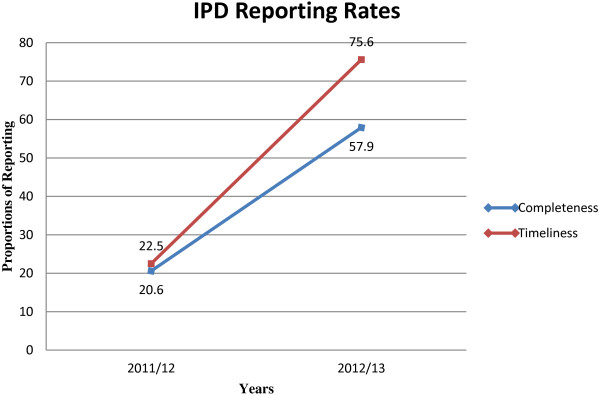
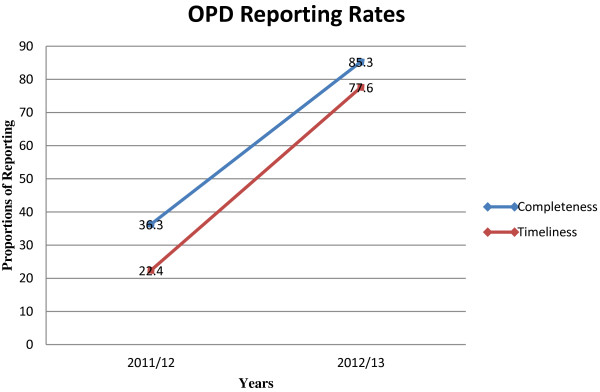
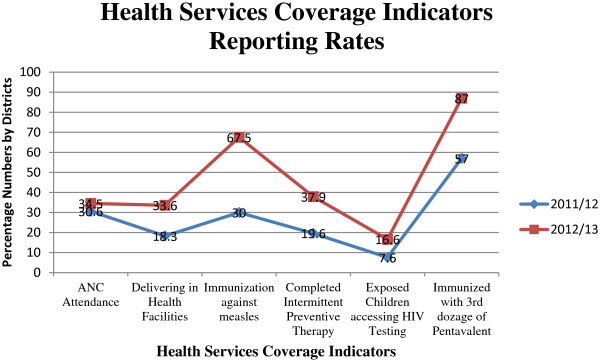
BACKGROUND: Untimely, incomplete and inaccurate data are common challenges in planning, monitoring and evaluation of health sector performance, and health service delivery in many sub-Saharan African settings. We document Uganda's experience in strengthening routine health data reporting through the roll-out of the District Health Management Information Software System version 2 (DHIS2). METHODS: DHIS2 was adopted at the national level in January 2011. The system was initially piloted in 4 districts, before it was rolled out to all the 112 districts by July 2012. As part of the roll-out process, 35 training workshops targeting 972 users were conducted throughout the country. Those trained included Records Assistants (168, 17.3%), District Health Officers (112, 11.5%), Health Management Information System Focal Persons (HMIS-FPs) (112, 11.5%), District Biostatisticians (107, 11%) and other health workers (473, 48.7%). To assess improvements in health reporting, we compared data on completeness and timeliness of outpatient and inpatient reporting for the period before (2011/12) and after (2012/13) the introduction of DHIS2. We reviewed data on the reporting of selected health service coverage indicators as a proxy for improved health reporting, and documented implementation challenges and lessons learned during the DHIS2 roll-out process. RESULTS: Completeness of outpatient reporting increased from 36.3% in 2011/12 to 85.3% in 2012/13 while timeliness of outpatient reporting increased from 22.4% to 77.6%. Similarly, completeness of inpatient reporting increased from 20.6% to 57.9% while timeliness of inpatient reporting increased from 22.5% to 75.6%. There was increased reporting on selected health coverage indicators (e.g. the reporting of one-year old children who were immunized with three doses of pentavelent vaccine increased from 57% in 2011/12 to 87% in 2012/13). Implementation challenges included limited access to computers and internet (34%), inadequate technical support (23%) and limited worker force (18%). CONCLUSION: Implementation of DHIS2 resulted in improved timeliness and completeness in reporting of routine outpatient, inpatient and health service usage data from the district to the national level. Continued onsite support supervision and mentorship and additional system/infrastructure enhancements, including internet connectivity, are needed to further enhance the performance of DHIS2.
Overview
The claims and statistics of this paper haven’t been checked yet.
Free: it reads the open-access text and checks the first 5 claims that cite a source we can check. Create a free account to check every claim.
Integrity signals
Registry
Cites
Statistics
Figures
Verification
Claims the paper makes
The claims and statistics of this paper haven’t been checked yet.
Free: it reads the open-access text and checks the first 5 claims that cite a source we can check. Create a free account to check every claim.
Claims other papers make about this one
Each is checked against this paper’s own text: does it say what the citing paper says it does?
The source backs part of the claim, not all of it — or backs it for a different population, condition or comparison.
In the citing paper
“An evaluation by Kibaru et al. [56] found dramatic improvements in routine reporting, with completeness increasing from 36% to 85% for monthly outpatient reports and 21% to 56% for inpatient reports by 2012/13.”
From Beyond pilotitis: taking digital health interventions to the national level in China and Uganda (2017) · cites this paper as [56]
Experimental — accuracy not yet measuredThe source backs part of the claim, not all of it — or backs it for a different population, condition or comparison.
In the citing paper
“However, consistent power blackouts, loss of internet connectivity and the presence of an unskilled health workforce hinder its uptake.”
From Barriers and opportunities to implementation of sustainable e-Health programmes in Uganda: A literature review (2017) · cites this paper as [64]
Experimental — accuracy not yet measuredThe source backs part of the claim, not all of it — or backs it for a different population, condition or comparison.
In the citing paper
“Similar challenges coupled with inadequate funding and resistance from health workers were encountered in Uganda during implementation of EMRs, such as OpenMRS, mTrack and DHIS2.”
From Barriers and opportunities to implementation of sustainable e-Health programmes in Uganda: A literature review (2017) · cites this paper as [64]
Experimental — accuracy not yet measuredThe cited source says what the claim attributes to it.
In the citing paper
“Kiberu et al. [56] also note that the MoH itself was routinely subject to electricity black-outs, which hindered access to the central server.”
From Beyond pilotitis: taking digital health interventions to the national level in China and Uganda (2017) · cites this paper as [56]
Self-check
Percentages, sums and reported differences re-computed from the paper’s own numbers.
The self-check needs the paper’s full text.
Citations
Cites
(2008) · PubMed · Cited by 237
Improving public health information: a data quality intervention in KwaZulu-Natal, South Africa
Mphatswe, W., Mate, K., Bennett, B., Ngidi, H., Reddy, J., Barker, P., & Rollins, N. (2012) · Bulletin of the World Health Organization · doi:10.2471/blt.11.092759 · Cited by 196 · cited 1×
“In South Africa, the implementation of a web-based data quality intervention improved data completeness from 26% before to 64% after the intervention; and improved overall accuracy of data from 37% at the first data audit to 65% at the third data audit [8].”
BackgroundChaulagai, C. N., Moyo, C. M., Koot, J., Moyo, H. B., Sambakunsi, T. C., Khunga, F. M., & Naphini, P. D. (2005) · Health Policy and Planning · doi:10.1093/heapol/czi044 · Cited by 191
Assessing the quality of data aggregated by antiretroviral treatment clinics in Malawi
Makombe, S. (2008) · Bulletin of the World Health Organization · doi:10.2471/blt.07.044685 · Cited by 104 · cited 3×
“This calls continuous support supervision to build health facility capacity to collect quality data to inform district and national level monitoring and planning [3].”
BackgroundManya, A. S., Braa, J. A., Titlestad, O. H., Øverland, L. H., & Mumo, J. M. (2016) · Cited by 49
DEVELOPMENT OF HMIS IN POOR COUNTRIES: UGANDA AS A CASE STUDY
Kintu, P., Nanyunja, M., Nzabanita, A., & Magoola, R. (2005) · Bioline International (Bioline International) · Cited by 29
The Impact of a Web-based Reporting System on the Collection of Medication Error Occurrence Data
Rudman, W. J., Bailey, J. H., Hope, C. J., Garrett, P., & Brown, C. A. (2005) · Cited by 12
Research works printed but not linked: 2
- Ayub MJB Lars Ø Ola D Jeremiah M Charles N National Roll out of District Health Information Software (DHIS 2) in Kenya IST-Africa 2012 Conference Proceedings
- Makumbi FE Okello C Mutebi A Wabwire-Mangen F Health Sector HIV/AIDs Response Review 2010 Kampala: Uganda Available at: http://danstan.me/HIVHSRReports/HIV%20HSR%20Final%20Reports(2)/HMIS%20Building%20Block%20Final%20Report%20Nov_2010.doc. Accessed March 7, 2014
Cited by
Items 101–200 of 272
Recent progress in global newborn health: thinking beyond acute to strategic care?
Hedstrom, A. B., Perez, K., Umoren, R. A., Batra, M., & Engmann, C. (2019) · Journal of Perinatology · doi:10.1038/s41372-019-0384-z · Cited by 13
Rakers, M. M., van de Vijver, S. J. M., Bossio, P., Moens, N. P., Rauws, M., Orera, M., Shen, H., Hallensleben, C., Brakema, E. A., Guldemond, N., et al. (2023) · European Journal of General Practice · doi:10.1080/13814788.2023.2241987 · Cited by 12
“Lack of high-quality data affects planning, monitoring, and performance evalua on and provision of care [44,27].”
BackgroundKigozi, S. P., Giorgi, E., Mpimbaza, A., Kigozi, R. N., Bousema, T., Arinaitwe, E., Nankabirwa, J. I., Sebuguzi, C. M., Kamya, M. R., Staedke, S. G., et al. (2020) · American Journal of Tropical Medicine and Hygiene · doi:10.4269/ajtmh.19-0950 · Cited by 11
Aron, M. B., Nkhomah, W. E., Dullie, L., Matanje, B., Kachimanga, C., Ndarama, E. P. L., Chibvunde, S., Mulwafu, M., Banda, G. M., Mpinga, K., et al. (2024) · BMC Medical Informatics and Decision Making · doi:10.1186/s12911-024-02802-x · Cited by 17
Chukwu, E., Garg, L., Obande-Ogbuinya, E. N., & Chattu, V. K. (2022) · JMIR Formative Research · doi:10.2196/28510 · Cited by 11
“Although early RHISs were produced using paper-based health facility reports, many LMICs have implemented newer web-based systems over the past decade [4,5].”
MethodQuality of routine health data in DHIS2 in South Africa: Eastern Cape province from 2017–2020
Thabethe, S., & Mathews, V. E. (2024) · South African journal of information management · doi:10.4102/sajim.v26i1.1903 · Cited by 10
“The implementation of DHIS2 helps to improve completeness in reporting routine health data from the health facility to the national level (Kiberu et al. 2014).”
Awoonor‐Williams, J. K., Moyer, C. A., & Adokiya, M. N. (2021) · PLoS ONE · doi:10.1371/journal.pone.0245039 · Cited by 10
“Our data suggest that feedback to port health officers on the EVD screening data they provide is rarely done, which is similar throughout much of sub-Saharan Africa [27, 30, 31].”
BackgroundFAIR Equivalency with Regulatory Framework for Digital Health in Uganda
Basajja, M., van Reisen, M., & Oladipo, F. O. (2022) · Data Intelligence · doi:10.1162/dint_a_00170 · Cited by 10
“The Ministry of Health has adopted the District Health Information Software version 2 (DHIS2) as part of the national eHMIS and rolled it out up to the district level [26].”
MethodSchuetze, L., Srivastava, S., Kuunibe, N., Rwezaula, E. J., Missenye, A. M., Stoermer, M., & Allegri, M. D. (2023) · International Journal of Health Policy and Management · doi:10.34172/ijhpm.2023.6896 · Cited by 12
“The number of verified and expected claims differed between regions, with the median (IQR) number of verified claims ranging from 5 (0-31) in Dodoma to 27 (3-51) in Shinyanga, and the median (IQR) number of expected claims ranging from 34 (13.”
Mugasha, R., Kwiringira, A., Ntono, V., Nakiire, L., Ayebazibwe, I., Kyozira, C., Muruta, A. N., Kasule, J. N., Byonanebye, D. M., Nanyondo, J., et al. (2024) · JMIR Public Health and Surveillance · doi:10.2196/59783 · Cited by 9
Self-citationShabani, J., Salim, N., Bohne, C. A., Day, L. T., Kumalija, C., Makuwani, A., Bundala, F. A., Ismail, H., Lawn, J. E., & Ohuma, E. O. (2025) · BMC Pediatrics · doi:10.1186/s12887-025-05417-x · Cited by 9
Lawrence, M. R., Fuller, B. P., Isabirye, H., Kyozira, C., Makumbi, I., Bakainaga, A. N., Moore, C. C., & Ssekitoleko, R. (2026) · BMC Health Services Research · doi:10.1186/s12913-026-14188-9 · Cited by 12
“Data that are incomplete, delayed, or have not been validated do not effectively capture real-time disease trends and may lead to biased, uninformed decision-making at both the point of generation of the data and at the national level [1, 2].”
InfluentialSelf-citationChraish, M., Oyama, C., Aoki, Y., Andrew, D. M. D., Nishio, M., Shi, S., & Yakura, H. (2025) · PLOS Digital Health · doi:10.1371/journal.pdig.0001099 · Cited by 10
Simmons, E., Singh, K., Mpiima, J., Kumar, M., & Weiss, W. M. (2020) · Population Health Metrics · doi:10.1186/s12963-020-00236-x · Cited by 9
Aktar, B., Rajendra, K. L., Clark, E., Messier, K., Aissaoui, A., Elamurugan, K., Hasan, T., Farnaz, N., Kaiser, A., Awal, A., et al. (2022) · Reproductive Health · doi:10.1186/s12978-022-01424-8 · Cited by 9
“2 The health system goes through a period of degradation and fragmentation due to increasing violence and insecurity, weakening governance, and loss of resources [9].”
BackgroundWanzira, H., Tumwine, D., Bukoma, P., Musiime, A., Biculu, J., Ediamu, T. D., Gudoi, S., Tibenderana, J., Mulebeke, R., Nantanda, R., et al. (2021) · BMC Health Services Research · doi:10.1186/s12913-021-06849-8 · Cited by 9
Kagoya, H. R., Kibuule, D., Rennie, T. W., Wuletaw, C., & Mitonga, K. H. (2019) · Research in Social and Administrative Pharmacy · doi:10.1016/j.sapharm.2019.09.057 · Cited by 10
Roach, C. S., Pham, A., Shawwa, J. J., Ho, A., Nee, C. S., Dong, G., Reina, E. E., Brown, J. E., Kis, M., Chetan, S., et al. (2025) · World Neurosurgery · doi:10.1016/j.wneu.2025.124048 · Cited by 8
A political economy analysis of strengthening health information system in Tanzania
Kuwawenaruwa, A., Mollel, H. A., Machonchoryo, J. M., Margini, F., Jaribu, J., & Binyaruka, P. (2023) · BMC Medical Informatics and Decision Making · doi:10.1186/s12911-023-02319-9 · Cited by 8
“Furthermore, staff skills and knowledge, shortage of training, refresher training together with the lack of incentives and tools have undermined the performance of the HMIS ecosystem in most countries [31].”
BackgroundMutamba, B. B., Twikirize, G., Ssemalulu, J., Babirye, R., Semakula, L., & Cappo, D. (2024) · International Journal of Mental Health Systems · doi:10.1186/s13033-024-00643-9 · Cited by 8
“The HMIS form 105 is a summation form for monthly cases reviewed at a health facility [11].”
BackgroundQuality of routine health and nutrition data in Ethiopia: A systematic review
Zerfu, T. A., Genye, T., & Tareke, A. A. (2025) · PLoS ONE · doi:10.1371/journal.pone.0316498 · Cited by 8
“Compared with other countries, countries like Uganda have made strides in achieving high completeness rates by implementing standardized reporting practices and rigorous data validation mechanisms [48].”
Nabirye, J., Livex, O. A., Nuwematsiko, R., Kiwanuka, G., Muneza, F., Kamya, C., & Babirye, J. N. (2020) · BMC Public Health · doi:10.1186/s12889-020-8348-y · Cited by 8
Towards Paperless Hospitals: Lessons Learned from 15 Health Facilities in Uganda
Kanagwa, B., Ntacyo, J., & Orach, S. (2016) · Advances in intelligent systems and computing · doi:10.1007/978-3-319-31307-8_3 · Cited by 7
“process, 35 training workshops targeting 972 users were conducted throughout the country[11]”
BackgroundMesele, A. G., Birhanu, A. Y., Shiferaw, A. M., & Baykemagn, N. D. (2024) · Digital Health · doi:10.1177/20552076241283239 · Cited by 7
“42,61,64 The odds of DHIS2 data utilization are higher for those who have a monthly salary > 5000 ETB than those 5000 ETB (AOR 2.0, 95% CI [1.1 – 3.7]).”
InfluentialGesicho, M. B., & Babić, A. (2021) · PLoS ONE · doi:10.1371/journal.pone.0247525 · Cited by 7
Mpango, J., & Nabukenya, J. (2019) · PubMed · Cited by 7
Ojiakor, I., Etiaba, E., & Onwujekwe, O. E. (2025) · Discover Public Health · doi:10.1186/s12982-025-00951-6 · Cited by 6
“A national DHIS2 implementation study in Uganda reported comparable challenges at the point of data collection, prompting the adoption of quality assessment mechanisms [25].”
Kiwanuka, S. N., Kabwama, S. N., Namuhani, N., Gupta, S., Layer, E., Mechael, P., Gibson, D. G., & Agarwal, S. (2026) · Oxford Open Digital Health · doi:10.1093/oodh/oqag002 · Cited by 6
“This has increased the number of skilled staff available, enhancing the capacity of facilities and districts to enter and analyze data in a timely manner [17].”
Namisango, E., Ramsey, L., Dandadzi, A., Okunade, K. S., Ebenso, B., & Allsop, M. J. (2021) · BMC Medical Informatics and Decision Making · doi:10.1186/s12911-021-01555-1 · Cited by 6
Ahmed, J., Nothem, A., Mostel, J. L., Ciceron, A. C., Nuñez, L., Raobela, O., Raoiliarison, A. P., Lankhulani, S., Munthali, J., Cissoko, M., et al. (2024) · American Journal of Tropical Medicine and Hygiene · doi:10.4269/ajtmh.23-0488 · Cited by 7
Roh, M. E., Oundo, B., Dorsey, G., SHIBOSKI, S. C., Gosling, R. D., Glymour, M. M., Staedke, S. G., Bennett, A. F., Sturrock, H. J. W., & Mpimbaza, A. (2022) · Malaria Journal · doi:10.1186/s12936-021-04034-0 · Cited by 5
“Due to concerns over data quality [18, 19], health facilities were screened by a study coordinator and excluded if: (1) data were missing for >25 months during the study period or (2) covariates or outcomes were systematically missing.”
BackgroundEpizitone, A. (2022) · International Journal of Advanced Computer Science and Applications · doi:10.14569/ijacsa.2022.0130758 · Cited by 5
“Data management has influence several aspects in the health sector and many decision-making has been reliance on quality and analysis of data [29].”
BackgroundStrengthening routine data reporting in private hospitals in Lagos, Nigeria
Ohiri, K., Makinde, O., Ogundeji, Y. K., Mobisson, N., & Oludipe, M. (2023) · Health Policy and Planning · doi:10.1093/heapol/czad035 · Cited by 5
Ayele, W., Biruk, E., Habtamu, T., Taye, G., Tamire, M., & Addissie, A. (2021) · Ethiopian Journal of Health Development · Cited by 5
Nuwasiima, S., Mpimbaza, A., Muteebwa, L., Nagawa, E., Arinaitwe, E., Kiberu, F., Ejalu, D. L., Mugerwa, J., Batte, C., Mukisa, J., et al. (2025) · Malaria Journal · doi:10.1186/s12936-025-05519-y · Cited by 6
“Uganda rolled out the District Health Information System, version 2 (DHIS2) as an online tool for collection, validation, analysis, and visualization of aggregated HMIS data collected at health facilities [4].”
Ahmed, N., Abdullahi, Y. B., Bashir, S., Abdi, M. S., Osman, M. M., Ahmed, M. Y., & Abdi, Y. H. (2026) · Discover Public Health · doi:10.1186/s12982-026-02063-1 · Cited by 4
“Digital innovations are increasingly being integrated into surveillance, with substantial scaling of District Health Information Software 2 (DHIS2), geographic information systems (GIS), mobile health (mHealth) reporting platforms, and genomic sequencing capacity across the continent [29, 30].”
Murai, S., Ventura, R. J., & Gaite, J. T. (2022) · PLoS ONE · doi:10.1371/journal.pone.0264681 · Cited by 4
Critical Indicators on Macro Economics adoption in GDP: A systematic review
Sule, S. A. (2024) · The Es Economics and Entrepreneurship · doi:10.58812/esee.v2i03.236 · Cited by 4
“According to [9], there is an inverse relationship between interest rates and the GDP. Interest accrues when the central bank grants a financial institution a line of credit.”
BackgroundOyebanji, O., Debra, J., & Mathole, T. (2022) · International Journal of Environmental Research and Public Health · doi:10.3390/ijerph192315855 · Cited by 4
Benke, A., Williams, A. J., & MacNeil, A. (2017) · Pan African Medical Journal · doi:10.11604/pamj.supp.2017.27.3.11524 · Cited by 4
“Similarly, information system software has transitioned to technologically more complex software platforms, such as DHIS2 [8], that necessitate development and maintenance by a workforce with expertise in information technology.”
MethodAturinde, A., Nakasi, R., Farnaghi, M., Maiga, G., Pilesjö, P., & Mansourian, A. (2019) · BMC Medical Informatics and Decision Making · doi:10.1186/s12911-019-0949-y · Cited by 4
Ouedraogo, M., Tolani, M., Mambulasa, J., McLaughlin, K., Bassani, D. G., & McKinnon, B. (2022) · BMC Health Services Research · doi:10.1186/s12913-022-07680-5 · Cited by 4
Factors contributing to poor healthcare data quality: qualitative study from Southern Ethiopia
Endriyas, M., Alano, A., Mekonnen, E., Hailu, S., Hailemariam, T., Ayele, S., Shiferaw, M. S., Kelaye, T., Misganaw, T., & Samuel, T. (2023) · Health and Technology · doi:10.1007/s12553-023-00741-7 · Cited by 4
Evaluation of eHealth Implementations in Uganda: Investigating Practices, Challenges and InsightsPreprint
Nabukenya, J., & Ashaba, J. (2019) · Research Square · doi:10.21203/rs.2.12339/v1 · Cited by 5
“Some of the famous eHealth systems implemented in Uganda include DHIS2 which supports routine health data reporting from the district level to the national level [63], mTrac an SMS, USSD and web-based data collection tool for health workers at district health centers to submit weekly HMIS reports related to disease ou…”
BackgroundNsubuga, F., Driwale, A., Gyasi, S. O., Ampeire, I., & Kabwama, S. N. (2022) · Research Square · doi:10.21203/rs.3.rs-1286703/v1 · Cited by 4
Incidence of preterm births admissions in Uganda, 2015-2019Preprint
Morukileng, J., Mugwanya, W., Mutumba, R., Katusiime, M., Byaruhanga, A., Gonahasa, D. N., Amodan, B. O., Kabwama, S. N., Kadobera, D., Bulage, L., et al. (2022) · Research Square · doi:10.21203/rs.3.rs-1263340/v1 · Cited by 4
Kananura, R. M., Broucker, G. D., Ssebagereka, A., Aloysius, M., Kiracho, E. E., & Patenaude, B. (2024) · Cost Effectiveness and Resource Allocation · doi:10.1186/s12962-024-00586-5 · Cited by 3
“Significant improvements have been made in data reporting on these databases in recent years, particularly since the implementation of the DHIS2 facility data input and management system [39].”
Ssegujja, E., Kiggundu, P., Karen, S. Z., & Rutebemberwa, E. (2025) · Health Research Policy and Systems · doi:10.1186/s12961-025-01351-7 · Cited by 3
“…users with an expectation that they will collect and report utilization data into the District Health Information Software version 2 (DHIS2) for those with access, or report through the supervising public health facility for those lower-level service providers without access to the DHIS2 [6–8].”
Kikoba, B., Mahundi, M. H., & Senyoni, W. F. (2026) · Digital Health · doi:10.1177/20552076261433642 · Cited by 3
“38,39 The resultant lack of system interoperability imposes a heavy triple burden on health workers: increased workload, duplicative data entry, and decreased trust in data accuracy.”
White, E. B., Hernández-Ramírez, R. U., Majwala, R. K., Nalugwa, T., Reza, T. F., Cattamanchi, A., Katamba, A., & Davis, J. L. (2022) · PLOS Global Public Health · doi:10.1371/journal.pgph.0000716 · Cited by 3
“DHIS2 is a widely-used, open-source, health management information system that was implemented in Uganda in 2012, began collecting TB data in 2017, and was fully adopted for TB reporting in 2018 [29].”
BackgroundAyele, M., Mariani, I., Abathun, F., Mouhamadou, O., Minja, J., Kananura, R. M., Tognon, F., Day, L. T., Sæbø, J. I., Fisseha, H., et al. (2025) · Journal of Global Health · doi:10.7189/jogh.15.04330 · Cited by 4
“The DHIS2 is a common digital application used for eRHISs in Africa; it was adopted in Uganda in January 2011 [ 37 ], in Tanzania in December 2013 [ 38 , 39 ], in Ethiopia in 2019 [ 33 ] and sub-nationally in the CAR in 2019 [ 40 ], with major benefits on data quality and use [ 33 , 35 , 37 ].”
宮崎一起, Nozaki, I., Tojo, B., & Moji, K. (2020) · Global Health & Medicine · doi:10.35772/ghm.2020.01020 · Cited by 3
“The interoperability of the QR code may be another advantage as the introduction of electronic HIS should be integrated for avoiding complexity among other HIS (7,9,10,16-18,21).”
BackgroundMethodImplementasi dhis2 untuk pengelolaan data kia di puskesmas ampana timur, sulawesi tengah
Djadi, N. K. H. W. (2021) · Journal of Information Systems for Public Health · doi:10.22146/jisph.27696 · Cited by 3
Proceedings from the CIHLMU Symposium 2020 on “eHealth: Trends and innovations”
Noreña, I., Shah, N., Ndenkeh, J. J. N., Hernandez, C., Sitoe, N. E., Sillah, A. K., Shin, A., Han, W. W., Devaera, Y., Mosoba, M. M., et al. (2020) · BMC Proceedings · doi:10.1186/s12919-020-00202-3 · Cited by 3
Self-citationEnd Malaria Faster: Taking Lifesaving Tools Beyond “Access” to “Reach” All People in Need
Emerson, C., Meline, J., Linn, A., Wallace, J., Kapella, B. K., Venkatesan, M., & Steketee, R. (2022) · Global Health Science and Practice · doi:10.9745/ghsp-d-22-00118 · Cited by 3
“Many countries have adopted electronic health information systems, which have improved data collection and may help to reduce stockouts.(27,28) Malaria surveillance is a key intervention component of the WHO Global Technical Strategy.”
BackgroundUba, B. V., Waziri, N. E., Adegoke, O. J., Akerele, A., Gidado, S., Usifoh, N., Adeoye, O. B., Akataobi, C., Ahmed, S. H., Obansa, R. U., et al. (2021) · PubMed Central · doi:10.11604/pamj.supp.2021.40.1.24879 · Cited by 3
“Manual data aggregation at multiple levels contribute to deficiencies in data accuracy, completeness, timeliness and reliability of reporting that adversely affect program planning and service delivery [1-3].”
BackgroundMethodInfluentialOuma, J., Hookham, L., Aol, L., Rukundo, G., Kyohere, M., Kakande, A., Nakyesige, R., Musoke, P., & Doaré, K. L. (2023) · PLOS Global Public Health · doi:10.1371/journal.pgph.0002022 · Cited by 3
“…Health Records (EHRs) are becoming widely available in Uganda and other low resource settings and have reduced the cost of capturing and storing patient data compared to traditional paper-based tools; improved tracking of patients and clinic efficiency secondary to availability of patient data [2].”
BackgroundHuda, F., Mahmud, M. U., Islam, T. T., Akter, S., Kabir, S. F., Hossain, M., Ashrafi, S. A. A., Uddin, M., Habib, F., Gibbons, S. K., et al. (2024) · Journal of Global Health · doi:10.7189/jogh.14.04259 · Cited by 1
Wanyana, M. W., Migisha, R., King, P. J., Bulage, L., Kwesiga, B., Kadobera, D., Ario, A. R., & Harris, J. R. (2025) · PLOS Global Public Health · doi:10.1371/journal.pgph.0002980 · Cited by 3
“To ensure data quality within DHIS2,data in physical health registers are routinely compared with summary reports within the electronic system in addition to the in-built quality checks [15].”
Strengthening Health Management Information Systems in Malawi: Gaps and opportunities
Monawe, M., Chawani, M. S., Kapokosa, G., & Moyo, C. (2015) · IST-Africa Conference (IST-Africa) · doi:10.1109/istafrica.2015.7190577 · Cited by 3
The Contribution of Digital Technologies to Service Delivery: An Evidence Review
Sharmin, S., Faith, B., Martín, P. P., & Ramalingam, B. (2017) · Figshare · Cited by 4
Okello, G. A. (2017) · Open Research Online (The Open University) · doi:10.21954/ou.ro.0000ce33 · Cited by 4
Nyandwi, E. (2017) · University of Twente Research Information · doi:10.3990/1.9789036544108 · Cited by 4
Kuyo, R. O. (2019) · Cited by 3
Ngwashi, C. A., Oliveira, V., & Asnong, C. (2023) · International Journal of Health Sciences and Research · doi:10.52403/ijhsr.20230309 · Cited by 3
Amuha, M. G., Masiero, S., & Sanner, T. A. (2023) · IFIP advances in information and communication technology · doi:10.1007/978-3-031-50154-8_13 · Cited by 2
Basajja, M., & Ugwu, O. P.-C. (2025) · ClinicoEconomics and Outcomes Research · doi:10.2147/ceor.s560265 · Cited by 2
Amuha, M. G., & Masiero, S. (2026) · The Electronic Journal of Information Systems in Developing Countries · doi:10.1002/isd2.70066 · Cited by 3
“This approach echoed the successful data system reforms in the health sector, creating institutional legitimacy and familiarity (Amuha et al. 2023; Kiberu et al. 2014).”
Hasan, M. Z., Okello, G., GROOTE, W. D., Omaren, A., Adair, T., & Bachani, A. M. (2026) · SSM - Health Systems · doi:10.1016/j.ssmhs.2026.100254 · Cited by 2
Miyazaki, K., & Nozaki, I. (2019) · doi:10.11197/jaih.34.93 · Cited by 2
Eze, I., Ogbu, M. A., Ossai, E., Ekenna, A. C., Okoronkwo, I., & Onwujekwe, O. E. (2023) · Nigerian Journal of Clinical Practice · doi:10.4103/njcp.njcp_576_22 · Cited by 2
Magassouba, A. S. (2023) · Texila international journal of public health · doi:10.21522/tijph.2013.11.03.art014 · Cited by 2
Zungu, M., Yassi, A., Ramodike, J., Voyi, K. V. V., Lockhart, K., Jones, D. T., Kgalamono, S. M., Thunzi, N., & Spiegel, J. (2023) · Safety and Health at Work · doi:10.1016/j.shaw.2023.10.014 · Cited by 3
“…the qualityof health information, due to increased speed, integration of data and easy access to all sources [49]; studies have shown that web-based systems improve data completeness and data accuracy [41,50], albeit there is abundant evidence that most information systems fail in their actual use.”
BackgroundInfluentialSsegujja, E., Kiggundu, P., Kayemba, Y., Karen, S. Z., & Rutebemberwa, E. (2024) · Discover Health Systems · doi:10.1007/s44250-024-00109-2 · Cited by 2
Malembela, K., Lianna, A. Y., & Mazana, M. Y. (2024) · African Journal of Empirical Research · doi:10.51867/ajernet.5.3.112 · Cited by 2
“The implementation of systems like the health management information system (HMIS) and the district health information system 2 (DHIS2) has been hindered by these issues (Kiberu et al., 2014).”
BackgroundTransformación digital en Honduras: sistema de información para la vigilancia de ESAVI/EVADIE
Núñez, S. Y., Ortiz, C., Ávila, A., Romualdo-Tello, N. M., & Aguilar, C. (2024) · Revista Panamericana de Salud Pública · doi:10.26633/rpsp.2024.127 · Cited by 2
Nabasirye, A., & Ssali, I. W. (2025) · doi:10.1109/seigs66664.2025.00012 · Cited by 2
“Similarly, Kiberu et al. (2014) draw attention to critical challenges such as delays in data availability and insufficient technical infrastructure.”
Characterizing the Flow of Health Information in Rural Uganda: is there a Role for Mobile Phones?
Jacobson, L. E., Bajunirwe, F., Vonasek, B. J., Twesigye, L., Conway, J. H., Grant, M. J., & Sethi, A. K. (2015) · Cited by 2
Malaria Surveillance in Akwa Ibom, Nigeria: From ‘Control’ to ‘Pre-Elimination’ Status
Effah, G. B., Uwah, A., & Ekpenyong, B. (2022) · Journal of Epidemiology and Public Health Reviews · doi:10.16966/2471-8211.220 · Cited by 2
“Moreover, the finding is consistent with the results of similar studies conducted in other malaria endemic areas [5,28,29].”
ResultHargono, A., Artanti, K. D., Syahrul, F., & Lioni, E. (2022) · Open Access Macedonian Journal of Medical Sciences · doi:10.3889/oamjms.2022.9346 · Cited by 2
“[39] that stated that the application of systems and the use of technology is very important to support health information management activities.”
BackgroundKiyemba, T., Makabayi‐Mugabe, R., Kirirabwa, N. S., Tumwesigye, P., Zawedde‐Muyanja, S., Andrew, O., Abel, N., Quinto, E., & Turyahabwe, S. (2023) · African Health Sciences · doi:10.4314/ahs.v23i4.3 · Cited by 2
Yiech, D. C. (2020) · Unisa Institutional Repository (University of South Africa) · Cited by 2
Birabwa, C., Banke-Thomas, A., Semaan, A., van Olmen, J., Kananura, R. M., Arinaitwe, E. S., Waiswa, P., & Beňová, L. (2023) · Research Square · doi:10.21203/rs.3.rs-3528370/v1 · Cited by 2
Aabebe, F. G., Adjei-Gyamfi, S., Asobuno, C., Badieko, S. M., Kuubabongnaa, B. B., Boakye-Boateng, S. K., Aoki, T., & Aiga, H. (2024) · medRxiv · doi:10.1101/2024.05.08.24307079 · Cited by 2
“Based on earlier studies (11,15,17), the independent variables were made up of data managers’ information and facility-based characteristics as shown in Table 1.”
BackgroundMethodNguyen, N. K., Long, P. T., Thang, T. B., Duong, L. D., Nguyễn, M. T., Thu, D. T. A., & Nguyen, T. G. (2023) · Asia Pacific Journal of Public Health · doi:10.1177/10105395231169084 · Cited by 1
“30 Our findings showed no difference between having and not having an informatics certificate of proficiency in using the NIIS.”
BackgroundDetermining the Level of Health Management Information System Data Use in Southern Region of Lesotho
Taunyane, E. M., & Mpati, E. F. (2023) · International Journal of Public Health and Pharmacology · doi:10.52589/ijphp-rvh2fvep · Cited by 1
Wakida, E. K., Karungi, C. K., Wasswa, W., Ajok, R. K., Rukundo, G. Z., Zhang, O., Lopez-Vera, A., Talib, Z. M., & Obua, C. (2026) · PLOS Digital Health · doi:10.1371/journal.pdig.0001389 · Cited by 1
“Integration with DHIS2 and the inclusion of dementia-specific indicators would reduce duplication and improve data quality [39,40].”
Tchio-Nighie, K. H., Bashombwa, A. M., Guenou, E., & Ateudjieu, J. (2026) · Health Science Reports · doi:10.1002/hsr2.73078 · Cited by 1
“Regarding timeliness, the indicator consistently lagged behind completeness even though improvements are also noted over time [18, 19, 24, 26, 28, 29, 33].”
Measles Data Reporting in the District Health Information System: A Case Study of Gombe State
Usifoh, N., Yak, T., Dooga, I., Dankoli, R. S., Ajumobi, O. O., Adefisoiye, A., & Adegoke, O. J. (2019) · Global Journal of Health Science · doi:10.5539/gjhs.v11n11p109 · Cited by 1
“The platform was launched in Uganda in 2011 to replace the paper-based Health Management Information System (HMIS) that had been used for years (Kiberu et al., 2014).”
BackgroundMethodAsaba, M., Tella, O., Ihekwaba, I., & Tella, A. O. (2022) · Student s Journal of Health Research Africa · doi:10.51168/sjhrafrica.v3i12.255 · Cited by 2
Sauli, E., Modern, G., & Mustafa, U.-K. (2023) · Advances in human and social aspects of technology book series · doi:10.4018/978-1-6684-6873-9.ch002 · Cited by 1
Chillo, O., Kazyoba, P. E., Giattas, M., Mohamed, A.-M., Magembe, G., & Kitali, E. J. (2026) · East African Health Research Journal · doi:10.24248/eahrj.v10i1.884 · Cited by 1
Pratama, R. A. (2024) · Journal of Community Empowerment for Health · doi:10.22146/jcoemph.93829 · Cited by 1
Kagoro, F., Allen, E. N., Raman, J., Mabuza, A. M., Magagula, R., Kok, G., Malatje, G., Guerin, P. J., Dhorda, M., Maude, R. J., et al. (2025) · PLoS ONE · doi:10.1371/journal.pone.0305885 · Cited by 2
“A high level of perceived workload, data tools not being used as intended, and data quality issues were previously identified as challenges facing DHIS roll-out in Uganda and South Africa [30,31].”
Nabukenya, J., & Ashaba, J. (2020) · Research Square · doi:10.21203/rs.2.12339/v2 · Cited by 4
Wanzira, H., Tumwine, D., Bukoma, P., Musiime, A., Biculu, J., Ediamu, T. D., Gudoi, S., Tibenderana, J., Mulebeke, R., Nantanda, R., et al. (2020) · doi:10.21203/rs.3.rs-25796/v2 · Cited by 1
Kamfar, S., Alavi, S., Eshghi, P., Tabatabaie, M., & Taherian, R. (2024) · Research Square · doi:10.21203/rs.3.rs-3851263/v1 · Cited by 1
RetractedMasanja, V., Majwala, R. K., Turyahabwe, S., Nsubuga, E. J., Gonahasa, D. N., Kwesiga, B., Kadobera, D., Bulage, L., & Ario, A. R. (2024) · Research Square · doi:10.21203/rs.3.rs-5023080/v1 · Cited by 1
Child health and mortality in resource-poor settings: a life-course and systemic approach
Kananura, R. M. (2021) · London School of Economics and Political Science Theses Online (London School of Economics and Political Science) · doi:10.21953/lse.00004389 · Cited by 2
Habib, H., Fatima, R., Achakzai, A. B. K., Wali, A., Yaqoob, A., Najmi, H., Haq, M. U., & Majeed, A. (2018) · F1000Research · doi:10.12688/f1000research.17202.1
Metadata
- Authors
- Kiberu, V. M., Matovu, J. K., Makumbi, F., Kyozira, C., Mukooyo, E., & Wanyenze, R. K.
- Affiliations
- Makerere University (UG)
- Ministry of Health (UG)
- Corresponding author
- Kiberu, Vincent Micheal
- Matovu, Joseph KB
- Venue
- BMC Medical Informatics and Decision Making
- Published
- 2014-05-13
- Volume
- 14
- Issue
- 1
- Pages
- 40-40
- ISSN
- 1472-6947 (ISSN-L)
- PMC
- PMC4030005
- OpenAlex
- W2167470445
- Cited by
- 261
- References
- 7
- Citations by year
- 2026: 24 · 2025: 19 · 2024: 29 · 2023: 25 · 2022: 30 · 2021: 43 · 2020: 33 · 2019: 18 · 2018: 13 · 2017: 15 · 2016: 6 · 2015: 6
- FWCI
- 16.45
- Type
- journal article
- Language
- en
- Open access
- gold
- doi.org
- Licence
- Locations
- BMC Medical Informatics and Decision Making (publishedVersion, cc-by)
- Europe PMC (PubMed Central) (publishedVersion, cc-by)
- PubMed Central (publishedVersion, cc-by)
- PubMed (publishedVersion)
- Funders
- Centers for Disease Control and Prevention
- Topics
- Health Sciences › Health Professions › Health Information Management › Electronic Health Records Systems
- Health Sciences › Health Professions › Health Information Management › Medical Coding and Health Information
- Health Sciences › Medicine › Public Health, Environmental and Occupational Health › Healthcare Systems and Reforms
- Keywords
- DHIS2, data completeness, data timeliness, user training, implementation barriers, Uganda, sub-Saharan Africa, health information systems, pentavalent vaccine, district health management, technical support, internet access, health workforce capacity, health care delivery
- MeSH terms
- Health Services, Humans, Inpatients, Outpatients, Uganda, Health Information Systems, Health Information Management
About these checks
Registry, retraction, Cites and statistics results are computed, not judged, with one exception: a printed reference that no index lists is read once by a model before it counts as a citation error. Claims are extracted by a model and kept only when their quote appears verbatim in the text; each cited source is then checked, with a model’s help, for whether it says what the claim relies on. Those verdicts can be wrong — read the claim’s quote and the cited source before relying on one.
Statistics and arithmetic are recomputed, not judged.
Confidence bands are shown only for fields calibrated on our annotated test set. None is calibrated yet, so no band is shown.
What counts as a claim ›How we measure confidence ›How we check this ›
Are you an author, or do you see a problem with this page? Request a review
Data sources
Bibliographic data: Semantic Scholar, OpenAlex, Crossref.
Contains information from the Semantic Scholar Academic Graph Datasets, made available under the ODC Attribution License (ODC-BY 1.0).
Semantic Scholar’s data is described in: Kinney, R., et al. (2023). The Semantic Scholar Open Data Platform. arXiv:2301.10140.
