

Hidden in plain sight: bias towards sick patients when sampling patients with sufficient electronic health record data for research
Open accessThe DOI matches its Crossref record; 37 of the 37 references it cites were found in a registry or an index.
Abstract
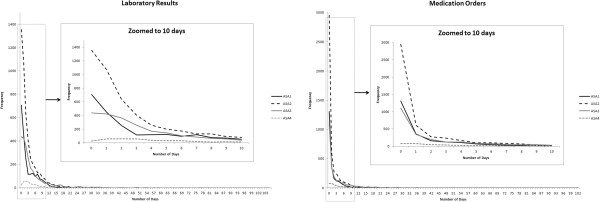
BACKGROUND: To demonstrate that subject selection based on sufficient laboratory results and medication orders in electronic health records can be biased towards sick patients. METHODS: Using electronic health record data from 10,000 patients who received anesthetic services at a major metropolitan tertiary care academic medical center, an affiliated hospital for women and children, and an affiliated urban primary care hospital, the correlation between patient health status and counts of days with laboratory results or medication orders, as indicated by the American Society of Anesthesiologists Physical Status Classification (ASA Class), was assessed with a Negative Binomial Regression model. RESULTS: Higher ASA Class was associated with more points of data: compared to ASA Class 1 patients, ASA Class 4 patients had 5.05 times the number of days with laboratory results and 6.85 times the number of days with medication orders, controlling for age, sex, emergency status, admission type, primary diagnosis, and procedure. CONCLUSIONS: Imposing data sufficiency requirements for subject selection allows researchers to minimize missing data when reusing electronic health records for research, but introduces a bias towards the selection of sicker patients. We demonstrated the relationship between patient health and quantity of data, which may result in a systematic bias towards the selection of sicker patients for research studies and limit the external validity of research conducted using electronic health record data. Additionally, we discovered other variables (i.e., admission status, age, emergency classification, procedure, and diagnosis) that independently affect data sufficiency.
Overview
The claims and statistics of this paper haven’t been checked yet.
Free: it reads the open-access text and checks the first 5 claims that cite a source we can check. Create a free account to check every claim.
Integrity signals
Registry
Cites
Statistics
Figures
Verification
Claims the paper makes
The claims and statistics of this paper haven’t been checked yet.
Free: it reads the open-access text and checks the first 5 claims that cite a source we can check. Create a free account to check every claim.
Claims other papers make about this one
Each is checked against this paper’s own text: does it say what the citing paper says it does?
The source backs part of the claim, not all of it — or backs it for a different population, condition or comparison.
In the citing paper
“A substantial body of research suggests that data collected in EHRs and other operational systems may not be of sufficient quality for research.28–37”
From A harmonized data quality assessment terminology and framework for the secondary use of electronic health record data (2016) · cites this paper as [37]
Experimental — accuracy not yet measuredIn the citing paper
“The sampling of patients based on having sufficient laboratory results and medication orders in EHR-based research inherently favors sicker patients, leading to a non-random sample that may not accurately represent the broader patient population92.”
From Bias recognition and mitigation strategies in artificial intelligence healthcare applications (2025) · cites this paper as [92]
Self-check
Percentages, sums and reported differences re-computed from the paper’s own numbers.
The self-check needs the paper’s full text.
Citations
Cites
RUBIN, D. B. (1976) · Biometrika · doi:10.1093/biomet/63.3.581 · Cited by 9,925
Beyond Accuracy: What Data Quality Means to Data Consumers
Wang, R. Y., & Strong, D. M. (1996) · Journal of Management Information Systems · doi:10.1080/07421222.1996.11518099 · Cited by 4,672 · cited 1×
“The proportion of patients in a given population with sufficient data varies from study to study, as it depends on the research question and the necessary kinds of data required for answering that question [14,20].”
BackgroundExternal validity of randomised controlled trials: “To whom do the results of this trial apply?”
Rothwell, P. M. (2005) · The Lancet · doi:10.1016/s0140-6736(04)17670-8 · Cited by 2,544 · cited 1×
“This approach ensures that all required data are present and trustworthy, but may come at the expense of limited external generalizability due to the non-representativeness of the sample [16].”
BackgroundHilbe, J. M. (2011) · doi:10.1017/cbo9780511973420 · Cited by 2,342
The “Meaningful Use” Regulation for Electronic Health Records
Blumenthal, D., & Tavenner, M. (2010) · New England Journal of Medicine · doi:10.1056/nejmp1006114 · Cited by 2,059 · cited 1×
“Since the passage of the Health Information Technology for Economic and Clinical Health (HITECH) Act in 2009 [1,2], there has been an increase in the rate of electronic health record (EHR) adoption.”
Background(2007) · Negative Binomial Regression · doi:10.1017/cbo9780511811852.007 · Cited by 1,981
GRADING OF PATIENTS FOR SURGICAL PROCEDURES
Saklad, M. (1941) · Anesthesiology · doi:10.1097/00000542-194105000-00004 · Cited by 1,956 · cited 1×
“The American Society of Anesthesiologists (ASA) Physical Status Classification System (Table 1) is closer to this ideal than most health status indices [26,27].”
BackgroundHow to measure comorbiditya critical review of available methods
DEGROOT, V, BECKERMAN, H., LANKHORST, G., & BOUTER, L. (2003) · Journal of Clinical Epidemiology · doi:10.1016/s0895-4356(02)00585-1 · Cited by 1,757 · cited 1×
“Since the most common indices of patient health and comorbidity rely on information from the EHR [24], they are influenced by missing data and are thus unsuitable for a study where data sufficiency is the dependent variable [25].”
BackgroundCentral challenges facing the national clinical research enterprise
Sung, N. S., Crowley, W. F., Genel, M., Salber, P., Sandy, L., Sherwood, L. M., Johnson, S. B., Catanese, V., Tilson, H., Getz, K., et al. (2003) · JAMA · doi:10.1001/jama.289.10.1278 · Cited by 1,235 · cited 1×
“The secondary use of EHR data provides a more efficient and less expensive alternative to clinical trials, the current gold standard of medical research [8,9].”
MethodASA classification and perioperative variables as predictors of postoperative outcome
Wolters, U., Wolf, T., Stützer, H., & Schröder, T. (1996) · British Journal of Anaesthesia · doi:10.1093/bja/77.2.217 · Cited by 1,073
Research works printed but not linked: 1
- Charles D King J Patel V Furukawa M ONC Data Brief No. 9: Adoption of Electronic Health record Systems among U.S. Non-federal Acute Care Hospitals: 2008-20012 The Office of the National Coordinator for Health Information Technology 2013
Cited by
Items 101–138 of 138
Assessment of the integrity of real-time electronic health record data used in clinical research
Liu, J., Pandya, S., Coppi, A. C., Young, H. P., Krumholz, H. M., Schulz, W. L., & Gong, G. (2026) · PLoS ONE · doi:10.1371/journal.pone.0340287 · Cited by 6
Mallin, M. P., Hall, J., Herlihy, M., Gelman, E. J., & Stone, M. B. (2023) · Frontiers in Medicine · doi:10.3389/fmed.2023.1239737 · Cited by 2
Data Resource Profile: Paediatric Regional Healthcare Information Platform in Halland, Sweden
Ashfaq, A., Wikland, K. A., Gelander, L., Lövenvald, O., Strömberg, U., Roswall, J., Almquist‐Tangen, G., Pivodic, A., Agvall, B., Nilsson, H., et al. (2025) · International Journal of Epidemiology · doi:10.1093/ije/dyaf119 · Cited by 2
“Unlike typical EHR data, which is recorded only when a patient seeks care [13], CHS collect routine data, enabling the identification of anomalies by defining normal growth patterns.”
Jungkunz, M., Köngeter, A., Winkler, E. C., Mehlis, K., & Schickhardt, C. (2021) · Springer eBooks · doi:10.1007/978-3-662-62987-1_5 · Cited by 5
Diaz‐Garelli, F., Johnson, T. R., Rahbar, M. H., & Bernstam, E. V. (2021) · PubMed Central · Cited by 2
Linking “Big” Geospatial and Health Data: Implications for Research in Environmental Epidemiology
Titus, A. R., Benmarhnia, T., & Thorpe, L. E. (2025) · Environmental Health Perspectives · doi:10.1021/ehp.6c00321 · Cited by 2
Dobry, P., Poparad-Stezar, A., Bacon, O., Boji, S., & Giuliano, C. A. (2023) · Journal of Integrative and Complementary Medicine · doi:10.1089/jicm.2023.0170 · Cited by 1
Mann, E., Naude, K., Ravipati, T., Beare, R. J., Srikanth, V. K., & Andrew, N. E. (2025) · Health Information Management Journal · doi:10.1177/18333583251352310 · Cited by 1
“The challenges of integrating EHR data are further compounded by the heterogeneous nature of data collected from different hospital units, such as intensive care, pharmacy or admission departments (Rusanov et al., 2014).”
Crow, T. M., Lin, E. C., Harper, K. L., Crowe, M. L., Keane, T. M., & Marx, B. P. (2025) · Journal of Medical Internet Research · doi:10.2196/63352 · Cited by 2
Razzaghi, H., Dickinson, K., Wieand, K., Boss, S., Weidlich, H., Huang, Y., Morse, K., Mutyala, S. K., Nandagopal, J. P. A., Viswanathan, K., et al. (2025) · Journal of the American Medical Informatics Association · doi:10.1093/jamia/ocaf181 · Cited by 1
Use of Clinical Notes to Assess Neuropsychiatric Events After Montelukast Initiation
Jaffe, D. H., Berliner, E., Balkaran, B. L., Yue, A., Finlayson, K., Guijon, O. L., Chu, M. M., Ehwerhemuepha, L., Seluk, L., Wechsler, M. E., et al. (2026) · JAMA Network Open · doi:10.1001/jamanetworkopen.2025.58433 · Cited by 1
Imputation Free Deep Survival Prediction with Conditional Variational Autoencoders
Hong, N., Acharya, A., Gokhale, K. M., Cooper, J. M., Gadd, C., Crowe, F. L., Nirantharakumar, K., & Yau, C. (2026) · Journal of Healthcare Informatics Research · doi:10.1007/s41666-026-00234-y · Cited by 1
Mikkelsen, Y. (2026) · JMIR Medical Informatics · doi:10.2196/preprints.99638 · Cited by 1
The Effective Sample Size of EHR-Derived Cohorts Under Biased Sampling
Hubbard, R. A., Lou, C., & Himes, B. E. (2021) · Emerging topics in statistics and biostatistics · doi:10.1007/978-3-030-72437-5_1 · Cited by 1
Choquet, R., Daniel, C., & Informatics, S. E. F. T. I. Y. S. O. C. R. (2015) · Yearbook of Medical Informatics · doi:10.15265/iy-2015-030 · Cited by 1
“The last selected paper, by Rusanov et al. [11] focuses on data quality and the capability of the data to support research conclusions.”
BackgroundSharafoddini, A. (2019) · UWSpace (University of Waterloo) · Cited by 2
Shepherd, J. D. (2020) · TSpace (University of Toronto) · Cited by 4
Tsang, G. (2022) · Cronfa (Swansea University) · doi:10.23889/suthesis.61814 · Cited by 2
Electronic Health Record Data for Secondary Analysis – 'The Best of the Worst'Preprint
Agha-Mir-Salim, L., Nabulsi, H., Celi, L. A., & Rodman, A. M. (2024) · SSRN Electronic Journal · doi:10.2139/ssrn.5064380 · Cited by 2
Understanding and Reducing Clinical Data Biases
Fort, D. G. (2015) · doi:10.7916/d85x27rd
Mining Time-Stamped Electronic Health Records Using Referenced SequencesPreprint
Woods, A., Meyer, C. S., Sauer, B. C., & Cohen, B. E. (2020) · arXiv (Cornell University) · doi:10.48550/arxiv.2007.14336
Mining Time-Stamped Electronic Health Records with Referenced Sequences
Woods, A., Meyer, C. S., Sauer, B. C., & Cohen, B. E. (2021) · Advances in intelligent systems and computing · doi:10.1007/978-3-030-73103-8_7
Campbell, K. E., Gomez, T., Korte, E. D., Cholan, R. A., Rehwoldt, G., Sills, A. K., Spisla, C., Robinson, T. H., Meacham, P. J., Bracco, A., et al. (2022) · PubMed Central
Secondary drug utilization data
Hajiebrahimi, M., Pont, L., & Garuolienè, K. (2024) · Wiley eBooks · doi:10.1002/9781119911685.ch10
Songthangtham, N., Jantraporn, R., Weinfurter, E., Simon, G., Pan, W., Rajamani, S., & Johnson, S. (2025) · Europe PMC (PubMed Central) · Cited by 1
Hendrix, N., Parikh, R., Taskier, M., Walter, G., Phillips, R. L., & Rehkopf, D. H. (2025) · American Journal of Epidemiology · doi:10.1093/aje/kwaf162 · Cited by 1
Aslett, L. J. M., Avramescu, A., Bakewell, N., Birds, I., Bowler, L., Camilleri, M. P. J., Chung, S., Clifton, D. A., Cohen, S. N., Constantine-Cooke, N., et al. (2025) · Data · doi:10.3390/data10120195
“The advantage of this approach is that it allows researchers to make research study-specific judgments about which data to rely upon, reducing biases that may have otherwise occurred if data were modified during the ETL process [32].”
Mefford, M. T., Zhou, M., McCarthy, D., Zhou, H. C., Chang, J., Harrison, T. N., & Reynolds, K. (2026) · BMJ Public Health · doi:10.1136/bmjph-2025-004040
“24 25 The current study confirms observations related to chronic disease estimates using EHR data.”
Limitations and mitigation strategies for the use of TriNetX in surgical research
Navas, H. J. G., Danos, D., Galvani, C. A., Schauer, P. R., Albaugh, V. L., & Cook, M. W. (2026) · The American Journal of Surgery · doi:10.1016/j.amjsurg.2026.117006
Rahimoon, A. W., Burfat, S., & Jabbar, A. (2026) · European Archives of Oto-Rhino-Laryngology · doi:10.1007/s00405-026-10240-w
McKenna, C. S., Khanna, K. Y., Cupp, M. A., Faijue, D. D., Schilder, A. G., González-Izquierdo, A., Arfeen, M. Q. U., Strydom, A., Hargreaves, D. S., Lee, R. X. N., et al. (2026) · PLoS ONE · doi:10.1371/journal.pone.0349794
“In some cases, inconsistencies in data can impede accurate research [60,61].”
Kesselmeier, M., Thalheim, T., Schmidt, F., Peschel, T., Palm, J., Strübing, A., Medek, A., Przybilla, J., Wermund, A. M., Maas, R., et al. (2026) · BMC Medical Informatics and Decision Making · doi:10.1186/s12911-026-03550-w
“Only including encounters/ patients with a comprehensive EMR or patients with several stays might result in a bias towards sicker patients [58, 59].”
An analysis of diabetes mortality risk
Grechuk, B., Gorban, A. N., Mirkes, E. M., & Reid, S. (2026) · British Actuarial Journal · doi:10.1017/s1357321726100439
The EHR Density Index: A new method to control for EHR data inconsistency across patientsPreprint
Bhatia, A., Lash, S., McIntee, T. J., & Pfaff, E. (2026) · medRxiv · doi:10.64898/2026.08.03.26359595
Razzaghi, H., Wieand, K., Pinkney, A., & Bailey, L. C. (2026) · medRxiv · doi:10.64898/2026.08.05.26359818
Dean, G., & Ruddle, R. A. (2026) · BMJ Open · doi:10.1136/bmjopen-2026-118200
“25 29 Furthermore, variation in unknown ethnicity records exists for patients admitted to hospital, with working-age patients and those with shorter hospital stays more likely to have an unknown ethnicity.”
Ma, R., Wang, Y. H., Feng, L., Lu, Z., Zhou, M., Shao, W., 孔蕴源, Shao, R., & Wang, C. (2026) · Digital Health · doi:10.1177/20552076261481018
Yang, M. H., & Shi, L. (2026) · International Journal of Environmental Pollution and Remediation · doi:10.11159/ijepr26.007
Metadata
- Authors
- Rusanov, A., Weiskopf, N. G., Wang, S., & Weng, C.
- Affiliations
- Columbia University (US)
- Corresponding author
- Weng, Chunhua
- Venue
- BMC Medical Informatics and Decision Making
- Published
- 2014-06-11
- Volume
- 14
- Issue
- 1
- Pages
- 51-51
- ISSN
- 1472-6947 (ISSN-L)
- PMC
- PMC4062889
- OpenAlex
- W2109347377
- Cited by
- 137
- References
- 37
- Citations by year
- 2026: 14 · 2025: 13 · 2024: 12 · 2023: 8 · 2022: 11 · 2021: 16 · 2020: 11 · 2019: 13 · 2018: 9 · 2017: 7 · 2016: 13 · 2015: 9 · 2014: 1
- FWCI
- 18.28
- Type
- journal article
- Language
- en
- Open access
- gold
- doi.org
- Licence
- Locations
- BMC Medical Informatics and Decision Making (publishedVersion, cc-by)
- Europe PMC (PubMed Central) (publishedVersion, cc-by)
- PubMed Central (publishedVersion, cc-by)
- PubMed (publishedVersion)
- Columbia Academic Commons (Columbia University)
- Funders
- National Institutes of Health (2t32gm008464-31, UL1TR000040)
- National Institute of General Medical Sciences (T32 GM-008464, 5T32GM008464)
- U.S. National Library of Medicine (R01LM010815, R01LM009886, T15LM007079)
- National Center for Advancing Translational Sciences (TR000040)
- Topics
- Health Sciences › Health Professions › Health Information Management › Electronic Health Records Systems
- Health Sciences › Health Professions › Health Information Management › Medical Coding and Health Information
- Physical Sciences › Computer Science › Artificial Intelligence › Machine Learning in Healthcare
- Keywords
- electronic health records, data sufficiency, selection bias, laboratory findings, medication orders, ASA physical status, missing data, generalizability, research subject selection
- MeSH terms
- Adolescent, Adult, Aged, Aged, 80 and over, Child, Child, Preschool, Female, Health Status, Health Status Indicators, Humans, Infant, Male, Middle Aged, Reproducibility of Results, Bias, Patient Selection, Biomedical Research, Young Adult, Electronic Health Records
About these checks
Registry, retraction, Cites and statistics results are computed, not judged, with one exception: a printed reference that no index lists is read once by a model before it counts as a citation error. Claims are extracted by a model and kept only when their quote appears verbatim in the text; each cited source is then checked, with a model’s help, for whether it says what the claim relies on. Those verdicts can be wrong — read the claim’s quote and the cited source before relying on one.
Statistics and arithmetic are recomputed, not judged.
Confidence bands are shown only for fields calibrated on our annotated test set. None is calibrated yet, so no band is shown.
What counts as a claim ›How we measure confidence ›How we check this ›
Are you an author, or do you see a problem with this page? Request a review
Data sources
Bibliographic data: Semantic Scholar, OpenAlex, Crossref.
Contains information from the Semantic Scholar Academic Graph Datasets, made available under the ODC Attribution License (ODC-BY 1.0).
Semantic Scholar’s data is described in: Kinney, R., et al. (2023). The Semantic Scholar Open Data Platform. arXiv:2301.10140.
