

Hidden in plain sight: bias towards sick patients when sampling patients with sufficient electronic health record data for research
Open accessThe DOI matches its Crossref record; 37 of the 37 references it cites were found in a registry or an index.
Abstract
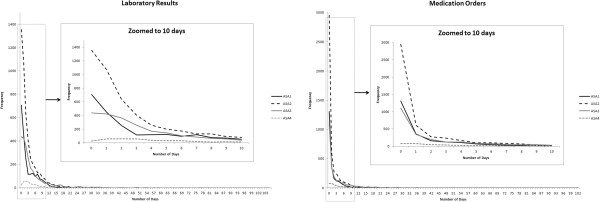
BACKGROUND: To demonstrate that subject selection based on sufficient laboratory results and medication orders in electronic health records can be biased towards sick patients. METHODS: Using electronic health record data from 10,000 patients who received anesthetic services at a major metropolitan tertiary care academic medical center, an affiliated hospital for women and children, and an affiliated urban primary care hospital, the correlation between patient health status and counts of days with laboratory results or medication orders, as indicated by the American Society of Anesthesiologists Physical Status Classification (ASA Class), was assessed with a Negative Binomial Regression model. RESULTS: Higher ASA Class was associated with more points of data: compared to ASA Class 1 patients, ASA Class 4 patients had 5.05 times the number of days with laboratory results and 6.85 times the number of days with medication orders, controlling for age, sex, emergency status, admission type, primary diagnosis, and procedure. CONCLUSIONS: Imposing data sufficiency requirements for subject selection allows researchers to minimize missing data when reusing electronic health records for research, but introduces a bias towards the selection of sicker patients. We demonstrated the relationship between patient health and quantity of data, which may result in a systematic bias towards the selection of sicker patients for research studies and limit the external validity of research conducted using electronic health record data. Additionally, we discovered other variables (i.e., admission status, age, emergency classification, procedure, and diagnosis) that independently affect data sufficiency.
Overview
The claims and statistics of this paper haven’t been checked yet.
Free: it reads the open-access text and checks the first 5 claims that cite a source we can check. Create a free account to check every claim.
Integrity signals
Registry
Cites
Statistics
Figures
Verification
Claims the paper makes
The claims and statistics of this paper haven’t been checked yet.
Free: it reads the open-access text and checks the first 5 claims that cite a source we can check. Create a free account to check every claim.
Claims other papers make about this one
Each is checked against this paper’s own text: does it say what the citing paper says it does?
The source backs part of the claim, not all of it — or backs it for a different population, condition or comparison.
In the citing paper
“A substantial body of research suggests that data collected in EHRs and other operational systems may not be of sufficient quality for research.28–37”
From A harmonized data quality assessment terminology and framework for the secondary use of electronic health record data (2016) · cites this paper as [37]
Experimental — accuracy not yet measuredIn the citing paper
“The sampling of patients based on having sufficient laboratory results and medication orders in EHR-based research inherently favors sicker patients, leading to a non-random sample that may not accurately represent the broader patient population92.”
From Bias recognition and mitigation strategies in artificial intelligence healthcare applications (2025) · cites this paper as [92]
Self-check
Percentages, sums and reported differences re-computed from the paper’s own numbers.
The self-check needs the paper’s full text.
Citations
Cites
RUBIN, D. B. (1976) · Biometrika · doi:10.1093/biomet/63.3.581 · Cited by 9,925
Beyond Accuracy: What Data Quality Means to Data Consumers
Wang, R. Y., & Strong, D. M. (1996) · Journal of Management Information Systems · doi:10.1080/07421222.1996.11518099 · Cited by 4,672 · cited 1×
“The proportion of patients in a given population with sufficient data varies from study to study, as it depends on the research question and the necessary kinds of data required for answering that question [14,20].”
BackgroundExternal validity of randomised controlled trials: “To whom do the results of this trial apply?”
Rothwell, P. M. (2005) · The Lancet · doi:10.1016/s0140-6736(04)17670-8 · Cited by 2,544 · cited 1×
“This approach ensures that all required data are present and trustworthy, but may come at the expense of limited external generalizability due to the non-representativeness of the sample [16].”
BackgroundHilbe, J. M. (2011) · doi:10.1017/cbo9780511973420 · Cited by 2,342
The “Meaningful Use” Regulation for Electronic Health Records
Blumenthal, D., & Tavenner, M. (2010) · New England Journal of Medicine · doi:10.1056/nejmp1006114 · Cited by 2,059 · cited 1×
“Since the passage of the Health Information Technology for Economic and Clinical Health (HITECH) Act in 2009 [1,2], there has been an increase in the rate of electronic health record (EHR) adoption.”
Background(2007) · Negative Binomial Regression · doi:10.1017/cbo9780511811852.007 · Cited by 1,981
GRADING OF PATIENTS FOR SURGICAL PROCEDURES
Saklad, M. (1941) · Anesthesiology · doi:10.1097/00000542-194105000-00004 · Cited by 1,956 · cited 1×
“The American Society of Anesthesiologists (ASA) Physical Status Classification System (Table 1) is closer to this ideal than most health status indices [26,27].”
BackgroundHow to measure comorbiditya critical review of available methods
DEGROOT, V, BECKERMAN, H., LANKHORST, G., & BOUTER, L. (2003) · Journal of Clinical Epidemiology · doi:10.1016/s0895-4356(02)00585-1 · Cited by 1,757 · cited 1×
“Since the most common indices of patient health and comorbidity rely on information from the EHR [24], they are influenced by missing data and are thus unsuitable for a study where data sufficiency is the dependent variable [25].”
BackgroundCentral challenges facing the national clinical research enterprise
Sung, N. S., Crowley, W. F., Genel, M., Salber, P., Sandy, L., Sherwood, L. M., Johnson, S. B., Catanese, V., Tilson, H., Getz, K., et al. (2003) · JAMA · doi:10.1001/jama.289.10.1278 · Cited by 1,235 · cited 1×
“The secondary use of EHR data provides a more efficient and less expensive alternative to clinical trials, the current gold standard of medical research [8,9].”
MethodASA classification and perioperative variables as predictors of postoperative outcome
Wolters, U., Wolf, T., Stützer, H., & Schröder, T. (1996) · British Journal of Anaesthesia · doi:10.1093/bja/77.2.217 · Cited by 1,073
The Role of Anesthesia in Surgical Mortality
Dripps, R. D. (1961) · JAMA · doi:10.1001/jama.1961.03040420001001 · Cited by 1,028
Stimulating the Adoption of Health Information Technology
Blumenthal, D. (2009) · New England Journal of Medicine · doi:10.1056/nejmp0901592 · Cited by 725
Safran, C., Bloomrosen, M., Hammond, W. E., Labkoff, S., Markel-Fox, S., Tang, P. C., & Detmer, D. E. (2007) · Journal of the American Medical Informatics Association · doi:10.1197/jamia.m2273 · Cited by 705
Hersh, W. R., Weiner, M. G., Embi, P. J., Logan, J. R., Payne, P. R. O., Bernstam, E. V., Lehmann, H. P., Hripcsak, G., Hartzog, T. H., Cimino, J. J., et al. (2013) · Medical Care · doi:10.1097/mlr.0b013e31829b1dbd · Cited by 567 · cited 1×
“There are, however, potential caveats to the secondary use of EHR data [10].”
BackgroundThe cost of drug development: A systematic review
Morgan, S., Grootendorst, P., Lexchin, J., Cunningham, C., & Greyson, D. (2011) · Health Policy · doi:10.1016/j.healthpol.2010.12.002 · Cited by 510 · cited 1×
“The secondary use of EHR data provides a more efficient and less expensive alternative to clinical trials, the current gold standard of medical research [8,9].”
MethodVACANTI, C. J., VanHOUTEN, R. J., & HILL, R. C. (1970) · Anesthesia & Analgesia · doi:10.1213/00000539-197007000-00010 · Cited by 389 · cited 1×
“The ASA Classification is strongly correlated with other clinical risk predictors as well as outcomes [28-31].”
BackgroundAccuracy of Data in Computer-based Patient Records
Hogan, W. R., & Wagner, M. M. (1997) · Journal of the American Medical Informatics Association · doi:10.1136/jamia.1997.0040342 · Cited by 389 · cited 2×
“EHRs suffer from data quality problems [11-13], which may affect the internal validity of retrospective studies.”
BackgroundDefining and measuring completeness of electronic health records for secondary use
Weiskopf, N. G., Hripcsak, G., Swaminathan, S., & Weng, C. (2013) · Journal of Biomedical Informatics · doi:10.1016/j.jbi.2013.06.010 · Cited by 367 · cited 4×
“Sufficiency can be conceptualized as a type of completeness, which is one of several categories of data quality that are relevant to EHR data reuse [14].”
BackgroundMethodInfluentialSelf-citationChan, K. S., Fowles, J. B., & Weiner, J. P. (2010) · Medical Care Research and Review · doi:10.1177/1077558709359007 · Cited by 365 · cited 1×
“EHRs suffer from data quality problems [11-13], which may affect the internal validity of retrospective studies.”
BackgroundSystematic review of scope and quality of electronic patient record data in primary care
Thiru, K., Hassey, A., & Sullivan, F. (2003) · BMJ · doi:10.1136/bmj.326.7398.1070 · Cited by 342 · cited 1×
“EHRs suffer from data quality problems [11-13], which may affect the internal validity of retrospective studies.”
BackgroundCurrent Procedural Terminology
(2008) · Encyclopedia of Counseling · doi:10.4135/9781412963978.n176 · Cited by 324
Davenport, D. L., Bowe, E. A., Henderson, W. G., Khuri, S. F., & Mentzer, R. M. (2006) · Annals of Surgery · doi:10.1097/01.sla.0000216508.95556.cc · Cited by 295 · cited 1×
“The ASA Classification is strongly correlated with other clinical risk predictors as well as outcomes [28-31].”
BackgroundPatterson, A. (2004) · Routledge eBooks · doi:10.4324/9780203168073 · Cited by 287
Hsiao, C., & Hing, E. (2014) · PubMed · Cited by 285
Relationship Between Nursing Documentation and Patients' Mortality
Collins, S. A., Cato, K., Albers, D., Scott, K., Stetson, P. D., Bakken, S., & Vawdrey, D. K. (2013) · American Journal of Critical Care · doi:10.4037/ajcc2013426 · Cited by 157 · cited 1×
“identified a relationship between patient mortality and increased rates of nursing documentation, suggesting that more acutely ill patients are likely to have more thoroughly documented records [36,37].”
BackgroundHsiao, C., & Hing, E. (2012) · PubMed · Cited by 135
Sick patients have more data: the non-random completeness of electronic health records.
Weiskopf, N. G., Rusanov, A., & Weng, C. (2013) · Europe PMC (PubMed Central) · Cited by 132
Self-citationHersh, W. (2007) · PubMed · Cited by 122
Bias Associated with Mining Electronic Health Records
Hripcsak, G., Knirsch, C., Zhou, L., Wilcox, A., & Melton, G. (2011) · Journal of Biomedical Discovery and Collaboration · doi:10.5210/disco.v6i0.3581 · Cited by 83 · cited 1×
“found that the addition of cohort selection criteria that required the presence of sufficient data to make a reliable diagnosis substantially limited the sample size and significantly altered the mortality rates [38].”
BackgroundWennberg, J. E., Staiger, D. O., Sharp, S. M., Gottlieb, D. J., Bevan, G., McPherson, K., & Welch, H. G. (2013) · BMJ · doi:10.1136/bmj.f549 · Cited by 72 · cited 2×
“Since the most common indices of patient health and comorbidity rely on information from the EHR [24], they are influenced by missing data and are thus unsuitable for a study where data sufficiency is the dependent variable [25].”
BackgroundMethodBloomrosen, M., & Detmer, D. (2008) · Journal of the American Medical Informatics Association · doi:10.1197/jamia.m2905 · Cited by 62 · cited 1×
“The transition to EHRs has created new opportunities for research [5-7].”
BackgroundMeta‐analysis of hypercoagulability genetic polymorphisms in perthes disease
Woratanarat, P., Thaveeratitharm, C., Woratanarat, T., Angsanuntsukh, C., Attia, J., & Thakkinstian, A. (2013) · Journal of Orthopaedic Research® · doi:10.1002/jor.22473 · Cited by 52 · cited 1×
“In such studies, however, participants must be chosen based not only on the eligibility criteria but also upon the availability of sufficient data for extraction [17-19].”
BackgroundCollins, S. A., & Vawdrey, D. K. (2012) · Applied Nursing Research · doi:10.1016/j.apnr.2011.06.002 · Cited by 50 · cited 1×
“identified a relationship between patient mortality and increased rates of nursing documentation, suggesting that more acutely ill patients are likely to have more thoroughly documented records [36,37].”
BackgroundUsing Body Mass Index Data in the Electronic Health Record to Calculate Cardiovascular Risk
Green, B. B., Anderson, M. L., Cook, A. J., Catz, S. L., Fishman, P. A., McClure, J. B., & Reid, R. (2012) · American Journal of Preventive Medicine · doi:10.1016/j.amepre.2011.12.009 · Cited by 48 · cited 1×
“In such studies, however, participants must be chosen based not only on the eligibility criteria but also upon the availability of sufficient data for extraction [17-19].”
BackgroundWhat Patient Population Does Visit-Based Sampling in Primary Care Settings Represent?
Lee, M. L., Yano, E. M., Wang, M., Simon, B. F., & Rubenstein, L. V. (2002) · Medical Care · doi:10.1097/00005650-200209000-00006 · Cited by 43 · cited 1×
“However, as their work demonstrates this assumption is wrong, and the imposition of just this one sufficiency requirement biases the population towards sicker and older patients [23].”
BackgroundThe Clinical Record: A 200-Year-Old 21st-Century Challenge
Barr, M. S. (2010) · Annals of Internal Medicine · doi:10.7326/0003-4819-153-10-201011160-00015 · Cited by 10 · cited 1×
“Although it has been pointed out that the missing data may cause records to be “visually complete but intellectually insufficient,” [15] the causal effect of health status on data sufficiency is not the focus of this study.”
BackgroundMerging medical informatics and automated diagnostic methods
Hudson, D. L., & Cohen, M. E. (2013) · doi:10.1109/embc.2013.6610617 · Cited by 3
Research works printed but not linked: 1
- Charles D King J Patel V Furukawa M ONC Data Brief No. 9: Adoption of Electronic Health record Systems among U.S. Non-federal Acute Care Hospitals: 2008-20012 The Office of the National Coordinator for Health Information Technology 2013
Cited by
Goldstein, B. A., Navar, A. M., Pencina, M. J., & Ioannidis, J. P. A. (2017) · Journal of the American Medical Informatics Association · doi:10.1093/jamia/ocw042 · Cited by 936
Kahn, M. G., Callahan, T. J., Barnard, J., Bauck, A. E., Brown, J., Davidson, B. N., Estiri, H., Goerg, C., Holve, E., Johnson, S. G., et al. (2016) · eGEMs (Generating Evidence & Methods to improve patient outcomes) · doi:10.13063/2327-9214.1244 · Cited by 697
Self-citationBias recognition and mitigation strategies in artificial intelligence healthcare applications
Hasanzadeh, F., Josephson, C. B., Waters, G., Adedinsewo, D., Azizi, Z., & White, J. A. (2025) · npj Digital Medicine · doi:10.1038/s41746-025-01503-7 · Cited by 320
“Thesampling ofpatientsbasedonhavingsuf fi cientlaboratoryresultsand medication orders in EHR-based research inherently favors sicker patients, leading to a non-random sample that may not accurately represent the broader patient population 92 .”
Jackson, R. G., Patel, R., Jayatilleke, N., Kolliakou, A., Ball, M., Gorrell, G., Roberts, A., Dobson, R. J., & Stewart, R. (2017) · BMJ Open · doi:10.1136/bmjopen-2016-012012 · Cited by 221
“5”
A Data Quality Assessment Guideline for Electronic Health Record Data Reuse
Weiskopf, N. G., Bakken, S., Hripcsak, G., & Weng, C. (2017) · eGEMs (Generating Evidence & Methods to improve patient outcomes) · doi:10.5334/egems.218 · Cited by 152
Self-citation
Metadata
- Authors
- Rusanov, A., Weiskopf, N. G., Wang, S., & Weng, C.
- Affiliations
- Columbia University (US)
- Corresponding author
- Weng, Chunhua
- Venue
- BMC Medical Informatics and Decision Making
- Published
- 2014-06-11
- Volume
- 14
- Issue
- 1
- Pages
- 51-51
- ISSN
- 1472-6947 (ISSN-L)
- PMC
- PMC4062889
- OpenAlex
- W2109347377
- Cited by
- 137
- References
- 37
- Citations by year
- 2026: 14 · 2025: 13 · 2024: 12 · 2023: 8 · 2022: 11 · 2021: 16 · 2020: 11 · 2019: 13 · 2018: 9 · 2017: 7 · 2016: 13 · 2015: 9 · 2014: 1
- FWCI
- 18.28
- Type
- journal article
- Language
- en
- Open access
- gold
- doi.org
- Licence
- Locations
- BMC Medical Informatics and Decision Making (publishedVersion, cc-by)
- Europe PMC (PubMed Central) (publishedVersion, cc-by)
- PubMed Central (publishedVersion, cc-by)
- PubMed (publishedVersion)
- Columbia Academic Commons (Columbia University)
- Funders
- National Institutes of Health (2t32gm008464-31, UL1TR000040)
- National Institute of General Medical Sciences (T32 GM-008464, 5T32GM008464)
- U.S. National Library of Medicine (R01LM010815, R01LM009886, T15LM007079)
- National Center for Advancing Translational Sciences (TR000040)
- Topics
- Health Sciences › Health Professions › Health Information Management › Electronic Health Records Systems
- Health Sciences › Health Professions › Health Information Management › Medical Coding and Health Information
- Physical Sciences › Computer Science › Artificial Intelligence › Machine Learning in Healthcare
- Keywords
- electronic health records, data sufficiency, selection bias, laboratory findings, medication orders, ASA physical status, missing data, generalizability, research subject selection
- MeSH terms
- Adolescent, Adult, Aged, Aged, 80 and over, Child, Child, Preschool, Female, Health Status, Health Status Indicators, Humans, Infant, Male, Middle Aged, Reproducibility of Results, Bias, Patient Selection, Biomedical Research, Young Adult, Electronic Health Records
About these checks
Registry, retraction, Cites and statistics results are computed, not judged, with one exception: a printed reference that no index lists is read once by a model before it counts as a citation error. Claims are extracted by a model and kept only when their quote appears verbatim in the text; each cited source is then checked, with a model’s help, for whether it says what the claim relies on. Those verdicts can be wrong — read the claim’s quote and the cited source before relying on one.
Statistics and arithmetic are recomputed, not judged.
Confidence bands are shown only for fields calibrated on our annotated test set. None is calibrated yet, so no band is shown.
What counts as a claim ›How we measure confidence ›How we check this ›
Are you an author, or do you see a problem with this page? Request a review
Data sources
Bibliographic data: Semantic Scholar, OpenAlex, Crossref.
Contains information from the Semantic Scholar Academic Graph Datasets, made available under the ODC Attribution License (ODC-BY 1.0).
Semantic Scholar’s data is described in: Kinney, R., et al. (2023). The Semantic Scholar Open Data Platform. arXiv:2301.10140.
