

The DOI matches its Crossref record; 69 of the 69 references it cites were found in a registry or an index.
A systematic review of economic analyses of telehealth services using real time video communication
Open accessAbstract
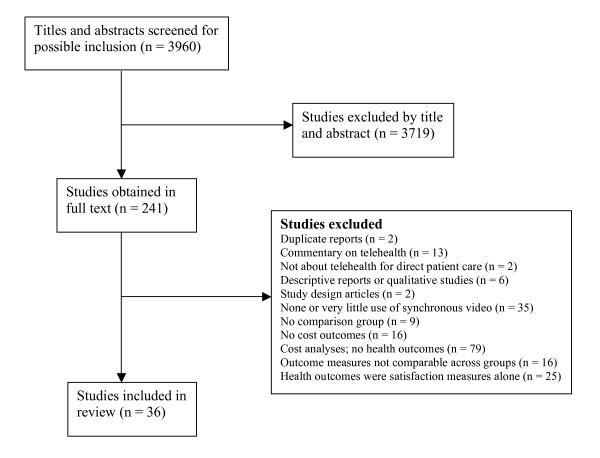
BACKGROUND: Telehealth is the delivery of health care at a distance, using information and communication technology. The major rationales for its introduction have been to decrease costs, improve efficiency and increase access in health care delivery. This systematic review assesses the economic value of one type of telehealth delivery--synchronous or real time video communication--rather than examining a heterogeneous range of delivery modes as has been the case with previous reviews in this area. METHODS: A systematic search was undertaken for economic analyses of the clinical use of telehealth, ending in June 2009. Studies with patient outcome data and a non-telehealth comparator were included. Cost analyses, non-comparative studies and those where patient satisfaction was the only health outcome were excluded. RESULTS: 36 articles met the inclusion criteria. 22(61%) of the studies found telehealth to be less costly than the non-telehealth alternative, 11(31%) found greater costs and 3 (9%) gave the same or mixed results. 23 of the studies took the perspective of the health services, 12 were societal, and one was from the patient perspective. In three studies of telehealth to rural areas, the health services paid more for telehealth, but due to savings in patient travel, the societal perspective demonstrated cost savings. In regard to health outcomes, 12 (33%) of studies found improved health outcomes, 21 (58%) found outcomes were not significantly different, 2(6%) found that telehealth was less effective, and 1 (3%) found outcomes differed according to patient group. The organisational model of care was more important in determining the value of the service than the clinical discipline, the type of technology, or the date of the study. CONCLUSION: Delivery of health services by real time video communication was cost-effective for home care and access to on-call hospital specialists, showed mixed results for rural service delivery, and was not cost-effective for local delivery of services between hospitals and primary care.
Overview
The claims and statistics of this paper haven’t been checked yet.
Run the check — free, no account needed. It reads the open-access text and checks the sources it cites.
Integrity signals
Registry
Cites
Statistics
Figures
Verification
Claims the paper makes
The claims and statistics of this paper haven’t been checked yet.
Run the check — free, no account needed. It reads the open-access text and checks the sources it cites.
Claims other papers make about this one
Each is checked against this paper’s own text: does it say what the citing paper says it does?
In the citing paper
“Economic analyses have shown that cost effectiveness of synchronous telemedicine vary widely according to the delivery setting [8].”
From Recent directions in telemedicine: Review of trends in research and practice (2015) · cites this paper as [8]
Self-check
Percentages, sums and reported differences re-computed from the paper’s own numbers.
The self-check needs the paper’s full text.
Citations
Cites
Methods for the Economic Evaluation of Health Care Programmes
Drummond, M. E., Sculpher, M. J., Torrance, G. W., O’Brien, B. J., & Stoddart, G. L. (2005) · doi:10.1093/oso/9780198529446.001.0001 · Cited by 13,648
Methods for the economic evaluation of health care programmes
Wilson, S. (1987) · Journal of Epidemiology & Community Health · doi:10.1136/jech.41.4.355-a · Cited by 4,312
Systematic Review of Home Telemonitoring for Chronic Diseases: The Evidence Base
Pare, G., Jaana, M., & Sicotte, C. (2007) · Journal of the American Medical Informatics Association · doi:10.1197/jamia.m2270 · Cited by 816 · cited 2×
“Pare [20] summarised a number of reviews of home care for chronic disease, and reported that very few detailed economic analyses had been done, leading to no confirmation of economic viability.”
BackgroundWootton, R. (2001) · BMJ · doi:10.1136/bmj.323.7312.557 · Cited by 715
What Is Telemedicine? A Collection of 104 Peer-Reviewed Perspectives and Theoretical Underpinnings
Sood, S., Mbarika, V., Jugoo, S., Dookhy, R., Doarn, C. R., Prakash, N., & Merrell, R. C. (2007) · Telemedicine and e-Health · doi:10.1089/tmj.2006.0073 · Cited by 627 · cited 1×
“It is a subset of e-health, which encompasses all uses of ICT in health, including electronic records and decision support systems, however telehealth is particularly characterised by the geographical separation of patient and provider[4].”
BackgroundSystematic review of cost effectiveness studies of telemedicine interventions
Whitten, P. S., Mair, F. S., Haycox, A., May, C. R., Williams, T. L., & Hellmich, S. (2002) · BMJ · doi:10.1136/bmj.324.7351.1434 · Cited by 526 · cited 2×
“Also in line with earlier reviews [11,23], there was great variability in methodology and outcome measures.”
BackgroundResultThe socio-economic impact of telehealth: A systematic review
Jennett, P. A., Hall, L. A., Hailey, D. M., Öhinmaa, A., Anderson, C., Thomas, R. E., Young, B., Lorenzetti, D., & Scott, R. E. (2003) · Journal of Telemedicine and Telecare · doi:10.1258/135763303771005207 · Cited by 404 · cited 1×
“Jennet reviewed the broader socio-economic impacts of telehealth in 2003 [ 12 ] and combining cost, cost-effectiveness and health system utilisation measures into one category, concluded that there was evidence of benefit of at least fair to good quality in paediatrics, geriatrics, home care, radiology, mental health…”
BackgroundBreslow, M. J., Rosenfeld, B. A., Doerfler, M. E., Burke, G., Yates, G. R., Stone, D. J., Tomaszewicz, P., Hochman, R., & Plocher, D. W. (2004) · Critical Care Medicine · doi:10.1097/01.ccm.0000104204.61296.41 · Cited by 382 · cited 4×
“Each found lower costs and reductions in patient mortality when the telehealth service was operating; additionally Breslow[49] reported shorter hospital stays, and Rosenfeld reported lower complications[50].”
BackgroundInfluentialIntensive care unit telemedicine: Alternate paradigm for providing continuous intensivist care
Rosenfeld, B. A., Dorman, T., Breslow, M. J., Pronovost, P. J., Jenckes, M. W., Zhang, N., Anderson, G. F., & Rubin, H. R. (2000) · Critical Care Medicine · doi:10.1097/00003246-200012000-00034 · Cited by 380 · cited 2×
“Rosenfeld 2000[50] Specialist on-call Intensive Care B&A CCA 80 Computer, Not specified Health service Less More”
BackgroundO'Reilly, R., Bishop, J., Maddox, K., Hutchinson, L., Fisman, M., & Takhar, J. (2007) · Psychiatric Services · doi:10.1176/ps.2007.58.6.836 · Cited by 369
Research works printed but not linked: 10
- Drummond M, O'Brien B, Stoddard G, Torrance G: Methods for the economic evaluation of healthcare programmes. 1997, Oxford: Oxford University Press, 2
- Loane MA, Oakley A, Rademaker M, Bradford N, Fleischl P, Kerr P, Wootton R: A cost-minimization analysis of the societal costs of realtime teledermatology compared with conventional care: results from a randomized controlled trial in New Zealand. J Telemed Telecare. 2001, 7: 233-238. 10.1258/1357633011936453. · DOI
- Eron L, Marineau M: Telemedicine: treating infections in the home. Infections in Medicine. 2006, 23: 517.
- Johnston B: Outcomes of the kaiser permanente tele-home health research project. Archives of Family Medicine. 2000, 9: 40-45. 10.1001/archfami.9.1.40. · DOI
- Wootton R, Bloomer SE, Corbett R, Eedy DJ, Hicks N, Lotery HE, Mathews C, Paisley J, Steele K, Loane MA: Multicentre randomised control trial comparing real time teledermatology with conventional outpatient dermatological care: societal cost-benefit analysis. Bmj. 2000, 320: 1252-1256. 10.1136/bmj.320.7244.1252. · DOI
- Bergmo TS: An economic analysis of teleconsultation in otorhinolaryngology. J Telemed Telecare. 1997, 3: 194-199. 10.1258/1357633971931156. · DOI
- Persaud DD, Jreige S, Skedgel C, Finley J, Sargeant J, Hanlon N: An incremental cost analysis of telehealth in Nova Scotia from a societal perspective. J Telemed Telecare. 2005, 11: 77-84. 10.1258/1357633053499877. · DOI
- Loane MA, Bloomer SE, Corbett R, Eedy DJ, Evans C, Hicks N, Jacklin P, Lotery HE, Mathews C, Paisley J, et al: A randomized controlled trial assessing the health economics of realtime teledermatology compared with conventional care: an urban versus rural perspective. J Telemed Telecare. 2001, 7: 108-118. 10.1258/1357633011936246. · DOI · Paper page
- Dowie R, Mistry H, Young TA, Weatherburn GC, Gardiner HM, Rigby M, Rowlinson GV, Franklin RC: Telemedicine in pediatric and perinatal cardiology: economic evaluation of a service in English hospitals. Int J Technol Assess Health Care. 2007, 23: 116-125. 10.1017/S0266462307051653. · DOI
- Oakley AM, Kerr P, Duffill M, Rademaker M, Fleischl P, Bradford N, Mills C: Patient cost-benefits of realtime teledermatology--a comparison of data from Northern Ireland and New Zealand. J Telemed Telecare. 2000, 6: 97-101. 10.1258/1357633001935112. · DOI
Cited by
Sorted by citations
Items 101–200 of 348
Bishop, G. T., Evans, B. A., Kyle, K. L., & Kogan, L. R. (2018) · Journal of the American Veterinary Medical Association · doi:10.2460/javma.253.9.1151 · Cited by 34
Economic Advantages of Telehealth and Virtual Health Practitioners: Return on Investment Analysis
Snoswell, C. L., North, J. B., & Caffery, L. J. (2020) · JMIR Perioperative Medicine · doi:10.2196/15688 · Cited by 32
“It is widely accepted that telehealth increases patient access, increases productivity potential for clinicians, and potentially reduces costs for service providers [1-4].”
BackgroundDamery, S. L., Jones, J. E., Francischetto, E. O., Jolly, K. B., Lilford, R. J., & Ferguson, J. (2021) · Journal of Medical Internet Research · doi:10.2196/19232 · Cited by 33
Using QALYs in telehealth evaluations: a systematic review of methodology and transparency
Bergmo, T. S. (2014) · BMC Health Services Research · doi:10.1186/1472-6963-14-332 · Cited by 34
“If the objective is to establish the least costly mode of delivering specific health services, CMA can be a useful framework.”
BackgroundInfluentialRollo, M. E., Burrows, T. L., Vincze, L. J., Harvey, J. R., Collins, C. E., & Hutchesson, M. (2017) · Nutrition & Dietetics · doi:10.1111/1747-0080.12335 · Cited by 31
Bongiovanni-Delarozière, I., & Goff-Pronost, M. L. (2017) · European Research in Telemedicine / La Recherche Européenne en Télémédecine · doi:10.1016/j.eurtel.2017.08.002 · Cited by 32
Video-based teleconsultations in pharmaceutical care – A systematic review
Diedrich, L., & Dockweiler, C. (2020) · Research in Social and Administrative Pharmacy · doi:10.1016/j.sapharm.2020.12.002 · Cited by 32
Patient preferences for specialist outpatient video consultations: A discrete choice experiment
Snoswell, C. L., Smith, A. C., Page, M. J., & Caffery, L. J. (2021) · Journal of Telemedicine and Telecare · doi:10.1177/1357633x211022898 · Cited by 36
Psychological antecedents of telehealth acceptance: A technology readiness perspective
Li, X., Zhou, Y., Liu, Y., Wang, X., & Yuen, K. F. (2023) · International Journal of Disaster Risk Reduction · doi:10.1016/j.ijdrr.2023.103688 · Cited by 37
“In the context of telehealth, if using telehealth can reduce total costs either by a reduction in treatment fees or travel fees, the economic value can be improved [29].”
BackgroundSocial acceptance and population confidence in telehealth in Quebec
Poder, T. G., Bellemare, C. A., Kocsis-Bédard, S., & Lemieux, R. (2015) · BMC Health Services Research · doi:10.1186/s12913-015-0727-1 · Cited by 31
“[5] concluded that it was only cost-effective for home care and access to on-call hospital specialists and sometimes for rural service delivery, whereas it was not for local delivery of services between hospitals and primary care.”
BackgroundKappel, C., Rushton-Marovac, M., Leong, D. P., & Dent, S. F. (2022) · Frontiers in Cardiovascular Medicine · doi:10.3389/fcvm.2022.927769 · Cited by 31
“People living in rural areas face unique social and economic challenges compared to their urban counterparts (19), including but not limited to, inconvenience and cost of travel (20, 21), absenteeism from work and family (20) and dependence on caregivers for transport or childcare (22).”
BackgroundTelemedicine in Cardiology: Enhancing Access to Care and Improving Patient Outcomes
Tolu-Akinnawo, O. Z., Ezekwueme, F., & Awoyemi, T. (2024) · Cureus · doi:10.7759/cureus.62852 · Cited by 42
Financial implications of telemedicine visits in an academic endocrine surgery program
Zheng, F., Park, K. W., Thi, W. J., Ro, C. C., Bass, B. L., & Yeh, M. W. (2018) · Surgery · doi:10.1016/j.surg.2018.08.017 · Cited by 29
Kludacz-Alessandri, M., Walczak, R., Hawrysz, L., & Korneta, P. (2021) · Journal of Clinical Medicine · doi:10.3390/jcm10163502 · Cited by 30
The Business Case for Tele-emergency
MacKinney, A. C., Ward, M. M., Ullrich, F. A., Ayyagari, P., Bell, A. L., & Mueller, K. J. (2015) · Telemedicine Journal and e-Health · doi:10.1089/tmj.2014.0241 · Cited by 29
“In contrast, Wade et al. 4 reviewed the literature on synchronous telehealth and concluded that such services were cost-effective in some cases (e.g., homecare).”
Impact of Sleep Telemedicine Protocol in Management of Sleep Apnea: A 5-Year VA Experience
Baig, M. M., Antonescu-Turcu, A., & Ratarasarn, K. (2016) · Telemedicine Journal and e-Health · doi:10.1089/tmj.2015.0047 · Cited by 29
“Cost savings associated with telemedicine have been estimated at over $4 billion.(22) Telemedicine initiativesarewidelydeployed in theVAHS.”
Understanding Medical Students’ Attitudes Toward Learning eHealth: Questionnaire Study
Vossen, K., Rethans, J., van Kuijk, S. M. J., van der Vleuten, C. P. M., & Kubben, P. (2020) · JMIR Medical Education · doi:10.2196/17030 · Cited by 28
“These developments improve the quality of care or maintain the current standard and reduce health care costs [13-15].”
BackgroundCancer management during the COVID-19 pandemic: Choosing between the devil and the deep blue sea
Boutros, M., Moujaess, E., & Kourié, H. R. (2021) · Critical Reviews in Oncology/Hematology · doi:10.1016/j.critrevonc.2021.103273 · Cited by 28
Frye, W. S., Gardner, L. M., Campbell, J. M., & Katzenstein, J. M. (2021) · Journal of Child Health Care · doi:10.1177/13674935211007329 · Cited by 30
“Utilizing telehealth in clinical practice is supported by previous research that documents its benefits for both patients and clinicians including positive mental health and medical outcomes, increased access to care, reduced expenses, and professional development (Egede et al., 2018; Gagnon et al., 2006; Moffatt and…”
BackgroundMethodSnoswell, C. L., Caffery, L. J., Haydon, H. M., Wickramasinghe, S. I., Crumblin, K., & Smith, A. C. (2019) · Journal of Telemedicine and Telecare · doi:10.1177/1357633x19873239 · Cited by 28
“However limited information is available about the economics of telediabetes services within Indigenous communities.(5) Some of the challenges in determining the cost implications of telehealth in this context include the variable consultation times, actual attendance rates and the availability of trained health worke…”
BackgroundFuture Implications of eHealth Interventions for Chronic Pain Management in Underserved Populations
DeMonte, C. M., Demonte, W., & Thorn, B. E. (2015) · Pain Management · doi:10.2217/pmt.15.9 · Cited by 28
Enhancing the provision of health and social care in Europe through eH ealth
Raeve, P. D., Gomez, S., Hughes, P., Lyngholm, T., Sipilä, M., Kilańska, D. M., Hussey, P., Xyrichis, A., & the ENS4Care project (2016) · International Nursing Review · doi:10.1111/inr.12266 · Cited by 27
A Telehealth and Telepsychiatry Economic Cost Analysis Framework: Scoping Review
Hilty, D. M., Serhal, E., & Crawford, A. S. (2022) · Telemedicine Journal and e-Health · doi:10.1089/tmj.2022.0016 · Cited by 27
Sleep Telemedicine: A Survey Study of Patient Preferences
Kelly, J. M., Schwamm, L. H., & Bianchi, M. T. (2012) · ISRN Neurology · doi:10.5402/2012/135329 · Cited by 26
“…decision making, such as in telestroke [3]; facilitating intermittent, low-level management of chronic illnesses; increasing accessibility for patients who are either geographically isolated or find local travel challenging; enabling patients with uncommon diseases to access specialists [4] [5].”
BackgroundTelepractice and Dysphagia Management: The Era of COVID-19 and Beyond
Ward, E. C., Raatz, M., Marshall, J., Wishart, L. R., & Burns, C. L. (2022) · Dysphagia · doi:10.1007/s00455-022-10444-2 · Cited by 28
“’s [92] systematic review of 36 telepractice models that involved an economic analysis, identified that 61% of studies found their telepractice model of care was less costly than the non-telepractice alternative.”
BackgroundInfluentialPapavero, S. C., Fracasso, A., Ramaglia, P., Cicchetti, A., de Belvis, A. G., & Ferrara, F. M. (2023) · Telemedicine Journal and e-Health · doi:10.1089/tmj.2022.0333 · Cited by 26
“The clinical, organizational, and economic 21,22 advantages in the use of telemedicine are widely demonstrated in the practice and in the literature review, but the benefits obtain-able also from the social point of view are underestimated.”
Maccabi proactive Telecare Center for chronic conditions – the care of frail elderly patients
Porath, A., Irony, A., Borobick, A. S., Nasser, S., Malachy, A., Fund, N., & Kaufman, G. (2017) · Israel Journal of Health Policy Research · doi:10.1186/s13584-017-0192-x · Cited by 27
Telecardiology through ubiquitous Internet services
Costa, C. M. A., & Oliveira, J. L. (2012) · International Journal of Medical Informatics · doi:10.1016/j.ijmedinf.2012.05.011 · Cited by 25
“Telemedicine environments have been developed as a way to improve the efficiency of health resources, to reduce costs [2–4], and to promote wider access to healthcare services [5].”
BackgroundMaru, S., Byrnes, J., Whitty, J. A., Carrington, M. J., Stewart, S., & Scuffham, P. (2014) · European Journal of Cardiovascular Nursing · doi:10.1177/1474515114536093 · Cited by 25
Tele-medicine in respiratory diseases
Ambrosino, N., Makhabah, D. N., & Sutanto, Y. S. (2017) · Multidisciplinary Respiratory Medicine · doi:10.1186/s40248-017-0090-7 · Cited by 29
“A systematic review concluded that synchronous or real time video communication were cost-effective for local delivery of services between hospitals and primary care [46].”
BackgroundMay, S., Jonas, K., Fehler, G., Zahn, T., Heinze, M., & Muehlensiepen, F. (2021) · BMC Health Services Research · doi:10.1186/s12913-021-06950-y · Cited by 31
Habibi, M. F., Nicklas, J. C., Spence, M., Hedberg, S. M., Magnuson, E., & Kavanagh, K. (2012) · Journal of Human Lactation · doi:10.1177/0890334411432716 · Cited by 27
“Potential for cost-savings, time-savings, and increased access to care are the ultimate driving forces behind use of this technology, for both providers and recipients of healthcare services.(3,4) Recently, the US Federal Government has initiated rulings through the Affordable Health Care Act to support the increased…”
BackgroundCost-Benefit Analysis of Telemedicine Systems/Units in Greek Remote Areas
Kouskoukis, M. N., & Botsaris, C. (2016) · PharmacoEconomics - Open · doi:10.1007/s41669-016-0006-z · Cited by 24
“Some cost-effectiveness analysis (CEA), cost-minimization analysis (CMA) and cost-utility analysis (CUA) studies demonstrated that telemedicine can reduce costs, but not all [3, 4, 6].”
BackgroundPowell, A. C., Chen, M., & Thammachart, C. (2016) · Child and Adolescent Psychiatric Clinics of North America · doi:10.1016/j.chc.2016.07.013 · Cited by 32
“Patients benefit from telepsychiatry, in that it increases access to psychiatric care while potentially lowering costs.(24,25) By removing geographic barriers to access, it makes mental health services more accessible in rural areas and to bedbound or agoraphobic people.”
BackgroundAssessment of Self-Perceived Knowledge in e-Health Among Undergraduate Students
Edirippulige, S., Samanta, M., & Armfield, N. R. (2017) · Telemedicine Journal and e-Health · doi:10.1089/tmj.2017.0056 · Cited by 24
“6,7 Regardless of the growing evidence, integration of e-health into routine practice of health and medicine has been slow and patchy.”
Shdaifat, M. B. M., Khasawneh, R. A., & Alefan, Q. (2021) · Journal of Asthma · doi:10.1080/02770903.2021.1924774 · Cited by 23
Can We Improve Adherence to Preventive Therapies for Cardiovascular Health?
Ockene, J. K., Schneider, K. L., Lemon, S. C., & Ockene, I. S. (2011) · Circulation · doi:10.1161/circulationaha.110.968479 · Cited by 22
A telegeriatric service in a small rural hospital: A case study and cost analysis
Versleijen, M., Martin‐Khan, M., Whitty, J. A., Smith, A. C., & Gray, L. (2015) · Journal of Telemedicine and Telecare · doi:10.1177/1357633x15611327 · Cited by 23
Teleconsultation in health and social care professions education: A systematic review
Wetzlmair-Kephart, L.-C., O’Carroll, V., O’Malley, A., & Murray, S. (2022) · The Clinical Teacher · doi:10.1111/tct.13519 · Cited by 19
Chu, C., Nayyar, D., Bhattacharyya, O. K., Martin, D., Agarwal, P., & Mukerji, G. (2022) · Journal of Medical Internet Research · doi:10.2196/38604 · Cited by 21
“Published studies have cited other patient criticisms of virtual visits such as technical issues with connection and quality of the call [29], a lack of privacy at home when attending virtual visits [30], and a preference for in-person visits for certain physical health issues or to build a…”
Successful Models for Telehealth
Krupinski, E. A., Patterson, T., Norman, C. D., Roth, Y., Elnasser, Z., Abdeen, Z., Noyek, A. M., Sriharan, A., Ignatieff, A., Black, S. E., et al. (2011) · Otolaryngologic Clinics of North America · doi:10.1016/j.otc.2011.08.004 · Cited by 21
Hoenig, H., Tate, L., Dumbleton, S., Montgomery, C., Morgan, M., Landerman, L. R., & Caves, K. M. (2013) · Archives of Physical Medicine and Rehabilitation · doi:10.1016/j.apmr.2013.01.009 · Cited by 21
Hilgart, J., Hayward, J., & Iredale, R. (2011) · Clinical Genetics · doi:10.1111/j.1399-0004.2011.01813.x · Cited by 20
“As previous research has shown that cost savings can be made for both the service provider (20, 21, 40) and for patients (22) through the use of telemedicine consultations, we suggest that user-friendly developments, which can be easily implemented and attend to individual needs could improve efficiency and costeffect…”
BackgroundFrequency and costs of hospital transfers for ambulatory care-sensitive conditions.
Axon, R. N., Gebregziabher, M., Craig, J. B., Zhang, J., Mauldin, P. D., & Moran, W. P. (2015) · PubMed · Cited by 18
Industry 4.0 and Health Care System with special reference to Mental Health
Kumar, K., Chaudhary, S., Anandaram, H., Kumar, R., Gupta, A., & Joshi, K. K. (2023) · International Conference on Intelligent Computing and Research Trends (ICRT) · doi:10.1109/icrt57042.2023.10146640 · Cited by 18
“In medical sector, the ICT resources are high in cost that acts as one of the barriers in intervention of ICT [18].”
BackgroundThe breakeven point for implementing telehealth
Snoswell, C. L., Taylor, M. L., & Caffery, L. J. (2019) · Journal of Telemedicine and Telecare · doi:10.1177/1357633x19871403 · Cited by 18
“Telehealth is often reported as cost saving.(1) Hence, many health services implement telehealth based on the potential to reduce costs and increase efficiency.”
BackgroundUse of the videophone to collect quality of life data from burn patients.
Yoder, L. H., McFall, D. C., & Cancio, L. C. (2012) · Europe PMC (PubMed Central) · Cited by 17
Effect of Telehealth Interventions on Hospitalization Indicators: A Systematic Review.
Kalankesh, L. R., Pourasghar, F., Nicholson, L., Ahmadi, S., & Hosseini, M. (2016) · PubMed Central · Cited by 15
Telemedicine is the way forward for the management of cystic fibrosis – the case in favour
Ketchell, R. I. (2017) · Paediatric Respiratory Reviews · doi:10.1016/j.prrv.2017.03.004 · Cited by 17
A “P5” Approach to Healthcare and Health Technology
Pravettoni, G., & Triberti, S. (2019) · Springer eBooks · doi:10.1007/978-3-030-27994-3_1 · Cited by 17
“…is the rise of “telehealth” and tele-medicine” as concepts more focused on technological properties able to overcome boundaries and distances, this way promoting and strengthening communication between health providers and patients (Krol 1997; Palazzini 2007; Rubel et al. 2004; Wade et al. 2010).”
BackgroundKim, J., Kim, S., Kim, H., Kim, K., Lee, C.-T., Yang, S., Kong, H., Shin, Y., & Lee, K. (2012) · Telemedicine Journal and e-Health · doi:10.1089/tmj.2011.0140 · Cited by 17
Fry, M. W., Saidi, S., Musa, A., Kithyoma, V., & Kumar, P. A. (2020) · PLoS ONE · doi:10.1371/journal.pone.0238806 · Cited by 16
“Despite these logistical (and related financial) challenges, video-based real-time teleconsultations are commonly used and evaluated [8].”
Evaluation of the triple aim of medicine in prehospital telemedicine: A systematic literature review
Culmer, N. P., Smith, T. B., Stager, C. G., Meyer, H. R., Quick, S., & Grimm, K. (2019) · Journal of Telemedicine and Telecare · doi:10.1177/1357633x19853461 · Cited by 19
Cost analysis of home telerehabilitation for speech treatment in people with Parkinson’s disease
Saiyed, M., Hill, A. J., Russell, T. G., Theodoros, D., & Scuffham, P. (2020) · Journal of Telemedicine and Telecare · doi:10.1177/1357633x20948302 · Cited by 16
“The telerehabilitation programme was found to be cost saving for patients, consistent with the previous findings.(19) The impact of location (urban vs.”
ResultWearable Technologies and Telehealth in Care Management for Chronic Illness
Zhu, X., & Cahan, A. (2015) · Health informatics · doi:10.1007/978-3-319-20765-0_22 · Cited by 16
“[ 49 ] to illustrate their strengths and limitations.”
BackgroundClarke, L., Anderson, M., Anderson, R., Klausen, M. B., Forman, R., Kerns, J., Rabe, A. P. J., Kristensen, S. R., Theodorakis, P. N., Valderas, J. M., et al. (2021) · Milbank Quarterly · doi:10.1111/1468-0009.12536 · Cited by 18
Digital Health Needs and Preferences During Pregnancy and the Postpartum Period: Mixed Methods Study
Henrich, N. J., Brinson, A., Arnold, A., & Jahnke, H. R. (2023) · JMIR Formative Research · doi:10.2196/48960 · Cited by 19
“Contributing to underuse is a misalignment between the issues being addressed by providers and the birthing person’s needs, discomfort with discussing “embarrassing” issues with providers and feeling judged by them, and not knowing where to access information [43,46,47].”
Considerations for planning and evaluating economic analyses of telemental health.
Luxton, D. D. (2012) · Psychological Services · doi:10.1037/a0030658 · Cited by 15
Examining the Influence of E-Health Education on Professional Practice
Edirippulige, S., Smith, A. C., Wickramasinghe, S. I., & Armfield, N. R. (2018) · Journal of Medical Systems · doi:10.1007/s10916-018-1084-5 · Cited by 15
Natafgi, N., Mohr, N. M., Wittrock, A., Bell, A. L., & Ward, M. M. (2019) · The Journal of Rural Health · doi:10.1111/jrh.12370 · Cited by 15
Best, P., McConnell, T., Davidson, G., Badham, J., & Neill, R. D. (2019) · Research Involvement and Engagement · doi:10.1186/s40900-019-0173-z · Cited by 18
Rezapour, A., Jebeli, S. S. H., & Faradonbeh, S. B. (2021) · Journal of Education and Health Promotion · doi:10.4103/jehp.jehp_787_20 · Cited by 15
“So far, studies have been conducted on the economic evaluation of telemedicine technologies in general[14,15] and not specifically in the care of the older people.”
BackgroundPractical aspects of telehealth: set‐up and preparation for video consultations
Allen, D. T., Caldwell, P. H. Y., Komesaroff, P. A., Loh, P. K., Mozer, R., Sabesan, S. S., Shaheen, N., Talman, P. S., Williams, M. J. S., & Grabinski, O. (2013) · Internal Medicine Journal · doi:10.1111/imj.12264 · Cited by 15
Practical aspects of telehealth: financial considerations
Loh, P. K., Sabesan, S. S., Allen, D. T., Caldwell, P. H. Y., Mozer, R., Komesaroff, P. A., Talman, P. S., Williams, M. J. S., Shaheen, N., Grabinski, O., et al. (2013) · Internal Medicine Journal · doi:10.1111/imj.12193 · Cited by 15
Review of Systematic Reviews in the Field of Telemedicine
Goharinejad, S., Hajesmaeel-Gohari, S., Jannati, N., Goharinejad, S., & Bahaadinbeigy, K. (2021) · Medical Journal of The Islamic Republic of Iran · doi:10.47176/mjiri.35.184 · Cited by 18
Why telehealth does not always save money for the health system
Snoswell, C. L., Taylor, M. L., & Caffery, L. J. (2021) · Journal of Health Organization and Management · doi:10.1108/jhom-04-2020-0159 · Cited by 17
Fatehi, F., Gray, L., & Russell, A. W. (2013) · Diabetes Technology & Therapeutics · doi:10.1089/dia.2013.0213 · Cited by 14
Macnab, I., Rojjanasrirat, W., & Sanders, A. (2012) · Journal of Human Lactation · doi:10.1177/0890334412460512 · Cited by 14
Youm, S., & Park, S.-H. (2015) · Telemedicine Journal and e-Health · doi:10.1089/tmj.2014.0092 · Cited by 14
“Wade et al.(18) conducted systemic analysis of the economic feasibility of u-healthcare.”
BackgroundIdris, H., Nugraheni, W. P., Rachmawati, T., Kusnali, A., Yulianti, A., Purwatiningsih, Y., Nuraini, S., Susianti, N., Faisal, D. R., Arifin, H., et al. (2024) · International Journal of Environmental Research and Public Health · doi:10.3390/ijerph21010090 · Cited by 15
“Telehealth can potentially reform and transform the industry by reducing costs and improving quality, access, and patient satisfaction [25,26].”
BackgroundTelepsychiatry in Australia: A Scoping Review
Woon, L. S., Maguire, P. A., Reay, R. E., & Looi, J. C. (2024) · INQUIRY The Journal of Health Care Organization Provision and Financing · doi:10.1177/00469580241237116 · Cited by 16
The Effect of Telehealth on Cost of Health Care During the COVID-19 Pandemic: A Systematic Review
Lavin, L., Gibbs, H., Vakkalanka, J., Ternes, S., Healy, H. S., Merchant, K., Ward, M. M., & Mohr, N. (2024) · Telemedicine journal and e-health · doi:10.1089/tmj.2024.0369 · Cited by 16
“36 Our review allowed for a comparison across clinical conditions and telehealth applications.”
Caffery, L. J., Taylor, M. L., Lucas, K. R., & Smith, A. C. (2016) · Journal of Telemedicine and Telecare · doi:10.1177/1357633x16672767 · Cited by 12
“There are some circumstances where telehealth also reduces costs from the perspective of the health care provider.(20,22) Economic analyses consistently report that the savings attributable to telehealth are greater as the number of consultations (telehealth activity) increases.”
BackgroundPhysicians’ satisfaction with telehealth services among family physicians in Cluster 1 hospitals
Alqahtani, S. S., Alraqi, A., & Alageel, A. (2022) · Journal of Family Medicine and Primary Care · doi:10.4103/jfmpc.jfmpc_920_22 · Cited by 13
The Economics of Telehealth: An Overview
Gujral, K., Illarmo, S., Jacobs, J., & Wagner, T. H. (2025) · Telemedicine Journal and e-Health · doi:10.1089/tmj.2025.0073 · Cited by 16
“92”
Acceptability and Comfort Regarding Remotely Delivered PrEP Services in Mississippi
Giorlando, K. K., Arnold, T. L., Barnett, A. P., Leigland, A., Whiteley, L., Brock, J. B., & Brown, L. K. (2023) · Journal of the International Association of Providers of AIDS Care (JIAPAC) · doi:10.1177/23259582231186868 · Cited by 12
“clients with negative results often leave CBOs without learning about, or being linked to, PrEP care because of inadequate resources and training.(5,6,15) Evidence indicates that remote healthcare services such as telemedicine, HIV self-testing (HIVST), and prescription mail delivery are feasible for rural and resourc…”
BackgroundDoctor-patient interaction in telemedicine: Logic of choice and logic of care perspectives
Chandwani, R. K., & Dé, R. (2016) · Information Systems Frontiers · doi:10.1007/s10796-016-9643-0 · Cited by 12
“While IT for health initiatives have potential to enhance the effectiveness and efficiency of the healthcare systems, a significant number of such initiatives fail to deliver optimum results (Wade et al. 2010; Dwivedi et al. 2015a).”
BackgroundGarcia, R., Adelakun, O., & Han, W. (2017) · Hawaii International Conference on System Sciences (HICSS) · doi:10.24251/hicss.2017.459 · Cited by 14
“Telemedicine services are generally provided either through real time video conferencing, store and forward methods, or hybrid approaches [26].”
BackgroundLovo, S., Harrison, E., O’Connell, M. E., Rotter, T., & Bath, B. L. (2022) · Journal of Telemedicine and Telecare · doi:10.1177/1357633x221098904 · Cited by 12
“37 To the best of our knowledge, there are no cost analyses for PT involvement in an interprofessional care model using videoconferencing.”
BackgroundPeeters, J. M., Mistiaen, P., & Francke, A. L. (2011) · Journal of Telemedicine and Telecare · doi:10.1258/jtt.2011.110405 · Cited by 12
A Scenario-Based Study of Doctors and Patients on Video Conferencing Appointments from Home
Han, D., Heshmat, Y., Geiskkovitch, D. Y., Tan, Z., & Neustaedter, C. (2022) · ACM Transactions on Computer-Human Interaction · doi:10.1145/3514234 · Cited by 14
Dawson, J., Howell, M., Howard, K., Campbell, K. L., Craig, J. C., Tong, A., & Lee, V. W. (2021) · Journal of Human Nutrition and Dietetics · doi:10.1111/jhn.12937 · Cited by 10
Cloud Horizons: Strengthening Rural Healthcare Through Telemedicine’s Digital Canopy
Kitole, F. A., & Shukla, S. (2024) · Health Services Insights · doi:10.1177/11786329241284401 · Cited by 10
“39 This technology not only enhances immediate health outcomes but also contributes to broader public health goals by improving continuity of care and reducing the need for costly emergency services.”
BackgroundRykkje, L., & Hjorth, G. H. B. (2017) · SAGE Open · doi:10.1177/2158244017744900 · Cited by 10
“According to Wade et al. (2010), telehealth studies tend to report high patient satisfaction, and such results may be biased, due to the study participants’ desirability and acceptance.”
BackgroundInfluentialHiring Expert Consultants in E-Healthcare: An Analytics-Based Two Sided Matching Approach
Singh, V. K., Mukhopadhyay, S., Xhafa, F., Sharma, A., & Roy, A. (2018) · Lecture notes in computer science · doi:10.1007/978-3-319-99810-7_9 · Cited by 10
“Interesting situation of taking expert consultancy from outside of the in-house medical unit during some censorious medical scenario (mainly surgical process) was taken care by [11, 12, 13, 14, 15].”
BackgroundThinking Outside the Box: Are We Ready for Teleprecepting to Expand Training and Practice Venues?
Johnson, D. S. (2018) · Issues in Mental Health Nursing · doi:10.1080/01612840.2018.1488903 · Cited by 10
“(46%) endorsing cost savings, 17 (49%) reporting higher cost, 1 (3%) indicating costs reduced over time, and 1 (3%) reporting costs to be the same (Wade et al., 2010).”
BackgroundInfluentialCharacterization of User-Centered Security in Telehealth Services
Vega-Barbas, M., Seoane, F., & Pau, I. (2019) · International Journal of Environmental Research and Public Health · doi:10.3390/ijerph16050693 · Cited by 9
Aygün, N. (2020) · SiSli Etfal Hastanesi Tip Bulteni / The Medical Bulletin of Sisli Hospital · doi:10.14744/semb.2020.65902 · Cited by 10
“It is associated with improvements in attaining care and operational efficiency.[93, 94] However, before implementing the telemedicine program, issues regarding patient privacy, financial reimbursement and technological platforms’ reliability should be considered.”
BackgroundTelehealth and hospital performance: Does it matter?
Zhao, M., Hamadi, H. Y., Xu, J., Haley, D. R., Park, S., & Williams, C. (2020) · Journal of Telemedicine and Telecare · doi:10.1177/1357633x20932440 · Cited by 11
“Other studies found that certain types of telehealth technology, such as video communication that encourages the co-ordination of care, can increase efficiency and lower the cost of care.(43) Hospitals that are investing in telehealth services, including just-in-time services, may be using the technology to replace le…”
BackgroundInitiatives to integrate primary and acute health care, including ambulatory care services
Bywood, P. T., Jackson-Bowers, E., & Muecke, S. (2011) · Flinders Academic Commons (Flinders University) · Cited by 9
Hemberg, J. A. V., & Fischer, R. S. (2018) · Holistic Nursing Practice · doi:10.1097/hnp.0000000000000254 · Cited by 9
In-Person Versus Video Preoperative Visit: A Randomized Clinical Trial
Braxton, E. G., Myers, E. M., Zhao, J. J., Evans, S., & Tarr, M. E. (2022) · Urogynecology · doi:10.1097/spv.0000000000001259 · Cited by 9
“Previous studies have demonstrated that telehealth visits decrease time away from work and subsequent economic losses for patients.(18) Our results are congruent with these previously published findings.”
ResultJohns, G., Whistance, B., Khalil, S. D. S., Whistance, M., Thomas, B., Ogonovsky, M., & Ahuja, A. (2022) · BMJ Open · doi:10.1136/bmjopen-2021-057874 · Cited by 9
Gamus, A., & Chodick, G. (2019) · Advances in Wound Care · doi:10.1089/wound.2018.0906 · Cited by 9
“However, the results were inconsistent.(8,9) Studies of TM, compared to the standard face-to-face care (FTF), have demonstrated equal or nonsignificant differences in clinical outcomes between the two treatment methods.”
ResultAn Overview of Reviews on Telemedicine and Telehealth in Dementia Care: Mixed Methods Synthesis
do Nascimento, I. J. B., Abdulazeem, H. M., Weerasekara, I., Sharifan, A., Bianco, V. G., Kularathne, I., Cunningham, C., Sathian, B., Deeken, G., Østengaard, L., et al. (2025) · JMIR Mental Health · doi:10.2196/75266 · Cited by 9
“…use of remote interventions in dementia care, the development of robust cost-effectiveness studies and frameworks is still required, providing relevant insights for health care policy makers involved in advocating sustainable health care strategies across multiple regions in the globe [152-155].”
Telehealth Adoption and Discontinuation by US Hospitals: Results From 2 Quasi-Natural Experiments
Baird, A. M., Cheng, Y., & Xia, Y. (2022) · JMIR Formative Research · doi:10.2196/28979 · Cited by 8
“Although a number of studies have evaluated the impacts of telehealth on outcomes [2,6-10], such studies have primarily focused on either the determinants of telehealth adoption [11] or effects of telehealth primarily for patient populations limited to specific hospital systems or regions [4,12-14].”
BackgroundThe quality of economic studies of cancer pharmacogenomics: a quantitative appraisal of the evidence
Yang, M., Patil, D. S., Tufail, W., & Issa, A. M. (2013) · Expert Review of Pharmacoeconomics & Outcomes Research · doi:10.1586/14737167.2013.838023 · Cited by 8
Telehealth Use among Community Health Centers and Cardio-Metabolic Health Outcomes
Baidwan, N. K., Davlyatov, G. K., & Mehta, T. S. (2020) · Healthcare · doi:10.3390/healthcare8020165 · Cited by 8
“On the contrary, another review noted that health outcomes in a large proportion of the studies did not significantly improve with provision of such services, although it did prove to be cost effective from a societal perspective [26].”
BackgroundWinward, S., Patel, T., Al-Saffar, M., & Noble, M. (2021) · Journal of Medical Internet Research · doi:10.2196/24917 · Cited by 12
Matulich, M. C., Hou, M. Y., Chen, M. J., Uhm, S., & Creinin, M. D. (2022) · Contraception · doi:10.1016/j.contraception.2022.06.001 · Cited by 8
“Telemedicine provides medical consultations with outcomes comparable to in-person treatment for a variety of specialties and is beneficial for perioperative care [3–5] .”
Background
Metadata
- Authors
- Wade, V. A., Karnon, J., Elshaug, A. G., & Hiller, J. E.
- Affiliations
- The University of Adelaide (AU)
- South Australia Pathology (AU)
- Corresponding author
- Wade, Victoria A
- Venue
- BMC Health Services Research
- Published
- 2010-08-10
- Volume
- 10
- Issue
- 1
- Pages
- 233-233
- ISSN
- 1472-6963 (ISSN-L)
- PMC
- PMC2927589
- OpenAlex
- W1990461339
- Cited by
- 351
- References
- 68
- Citations by year
- 2026: 8 · 2025: 17 · 2024: 28 · 2023: 16 · 2022: 29 · 2021: 34 · 2020: 31 · 2019: 24 · 2018: 21 · 2017: 25 · 2016: 28 · 2015: 27 · 2014: 19 · 2013: 18 · 2012: 15
- FWCI
- 2.03
- Type
- journal article
- Language
- en
- Open access
- gold
- doi.org
- Licence
- Locations
- BMC Health Services Research (publishedVersion, cc-by)
- PubMed Central (publishedVersion, cc-by)
- PubMed (publishedVersion)
- Minerva Access (University of Melbourne) (submittedVersion, cc-by)
- Research Bank (Australian Catholic University) (submittedVersion)
- Adelaide Research & Scholarship (AR&S) (University of Adelaide) (submittedVersion, cc-by)
- DOAJ (DOAJ: Directory of Open Access Journals) (submittedVersion, cc-by-sa)
- Swinburne figshare (Swinburne University of Technology) (submittedVersion)
- Topics
- Health Sciences › Medicine › Public Health, Environmental and Occupational Health › Telemedicine and Telehealth Implementation
- Social Sciences › Economics, Econometrics and Finance › Economics and Econometrics › Health Systems, Economic Evaluations, Quality of Life
- Health Sciences › Medicine › Public Health, Environmental and Occupational Health › Healthcare Systems and Technology
- Keywords
- telemedicine, real-time video communication, synchronous telehealth, cost-effectiveness, health care costs, health outcomes, rural health care, home care, patient travel costs
- MeSH terms
- Costs and Cost Analysis, Humans, Rural Population, Video Recording, Telemedicine
About these checks
Registry, retraction, Cites and statistics results are computed, not judged, with one exception: a printed reference that no index lists is read once by a model before it counts as a citation error. Claims are extracted by a model and kept only when their quote appears verbatim in the text; each cited source is then checked, with a model’s help, for whether it says what the claim relies on. Those verdicts can be wrong — read the claim’s quote and the cited source before relying on one.
Statistics and arithmetic are recomputed, not judged.
Confidence bands are shown only for fields calibrated on our annotated test set. None is calibrated yet, so no band is shown.
What counts as a claim ›How we measure confidence ›How we check this ›
Are you an author, or do you see a problem with this page? Request a review
