

The DOI matches its Crossref record; 53 of the 53 references it cites were found in a registry or an index.
Acute care inpatients with long-term delayed-discharge: evidence from a Canadian health region
Open accessAbstract
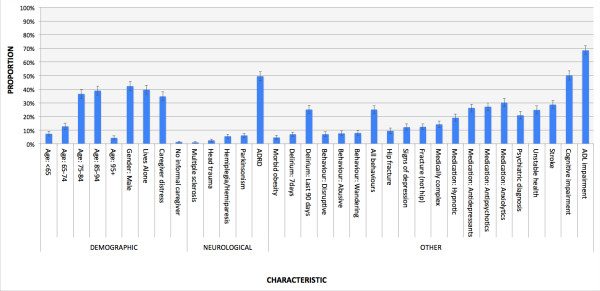
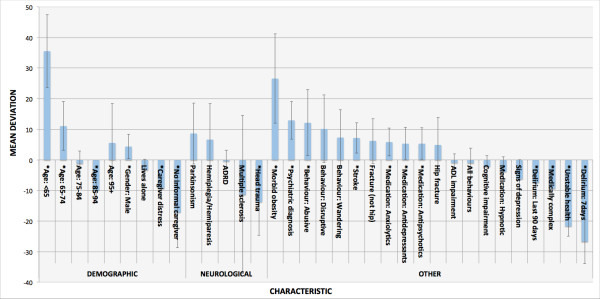
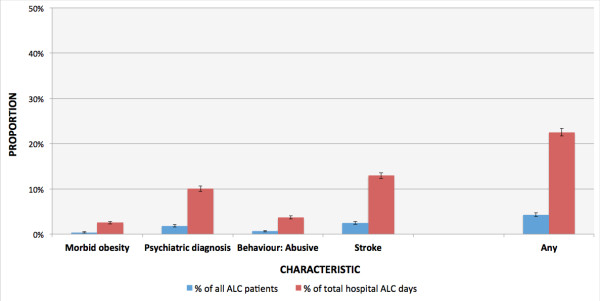
BACKGROUND: Acute hospital discharge delays are a pressing concern for many health care administrators. In Canada, a delayed discharge is defined by the alternate level of care (ALC) construct and has been the target of many provincial health care strategies. Little is known on the patient characteristics that influence acute ALC length of stay. This study examines which characteristics drive acute ALC length of stay for those awaiting nursing home admission. METHODS: Population-level administrative and assessment data were used to examine 17,111 acute hospital admissions designated as alternate level of care (ALC) from a large Canadian health region. Case level hospital records were linked to home care administrative and assessment records to identify and characterize those ALC patients that account for the greatest proportion of acute hospital ALC days. RESULTS: ALC patients waiting for nursing home admission accounted for 41.5% of acute hospital ALC bed days while only accounting for 8.8% of acute hospital ALC patients. Characteristics that were significantly associated with greater ALC lengths of stay were morbid obesity (27 day mean deviation, 99% CI = ±14.6), psychiatric diagnosis (13 day mean deviation, 99% CI = ±6.2), abusive behaviours (12 day mean deviation, 99% CI = ±10.7), and stroke (7 day mean deviation, 99% CI = ±5.0). Overall, persons with morbid obesity, a psychiatric diagnosis, abusive behaviours, or stroke accounted for 4.3% of all ALC patients and 23% of all acute hospital ALC days between April 1st 2009 and April 1st, 2011. ALC patients with the identified characteristics had unique clinical profiles. CONCLUSIONS: A small number of patients with non-medical days waiting for nursing home admission contribute to a substantial proportion of total non-medical days in acute hospitals. Increases in nursing home capacity or changes to existing funding arrangements should target the sub-populations identified in this investigation to maximize effectiveness. Specifically, incentives should be introduced to encourage nursing homes to accept acute patients with the least prospect for community-based living, while acute patients with the greatest prospect for community-based living are discharged to transitional care or directly to community-based care.
Overview
The claims and statistics of this paper haven’t been checked yet.
Run the check — free, no account needed. It reads the open-access text and checks the sources it cites.
Integrity signals
Registry
Cites
Statistics
Figures
Verification
Claims the paper makes
The claims and statistics of this paper haven’t been checked yet.
Run the check — free, no account needed. It reads the open-access text and checks the sources it cites.
Claims other papers make about this one
Each is checked against this paper’s own text: does it say what the citing paper says it does?
The cited source doesn’t support the claim as written.
In the citing paper
“This counterintuitive finding can be explained by the tendency of ALC length-of-stay to increase with age.”
From Estimating the Cost of Alternate Level of Care When It Is Inextricably Linked to the Cost of Acute Care: A Canadian Example (2026) · cites this paper as Costa et al. 2012
Checked by a reasoning model — may be wrong.
Experimental — accuracy not yet measuredThe source backs part of the claim, not all of it — or backs it for a different population, condition or comparison.
In the citing paper
“ALC patients frequently occupy a substantially higher proportion of hospital bed-days (Victor et al. 2000;Costa et al. 2012).”
From Estimating the Cost of Alternate Level of Care When It Is Inextricably Linked to the Cost of Acute Care: A Canadian Example (2026) · cites this paper as Costa et al. 2012
Experimental — accuracy not yet measuredThe cited source says what the claim attributes to it.
In the citing paper
“In a cohort of 17,111 inpatients, 65% of those awaiting nursing home admission were prescribed psychotropic medications, with dementia prevalent but other neurological conditions rare (Costa et al. 2012).”
From Dementia and Delayed Hospital Discharges: Assessing the Post-Discharge Care Gap for Older Adults in Canada. (2026) · cites this paper as Costa et al. 2012
The cited source says what the claim attributes to it.
In the citing paper
“The ALC reflects the fundamental mismatch between patients' needs and the availability of necessary post-discharge care services (Costa et al. 2012).”
From Estimating the Cost of Alternate Level of Care When It Is Inextricably Linked to the Cost of Acute Care: A Canadian Example (2026) · cites this paper as Costa et al. 2012
The check wasn’t confident either way, so it gives no verdict — never disputed.
In the citing paper
“Consequently, older ALC patients spend a larger portion of their hospital stay in ALC compared to younger patients (Costa et al. 2012;CADTH 2024).”
From Estimating the Cost of Alternate Level of Care When It Is Inextricably Linked to the Cost of Acute Care: A Canadian Example (2026) · cites this paper as Costa et al. 2012
Experimental — accuracy not yet measured
Self-check
Percentages, sums and reported differences re-computed from the paper’s own numbers.
The self-check needs the paper’s full text.
Citations
Cites
MDS Cognitive Performance Scale(C)
Morris, J. N., Fries, B. E., Mehr, D. R., Hawes, C., Phillips, C., Mor, V., & Lipsitz, L. A. (1994) · Journal of Gerontology · doi:10.1093/geronj/49.4.m174 · Cited by 1,852
Covinsky, K. E., Palmer, R. M., Fortinsky, R. H., Counsell, S. R., Stewart, A. L., Kresevic, D., Burant, C. J., & Landefeld, C. S. (2003) · Journal of the American Geriatrics Society · doi:10.1046/j.1532-5415.2003.51152.x · Cited by 1,670
Hazards of Hospitalization of the Elderly
Creditor, M. C. (1993) · Annals of Internal Medicine · doi:10.7326/0003-4819-118-3-199302010-00011 · Cited by 1,409
Morris, J. N., Fries, B. E., & Morris, S. A. (1999) · The Journals of Gerontology Series A: Biological Sciences and Medical Sciences · doi:10.1093/gerona/54.11.m546 · Cited by 1,408
Development of a minimum data set-based depression rating scale for use in nursing homes
Burrows, A. S. (2000) · Age and Ageing · doi:10.1093/ageing/29.2.165 · Cited by 727
Comprehensive Clinical Assessment in Community Setting: Applicability of the MDS‐HC
Morris, J. N., Fries, B. E., Steel, K., Ikegami, N., Bernabei, R., Carpenter, G., Gilgen, R., Hirdes, J. P., & Topinková, E. (1997) · Journal of the American Geriatrics Society · doi:10.1111/j.1532-5415.1997.tb02975.x · Cited by 566
Self-citationCharacteristics and circumstances of falls in a hospital setting: A prospective analysis
Hitcho, E. B., Krauss, M. J., Birge, S., Dunagan, W. C., Fischer, I., Johnson, S., Nast, P. A., Costantinou, E., & Fraser, V. J. (2004) · Journal of General Internal Medicine · doi:10.1111/j.1525-1497.2004.30387.x · Cited by 546
Hartmaier, S. L., Sloane, P. D., Guess, H. A., Koch, G. G., Mitchell, C. M., & Phillips, C. D. (1995) · The Journals of Gerontology Series A · doi:10.1093/gerona/50a.2.m128 · Cited by 521
The MDS-CHESS scale: a new measure to predict mortality in institutionalized older people
Hirdes, J. P., Frijters, D. H., & Teare, G. F. (2003) · Journal of the American Geriatrics Society · doi:10.1034/j.1601-5215.2002.51017.x · Cited by 477 · cited 4×
“Each assessment generates a set of summary scales, including: the Cognitive Performance Scale (CPS) [37,38], the Depression Rating Scale (DRS) [39-41], and the Changes in Health, End-stage Disease, and Signs and Symptoms (CHESS) Scale [42].”
MethodInfluentialSelf-citationFortinsky, R. H., Covinsky, K. E., Palmer, R. M., & Landefeld, C. S. (1999) · The Journals of Gerontology Series A · doi:10.1093/gerona/54.10.m521 · Cited by 277
Research works printed but not linked: 4
- ALC Expert Panel: Appropriate level of care: A patient flow, system integration and capacity solution. 2006, Ministry of Health and Long-Term Care, Toronto
- Canadian Institute for Health Information: Alternate level of care in Canada. 2009, Toronto, http://secure.cihi.ca/cihiweb/dispPage.jsp?cw_page=PG_1751_E&cw_topic=1751&cw_rel=AR_2610_E#full .
- Walker David, Provincial ALC Lead: Caring for our aging population and addressing alternate level of care (ALC). report submitted to the minister of health and long-term care. 2011, Queen’s Printer for Ontario, Toronto
- Sutherland JM, Crump RT: Exploring alternate level of care (ALC) and the role of funding policies: An evolving evidence base for Canada. In CHSRF series of reports on cost drivers and health system efficiency: paper 8. 2011, Ottawa
Cited by
Sorted by citations
Impact and experiences of delayed discharge: A mixed‐studies systematic review
Rojas‐García, A., Turner, S., Pizzo, E., Hudson, E., Thomas, J., & Raine, R. (2018) · Health Expectations · doi:10.1111/hex.12619 · Cited by 815
Bo, M., Fonte, G., Pivaro, F., Bonetto, M., Comi, C., Giorgis, V. D., Marchese, L., Isaia, G., Maggiani, G. S. G., Furno, E., et al. (2015) · Geriatrics and gerontology international/Geriatrics & gerontology international · doi:10.1111/ggi.12471 · Cited by 144
Busby, J., Purdy, S., & Hollingworth, W. (2015) · BMC Health Services Research · doi:10.1186/s12913-015-0964-3 · Cited by 113
Delayed Hospital Discharges of Older Patients: A Systematic Review on Prevalence and Costs
Landeiro, F., Roberts, K., Gray, A. M., & Leal, J. (2017) · The Gerontologist · doi:10.1093/geront/gnx028 · Cited by 107
Griffith, L. E., Gruneir, A., Fisher, K., Panjwani, D., Gandhi, S., Li, S., Gafni, A., Patterson, C., Markle‐Reid, M., & Ploeg, J. (2016) · BMC Geriatrics · doi:10.1186/s12877-016-0351-x · Cited by 92
Patient and caregiver experience with delayed discharge from a hospital setting: A scoping review
Everall, A. C., Guilcher, S. J. T., Cadel, L., Asif, M., Li, J., & Kuluski, K. (2019) · Health Expectations · doi:10.1111/hex.12916 · Cited by 81
Vetrano, D., Landi, F., Buyser, S. D. D., Carfì, A., Zuccalà, G., Petrovic, M., Volpato, S., Cherubini, A., Corsonello, A., Bernabei, R., et al. (2014) · European journal of internal medicine · doi:10.1016/j.ejim.2013.08.709 · Cited by 76
A system dynamics view of the acute bed blockage problem in the Irish healthcare system
Rashwan, W., Abo-Hamad, W., & Arisha, A. (2015) · European Journal of Operational Research · doi:10.1016/j.ejor.2015.05.043 · Cited by 77
Initiatives for improving delayed discharge from a hospital setting: a scoping review
Cadel, L., Guilcher, S. J. T., Kokorelias, K. M., Sutherland, J. M., Glasby, J., Kiran, T., & Kuluski, K. (2021) · BMJ Open · doi:10.1136/bmjopen-2020-044291 · Cited by 74
McGilton, K. S., Vellani, S., Krassikova, A., Robertson, S., Irwin, C., Cumal, A., Bethell, J., Burr, E., Keatings, M., McKay, S. M., et al. (2021) · BMC Geriatrics · doi:10.1186/s12877-021-02099-9 · Cited by 62
Herberholz, C., & Phuntsho, S. (2018) · Social Science & Medicine · doi:10.1016/j.socscimed.2018.06.010 · Cited by 59
Ogink, P. T., Karhade, A. V., Thio, Q. C. B. S., Gormley, W. B., Öner, F. C., Verlaan, J., & Schwab, J. H. (2019) · European Spine Journal · doi:10.1007/s00586-019-05928-z · Cited by 56
Alternate Level of Care Patients in Hospitals: What Does Dementia Have To Do With This?
McCloskey, R., Jarrett, P., Stewart, C., & Nicholson, P. (2014) · Canadian Geriatrics Journal · doi:10.5770/cgj.17.106 · Cited by 53
Defining Delayed Discharges of Inpatients and Their Impact in Acute Hospital Care: A Scoping Review
Micallef, A., Buttiġieġ, S. C., Tomaselli, G., & Garg, L. (2020) · International Journal of Health Policy and Management · doi:10.34172/ijhpm.2020.94 · Cited by 53
Lenzi, J., Mongardi, M., Rucci, P., Ruscio, E. D., Vizioli, M., Randazzo, C., Toschi, E., Carradori, T., & Fantini, M. P. (2014) · BMC Health Services Research · doi:10.1186/1472-6963-14-128 · Cited by 51
Morris, J. N., Howard, E., Steel, K., Schreiber, R., Fries, B. E., Lipsitz, L. A., & Goldman, B. D. (2014) · BMC Health Services Research · doi:10.1186/s12913-014-0519-z · Cited by 48
Prediction calculator for nonroutine discharge and length of stay after spine surgery
Lubelski, D., Ehresman, J., Feghali, J., Tanenbaum, J., Bydon, A., Theodore, N., Witham, T. F., & Sciubba, D. M. (2020) · The Spine Journal · doi:10.1016/j.spinee.2020.02.022 · Cited by 48
Factors contributing to high-cost hospital care for patients with COPD
Mulpuru, S., McKay, J. A., Ronksley, P. E., Thavorn, K., Kobewka, D. M., & Forster, A. J. (2017) · International Journal of COPD · doi:10.2147/copd.s126607 · Cited by 48
Lopez, C. D., Constant, M., Anderson, M. J., Confino, J., Heffernan, J. T., & Jobin, C. M. (2021) · JSES International · doi:10.1016/j.jseint.2021.02.011 · Cited by 43
Ogink, P. T., Karhade, A. V., Thio, Q. C. B. S., Hershman, S. H., Cha, T. D., Bono, C. M., & Schwab, J. H. (2019) · European Spine Journal · doi:10.1007/s00586-019-05936-z · Cited by 41
Kuluski, K., Im, J., & McGeown, M. (2017) · BMC Health Services Research · doi:10.1186/s12913-017-2272-6 · Cited by 37
‘Lost to follow up’: rethinking delayed and interrupted HIV treatment among married Swazi women
Dlamini-Simelane, T., & Moyer, E. M. (2016) · Health Policy and Planning · doi:10.1093/heapol/czw117 · Cited by 33
Bailey, J. G., Davis, P. J., Levy, A. R., Molinari, M., & Johnson, P. M. (2016) · Canadian Journal of Surgery · doi:10.1503/cjs.013915 · Cited by 32
Bender, D., & Holyoke, P. (2018) · Healthcare Management Forum · doi:10.1177/0840470418755408 · Cited by 34
The influence of home care supply on delayed discharges from hospital in England
Allan, S., Roland, D. R., Mališauskaitė, G., Jones, K., Baxter, K., Gridley, K., & Birks, Y. F. (2021) · BMC Health Services Research · doi:10.1186/s12913-021-07206-5 · Cited by 24
Harris, M. T. H., Gadermann, A., Norena, M., To, M. J., Hubley, A. M., Aubry, T., Hwang, S. W., & Palepu, A. (2018) · International Journal of Public Health · doi:10.1007/s00038-018-1167-6 · Cited by 23
Coombs, M. A., Parker, R., & de Vries, K. (2016) · Palliative Medicine · doi:10.1177/0269216316673476 · Cited by 21
Application of the Beers Criteria to Alternate Level of Care Patients in Hospital Inpatient Units
Slaney, H., MacAulay, S., Irvine‐Meek, J., & Murray, J. (2015) · The Canadian Journal of Hospital Pharmacy · doi:10.4212/cjhp.v68i3.1455 · Cited by 20
Analysis of the Influencing Factors Associated With Being Designated Alternate Level of Care
Barnable, A., Welsh, D., Lundrigan, E., & Davis, C. (2014) · Home Health Care Management & Practice · doi:10.1177/1084822314539164 · Cited by 20
Geographic variation in inpatient costs for Acute Myocardial Infarction care: Insights from Italy
Seghieri, C., Berta, P., & Nuti, S. (2019) · Health Policy · doi:10.1016/j.healthpol.2019.01.010 · Cited by 19
Accuracy of machine learning to predict the outcomes of shoulder arthroplasty: a systematic review
Karimi, A. H., Langberg, J., Malige, A., Rahman, O., Abboud, J. A., & Stone, M. A. (2024) · Arthroplasty · doi:10.1186/s42836-024-00244-4 · Cited by 18
Pellico‐López, A., Cantarero, D., Fernández‐Feito, A., Parás‐Bravo, P., Cuevas, J. C. D. L., & Paz‐Zulueta, M. (2019) · International Journal of Environmental Research and Public Health · doi:10.3390/ijerph16183304 · Cited by 17
Lopez, C. D., Gazgalis, A., Peterson, J. R., Confino, J., Levine, W. N., Popkin, C. A., & Lynch, T. S. (2022) · Arthroscopy The Journal of Arthroscopic and Related Surgery · doi:10.1016/j.arthro.2022.06.032 · Cited by 17
Chuang, Y., Zargoush, M., Ghazalbash, S., Samiedaluie, S., Kuluski, K., & Guilcher, S. J. T. (2022) · Production and Operations Management · doi:10.1111/poms.13910 · Cited by 17
McCarthy, B. C., Tuiskula, K. A., Driscoll, T. P., & Davis, A. M. (2017) · American Journal of Health-System Pharmacy · doi:10.2146/ajhp160848 · Cited by 17
Koch, D., Schüetz, P., Haubitz, S., Kutz, A., Müeller, B., Weber, H., Regez, K., Conca, A., & for the Triage Study Group (2019) · PLoS ONE · doi:10.1371/journal.pone.0214194 · Cited by 16
Aaltonen, M. S., Adam, S. E., Martin-Matthews, A., Sakamoto, M., Strumpf, E., & McGrail, K. M. (2020) · Journal of the American Medical Directors Association · doi:10.1016/j.jamda.2020.11.030 · Cited by 16
Clinical Predictors of Delayed Discharges in Inpatient Mental Health Settings Across Ontario
Little, J., Hirdes, J. P., Perlman, C. M., & Meyer, S. B. (2018) · Administration and Policy in Mental Health and Mental Health Services Research · doi:10.1007/s10488-018-0898-2 · Cited by 16
Self-citationStock, D., Cowie, C., Chan, V., Colantonio, A., Wodchis, W. P., Alter, D., & Cullen, N. K. (2016) · CMAJ Open · doi:10.9778/cmajo.20150123 · Cited by 14
McGilton, K. S., Vellani, S., Babineau, J., Bethell, J., Bronskill, S. E., Burr, E., Keatings, M., McElhaney, J. E., McKay, S. M., Nichol, K. A., et al. (2019) · BMJ Open · doi:10.1136/bmjopen-2019-032149 · Cited by 13
Ghazalbash, S., Zargoush, M., Mowbray, F., & Παπαϊωάννου, Α. (2021) · International Journal of Medical Informatics · doi:10.1016/j.ijmedinf.2021.104597 · Cited by 14
Characteristics of Patients With Constant Observers
Solimine, S., Takeshita, J., Goebert, D. A., Lee, J., Schultz, B., Guerrero, M., Tanael, M., Pilar, M. L., Fleming, L., Kracher, S. L., et al. (2017) · Psychosomatics · doi:10.1016/j.psym.2017.08.003 · Cited by 14
Outcomes of complex discharge planning in older adults with complex needs: a scoping review
Rameli, P. M., & Rajendran, N. (2022) · Journal of International Medical Research · doi:10.1177/03000605221110511 · Cited by 13
Tian, Y., Osgood, N. D., Stempien, J., Onaemo, V. N., Danyliw, A. D., Fast, G., Osman, B. A., Reynolds, J., & Basran, J. (2023) · Canadian Journal of Emergency Medicine · doi:10.1007/s43678-023-00514-1 · Cited by 13
Lim Fat, G. J., Gopaul, A., Pananos, A. D., & Taabazuing, M.-M. (2022) · Geriatrics · doi:10.3390/geriatrics7040081 · Cited by 13
“With particularly long lengths of stay, ALC patients awaiting LTC contribute to a large proportion of non-medical days at acute hospitals [6], creating infrastructural challenges within already strained hospital systems by occupying beds and using resources allocated for acute care.”
BackgroundDo subsidized nursing homes and home care teams reduce hospital bed-blocking? Evidence from Portugal
Moura, A. (2022) · Journal of Health Economics · doi:10.1016/j.jhealeco.2022.102640 · Cited by 12
Manis, D. R., Katz, P. R., Lane, N. E., Rochon, P. A., Sinha, S. K., Andel, R., Heckman, G. A., Kirkwood, D. H., & Costa, A. P. (2023) · Journal of the American Medical Directors Association · doi:10.1016/j.jamda.2023.06.024 · Cited by 12
Self-citationArthur, S., Hirdes, J. P., Heckman, G. A., Morinville, A., Costa, A. P., & Hébert, P. C. (2021) · BMJ Open · doi:10.1136/bmjopen-2020-038484 · Cited by 12
Self-citationLittle, J., Hirdes, J. P., & Daniel, I. (2015) · Healthcare Management Forum · doi:10.1177/0840470415581226 · Cited by 12
Self-citationCressman, G., Ploeg, J., Kirkpatrick, H., Kaasalainen, S., & McAiney, C. A. (2013) · Canadian Journal of Nursing Research · doi:10.1177/084456211304500403 · Cited by 12
Naouri, D., Pelletier‐Fleury, N., Lapidus, N., & Yordanov, Y. (2022) · BMC Geriatrics · doi:10.1186/s12877-022-03241-x · Cited by 11
Turcotte, L., Daniel, I., & Hirdes, J. P. (2020) · Journal of the American Medical Directors Association · doi:10.1016/j.jamda.2019.12.022 · Cited by 11
Self-citationCognitive Impairment and Length of Stay in Acute Care Hospitals: A Scoping Review of the Literature
Plante, J., Latulippe, K., Kröger, E., Giroux, D., Marcotte, M., Nadeau, S., Doyle, E., & Rockwood, K. J. (2021) · Canadian Journal on Aging / La Revue canadienne du vieillissement · doi:10.1017/s0714980820000355 · Cited by 11
Post‐acute care use after major head and neck oncologic surgery with microvascular reconstruction
Parhar, H. S., Chang, B. A., Durham, J. S., Anderson, D. W., Hayden, R. E., & Prisman, E. (2018) · The Laryngoscope · doi:10.1002/lary.27190 · Cited by 11
Forchuk, C., Martin, M., Corring, D., Sherman, D., Srivastava, R., Harerimana, B., & Cheng, R. (2019) · International Journal of Mental Health · doi:10.1080/00207411.2019.1649237 · Cited by 11
Lim, B., Seth, I., Maxwell, M., Cuomo, R., Ross, R. J., & Rozen, W. M. (2025) · Aesthetic Plastic Surgery · doi:10.1007/s00266-025-04842-8 · Cited by 10
Sohn, D., Yoon, J., Ro, J.-S., & Leigh, J. (2023) · Journal of Korean Medical Science · doi:10.3346/jkms.2023.38.e147 · Cited by 9
Pressure Ulcers Among Newly Admitted Nursing Home Residents
Doupe, M. B., Day, S., McGregor, M. J., John, P. S., Chateau, D. G., Puchniak, J., Dik, N., & Sarkar, J. (2016) · Medical Care · doi:10.1097/mlr.0000000000000522 · Cited by 10
Naouri, D., Yordanov, Y., Lapidus, N., & Pelletier‐Fleury, N. (2023) · BMC Geriatrics · doi:10.1186/s12877-023-03985-0 · Cited by 9
Alternate Level of Care Patients in Canada: a Scoping Review
Maisonnave, M., Rajabi, E., Taghavi, M., & Vanberkel, P. T. (2024) · Canadian Geriatrics Journal · doi:10.5770/cgj.27.755 · Cited by 11
Rate and predictors of 1-year readmission in tertiary psychiatric hospitals
Al-Sinawi, H., Al-Shehhi, A., Jose, S., & Youssef, R. M. (2017) · Saudi Journal of Medicine and Medical Sciences · doi:10.4103/1658-631x.213305 · Cited by 9
The Changing Distribution of Length of Hospitalization at Academic Medical Centers 2007–2016
Doctoroff, L., & Mukamal, K. J. (2019) · Medical Care · doi:10.1097/mlr.0000000000001166 · Cited by 9
Holland, D. E., Pacyna, J. E., Gillard, K. L., & Carter, L. C. (2015) · Journal of Nursing Care Quality · doi:10.1097/ncq.0000000000000141 · Cited by 9
Murmann, M., Sinden, D., Hsu, A. T., Thavorn, K., Eddeen, A. B., Sun, A. H., & Robert, B. (2022) · Journal of Medical Economics · doi:10.1080/13696998.2022.2156152 · Cited by 8
Naouri, D., Panjo, H., Moïsi, L., Khoury, C. E., Serre, P., Schmidt, J., Yordanov, Y., & Pelletier‐Fleury, N. (2023) · Health Services Insights · doi:10.1177/11786329231174340 · Cited by 8
Clinical Analysis and Management of Long-Stay Patients
Huang, C. (2021) · International Journal of General Medicine · doi:10.2147/ijgm.s310217 · Cited by 7
Görgülü, B., Dong, J., Hunter, K., Bettio, K. M., Vukusic, B., Ranisau, J., Spencer, G., Tang, T., & Sarhangian, V. (2022) · Archives of Physical Medicine and Rehabilitation · doi:10.1016/j.apmr.2022.05.017 · Cited by 7
Mechanical Ventilation Survivorship: A Tale of Two Countries
Kohn, R. A., & Kerlin, M. P. (2019) · Annals of the American Thoracic Society · doi:10.1513/annalsats.201812-907ed · Cited by 7
Yarnell, C. J., Shadowitz, S., & Redelmeier, D. A. (2016) · The American Journal of Medicine · doi:10.1016/j.amjmed.2016.02.022 · Cited by 6
Lopez, L. K., Weerasinghe, N., & Killackey, T. (2021) · Nursing Inquiry · doi:10.1111/nin.12464 · Cited by 6
Effectiveness of Weekend Physiotherapy on Geriatric In-Patients’ Physical Function
Rajendran, V., Jeevanantham, D., & Falk, D. (2022) · Gerontology and Geriatric Medicine · doi:10.1177/23337214221100072 · Cited by 6
A descriptive study on reasons for prolonged hospital stay in a tertiary hospital in Singapore
Towle, R. M., Hussain, Z. B. M., & Chew, S. M. (2021) · Journal of Nursing Management · doi:10.1111/jonm.13360 · Cited by 6
He, F., Blackberry, I., Njovu, M., Rutherford, D., & Mnatzaganian, G. (2025) · Journal of Rehabilitation Medicine · doi:10.2340/jrm.v57.42506 · Cited by 5
Strategies to Reduce Alternate Level of Care
CADTH (2024) · Canadian Journal of Health Technologies · doi:10.51731/cjht.2024.943 · Cited by 5
Guilcher, S. J. T., Bai, Y., Wodchis, W. P., Bronskill, S. E., & Kuluski, K. (2023) · CMAJ Open · doi:10.9778/cmajo.20220086 · Cited by 5
Using Modelling and Simulation to Improve Elderly Care in Ireland: A Case Study
Ragab, M. A. F., Rashwan, W., Abo-Hamad, W., & Arisha, A. (2013) · Arrow - TU Dublin (Technological University Dublin) · doi:10.21427/d7kn35 · Cited by 5
Villani, E. R., Vetrano, D. L., Franza, L., Carfì, A., Brandi, V., Volpato, S., Corsonello, A., Lattanzio, F., Ruggiero, C., Onder, G., et al. (2020) · Aging Clinical and Experimental Research · doi:10.1007/s40520-020-01691-0 · Cited by 6
Husaini, D. N. H. B. A., Keasberry, J. F. S., Mumin, K. H. A., & Rahman, H. A. (2021) · Proceedings of Singapore Healthcare · doi:10.1177/20101058211006143 · Cited by 4
Characterizing patients hospitalized without an acute care indication: A retrospective cohort study.
Rosenthal, M., Ranji, S., Kanzaria, H., Ortiz, G., Chase, J., Chodos, A., Nguyen, O., Rodriguez, E., & Makam, A. (2023) · Journal of Hospital Medicine · doi:10.1002/jhm.13061 · Cited by 4
Basu, K. (2026) · Hospital Topics · doi:10.1080/00185868.2025.2474761 · Cited by 3
“ALC patients frequently occupy a substantially higher proportion of hospital bed-days (Victor et al. 2000; Costa et al. 2012).”
Salahub, C. M., Austin, P. C., Bai, L., Ivers, N. M., Jones, A., Tadrous, M., Tran, J., & Lapointe‐Shaw, L. (2025) · Journal of the American Medical Directors Association · doi:10.1016/j.jamda.2025.105611 · Cited by 4
The Clinical Advantages of Making Our Hospitals Older Adult Friendly
Wagg, A., Heckman, G. A., Northwood, M., & Hirdes, J. P. (2024) · Canadian Journal of Cardiology · doi:10.1016/j.cjca.2024.09.028 · Cited by 3
Self-citationEmergency boarding: An integrative framework for analyzing causes and seeking solutions
Limoges, V., Gemmel, P., Landry, S., & Paepe, P. D. (2017) · Journal of Hospital Administration · doi:10.5430/jha.v6n2p88 · Cited by 3
Berger, G., Epstein, D., Rozen, M., Miskin, A., Halberthal, M., & Mekel, M. (2020) · Israel Journal of Health Policy Research · doi:10.1186/s13584-020-00425-x · Cited by 3
El-Abbassy, I. H., Mohamed, W., El-Hariri, H., El-Setouhy, M., Hirshon, J., & El-Shinawi, M. (2021) · African Journal of Emergency Medicine · doi:10.1016/j.afjem.2021.06.008 · Cited by 2
Egbujie, B. A., Tran, J., & Hirdes, J. P. (2023) · Journal of Primary Care & Community Health · doi:10.1177/21501319231220742 · Cited by 3
Self-citationHow a dedicated postdischarge unit can reduce hospital congestion and costs
Khatami, M., Stauffer, J. M., & Lawley, M. (2024) · Decision Sciences · doi:10.1111/deci.12624 · Cited by 3
Alternate Level of Care in Canada: Evidence Assessment Report
CDA-AMC (2025) · Canadian Journal of Health Technologies · doi:10.51731/cjht.2025.1155 · Cited by 2
Mališauskaitė, G., Jones, K., Allan, S., Roland, D. R., Birks, Y. F., Baxter, K., & Gridley, K. (2022) · BMJ Open · doi:10.1136/bmjopen-2021-054568 · Cited by 2
Cheng, I., Baker, G. R., Carew, D., Landau, S., Walko, D., Li, W. W., & Yan, Y. (2020) · doi:10.21203/rs.3.rs-23776/v1 · Cited by 2
Basu, K. (2026) · Hospital Topics · doi:10.1080/00185868.2026.2616484 · Cited by 1
Sirard, S., Nault, V., Langlois, M., Perron, J., & Valiquette, L. (2021) · BMC Infectious Diseases · doi:10.1186/s12879-021-06682-8 · Cited by 1
What Factors Increase Odds of Long-Stay Delayed Discharge in Alternate Level of Care Patients?
Carfagnini, Q., Ayanso, A., Law, M. P., Orlando, E., & Faught, B. E. (2023) · Journal of the American Medical Directors Association · doi:10.1016/j.jamda.2023.02.104 · Cited by 1
Sibley, K. M., Barclay, R., Cooper, J. E., Edwards, J., Guse, L. W., Leclair, L. L., Katz, A., Korall, A. M. B., Ripat, J. D., & Zawaly, K. (2024) · Health & Social Care in the Community · doi:10.1155/2024/3504396 · Cited by 1
Heckman, G. A., Jantzi, M., Hirdes, J. P., Nova, A., Elliott, J. B., & Sinha, S. K. (2025) · Healthcare Management Forum · doi:10.1177/08404704251389449 · Cited by 1
Self-citationArda, Y., Brackin, R. B., Miller, J. H. A., Karikis, I., DeWane, M. P., Paranjape, C. N., Ng-Kamstra, J. S., Luckhurst, C. M., Kaafarani, H. M. A., Velmahos, G. C., et al. (2026) · Journal of Surgical Research · doi:10.1016/j.jss.2026.03.093 · Cited by 1
Use of Hospitals by Older versus Younger Canadians: Myths and Misconceptions
Wilson, D. M., Shen, Y., & Low, G. (2018) · Canadian Journal on Aging / La Revue canadienne du vieillissement · doi:10.1017/s0714980818000235 · Cited by 1
Occupancy Rate of Hospital Beds in Maternity of High-Risk
da Costa, G. R., Stadnik, A. M. W., Barros, F. S., & Maldaner, M. (2019) · World Congress on Medical Physics and Biomedical Engineering, September 7 - 12, 2009, Munich, Germany · doi:10.1007/978-981-13-2119-1_122 · Cited by 1
Medication Use by Alternate Level of Care Patients: A Descriptive Analysis
Azimi, M., Burry, L. D., Duclos, C., Pelc, J., Nie, J. X., & Upshur, R. E. G. (2019) · The Canadian Journal of Hospital Pharmacy · doi:10.4212/cjhp.v72i4.2914 · Cited by 1
Hospitalization of persons with dementia
McGilton, K. S., & Lemay, G. (2020) · Elsevier eBooks · doi:10.1016/b978-0-12-817566-8.00005-x · Cited by 1
Metadata
- Authors
- Costa, A. P., Poss, J. W., Peirce, T., & Hirdes, J. P.
- Affiliations
- University of Waterloo (CA)
- Corresponding author
- Costa, Andrew P
- Venue
- BMC Health Services Research
- Published
- 2012-06-22
- Volume
- 12
- Issue
- 1
- Pages
- 172-172
- ISSN
- 1472-6963 (ISSN-L)
- PMC
- PMC3424132
- OpenAlex
- W2026306668
- Cited by
- 132
- References
- 53
- Citations by year
- 2026: 5 · 2025: 11 · 2024: 9 · 2023: 13 · 2022: 13 · 2021: 18 · 2020: 11 · 2019: 16 · 2018: 7 · 2017: 8 · 2016: 8 · 2015: 6 · 2014: 4 · 2013: 3
- FWCI
- 7.39
- Type
- journal article
- Language
- en
- Open access
- gold
- doi.org
- Licence
- Locations
- BMC Health Services Research (publishedVersion, cc-by)
- Europe PMC (PubMed Central) (publishedVersion, cc-by)
- PubMed Central (publishedVersion, cc-by)
- PubMed (publishedVersion)
- DOAJ (DOAJ: Directory of Open Access Journals) (submittedVersion)
- Funders
- Public Health Agency of Canada
- Ontario Ministry of Health and Long-Term Care
- Public Health Agency
- Canadian Institutes of Health Research
- Topics
- Health Sciences › Medicine › Geriatrics and Gerontology › Geriatric Care and Nursing Homes
- Health Sciences › Nursing › Leadership and Management › Hospital Admissions and Outcomes
- Health Sciences › Medicine › Emergency Medicine › Emergency and Acute Care Studies
- Keywords
- alternate level of care, delayed hospital discharge, nursing home admission, length of hospital stay, morbid obesity, psychiatric diagnosis, abusive behavior, stroke, home care, nursing home capacity, care transitions, community-based care
- MeSH terms
- Activities of Daily Living, Acute Disease, Aged, Aged, 80 and over, Bed Occupancy, Catchment Area, Health, Female, Health Services for the Aged, Home Care Services, Hospitalization, Humans, Inpatients, Length of Stay, Long-Term Care, Male, Middle Aged, Nursing Homes, Ontario, Patient Discharge, Retrospective Studies, Time Factors, Waiting Lists, Evidence-Based Medicine
About these checks
Registry, retraction, Cites and statistics results are computed, not judged, with one exception: a printed reference that no index lists is read once by a model before it counts as a citation error. Claims are extracted by a model and kept only when their quote appears verbatim in the text; each cited source is then checked, with a model’s help, for whether it says what the claim relies on. Those verdicts can be wrong — read the claim’s quote and the cited source before relying on one.
Statistics and arithmetic are recomputed, not judged.
Confidence bands are shown only for fields calibrated on our annotated test set. None is calibrated yet, so no band is shown.
What counts as a claim ›How we measure confidence ›How we check this ›
Are you an author, or do you see a problem with this page? Request a review
