

Service provision and barriers to care for homeless people with mental health problems across 14 European capital cities
Open accessThe DOI matches its Crossref record; 21 of the 21 references it cites were found in a registry or an index.
Abstract
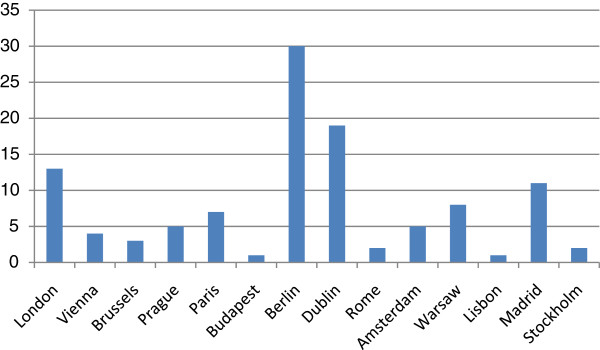
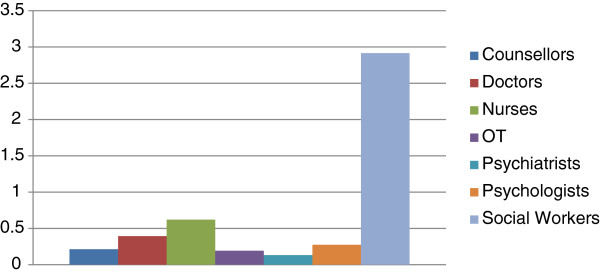
BACKGROUND: Mental health problems are disproportionately higher amongst homeless people. Many barriers exist for homeless people with mental health problems in accessing treatment yet little research has been done on service provision and quality of care for this group. The aim of this paper is to assess current service provision and identify barriers to care for homeless people with mental health problems in 14 European capital cities. METHOD: Two methods of data collection were employed; (i) In two highly deprived areas in each of the 14 European capital cities, homeless-specific services providing mental health, social care or general health services were assessed. Data were obtained on service characteristics, staff and programmes provided. (ii) Semi-structured interviews were conducted in each area with experts in mental health care provision for homeless people in order to determine the barriers to care and ways to overcome them. RESULTS: Across the 14 capital cities, 111 homeless-specific services were assessed. Input from professionally qualified mental health staff was reported as low, as were levels of active outreach and case finding. Out-of-hours service provision appears inadequate and high levels of service exclusion criteria were evident. Prejudice in the services towards homeless people, a lack of co-ordination amongst services, and the difficulties homeless people face in obtaining health insurance were identified as major barriers to service provision. CONCLUSIONS: While there is variability in service provision across European capital cities, the reported barriers to service accessibility are common. Homeless-specific services are more responsive to the initial needs of homeless people with mental health problems, while generic services tend to be more conducive to long term care. Further research is needed to determine the effectiveness of different service delivery models, including the most effective coordination of homeless specific and generic services.
Overview
The claims and statistics of this paper haven’t been checked yet.
Free: it reads the open-access text and checks the first 5 claims that cite a source we can check. Create a free account to check every claim.
Integrity signals
Registry
Cites
Statistics
Figures
Verification
Claims the paper makes
The claims and statistics of this paper haven’t been checked yet.
Free: it reads the open-access text and checks the first 5 claims that cite a source we can check. Create a free account to check every claim.
Claims other papers make about this one
Each is checked against this paper’s own text: does it say what the citing paper says it does?
The check wasn’t confident either way, so it gives no verdict — never disputed.
In the citing paper
“Tobacco use is common in homeless populations; in the USA, 68–80% of homeless people are current smokers,61 which is four times the rate of the overall US population and 2·5 times that of the low-income population.105”
From The health of homeless people in high-income countries: descriptive epidemiology, health consequences, and clinical and policy recommendations (2014) · cites this paper as [61]
Experimental — accuracy not yet measuredThe check wasn’t confident either way, so it gives no verdict — never disputed.
In the citing paper
“However, homelessness is independently associated with smoking.61”
From The health of homeless people in high-income countries: descriptive epidemiology, health consequences, and clinical and policy recommendations (2014) · cites this paper as [61]
Experimental — accuracy not yet measured
Self-check
Percentages, sums and reported differences re-computed from the paper’s own numbers.
The self-check needs the paper’s full text.
Citations
Cites
Three Approaches to Qualitative Content Analysis
Hsieh, H.-F., & Shannon, S. E. (2005) · Qualitative Health Research · doi:10.1177/1049732305276687 · Cited by 44,601 · cited 1×
“The semi-structured interview transcripts were analyzed using thematic analysis [14].”
MethodQualitative research and evaluation methods
Patton, M. Q. (1980) · Cited by 35,743
Interpreting Qualitative Data Methods for Analysing Talk, Text and Interaction
Kleinsasser, R. C., & Silverman, D. (1997) · The Modern Language Journal · doi:10.2307/329190 · Cited by 6,866
Fazel, S., Khosla, V., Doll, H., & Geddes, J. (2008) · PLoS Medicine · doi:10.1371/journal.pmed.0050225 · Cited by 1,033 · cited 2×
“Homeless people in Western countries are more likely to have alcohol and drug problems than the general population [1].”
BackgroundFactors Associated With the Health Care Utilization of Homeless Persons
Kushel, M. B. (2001) · JAMA · doi:10.1001/jama.285.2.200 · Cited by 728 · cited 1×
“Health insurance results in fewer barriers to accessing care, greater use of outpatient services and better compliance with medication amongst homeless people [22,23].”
BackgroundHomelessness and dual diagnosis.
Drake, R. E., Osher, F. C., & Wallach, M. A. (1991) · American Psychologist · doi:10.1037//0003-066x.46.11.1149 · Cited by 267 · cited 1×
“It is estimated that between 20% and 50% of homeless people with mental health problems are also diagnosed with a substance abuse disorder [17-19], and find it difficult to access appropriate services.”
BackgroundInterventions to Improve the Health of the HomelessA Systematic Review
HWANG, S., TOLOMICZENKO, G., KOUYOUMDJIAN, F., & GARNER, R. (2005) · American Journal of Preventive Medicine · doi:10.1016/j.amepre.2005.06.017 · Cited by 264
A Randomized Trial of Assertive Community Treatment for Homeless Persons With Severe Mental Illness
Lehman, A. F. (1997) · Archives of General Psychiatry · doi:10.1001/archpsyc.1997.01830230076011 · Cited by 263
Coldwell, C. M., & Bender, W. S. (2007) · American Journal of Psychiatry · doi:10.1176/ajp.2007.164.3.393 · Cited by 261 · cited 1×
“Evidence suggests that assertive community treatment programmes are effective in treating homeless people with mental health problems in comparison to regular treatment [20,21].”
BackgroundHow can health services effectively meet the health needs of homeless people?
Wright, N. M. J., & Tompkins, C. N. E. (2006) · Europe PMC (PubMed Central) · Cited by 248
Research works printed but not linked: 5
- 10. Anderson I, Baptista I, Wolf J, Edgar B, Benjaminsen L, Sapounakis A, Schoibl H: The changing role of service provision: barriers of access of health services for homeless people. Feansta: European Observatory on Homelessness; 2006.
- 11. Feansta: The right to health is a human right: ensuring access to health for people who are homeless. In Feansta Annual European Report. 2006.
- 13. Feansta ETHOS: European typology on homelessness and housing exclusion. Brussels: Feansta; 2005. Available at: http://www.feantsa.org/files/freshstart/ Toolkits/Ethos/Leaflet/EN.pdf.
- 24. Fitzpatrick S, Stephens M: An international review of homelessness and social housing policy. York: Centre for Housing Policy: University of York; 2007.
- 25. FEANTSA & Mental Health Europe: Joint statement in homelessness and mental health. Mental Health Europe; 2009. Available at: http://www.mhe- sme.org/assets/files/Common%20statement%20FEANTSA%20MHE%20.pdf.
Cited by
Fazel, S., Geddes, J. R., & Kushel, M. (2014) · The Lancet · doi:10.1016/s0140-6736(14)61132-6 · Cited by 1,568
Health interventions for people who are homeless
Hwang, S. W., & Burns, T. (2014) · The Lancet · doi:10.1016/s0140-6736(14)61133-8 · Cited by 301
Magwood, O., Salvalaggio, G., Beder, M., Kendall, C., Kpade, V., Daghmach, W., Habonimana, G., Marshall, Z., Snyder, E., O’Shea, T., et al. (2020) · PLOS ONE · doi:10.1371/journal.pone.0227298 · Cited by 118
Elwell-Sutton, T., Fok, J., Albanese, F., Mathie, H., & Holland, R. (2016) · Journal of Public Health · doi:10.1093/pubmed/fdw008 · Cited by 41
Carter, J., Zevin, B., & Lum, P. J. (2019) · Addiction Science & Clinical Practice · doi:10.1186/s13722-019-0149-1 · Cited by 110
The Prevalence of Mental Illness in Homeless People in Germany
Schreiter, S., Bermpohl, F., Krausz, M. R., Leucht, S., Rössler, W., Schouler‐Ocak, M., & Gutwinski, S. (2017) · Deutsches Ärzteblatt international · doi:10.3238/arztebl.2017.0665 · Cited by 141
McGeough, C., Walsh, A., & Clyne, B. (2020) · Health & Social Care in the Community · doi:10.1111/hsc.12972 · Cited by 78
Access to palliative care for homeless people: complex lives, complex care
de Veer, A. J. E., Stringer, B., van Meijel, B., Verkaik, R., & Francke, A. L. (2018) · BMC Palliative Care · doi:10.1186/s12904-018-0368-3 · Cited by 76
Klop, H. T., Evenblij, K., Gootjes, J. R. G., de Veer, A. J. E., & Onwuteaka-Philipsen, B. D. (2018) · BMC Public Health · doi:10.1186/s12889-018-5989-1 · Cited by 75
Keogh, C., O’Brien, K. K., Hoban, A., O’Carroll, A., & Fahey, T. (2015) · BMC Health Services Research · doi:10.1186/s12913-015-0716-4 · Cited by 57
“populations face a number of barriers to receipt of appropriate services, including lack of engagement with services and continuity of care; lack of medication adherence and a lack of coordination between healthcare services, negative prior experiences, perceived prejudice towards homeless people, difficulty affording…”
BackgroundJaworsky, D., Gadermann, A., Duhoux, A., Naismith, T. E., Norena, M., To, M. J., Hwang, S. W., & Palepu, A. (2016) · Journal of Urban Health · doi:10.1007/s11524-016-0065-6 · Cited by 67
“Reported barriers to receiving care for homeless and vulnerably housed individuals include prejudice and stigma, wait times and limited after-hour services, lack of health insurance, cost of medications, transportation limitations, stress associated with shelter life, and being poorly connected to social services.(8,1…”
BackgroundLaliberté, V., Stergiopoulos, V., Jacob, B. J., & Kurdyak, P. A. (2019) · Epidemiology and Psychiatric Sciences · doi:10.1017/s2045796019000052 · Cited by 54
Russolillo, A., Moniruzzaman, A., Parpouchi, M., Currie, L. B., & Somers, J. M. (2016) · BMC Health Services Research · doi:10.1186/s12913-016-1316-7 · Cited by 50
“In addition, fragmentation of health services, un-met health care needs [2, 3, 16], and barriers to care [17, 18], may increase reliance on hospital and acute care, often for medical conditions that could be prevented or treated in community settings [4, 19].”
BackgroundKouyoumdjian, F. G., Wang, R., Mejía-Lancheros, C., Owusu‐Bempah, A., Nisenbaum, R. A., O'Campo, P. J., Stergiopoulos, V., & Hwang, S. W. (2019) · The Canadian Journal of Psychiatry · doi:10.1177/0706743719861386 · Cited by 48
Fleury, M., Grenier, G., Sabetti, J., Bertrand, K., Clément, M., & Brochu, S. (2021) · PLoS ONE · doi:10.1371/journal.pone.0245088 · Cited by 67
“Approximately one third receive minimal treatment for health problems for reasons such as lack of health insurance, transportation problems or discrimination by health professionals [4, 21].”
BackgroundResultCarver, H., Parkes, T., Browne, T., Matheson, C., & Pauly, B. (2020) · Drug and Alcohol Review · doi:10.1111/dar.13178 · Cited by 38
“Access to appropriate mental health support was also problematic for those experiencing homelessness; and while homeless-specific mental health services are most beneficial [34], these services are lacking.”
BackgroundRamos, A. C., & Silva, Á. F. D. (2021) · International Journal for Equity in Health · doi:10.1186/s12939-021-01409-2 · Cited by 57
“These include nutrition [52], mental health [53, 54], and pathologies related to the consumption of alcohol [55] or the use of tobacco or other addictive substances [56, 57] to name a few.”
BackgroundTsai, J., & Kelton, K. F. (2022) · Journal of Community Psychology · doi:10.1002/jcop.22912 · Cited by 40
Šimon, M., Vašát, P., Poláková, M., Gibas, P., & Daňková, H. (2018) · Cities · doi:10.1016/j.cities.2018.09.011 · Cited by 40
“the constraints and enablers of daily mobility and thus may have implications for public policy, for example in terms of public transportation accessibility or service under-utilisation (Canavan et al., 2012).”
BackgroundNurse‐led primary health care for homeless men: a multimethods descriptive study
Roche, M. A., Duffield, C. M., Smith, J., Kelly, D., Cook, R., Bichel‐Findlay, J., Saunders, C., & Carter, D. J. (2017) · International Nursing Review · doi:10.1111/inr.12419 · Cited by 42
“Similarly, homeless people with mental health or drug and alcohol problems are often disconnected from relevant specialist services (Canavan et al., 2012).”
BackgroundInfluentialHomeless status documentation at a metropolitan hospital emergency department
Lee, S. J., Thomas, P., Newnham, H. H., Freidin, J., Smith, C., Lowthian, J. A., Borghmans, F., Gocentas, R. A., Silva, D. D., & Stafrace, S. (2019) · Emergency Medicine Australasia · doi:10.1111/1742-6723.13256 · Cited by 37
Adams, E. A., Parker, J., Jablonski, T., Kennedy, J., Tasker, F., Hunter, D. J., Denham, K., Smiles, C., Muir, C., O'Donnell, A. J., et al. (2022) · International Journal of Environmental Research and Public Health · doi:10.3390/ijerph19063459 · Cited by 51
“Prior research has extensively explored the complex structural and individual circumstances surrounding people experiencing homelessness [33,34,61,66].”
BackgroundPerception of Access to Health Care by Homeless Individuals Seeking Services at a Day Shelter
Weber, M., THOMPSON, L. A., Schmiege, S. J., Peifer, K. L., & Farrell, E. (2013) · Archives of Psychiatric Nursing · doi:10.1016/j.apnu.2013.05.001 · Cited by 63
“, 2007) Some of these barriers identified include: lack of available services, lack of transportation, cost of care, lack of knowledge of where to obtain services, and long waiting times (weeks to a year) for appointments (Canavan et al., 2012).”
BackgroundLong-acting depot buprenorphine in people who are homeless: Views and experiences
Matheson, C., Foster, R., Schofield, J., & Browne, T. (2022) · Journal of Substance Abuse Treatment · doi:10.1016/j.jsat.2022.108781 · Cited by 27
“This time constraint can pre-sent barriers for those experiencing homelessness, given their unstable living circumstances, competing priorities, and associated difficulty of establishing and maintaining routines (Canavan et al., 2012; Magwood et al., 2020).”
BackgroundBaker, J., Travers, J. L., Buschman, P., & Merrill, J. A. (2018) · Journal of the American Psychiatric Nurses Association · doi:10.1177/1078390317704044 · Cited by 26
Health, perceived quality of life and health services use among homeless illicit drug users
O’Brien, K. K., Schuttke, A., Alhakeem, A., Donnelly-Swift, E., Keogh, C., O’Carroll, A., O'Sullivan, K., Galvin, R., & Fahey, T. (2015) · Drug and Alcohol Dependence · doi:10.1016/j.drugalcdep.2015.06.033 · Cited by 26
Harris, M. T. H., Gadermann, A., Norena, M., To, M. J., Hubley, A. M., Aubry, T., Hwang, S. W., & Palepu, A. (2018) · International Journal of Public Health · doi:10.1007/s00038-018-1167-6 · Cited by 26
Chronic Pain Among Homeless Persons with Mental Illness
Vogel, M., Frank, A., Choi, F., Strehlau, V., Nikoo, N., Nikoo, M., Hwang, S. W., Somers, J., Krausz, M., & Schütz, C. (2017) · Pain medicine (Malden, Mass.) · doi:10.1093/pm/pnw324 · Cited by 23
Alhusen, J. L., Norris-Shortle, C., Cosgrove, K., & Marks, L. (2017) · Infant Mental Health Journal · doi:10.1002/imhj.21641 · Cited by 21
“Published on behalf of the Michigan Association for Infant Mental Health. as well as difficulties in medication adherence (Baggett, O’Connell, Singer, & Rigotti, 2010; Canavan et al., 2012; Coe et al., 2015; Hwang et al., 2010).”
BackgroundMethodDisaster Planning for Homeless Populations: Analysis and Recommendations for Communities
Morris, S. C. (2020) · Prehospital and Disaster Medicine · doi:10.1017/s1049023x20000278 · Cited by 30
Roy, R., Raman, K. J., Elangovan, A. R., & Varambally, S. S. (2024) · International Journal of Social Psychiatry · doi:10.1177/00207640231217173 · Cited by 22
“The availability and accessibility of mental health services are low in most countries and most of the time the organizations who care for the homeless cannot afford the treatment cost of the mentally ill population (Canavan et al., 2012; Rosenheck, 2000).”
North, C. S., Wohlford, S., Dean, D. J., Black, M., Balfour, M. E., Petrovich, J. C., Downs, D. L., & Pollio, D. E. (2016) · Community Mental Health Journal · doi:10.1007/s10597-016-0057-8 · Cited by 25
Swabri, J., Uzor, C., Laird, E. J., & O’Carroll, A. (2018) · Irish Journal of Medical Science (1971 -) · doi:10.1007/s11845-018-1892-0 · Cited by 19
Parkes, T., Carver, H., Masterton, W., Falzon, D., Dumbrell, J., Grant, S., & Wilson, I. (2021) · Harm Reduction Journal · doi:10.1186/s12954-021-00508-1 · Cited by 19
“Access to psychological services and treatment for complex trauma, depression, anxiety, and other mental health problems can be extremely challenging for this group, particularly those who also use substances, due to, for example, lack of appropriate services, difficulties with medication compliance, expectations arou…”
BackgroundTowards a clearer understanding of the transformational potential of outreach work
Grymonprez, H., & Roose, R. (2019) · European Journal of Social Work · doi:10.1080/13691457.2019.1567468 · Cited by 24
LaCoursiere-Zucchero, T., McDannold, S. E., & McInnes, D. K. (2016) · BMC Health Services Research · doi:10.1186/s12913-016-1722-x · Cited by 24
“Despite the emphasis on US veterans, similar dual use and coordination issues are present in a variety of settings around the globe, for example in homeless health care in Europe [19] and refugee health programs in the Middle East and Europe [20].”
BackgroundInfluentialCanadian Service Providers’ Perceptions of Barriers and Support Gaps in Housing and Mental Health
Kerman, N., Sirohi, R., Curwood, S. E., & Trainor, J. N. (2017) · Canadian Journal of Community Mental Health · doi:10.7870/cjcmh-2017-009 · Cited by 20
Exploring drug consumption rooms as ‘inclusion health interventions’: policy implications for Europe
Scher, B. D., Chrisinger, B. W., Humphreys, D. K., & Shorter, G. W. (2024) · Harm Reduction Journal · doi:10.1186/s12954-024-01099-3 · Cited by 19
“Indeed, DCRs have extended social and community functions which can support and facilitate the ‘wrap-around services’ that are often reported as inaccessible to vulnerable populations in Europe [16, 17].”
Wang, L., Lin, L.-P., Chen, Y.-C., Wang, T.-W., & Lin, J. (2020) · International Journal of Environmental Research and Public Health · doi:10.3390/ijerph17134754 · Cited by 19
“Regarding healthcare accessibility, homeless people face many service disparities, such as a lack of service co-ordination and health insurance as major barriers in service provision [70].”
BackgroundService provision for mentally disordered homeless people
Salize, H. J., Werner, A., & Jacke, C. O. (2013) · Current Opinion in Psychiatry · doi:10.1097/yco.0b013e328361e596 · Cited by 15
Marshall, C. A., Phillips, B., Holmes, J., Todd, E., Hill, R., Panter, G., Easton, C., Landry, T., Collins, S., Greening, T., et al. (2023) · International Journal of Qualitative Studies on Health and Well-Being · doi:10.1080/17482631.2023.2176979 · Cited by 16
“A lack of access to mental health services among persons experiencing homelessness is recognized as a serious problem across studies conducted in high-income countries (Canavan et al., 2012; Ramsay et al., 2019).”
BackgroundWood, L., Flatau, P., Seivwright, A., & Wood, N. (2022) · Australian and New Zealand Journal of Public Health · doi:10.1111/1753-6405.13175 · Cited by 12
Jaeger, M., Briner, D., Kawohl, W., Seifritz, E., & Nietlisbach, G. (2015) · Psychiatry Research · doi:10.1016/j.psychres.2015.09.029 · Cited by 14
“barriers to care, are responsible for the aberrant service use (Canavan et al., 2012).”
BackgroundInfluentialMotta‐Ochoa, R., Incio-Serra, N., Poliquin, H., MacDonald, S.-A., Huỳnh, C., Côté, P.-B., Fallu, J., & Flores-Aranda, J. (2022) · Harm Reduction Journal · doi:10.1186/s12954-022-00616-6 · Cited by 16
Lifetime prevalence of suicidal attempt among homeless individuals in North America: a meta-analysis
Xiang, J., Kaminga, A. C., Wu, X. Y., Lai, Z., Yang, J., Lian, Y., Wang, X., Wen, S. W., Liu, A., & Dai, W. (2021) · Journal of Affective Disorders · doi:10.1016/j.jad.2021.03.052 · Cited by 15
Kerman, N., Wang, R., Aubry, T., Distasio, J., Gaetz, S., Hwang, S. W., Latimer, E. A., O’Grady, B., Schwan, K., Somers, J. M., et al. (2022) · Journal of Urban Health · doi:10.1007/s11524-022-00680-0 · Cited by 12
Carter, J., Li, Z., Chen, H., Greiner, M. A., Bush, C. A., Bhattacharya, D., Poley, S., Sachdeva, N., Crowder, J. C., & Feigal, J. P. (2022) · Addiction Science & Clinical Practice · doi:10.1186/s13722-022-00342-1 · Cited by 11
Hanlon, P., Yeoman, L., Esiovwa, R., Gibson, L., Williamson, A. E., Mair, F. S., & Lowrie, R. (2017) · BMJ Open · doi:10.1136/bmjopen-2017-016756 · Cited by 14
Briner, D., Jäger, M., Kawohl, W., & Nietlisbach, G. (2016) · Psychiatrische Praxis · doi:10.1055/s-0042-111742 · Cited by 10
Insights from homeless men about PRISM, an innovative shelter-based mental health service
Voisard, B., Whitley, R., Latimer, E. A., Looper, K. J., & Laliberté, V. (2021) · PLoS ONE · doi:10.1371/journal.pone.0250341 · Cited by 10
Gray, A. T., Surey, J., Esmail, H., Story, A., & Harris, M. (2022) · BMC Health Services Research · doi:10.1186/s12913-022-08855-w · Cited by 9
“Previous research considering barriers to provision of other services to underserved populations have also found similar results: in Europe, lack of service co-ordination was cited as a barrier to mental health care provision for people experiencing homelessness [28], and a systematic review assessing homeless peoples…”
ResultColeman, H. L. S., Levy-Philipp, L., Balt, E., Zuiderent‐Jerak, T., Mander, H., Bunders, J., & Syurina, E. V. (2022) · Global Public Health · doi:10.1080/17441692.2021.2023605 · Cited by 14
“While measurements of homeless persons’ unmet healthcare needs in countries of the global North (Argintaru et al., 2013; Baggett et al., 2010; Canavan et al., 2012; Fazel et al., 2014) are missing for the global South, research on the barriers to accessing healthcare in a few Southern countries,…”
BackgroundBarriers to caregiver involvement in a child safety intervention in South Africa
van Niekerk, A., & Ismail, G. (2013) · South African Journal of Psychology · doi:10.1177/0081246313508348 · Cited by 8
“This marginalisation of communities is considered as an important contributor to mistrust between individuals and the reluctance to engage (Canavan et al., 2012; Priebe et al., 2012) which in turn reduces community participation and awareness about community events, including interventions that are…”
BackgroundInfluentialParadis-Gagné, É., & Pariseau‐Legault, P. (2020) · Journal of Advanced Nursing · doi:10.1111/jan.14671 · Cited by 13
Ross-Houle, K., & Porcellato, L. A. (2021) · Drugs Education Prevention and Policy · doi:10.1080/09687637.2021.2014402 · Cited by 9
van Everdingen, C., Peerenboom, P. B., van der Velden, K., & Delespaul, P. (2023) · International Journal of Environmental Research and Public Health · doi:10.3390/ijerph20032546 · Cited by 8
“The PROMO quality review in 14 European capitals shows low levels of outreach and a lack of input from qualified mental health staff [25].”
BackgroundThe study of service use among homeless persons with mental illness: a methodological review
Kerman, N., Sylvestre, J. C., & Polillo, A. (2016) · Health Services and Outcomes Research Methodology · doi:10.1007/s10742-016-0147-7 · Cited by 8
“For example, Canavan et al. (2012) detailed the high degree of variability that exists in services for the homeless mentally ill population in 14 capital cities across Europe.”
BackgroundNambiar, D., & Mathew, B. (2022) · SSM - Qualitative Research in Health · doi:10.1016/j.ssmqr.2022.100157 · Cited by 11
Kerman, N., Goodwin, J. M., Tiderington, E., Ecker, J., Stergiopoulos, V., & Kidd, S. A. (2022) · Health & Social Care in the Community · doi:10.1111/hsc.14033 · Cited by 7
Prise en charge des personnes sans chez-soi : intérêt du dossier médical partagé ?
Jego-Sablier, M., Gentile, G., Giusiano, B., Sambuc, R., Balique, H., & Gentile, S. (2018) · Santé Publique · doi:10.3917/spub.182.0233 · Cited by 6
Lin, L.-P., Wang, L.-Y., Wang, T.-W., Chen, Y.-C., & Lin, J. (2021) · International Journal of Environmental Research and Public Health · doi:10.3390/ijerph18105330 · Cited by 4
“[9] found that mental health service provision is variable, reporting major and common barriers to service accessibility, such as prejudice in serving the homeless, a lack of co-ordination amongst services and the difficulties homeless people face in obtaining health insurance.”
BackgroundChilders, R. C., Castillo, E. M., Cronin, A. O., Swee, S., & Lasoff, D. R. (2023) · Journal of Emergency Medicine · doi:10.1016/j.jemermed.2022.12.004 · Cited by 4
Costa, D., Matanov, A., Canavan, R., Gabor, E., Greacen, T., Vondráčková, P., Kluge, U., Nicaise, P., Moskalewicz, J., Olalla, J. M. D., et al. (2014) · BMC Health Services Research · doi:10.1186/1472-6963-14-49 · Cited by 8
“Evidence generated within the scope of this and other projects in which participating experts were involved was taken into account when developing the QISO [15,16].”
BackgroundSelf-citationA hajléktalan emberek egészsége
Rákosy, Z., & Szeitl, B. (2018) · Demográfia · doi:10.21543/dem.61.1.2 · Cited by 8
Mental health services for single homeless people
Timms, P. W., & Drife, J. (2020) · BJPsych Advances · doi:10.1192/bja.2020.54 · Cited by 7
“Service inclusion criteria often exclude homeless people and services do not, generally, coordinate well with each other (Canavan et al 2012).”
BackgroundWorking with People Experiencing Homelessness in Europe
Gaboardi, M., Santinello, M., Disperati, F., Lenzi, M., Vieno, A., Loubière, S., Vargas-Moniz, M., Spinnewijn, F., Greenwood, R. M., Wolf, J., et al. (2022) · Human Services Organizations Management Leadership & Governance · doi:10.1080/23303131.2022.2050330 · Cited by 5
“Furthermore, the literature shows that people experiencing homelessness face multiple barriers accessing and using homeless services (Canavan et al., 2012).”
BackgroundPatología dual en poblaciones especiales: una revisión narrativa
Szerman, N., Marín-Navarrete, R., Fernández-Mondragón, J., & Roncero, C. (2015) · Revista Internacional de Investigación en Adicciones · doi:10.28931/riiad.2015.1.07 · Cited by 10
Mar, K. L., Mizock, L. M., Veazey, C. H., & Nelson, A. (2021) · Journal of Social Distress and the Homeless · doi:10.1080/10530789.2021.1967646 · Cited by 3
“…healthcare facilities need to integrate different types of mental health and social services such as case management, psychotherapy, and transportation services in order to help homeless individuals utilize more services (Canavan et al., 2012; Horvitz-Lennon et al., 2006; Smith & Sederer, 2009).”
BackgroundResultInfluentialYohannes, K., Berhane, Y., Bradby, H., van Wees, S. H., & Målqvist, M. (2023) · BMC Health Services Research · doi:10.1186/s12913-023-09810-z · Cited by 4
“prejudice towards people experiencing homelessness, and inadequate mental health outreach can also hamper mental health service provision to people experiencing homelessness [23, 26].”
BackgroundSundin, E., Mrowiec, A., Bowpitt, G., Boatman, C. A., Williams, A. J., Sarkar, M., & Baguley, T. S. (2019) · European Journal of Public Health · doi:10.1093/eurpub/ckz202 · Cited by 4
Substance Use Service Utilization and Barriers to Access Among Homeless Veterans: A Scoping Review
Babando, J., Levesque, J., Quesnel, D. A., Laing, S., Loranger, N., Lomness, A., & McCristall, P. (2024) · Armed Forces & Society · doi:10.1177/0095327x241297650 · Cited by 3
“This underscores the ongoing need for primary care services and tailored interventions alike to be adequately equipped to address the complex needs of veterans experiencing homelessness and their associated comorbidities (Canavan et al., 2012).”
Zielasek, J., Haussleiter, I. S., Heinz, J., Lehmann, I., Ueberberg, B., Kreyenschulte, T., Staninska, A., Juckel, G., & Gouzoulis‐Mayfrank, E. (2025) · International Journal of Mental Health Systems · doi:10.1186/s13033-025-00664-y · Cited by 2
“As living in precarious housing or being homeless may lead to a number of barriers for mental healthcare utilization [6, 13], providing health-care for individuals with serious mental disorders who live in non-secure housing (i.e., homelessness and precar-ious housing) is a major challenge [14].”
Obdachlos und psychisch krank im Jahre 2022 – Versuch einer Bestandsaufnahme im urbanen Raum
Leipersberger, T. (2022) · Springer eBooks · doi:10.1007/978-3-658-35279-0_28-1 · Cited by 2
Utilization and Perceived Need for Mental Health Services Among Homeless Seniors
Moon, I., Yun, K. K., & Jennings, M. (2024) · Community Mental Health Journal · doi:10.1007/s10597-024-01314-2 · Cited by 2
“Interestingly, individuals with despite experiencing symptoms due to various barriers, including structural barriers, lack of insurance coverage, and limited availability of specialized mental health pro - viders (Brown et al., 2010; Canavan et al., 2012).”
Young, M., & Tuyl, R. V. (2021) · Research and Review Insights · doi:10.15761/rri.1000168 · Cited by 2
Mammana, L., Mosto, D. D., Anastasia, A., Cavagnis, S., Chesini, G., Quargnolo, M., Tarditi, D., Zanutto, G., Zannoner, A., & Bodini, C. F. (2024) · Health & Social Care in the Community · doi:10.1155/hsc/1071896 · Cited by 1
Connell, C., Griffiths, D., Kjellgren, R., & Greenhalgh, J. (2025) · BMJ Open · doi:10.1136/bmjopen-2024-090349 · Cited by 6
Passmore, H., Craft, S., Krieger, R., Tang, S. X., Sacerdote, S., Lumbis, E., Blaufarb, S., & Doran, K. M. (2025) · Harm Reduction Journal · doi:10.1186/s12954-025-01235-7 · Cited by 1
“…pandemic, people experiencing homelessness (PEH) experienced well-documented barriers to accessing substance use disorder (SUD) treatment and harm reduction services, including stigma, competing priorities related to housing instability, and issues with health insurance and transportation [16–20].”
Meda, F., Oprea, N., & Sottoriva, C. B. (2025) · Health & Justice · doi:10.1186/s40352-025-00384-y · Cited by 2
“…within specific geographic contexts (Constance & Lusher, 2020; Radó et al., 2022; Ramsay et al., 2019; Sumalinog et al., 2017), rarely comparative (Canavan et al., 2012; Cernadas & Fernández, 2021; Hwang & Burns, 2014), or reporting the qualitative perception of experts and service providers on…”
Chronic Mental Illnesses and Homelessness
Kukreti, P., Khanna, P., & Khanna, A. (2016) · Advances in psychology, mental health, and behavioral studies (APMHBS) book series · doi:10.4018/978-1-5225-0519-8.ch001 · Cited by 2
Mooa, R. S., Moagi, M. M., & Hugo, J. F. M. (2020) · South African Review of Sociology · doi:10.1080/21528586.2022.2036636 · Cited by 1
“This is due to the fact, as noted earlier, that mental illness is extremely high among homeless people (Canavan et al. 2012: 222).”
BackgroundFrith, H., John, M., Sharkah, L., & Iles, J. E. (2025) · Health Expectations · doi:10.1111/hex.70334 · Cited by 1
“3].”
Burak, A. M., Kłopocka, M., & Wyszkowska, Z. (2019) · Current Problems of Psychiatry · doi:10.2478/cpp-2019-0013 · Cited by 1
“Rozpoznania tej kategorii są nieproporcjonalnie częstsze w grupie pacjentów bezdomnych niż w populacji ogólnej [12].”
BackgroundInfluentialMoghanibashi‐Mansourieh, A., Dida, R., Alizadeh, M., kheftan, P., Danaeifar, M., Balouchi, M., & سده, ف. ب. (2022) · Social Work in Mental Health · doi:10.1080/15332985.2022.2027849 · Cited by 1
“Discrimination in the provision of services and lack of coordination between services and insurance services are the main obstacles in providing such services to these people (Canavan et al., 2012).”
BackgroundYoung, M., & Tuyl, R. V. (2022) · Austin Anthropology · doi:10.26420/austinanthropol.2022.1028 · Cited by 1
Tuyl, R. V., & Young, M. (2023) · International Journal on Homelessness · doi:10.5206/ijoh.2022.2.15042 · Cited by 1
Gichimu, L. (2020) · Cited by 1
The homeless community: breaking down the barriers to primary care
Riley, C. (2017) · International Paramedic Practice · doi:10.12968/ippr.2017.7.2.26
Poverty and Homelessness During the Great Recession and Its Aftermath
Arapoglou, V. P., & Gounis, K. (2017) · Springer eBooks · doi:10.1007/978-3-319-62452-5_3
Meinert, P., Behr, J., Gauger, U., Krebs, J., Konrad, N., & Opitz‐Welke, A. (2020) · Behavioral Sciences & the Law · doi:10.1002/bsl.2480
de Família, M., Martins, H. F. G., Venâncio, I., de Família, M., Pinto, B., de Família, M., Fernandes, R. N., & de Família, M. (2021) · Revista Portuguesa de Clínica Geral · doi:10.32385/rpmgf.v37i1.12757
Motta‐Ochoa, R., Incio-Serra, N., Poliquin, H., MacDonald, S.-A., Huỳnhe, C., Côté, P.-B., Fallu, J., & Flores-Aranda, J. (2021) · Research Square · doi:10.21203/rs.3.rs-944738/v1
Novedades en la regulación de los sistemas de previsión social
Arrién, F. A. (2014) · Forum fiscal: la revista tributaria de Álava, Bizkaia y Gipuzkoa
Mental health and homelessness in the social service providers' outlook (Luxembourg case)
Dujardin, C., Klymchuk, V., & Горбунова, В. (2023) · Mental Health and Social Inclusion · doi:10.1108/mhsi-02-2023-0018
Atención sanitaria a las personas sin hogar
Saumell, C. R., Ferrer, S. M., de la Puebla, M.-P. L., de Fortuny, B. B., & Delás, J. (2024) · FMC - Formación Médica Continuada en Atención Primaria · doi:10.1016/j.fmc.2023.07.004 · Cited by 4
Ng, L., Donaghy, E., Conway, J., & Mercer, S. W. (2025) · BJGP Open · doi:10.3399/bjgpo.2024.0198
“27 30 Both our present research and previous studies indicate that co-location can support integrated service delivery by fostering formal and informal integration through shared spaces.”
Aykanian, A. (2020) · Scholars Archive - University at Albany (University at Albany, State University of New York) · doi:10.54014/6mhb-178a
Fair space? Community relations as a booster for improving resilience
van Everdingen, C., Peerenboom, P. B., van de Giessen, I., van der Velden, K., & Delespaul, P. (2025) · Frontiers in Public Health · doi:10.3389/fpubh.2025.1585985
Obdachlos und psychisch krank im Jahre 2022 – Versuch einer Bestandsaufnahme im urbanen Raum
Leipersberger, T. (2025) · Springer eBooks · doi:10.1007/978-3-658-35267-7_28
Metadata
- Authors
- Canavan, R., Barry, M. M., Matanov, A., Barros, H., Gabor, E., Greacen, T., Holcnerová, P., Kluge, U., Nicaise, P., Moskalewicz, J., Díaz-Olalla, J. M., Straßmayr, C., Schene, A. H., Soares, J. J. F., Gaddini, A., & Priebe, S.
- Affiliations
- Ollscoil na Gaillimhe – University of Galway (IE)
- Queen Mary University of London (GB)
- Universidade do Porto (PT)
- Eötvös Loránd University (HU)
- Charles University (CZ)
- Charité – Universitätsmedizin Berlin (DE)
- UCLouvain (BE)
- Institute of Psychiatry and Neurology (PL)
- Amsterdam UMC Location University of Amsterdam (NL)
- Karolinska Institutet (SE)
- Regione Lazio (IT)
- Corresponding author
- Canavan, Réamonn
- ORCID
- Venue
- BMC Health Services Research
- Published
- 2012-07-27
- Volume
- 12
- Issue
- 1
- Pages
- 222-222
- ISSN
- 1472-6963 (ISSN-L)
- PMC
- PMC3441802
- OpenAlex
- W2170258445
- Semantic Scholar
- 307aeb1320aabe50360d7e6e5b809fd35125ca0c
- Cited by
- 116
- References
- 21
- Citations by year
- 2026: 3 · 2025: 10 · 2024: 6 · 2023: 11 · 2022: 15 · 2021: 17 · 2020: 12 · 2019: 7 · 2018: 7 · 2017: 8 · 2016: 9 · 2015: 4 · 2014: 4 · 2013: 3
- FWCI
- 6.20
- Type
- journal article
- Language
- en
- Open access
- gold
- doi.org
- Licence
- cc-by
- creativecommons.org/licenses/by/2.0 (tdm)
- Locations
- BMC Health Services Research (publishedVersion, cc-by)
- Europe PMC (PubMed Central) (publishedVersion, cc-by)
- PubMed Central (publishedVersion, cc-by)
- PubMed (publishedVersion)
- ARAN (University of Galway Research Repository) (Ollscoil na Gaillimhe – University of Galway) (acceptedVersion, cc-by-nc-nd)
- Data Archiving and Networked Services (DANS) (submittedVersion)
- Arrow@dit (Dublin Institute of Technology) (submittedVersion)
- Publications (Mid Sweden University) (submittedVersion, other-oa)
- ARAN (University of Galway Research Repository) (Ollscoil na Gaillimhe – University of Galway) (submittedVersion, cc-by-nc-nd)
- Digital Access to Libraries (Université catholique de Louvain (UCL), l'Université de Namur (UNamur) and the Université Saint-Louis (USL-B)) (submittedVersion, other-oa)
- DOAJ (DOAJ: Directory of Open Access Journals) (submittedVersion, cc-by-sa)
- Pure Amsterdam UMC (submittedVersion)
- Queen Mary Research Online (Queen Mary University of London) (submittedVersion, cc-by)
- University of Galway Research Repository (submittedVersion, cc-by-nc)
- Lenus, The Irish Health Repository (Dr Steevens Hospital Library) (submittedVersion)
- Research Repository UCD (University College Dublin) (cc-by-nc)
- Topics
- Social Sciences › Sociology and Political Science › Homelessness and Social Issues
- Social Sciences › Psychology › Clinical Psychology › Psychiatric care and mental health services
- Health Sciences › Medicine › Psychiatry and Mental health › Mental Health Treatment and Access
- Keywords
- homelessness, mental illness, barriers to care, service delivery, access to services, outreach, case finding, out-of-hours care, health insurance, service coordination, European capitals
- MeSH terms
- Mental Disorders, Cities, Europe, Health Services Accessibility, Ill-Housed Persons, Humans, Mental Health Services, Quality of Health Care, Qualitative Research
About these checks
Registry, retraction, Cites and statistics results are computed, not judged, with one exception: a printed reference that no index lists is read once by a model before it counts as a citation error. Claims are extracted by a model and kept only when their quote appears verbatim in the text; each cited source is then checked, with a model’s help, for whether it says what the claim relies on. Those verdicts can be wrong — read the claim’s quote and the cited source before relying on one.
Statistics and arithmetic are recomputed, not judged.
Confidence bands are shown only for fields calibrated on our annotated test set. None is calibrated yet, so no band is shown.
What counts as a claim ›How we measure confidence ›How we check this ›
Are you an author, or do you see a problem with this page? Request a review
Data sources
Bibliographic data: Semantic Scholar, OpenAlex, Crossref.
Contains information from the Semantic Scholar Academic Graph Datasets, made available under the ODC Attribution License (ODC-BY 1.0).
Semantic Scholar’s data is described in: Kinney, R., et al. (2023). The Semantic Scholar Open Data Platform. arXiv:2301.10140.
