

Knockdown resistance (kdr)-like mutations in the voltage-gated sodium channel of a malaria vector Anopheles stephensi and PCR assays for their detection
Open accessThe DOI matches its Crossref record; 27 of the 28 references it cites were found in a registry or an index.
Abstract
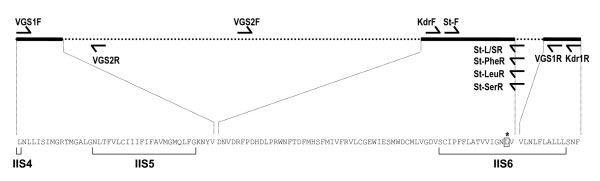
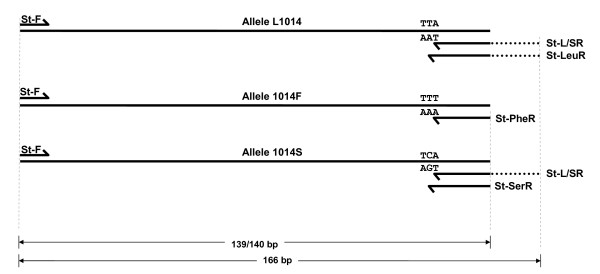
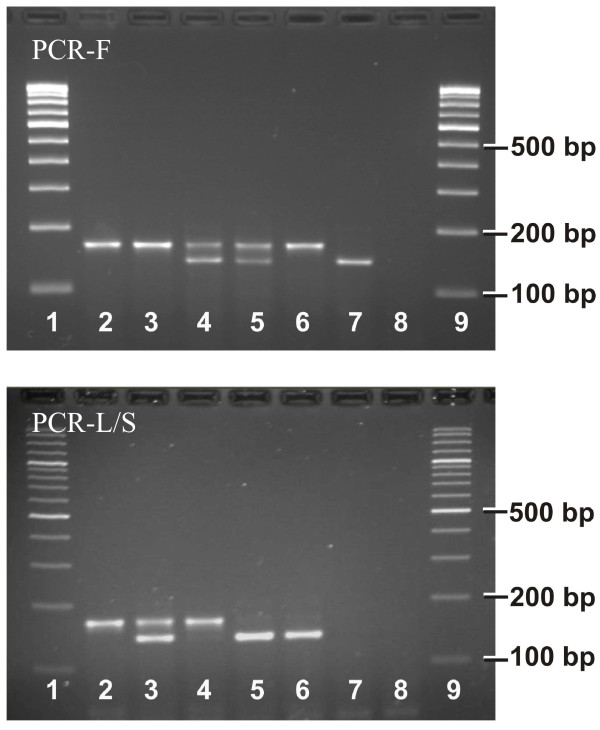
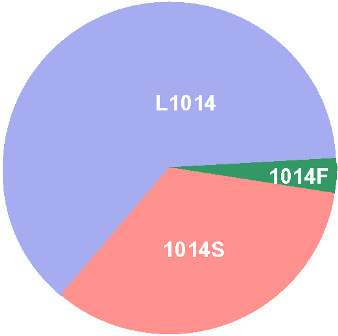
BACKGROUND: Knockdown resistance (kdr) in insects, resulting from mutation(s) in the voltage-gated sodium channel (vgsc) gene is one of the mechanisms of resistance against DDT and pyrethroid-group of insecticides. The most common mutation(s) associated with knockdown resistance in insects, including anophelines, has been reported to be present at residue Leu1014 in the IIS6 transmembrane segment of the vgsc gene. This study reports the presence of two alternative kdr-like mutations, L1014S and L1014F, at this residue in a major malaria vector Anopheles stephensi and describes new PCR assays for their detection. METHODS: Part of the vgsc (IIS4-S5 linker-to-IIS6 transmembrane segment) of An. stephensi collected from Alwar (Rajasthan, India) was PCR-amplified from genomic DNA, sequenced and analysed for the presence of deduced amino acid substitution(s). RESULTS: Analysis of DNA sequences revealed the presence of two alternative non-synonymous point mutations at L1014 residue in the IIS6 transmembrane segment of vgsc, i.e., T>C mutation on the second position and A>T mutation on the third position of the codon, leading to Leu (TTA)-to-Ser (TCA) and -Phe (TTT) amino acid substitutions, respectively. Polymerase chain reaction (PCR) assays were developed for identification of each of these two point mutations. Genotyping of An. stephensi mosquitoes from Alwar by PCR assays revealed the presence of both mutations, with a high frequency of L1014S. The PCR assays developed for detection of the kdr mutations were specific as confirmed by DNA sequencing of PCR-genotyped samples. CONCLUSIONS: Two alternative kdr-like mutations, L1014S and L1014F, were detected in An. stephensi with a high allelic frequency of L1014S. The occurrence of L1014S is being reported for the first time in An. stephensi. Two specific PCR assays were developed for detection of two kdr-like mutations in An. stephensi.
Overview
The claims and statistics of this paper haven’t been checked yet.
Free: it reads the open-access text and checks the first 5 claims that cite a source we can check. Create a free account to check every claim.
Integrity signals
Registry
Cites
Statistics
Figures
Verification
Claims the paper makes
The claims and statistics of this paper haven’t been checked yet.
Free: it reads the open-access text and checks the first 5 claims that cite a source we can check. Create a free account to check every claim.
Claims other papers make about this one
Each is checked against this paper’s own text: does it say what the citing paper says it does?
The source backs part of the claim, not all of it — or backs it for a different population, condition or comparison.
In the citing paper
“Resistance to DDT, dieldrin, malathion, and recently pyrethroid insecticides, was reported from different states of India [31–41].”
From Evolution of insecticide resistance and its mechanisms in Anopheles stephensi in the WHO Eastern Mediterranean Region (2020) · cites this paper as [39]
Experimental — accuracy not yet measuredThe source backs part of the claim, not all of it — or backs it for a different population, condition or comparison.
In the citing paper
“In India, An. stephensi is resistant to DDT in Delhi, Gujarat, Rajasthan, Kerala and Madhya Pradesh whereas it is susceptible to DDT in Karnataka.”
From Evolution of insecticide resistance and its mechanisms in Anopheles stephensi in the WHO Eastern Mediterranean Region (2020) · cites this paper as [39]
Experimental — accuracy not yet measuredThe source backs part of the claim, not all of it — or backs it for a different population, condition or comparison.
In the citing paper
“In India, the involvement of different enzyme groups including esterases, GSTs and cytochrome p450s as well as site insensitivity mechanism of kdr west and east alleles was revealed [31, 33–36, 38, 39, 47, 48].”
From Evolution of insecticide resistance and its mechanisms in Anopheles stephensi in the WHO Eastern Mediterranean Region (2020) · cites this paper as [39]
Experimental — accuracy not yet measuredThe source backs part of the claim, not all of it — or backs it for a different population, condition or comparison.
In the citing paper
“There are two types of kdr alleles in Anopheles mosquitoes, i.e., kdr west [33, 39, 103] and kdr east [26, 104].”
From Evolution of insecticide resistance and its mechanisms in Anopheles stephensi in the WHO Eastern Mediterranean Region (2020) · cites this paper as [39]
Experimental — accuracy not yet measuredThe source backs part of the claim, not all of it — or backs it for a different population, condition or comparison.
In the citing paper
“Several mechanisms including metabolic and insecticide target site insensitivity are involved in insecticide resistance in An. stephensi from different countries, each of which has its own operational significance in vector control [26–28, 31, 33–36, 38, 39, 42, 47, 48].”
From Evolution of insecticide resistance and its mechanisms in Anopheles stephensi in the WHO Eastern Mediterranean Region (2020) · cites this paper as [39]
Experimental — accuracy not yet measured
3 more claims about this paper
Create a free account to see every claim other papers make about this one.
Self-check
Percentages, sums and reported differences re-computed from the paper’s own numbers.
The self-check needs the paper’s full text.
Citations
Cites
Arlequin (version 3.0): An integrated software package for population genetics data analysis
Excoffier, L., Laval, G., & Schneider, S. (2005) · Evolutionary Bioinformatics · doi:10.1177/117693430500100003 · Cited by 14,280
Analysis of any point mutation in DNA. The amplification refractory mutation system (ARMS)
Newton, C. R., Graham, A., Heptinstall, L. E., Powell, S. J., Summers, C., Kalsheker, N., Smith, J. C., & Markham, A. F. (1989) · Nucleic Acids Research · doi:10.1093/nar/17.7.2503 · Cited by 2,475 · cited 1×
“Alternative PCR-based methods such as ARMS, a variant of ASPCR where an additional mismatch is incorporated near the 3’ end of allele-specific primers to increase their specificity [26], and PIRA-PCR (primerintroduced restriction analysis-PCR) are highly specific but have been rarely used for kdr analysis [9,19,27].”
MethodMartinez‐Torres, D., Chandre, F., Williamson, M. S., Darriet, F., Bergé, J. B., Devonshire, A. L., Guillet, P., Pasteur, N., & Pauron, D. (1998) · Insect Molecular Biology · doi:10.1046/j.1365-2583.1998.72062.x · Cited by 1,040 · cited 1×
“In anophelines, the most common mutation conferring knockdown resistance is L1014F, first reported in Anopheles gambiae [12] and subsequently in Anopheles sacharovi [13], An.”
BackgroundRanson, H., Jensen, B., Vulule, J. M., Wang, X., Hemingway, J., & Collins, F. H. (2000) · Insect Molecular Biology · doi:10.1046/j.1365-2583.2000.00209.x · Cited by 645 · cited 1×
“gambiae [17], An.”
Livak, K. J. (1984) · Genetics · doi:10.1093/genetics/107.4.611 · Cited by 428 · cited 2×
“DNA was isolated from individual mosquitoes using the method by Livak [8].”
MethodSaavedra‐Rodriguez, K., Urdaneta‐Marquez, L., Rajatileka, S., Moulton, M., Flores, A. E., Fernandez‐Salas, I., Bisset, J., Rodriguez, M., Mccall, P. J., Donnelly, M. J., et al. (2007) · Insect Molecular Biology · doi:10.1111/j.1365-2583.2007.00774.x · Cited by 350 · cited 2×
“A tail of 26 bp was incorporated in primer St-L/SR and St-LeuR (shown underlined in corresponding primer sequences) following Saavedra-Rodriguez et al [11].”
MethodModifications of pyrethroid effects associated with kdr mutation in Anopheles gambiae
Chandre, F., Darriet, F., Duchon, S., Finot, L., Manguin, S., Carnevale, P., & Guillet, P. (2000) · Medical and Veterinary Entomology · doi:10.1046/j.1365-2915.2000.00212.x · Cited by 209 · cited 1×
“gambiae [20-23].”
Ayyadevara, S., Thaden, J. J., & Shmookler Reis, R. J. (2000) · Analytical Biochemistry · doi:10.1006/abio.2000.4635 · Cited by 179 · cited 2×
“Allelespecific PCR is the most common method employed but may not prevent mispriming because allele-specific primers are based on single base primer-template mismatch [25].”
MethodBass, C., Nikou, D., Blagborough, A. M., Vontas, J., Sinden, R. E., Williamson, M. S., & Field, L. M. (2008) · Malaria Journal · doi:10.1186/1475-2875-7-177 · Cited by 177
Rao, T. R. (1984) · Cited by 177
Research works printed but not linked: 4
- Dash AP Adak T Raghavendra K Singh OP The biology and control of malaria vectors in India Curr Sci 2007 92 1571 1578
- Anonymous Strategic Action Plan for Malaria in India 2007--2012 Directorate of National Vector Borne Disease Control Programme (NVBDCP), 22, Sham Nath Marg, Delhi-110054; India
- Anonymous The Use of Insecticide-Impregnated Bednets and Other Materials for Vector Borne Disease Control. WHO/VBC/89.981 rev.1 1989 World Health Organization, Geneva
- Anonymous Long-lasting Insecticidal Nets for Malaria Prevention (Trial Edition), a Manual for Malaria Programme Managers 2007 World Health Organization, Geneva
Cited by
Silva, A. P. B., Santos, J. M. M., & Martins, A. J. (2014) · Parasites & Vectors · doi:10.1186/1756-3305-7-450 · Cited by 160
“India L1014F/L1014S [145,146]”
da Silva‐Nunes, M., Moreno, M., Conn, J. E., Gamboa, D., Abeles, S. R., Vinetz, J. M., & Ferreira, M. U. (2011) · Acta Tropica · doi:10.1016/j.actatropica.2011.10.001 · Cited by 183
Corbel, V., & N’Guessan, R. (2013) · Anopheles mosquitoes - New insights into malaria vectors · doi:10.5772/56117 · Cited by 136
“Similarly, strong level of pyrethroid resistance due to the presence of both 1014F and 1014S mutations was found in the urban malaria vector An. stephensi particularly in the Rajasthan District [200].”
Insecticide resistance in Anopheles stephensi in Somali Region, eastern Ethiopia
Yared, S., Gebressielasie, A., Damodaran, L., Bonnell, V., Lopez, K., Janies, D., & Carter, T. E. (2020) · Malaria Journal · doi:10.1186/s12936-020-03252-2 · Cited by 111
Zhong, D., Chang, X., Zhou, G., He, Z., Fu, F., Yan, Z., Zhu, G., Xu, T., Bonizzoni, M., Wang, M.-H., et al. (2013) · PLoS ONE · doi:10.1371/journal.pone.0055475 · Cited by 81
“The most common mutation conferring knockdown resistance (kdr) is a mutation at position 1014 causing a change from Leucine to either Phenylalanine (L1014F) or Serine (L1014S) [17,25–31].”
BackgroundPatel, K. R., Sarma, V., & Vavia, P. R. (2013) · DARU Journal of Pharmaceutical Sciences · doi:10.1186/2008-2231-21-27 · Cited by 67
Enayati, A., Hanafi-Bojd, A. A., Sedaghat, M. M., Zaim, M., & Hemingway, J. (2020) · Malaria Journal · doi:10.1186/s12936-020-03335-0 · Cited by 62
A bibliometric analysis of literature on malaria vector resistance: (1996 – 2015)
Sweileh, W. M., Sawalha, A. F., Al‐Jabi, S. W., Zyoud, S. H., Shraim, N. Y., & AbuTaha, A. S. (2016) · Globalization and Health · doi:10.1186/s12992-016-0214-4 · Cited by 51
“The most common form of kdr is a mutation in voltage gated sodium channels in the central nervous system of the mosquito [102, [105] [106] [107] [108] .”
BackgroundSumarnrote, A., Overgaard, H. J., Marasri, N., Fustec, B., Thanispong, K., Chareonviriyaphap, T., & Corbel, V. (2017) · Malaria Journal · doi:10.1186/s12936-017-1948-z · Cited by 52
“A leucine-to-phenylalanine mutation at residue 1014 is the most common mutation in insects including anophelines [17].”
BackgroundSafi, N. H. Z., Ahmadi, A. A., Nahzat, S., Ziapour, S. P., Nikookar, S. H., Fazeli-Dinan, M., Enayati, A., & Hemingway, J. (2017) · Malaria Journal · doi:10.1186/s12936-017-1744-9 · Cited by 45
“Resistance to several insecticides including DDT, dieldrin, malathion and more recently pyrethroids have been reported in An. stephensi from the Middle East region [10–13] and in Afghanistan neighbouring countries including India [7].”
BackgroundResultInfluentialTan, W. L., Li, C. X., Wang, Z. M., Liu, M. D., Dong, Y. D., Feng, X. Y., Wu, Z. M., Guo, X. X., Xing, D., Zhang, Y. M., et al. (2012) · Journal of Medical Entomology · doi:10.1603/me11266 · Cited by 44
“…culicifacies(Giles, 1901) (Singh et al. 2010), An. vagus, (Donitz, 1902) An. paraliae, (Rodenwaldt, 1926) An. peditaeniatus (Leicester, 1908) (Verhaeghen et al. 2010), An. stephensi (Liston, 1901) (Singh et al. 2011), and in An. sinensis from Vietnam, Cambodia, and Laos (Verhaeghen et al. 2010).”
BackgroundXu, T., Zhong, D., Tang, L.-H., Chang, X., Fu, F., Yan, G., & Zheng, B. (2014) · Parasites & Vectors · doi:10.1186/1756-3305-7-54 · Cited by 35
“The most common mutation conferring kdr is a mutation at position 1014 causing a change from leucine to either phenylalanine (L1014F) or serine (L1014S) [12-19].”
Safi, N. H. Z., Ahmadi, A. A., Nahzat, S., Warusavithana, S., Safi, N., Valadan, R., Shemshadian, A., Sharifi, M., Enayati, A., & Hemingway, J. (2019) · Malaria Journal · doi:10.1186/s12936-019-2884-x · Cited by 29
Lol, J. C., Castellanos, M. E., Liebman, K. A., Lenhart, A. E., Pennington, P. M., & Padilla, N. (2013) · Parasites & Vectors · doi:10.1186/1756-3305-6-268 · Cited by 36
“The mutations previously reported for anophelines occur on codon 1014, resulting in an amino acid change of leucine to phenylalanine, serine or cysteine [28-34].”
BackgroundAtoyebi, S. M., Tchigossou, G., Akoton, R., Riveron, J. M., Irving, H., Weedall, G. D., Tossou, E., Djègbé, I., Oyewole, I. O., Bakare, A. A., et al. (2020) · Parasites & Vectors · doi:10.1186/s13071-020-04296-8 · Cited by 30
Status of insecticide resistance in high-risk malaria provinces in Afghanistan
Ahmad, M., Buhler, C., Pignatelli, P., Ranson, H., Nahzat, S. M., Naseem, M., Sabawoon, M. F., Siddiqi, A. M., & Vink, M. (2016) · Malaria Journal · doi:10.1186/s12936-016-1149-1 · Cited by 27
“This study focused on target site resistance by assessing the presence of knock down resistance (kdr) mutations in the voltage-gated channel gene using an allele specific PCR approach previously developed for An. stephensi in India [17].”
BackgroundMethodInfluentialKnockdown resistance (kdr) mutations in Indian Anopheles culicifacies populations
Dykes, C. L., Kushwah, R. B. S., Das, M. K., Sharma, S. N., Bhatt, R. M., Veer, V., Agrawal, O. P., Adak, T., & Singh, O. P. (2015) · Parasites & Vectors · doi:10.1186/s13071-015-0946-7 · Cited by 34
“The L1014F/S in IIS6 which is referred to as kdr mutation, confers knockdown resistance phenotype in anophelines [14, 15] and has been reported in Anopheles gambiae, [16, 17], Anopheles arabiensis [18], Anopheles stephensi [19, 20], Anopheles sinensis and many other anophelines [21, 22].”
BackgroundSelf-citationDemissew, A., Animut, A., Kibret, S., Tsegaye, A., Hawaria, D., Degefa, T., Getachew, H., Lee, M., Yan, G., & Yewhalaw, D. (2022) · PLoS ONE · doi:10.1371/journal.pone.0261713 · Cited by 29
“A single amino acid substitution of Leucine with Phenylalanine (L1014F/Kdr-West) and Leucine with Serine (L1014S/Kdr-East) at position 1014 of VGSC gene are the most common kdr mutations [8, 9].”
BackgroundAmin Gorouhi, M., Ali Oshaghi, M., Vatandoost, H., Ali Enayati, A., Raeisi, A., Reza Abai, M., Salim-Abadie, Y., Ali Hanafi-Bojd, A., Paksa, A., & Nikpoor, F. (2018) · Journal of Arthropod-Borne Diseases · doi:10.18502/jad.v12i3.82 · Cited by 22
“Indian subcontinent as well as the Middle East countries (14, 15, 18, 20-25).”
BackgroundCarter, T. E., Gebresilassie, A., Hansel, S., Damodaran, L., Montgomery, C., Bonnell, V. A., López, K., Janies, D. A., & Yared, S. (2022) · American Journal of Tropical Medicine and Hygiene · doi:10.4269/ajtmh.20-1357 · Cited by 26
“, Dedham, MA) according to species or species complex to identify kdr L1014F or L1014S mutations based on reference sequence details from previous reports.(18,24,25) Heterozygous genotypes at kdr were determined based on the number of peaks observed in the chromatogram, with each peak indicating different alleles.”
MethodAcford-Palmer, H., Phelan, J. E., Tadesse, F. G., Kristan, M., Collins, E. L., Spadar, A., Walker, T., Bousema, T., Messenger, L. A., Clark, T. G., et al. (2023) · Scientific Reports · doi:10.1038/s41598-023-32336-7 · Cited by 21
Abbasi, E., & Daliri, S. (2024) · Research Square · doi:10.21203/rs.3.rs-4358998/v1 · Cited by 31
Singh, O. P., Dykes, C., Sharma, G., & Das, M. K. (2015) · Journal of Medical Entomology · doi:10.1093/jme/tju013 · Cited by 19
Self-citationKnockdown Resistance (kdr) Mutations in Indian Anopheles stephensi(Diptera: Culicidae) Populations
Dykes, C. L., Das, M. K., Eapen, A., Batra, C. P., Ghosh, S. K., Vijayan, V. A., Mishra, S., & Singh, O. P. (2016) · Journal of Medical Entomology · doi:10.1093/jme/tjv242 · Cited by 18
Self-citationKnockdown resistance of Anopheles sinensis in Henan province, China
Zhang, H., Liu, Y., Hu, T., Zhou, R., Chen, J., Qian, D., Yang, C., Zhao, Y., Li, S., Cui, J. H., et al. (2015) · Malaria Journal · doi:10.1186/s12936-015-0662-y · Cited by 16
“Several mutations at codon 1014 of the kdr allele, such as L1014F (Leu-to-Phe), L1014S (Leuto-Ser), and L1014C (Leuto- Cys) have been reported in many Anopheles species [52-55].”
BackgroundSamake, J. N., Yared, S., Hassen, M. A., Zohdy, S., & Carter, T. E. (2024) · Scientific Reports · doi:10.1038/s41598-024-78072-4 · Cited by 22
Samake, J. N., Yared, S., Getachew, D., Mumba, P. P., Dengela, D., Yohannes, G., Chibsa, S., Choi, S. H., Spear, J., Irish, S. R., et al. (2022) · Infection Genetics and Evolution · doi:10.1016/j.meegid.2022.105235 · Cited by 19
“Similarly, kdr mutations L1014F and L1014S have been observed in An. stephensi in Dubai, Afghanistan, and India (Ahmad et al., 2016; Dykes et al., 2016; Enayati et al., 2003; Gayathri and Murthy, 2006; Singh et al., 2011).”
Dykes, C. L., Sharma, G., Behera, A. K., Kapoor, N., Paine, M. J. I., Donnelly, M. J., & Singh, O. P. (2022) · Scientific Reports · doi:10.1038/s41598-022-21522-8 · Cited by 16
Self-citationHalldin, C. N., Nadesakumaran, K., Keven, J. B., Zimmerman, A. M., Siba, P., Mueller, I., Hetzel, M. W., Kazura, J. W., Thomsen, E. K., Reimer, L. J., et al. (2012) · American Journal of Tropical Medicine and Hygiene · doi:10.4269/ajtmh.2012.11-0503 · Cited by 20
Pittendrigh, B. R., Margam, V. M., Walters, K. R., Steele, L. D., Olds, B. P., Sun, L., Huesing, J. E., Lee, S. H., & Clark, J. M. (2013) · Elsevier eBooks · doi:10.1016/b978-0-12-396955-2.00003-5 · Cited by 26
Sumarnrote, A., Overgaard, H. J., Corbel, V., Thanispong, K., Chareonviriyaphap, T., & Manguin, S. (2020) · Parasites & Vectors · doi:10.1186/s13071-020-04389-4 · Cited by 16
Liu, H., CHENG, P., Huang, X., Dai, Y.-H., Wang, H., Liu, L., ZHAO, Y.-Q., Wang, H., & Gong, M. (2012) · Molecular Medicine Reports · doi:10.3892/mmr.2012.1184 · Cited by 13
Mapping of Malaria Vectors at District Level in India: Changing Scenario and Identified Gaps
Singh, P., Lingala, M. A. L., Sarkar, S., & Dhiman, R. C. (2017) · Vector-Borne and Zoonotic Diseases · doi:10.1089/vbz.2016.2018 · Cited by 12
“2002), bionomics, and molecular studies (Singh et al. 2011).”
Malani, M. H., & Dholakiya, B. Z. (2013) · Bioorganic Chemistry · doi:10.1016/j.bioorg.2013.09.001 · Cited by 10
Prasad, T. P. N. H., & Shetty, N. J. (2013) · Bulletin of Entomological Research · doi:10.1017/s0007485313000102 · Cited by 10
“kdr in insects, resulting from mutation(s) in the voltage-gated sodium channel (vgsc) gene is one of the mechanisms of resistance against pyrethroid-group of insecticides and the most commonmutation(s) associated with kdr in insects, including Anophelines, has been reported to be present at residue Leu1014 in the IIS6…”
BackgroundZhong, D., Degefa, T., Zhou, G., Lee, M., Wang, X., Chen, J., Yewhalaw, D., & Yan, G. (2024) · Genes · doi:10.3390/genes15121603 · Cited by 13
Yavaşoğlu, S. İ., Ülger, C., & Şimşek, F. M. (2020) · Pesticide Biochemistry and Physiology · doi:10.1016/j.pestbp.2020.104746 · Cited by 7
Bionomics of Anopheles stephensi across the urban–rural landscapes of Eastern Ethiopia
Degefa, T., Zhong, D., Lee, M., Merga, H., Abiy, E., Wang, X., Zhou, G., Kifle, T., Yewhalaw, D., & Yan, G. (2025) · Malaria Journal · doi:10.1186/s12936-025-05527-y · Cited by 14
“For kdr mutation detection, part of voltage gated sodium channel ( vgsc ) that hold the L1014 alleles was PCR-amplified, sequenced and analysed to check for the presence of amino acid substitution, which reveals West African kdr mutations associated with resistance to pyrethroids [58].”
Anopheles stephensi: The emerging vector of malaria in the Republic of Djibouti, Horn of Africa
Govoétchan, R., Ibrahim, M. M., Sovi, A., Omar, H., Boulhan, A., & Darar, H. Y. (2023) · International Journal of Biosciences (IJB) · doi:10.12692/ijb/22.1.8-17 · Cited by 9
Optimizing Strategic Insecticide Resistance Management Planning in Malaria Vectors
Chanda, E. (2016) · InTech eBooks · doi:10.5772/61301 · Cited by 4
The origin, invasion history and resistance architecture of Anopheles stephensi in AfricaPreprint
Dennis, T. P. W., Sulieman, J. E., Abdin, M. S., Ashine, T., Ebstie, Y. A., Eyasu, A., Simma, E. A., Zemene, E., Negash, N., Kochora, A., et al. (2025) · bioRxiv (Cold Spring Harbor Laboratory) · doi:10.1101/2025.03.24.644828 · Cited by 4
“However, there is limited understanding of resistance mechanisms in the native range( 37 , 41 – 43 ), and especially the invasive range( 13 , 39 , 44 ).”
Baharia, R. K., Kaur, J., Sindhania, A., Sharma, G., Srivastava, H. C., Pant, C. S., Rahi, M., Raghavendra, K., & Singh, O. P. (2023) · Journal of arthropod-borne diseases · doi:10.18502/jad.v16i2.11802 · Cited by 3
Self-citationCarter, T. E., Gebresilassie, A., Hansel, S., Damodaran, L., Montgomery, C., Bonnell, V. A., López, K., Janies, D. A., & Yared, S. (2020) · bioRxiv (Cold Spring Harbor Laboratory) · doi:10.1101/2020.05.13.093898 · Cited by 3
Braga, T. A., Loureiro, A. C., Lima, J. B. P., & Martins, A. J. (2021) · Research Square · doi:10.21203/rs.3.rs-139005/v1 · Cited by 4
Ilboudo, H., Traoré, F., Bayili, K., Hien, D. F. D. S., Sanon, E. D. G., Hansson, H. S., Kaboré, B., Tahita, M. C., Derra, K., Rouamba, T., et al. (2025) · Malaria Journal · doi:10.1186/s12936-025-05562-9 · Cited by 5
“…target-site resistance is well documented, with mutations such as knockdown resistance ( kdr) in voltage-gated sodium channels conferring resistance to pyrethroids and DDT [12, 13] and the ace-1 R mutation in acetylcholinesterase, which confers resistance to organophosphates and carbamates [14–17].”
Sowmyashree, K., CHALANNAVAR, R. K., & Nityasree, B. R. (2023) · Plant Science Today · doi:10.14719/pst.2185 · Cited by 2
Sanei-Dehkordi, A., Paksa, A., Gorouhi, M. A., Soleimani-Ahmadi, M., Jaberhashemi, S. A., & Abadi, Y. S. (2024) · Malaria Journal · doi:10.1186/s12936-024-05042-6 · Cited by 4
“A comparison of the sequence in susceptible and resistant mosquitoes was conducted on all samples to detect the presence or absence of kdr type resistance in vgsc , referencing sequence details from a previous study by Singh et al. [23] on An. stephensi .”
BackgroundMethodResultInfluentialWomen's occupational health working in small-scale agriculture in South Africa
Naidoo, S. (2011) · Utrecht University Repository (Utrecht University) · Cited by 4
Badzohre, A., Oshaghi, M. A., Enayati, A., Moosa‐Kazemi, S. H., Nikookar, S. H., Talebzadeh, F., Naseri-Karimi, N., Hanafi‐Bojd, A. A., & Vatandoost, H. (2024) · Journal of arthropod-borne diseases · doi:10.18502/jad.v17i3.14987 · Cited by 2
“The role of esterases in resistance to insecticides in An. stephensi from other countries has been reported for example in resistance to pyre-throids and malathion from Dubai and India respectively (30, 41).”
BackgroundFernández, J., Ferreira, L., Franco, L., Martínez, N., González, N., de Bilbao, N. V., & del Puerto, F. (2020) · Memorias del Instituto de Investigaciones en Ciencias de la Salud · doi:10.18004/mem.iics/1812-9528/2020.018.02.27
“Otras mutaciones en diferentes regiones del gen también confieren resistencia del tipo knockdown en algunos insectos((6,8)), pero entre los anophelinos este es el único locus donde las mutaciones han sido reportadas hasta ahora y que confieren resistencia((9-15)).”
BackgroundMcComic, S. E. (2020) · Louisiana State University · doi:10.31390/gradschool_theses.5227
“In addition to metabolic detoxification, target site insensitivity of pyrethroids, known as knockdown resistance (kdr), results from point mutations in the nucleotide sequence of the VGSC (Carvalho et al. 2013; McComic et al. 2020; Singh et al. 2011).”
BackgroundGeleta, M., Simma, E. A., & Yewhalaw, D. (2025) · Research Square · doi:10.21203/rs.3.rs-7704930/v1
Singh, H., Singh, S., Saroha, P., Singh, K., Sharma, R., Sharma, R., Gupta, J., & Gupta, S. (2025) · Malaria Journal · doi:10.1186/s12936-025-05569-2 · Cited by 2
Munywoki, D. N., MWANGANGI, J. M., Moise, I. K., Kokwaro, E. D., Odero, J. O., & Muturi, E. J. (2025) · Medical and Veterinary Entomology · doi:10.1111/mve.70042 · Cited by 2
Sumarnrote, A., Overgaard, H. J., Corbel, V., Thanispong, K., Chareonviriyaphap, T., & Manguin, S. (2020) · Figshare · doi:10.6084/m9.figshare.13107631
Manzi, S., Perugini, E., Pazienza, M., Zaccaria, O., Abbate, V., Nelli, L., Maio, F. R. D., Molinari, F., Santis, R. D., Ciammaruconi, A., et al. (2026) · Research Square · doi:10.21203/rs.3.rs-9690015/v1
Kataria, D., Janjoter, S., Dahiya, N., Yadav, M., Yadav, R., Verma, V., & Sehrawat, N. (2026) · Molecular Biology Reports · doi:10.1007/s11033-026-12410-9 · Cited by 1
Metadata
- Authors
- Singh, O. P., Dykes, C. L., Lather, M., Agrawal, O. P., & Adak, T.
- Affiliations
- National Institute of Malaria Research (IN)
- Jiwaji University (IN)
- Corresponding author
- Singh, Om P
- ORCID
- Singh, Om P
- Venue
- Malaria Journal
- Published
- 2011-03-14
- Volume
- 10
- Issue
- 1
- Pages
- 59-59
- ISSN
- 1475-2875 (ISSN-L)
- PMC
- PMC3068127
- OpenAlex
- W2103576487
- Cited by
- 57
- References
- 28
- Citations by year
- 2026: 2 · 2025: 6 · 2024: 5 · 2023: 4 · 2022: 4 · 2021: 1 · 2020: 9 · 2019: 1 · 2018: 1 · 2017: 3 · 2016: 4 · 2015: 3 · 2014: 2 · 2013: 7 · 2012: 3
- FWCI
- 4.40
- Type
- journal article
- Language
- en
- Open access
- gold
- doi.org
- Licence
- cc-by
- creativecommons.org/licenses/by/2.0 (tdm)
- Locations
- Malaria Journal (publishedVersion, cc-by)
- Europe PMC (PubMed Central) (publishedVersion, cc-by)
- PubMed Central (publishedVersion, cc-by)
- PubMed (publishedVersion)
- DOAJ (DOAJ: Directory of Open Access Journals) (submittedVersion)
- Topics
- Health Sciences › Medicine › Public Health, Environmental and Occupational Health › Malaria Research and Control
- Life Sciences › Biochemistry, Genetics and Molecular Biology › Molecular Biology › Insect Resistance and Genetics
- Health Sciences › Medicine › Public Health, Environmental and Occupational Health › Dengue and Mosquito Control Research
- Keywords
- knockdown resistance, kdr mutation, voltage-gated sodium channels, Anopheles stephensi, malaria vectors, insecticide resistance, DDT resistance, pyrethroid resistance, L1014F mutation, point mutations
- MeSH terms
- Animals, Anopheles, Drug Resistance, Female, Gene Frequency, India, Molecular Sequence Data, Sodium Channels, Sequence Analysis, DNA, Amino Acid Substitution, Mutation, Missense
About these checks
Registry, retraction, Cites and statistics results are computed, not judged, with one exception: a printed reference that no index lists is read once by a model before it counts as a citation error. Claims are extracted by a model and kept only when their quote appears verbatim in the text; each cited source is then checked, with a model’s help, for whether it says what the claim relies on. Those verdicts can be wrong — read the claim’s quote and the cited source before relying on one.
Statistics and arithmetic are recomputed, not judged.
Confidence bands are shown only for fields calibrated on our annotated test set. None is calibrated yet, so no band is shown.
What counts as a claim ›How we measure confidence ›How we check this ›
Are you an author, or do you see a problem with this page? Request a review
Data sources
Bibliographic data: Semantic Scholar, OpenAlex, Crossref.
Contains information from the Semantic Scholar Academic Graph Datasets, made available under the ODC Attribution License (ODC-BY 1.0).
Semantic Scholar’s data is described in: Kinney, R., et al. (2023). The Semantic Scholar Open Data Platform. arXiv:2301.10140.
