

A systematic review of the safety and efficacy of artemether-lumefantrine against uncomplicated Plasmodium falciparum malaria during pregnancy
Open accessThe DOI matches its Crossref record; 51 of the 51 references it cites were found in a registry or an index.
Abstract
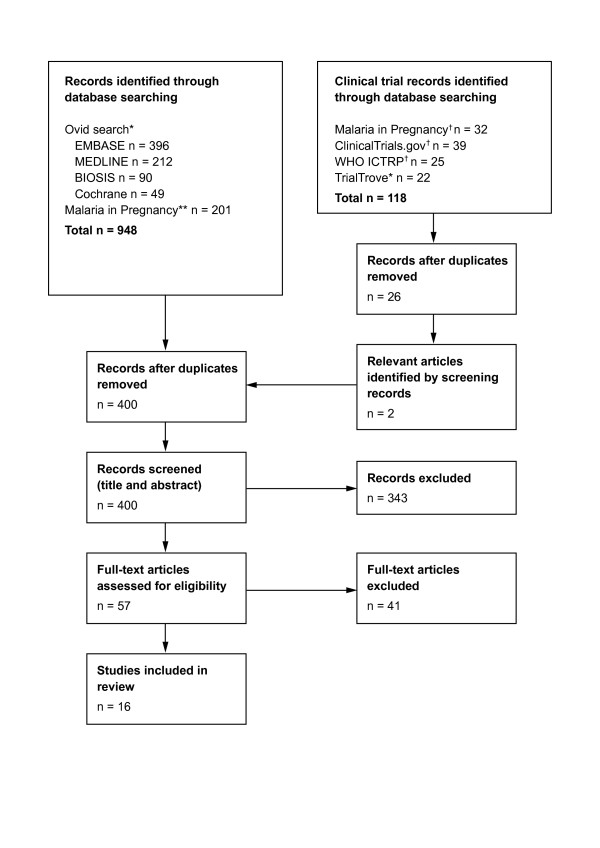
Malaria during pregnancy, particularly Plasmodium falciparum malaria, has been linked to increased morbidity and mortality, which must be reduced by both preventive measures and effective case management. The World Health Organization (WHO) recommends artemisinin-based combination therapy (ACT) to treat uncomplicated falciparum malaria during the second and third trimesters of pregnancy, and quinine plus clindamycin during the first trimester. However, the national policies of many African countries currently recommend quinine throughout pregnancy. Therefore, the aim of this article is to provide a summary of the available data on the safety and efficacy of artemether-lumefantrine (AL) in pregnancy. An English-language search identified 16 publications from 1989 to October 2011 with reports of artemether or AL exposure in pregnancy, including randomized clinical trials, observational studies and systematic reviews. Overall, there were 1,103 reports of AL use in pregnant women: 890 second/third trimester exposures; 212 first trimester exposures; and one case where the trimester of exposure was not reported. In the second and third trimesters, AL was not associated with increased adverse pregnancy outcomes as compared with quinine or sulphadoxine-pyrimethamine, showed improved tolerability relative to quinine, and its efficacy was non-inferior to quinine. There is evidence to suggest that the pharmacokinetics of anti-malarial drugs may change in pregnancy, although the impact on efficacy and safety needs to be studied further, especially since the majority of studies report high cure rates and adequate tolerability. As there are fewer reports of AL safety in the first trimester, additional data are required to assess the potential to use AL in the first trimester. Though the available safety and efficacy data support the use of AL in the second and third trimesters, there is still a need for further information. These findings reinforce the WHO recommendation to treat uncomplicated falciparum malaria with quinine plus clindamycin in early pregnancy and ACT in later pregnancy.
Overview
The claims and statistics of this paper haven’t been checked yet.
Free: it reads the open-access text and checks the first 5 claims that cite a source we can check. Create a free account to check every claim.
Integrity signals
Registry
Cites
Statistics
Figures
Verification
Claims the paper makes
The claims and statistics of this paper haven’t been checked yet.
Free: it reads the open-access text and checks the first 5 claims that cite a source we can check. Create a free account to check every claim.
Claims other papers make about this one
Each is checked against this paper’s own text: does it say what the citing paper says it does?
The source backs part of the claim, not all of it — or backs it for a different population, condition or comparison.
In the citing paper
“Artemether-lumefantrine (AL, Coartem) is effective and safe in the treatment of malaria during pregnancy [196].”
From Current update on malaria in pregnancy: a systematic review (2025) · cites this paper as [196]
Experimental — accuracy not yet measured
Self-check
Percentages, sums and reported differences re-computed from the paper’s own numbers.
The self-check needs the paper’s full text.
Citations
Cites
Weltgesundheitsorganisation (2005) · Cited by 3,799
Epidemiology and burden of malaria in pregnancy
Desai, M., ter Kuile, F. O., Nosten, F., McGready, R., Asamoa, K., Brabin, B., & Newman, R. D. (2007) · The Lancet Infectious Diseases · doi:10.1016/s1473-3099(07)70021-x · Cited by 1,432 · cited 1×
“Malaria during pregnancy is associated with an increased risk of maternal anaemia, maternal death, abortion, premature labour, low birth weight, and neonatal death [1,7,38].”
BackgroundQuantifying the Number of Pregnancies at Risk of Malaria in 2007: A Demographic Study
Dellicour, S., Tatem, A. J., Guerra, C. A., Snow, R. W., & ter Kuile, F. O. (2010) · PLoS Medicine · doi:10.1371/journal.pmed.1000221 · Cited by 490 · cited 1×
“4 million pregnancies occurred in areas of unstable transmission [4].”
BackgroundTER KUILE, F. O., PARISE, M. E., VERHOEFF, F. H., UDHAYAKUMAR, V., NEWMAN, R. D., VAN EIJK, A. M., ROGERSON, S. J., & STEKETEE, R. W. (2004) · The American Journal of Tropical Medicine and Hygiene · doi:10.4269/ajtmh.2004.71.41 · Cited by 364
Pharmacokinetics and Pharmacodynamics of Lumefantrine (Benflumetol) in Acute Falciparum Malaria
Ezzet, F., van Vugt, M., Nosten, F., Looareesuwan, S., & White, N. J. (2000) · Antimicrobial Agents and Chemotherapy · doi:10.1128/aac.44.3.697-704.2000 · Cited by 354 · cited 3×
“Small changes in AL exposure during pregnancy have been reported [21,25], but these results should be viewed with caution as they involve inter-trial comparisons, small populations, high inter-individual variation in plasma levels and the average plasma levels reported are comparable with data from non-pregnant adults…”
BackgroundResultWHO Guidelines for the treatment of malaria
Kunte, R., & Kunwar, R. (2011) · Medical Journal Armed Forces India · doi:10.1016/s0377-1237(16)30022-3 · Cited by 341
Artemisinin-based combination therapy for treating uncomplicated malaria
Sinclair, D., Zani, B., Donegan, S., Olliaro, P., & Garner, P. (2009) · Cochrane Database of Systematic Reviews · doi:10.1002/14651858.cd007483.pub2 · Cited by 286
McGready, R., Lee, S., Wiladphaingern, J., Ashley, E., Rijken, M., Boel, M., Simpson, J., Paw, M., Pimanpanarak, M., Mu, O., et al. (2012) · The Lancet Infectious Diseases · doi:10.1016/s1473-3099(11)70339-5 · Cited by 228 · cited 2×
“…[21], Dellicour et al., 2007 [14], McGready et al., 2008 [22], Kaye et al., 2008 [23], Orton et al., 2008 [61], Adam et al., 2009 [24], Tarning et al., 2009 [37], Piola et al., 2010 [25], Manyando et al., 2010 [26], McGready et al., 2011 [29], Sangaré et al., 2011 [27], Wilby and Ensom, 2011 [30].”
ResultPiola, P., Fogg, C., Bajunirwe, F., Biraro, S., Grandesso, F., Ruzagira, E., Babigumira, J., Kigozi, I., Kiguli, J., Kyomuhendo, J., et al. (2005) · The Lancet · doi:10.1016/s0140-6736(05)66416-1 · Cited by 211
Lefèvre, G., Looareesuwan, S., Treeprasertsuk, S., Krudsood, S., Silachamroon, U., Gathmann, I., Mull, R., & Bakshi, R. (2001) · The American journal of tropical medicine and hygiene · doi:10.4269/ajtmh.2001.64.247 · Cited by 178 · cited 2×
“Small changes in AL exposure during pregnancy have been reported [21,25], but these results should be viewed with caution as they involve inter-trial comparisons, small populations, high inter-individual variation in plasma levels and the average plasma levels reported are comparable with data from non-pregnant adults…”
MethodResult
Research works printed but not linked: 2
- Poespoprodjo JR Fobia W Kenangalem E Lampah DA Sugiarto P Tjitra E Anstey NM Price RN Highly effective therapy for malaria in pregnancy improves maternal and neonatal health outcome [abstract] Am J Trop Med Hyg 2011 85 Suppl 6 Abstract number 455
- Ugandan Malaria Control Programme Ugandan National Policy on Malaria 2005 http://www.health.go.ug/mcp/NationalPolicyonMalariaTreatment(07_03_06).pdf
Cited by
UK malaria treatment guidelines 2016
Lalloo, D. G., Shingadia, D., Bell, D. J., Beeching, N. J., Whitty, C. J. M., & Chiodini, P. L. (2016) · Journal of Infection · doi:10.1016/j.jinf.2016.02.001 · Cited by 250
Kajubi, R., Ochieng, T., Kakuru, A., Jagannathan, P., Nakalembe, M., Ruel, T., Opira, B., Ochokoru, H., Ategeka, J., Nayebare, P., et al. (2019) · The Lancet · doi:10.1016/s0140-6736(18)32224-4 · Cited by 136
Four Artemisinin-Based Treatments in African Pregnant Women with Malaria
The PREGACT Study Group (2016) · New England Journal of Medicine · doi:10.1056/nejmoa1508606 · Cited by 99
Lapinsky, S. E. (2013) · Critical Care Clinics · doi:10.1016/j.ccc.2013.03.006 · Cited by 88
“A World Health Organization report supported by a systematic review suggests treating first-trimester severe malaria with quinine plus clindamycin, and second-trimester and third-trimester disease with artemisinins.(44)”
BackgroundMinja, D. T. R., Schmiegelow, C., Mmbando, B., Boström, S., Oesterholt, M., Magistrado, P., Pehrson, C., John, D., Salanti, A., Luty, A. J. F., et al. (2013) · Emerging Infectious Diseases · doi:10.3201/eid1909.130133 · Cited by 81
Malaria: an update on current chemotherapy
Visser, B. J., van Vugt, M., & Grobusch, M. P. (2014) · Expert Opinion on Pharmacotherapy · doi:10.1517/14656566.2014.944499 · Cited by 81
“falciparum malaria during pregnancy from studies conducted in 1989 -- 2011 [143] showed no evidence of increased risks (890 second/third trimester exposures), supporting theWHO recommendation to treat uncomplicated falciparum malaria with ACT known to be effective in the region in second and third trimester pregnancy.”
BackgroundTreating Severe Malaria in Pregnancy: A Review of the Evidence
Kovacs, S. D., Rijken, M. J., & Stergachis, A. (2015) · Drug Safety · doi:10.1007/s40264-014-0261-9 · Cited by 66
“An additional systematic review of the use of artemether and AL to treat uncomplicated malaria in pregnancy identified 1,103 reports of AL use in pregnancy [110].”
BackgroundMuñóz, J., Rojo-Marcos, G., Olivencia, G. R., Salas-Coronas, J., Treviño, B., Pérez-Arellano, J.-L., Torrús, D., Vilches, M. J. M., Ramos, J. M., Alegría, I., et al. (2014) · Enfermedades Infecciosas y Microbiología Clínica · doi:10.1016/j.eimc.2013.12.014 · Cited by 72
Pousibet-Puerto, J., Salas-Coronas, J., Sánchez-Crespo, A., Arrebola, M. A. M., Soriano-Pérez, M. J., Giménez-López, M. J., Vázquez-Villegas, J., & Cabezas-Fernández, M. T. (2016) · Malaria Journal · doi:10.1186/s12936-016-1408-1 · Cited by 59
Current update on malaria in pregnancy: a systematic review
Minwuyelet, A., Yewhalaw, D., Siferih, M., & Atenafu, G. (2025) · Tropical Diseases, Travel Medicine and Vaccines · doi:10.1186/s40794-025-00248-1 · Cited by 49
Treatment of uncomplicated and severe malaria during pregnancy
D’Alessandro, U., Hill, J., Tärning, J., Pell, C. L., Webster, J., Gutman, J., & Sevene, E. (2018) · The Lancet Infectious Diseases · doi:10.1016/s1473-3099(18)30065-3 · Cited by 51
Self-citationDiterpenes as lead molecules against neglected tropical diseases
de Alencar, M. V. O. B., Sousa, J. M. D. C. E., Rolim, H. M. L., de Medeiros, M. D. G. F., Cerqueira, G. S., Almeida, F. R. D. C., Citó, A. M. D. G. L., Ferreira, P. M. P., Lopes, J. A. D., Cavalcante, A. A. D. C. M., et al. (2016) · Phytotherapy Research · doi:10.1002/ptr.5749 · Cited by 38
“Otherwise, in malaria, the use of the widely used drug, quinine, along with clindamycin is restricted in the first trimester, while artemisinin-based combination therapies are recommended in second and third trimesters of pregnancy (Manyando et al., 2011).”
BackgroundSaito, M., Gilder, M. E., Nosten, F. H., McGready, R. M., & Guerin, P. J. (2017) · Malaria Journal · doi:10.1186/s12936-017-2135-y · Cited by 35
Kovacs, S., van Eijk, A. M., Sevene, E., Dellicour, S., Weiss, N. S., Emerson, S. S., Steketee, R. W., ter Kuile, F. O., & Stergachis, A. S. (2016) · PLoS ONE · doi:10.1371/journal.pone.0164963 · Cited by 33
Müller, J., Aguado-Martínez, A., Balmer, V., Maly, D. J., Fan, E., Ortega‐Mora, L. M., Ojo, K. K., A, W. C. V. V., & Hemphill, A. F. (2017) · Antimicrobial Agents and Chemotherapy · doi:10.1128/aac.02324-16 · Cited by 31
“The risks of administering quinine treatment during pregnancy are well documented (26) and occur most likely due to side effects such as hypoglycemia (27), although quinine may be administered to pregnant malaria patients at least during the first trimester if no other alternatives are available (28).”
BackgroundScott, S., Mens, P. F., Tinto, H., Nahum, A., Ruizendaal, E., Pagnoni, F., Grietens, K. P., Kendall, L., Bojang, K., Schallig, H. D. F. H., et al. (2014) · Trials · doi:10.1186/1745-6215-15-340 · Cited by 36
“The World Health Organization recommends the use of artemisinin-based combination therapy, in this case AL, during the second and third trimester of pregnancy [26,27].”
Self-citationHambisa, M. T., Debela, T., Dessie, Y., & Gobena, T. (2018) · BMC Public Health · doi:10.1186/s12889-018-5022-8 · Cited by 29
“In addition, 125 million pregnant women are exposed to malaria each year of which more than 30 million live in the African region [2].”
BackgroundSaito, M., Gilder, M. E., Nosten, F. H., Guerin, P. J., & McGready, R. M. (2017) · Malaria Journal · doi:10.1186/s12936-017-2136-x · Cited by 29
Tinto, H., Sevene, E., Dellicour, S., Calip, G. S., D’Alessandro, U., Macete, E., Diallo, S. N., Kazienga, A., Valéa, I., Sorgho, H., et al. (2015) · Reproductive Health · doi:10.1186/s12978-015-0101-0 · Cited by 28
“The limited safety data available from human observational studies of artemisinins is reassuring with no adverse effects on infants at birth or through their first birthday reported to-date [12–19].”
BackgroundSelf-citationNovel anti-malarial combinations and their toxicity
Angus, B. (2014) · Expert Review of Clinical Pharmacology · doi:10.1586/17512433.2014.907523 · Cited by 28
Campbell, F., Salam, S. S., Sutton, A., Jayasooriya, S., Mitchell, C. A., Amabebe, E., Balen, J., Gillespie, B., Parris, K. M., Soma‐Pillay, P., et al. (2022) · BMJ Open · doi:10.1136/bmjopen-2021-052576 · Cited by 29
Malaria prevention in the pregnant traveller: A review
Roggelin, L., & Cramer, J. P. (2014) · Travel Medicine and Infectious Disease · doi:10.1016/j.tmaid.2014.04.007 · Cited by 29
Fairhurst, R. M., & Wellems, T. E. (2015) · Elsevier eBooks · doi:10.1016/b978-1-4557-4801-3.00276-9 · Cited by 31
A brief review on features of falciparum malaria during pregnancy
Manirakiza, A., Serdouma, E., Ngbalé, R. N., Moussa, S., Gondjé, S., Degana, R. M., Bata, G. G. B., Moyen, J. M., Delmont, J. P., Grésenguet, G., et al. (2017) · Journal of Public Health in Africa · doi:10.4081/jphia.2017.668 · Cited by 25
Sha, J., Yang, X., Hu, X., Huang, Z., Cao, Z., Wan, Y., Sun, R., Jiang, G., He, H., Yu, L., et al. (2020) · The Journal of Chemical Thermodynamics · doi:10.1016/j.jct.2020.106323 · Cited by 21
Manyando, C., Njunju, E. M., Virtanen, M., Hamed, K. A., Gomes, M. F., & Geertruyden, J. V. (2015) · Malaria Journal · doi:10.1186/s12936-015-0578-6 · Cited by 24
Self-citationNambozi, M., Kabuya, J.-B. B., Hachizovu, S., Mwakazanga, D. K., Mulenga, J., Kasongo, W., Buyze, J., Mulenga, M., Geertruyden, J. V., & D’Alessandro, U. (2017) · Malaria Journal · doi:10.1186/s12936-017-1851-7 · Cited by 25
Self-citationInvestigation and treatment of imported malaria in non-endemic countries
Whitty, C. W. M., Chiodini, P. L., & Lalloo, D. G. (2013) · BMJ · doi:10.1136/bmj.f2900 · Cited by 20
Posobiec, L. M., Clark, R. L., Bushdid, P. B., Laffan, S. B., Wang, K., & White, T. E. K. (2013) · Birth Defects Research Part B Developmental and Reproductive Toxicology · doi:10.1002/bdrb.21088 · Cited by 14
Mbonye, A. K., Buregyeya, E., Rutebemberwa, E., Clarke, S. E., Lal, S. D., Hansen, K. S., Magnussen, P., & LaRussa, P. S. (2016) · Malaria Journal · doi:10.1186/s12936-016-1245-2 · Cited by 16
“Although there are few reports of AL safety in the first trimester additional data are required to assess the potential to use AL in the first trimester [26, 27].”
BackgroundADVANCES IN THE TREATMENT OF MALARIA
Castelli, F., Tomasoni, L. R., & Matteelli, A. (2012) · Mediterranean Journal of Hematology and Infectious Diseases · doi:10.4084/mjhid.2012.064 · Cited by 14
Nambozi, M., Mulenga, M., Tinto, H., Tagbor, H. K., Mwapasa, V., Kalilani‐Phiri, L., Kalanda, G., Valéa, I., Traoré, M., Mwakazanga, D. K., et al. (2015) · Reproductive Health · doi:10.1186/1742-4755-12-5 · Cited by 15
“Nevertheless, the pharmacokinetic of lumefantrine (when administered as co-formulated artemether-lumefantrine) seems altered in pregnancy [10].”
BackgroundSelf-citationClark, R. L. (2017) · Birth Defects Research · doi:10.1002/bdr2.1035 · Cited by 15
“…number of reports on the use of artesunate and ACTs in the first trimester which have not revealed an effect on pregnancy (e.g., Adam et al., 2009; Manyando et al., 2010, 2015; Rulisa et al., 2012; Mosha et al., 2014; Dellicour et al., 2015, Dellicour et al., 2017; Tinto et al., 2015; Moore et…”
BackgroundUse of artemether–lumefantrine to treat malaria during pregnancy: what do we know and need to know?
Mutabingwa, T. K., & Adam, I. (2013) · Expert Review of Anti-infective Therapy · doi:10.1586/eri.12.169 · Cited by 14
McCarthy, J. S., & Price, R. N. (2015) · Elsevier eBooks · doi:10.1016/b978-1-4557-4801-3.00040-0 · Cited by 14
Antitrypanosomal and Antileishmanial Activities
Alberti, A. S., Cerny, N., Bivona, A. E., & Cazorla, S. I. (2018) · Springer eBooks · doi:10.1007/978-3-319-78274-4_8 · Cited by 7
Rai, S., Shukla, S., Scotti, L., & Mani, A. (2023) · Current Medicinal Chemistry · doi:10.2174/0929867331666230807151708 · Cited by 6
Adapted Guidelines for Malaria Case Management in Sudan
Elhassan, S. I. A., Mohamed, S. K., Hassan, K. F., Noureddin, A. A., Abass, S. K. B., & Saad, F. M. (2024) · Sudan Journal of Medical Sciences · doi:10.18502/sjms.v19i4.16912 · Cited by 5
Iribhogbe, O. I., Emmanuel, I. O.-A., & Odianosen, M. (2017) · Clinical Pharmacology Advances and Applications · doi:10.2147/cpaa.s131351 · Cited by 8
“In a systematic review conducted by Manyando et al, 39 AL use in second and third trimester of pregnancy was not associated with adverse pregnancy outcome in 890 clinical studies evaluated.”
Teratogenicity of Artemether–Clindamycin Nanostructured Lipid Carriers in Rats
Jain, S. A., Awale, M., Pathak, S., Vanage, G. R., Patravale, V. B., & Sharma, S. (2016) · International Journal of Toxicology · doi:10.1177/1091581816652605 · Cited by 5
“Although clinical trial data suggest that exposure to AL in pregnancy, including first trimester, is not associated with increased safety risks in terms of mortality, malformations, or developmental impairment, there is insufficient data to support its safety.(27) Although the WHO has recommended ACT to treat uncompli…”
ResultBinding affinity models for Falcipain inhibition based on the Linear Interaction Energy method
Poongavanam, V., & Kongsted, J. (2016) · Journal of Molecular Graphics and Modelling · doi:10.1016/j.jmgm.2016.06.008 · Cited by 5
Leonardo, M. C., Albino, S. L., de Araújo, W. J. S., Nascimento, M., Macías, J. D. R., Márquez, E., de Moura, R. O., Nogueira, F., & Nascimento, I. J. D. S. (2025) · Pharmaceuticals · doi:10.3390/ph18091318 · Cited by 3
Anti‐infective use in children and pregnancy: current deficiencies and future challenges
Gwee, A., & Cranswick, N. (2015) · British Journal of Clinical Pharmacology · doi:10.1111/bcp.12363 · Cited by 3
A systematic review on malaria
Sumbe, R. R., & Barkade, G. D. (2023) · Indian Journal of Pharmacy and Pharmacology · doi:10.18231/j.ijpp.2023.014 · Cited by 3
Disease remains unconquered, its name reminisces a ‘feel bad’ atmosphere- ‘mal’ ‘aria’
Prakash, A., Saxena, P., & Nigam, A. (2013) · Indian Journal of Medical Specialities · doi:10.7713/ijms.2013.0012 · Cited by 3
Tratamiento de la malaria en adultos en países no endémicos
Domínguez-Castellano, Á. (2014) · Medicina Clínica · doi:10.1016/j.medcli.2014.01.006 · Cited by 2
Jurel, P., & Garg, A. (2023) · Egyptian Pharmaceutical Journal · doi:10.4103/epj.epj_129_22 · Cited by 1
Madanitsa, M. (2016) · University of Liverpool · doi:10.17638/02003527 · Cited by 1
Ainsworth, S. B. (2020) · Oxford University Press eBooks · doi:10.1093/med/9780198840787.003.0014 · Cited by 1
Isaacs, D. (2013) · Wiley eBooks · doi:10.1002/9781118636657.ch18
Control of Malaria During Pregnancy: Treatment of Uncomplicated Malaria and Complicated Malaria
D’Alessandro, U., & Hamel, M. J. (2015) · Springer eBooks · doi:10.1007/978-1-4614-8326-7_70
Self-citationEmenike, O. U. (2016) · Unisa Institutional Repository (University of South Africa)
Insect Bites, Tick Bites, and Stings
Padovese, V., Dassoni, F., & Zouboulis, C. C. (2018) · Springer eBooks · doi:10.1007/978-3-319-69422-1_15
Ainsworth, S. B. (2015) · John Wiley & Sons, Inc. eBooks
Govindan, V. P., & Purushothama, K. M. (2022) · Infectious Disorders - Drug Targets · doi:10.2174/1871526522666220110163945
Ainsworth, S. B. (2014) · Wiley eBooks · doi:10.1002/9781118819494.ch15
Mehlhorn, H. (2015) · Springer eBooks · doi:10.1007/978-3-642-27769-6_270-2
Mehlhorn, H. (2016) · Springer eBooks · doi:10.1007/978-3-662-43978-4_270
Ouedraogo, V. J., Ouattara, L. E. P., Cissé, M., Djire, A. A., Bamouni, A., & Sangaré, I. (2025) · Research Square · doi:10.21203/rs.3.rs-7502285/v1
Chandane, R. S., Charane, S. R., Vanjale, T. U., Ingavale, S. B. S. B., Jadge, D. R., & Kolap, M. (2026) · Research Journal of Pharmacology and Pharmacodynamics · doi:10.52711/2321-5836.2026.00032
Metadata
- Authors
- Manyando, C., Kayentao, K., D’Alessandro, U., Okafor, H. U., Juma, E., & Hamed, K.
- Affiliations
- Tropical Diseases Research Centre (ZM)
- Malaria Research and Training Center (ML)
- MRC Unit the Gambia (GM)
- University of Nigeria (NG)
- Kenya Medical Research Institute (KE)
- Corresponding author
- Manyando, Christine
- Venue
- Malaria Journal
- Published
- 2012-05-01
- Volume
- 11
- Issue
- 1
- Pages
- 141-141
- ISSN
- 1475-2875 (ISSN-L)
- PMC
- PMC3405476
- OpenAlex
- W2099127084
- Cited by
- 62
- References
- 51
- Citations by year
- 2026: 1 · 2025: 3 · 2024: 1 · 2023: 3 · 2022: 2 · 2020: 2 · 2019: 1 · 2018: 4 · 2017: 7 · 2016: 11 · 2015: 9 · 2014: 10 · 2013: 7 · 2012: 1
- FWCI
- 1.35
- Type
- journal article
- Language
- en
- Open access
- gold
- doi.org
- Licence
- cc-by
- creativecommons.org/licenses/by/2.0 (tdm)
- Locations
- Malaria Journal (publishedVersion, cc-by)
- Europe PMC (PubMed Central) (publishedVersion, cc-by)
- PubMed Central (publishedVersion, cc-by)
- PubMed (publishedVersion)
- DOAJ (DOAJ: Directory of Open Access Journals) (submittedVersion, cc-by-sa)
- Funders
- Novartis Pharma
- Topics
- Health Sciences › Medicine › Public Health, Environmental and Occupational Health › Malaria Research and Control
- Health Sciences › Medicine › Public Health, Environmental and Occupational Health › Pregnancy and Medication Impact
- Health Sciences › Medicine › Public Health, Environmental and Occupational Health › Pharmaceutical Quality and Counterfeiting
- Keywords
- artemether-lumefantrine, falciparum malaria, malaria in pregnancy, uncomplicated malaria, artemisinin-based combination therapy, drug safety in pregnancy, drug efficacy, sulfadoxine-pyrimethamine, first trimester exposure, pharmacokinetics in pregnancy, adverse pregnancy outcomes
- MeSH terms
- Artemether, Lumefantrine Drug Combination, Antimalarials, Drug Combinations, Ethanolamines, Female, Fluorenes, Humans, Pregnancy, Pregnancy Complications, Infectious, Pyrimethamine, Quinine, Sulfadoxine, Malaria, Falciparum, Treatment Outcome, Artemisinins, Drug-Related Side Effects and Adverse Reactions
About these checks
Registry, retraction, Cites and statistics results are computed, not judged, with one exception: a printed reference that no index lists is read once by a model before it counts as a citation error. Claims are extracted by a model and kept only when their quote appears verbatim in the text; each cited source is then checked, with a model’s help, for whether it says what the claim relies on. Those verdicts can be wrong — read the claim’s quote and the cited source before relying on one.
Statistics and arithmetic are recomputed, not judged.
Confidence bands are shown only for fields calibrated on our annotated test set. None is calibrated yet, so no band is shown.
What counts as a claim ›How we measure confidence ›How we check this ›
Are you an author, or do you see a problem with this page? Request a review
Data sources
Bibliographic data: Semantic Scholar, OpenAlex, Crossref.
Contains information from the Semantic Scholar Academic Graph Datasets, made available under the ODC Attribution License (ODC-BY 1.0).
Semantic Scholar’s data is described in: Kinney, R., et al. (2023). The Semantic Scholar Open Data Platform. arXiv:2301.10140.
