

The DOI matches its Crossref record; 114 of the 114 references it cites were found in a registry or an index.
Interdependence of domestic malaria prevention measures and mosquito-human interactions in urban Dar es Salaam, Tanzania
Open accessAbstract
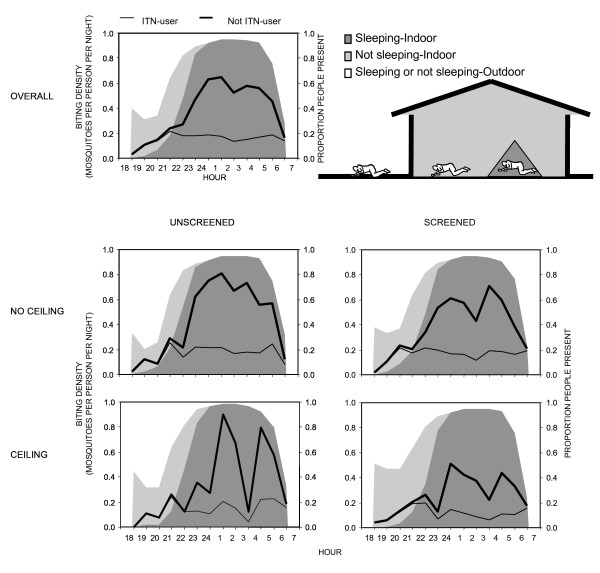
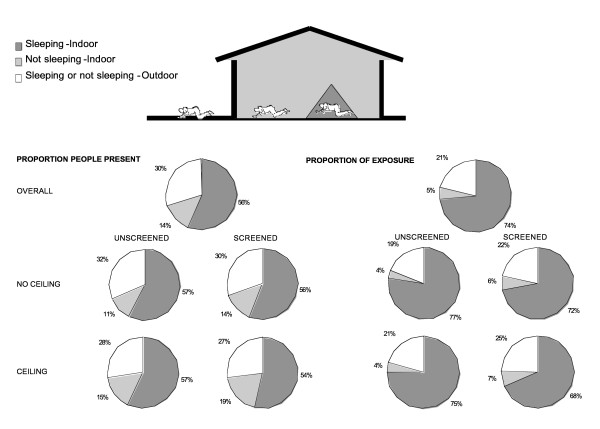
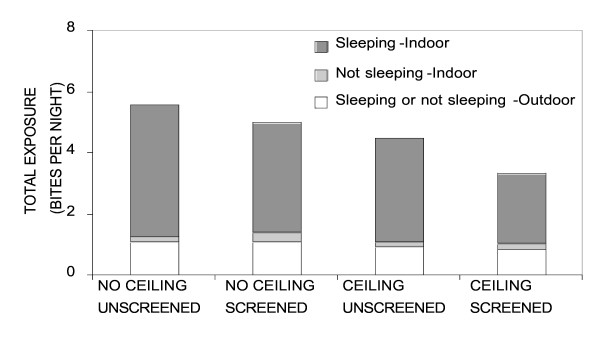
BACKGROUND: Successful malaria vector control depends on understanding behavioural interactions between mosquitoes and humans, which are highly setting-specific and may have characteristic features in urban environments. Here mosquito biting patterns in Dar es Salaam, Tanzania are examined and the protection against exposure to malaria transmission that is afforded to residents by using an insecticide-treated net (ITN) is estimated. METHODS: Mosquito biting activity over the course of the night was estimated by human landing catch in 216 houses and 1,064 residents were interviewed to determine usage of protection measures and the proportion of each hour of the night spent sleeping indoors, awake indoors, and outdoors. RESULTS: Hourly variations in biting activity by members of the Anopheles gambiae complex were consistent with classical reports but the proportion of these vectors caught outdoors in Dar es Salaam was almost double that of rural Tanzania. Overall, ITNs confer less protection against exophagic vectors in Dar es Salaam than in rural southern Tanzania (59% versus 70%). More alarmingly, a biting activity maximum that precedes 10 pm and much lower levels of ITN protection against exposure (38%) were observed for Anopheles arabiensis, a vector of modest importance locally, but which predominates transmission in large parts of Africa. CONCLUSION: In a situation of changing mosquito and human behaviour, ITNs may confer lower, but still useful, levels of personal protection which can be complemented by communal transmission suppression at high coverage. Mosquito-proofing houses appeared to be the intervention of choice amongst residents and further options for preventing outdoor transmission include larviciding and environmental management.
Overview
The claims and statistics of this paper haven’t been checked yet.
Run the check — free, no account needed. It reads the open-access text and checks the sources it cites.
Integrity signals
Registry
Cites
Statistics
Figures
Verification
Claims the paper makes
The claims and statistics of this paper haven’t been checked yet.
Run the check — free, no account needed. It reads the open-access text and checks the sources it cites.
Claims other papers make about this one
Each is checked against this paper’s own text: does it say what the citing paper says it does?
The cited source says what the claim attributes to it.
In the citing paper
“However, this progress could be jeopardized by several factors including behavioural changes in vectors towards these control tools (Geissbuhler et al. 2007; Protopopoff et al. 2008; Kleinschmidt 2015).”
From Resting and feeding behaviour of malaria vectors, in two areas of high long-lasting insecticidal nets coverage in Côte d'Ivoire (2024) · cites this paper as Geissbuhler et al. 2007
Self-check
Percentages, sums and reported differences re-computed from the paper’s own numbers.
The self-check needs the paper’s full text.
Citations
Cites
Weltgesundheitsorganisation (2005) · Cited by 3,799
The global distribution of clinical episodes of Plasmodium falciparum malaria
Snow, R. W., Guerra, C. A., Noor, A. M., Myint, H. Y., & Hay, S. I. (2005) · Nature · doi:10.1038/nature03342 · Cited by 2,758
Insecticide-treated bed nets and curtains for preventing malaria
Lengeler, C. (2004) · Cochrane Database of Systematic Reviews · doi:10.1002/14651858.cd000363.pub2 · Cited by 1,700
Identification of Single Specimens of the Anopheles Gambiae Complex by the Polymerase Chain Reaction
Scott, J. A., Brogdon, W. G., & Collins, F. H. (1993) · American Journal of Tropical Medicine and Hygiene · doi:10.4269/ajtmh.1993.49.520 · Cited by 1,634
The Epidemiology and Control of Malaria
(1960) · The Medical Journal of Australia · doi:10.5694/j.1326-5377.1960.tb105313.x · Cited by 1,316
The global distribution and population at risk of malaria: past, present, and future
Hay, S. I., Guerra, C. A., Tatem, A. J., Noor, A. M., & Snow, R. W. (2004) · The Lancet Infectious Diseases · doi:10.1016/s1473-3099(04)01043-6 · Cited by 1,002
A Climate-based Distribution Model of Malaria Transmission in Sub-Saharan Africa
Craig, M. H., Snow, R. W., & le Sueur, D. (1999) · Parasitology Today · doi:10.1016/s0169-4758(99)01396-4 · Cited by 854
A supplement to the Anophelinae of Africa south of the Sahara (Afrotropical Region).
Gillies, M. T., & Coetzee, M. (1987) · IHI Repository · Cited by 812
The Anophelinae of Africa south of the Sahara (Ethiopian Zoogeographical Region).
Gillies, M. T., & Meillon, B. D. (1968) · Cited by 776
A GLOBAL INDEX REPRESENTING THE STABILITY OF MALARIA TRANSMISSION
Kiszewski, A. E., Mellinger, A. D., Spielman, A., Malaney, P. N., Sachs, S. E., & Sachs, J. D. (2004) · American Journal of Tropical Medicine and Hygiene · doi:10.4269/ajtmh.2004.70.486 · Cited by 664
Research works printed but not linked: 8
- WHO: Global Strategic Framework for Integrated Vector Management. 2004, Geneva , World Health Organization, 15-
- Evans PJ: Community knowledge, attitudes and practices-urban mosquitoes and sustainable mosquito control. Faculty of Social Studies. 1994, University of Exeter, 308-
- Carnevale P, Robert V, Boudin C, Halna JM, Pazart L, Gazin P, Richard A, Mouchet J: La lutte contre le plaudisme par des moustiquaires impregnees de pyrethroides au Burkina Faso. Bull Soc Pathol Exot Filiales. 1988, 81 (5): 832-846.
- Knols BGJ, Takken W: The widescale use of impregnated bednets for malaria control in Africa: impact on mosquitoes. Proc Exp Appl Entomol. 1998, 8: 15-20.
- RollBackMalariaPartnership : Scaling up insecticide treated netting programmes in Africa: a strategic framework for coordinated national action. World Health Organization, Geneva. 2005, Geneva , World Health Organization
- Muirhead-Thomson RC: The winter activities of An. gambiae at high altitudes in Southern Rhodesia. unpublished WHO working document. 1960
- Castro MC, Singer B: Migration, Urbanization and Malaria: A Comparative Analysis of Dar es Salaam, Tanzania and Machadinho, Rondônia, Brazil. Paper prepared for Conference on African Migration in Comparative Perspective Johnnesburg, South Africa. 2003
- Statistics NB: The 2002 population and housing census general report. 2003, [ http://www.tanzania.go.tz/census/dsm.htm ]
Cited by
Sorted by citations
Characterizing, controlling and eliminating residual malaria transmission
Killeen, G. F. (2014) · Malaria Journal · doi:10.1186/1475-2875-13-330 · Cited by 506
Self-citationMoiroux, N., Gomez, M. B., Pennetier, C., Elanga, E., Djènontin, A., Chandre, F., Djègbé, I., Guis, H., & Corbel, V. (2012) · The Journal of Infectious Diseases · doi:10.1093/infdis/jis565 · Cited by 383
Mosquito feeding behavior and how it influences residual malaria transmission across Africa
Sherrard-Smith, E., Skarp, J. E., Beale, A. D., Fornadel, C. M., Norris, L. C., Moore, S., Mihreteab, S., Charlwood, J. D., Bhatt, S., Winskill, P., et al. (2019) · Proceedings of the National Academy of Sciences · doi:10.1073/pnas.1820646116 · Cited by 310
Mosquito larval source management for controlling malaria
Tusting, L. S., Thwing, J. I., Sinclair, D., Fillinger, U., Gimnig, J. E., Bonner, K., Bottomley, C., & Lindsay, S. W. (2013) · Cochrane Database of Systematic Reviews · doi:10.1002/14651858.cd008923.pub2 · Cited by 250
Self-citationFillinger, U., Ndenga, B. A., Githeko, A. K., & Lindsay, S. W. (2009) · Bulletin of the World Health Organization · doi:10.2471/blt.08.055632 · Cited by 247
Self-citationGeissbühler, Y., Kannady, K., Chaki, P., Emidi, B., Govella, N. J., Mayagaya, V., Kiama, M., Mtasiwa, D. M., Mshinda, H., Lindsay, S. W., et al. (2009) · PLoS ONE · doi:10.1371/journal.pone.0005107 · Cited by 243
Self-citationThe ecological foundations of transmission potential and vector‐borne disease in urban landscapes
LaDeau, S. L., Allan, B. F., Leisnham, P. T., & Levy, M. Z. (2015) · Functional Ecology · doi:10.1111/1365-2435.12487 · Cited by 251
Fillinger, U., Kannady, K., William, G., Vanek, M. J., Dongus, S., Nyika, D., Geissbühler, Y., Chaki, P. P., Govella, N. J., Mathenge, E. M., et al. (2008) · Malaria Journal · doi:10.1186/1475-2875-7-20 · Cited by 225
Self-citationRussell, T. L., Lwetoijera, D. W., Maliti, D. F., Chipwaza, B., Kihonda, J., Charlwood, J. D., Smith, T. A., Lengeler, C., Mwanyangala, M. A., Nathan, R., et al. (2010) · Malaria Journal · doi:10.1186/1475-2875-9-187 · Cited by 195
Self-citationHuho, B., Briët, O., Seyoum, A., Sikaala, C., Bayoh, N. M., Gimnig, J. E., Okumu, F. O., Diallo, D. A., Abdulla, S., Smith, T. A., et al. (2013) · International Journal of Epidemiology · doi:10.1093/ije/dys214 · Cited by 190
Self-citationGovella, N. J., & Ferguson, H. M. (2012) · Frontiers in Physiology · doi:10.3389/fphys.2012.00199 · Cited by 174
Self-citationInsecticide-Treated Nets Can Reduce Malaria Transmission by Mosquitoes Which Feed Outdoors
Govella, N. J., Okumu, F. O., & Killeen, G. F. (2010) · The American Society of Tropical Medicine and Hygiene · doi:10.4269/ajtmh.2010.09-0579 · Cited by 158
Self-citationA Cryptic Subgroup of Anopheles gambiae Is Highly Susceptible to Human Malaria Parasites
Riehle, M. M., Guelbeogo, W. M., Gneme, A., Eiglmeier, K., Holm, I., Bischoff, E., Garnier, T., Snyder, G. M., Li, X., Markianos, K., et al. (2011) · Science · doi:10.1126/science.1196759 · Cited by 145
Impact of insecticide-treated bed nets on malaria transmission indices on the south coast of Kenya
Mutuku, F. M., King, C. H., Mungai, P., Mbogo, C. M., MWANGANGI, J. M., Muchiri, E. M., Walker, E. D., & Kitron, U. D. (2011) · Malaria Journal · doi:10.1186/1475-2875-10-356 · Cited by 145
Identifying the most productive breeding sites for malaria mosquitoes in The Gambia
Fillinger, U., Sombroek, H., Majambere, S., van Loon, E. E., Takken, W., & Lindsay, S. W. (2009) · Malaria Journal · doi:10.1186/1475-2875-8-62 · Cited by 146
Self-citationCooke, M., Kahindi, S. C., Oriango, R. M., Owaga, C., Ayoma, E., Mabuka, D. P., Nyangau, D., Abel, L., Atieno, E., Awuor, S., et al. (2015) · Malaria Journal · doi:10.1186/s12936-015-0766-4 · Cited by 143
Fornadel, C. M., Norris, L. C., Glass, G. E., & Norris, D. E. (2010) · American Journal of Tropical Medicine and Hygiene · doi:10.4269/ajtmh.2010.10-0242 · Cited by 136
MWANGANGI, J. M., Muturi, E. J., Muriu, S., Nzovu, J. G., Midega, J. T., & Mbogo, C. M. (2013) · Parasites & Vectors · doi:10.1186/1756-3305-6-114 · Cited by 135
The influence of mosquito resting behaviour and associated microclimate for malaria risk
Paaijmans, K. P., & Thomas, M. B. (2011) · Malaria Journal · doi:10.1186/1475-2875-10-183 · Cited by 135
Seyoum, A., Sikaala, C., Chanda, J., Chinula, D., Ntamatungiro, A. J., Hawela, M. B., Miller, J. M., Russell, T. L., Briët, O., & Killeen, G. F. (2012) · Parasites & Vectors · doi:10.1186/1756-3305-5-101 · Cited by 133
Self-citationMonroe, A. C., Moore, S., Koenker, H. M., Lynch, M. C., & Ricotta, E. (2019) · Malaria Journal · doi:10.1186/s12936-019-2638-9 · Cited by 122
A new tent trap for sampling exophagic and endophagic members of the Anopheles gambiae complex
Govella, N. J., Chaki, P., Geissbühler, Y., Kannady, K., Okumu, F. O., Charlwood, J. D., Anderson, R. A., & Killeen, G. F. (2009) · Malaria Journal · doi:10.1186/1475-2875-8-157 · Cited by 120
Self-citationDaily Rhythms in Mosquitoes and Their Consequences for Malaria Transmission
Rund, S. S. C., O’Donnell, A. J., Gentile, J. E., & Reece, S. E. (2016) · Insects · doi:10.3390/insects7020014 · Cited by 120
Implicating Cryptic and Novel Anophelines as Malaria Vectors in Africa
Stevenson, J. C., & Norris, D. E. (2016) · Insects · doi:10.3390/insects8010001 · Cited by 119
Large-scale use of mosquito larval source management for malaria control in Africa: a cost analysis
Worrall, E., & Fillinger, U. (2011) · Malaria Journal · doi:10.1186/1475-2875-10-338 · Cited by 116
Self-citationVillena, O. C., Ryan, S. J., Murdock, C. C., & Johnson, L. R. (2022) · Ecology · doi:10.1002/ecy.3685 · Cited by 115
Urban mosquitoes, situational publics, and the pursuit of interspecies separation in Dar es Salaam
Kelly, A. H., & Lezaun, J. (2014) · American Ethnologist · doi:10.1111/amet.12081 · Cited by 117
Killeen, G. F., Tami, A., Kihonda, J., Okumu, F., Kotas, M., Grundmann, H., Kasigudi, N., Ngonyani, H., Mayagaya, V., Nathan, R., et al. (2007) · BMC Infectious Diseases · doi:10.1186/1471-2334-7-121 · Cited by 116
Self-citationSangbakembi-Ngounou, C., Costantini, C., Longo-Pendy, N. M., Ngoagouni, C., Akone‐Ella, O., Rahola, N., Cornélie, S., Kengne, P., Nakouné, E. R., Komas, N. P. J., et al. (2022) · Proceedings of the National Academy of Sciences · doi:10.1073/pnas.2104282119 · Cited by 106
Assessing the infectious reservoir of falciparum malaria: past and future
Stone, W. J., Gonçalves, B. P., Bousema, T., & DRAKELEY, C. J. (2015) · Trends in Parasitology · doi:10.1016/j.pt.2015.04.004 · Cited by 110
Maheu‐Giroux, M., & Castro, M. C. (2013) · PLoS ONE · doi:10.1371/journal.pone.0071638 · Cited by 111
Castro, M. C., Tsuruta, A., Kanamori, S., Kannady, K., & Mkude, S. (2009) · Malaria Journal · doi:10.1186/1475-2875-8-57 · Cited by 97
Self-citationOgoma, S. B., Kannady, K., Sikulu-Lord, M. T., Chaki, P., Govella, N. J., Mukabana, W. R., & Killeen, G. F. (2009) · Malaria Journal · doi:10.1186/1475-2875-8-221 · Cited by 95
Self-citationNeglected malarias: The frontlines and back alleys of global health
Kelly, A. H., & Beisel, U. (2011) · BioSocieties · doi:10.1057/biosoc.2010.42 · Cited by 93
Govella, N. J., Chaki, P., Mpangile, J. M., & Killeen, G. F. (2011) · Parasites & Vectors · doi:10.1186/1756-3305-4-40 · Cited by 90
Self-citationMethods and indicators for measuring patterns of human exposure to malaria vectors
Monroe, A. C., Moore, S., Okumu, F. O., Kiware, S. S., Lobo, N. F., Koenker, H. M., Sherrard-Smith, E., Gimnig, J. E., & Killeen, G. F. (2020) · Malaria Journal · doi:10.1186/s12936-020-03271-z · Cited by 84
Self-citationTakken, W., Charlwood, D., & Lindsay, S. W. (2024) · Malaria Journal · doi:10.1186/s12936-024-04982-3 · Cited by 83
Self-citationChaki, P., Govella, N. J., Shoo, B., Hemed, A., Tanner, M., Fillinger, U., & Killeen, G. F. (2009) · Malaria Journal · doi:10.1186/1475-2875-8-311 · Cited by 82
Self-citationMaia, M. F., Robinson, A., John, A. N., Mgando, J. P., Simfukwe, E., & Moore, S. (2011) · Parasites & Vectors · doi:10.1186/1756-3305-4-124 · Cited by 84
Killeen, G. F., & Chitnis, N. (2014) · Malaria Journal · doi:10.1186/1475-2875-13-97 · Cited by 79
Self-citationDistribution of the main malaria vectors in Kenya
Okara, R. M., Sinka, M. E., Minakawa, N., Mbogo, C. M., Hay, S. I., & Snow, R. W. (2010) · Malaria Journal · doi:10.1186/1475-2875-9-69 · Cited by 77
Nalinya, S., Musoke, D., & Deane, K. D. (2022) · Malaria Journal · doi:10.1186/s12936-022-04052-6 · Cited by 69
Villena, O. C., Arab, A., Lippi, C. A., Ryan, S. J., & Johnson, L. R. (2024) · Scientific Reports · doi:10.1038/s41598-024-67452-5 · Cited by 71
Braack, L., Hunt, R. H., Koekemoer, L. L., Gericke, A., Munhenga, G., Haddow, A. D., Becker, P., Okia, M., Kimera, I., & Coetzee, M. (2015) · Parasites & Vectors · doi:10.1186/s13071-015-0677-9 · Cited by 66
Chaki, P., Dongus, S., Fillinger, U., Kelly, A. H., & Killeen, G. F. (2011) · Human Resources for Health · doi:10.1186/1478-4491-9-21 · Cited by 63
Self-citationTantely, M. L., Goodman, S. M., Rakotondranaivo, T., & Boyer, S. (2016) · Parasite · doi:10.1051/parasite/2016058 · Cited by 59
Killeen, G. F., Seyoum, A., Gimnig, J. E., Stevenson, J. C., DRAKELEY, C. J., & Chitnis, N. (2014) · Malaria Journal · doi:10.1186/1475-2875-13-146 · Cited by 60
Self-citationDrame, P. M., Machault, V., Diallo, A., Cornélie, S., Poinsignon, A., Lalou, R., Sembène, M., Santos, S. D., Rogier, C., Pagès, F., et al. (2012) · Malaria Journal · doi:10.1186/1475-2875-11-72 · Cited by 59
Maia, M. F., Onyango, S. P., Thele, M., Simfukwe, E. T., Turner, E. L., & Moore, S. J. (2013) · PLoS ONE · doi:10.1371/journal.pone.0084875 · Cited by 59
Wilson, N. O., Ceesay, F. K., Obed, S. A., Adjei, A. A., Gyasi, R. K., Rodney, P., Ndjakani, Y., Anderson, W. A., Lucchi, N. W., & Stiles, J. K. (2011) · The American Society of Tropical Medicine and Hygiene · doi:10.4269/ajtmh.2011.10-0512 · Cited by 58
Ogoma, S. B., Lorenz, L. M., Ngonyani, H., Sangusangu, R., Kitumbukile, M., Kilalangongono, M., Simfukwe, E., Mseka, A. P., Mbeyela, E., Kavishe, D. R., et al. (2014) · Malaria Journal · doi:10.1186/1475-2875-13-131 · Cited by 58
Govella, N. J., Ogoma, S. B., Paliga, J. M., Chaki, P., & Killeen, G. F. (2015) · Parasites & Vectors · doi:10.1186/s13071-015-0937-8 · Cited by 55
Self-citationChaki, P., Mlacha, Y. P., Msellemu, D. F., Muhili, A., Malishee, A. D., Mtema, Z. J., Kiware, S. S., Zhou, Y., Lobo, N. F., Russell, T. L., et al. (2012) · Malaria Journal · doi:10.1186/1475-2875-11-172 · Cited by 54
Self-citationMalaria vector control at a crossroads: public health entomology and the drive to elimination
Mnzava, A. P., MacDonald, M. B., Knox, T. B., Temu, E. A., & Shiff, C. (2014) · Transactions of the Royal Society of Tropical Medicine and Hygiene · doi:10.1093/trstmh/tru101 · Cited by 54
Wamae, P., Githeko, A. K., Otieno, F., Kabiru, E. W., & Duombia, S. O. (2015) · Acta Tropica · doi:10.1016/j.actatropica.2015.07.008 · Cited by 56
Simplified Models of Vector Control Impact upon Malaria Transmission by Zoophagic Mosquitoes
Kiware, S. S., Chitnis, N., Moore, S., Devine, G. J., Majambere, S., Merrill, S. J., & Killeen, G. F. (2012) · PLoS ONE · doi:10.1371/journal.pone.0037661 · Cited by 55
Self-citationDrame, P. M., Diallo, A., Poinsignon, A., Boussari, O., Santos, S. D., Machault, V., Lalou, R., Cornélie, S., Hesran, J. L., & Remoué, F. (2013) · PLoS ONE · doi:10.1371/journal.pone.0066354 · Cited by 55
Imbahale, S. S., Fillinger, U., Githeko, A. K., Mukabana, W. R., & Takken, W. (2010) · Acta Tropica · doi:10.1016/j.actatropica.2010.04.005 · Cited by 51
Self-citationSikulu-Lord, M. T., Govella, N. J., Ogoma, S. B., Mpangile, J. M., Kambi, S. H., Kannady, K., Chaki, P., Mukabana, W. R., & Killeen, G. F. (2009) · Malaria Journal · doi:10.1186/1475-2875-8-197 · Cited by 50
Self-citationMathania, M. M., Kimera, S. I., & Silayo, R. S. (2016) · Malaria Journal · doi:10.1186/s12936-016-1332-4 · Cited by 50
Govella, N. J., Maliti, D. F., Mlwale, A. T., Masalu, J. P., Mirzai, N., Johnson, P., Ferguson, H. M., & Killeen, G. F. (2016) · Malaria Journal · doi:10.1186/s12936-016-1513-1 · Cited by 50
Self-citationThe influence of feeding behaviour and temperature on the capacity of mosquitoes to transmit malaria
Suh, E., Grossman, M. K., Waite, J. L., Dennington, N. L., Sherrard-Smith, E., Churcher, T. S., & Thomas, M. B. (2020) · Nature Ecology & Evolution · doi:10.1038/s41559-020-1182-x · Cited by 50
Efficacy of Aquatain, a Monomolecular Film, for the Control of Malaria Vectors in Rice Paddies
Bukhari, T., Takken, W., Githeko, A. K., & Koenraadt, C. J. M. (2011) · PLoS ONE · doi:10.1371/journal.pone.0021713 · Cited by 50
Killeen, G. F., Govella, N. J., Mlacha, Y. P., & Chaki, P. (2019) · The Lancet Planetary Health · doi:10.1016/s2542-5196(19)30035-x · Cited by 47
Self-citationMaia, M. F., Kreppel, K. S., Mbeyela, E., Kavishe, D. R., Mayagaya, V., Lobo, N. F., Ross, A. J., & Moore, S. (2016) · Parasites & Vectors · doi:10.1186/s13071-016-1738-4 · Cited by 47
Self-citationStevenson, J. C., Simubali, L., Mbambara, S., Musonda, M., Mweetwa, S., Mudenda, T., Pringle, J. C., Jones, C. M., & Norris, D. E. (2016) · Journal of Medical Entomology · doi:10.1093/jme/tjw091 · Cited by 43
Limwagu, A. J., Kaindoa, E. W., Ngowo, H. S., Hape, E. E., Finda, M. F., Mkandawile, G., Kihonda, J., Kifungo, K., Njalambaha, R. M., Matoke-Muhia, D., et al. (2019) · Malaria Journal · doi:10.1186/s12936-019-2913-9 · Cited by 41
Carbamate and pyrethroid resistance in the akron strain of Anopheles gambiae
Mutunga, J. M., Anderson, T. D., Craft, D. T., Gross, A. D., Swale, D. R., Tong, F., Wong, D. M., Carlier, P. R., & Bloomquist, J. R. (2015) · Pesticide Biochemistry and Physiology · doi:10.1016/j.pestbp.2015.03.001 · Cited by 41
Msellemu, D. F., Namango, H., Mwakalinga, V. M., Ntamatungiro, A. J., Mlacha, Y. P., Mtema, Z. J., Kiware, S. S., Lobo, N. F., Majambere, S., Dongus, S., et al. (2016) · Malaria Journal · doi:10.1186/s12936-016-1340-4 · Cited by 39
Self-citationBatista, E. P. A., Ngowo, H. S., Opiyo, M., Shubis, G. K., Meza, F. C., Okumu, F. O., & Eiras, Á. E. (2017) · PLoS ONE · doi:10.1371/journal.pone.0186696 · Cited by 40
Onyango, S. A., Kitron, U. D., Mungai, P., Muchiri, E. M., Kokwaro, E. D., King, C. H., & Mutuku, F. M. (2013) · Journal of Medical Entomology · doi:10.1603/me12206 · Cited by 40
Briët, O., & Chitnis, N. (2013) · Malaria Journal · doi:10.1186/1475-2875-12-215 · Cited by 39
Maia, M. F., Abonuusum, A., Lorenz, L. M., Clausen, P.-H., Bauer, B., Garms, R., & Kruppa, T. F. (2012) · PLoS ONE · doi:10.1371/journal.pone.0045794 · Cited by 41
Guglielmo, F., Sanou, A., Churcher, T. S., Ferguson, H. M., Ranson, H., & Sherrard-Smith, E. (2021) · Malaria Journal · doi:10.1186/s12936-020-03538-5 · Cited by 39
Andrés, M., Lorenz, L. M., Mbeleya, E., & Moore, S. (2015) · Malaria Journal · doi:10.1186/s12936-015-0762-8 · Cited by 37
Maliti, D. F., Marsden, C. D., Main, B. J., Govella, N. J., Yamasaki, Y., Collier, T. C., Kreppel, K. S., Chiu, J. C., Lanzaro, G. C., Ferguson, H. M., et al. (2016) · Parasites & Vectors · doi:10.1186/s13071-016-1394-8 · Cited by 36
Self-citationMakungu, C., Stephen, S., Kumburu, S., Govella, N. J., Dongus, S., Hildon, Z. J., Killeen, G. F., & Jones, C. O. H. (2017) · Malaria Journal · doi:10.1186/s12936-017-2056-9 · Cited by 36
Self-citationSilva‐Filha, M. H. N. L., Berry, C., & Regis, L. (2014) · Advances in insect physiology · doi:10.1016/b978-0-12-800197-4.00003-8 · Cited by 36
Chaves, L. F., Kaneko, A., Taleo, G. K., Pascual, M., & Wilson, M. L. (2008) · Malaria Journal · doi:10.1186/1475-2875-7-100 · Cited by 36
Ng’habi, K. R., Mwasheshi, D., Knols, B. G., & Ferguson, H. M. (2010) · Malaria Journal · doi:10.1186/1475-2875-9-356 · Cited by 33
Georganos, S., Brousse, O., Dujardin, S., Linard, C., Casey, D., Milliones, M., Parmentier, B., van Lipzig, N. P. M., Demuzere, M., Grippa, T., et al. (2020) · International Journal of Health Geographics · doi:10.1186/s12942-020-00232-2 · Cited by 35
An Exposure-Free Tool for Monitoring Adult Malaria Mosquito Populations
Govella, N. J., Moore, J. D., & Killeen, G. F. (2010) · American Journal of Tropical Medicine and Hygiene · doi:10.4269/ajtmh.2010.09-0682 · Cited by 33
Self-citationSangoro, O. P., Turner, E. L., Simfukwe, E., Miller, J. E., & Moore, S. (2014) · Malaria Journal · doi:10.1186/1475-2875-13-324 · Cited by 33
Pattern of malaria transmission along the Rahad River basin, Eastern Sudan
Himeidan, Y. E., Elzaki, M. M., Kweka, E. J., Ibrahim, M., & Elhassan, I. M. (2011) · Parasites & Vectors · doi:10.1186/1756-3305-4-109 · Cited by 30
Epidemiological Applications of Assessing Mosquito Exposure in a Malaria-Endemic Area
Sagna, A. B., Poinsignon, A., & Remoué, F. (2017) · Elsevier eBooks · doi:10.1016/b978-0-12-805360-7.00012-5 · Cited by 29
Conn, J. E., Norris, D. E., Donnelly, M. J., Beebe, N. W., Burkot, T. R., Coulibaly, M. B., Chery, L., Eapen, A. K., Keven, J. B., Kilama, M., et al. (2015) · American Journal of Tropical Medicine and Hygiene · doi:10.4269/ajtmh.15-0009 · Cited by 28
Self-citationOdufuwa, O. G., Ross, A. J., Mlacha, Y. P., Juma, O., Mmbaga, S., Msellemu, D. F., & Moore, S. (2020) · Malaria Journal · doi:10.1186/s12936-020-03303-8 · Cited by 30
Monroe, A. C., Msaky, D., Kiware, S. S., Tarimo, B. B., Moore, S., Haji, K. A., Koenker, H. M., Harvey, S. A., Finda, M. F., Ngowo, H. S., et al. (2020) · Malaria Journal · doi:10.1186/s12936-020-03266-w · Cited by 26
Malaria vector control strategies. What is appropriate towards sustainable global eradication?
Ogunah, J. A., Lalah, J. O., & Schramm, K. (2020) · Sustainable Chemistry and Pharmacy · doi:10.1016/j.scp.2020.100339 · Cited by 24
Mmbando, A. S., Okumu, F. O., Mgando, J. P., Sumaye, R. D., Matowo, N. S., Madumla, E. P., Kaindoa, E. W., Kiware, S. S., & Lwetoijera, D. W. (2015) · Malaria Journal · doi:10.1186/s12936-015-1013-8 · Cited by 24
Biological tools for control of larval stages of malaria vectors – a review
Bukhari, T., Takken, W., & Koenraadt, C. J. M. (2013) · Biocontrol Science and Technology · doi:10.1080/09583157.2013.810706 · Cited by 26
Prevalence of Malaria among Patients Attending Public Health Facilities in Maputo City, Mozambique
de Oliveira, A. M., Mutemba, R., Morgan, J., Streat, E., Roberts, J., Menon, M., & Mabunda, S. (2011) · American Journal of Tropical Medicine and Hygiene · doi:10.4269/ajtmh.2011.11-0365 · Cited by 22
Oduola, A. O., Olojede, J. B., Oyewole, I. O., Otubanjo, O. A., & Awolola, T. S. (2013) · Parasitology Research · doi:10.1007/s00436-013-3522-0 · Cited by 21
Lewnard, J. A., Ford, J. D., Lwasa, S., Namanya, D. B., Patterson, K. A., Donnelly, B., Kulkarni, M. A., Harper, S. L., Ogden, N. H., Cárcamo, C., et al. (2014) · American Journal of Tropical Medicine and Hygiene · doi:10.4269/ajtmh.13-0422 · Cited by 22
Abduselam, N., Zeynudin, A., Berens‐Riha, N., Seyoum, D., Pritsch, M., Habtewold, T., Eba, K., Höelscher, M., Wieser, A., & Yewhalaw, D. (2016) · Parasites & Vectors · doi:10.1186/s13071-016-1839-0 · Cited by 21
Majambere, S., Massue, D. J., Mlacha, Y. P., Govella, N. J., Magesa, S. M., & Killeen, G. F. (2013) · Parasites & Vectors · doi:10.1186/1756-3305-6-53 · Cited by 20
Self-citationMlacha, Y. P., Chaki, P., Malishee, A. D., Mwakalinga, V. M., Govella, N. J., Limwagu, A. J., Paliga, J. M., Msellemu, D. F., Mageni, Z. D., Terlouw, D. J., et al. (2017) · Geospatial health · doi:10.4081/gh.2017.494 · Cited by 21
Self-citationDrame, P. M., Poinsignon, A., Dechavanne, C., Cottrell, G., Farcé, M., Ladékpo, R., Massougbodji, A., Cornélie, S., Courtin, D., Migot‐Nabias, F., et al. (2015) · Malaria Journal · doi:10.1186/s12936-015-0800-6 · Cited by 20
Mlacha, Y. P., Chaki, P., Muhili, A., Massue, D. J., Tanner, M., Majambere, S., Killeen, G. F., & Govella, N. J. (2020) · Malaria Journal · doi:10.1186/s12936-020-03495-z · Cited by 19
Self-citationMontoya, L. F., Alafo, C., Martí-Soler, H., Máquina, M., Comiche, K., Cuamba, I., Munguambe, K., Cator, L. J., Aíde, P., Galatas, B., et al. (2022) · PLoS ONE · doi:10.1371/journal.pone.0270882 · Cited by 19
Metadata
- Authors
- Geissbühler, Y., Chaki, P., Emidi, B., Govella, N. J., Shirima, R., Mayagaya, V., Mtasiwa, D., Mshinda, H., Fillinger, U., Lindsay, S. W., Kannady, K., de Castro, M. C., Tanner, M., & Killeen, G. F.
- Affiliations
- Swiss Tropical and Public Health Institute (CH)
- Ifakara Health Institute (TZ)
- University of Dar es Salaam (TZ)
- Durham University (GB)
- Corresponding author
- Geissbühler, Yvonne
- Venue
- Malaria Journal
- Published
- 2007-09-19
- Volume
- 6
- Issue
- 1
- Pages
- 126-126
- ISSN
- 1475-2875 (ISSN-L)
- PMC
- PMC2039744
- OpenAlex
- W2131072539
- Cited by
- 165
- References
- 114
- Citations by year
- 2026: 2 · 2025: 4 · 2024: 10 · 2023: 4 · 2022: 10 · 2021: 6 · 2020: 12 · 2019: 8 · 2018: 2 · 2017: 5 · 2016: 13 · 2015: 16 · 2014: 12 · 2013: 14 · 2012: 8
- FWCI
- 7.58
- Type
- journal article
- Language
- en
- Open access
- gold
- doi.org
- Licence
- Locations
- Malaria Journal (publishedVersion, cc-by)
- PubMed Central (publishedVersion, cc-by)
- PubMed (publishedVersion)
- IHI Repository (acceptedVersion)
- Durham Research Online (Durham University) (acceptedVersion, other-oa)
- Durham Research Online (Durham University) (submittedVersion, cc-by)
- DOAJ (DOAJ: Directory of Open Access Journals) (submittedVersion)
- Funders
- United States Agency for International Development
- Bill and Melinda Gates Foundation
- Wellcome Trust (076806)
- Topics
- Health Sciences › Medicine › Public Health, Environmental and Occupational Health › Malaria Research and Control
- Health Sciences › Medicine › Public Health, Environmental and Occupational Health › Mosquito-borne diseases and control
- Health Sciences › Medicine › Infectious Diseases › Parasitic Diseases Research and Treatment
- Keywords
- malaria vector control, Anopheles gambiae s.l., Anopheles arabiensis, insecticide-treated nets, human landing catches, exophagy, outdoor biting, larviciding, environmental management, urban malaria, Dar es Salaam
- MeSH terms
- Animals, Humans, Insect Bites and Stings, Malaria, Mosquito Control, Population Density, Tanzania
About these checks
Registry, retraction, Cites and statistics results are computed, not judged, with one exception: a printed reference that no index lists is read once by a model before it counts as a citation error. Claims are extracted by a model and kept only when their quote appears verbatim in the text; each cited source is then checked, with a model’s help, for whether it says what the claim relies on. Those verdicts can be wrong — read the claim’s quote and the cited source before relying on one.
Statistics and arithmetic are recomputed, not judged.
Confidence bands are shown only for fields calibrated on our annotated test set. None is calibrated yet, so no band is shown.
What counts as a claim ›How we measure confidence ›How we check this ›
Are you an author, or do you see a problem with this page? Request a review
