

Successful field trial of attractive toxic sugar bait (ATSB) plant-spraying methods against malaria vectors in the Anopheles gambiae complex in Mali, West Africa
Open accessThe DOI matches its Crossref record; 37 of the 37 references it cites were found in a registry or an index.
Abstract
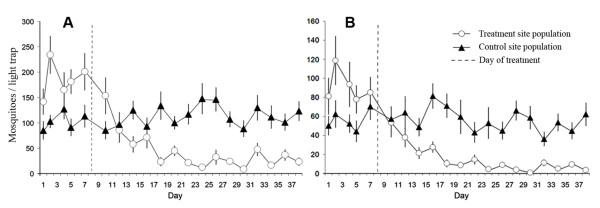
BACKGROUND: Based on highly successful demonstrations in Israel that attractive toxic sugar bait (ATSB) methods can decimate local populations of mosquitoes, this study determined the effectiveness of ATSB methods for malaria vector control in the semi-arid Bandiagara District of Mali, West Africa. METHODS: Control and treatment sites, selected along a road that connects villages, contained man-made ponds that were the primary larval habitats of Anopheles gambiae and Anopheles arabiensis. Guava and honey melons, two local fruits shown to be attractive to An. gambiae s.l., were used to prepare solutions of Attractive Sugar Bait (ASB) and ATSB that additionally contained boric acid as an oral insecticide. Both included a color dye marker to facilitate determination of mosquitoes feeding on the solutions. The trial was conducted over a 38-day period, using CDC light traps to monitor mosquito populations. On day 8, ASB solution in the control site and ATSB solution in the treatment site were sprayed using a hand-pump on patches of vegetation. Samples of female mosquitoes were age-graded to determine the impact of ATSB treatment on vector longevity. RESULTS: Immediately after spraying ATSB in the treatment site, the relative abundance of female and male An. gambiae s.l. declined about 90% from pre-treatment levels and remained low. In the treatment site, most females remaining after ATSB treatment had not completed a single gonotrophic cycle, and only 6% had completed three or more gonotrophic cycles compared with 37% pre-treatment. In the control site sprayed with ASB (without toxin), the proportion of females completing three or more gonotrophic cycles increased from 28.5% pre-treatment to 47.5% post-treatment. In the control site, detection of dye marker in over half of the females and males provided direct evidence that the mosquitoes were feeding on the sprayed solutions. CONCLUSION: This study in Mali shows that even a single application of ATSB can substantially decrease malaria vector population densities and longevity. It is likely that ATSB methods can be used as a new powerful tool for the control of malaria vectors, particularly since this approach is highly effective for mosquito control, technologically simple, inexpensive, and environmentally safe.
Overview
The claims and statistics of this paper haven’t been checked yet.
Free: it reads the open-access text and checks the first 5 claims that cite a source we can check. Create a free account to check every claim.
Integrity signals
Registry
Cites
Statistics
Figures
Verification
Claims the paper makes
The claims and statistics of this paper haven’t been checked yet.
Free: it reads the open-access text and checks the first 5 claims that cite a source we can check. Create a free account to check every claim.
Claims other papers make about this one
Each is checked against this paper’s own text: does it say what the citing paper says it does?
The source backs part of the claim, not all of it — or backs it for a different population, condition or comparison.
In the citing paper
“Based on ATSB field trials to date [1-7], it is likely that this new approach can also be used in different malaria endemic environments to impact entomological inoculation rates (EIRs) and epidemiological parameters of malaria in humans.”
From Attractive toxic sugar bait (ATSB) methods decimate populations of Anopheles malaria vectors in arid environments regardless of the local availability of favoured sugar-source blossoms (2012) · cites this paper as [7]
Experimental — accuracy not yet measuredThe cited source says what the claim attributes to it.
In the citing paper
“Similar successful ATSB field trials have also controlled Culex quinquefasciatus from storm drains in Florida, USA [6] and Anopheles gambiae s.l. malaria vectors in Mali, West Africa [7].”
The cited source says what the claim attributes to it.
In the citing paper
“Attractive toxic sugar bait (ATSB) methods are a new form of vector control that kill female and male mosquitoes questing for essential sugar sources in the outdoor environment [1-7].”
The cited source says what the claim attributes to it.
In the citing paper
“When ATSB solutions are sprayed on non-flowering vegetation as a strategy to reduce overall impact on non-target insects [7], the sprayed areas largely represent favourable outdoor mosquito resting microenvironments and not sugar-feeding centres containing attractive flowering plants.”
Self-check
Percentages, sums and reported differences re-computed from the paper’s own numbers.
The self-check needs the paper’s full text.
Citations
Cites
Identification of Single Specimens of the Anopheles Gambiae Complex by the Polymerase Chain Reaction
Scott, J. A., Brogdon, W. G., & Collins, F. H. (1993) · The American Journal of Tropical Medicine and Hygiene · doi:10.4269/ajtmh.1993.49.520 · Cited by 1,659 · cited 1×
“gambiae complex [26].”
Detinova, T. S. (1962) · The Journal of Parasitology · doi:10.2307/3275215 · Cited by 804
The Anophelinae of Africa south of the Sahara (Ethiopian Zoogeographical Region).
Gillies, M. T., & Meillon, B. D. (1968) · Cited by 776
Mosquito Sugar Feeding and Reproductive Energetics
Foster, W. A. (1995) · Annual Review of Entomology · doi:10.1146/annurev.en.40.010195.002303 · Cited by 709 · cited 1×
“Plant sugars or "sugar meals" represent an important source of energy for female mosquitoes and are the only food source for males [17,18].”
Short report: entomologic inoculation rates and Plasmodium falciparum malaria prevalence in Africa.
Beier, J. C., Killeen, G. F., & Githure, J. I. (1999) · The American journal of tropical medicine and hygiene · doi:10.4269/ajtmh.1999.61.109 · Cited by 399
Self-citationCorbel, V., N’Guessan, R., Brengues, C., Chandre, F., Djogbenou, L., Martin, T., Akogbéto, M., Hougard, J. M., & Rowland, M. (2007) · Acta Tropica · doi:10.1016/j.actatropica.2007.01.005 · Cited by 382 · cited 1×
“As such, this new approach circumvents many of the traditional problems relating excito-repellency and the development of insecticide resistance in mosquitoes [20,21].”
Integrated vector management for malaria control
Beier, J. C., Keating, J., Githure, J. I., Macdonald, M. B., Impoinvil, D. E., & Novak, R. J. (2008) · Malaria Journal · doi:10.1186/1475-2875-7-s1-s4 · Cited by 355 · cited 1×
“The lack of viable new methods for vector control is one reason why integrated vector management (IVM) strategies [9,10] have not been fully embraced and implemented [11].”
Self-citationHow to make evolution-proof insecticides for malaria control
Read, A. F., Lynch, P. A., & Thomas, M. B. (2009) · PLoS Biology · doi:10.1371/journal.pbio.1000058 · Cited by 288
Malaria Management: Past, Present, and Future
Enayati, A., & Hemingway, J. (2010) · Annual Review of Entomology · doi:10.1146/annurev-ento-112408-085423 · Cited by 264 · cited 1×
“As such, this new approach circumvents many of the traditional problems relating excito-repellency and the development of insecticide resistance in mosquitoes [20,21].”
Killeen, G. F., Fillinger, U., & Knols, B. G. (2002) · Malaria Journal · doi:10.1186/1475-2875-1-8 · Cited by 254 · cited 1×
“Most national malaria control programmes use long-lasting insecticide-treated nets (LLINs) and/or indoor residual spraying (IRS) [4,5], and there is a growing interest in environmental management and larval control [6-8].”
Research works printed but not linked: 4
- WHO Global strategic framework for integrated vector management 2004 10 World Health Organization 1 12 WHO/CDS/CPE/PVC/2004
- Müller GC Schlein Y Adult Culex pipiens gathering in vegetation proximal to water in a dry climate are targets for control Med Vet Entomol 2010 in press
- Detinova TS Age grouping methods in Diptera of medical importance 1962 Geneva, Switzerland WHO Monograph Series 47 13885800
- Coulibaly YI Etude des aspects parasitologiques, cliniques, entomologiques de la transmission de la filariose lymphatique en zone de savane soudanienne au Mali (village de Banambani et de Sirakoro Niaré) 2002 FMPOS thèse de Médecine Bamako
Cited by
Characterizing, controlling and eliminating residual malaria transmission
Killeen, G. F. (2014) · Malaria Journal · doi:10.1186/1475-2875-13-330 · Cited by 506
Alternative strategies for mosquito-borne arbovirus control
Achee, N. L., Grieco, J. P., Vatandoost, H., Seixas, G., Pinto, J., Ching-NG, L., Martins, A. J., Juntarajumnong, W., Corbel, V., Gouagna, C., et al. (2019) · PLOS Neglected Tropical Diseases · doi:10.1371/journal.pntd.0006822 · Cited by 353
THE IMPORTANCE OF MOSQUITO BEHAVIOURAL ADAPTATIONS TO MALARIA CONTROL IN AFRICA
Gatton, M. L., Chitnis, N., Churcher, T., Donnelly, M. J., Ghani, A. C., Godfray, H. C. J., Gould, F., Hastings, I., Marshall, J., Ranson, H., et al. (2013) · Evolution · doi:10.1111/evo.12063 · Cited by 336
“…can be captured in odour-baited traps (Okumu et al. 2010), killed by insecticide-treated cattle (Rowland et al. 2001) or after feeding on attractive toxic sugar bait (Muller et al. 2010), whilst gravid females might be targeted if we can develop effective oviposition traps (Harris et al. 2011).”
Current vector control challenges in the fight against malaria
Benelli, G., & Beier, J. C. (2017) · Acta Tropica · doi:10.1016/j.actatropica.2017.06.028 · Cited by 313
Self-citationDeep sequencing reveals extensive variation in the gut microbiota of wild mosquitoes from Kenya
Osei‐Poku, J., Mbogo, C. M., Palmer, W. J., & Jiggins, F. M. (2012) · Molecular Ecology · doi:10.1111/j.1365-294x.2012.05759.x · Cited by 281
Characterizing, controlling and eliminating residual malaria transmission
Killeen, G. (2014) · Malaria Journal · doi:10.1186/1475-2875-13-s1-p53 · Cited by 277
“An exciting new approach to killing a wide diversity of vector species, regardless of their feeding or resting behaviours, is to treat natural or artificial sugar sources with insecticides [103-105].”
Beier, J. C., Müller, G. C., Gu, W., Arheart, K. L., & Schlein, Y. (2012) · Malaria Journal · doi:10.1186/1475-2875-11-31 · Cited by 199
Self-citationPrevention Efforts for Malaria
Tizifa, T. A., Kabaghe, A. N., McCann, R. S., van den Berg, H., Van Vugt, M., & Phiri, K. S. (2018) · Current Tropical Medicine Reports · doi:10.1007/s40475-018-0133-y · Cited by 192
Sougoufara, S., Ottih, E. C., & Tripet, F. (2020) · Parasites & Vectors · doi:10.1186/s13071-020-04170-7 · Cited by 187
Mosquito-Borne Diseases Emergence/Resurgence and How to Effectively Control It Biologically
Dahmana, H., & Mediannikov, O. (2020) · Pathogens · doi:10.3390/pathogens9040310 · Cited by 184
Genetic approaches to interfere with malaria transmission by vector mosquitoes
Wang, S., & Jacobs-Lorena, M. (2013) · Trends in Biotechnology · doi:10.1016/j.tibtech.2013.01.001 · Cited by 198
The Insect Microbiome Modulates Vector Competence for Arboviruses
Jupatanakul, N., Sim, S., & Dimopoulos, G. (2014) · Viruses · doi:10.3390/v6114294 · Cited by 188
“Existing measures for mosquito population control such as oviposition traps, spraying of toxins or insect pathogens, and artificial nectar bait [164–169] can be adapted as dissemination strategies;”
BackgroundFiorenzano, J. M., Koehler, P. G., & Xue, R.-D. (2017) · International Journal of Environmental Research and Public Health · doi:10.3390/ijerph14040398 · Cited by 161
“ATSBs have been applied to foliage in and around larval habitats as spot treatments, in barrier applications [7,9,31,37,40], and in bait stations [8,41–45].”
BackgroundNatural Plant Sugar Sources of Anopheles Mosquitoes Strongly Impact Malaria Transmission Potential
Gu, W., Müller, G., Schlein, Y., Novak, R. J., & Beier, J. C. (2011) · PLoS ONE · doi:10.1371/journal.pone.0015996 · Cited by 128
Self-citationMüller, G. C., Beier, J. C., Traore, S. F., Toure, M. B., Traore, M. M., Bah, S., Doumbia, S., & Schlein, Y. (2010) · Malaria Journal · doi:10.1186/1475-2875-9-262 · Cited by 121
“The utility of using both guava and honey melons, two of the most attractive fruits, was recently demonstrated in the ATSB field trial in Mali [11].”
Self-citationDo malaria parasites manipulate mosquitoes?
Cator, L. J., Lynch, P. A., Read, A. F., & Thomas, M. B. (2012) · Trends in Parasitology · doi:10.1016/j.pt.2012.08.004 · Cited by 124
Implicating Cryptic and Novel Anophelines as Malaria Vectors in Africa
Stevenson, J. C., & Norris, D. E. (2016) · Insects · doi:10.3390/insects8010001 · Cited by 126
Stewart, Z., Oxborough, R. M., Tungu, P., Kirby, M. J., Rowland, M., & Irish, S. R. (2013) · PLoS ONE · doi:10.1371/journal.pone.0084168 · Cited by 117
“gambiae [19] and was also found to be similarly attractive to An.”
BackgroundMosquitoes (Diptera: Culicidae) and mosquito-borne diseases in Mali, West Africa
Tandina, F., Doumbo, O. K., Yaro, A. S., Traore, S. F., Parola, P., & Robert, V. (2018) · Parasites & Vectors · doi:10.1186/s13071-018-3045-8 · Cited by 131
“gambiae have reduced the density and longevity of this vector, suggesting that ATSB’s plant spraying methods can be used as a new tool to control this species [78].”
Self-citationMalaria Elimination and Eradication
Shretta, R., Liu, J. X., Cotter, C., Cohen, J., Dolenz, C., Makomva, K., Newby, G., Ménard, D., Phillips, A. A., Tatarsky, A., et al. (2017) · doi:10.1596/978-1-4648-0524-0/ch12 · Cited by 86
Qualls, W. A., Müller, G. C., Revay, E. E., Allan, S. A., Arheart, K. L., Beier, J. C., Smith, M. L., Scott, J. M., Kravchenko, V. D., Hausmann, A., et al. (2013) · Acta Tropica · doi:10.1016/j.actatropica.2013.12.004 · Cited by 88
“…or urface space spray has demonstrated effective control of imporant malaria vectors in arid and semi-arid environments (Müller nd Schlein, 2006; Müller et al., 2008, 2010a,c; Beier et al., 2012). onetheless, control of anopheline mosquitoes using ATSB has not et been demonstrated in more…”
InfluentialSelf-citationDifferential attraction of Aedes albopictus in the field to flowers, fruits and honeydew
Müller, G. C., Xue, R., & Schlein, Y. (2011) · Acta Tropica · doi:10.1016/j.actatropica.2011.01.009 · Cited by 97
Self-citationHost plant forensics and olfactory-based detection in Afro-tropical mosquito disease vectors
Nyasembe, V. O., Tchouassi, D. P., Pirk, C. W. W., Sole, C. L., & Torto, B. (2018) · PLoS neglected tropical diseases · doi:10.1371/journal.pntd.0006185 · Cited by 98
Grietens, K. P., Gryseels, C., Dierickx, S., Bannister-Tyrrell, M., Trienekens, S. C. M., Uk, S., Phoeuk, P., Suon, S., Set, S., Gerrets, R. P., et al. (2015) · Scientific Reports · doi:10.1038/srep16837 · Cited by 93
Priorities for Broadening the Malaria Vector Control Tool Kit
Barreaux, P., Barreaux, A. M. G., Sternberg, E. D., Suh, E., Waite, J. L., Whitehead, S. A., & Thomas, M. B. (2017) · Trends in Parasitology · doi:10.1016/j.pt.2017.06.003 · Cited by 67
Plant-sugar feeding and vectorial capacity
Stone, C., & Foster, W. A. (2013) · Wageningen Academic Publishers eBooks · doi:10.3920/978-90-8686-744-8_3 · Cited by 88
“(Müller and Schlein 2004, 2006, Müller et al. 2008, 2010a, Reisen et al. 1986, Schlein and Müller 2008).”
InfluentialNyasembe, V. O., Tchouassi, D. P., Kirwa, H. K., Foster, W. A., Teal, P. E. A., Borgemeister, C., & Torto, B. (2014) · PLoS ONE · doi:10.1371/journal.pone.0089818 · Cited by 64
Junnila, A., Revay, E. E., Müller, G. C., Kravchenko, V. D., Qualls, W. A., Xue, R., Allen, S. A., Beier, J. C., & Schlein, Y. (2015) · Acta Tropica · doi:10.1016/j.actatropica.2015.09.006 · Cited by 77
Self-citationMatowo, N. S., Munhenga, G., Tanner, M., Coetzee, M., Feringa, W. F., Ngowo, H. S., Koekemoer, L. L., & Okumu, F. O. (2017) · Wellcome Open Research · doi:10.12688/wellcomeopenres.12617.1 · Cited by 76
Marshall, J. M., White, M. T., Ghani, A. C., Schlein, Y., Müller, G. C., & Beier, J. C. (2013) · Malaria Journal · doi:10.1186/1475-2875-12-291 · Cited by 61
“That said, it is advisable that multiple toxins be used in an operational ATSB formula [14].”
InfluentialSelf-citationMontell, C., & Zwiebel, L. J. (2016) · Advances in insect physiology · doi:10.1016/bs.aiip.2016.04.007 · Cited by 77
Revay, E. E., Schlein, Y., Tsabari, O., Kravchenko, V. D., Qualls, W. A., De-Xue, R., Beier, J. C., Traore, S. F., Doumbia, S., Hausmann, A., et al. (2015) · Acta Tropica · doi:10.1016/j.actatropica.2015.06.018 · Cited by 62
“Increased knowledge of mosquito feeding-habits and preferences has enabled targeting the vectors by using attractive toxic sugar bait (ATSB) – a mixture of sugar and oral insecticide dissolved in water, which was initially sprayed on plants known to be highly-attractive to local mosquito populations (Müller and Schlei…”
Self-citationKeeping track of mosquitoes: a review of tools to track, record and analyse mosquito flight
Spitzen, J., & Takken, W. (2018) · Parasites & Vectors · doi:10.1186/s13071-018-2735-6 · Cited by 75
“Such studies contribute to further development of effective use of (toxic) sugar baits to manipulate or control mosquito vectors [43, 44] or to monitor the pres-”
Tenywa, F. C., Kambagha, A., Saddler, A., & Maia, M. F. (2017) · Malaria Journal · doi:10.1186/s12936-017-1994-6 · Cited by 62
Pitts, R. J., Mozūraitis, R., Gauvin‐Bialecki, A., & Lempérière, G. (2013) · Acta Tropica · doi:10.1016/j.actatropica.2013.09.005 · Cited by 53
Adult vector control, mosquito ecology and malaria transmission
Brady, O. J., Godfray, H. C. J., Tatem, A. J., Gething, P. W., Cohen, J. M., McKenzie, F. E., Perkins, T. A., Reiner, R. C., Tusting, L. S., Scott, T. W., et al. (2015) · International Health · doi:10.1093/inthealth/ihv010 · Cited by 47
Influences of the Mosquito Microbiota on Vector Competence
van Tol, S., & Dimopoulos, G. (2016) · Advances in insect physiology · doi:10.1016/bs.aiip.2016.04.006 · Cited by 55
Lutz, E. K., Lahondère, C., Vinauger, C., & Riffell, J. A. (2017) · Current Opinion in Insect Science · doi:10.1016/j.cois.2017.03.002 · Cited by 50
Muema, J. M., Bargul, J. L., Njeru, S. N., Onyango, J. O., & Imbahale, S. S. (2017) · Parasites & Vectors · doi:10.1186/s13071-017-2122-8 · Cited by 55
“various research groups working in Africa, Florida (USA) and Israel [162] for trapping mosquitoes.”
BackgroundInfluentialAn agent-based model of the population dynamics of Anopheles gambiae
Arifin, S. N., Zhou, Y., Davis, G. J., Gentile, J. E., Madey, G. R., & Collins, F. H. (2014) · Malaria Journal · doi:10.1186/1475-2875-13-424 · Cited by 40
“Using an attract-and-kill principle, it uses fruit or flower scent as an attractant, sugar solution as a feeding stimulant, and oral toxin to kill the mosquitoes [44].”
Quintana, J. C., Vargas, L. J., Segura, C., Gutiérrez, J. M., & Pérez, J. (2012) · Toxins · doi:10.3390/toxins4121500 · Cited by 53
“High rates of antimalarial treatment failure have led to the investigation of possible therapeutic alternatives, among which toxins and poisons of animal and plant extracts are included [4–9].”
BackgroundXue, R.-D., Müller, G., Kline, D., & Barnard, D. (2011) · Journal of the American Mosquito Control Association · doi:10.2987/10-6069.1 · Cited by 40
Self-citationMuller, G., Beier, J. C., Traore, S., Touré, M., Traore, M., Bah, S., Doumbia, S., & Schlein, Y. (2010) · doi:10.3366/abib.2009.0009 · Cited by 36
Self-citationKumar, G., Baharia, R. K., Singh, K., Gupta, S. K., Joy, S., Sharma, A. K., & Rahi, M. (2024) · BMJ Public Health · doi:10.1136/bmjph-2023-000342 · Cited by 57
“61 In a laboratory trial conducted in India, An. culicifacies, An. stephensi and Ae. aegypti experienced >90% mortality with 2% boric acid-based toxic sugar bait.”
Alimi, T. O., Fuller, D. O., Quiñones, M. L., Xue, R., Herrera, S. V., Arévalo‐Herrera, M., Ulrich, J. N., Qualls, W. A., & Beier, J. C. (2015) · Malaria Journal · doi:10.1186/s12936-015-1052-1 · Cited by 33
Self-citationSamson, D. M., Qualls, W. A., Roque, D. D., Naranjo, D. P., Alimi, T. O., Arheart, K. L., Müller, G. C., Beier, J. C., & Xue, R. (2013) · Journal of the American Mosquito Control Association · doi:10.2987/13-6347r.1 · Cited by 43
Self-citationMsellemu, D. F., Tanner, M., Yadav, R. S., & Moore, S. (2024) · Current Research in Parasitology and Vector-Borne Diseases · doi:10.1016/j.crpvbd.2024.100185 · Cited by 41
“‣ Minimal impact on non-target organisms (Müller et al., 2010; Khallaayoune et al., 2013; Müller and Galili, 2016).”
Yu, B.-T., Ding, Y.-M., & Mo, J. (2015) · Parasites & Vectors · doi:10.1186/s13071-015-1212-8 · Cited by 32
Stone, C., Jackson, B. T., & Foster, W. A. (2012) · Malaria Journal · doi:10.1186/1475-2875-11-3 · Cited by 32
“Russell TL, Lwetoijera DW, Maliti D, Chipwaza B, Kihonda J, Charlwood JD, Smith TA, Lengeler C, Mwanyangala MA, Nathan R, et al: Impact of promoting longer-lasting insecticide treatment of bed nets upon malaria transmission in a rural Tanzanian setting with pre-existing high coverage of untreated nets.”
InfluentialZhu, L., Marshall, J. M., Qualls, W. A., Schlein, Y., McManus, J. W., Arheart, K. L., Hlaing, W. M., Traore, S. F., Doumbia, S., Müller, G. C., et al. (2015) · Malaria Journal · doi:10.1186/s12936-015-1012-9 · Cited by 30
“gambiae were collected by CDC light traps [17].”
Self-citationSangoro, O. P., Gavana, T., Finda, M. F., Mponzi, W. P., Hape, E. E., Limwagu, A. J., Govella, N. J., Chaki, P., & Okumu, F. O. (2020) · Malaria Journal · doi:10.1186/s12936-020-03215-7 · Cited by 27
Dieng, H., Satho, T., Arzemi, N. A. B., Aliasan, N. E., Abang, F. B., Wydiamala, E., Miake, F., Zuharah, W. F., Kassim, N. F. A., Vargas, R. E. M., et al. (2018) · Acta Tropica · doi:10.1016/j.actatropica.2018.05.019 · Cited by 27
Swale, D. R., Li, Z., Kraft, J. Z., Healy, K., Liu, M., David, C. M., Liu, Z., & Foil, L. D. (2018) · PLoS neglected tropical diseases · doi:10.1371/journal.pntd.0006259 · Cited by 31
New insight-guided approaches to detect, cure, prevent and eliminate malaria
Kumar, S., Kumari, R., & Pandey, R. (2014) · PROTOPLASMA · doi:10.1007/s00709-014-0697-x · Cited by 26
“The procedure has proven effective in curtailing the local mosquito populations in several different African geographical locations where it was field tested (Muller et al. 2010; Beier et al. 2012; Marshall et al. 2013).”
BackgroundOndiaka, S. N., Masinde, E. W., Koenraadt, C. J. M., Takken, W., & Mukabana, W. R. (2015) · Parasites & Vectors · doi:10.1186/s13071-015-0654-3 · Cited by 24
“In recent studies, the efficiency of plant attractants in attractive toxic sugar baits (ATSB) for the control of mosquitoes has been demonstrated [20,56-61].”
Stone, C., Chitnis, N., & Gross, K. (2016) · Evolutionary Applications · doi:10.1111/eva.12354 · Cited by 17
Zhu, L., Qualls, W. A., Marshall, J. M., Arheart, K. L., Deangelis, D. L., McManus, J. W., Traore, S. F., Doumbia, S., Schlein, Y., Müller, G. C., et al. (2015) · Malaria Journal · doi:10.1186/s12936-015-0555-0 · Cited by 23
“It also examined the potential effectiveness of combining attractive toxic sugar baits (ATSB) [23] targeting the sugarfeeding behaviour with other vector control methods, such as LLINs and IRS [22].”
Self-citationSierras, A., Wada‐Katsumata, A., & Schal, C. (2018) · Journal of Economic Entomology · doi:10.1093/jee/toy260 · Cited by 25
Chen, Z., & Kearney, C. M. (2015) · Acta Tropica · doi:10.1016/j.actatropica.2015.03.010 · Cited by 20
Killeen, G. F., Kiware, S. S., Seyoum, A., Gimnig, J. E., Corliss, G. F., Stevenson, J. C., DRAKELEY, C. J., & Chitnis, N. (2014) · Malaria Journal · doi:10.1186/1475-2875-13-338 · Cited by 15
“Utilization rates for sugar resource subsets W were calculated as follows, based on direct field measurements of utilization rates per day for dye-lab l ed sugar baits W ∗ [18-20], and an assumed mean gonotrophic cycle duration of three days ( g = 3):”
InfluentialOgwang, C., Samuels, A. M., McDermott, D. P., Kamau, A., Lesosky, M., Obiet, K., Janssen, J., Odongo, W., Gimnig, J., Gutman, J., et al. (2025) · medRxiv · doi:10.1101/2025.01.14.25320559 · Cited by 13
Challenges and options for disease vector control
Hunter, P. (2016) · EMBO Reports · doi:10.15252/embr.201643233 · Cited by 13
“These include spatial or airborne insect repellents and attractive toxic sugar baits (ATBS), oral insecticides comprising a toxin such as boric acid coated in a sugar component to encourage feeding, along with a scent to attract the insects to the bait [5].”
Baker, K. A., White, G. S., Faraji, A., & Bibbs, C. S. (2023) · Journal of Medical Entomology · doi:10.1093/jme/tjad041 · Cited by 10
13. Semiochemical tools for a new generation of livestock pest control
Brugman, V. A., Smallegange, R. C., & Logan, J. G. (2018) · Wageningen Academic Publishers eBooks · doi:10.3920/978-90-8686-863-6_13 · Cited by 7
“…in field trials targeting several important mosquito genera in diverse ecological settings (e.g. Khallaayoune et al. 2013; Müller and Schlein 2008; Müller et al. 2008, 2010a, 2010c; Stewart et al. 2013) and there is emerging evidence for their potential use in the control of phlebotomine sand…”
InfluentialHossain, T., Fulcher, A., Davidson, C., Beier, J., & Xue, R.-D. (2014) · Florida Entomologist · doi:10.1653/024.097.0469 · Cited by 9
“The ‘toxic’ active ingredient in ATSBs is mostly boric acid, which is an environmentally friendly compound harmless to humans, but toxic to adult mosquitoes (Xue & Barnard 2003; Müller et al. 2010a, b; Beier et al. 2012).”
BackgroundSelf-citationBurkett, D. A., Cope, S. E., Strickman, D. A., & White, G. B. (2013) · Journal of Integrated Pest Management · doi:10.1603/ipm11024 · Cited by 13
Mweresa, C. K. (2014) · doi:10.18174/302621 · Cited by 8
Zembere, K. (2024) · Malaria Journal · doi:10.1186/s12936-024-05161-0 · Cited by 11
Chiu, M.-C., Neoh, K.-B., & Hwang, S.-Y. (2023) · Acta Tropica · doi:10.1016/j.actatropica.2023.107102 · Cited by 7
Yu, B.-T., Ding, Y.-M., Hu, Y., Tian, J., Song, X.-G., Li, Z., & Mo, J. (2018) · Journal of Medical Entomology · doi:10.1093/jme/tjy161 · Cited by 8
Vector Control: Some New Paradigms and Approaches
Duchet, C., Allan, R. J., & Carnevale, P. (2013) · InTech eBooks · doi:10.5772/56258 · Cited by 6
“A series of smaller Phase II DL/WL feasibility and acceptability studies, with entomological monitoring have also been conducted in Angola and Nigeria [25], Equatorial Guinea, Ghana, Mali, South Africa and Vietnam [26], and Papua New Guinea [27].”
InfluentialOvergaard, H. J., Suwonkerd, W., & Hii, J. (2015) · Socio-Ecological Dimensions of Infectious Diseases in Southeast Asia · doi:10.1007/978-981-287-527-3_9 · Cited by 7
Meza, F. C., Tenywa, F. C., Ashall, S., Okumu, F. O., Moore, S., & Tripet, F. (2024) · Parasites & Vectors · doi:10.1186/s13071-024-06539-4 · Cited by 8
Perspectives on the manipulation of mosquito hearing
Freeman, E. A., Ellis, D., Bagi, J., Tytheridge, S. J., & Andrés, M. (2024) · Current Opinion in Insect Science · doi:10.1016/j.cois.2024.101271 · Cited by 7
Bartilol, B., Babu, L., Garama, K., Karisa, J., Kamau, A., Mwandawiro, C. S., Wanjiku, C., Mbogo, C. M., Maia, M. F., MWANGANGI, J. M., et al. (2024) · Parasites & Vectors · doi:10.1186/s13071-024-06513-0 · Cited by 5
“These findings call for the deployment of control interventions targeting outdoor resting mosquitoes such as attractive toxic sugar baits [35, 36], larvicides [37, 38], genetic vector control approaches [39], and endectocides [40, 41].”
BackgroundFeasibility and optimisation results for elimination by mass trapping in a metapopulation model
Bliman, P., de la Tousche, M., & Dumont, Y. (2025) · Applied Mathematical Modelling · doi:10.1016/j.apm.2025.116047 · Cited by 6
Muhoro, A. M., Ochomo, E., Njangiru, I. K., Kosgei, J. J., Rasaki, L. A., & Farkas, E. (2024) · Malaria Journal · doi:10.1186/s12936-024-05141-4 · Cited by 5
“In Mali, there was approximately a 57% reduction in mosquito catch, an 89% reduction in entomological inoculation and a 30% reduction in malaria prevalence based on epidemiological modelling prediction on the ATSBs [25, 26, 33, 34, 68, 69].”
BackgroundTenywa, F. S. C., Kibondo, U. A., Entwistle, J., Dogan, O., Haruna, M., Phisoo, R. P., Moore, J., Machange, J. J., Makame, H., Tripet, F., et al. (2025) · Parasites & Vectors · doi:10.1186/s13071-024-06653-3 · Cited by 4
Sugar feeding by Aedes albopictus in the Torres Strait, Australia
Sebayang, B. F., Russell, T. L., Mosby, S., Gela, R., Roeger, D. L., van de Straat, B., Staunton, K. M., & Burkot, T. R. (2025) · PLoS neglected tropical diseases · doi:10.1371/journal.pntd.0012856 · Cited by 3
“Female Ae. albopictus exhibited a lower prevalence of fructose compared to males; a pattern consistent with other mosquito species [19,30,40,41].”
The olfactory neurobiology and chemical ecology of mosquito attraction to plant nutrient sources
Leon-Noreña, M., Jandu, S., Boyi, J., Bouzada, L. M. E. I., Rouyar, A., Coutinho-Abreu, I. V., Chen, F., Akbari, O. S., Pitts, R. J., & Riffell, J. A. (2025) · Proceedings of the Royal Society B Biological Sciences · doi:10.1098/rspb.2025.1806 · Cited by 2
Hughes, A. (2019) · University of Liverpool · doi:10.17638/03029923
“…baits use a mixture of an oral toxin, natural sugars and floral attractants to lure the mosquito either inside or outside into traps/bait stations (Müller et al. 2010; Beier et al. 2012; Qualls et al. 2015; Fikrig et al. 2017) 1-9 ➢ Housing improvements aim to prevent house entry to protect…”
BackgroundSambanthan, R., Kassim, N. F. A., Abuelmaali, S. A., Kamil, W. M. W. A., Sabar, S., Zarkasi, K. Z., Ishak, W. R. W., & Webb, C. (2026) · Parasitology Research · doi:10.1007/s00436-025-08624-8 · Cited by 1
“Attractive Toxic Sugar Bait (ATSB) systems were first developed to suppress Anopheles gambiae in Mali, West Africa, and become a widely studied “attract and kill” mosquito control strategy that exploits mosquitoes’ natu-ral tendency to feed on sugar (Müller et al. 2010; Nur et al. 2020).”
Kosgei, J. J., McDermott, D. P., Omondi, S., Moshi, V., Donnelly, M. J., Ouma, C., Selvaraj, P., Harris, A. F., Entwistle, J., ter Kuile, F. O., et al. (2025) · PLoS ONE · doi:10.1371/journal.pone.0337207 · Cited by 1
Know your enemy: understanding mosquito biology to advance malaria elimination in Africa
Zembere, K., Kalonde, P. K., & Bickton, F. M. (2025) · Parasitology Research · doi:10.1007/s00436-025-08534-9 · Cited by 1
“Implementation of the novel ATSBs which are more likely to kill sugar-seeking young mosquitoes (Graphical abstract) could potentially help minimize mosquito density by reducing the population of mosquitoes that grow old enough to transmit diseases (Müller et al. 2010c).”
InfluentialChiu, M., Huang, I., Yu, J., Liao, Y., Chareonviriyaphap, T., & Neoh, K. (2024) · Pest Management Science · doi:10.1002/ps.8318 · Cited by 4
Wallace, J. R., Wylie, C. D., & Wagner, R. L. (2021) · Great Lakes Entomologist · doi:10.22543/0090-0222.2394 · Cited by 1
Mosquito control, killing off the females
Tran, P. (2021) · Open Journal of Animal Sciences · doi:10.21203/rs.3.rs-936067/v2 · Cited by 1
Alomar, A. A., & Alto, B. W. (2026) · Journal of Medical Entomology · doi:10.1093/jme/tjag140
The evolution of mosquito baiting: from chemical and electronic methods toward AI
Shaky, M., Kalavakonda, R., Mila, S. A., Ghosh, A., Futo, M., Hidayat, J., Bhunia, S., Ray, S., & Burini, B. (2026) · Parasites & Vectors · doi:10.1186/s13071-026-07413-1
“During the 21st century, a “lure-and-kill” strategy was developed using attractive toxic sugar baits (ATSBs) [29].”
Ashton, R. A., McDermott, D. P., Kané, F., Sarrassat, S., Harris, A., Fornadel, C. M., Wagman, J., Chanda, J., Littrell, M., ter Kuile, F. O., et al. (2026) · PLOS Global Public Health · doi:10.1371/journal.pgph.0006513
“Proof-of-principle studies were largely conducted in arid or semi-arid settings in Israel and Mali, where target mosquitoes were An. sergentii, An. claviger , or An. gambiae s.l. [1,2,5].”
Self-citationEvaluating a Novel Method to Limit Non-Target Mortality in Attractive Toxic Sugar Bait Systems
Kim, D., Shine, L., Stenn, T., Wilson, B. C., Caragata, E. P., Alto, B. W., & Burkett-Cadena, N. D. (2026) · Insects · doi:10.3390/insects17040370
de Moura, T. A., Dias, A. D. C., & Silva, A. D. A. E. (2026) · Medical and Veterinary Entomology · doi:10.1111/mve.70065
“ATSBs have been proposed as complementary tools for the control of Anopheles Meigen, 1818 and Aedes Meigen, 1818 mosquitoes and have demonstrated effectiveness in both outdoor (Müller et al., 2008, 2010) and indoor field trials (Qualls et al., 2015).”
Crop: The Black Box of Mosquito Vector Fitness
Rodriguez-Pereira, A., Hawkes, F. M., & Emami, S. N. (2026) · Insects · doi:10.3390/insects17030234
“They exploit the natural nectar-feeding behaviour of mosquitoes to deliver mosquito-specific toxins, killing the insects and thereby reducing their vectorial capacity [8].”
Zembere, K., Coleman, S., Chirombo, J., Mbewe, R. B., & Tangena, J.-A. A. (2026) · PLoS ONE · doi:10.1371/journal.pone.0344351
Reegan, A. D., Joy, S., Jambulingam, P., & Rahi, M. (2025) · Malaria Journal · doi:10.1186/s12936-025-05545-w
“Müller et al. [5] reported the field trial of ATSB for malarial mosquito control in a study conducted in the dry areas of Mali, West Africa.”
Yalla, N., Kosgei, J. J., Mechan, F., McDermott, D. P., Polo, B., Omondi, S., Omukunda, E., & Ochomo, E. (2025) · PLoS ONE · doi:10.1371/journal.pone.0315472
Metadata
- Authors
- Müller, G. C., Beier, J. C., Traore, S. F., Toure, M. B., Traore, M. M., Bah, S., Doumbia, S., & Schlein, Y.
- Affiliations
- Hebrew University of Jerusalem (IL)
- University of Miami (US)
- University of Bamako (ML)
- Corresponding author
- Müller, Günter C
- Venue
- Malaria Journal
- Published
- 2010-07-21
- Volume
- 9
- Issue
- 1
- Pages
- 210-210
- ISSN
- 1475-2875 (ISSN-L)
- PMC
- PMC2914067
- OpenAlex
- W2022333447
- Semantic Scholar
- 7b36be200a7d53a09c052d57f5788b840080945c
- Cited by
- 239
- References
- 37
- Citations by year
- 2026: 8 · 2025: 14 · 2024: 21 · 2023: 17 · 2022: 20 · 2021: 16 · 2020: 14 · 2019: 18 · 2018: 19 · 2017: 19 · 2016: 11 · 2015: 19 · 2014: 10 · 2013: 15 · 2012: 11
- FWCI
- 10.50
- Type
- journal article
- Language
- en
- Open access
- gold
- doi.org
- Licence
- cc-by
- creativecommons.org/licenses/by/2.0 (tdm)
- Locations
- Malaria Journal (publishedVersion, cc-by)
- PubMed Central (publishedVersion, cc-by)
- PubMed (publishedVersion)
- DOAJ (DOAJ: Directory of Open Access Journals) (submittedVersion, cc-by-sa)
- Funders
- Bill and Melinda Gates Foundation (0304721)
- Hebrew University of Jerusalem
- Topics
- Health Sciences › Medicine › Public Health, Environmental and Occupational Health › Malaria Research and Control
- Health Sciences › Medicine › Public Health, Environmental and Occupational Health › Mosquito-borne diseases and control
- Health Sciences › Medicine › Public Health, Environmental and Occupational Health › Dengue and Mosquito Control Research
- Keywords
- attractive toxic sugar baits, malaria vector control, Anopheles gambiae s.l., Anopheles arabiensis, boric acid, guava, gonotrophic cycle, larval habitat
- MeSH terms
- Animals, Anopheles, Boric Acids, Carbohydrates, Female, Fruit, Humans, Insecticides, Malaria, Male, Mali, Mosquito Control, Population Control, Ecosystem
About these checks
Registry, retraction, Cites and statistics results are computed, not judged, with one exception: a printed reference that no index lists is read once by a model before it counts as a citation error. Claims are extracted by a model and kept only when their quote appears verbatim in the text; each cited source is then checked, with a model’s help, for whether it says what the claim relies on. Those verdicts can be wrong — read the claim’s quote and the cited source before relying on one.
Statistics and arithmetic are recomputed, not judged.
Confidence bands are shown only for fields calibrated on our annotated test set. None is calibrated yet, so no band is shown.
What counts as a claim ›How we measure confidence ›How we check this ›
Are you an author, or do you see a problem with this page? Request a review
Data sources
Bibliographic data: Semantic Scholar, OpenAlex, Crossref.
Contains information from the Semantic Scholar Academic Graph Datasets, made available under the ODC Attribution License (ODC-BY 1.0).
Semantic Scholar’s data is described in: Kinney, R., et al. (2023). The Semantic Scholar Open Data Platform. arXiv:2301.10140.
