

The DOI matches its Crossref record; 58 of the 60 references it cites were found in a registry or an index.
Towards the creation of decellularized organ constructs using irreversible electroporation and active mechanical perfusion
Open accessAbstract
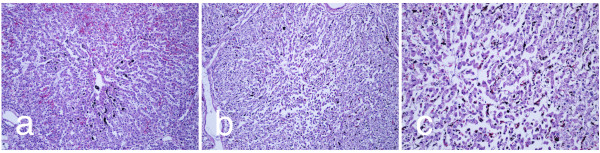
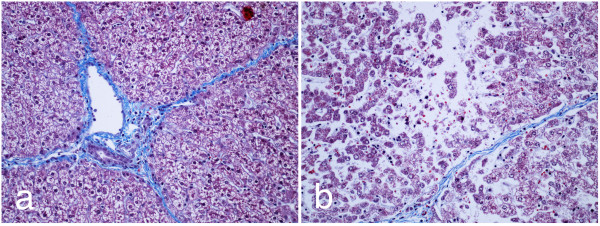
Background: Despite advances in transplant surgery and general medicine, the number of patients awaiting transplant organs continues to grow, while the supply of organs does not. This work outlines a method of organ decellularization using non-thermal irreversible electroporation (N-TIRE) which, in combination with reseeding, may help supplement the supply of organs for transplant. Methods: In our study, brief but intense electric pulses were applied to porcine livers while under active low temperature cardio-emulation perfusion. Histological analysis and lesion measurements were used to determine the effects of the pulses in decellularizing the livers as a first step towards the development of extracellular scaffolds that may be used with stem cell reseeding. A dynamic conductivity numerical model was developed to simulate the treatment parameters used and determine an irreversible electroporation threshold. Results: Ninety-nine individual 1000 V/cm 100-μs square pulses with repetition rates between 0.25 and 4 Hz were found to produce a lesion within 24 hours post-treatment. The livers maintained intact bile ducts and vascular structures while demonstrating hepatocytic cord disruption and cell delamination from cord basal laminae after 24 hours of perfusion. A numerical model found an electric field threshold of 423 V/cm under specific experimental conditions, which may be used in the future to plan treatments for the decellularization of entire organs. Analysis of the pulse repetition rate shows that the largest treated area and the lowest interstitial density score was achieved for a pulse frequency of 1 Hz. After 24 hours of perfusion, a maximum density score reduction of 58.5 percent had been achieved. Conclusions: This method is the first effort towards creating decellularized tissue scaffolds that could be used for organ transplantation using N-TIRE. In addition, it provides a versatile platform to study the effects of pulse parameters such as pulse length, repetition rate, and field strength on whole organ structures.
Overview
The claims and statistics of this paper haven’t been checked yet.
Run the check — free, no account needed. It reads the open-access text and checks the sources it cites.
Integrity signals
Registry
Cites
Statistics
Figures
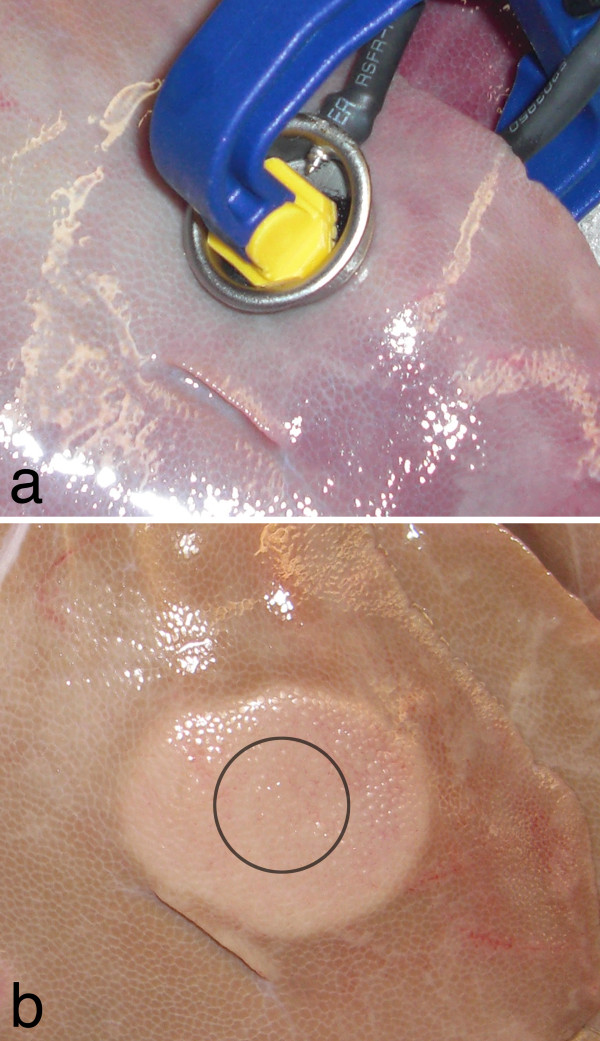
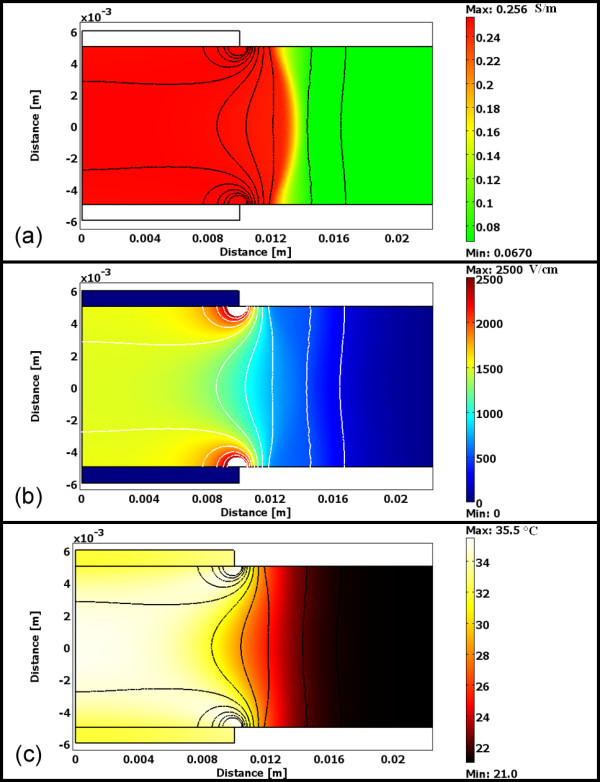
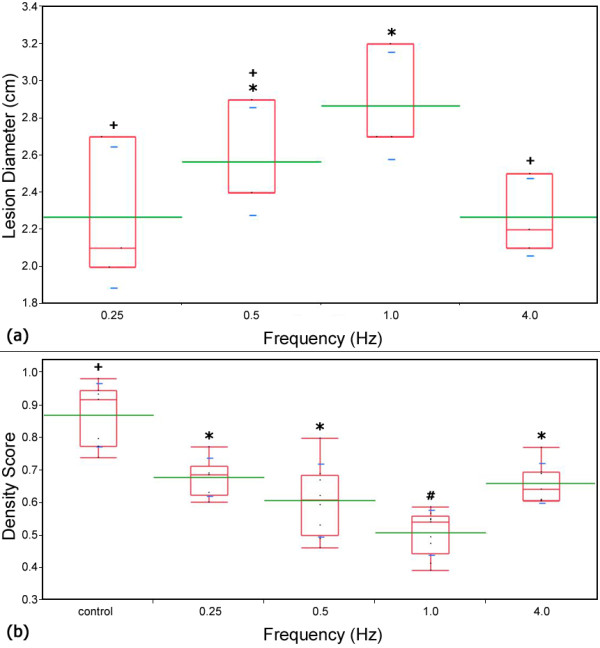
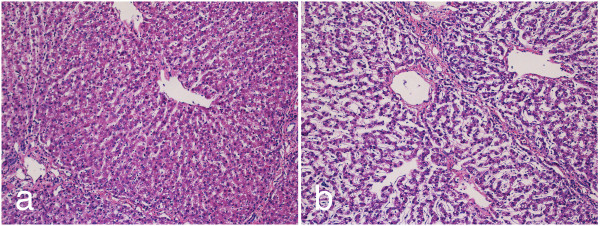
Verification
Claims the paper makes
The claims and statistics of this paper haven’t been checked yet.
Run the check — free, no account needed. It reads the open-access text and checks the sources it cites.
Claims other papers make about this one
Each is checked against this paper’s own text: does it say what the citing paper says it does?
The cited source says what the claim attributes to it.
In the citing paper
“Sano et al. utilized N-TIRE accompanied by lactated Ringer's solution perfusion through the portal vein and hepatic artery for porcine liver decellularization, facilitating the removal of cellular debris resulting from electroporation [139].”
From Liver tissue engineering using decellularized scaffolds: Current progress, challenges, and opportunities (2024) · cites this paper as [139]
Self-check
Percentages, sums and reported differences re-computed from the paper’s own numbers.
The self-check needs the paper’s full text.
Citations
Cites
Perfusion-decellularized matrix: using nature's platform to engineer a bioartificial heart
Ott, H. C., Matthiesen, T. S., Goh, S.-K., Black, L. D., Kren, S. M., Netoff, T. I., & Taylor, D. A. (2008) · Nature Medicine · doi:10.1038/nm1684 · Cited by 2,650
Soft Lithography in Biology and Biochemistry
Whitesides, G. M., Ostuni, E., Takayama, S., Jiang, X., & Ingber, D. E. (2001) · Annual Review of Biomedical Engineering · doi:10.1146/annurev.bioeng.3.1.335 · Cited by 2,603
Physical properties of tissue : a comprehensive reference book
Duck, F. A. (1990) · Cited by 1,675
Microscale technologies for tissue engineering and biology
Khademhosseini, A., Langer, R., Borenstein, J. T., & Vacanti, J. P. (2006) · Proceedings of the National Academy of Sciences · doi:10.1073/pnas.0507681102 · Cited by 1,553
Uygun, B. E., Soto-Gutierrez, A., Yagi, H., Izamis, M.-L., Guzzardi, M. A., Shulman, C., Milwid, J., Kobayashi, N., Tilles, A., Berthiaume, F., et al. (2010) · Nature Medicine · doi:10.1038/nm.2170 · Cited by 1,370
Tissue Ablation with Irreversible Electroporation
Davalos, R. V., Mir, L. M., & Rubinsky, B. (2005) · Annals of Biomedical Engineering · doi:10.1007/s10439-005-8981-8 · Cited by 1,296
Self-citationHematopoietic colony-forming cells derived from human embryonic stem cells
Kaufman, D. S., Hanson, E. T., Lewis, R. L., Auerbach, R., & Thomson, J. A. (2001) · Proceedings of the National Academy of Sciences · doi:10.1073/pnas.191362598 · Cited by 925
SELF-REGULATION OF GROWTH IN THREE DIMENSIONS
Folkman, J., & Hochberg, M. (1973) · The Journal of Experimental Medicine · doi:10.1084/jem.138.4.745 · Cited by 829
The use of whole organ decellularization for the generation of a vascularized liver organoid
Baptista, P. M., Siddiqui, M. M., Lozier, G., Rodriguez, S. R., Atala, A., & Soker, S. (2011) · Hepatology · doi:10.1002/hep.24067 · Cited by 681
Yamada, K., Yazawa, K., Shimizu, A., Iwanaga, T., Hisashi, Y., Nuhn, M. G., O'Malley, P., Nobori, S., Vagefi, P. A., Patience, C., et al. (2004) · Nature Medicine · doi:10.1038/nm1172 · Cited by 609
Research works printed but not linked: 4
- Fabre: Report of the British Transplantation Society Working Party on Organ Donation. 1995.
- Davalos RV: Irreversible Electroporation to Create Tissue Scaffolds. United States patent 2009.
- Davalos RV, Mir LM, Rubinsky B: Tissue Ablation with Irreversible Electroporation. Ann Biomed Eng 2005, 33: 223–231. 10.1007/s10439-005-8981-8 · DOI
- Edd JF, Horowitz L, Davalos RV, Mir LM, Rubinsky B: In Vivo Results of a New Focal Tissue Ablation Technique: Irreversible Electroporation. Ieee Transactions on Biomedical Engineering 2006, 53: 1409–1415. 10.1109/TBME.2006.873745 · DOI
Cited by
Sorted by citations
An overview of tissue and whole organ decellularization processes
Crapo, P. M., Gilbert, T. W., & Badylak, S. F. (2011) · Biomaterials · doi:10.1016/j.biomaterials.2011.01.057 · Cited by 3,591
Electroporation-based technologies for medicine: principles, applications, and challenges.
Yarmush, M., Golberg, A., Serša, G., Kotnik, T., & Miklavčič, D. (2014) · Annual Review of Biomedical Engineering · doi:10.1146/annurev-bioeng-071813-104622 · Cited by 813
Extracellular matrix-based materials for regenerative medicine
Hussey, G. S., Dziki, J. L., & Badylak, S. F. (2018) · Nature Reviews Materials · doi:10.1038/s41578-018-0023-x · Cited by 844
A Review of Basic to Clinical Studies of Irreversible Electroporation Therapy
Jiang, C., Davalos, R. V., & Bischof, J. C. (2014) · IEEE Transactions on Biomedical Engineering · doi:10.1109/tbme.2014.2367543 · Cited by 334
Self-citationBiocompatibility evaluation of tissue-engineered decellularized scaffolds for biomedical application
Hussein, K. H., Park, K.-M., Kang, K.-S., & Woo, H.-M. (2016) · Materials Science and Engineering: C · doi:10.1016/j.msec.2016.05.068 · Cited by 218
Metadata
- Authors
- Sano, M. B., Neal, R. E., Garcia, P. A., Gerber, D., Robertson, J., & Davalos, R. V.
- Affiliations
- Virginia Tech - Wake Forest University School of Biomedical Engineering & Sciences (US)
- University of North Carolina at Chapel Hill (US)
- Virginia–Maryland College of Veterinary Medicine (US)
- Corresponding author
- Davalos, Rafael V
- Venue
- BioMedical Engineering OnLine
- Published
- 2010-12
- Volume
- 9
- Issue
- 1
- Pages
- 83-83
- ISSN
- 1475-925X (ISSN-L)
- PMC
- PMC3018380
- OpenAlex
- W2024731442
- Cited by
- 117
- References
- 60
- Citations by year
- 2026: 1 · 2025: 4 · 2024: 11 · 2023: 8 · 2022: 9 · 2021: 10 · 2020: 9 · 2019: 6 · 2018: 5 · 2017: 11 · 2016: 15 · 2015: 6 · 2014: 9 · 2013: 5 · 2012: 4
- FWCI
- 4.39
- Type
- journal article
- Language
- en
- Open access
- gold
- doi.org
- Locations
- BioMedical Engineering OnLine (publishedVersion, cc-by)
- PubMed Central (publishedVersion, cc-by)
- PubMed (publishedVersion)
- DOAJ (DOAJ: Directory of Open Access Journals) (submittedVersion)
- VTechWorks (Virginia Tech) (submittedVersion, cc-by)
- Topics
- Health Sciences › Medicine › Surgery › Tissue Engineering and Regenerative Medicine
- Life Sciences › Biochemistry, Genetics and Molecular Biology › Biotechnology › Microbial Inactivation Methods
- Physical Sciences › Engineering › Biomedical Engineering › 3D Printing in Biomedical Research
- Keywords
- irreversible electroporation, porcine liver, extracellular matrix scaffolds, threshold electric field, pulse repetition rate, organ transplantation
- MeSH terms
- Animals, Humans, Liver, Perfusion, Swine, Electroporation, Tissue Engineering, Tissue Scaffolds, Mechanical Phenomena
About these checks
Registry, retraction, Cites and statistics results are computed, not judged, with one exception: a printed reference that no index lists is read once by a model before it counts as a citation error. Claims are extracted by a model and kept only when their quote appears verbatim in the text; each cited source is then checked, with a model’s help, for whether it says what the claim relies on. Those verdicts can be wrong — read the claim’s quote and the cited source before relying on one.
Statistics and arithmetic are recomputed, not judged.
Confidence bands are shown only for fields calibrated on our annotated test set. None is calibrated yet, so no band is shown.
What counts as a claim ›How we measure confidence ›How we check this ›
Are you an author, or do you see a problem with this page? Request a review
