

Spatial patterns of natural hazards mortality in the United States
Open accessThe DOI matches its Crossref record; 60 of the 60 references it cites were found in a registry or an index.
Abstract
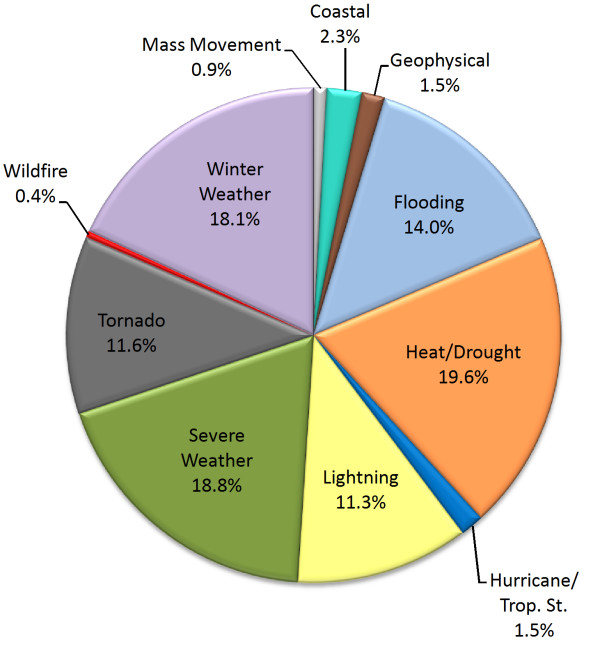
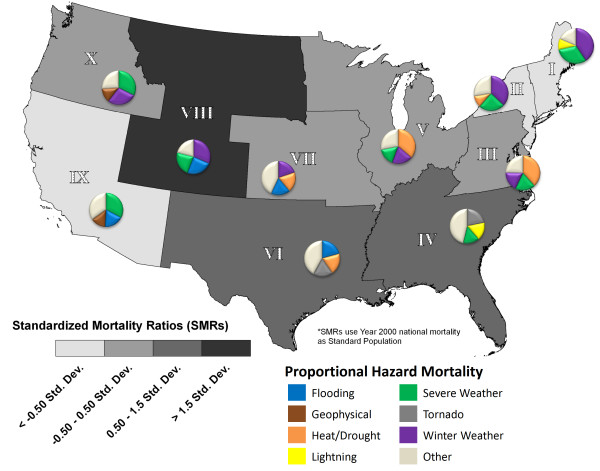
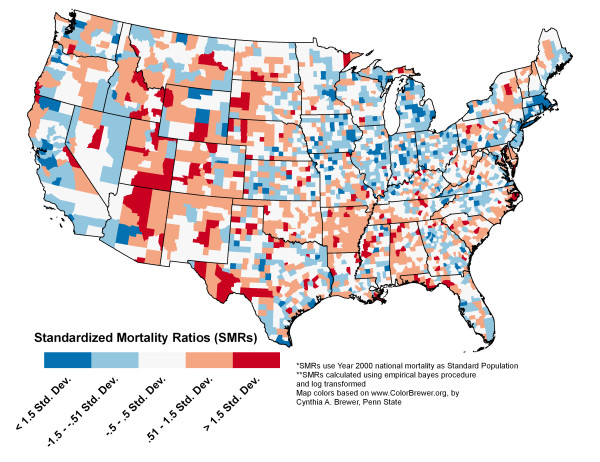
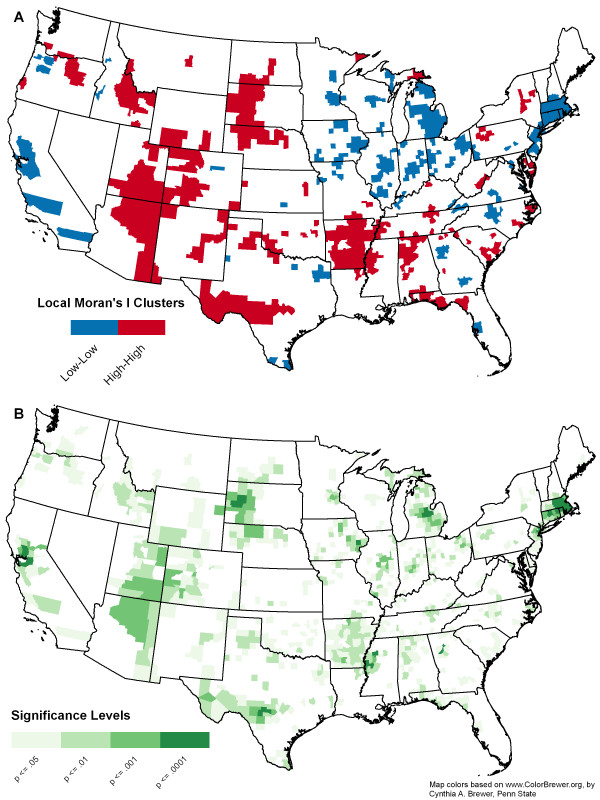
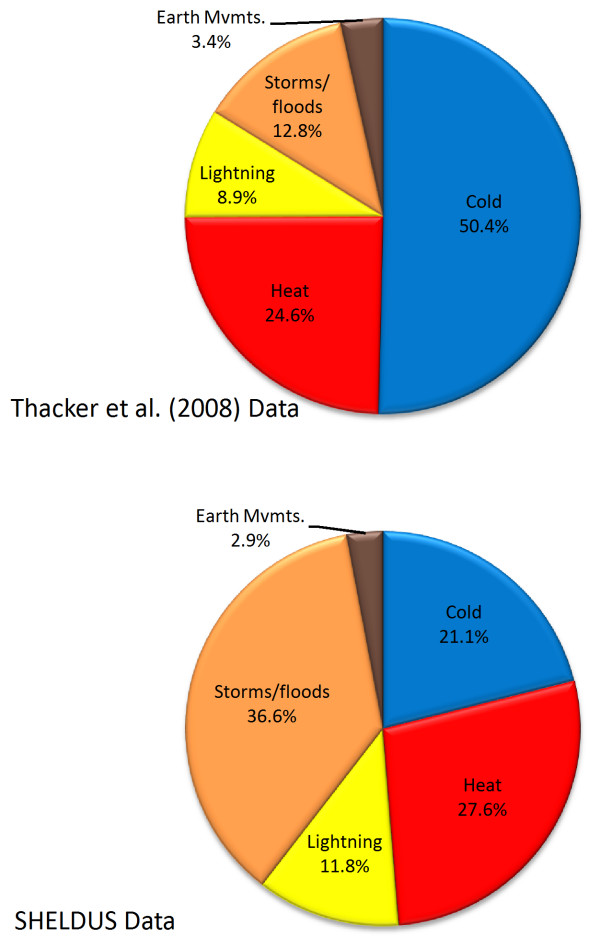
BACKGROUND: Studies on natural hazard mortality are most often hazard-specific (e.g. floods, earthquakes, heat), event specific (e.g. Hurricane Katrina), or lack adequate temporal or geographic coverage. This makes it difficult to assess mortality from natural hazards in any systematic way. This paper examines the spatial patterns of natural hazard mortality at the county-level for the U.S. from 1970-2004 using a combination of geographical and epidemiological methods. RESULTS: Chronic everyday hazards such as severe weather (summer and winter) and heat account for the majority of natural hazard fatalities. The regions most prone to deaths from natural hazards are the South and intermountain west, but sub-regional county-level mortality patterns show more variability. There is a distinct urban/rural component to the county patterns as well as a coastal trend. Significant clusters of high mortality are in the lower Mississippi Valley, upper Great Plains, and Mountain West, with additional areas in west Texas, and the panhandle of Florida, Significant clusters of low mortality are in the Midwest and urbanized Northeast. CONCLUSION: There is no consistent source of hazard mortality data, yet improvements in existing databases can produce quality data that can be incorporated into spatial epidemiological studies as demonstrated in this paper. It is important to view natural hazard mortality through a geographic lens so as to better inform the public living in such hazard prone areas, but more importantly to inform local emergency practitioners who must plan for and respond to disasters in their community.
Overview
The claims and statistics of this paper haven’t been checked yet.
Free: it reads the open-access text and checks the first 5 claims that cite a source we can check. Create a free account to check every claim.
Integrity signals
Registry
Cites
Statistics
Figures
Verification
Claims the paper makes
The claims and statistics of this paper haven’t been checked yet.
Free: it reads the open-access text and checks the first 5 claims that cite a source we can check. Create a free account to check every claim.
Self-check
Percentages, sums and reported differences re-computed from the paper’s own numbers.
The self-check needs the paper’s full text.
Citations
Cites
Local Indicators of Spatial Association—LISA
Anselin, L. (1995) · Geographical Analysis · doi:10.1111/j.1538-4632.1995.tb00338.x · Cited by 12,919
International Journal of Epidemiology
(1973) · Journal of Medical Genetics · doi:10.1136/jmg.10.1.100-a · Cited by 2,838
GeoDa: An Introduction to Spatial Data Analysis
Anselin, L., Syabri, I., & Kho, Y. (2006) · Geographical Analysis · doi:10.1111/j.0016-7363.2005.00671.x · Cited by 2,555 · cited 1×
“of SMRs had an average tendency to cluster in space [50].”
BackgroundOccupational and Environmental Medicine: Meeting the Growing Need for Clinical Services
Rosenstock, L., Rest, K. M., Benson, J. A., Cannella, J. M., Cohen, J., Cullen, M. R., Davidoff, F., Landrigan, P. J., Reynolds, R. C., Clever, L. H., et al. (1991) · New England Journal of Medicine · doi:10.1056/nejm199109263251305 · Cited by 1,627
Relation between elevated ambient temperature and mortality: A review of the epidemiologic evidence
Basu, R. (2002) · Epidemiologic Reviews · doi:10.1093/epirev/mxf007 · Cited by 1,381 · cited 1×
“Other research has focused on more general causes and circumstances of hazard mortality from specific hazard types such as floods [34], or heat [ 35 ], and generalized effects of climate on mortality [36,37].”
BackgroundHeat wave: a social autopsy of disaster in Chicago
(2003) · Choice Reviews Online · doi:10.5860/choice.40-4319 · Cited by 1,273 · cited 2×
“For example, a number of studies have been conducted on the patterns of death in specific disaster events such as Hurricane Andrew [30,31], the Northridge Earthquake [32,33], and the Chicago heat wave [ 10 ].”
BackgroundANNALS OF THE ASSOCIATION OF AMERICAN GEOGRAPHERS
Davis, W. M., Page, C., & Rivers, U. (2016) · Cited by 1,103
Spatial data analysis: theory and practice
(2004) · Choice Reviews Online · doi:10.5860/choice.41-3486 · Cited by 965
Global Perspectives on Loss of Human Life Caused by Floods
Jonkman, S. N. (2005) · Natural Hazards · doi:10.1007/s11069-004-8891-3 · Cited by 952
On the Mode of the Communication of Cholera
Johnson-Laird, P. N. (2008) · How We Reason · doi:10.1093/acprof:oso/9780199551330.003.0027 · Cited by 846
Research works printed but not linked: 2
- Bithell JF A classification of disease mapping methods Statistics in Medicine 2000 19 2203 2215 10960848 10.1002/1097-0258(20000915/30)19:17/18<2203::AID-SIM564>3.0.CO;2-U · DOI
- Wojdyla D Poletto L Cuesta C Badler C Passamonti ME Cluster Analysis with Constraints: Its Use with Breast Cancer Mortality Rates in Argentina Statistics in Medicine 1996 15 741 746 9132901 10.1002/(SICI)1097-0258(19960415)15:7/9<741::AID-SIM245>3.0.CO;2-9 · doi:10.1002/(sici)1097-0258(19960415)15:7/9<741::aid-sim245>3.0.co;2-9
Cited by
Items 101–200 of 220
Historical Analysis of U.S. Tornado Fatalities (1808–2017): Population, Science, and Technology
Agee, E. M., & Taylor, L. (2019) · Weather Climate and Society · doi:10.1175/wcas-d-18-0078.1 · Cited by 29
Tobin, D. M., Kumjian, M. R., & Black, A. W. (2019) · Weather Climate and Society · doi:10.1175/wcas-d-18-0110.1 · Cited by 28
“Each was found to be incomplete, inconsistent, or lacking sufficient detail to be a robust resource for multiple applications (e.g., Branick 1997; Changnon 1997; Gall et al. 2009; Black and Mote 2015a).”
BackgroundWalker, R. H., Keeler, B., & Derickson, K. D. (2024) · Landscape and Urban Planning · doi:10.1016/j.landurbplan.2024.105019 · Cited by 35
Recent Changes in the Occurrences and Damages of Floods and Droughts in the United States
Zhou, Q., Leng, G., & Peng, J. X. (2018) · Water · doi:10.3390/w10091109 · Cited by 32
“Many studies have investigated the changing characteristics and the impacts of floods in terms of economic losses [18–21] and human casualties [22,23].”
BackgroundAcceptable losses? The relative impacts of natural hazards in the United States, 1980–2009
Ash, K. D., Cutter, S. L., & Emrich, C. T. (2013) · International Journal of Disaster Risk Reduction · doi:10.1016/j.ijdrr.2013.08.001 · Cited by 30
“This is a critical topic for the aging population of the USA, especially in the context of climate change, and it is addressed elsewhere in the literature [44,56,57].”
BackgroundSelf-citationSensitivity and vulnerability to summer heat extremes in major cities of the United States
Li, X., Wang, G., Zaitchik, B. F., Hsu, A., & Chakraborty, T. (2024) · Environmental Research Letters · doi:10.1088/1748-9326/ad6c64 · Cited by 37
Spatial relationships of sector-specific fossil fuel CO2emissions in the United States
Zhou, Y., & Gurney, K. R. (2011) · Global Biogeochemical Cycles · doi:10.1029/2010gb003822 · Cited by 26
“Local indicators of spatial association (LISA) provides information relating to the location of spatial clusters and the types of spatial correlation [Anselin, 1995; Anselin et al., 2004, 2006; Borden and Cutter, 2008; Loughnan et al., 2008; Franczyk and Chang, 2009].”
BackgroundMethodological Issues in Disaster Research
Donner, W. R., & Diaz, W. R. (2017) · Handbooks of sociology and social research · doi:10.1007/978-3-319-63254-4_15 · Cited by 27
Klopfer, F., & Pfeiffer, A. (2023) · Heliyon · doi:10.1016/j.heliyon.2023.e16185 · Cited by 30
“In the US, already more than ten years ago, heat was the number one natural hazard causing deaths [11].”
BackgroundExtreme Heat Related Mortality: Spatial Patterns and Determinants in the United States, 1979–2011
Jones, B., Dunn, G., & Balk, D. L. (2021) · Spatial Demography · doi:10.1007/s40980-021-00079-6 · Cited by 26
Air Temperature Reductions at the Base of Tree Canopies
Razzaghmanesh, M., Borst, M., Liu, J., Ahmed, F., O’Connor, T. P., & Selvakumar, A. (2021) · Journal of Sustainable Water in the Built Environment · doi:10.1061/jswbay.0000950 · Cited by 26
Spatial Distributions in Disaster Risk Vulnerability for People with Disabilities in the U.S
Harrati, A., Bardin, S., & Mann, D. R. (2022) · International Journal of Disaster Risk Reduction · doi:10.1016/j.ijdrr.2023.103571 · Cited by 26
“Prior studies suggest that mortality from natural hazards is spatially patterned [3].”
Social vulnerability assessment for mitigation of local earthquake risk in Los Angeles County
Noriega, G. R., & Ludwig, L. G. (2012) · Natural Hazards · doi:10.1007/s11069-012-0301-7 · Cited by 25
“However, few studies are able to assess city-level vulnerability (Cutter and Finch 2008; Borden et al. 2007; Cutter et al. 2003; Rahsed and Weeks 2003; Borden and Cutter 2008), even though as the smallest level of government, cities have the potential to greatly impact community resilience.”
BackgroundA spatial risk analysis of tornado-induced human injuries and fatalities in the USA
Shen, G., & Hwang, S. N. (2015) · Natural Hazards · doi:10.1007/s11069-015-1654-5 · Cited by 24
Rouhana, F., Zhu, J., Bagtzoglou, A. C., & Burton, C. G. (2025) · Natural Hazards Review · doi:10.1061/nhrefo.nheng-2235 · Cited by 21
Houghton, A., & English, P. B. (2014) · Journal of Environmental and Public Health · doi:10.1155/2014/132057 · Cited by 24
“This review draws on a guidance document developed by the U.S. Council of State and Territorial Epidemiologists’ State Environmental Health Indicators Collaborative climate change working group to present a three-tiered approach to develop local climate change EPHIs.”
MethodLightning nowcasting with aerosol-informed machine learning and satellite-enriched dataset
Song, G., Li, S., & Xing, J. (2023) · npj Climate and Atmospheric Science · doi:10.1038/s41612-023-00451-x · Cited by 25
Tecer, L. H., & Tağıl, Ş. (2014) · CLEAN - Soil Air Water · doi:10.1002/clen.201200640 · Cited by 19
Fragomeni, M. B. A., Bernardes, S., Shepherd, J. M., & Rivero, R. G. (2020) · Urban Climate · doi:10.1016/j.uclim.2020.100653 · Cited by 20
Chen, T. H. Y., & Lee, B. (2022) · Environmental Research Letters · doi:10.1088/1748-9326/ac5692 · Cited by 24
An Analysis of Prediction Skill of Heat Waves Over India Using TIGGE Ensemble Forecasts
Rohini, P., & Rajeevan, M. N. (2023) · Earth and Space Science · doi:10.1029/2020ea001545 · Cited by 19
“The alarming impact of heat wave is an increasing rate of mortality which is already a challenge for many parts of the world including India (Borden & Cutter, 2008; Changnon et al., 1996; Davis et al., 2003; De et al., 2005; Steffen et al., 2014; Mazdiyasni et al., 2017).”
BackgroundHu, L., Monaghan, A. J., & Brunsell, N. A. (2015) · Journal of Applied Meteorology and Climatology · doi:10.1175/jamc-d-15-0051.1 · Cited by 19
“Extreme heat is a leading cause of weather-related human mortality (Borden and Cutter 2008; Kalkstein andGreene 1997; Basu and Samet 2002; O’Neill and Ebi 2009; Peng et al. 2011).”
BackgroundModeling the Intra- and Extracellular Cytokine Signaling Pathway under Heat Stroke in the Liver
Rodriguez-Fernández, M., Grosman, B., Yuraszeck, T. M., Helwig, B. G., Leon, L. R., & Doyle, F. J. (2013) · PLoS ONE · doi:10.1371/journal.pone.0073393 · Cited by 16
Houghton, A. (2011) · Journal of Green Building · doi:10.3992/jgb.6.2.66 · Cited by 17
“…by guest on 06 April 2020 72 Journal of Green Building Health Impacts: Following the methodology outlined in Borden and Cutter (2008) (5), the HIA identified tornadoes, hurricanes, heat/drought, and lightning as the natural hazards with the highest direct…”
Open-Source Data Alternatives and Models for Flood Risk Management in Nepal
Thakuri, S., Parajuli, B. P., Shakya, P., Baskota, P., Pradhan, D., & Chauhan, R. (2022) · Remote Sensing · doi:10.3390/rs14225660 · Cited by 26
Xu, J., Xu, X., Wang, Z., Chen, H., Ren, Q., Huang, H., Cui, Y., An, R., & Liu, Y. (2024) · Building and Environment · doi:10.1016/j.buildenv.2024.111932 · Cited by 15
Relationship Between Climate Change, Natural Disasters, and Resilience in Rural and Urban Societies
Javadinejad, S., Eslamian, S., Ostad‐Ali‐Askari, K., Nekooei, M., Azam, N., Talebmorad, H., Hasantabar-Amiri, A., & Mousavi, M. (2019) · Springer eBooks · doi:10.1007/978-3-319-93336-8_189 · Cited by 15
Spatiotemporal Distribution of Heatwave Hazards in the Chinese Mainland for the Period 1990–2019
Wu, W., Liu, Q., Li, H., & Huang, C. (2023) · International Journal of Environmental Research and Public Health · doi:10.3390/ijerph20021532 · Cited by 15
“Global warming has contributed to the increasing frequency and intensity of extreme climate disasters [1,2], and heatwaves account for the highest mortality rate among all extreme disasters [3,4].”
BackgroundUrban Resilience through Green Roofing: A Literature Review on Dual Environmental Benefits
Zhang, X., Soe, A. N., Dong, S., Chen, M., Wu, M., & Htwe, T. Z. (2024) · E3S Web of Conferences · doi:10.1051/e3sconf/202453601023 · Cited by 14
“Research by Borden and Cutter in 2008 indicates that extreme heat is one of the staple causes of natural mortality in the USA, particularly affecting the elderly and the sick [18].”
BackgroundRisk assessment for heat stress during work and leisure
Ioannou, L. G., Gkikas, G., Mantzios, K., Tsoutsoubi, L., & Flouris, A. D. (2021) · Elsevier eBooks · doi:10.1016/b978-0-323-85215-9.00004-0 · Cited by 19
Library experiences of Hurricane Katrina and New Orleans flood survivors
Braquet, D. (2010) · Library and Information Science Research E-Journal · doi:10.32655/libres.2010.1.1 · Cited by 14
Jia, L., Delworth, T. L., Yang, X., Cooke, W. F., Johnson, N. C., Zhang, L., Joh, Y., Lu, F., & McHugh, C. E. (2024) · npj Climate and Atmospheric Science · doi:10.1038/s41612-024-00723-0 · Cited by 22
“Summer heat extremes rank among the leading causes of fatalities from natural hazards 3 .”
BackgroundFlood-related deaths in Northwestern Algeria from 1966 to 2019
Hadjij, I., Sardou, M., Missoum, H., & Maouche, S. (2021) · Arabian Journal of Geosciences · doi:10.1007/s12517-021-08309-3 · Cited by 14
Казакова, Е. Н., Андреевна, Л. В., Gensiorovskiy, Y. V., & Zhiruev, S. P. (2016) · Natural Hazards · doi:10.1007/s11069-016-2431-9 · Cited by 13
“Therefore, the assessment of such hazards and associated risks is a continuing challenge in different mountain regions of the world, such as in Canada (Stethem et al. 2003), the USA (Borden and Cutter 2008; Spencer and Ashley 2011), the European Alps (Fuchs et al. 2015), the Caucasus (Gracheva and Urushadze 2011), the…”
BackgroundMultihazard Mapping of the United States
Hahn, D. J., Viaud, E., & Corotis, R. B. (2016) · ASCE-ASME Journal of Risk and Uncertainty in Engineering Systems Part A Civil Engineering · doi:10.1061/ajrua6.0000897 · Cited by 13
Heat remains unaccounted for in thermal physiology and climate change research
Flouris, A. D., & Kenny, G. P. (2017) · F1000Research · doi:10.12688/f1000research.10554.2 · Cited by 16
Science or Fiction: The Persistence of Disaster Myths in Hollywood Films
Haney, J. J., Havice, C., & Mitchell, J. T. (2019) · International Journal of Mass Emergencies & Disasters · doi:10.1177/028072701903700303 · Cited by 17
“Clusters of high mortality from hazards were observed in the upper Great Plains, the lower Mississippi Valley, the Mountain West, parts of west Texas, and in the Florida Panhandle (Borden and Cutter 2008).”
BackgroundYıldırım, Y., Keshavarzi, G., & Aman, A. R. (2021) · International Journal of Disaster Risk Reduction · doi:10.1016/j.ijdrr.2021.102377 · Cited by 12
Evaluating Resilience in the Water Sector: Application of the Utility Resilience Index (URI)
Morley, K. M. (2012) · doi:10.13021/mars/7727 · Cited by 12
Firm-level climate risk assessment: Recent progress and future research agenda
Zhao, Z., Tang, S., Huang, J., Yang, J., Ma, Z., Fang, W., Liu, M., & Bi, J. (2025) · Risk sciences. · doi:10.1016/j.risk.2025.100012 · Cited by 19
Scharadin, B., Zanocco, C. M., & Chistolini, J. O. (2023) · PLoS ONE · doi:10.1371/journal.pone.0289282 · Cited by 11
“SHELDUS is commonly used in literature investigating the spatial patterns of extreme weather events and their associated losses across the U.S. [56–60].”
BackgroundClimate extremes in the United States: recent research by physical geographers
Retchless, D. P., Frey, N., Wang, C., Hung, L., & Yarnal, B. (2014) · Physical Geography · doi:10.1080/02723646.2013.871191 · Cited by 19
“Borden and Cutter (2008) studied mortality associated with US natural hazards and found that heat and associated drought events were the most deadly climate extremes, causing 3227 deaths (19.6% of the total deaths) between 1970 and 2004.”
BackgroundInfluentialDownscaling NLDAS-2 daily maximum air temperatures using MODIS land surface temperatures
Crosson, W. L., Al‐Hamdan, M. Z., & Insaf, T. Z. (2020) · PLoS ONE · doi:10.1371/journal.pone.0227480 · Cited by 11
“Heat-related death is currently the number one weather-related killer in the United States [3, 4].”
BackgroundWong, M. S., Ho, H. C., & Tse, A. (2020) · Geospatial health · doi:10.4081/gh.2020.814 · Cited by 11
Interannual variability of heat waves over the Korean Peninsula based on integrated approach
Ahn, K. (2022) · The Science of The Total Environment · doi:10.1016/j.scitotenv.2022.154153 · Cited by 9
Beliefs and behaviors associated with the first named heat wave in Seville Spain 2022
Metzger, A., Baharav, Y., Nichols, L., Finke, M., Saunders, B., Mitchell, P. C., Wellenius, G. A., McLeod, K. B., & Shickman, K. (2024) · Scientific Reports · doi:10.1038/s41598-024-59430-8 · Cited by 21
Morath, D. P. (2010) · Scholar Commons (University of South Carolina) · Cited by 12
Tricks of the shade: heat-related coping strategies of urban homeless persons in Phoenix, Arizona
Sanchez, C. (2011) · Arizona State University Library Digital Repository (Arizona State University) · Cited by 13
Healthcare Access in the Aftermath: A Longitudinal Analysis of Disaster Impact on US Communities
Chang, K., Smiley, K. T., Hirsch, J. A., Clay, L., & Michael, Y. L. (2025) · International Journal of Environmental Research and Public Health · doi:10.3390/ijerph22050733 · Cited by 10
Judgement days: moral attitudes in the wake of local disasters
Urbatsch, R. (2015) · Disasters · doi:10.1111/disa.12138 · Cited by 9
Examining Rural-Urban Disparity in Disaster Impact and Recovery: Case of Tropical Storm Isaias
Rouhana, F., & Zhu, J. (2024) · ASCE International Conference on Computing in Civil Engineering (i3CE) · doi:10.1061/9780784485248.027 · Cited by 8
Ren, H., Zhang, L., Sadri, A. M., Ganapati, N. E., & Whetsell, T. A. (2024) · Natural Hazards Review · doi:10.1061/nhrefo.nheng-1894 · Cited by 8
Monitoring Disease Outbreak through Geographical Representation in Rural Areas
Qureshi, H., Keyani, S., Babar, Q.-U.-A., & Mumtaz, A. A. (2011) · International Conference on Developments in eSystems Engineering (DeSE) · doi:10.1109/dese.2011.90 · Cited by 8
“Although crude rates can indicate areas where the frequency of occurrence of a disease is high [9] but a major drawback in this method is that it does not account for the differences in the population density in different areas.”
BackgroundZeng, K., Gao, F., Peng, Y., Liu, C., Chen, W., & Li, G. (2025) · Applied Geography · doi:10.1016/j.apgeog.2025.103764 · Cited by 8
Mapping pedestrian network level outdoor heat hazard distributions in Philadelphia
Li, X. (2024) · Environment and Planning B Urban Analytics and City Science · doi:10.1177/23998083241274391 · Cited by 9
“Extreme heat events are increasing in frequency in large U.S. cities and are responsible for a greater annual number of climate-related fatalities (Borden and Cutter 2008; Stone et al., 2010).”
Nihar, K., Jain, R. K., & Cheong, S. (2024) · Journal of Building Engineering · doi:10.1016/j.jobe.2024.110761 · Cited by 5
Rising temperatures will make Miami’s street life even more exotic
Kullberg, A. T., Aragón, L., Bernal‐Escobar, M., Fortier, R. P., Lautenschlager, L., Ballantyne, J., & Feeley, K. J. (2024) · Urban forestry & urban greening · doi:10.1016/j.ufug.2024.128502 · Cited by 6
Identification and evaluation of flood-avoidance routes in Tucson, Arizona
Coles, A. R. (2020) · International Journal of Disaster Risk Reduction · doi:10.1016/j.ijdrr.2020.101597 · Cited by 5
Wang, L., Zhang, L., & He, J. (2024) · ISPRS International Journal of Geo-Information · doi:10.3390/ijgi13060190 · Cited by 5
“Research indicates that approximately one-fifth of natural disasters in the United States each year are caused by extreme high temperatures [10].”
BackgroundFluvial Effects on Coastal Flooding in the U.S. Pacific Northwest
Huang, L., Brophy, L. S., & Lindley, C. (2011) · Solutions to Coastal Disasters Conference · doi:10.1061/41185(417)18 · Cited by 5
Impact of COVID-19 Restrictions on the Urban Thermal Environment of Edmonton, Canada
Qiang, C., Leydon, J., & He, Y. (2023) · Environmental Management · doi:10.1007/s00267-023-01813-0 · Cited by 7
“On the contrary, the intracity temperature fluctuation decreases as the level of education received increases, mainly because education level is known to be highly correlated with income level (Borden and Cutter 2008).”
BackgroundPost Hoc Evaluation of Hazardous Weather: Snowstorms in the Montréal, Québec, Area in March 2008
Descurieux, J. (2010) · Weather Climate and Society · doi:10.1175/2009wcas1018.1 · Cited by 6
“2008), although 18%–21% may be a better estimate (Borden and Cutter 2008).”
BackgroundA pedestrian level strategy to minimize outdoor sunlight exposure in hot summerPreprint
Li, X., Yoshimura, Y., Tu, W., & Ratti, C. (2019) · arXiv (Cornell University) · doi:10.48550/arxiv.1910.04312 · Cited by 5
Fatalities due to Hurricane Katrina's impacts in Louisiana
Boyd, E. (2011) · Louisiana State University · doi:10.31390/gradschool_dissertations.2734 · Cited by 11
Elsner, J. B., & Elsner, S. C. (2019) · International Journal of Climatology · doi:10.1002/joc.6308 · Cited by 4
“The high temperature threshold is 2 higher than the highest threshold used in DeGaetano and Allen (2002), who examined trends in daily extremes over the United States.”
InfluentialMello, M. K. D., Badiger, S. B., Kumar, S., Kumar, N., Dsouza, N., & Purushothama, J. (2022) · Biomedicine · doi:10.51248/.v42i3.1705 · Cited by 6
“Of the several analytical methods available to study spatial patterns of diseases, and find the significant occurrence of clustering in a given geographical area (9, 10-11), we used Moran’s I spatial autocorrelation method as it detects spatial patterns by taking into consideration both incident locations and disease…”
MethodKapnia, A. Κ., Ziaka, S., Ioannou, L. G., Flouri, I. D., Dinas, P. C., & Flouris, A. D. (2022) · Biology · doi:10.3390/biology11111651 · Cited by 4
“We calculated standard error for these prevalence rates using the formula [24]:”
MethodMichael, Y. L., Smiley, K. T., Clay, L., Hirsch, J. A., & Lovasi, G. S. (2022) · Disaster Medicine and Public Health Preparedness · doi:10.1017/dmp.2022.230 · Cited by 4
Petrucci, O., Scarcella, G. E., & Conforti, M. (2023) · Water · doi:10.3390/w15132437 · Cited by 4
Zhou, Q., Su, J., Leng, G., & Luo, J. (2020) · Geomatics Natural Hazards and Risk · doi:10.1080/19475705.2020.1725151 · Cited by 4
The Social Value of Hurricane ForecastsPreprint
Molina, R., & Rudik, I. (2022) · SocArXiv (OSF Preprints) · doi:10.31235/osf.io/sqtjr · Cited by 4
Can your smartwatch measure ambient air temperature?
Parchami, M., Nazarian, N., Hart, M., Liu, S., & Martilli, A. (2025) · Environmental Research Letters · doi:10.1088/1748-9326/add6b5 · Cited by 4
“While the effects of heat exposure on mortality and morbidity at the population level are well-established (Borden and Cutter 2008, Kovats and Hajat 2008, Gasparrini et al 2015, Pascal et al 2018, Son et al 2019, Sheridan et al 2021, Ballester et al 2023), there is still a need to understand the…”
Mapping Other (Geographical) Realities
Cartwright, W. (2010) · Lecture notes in geoinformation and cartography · doi:10.1007/978-3-642-15537-6_1 · Cited by 3
A Proposed Mid-Holocene Age Definition for Hazardous Faults in California
Shlemon, R. J. (2010) · Environmental and Engineering Geoscience · doi:10.2113/gseegeosci.16.1.55 · Cited by 3
Using Participatory Modeling to Enable Local Innovation Through Complexity Governance
Uebelherr, J. M., Hondula, D. M., & Johnston, E. (2016) · Economic complexity and evolution · doi:10.1007/978-3-319-43940-2_9 · Cited by 4
Fragomeni, M. B. A., Rice, J. L., Rivero, R. G., & Shepherd, J. M. (2019) · Journal of Extreme Events · doi:10.1142/s2345737620500050 · Cited by 2
It’s a dry heat: professional perspectives on extreme heat risk in Utah
Esplin, E. D., & Howe, P. D. (2021) · Journal of Risk Research · doi:10.1080/13669877.2021.1887325 · Cited by 2
Assessing the Value of a Human Life in Heat-Related Mortality: Lessons from COVID-19 in Belgium
Ridder, K. D. (2024) · Climate · doi:10.3390/cli12090129 · Cited by 2
Paul, B. K. (2011) · Wiley eBooks · doi:10.1002/9781119979616.ch4 · Cited by 2
Heat Wave Beliefs and Behaviors in Southern Spain
Metzger, A., Baharav, Y., Mitchell, P. C., Nichols, L., Saunders, B., Arlak, A., Finke, M., Gottemoeller, M., Shickman, K., McLeod, K. B., et al. (2025) · International Journal of Environmental Research and Public Health · doi:10.3390/ijerph22081196 · Cited by 1
“Heat waves are typically the deadliest meteorological hazard globally [2–4], accounting for an estimated 500,000 annual excess deaths worldwide [5].”
Büchs, M., Goedemé, T., Mebratu, D., Vanhille, J., & Verbist, G. (2025) · Springer eBooks · doi:10.1007/978-3-319-57365-6_435-1 · Cited by 5
Urban heat inequities in the United States: a scoping review
Shakya, A., Landry, S., Bosman, M. M., Reader, S. K., & Culhane, T. H. (2026) · Environmental Research Communications · doi:10.1088/2515-7620/ae3a4f · Cited by 3
Cosby, A. G., Lebakula, V., Bergene, K. D., Méndez, G. R., Bumgarner, M., & Peluso, A. (2026) · British Journal of Cancer · doi:10.1038/s41416-026-03339-8 · Cited by 1
“This algorithm allowed the detection of spatial clusters and outliers which are not easy to detect using global measures [50].”
Joo, Y., & Lee, H. Y. (2015) · International Journal of Applied Geospatial Research · doi:10.4018/ijagr.2015100103 · Cited by 1
Sampson, N., Conlon, K. C., Rommel, R. G., Jacquez, G. M., & O’Neill, M. S. (2014) · Michigan Journal of Sustainability · doi:10.3998/mjs.12333712.0002.006 · Cited by 1
Time Lag between Economic Development and Flood Fatality
Huang, G. (2012) · Journal of Sustainable Development · doi:10.5539/jsd.v5n10p50 · Cited by 1
“Contemporary hazard research focuses more on economic losses and loss reduction rather than examining casualties (Borden & Cutter, 2008).”
BackgroundThe Definition and Delineation of Each Inflection Point
Felsted, K. F., & Wright, S. D. (2014) · Healthy ageing and longevity · doi:10.1007/978-3-319-09051-1_2 · Cited by 1
Integrating Trauma-Informed Principles into Disaster Behavioral Health Targeting Older Adults
Davis, M. E., & Bellamy, N. D. (2020) · Springer eBooks · doi:10.1007/978-3-030-51525-6_3 · Cited by 1
Seven Dimensions of Disaster: The Sendai Framework and the Social Construction of Catastrophe
Cooper, M. D. (2019) · Cambridge University Press eBooks · doi:10.1017/9781108564540.004 · Cited by 2
Strelkow, A., Mitchell, T., Knapp, P., & Ortegren, J. T. (2025) · Atmosphere · doi:10.3390/atmos16030265 · Cited by 1
Geography and Demographics of Extreme Urban Heat Events in Santa Clara County, California
Potter, C. S. (2021) · doi:10.34154/2021-ejcc-0018/euraass · Cited by 2
“Among all weather-related hazards, extreme urban heat events have become the leading cause of fatalities in United States over the past several decades (Borden and Cutter, 2008; Wong et al., 2013, Hoffman et al., 2019).”
BackgroundUrban Geocomputation: Two Studies on Urban Form and Its Role in Altering Climate
Voelkel, J. L. (2000) · doi:10.15760/etd.6243 · Cited by 1
Neighborhood-level risk perceptions of extreme heat events across the U.S.Preprint
Howe, P. D., Marlon, J. R., Wang, X., & Leiserowitz, A. (2018) · SocArXiv (OSF Preprints) · doi:10.31235/osf.io/un7zg · Cited by 2
Energy Justice For Real: Participation, responsibility and power
Hajjar, C. (2023) · University of Groningen research database (University of Groningen / Centre for Information Technology) · doi:10.33612/diss.688239381 · Cited by 2
EVALUATING URBAN DESIGN STRATEGIES FOR CLIMATE CHANGE ADAPTATION IN LOS ANGELES
Olsen, K. A. (2015) · DigitalCommons - CalPoly (California State Polytechnic University) · doi:10.15368/theses.2015.35 · Cited by 2
Jamalallail, F. M. (2012) · D-Scholarship@Pitt (University of Pittsburgh)
Irwansyah, E., & Winarko, E. (2014)
Sartorius, B. K. D. (2011) · University of the Witwatersrand, Johannesburg Institutional Repository on DSpace (University of the Witwatersrand, Johannesburg) · doi:10.13140/rg.2.1.2637.6085
Midwest Urban Heat Wave Climatology: What Constitutes the Worst Events?
Krautmann, A. J. (2012) · OhioLink ETD Center (Ohio Library and Information Network)
Metadata
- Authors
- Borden, K. A., & Cutter, S. L.
- Affiliations
- University of South Carolina (US)
- Corresponding author
- Cutter, Susan L
- ORCID
- Cutter, Susan L
- Venue
- International Journal of Health Geographics
- Published
- 2008
- Volume
- 7
- Issue
- 1
- Pages
- 64
- ISSN
- 1476-072X (ISSN-L)
- PMC
- PMC2614968
- OpenAlex
- W2102067163
- Semantic Scholar
- 267303a52796f98798f976ca29eef8148e677e16
- Cited by
- 220
- References
- 59
- Citations by year
- 2026: 5 · 2025: 10 · 2024: 14 · 2023: 14 · 2022: 13 · 2021: 17 · 2020: 17 · 2019: 20 · 2018: 15 · 2017: 14 · 2016: 13 · 2015: 10 · 2014: 12 · 2013: 5 · 2012: 10
- FWCI
- 6.91
- Type
- journal article
- Language
- en
- Open access
- gold
- doi.org
- Licence
- cc-by
- Locations
- International Journal of Health Geographics (publishedVersion, cc-by)
- PubMed Central (publishedVersion, cc-by)
- PubMed (publishedVersion)
- DOAJ (DOAJ: Directory of Open Access Journals) (submittedVersion)
- Funders
- U.S. Department of Homeland Security (N00140510629)
- Topics
- Physical Sciences › Environmental Science › Health, Toxicology and Mutagenesis › Climate Change and Health Impacts
- Social Sciences › Sociology and Political Science › Disaster Management and Resilience
- Health Sciences › Health Professions › Emergency Medical Services › Disaster Response and Management
- Keywords
- spatial patterns, county-level mortality, severe weather, heat-related mortality, spatial clustering, urban-rural differences, disaster preparedness, United States
- MeSH terms
- Demography, Disasters, Humans, Mortality, United States, Cluster Analysis, Earthquakes, Cyclonic Storms, Floods
About these checks
Registry, retraction, Cites and statistics results are computed, not judged, with one exception: a printed reference that no index lists is read once by a model before it counts as a citation error. Claims are extracted by a model and kept only when their quote appears verbatim in the text; each cited source is then checked, with a model’s help, for whether it says what the claim relies on. Those verdicts can be wrong — read the claim’s quote and the cited source before relying on one.
Statistics and arithmetic are recomputed, not judged.
Confidence bands are shown only for fields calibrated on our annotated test set. None is calibrated yet, so no band is shown.
What counts as a claim ›How we measure confidence ›How we check this ›
Are you an author, or do you see a problem with this page? Request a review
Data sources
Bibliographic data: Semantic Scholar, OpenAlex, Crossref.
Contains information from the Semantic Scholar Academic Graph Datasets, made available under the ODC Attribution License (ODC-BY 1.0).
Semantic Scholar’s data is described in: Kinney, R., et al. (2023). The Semantic Scholar Open Data Platform. arXiv:2301.10140.
