

Spatial patterns of natural hazards mortality in the United States
Open accessThe DOI matches its Crossref record; 60 of the 60 references it cites were found in a registry or an index.
Abstract
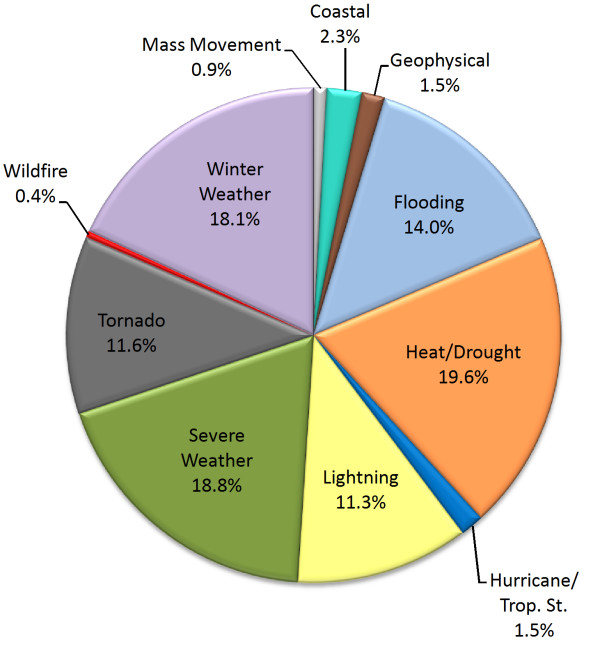
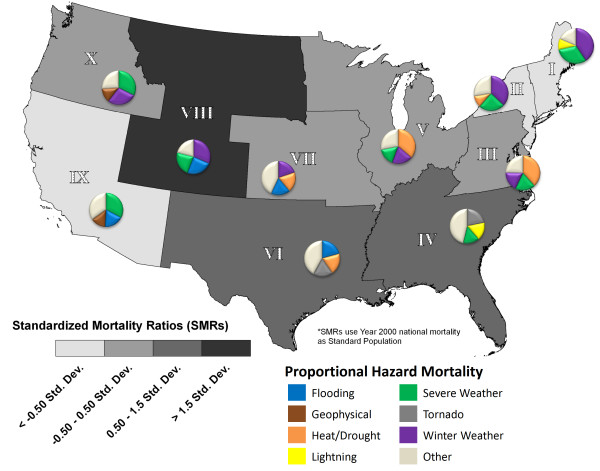
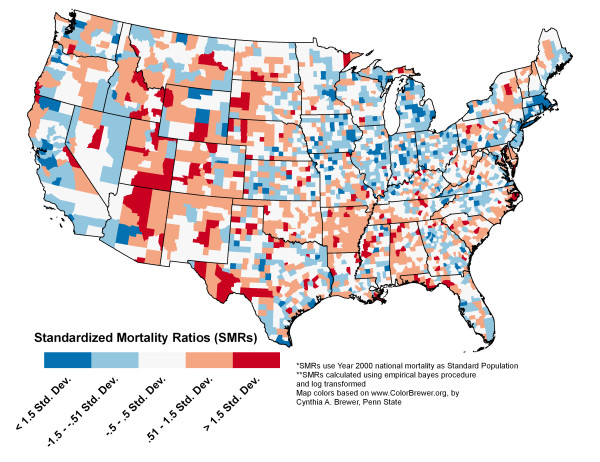
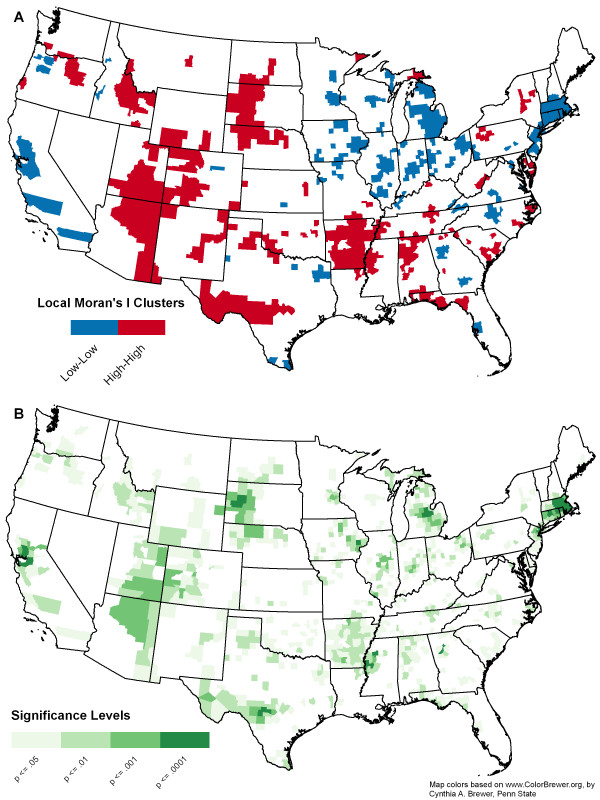
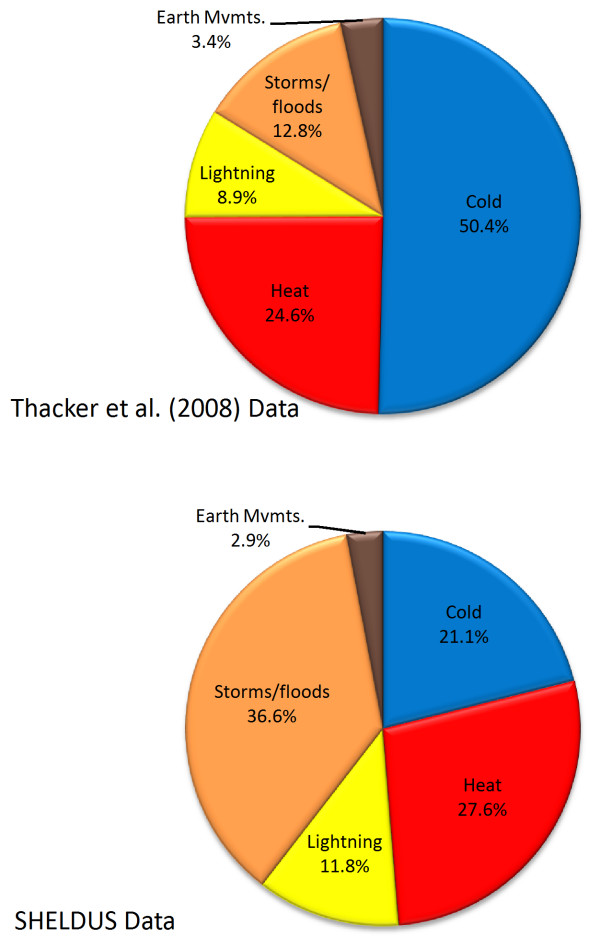
BACKGROUND: Studies on natural hazard mortality are most often hazard-specific (e.g. floods, earthquakes, heat), event specific (e.g. Hurricane Katrina), or lack adequate temporal or geographic coverage. This makes it difficult to assess mortality from natural hazards in any systematic way. This paper examines the spatial patterns of natural hazard mortality at the county-level for the U.S. from 1970-2004 using a combination of geographical and epidemiological methods. RESULTS: Chronic everyday hazards such as severe weather (summer and winter) and heat account for the majority of natural hazard fatalities. The regions most prone to deaths from natural hazards are the South and intermountain west, but sub-regional county-level mortality patterns show more variability. There is a distinct urban/rural component to the county patterns as well as a coastal trend. Significant clusters of high mortality are in the lower Mississippi Valley, upper Great Plains, and Mountain West, with additional areas in west Texas, and the panhandle of Florida, Significant clusters of low mortality are in the Midwest and urbanized Northeast. CONCLUSION: There is no consistent source of hazard mortality data, yet improvements in existing databases can produce quality data that can be incorporated into spatial epidemiological studies as demonstrated in this paper. It is important to view natural hazard mortality through a geographic lens so as to better inform the public living in such hazard prone areas, but more importantly to inform local emergency practitioners who must plan for and respond to disasters in their community.
Overview
The claims and statistics of this paper haven’t been checked yet.
Free: it reads the open-access text and checks the first 5 claims that cite a source we can check. Create a free account to check every claim.
Integrity signals
Registry
Cites
Statistics
Figures
Verification
Claims the paper makes
The claims and statistics of this paper haven’t been checked yet.
Free: it reads the open-access text and checks the first 5 claims that cite a source we can check. Create a free account to check every claim.
Self-check
Percentages, sums and reported differences re-computed from the paper’s own numbers.
The self-check needs the paper’s full text.
Citations
Cites
Local Indicators of Spatial Association—LISA
Anselin, L. (1995) · Geographical Analysis · doi:10.1111/j.1538-4632.1995.tb00338.x · Cited by 12,919
International Journal of Epidemiology
(1973) · Journal of Medical Genetics · doi:10.1136/jmg.10.1.100-a · Cited by 2,838
GeoDa: An Introduction to Spatial Data Analysis
Anselin, L., Syabri, I., & Kho, Y. (2006) · Geographical Analysis · doi:10.1111/j.0016-7363.2005.00671.x · Cited by 2,555 · cited 1×
“of SMRs had an average tendency to cluster in space [50].”
BackgroundOccupational and Environmental Medicine: Meeting the Growing Need for Clinical Services
Rosenstock, L., Rest, K. M., Benson, J. A., Cannella, J. M., Cohen, J., Cullen, M. R., Davidoff, F., Landrigan, P. J., Reynolds, R. C., Clever, L. H., et al. (1991) · New England Journal of Medicine · doi:10.1056/nejm199109263251305 · Cited by 1,627
Relation between elevated ambient temperature and mortality: A review of the epidemiologic evidence
Basu, R. (2002) · Epidemiologic Reviews · doi:10.1093/epirev/mxf007 · Cited by 1,381 · cited 1×
“Other research has focused on more general causes and circumstances of hazard mortality from specific hazard types such as floods [34], or heat [ 35 ], and generalized effects of climate on mortality [36,37].”
BackgroundHeat wave: a social autopsy of disaster in Chicago
(2003) · Choice Reviews Online · doi:10.5860/choice.40-4319 · Cited by 1,273 · cited 2×
“For example, a number of studies have been conducted on the patterns of death in specific disaster events such as Hurricane Andrew [30,31], the Northridge Earthquake [32,33], and the Chicago heat wave [ 10 ].”
BackgroundANNALS OF THE ASSOCIATION OF AMERICAN GEOGRAPHERS
Davis, W. M., Page, C., & Rivers, U. (2016) · Cited by 1,103
Spatial data analysis: theory and practice
(2004) · Choice Reviews Online · doi:10.5860/choice.41-3486 · Cited by 965
Global Perspectives on Loss of Human Life Caused by Floods
Jonkman, S. N. (2005) · Natural Hazards · doi:10.1007/s11069-004-8891-3 · Cited by 952
On the Mode of the Communication of Cholera
Johnson-Laird, P. N. (2008) · How We Reason · doi:10.1093/acprof:oso/9780199551330.003.0027 · Cited by 846
Research works printed but not linked: 2
- Bithell JF A classification of disease mapping methods Statistics in Medicine 2000 19 2203 2215 10960848 10.1002/1097-0258(20000915/30)19:17/18<2203::AID-SIM564>3.0.CO;2-U · DOI
- Wojdyla D Poletto L Cuesta C Badler C Passamonti ME Cluster Analysis with Constraints: Its Use with Breast Cancer Mortality Rates in Argentina Statistics in Medicine 1996 15 741 746 9132901 10.1002/(SICI)1097-0258(19960415)15:7/9<741::AID-SIM245>3.0.CO;2-9 · doi:10.1002/(sici)1097-0258(19960415)15:7/9<741::aid-sim245>3.0.co;2-9
Cited by
An adaptability limit to climate change due to heat stress
Sherwood, S. C., & Huber, M. (2010) · Proceedings of the National Academy of Sciences · doi:10.1073/pnas.0913352107 · Cited by 1,236
“Heat stress is already a leading cause of fatalities from natural phenomena (11, 12).”
BackgroundHoffman, J. S., Shandas, V., & Pendleton, N. (2020) · Climate · doi:10.3390/cli8010012 · Cited by 842
Disproportionate exposure to urban heat island intensity across major US cities
Hsu, A., Sheriff, G., Chakraborty, T., & Manya, D. (2021) · Nature Communications · doi:10.1038/s41467-021-22799-5 · Cited by 846
Flouris, A. D., Dinas, P. C., Ioannou, L. G., Nybo, L., Havenith, G., Kenny, G. P., & Kjellstrom, T. (2018) · The Lancet Planetary Health · doi:10.1016/s2542-5196(18)30237-7 · Cited by 579
Heat stroke: Role of the systemic inflammatory response
Leon, L. R., & Helwig, B. G. (2010) · Journal of Applied Physiology · doi:10.1152/japplphysiol.00301.2010 · Cited by 512
Harlan, S. L., & Ruddell, D. M. (2011) · Current Opinion in Environmental Sustainability · doi:10.1016/j.cosust.2011.01.001 · Cited by 503
“In North America, extreme heat is the most common cause of death among all weather-related disasters [33,34].”
BackgroundPeterson, T. C., Heim, R. R., Hirsch, R., Kaiser, D. P., Brooks, H., Diffenbaugh, N. S., Dole, R. M., Giovannettone, J. P., Guirguis, K., Karl, T. R., et al. (2013) · Bulletin of the American Meteorological Society · doi:10.1175/bams-d-12-00066.1 · Cited by 464
“Episodes of extreme heat and cold can have serious societal, agricultural, economic, and ecological impacts across the United States, with heat being the number one weather-related killer (National Weather Service 2012; Borden and Cutter 2008).”
BackgroundUrban–Rural Differences in Disaster Resilience
Cutter, S. L., Ash, K. D., & Emrich, C. T. (2016) · Annals of the American Association of Geographers · doi:10.1080/24694452.2016.1194740 · Cited by 354
“Computing standardized mortality ratios (which control for population size and the age of the population) confirms differences between urban and rural disaster mortality (Borden and Cutter 2008).”
BackgroundSelf-citationJesdale, B. M., Morello-Frosch, R., & Cushing, L. (2013) · Environmental Health Perspectives · doi:10.1289/ehp.1205919 · Cited by 313
Willett, K. M., & Sherwood, S. (2012) · International Journal of Climatology · doi:10.1002/joc.2257 · Cited by 303
Huang, G., Zhou, W., & Cadenasso, M. L. (2011) · Journal of Environmental Management · doi:10.1016/j.jenvman.2011.02.006 · Cited by 299
“For example, Borden and Cutter (2008) concluded that in the US heat/drought ranks the highest for natural hazards mortality (19.6”
BackgroundInfluentialTemporally Compound Heat Wave Events and Global Warming: An Emerging Hazard
Baldwin, J. W., Dessy, J. B., Vecchi, G. A., & Oppenheimer, M. (2019) · Earth's Future · doi:10.1029/2018ef000989 · Cited by 267
“%) of the mortality (Borden & Cutter, 2008).”
Gender, age and circumstances analysis of flood and landslide fatalities in Italy
Salvati, P., Petrucci, O., Rossi, M., Bianchi, C., Pasqua, A. A., & Guzzetti, F. (2018) · Science of The Total Environment · doi:10.1016/j.scitotenv.2017.08.064 · Cited by 234
Public perceptions of the health risks of extreme heat across US states, counties, and neighborhoods
Howe, P. D., Marlon, J. R., Wang, X., & Leiserowitz, A. (2019) · Proceedings of the National Academy of Sciences · doi:10.1073/pnas.1813145116 · Cited by 194
“Extreme heat is one of the most severe environmental hazards to public health, and it has numerous impacts on vital social systems, including food, water, energy, and infrastructure (1, 4).”
BackgroundThe Unsustainable Trend of Natural Hazard Losses in the United States
Gall, M., Borden, K. A., Emrich, C. T., & Cutter, S. L. (2011) · Sustainability · doi:10.3390/su3112157 · Cited by 174
“In terms of human losses, Borden and Cutter [28], for example, show that heat waves and high frequency events such as severe storms cause”
BackgroundSelf-citationWidespread Race and Class Disparities in Surface Urban Heat Extremes Across the United States
Benz, S. A., & Burney, J. A. (2021) · Earth's Future · doi:10.1029/2021ef002016 · Cited by 171
“Roughly 25% of all natural hazard mortality in the United States is due to heat exposure (Borden & Cutter, 2008) and heat waves are becoming more frequent, more intense, and are longer in season (Shiva et al., 2019; Wobus et al., 2018); understanding who is affected by urban heating and what…”
BackgroundDahl, K., Licker, R., Abatzoglou, J. T., & Declet-Barreto, J. (2019) · Environmental Research Communications · doi:10.1088/2515-7620/ab27cf · Cited by 168
Peek, L., Abramson, D. M., Cox, R. S., Fothergill, A., & Tobin-Gurley, J. (2017) · Handbooks of sociology and social research · doi:10.1007/978-3-319-63254-4_13 · Cited by 191
Natural hazard fatalities in Switzerland from 1946 to 2015
Badoux, A., Andres, N., Techel, F., & Hegg, C. (2016) · Natural hazards and earth system sciences · doi:10.5194/nhess-16-2747-2016 · Cited by 152
“While some authors have analysed natural hazard mortality data that include many hazard types (e.g. Shah, 1983; Noji, 1991; Borden and Cutter, 2008), the bulk of studies have focussed on a distinct hazard process.”
BackgroundCui, Y. Y., & de Foy, B. (2012) · Journal of Applied Meteorology and Climatology · doi:10.1175/jamc-d-11-0104.1 · Cited by 146
“Moreover, summer heatwave events can exacerbate the mortality resulting from heat stroke and air-quality problems (Meehl and Stocker 2007; Borden and Cutter 2008; Krayenhoff and Voogt 2010).”
BackgroundSocial vulnerability and short-term disaster assistance in the United States
Drakes, O. O., Tate, E. C., Rainey, J. L., & Brody, S. D. (2020) · International Journal of Disaster Risk Reduction · doi:10.1016/j.ijdrr.2020.102010 · Cited by 156
Li, X., & Ratti, C. (2018) · Urban forestry & urban greening · doi:10.1016/j.ufug.2018.02.013 · Cited by 145
“In the United States, extreme heat events are responsible for about one-fifth of natural hazard deaths (Borden and Cutter, 2008).”
BackgroundThe forgotten casualties redux: Women, children, and disaster risk
Cutter, S. L. (2017) · Global Environmental Change · doi:10.1016/j.gloenvcha.2016.12.010 · Cited by 131
Self-citationA Situation-Based Analysis of Flash Flood Fatalities in the United States
Terti, G., Ruin, I., Anquetin, S., & Gourley, J. J. (2017) · Bulletin of the American Meteorological Society · doi:10.1175/bams-d-15-00276.1 · Cited by 140
“…mortality studies worldwide, f lash f lood information is merged with other types of floods for analysis (e.g., Coates 1999; Ahern et al. 2005; Borden and Cutter 2008; Fitzgerald et al. 2010; Kellar and Schmidlin 2012); ii) many studies are case specific or are restricted to the analysis of…”
BackgroundLi, X., & Ratti, C. (2018) · Landscape and Urban Planning · doi:10.1016/j.landurbplan.2018.07.011 · Cited by 120
Changing climate extremes in the Northeast United States: observations and projections from CMIP5
Thibeault, J. M., & Seth, A. (2014) · Climatic Change · doi:10.1007/s10584-014-1257-2 · Cited by 129
“Extreme heat is the top weather-related cause of death in the US (Borden and Cutter 2008; Peterson et al. 2013).”
BackgroundBehavioural Perspectives of Outdoor Thermal Comfort in Urban Areas: A Critical Review
Mahgoub, M. E., & Hamza, N. (2019) · Atmosphere · doi:10.3390/atmos11010051 · Cited by 138
“This figure exceeds all other natural disasters combined, including hurricanes, lightning, tornadoes, floods, and earthquakes [8].”
BackgroundA predictive model of societal landslide risk in Italy
Rossi, M., Guzzetti, F., Salvati, P., Donnini, M., Napolitano, E., & Bianchi, C. (2019) · Earth-Science Reviews · doi:10.1016/j.earscirev.2019.04.021 · Cited by 118
Exploring spatial patterns and hotspots of diarrhea in Chiang Mai, Thailand
Chaikaew, N., Tripathi, N. K., & Souris, M. (2009) · International Journal of Health Geographics · doi:10.1186/1476-072x-8-36 · Cited by 126
“Spatial analyses, such as quadrant analysis (QA), nearest neighbour analysis (NNA) and spatial autocorrelation analysis (SAA), are commonly used to characterise spatial patterns of diseases, and to test whether there is a significant occurrence of clustering of disease in a particular area [14-16].”
BackgroundPersonal assessment of urban heat exposure: a systematic review
Nazarian, N., & LEE, J. K. W. (2021) · Environmental Research Letters · doi:10.1088/1748-9326/abd350 · Cited by 111
Managing the Risks from Climate Extremes at the Local Level
Cutter, S. L., Osman-Elasha, B., Campbell, J. R., Cheong, S., McCormick, S., Pulwarty, R. S., Supratid, S., Ziervogel, G., Calvo, E., Mutabazi, K. D., et al. (2012) · Cambridge University Press eBooks · doi:10.1017/cbo9781139177245.008 · Cited by 135
“Two recent all-hazards studies for the United States found that from 1970 to 2004, climate-sensitive hazards accounted for the majority of recorded fatalities from natural hazards (Borden and Cutter, 2008; Thacker et al., 2008).”
Self-citationIdentifying spatial clusters of flood exposure to support decision making in risk management
Röthlisberger, V., Zischg, A. P., & Keiler, M. (2017) · The Science of The Total Environment · doi:10.1016/j.scitotenv.2017.03.216 · Cited by 107
Climate Change, Environmental Justice, and Vulnerability: An Exploratory Spatial Analysis
Wilson, S., Richard, R. A., Joseph, L., & Williams, E. M. (2010) · Environmental Justice · doi:10.1089/env.2009.0035 · Cited by 116
“We will include these environmental indicators and data on natural disasters (e.g., floods, tornadoes, hurri-canes, fires, blizzards) used in previous studies of national-level mortality and social vulnerability trends (Cutter et al., 2003; Borden and Cutter, 2008) in future research.”
Krayenhoff, E. S., & Voogt, J. (2010) · Journal of Applied Meteorology and Climatology · doi:10.1175/2010jamc2356.1 · Cited by 98
“There is convincing evidence that heat more generally is the most deadly of all natural hazards faced in the United States (Borden and Cutter 2008).”
BackgroundTime-series Analysis of Heat Waves and Emergency Department Visits in Atlanta, 1993 to 2012
Chen, T., Sarnat, S., Grundstein, A., Winquist, A. G., & Chang, H. H. (2017) · Environmental Health Perspectives · doi:10.1289/ehp44 · Cited by 103
Project Coolbit: can your watch predict heat stress and thermal comfort sensation?
Nazarian, N., Liu, S., Kohler, M., Lee, J. K. W., Miller, C., Chow, W. T. L., Alhadad, S. B., Martilli, A., Quintana, M., Sunden, L., et al. (2021) · Environmental Research Letters · doi:10.1088/1748-9326/abd130 · Cited by 93
“Heat mortality is referred to as ‘private and silent deaths’ and even in developed countries such as Australia and the United States, heatwaves are reported to kill more than any other natural disaster [5, 7, 8].”
BackgroundConceptual frameworks facilitate integration for transdisciplinary urban science
Zhou, W., Pickett, S. T. A., & McPhearson, T. (2021) · npj Urban Sustainability · doi:10.1038/s42949-020-00011-9 · Cited by 102
Comparing flood mortality in Portugal and Greece (Western and Eastern Mediterranean)
Pereira, S., Diakakis, M., Deligiannakis, G., & Zêzere, J. L. (2017) · International Journal of Disaster Risk Reduction · doi:10.1016/j.ijdrr.2017.03.007 · Cited by 101
Kenny, G. P., Flouris, A. D., Yagouti, A., & Notley, S. R. (2018) · Temperature · doi:10.1080/23328940.2018.1456257 · Cited by 101
“Extreme heat events produce the highest death tolls when compared with all natural weather hazards [52,53], resulting in an unexpected quick and dramatic increase in short-term mortality among vulnerable populations [6,54].”
BackgroundFloridian heatwaves and extreme precipitation: future climate projections
Raghavendra, A., Dai, A., Milrad, S. M., & Cloutier-Bisbee, S. R. (2018) · Climate Dynamics · doi:10.1007/s00382-018-4148-9 · Cited by 88
“On the contrary, it is relatively nondescript and slow-moving weather patterns that are usually associated with heatwaves that result in more deaths than any other weather events (Borden and Cutter 2008).”
BackgroundSaverino, K. C., Routman, E., Lookingbill, T. R., Eanes, A. M., Hoffman, J. S., & Bao, R. (2021) · Sustainability · doi:10.3390/su13031511 · Cited by 101
Human injuries caused by Bangladesh’s cyclone sidr: an empirical study
Paul, B. K. (2009) · Natural Hazards · doi:10.1007/s11069-009-9480-2 · Cited by 109
Influences of climatic and population changes on heat-related mortality in Houston, Texas, USA
Marsha, A. L., Sain, S. R., Heaton, M. J., Monaghan, A. J., & Wilhelmi, O. V. (2016) · Climatic Change · doi:10.1007/s10584-016-1775-1 · Cited by 93
Voelkel, J., & Shandas, V. (2017) · Climate · doi:10.3390/cli5020041 · Cited by 78
“In the US and many other industrialized countries, heat events account for more than all other natural hazards combined [1,2].”
BackgroundReview of heat wave studies and related urban policies in South Asia
Kotharkar, R., & Ghosh, A. (2021) · Urban Climate · doi:10.1016/j.uclim.2021.100777 · Cited by 76
Scales of perception: public awareness of regional and neighborhood climates
Ruddell, D. M., Harlan, S. L., Grossman‐Clarke, S., & Chowell, G. (2011) · Climatic Change · doi:10.1007/s10584-011-0165-y · Cited by 79
“Extremely hot weather was the leading cause of death among weather-related fatalities in the US from 1995 to 2004 (NOAA 2006) and deaths caused by heat/drought ranked highest among natural hazard fatalities in the US from 1970 to 2004 (Borden and Cutter 2008).”
BackgroundMortality Patterns of Hydro‐Geomorphologic Disasters
Pereira, S., Zêzere, J. L., Quaresma, I. D., Santos, P. P., & Santos, M. (2015) · Risk Analysis · doi:10.1111/risa.12516 · Cited by 78
“(5) Hazard-specific studies on mortality associated with disasters can be found, for example, in Jonkman and Kelman,(6) Bourque et al.,(7) and Borden and Cutter.”
BackgroundInfluentialCharacteristics of Winter-Precipitation-Related Transportation Fatalities in the United States
Black, A. W., & Mote, T. L. (2015) · Weather Climate and Society · doi:10.1175/wcas-d-14-00011.1 · Cited by 68
“Counties with small populations see larger-thanexpected variations in mortality rates for each death and tend to show high mortality rates despite small numbers of overall deaths, in what is commonly termed the ‘‘small number problem’’ (Borden and Cutter 2008; Meza 2003; Lawson 2001).”
BackgroundNeonates in Ahmedabad, India, during the 2010 Heat Wave: A Climate Change Adaptation Study
Kakkad, K. M., Barzaga, M. L., Wallenstein, S. R., Azhar, G. S., & Sheffield, P. E. (2014) · Journal of Environmental and Public Health · doi:10.1155/2014/946875 · Cited by 70
“Also in the United States, heat waves cause more deaths annually than any other natural disaster [12].”
BackgroundWilhelmi, O. V., & Morss, R. E. (2012) · Environmental Science & Policy · doi:10.1016/j.envsci.2012.07.005 · Cited by 80
Dargin, J. S., Fan, C. H., & Mostafavi, A. (2021) · International Journal of Disaster Risk Reduction · doi:10.1016/j.ijdrr.2021.102043 · Cited by 84
Extreme temperature and mortality: evidence from China
Yang, Z., Wáng, Q., & Liu, P. (2018) · International Journal of Biometeorology · doi:10.1007/s00484-018-1635-y · Cited by 64
Characteristics of high impact weather and meteorological disaster in Shanghai, China
Shi, J., & Cui, L. (2011) · Natural Hazards · doi:10.1007/s11069-011-9877-6 · Cited by 66
“But these are often hazard-specific, qualitative, or lack adequate temporal or geographic coverage, making them difficult to assess the impacts of meteorological disasters in any systematic way ( Borden and Cutter 2008 ).”
BackgroundInfluentialDifferences in disaster preparedness between urban and rural communities in China
Chai, L., Han, Y., Han, Z., Wei, J., & Zhao, Y. (2020) · International Journal of Disaster Risk Reduction · doi:10.1016/j.ijdrr.2020.102020 · Cited by 63
Li, X. (2021) · Sustainable Cities and Society · doi:10.1016/j.scs.2021.103066 · Cited by 68
“The increasingly frequent and intense extreme heat events in large U. S. cities cause more climate-related mortalities than any other hazardous weather event (Borden & Cutter, 2008; Stone, Hess, & Frumkin, 2010).”
BackgroundDisaster resilience : a guide to the literature
Gilbert, S. W. (2010) · doi:10.6028/nist.sp.1117 · Cited by 66
“Borden et al. (2007) develop a Built-Environment Vulnerability Index and a Hazard Vulnerability Index for counties containing 132 metropolitan areas in the United States.”
BackgroundXi, C., Ren, C., Zhang, R., Wang, J., Feng, Z., Haghighat, F., & Cao, S. (2023) · Applied Energy · doi:10.1016/j.apenergy.2023.121197 · Cited by 58
Li, X., Chakraborty, T., & Wang, G. (2023) · Urban Climate · doi:10.1016/j.uclim.2023.101615 · Cited by 74
“The frequency of these events is increasing in large U.S. cities, and, on average, they are responsible for a greater number of climate-related annual fatalities than any other forms of extreme weather (Stone et al., 2010; Borden and Cutter, 2008).”
Impact of Natural Disasters on Health Outcomes and Cancer Among Older Adults
PROHASKA, T. R., & Peters, K. (2019) · The Gerontologist · doi:10.1093/geront/gnz018 · Cited by 60
Kim, S., Sinclair, V. A., Räisänen, J., & Ruuhela, R. (2017) · International Journal of Climatology · doi:10.1002/joc.5253 · Cited by 68
Policy Adoption and Policy Intensity: Emergence of Climate Adaptation Planning in U.S. States
Rai, S. (2020) · Review of Policy Research · doi:10.1111/ropr.12383 · Cited by 75
“Previous studies have also shown that coastal regions are relatively more vulnerable to impacts of severe storms and sea level rise (Borden & Cutter, 2008; Zahran et al., 2008).”
BackgroundResultConlon, K. C., Monaghan, A. J., Hayden, M. H., & Wilhelmi, O. V. (2016) · PLoS ONE · doi:10.1371/journal.pone.0148890 · Cited by 63
Urban Heat Island Intensification during Hot Spells—The Case of Paris during the Summer of 2003
Ridder, K. D., Maiheu, B., Lauwaet, D., Daglis, I. A., Keramitsoglou, I., Kourtidis, K., Manunta, P., & Paganini, M. (2016) · Urban Science · doi:10.3390/urbansci1010003 · Cited by 56
“Heat waves claim more victims than any other weather-related disaster [4].”
BackgroundHoughton, A., & Castillo‐Salgado, C. (2019) · Building and Environment · doi:10.1016/j.buildenv.2019.106523 · Cited by 61
“Can You Take the Heat?” Heat-Induced Health Symptoms Are Associated with Protective Behaviors
Esplin, E. D., Marlon, J. R., Leiserowitz, A., & Howe, P. D. (2019) · Weather Climate and Society · doi:10.1175/wcas-d-18-0035.1 · Cited by 60
Monaghan, A. J., Hu, L., Brunsell, N. A., Barlage, M. J., & Wilhelmi, O. V. (2014) · Journal of Geophysical Research Atmospheres · doi:10.1002/2013jd021227 · Cited by 58
Direct and indirect mortality in Florida during the 2004 hurricane season
McKinney, N., Houser, C., & Meyer‐Arendt, K. J. (2010) · International Journal of Biometeorology · doi:10.1007/s00484-010-0370-9 · Cited by 61
“In comparison, heart- and cancerrelated deaths account for 34% and 19% of all deaths attributable to the storms, and over a period of up to 2 months following landfall (Table 3). It is reasonable to expect that the number of storm-related deaths and the cause of mortality will be different between the urban and rural…”
ResultSewell, T., Stephens, R. E., Dominey-Howes, D., Bruce, E., & Perkins-Kirkpatrick, S. (2016) · Scientific Reports · doi:10.1038/srep36369 · Cited by 51
Sharpe, J. D., & Wolkin, A. F. (2021) · Public Health Reports · doi:10.1177/00333549211047235 · Cited by 56
Robine, J., Michel, J.-P., & Herrmann, F. R. (2012) · Mechanisms of Ageing and Development · doi:10.1016/j.mad.2012.04.004 · Cited by 58
Recent spatiotemporal patterns in temperature extremes across conterminous United States
Mutiibwa, D., Vavrus, S., McAfee, S. A., & Albright, T. P. (2015) · Journal of Geophysical Research Atmospheres · doi:10.1002/2015jd023598 · Cited by 52
“These extreme warm events cause the highest number of fatalities among weather related events across CONUS [Herring et al., 2014; Borden and Cutter, 2008; IPCC AR5: Climate Change, 2013].”
BackgroundTropical storms and mortality under climate change
Pugatch, T. (2019) · World Development · doi:10.1016/j.worlddev.2019.01.009 · Cited by 51
Heat exposure on farmers in northeast Ghana
Studies, M. D., Frimpong, K., van Etten, E. J. B., Oosthuzien, J., & Nunfam, V. F. (2016) · International Journal of Biometeorology · doi:10.1007/s00484-016-1219-7 · Cited by 55
Spatiotemporal characteristics of earthquake disaster losses in China from 1993 to 2016
Li, X., Li, Z., Yang, J., Liu, Y., Fu, B., Qi, W., & Fan, X. (2018) · Natural Hazards · doi:10.1007/s11069-018-3425-6 · Cited by 42
Cutler, M., Marlon, J. R., Howe, P. D., & Leiserowitz, A. (2018) · Weather Climate and Society · doi:10.1175/wcas-d-17-0105.1 · Cited by 48
“Heat is the leading cause of weather-related mortality in the United States and is a hazard with which much of the population has direct experience (Borden and Cutter 2008).”
BackgroundExamining runner's outdoor heat exposure using urban microclimate modeling and GPS trajectory mining
Li, X., & Wang, G. (2021) · Computers Environment and Urban Systems · doi:10.1016/j.compenvurbsys.2021.101678 · Cited by 45
“One-fifth of hazard deaths are caused by extreme heat events in the United States (Borden & Cutter, 2008).”
BackgroundSocio-demographic inequalities in the impacts of extreme temperatures on population mobility
Gu, X., Chen, P., & Fan, C. H. (2023) · Journal of Transport Geography · doi:10.1016/j.jtrangeo.2023.103755 · Cited by 49
Franzke, C. L. E., & Torelló‐Sentelles, H. (2020) · Climatic Change · doi:10.1007/s10584-020-02825-z · Cited by 48
Ethnicity, income, and disaster preparedness in Deep South Texas, United States
Donner, W. R., & Monforti, J. L. (2018) · Disasters · doi:10.1111/disa.12277 · Cited by 45
Climate Change and Heat Exposure: Impact on Health in Occupational and General Populations
Kenny, G. P., Notley, S. R., Flouris, A. D., & Grundstein, A. (2019) · Springer eBooks · doi:10.1007/978-3-030-27805-2_12 · Cited by 50
Quantification and evaluation of intra-urban heat-stress variability in Seoul, Korea
Jänicke, B., Holtmann, A., Kim, K. R., Kang, M., Fehrenbach, U., & Scherer, D. (2018) · International Journal of Biometeorology · doi:10.1007/s00484-018-1631-2 · Cited by 43
Analysis of Flood Fatalities in the United States, 1959–2019
Han, Z., & Sharif, H. O. (2021) · Water · doi:10.3390/w13131871 · Cited by 54
“However, Borden and Cutter [20] listed flooding as the fourth deadliest weather-related disaster behind heat/drought, severe weather, and winter weather.”
BackgroundXu, Z., Watzek, J. T., Phung, D. T., Oberai, M. M., Rutherford, S., & Bach, A. J. E. (2023) · International Journal of Biometeorology · doi:10.1007/s00484-023-02525-0 · Cited by 45
“Even in advanced economies, extreme heat is the most deadly natural hazard (Borden and Cutter 2008).”
BackgroundHoughton, A., Prudent, N., Scott, J. E., Wade, R., & Luber, G. (2011) · Applied Geography · doi:10.1016/j.apgeog.2011.07.014 · Cited by 42
Myung, H.-N., & Jang, J.-Y. (2011) · Environmental Health · doi:10.1186/1476-069x-10-82 · Cited by 39
“Borden KA, Cutter SL: Spatial patterns of natural hazards mortality in the United States.”
BackgroundCooperman, A. D. (2017) · Political Analysis · doi:10.1017/pan.2017.17 · Cited by 38
“Weather indicators and natural hazards, such as precipitation, temperature, wind, air particulates from fire or volcanic eruptions, and disasters such as tornadoes or hurricanes (Borden and Cutter 2008), are spatially clustered.”
BackgroundHeat mortality in Berlin – Spatial variability at the neighborhood scale
Schuster, C., Burkart, K. G., & Lakes, T. (2014) · Urban Climate · doi:10.1016/j.uclim.2014.10.008 · Cited by 47
Local modelling of U.S. mortality rates: A multiscale geographically weighted regression approach
Cupido, K., Fotheringham, A. S., & Jevtić, P. (2020) · Population Space and Place · doi:10.1002/psp.2379 · Cited by 37
Cabral, V. C., Reis, F. A. G. V., Veloso, V. Q., Corrêa, C. V. D. S., Kuhn, C. E. S., & Zarfl, C. (2022) · Landslides · doi:10.1007/s10346-022-01984-7 · Cited by 33
“An effective database should cover a long period of time with reliable information about the socioeconomic losses (Borden and Cutter 2008), and a consistent documentation of natural disasters in Brazil is recent (from 1991) when compared to European and North American countries (e.”
BackgroundWang, P., Yang, Y., Xue, D., Qu, Y., Tang, J., Leung, L.-Y. R., & Liao, H. (2022) · Journal of Climate · doi:10.1175/jcli-d-22-0279.1 · Cited by 38
Fatalities Caused by Hydrometeorological Disasters in Texas
Paul, S. H., Sharif, H. O., & Crawford, A. M. (2018) · Geosciences · doi:10.3390/geosciences8050186 · Cited by 32
Heat warnings and avoidance behavior: evidence from a bike-sharing system
Rabassa, M. J., Grand, M. C., & García-Witulski, C. (2020) · Environmental Economics and Policy Studies · doi:10.1007/s10018-020-00275-6 · Cited by 34
“In the United States, heat and heat-induced droughts ranked as the number one cause of death among total hazard mortality between 1970 and 2004 (Borden and Cutter (2008)). Heat stress also derives in productivity losses due to absenteeism and less productive presenteeism (Zander et al. (2015)).”
BackgroundVehicle-Related Flood Fatalities in Texas, 1959–2019
Han, Z., & Sharif, H. O. (2020) · Water · doi:10.3390/w12102884 · Cited by 33
Zhou, Y., Li, N., Wu, W., Wu, J., Gu, X., & Ji, Z. (2013) · Natural Hazards · doi:10.1007/s11069-013-0738-3 · Cited by 32
“floods, earthquake, and drought) and qualitative, which makes it difficult to assess the impact of NDs in any systematic way (Borden and Cutter 2008).”
BackgroundInfluentialPhysical, Thermal, and Mechanical Properties of Snow, Ice, and Permafrost
Arenson, L. U., Colgan, W., & Marshall, H. (2014) · Elsevier eBooks · doi:10.1016/b978-0-12-394849-6.00002-0 · Cited by 33
“This winter mortality is similar to the mortality stemming from hazards such as extreme heat (20 percent), severe summer weather (28 percent), floods (14 percent), and lightning (12 percent) (Borden and Cutter, 2008).”
BackgroundSpatial distribution patterns of global natural disasters based on biclustering
Shen, S., Cheng, C., Song, C., Yang, J., Yang, S., Su, K., Yuan, L., & Chen, X. (2018) · Natural Hazards · doi:10.1007/s11069-018-3279-y · Cited by 34
“This method has been widely used to analyze bioinformatics (Cheng and Church 2000; Pontes et al. 2015), juvenile crime (Izenman et al. 2011), and natural disasters (Shen et al. 2016).”
MethodRelationship Between Climate Change, Natural Disaster, and Resilience in Rural and Urban Societies
Javadinejad, S., Eslamian, S., Ostad‐Ali‐Askari, K., Nekooei, M., Azam, N., Talebmorad, H., Hasantabar-Amiri, A., & Mousavi, M. (2018) · Springer eBooks · doi:10.1007/978-3-319-71025-9_189-1 · Cited by 33
Zhang, L., Fan, X., Zhong, Z., Xu, G., & Shen, J. (2015) · The American Journal of Emergency Medicine · doi:10.1016/j.ajem.2015.01.047 · Cited by 33
“It is an international hazard as demonstrated by the high incidence of death (N20000 individuals) during the 2003 heat wave in Italy [2] and more than 200 deaths in the United States every year [3].”
BackgroundSpatial and temporal analysis of natural hazard mortality in Nepal
Aksha, S. K., Juran, L., & Resler, L. M. (2018) · Environmental Hazards · doi:10.1080/17477891.2017.1398630 · Cited by 29
“…calculated through local spatial statistics (as opposed to simple visual interpretation), because sizes, shapes, and patterns harbor the potential for spurious rate variations and because polygons can create the illusion of clusters that may not be statistically significant (Borden & Cutter, 2008).”
BackgroundSidiqui, P., Tariq, M. A. U. R., & Ng, A. W. M. (2022) · Sustainability · doi:10.3390/su14052777 · Cited by 29
Metadata
- Authors
- Borden, K. A., & Cutter, S. L.
- Affiliations
- University of South Carolina (US)
- Corresponding author
- Cutter, Susan L
- ORCID
- Cutter, Susan L
- Venue
- International Journal of Health Geographics
- Published
- 2008
- Volume
- 7
- Issue
- 1
- Pages
- 64
- ISSN
- 1476-072X (ISSN-L)
- PMC
- PMC2614968
- OpenAlex
- W2102067163
- Semantic Scholar
- 267303a52796f98798f976ca29eef8148e677e16
- Cited by
- 220
- References
- 59
- Citations by year
- 2026: 5 · 2025: 10 · 2024: 14 · 2023: 14 · 2022: 13 · 2021: 17 · 2020: 17 · 2019: 20 · 2018: 15 · 2017: 14 · 2016: 13 · 2015: 10 · 2014: 12 · 2013: 5 · 2012: 10
- FWCI
- 6.91
- Type
- journal article
- Language
- en
- Open access
- gold
- doi.org
- Licence
- cc-by
- Locations
- International Journal of Health Geographics (publishedVersion, cc-by)
- PubMed Central (publishedVersion, cc-by)
- PubMed (publishedVersion)
- DOAJ (DOAJ: Directory of Open Access Journals) (submittedVersion)
- Funders
- U.S. Department of Homeland Security (N00140510629)
- Topics
- Physical Sciences › Environmental Science › Health, Toxicology and Mutagenesis › Climate Change and Health Impacts
- Social Sciences › Sociology and Political Science › Disaster Management and Resilience
- Health Sciences › Health Professions › Emergency Medical Services › Disaster Response and Management
- Keywords
- spatial patterns, county-level mortality, severe weather, heat-related mortality, spatial clustering, urban-rural differences, disaster preparedness, United States
- MeSH terms
- Demography, Disasters, Humans, Mortality, United States, Cluster Analysis, Earthquakes, Cyclonic Storms, Floods
About these checks
Registry, retraction, Cites and statistics results are computed, not judged, with one exception: a printed reference that no index lists is read once by a model before it counts as a citation error. Claims are extracted by a model and kept only when their quote appears verbatim in the text; each cited source is then checked, with a model’s help, for whether it says what the claim relies on. Those verdicts can be wrong — read the claim’s quote and the cited source before relying on one.
Statistics and arithmetic are recomputed, not judged.
Confidence bands are shown only for fields calibrated on our annotated test set. None is calibrated yet, so no band is shown.
What counts as a claim ›How we measure confidence ›How we check this ›
Are you an author, or do you see a problem with this page? Request a review
Data sources
Bibliographic data: Semantic Scholar, OpenAlex, Crossref.
Contains information from the Semantic Scholar Academic Graph Datasets, made available under the ODC Attribution License (ODC-BY 1.0).
Semantic Scholar’s data is described in: Kinney, R., et al. (2023). The Semantic Scholar Open Data Platform. arXiv:2301.10140.
