

Lifestyle impact and the biology of the human scrotum
Open accessThe DOI matches its Crossref record; 50 of the 52 references it cites were found in a registry or an index, and 2 are not checked yet; none of the 58 sources its claims cite is checked for support yet.
Abstract
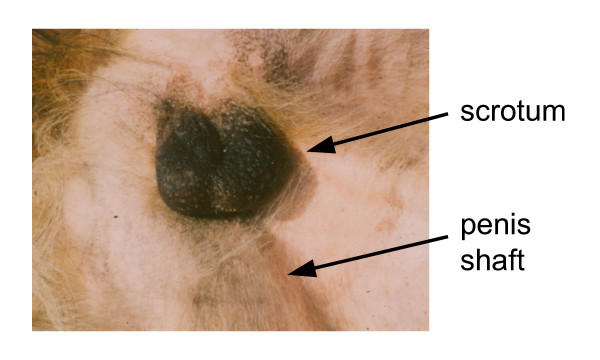
The possession of a scrotum to contain the male gonads is a characteristic feature of almost all mammals, and appears to have evolved to allow the testes and epididymis to be exposed to a temperature a few degrees below that of core body temperature. Analysis of cryptorchid patients, and those with varicocele suggest that mild scrotal warming can be detrimental to sperm production, partly by effects on the stem cell population, and partly by effects on later stages of spermatogenesis and sperm maturation. Recent studies on the effects of clothing and lifestyle emphasize that these can also lead to chronically elevated scrotal temperatures. In particular, the wearing of nappies by infants is a cause for concern in this regard. Together all of the evidence indirectly supports the view that lifestyle factors in addition to other genetic and environmental influences could be contributing to the secular trend in declining male reproductive parameters. The challenge will be to provide relevant and targeted experimental results to support or refute the currently circumstantial evidence.
Checked 2026-11-27 · 2 references not checked yet
Overview
CoChat Summary
TL;DR
This narrative review argues that the mammalian scrotum evolved to keep the testes and epididymis several degrees below core body temperature, and that lifestyle-related scrotal warming may impair sperm production, maturation, and storage. It concludes that clothing, posture, sedentary behavior, and nappy use could contribute to secular declines in male reproductive parameters, but that the evidence remains largely circumstantial.
Key findings
- Normal scrotal surface temperature is approximately 34°C in a normally clothed man walking or maintaining a loose stance; intratesticular temperature is estimated 0.1–0.6°C higher. Clothing contributes about 0.5–1.0°C, sitting with thighs apart raises scrotal temperature to about 35°C, and sitting with thighs together quickly raises it above 36°C, i.e. to abdominal temperature.
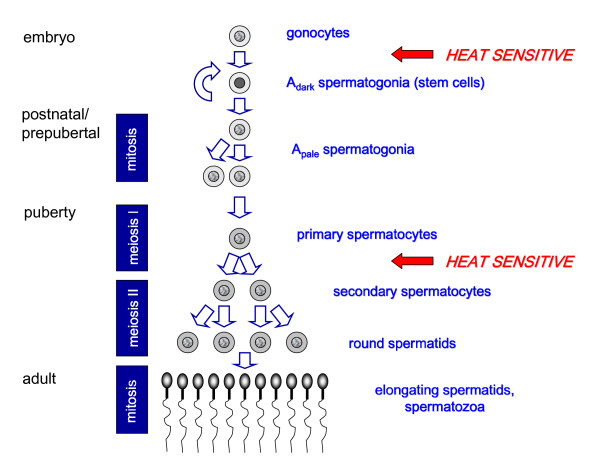
- Cryptorchidism and varicocele are associated with impaired spermatogenesis; mild testicular heating increases germ cell apoptosis, and the number of Adark spermatogonia in testis biopsies is inversely related to the age at orchidopexy, with earlier descent improving chances of full adult spermatogenesis.
- Nappy use increases scrotal temperature by 1–2°C compared with air exposure, with little difference between modern disposable and cloth nappies plus plastic cover; wet or soiled nappies may raise temperature further.
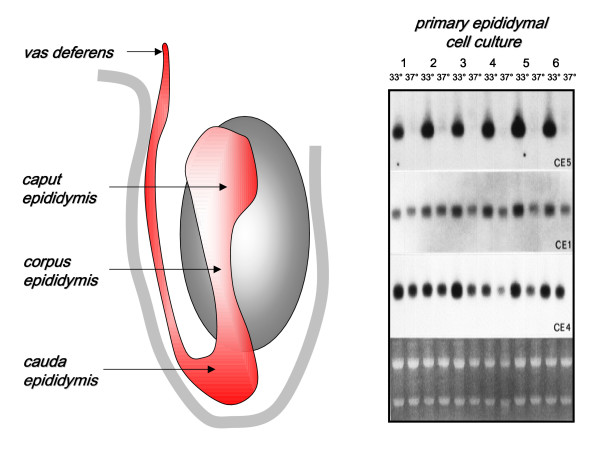
- In adult men, sedentary occupations and vehicle driving are associated with higher average scrotal temperatures and lower average sperm production or reduced fertility; nocturnal scrotal cooling in men with oligozoospermia or oligoasthenozoospermia improved semen quality over 12 weeks. Epididymal cell culture showed CD52 mRNA was almost completely and specifically inhibited by switching from scrotal temperature (33°C) to abdominal temperature (37°C).
Methods
- Narrative review/synthesis of cited human, animal, and cell-culture literature; no primary study design, sample, or statistical analysis is reported.
- Sources discussed include studies of cryptorchidism, varicocele, clothing and posture, nappy use, sedentary behavior and driving, nocturnal scrotal cooling, and epididymal epithelial cell cultures.
- Main analysis is qualitative and interpretive, linking scrotal thermoregulation, testicular pathology, lifestyle heat exposure, and epididymal function to male reproductive parameters.
Limitations
- Stated: most evidence is circumstantial; direct proof of lifestyle effects remains “untestable” in the context of evidence-based medicine, partly because of the absence of appropriate matched control groups, such as men who do not wear clothes or infants who wear no nappies.
- Stated: animal models are not biologically comparable to humans because humans have a prepubertal testicular quiescence of more than 8 years, whereas rodents have about 2 weeks and sheep or dogs up to 2–3 months; humans may also be genetically subfertile and more predisposed to subtle environmental influences.
- Stated and evident: it is not possible to distinguish pure effects of unnatural testicular heating from effects linked to the original cause of cryptorchidism or to endocrine disruptors; there is no information on early epididymal development or long-term adaptive effects. Evident: as a narrative review, it reports no systematic search, meta-analysis, or original data.
Model-written summary. Check it against the paper before relying on it.
Integrity signals
Registry
Cites
Statistics
Figures
Verification
Claims the paper makes
0 Valid · 2 Not valid · 35 Not checked · 17 Own results and interpretations
In the paper
“The possession of a scrotum to contain the male gonads is a characteristic feature of almost all mammals, and appears to have evolved to allow the testes and epididymis to be exposed to a temperature a few degrees below that of core body temperature.”
- Also stated in: § Background · hedged
“The most plausible evolutionary explanation relates to the requirement of spermatogenesis for an optimum temperature lower than core abdominal temperature [1].”
§ Lifestyle impact and the biology of the human scrotum > Abstract
What the sources say
- Not checked yetcites [1] Werdelin L Nilsonne A The evolution of the scrotum and testicular descent in mammals: a phylogenetic view J Theor Biol 1999 196 61 72 9892556 10.1006/jtbi.1998.0821 source
hedgedstates a cause- Asserted: passes — The authors put it forward as true.
- Checkable: passes — It can be checked against evidence.
- Load-bearing: passes — The paper’s conclusions depend on it.
- Based: passes — The paper gives a reason why it holds.
- Also stated in: § Background · hedged
A conclusion the paper draws from its own results — it cites no other source for it, so there is none to check. The quote shows it is in the paper.
In the paper
“Together, these features point to an environmental influence, which is associated with increased industrialization.”
§ Lifestyle impact and the biology of the human scrotum > Conclusions and consequences
plainstates an association- Asserted: passes — The authors put it forward as true.
- Checkable: passes — It can be checked against evidence.
- Load-bearing: passes — The paper’s conclusions depend on it.
- Based: passes — The paper gives a reason why it holds.
None of the sources cited for this claim have been checked yet.
In the paper
“Men with oligozoospermia or oligoasthenozoospermia who were allowed to sleep with a small apparatus which permitted nocturnal scrotal cooling showed significant improvements in semen quality over a period of 12 weeks [32,33].”
§ Lifestyle impact and the biology of the human scrotum > Lifestyle factors and scrotal function
What the sources say
- Not checked yetcites [32] Jung A Eberl M Schill WB Improvement of semen quality by nocturnal scrotal cooling and moderate behavioural change to reduce genital heat stress in men with oligoasthenoteratozoospermia Reproduction 2001 121 595 603 11277880 10.1530/rep.0.1210595 source
- Not checked yetcites [33] Jung A Schill WB Schuppe HC Improvement of semen quality by nocturnal scrotal cooling in oligozoospermic men with a history of testicular maldescent Int J Androl 2005 28 93 98 15811070 10.1111/j.1365-2605.2004.00517.x source
plainstates a cause- Asserted: passes — The authors put it forward as true.
- Checkable: passes — It can be checked against evidence.
- Load-bearing: passes — The paper’s conclusions depend on it.
- Based: passes — The paper gives a reason why it holds.
In the paper
“Recent observations show that this is incorrect, and that abdominal temperature can markedly influence the number of spermatogonial stem cells that are available to generate all sperm in later life [20].”
§ Lifestyle impact and the biology of the human scrotum > Scrotal pathology and temperature
What the sources say
- Not checked yetcites [20] Hadziselimovic F Herzog B The importance of both an early orchidopexy and germ cell maturation for fertility Lancet 2001 358 1156 1157 11597673 10.1016/S0140-6736(01)06274-2 source
plainstates a cause- Asserted: passes — The authors put it forward as true.
- Checkable: passes — It can be checked against evidence.
- Load-bearing: passes — The paper’s conclusions depend on it.
- Based: passes — The paper gives a reason why it holds.
None of the sources cited for this claim have been checked yet.
In the paper
“Recent studies on the effects of clothing and lifestyle emphasize that these can also lead to chronically elevated scrotal temperatures.”
§ Lifestyle impact and the biology of the human scrotum > Abstract
What the sources say
- Not checked yetcites [32] Jung A Eberl M Schill WB Improvement of semen quality by nocturnal scrotal cooling and moderate behavioural change to reduce genital heat stress in men with oligoasthenoteratozoospermia Reproduction 2001 121 595 603 11277880 10.1530/rep.0.1210595 source
- Not checked yetcites [33] Jung A Schill WB Schuppe HC Improvement of semen quality by nocturnal scrotal cooling in oligozoospermic men with a history of testicular maldescent Int J Androl 2005 28 93 98 15811070 10.1111/j.1365-2605.2004.00517.x source
- Not checked yetcites [36] Hjolland NHI Storgaard L Ernst E Bonde JP Olsen J The relation between daily activities and scrotal temperature Reprod Toxicol 2002 16 209 214 12128093 10.1016/S0890-6238(02)00026-6 source
- Not checked yetcites [37] Jung A Leonhardt F Schill WB Schuppe HC Influence of the type of undertrousers and physical activity on scrotal temperature Hum Reprod 2005 20 1022 1027 15618251 10.1093/humrep/deh697 source
plainstates a cause- Asserted: passes — The authors put it forward as true.
- Checkable: passes — It can be checked against evidence.
- Load-bearing: passes — The paper’s conclusions depend on it.
- Based: passes — The paper gives a reason why it holds.
28 more claims
Create a free account to see all 54 claims and to verify the 58 references still open.
- It may state two separate claims as one. 19
- Probably not a substantial claim. 3
Claims other papers make about this one
Each is checked against this paper’s own text: does it say what the citing paper says it does?
In the citing paper
“Moreover, normal testicular function requires a substantial temperature reduction of 2–8 °C below core body temperature [89].”
From Mechanisms of Hormonal, Genetic, and Temperature Regulation of Germ Cell Proliferation, Differentiation, and Death During Spermatogenesis (2025) · cites this paper as [89]
Citations
Cites
Skakkebæk, N. E., Rajpert-De Meyts, E., & Main, K. M. (2001) · Human Reproduction · doi:10.1093/humrep/16.5.972 · Cited by 2,260
Main, K. M., Mortensen, G. K., Kaleva, M. M., Boisen, K. A., Damgaard, I. N., Chellakooty, M., Schmidt, I. M., Suomi, A.-M., Virtanen, H. E., Petersen, J. H., et al. (2006) · Environmental Health Perspectives · doi:10.1289/ehp.8075 · Cited by 696
FOSTER, P. M. D. (2006) · International Journal of Andrology · doi:10.1111/j.1365-2605.2005.00563.x · Cited by 578
The Parkes Lecture Heat and the testis
Setchell, B. P. (1998) · Reproduction · doi:10.1530/jrf.0.1140179 · Cited by 418
Anatomical and Functional Aspects of Testicular Descent and Cryptorchidism*
Hutson, J. M., Hasthorpe, S., & Heyns, C. F. (1997) · Endocrine Reviews · doi:10.1210/edrv.18.2.0298 · Cited by 400
A Population-Level Decline in Serum Testosterone Levels in American Men
Travison, T. G., Araujo, A. B., O’Donnell, A. B., Kupelian, V., & McKinlay, J. B. (2007) · The Journal of Clinical Endocrinology & Metabolism · doi:10.1210/jc.2006-1375 · Cited by 335
Pathways of endocrine disruption during male sexual differentiation and masculinisation
Sharpe, R. M. (2006) · Best Practice & Research Clinical Endocrinology & Metabolism · doi:10.1016/j.beem.2005.09.005 · Cited by 302
The importance of both an early orchidopexy and germ cell maturation for fertility
Hadziselimovic, F., & Herzog, B. (2001) · The Lancet · doi:10.1016/s0140-6736(01)06274-2 · Cited by 233
The molecular basis of cryptorchidism
Ivell, R., & Hartung, S. (2003) · Molecular Human Reproduction · doi:10.1093/molehr/gag025 · Cited by 180
Self-citationKubota, Y., Temelcos, C., Bathgate, R. A. D., Smith, K. J., Scott, D., Zhao, C., & Hutson, J. M. (2002) · Molecular Human Reproduction · doi:10.1093/molehr/8.10.900 · Cited by 160
Cited by
Items 101–194 of 194
Association of Obesity with Infertility among Pakistani Men: A Case Control Study
Zahid, N., Saleem, S., Azam, I., & Moatter, T. (2015) · Open Journal of Epidemiology · doi:10.4236/ojepi.2015.53025 · Cited by 13
Ramírez, N. D., Tissera, A. D., Molina, R. I., Olmedo, J. J., Molina, H. G., Mangeaud, A. P., & Martini, A. C. (2023) · Journal of Human Reproductive Sciences · doi:10.4103/jhrs.jhrs_101_23 · Cited by 13
Testicular histopathology in rats co-exposed to heat and psychological stressors
Abdollahi, F., Amanpour, S., Muhammadnajad, A., Barzegar, F., & Dehghan, S. F. (2023) · Heliyon · doi:10.1016/j.heliyon.2023.e14146 · Cited by 13
Diet-induced obesity alters kinematics of rat spermatozoa
Oyeyipo, I. P., Maartens, P. J., & du Plessis, S. S. (2015) · Asian Pacific Journal of Reproduction · doi:10.1016/j.apjr.2015.06.008 · Cited by 11
Wang, K., Suo, Y., Li, X., Nagaoka, K., Li, Y., & Li, C. (2024) · Animal Advances · doi:10.48130/animadv-0024-0006 · Cited by 11
Oxidative stress and male infertility – a clinical perspective
Korneyev, I. A. K. (2022) · Urologiia · doi:10.18565/urology.2022.1.102-108 · Cited by 11
Paskeh, M. D. A., Babaei, N., Hashemi, M., Doosti, A., Hushmandi, K., Entezari, M., & Samarghandian, S. (2023) · Journal of Trace Elements in Medicine and Biology · doi:10.1016/j.jtemb.2023.127320 · Cited by 10
Male infertility along with the era of coronavirus infection SARS-CoV-2
Геннадьевна, К. Н., Druzhinina, N. K., & Myandina, G. I. (2022) · Research and Practical Medicine Journal · doi:10.17709/2410-1893-2022-9-4-12 · Cited by 10
Dong, T., Yu, Q., Qing, X., Ma, X. L., Dong, W., Shi, J., & Li, H. G. (2016) · Andrology · doi:10.1111/andr.12238 · Cited by 10
Heat‐induced changes in the expression and localisation of PGC‐1 α in the mice testis
Das, M., Marak, C. C., Jeremy, M., Gurusubramanian, G., & Roy, V. K. (2020) · Andrologia · doi:10.1111/and.13713 · Cited by 10
Rao, M., Ma, S., Hu, S., Lei, H., Wu, Y., Zhou, Y., Xia, W., & Zhu, C. (2017) · Oncotarget · doi:10.18632/oncotarget.20719 · Cited by 9
Could sperm quality be affected by a building environment? A literature review
Song, G. (2009) · Building and Environment · doi:10.1016/j.buildenv.2009.09.016 · Cited by 8
The Onset of Heat-Induced Testicular Calcification in Mice
Chihara, M., Nakamura, T., Sakakibara, N., Otsuka, S., Ichii, O., & Kon, Y. (2014) · American Journal Of Pathology · doi:10.1016/j.ajpath.2014.06.004 · Cited by 8
Chihara, M., Nakamura, T., Otsuka-Kanazawa, S., Ichii, O., Elewa, Y. H. A., & Kon, Y. (2015) · Andrology · doi:10.1111/andr.12082 · Cited by 8
Cai, T., Boeri, L., Miacola, C., Palumbo, F., Albo, G., Ditonno, P., Racanelli, V., Palmieri, A., Johansen, T. E. B., & Aversa, A. (2024) · Minerva Endocrinology · doi:10.23736/s2724-6507.24.04218-0 · Cited by 7
Neeraja, P., & Siva Kumar, T. (2024) · International Journal of Recent Innovations in Medicine and Clinical Research · doi:10.18231/j.ijrimcr.2019.002 · Cited by 7
Conserved microRNA mediates heating tolerance in germ cells versus surrounding somatic cells
Wu, Y., Wang, Y., Liu, Q., Zhu, L. J., Gao, H., Cui, M., Liu, J., Zhao, P., Liu, J., Chen, L., et al. (2019) · RNA Biology · doi:10.1080/15476286.2019.1639311 · Cited by 7
Moeinian, N., Fathabadi, F. F., Norouzian, M., Abbaszadeh, H., Nazarian, H., Afshar, A., Soltani, R., Aghajanpour, F., Aliaghaei, A., Farahani, R. M., et al. (2024) · Daehan saengsik uihak hoeji/Clinical and experimental reproductive medicine · doi:10.5653/cerm.2023.06751 · Cited by 7
Wang, Y., Jin, S.-H., Li, N., Liu, J., Shi, H. R., & Li, Y. (2014) · Gene · doi:10.1016/j.gene.2014.10.023 · Cited by 7
Yon, J., Kim, J. S., Lin, C., Park, S. G., Gwon, L. W., Lee, J. G., Baek, I., Nahm, S., & Nam, S.-Y. (2019) · Korean Journal of Veterinary Research · doi:10.14405/kjvr.2019.59.2.59 · Cited by 6
Relación entre la actividad física, el sedentarismo y la calidad seminal
Acevedo, P. C. L., Mayorga-Torres, B. J. M., & Maya, W. D. C. (2014) · Revista chilena de obstetricia y ginecología · doi:10.4067/s0717-75262014000400012 · Cited by 6
Erasmus, N. (2012) · University of the Western Cape Electronic Theses and Dissertations Repository (University of the Western Cape) · Cited by 6
A concise overview of mammalian spermatogenesis
Sultana, T., & Šutovský, P. (2026) · Systems Biology in Reproductive Medicine · doi:10.1080/19396368.2025.2593339 · Cited by 5
The role of obesity in male fertility
Mermer, M., & Akdevelıoğlu, Y. (2018) · International Journal of Reproduction Contraception Obstetrics and Gynecology · doi:10.18203/2320-1770.ijrcog20183749 · Cited by 5
Influence of indoor and outdoor temperatures on the fingertip blood flow rate
Song, G. (2014) · Applied Ergonomics · doi:10.1016/j.apergo.2014.01.003 · Cited by 5
Raad, G., Massaad, V., Serdarogullari, M., Bakos, H. W., Issa, R., Khachan, M. J., Makhlouf, N., Mourad, Y., Fakih, C., & Fakih, F. (2022) · International Journal of Impotence Research · doi:10.1038/s41443-022-00573-5 · Cited by 5
Oxidative Stress and Infertility: A Possible Link to Exercise
Maartens, P. J., Peng, J., Agarwal, A. K., Vaamonde, D., & du Plessis, S. S. (2016) · Springer eBooks · doi:10.1007/978-1-4939-3402-7_18 · Cited by 5
Valizadeh, M., Nejati, V., Jalali, A. S., Najdegerami, E. H., & Najafi, G. (2025) · Europe PMC (PubMed Central) · doi:10.30466/vrf.2024.2032033.4318 · Cited by 5
Cheng, Z., Wu, X., Kuzmichev, V. E., & Adolphe, D. C. (2022) · Sustainability · doi:10.3390/su141912464 · Cited by 4
Influence of climate on semen quality: A retrospective study
Kp, S., Skandhan, K., Sundaram, K. R., Ravindran, G. C., & Prasad, B. S. (2023) · Urologia Journal · doi:10.1177/03915603231160615 · Cited by 4
Localisations tumorales secondaires testiculaires
Allaume, P., Khene, Z., Peyronnet, B., Mathiéu, R., Bensalah, K., Rioux-Leclercq, N. C., & Kammerer‐Jacquet, S. (2023) · Annales de Pathologie · doi:10.1016/j.annpat.2023.01.012 · Cited by 4
Environmental Toxins and Men's Health
Marinaro, J. A., & Tanrikut, C. (2019) · Elsevier eBooks · doi:10.1016/b978-0-12-816665-9.00020-2 · Cited by 3
Obesity, Spermatogenesis, and Male Infertility
Fernandes, J. R. D., & Banerjee, A. (2017) · Springer eBooks · doi:10.1007/978-981-10-4017-7_11 · Cited by 3
Environmental Insults on Spermatogenesis
du Plessis, S. S., & Agarwal, A. K. (2011) · Springer eBooks · doi:10.1007/978-1-4419-8456-2_11 · Cited by 3
Obesity and Reproductive Dysfunction in Men and Women
Fullston, T., Wu, L., Teede, H. J., & Moran, L. (2015) · Elsevier eBooks · doi:10.1016/b978-0-12-800872-0.00011-1 · Cited by 3
Stress responses in bovine spermatozoa and their consequences for in vitro fertilization
Rahman, M. B. (2013) · Ghent University Academic Bibliography (Ghent University) · Cited by 3
RESVERATROL PROTECTS WHOLE BODY HEAT STRESS-INDUCED TESTICULAR DAMAGE IN RAT MODEL
ROY, P., Kumar, S. S., Manna, K., & Das, A. (2022) · Asian Journal of Pharmaceutical and Clinical Research · doi:10.22159/ajpcr.2022.v15i5.43968 · Cited by 3
Does Sweet Pausinylstalia Yohimbe Affect Reproductive Hormones, Accessory Glands and Sperm in Rats?
Ajonuma, L. C., Carew, E., Salami, M., Bamiro, A. S., Umoren, G. A., Okoye, I. I., Bonaventure, B. C., & Makanjuola, S. (2017) · Journal of Medicine, Physiology and Biophysics · Cited by 3
Чиркина, Т. М., Анатольевна, Д. Т., Aslanov, B. I., & Rishchuk, S. V. (2019) · Epidemiology and Vaccinal Prevention · doi:10.31631/2073-3046-2018-17-81-86 · Cited by 3
Gamidov, S. I., Moscow, R., Druzhinina, N. K., Валерьевич, Ш. Т., Popova, A. Y., & Safiullin, R. I. (2022) · Experimental and Сlinical Urology · doi:10.29188/2222-8543-2022-15-3-102-108 · Cited by 3
Sperm Abnormalities: In the Male Partners of Infertile Couples from Kanyakumari District
Viswambharan, N., & Manavalan, M. (2020) · International Journal of Infertility & Fetal Medicine · doi:10.5005/jp-journals-10016-1199 · Cited by 3
Editorial: The harmfulness of excessive heat on sperm maturation in mammals
Dantas, M. R. T. (2022) · Multidisciplinary Science Journal · doi:10.31893/multiscience.2022014 · Cited by 3
Lifestyle, Fertility, and Infertility Management
Rajender, S. (2017) · Springer eBooks · doi:10.1007/978-981-10-4017-7_22 · Cited by 2
Yu, X., Li, C., Ming, R., Wang, B., Guo, H., & Li, B. (2025) · Journal of Thermal Biology · doi:10.1016/j.jtherbio.2025.104345 · Cited by 2
Hypothesis: gonadal temperature influences sex-specific imprinting
Prontera, P., & Donti, E. (2014) · Frontiers in Genetics · doi:10.3389/fgene.2014.00294 · Cited by 2
GARCÍA-SÁNCHEZ, J. M., PÉREZ-ARDAVIN, J., & Klenner-Muñoz, C. (2018) · Cirugía Plástica Ibero-Latinoamericana · doi:10.4321/s0376-78922018000300010 · Cited by 2
Raad, G. (2016) · theses.fr (ABES) · doi:10.70675/83d0f549z05fez4e36z9755z25ced3b41f25 · Cited by 1
Global warming : consequences for sperm quality and fertility of dairy and beef bulls
Luceño, N. L. (2019) · Ghent University Academic Bibliography (Ghent University) · Cited by 1
La fragmentación del ADN en espermatozoides de mamíferos
(n.d.) · Tesis Doctorals en Xarxa (Consorci de Serveis Universitaris de Catalunya) · Cited by 1
Διερεύνηση μεταλλάξεων στο χρωμόσωμα Υ που σχετίζονται με την υπογονιμότητα στον άνδρα
Νικηφορίδης, Ν. (2015) · University of Thessaly Institutional Repository (University of Thessaly) · Cited by 1
Retrospective Analysis of Seasonal Changes in Semen Analysis Parameters
Ateş, S., Yener, C., Arıkan, M. G., Arda, E., Cokay, D., & Elter, K. (2023) · Gynecology Obstetrics and Reproductive Medicine · doi:10.21613/gorm.2023.1390 · Cited by 1
Mira Navarro, J. (2014) · LA Referencia (Red Federada de Repositorios Institucionales de Publicaciones Científicas) · Cited by 1
Prolonged COVID-19's Double Impact: Stress and Male Fertility
Alkireidmi, M. A., Kaleem, M., Naqvi, S., Al-Abbasi, F. A., Kamal, M. A., & Anwar, F. (2024) · Coronaviruses · doi:10.2174/0126667975316497240725102111
The effect of hyposmotic shock on motility and calcium signalling of human spermatozoa
Peralta, R. D. (2011) · University of Birmingham Institutional Research Archive (University of Birmingham)
Wiser, H. J., Sandlow, J. I., & Köhler, T. (2013) · Springer eBooks · doi:10.1007/978-1-4614-9158-3_1
Wiser, H. J., Sandlow, J. I., & Köhler, T. (2013) · Springer eBooks · doi:10.1007/978-1-4614-7852-2_1
Reactive Oxygen Species in Male Reproductive Cancers
Yadu, N., & Kumar, P. G. (2021) · Springer eBooks · doi:10.1007/978-981-15-4501-6_173-1
Reactive Oxygen Species in Male Reproductive Cancers
Yadu, N., & Kumar, P. G. (2022) · Springer eBooks · doi:10.1007/978-981-15-9411-3_173
Study of evolution and architecture of minimal introns
Faria, L. D. R. (2020) · Digital Library of Theses and Dissertations (Universidade de São Paulo) · doi:10.11606/d.76.2020.tde-29092020-111414
Infection of the human testis by emergent viruses : the case of Zika virus and SARS-CoV-2
Bourgeau, S. (2022) · theses.fr (ABES) · doi:10.70675/e77e4cd3z85b8z4454z8190z630ce4e72020
Facteurs environnementaux et qualité séminale
Gironza, Y. M. C. (2023) · theses.fr (ABES) · doi:10.70675/3334f4cfzee8fz441az8a72zc73203fd3bfd
Seeking the Insight of Fertility Specialist in Managing Obesity in Men
Katib, A. A. (2015) · Journal of Obesity & Weight loss Therapy · doi:10.4172/2165-7904.s5-004
Additional file 1 of The association between ambient temperature and sperm quality in Wuhan, China
Wang, X., Tian, X., Ye, B., Zhang, Y., Zhang, X., Huang, S., Li, C., Wu, S., Li, R., Zou, Y., et al. (2020) · Figshare · doi:10.6084/m9.figshare.12211889
(2024) · Armenian Journal of Health & Medical Sciences · doi:10.54235/27382737-2024.v4.2-142
Study on the impact of physical treatment on tumors and testicular tissues
Mahran, M. M. A. (2022) · Institutional Repositories DataBase (IRDB)
Brandariz, R. S. (2013) · RUC (Universidade Da Coruña)
Διερεύνηση των μιτοχονδριακών μεταλλάξεων που σχετίζονται με την υπογονιμότητα στον άνθρωπο
Alexandri, C. (2014) · University of Thessaly Institutional Repository (University of Thessaly) · doi:10.26253/heal.uth.5474
Effect of white tea on the reproductive function of diabetic or prediabetic individuals
Dias, T. I. R. A. (2019) · Portuguese National Funding Agency for Science, Research and Technology (RCAAP Project by FCT)
Διερεύνηση των παραγόντων που επηρεάζουν τις παραμέτρους του σπέρματος
Μπουλιμάρη, Ι. (2012) · University of Thessaly Institutional Repository (University of Thessaly) · doi:10.26253/heal.uth.4001
Heat stress and antioxidant agents : effects on gamete development
Maya Soriano, M. J., & Animals, U. A. D. B. D. D. S. I. D. (2012) · Tesis Doctorals en Xarxa (Consorci de Serveis Universitaris de Catalunya)
Saint‐Phar, S. (2009) · eScholarship@McGill (McGill) · doi:10.82308/23245
Olalere, F. D. H., Olagunju, T. A., Kuye-Kuku, T. O., Akinlusi, F. M., Chionuma, J. O., Asake, O. H., Olalere Hiqmah, A., Hikmot, O., Olalere, H., Egwuatu, F., et al. (2026) · International Journal of Urology Research · doi:10.33545/26646617.2026.v8.i2a.116
Impact of Environmental Conditions During IVF Laboratory Handling on Sperm Quality
Czétány, P., Balló, A., Márk, L., Farkas, N., Szántó, Á., & Máté, G. (2026) · International Journal of Molecular Sciences · doi:10.3390/ijms27177641
Efecto protector de la vitamina E sobre ratas con criptorquidia y orquidopexia
Ojeda Ramírez, Z. I. (2009) · LA Referencia (Red Federada de Repositorios Institucionales de Publicaciones Científicas)
Crespo, M. (2009) · LA Referencia (Red Federada de Repositorios Institucionales de Publicaciones Científicas)
Bueno, J. D. D. H. (2011) · Tesis Doctorals en Xarxa (Consorci de Serveis Universitaris de Catalunya)
Perez, E. G. D. A. (2014) · Digital Library of Theses and Dissertations (Universidade de São Paulo) · doi:10.11606/t.10.2014.tde-29072014-144442
Dastgerd, M. A., Shojaeepour, S., Imani, M., Bahramnezhad, R., Saheli, M., & Dabiri, S. (2026) · Iranian journal of pathology · doi:10.30699/ijp.2025.2063503.3477
Prevalence of Abnormal Semen Analysis in Patients of Infertility in a Tertiary Care Hospital
Prabhavathi, C., Rani, P., & Uthpala, V. (2022) · International Journal of Pharmaceutical and Clinical Research · doi:10.5281/zenodo.13872280
Quintero-Pérez, R. I. (2021) · LA Referencia (Red Federada de Repositorios Institucionales de Publicaciones Científicas)
Mateus, I. F. D. S. (2016) · Portuguese National Funding Agency for Science, Research and Technology (RCAAP Project by FCT)
Qualidade espermática: um estudo integrado em 66 amostras humanas
Lopes, F. M. C. (2014) · Repository of UTAD (Universidad De Tras-os Montes e Alto Douro)
С.И., Г., Druzhinina, N., Валерьевич, Ш. Т., А.Ю., П., & Р.И., С. (2022) · Experimental and Сlinical Urology
Михайловна, Ч. Т., Анатольевна, Д. Т., Исмелович, А. Б., & Владимирович, Р. С. (n.d.) · CyberLeninK (CyberLeninka)
МУЖСКОЕ БЕСПЛОДИЕ В ЭПОХУ КОРОНАВИРУСНОЙ ИНФЕКЦИИ SARS-COV-2
Г., К. Н., Druzhinina, N. K., & И., М. Г. (n.d.) · CyberLeninK (CyberLeninka)
Zhou, T., Jia, X., Li, H., Wang, J., Zhang, H., Youmei, A., Zhang, Z., & Zhang, C. Z. (n.d.)
Balcı, E. (2023) · Akademisyen Kitabevi eBooks · doi:10.37609/akya.2695.c12962
Effect of Zinc Supplementation on Heat Induced Gross Changes in Testes of Adult Mice
Mushtaq Ahmad, B. H., Hassan1, B., Abbass, S., Butt, N. I., Sabir3, M., & Ali, L. (2020) · Medical Forum Monthly
Investigation of LC3 expression in rats subjected to scrotal hyperthermia at different temperatures
Uslu, S., Tatar, M., & Kepenek, E. N. T. (2026) · Revista Científica de la Facultad de Ciencias Veterinarias · doi:10.52973/rcfcv-e363952
Landscape of m6A Modification in Testicular Tissues of Normal and Cryptorchid Tianhua Mutton Sheep
Liu, J., Liang, W., Li, W., Yue, X., & Li, F. (2026) · Animals · doi:10.3390/ani16213460
Vafapour, H. (2026) · Journal of Thermal Biology · doi:10.1016/j.jtherbio.2026.104618
Metadata
- Authors
- Ivell, R.
- Affiliations
- The University of Adelaide (AU)
- Corresponding author
- Ivell, Richard
- ORCID
- Ivell, Richard
- Venue
- Reproductive Biology and Endocrinology
- Published
- 2007-04-20
- Volume
- 5
- Issue
- 1
- Pages
- 15-15
- ISSN
- 1477-7827 (ISSN-L)
- PMC
- PMC1863418
- OpenAlex
- W2169721147
- Cited by
- 190
- References
- 50
- Citations by year
- 2026: 7 · 2025: 4 · 2024: 11 · 2023: 8 · 2022: 15 · 2021: 9 · 2020: 14 · 2019: 14 · 2018: 12 · 2017: 14 · 2016: 10 · 2015: 13 · 2014: 16 · 2013: 8 · 2012: 11
- FWCI
- 3.47
- Type
- journal article
- Language
- en
- Open access
- gold
- doi.org
- Licence
- cc-by
- creativecommons.org/licenses/by/2.0 (tdm)
- Locations
- Reproductive Biology and Endocrinology (publishedVersion, cc-by)
- PubMed Central (publishedVersion, cc-by)
- PubMed (publishedVersion)
- Adelaide Research & Scholarship (AR&S) (University of Adelaide) (submittedVersion, cc-by)
- DOAJ (DOAJ: Directory of Open Access Journals) (submittedVersion)
- Funders
- Medical Research Council
- Australian Research Council
- National Health and Medical Research Council
- Topics
- Health Sciences › Medicine › Reproductive Medicine › Sperm and Testicular Function
- Health Sciences › Medicine › Urology › Male Reproductive Health Studies
- Health Sciences › Medicine › Reproductive Medicine › Reproductive Health and Technologies
- Keywords
- scrotum, scrotal temperature, spermatogenesis, cryptorchidism, varicocele, nappies, clothing, lifestyle factors, epididymis, testis, stem cells
- MeSH terms
- Animals, Body Temperature, Fertility, Humans, Life Style, Male, Scrotum
About these checks
Registry, retraction, Cites and statistics results are computed, not judged, with one exception: a printed reference that no index lists is read once by a model before it counts as a citation error. Claims are extracted by a model and kept only when their quote appears verbatim in the text; each cited source is then checked, with a model’s help, for whether it says what the claim relies on. Those verdicts can be wrong — read the claim’s quote and the cited source before relying on one.
A language model drew the claims from the paper on 2026-11-27, under version 3 of the claim definition (model deepseek-v4.1-flash, prompt extract-v3).
A second model labelled each claim on 2026-11-27 (model jev-1.13-20260917, definition revision gold-guideline-v0.2).
Statistics and arithmetic are recomputed, not judged.
Confidence bands are shown only for fields calibrated on our annotated test set. None is calibrated yet, so no band is shown.
What counts as a claim ›How we measure confidence ›How we check this ›
Are you an author, or do you see a problem with this page? Request a review
Data sources
Bibliographic data: Semantic Scholar, OpenAlex, Crossref.
Contains information from the Semantic Scholar Academic Graph Datasets, made available under the ODC Attribution License (ODC-BY 1.0).
Semantic Scholar’s data is described in: Kinney, R., et al. (2023). The Semantic Scholar Open Data Platform. arXiv:2301.10140.
