

Population Health Metrics Research Consortium gold standard verbal autopsy validation study: design, implementation, and development of analysis datasets
Open accessThe DOI matches its Crossref record; 44 of the 44 references it cites were found in a registry or an index.
Abstract
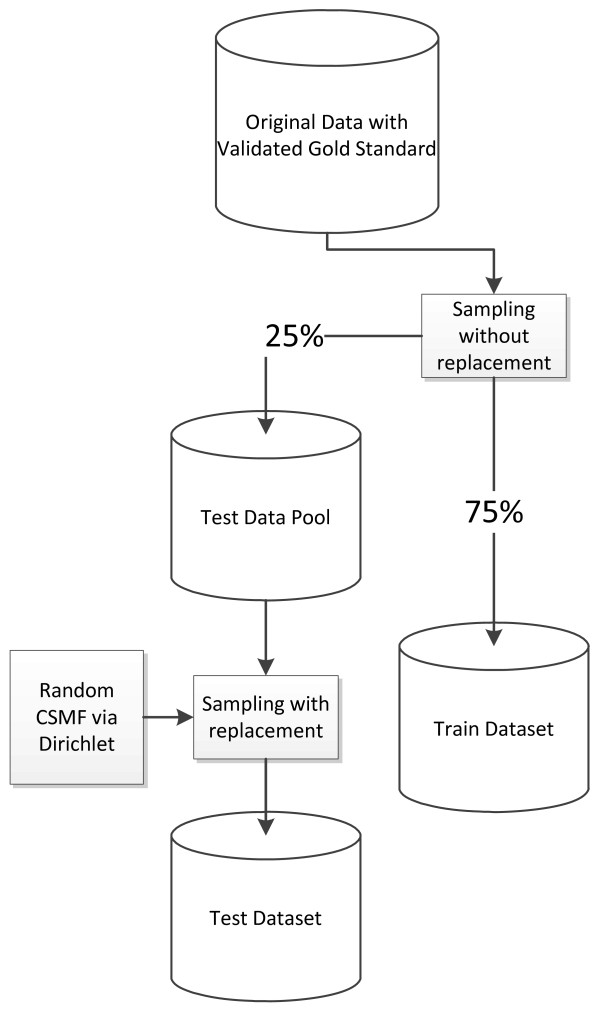
BACKGROUND: Verbal autopsy methods are critically important for evaluating the leading causes of death in populations without adequate vital registration systems. With a myriad of analytical and data collection approaches, it is essential to create a high quality validation dataset from different populations to evaluate comparative method performance and make recommendations for future verbal autopsy implementation. This study was undertaken to compile a set of strictly defined gold standard deaths for which verbal autopsies were collected to validate the accuracy of different methods of verbal autopsy cause of death assignment. METHODS: Data collection was implemented in six sites in four countries: Andhra Pradesh, India; Bohol, Philippines; Dar es Salaam, Tanzania; Mexico City, Mexico; Pemba Island, Tanzania; and Uttar Pradesh, India. The Population Health Metrics Research Consortium (PHMRC) developed stringent diagnostic criteria including laboratory, pathology, and medical imaging findings to identify gold standard deaths in health facilities as well as an enhanced verbal autopsy instrument based on World Health Organization (WHO) standards. A cause list was constructed based on the WHO Global Burden of Disease estimates of the leading causes of death, potential to identify unique signs and symptoms, and the likely existence of sufficient medical technology to ascertain gold standard cases. Blinded verbal autopsies were collected on all gold standard deaths. RESULTS: Over 12,000 verbal autopsies on deaths with gold standard diagnoses were collected (7,836 adults, 2,075 children, 1,629 neonates, and 1,002 stillbirths). Difficulties in finding sufficient cases to meet gold standard criteria as well as problems with misclassification for certain causes meant that the target list of causes for analysis was reduced to 34 for adults, 21 for children, and 10 for neonates, excluding stillbirths. To ensure strict independence for the validation of methods and assessment of comparative performance, 500 test-train datasets were created from the universe of cases, covering a range of cause-specific compositions. CONCLUSIONS: This unique, robust validation dataset will allow scholars to evaluate the performance of different verbal autopsy analytic methods as well as instrument design. This dataset can be used to inform the implementation of verbal autopsies to more reliably ascertain cause of death in national health information systems.
Overview
The claims and statistics of this paper haven’t been checked yet.
Free: it reads the open-access text and checks the first 5 claims that cite a source we can check. Create a free account to check every claim.
Integrity signals
Registry
Cites
Statistics
Figures
Verification
Claims the paper makes
The claims and statistics of this paper haven’t been checked yet.
Free: it reads the open-access text and checks the first 5 claims that cite a source we can check. Create a free account to check every claim.
Claims other papers make about this one
Each is checked against this paper’s own text: does it say what the citing paper says it does?
The cited source says what the claim attributes to it.
In the citing paper
“For verbal autopsy, the results of the Population Health Metrics Research Consortium verbal autopsy studies [91,92] provide a potential strategy for assessing misclassification uncertainty.”
From Modeling causes of death: an integrated approach using CODEm (2012) · cites this paper as [91]
In the citing paper
“Verbal autopsy instruments can identify deaths due to some neurological disorders, including stroke, meningitis, tetanus, and epilepsy, but are unable to capture other neurological disorders.67”
From Global, regional, and national burden of neurological disorders during 1990–2015: a systematic analysis for the Global Burden of Disease Study 2015 (2017) · cites this paper as [67]
In the citing paper
“Nevertheless, these data are still based on VA, which in rigorous validation tests performs well for some causes and not others.63”
Self-check
Percentages, sums and reported differences re-computed from the paper’s own numbers.
The self-check needs the paper’s full text.
Citations
Cites
Cohen, L., Manion, L., & Morrison, K. (2007) · Routledge eBooks · doi:10.4324/9780203029053 · Cited by 20,105
Marcucci, D. (2011) · Journal of Educational Cultural and Psychological Studies (ECPS Journal) · Cited by 1,028
A Method of Automated Nonparametric Content Analysis for Social Science
Hopkins, D. J., & King, G. (2010) · American Journal of Political Science · doi:10.1111/j.1540-5907.2009.00428.x · Cited by 765 · cited 2×
“Additional file 12: README dictionary developed to convert free text responses into usable key terms.”
BackgroundChanges in Rates of Autopsy-Detected Diagnostic Errors Over Time: A Systematic Review
Shojania, K. G., Burton, E. C., McDonald, K. M., & Goldman, L. (2003) · JAMA · doi:10.1001/jama.289.21.2849 · Cited by 703
Civil registration systems and vital statistics: successes and missed opportunities
Mahapatra, P., Shibuya, K., Lopez, A. D., Coullare, F., Notzon, F. C., Rao, C., & Szreter, S. (2007) · The Lancet · doi:10.1016/s0140-6736(07)61308-7 · Cited by 352
Mortality registration and surveillance in China: History, current situation and challenges
Yang, G., Hu, J., Rao, K. Q., Ma, J., Rao, C., & Lopez, A. D. (2005) · Population Health Metrics · doi:10.1186/1478-7954-3-3 · Cited by 341
Joshi, R., Cardona, M., Iyengar, S., Sukumar, A., Raju, C. R., Raju, K. R., Raju, K., Reddy, K. S., Lopez, A., & Neal, B. (2006) · International Journal of Epidemiology · doi:10.1093/ije/dyl168 · Cited by 313
Self-citationSoleman, N. (2006) · Bulletin of the World Health Organisation · doi:10.2471/blt.05.027003 · Cited by 313 · cited 1×
“A variety of methods have been proposed for VA cause assignment [1,2], ranging from physician-certified verbal autopsy (PCVA) [3,4] to data-derived algorithms [5-7], various applications of Bayes’ theorem [8-13], and direct statistical estimation of cause fractions [14].”
MethodChildhood deaths in Africa: uses and limitations of verbal autopsies
Snow, R. W., Winstanley, M. T., Marsh, V. M., Newton, C., Waruiru, C., Mwangi, I., Winstanley, P. A., Marsh, K., Snow, R. W., Forster, D., et al. (1992) · The Lancet · doi:10.1016/0140-6736(92)91414-4 · Cited by 294 · cited 1×
“Results of validation studies to date, however, have been challenged on several grounds [32-34].”
BackgroundValidation and application of verbal autopsies in a rural area of South Africa
Kahn, K., Tollman, S. M., Garenne, M., & Gear, J. S. S. (2000) · Tropical Medicine & International Health · doi:10.1046/j.1365-3156.2000.00638.x · Cited by 235 · cited 1×
“Several validation studies of VA cause assignment methods have been published [2,3,12,20-31].”
Research works printed but not linked: 2
- 38. Chandramohan D, Maude GH, Rodrigues LC, Hayes RJ. Verbal autopsies for adult deaths: issues in their development and validation. Int J Epidemiol. 1994;23:213–222. doi: 10.1093/ije/23.2.213. · DOI · Paper page
- 39. Anker M, Black RE, Coldham C, Kalter HD, Quigley MA, Ross D, Snow RW. A standard verbal autopsy method for investigating causes of death in infants and children. Geneva: World Health Organization; 1999.
Cited by
Items 101–198 of 198
Bayesian Hierarchical Factor Regression Models to Infer Cause of Death from Verbal Autopsy Data
Moran, K. R., Turner, E. L., Dunson, D. B., & Herring, A. H. (2021) · Journal of the Royal Statistical Society Series C (Applied Statistics) · doi:10.1111/rssc.12468 · Cited by 15
“Three commonly cited non-probabilistic methods are the Tariff method [James et al., 2011], the King-Lu (KL) method [King et al., 2008], and the Simplified Symptom Pattern (SSP) method [Murray et al., 2011a].”
MethodJames, S. L., Romero, M., Ramírez-Villalobos, D., Gómez, S., Pierce, K., Flaxman, A. D., Serina, P. T., Stewart, A., Murray, C. J. L., Gakidou, E. E., et al. (2015) · BMC Medicine · doi:10.1186/s12916-014-0245-8 · Cited by 13
“The advent of advanced computer techniques for solving this problem are described elsewhere [16-22], including a comparison of the performance of different methods and physician-certified VA [23].”
MethodInfluentialSelf-citationMurtaza, S. S., Kolpak, P., Bener, A., & Jha, P. (2018) · Gates Open Research · doi:10.12688/gatesopenres.12891.2 · Cited by 17
“…Study (MDS) 20 , South African Agincourt Demographic and Health Survey (DHS) dataset 21 , and Bangladeshi Matlab DHS dataset 22 , and one health facility diagnosed COD dataset, namely the PHMRC VA data collected from six sites in four countries (India, Mexico, the Philippines and Tanzania) 23,24 .”
Li, Z. R., Wu, Z., Chen, I., & Clark, S. J. (2024) · The Annals of Applied Statistics · doi:10.1214/23-aoas1826 · Cited by 12
“Figure 1 illustrates an example from the PHMRC gold-standard VA dataset (Murray et al., 2011a) discussed in Section 4.”
BackgroundMethodUse of Smartphone for Verbal Autopsy: Results From a Pilot Study in Rural China
Zhao, Y., Joshi, R., Rampatige, R., Sun, J., Huang, L., Chen, S., Wu, R., Neal, B. C., López, A. D., Stewart, A., et al. (2016) · Asia Pacific Journal of Public Health · doi:10.1177/1010539516667780 · Cited by 12
Self-citationSerina, P. T., Riley, I. D., Hernández, B., Flaxman, A. D., Praveen, D., Tallo, V. L., Joshi, R., Sanvictores, D. M., Stewart, A., Mooney, M., et al. (2016) · Population Health Metrics · doi:10.1186/s12963-016-0104-2 · Cited by 12
Self-citationBayesian factor models for probabilistic cause of death assessment with verbal autopsies
Kunihama, T., Li, Z. R., Clark, S. J., & McCormick, T. H. (2020) · The Annals of Applied Statistics · doi:10.1214/19-aoas1253 · Cited by 14
Chowdhury, R., Khan, N., Pennells, L. A. M., Iurilli, M. L., Miah, M. T. U., Monower, M. M., Rahman, K. M. T., Samin, S., Saqeeb, K. N., Tasmin, I., et al. (2025) · BMJ Open · doi:10.1136/bmjopen-2024-088338 · Cited by 11
Correcting for Verbal Autopsy Misclassification Bias in Cause-Specific Mortality Estimates
Fiksel, J., Gilbert, B., Wilson, E., Kalter, H. D., Kanté, A. M., Aveika, A. A., Blau, D. M., Bassat, Q., Macicame, I., Gudo, E. S., et al. (2023) · American Journal of Tropical Medicine and Hygiene · doi:10.4269/ajtmh.22-0318 · Cited by 13
“18 The misclassi fi cation bias of CCVA gets propagated into the raw (uncalibrated) estimates of CSMFs based on the CCVA-determined COD.”
Self-citationAir Pollution Prediction using Random Forest Classifier: A Case Study of DKI Jakarta
Muljana, R., Ayuningtyas, L. D., Daksa, R. P., Djamhari, S. F., Fiezayyan, M. A., & Sagala, N. T. M. (2023) · International Conference on Computer Science, Information Technology and Engineering (ICCoSITE) · doi:10.1109/iccosite57641.2023.10127759 · Cited by 10
“The model is, therefore, suitable for feature classification in quantitative remote sensing [13].”
MethodRankin, J. C., Lorenz, E., Neuhann, F., Yé, M., Sié, A., Becher, H., & Ramroth, H. (2012) · Malaria Journal · doi:10.1186/1475-2875-11-51 · Cited by 10
“Though free-text analysis is a time-consuming process, software such as READ-ME, described by Murray et al, may render their incorporation more feasible [24].”
BackgroundMethodVerbal autopsy models in determining causes of death
Tunga, M., Lungo, J. H., Chambua, J., & Kateule, R. (2021) · Tropical Medicine & International Health · doi:10.1111/tmi.13678 · Cited by 10
“Although PCVA has been proved to be a very beneficial technique to determine CoDs, the approach is slow and expensive [10, 11].”
BackgroundA semantically annotated Verbal Autopsy corpus for automatic analysis of cause of death.
Danso, S., Atwell, E., Johnson, O. A., ten Asbroek, A. H. A., Soromekun, S., Edmond, K. M., Hurt, C. N., Hurt, L. S., Zandoh, C., Tawiah, C., et al. (2013) · UWA Profiles and Research Repository (University of Western Australia) · Cited by 13
Pham, B. N., Abori, N., Maraga, S., Jorry, R., Jaukae, G. S., Silas, V. D., Aga, T., Okely, T., & Pomat, W. S. (2023) · BMJ Open · doi:10.1136/bmjopen-2022-066560 · Cited by 9
Pham, B. N., Jorry, R., Silas, V. D., Okely, A. D., Maraga, S., & Pomat, W. S. (2022) · International Journal of Epidemiology · doi:10.1093/ije/dyac232 · Cited by 9
Joshi, R., Hazard, R., Mahesh, P. K. B., Mikkelsen, L., Avelino, F. L., Sarmiento, C., Segarra, A., Timbang, T. D., Sinson, F. A., Diango, P., et al. (2021) · BMC Public Health · doi:10.1186/s12889-021-10542-0 · Cited by 10
“One such method is SmartVA which was originally developed by the Population Health Metrics Research Consortium based on a ‘gold standard’ validation data set of over 12,500 cases from several countries, including the Philippines [7].”
MethodSelf-citationByass, P. (2011) · Population Health Metrics · doi:10.1186/1478-7954-9-23 · Cited by 10
“We have also learned that evaluations of cause-specific mortality are generally compromised by a lack of true gold standard data and metrics for comparative purposes [3,4].”
BackgroundValidation of SmartVA using conventional autopsy: A study of adult deaths in Brazil
Hart, J., de André, P. A., de André, C. D. S., Adair, T., Barroso, L. P., Valongueiro, S., Bierrenbach, A. L., de Carvalho, P. I., Antunes, M. B. D. C., de Oliveira, C. M., et al. (2021) · The Lancet Regional Health - Americas · doi:10.1016/j.lana.2021.100081 · Cited by 11
Self-citationAnalysis of causes of death using verbal autopsies and vital registration in Hidalgo, Mexico
Ramírez-Villalobos, D., Stewart, A., Romero, M., Gómez, S., Flaxman, A. D., & Hernández, B. (2019) · PLoS ONE · doi:10.1371/journal.pone.0218438 · Cited by 8
Self-citationde André, C. D. S., Bierrenbach, A. L., Barroso, L. P., de André, P. A., Justo, L. T., Pereira, L. A. A., Taniguchi, M., Minto, C. M., Takecian, P. L., Kamaura, L. T., et al. (2022) · BMC Public Health · doi:10.1186/s12889-022-13081-4 · Cited by 10
“One study used pathological findings from surgical and biopsy specimens to compose its gold-standard [6], and two other used conventional [10] or minimally-invasive autopsy [11] although in much smaller samples.”
Self-citationHart, J., Mahesh, P. K. B., Kwa, V., Reeve, M., Chowdhury, H. R., Jilini, G., Jagilly, R., Kamoriki, B., Ruskin, R., Dakulala, P., et al. (2021) · The Lancet Regional Health - Western Pacific · doi:10.1016/j.lanwpc.2021.100150 · Cited by 8
Self-citationRonen, K., Choo, E. M., Wandika, B., Udren, J. I., Osborn, L., Kithao, P., Hedstrom, A. B., Masinde, M., Kumar, M., Wamalwa, D. C., et al. (2021) · BMJ Open · doi:10.1136/bmjopen-2021-056062 · Cited by 14
Evaluation of methods for assigning causes of death from verbal autopsies in India
Benara, S. K., Sharma, S., Juneja, A., Nair, S., Gulati, B. K., Singh, K. J., Singh, L., Yadav, V. P., Rao, C., & Rao, M. V. V. (2023) · Frontiers in Big Data · doi:10.3389/fdata.2023.1197471 · Cited by 9
Algorithmic approaches to detecting interviewer fabrication in surveys
Borriello, G., Karlin, A. R., & Birnbaum, B. (2012) · ResearchWorks at the University of Washington (University of Washington) · Cited by 14
Gerdts, C., & Ahern, J. (2016) · Population Health Metrics · doi:10.1186/s12963-016-0075-3 · Cited by 7
Gummidi, B., Gautam, V., John, R., Joshi, R., John, O., & Jha, V. (2023) · Kidney International Reports · doi:10.1016/j.ekir.2023.10.026 · Cited by 6
“13,14 There are 3 age-speci fi c modules and a general information module in the SmartVA questionnaire: neonatal fatalities (from birth to 28 days), child deaths (from 29 days up to 11 years), and adult deaths (from 12 years and older).”
BackgroundSelf-citationA de-identified database of 11,979 verbal autopsy open-ended responses
Flaxman, A. D., Harman, L. E., Joseph, J., Brown, J. C., & Murray, C. J. L. (2018) · Gates Open Research · doi:10.12688/gatesopenres.12812.1 · Cited by 6
Self-citationAre cause of death data for Shanghai fit for purpose? A retrospective study of medical records
Chen, L., Xia, T., Yuan, Z., Rampatige, R., Chen, J., Li, H., Adair, T., Yu, H., Bratschi, M. W., Setel, P., et al. (2022) · BMJ Open · doi:10.1136/bmjopen-2020-046185 · Cited by 7
Chen, L., Xia, T., Rampatige, R., Li, H., Adair, T., Joshi, R., Gu, Z. Y., Yu, H., Fang, B., McLaughlin, D., et al. (2022) · Frontiers in Public Health · doi:10.3389/fpubh.2022.842880 · Cited by 6
“Additionally, the CSMF accuracy was evaluated by measuring the absolute deviation of the CSMFs for the initial diagnosis of the SmartVA CSFMs from the MRR UCOD (12, 19, 20).”
BackgroundMethodSelf-citationWen, R., Assalif, A., Lee, A. S.-H., Kamadod, R., Behdinan, A., Carshon-Marsh, R., Meh, C., Ng, T. K. S., Brown, P., Jha, P. N., et al. (2025) · BMC Medicine · doi:10.1186/s12916-025-04584-z · Cited by 5
Reporting of ethics in peer-reviewed verbal autopsy studies: a systematic review
Joshi, R., Faruqui, N., Nagarajan, S. R., Rampatige, R., Martiniuk, A., & Gouda, H. (2017) · International Journal of Epidemiology · doi:10.1093/ije/dyx216 · Cited by 6
Self-citationFlaxman, A. D., Stewart, A., Joseph, J. C., Alam, N., Alam, S., Chowdhury, H. R., Gamage, S., Gouda, H., Joshi, R., Lucero, M., et al. (2017) · PLoS ONE · doi:10.1371/journal.pone.0178085 · Cited by 5
“[15] The PHMRC VAI consists of two sections.”
Self-citationOn the estimation of population cause-specific mortality fractions from in-hospital deaths
Williams, G. M., Riley, I. D., Hazard, R., Chowhury, H., Alam, N., Streafield, P., Tallo, V. L., Sanvictores, D. M., Lucero, M., Adair, T., et al. (2019) · BMC Medicine · doi:10.1186/s12916-019-1267-z · Cited by 5
Self-citationBlackstock, S. J., Witham, M. D., Wade, A. N., Crampin, A. C., Beran, D., Ogle, G. D., & Davies, J. I. (2019) · BMJ Open · doi:10.1136/bmjopen-2018-026331 · Cited by 6
Assessment of the quality of the vital registration system for under-5 mortality in Yucatan, Mexico
Hernández, B., Rodríguez-Angulo, E., Johnson, L. M., Palmisano, E. B., Ojeda, R., Ojeda, R., Gómez-Carro, S., Chen, A., Camarda, J. N., Johanns, C. K., et al. (2022) · Population Health Metrics · doi:10.1186/s12963-022-00284-5 · Cited by 6
“To identify the cause of death, we use the gold-standard criteria developed as part of the Population Health Metrics Research Consortium (PHMRC) verbal autopsy study [17].”
MethodSelf-citationThe Role Of Iron On The Phytoplankton Growth InHeavily Polluted Izmir Bay, Aegean Sea
Bizsel, N., Öztürk, M., & Metin, G. (1997) · WIT transactions on ecology and the environment · doi:10.2495/wp970641 · Cited by 6
A systems-change approach to addressing the mortality surveillance gap in Pakistan
Raja, M. H. R., Hoodbhoy, Z. A., Sheikh, S. S., Nisar, M. I., Soofi, S. B., Siddiqi, S., Mirza, Z., Bashir, F., Mehmood, M. T., & Samad, Z. Z. (2025) · Journal of Global Health · doi:10.7189/jogh.15.03027 · Cited by 4
“The main VA instruments in use have been developed by the WHO and, more recently, by the Population Health Metrics Research Consortium [ 26 , 28 ].”
Groenewald, P., Thomas, J. R., Clark, S. J., Morof, D. F., Joubert, J., Kabudula, C. W., Li, Z. R., & Bradshaw, D. (2023) · Global Health Action · doi:10.1080/16549716.2023.2285105 · Cited by 6
“The Tariff 2.0 algorithm [10] is another deterministic algorithm based on the SCI derived from the Population Health Metrics Research Consortium (PHMRC) Gold Standard VA Validation Study [20].”
MethodInfluentialBo, K. S., Firth, S., Phyo, T. P. P., Mar, N. N., Zaw, K. K., Kapaw, N. H., Adair, T., & López, A. D. (2023) · PLOS Global Public Health · doi:10.1371/journal.pgph.0002426 · Cited by 3
Estimation of Causes of Death in Suburban Nepal Using Verbal Autopsy.
Ide, N., Fitzpatrick, A. L., Ad, F., Koju, R., Tamrakar, D., & Hernández, B. (2016) · PubMed · Cited by 3
Self-citationLi, Z. R., McCormick, T. H., & Clark, S. J. (2020) · BMC Medicine · doi:10.1186/s12916-020-01518-9 · Cited by 3
Bayesian Tensor Decomposition for Clustering Latent Symptom Profiles for Verbal Autopsy Data
Zhu, Y., & Li, Z. (2026) · Statistics in Medicine · doi:10.1002/sim.70475 · Cited by 3
“In this section, we comprehensively evaluate our proposed models using the PHMRC gold-standard VA dataset [21].”
Chowdhury, H. R., Flaxman, A. D., Joseph, J. C., Hazard, R., Alam, N., Riley, I. D., & López, A. D. (2019) · BMC Medical Research Methodology · doi:10.1186/s12874-019-0877-7 · Cited by 3
“The Population Health Metrics Research Consortium (PHMRC) previously collected VAs matched with COD based on medical record review with strict ex-ante diagnostic criteria from six sites in four different countries [14].”
BackgroundMethodInfluentialSelf-citationAn Expectation Conditional Maximization Approach for Gaussian Graphical Models
Li, Z. R., & McCormick, T. H. (2019) · Figshare · doi:10.6084/m9.figshare.8295482 · Cited by 3
Verbal Autopsy in Civil Registration and Vital Statistics: The Symptom-Cause Information ArchivePreprint
Clark, S. J., Bratschi, M. W., Setel, P., AbouZahr, C., de Savigny, D., Li, Z. R., McCormick, T. H., Byass, P., & Chandramohan, D. (2019) · arXiv (Cornell University) · doi:10.48550/arxiv.1910.00405 · Cited by 4
“Tariff assigns causes defined by the Population Health Metrics Research Consortium (PHMRC), [29] and SmartVA-Analyze assigns a subset of those causes (excluding maternal causes) using a shortened version of the PHMRC questionnaire – ‘PHRMC-short’[17].”
MethodSulpizio, C. L., Tessema, Z., Morof, D. F., Boyd, A. T., Agyemang, E. A., Knuth, M., Patel, M. R., & Ali, H. (2025) · Journal of Public Health in Africa · doi:10.4102/jphia.v16i1.733 · Cited by 2
“28,30,31,32 Resources for training, evaluation and careful ethical consideration when discussing death in various cultures and populations are important in creation and maintenance of a successful VA system.”
Kalter, H. D., Perin, J., Bhutta, Z. A., Jalingo, I., Libite, P. R., Maina, A., Mleme, T., Kamwe, M. A., Macicame, I., & Black, R. E. (2026) · PLOS Global Public Health · doi:10.1371/journal.pgph.0006455 · Cited by 2
“…used in all the African countries except Mozambique combined the Population Health Metrics Research Consortium (PHMRC) VA questionnaire [18] with the original Child Health Epidemiology Reference Group (CHERG) SA questionnaire [19]; while the VASA instrument in Pakistan and Mozambique…”
Self-citationThanavanh, B., Hamajima, N., Sida, K., Duangdy, K., Latsamy, L., Senaphane, K., Louangpradith, V., Sadettan, S., Inthaphatha, S., Nishino, K., et al. (2023) · BMC Public Health · doi:10.1186/s12889-023-15469-2 · Cited by 2
“A verbal autopsy (VA) is a useful tool to determine the possible cause of death by interviewing family members or care givers regarding signs, symptoms, available medical history, treatment, and circumstances before a death [2, 3, 5].”
MethodIndriasih, E., Yulianti, A., Susianti, N., Tarigan, I. U., & Suryati, T. (2022) · International Conference on Industrial Engineering and Operations Management (IEOM) · doi:10.46254/eu05.20220236 · Cited by 2
Birhanu, M. M., Zengin, A., Joshi, R., Evans, R. G., Kalyanram, K., Kartik, K., Riddell, M. A., Suresh, O., Srikanth, V. K., Arabshahi, S., et al. (2024) · Tropical Medicine & International Health · doi:10.1111/tmi.13981 · Cited by 2
“For anyone who had died, the next-of-kin was interviewed using a standard verbal autopsy (VA) tool [18, 19], supplemented by reviewing death certificates and/or medical records, if available.”
MethodSelf-citationUnger, J. A., Kinuthia, J., Wandika, B., Hedstrom, A. B., Wetzler, E., Udren, J. I., Masinde, M., Choo, E. M., Schultes, O. L., Kithao, P., et al. (2025) · Nature Medicine · doi:10.1038/s41591-025-03576-z · Cited by 2
“…stillbirths and neonatal mortalities, verbal autopsies were conducted https://doi.org/10.1038/s41591-025-03576-z using the Population Health Metrics Research Consortium Shortened Verbal Autopsy and cause of death assigned by SmartVA-Analyze v.2.2.0 and obstetric and neonatal expert review 57–59 .”
InfluentialCase fatality of Pneumonia: A ′5′ year retrospective study
Antony, J., Celine, T., & Chacko, M. (2014) · International Journal of Medicine and Public Health · doi:10.4103/2230-8598.133121 · Cited by 2
“[12] A study by John Hopkins University[13] certify the fact that India contributes to more than 50% of the world’s pneumonia deaths.”
BackgroundTreviño-Siller, S., Ramírez-Villalobos, D., Sánchez-Domínguez, M. S., & Prado, B. H. (2020) · Death Studies · doi:10.1080/07481187.2020.1784310 · Cited by 2
“Further details on the original study have been published elsewhere (James et al., 2015; Murray et al., 2011, 2014).”
BackgroundSelf-citationMategula, D., & Gichuki, J. (2020) · Wellcome Open Research · doi:10.12688/wellcomeopenres.16243.2 · Cited by 2
Satav, A., Satav, K. A., Kelkar, A. S., Sahasrabhojaney, V. S., Dani, V., Raje, D. V., & Simões, E. A. F. (2023) · International Journal of Microbiology Research · doi:10.4103/ijmr.ijmr_3299_21 · Cited by 3
“Modifications were subsequently made based on our field experience and the WHO 4 and IHME methods 14 .”
MethodMcCaw‐Binns, A., & Mullings, J. (2014) · Oxford University Press eBooks · doi:10.1093/obo/9780199756797-0095 · Cited by 2
Murray, C. J. L., Lozano, R., Flaxman, A. D., Vahdatpour, A., & López, A. D. (2014) · Population Health Metrics · doi:10.1186/1478-7954-12-7 · Cited by 3
Self-citationGeneralized Bayes Quantification Learning under Dataset Shift
Fiksel, J., Datta, A., Amouzou, A., & Zeger, S. L. (2021) · Figshare · doi:10.6084/m9.figshare.14377040 · Cited by 2
Cause of Death estimation from Verbal Autopsies: Is the Open Response redundant or synergistic?
Cejudo, A., Casillas, A., Pérez, A., Oronoz, M., & Muñoz, D. C. (2023) · Artificial Intelligence in Medicine · doi:10.1016/j.artmed.2023.102622 · Cited by 5
Opemo, D. O., & Godfrey, J. S. (2019) · Central African Journal of Public Health · doi:10.11648/j.cajph.20190501.17 · Cited by 2
“A modified version of Verbal Autopsy (VA) used [19].”
MethodCheng, F., & Zhang, J. (2020) · Springer eBooks · doi:10.1007/978-981-15-5975-4_8 · Cited by 1
Indriasih, E., & Budiharsana, M. P. (2021) · Health Science Journal of Indonesia · doi:10.22435/hsji.v12i1.4805 · Cited by 1
Hazard, R., Chowdhury, H. R., Flaxman, A. D., Joseph, J. C., Alam, N., Riley, I. D., Streatfield, P. K., Gouda, H., Maraga, S., Rarau, P., et al. (2021) · BMC Research Notes · doi:10.1186/s13104-021-05834-y · Cited by 1
“Gold standard cause of death The IMMCMC study gathered gold standard VAs between 2011 and 2014 using the PHMRC long form verbal autopsy instrument [1].”
BackgroundMethodSelf-citationJoubert, J. D. (2016) · The University of Queensland · doi:10.14264/uql.2016.41 · Cited by 2
Local calibration of verbal autopsy algorithmsPreprint
Datta, A., Fiksel, J., Amouzou, A., & Zeger, S. L. (2018) · arXiv (Cornell University) · Cited by 1
Unlocking Mysteries: Smart Verbal Autopsy’s Role in CKD of Unknown Etiology Research
Cervantes, C. E., Parameswaran, S., & Jaar, B. G. (2023) · Kidney International Reports · doi:10.1016/j.ekir.2023.11.016 · Cited by 1
Ronen, K., Choo, E. M., Wandika, B., Udren, J., Osborn, L., Kinthao, P., Hedstrom, A. B., Masinde, M., Kumar, M., Wamalwa, D., et al. (2021) · Research Square · doi:10.21203/rs.3.rs-371505/v1 · Cited by 1
Ahuja, R., Sm, A., Dandona, L., Dantzer, E., Dhingra, U., Fawzi, W. W., Gómez, S., Hernández, B., Joshi, R., Kumar, et al. (2011)
Self-citationReliability of verbal autopsies and its implications for routine cause of death surveillance
Serina, P. T. (2014) · ResearchWorks at the University of Washington (University of Washington)
Mortality Patterns in Papua New Guinea
Kitur, U. (2020) · Minerva Access (University of Melbourne)
Derivation and Validation of Risk Scores for Cause-Specific Mortality using Verbal Autopsy DataPreprint
Nkwenika, T., & Manda, S. (2021) · Research Square · doi:10.21203/rs.3.rs-477828/v1
Verbal Autopsy: First Steps Towards Questionnaire Reduction
Cejudo, A., Trigueros, O., Pérez, A., Casillas, A., & Muñoz, D. C. (2021) · Lecture notes in computer science · doi:10.1007/978-3-030-83527-9_10
A causal direction test for heterogeneous populations
Nia, V. P., Xin-lin, L., Asgharian, M., Hu, S., Geng, Y., & Chen, Z. (2021) · Machine Learning with Applications · doi:10.1016/j.mlwa.2021.100235
Dempster-Shafer P-values: Thoughts on an Alternative Approach for Multinomial InferencePreprint
Hoffman, K., Zhang, K., McCormick, T. H., & Hannig, J. (2024) · arXiv (Cornell University) · doi:10.48550/arxiv.2402.17070 · Cited by 1
“We take data from the Population Health Metrics Research Consortium (PHMRC) which contains verbal autopsy and physical autopsy information from 7841 adults taken from 6 sites in developing nations around the world [21].”
MethodExpert adaptation and validation of a verbal autopsy instrument in Chile using the Delphi method
Contreras, J. O., Contreras, R. N., López, N. A., & East, S. (2025) · Medwave · doi:10.5867/medwave.2025.05.3060
Grollman, C. (2015) · LSHTM Research Online (London School of Hygiene and Tropical Medicine) · doi:10.17037/pubs.02026587
Joshi, R., Hazard, R. H., Mahesh, P. K. B., Mikkelsen, L., Avelino, F. L., Sarmiento, C., Segarra, A., Timbang, T. D., Sinson, F. A., Diango, P., et al. (2021) · Figshare · doi:10.6084/m9.figshare.14266789
Self-citationHernandez, B., Rodríguez-Angulo, E., Johnson, L. M., Palmisano, E. B., Ojeda, R., OJEDA, R., Gómez-Carro, S., Chen, A., Camarda, J. N., Johanns, C. K., et al. (2022) · Figshare · doi:10.6084/m9.figshare.19136117
Self-citationde André, C. D. S., Bierrenbach, A. L., Barroso, L. P., de André, P. A., Justo, L. T., Pereira, L. A. A., Taniguchi, M., Minto, C. M., Takecian, P. L., Kamaura, L. T., et al. (2022) · Figshare · doi:10.6084/m9.figshare.19603717
Self-citationShawon, M. T. H., Ashrafi, S. A. A., Azad, A. K., Firth, S., Chowdhury, H. R., Mswia, R., Adair, T., Riley, I. D., AbouZahr, C., & López, A. D. (2021) · Figshare · doi:10.6084/m9.figshare.14205488
Self-citationYokobori, Y., Matsuura, J., Sugiura, Y., Mutemba, C., Nyahoda, M., Mwango, C., Kazhumbula, L., Yuasa, M., & Chiluba, C. (2020) · Figshare · doi:10.6084/m9.figshare.12109776
Thanavanh, B., Hamajima, N., Sida, K., Duangdy, K., Latsamy, L., Senaphane, K., Louangpradith, V., Sadettan, S., Inthaphatha, S., Nishino, K., et al. (2023) · Figshare · doi:10.6084/m9.figshare.22617386
Shawon, M. T. H., Ashrafi, S. A. A., Azad, A. K., Firth, S., Chowdhury, H. R., Mswia, R., Adair, T., Riley, I. D., AbouZahr, C., & López, A. D. (2021) · Figshare · doi:10.6084/m9.figshare.14205506
Self-citationShawon, M. T. H., Ashrafi, S. A. A., Azad, A. K., Firth, S., Chowdhury, H. R., Mswia, R., Adair, T., Riley, I. D., AbouZahr, C., & López, A. D. (2021) · Figshare · doi:10.6084/m9.figshare.14205497
Self-citationShawon, M. T. H., Ashrafi, S. A. A., Azad, A. K., Firth, S., Chowdhury, H. R., Mswia, R., Adair, T., Riley, I. D., AbouZahr, C., & López, A. D. (2021) · Figshare · doi:10.6084/m9.figshare.14205503
Self-citationShawon, M. T. H., Ashrafi, S. A. A., Azad, A. K., Firth, S., Chowdhury, H. R., Mswia, R., Adair, T., Riley, I. D., AbouZahr, C., & López, A. D. (2021) · Figshare · doi:10.6084/m9.figshare.14205509
Self-citationde André, C. D. S., Bierrenbach, A. L., Barroso, L. P., de André, P. A., Justo, L. T., Pereira, L. A. A., Taniguchi, M., Minto, C. M., Takecian, P. L., Kamaura, L. T., et al. (2022) · Figshare · doi:10.6084/m9.figshare.19603708
Self-citationAngelantonio, E. D., Danesh, J., Perry, C., Spackman, S., van Coeverden, C., Walker, M., & Wood, A. (2024) · Apollo (University of Cambridge) · doi:10.17863/cam.114068
Shawon, M. T. H., Ashrafi, S. A. A., Azad, A. K., Firth, S., Chowdhury, H. R., Mswia, R., Adair, T., Riley, I. D., AbouZahr, C., & López, A. D. (2021) · Figshare · doi:10.6084/m9.figshare.14205500
Self-citationShawon, M. T. H., Ashrafi, S. A. A., Azad, A. K., Firth, S., Chowdhury, H. R., Mswia, R., Adair, T., Riley, I. D., AbouZahr, C., & López, A. D. (2021) · Figshare · doi:10.6084/m9.figshare.14205494
Self-citationYokobori, Y., Matsuura, J., Sugiura, Y., Mutemba, C., Nyahoda, M., Mwango, C., Kazhumbula, L., Yuasa, M., & Chiluba, C. (2020) · Figshare · doi:10.6084/m9.figshare.12109779
Shawon, M. T. H., Ashrafi, S. A. A., Azad, A. K., Firth, S., Chowdhury, H. R., Mswia, R., Adair, T., Riley, I. D., AbouZahr, C., & López, A. D. (2021) · Figshare · doi:10.6084/m9.figshare.14205491
Self-citationHernandez, B., Rodríguez-Angulo, E., Johnson, L. M., Palmisano, E. B., Ojeda, R., OJEDA, R., Gómez-Carro, S., Chen, A., Camarda, J. N., Johanns, C. K., et al. (2022) · Figshare · doi:10.6084/m9.figshare.19136120
Self-citationNabukalu, D., Lutalo, T., Mugisha, J. O., Makanga, R., Kasamba, I., Calvert, C., Khan, P. Y., Marston, M., & Jim, T. (2026) · PLOS Global Public Health · doi:10.1371/journal.pgph.0006223
“Policymakers may consider a tiered surveillance approach—utilising automated VA tools for routine mortality monitoring while reserving physician review for select or high-priority cases [30].”
Panchgaur, R., Kumar, A., & Kansal, S. (2026) · Discover Public Health · doi:10.1186/s12982-026-01887-1
Self-citationKanungo, S., Lewis, M. G., Barman, D., Bhunia, P. K., Chatterjee, S., Samanta, S., Yadav, D., Pati, S., Talukdar, R., Chakraborty, S., et al. (2026) · BMJ Global Health · doi:10.1136/bmjgh-2025-022829
“28 35 40 41 These methods are currently used by many sites in conjunction with the WHO VA questionnaire, so demonstrating their acceptable performance together with our shortened questionnaire may further promote its use in resource-constrained settings.”
Self-citationO’Keeffe, J., Ouedraogo, P., Allangomi, S., Speigel, P., Kouassi, F., & Sayyad-Hilario, J. (2026) · Research Square · doi:10.21203/rs.3.rs-10712034/v1
The Causes Of Death In Rheumatic Heart Disease Registrants In Uganda - A Verbal Autopsy StudyPreprint
Minja, N. W., Pulle, J., Agaba, C., Wesonga, S., Beaton, A. Z., Okello, E., Rwebembera, J., Pinto, N., Sable, C., & Watkins, D. (2026) · SSRN Electronic Journal · doi:10.2139/ssrn.7536107
Metadata
- Authors
- Murray, C. J., Lopez, A. D., Black, R., Ahuja, R., Ali, S. M., Baqui, A., Dandona, L., Dantzer, E., Das, V., Dhingra, U., Dutta, A., Fawzi, W., Flaxman, A. D., Gómez, S., Hernández, B., Joshi, R., Kalter, H., Kumar, A., Kumar, V., Lozano, R., Lucero, M., Mehta, S., Neal, B., Ohno, S. L., Prasad, R., Praveen, D., Premji, Z., Ramírez-Villalobos, D., Remolador, H., Riley, I., Romero, M., Said, M., Sanvictores, D., Sazawal, S., & Tallo, V.
- Affiliations
- University of Washington (US)
- Johns Hopkins University (US)
- INCLEN Trust International (IN)
- Brigham and Women's Hospital (US)
- Harvard University (US)
- Instituto Nacional de Salud Pública (MX)
- The George Institute for Global Health (AU)
- Research Institute for Tropical Medicine (PH)
- Cornell University (US)
- The George Institute for Global Health (GB)
- Muhimbili University of Health and Allied Sciences (TZ)
- The University of Queensland (AU)
- Corresponding author
- Murray, Christopher JL
- ORCID
- Murray, Christopher JL
- Black, Robert
- Baqui, Abdullah
- Dandona, Lalit
- Dhingra, Usha
- Dutta, Arup
- Fawzi, Wafaie
- Flaxman, Abraham D
- Gómez, Sara
- Hernández, Bernardo
- Joshi, Rohina
- Kalter, Henry
- Kumar, Aarti
- Kumar, Vishwajeet
- Lozano, Rafael
- Lucero, Marilla
- Mehta, Saurabh
- Neal, Bruce
- Prasad, Rajendra
- Praveen, Devarsetty
- Ramírez-Villalobos, Dolores
- Riley, Ian
- Romero, Minerva
- Sazawal, Sunil
- Tallo, Veronica
- Venue
- Population Health Metrics
- Published
- 2011-08-04
- Volume
- 9
- Issue
- 1
- Pages
- 27-27
- ISSN
- 1478-7954 (ISSN-L)
- PMC
- PMC3160920
- OpenAlex
- W2133919899
- Cited by
- 194
- References
- 44
- Citations by year
- 2026: 5 · 2025: 4 · 2024: 3 · 2023: 13 · 2022: 13 · 2021: 29 · 2020: 15 · 2019: 16 · 2018: 17 · 2017: 11 · 2016: 18 · 2015: 10 · 2014: 12 · 2013: 9 · 2012: 7
- FWCI
- 34.42
- Type
- journal article
- Language
- en
- Open access
- gold
- doi.org
- Licence
- cc-by
- creativecommons.org/licenses/by/2.0 (tdm)
- Locations
- Population Health Metrics (publishedVersion, cc-by)
- Europe PMC (PubMed Central) (publishedVersion, cc-by)
- PubMed Central (publishedVersion, cc-by)
- PubMed (publishedVersion)
- IHI Repository (acceptedVersion)
- Minerva Access (University of Melbourne) (submittedVersion, cc-by)
- Digital Access to Scholarship at Harvard (DASH) (Harvard University) (submittedVersion, cc-by)
- eCommons - AKU (Aga Khan University) (submittedVersion)
- DOAJ (DOAJ: Directory of Open Access Journals) (submittedVersion, cc-by-sa)
- Greater South Information System
- Funders
- Bill and Melinda Gates Foundation
- Topics
- Social Sciences › Demography › Insurance, Mortality, Demography, Risk Management
- Health Sciences › Medicine › Pathology and Forensic Medicine › Autopsy Techniques and Outcomes
- Health Sciences › Medicine › Pediatrics, Perinatology and Child Health › Global Maternal and Child Health
- Keywords
- verbal autopsy, cause of death assignment, validation dataset, diagnostic criteria, civil registration, cause of death misclassification, stillbirth, neonatal death, child death, national health information systems
About these checks
Registry, retraction, Cites and statistics results are computed, not judged, with one exception: a printed reference that no index lists is read once by a model before it counts as a citation error. Claims are extracted by a model and kept only when their quote appears verbatim in the text; each cited source is then checked, with a model’s help, for whether it says what the claim relies on. Those verdicts can be wrong — read the claim’s quote and the cited source before relying on one.
Statistics and arithmetic are recomputed, not judged.
Confidence bands are shown only for fields calibrated on our annotated test set. None is calibrated yet, so no band is shown.
What counts as a claim ›How we measure confidence ›How we check this ›
Are you an author, or do you see a problem with this page? Request a review
Data sources
Bibliographic data: Semantic Scholar, OpenAlex, Crossref.
Contains information from the Semantic Scholar Academic Graph Datasets, made available under the ODC Attribution License (ODC-BY 1.0).
Semantic Scholar’s data is described in: Kinney, R., et al. (2023). The Semantic Scholar Open Data Platform. arXiv:2301.10140.
