

Muscle cells challenged with saturated fatty acids mount an autonomous inflammatory response that activates macrophages
Open accessThe DOI matches its Crossref record; 57 of the 57 references it cites were found in a registry or an index.
Abstract
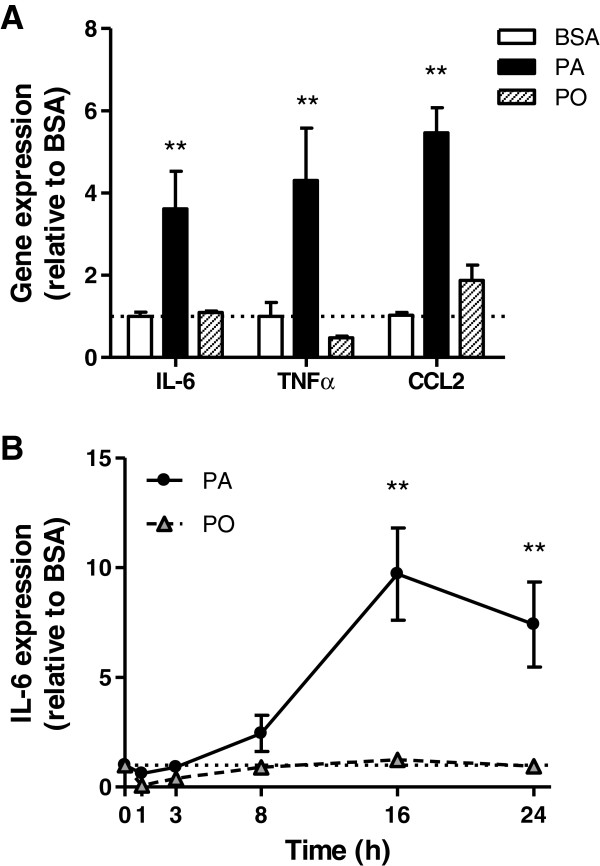
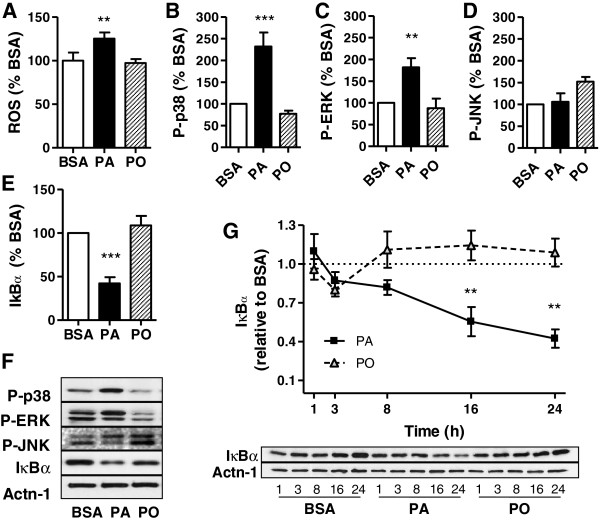
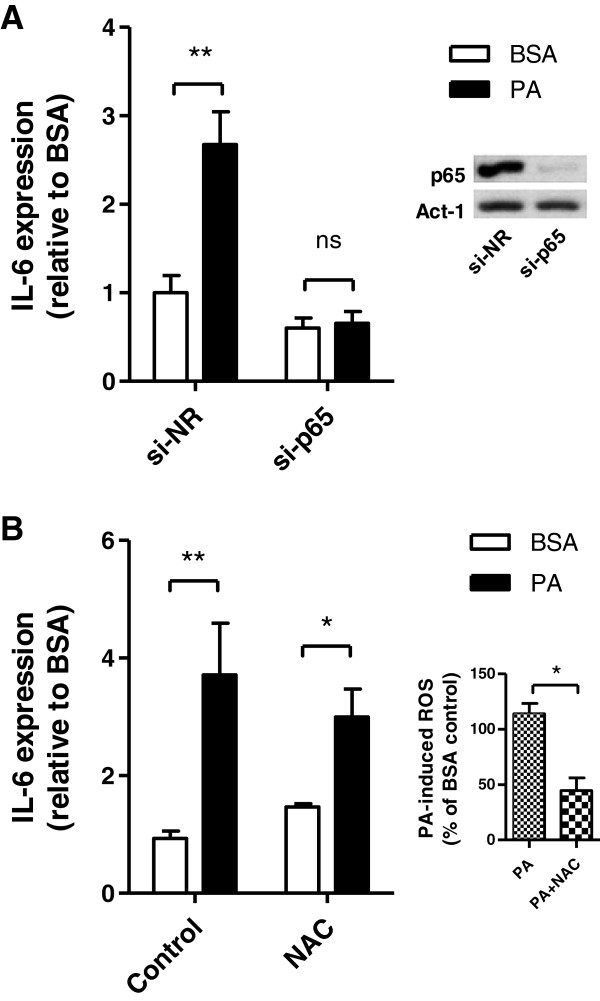
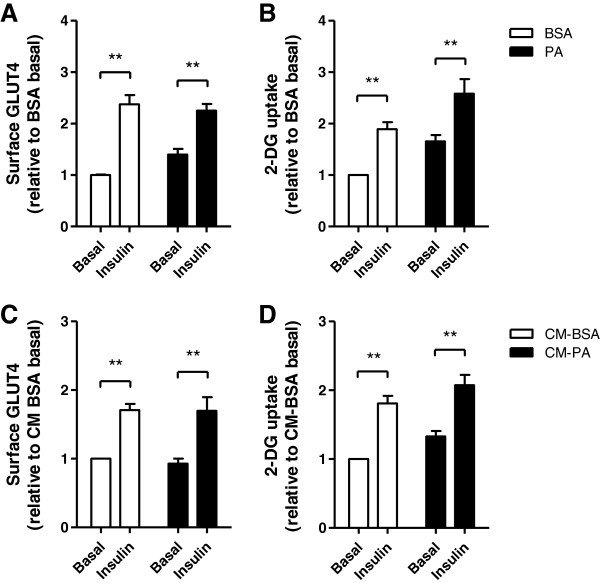
Obesity is associated with chronic low-grade inflammation. Within adipose tissue of mice fed a high fat diet, resident and infiltrating macrophages assume a pro-inflammatory phenotype characterized by the production of cytokines which in turn impact on the surrounding tissue. However, inflammation is not restricted to adipose tissue and high fat-feeding is responsible for a significant increase in pro-inflammatory cytokine expression in muscle. Although skeletal muscle is the major disposer of dietary glucose and a major determinant of glycemia, the origin and consequence of muscle inflammation in the development of insulin resistance are poorly understood.We used a cell culture approach to investigate the vectorial crosstalk between muscle cells and macrophages upon exposure to physiological, low levels of saturated and unsaturated fatty acids. Inflammatory pathway activation and cytokine expression were analyzed in L6 muscle cells expressing myc-tagged GLUT4 (L6GLUT4myc) exposed to 0.2 mM palmitate or palmitoleate. Conditioned media thereof, free of fatty acids, were then tested for their ability to activate RAW264.7 macrophages.Palmitate -but not palmitoleate- induced IL-6, TNFα and CCL2 expression in muscle cells, through activation of the NF-κB pathway. Palmitate (0.2 mM) alone did not induce insulin resistance in muscle cells, yet conditioned media from palmitate-challenged muscle cells selectively activated macrophages towards a pro-inflammatory phenotype.These results demonstrate that low concentrations of palmitate activate autonomous inflammation in muscle cells to release factors that turn macrophages pro-inflammatory. We hypothesize that saturated fat-induced, low-grade muscle cell inflammation may trigger resident skeletal muscle macrophage polarization, possibly contributing to insulin resistance in vivo.
Overview
The claims and statistics of this paper haven’t been checked yet.
Free: it reads the open-access text and checks the first 5 claims that cite a source we can check. Create a free account to check every claim.
Integrity signals
Registry
Cites
Statistics
Figures
Verification
Claims the paper makes
The claims and statistics of this paper haven’t been checked yet.
Free: it reads the open-access text and checks the first 5 claims that cite a source we can check. Create a free account to check every claim.
Claims other papers make about this one
Each is checked against this paper’s own text: does it say what the citing paper says it does?
The source backs part of the claim, not all of it — or backs it for a different population, condition or comparison.
In the citing paper
“conditioned media from palmitate treated macrophages induces insulin resistance in skeletal muscle cells [158].”
From Omega-3 Fatty Acids and Skeletal Muscle Health (2015) · cites this paper as [158]
Experimental — accuracy not yet measured
Self-check
Percentages, sums and reported differences re-computed from the paper’s own numbers.
The self-check needs the paper’s full text.
Citations
Cites
Obesity is associated with macrophage accumulation in adipose tissue
Weisberg, S. P., McCann, D., Desai, M., Rosenbaum, M., Leibel, R. L., & Ferrante, A. W. (2003) · Journal of Clinical Investigation · doi:10.1172/jci200319246 · Cited by 10,041 · cited 3×
“Discussion Recent studies have detected elevated numbers of myeloid cell or macrophage markers in skeletal muscle during HFD and obesity [13,25-27], but how these immune cells are influenced by the surrounding tissue and their role in the progression of insulin resistance are unknown.”
BackgroundObesity induces a phenotypic switch in adipose tissue macrophage polarization
Lumeng, C. N., Bodzin, J. L., & Saltiel, A. R. (2007) · Journal of Clinical Investigation · doi:10.1172/jci29881 · Cited by 4,664 · cited 1×
“, TNFα, IL-6 and IL-1β) within adipose tissue [16,17].”
BackgroundInflammatory Mechanisms in Obesity
Gregor, M. F., & Hotamisligil, G. S. (2011) · Annual Review of Immunology · doi:10.1146/annurev-immunol-031210-101322 · Cited by 3,754 · cited 1×
“Adipose tissue expansion in response to high fat diet (HFD) is accompanied by a local, low-grade inflammation [11-13].”
BackgroundTLR4 links innate immunity and fatty acid-induced insulin resistance
Shi, H., Kokoeva, M. V., Inouye, K., Tzameli, I., Yin, H., & Flier, J. S. (2006) · Journal of Clinical Investigation · doi:10.1172/jci28898 · Cited by 3,690 · cited 1×
“TLR4 and TLR2 have been invoked to participate in some response to saturated fatty acids in cell culture and to HFD in vivo [43-45].”
BackgroundSkeletal Muscle Insulin Resistance Is the Primary Defect in Type 2 Diabetes
DeFronzo, R. A., & Tripathy, D. (2009) · Diabetes Care · doi:10.2337/dc09-s302 · Cited by 2,102 · cited 1×
“This is important because skeletal muscle is the major disposer of dietary insulin and a major determinant of glycemia, and wholebody insulin resistance arises only when skeletal muscle and/or the liver become resistant to the actions of insulin [22].”
BackgroundYu, C., Chen, Y., Cline, G. W., Zhang, D., Zong, H., Wang, Y., Bergeron, R., Kim, J. K., Cushman, S. W., Cooney, G. J., et al. (2002) · Journal of Biological Chemistry · doi:10.1074/jbc.m200958200 · Cited by 1,561 · cited 1×
“In cell and animal studies, palmitate leads to the development of insulin resistance and inflammation [6-8], whereas unsaturated fatty acids are often beneficial or at least less deleterious.”
BackgroundTumor necrosis factor alpha inhibits signaling from the insulin receptor.
Hotamisligil, G. S., Murray, D. L., Choy, L. N., & Spiegelman, B. M. (1994) · Proceedings of the National Academy of Sciences · doi:10.1073/pnas.91.11.4854 · Cited by 1,199 · cited 1×
“In turn, inflamed immune cell populations can adversely affect the metabolic function of adipose tissue; and indeed, inflammation per se can impair insulin action in adipocytes, reducing lipogenesis and enhancing lipolysis [15,20].”
BackgroundNguyen, M. T. A., Favelyukis, S., Nguyen, A.-K., Reichart, D., Scott, P. A., Jenn, A., Liu-Bryan, R., Glass, C. K., Neels, J. G., & Olefsky, J. M. (2007) · Journal of Biological Chemistry · doi:10.1074/jbc.m706762200 · Cited by 1,035 · cited 4×
“Notably, we and others recently detected increased gene expression of F4/80 (macrophage marker) and CD11c (pro-inflammatory macrophage- or dendritic cell-like) in muscle from high fat-fed mice [12,25].”
BackgroundMethodInfluentialSuganami, T., Tanimoto-Koyama, K., Nishida, J., Itoh, M., Yuan, X., Mizuarai, S., Kotani, H., Yamaoka, S., Miyake, K., Aoe, S., et al. (2007) · Arteriosclerosis, Thrombosis, and Vascular Biology · doi:10.1161/01.atv.0000251608.09329.9a · Cited by 812
Ablation of CD11c-Positive Cells Normalizes Insulin Sensitivity in Obese Insulin Resistant Animals
Patsouris, D., Li, P.-P., Thapar, D., Chapman, J., Olefsky, J. M., & Neels, J. G. (2008) · Cell Metabolism · doi:10.1016/j.cmet.2008.08.015 · Cited by 804 · cited 2×
“Discussion Recent studies have detected elevated numbers of myeloid cell or macrophage markers in skeletal muscle during HFD and obesity [13,25-27], but how these immune cells are influenced by the surrounding tissue and their role in the progression of insulin resistance are unknown.”
Background
Research works printed but not linked: 1
- Fink LN Oberbach A Jensen TE Sams A Blüher M Klip A Muscle-Infiltrating Macrophages in Type 2 Diabetes Diabetes 2012 61 106 OR
Cited by
Chronic Adipose Tissue Inflammation Linking Obesity to Insulin Resistance and Type 2 Diabetes
Zatterale, F., Longo, M., Naderi, J., Raciti, G. A., Desiderio, A., Miele, C., & Beguinot, F. (2020) · Frontiers in Physiology · doi:10.3389/fphys.2019.01607 · Cited by 1,180
Regulation of metabolism by the innate immune system
Lackey, D. E., & Olefsky, J. M. (2016) · Nature Reviews Endocrinology · doi:10.1038/nrendo.2015.189 · Cited by 667
The many actions of insulin in skeletal muscle, the paramount tissue determining glycemia
Sylow, L., Tokarz, V. L., Richter, E. A., & Klip, A. (2021) · Cell Metabolism · doi:10.1016/j.cmet.2021.03.020 · Cited by 366
Self-citationPillon, N. J., Bilan, P. J., Fink, L. N., & Klip, A. (2013) · American Journal of Physiology-Endocrinology and Metabolism · doi:10.1152/ajpendo.00553.2012 · Cited by 287
“Lactate Muscle cells Electrical pulse stimulation (68) Lipids (104) Macrophages N/A Muscle tissue Sepsis (LPS) (2) Obesity/Diabetes (29, 112) ATP Muscle cells Exercise (167) Electrical pulse stimulation (16, 122) Cell damage (26) Macrophages LPS (105) Chemotaxis (66) Muscle tissue Exercise (72, 85) Eicosanoids Muscle…”
BackgroundSelf-citationFrom cytokine to myokine: The emerging role of interleukin-6 in metabolic regulation
Pal, M., Febbraio, M. A., & Whitham, M. (2014) · Immunology & Cell Biology · doi:10.1038/icb.2014.16 · Cited by 258
Bleau, C., Karelis, A. D., St‐Pierre, D. H., & Lamontagne, L. (2015) · Diabetes/Metabolism Research and Reviews · doi:10.1002/dmrr.2617 · Cited by 215
“sulin resistance and inflammation in muscle tissue [22,138,139].”
BackgroundOmega-3 Fatty Acids and Skeletal Muscle Health
Jeromson, S., Gallagher, I., Galloway, S., & Hamilton, D. (2015) · Marine Drugs · doi:10.3390/md13116977 · Cited by 203
“For instance, conditioned media from palmitate treated macrophages induces insulin resistance in skeletal muscle cells [158].”
BackgroundManifestations and mechanisms of myocardial lipotoxicity in obesity
Sletten, A. C., Peterson, L. R., & Schaffer, J. E. (2018) · Journal of Internal Medicine · doi:10.1111/joim.12728 · Cited by 142
Meshkani, R., & Vakili, S. (2016) · Clinica Chimica Acta · doi:10.1016/j.cca.2016.08.015 · Cited by 149
“In addition, conditioned medium from palmitate-treated L6 muscle cells induced macrophages inflammatory responses, as shown by elevated expression of IL-6, MCP-1, and other inflammatory cytokines [99].”
BackgroundTalbot, N. A., Wheeler-Jones, C. P., & Cleasby, M. E. (2014) · Molecular and Cellular Endocrinology · doi:10.1016/j.mce.2014.06.010 · Cited by 104
“Conversely, CM from palmitic acid-treated myoblasts was capable of causing a proinflammatory switch in macrophage phenotype (Pillon et al., 2012).”
BackgroundSadeghi, A., Rostamirad, A., Seyyedebrahimi, S., & Meshkani, R. (2018) · Inflammopharmacology · doi:10.1007/s10787-018-0466-0 · Cited by 88
“Furthermore, stimulation of skeletal muscle cells by palmitate enhanced release of inflammatory cytokines by activating the NF-κB (nuclear factor kappa-light-chain-enhancer of activated B cells) pathway (Barma et al. 2009; Pillon et al. 2012).”
BackgroundExercise tolls the bell for key mediators of low-grade inflammation in dysmetabolic conditions
Guardia, L. D., & Codella, R. (2021) · Cytokine & Growth Factor Reviews · doi:10.1016/j.cytogfr.2021.09.003 · Cited by 71
“In obesity and T2D, myocytes become dysfunctional and produce proinflammatory cytokines in response to increased circulating FFAs challenge [26,28].”
BackgroundBeiter, T., Hoene, M., Prenzler, F., Mooren, F. C., Steinacker, J. M., Weigert, C., Niess, A. M., & Munz, B. (2026) · Exercise immunology review · doi:10.22029/eir.2015.1695 · Cited by 65
Welch, A. A., MacGregor, A. J., Minihane, A. M., Skinner, J. S., Valdes, A. A., Spector, T. D., & Cassidy, A. (2014) · Journal of Nutrition · doi:10.3945/jn.113.185256 · Cited by 64
“Dietary SFAs increased the production of inflammatory cytokines in muscle cells in an in vitro study (28).”
BackgroundNucleotides Released From Palmitate-Challenged Muscle Cells Through Pannexin-3 Attract Monocytes
Pillon, N. J., Li, Y. E., Fink, L. N., Brozinick, J. T., Nikolayev, A., Kuo, M., Bilan, P. J., & Klip, A. (2014) · Diabetes · doi:10.2337/db14-0150 · Cited by 53
“Along with our previously reported inflammatory polarization of macrophages conferred by palmitatetreated muscle cells (22), these results illustrate the bidirectional crosstalk that occurs between muscle and immune cells in the context of hyperlipidic environments.”
BackgroundSelf-citationPinel, A., Morio, B., & Capel, F. (2013) · Journal of Physiology and Biochemistry · doi:10.1007/s13105-013-0303-2 · Cited by 54
Liu, Q., Liu, S., Gao, L., Sun, S., Huan, Y., Li, C., Wang, Y., Guo, N., & Shen, Z. (2017) · Acta Pharmaceutica Sinica B · doi:10.1016/j.apsb.2017.04.010 · Cited by 51
“com/locate/apsb Acta Pharmaceutica Sinica B Acta Pharmaceutica Sinica B 2017;7(4):461–469”
BackgroundRole of stearoyl-CoA desaturase-1 in skeletal muscle function and metabolism
Stamatikos, A., & Paton, C. M. (2013) · American Journal of Physiology-Endocrinology and Metabolism · doi:10.1152/ajpendo.00268.2013 · Cited by 49
“SFA can cause cellular stress and inflammation through several different mechanisms (13, 27, 28, 36, 38, 45, 61, 72, 87).”
BackgroundSergi, D., Luscombe‐Marsh, N. D., Naumovski, N., Abeywardena, M. Y., & O’Callaghan, N. J. (2021) · Frontiers in Nutrition · doi:10.3389/fnut.2021.663838 · Cited by 46
Innate immune receptors in skeletal muscle metabolism
Pillon, N. J., & Krook, A. (2017) · Experimental Cell Research · doi:10.1016/j.yexcr.2017.02.035 · Cited by 44
Self-citationLee, H., Lim, J.-Y., & Choi, S.-J. (2017) · Oxidative Medicine and Cellular Longevity · doi:10.1155/2017/2739721 · Cited by 43
“In skeletal muscle, increased flux of fatty acids contributes to the production of mitochondrial ROS [24].”
BackgroundRutting, S., Papanicolaou, M., Xenaki, D., Wood, L. G., Mullin, A. M., Hansbro, P. M., & Oliver, B. G. G. (2018) · Respiratory Research · doi:10.1186/s12931-018-0919-4 · Cited by 41
“…(AA)) (Sigma Aldrich) were prepared in 100% EtOH and stored at-20 °C. Working water-soluble solutions of 10 mM were generated by incubating the fatty acids in 10% endotoxin and fatty acid-free BSA (Sigma Aldrich), as previously described by Gupta et al. (2012) and Pillon et al. (2012) [28, 29].”
MethodOleate dose-dependently regulates palmitate metabolism and insulin signaling in C2C12 myotubes
Capel, F., Cheraïti, N., Acquaviva, C., Hénique, C., Bertrand‐Michel, J., Vianey‐Saban, C., Prip‐Buus, C., & Morio, B. (2016) · Biochimica et Biophysica Acta (BBA) - Molecular and Cell Biology of Lipids · doi:10.1016/j.bbalip.2016.10.002 · Cited by 40
A high-carbohydrate diet induces greater inflammation than a high-fat diet in mouse skeletal muscle
Antunes, M. M., Godoy, G., de Almeida-Souza, C. B., da Rocha, B. A., da Silva-Santi, L. G., Masi, L. N., Carbonera, F., Visentainer, J. V., Curi, R., & Bazotte, R. B. (2020) · Brazilian Journal of Medical and Biological Research · doi:10.1590/1414-431x20199039 · Cited by 34
“These results are in agreement with Rasic-Milutinovic et al. (31) who reported that the SFA/n-3 PUFA ratio is a better indicator of inflammation than the n-6/n-3 PUFA ratio, considering the inflammatory properties of SFA and n-6 and the anti-inflammatory properties of n-3 PUFAs (25,27,32).”
BackgroundInfluentialRutting, S., Xenaki, D., Lau, E., Horvat, J. C., Wood, L. G., Hansbro, P. M., & Oliver, B. G. G. (2018) · American Journal of Physiology-Lung Cellular and Molecular Physiology · doi:10.1152/ajplung.00438.2017 · Cited by 33
Macrophages’ Role in Tissue Disease and Regeneration
Gaffney, L. S., Warren, P. B., Wrona, E. A., Fisher, M. B., & Freytes, D. O. (2017) · Results and problems in cell differentiation · doi:10.1007/978-3-319-54090-0_10 · Cited by 31
Exercise Restores Hypothalamic Health in Obesity by Reshaping the Inflammatory Network
Guardia, L. D., & Codella, R. (2023) · Antioxidants · doi:10.3390/antiox12020297 · Cited by 29
“WAT-released pro-inflammatory mediators, such as FFAs and TNFα, play a critical role in inducing myocyte inflammation and dysfunction, in obesity [26,27].”
BackgroundMechanism of immune attack in the progression of obesity-related type 2 diabetes
Wang, H., Tang, J., Sun, L., Li, Z., Deng, M., & Dai, Z. (2023) · World Journal of Diabetes · doi:10.4239/wjd.v14.i5.494 · Cited by 22
Passaro, A., Sanz, J. M., Naumovski, N., & Sergi, D. (2024) · Advances in Redox Research · doi:10.1016/j.arres.2024.100100 · Cited by 19
Deconstructing metabolic inflammation using cellular systems
Chan, K. L., Boroumand, P., Milanski, M., Pillon, N. J., Bilan, P. J., & Klip, A. (2017) · American Journal of Physiology-Endocrinology and Metabolism · doi:10.1152/ajpendo.00039.2017 · Cited by 18
Self-citationFan, R., Cao, C., Zhao, X., Shi, Q., Zhao, J., & Xu, S. (2017) · Oncotarget · doi:10.18632/oncotarget.17187 · Cited by 16
“In the lipid metabolism of skeletal muscle or muscle cells, SFA can cause cellular stress and inflammation through several different pathways [40–42].”
Liu, D., Morales, F. E., IglayReger, H. B., Treutelaar, M. K., Rothberg, A. E., Hubal, M. J., Nadler, E. P., Robidoux, J., Barakat, H. A., Horowitz, J. F., et al. (2017) · Applied Physiology, Nutrition, and Metabolism · doi:10.1139/apnm-2017-0228 · Cited by 11
“…(Odegaard Page 3 of 25 https://mc06.manuscriptcentral.com/apnm-pubs Applied Physiology, Nutrition, and Metabolism Draft 4 and Chawla 2008; Varma et al. 2009; Pillon et al. 2012; Khan et al. 2015). which precedes the development of systemic insulin resistance and the occurrence of overt diabetes.”
BackgroundTruong, T. M. T., Jang, H., Ghosh, M., Son, Y., & Kang, I. (2023) · Journal of Functional Foods · doi:10.1016/j.jff.2023.105979 · Cited by 10
[Study on relationship between human ABO blood groups and type A behavior pattern].
Mao, X., Xu, M., Mu, S., Ma, Y., & He, M. (1991) · PubMed · Cited by 10
Ormazabal, P., Cifuentes, M., Varí, R., Scazzocchio, B., Masella, R., Pacheco, I., Vega, W., Paredes, A., & Morales, G. (2020) · Endocrine Metabolic & Immune Disorders - Drug Targets · doi:10.2174/1871530320666200513082300 · Cited by 9
Sasagawa, M., Boclair, M. J., & Amieux, P. S. (2021) · Nutrients · doi:10.3390/nu13082801 · Cited by 7
Jeong, M., McColl, T. J., & Clarke, D. C. (2025) · Applied Physiology, Nutrition, and Metabolism · doi:10.1139/apnm-2025-0017 · Cited by 5
Santos, H. O., Nehme, R., Limirio, L. S., Mendonça, M. E. D. F., de Branco, F. M. S., & de Oliveira, E. P. (2025) · Prostaglandins Leukotrienes and Essential Fatty Acids · doi:10.1016/j.plefa.2025.102667 · Cited by 5
Muscle Immune Cells, Obesity, and High-Fat Feeding
Domingues-Faria, C., Gonçalves-Mendes, N., & Farges, M. (2018) · Elsevier eBooks · doi:10.1016/b978-0-12-810422-4.00010-5 · Cited by 4
Low-Concentrations of Fatty Acids Induce an Early Increase in IL-8 Levels in Normal Human Astrocytes
Dobri, A.-M., Codrici, E., Popescu, I. D., Albulescu, L., Fertig, T. E., Enciu, A., Tănase, C., & Hinescu, M. E. (2022) · Metabolites · doi:10.3390/metabo12040329 · Cited by 3
“Both pathways are related to inflammation [4–6], and many non-immune cell types respond to FA treatments by producing cytokines, such as skin cells [7,8], intestinal epithelial cells [9], hepatic cells [10], and muscle cells [11].”
BackgroundTahmasbi, M. H., Karimpour, A., Rashidi, M., Zangooei, M., Khedri, A., & Panahi, G. (2025) · Journal of Diabetes & Metabolic Disorders · doi:10.1007/s40200-025-01669-7 · Cited by 3
“4 ), which is consistent with the results obtained from the treatment of C2C12 cells with palmitate in other studies [31, 32].”
Li, Y., Kan, G., Zhang, C., Liu, B., & Jiang, J. (2025) · Journal of Hazardous Materials · doi:10.1016/j.jhazmat.2025.140225 · Cited by 2
Khamoui, A. V., Abraham, A., Pórszász, J., Kovanecz, I., Constantinescu, S., Rossiter, H. B., & Reisz‐Porszasz, S. (2026) · Experimental Physiology · doi:10.1113/ep093775 · Cited by 1
“…muscle (Figure 8c) is notable because high exposure causes toxicity in musculoskeletal tissues and cell and tissue types of the gastro-intestinal and central nervous systems (Brun et al., 2024; Guerbette et al., 2024; Langley et al., 2020; Lin et al., 2024; Pillon et al., 2012; Pinel et al., 2016).”
Erythrocyte Fatty Acid Patterns Are Associated with Skeletal Muscle Mass in Chinese Children
Zhou, Q., Huang, L., Wu, Y., Su, M., Liao, X., Zhou, Q., Guo, Z., Liang, J., Wei, Q., & Zhang, Z. (2025) · Journal of Nutrition · doi:10.1016/j.tjnut.2025.01.001 · Cited by 1
Mechanisms of hexosamine-induced cholesterol accumulation and therapeutic actions of chromium
Penque, B. A. (2014) · Purdue University Indianapolis (Indiana University) · doi:10.7912/c2/2001 · Cited by 1
Aljawadi, A. (2013) · ThinkTech (Texas Tech University) · Cited by 1
The Effects of Interleukin-10 on Skeletal Muscle Insulin Resistance and Myogenesis
Dağdeviren, S. (2016) · eScholarship@UMassChan · doi:10.13028/m2qp42 · Cited by 1
Fatty acids, monocytes and ageing
Pararasa, C. (2013) · Aston Publications Explorer (Aston University) · doi:10.48780/publications.aston.ac.uk.00020894 · Cited by 2
ACCUMULATION AND THERAPEUTIC ACTIONS OF CHROMIUM
Penque, B. A. (2013)
Rac GTPase Regulation of GLUT4 Traffic in Muscle Cells: Mechanisms and Implications
Chiu, T. T. (2014) · TSpace (University of Toronto)
Self-citationKoh, J., & Kim, K.-J. (2017) · 한국체육학회지 · doi:10.23949/kjpe.2017.07.56.4.40
Jeromson, S. (2017) · Stirling Online Research Repository (University of Stirling)
Dassoff, E. S., Hamad, S., Campagna, E., Thilakarathna, S. H., Michalski, M., & Wright, A. J. (2024) · Molecular Nutrition & Food Research · doi:10.1002/mnfr.202400365
Wu, D., Lu, S., Li, J., Zhang, Y., Gao, Y., Wang, C., Han, S., Fan, Z., Li, J., Liu, H., et al. (2026) · Animal nutrition · doi:10.1016/j.aninu.2026.03.007
Excessive Dietary n‐6 Polyunsaturated Fatty Acids Aggravate Asthma via the Arachidonic Acid Pathway
Wang, Z., Chen, G., Huang, C., Gu, W., Jie, H., Xiong, T., Liu, Y., & Zhen, G. (2026) · The FASEB Journal · doi:10.1096/fj.202604401r
“A working 10 mM water-soluble solution was prepared by incubating the fatty acids with 10% endotoxin-free and defatted bovine serum albumin (BSA; Sigma-Aldrich) as described by Gupta et al. [20] and Pillon et al. [21].”
Metadata
- Authors
- Pillon, N. J., Arane, K., Bilan, P. J., Chiu, T. T., & Klip, A.
- Affiliations
- Hospital for Sick Children (CA)
- Corresponding author
- Klip, Amira
- Venue
- Cell Communication and Signaling
- Published
- 2012-10-19
- Volume
- 10
- Issue
- 1
- Pages
- 30-30
- ISSN
- 1478-811X (ISSN-L)
- PMC
- PMC3507850
- OpenAlex
- W2165654130
- Cited by
- 53
- References
- 57
- Citations by year
- 2026: 4 · 2025: 5 · 2024: 2 · 2023: 3 · 2022: 1 · 2021: 3 · 2020: 4 · 2018: 6 · 2017: 9 · 2016: 2 · 2015: 2 · 2014: 6 · 2013: 5
- FWCI
- 3.11
- Type
- journal article
- Language
- en
- Open access
- gold
- doi.org
- Licence
- cc-by
- Locations
- Cell Communication and Signaling (publishedVersion, cc-by)
- PubMed Central (publishedVersion, cc-by)
- PubMed (publishedVersion)
- TSpace (University of Toronto) (submittedVersion)
- DOAJ (DOAJ: Directory of Open Access Journals) (submittedVersion, cc-by-sa)
- Funders
- University of Toronto
- Hospital for Sick Children
- Canadian Institutes of Health Research
- Banting and Best Diabetes Centre, University of Toronto
- Topics
- Health Sciences › Medicine › Endocrinology, Diabetes and Metabolism › Adipokines, Inflammation, and Metabolic Diseases
- Health Sciences › Medicine › Physiology (medical) › Adipose Tissue and Metabolism
- Health Sciences › Medicine › Physiology (medical) › Exercise and Physiological Responses
- Keywords
- skeletal muscle inflammation, saturated fatty acids, palmitate, palmitoleic acid, macrophage activation, NF-κB signaling, interleukin-6, TNF-α, MCP-1, insulin resistance, GLUT4, L6 cells, RAW 264.7 macrophages, adipose tissue macrophages, high-fat diet, low-grade inflammation
About these checks
Registry, retraction, Cites and statistics results are computed, not judged, with one exception: a printed reference that no index lists is read once by a model before it counts as a citation error. Claims are extracted by a model and kept only when their quote appears verbatim in the text; each cited source is then checked, with a model’s help, for whether it says what the claim relies on. Those verdicts can be wrong — read the claim’s quote and the cited source before relying on one.
Statistics and arithmetic are recomputed, not judged.
Confidence bands are shown only for fields calibrated on our annotated test set. None is calibrated yet, so no band is shown.
What counts as a claim ›How we measure confidence ›How we check this ›
Are you an author, or do you see a problem with this page? Request a review
Data sources
Bibliographic data: Semantic Scholar, OpenAlex, Crossref.
Contains information from the Semantic Scholar Academic Graph Datasets, made available under the ODC Attribution License (ODC-BY 1.0).
Semantic Scholar’s data is described in: Kinney, R., et al. (2023). The Semantic Scholar Open Data Platform. arXiv:2301.10140.
