

Muscle cells challenged with saturated fatty acids mount an autonomous inflammatory response that activates macrophages
Open accessThe DOI matches its Crossref record; 57 of the 57 references it cites were found in a registry or an index.
Abstract
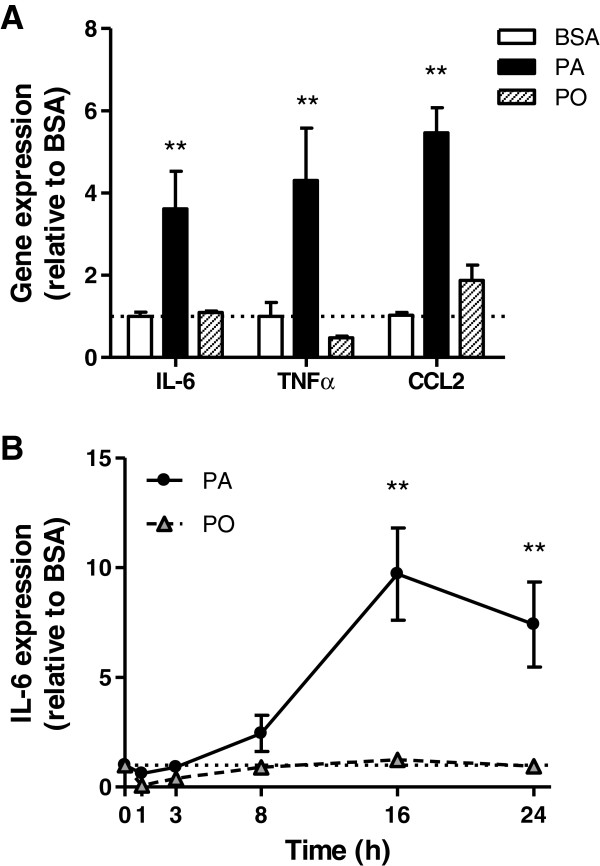
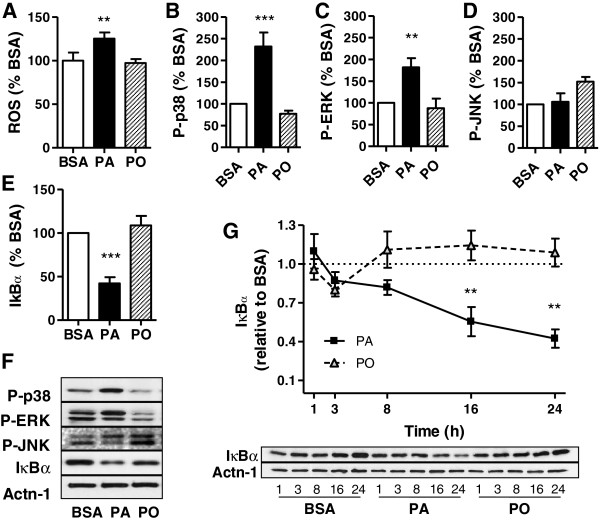
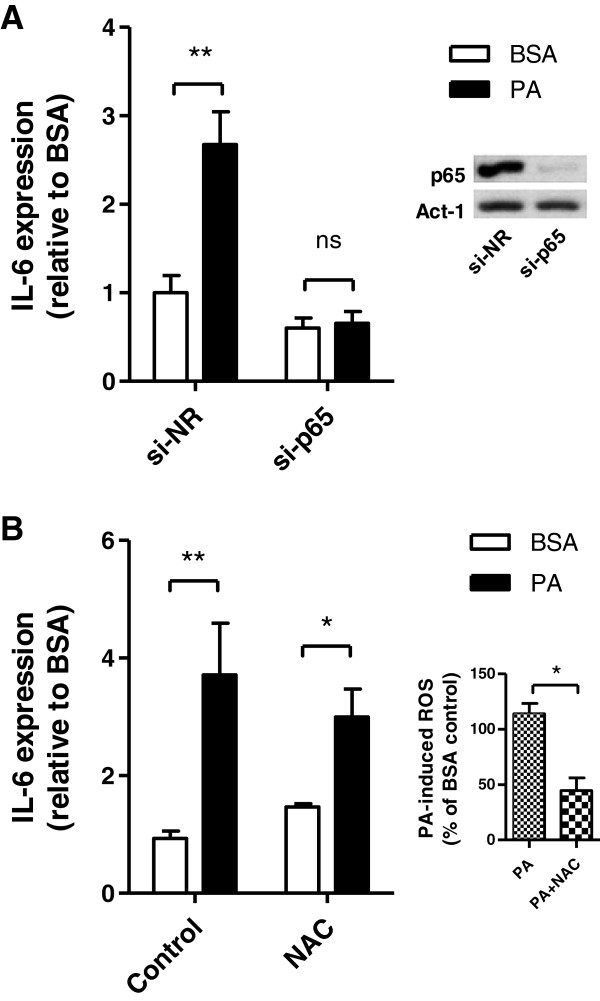
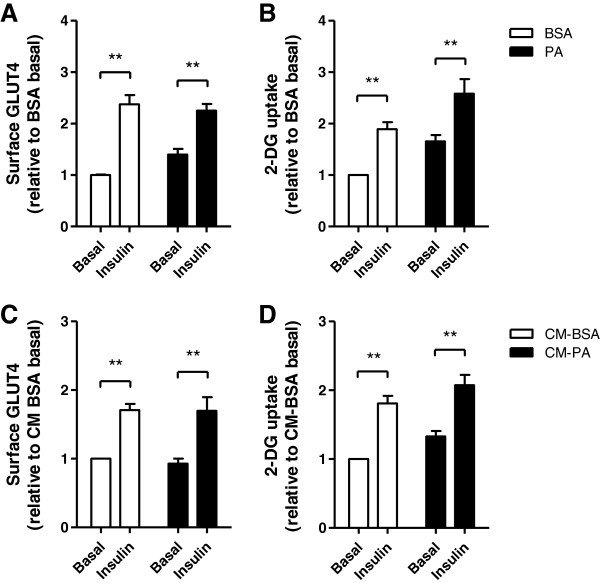
Obesity is associated with chronic low-grade inflammation. Within adipose tissue of mice fed a high fat diet, resident and infiltrating macrophages assume a pro-inflammatory phenotype characterized by the production of cytokines which in turn impact on the surrounding tissue. However, inflammation is not restricted to adipose tissue and high fat-feeding is responsible for a significant increase in pro-inflammatory cytokine expression in muscle. Although skeletal muscle is the major disposer of dietary glucose and a major determinant of glycemia, the origin and consequence of muscle inflammation in the development of insulin resistance are poorly understood.We used a cell culture approach to investigate the vectorial crosstalk between muscle cells and macrophages upon exposure to physiological, low levels of saturated and unsaturated fatty acids. Inflammatory pathway activation and cytokine expression were analyzed in L6 muscle cells expressing myc-tagged GLUT4 (L6GLUT4myc) exposed to 0.2 mM palmitate or palmitoleate. Conditioned media thereof, free of fatty acids, were then tested for their ability to activate RAW264.7 macrophages.Palmitate -but not palmitoleate- induced IL-6, TNFα and CCL2 expression in muscle cells, through activation of the NF-κB pathway. Palmitate (0.2 mM) alone did not induce insulin resistance in muscle cells, yet conditioned media from palmitate-challenged muscle cells selectively activated macrophages towards a pro-inflammatory phenotype.These results demonstrate that low concentrations of palmitate activate autonomous inflammation in muscle cells to release factors that turn macrophages pro-inflammatory. We hypothesize that saturated fat-induced, low-grade muscle cell inflammation may trigger resident skeletal muscle macrophage polarization, possibly contributing to insulin resistance in vivo.
Overview
The claims and statistics of this paper haven’t been checked yet.
Free: it reads the open-access text and checks the first 5 claims that cite a source we can check. Create a free account to check every claim.
Integrity signals
Registry
Cites
Statistics
Figures
Verification
Claims the paper makes
The claims and statistics of this paper haven’t been checked yet.
Free: it reads the open-access text and checks the first 5 claims that cite a source we can check. Create a free account to check every claim.
Claims other papers make about this one
Each is checked against this paper’s own text: does it say what the citing paper says it does?
The source backs part of the claim, not all of it — or backs it for a different population, condition or comparison.
In the citing paper
“conditioned media from palmitate treated macrophages induces insulin resistance in skeletal muscle cells [158].”
From Omega-3 Fatty Acids and Skeletal Muscle Health (2015) · cites this paper as [158]
Experimental — accuracy not yet measured
Self-check
Percentages, sums and reported differences re-computed from the paper’s own numbers.
The self-check needs the paper’s full text.
Citations
Cites
Obesity is associated with macrophage accumulation in adipose tissue
Weisberg, S. P., McCann, D., Desai, M., Rosenbaum, M., Leibel, R. L., & Ferrante, A. W. (2003) · Journal of Clinical Investigation · doi:10.1172/jci200319246 · Cited by 10,041 · cited 3×
“Discussion Recent studies have detected elevated numbers of myeloid cell or macrophage markers in skeletal muscle during HFD and obesity [13,25-27], but how these immune cells are influenced by the surrounding tissue and their role in the progression of insulin resistance are unknown.”
BackgroundObesity induces a phenotypic switch in adipose tissue macrophage polarization
Lumeng, C. N., Bodzin, J. L., & Saltiel, A. R. (2007) · Journal of Clinical Investigation · doi:10.1172/jci29881 · Cited by 4,664 · cited 1×
“, TNFα, IL-6 and IL-1β) within adipose tissue [16,17].”
BackgroundInflammatory Mechanisms in Obesity
Gregor, M. F., & Hotamisligil, G. S. (2011) · Annual Review of Immunology · doi:10.1146/annurev-immunol-031210-101322 · Cited by 3,754 · cited 1×
“Adipose tissue expansion in response to high fat diet (HFD) is accompanied by a local, low-grade inflammation [11-13].”
BackgroundTLR4 links innate immunity and fatty acid-induced insulin resistance
Shi, H., Kokoeva, M. V., Inouye, K., Tzameli, I., Yin, H., & Flier, J. S. (2006) · Journal of Clinical Investigation · doi:10.1172/jci28898 · Cited by 3,690 · cited 1×
“TLR4 and TLR2 have been invoked to participate in some response to saturated fatty acids in cell culture and to HFD in vivo [43-45].”
BackgroundSkeletal Muscle Insulin Resistance Is the Primary Defect in Type 2 Diabetes
DeFronzo, R. A., & Tripathy, D. (2009) · Diabetes Care · doi:10.2337/dc09-s302 · Cited by 2,102 · cited 1×
“This is important because skeletal muscle is the major disposer of dietary insulin and a major determinant of glycemia, and wholebody insulin resistance arises only when skeletal muscle and/or the liver become resistant to the actions of insulin [22].”
BackgroundYu, C., Chen, Y., Cline, G. W., Zhang, D., Zong, H., Wang, Y., Bergeron, R., Kim, J. K., Cushman, S. W., Cooney, G. J., et al. (2002) · Journal of Biological Chemistry · doi:10.1074/jbc.m200958200 · Cited by 1,561 · cited 1×
“In cell and animal studies, palmitate leads to the development of insulin resistance and inflammation [6-8], whereas unsaturated fatty acids are often beneficial or at least less deleterious.”
BackgroundTumor necrosis factor alpha inhibits signaling from the insulin receptor.
Hotamisligil, G. S., Murray, D. L., Choy, L. N., & Spiegelman, B. M. (1994) · Proceedings of the National Academy of Sciences · doi:10.1073/pnas.91.11.4854 · Cited by 1,199 · cited 1×
“In turn, inflamed immune cell populations can adversely affect the metabolic function of adipose tissue; and indeed, inflammation per se can impair insulin action in adipocytes, reducing lipogenesis and enhancing lipolysis [15,20].”
BackgroundNguyen, M. T. A., Favelyukis, S., Nguyen, A.-K., Reichart, D., Scott, P. A., Jenn, A., Liu-Bryan, R., Glass, C. K., Neels, J. G., & Olefsky, J. M. (2007) · Journal of Biological Chemistry · doi:10.1074/jbc.m706762200 · Cited by 1,035 · cited 4×
“Notably, we and others recently detected increased gene expression of F4/80 (macrophage marker) and CD11c (pro-inflammatory macrophage- or dendritic cell-like) in muscle from high fat-fed mice [12,25].”
BackgroundMethodInfluentialSuganami, T., Tanimoto-Koyama, K., Nishida, J., Itoh, M., Yuan, X., Mizuarai, S., Kotani, H., Yamaoka, S., Miyake, K., Aoe, S., et al. (2007) · Arteriosclerosis, Thrombosis, and Vascular Biology · doi:10.1161/01.atv.0000251608.09329.9a · Cited by 812
Ablation of CD11c-Positive Cells Normalizes Insulin Sensitivity in Obese Insulin Resistant Animals
Patsouris, D., Li, P.-P., Thapar, D., Chapman, J., Olefsky, J. M., & Neels, J. G. (2008) · Cell Metabolism · doi:10.1016/j.cmet.2008.08.015 · Cited by 804 · cited 2×
“Discussion Recent studies have detected elevated numbers of myeloid cell or macrophage markers in skeletal muscle during HFD and obesity [13,25-27], but how these immune cells are influenced by the surrounding tissue and their role in the progression of insulin resistance are unknown.”
BackgroundRuffell, D., Mourkioti, F., Gambardella, A., Kirstetter, P., Lopez, R. G., Rosenthal, N., & Nerlov, C. (2009) · Proceedings of the National Academy of Sciences · doi:10.1073/pnas.0908641106 · Cited by 626 · cited 1×
“Immune cells can be activated in muscle for beneficial outcomes such as resolving injury [58], and we hypothesize that CM-PO might counteract inflammatory cues acting on macrophages; future studies should explore this possibility.”
BackgroundSaturated fatty acids activate TLR-mediated proinflammatory signaling pathways
Huang, S., Rutkowsky, J. M., Snodgrass, R. G., Ono-Moore, K. D., Schneider, D. A., Newman, J. W., Adams, S. H., & Hwang, D. H. (2012) · Journal of Lipid Research · doi:10.1194/jlr.d029546 · Cited by 592
Inflammation Is Necessary for Long-Term but Not Short-Term High-Fat Diet–Induced Insulin Resistance
Lee, Y. S., Li, P., Huh, J. Y., Hwang, I. J., Lu, M., Kim, J. I., Ham, M., Talukdar, S., Chen, A., Lu, W. J., et al. (2011) · Diabetes · doi:10.2337/db11-0194 · Cited by 566
Zeyda, M., Farmer, D., Todoric, J., Aszmann, O., Speiser, M., Györi, G., Zlabinger, G. J., & Stulnig, T. M. (2007) · International Journal of Obesity · doi:10.1038/sj.ijo.0803632 · Cited by 558
Tanti, J.-F., & Jager, J. (2009) · Current Opinion in Pharmacology · doi:10.1016/j.coph.2009.07.004 · Cited by 430 · cited 1×
“Obesity and type 2 diabetes are associated with activation of stress kinases, as well as activation of the canonical NF-κB inflammation pathway in several tissues [31].”
BackgroundMacrophage Diversity and Polarization in Atherosclerosis: A Question of Balance
Mantovani, A., Garlanda, C., & Locati, M. (2009) · Arteriosclerosis, Thrombosis, and Vascular Biology · doi:10.1161/atvbaha.108.180497 · Cited by 426 · cited 2×
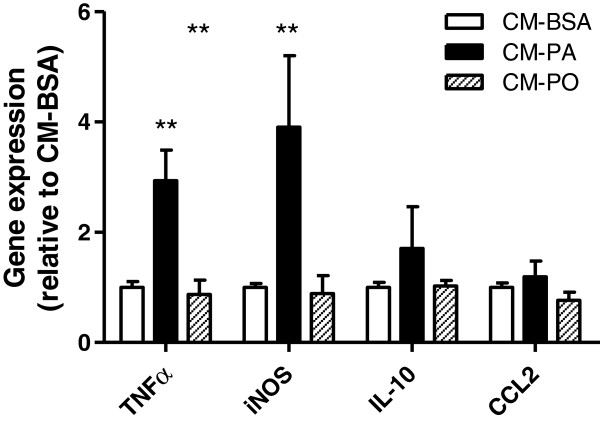
“Macrophages exposed to CM-PA exhibited an increased expression of TNFα and iNOS mRNA but no significant change in IL-10 and CCL2 mRNA (Figure 6).”
BackgroundLumeng, C. N., Deyoung, S. M., & Saltiel, A. R. (2007) · American Journal of Physiology-Endocrinology and Metabolism · doi:10.1152/ajpendo.00284.2006 · Cited by 359 · cited 2×
“In turn, inflamed immune cell populations can adversely affect the metabolic function of adipose tissue; and indeed, inflammation per se can impair insulin action in adipocytes, reducing lipogenesis and enhancing lipolysis [15,20].”
BackgroundTlr-4 deficiency selectively protects against obesity induced by diets high in saturated fat
Davis, J. E., Gabler, N. K., Walker‐Daniels, J., & Spurlock, M. E. (2008) · Obesity · doi:10.1038/oby.2008.210 · Cited by 334 · cited 1×
“Indeed, TLR4 deficient mice exhibit decreased NF-κB activation in adipose tissue in response to a diet rich in palmitate [46], and inhibition or deletion of TLR4 confers partial protection against palmitate-induced NF-κB activation in rodent skeletal muscle [47].”
BackgroundLee, J. S., Pinnamaneni, S. K., Eo, S. J., Cho, I. H., Pyo, J. H., Kim, C. K., Sinclair, A. J., Febbraio, M. A., & Watt, M. J. (2006) · Journal of Applied Physiology · doi:10.1152/japplphysiol.01438.2005 · Cited by 325 · cited 1×
“In cell and animal studies, palmitate leads to the development of insulin resistance and inflammation [6-8], whereas unsaturated fatty acids are often beneficial or at least less deleterious.”
BackgroundZhang, J., Gao, Z., Yin, J., Quon, M. J., & Ye, J. (2008) · Journal of Biological Chemistry · doi:10.1074/jbc.m806480200 · Cited by 297 · cited 1×
“As conditioned media from palmitate-treated muscle cells (CM-PA) contain several cytokines and chemokines that might provoke insulin-resistance in muscle cells as shown in other studies [35-37], we also assessed whether such CM would exert an autocrine insulin resistance effect, independently of any direct metabolic e…”
BackgroundYuzefovych, L., Wilson, G., & Rachek, L. (2010) · American Journal of Physiology-Endocrinology and Metabolism · doi:10.1152/ajpendo.00238.2010 · Cited by 280 · cited 1×
“2 mM palmitate increased muscle cell ROS levels (Figure 2A), as it occurs in response to higher palmitate concentrations [49].”
BackgroundWeigert, C., Brodbeck, K., Staiger, H., Kausch, C., Machicao, F., Häring, H. U., & Schleicher, E. D. (2004) · Journal of Biological Chemistry · doi:10.1074/jbc.m312692200 · Cited by 269
Kefaloyianni, E., Gaitanaki, C., & Beis, I. (2006) · Cellular Signalling · doi:10.1016/j.cellsig.2006.05.004 · Cited by 257
Dual and Beneficial Roles of Macrophages During Skeletal Muscle Regeneration
Chazaud, B., Brigitte, M., Yacoub-Youssef, H., Arnold, L., Gherardi, R., Sonnet, C., Lafuste, P., & Chretien, F. (2009) · Exercise and Sport Sciences Reviews · doi:10.1097/jes.0b013e318190ebdb · Cited by 248 · cited 1×
“In addition, resident macrophages are a constitutive component of skeletal muscle, relevant for inflammatory responses associated with muscle injury, dystrophies and endotoxemia [23,24].”
BackgroundDimopoulos, N., Watson, M., Sakamoto, K., & Hundal, H. S. (2006) · Biochemical Journal · doi:10.1042/bj20060244 · Cited by 247 · cited 1×
“Indeed, the monounsaturated fatty acid palmitoleic acid ((Z)-9-hexadecenoic acid, 16:1Δ9), which differs from palmitate by the presence of one double-bond, increases insulin sensitivity and suppresses inflammation [9,10].”
BackgroundVarma, V., Yao-Borengasser, A., Rasouli, N., Nolen, G. T., Phanavanh, B., Starks, T., Gurley, C., Simpson, P., McGehee, R. E., Kern, P. A., et al. (2009) · American Journal of Physiology-Endocrinology and Metabolism · doi:10.1152/ajpendo.90885.2008 · Cited by 229 · cited 2×
“Discussion Recent studies have detected elevated numbers of myeloid cell or macrophage markers in skeletal muscle during HFD and obesity [13,25-27], but how these immune cells are influenced by the surrounding tissue and their role in the progression of insulin resistance are unknown.”
BackgroundCirculating palmitoleic acid and risk of metabolic abnormalities and new-onset diabetes
Mozaffarian, D., Cao, H., King, I. B., Lemaitre, R. N., Song, X., Siscovick, D. S., & Hotamisligil, G. S. (2010) · The American Journal of Clinical Nutrition · doi:10.3945/ajcn.110.003970 · Cited by 219 · cited 1×
“Indeed, the monounsaturated fatty acid palmitoleic acid ((Z)-9-hexadecenoic acid, 16:1Δ9), which differs from palmitate by the presence of one double-bond, increases insulin sensitivity and suppresses inflammation [9,10].”
BackgroundGLUT4 translocation by insulin in intact muscle cells: detection by a fast and quantitative assay
Wang, Q., Khayat, Z., Kishi, K., Ebina, Y., & Klip, A. (1998) · FEBS Letters · doi:10.1016/s0014-5793(98)00423-2 · Cited by 218 · cited 1×
“2-Deoxy-[H]glucose uptake and cell surface density of GLUT4myc [59] were measured as described previously.”
MethodSelf-citationSung, K.-C., Jeong, W.-S., Wild, S. H., & Byrne, C. D. (2012) · Diabetes Care · doi:10.2337/dc11-1853 · Cited by 218 · cited 1×
“These conditions beget whole-body insulin resistance, a cornerstone of the metabolic syndrome, and obesity-induced insulin resistance is a major risk factor in the development of type 2 diabetes [3].”
BackgroundJeBailey, L., Wanono, O., Niu, W., Roessler, J., Rudich, A., & Klip, A. (2007) · Diabetes · doi:10.2337/db06-0823 · Cited by 209 · cited 1×
“5 mM and higher) can induce insulin resistance in muscle cells, in part through the generation of oxidative stress [6,33,34], we explored if this would similarly occur in response to low palmitate.”
BackgroundSelf-citationBrigitte, M., Schilte, C., Plonquet, A., Baba‐Amer, Y., Henri, A., Charlier, C., Tajbakhsh, S., Albert, M., Gherardi, R. K., & Chrétien, F. (2010) · Arthritis & Rheumatism · doi:10.1002/art.27183 · Cited by 192 · cited 1×
“In addition, resident macrophages are a constitutive component of skeletal muscle, relevant for inflammatory responses associated with muscle injury, dystrophies and endotoxemia [23,24].”
BackgroundLambernd, S., Taube, A., Schober, A., Platzbecker, B., Görgens, S. W., Schlich, R., Jeruschke, K., Weiss, J., Eckardt, K., & Eckel, J. (2012) · Diabetologia · doi:10.1007/s00125-012-2454-z · Cited by 172 · cited 1×
“As conditioned media from palmitate-treated muscle cells (CM-PA) contain several cytokines and chemokines that might provoke insulin-resistance in muscle cells as shown in other studies [35-37], we also assessed whether such CM would exert an autocrine insulin resistance effect, independently of any direct metabolic e…”
BackgroundERK-MAPK Drives Lamellipodia Protrusion by Activating the WAVE2 Regulatory Complex
Mendoza, M. C., Er, E. E., Zhang, W., Ballif, B. A., Elliott, H. L., Danuser, G., & Blenis, J. (2011) · Molecular Cell · doi:10.1016/j.molcel.2011.02.031 · Cited by 169 · cited 1×
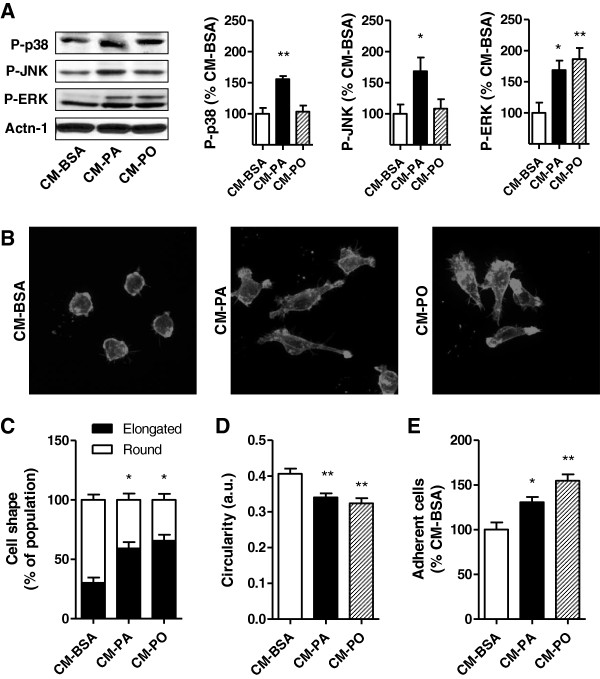
“ERK is involved in lamellipodia protrusion [56], and consistent with these observations, inhibiting ERK prevented the heightened macrophage adhesion elicited by either CM-PA or CM-PO (Additional file 1: Figure S4).”
ResultIvashkiv, L. B. (2011) · European Journal of Immunology · doi:10.1002/eji.201141783 · Cited by 161 · cited 1×
“Activated macrophages are characterized by stimulation of the MAPK signalling pathways [38], as well as actin filament remodelling extending filopodia and lamellipodia that promote cell spreading [39].”
BackgroundWilliams, L. M., & Ridley, A. J. (2000) · The Journal of Immunology · doi:10.4049/jimmunol.164.4.2028 · Cited by 159 · cited 1×
“Activated macrophages are characterized by stimulation of the MAPK signalling pathways [38], as well as actin filament remodelling extending filopodia and lamellipodia that promote cell spreading [39].”
BackgroundCirculating Palmitoleate Strongly and Independently Predicts Insulin Sensitivity in Humans
Stefan, N., Kantartzis, K., Celebi, N., Staiger, H., Machann, J., Schick, F., Cegan, A., Elcnerova, M., Schleicher, E., Fritsche, A., et al. (2010) · Diabetes Care · doi:10.2337/dc09-0544 · Cited by 156 · cited 1×
“8 mmol/L, composed of roughly 25% palmitate and 4% palmitoleate [5,29,30].”
BackgroundPillon, N. J., Croze, M. L., Vella, R. E., Soulère, L., Lagarde, M., & Soulage, C. O. (2012) · Endocrinology · doi:10.1210/en.2011-1957 · Cited by 153 · cited 1×
“5 mM and higher) can induce insulin resistance in muscle cells, in part through the generation of oxidative stress [6,33,34], we explored if this would similarly occur in response to low palmitate.”
BackgroundSelf-citationRadin, M. S., Sinha, S., Bhatt, B. A., Dedousis, N. L., & O'Doherty, R. M. (2007) · Diabetologia · doi:10.1007/s00125-007-0861-3 · Cited by 134 · cited 1×
“Indeed, TLR4 deficient mice exhibit decreased NF-κB activation in adipose tissue in response to a diet rich in palmitate [46], and inhibition or deletion of TLR4 confers partial protection against palmitate-induced NF-κB activation in rodent skeletal muscle [47].”
BackgroundJové, M., Planavila, A., Laguna, J. C., & Vázquez-Carrera, M. (2005) · Endocrinology · doi:10.1210/en.2004-1560 · Cited by 133 · cited 1×
“8 mM) activate novel-type protein kinase C’s in addition to the NF-κB pathway [41,42] and elevate the expression of IL-6, compromising insulin signalling and further causing GLUT4 down-regulation [41,53].”
BackgroundFast HPLC determination of serum free fatty acids in the picomole range
Püttmann, M., Krug, H., von Ochsenstein, E., & Kattermann, R. (1993) · Clinical Chemistry · doi:10.1093/clinchem/39.5.825 · Cited by 125 · cited 1×
“8 mmol/L, composed of roughly 25% palmitate and 4% palmitoleate [5,29,30].”
BackgroundGreen, C. J., Pedersen, M., Pedersen, B. K., & Scheele, C. (2011) · Diabetes · doi:10.2337/db11-0263 · Cited by 109 · cited 2×
“7-fold higher in muscles from obese type 2 diabetic subjects compared to lean individuals [52] and this difference is conserved in human primary myocytes in culture derived from obese type 2 diabetic patients [50].”
BackgroundNOD2 Activation Induces Muscle Cell-Autonomous Innate Immune Responses and Insulin Resistance
Tamrakar, A. K., Schertzer, J. D., Chiu, T. T., Foley, K. P., Bilan, P. J., Philpott, D. J., & Klip, A. (2010) · Endocrinology · doi:10.1210/en.2010-0437 · Cited by 101 · cited 1×
“Muscle cells express these receptors, and we have found that agonist-induced activation of Nod2 causes IκBα degradation and TNFα expression in these cells [48].”
BackgroundSelf-citationMaturation of the Regulation of GLUT4 Activity by p38 MAPK during L6 Cell Myogenesis
Niu, W., Huang, C., Nawaz, Z., Levy, M., Somwar, R., Li, D., Bilan, P. J., & Klip, A. (2003) · Journal of Biological Chemistry · doi:10.1074/jbc.m211136200 · Cited by 93 · cited 1×
“[28] while RAW264.”
Self-citationTantiwong, P., Shanmugasundaram, K., Monroy, A., Ghosh, S., Li, M., DeFronzo, R. A., Cersosimo, E., Sriwijitkamol, A., Mohan, S., & Musi, N. (2010) · American Journal of Physiology-Endocrinology and Metabolism · doi:10.1152/ajpendo.00776.2009 · Cited by 91 · cited 1×
“7-fold higher in muscles from obese type 2 diabetic subjects compared to lean individuals [52] and this difference is conserved in human primary myocytes in culture derived from obese type 2 diabetic patients [50].”
BackgroundKim, T. H., Choi, S., Ha, E. S., Jung, J. G., Han, S. J., Kim, H. J., Kim, D. J., KANG, Y. Y., & Lee, K. W. (2011) · Acta Diabetologica · doi:10.1007/s00592-011-0259-z · Cited by 84 · cited 1×
“As conditioned media from palmitate-treated muscle cells (CM-PA) contain several cytokines and chemokines that might provoke insulin-resistance in muscle cells as shown in other studies [35-37], we also assessed whether such CM would exert an autocrine insulin resistance effect, independently of any direct metabolic e…”
BackgroundHigh Body Mass Index is an Important Risk Factor for the Development of Type 2 Diabetes
Sanada, H., Yokokawa, H., Yoneda, M., Yatabe, J., Yatabe, M., Williams, S. M., Felder, R. A., & José, P. A. (2012) · Internal Medicine · doi:10.2169/internalmedicine.51.7410 · Cited by 82 · cited 1×
“Background One and a half billion people world-wide are overweight [1], and this condition is a leading cause of type 2 diabetes [2].”
BackgroundGreen, C. J., Macrae, K., Fogarty, S., Hardie, D. G., Sakamoto, K., & Hundal, H. S. (2011) · Biochemical Journal · doi:10.1042/bj20101517 · Cited by 78 · cited 2×
“8 mM) activate novel-type protein kinase C’s in addition to the NF-κB pathway [41,42] and elevate the expression of IL-6, compromising insulin signalling and further causing GLUT4 down-regulation [41,53].”
BackgroundMechanism of adipose tissue iNOS induction in endotoxemia
Kapur, S., Marcotte, B., & Marette, A. (1999) · American Journal of Physiology-Endocrinology and Metabolism · doi:10.1152/ajpendo.1999.276.4.e635 · Cited by 78 · cited 1×
“A synergistic effect of low-doses of several different factors is also possible, and indeed in 3T3-L1 adipocytes, LPS, tumor necrosis factoralpha (TNFα), or interferon-gamma (IFNγ) had to be combined to increase iNOS activity [55].”
BackgroundAflaki, E., Balenga, N. A. B., Luschnig-Schratl, P., Wolinski, H., Povoden, S., Chandak, P. G., Bogner-Strauss, J. G., Eder, S., Konya, V., Kohlwein, S.-D., et al. (2011) · Cellular and Molecular Life Sciences · doi:10.1007/s00018-011-0688-4 · Cited by 73 · cited 1×
“Interestingly, cell spreading is a feature of both pro- and anti-inflammatory macrophages [57].”
BackgroundSamokhvalov, V., Bilan, P. J., Schertzer, J. D., Antonescu, C. N., & Klip, A. (2009) · American Journal of Physiology-Endocrinology and Metabolism · doi:10.1152/ajpendo.90667.2008 · Cited by 70
Self-citationCalura, E., Cagnin, S., Raffaello, A., Laveder, P., Lanfranchi, G., & Romualdi, C. (2008) · BMC Genomics · doi:10.1186/1471-2164-9-630 · Cited by 67 · cited 1×
“The NF-κB pathway, which controls the expression of inflammatory cytokines, is involved in the pathogenesis of whole-body insulin resistance [50,51].”
BackgroundHenstridge, D. C., Bruce, C. R., Pang, C. P., Lancaster, G. I., Allen, T. L., Estevez, E., Gardner, T., Weir, J. M., Meikle, P. J., Lam, K. S. L., et al. (2012) · Diabetologia · doi:10.1007/s00125-012-2652-8 · Cited by 67 · cited 1×
“Activation of this kinase is a typical feature of insulin resistant muscle in the context of HFD in vivo, and a recent study shows that muscle-specific transgenic expression of constitutively-active JNK per se confers insulin resistance [54].”
BackgroundComposition of plasma fatty acids and non-cholesterol sterols in anorexia nervosa.
Žák, A., Vecka, M., TVRZICKÁ, E., Hrubý, M., Novak, F. J., Papežová, H., Lubanda, H., Veselá, L., & Staňková, B. (2005) · Physiological Research · doi:10.33549/physiolres.930643 · Cited by 59 · cited 2×
“8 mmol/L, composed of roughly 25% palmitate and 4% palmitoleate [5,29,30].”
BackgroundSabin, M. A., De Hora, M., Holly, J. M. P., Hunt, L. P., Ford, A. L., Williams, S. R., Baker, J. S., Retallick, C. J., Crowne, E. C., & Shield, J. P. H. (2007) · Pediatrics · doi:10.1542/peds.2007-0189 · Cited by 58 · cited 2×
“2 mM in obese individuals [4], which is the concentration we chose to use in our study.”
BackgroundMethodKewalramani, G., Fink, L. N., Asadi, F., & Klip, A. (2011) · PLoS ONE · doi:10.1371/journal.pone.0026947 · Cited by 57 · cited 2×
“Compellingly, media collected from saturated fatty acid-treated macrophages confer insulin resistance to muscle cells in culture [12,14,18].”
BackgroundSelf-citationColl, T., Palomer, X., Blanco-Vaca, F., Escolà-Gil, J. C., Sánchez, R. M., Laguna, J. C., & Vázquez-Carrera, M. (2010) · Endocrinology · doi:10.1210/en.2009-0874 · Cited by 56 · cited 2×
“In cell and animal studies, palmitate leads to the development of insulin resistance and inflammation [6-8], whereas unsaturated fatty acids are often beneficial or at least less deleterious.”
BackgroundSenn, J. J. (2010) · Journal of Biological Chemistry · doi:10.1074/jbc.a109.513304 · Cited by 8 · cited 1×
“TLR4 and TLR2 have been invoked to participate in some response to saturated fatty acids in cell culture and to HFD in vivo [43-45].”
Background
Research works printed but not linked: 1
- Fink LN Oberbach A Jensen TE Sams A Blüher M Klip A Muscle-Infiltrating Macrophages in Type 2 Diabetes Diabetes 2012 61 106 OR
Cited by
Chronic Adipose Tissue Inflammation Linking Obesity to Insulin Resistance and Type 2 Diabetes
Zatterale, F., Longo, M., Naderi, J., Raciti, G. A., Desiderio, A., Miele, C., & Beguinot, F. (2020) · Frontiers in Physiology · doi:10.3389/fphys.2019.01607 · Cited by 1,180
Regulation of metabolism by the innate immune system
Lackey, D. E., & Olefsky, J. M. (2016) · Nature Reviews Endocrinology · doi:10.1038/nrendo.2015.189 · Cited by 667
The many actions of insulin in skeletal muscle, the paramount tissue determining glycemia
Sylow, L., Tokarz, V. L., Richter, E. A., & Klip, A. (2021) · Cell Metabolism · doi:10.1016/j.cmet.2021.03.020 · Cited by 366
Self-citationPillon, N. J., Bilan, P. J., Fink, L. N., & Klip, A. (2013) · American Journal of Physiology-Endocrinology and Metabolism · doi:10.1152/ajpendo.00553.2012 · Cited by 287
“Lactate Muscle cells Electrical pulse stimulation (68) Lipids (104) Macrophages N/A Muscle tissue Sepsis (LPS) (2) Obesity/Diabetes (29, 112) ATP Muscle cells Exercise (167) Electrical pulse stimulation (16, 122) Cell damage (26) Macrophages LPS (105) Chemotaxis (66) Muscle tissue Exercise (72, 85) Eicosanoids Muscle…”
BackgroundSelf-citationFrom cytokine to myokine: The emerging role of interleukin-6 in metabolic regulation
Pal, M., Febbraio, M. A., & Whitham, M. (2014) · Immunology & Cell Biology · doi:10.1038/icb.2014.16 · Cited by 258
Metadata
- Authors
- Pillon, N. J., Arane, K., Bilan, P. J., Chiu, T. T., & Klip, A.
- Affiliations
- Hospital for Sick Children (CA)
- Corresponding author
- Klip, Amira
- Venue
- Cell Communication and Signaling
- Published
- 2012-10-19
- Volume
- 10
- Issue
- 1
- Pages
- 30-30
- ISSN
- 1478-811X (ISSN-L)
- PMC
- PMC3507850
- OpenAlex
- W2165654130
- Cited by
- 53
- References
- 57
- Citations by year
- 2026: 4 · 2025: 5 · 2024: 2 · 2023: 3 · 2022: 1 · 2021: 3 · 2020: 4 · 2018: 6 · 2017: 9 · 2016: 2 · 2015: 2 · 2014: 6 · 2013: 5
- FWCI
- 3.11
- Type
- journal article
- Language
- en
- Open access
- gold
- doi.org
- Licence
- cc-by
- Locations
- Cell Communication and Signaling (publishedVersion, cc-by)
- PubMed Central (publishedVersion, cc-by)
- PubMed (publishedVersion)
- TSpace (University of Toronto) (submittedVersion)
- DOAJ (DOAJ: Directory of Open Access Journals) (submittedVersion, cc-by-sa)
- Funders
- University of Toronto
- Hospital for Sick Children
- Canadian Institutes of Health Research
- Banting and Best Diabetes Centre, University of Toronto
- Topics
- Health Sciences › Medicine › Endocrinology, Diabetes and Metabolism › Adipokines, Inflammation, and Metabolic Diseases
- Health Sciences › Medicine › Physiology (medical) › Adipose Tissue and Metabolism
- Health Sciences › Medicine › Physiology (medical) › Exercise and Physiological Responses
- Keywords
- skeletal muscle inflammation, saturated fatty acids, palmitate, palmitoleic acid, macrophage activation, NF-κB signaling, interleukin-6, TNF-α, MCP-1, insulin resistance, GLUT4, L6 cells, RAW 264.7 macrophages, adipose tissue macrophages, high-fat diet, low-grade inflammation
About these checks
Registry, retraction, Cites and statistics results are computed, not judged, with one exception: a printed reference that no index lists is read once by a model before it counts as a citation error. Claims are extracted by a model and kept only when their quote appears verbatim in the text; each cited source is then checked, with a model’s help, for whether it says what the claim relies on. Those verdicts can be wrong — read the claim’s quote and the cited source before relying on one.
Statistics and arithmetic are recomputed, not judged.
Confidence bands are shown only for fields calibrated on our annotated test set. None is calibrated yet, so no band is shown.
What counts as a claim ›How we measure confidence ›How we check this ›
Are you an author, or do you see a problem with this page? Request a review
Data sources
Bibliographic data: Semantic Scholar, OpenAlex, Crossref.
Contains information from the Semantic Scholar Academic Graph Datasets, made available under the ODC Attribution License (ODC-BY 1.0).
Semantic Scholar’s data is described in: Kinney, R., et al. (2023). The Semantic Scholar Open Data Platform. arXiv:2301.10140.
