

Determinants of exercise adherence and maintenance among cancer survivors: a systematic review
Open accessThe DOI matches its Crossref record; 58 of the 58 references it cites were found in a registry or an index.
Abstract
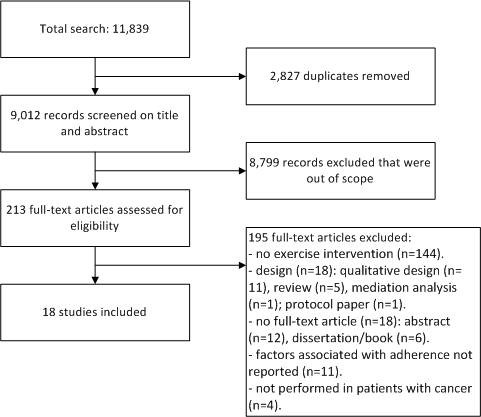
For an exercise intervention to be successful, it is important that cancer survivors adhere to the prescribed program. To be able to improve adherence and to preserve achieved beneficial effects, insights into the relevant and modifiable determinants is important. Therefore, we aimed to systematically review determinants of exercise adherence and maintenance in cancer survivors using a socio-ecological approach.Studies were identified in PubMed, Embase, PsycINFO and SPORTDiscus up to July 2013. We included full-text articles that: 1) were conducted among adult cancer survivors; 2) quantitatively assessed factors associated with intervention adherence and maintenance, and 3) were published in English. The methodological quality of the selected studies was examined. A best evidence synthesis was applied. Eighteen studies were included. Median methodological quality was 53% and ranged from 21-78% of maximum score. Twelve studies focused on determinants of exercise adherence and evaluated 71 potential determinants: 29 demographic and clinical, 27 psychological, ten physical, four social factors, and one environmental factor. Six studies focused on determinants of exercise maintenance after completion of an intervention, and investigated 63 factors: 22 demographic and clinical, 28 psychosocial, nine physical, three social and one environmental factor. We found moderate evidence for a positive association between exercise history and exercise adherence. Inconsistent findings were found for age, gender and education as well as for psychological factors such as stage of change, perceived behavioral control, self-efficacy, extraversion, attitude, intention, fatigue, and quality of life, and physical factors including cardiovascular fitness, body mass index, and baseline physical activity.Exercise history is positively associated with exercise adherence. Future trials should further study the influence of social and environmental determinants on exercise adherence and maintenance in addition to demographic, psychological and physical determinants.
Overview
The claims and statistics of this paper haven’t been checked yet.
Free: it reads the open-access text and checks the first 5 claims that cite a source we can check. Create a free account to check every claim.
Integrity signals
Registry
Cites
Statistics
Figures
Verification
Claims the paper makes
The claims and statistics of this paper haven’t been checked yet.
Free: it reads the open-access text and checks the first 5 claims that cite a source we can check. Create a free account to check every claim.
Self-check
Percentages, sums and reported differences re-computed from the paper’s own numbers.
The self-check needs the paper’s full text.
Citations
Cites
Siegel, R., Ma, J., Zou, Z., & Jemal, A. (2014) · CA: A Cancer Journal for Clinicians · doi:10.3322/caac.21208 · Cited by 11,499
(1985) · Europe PMC (PubMed Central) · Cited by 9,143
Correlates of physical activity: why are some people physically active and others not?
Bauman, A. E., Reis, R. S., Sallis, J. F., Wells, J. C., Loos, R. J., & Martin, B. W. (2012) · The Lancet · doi:10.1016/s0140-6736(12)60735-1 · Cited by 4,151 · cited 2×
“In order to receive a better understanding of exercise adherence, socio-ecological models of determinants of health behaviors posit that potential social and environmental determinants should be taken into account in addition to demographic, physical, and psychological determinants [26,27].”
BackgroundAmerican College of Sports Medicine Roundtable on Exercise Guidelines for Cancer Survivors
Schmitz, K. H., Courneya, K. S., Matthews, C., Demark-Wahnefried, W., GALVÃO, D. A., Pinto, B. M., IRWIN, M. L., WOLIN, K. Y., SEGAL, R. J., LUCIA, A., et al. (2010) · Medicine & Science in Sports & Exercise · doi:10.1249/mss.0b013e3181e0c112 · Cited by 2,781 · cited 1×
“International evidence-based physical activity guidelines recommend exercise programs as a conditional part of care for all cancer survivors [16-20].”
BackgroundTracking of childhood overweight into adulthood: a systematic review of the literature
Singh, A. S., Mulder, C., Twisk, J. W. R., Van Mechelen, W., & Chinapaw, M. J. M. (2008) · Obesity Reviews · doi:10.1111/j.1467-789x.2008.00475.x · Cited by 2,494 · cited 1×
“This rating system consists of three levels and takes into account the number, methodological quality and consistency of outcomes of the studies as follows [37,38]: A) strong evidence: consistent findings in multiple (≥2) high-quality studies; B) moderate evidence: consistent findings in one high quality study and at…”
ResultSelf-citationPhysical activity and survival after breast cancer diagnosis
Holmes, M. D. (2005) · JAMA · doi:10.1001/jama.293.20.2479 · Cited by 1,772 · cited 1×
“Maintaining higher levels of exercise may also reduce the risk of cancer death and recurrence [29-31].”
BackgroundSpeck, R. M., Courneya, K. S., Mâsse, L. C., Duval, S., & Schmitz, K. H. (2010) · Journal of Cancer Survivorship · doi:10.1007/s11764-009-0110-5 · Cited by 1,352 · cited 1×
“54 [14-16].”
Exercise for the management of cancer-related fatigue in adults
Cramp, F., & Byron-Daniel, J. (2012) · Cochrane Database of Systematic Reviews · doi:10.1002/14651858.cd006145.pub3 · Cited by 1,096
Barriers to treatment adherence in physiotherapy outpatient clinics: A systematic review
Jack, K., McLean, S. M., Moffett, J. K., & Gardiner, E. (2010) · Manual Therapy · doi:10.1016/j.math.2009.12.004 · Cited by 924 · cited 1×
“The methodological quality of the included studies was assessed using an 11-item methodological quality assessment tool adapted from existing quality criteria lists [34-36].”
MethodPhysical activity and survival after colorectal cancer diagnosis
Meyerhardt, J. A., Giovannucci, E. L., Holmes, M. D., Chan, A. T., Chan, J. A., Colditz, G. A., & Fuchs, C. S. (2006) · Journal of Clinical Oncology · doi:10.1200/jco.2006.06.0855 · Cited by 857 · cited 1×
“Maintaining higher levels of exercise may also reduce the risk of cancer death and recurrence [29-31].”
Background
Research works printed but not linked: 1
- Cijfers over Kanker Integraal Kankercentrum Nederland 2014 http://www.cijfersoverkanker.nl/
Cited by
Items 101–200 of 201
Hearon, B. A., Beard, C., Kopeski, L. M., Smits, J. A. J., Otto, M. W., & Björgvinsson, Þ. (2017) · Behavioral Medicine · doi:10.1080/08964289.2016.1276428 · Cited by 14
“adherence and maintenance among cancer survivors conducted by Kampshoff and colleagues.(55) In this review of 18 studies and 71 potential determinants,”
BackgroundPrice, J., Wurz, A. J., Ramphal, R., WILSON, K. S., & Brunet, J. (2020) · Disability and Rehabilitation · doi:10.1080/09638288.2020.1712621 · Cited by 16
“This discordance offers an important addition to the current support literature as researchers currently report youth without a history of cancer [43] and adult cancer survivors [16] find these types support useful to facilitate physical activity, when examining parental support through a single perspective.”
BackgroundStalsberg, R., Bertheussen, G. F., Børset, H., Thomsen, S. N., Husøy, A., Flote, V. G., Thune, I., & Lundgren, S. (2022) · Journal of Clinical Medicine · doi:10.3390/jcm11030843 · Cited by 12
“Unfortunately, the comparability between studies is limited, due to inconsistent operationalizations and calculations of adherence [40,44], variations in intervention designs, such as the ambient conditions, including climate and weather, as well as the duration and timing of the exercise program in the post-surgery p…”
BackgroundJoaquim, A. V., Amarelo, A. L., Antunes, P., Garcia, C., Leão, I. A. T., Vilela, E., Teixeira, M., Duarte, B., Vieira, M., Afreixo, V. M. A., et al. (2023) · Psychology Health & Medicine · doi:10.1080/13548506.2023.2240074 · Cited by 15
“Adherence to the exercise sessions was calculated as the relative ratio between the number of exercise sessions attended and the total number of exercise sessions that were predicted for the full exercise intervention (K et al., 2014; Kampshoff et al., 2016).”
BackgroundCrevenna, R., Cenik, F., Galle, A., Komanadj, T. S., & Keilani, M. Y. (2015) · Wiener klinische Wochenschrift · doi:10.1007/s00508-015-0849-9 · Cited by 16
Doré, I., Plante, A., Bedrossian, N., Montminy, S., St-Onge, K., St-Cyr, J., Pomey, M., Charpentier, D., Pettigrew, L., Brisson, I., et al. (2022) · PLoS ONE · doi:10.1371/journal.pone.0273145 · Cited by 15
“Furthermore, studies suggest that PA programs reach more women than men [45] and seem to attract patients who were already physically active at the time of diagnosis [46].”
BackgroundBrooke, H. L., Mazzoni, A., Buffart, L. M., Berntsen, S., Nordin, K., & Demmelmaier, I. (2022) · BMC Sports Science Medicine and Rehabilitation · doi:10.1186/s13102-022-00548-5 · Cited by 13
“Nonetheless, baseline physical fitness and previous exercise history are among the few demographic and clinical characteristics have been associated with adherence to exercise interventions in cancer survivors during treatment in several studies [5, 9].”
BackgroundSelf-citationCarraça, E. V., Rodrigues, B., Franco, S. F., Nobre, I., Jerónimo, F., Ilharco, V., Gabriel, F., Ribeiro, L., Palmeira, A. L., & Silva, M. N. (2023) · BMC Cancer · doi:10.1186/s12885-023-11137-1 · Cited by 15
“Thus, most cancer survivors fail to meet established guidelines for PA [16], not benefiting from exercise positive effects on health and QoL.”
BackgroundBallinger, T. J., Althouse, S. K., Olsen, T. P., Miller, K. D., & Sledge, J. S. (2021) · Frontiers in Oncology · doi:10.3389/fonc.2021.626180 · Cited by 14
Zimmerman, C. S., Temereanca, S., Daniels, D. S., Penner, C., Cannonier, T., Jones, S. R., & Kerr, C. E. (2023) · Integrative Cancer Therapies · doi:10.1177/15347354231162584 · Cited by 12
Gordon, B. R., Caru, M., Blair, C. K., Bluethmann, S. M., Conroy, D. E., Doerksen, S. E., Hakun, J. G., Sturgeon, K. M., Potiaumpai, M., Sciamanna, C., et al. (2022) · Cancer Medicine · doi:10.1002/cam4.4841 · Cited by 11
Stelten, S., Schofield, C., Hartman, Y., López, P., Kenter, G. G., Newton, R. U., Galvao, D. A., Hoedjes, M., Taaffe, D. R., van Lonkhuijzen, L. R. C. W., et al. (2022) · Cancers · doi:10.3390/cancers14194567 · Cited by 11
“The evidence level was rated as follows: (A) strong evidence when there were consistent findings in ≥2 studies with a low risk of bias; (B) moderate evidence when there were consistent findings in one study with a low risk of bias and ≥1 study with a high risk of bias, or in ≥2 studies with a high risk of bias; or (C)…”
MethodSelf-citationHiensch, A. E., Peeters, P. H. M., Jansen, M., van der Wall, E., BACKX, F. J. G., Velthuis, M. J., & May, A. M. (2020) · PLoS ONE · doi:10.1371/journal.pone.0231663 · Cited by 10
“Consistent with earlier findings in cancer survivors [12, 14,36,37], the strongest correlate of PA at 4 year follow-up in our study was baseline PA.”
ResultSelf-citationRammant, E., Deforche, B. I., Hecke, A. V., Verhaeghe, S. T. L., Ruymbeke, B. V., Bultijnck, R., Hemelrijck, M. V., Fox, L., Pieters, R., Decaestecker, K., et al. (2020) · European Journal of Cancer Care · doi:10.1111/ecc.13363 · Cited by 14
Valle, C. G., Diamond, M. A., Heiling, H., Deal, A. M., Hales, D. P., Nezami, B. T., LaRose, J. G., Rini, C. K., Pinto, B. M., & Tate, D. F. (2023) · Cancer Medicine · doi:10.1002/cam4.6238 · Cited by 10
Borsati, A., Marotta, A., Ducoli, V., Dodi, A., Belluomini, L., Schena, F. F., Milella, M., Pilotto, S., Lanza, M., & Avancini, A. (2023) · Sport Sciences for Health · doi:10.1007/s11332-023-01055-x · Cited by 9
“Adherence is one of the most crucial factors potentially affecting the efficacy of the program, and it may be influenced by sociodemographic, physical, and medical aspects [14, 15].”
BackgroundSequeira, M., Luz, R. F., & Alvarez, M. (2022) · Frontiers in Psychology · doi:10.3389/fpsyg.2022.823139 · Cited by 13
Mirandola, D., Monaci, M., Miccinesi, G., Ventura, L., Muraca, M. G., Casini, E., Sgambati, E., Manetti, M., & Marini, M. (2017) · Journal of Functional Morphology and Kinesiology · doi:10.3390/jfmk2040038 · Cited by 9
“International evidence-based physical activity guidelines recommend exercise programs as a conditional part of care for all cancer survivors [5].”
BackgroundDean, L. T., Brown, J. C., Coursey, M., & Schmitz, K. H. (2016) · Psycho-Oncology · doi:10.1002/pon.4175 · Cited by 11
“While one review [37] suggests that there is Table 3.”
BackgroundGoldschmidt, S., Schmidt, M. E., Rosenberger, F., Wiskemann, J., & Steindorf, K. (2024) · Supportive Care in Cancer · doi:10.1007/s00520-023-08269-2 · Cited by 14
“An association between the PA behavior prior to study entry and attendance at exercise intervention was observed [3, 18, 29], and previous studies tended to include patients irrespective of their activity level [10, 22, 31].”
Beliefs and interests in physical activity programs of cancer survivors and their romantic partners
Ulrich, G. R., Callan, S., & Ranby, K. W. (2021) · Journal of Cancer Survivorship · doi:10.1007/s11764-021-00996-x · Cited by 8
Saito, T., Ono, R., Kono, S., Asano, M., Fukuta, A., Tanaka, Y., Takao, S., & Sakai, Y. (2020) · Breast Cancer Research and Treatment · doi:10.1007/s10549-020-05668-5 · Cited by 9
Heus, C., Stelten, S., Kenter, G. G., Buffart, L. M., & van Lonkhuijzen, L. R. C. W. (2024) · Gynecologic Oncology · doi:10.1016/j.ygyno.2024.08.014 · Cited by 7
Self-citationDouma, E. R., Roovers, T., Habibović, M., de Bruijn, G., Bosch, J. A., Schmitz, B., & Kop, W. J. (2024) · American Journal of Preventive Cardiology · doi:10.1016/j.ajpc.2024.100892 · Cited by 12
Kotte, M., Bolam, K. A., Altena, R., Cormie, P., Wengström, Y., & Mijwel, S. (2025) · Journal of Cancer Survivorship · doi:10.1007/s11764-025-01845-x · Cited by 9
Kokkonen, K., Kellokumpu‐Lehtinen, P., Kankaanpaa, M. J., Nikander, R., Penttinen, H., Utriainen, M., Vehmanen, L., Huovinen, R., Kautiainen, H., BLOMQVIST, C. P., et al. (2022) · Acta Oncologica · doi:10.1080/0284186x.2022.2103388 · Cited by 11
“chological factors, such as self-efficacy and distress for adherence to vigorous exercise training interventions [44,65,66], in”
BackgroundInfluentialNarcisse, M., Wang, M. L., Schootman, M., DelNero, P. F., Schwarz, A. G., & McElfish, P. A. (2024) · Journal of Cancer Survivorship · doi:10.1007/s11764-024-01584-5 · Cited by 8
“Unlike the general adult population [33, 34], fewer studies have examined environmental determinants of exercise among cancer survivors [35].”
Jung, R., Zürcher, S. J., Schindera, C., Braun, J., Deng, W. H., von der Weid, N., Rueegg, C. S., & Kriemler, S. (2023) · Cancer Medicine · doi:10.1002/cam4.6096 · Cited by 9
How Can Physical Activity Referral Rates for Breast Cancer Patients be Increased?
Queen, M., Karatzaferi, C., Bloxham, S., Panwar, U., Drew, P., Barton, A., Edwards, A. M., & Sakkas, G. K. (2016) · Frontiers in Oncology · doi:10.3389/fonc.2016.00198 · Cited by 9
“After the OPs impact, the role of GPs is crucial in the long-term management of a patient, perhaps more so for women and older people (22) as well as in people with mental health issues (21).”
BackgroundTakemura, N., Cheung, D. S. T., Fong, D., & Lin, C. (2023) · Palliative & Supportive Care · doi:10.1017/s1478951523000962 · Cited by 9
“A previous systematic review revealed inconsistent findings regarding the demographic, clinical, psychosocial, and environmental correlates of exercise adherence across different cancer types (Kampshoff et al. 2014).”
Borsati, A., Toniolo, L., Trestini, I., Tregnago, D., Belluomini, L., Fiorio, E., Lanza, M., Schena, F. F., Pilotto, S., Milella, M., et al. (2024) · European Journal of Oncology Nursing · doi:10.1016/j.ejon.2024.102554 · Cited by 7
Jung, N., & Lee, C.-Y. (2024) · Medicine · doi:10.1097/md.0000000000040633 · Cited by 7
“[46] Similarly, exercise has been shown to prevent chronic diseases such as cardio-vascular disease, [47] cancer, [48] and musculoskeletal diseases.”
L’activité physique dans le parcours de soins en cancérologie : attentes et perspectives
Foucaut, A.-M., Jacquinot, Q., Ginsbourger, T., Turnaco, L., Lamotte, R., & Mougin, F. (2023) · Bulletin du Cancer · doi:10.1016/j.bulcan.2023.03.024 · Cited by 6
Wang, H., Liu, C.-J., Kilpatrick, M. W., Jim, H., McMillan, S. C., Vijayakumar, N., McDonald, S., Padhya, T., Russell, J. S., Vondruska, K., et al. (2017) · Rehabilitation Research and Practice · doi:10.1155/2017/6843016 · Cited by 6
Predictors of cancer survivors’ response to a community-based exercise program
Brunet, J., Howell, D., Au, D., Jones, J. M., Bradley, H., Berlingeri, A., & Mina, D. S. (2019) · Psychology of sport and exercise · doi:10.1016/j.psychsport.2019.04.019 · Cited by 7
Murray, R. M., O’Loughlin, E. K., Smith‐Turchyn, J., Fong, A. J., McDonough, M. H., Mina, D. S., Arbour‐Nicitopoulos, K. P., Trinh, L., Jones, J. M., Bender, J. L., et al. (2025) · BMC Sports Science Medicine and Rehabilitation · doi:10.1186/s13102-025-01131-4 · Cited by 6
Baek, S., Yoon, J., & Won, J. (2022) · Preventive Medicine · doi:10.1016/j.ypmed.2022.107420 · Cited by 5
Raines, C., Noorvash, B., Posadas, E. M., Sandler, H. M., Freedland, S. J., & Gresham, G. K. (2024) · Contemporary Clinical Trials · doi:10.1016/j.cct.2024.107563 · Cited by 7
Zdrave životne navike i kvaliteta života onkoloških bolesnika: sistematičan pregled literature
Fičko, S. L., Konjevoda, V., Kovačević, I., Kurtović, B., Hošnjak, A. M., & Smrekar, M. (2019) · Journal of Applied Health Sciences · doi:10.24141/1/5/1/8 · Cited by 5
Jung, R., Zürcher, S. J., Schindera, C., Eser, P., Meier, C., Schai, A., Braun, J., Deng, W. H., Hebestreit, H. U., Neuhaus, C., et al. (2022) · International Journal of Cancer · doi:10.1002/ijc.34234 · Cited by 8
“Still, exercise adherence during and post cancer treatment is challenging and is more difficult to reach in long-term than short-term programs.(12,36) Making personal PA goal attainment even more complicated, CCS often show a long history of low PA often introduced during cancer therapy.”
BackgroundDarmochwal, S., Bischoff, C., Thieme, R., Gockel, I., Tegtbur, U., Hillemanns, P., Schulze, A., Voß, J., Falz, R., & Busse, M. W. (2023) · Frontiers in Nutrition · doi:10.3389/fnut.2023.1152218 · Cited by 5
Romero-Elias, M., González‐Cutre, D., Beltrán‐Carrillo, V. J., & Cervelló, E. M. (2017) · Psychology Society & Education · doi:10.25115/psye.v9i2.698 · Cited by 5
Goldschmidt, S., Schmidt, M. E., Rosenberger, F., Wiskemann, J., & Steindorf, K. (2023) · Journal of Physical Activity and Health · doi:10.1123/jpah.2023-0054 · Cited by 6
Parker, N. H., Santos, A. D. C., Mintrone, R., Turner, K. L., Sutton, S. K., O’Connor, T. L., Huang, J. J., Lael, M., Cruff, S., Grassia, K., et al. (2025) · Healthcare · doi:10.3390/healthcare13030256 · Cited by 5
“[27].”
Determinants of healthy lifestyle behaviours in colorectal cancer survivors: a systematic review
Have, J. D. V.-T., Winkels, R. M., Bloemhof, S. A. G., Zondervan, A., Krabbenborg, I., Kampman, E., & Winkens, L. H. H. (2025) · Supportive Care in Cancer · doi:10.1007/s00520-025-09315-x · Cited by 4
“[18, 46, 47].”
InfluentialSequeira, M., Pereira, C. R., & Alvarez, M. (2023) · Health Promotion International · doi:10.1093/heapro/daad075 · Cited by 5
Meaningful everyday life projects and activities in breast cancer survivors
Magnus, E., Jakobsen, K., & Reidunsdatter, R. J. (2020) · Moravian Geographical Reports · doi:10.2478/mgr-2020-0022 · Cited by 4
“More research is still needed to determine the key components of interventions (Kampshoff et al., 2014).”
BackgroundAraya-Castro, P., García, M. J. C., Sacomori, C., Diaz-Guerrero, P., Martínez-Varas, A. C., Cuevas-Said, M., & Gayán, P. (2020) · Fisioterapia · doi:10.1016/j.ft.2020.05.002 · Cited by 4
Baudot, A., Barth, N., Colas, C., Garros, M., Garcin, A., Oriol, M., Roche, F., Chauvin, F., Mottet, N., Hupin, D., et al. (2022) · Pilot and Feasibility Studies · doi:10.1186/s40814-022-00966-9 · Cited by 4
“Encouraging people to participate in regular PA against the background of an inactive lifestyle is difficult, requiring attention to important psychosocial and behavioural influences [18, 22].”
Backgroundvan Vulpen, J. K., Witlox, L., de Haan, A. M. , Hiensch, A. E., van Hillegersberg, R., Ruurda, J. P. H., Nieuwenhuijzen, G. A. P., Kouwenhoven, E. A., Siersema, P. D., & May, A. M. (2023) · Supportive Care in Cancer · doi:10.1007/s00520-023-07769-5 · Cited by 6
“Here, the authors found moderate evidence for a positive association between exercise history and exercise adherence [14].”
BackgroundSelf-citationTesting the HAPA model for predicting daily physical activity of women survivors of breast cancer
Sequeira, M., Pereira, C. R., & Alvarez, M. (2025) · Journal of Health Psychology · doi:10.1177/13591053251347143 · Cited by 2
“This finding aligns with known determinants of PA among breast cancer survivors, such as pre-diagnosis PA habits (Kampshoff et al., 2014) and highlights the importance of allowing women the time to recover their well-being before gradually resuming regular PA (Costanzo et al., 2011).”
Carraça, E. V., Rodrigues, B., Franco, S. F., Nobre, I., Jerónimo, F., Ilharco, V., Silva, P. F., Palmeira, A. L., & Silva, M. N. (2026) · International Journal of Behavioral Nutrition and Physical Activity · doi:10.1186/s12966-026-01873-5 · Cited by 3
“However, most cancer survivors fail to meet established PA guidelines [14].”
Yan, H., Encabo, P. G., Wilson, R. L., Christopher, C. N., Cannon, J., Kang, D., Gardiner, J. R., Perez, M., Norris, M. K., Gundersen, D. A., et al. (2024) · Frontiers in Oncology · doi:10.3389/fonc.2024.1427046 · Cited by 4
Kim, B. H., & Lee, H. E. (2016) · PubMed Central · doi:10.22034/apjcp.2016.17.12.5295 · Cited by 5
“Similar to previous research (Kampshoff et al., 2014), the current study showed that older adult (65+ years old) cancer survivors were less likely to adhere to the physical activity guideline compared to their younger adult (30-64 years old) counterparts.”
ResultKang, S., Yoo, S., Baek, H., Lee, J., Choi, Y., Kim, H., Yi, H., & Yang, E. J. (2019) · Biomedical Engineering Letters · doi:10.1007/s13534-019-00101-3 · Cited by 4
“Unfortunately, program adherence among these patients is very low [12, 13].”
BackgroundChemotherapy-related symptoms and exercise adherence in older patients with myeloid neoplasms
Wang, K., Consagra, W., Jensen‐Battaglia, M., Kleckner, A. S., Kleckner, I. R., & Loh, K. P. (2023) · Supportive Care in Cancer · doi:10.1007/s00520-023-08039-0 · Cited by 2
“not associated with exercise adherence [26].”
Franco, S. F., Carraça, E. V., Nobre, I., Rodrigues, B., Ilharco, V., Kahlert, L., & Silva, M. N. (2025) · Pilot and Feasibility Studies · doi:10.1186/s40814-024-01587-0 · Cited by 2
“Despite the reported benefits of PA for health [1, 5, 6], most breast cancer survivors tend not to adhere to PA recommendations [7], reporting several barriers to being physically active (e.g., lack of motivation, accessibility, fatigue, and pain) [8].”
Aperen, K. V., Groef, A. D., Troosters, T., Elshout, P., & Nuyts, S. (2025) · Supportive Care in Cancer · doi:10.1007/s00520-024-09112-y · Cited by 3
“Other research has consistently shown that longer travel distances indeed negatively impact exercise adherence and act as a barrier to center-based interventions across various populations [46–48].”
Physical Activity Among Utah Cancer Survivors: Analysis From a Population-Based Statewide Survey
Millar, M. M., Edwards, S. L., Codden, R. R., Ofori-Atta, B. S., Herget, K. A., Carter, M. E., Kirchhoff, A. C., Coletta, A. M., & Sweeney, C. (2024) · Journal of Physical Activity and Health · doi:10.1123/jpah.2023-0683 · Cited by 2
Brown, T., Muls, A., Pawlyn, C., Boyd, K. D., & Cruickshank, S. (2024) · Clinical Hematology International · doi:10.46989/001c.121406 · Cited by 3
Chen, H., Lee, M., Wu, Y., Huang, C., Hsu, P., Chien, L., Tian, J., & Duong, T. L. (2022) · European Journal of Cancer Care · doi:10.1111/ecc.13635 · Cited by 2
ten Tusscher, M. R., Stuiver, M. M., Kampshoff, C. S., Huijsmans, R. J., Aaronson, N. K., Velthuis, M. J., Gal, R., van Waart, H., May, A. M., & Buffart, L. M. (2023) · European Journal of Cancer Care · doi:10.1155/2023/2296881 · Cited by 3
Self-citationEl-Khoury, F., Mino, J., Deschamps, N., Lopez, C., Menvielle, G., & Dargent‐Molina, P. (2024) · BMJ Open · doi:10.1136/bmjopen-2023-081447 · Cited by 1
“20 Furthermore, both interventions and follow-up times are generally relatively short, and the long-term (ie, beyond 6 months postintervention) effectiveness of interventions on physical activity behaviour and HRQol is unclear.”
REMEDY: Remote exercise monitoring using an evaluative data sensing system for cancer
Darling, T. V., & Sha, K. (2015) · IEEE International Conference on e-Health Networking, Applications and Services (Healthcom) · doi:10.1109/healthcom.2015.7454587 · Cited by 1
“Cancer patients and survivors may experience similar exercise barriers to the general population, but they frequently experience more barriers, are more affected, and have greater difficulty in overcoming such barriers [15].”
BackgroundExercise during and after curative oncological treatment – a mapping review
Igelström, H., Berntsen, S., Demmelmaier, I., Johansson, B., & Nordin, K. (2016) · Physical Therapy Reviews · doi:10.1080/10833196.2016.1262109 · Cited by 3
Rural–Urban Disparities in Physical Activity Among Service Member and Veteran Cancer Survivors
McDaniel, J. T., Saidou, F., Brewer, K., Moss, A., Yahaya, M., Lockett, B., Alruwaili, M., Godfrey, K., & Albright, D. L. (2018) · Military Behavioral Health · doi:10.1080/21635781.2018.1490228 · Cited by 1
“In a systematic review of the determinants of exercise adherence and maintenance among cancer survivors, inconsistent findings were identified with respect to age, gender, and educational attainment; however, previous history of exercise was a significant factor (Kampshoff et al., 2014).”
Physical Activity and Exercise Adherence in People With Hematologic Malignancies
Hacker, E. D. (2019) · The Journal for Nurse Practitioners · doi:10.1016/j.nurpra.2019.04.016 · Cited by 1
Kang, D., Wilson, R. L., Encabo, P. G., Norris, M. K., Hans, M., Tahbaz, M., Dawson, J., Nguyen, D., Normann, A. J., Yunker, A. G., et al. (2022) · Frontiers in Oncology · doi:10.3389/fonc.2022.896995 · Cited by 1
Deveautour-Roy, E., Tubiana-Mathieu, N., Léobon, S., Vincent, F., Venat, L., Sombardier, T., Deluche, É., & Mandigout, S. (2022) · Supportive Care in Cancer · doi:10.1007/s00520-022-07417-4 · Cited by 3
“Physical, psychological, and social barriers have been described [13, 14].”
BackgroundRehabilitation for cancer survivors: cost-effectiveness and budget impact
Mewes, J. C. (2015) · doi:10.3990/1.9789036540285 · Cited by 1
Determinanten van duurzame sportbeoefening bij deelnemers aan bedrijfssport
Bernaards, C. M., den Besten, L. A. A., & Jansen, Y. J. F. M. (2015) · TSG - Tijdschrift voor gezondheidswetenschappen · doi:10.1007/s12508-015-0041-7 · Cited by 1
Stover, A. M. (2015) · Carolina Digital Repository (University of North Carolina at Chapel Hill) · doi:10.17615/6pd5-2x30
Tovholder i egen rehabilitering
Pedersen, L. K. E., Jensen, C. M., & Jensen, A. L. (2019) · Nordisk Sygeplejeforskning · doi:10.18261/issn.1892-2686-2019-02-07
Developing healthcare professional training to promote exercise in prostate cancer patients
Turner, R. R. (2020) · Sheffield Hallam University · doi:10.7190/shu-thesis-00335 · Cited by 1
Silesky, M. D., Milius, L., Ivarra, A., Cooper, M., & Bhakta, N. (2021) · American Journal of Health Promotion · doi:10.1177/08901171211061939 · Cited by 1
“It also aligns with other studies that noted the presence of social support as a motivator.(27,29-31) In another recent study of LIVESTRONG at the YMCA, researchers found that personal experiences of those who participated in the program resonated with survivors and increased participation.”
BackgroundResultEffects of a Physical Exercise Program in Quality of Life of Breast Cancer Survivors
(2019) · Case Medical Research · doi:10.31525/ct1-nct04024280
Stepping stones to implement exercise as integral part of cancer care
Hiensch, A. E. (2022) · Utrecht University Repository (Utrecht University) · doi:10.33540/988 · Cited by 1
Physical Activity in Patients with Breast Cancer
Saito, T., & Ono, R. (2022) · Springer eBooks · doi:10.1007/978-981-19-6710-8_13 · Cited by 1
Regarding Evidence on Exercise/Physical Fitness: The Miracle Drug
Massey, B. J., & Morris, G. S. (2024) · Rehabilitation Oncology · doi:10.1097/01.reo.0000000000000360
Body Composition Changes and Nutrition Therapy in Surgical Oncology Patients
Tan, S., Wu, G., & Gianotti, L. V. (2024) · Frontiers research topics · doi:10.3389/978-2-8325-4519-5
ROSINI, R., ROSSI, S., ZAGAGLIA, S., & Tedeschi, R. (2025) · Acta Phlebologica · doi:10.23736/s1593-232x.25.00651-4
Sitemba, J., Crisafio, M. E., Li, F., Eckstrom, E., & Winters‐Stone, K. M. (2025) · Supportive Care in Cancer · doi:10.1007/s00520-025-09767-1 · Cited by 1
“Other studies have also shown high BMI as a predictor for low adherence to exercise [25, 26].”
Baťalík, L., Chamradova, K., Winnige, P., Dosbaba, F., Batalikova, K., Vlažná, D., Janíková, A., Pepera, G., Abu‐Odah, H., & Su, J. J. (2024) · Figshare · doi:10.6084/m9.figshare.26721981
Falz, R., Bischoff, C., Thieme, R., Tegtbur, U., Hillemanns, P., Stolzenburg, J.-U., Aktas, B., Bork, U., Weitz, J., Lässing, J., et al. (2023) · Figshare · doi:10.6084/m9.figshare.23908798
Carraça, E. V., Rodrigues, B., Franco, S. F., Nobre, I., Jerónimo, F., Ilharco, V., Gabriel, F., Ribeiro, L., Palmeira, A. L., & Silva, M. N. (2023) · Figshare · doi:10.6084/m9.figshare.23632548
Baudot, A., Barth, N., Colas, C., Garros, M., Garcin, A., Oriol, M., Roche, F., Chauvin, F., Mottet, N., & Hupin, D. (2022) · Figshare · doi:10.6084/m9.figshare.18864836
Exploring Cancer Survivors’ Preferences for a Physical Activity Maintenance Program
Anderson, H. A. L., Lancioni, E. M., Crisafio, M. E., Faro, J. M., Fruhauf, C. A., & Leach, H. J. (2026) · Translational Journal of the American College of Sports Medicine · doi:10.1249/tjx.0000000000000356
Martínez-Sánchez, A., Mendoza-Muñoz, M., Domínguez‐Muñoz, F. J., Guerrero-Torrico, C., Gusi, N., Subburaj, J., & Villafaina, S. (2026) · Clinical & Translational Oncology · doi:10.1007/s12094-026-04375-9
“Accumulating evidence indicates that exercise participation and maintenance in cancer survivors are shaped by a complex and dynamic interplay of demographic, clinical, psychological, physical, social, and environmental factors [12].”
Mubarak, H. A., Mandvia, A., Younas, M. H., Hassan, S., Raman, V., Ayaz, A., Govindasamy, V., Tripathi, K. M., Sulemana, A. S., & Rehman, M. S. U. (2026) · Cureus · doi:10.7759/cureus.110295
“Hence, the feasibility and adherence outcomes of our review showed that (81%-92% adherence, 70%-100% retention) are higher than the average rates for home-based exercise programs in oncology (60%-75% adherence, 65%-85% retention) reported by Kampshoff et al. (2014) [25].”
Franco, S. F., Carraça, E. V., Nobre, I., Rodrigues, B., Silva, C. S., & Silva, M. N. (2026) · BMC Health Services Research · doi:10.1186/s12913-026-15143-4
Yong, S. S., Chen, Q., Liao, Z., Wu, F., Li, J., & Si, Q. (2026) · Healthcare · doi:10.3390/healthcare14162475
Fitness Sporu Yapan Bireylerin Motivasyonel Kararlılık Düzeyleri
Atasoy, M., Türkçapar, Ü., & Aktürk, H. (2026) · Beden Eğitimi ve Spor Bilimleri Dergisi · doi:10.61962/bsd.1713356
Leach, H., Lancioni, E. M., Parker, H., Anderson, H. A. L., Fruhauf, C., Smith, D., Portz, J. D., Lyden, K., Bryan, A. D., Culos-Reed, S. N., et al. (2026) · Contemporary Clinical Trials · doi:10.1016/j.cct.2026.108483
Raventos, A. P. F., Slater, M., Jiménez‐Fonseca, P., Cruz‐Castellanos, P., Ruiz-Eguino, A., Naveiras-Alba¹, C., Obispo, B., Menéndez-López, J., & Calderón, C. (2026) · Frontiers in Virtual Reality · doi:10.3389/frvir.2026.1927617
Vielotte, S., Tubiana-Mathieu, N., Cahen, R., Virot, P., Daviet, J., & Mandigout, S. (2026) · Preventive Medicine · doi:10.1016/j.ypmed.2026.108688
Metadata
- Authors
- Kampshoff, C. S., Jansen, F., van Mechelen, W., May, A. M., Brug, J., Chinapaw, M. J., & Buffart, L. M.
- Affiliations
- Amsterdam Public Health (NL)
- University Medical Center Utrecht (NL)
- Corresponding author
- Buffart, Laurien M
- Venue
- International Journal of Behavioral Nutrition and Physical Activity
- Published
- 2014-07-02
- Volume
- 11
- Issue
- 1
- Pages
- 80-80
- ISSN
- 1479-5868 (ISSN-L)
- PMC
- PMC4096543
- OpenAlex
- W2141026265
- Cited by
- 205
- References
- 58
- Citations by year
- 2026: 11 · 2025: 9 · 2024: 22 · 2023: 24 · 2022: 24 · 2021: 18 · 2020: 15 · 2019: 25 · 2018: 15 · 2017: 18 · 2016: 13 · 2015: 9
- FWCI
- 1.49
- Type
- journal article
- Language
- en
- Open access
- gold
- doi.org
- Licence
- cc-by
- Locations
- International Journal of Behavioral Nutrition and Physical Activity (publishedVersion, cc-by)
- PubMed Central (publishedVersion, cc-by)
- PubMed (publishedVersion)
- Amsterdam UMC (VU Amsterdam) - Institutional Repository (publishedVersion)
- VU Research Portal (publishedVersion, other-oa)
- Data Archiving and Networked Services (DANS) (publishedVersion, other-oa)
- Pure Amsterdam UMC (submittedVersion)
- Data Archiving and Networked Services (DANS) (submittedVersion, other-oa)
- Data Archiving and Networked Services (DANS) (submittedVersion)
- Funders
- KWF Kankerbestrijding
- Topics
- Health Sciences › Medicine › Oncology › Cancer survivorship and care
- Health Sciences › Medicine › Public Health, Environmental and Occupational Health › Physical Activity and Health
- Health Sciences › Medicine › Oncology › Cancer Risks and Factors
- Keywords
- exercise adherence, exercise maintenance, cancer survivors, exercise intervention, socio-ecological model, determinants of physical activity, exercise history, self-efficacy, perceived behavioral control, stages of change, quality of life, fatigue, cardiorespiratory fitness, body mass index, social determinants
- MeSH terms
- Health Status, Humans, Neoplasms, Patient Compliance, Quality of Life, Exercise, Databases, Factual, Survivors
About these checks
Registry, retraction, Cites and statistics results are computed, not judged, with one exception: a printed reference that no index lists is read once by a model before it counts as a citation error. Claims are extracted by a model and kept only when their quote appears verbatim in the text; each cited source is then checked, with a model’s help, for whether it says what the claim relies on. Those verdicts can be wrong — read the claim’s quote and the cited source before relying on one.
Statistics and arithmetic are recomputed, not judged.
Confidence bands are shown only for fields calibrated on our annotated test set. None is calibrated yet, so no band is shown.
What counts as a claim ›How we measure confidence ›How we check this ›
Are you an author, or do you see a problem with this page? Request a review
Data sources
Bibliographic data: Semantic Scholar, OpenAlex, Crossref.
Contains information from the Semantic Scholar Academic Graph Datasets, made available under the ODC Attribution License (ODC-BY 1.0).
Semantic Scholar’s data is described in: Kinney, R., et al. (2023). The Semantic Scholar Open Data Platform. arXiv:2301.10140.
