

Determinants of exercise adherence and maintenance among cancer survivors: a systematic review
Open accessThe DOI matches its Crossref record; 58 of the 58 references it cites were found in a registry or an index.
Abstract
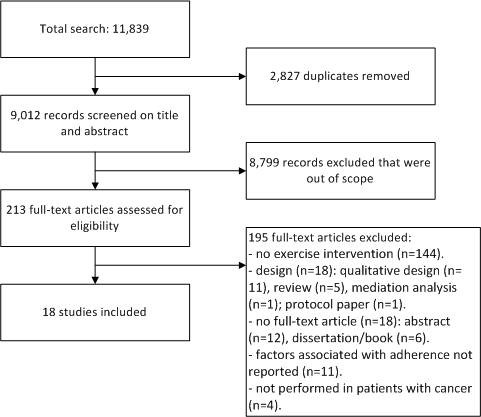
For an exercise intervention to be successful, it is important that cancer survivors adhere to the prescribed program. To be able to improve adherence and to preserve achieved beneficial effects, insights into the relevant and modifiable determinants is important. Therefore, we aimed to systematically review determinants of exercise adherence and maintenance in cancer survivors using a socio-ecological approach.Studies were identified in PubMed, Embase, PsycINFO and SPORTDiscus up to July 2013. We included full-text articles that: 1) were conducted among adult cancer survivors; 2) quantitatively assessed factors associated with intervention adherence and maintenance, and 3) were published in English. The methodological quality of the selected studies was examined. A best evidence synthesis was applied. Eighteen studies were included. Median methodological quality was 53% and ranged from 21-78% of maximum score. Twelve studies focused on determinants of exercise adherence and evaluated 71 potential determinants: 29 demographic and clinical, 27 psychological, ten physical, four social factors, and one environmental factor. Six studies focused on determinants of exercise maintenance after completion of an intervention, and investigated 63 factors: 22 demographic and clinical, 28 psychosocial, nine physical, three social and one environmental factor. We found moderate evidence for a positive association between exercise history and exercise adherence. Inconsistent findings were found for age, gender and education as well as for psychological factors such as stage of change, perceived behavioral control, self-efficacy, extraversion, attitude, intention, fatigue, and quality of life, and physical factors including cardiovascular fitness, body mass index, and baseline physical activity.Exercise history is positively associated with exercise adherence. Future trials should further study the influence of social and environmental determinants on exercise adherence and maintenance in addition to demographic, psychological and physical determinants.
Overview
The claims and statistics of this paper haven’t been checked yet.
Free: it reads the open-access text and checks the first 5 claims that cite a source we can check. Create a free account to check every claim.
Integrity signals
Registry
Cites
Statistics
Figures
Verification
Claims the paper makes
The claims and statistics of this paper haven’t been checked yet.
Free: it reads the open-access text and checks the first 5 claims that cite a source we can check. Create a free account to check every claim.
Self-check
Percentages, sums and reported differences re-computed from the paper’s own numbers.
The self-check needs the paper’s full text.
Citations
Cites
Siegel, R., Ma, J., Zou, Z., & Jemal, A. (2014) · CA: A Cancer Journal for Clinicians · doi:10.3322/caac.21208 · Cited by 11,499
(1985) · Europe PMC (PubMed Central) · Cited by 9,143
Correlates of physical activity: why are some people physically active and others not?
Bauman, A. E., Reis, R. S., Sallis, J. F., Wells, J. C., Loos, R. J., & Martin, B. W. (2012) · The Lancet · doi:10.1016/s0140-6736(12)60735-1 · Cited by 4,151 · cited 2×
“In order to receive a better understanding of exercise adherence, socio-ecological models of determinants of health behaviors posit that potential social and environmental determinants should be taken into account in addition to demographic, physical, and psychological determinants [26,27].”
BackgroundAmerican College of Sports Medicine Roundtable on Exercise Guidelines for Cancer Survivors
Schmitz, K. H., Courneya, K. S., Matthews, C., Demark-Wahnefried, W., GALVÃO, D. A., Pinto, B. M., IRWIN, M. L., WOLIN, K. Y., SEGAL, R. J., LUCIA, A., et al. (2010) · Medicine & Science in Sports & Exercise · doi:10.1249/mss.0b013e3181e0c112 · Cited by 2,781 · cited 1×
“International evidence-based physical activity guidelines recommend exercise programs as a conditional part of care for all cancer survivors [16-20].”
BackgroundTracking of childhood overweight into adulthood: a systematic review of the literature
Singh, A. S., Mulder, C., Twisk, J. W. R., Van Mechelen, W., & Chinapaw, M. J. M. (2008) · Obesity Reviews · doi:10.1111/j.1467-789x.2008.00475.x · Cited by 2,494 · cited 1×
“This rating system consists of three levels and takes into account the number, methodological quality and consistency of outcomes of the studies as follows [37,38]: A) strong evidence: consistent findings in multiple (≥2) high-quality studies; B) moderate evidence: consistent findings in one high quality study and at…”
ResultSelf-citationPhysical activity and survival after breast cancer diagnosis
Holmes, M. D. (2005) · JAMA · doi:10.1001/jama.293.20.2479 · Cited by 1,772 · cited 1×
“Maintaining higher levels of exercise may also reduce the risk of cancer death and recurrence [29-31].”
BackgroundSpeck, R. M., Courneya, K. S., Mâsse, L. C., Duval, S., & Schmitz, K. H. (2010) · Journal of Cancer Survivorship · doi:10.1007/s11764-009-0110-5 · Cited by 1,352 · cited 1×
“54 [14-16].”
Exercise for the management of cancer-related fatigue in adults
Cramp, F., & Byron-Daniel, J. (2012) · Cochrane Database of Systematic Reviews · doi:10.1002/14651858.cd006145.pub3 · Cited by 1,096
Barriers to treatment adherence in physiotherapy outpatient clinics: A systematic review
Jack, K., McLean, S. M., Moffett, J. K., & Gardiner, E. (2010) · Manual Therapy · doi:10.1016/j.math.2009.12.004 · Cited by 924 · cited 1×
“The methodological quality of the included studies was assessed using an 11-item methodological quality assessment tool adapted from existing quality criteria lists [34-36].”
MethodPhysical activity and survival after colorectal cancer diagnosis
Meyerhardt, J. A., Giovannucci, E. L., Holmes, M. D., Chan, A. T., Chan, J. A., Colditz, G. A., & Fuchs, C. S. (2006) · Journal of Clinical Oncology · doi:10.1200/jco.2006.06.0855 · Cited by 857 · cited 1×
“Maintaining higher levels of exercise may also reduce the risk of cancer death and recurrence [29-31].”
Background
Research works printed but not linked: 1
- Cijfers over Kanker Integraal Kankercentrum Nederland 2014 http://www.cijfersoverkanker.nl/
Cited by
Benchmarking modern multiprocessors
Li, K., & Bienia, C. (2011) · Cited by 1,168
Physical activity: Health impact, prevalence, correlates and interventions
Rhodes, R. E., Janssen, I., Bredin, S. S. D., Warburton, D. E. R., & Bauman, A. (2017) · Psychology & Health · doi:10.1080/08870446.2017.1325486 · Cited by 778
“Among cancer survivors, previous exercise history was a correlate, but other personal and psychological factors were inconsistently associated (n = 18 studies, (Kampshoff et al., 2014)).”
BackgroundCollado-Mateo, D., Lavín-Pérez, A. M., Peñacoba, C., Del Coso, J., Leyton-Román, M., Luque-Casado, A., Gasque, P., Fernández-del-Olmo, M. Á., & Amado-Alonso, D. (2021) · International Journal of Environmental Research and Public Health · doi:10.3390/ijerph18042023 · Cited by 791
“especially when they had previous sedentary habits [32,34].”
BackgroundBuffart, L. M., Kalter, J., Sweegers, M. G., Courneya, K. S., Newton, R. U., Aaronson, N. K., Jacobsen, P. B., May, A. M., Galvão, D. A., Chinapaw, M. J., et al. (2017) · Cancer Treatment Reviews · doi:10.1016/j.ctrv.2016.11.010 · Cited by 595
“However, a previous review on determinants of exercise adherence in patients with cancer concluded that the majority of studies showed no significant association of demographic and clinical factors with adherence [51].”
Self-citationGaliano‐Castillo, N., Cantarero‐Villanueva, I., Fernández‐Lao, C., Ariza‐García, A., Díaz‐Rodríguez, L., Del‐Moral‐Ávila, R., & Arroyo‐Morales, M. (2016) · Cancer · doi:10.1002/cncr.30172 · Cited by 348
“However, these programs are at risk for low adherence (remote location of the center, familial support, and previous physical activity habits).(3) Technological advancements may help to resolve barriers, such as distance, time, and cost.”
BackgroundSweegers, M. G., Altenburg, T. M., Chinapaw, M. J., Kalter, J., Verdonck-de Leeuw, I. M., Courneya, K. S., Newton, R. U., Aaronson, N. K., Jacobsen, P. B., Brug, J., et al. (2018) · British Journal of Sports Medicine · doi:10.1136/bjsports-2017-097891 · Cited by 288
Self-citationOrmel, H. L., van der Schoot, G. G. F., Sluiter, W. J., Jalving, M., Gietema, J. A., & Walenkamp, A. M. E. (2018) · Psycho-Oncology · doi:10.1002/pon.4612 · Cited by 261
Bullard, T., Ji, M., An, R., Trinh, L., Mackenzie, M., & Mullen, S. P. (2019) · BMC Public Health · doi:10.1186/s12889-019-6877-z · Cited by 255
Interventions for promoting habitual exercise in people living with and beyond cancer
Bourke, L., Homer, K. E., Thaha, M. A., Steed, L., Rosario, D. J., Robb, K. A., Saxton, J. M., & Taylor, S. J. (2013) · Cochrane Database of Systematic Reviews · doi:10.1002/14651858.cd010192.pub2 · Cited by 248
Interventions for promoting habitual exercise in people living with and beyond cancer
Turner, R. R., Steed, L., Quirk, H., Greasley, R. U., Saxton, J. M., Taylor, S. J., Rosario, D. J., Thaha, M. A., & Bourke, L. (2018) · Cochrane Database of Systematic Reviews · doi:10.1002/14651858.cd010192.pub3 · Cited by 227
Home Exercise Training Improves Exercise Capacity in Cirrhosis Patients: Role of Exercise Adherence
Kruger, C., McNeely, M. L., Bailey, R. J., Yavari, M., Abraldes, J. G., Carbonneau, M., Newnham, K., DenHeyer, V., Ma, M., Thompson, R., et al. (2018) · Scientific Reports · doi:10.1038/s41598-017-18320-y · Cited by 130
Kim, S., Han, J., Lee, M. Y., & Jang, M. K. (2020) · Journal of Clinical Nursing · doi:10.1111/jocn.15114 · Cited by 120
Muñoz-Tomás, M.-T., Burillo-Lafuente, M., Vicente-Parra, A., Sanz-Rubio, M. C., Suárez-Serrano, C., Marcén-Román, Y., & Franco-Sierra, M. Á. (2023) · International Journal of Environmental Research and Public Health · doi:10.3390/ijerph20054358 · Cited by 151
“[38] support the effectiveness of physical exercise in patients with pathologies such as cancer.”
BackgroundParticipation in and adherence to physical exercise after completion of primary cancer treatment
Kampshoff, C. S., van Mechelen, W., Schep, G., Nijziel, M. R., Witlox, L., Bosman, L., Chinapaw, M. J. M., Brug, J., & Buffart, L. M. (2016) · International Journal of Behavioral Nutrition and Physical Activity · doi:10.1186/s12966-016-0425-3 · Cited by 113
“In a recent systematic review, we identified correlates of exercise adherence among cancer survivors [9], and found exercise history to be significantly associated with exercise adherence.”
InfluentialSelf-citationSweegers, M. G., Altenburg, T. M., Brug, J., May, A. M., van Vulpen, J. K., Aaronson, N. K., Arbane, G., Bohus, M., Courneya, K. S., Daley, A. J., et al. (2019) · British Journal of Sports Medicine · doi:10.1136/bjsports-2018-099191 · Cited by 109
Self-citationSchmidt, M. E., Wiskemann, J., Ulrich, C. M., Schneeweiß, A., & Steindorf, K. (2017) · Acta Oncologica · doi:10.1080/0284186x.2016.1275776 · Cited by 107
“Data on determinants of exercise maintenance are still scarce and inconclusive [6].”
BackgroundResultInfluentialBuffart, L. M., Sweegers, M. G., May, A. M., Chinapaw, M. J., van Vulpen, J. K., Newton, R. U., Galvão, D. A., Aaronson, N. K., Stuiver, M. M., Jacobsen, P. B., et al. (2018) · JNCI: Journal of the National Cancer Institute · doi:10.1093/jnci/djy161 · Cited by 103
“Lower adherence to exercise during chemotherapy in patients with lower aerobic fitness may be caused by more comorbidities, toxicities, illness, or fatigue (67,69,70), as well as by limited exercise history (71) or low muscle strength (69).”
BackgroundSelf-citationKanera, I. M., Willems, R. A., Bolman, C. A. W., Mesters, I., Verboon, P., & Lechner, L. (2017) · International Journal of Behavioral Nutrition and Physical Activity · doi:10.1186/s12966-017-0474-2 · Cited by 101
Galiano‐Castillo, N., Arroyo‐Morales, M., Lozano‐Lozano, M., Fernández‐Lao, C., Martín‐Martín, L., del Moral-Ávila, R., & Cantarero‐Villanueva, I. (2017) · Supportive Care in Cancer · doi:10.1007/s00520-017-3782-9 · Cited by 109
O’Neill, L. M., Guinan, E. M., Doyle, S. L., Bennett, A. E., Murphy, C. F., Elliott, J. A., O'Sullivan, J. N., Reynolds, J. V., & Hussey, J. M. (2018) · Annals of Surgery · doi:10.1097/sla.0000000000002895 · Cited by 104
“Consistent with our feasibility study results,(6,18) the RESTORE RCT adherence rates compare well to the 62–78% adherence to cancer rehabilitation reported elsewhere.(40) RESTORE Program adherence was optimized through a strong focus on self-management, consistent with the national approach to survivorship care in Ire…”
Perceived barriers to and facilitators of being physically active during adjuvant cancer treatment
Henriksson, A., Arving, C., Johansson, B., Igelström, H., & Nordin, K. (2016) · Patient Education and Counseling · doi:10.1016/j.pec.2016.01.019 · Cited by 100
Hiensch, A. E., Depenbusch, J., Schmidt, M. E., Monninkhof, E. M., Peláez, M., Clauss, D., Gunasekara, N., Zimmer, P., Belloso, J., Trevaskis, M., et al. (2024) · Nature Medicine · doi:10.1038/s41591-024-03143-y · Cited by 94
“26), which underscores the high acceptability of the supervised EFFECT exercise program.”
BackgroundSelf-citationDurazo, A., & Cameron, L. D. (2019) · Health Psychology Review · doi:10.1080/17437199.2019.1618725 · Cited by 85
“…interventions to promote healthy diet and physical activity among cancer patients and survivors (Goode, Lawler, Brakenridge, Reeves, & Eakin, 2015; Kampshoff et al., 2014; Roberts, Fisher, Smith, Heinrich, & Potts, 2017; Stolley, Restrepo, & Sharp, 2010), none to date have evaluated research on…”
BackgroundTop 10 Research Questions Related to Physical Activity and Cancer Survivorship
Courneya, K. S., Rogers, L. Q., Campbell, K. L., Vallance, J. K., & Friedenreich, C. M. (2015) · Research Quarterly for Exercise and Sport · doi:10.1080/02701367.2015.991265 · Cited by 91
“Moreover, identifying which behavior change intervention components are most effective is also critical (Kampshoff et al., 2014).”
BackgroundStacey, F. G., James, E. L., Chapman, K., & Lubans, D. R. (2016) · International Journal of Behavioral Nutrition and Physical Activity · doi:10.1186/s12966-016-0372-z · Cited by 74
Baťalík, L., Winnige, P., Dosbaba, F., Vlažná, D., & Janíková, A. (2021) · Cancers · doi:10.3390/cancers13081915 · Cited by 82
“Study participants can be considered sufficiently motivated to exercise in their own environment, without regarding exercise prescription [29,30].”
BackgroundSchaffer, K., Panneerselvam, N., Loh, K. P., Herrmann, R., Kleckner, I. R., Dunne, R. F., Lin, P.-J., Heckler, C. E., Gerbino, N., Bruckner, L. B., et al. (2019) · Journal of the National Comprehensive Cancer Network · doi:10.6004/jnccn.2018.7082 · Cited by 72
Labata-Lezaun, N., González-Rueda, V., Llurda-Almuzara, L., López-de-Celis, C., Rodríguez-Sanz, J., Bosch, J., Vicente-Rodríguez, G., Gorczakowska, D., Araluze-Arizti, P., & Pérez-Bellmunt, A. (2023) · Archives of Gerontology and Geriatrics · doi:10.1016/j.archger.2022.104838 · Cited by 62
van Beek, F. E., Wijnhoven, L. M. A., Holtmaat, K., Custers, J. A. E., Prins, J. B., Leeuw, I. M. V., & Jansen, F. (2021) · Psycho-Oncology · doi:10.1002/pon.5753 · Cited by 79
“5 | Statistical methods and level of scientific evidence We used a best‐evidence synthesis to estimate the level of evidence for the investigated associations between psychological problems and healthcare use, economic losses by patients and family, economic losses in other sectors, and total costs, as used in previou…”
MethodSelf-citationJames, E. L., Stacey, F. G., Chapman, K., Boyes, A. W., Burrows, T., Girgis, A., Asprey, G., Bisquera, A., & Lubans, D. R. (2015) · BMC Cancer · doi:10.1186/s12885-015-1775-y · Cited by 62
“Few trials have tested a resistance training intervention; or used objective measures of PA; or assessed behavior change after the intervention [9, 31, 33, 34].”
BackgroundPrevalence and correlates of healthy lifestyle behaviors among early cancer survivors
Kanera, I. M., Bolman, C. A. W., Mesters, I., Willems, R. A., Beaulen, A. A. J. M., & Lechner, L. (2016) · BMC Cancer · doi:10.1186/s12885-015-2019-x · Cited by 72
“However, for intention, perceived behavior control, age, gender, education, physical fitness and psychological features the findings were inconsistent [30, 31].”
ResultWitlox, L., Velthuis, M. J., Boer, J. H., Steins Bisschop, C. N., Wall, E. V. D., Meulen, W. J. T. M. V. D., Schröder, C. D., Peeters, P. H. M., & May, A. M. (2019) · PLOS ONE · doi:10.1371/journal.pone.0215517 · Cited by 63
Self-citationvan der Leeden, M., Huijsmans, R. J., Geleijn, E., de Rooij, M., Konings, I. R. H. M., Buffart, L. M., Dekker, J., & Stuiver, M. M. (2017) · Disability and Rehabilitation · doi:10.1080/09638288.2016.1260647 · Cited by 68
“These include personal factors such as patient’s preferences and emotional status, but also environmental factors such as attainability, costs and adequate professional and social network encouragement.[36] All health professionals have a role in coaching patients to cope with emotional distress as an integral part of…”
BackgroundSelf-citationFox, L., Wiseman, T., Cahill, D. J., Beyer, K., Peat, N., Rammant, E., & Hemelrijck, M. V. (2019) · Psycho-Oncology · doi:10.1002/pon.5240 · Cited by 67
“Previously conducted reviews in this area have reported primarily on quantitative research examining theoretical constructs, such as “perceived behavioural control,”(15,20) or general factors associated with PA, nonspecific to the cancer experience.(21) Another recent review of PA interventions for men with prostate c…”
BackgroundEffect of exercise-based cancer rehabilitation via telehealth: a systematic review and meta-analysis
Baťalík, L., Chamradova, K., Winnige, P., Dosbaba, F., Batalikova, K., Vlažná, D., Janíková, A., Pepera, G., Abu‐Odah, H., & Su, J. J. (2024) · BMC Cancer · doi:10.1186/s12885-024-12348-w · Cited by 65
van Waart, H., Stuiver, M. M., van Harten, W. H., Geleijn, E., de Maaker‐Berkhof, M., Schrama, J. G., Geenen, M. M., Terwogt, J. M. M., van den Heiligenberg, S. M., Vreeswijk, J. A. J. H. H.-V., et al. (2017) · International Journal of Colorectal Disease · doi:10.1007/s00384-017-2921-6 · Cited by 61
Hoedjes, M., Nijman, I., & Hinnen, C. (2022) · Cancers · doi:10.3390/cancers14082026 · Cited by 55
“(2014) [149] examining determinants of physical activity maintenance in cancer survivors, found similar results with no association with marital status, and inconsistent results regarding age and educational level.”
BackgroundResultInfluentialFactors associated with depression over time in head and neck cancer patients: A systematic review
Korsten, L. H. A., Jansen, F., de Haan, B. J. F., Sent, D., Cuijpers, P. J., Leemans, C. R., & Leeuw, I. M. V. (2019) · Psycho-Oncology · doi:10.1002/pon.5058 · Cited by 55
“5 | Level of scientific evidence We used a best‐evidence synthesis to categorize the level of evidence of factors associated with (the course of) depression, as used in previous studies.(9,10) The levels of evidence were (1) strong if a factor was consistently supported by at least two high quality studies, (2) modera…”
MethodSelf-citationMAGINADOR, G. F., Lixandrão, M. E., Bortolozo, H. I., VECHIN, F. C., Sarian, L. O., Derchain, S., Telles, G. D., Zopf, E. M., Ugrinowitsch, C., & Conceição, M. S. (2020) · Cancers · doi:10.3390/cancers12082240 · Cited by 64
“Accordingly, higher levels of physical fitness are associated with greater adherence [51,52] and inversely associated with fatigue levels in women with BC [53].”
BackgroundPhillips, S. M., Courneya, K. S., Welch, W. A., Gavin, K. L., Cottrell, A., Nielsen, A. M., Solk, P., Blanch‐Hartigan, D., Cella, D. F., Ackermann, R. T., et al. (2019) · Journal of Cancer Survivorship · doi:10.1007/s11764-019-00751-3 · Cited by 53
van Vulpen, J. K., Hiensch, A. E., van Hillegersberg, R., Ruurda, J. P. H., BACKX, F. J. G., Nieuwenhuijzen, G. A. P., Kouwenhoven, E. A., Groenendijk, R. P., van der Peet, D. L., Hazebroek, E. J., et al. (2021) · British journal of surgery · doi:10.1093/bjs/znab078 · Cited by 51
“5) 20 (33) 19 (32) (Neo)adjuvant treatment Chemotherapy 7 (5.”
Self-citationMcDonald, M. T., Siebert, S., Coulter, E. H., McDonald, D. A., & Paul, L. (2019) · Rheumatology International · doi:10.1007/s00296-018-4225-8 · Cited by 51
Lifestyle and Pain following Cancer: State-of-the-Art and Future Directions
Lahousse, A., Roose, E. C. S., Leysen, L., Yılmaz, S. T., Mostaqim, K., dos Reis, F. J. J., Rheel, E., Beckwée, D., & Nijs, J. (2021) · Journal of Clinical Medicine · doi:10.3390/jcm11010195 · Cited by 53
Tough, D., Robinson, J., Gowling, S., Raby, P., Dixon, J., & Harrison, S. L. (2018) · BMC Cancer · doi:10.1186/s12885-018-5068-0 · Cited by 52
López-Garzón, M., Cantarero‐Villanueva, I., Legerén-Álvarez, M., Gallart‐Aragón, T., Postigo-Martín, P., González‐Santos, Á., Lozano‐Lozano, M., Martín‐Martín, L., Ortiz-Comino, L., Castro‐Martín, E., et al. (2022) · Physical Therapy · doi:10.1093/ptj/pzab282 · Cited by 46
Tollosa, D. N., Holliday, E. G., Hure, A. J., Tavener, M., & James, E. L. (2020) · Cancer Medicine · doi:10.1002/cam4.2924 · Cited by 42
Boing, L., Fretta, T. D. B., Lynch, B. M., Dias, M., da Rosa, L. M., Baptista, F., Bergmann, A. K., Fausto, D. Y., Martins, J. B. B., & Guimarães, A. C. D. A. (2022) · Complementary Therapies in Clinical Practice · doi:10.1016/j.ctcp.2022.101683 · Cited by 50
Rodrigues, B., Encantado, J., Franco, S. F., Silva, M. N., & Carraça, E. V. (2024) · Journal of Cancer Survivorship · doi:10.1007/s11764-024-01559-6 · Cited by 50
“In many studies, these variables are considered outcomes, but in the present review they were included as correlates, similarly to other reviews [23, 131], given that a bidirectional effect may apply: besides being possible correlates of free-living PA adoption, they are also outcomes directly…”
InfluentialLarsen, R. F., Jarden, M., Minet, L. R., Frølund, U. C., & Abildgaard, N. (2019) · Pilot and Feasibility Studies · doi:10.1186/s40814-019-0518-2 · Cited by 41
“We included fewer female patients than expected, which is not a finding supported by the literature [45].”
ResultFreund, J. E., Stetts, D. M., & Vallabhajosula, S. (2016) · Neurorehabilitation · doi:10.3233/nre-161362 · Cited by 47
Brunet, J., Wurz, A. J., & Shallwani, S. M. (2018) · Psycho-Oncology · doi:10.1002/pon.4743 · Cited by 44
Jones, T. L., Edbrooke, L., Rawstorn, J. C., Hayes, S. C., Maddison, R., Denehy, L., & Short, C. E. (2023) · Supportive Care in Cancer · doi:10.1007/s00520-023-08040-7 · Cited by 45
“Variables that were statistically significant ( p value ≤ 0.05) or clinically relevant (≥ 0.5SD of baseline exercise level) in the bivariate analyses were 584 Page 4 of 9 selected for inclusion in the multivariable models, in addition to variables of theoretical importance (i.e., age) [34].”
MethodInfluentialPhillips, S. M., Collins, L. M., Penedo, F. J., Courneya, K. S., Welch, W. A., Cottrell, A., Lloyd, G. R., Gavin, K. L., Cella, D. F., Ackermann, R. T., et al. (2018) · Contemporary Clinical Trials · doi:10.1016/j.cct.2018.01.001 · Cited by 41
Cheung, D. S. T., Chau, P. H., Lam, T.-C., Ng, A. Y. M., Kwok, T. W. H., Takemura, N., Woo, J., Yu, D. S. F., & Lin, C. (2022) · Journal of Geriatric Oncology · doi:10.1016/j.jgo.2022.02.014 · Cited by 39
Goldschmidt, S., Schmidt, M. E., & Steindorf, K. (2023) · Supportive Care in Cancer · doi:10.1007/s00520-022-07485-6 · Cited by 53
“After completion of the intervention and the therapy, however, when cancer survivors return to their former social/familial and occupational everyday life, they often seem to also return to their pre-diagnosis physical activity (respectively, inactivity) behaviour [20, 57].”
BackgroundRehabilitation strategies following esophageal cancer (the ReStOre trial): a feasibility study
O’Neill, L. M., Guinan, E. M., Doyle, S. L., Elliott, J. A., O'Sullivan, J. N., Reynolds, J. V., & Hussey, J. M. (2017) · Diseases of the Esophagus · doi:10.1093/dote/dow012 · Cited by 37
Marker, R. J., Martin, E. C., Jankowski, C. M., Purcell, W. T., & Peters, J. C. (2017) · Supportive Care in Cancer · doi:10.1007/s00520-017-4019-7 · Cited by 48
“Demographic data (age, gender, and BMI) are also collected.”
BackgroundInfluentialKuehl, R., Schmidt, M. E., Dreger, P., Steindorf, K., Bohus, M., & Wiskemann, J. (2016) · Supportive Care in Cancer · doi:10.1007/s00520-016-3271-6 · Cited by 42
“For example, adherence has been described as number of exercise sessions attended, number of sessions completed, percentages of meeting exercise guidelines, or exercise minutes per week [10].”
BackgroundResultInfluentialLund, L. W., Ammitzbøll, G., Hansen, D. G., Andersen, E. W., & Dalton, S. O. (2019) · Acta Oncologica · doi:10.1080/0284186x.2018.1560497 · Cited by 35
“Previous studies have found a positive association between exercise history and adherence to exercise [10].”
BackgroundGarland, S. N., Roscoe, J. A., Heckler, C. E., Barilla, H., Gehrman, P., Findley, J. C., Peoples, A. R., Morrow, G. R., Kamen, C., & Perlis, M. L. (2016) · Sleep Medicine · doi:10.1016/j.sleep.2015.12.010 · Cited by 35
“Lastly, while adherence to CBT-I has room for improvement, it is comparable to other behavioral interventions (eg, physical activity [47] and lymphedema self-care [48]).”
BackgroundMazzoni, A., Brooke, H. L., Berntsen, S., Nordin, K., & Demmelmaier, I. (2021) · BMC Cancer · doi:10.1186/s12885-021-08996-x · Cited by 37
“6 months post-intervention) [25], limiting the possibility to draw conclusions about predictors of PA maintenance in the longer term (12 months or more).”
BackgroundMethodUtility of Regular Management of Physical Activity and Physical Function in Hemodialysis Patients
Yamamoto, S., Matsuzawa, R., Abe, Y., Hoshi, K., Yoneki, K., Harada, M., Watanabe, T., Shimoda, T., Suzuki, Y., Matsunaga, Y., et al. (2018) · Kidney & Blood Pressure Research · doi:10.1159/000494016 · Cited by 36
van Waart, H., Buffart, L. M., Stuiver, M. M., van Harten, W. H., Sonke, G. S., & Aaronson, N. K. (2019) · Supportive Care in Cancer · doi:10.1007/s00520-019-05019-1 · Cited by 37
Self-citationSocial-ecological correlates of physical activity in kidney cancer survivors
Trinh, L., Larsen, K., Faulkner, G., Plotnikoff, R. C., Rhodes, R. E., North, S. A., & Courneya, K. S. (2015) · Journal of Cancer Survivorship · doi:10.1007/s11764-015-0462-y · Cited by 36
“In a systematic review examining the determinants of exercise adherence and maintenance in cancer survivors using a socio-ecological approach, inconsistent evidence was found for psychological factors such as stage of change, attitude, intention, PBC, and self-efficacy with exercise adherence and maintenance [19].”
InfluentialWitlox, L., Schagen, S. B., de Ruiter, M. B., Geerlings, M. I., Peeters, P. H. M., Koevoets, E. W., van der Wall, E., Stuiver, M. M., Sonke, G. S., Velthuis, M. J., et al. (2019) · BMJ Open · doi:10.1136/bmjopen-2018-028117 · Cited by 34
Self-citationTollosa, D. N., Holliday, E. G., Hure, A. J., Tavener, M., & James, E. L. (2020) · Breast Cancer Research and Treatment · doi:10.1007/s10549-020-05704-4 · Cited by 33
Mazzoni, A., Brooke, H. L., Berntsen, S., Nordin, K., & Demmelmaier, I. (2020) · Integrative Cancer Therapies · doi:10.1177/1534735420946834 · Cited by 33
“Age (years), mean (SD) 59 (13) 58 (12) 58 (11) 59 (12) Sex, n (%) Male 29 (20) 27 (19) 28 (19) 28 (19) Female 115 (80) 118 (81) 116 (81) 116 (81) Study site, n (%) Malmö/Lund 65 (45) 68 (47) 66 (46) 64 (45) Linköping 21 (15) 18 (12) 19 (13) 22 (15) Uppsala 58 (40) 59 (41) 59 (41) 58 (40) Education, n (%) Primary 16 (1…”
Leach, H. J., Mama, S. K., & Harden, S. M. (2019) · Supportive Care in Cancer · doi:10.1007/s00520-019-04670-y · Cited by 33
From Cancer Rehabilitation to Recreation: A Coordinated Approach to Increasing Physical Activity
Dennett, A. M., Peiris, C. L., Shields, N., & Taylor, N. F. (2020) · Physical Therapy · doi:10.1093/ptj/pzaa135 · Cited by 32
Falz, R., Bischoff, C., Thieme, R., Tegtbur, U., Hillemanns, P., Stolzenburg, J., Aktas, B., Bork, U., Weitz, J., Lässing, J., et al. (2023) · BMC Medicine · doi:10.1186/s12916-023-03010-6 · Cited by 33
“Sixth, this study most likely involved exercise-experienced patients considering the study focus on physical activity [31].”
BackgroundInfluentialMirandola, D., Miccinesi, G., Muraca, M. G., Belardi, S., Giuggioli, R., Sgambati, E., Manetti, M., Monaci, M., & Marini, M. (2017) · Supportive Care in Cancer · doi:10.1007/s00520-017-3930-2 · Cited by 26
Predictive Factors on Initial in-brace Correction in Idiopathic Scoliosis
Peeters, C. M. M., van Hasselt, A. J., Wapstra, F. H., Jutte, P. C., Kempen, D. H. R., & Faber, C. (2021) · Spine · doi:10.1097/brs.0000000000004305 · Cited by 26
Kos, M., Brouwer, C. G., van Laarhoven, H. W. M., Hopman, M. T. E., van Oijen, M. G. H., & Buffart, L. M. (2023) · Critical Reviews in Oncology/Hematology · doi:10.1016/j.critrevonc.2023.103979 · Cited by 27
Self-citationMotl, R. W., Casey, B., Learmonth, Y. C., Latimer‐Cheung, A. E., Kinnett-Hopkins, D., Marck, C. H., Carl, J., Pfeifer, K., Riemann-Lorenz, K., Heesen, C., et al. (2023) · Multiple Sclerosis Journal · doi:10.1177/13524585231204446 · Cited by 29
“18 The common person-level correlates of exercise in MS include self-efficacy, goal setting, outcome expectations and enjoyment.”
BackgroundInfluentialMewes, J. C., Steuten, L., IJsbrandy, C., IJzerman, M. J., & van Harten, W. H. (2017) · Value in Health · doi:10.1016/j.jval.2017.04.013 · Cited by 23
Beyer, M., Bischoff, C., Lässing, J., Gockel, I., & Falz, R. (2024) · Journal of Cancer Research and Clinical Oncology · doi:10.1007/s00432-024-06064-y · Cited by 24
Collaborative, T. P. T. (2021) · Colorectal Disease · doi:10.1111/codi.15856 · Cited by 26
“However, the lack of large- scale, multicentre effectiveness trials and need for adequately powered studies to assess determinants of exercise adherence amongst cancer patients in “realworld” settings has been highlighted [27].”
BackgroundMinton, O., Foster, J., & Jane, M. (2015) · Acta Oncologica · doi:10.3109/0284186x.2014.996660 · Cited by 31
Kos, M., Pijnappel, E. N., Buffart, L. M., Balvers, B. R., Kampshoff, C. S., Wilmink, J. W., van Laarhoven, H. W. M., & van Oijen, M. G. H. (2021) · Supportive Care in Cancer · doi:10.1007/s00520-021-06234-5 · Cited by 24
Self-citationPuklin, L. S., Ferrucci, L. M., Harrigan, M., McGowan, C. J., Zupa, M., Cartmel, B., Li, F., Ligibel, J. A., Spiegelman, D. L., Sharifi, M., et al. (2024) · Cancer · doi:10.1002/cncr.35280 · Cited by 25
“45 However, lack of statistical significance could be due to small sample sizes in our trial and other similar trials.”
ResultImpact of primary breast cancer therapy on energetic capacity and body composition
Ballinger, T. J., Reddy, A., Althouse, S. K., Nelson, E. M., Miller, K. D., & Sledge, J. S. (2018) · Breast Cancer Research and Treatment · doi:10.1007/s10549-018-4924-6 · Cited by 21
Rammant, E., Fonteyne, V., Decaestecker, K., Bultijnck, R., Deforche, B. I., Pieters, R., Ost, P., Verhaeghe, S. T. L., & Hecke, A. V. (2018) · Clinical Rehabilitation · doi:10.1177/0269215518815531 · Cited by 20
Kim, S., Ko, Y. H., Song, Y., Kang, M. J., Lee, H., Kim, S. H., Jeon, J. Y., Cho, Y. U., Yi, G., & Han, J. (2019) · Supportive Care in Cancer · doi:10.1007/s00520-019-04785-2 · Cited by 24
“The literature review on factors that affect exercise adherence by cancer survivors found that individual factors included attitude/motivation, knowledge/cognition, and skills [5, 6].”
BackgroundInfluentialFox, L., Cahill, F., Burgess, C. C., Peat, N., Rudman, S. M., Kinsella, N., Cahill, D. J., George, G., Santaolalla, A., & Hemelrijck, M. V. (2017) · BioMed Research International · doi:10.1155/2017/3507124 · Cited by 25
“A 2014 systematic review found that there was a dearth of research into social influences on exercise adherence in cancer patients and recommended this as a future avenue of inquiry [47].”
BackgroundSequeira, M., Pereira, C. R., & Alvarez, M. (2022) · International Journal of Behavioral Medicine · doi:10.1007/s12529-022-10140-3 · Cited by 22
“In this meeting, participants completed an online questionnaire including sociodemo-graphic and clinical data previously identified as being related to regular practice of PA among survivors of breast cancer [35, 36].”
BackgroundPhysical activity and exercise self‐regulation in cancer survivors: A qualitative study
Tsai, E., Robertson, M. C., Lyons, E., Swartz, M. C., & Basen‐Engquist, K. (2017) · Psycho-Oncology · doi:10.1002/pon.4519 · Cited by 22
“While self‐regulation is important for behavior change, adherence to interventions seeking to improve regulation and other psychosocial factors can be low, and fully engaging with PA/exercise interventions can be challenging for survivors.(15,16) Evidence indicates that the strongest predictors for intervention adhere…”
BackgroundPredictors of attendance to an oncologist-referred exercise program for women with breast cancer
Bland, K. A., Neil‐Sztramko, S., Kirkham, A. A., Bonsignore, A., Patten, C. L. V., McKenzie, D. C., Gelmon, K. A., & Campbell, K. L. (2018) · Supportive Care in Cancer · doi:10.1007/s00520-018-4180-7 · Cited by 22
Cheung, D. S. T., Takemura, N., Chau, P. H., Ng, A. Y. M., Xu, X., & Lin, C. C. (2021) · Journal of Geriatric Oncology · doi:10.1016/j.jgo.2021.05.002 · Cited by 18
Tabaczynski, A., Courneya, K. S., & Trinh, L. (2020) · Cancer Causes & Control · doi:10.1007/s10552-020-01308-x · Cited by 20
Collaborative, T. P. T. (2021) · Colorectal Disease · doi:10.1111/codi.15805 · Cited by 22
Ackah, M., Barakou, I., Abonie, U. S., & Hettinga, F. J. (2024) · JSAMS Plus · doi:10.1016/j.jsampl.2024.100071 · Cited by 22
“Additionally, two reviews high-lighted a positive correlation between individuals' exercise history and adherence to exercise regimens [19,21].”
InfluentialReActivate—A Goal-Orientated Rehabilitation Program for Adolescent and Young Adult Cancer Survivors
Smith, A., Murnane, A., Thompson, K., & Mancuso, S. (2018) · Rehabilitation Oncology · doi:10.1097/01.reo.0000000000000158 · Cited by 19
Lu, T., Denehy, L., Cao, Y., Cong, Q., Wu, E. Y., Granger, C. L., Ni, J., & Edbrooke, L. (2020) · Integrative Cancer Therapies · doi:10.1177/1534735420952887 · Cited by 20
Ormel, H. L., Schroder, C. P., van der Schoot, G. G. F., Westerink, N.-D. L., van der Velden, A. W. G., Poppema, B. J., Vrieling, A. H., Gietema, J. A., Walenkamp, A., & Reyners, A. K. L. (2021) · The Breast · doi:10.1016/j.breast.2021.05.004 · Cited by 18
“This phenomenon can be accredited to the transition from supervised to home-based, regular physical exercise [35,36].”
BackgroundRamos, P. G. F., Júdice, P. B., Nobre, I., & Carraça, E. V. (2024) · Journal of Cancer Survivorship · doi:10.1007/s11764-024-01545-y · Cited by 20
“Program adherence was defined as the participant’s level of attendance or completion of the exercise sessions and its prescription [26].”
Exercise Interventions for Prostate Cancer Survivors Receiving Hormone Therapy: Systematic Review
MOE, E. L., Chadd, J., McDonagh, M. S., Valtonen, M., Horner‐Johnson, W., Eden, K., Guise, J., Nail, L. M., & Winters‐Stone, K. M. (2017) · Translational Journal of the American College of Sports Medicine · doi:10.1249/tjx.0000000000000025 · Cited by 21
Webb, J., Fife‐Schaw, C., & Ogden, J. (2019) · Public Health · doi:10.1016/j.puhe.2019.04.006 · Cited by 15
“Identifying as a physically active individual is also reported to be an indicator of physical activity in cancer survivors with those physically active before cancer diagnosis more likely to be so afterwards.(20) A 2014 systematic review found no association between”
BackgroundInfluentialKleckner, A. S., Altman, B. J., Reschke, J. E., Kleckner, I. R., Culakova, E., Dunne, R. F., Mustian, K. M., & Peppone, L. J. (2022) · Research Square · doi:10.21203/rs.3.rs-1433008/v1 · Cited by 22
Structured clinical reasoning for exercise prescription in patients with comorbidity
van der Leeden, M., Stuiver, M. M., Huijsmans, R. J., Geleijn, E., de Rooij, M., & Dekker, J. (2018) · Disability and Rehabilitation · doi:10.1080/09638288.2018.1527953 · Cited by 15
“Finally, factors such as patients’ preferences, costs and adequate professional encouragement are important for a successful exercise program [26].”
BackgroundFactors associated with changes in exercise behaviors during the COVID-19 pandemic
Himbert, C., Hathaway, C. A., Daniels, B., Salas, K., Ashworth, A., Gigic, B., Lin, T., Viskochil, R. H., Kirchhoff, A. C., Grossman, D., et al. (2022) · Cancer Causes & Control · doi:10.1007/s10552-022-01580-z · Cited by 15
“Among cancer patients, adherence to exercise interventions does not appear to be influenced by sex, although the data remains inconclusive [36].”
BackgroundResult
Metadata
- Authors
- Kampshoff, C. S., Jansen, F., van Mechelen, W., May, A. M., Brug, J., Chinapaw, M. J., & Buffart, L. M.
- Affiliations
- Amsterdam Public Health (NL)
- University Medical Center Utrecht (NL)
- Corresponding author
- Buffart, Laurien M
- Venue
- International Journal of Behavioral Nutrition and Physical Activity
- Published
- 2014-07-02
- Volume
- 11
- Issue
- 1
- Pages
- 80-80
- ISSN
- 1479-5868 (ISSN-L)
- PMC
- PMC4096543
- OpenAlex
- W2141026265
- Cited by
- 205
- References
- 58
- Citations by year
- 2026: 11 · 2025: 9 · 2024: 22 · 2023: 24 · 2022: 24 · 2021: 18 · 2020: 15 · 2019: 25 · 2018: 15 · 2017: 18 · 2016: 13 · 2015: 9
- FWCI
- 1.49
- Type
- journal article
- Language
- en
- Open access
- gold
- doi.org
- Licence
- cc-by
- Locations
- International Journal of Behavioral Nutrition and Physical Activity (publishedVersion, cc-by)
- PubMed Central (publishedVersion, cc-by)
- PubMed (publishedVersion)
- Amsterdam UMC (VU Amsterdam) - Institutional Repository (publishedVersion)
- VU Research Portal (publishedVersion, other-oa)
- Data Archiving and Networked Services (DANS) (publishedVersion, other-oa)
- Pure Amsterdam UMC (submittedVersion)
- Data Archiving and Networked Services (DANS) (submittedVersion, other-oa)
- Data Archiving and Networked Services (DANS) (submittedVersion)
- Funders
- KWF Kankerbestrijding
- Topics
- Health Sciences › Medicine › Oncology › Cancer survivorship and care
- Health Sciences › Medicine › Public Health, Environmental and Occupational Health › Physical Activity and Health
- Health Sciences › Medicine › Oncology › Cancer Risks and Factors
- Keywords
- exercise adherence, exercise maintenance, cancer survivors, exercise intervention, socio-ecological model, determinants of physical activity, exercise history, self-efficacy, perceived behavioral control, stages of change, quality of life, fatigue, cardiorespiratory fitness, body mass index, social determinants
- MeSH terms
- Health Status, Humans, Neoplasms, Patient Compliance, Quality of Life, Exercise, Databases, Factual, Survivors
About these checks
Registry, retraction, Cites and statistics results are computed, not judged, with one exception: a printed reference that no index lists is read once by a model before it counts as a citation error. Claims are extracted by a model and kept only when their quote appears verbatim in the text; each cited source is then checked, with a model’s help, for whether it says what the claim relies on. Those verdicts can be wrong — read the claim’s quote and the cited source before relying on one.
Statistics and arithmetic are recomputed, not judged.
Confidence bands are shown only for fields calibrated on our annotated test set. None is calibrated yet, so no band is shown.
What counts as a claim ›How we measure confidence ›How we check this ›
Are you an author, or do you see a problem with this page? Request a review
Data sources
Bibliographic data: Semantic Scholar, OpenAlex, Crossref.
Contains information from the Semantic Scholar Academic Graph Datasets, made available under the ODC Attribution License (ODC-BY 1.0).
Semantic Scholar’s data is described in: Kinney, R., et al. (2023). The Semantic Scholar Open Data Platform. arXiv:2301.10140.
