

Transient and intensive pharmacological immunosuppression fails to improve AAV-based liver gene transfer in non-human primates
Open accessThe DOI matches its Crossref record; 28 of the 29 references it cites were found in a registry or an index.
Abstract
Background: Adeno-associated vectors (rAAV) have been used to attain long-term liver gene expression. In humans, the cellular immune response poses a serious obstacle for transgene persistence while neutralizing humoral immunity curtails re-administration. Porphobilinogen deaminase (PBGD) haploinsufficiency (acute intermittent porphyria) benefits from liver gene transfer in mouse models and clinical trials are about to begin. In this work, we sought to study in non-human primates the feasibility of repeated gene-transfer with intravenous administration of rAAV5 vectors under the effects of an intensive immunosuppressive regimen and to analyze its ability to circumvent T-cell immunity and thereby prolong transgene expression. Methods: Three female Macaca fascicularis were intravenously injected with 1x10 13 genome copies/kg of rAAV5 encoding the human PBGD. Mycophenolate mofetil (MMF), anti-thymocyte immunoglobulin, methylprednisolone, tacrolimus and rituximab were given in combination during 12 weeks to block T- and B-cell mediated adaptive immune responses in two macaques. Immunodeficient and immunocompetent mice were intravenously injected with 5x10 12 genome copies/kg of rAAV5-encoding luciferase protein. Forty days later MMF, tacrolimus and rituximab were daily administrated to ascertain whether the immunosuppressants or their metabolites could interfere with transgene expression. Results: Macaques given a rAAV5 vector encoding human PBGD developed cellular and humoral immunity against viral capsids but not towards the transgene. Anti-AAV humoral responses were attenuated during 12 weeks but intensely rebounded following cessation of the immunosuppressants. Accordingly, subsequent gene transfer with a rAAV5 vector encoding green fluorescent protein was impossible. One macaque showed enhanced PBGD expression 25 weeks after rAAV5-pbgd administration but overexpression had not been detected while the animal was under immunosuppression. As a potential explanation, MMF decreases transgene expression in mouse livers that had been successfully transduced by a rAAV5 several weeks before MMF onset. Such a silencing effect was independent of AAV complementary strand synthesis and requires an adaptive immune system. Conclusions: These results indicate that our transient and intensive pharmacological immunosuppression fails to improve AAV5-based liver gene transfer in non-human primates. The reasons include an incomplete restraint of humoral immune responses to viral capsids that interfere with repeated gene transfer in addition to an intriguing MMF-dependent drug-mediated interference with liver transgene expression.
Overview
The claims and statistics of this paper haven’t been checked yet.
Free: it reads the open-access text and checks the first 5 claims that cite a source we can check. Create a free account to check every claim.
Integrity signals
Registry
Cites
Statistics
Figures
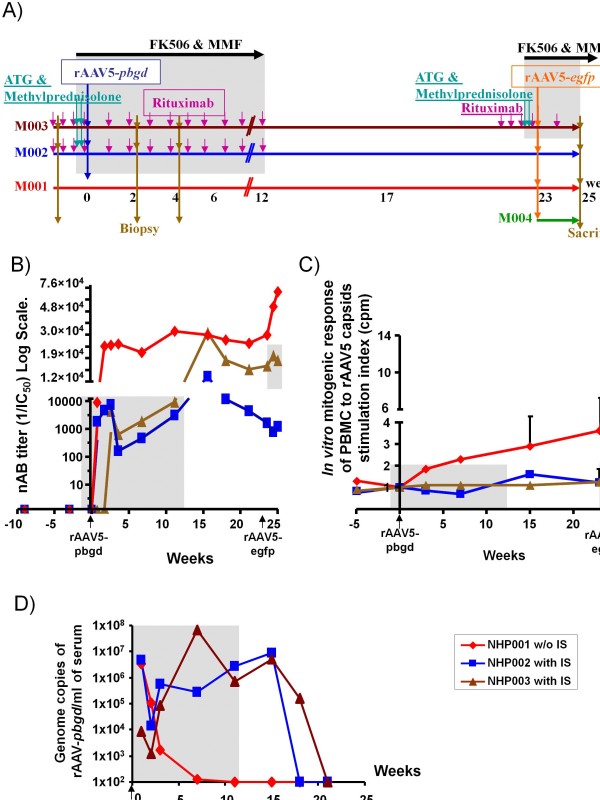
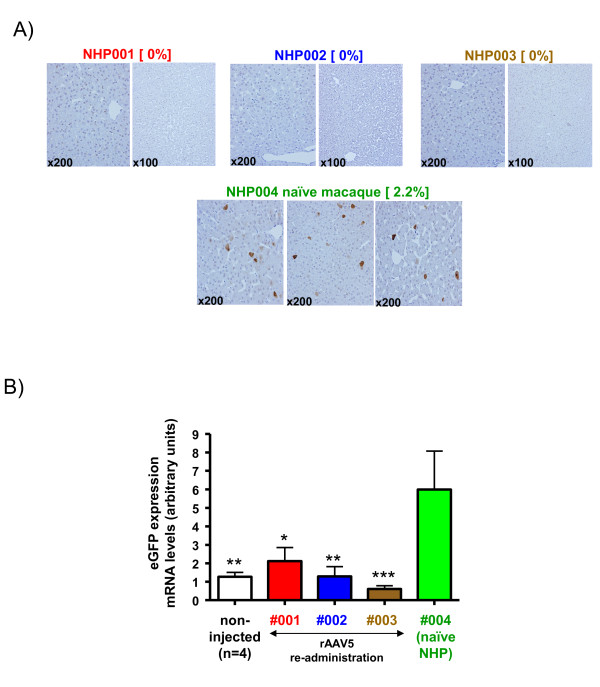
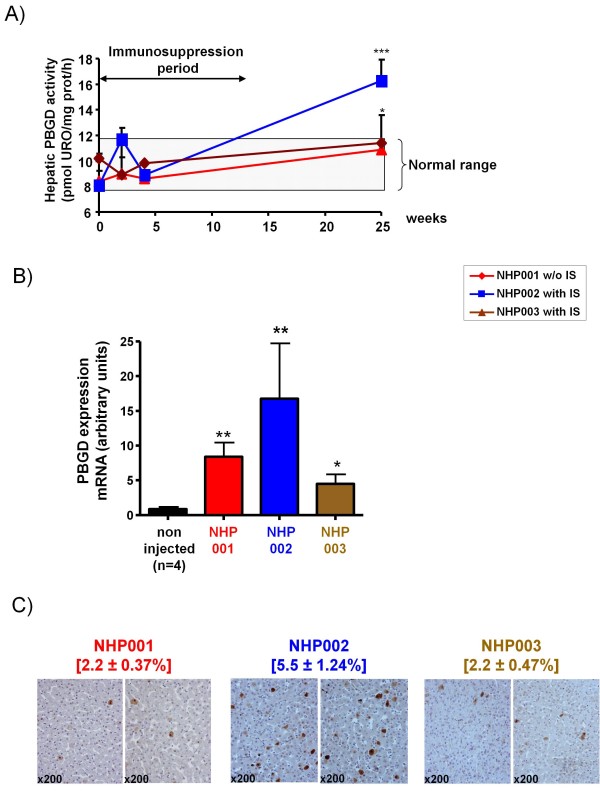
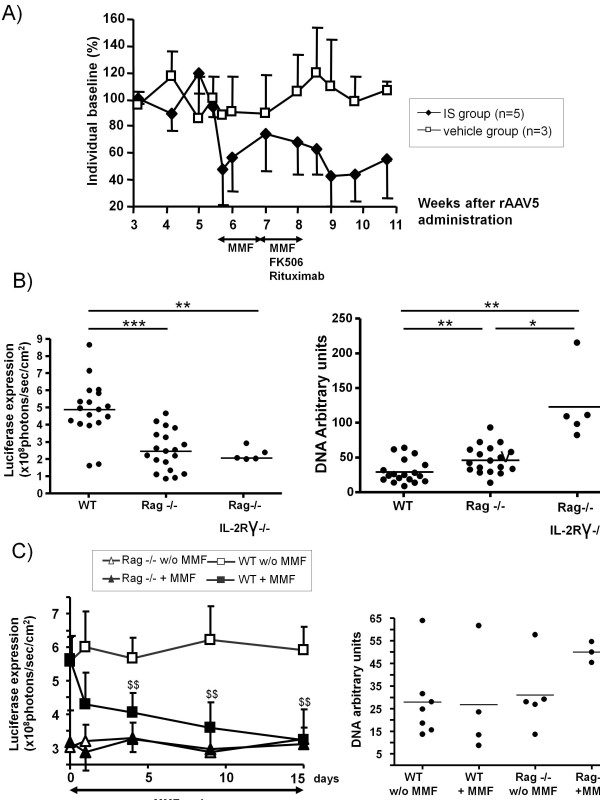
Verification
Claims the paper makes
The claims and statistics of this paper haven’t been checked yet.
Free: it reads the open-access text and checks the first 5 claims that cite a source we can check. Create a free account to check every claim.
Claims other papers make about this one
Each is checked against this paper’s own text: does it say what the citing paper says it does?
The cited source says what the claim attributes to it.
In the citing paper
“A 5-drug immunosuppression regimen, including anti-thymocyte globulin (ATG), tacrolimus, rituximab, MMF, and methylprednisolone, inhibited T cell response after IV AAV5 delivery in NHPs (79).”
From A versatile toolkit for overcoming AAV immunity (2022) · cites this paper as [79]
In the citing paper
“Pre-clinical studies have applied immunosuppression as an alternative to control anti-capsid cellular immune response (42–44).”
From Effect of CpG Depletion of Vector Genome on CD8+ T Cell Responses in AAV Gene Therapy (2021) · cites this paper as [44]
In the citing paper
“Interestingly, NAb f o r m a t i o n occurred upon t h e r e m o v a l of immunosuppression.”
From A versatile toolkit for overcoming AAV immunity (2022) · cites this paper as [79]
In the citing paper
“This 5-drug regimen with rAAV5-PBGD 1×10¹³vg/kg infusion resulted in reduced T-cell response in NHP, but did not prevent NAb emergence following regimen removal.”
From Immunomodulation in Administration of RAAV: Preclinical and Clinical Adjuvant Pharmacotherapies (2021) · cites this paper as [99]
Self-check
Percentages, sums and reported differences re-computed from the paper’s own numbers.
The self-check needs the paper’s full text.
Citations
Cites
Adenovirus-Associated Virus Vector–Mediated Gene Transfer in Hemophilia B
Nathwani, A. C., Tuddenham, E. G. D., Rangarajan, S., Rosales, C., McIntosh, J., Linch, D. C., Chowdary, P., Riddell, A., Pie, A. J., Harrington, C., et al. (2011) · New England Journal of Medicine · doi:10.1056/nejmoa1108046 · Cited by 1,864 · cited 2×
“The finding that the cytotoxic T lymphocyte response eliminated gene expression in transduced cells was not observed in the clinical trial with rAAV8 trial where a course of glucocorticoid therapy was given [16].”
Cd8(+) T-Cell Responses to Adeno-Associated Virus Capsid in Humans
Mingozzi, F., Maus, M. V., Hui, D. J., Sabatino, D. E., Murphy, S. L., Rasko, J. E. J., Ragni, M. V., Manno, C. S., Sommer, J., Jiang, H., et al. (2007) · Nature Medicine · doi:10.1038/nm1549 · Cited by 748 · cited 3×
“Secondly, prior infection of the patients with natural or recombinant AAVs leads to formation of memory CD8+ T cells which readily undergo activation upon re-exposure to the AAV capsids [8,9].”
Insect Cells as a Factory to Produce Adeno-Associated Virus Type 2 Vectors
Urabe, M., Ding, C., & Kotin, R. M. (2002) · Human Gene Therapy · doi:10.1089/10430340260355347 · Cited by 457 · cited 1×
“The rAAV5 vectors were generated in Sf9 insect cells [17].”
Thomas, C. E., Storm, T. A., Huang, Z., & Kay, M. A. (2004) · Journal of Virology · doi:10.1128/jvi.78.6.3110-3122.2004 · Cited by 358 · cited 2×
“Several studies have suggested that rate of uncoating of vector genomes is lower with rAAV2 than with serotypes rAAV5, rAAV6 and rAAV8 [18,23].”
Jiang, H., Couto, L. B., Patarroyo-White, S., Liu, T., Nagy, D., Vargas, J. A., Zhou, S., Scallan, C. D., Sommer, J., Vijay, S., et al. (2006) · Blood · doi:10.1182/blood-2006-04-017913 · Cited by 330 · cited 1×
“In previous work from other laboratories performed in rhesus macaques, in only one animal of the three treated daily with MMF and tacrolimus for 6 weeks did the levels of anti-AAV8 IgG antibodies increase after IS therapy was stopped [12].”
Immune Responses to AAV in Clinical Trials
Mingozzi, F., & A. High, K. (2011) · Current Gene Therapy · doi:10.2174/156652311796150354 · Cited by 324
Mechanism of Action of Mycophenolate Mofetil
Ransom, J. T. (1995) · Therapeutic Drug Monitoring · doi:10.1097/00007691-199512000-00023 · Cited by 284 · cited 1×
“Importantly, MMF was administered four weeks after injection of our single stranded AAV5 vector in order to avoid its interference effect on second-strand DNA synthesis [19,20].”
Nathwani, A. C., Gray, J. T., McIntosh, J., Ng, C. Y. C., Zhou, J., Spence, Y., Cochrane, M., Gray, E., Tuddenham, E. G. D., & Davidoff, A. M. (2007) · Blood · doi:10.1182/blood-2006-03-010181 · Cited by 272 · cited 1×
“It could be that the more rapid uncoating of rAAV8 than of rAAV2 capsid proteins from viral particles [22,23] allows the rAAV8 capsid proteins to be degraded by transduced cells before the immune system can seek and destroy them.”
Mingozzi, F., Hasbrouck, N. C., Basner-Tschakarjan, E., Edmonson, S. A., Hui, D. J., Sabatino, D. E., Zhou, S., Wright, J. F., Jiang, H., Pierce, G. F., et al. (2007) · Blood · doi:10.1182/blood-2007-03-080093 · Cited by 254 · cited 1×
“In another study, daily treatment with MMF and sirolimus for 10 weeks reduced humoral response against AAV2 capsid in rhesus macaques [10].”
Immune Responses to AAV in Clinical Trials
Mingozzi, F., & High, K. (2007) · Current Gene Therapy · doi:10.2174/156652307782151425 · Cited by 238 · cited 3×
“Secondly, prior infection of the patients with natural or recombinant AAVs leads to formation of memory CD8+ T cells which readily undergo activation upon re-exposure to the AAV capsids [8,9].”
Cited by
Targeting long non-coding RNA to therapeutically upregulate gene expression
Wahlestedt, C. (2013) · Nature Reviews Drug Discovery · doi:10.1038/nrd4018 · Cited by 532
Goertsen, D., Flytzanis, N. C., Goeden, N., Chuapoco, M. R., Cummins, A., Chen, Y., Fan, Y., Zhang, Q., Sharma, J., Duan, Y., et al. (2022) · Nature Neuroscience · doi:10.1038/s41593-021-00969-4 · Cited by 420
Meliani, A., Boisgerault, F., Hardet, R., Marmier, S., Collaud, F., Ronzitti, G., Leborgne, C., Costa Verdera, H., Simon Sola, M., Charles, S., et al. (2018) · Nature Communications · doi:10.1038/s41467-018-06621-3 · Cited by 265
Bucher, K., Rodríguez-Bocanegra, E., Dauletbekov, D., & Fischer, M. D. (2021) · Progress in Retinal and Eye Research · doi:10.1016/j.preteyeres.2020.100915 · Cited by 242
Unraveling the complex story of immune responses to AAV vectors trial after trial.
Vandamme, C., Adjali, O., & Mingozzi, F. (2017) · Human Gene Therapy · doi:10.1089/hum.2017.150 · Cited by 234
Mingozzi, F., & High, K. A. (2017) · Annual Review of Virology · doi:10.1146/annurev-virology-101416-041936 · Cited by 206
Evers, M. M., Miniarikova, J., Juhas, S., Vallès, A., Bohuslavova, B., Juhasova, J., Skalnikova, H. K., Vodicka, P., Valekova, I., Brouwers, C., et al. (2018) · Molecular Therapy · doi:10.1016/j.ymthe.2018.06.021 · Cited by 168
“AAV5 vector encoding cDNA of the enhanced GFP transgene and miHTT cassette was packaged into AAV5 by a baculovirus-based AAV production system (uniQure, Amsterdam, the Netherlands) as previously described.(64,65) The complete transcription unit was flanked by two non-coding AAV-derived inverted terminal repeats, and e…”
MethodSelf-citationMoreno, A. M., Palmer, N., Alemán, F., Chen, G., Pla, A., Jiang, N., Leong Chew, W., Law, M., & Mali, P. (2019) · Nature Biomedical Engineering · doi:10.1038/s41551-019-0431-2 · Cited by 125
Corti, M., Liberati, C., Smith, B. K., Lawson, L. A., Tuna, I. S., Conlon, T. J., Coleman, K. E., Islam, S., Herzog, R. W., Fuller, D. D., et al. (2017) · Human Gene Therapy Clinical Development · doi:10.1089/humc.2017.146 · Cited by 120
Gene therapy for hemophilia: what does the future hold?
Doshi, B. S., & Arruda, V. R. (2018) · Therapeutic Advances in Hematology · doi:10.1177/2040620718791933 · Cited by 97
Immune Response Mechanisms against AAV Vectors in Animal Models
Martino, A. T., & Markusic, D. M. (2020) · Molecular Therapy - Methods & Clinical Development · doi:10.1016/j.omtm.2019.12.008 · Cited by 97
“antibodies during immune suppression with elevation following cessation of immune suppression.(46)”
BackgroundCell-Mediated Immunity to AAV Vectors, Evolving Concepts and Potential Solutions
Basner-Tschakarjan, E., & Mingozzi, F. (2014) · Frontiers in Immunology · doi:10.3389/fimmu.2014.00350 · Cited by 95
“Recent reports show impaired transduction levels under IS with mycophenolate mofetil (113), others report a longer plasma half-life of vector in non-human primates receiving IS (114).”
BackgroundMonahan, P. E., Négrier, C., Tarantino, M., Valentino, L. A., & Mingozzi, F. (2021) · Journal of Clinical Medicine · doi:10.3390/jcm10112471 · Cited by 85
Prasad, S., Dimmock, D. P., Greenberg, B., Walia, J. S., Sadhu, C., Tavakkoli, F., & Lipshutz, G. S. (2022) · Human Gene Therapy · doi:10.1089/hum.2022.138 · Cited by 81
Effect of CpG Depletion of Vector Genome on CD8+ T Cell Responses in AAV Gene Therapy
Bertolini, T. B., Shirley, J. L., Zolotukhin, I., Li, X., Kaisho, T., Xiao, W., Kumar, S. R. P., & Herzog, R. W. (2021) · Frontiers in Immunology · doi:10.3389/fimmu.2021.672449 · Cited by 80
Samaranch, L., Blits, B., San Sebastian, W., Hadaczek, P., Bringas, J., Sudhakar, V, Macayan, M., Pivirotto, P. J., Petry, H., & Bankiewicz, K. S. (2017) · Gene Therapy · doi:10.1038/gt.2017.14 · Cited by 80
Self-citationMajowicz, A., Salas, D., Zabaleta, N., Rodríguez-Garcia, E., González-Aseguinolaza, G., Petry, H., & Ferreira, V. (2017) · Molecular Therapy · doi:10.1016/j.ymthe.2017.05.003 · Cited by 73
Self-citationAdeno-Associated Viruses (AAV) and Host Immunity – A Race Between the Hare and the Hedgehog
Rapti, K., & Grimm, D. (2021) · Frontiers in Immunology · doi:10.3389/fimmu.2021.753467 · Cited by 79
Majowicz, A., Maczuga, P., Kwikkers, K. L., van der Marel, S., van Logtenstein, R., Petry, H., van Deventer, S. J., Konstantinova, P., & Ferreira, V. (2013) · The Journal of Gene Medicine · doi:10.1002/jgm.2712 · Cited by 71
“However, immune suppression protocols have not always proven to be effective [29], as observed in a clinical study where AAV-based gene therapy was used in patients with Duchenne’s muscular dystrophy [27].”
BackgroundSelf-citationA functional motif of long noncoding RNA Nron against osteoporosis
Jin, F., Li, J., Zhang, Y., Liu, X., Cai, M., Liu, M., Li, M., Ma, C., Yue, R., Zhu, Y., et al. (2021) · Nature Communications · doi:10.1038/s41467-021-23642-7 · Cited by 73
Immunomodulation in Administration of RAAV: Preclinical and Clinical Adjuvant Pharmacotherapies
Chu, W. S., & Ng, J. (2021) · Frontiers in Immunology · doi:10.3389/fimmu.2021.658038 · Cited by 59
A versatile toolkit for overcoming AAV immunity
Li, X., Wei, X., Lin, J., & Ou, L. (2022) · Frontiers in Immunology · doi:10.3389/fimmu.2022.991832 · Cited by 57
“However, this strategy only delayed but could not prevent CTL response in NHPs, indicating that immune factors other than TLR9 contributed to intra-ocular inflammation in NHPs. Based on this technology, a startup Ally Therapeutics was launched in 2018.”
BackgroundInfluentialTukov, F. F., Mansfield, K. G., Milton, M., Meseck, E. K., Penraat, K. A., Chand, D. H., & Hartmann, A. (2022) · Human Gene Therapy · doi:10.1089/hum.2021.255 · Cited by 57
Boisgerault, F., & Mingozzi, F. (2015) · Current Gene Therapy · doi:10.2174/1566523215666150630121750 · Cited by 54
Humoral immune responses to AAV gene therapy in the ocular compartment
Whitehead, M., Osborne, A., Yu‐Wai‐Man, P., & Martin, K. (2021) · Biological Reviews · doi:10.1111/brv.12718 · Cited by 52
“Here, injection of AAV5 and AAV9 was found to increase anti-AAV2 NAb levels, and IVTs of AAV2, AAV7m8 and AAV2(Y-F) induced anti-AAV5, -AAV8 or -AAV9 humoral immune responses.”
InfluentialWang, Z., Zourelias, L., Wu, C., Edwards, P. C., Trombetta, M. G., & Passineau, M. J. (2015) · Gene Therapy · doi:10.1038/gt.2015.36 · Cited by 57
Samelson-Jones, B. J., Finn, J. D., Favaro, P., Wright, J. F., & Arruda, V. R. (2020) · Molecular Therapy - Methods & Clinical Development · doi:10.1016/j.omtm.2020.05.001 · Cited by 50
“The development of anti-AAV antibody in NHPs after systemic AAV vector administration is consistently observed without IS, as well as with IS regimens that have included: (1) rituximab and cyclosporine;(47) (2) MMF, rapamycin, and daclizumab around vector administration;(11) and (3) tacrolimus, MMF, rituximab, as well…”
ResultVallès, A., Evers, M. M., Stam, A., Sogorb-González, M., Brouwers, C. C., Vendrell‐Tornero, C., Broekmans, Ş. A., Paerels, L., Klíma, J., Bohuslavová, B., et al. (2021) · Science Translational Medicine · doi:10.1126/scitranslmed.abb8920 · Cited by 53
Self-citationPiguet, F., de Saint Denis, T., Audouard, E., Beccaria, K., André, A., Wurtz, G., Schatz, R., Alves, S., Sevin, C., Zerah, M., et al. (2021) · Human Gene Therapy · doi:10.1089/hum.2020.105 · Cited by 45
“135,136 Other approaches are emerging such as plasmapheresis, 135,136 editing AAV capsids to eradicate epitopes that induce NAb generation, 137 using tolerogenic nanoparticles, 138,139 and the incorporation in the transgene of microRNAs (miR) target sequences integrated in the expression cassette…”
Effective depletion of pre-existing anti-AAV antibodies requires broad immune targeting
Velazquez, V. M., Meadows, A. S., Pineda, R. J., Camboni, M., McCarty, D. M., & Fu, H. (2017) · Molecular Therapy - Methods & Clinical Development · doi:10.1016/j.omtm.2017.01.003 · Cited by 43
Understanding and Tackling Immune Responses to Adeno-Associated Viral Vectors
Verdera, H. C., Unzu, C., Valeri, E., Adriouch, S., González‐Aseguinolaza, G., Mingozzi, F., & Kajaste‐Rudnitski, A. (2023) · Human Gene Therapy · doi:10.1089/hum.2023.119 · Cited by 47
“108 Several assays have been adapted to detect AAV-specific T cell responses, such as lymphocyte proliferation assays in response to the AAV capsid or capsid-derived peptides, 109 IFN-c ELISPOT, 110,111 or activated lymphocyte detection by flow cytometry.”
Self-citationEmerging therapies for acute intermittent porphyria
Fontanellas, A., Avila, M. A., & Berraondo, P. (2016) · Expert Reviews in Molecular Medicine · doi:10.1017/erm.2016.18 · Cited by 42
Self-citationGenetic-Based Approaches to Inherited Metabolic Liver Diseases
Zabaleta, N., Hommel, M., Salas, D., & González‐Aseguinolaza, G. (2019) · Human Gene Therapy · doi:10.1089/hum.2019.140 · Cited by 36
“…can involve selective depletion of immune populations involved in antibody production (rituximab for CD20 + or anti-CD4 for T helper cells) 202 or a more general approach: by blocking proteasome activity, bortezomib not only prevents generation of antibodies but also antigen presentation.”
Hayashita‐Kinoh, H., Yugeta, N., Okada, H., Nitahara‐Kasahara, Y., Chiyo, T., Okada, T., & Takeda, S. (2015) · Molecular Therapy · doi:10.1038/mt.2015.5 · Cited by 37
Obstacles and future of gene therapy for hemophilia
Arruda, V. R., & Samelson-Jones, B. J. (2015) · Expert Opinion on Orphan Drugs · doi:10.1517/21678707.2015.1069179 · Cited by 33
Hepatotoxicity in Adeno-Associated Viral Vector Gene Therapy
Jagadisan, B., & Dhawan, A. (2023) · Current Hepatology Reports · doi:10.1007/s11901-023-00624-5 · Cited by 36
“Studies in non-human primates with MMF added 4 weeks after single-stranded rAAV infusion showed that in spite of the delayed introduction of MMF to allow for second strand synthesis, transgene expression was inhibited by MMF through an immunological mechanism [91].”
Selot, R., Hareendran, S., & Jayandharan, G. (2014) · Current Pharmaceutical Biotechnology · doi:10.2174/1389201015666140327141710 · Cited by 31
“Therefore some studies have emphasized the development of B cell targeting therapy for NAb titer reduction [63].”
Gene therapy for hemophilia: Progress to date and challenges moving forward
Gollomp, K. L., Doshi, B. S., & Arruda, V. R. (2019) · Transfusion and Apheresis Science · doi:10.1016/j.transci.2019.08.012 · Cited by 35
Adeno‐Associated Virus Vector–Based Gene Therapy for Monogenetic Metabolic Diseases of the Liver
Junge, N., Mingozzi, F., Ott, M., & Baumann, U. (2015) · Journal of Pediatric Gastroenterology and Nutrition · doi:10.1097/mpg.0000000000000703 · Cited by 23
“Up-front immunosuppressive therapy to prevent T-cell responses to AAV may be difficult, because it could also impair the vector transduction efficiency and inhibit the development of tolerance (42,43), and because it may be hard to predict the timing of immunosuppression administration.”
BackgroundGuest Editor: G. Castaman GENE THERAPY FOR HEMOPHILIA: FACTS AND QUANDARIES IN THE 21ST CENTURY
Doshi, B. S., Arruda, V. R., & Arruda, V. R. (2020) · Mediterranean Journal of Hematology and Infectious Diseases · doi:10.4084/mjhid.2020.069 · Cited by 25
New and improved AAVenues: current status of hemophilia B gene therapy
Brimble, M. A., Reiss, U. M., Nathwani, A. C., & Davidoff, A. M. (2015) · Expert Opinion on Biological Therapy · doi:10.1517/14712598.2015.1106475 · Cited by 23
Longo, M., Paolini, E., Meroni, M., & Dongiovanni, P. (2022) · Biomedicines · doi:10.3390/biomedicines10030648 · Cited by 22
Emborg, M. E., Hurley, S. A., Joers, V. L., Tromp, D., Swanson, C. R., Ohshima-Hosoyama, S., Bondarenko, V., Cummisford, K., Sonnemans, M. A. F., Hermening, S., et al. (2014) · Stereotactic and Functional Neurosurgery · doi:10.1159/000360584 · Cited by 22
Serrano-Mendioroz, I., Sampedro, A., Serna, N., de Salamanca, R. E., Sanz-Parra, A., Corrales, F. J., Berraondo, P., Millet, Ó., & Fontanellas, A. (2018) · Human Molecular Genetics · doi:10.1093/hmg/ddy283 · Cited by 18
Self-citationUnzu, C., Melero, I., Hervás‐Stubbs, S., Sampedro, A., Mancheño, U., Morales‐Kastresana, A., Serrano-Mendioroz, I., de Salamanca, R. E., Benito, A., & Fontanellas, A. (2015) · Gene Therapy · doi:10.1038/gt.2015.64 · Cited by 16
Self-citationSpadarella, G., Minno, A. D., Brunetti‐Pierri, N., Mahlangu, J. N., & Minno, G. D. (2020) · Blood Reviews · doi:10.1016/j.blre.2020.100737 · Cited by 19
A comprehensive study of AAV tropism across C57BL/6 mice, BALB/c mice, and crab-eating macaques
Fang, K., Yang, X., Liu, Y., Xia, J., Wu, R., Yang, F., Feng, C., Liu, X., Shi, L., Geng, G., et al. (2025) · Molecular Therapy — Methods & Clinical Development · doi:10.1016/j.omtm.2025.101434 · Cited by 18
“…multiple AAV capsids in macaques and the potential adaptive immune response after AAV infusion could be high, we implemented a g3T cell and B cell suppression regimen (2 mg/kg rapamycin daily 30 and 20 mg/kg rituximab weekly 31,32 ) to suppress the anti-capsid or anti-transgene immune response.”
Egorova, T. V., Starikova, A. V., & Polikarpova, A. V. (2025) · Pharmaceutics · doi:10.3390/pharmaceutics17111492 · Cited by 20
“The mechanism of such interference remains to be elucidated [119].”
Therapeutic Advances in Hematology
Kolibaba, K. S., Sterchele, J. A., Joshi, A. D., Forsyth, M., Alwon, E., Beygi, H., & Kennealey, G. T. (2013) · Cited by 13
Minno, G. D., Castaman, G., CRISTOFARO, R. D., Brunetti‐Pierri, N., Pastore, L., Castaldo, G., Trama, U., & Minno, M. N. D. D. (2022) · Blood Reviews · doi:10.1016/j.blre.2022.101011 · Cited by 12
Hareendran, S., Ramakrishna, B., & Jayandharan, G. R. (2016) · European Journal of Immunology · doi:10.1002/eji.201545867 · Cited by 10
Córdoba, K. M., Jericó, D., Jiang, L., Collantes, M., Alegre, M., García-Ruiz, L., Manzanilla, O., Sampedro, A., Herranz, J. M., Insausti, I., et al. (2024) · Gut · doi:10.1136/gutjnl-2024-332619 · Cited by 10
Self-citationAil, D., & Dalkara, D. (2023) · Advances in experimental medicine and biology · doi:10.1007/978-3-031-27681-1_18 · Cited by 9
Raissadati, A., Jokinen, J. J., Syrjälä, S. O., Keränen, M. A. I., Krebs, R., Tuuminen, R., Arnaudova, R., Rouvinen, E., Anisimov, A., Soronen, J., et al. (2013) · Transplant International · doi:10.1111/tri.12182 · Cited by 8
“Recent experimental studies have attempted to use immunosuppressants to extend AAV-mediated transgene expression, some successfully and some not [50–53].”
BackgroundIgG-cleavage protein allows therapeutic AAV gene delivery in passively immunized MPS IIIA mice
Bobo, T. A., Samowitz, P. N., Robinson, M. I., Montes, L., Forsberg, L. J., Feng, R., Nicely, N. I., & Fu, H. (2022) · Gene Therapy · doi:10.1038/s41434-022-00368-9 · Cited by 9
“These studies showed potential for improving rAAV gene delivery by circumventing or reducing the pre-existing Abs in animal models and in humans, while others showed no impact on pre-existing αAAVAbs [19, 20, 27].”
BackgroundAdeno‐associated viral vector gene therapy: Challenges for the paediatric hepatologist
Jagadisan, B., & Dhawan, A. (2024) · Journal of Pediatric Gastroenterology and Nutrition · doi:10.1002/jpn3.12326 · Cited by 9
(2014) · Human Gene Therapy Clinical Development · doi:10.1089/humc.2014.2506 · Cited by 5
Exploring protein orthogonality in immune space: a case study with AAV and Cas9 orthologsPreprint
Moreno, A. M., Palmer, N. D., Alemán, F., Chen, G., Pla, A., Chew, W. L., Law, M., & Mali, P. (2018) · bioRxiv (Cold Spring Harbor Laboratory) · doi:10.1101/245985 · Cited by 6
The evolving landscape of gene therapy for congenital severe hemophilia: a 2024 state of the art
Minno, G. D., Spadarella, G., Calcaterra, I. L., Castaman, G., Simioni, P., CRISTOFARO, R. D., Santoro, C., Peyvandi, F., & Minno, M. N. D. D. (2024) · Bleeding Thrombosis and Vascular Biology · doi:10.4081/btvb.2024.144 · Cited by 4
Blits, B., Kirik, D., Petry, H., & Hermening, S. (2015) · Neuromethods · doi:10.1007/978-1-4939-2306-9_3 · Cited by 3
Self-citationRen, D., Chauveau, G. A., Cabon, E., Vendomèle, J., Vignal‐Clermont, C., Saliba, H., Ail, D., Dalkara, D., & Fisson, S. (2026) · Progress in Retinal and Eye Research · doi:10.1016/j.preteyeres.2026.101443 · Cited by 1
Immune Responses to Adeno-Associated Virus-Mediated CRISPR Therapy
Keeler, A. M. (2021) · Human Gene Therapy · doi:10.1089/hum.2021.29193.amk · Cited by 1
“27 Other immunosuppressive regimens have been considered, including mycophenolate mofetil, calcineurin inhibitors such as tacrolimus, and proteasome inhibitors, and often these drugs are used in combination.”
Foamy virus vector integration and application in gene therapy
Sweeney, N. P. (2015) · Spiral (Imperial College London) · doi:10.25560/50704
Tissue engineering and transplantation in the fetus
Porada, C. D., Atala, A., & Almeida-Porada, G. D. (2020) · Elsevier eBooks · doi:10.1016/b978-0-12-818422-6.00022-8
A Brillouin spectroscopic study of the I-II phase transition in CH₄
Kelly, R. (1992) · Memorial University Research Repository (Memorial University)
The Use of AAV Vector-based Gene Therapy in the Treatment of Ophthalmic Diseases. Literature Review
Batyrova, Z. A., Murtazalieva, A. S., Ramazanova, J. M., & Batchaev, A. S. ‐. (2025) · Ophthalmology in Russia · doi:10.18008/1816-5095-2025-2-244-250
A Comprehensive Study of AAV Tropism in the Marmoset Brain
Fang, K., Liu, H., Yao, Y., Xu, Z., Liu, X., Feng, C., Liu, Y., Li, T., Geng, G., Wu, R., et al. (2026) · Neuroscience Bulletin · doi:10.1007/s12264-026-01591-9 · Cited by 1
“To suppress immune responses post-infusion, we administered daily rapamycin (2 mg/kg)[19] and weekly Rituximab (20 mg/kg)[20, 21].”
Leite, G. D. F. (2017) · theses.fr (ABES) · doi:10.70675/ea0be1b4zfae0z4e90z811cz71c3a7621eb2
Metadata
- Authors
- Unzu, C., Hervás-Stubbs, S., Sampedro, A., Mauleón, I., Mancheño, U., Alfaro, C., de Salamanca, R. E., Benito, A., Beattie, S. G., Petry, H., Prieto, J., Melero, I., & Fontanellas, A.
- Affiliations
- Centro de Investigación Médica Aplicada (ES)
- Clinica Universidad de Navarra (ES)
- Corresponding author
- Melero, Ignacio
- ORCID
- Venue
- Journal of Translational Medicine
- Published
- 2012-06-15
- Volume
- 10
- Issue
- 1
- Pages
- 122-122
- ISSN
- 1479-5876 (ISSN-L)
- PMC
- PMC3412719
- OpenAlex
- W2146402993
- Cited by
- 69
- References
- 29
- Citations by year
- 2026: 2 · 2025: 3 · 2024: 3 · 2023: 3 · 2022: 6 · 2021: 9 · 2020: 6 · 2019: 4 · 2018: 6 · 2017: 7 · 2016: 1 · 2015: 10 · 2014: 4 · 2013: 4
- FWCI
- 3.45
- Type
- journal article
- Language
- en
- Open access
- gold
- doi.org
- Licence
- cc-by
- Locations
- Journal of Translational Medicine (publishedVersion, cc-by)
- Europe PMC (PubMed Central) (publishedVersion, cc-by)
- PubMed Central (publishedVersion, cc-by)
- PubMed (publishedVersion)
- Deposito Adademico Digital Universidad De Navarra (University of Navarra) (submittedVersion, other-oa)
- DOAJ (DOAJ: Directory of Open Access Journals) (submittedVersion, cc-by-sa)
- Funders
- Fundación Mutua Madrileña (RD06/0020)
- European Commission (261506, 201842)
- Fundación Científica Asociación Española Contra el Cáncer
- Universidad de Navarra
- Ministerio de Ciencia e Innovación (SAF2011-22831)
- Gobierno de Navarra
- Topics
- Life Sciences › Biochemistry, Genetics and Molecular Biology › Genetics › Virus-based gene therapy research
- Life Sciences › Biochemistry, Genetics and Molecular Biology › Molecular Biology › RNA Interference and Gene Delivery
- Health Sciences › Medicine › Surgery › Xenotransplantation and immune response
- Keywords
- liver gene transfer, immunosuppression, porphobilinogen deaminase, acute intermittent porphyria, T cell immunity, humoral immunity, mycophenolate mofetil, tacrolimus, rituximab, non-human primates, macaque, immunocompetent mice
- MeSH terms
- Dependovirus, Animals, Antigens, Viral, Capsid, DNA, Viral, Female, Genetic Vectors, Humans, Immunity, Immunosuppression Therapy, Immunosuppressive Agents, Injections, Intravenous, Liver, Macaca fascicularis, Mice, Transgenic, Mycophenolic Acid, Serotyping, Treatment Failure, Gene Transfer Techniques, Transgenes, Mice, Immunity, Humoral
About these checks
Registry, retraction, Cites and statistics results are computed, not judged, with one exception: a printed reference that no index lists is read once by a model before it counts as a citation error. Claims are extracted by a model and kept only when their quote appears verbatim in the text; each cited source is then checked, with a model’s help, for whether it says what the claim relies on. Those verdicts can be wrong — read the claim’s quote and the cited source before relying on one.
Statistics and arithmetic are recomputed, not judged.
Confidence bands are shown only for fields calibrated on our annotated test set. None is calibrated yet, so no band is shown.
What counts as a claim ›How we measure confidence ›How we check this ›
Are you an author, or do you see a problem with this page? Request a review
Data sources
Bibliographic data: Semantic Scholar, OpenAlex, Crossref.
Contains information from the Semantic Scholar Academic Graph Datasets, made available under the ODC Attribution License (ODC-BY 1.0).
Semantic Scholar’s data is described in: Kinney, R., et al. (2023). The Semantic Scholar Open Data Platform. arXiv:2301.10140.
