

High-Intensity Interval Resistance Training (HIRT) influences resting energy expenditure and respiratory ratio in non-dieting individuals
Open accessThe DOI matches its Crossref record; 62 of the 64 references it cites were found in a registry or an index; 7 of the 64 sources its claims cite were checked for support.
Abstract
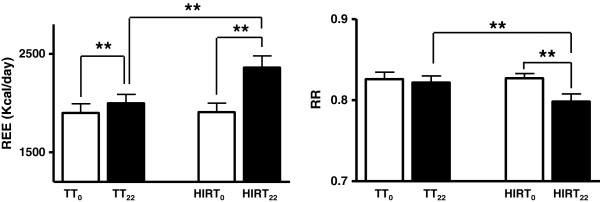
BACKGROUND: The benefits of exercise are well established but one major barrier for many is time. It has been proposed that short period resistance training (RT) could play a role in weight control by increasing resting energy expenditure (REE) but the effects of different kinds of RT has not been widely reported. METHODS: We tested the acute effects of high-intensity interval resistance training (HIRT) vs. traditional resistance training (TT) on REE and respiratory ratio (RR) at 22 hours post-exercise. In two separate sessions, seventeen trained males carried out HIRT and TT protocols. The HIRT technique consists of: 6 repetitions, 20 seconds rest, 2/3 repetitions, 20 secs rest, 2/3 repetitions with 2'30″ rest between sets, three exercises for a total of 7 sets. TT consisted of eight exercises of 4 sets of 8-12 repetitions with one/two minutes rest with a total amount of 32 sets. We measured basal REE and RR (TT0 and HIRT0) and 22 hours after the training session (TT22 and HIRT22). RESULTS: HIRT showed a greater significant increase (p < 0.001) in REE at 22 hours compared to TT (HIRT22 2362 ± 118 Kcal/d vs TT22 1999 ± 88 Kcal/d). RR at HIRT22 was significantly lower (0.798 ± 0.010) compared to both HIRT0 (0.827 ± 0.006) and TT22 (0.822 ± 0.008). CONCLUSIONS: Our data suggest that shorter HIRT sessions may increase REE after exercise to a greater extent than TT and may reduce RR hence improving fat oxidation. The shorter exercise time commitment may help to reduce one major barrier to exercise.
Overview
CoChat Summary
TL;DR
In 17 resistance-trained men, a single session of high-intensity interval resistance training (HIRT) increased resting energy expenditure (REE) and lowered respiratory ratio (RR) 22 hours post-exercise more than traditional resistance training (TT). The authors suggest HIRT may improve post-exercise metabolism and resting fat oxidation with a shorter time commitment.
Key findings
- HIRT produced a greater 22-hour increase in REE than TT: HIRT22 was 2362 ± 118 Kcal/d vs TT22 1999 ± 88 Kcal/d (p < 0.001); within-condition increases were HIRT0 1910 ± 89/90 to HIRT22 2362 ± 118 Kcal/d and TT0 1901 ± 93 to TT22 1999 ± 88 Kcal/d (p < 0.001).
- RR at HIRT22 was significantly lower (0.798 ± 0.010) than both HIRT0 (0.827 ± 0.006) and TT22 (0.822 ± 0.008) (p < 0.001), suggesting increased lipid oxidation at rest.
- Total work volume was significantly lower in HIRT (3872.4 ± 624 kg) than TT (7835.2 ± 1013 kg) (p < 0.001), while post-exercise blood lactate was higher after HIRT (10.5 ± 2.1 mmol/L) than TT (5.1 ± 1.2 mmol/L) (p < 0.05; table reports p < 0.001 for between-session comparison).
- The paper reports REE increases of about 5% after TT and 23% after HIRT, corresponding to 452 Kcal per day for HIRT.
Methods
- Cross-over study in 17 resistance-trained males (28 ± 4.5 yrs, height 174 ± 3 cm, body mass 84 ± 3 kg, body fat 8.5 ± 4.7%, muscle 51 ± 6.2 kg); 18 initially responded and one withdrew.
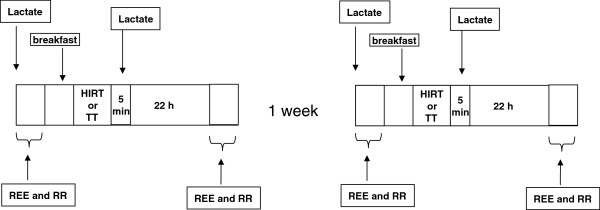
- Participants completed HIRT and TT in separate sessions, with basal REE and RR measured before and 22 hours after each session; diet was standardized for three days before and the day after each session.
- HIRT consisted of 6 repetitions, 20 seconds rest, 2/3 repetitions, 20 seconds rest, 2/3 repetitions, with 2′30″ rest between sets, three exercises for 7 total sets; TT consisted of eight exercises, 4 sets of 8–12 repetitions, with 1–2 minutes rest, totaling 32 sets. REE/RR were measured by ergospirometry and analyzed with repeated-measures ANOVA and Bonferroni post-hoc tests.
Limitations
- The authors state that subjects were moderately trained and note concerns about transferring the methodology/results to sedentary or overweight subjects; they advise caution when applying the protocol to overweight/obese subjects and propose future testing in a larger overweight/obese group.
- The study is acute, measuring effects of a single exercise session at 22 hours, so it cannot address long-term training adaptations or muscle-mass effects on REE.
- Evident from the text: the sample was small (n = 17), male-only, and the mechanisms for the prolonged REE/RR effects are not established; the authors state further investigation is needed to explain molecular pathways and hormonal adaptations.
Model-written summary. Check it against the paper before relying on it.
Integrity signals
Registry
Cites
Statistics
Figures
Verification
Claims the paper makes
5 Valid · 2 Not valid · 39 Not checked · 37 Own results and interpretations
Some cited sources support this claim and some don’t — read each source’s verdict below.
In the paper
“This consideration could help to explain the conflicting data between our study plus others reporting similar REE increases of between 16-20% [9,38,39] and several that reported a more modest increases (4–10%) [23,40-42].”
§ High-Intensity Interval Resistance Training (HIRT) influences resting energy expenditure and respiratory ratio in non-dieting individuals > Discussion
What the sources say
- Not checked — no full text of the sourcecites [23] Jamurtas AZ Koutedakis Y Paschalis V Tofas T Yfanti C Tsiokanos A Koukoulis G Kouretas D Loupos D The effects of a single bout of exercise on resting energy expenditure and respiratory exchange ratio Eur J Appl Physiol 2004 92 393 398 15205961 source
- Not checked — no full text of the sourcecites [40] Osterberg KL Melby CL Effect of acute resistance exercise on postexercise oxygen consumption and resting metabolic rate in young women Int J Sport Nutr Exerc Metab 2000 10 71 81 10939877 source
- Supportedcites [41] Heden T Lox C Rose P Reid S Kirk EP One-set resistance training elevates energy expenditure for 72 h similar to three sets Eur J Appl Physiol 2011 111 477 484 10.1007/s00421-010-1666-5 20886227 PMC3071293 source
The Discussion (page unavailable) reports an approximately 6% increase in resting energy expenditure after resistance training, within the cited 4–10% range. It also describes this result as consistent with other studies, supporting its use as one example among several studies reporting more modest increases. (LLM, conf=0.93)
- Disputedcites [42] Hunter GR Byrne NM Gower BA Sirikul B Hills AP Increased resting energy expenditure after 40 minutes of aerobic but not resistance exercise Obesity (Silver Spring) 2006 14 2018 2025 10.1038/oby.2006.236 17135619 sourceExperimental — accuracy not yet measured
The Discussion reports no increase in resting energy expenditure among the resistance trainers, contrary to the claimed 4–10% increase. The Introduction notes that some other resistance-exercise studies found increases, but does not report a 4–10% increase for this study. (LLM, conf=0.87)
Checked by a reasoning model — may be wrong.
plainstates a cause- Asserted: passes — The authors put it forward as true.
- Checkable: passes — It can be checked against evidence.
- Load-bearing: unclear — It is unclear whether the paper’s conclusions depend on it.
- Based: passes — The paper gives a reason why it holds.
The sources with a verdict support this claim; the rest weren’t checked yet, have no full text we could read, or their verdicts aren’t rated yet.
In the paper
“production of ANP is related to the intensity of exercise [51,52]”
§ High-Intensity Interval Resistance Training (HIRT) influences resting energy expenditure and respiratory ratio in non-dieting individuals > Discussion
What the sources say
- Supportedcites [51] de Almeida JC Alves CL de Abreu LC Sato MA Fonseca FL de Mello Monteiro CB Vanderlei LC Macedo H Jr Tavares CM Herrero D Rodrigues LM Valenti VE Involvement of the atrial natriuretic peptide in cardiovascular pathophysiology and its relationship with exercise Int Arch Med 2012 5 4 10.1186/1755-7682-5-4 22313592 PMC3395876 source
The Background states that circulating ANP concentrations increase during mild exercise and reach levels two to three times higher as exercise intensity grows. This directly supports a relationship between ANP levels and exercise intensity, although the passage describes circulating concentration rather than measuring production directly. (LLM, conf=0.93)
- Not checked — no full text of the sourcecites [52] Moro C Pillard F de Glisezinski I Klimcakova E Crampes F Thalamas C Harant I Marques MA Lafontan M Berlan M Exercise-induced lipid mobilization in subcutaneous adipose tissue is mainly related to natriuretic peptides in overweight men Am J Physiol Endocrinol Metab 2008 295 E505 E513 10.1152/ajpendo.90227.2008 18559985 source
plainstates an association- Asserted: passes — The authors put it forward as true.
- Checkable: passes — It can be checked against evidence.
- Load-bearing: unclear — It is unclear whether the paper’s conclusions depend on it.
- Based: passes — The paper gives a reason why it holds.
- Supported
Every source the paper cites for this claim was checked and supports it.
In the paper
“Of the two phases in which EPOC can be divided: short term and long term, only the latter can explain the increase of resting energy expenditure registered 20–24 hours after training [46].”
§ High-Intensity Interval Resistance Training (HIRT) influences resting energy expenditure and respiratory ratio in non-dieting individuals > Discussion
What the sources say
- Supportedcites [46] Speakman JR Selman C Physical activity and resting metabolic rate Proc Nutr Soc 2003 62 621 634 10.1079/PNS2003282 14692598 source
The Abstract describes two phases of EPOC: one lasting less than 2 hours and a prolonged phase lasting up to 48 hours. Of those two phases, only the prolonged phase could account for an increase in resting energy expenditure 20–24 hours after exercise. (LLM, conf=0.88)
plainstates a cause- Asserted: passes — The authors put it forward as true.
- Checkable: passes — It can be checked against evidence.
- Load-bearing: unclear — It is unclear whether the paper’s conclusions depend on it.
- Based: passes — The paper gives a reason why it holds.
- Supported
A result the paper reports from its own data — it cites no other source for it, so there is none to check. The quote shows it is in the paper.
In the paper
“Our results suggest that high-intensity interval resistance training increases excess post exercise energy consumption to a significantly greater extent than traditional resistance training.”
§ High-Intensity Interval Resistance Training (HIRT) influences resting energy expenditure and respiratory ratio in non-dieting individuals > Conclusions
hedgedstates a cause- Asserted: passes — The authors put it forward as true.
- Checkable: passes — It can be checked against evidence.
- Load-bearing: passes — The paper’s conclusions depend on it.
- Based: passes — The paper gives a reason why it holds.
A result the paper reports from its own data — it cites no other source for it, so there is none to check. The quote shows it is in the paper.
In the paper
“HIRT showed a greater significant increase (p < 0.001) in REE at 22 hours compared to TT (HIRT22 2362 ± 118 Kcal/d vs TT22 1999 ± 88 Kcal/d).”
- Also stated in: § Results · boosted
“The comparison between TT22 and HIRT22 also demonstrated a significant difference (p < 0.001).”
§ High-Intensity Interval Resistance Training (HIRT) influences resting energy expenditure and respiratory ratio in non-dieting individuals > Abstract > Results
boostedstates a cause- Asserted: passes — The authors put it forward as true.
- Checkable: passes — It can be checked against evidence.
- Load-bearing: passes — The paper’s conclusions depend on it.
- Based: passes — The paper gives a reason why it holds.
- Also stated in: § Results · boosted
31 more claims
Create a free account to see all 83 claims and to verify the 5 references still open.
- Probably not a substantial claim. 33
- It may state two separate claims as one. 22
Self-check
Percentages, sums and reported differences re-computed from the paper’s own numbers.
Each contradiction between two passages listed here was confirmed by an independent check.
Rated minor: it would not touch a result — a value no result rests on, a p-value that stays on the same side of the significance level, or a conflict that is clerical, resolved elsewhere in the paper, or outside its own findings.
In the paper
§ High-Intensity Interval Resistance Training (HIRT) influences resting energy expenditure and respiratory ratio in non-dieting individuals > Results
“HIRT0 1910 ± 89 Kcal/d vs HIRT22 2362 ± 118 Kcal/d”
§ High-Intensity Interval Resistance Training (HIRT) influences resting energy expenditure and respiratory ratio in non-dieting individuals > Results
“| REE (Kcal/d) | 1901 ± 93 | 1999 ± 89 | <0.001 | 1910 ± 90 | 2362 ± 118 | <0.001 | <0.001 |”
Rated minor: it would not touch a result — a value no result rests on, a p-value that stays on the same side of the significance level, or a conflict that is clerical, resolved elsewhere in the paper, or outside its own findings.
In the paper
§ High-Intensity Interval Resistance Training (HIRT) influences resting energy expenditure and respiratory ratio in non-dieting individuals > Results
“TT01901 ± 93 Kcal/d vs TT22 1999 ± 88 Kcal/d”
§ High-Intensity Interval Resistance Training (HIRT) influences resting energy expenditure and respiratory ratio in non-dieting individuals > Results
“| REE (Kcal/d) | 1901 ± 93 | 1999 ± 89 | <0.001 | 1910 ± 90 | 2362 ± 118 | <0.001 | <0.001 |”
Citations
Cites
New methods for calculating metabolic rate with special reference to protein metabolism
Weir, J. B. D. V. (1949) · The Journal of Physiology · doi:10.1113/jphysiol.1949.sp004363 · Cited by 5,603 · cited 1×
“V’O2 data were converted to REE expressed in Kcal/d using appropriate RR values and established tables based on the Weir equation [27].”
MethodA PGC1-α-dependent myokine that drives brown-fat-like development of white fat and thermogenesis
Boström, P., Wu, J., Jedrychowski, M. P., Korde, A., Ye, L., Lo, J. C., Rasbach, K. A., Boström, E. A., Choi, J. H., Long, J. Z., et al. (2012) · Nature · doi:10.1038/nature10777 · Cited by 4,810
American College of Sports Medicine position stand
Otis, C. L. (1997) · Medical Entomology and Zoology · Cited by 4,407
Anthropometric Standardization Reference Manual
Lohman, T. J., Roache, A. F., & Martorell, R. (1992) · Medicine & Science in Sports & Exercise · doi:10.1249/00005768-199208000-00020 · Cited by 2,764 · cited 2×
“All measurements were taken by the same operator (LC) before and during the study according to standard procedures [16].”
MethodDONNELLY, J. E., BLAIR, S. N., JAKICIC, J. M., MANORE, M. M., RANKIN, J. W., & SMITH, B. K. (2009) · Medicine & Science in Sports & Exercise · doi:10.1249/mss.0b013e3181949333 · Cited by 2,658
(1996) · PubMed · Cited by 705
Gibala, M. J., & McGee, S. L. (2008) · Exercise and Sport Sciences Reviews · doi:10.1097/jes.0b013e318168ec1f · Cited by 682 · cited 3×
“The most common protocol in published research is the Wingate test which consists of 30s of an all-out hard resistance sprint and subjects typically perform the Wingate test 4 to 6 times separated by 4 min of rest [14].”
BackgroundMethodInfluentialPedersen, B. K. (2011) · Journal of Experimental Biology · doi:10.1242/jeb.048074 · Cited by 668 · cited 1×
“effect of exercise [56].”
Metabolic bases of excess post-exercise oxygen consumption: a review
GAESSER, G. A., & BROOKS, G. A. (1984) · Medicine & Science in Sports & Exercise · doi:10.1249/00005768-198401000-00008 · Cited by 529 · cited 16×
“Abbreviations HIRT: High-intensity interval resistance training; TT: Traditional training; REE: Resting energy expenditure; RR: Respiratory ratio; EPOC: Excess post-exercise oxygen consumption.”
BackgroundInfluentialEffect of Exercise Intensity, Duration and Mode on Post-Exercise Oxygen Consumption
B??rsheim, E., & Bahr, R. (2003) · Sports Medicine · doi:10.2165/00007256-200333140-00002 · Cited by 466 · cited 1×
“The cause of this RR lowering could be explained in several ways: the more classical, cited above, is that glucose metabolic pathways are directed to replenish glycogen stores first [48] instead of being used for energy supply.”
Background
Research works printed but not linked: 2
- Paoli A Moro T Zonin F Filangeri D Bianco A Palma A Marcolin G Effects of high-intensity interval resistance training (HIRT) and pyramidal training (PYT) on some muscle and blood parameters J Sports Med Phys Fitness 2011 51 15
- Gießing J Das heavy-duty-konzept Leistungssport 2000 4 19 23
Cited by
Moro, T., Tinsley, G., Bianco, A., Marcolin, G., Pacelli, Q. F., Battaglia, G., Palma, A., Gentil, P., Neri, M., & Paoli, A. (2016) · Journal of Translational Medicine · doi:10.1186/s12967-016-1044-0 · Cited by 732
Self-citationThe Influence of Meal Frequency and Timing on Health in Humans: The Role of Fasting
Paoli, A., Tinsley, G., Bianco, A., & Moro, T. (2019) · Nutrients · doi:10.3390/nu11040719 · Cited by 377
“As a part of the strategies proposed for reducing energy intake (diets, drugs, and bariatric surgery) [24] and for increasing energy output (exercise and non-exercise movement) [25], meal timing and frequency could exert a significant influence on weight control and weight loss.”
BackgroundSelf-citationKetogenic Diet for Obesity: Friend or Foe?
Paoli, A. (2014) · International Journal of Environmental Research and Public Health · doi:10.3390/ijerph110202092 · Cited by 352
“increasing energy output (exercise and non-exercise movement) [5], but even though there may exist a general agreement about the fundamental conceptual basis—changing energy intake and physical activity levels— how to achieve these goals is less clear.”
BackgroundSelf-citationAmanat, S., Ghahri, S., Dianatinasab, A., Fararouei, M., & Dianatinasab, M. (2020) · Advances in Experimental Medicine and Biology · doi:10.1007/978-981-15-1792-1_6 · Cited by 180
Paoli, A., Pacelli, Q. F., Moro, T., Marcolin, G., Neri, M., Battaglia, G., Sergi, G., Bolzetta, F., & Bianco, A. (2013) · Lipids in Health and Disease · doi:10.1186/1476-511x-12-131 · Cited by 175
“As a matter of fact intensity and duration of exercise appears to have a key role to determine the increase in EPOC after a high intense training and multiple mechanisms potentially underlie this effects [8].”
InfluentialSelf-citationDepartamento de Ciencias de la Actividad Física y del Deporte, F. D. C. D. L. A. F. Y. D. D. U., & Romero-Arenas, S. (2013) · Aging and Disease · doi:10.14336/ad.2013.0400256 · Cited by 119
“However, while endurance training is purported to be more effective for decreasing fat mass [9], resting heart rate [10] and blood pressure [11], resistance training has been shown to be more effective for increasing basal metabolism [12, 13], bone mineral density (BMD) [1417], muscle strength and power [18-20], and m…”
BackgroundPaoli, A., Gentil, P., Moro, T., Marcolin, G., & Bianco, A. (2017) · Frontiers in Physiology · doi:10.3389/fphys.2017.01105 · Cited by 99
“These positive effects may be due to training intensity, since previous studies showed that high intensity resistance training increases basal metabolic rate and fat oxidation (Melby et al., 1993; Osterberg and Melby, 2000; Paoli et al., 2012).”
BackgroundSelf-citationEffects of high-resistance circuit training in an elderly population
Romero-Arenas, S., Blazevich, A. J., Martínez-Pascual, M., Pérez-Gómez, J., Luque, A. J., López-Román, F. J., & Alcaraz, P. E. (2013) · Experimental Gerontology · doi:10.1016/j.exger.2013.01.007 · Cited by 91
“…2005) and blood pressure (Seals et al., 1984), resistance training has been shown to be more effective for increasing basal metabolism (Hunter et al., 2000; Paoli et al., 2012), bone mineral density (BMD) (Rhodes et al., 2000; Vincent and Braith, 2002), muscle strength and power (Fiatarone et…”
BackgroundSpada, T. C., Silva, J. M. R. D., Francisco, L. S., Marçal, L., Antonângelo, L., Zanetta, D. M. T., Yu, L., & Burdmann, E. A. (2018) · PLoS ONE · doi:10.1371/journal.pone.0205791 · Cited by 91
Rubini, A., Bosco, G., Alessandra, L., Lorenzo, C., Andrea, P., Grimaldi, K. A., Yang, Z., & Paoli, A. (2015) · Lung · doi:10.1007/s00408-015-9806-7 · Cited by 70
“The diet protocols have been tested in our previous researches [5, 9, 10].”
MethodSelf-citationLift weights to fight overweight
Paoli, A., Moro, T., & Bianco, A. (2015) · Clinical Physiology and Functional Imaging · doi:10.1111/cpf.12136 · Cited by 55
Self-citationGentil, P., de Lira, C. A. B., Paoli, A., dos Santos, J. A. B., da Silva, R. D. T., Pereira, J. R., da Silva, E. P., & Magosso, R. F. (2017) · European Journal of Translational Myology · doi:10.4081/ejtm.2017.6247 · Cited by 65
Self-citationEffects of Different Resistance Training Frequencies on Fat in Overweight/Obese Older Women
Cavalcante, E., Ribeiro, A., do Nascimento, M., Silva, A., Tomeleri, C., Nabuco, H., Pina, F., Mayhew, J., Da Silva-Grigoletto, M., da Silva, D., et al. (2018) · International Journal of Sports Medicine · doi:10.1055/a-0599-6555 · Cited by 53
“First, RT acutely increases resting energy expenditure (through EPOC) [24, 31] and an increase in fat-free mass, contributing to a higher total energy expenditure [2, 20, 32, 48] and subsequent body fat reduction.”
BackgroundBranco, B. H. M., Carvalho, I. Z., de Oliveira, H. G., Fanhani, A. P., dos Santos, M. C., de Oliveira, L. P., Boni, S. M., & Nardo, N. (2018) · The Journal of Strength and Conditioning Research · doi:10.1519/jsc.0000000000002877 · Cited by 69
“The use of HIRT in adults has shown higher values for resting energy than traditional RT (35).”
BackgroundWingfield, H. L., Smith-Ryan, A. E., Melvin, M. N., Roelofs, E. J., Trexler, E. T., Hackney, A. C., Weaver, M. A., & Ryan, E. D. (2015) · Sports Medicine - Open · doi:10.1186/s40798-015-0010-3 · Cited by 52
“Similar to the current study, a lower RER was demonstrated 22 h after HIRT compared to more traditional resistance training (four sets of 8 to 12 repetitions, 1- to 2-min rest) [8].”
Prestes, J., A. Tibana, R., de Araujo Sousa, E., da Cunha Nascimento, D., de Oliveira Rocha, P., F. Camarço, N., Frade de Sousa, N. M., & Willardson, J. M. (2019) · Journal of Strength and Conditioning Research · doi:10.1519/jsc.0000000000001923 · Cited by 51
Moro, T., Marcolin, G., Bianco, A., Bolzetta, F., Berton, L., Sergi, G., & Paoli, A. (2020) · International Journal of Environmental Research and Public Health · doi:10.3390/ijerph17114093 · Cited by 67
“Post-exercise REE increases within 30 hours from the end of the session [52] but not beyond this period; in the study published in 2012 [9], we measured the effect of HIIRT 22 h after the training session, and that could have reflected the prolonged increase in energy cost due to the training intensity, which is not b…”
BackgroundMethodInfluentialSelf-citationWhat Is Fitness Training? Definitions and Implications: A Systematic Review Article.
Paoli, A., & Bianco, A. (2015) · Europe PMC (PubMed Central) · Cited by 80
Self-citationRamos‐Campo, D. J., Martínez‐Guardado, I., Olcina, G. J., Marín‐Pagán, C., Martínez-Noguera, F. J., Carlos‐Vivas, J., Alcaráz, P. E., & Rubio‐Arias, J. Á. (2018) · Scandinavian Journal of Medicine and Science in Sports · doi:10.1111/sms.13223 · Cited by 57
Moro, T., Tinsley, G. M., Bianco, A., Gottardi, A., Gottardi, G. B., Faggian, D., Plebani, M., Marcolin, G., & Paoli, A. (2017) · Experimental Gerontology · doi:10.1016/j.exger.2017.08.015 · Cited by 49
“One group used a modified rest-pause method called HIIRT, as previously described (Paoli et al., 2012; Paoli et al., 2011; Paoli et al., 2010; Paoli et al., 2013b).”
BackgroundMethodResultInfluentialSelf-citationChoi, H., Hurr, C., & Kim, S. (2020) · International Journal of Environmental Research and Public Health · doi:10.3390/ijerph17197144 · Cited by 57
“Particularly, aerobic exercise decreases body fat, resting heart rate, and blood pressure [6], while resistance exercise is more effective at improving basal metabolic rate (BMR), bone density, and preventing sarcopenia [7].”
BackgroundAtaeinosrat, A., Saeidi, A., Abednatanzi, H., Rahmani, H., Daloii, A. A., Pashaei, Z., Hojati, V., Basati, G., Mossayebi, A., Laher, I., et al. (2022) · Frontiers in Endocrinology · doi:10.3389/fendo.2022.895512 · Cited by 44
“Our results suggest that a short, intense training protocol that improves myokines and cardiovascular risk factors may be an attractive alternative to more traditional and time-consuming exercise training methods (72).”
BackgroundGmiat, A., Micielska, K., Kozłowska, M., Flis, D. J., Smaruj, M., Kujach, S., Jaworska, J., Lipińska, P., & Ziemann, E. (2017) · Physiology & Behavior · doi:10.1016/j.physbeh.2017.07.004 · Cited by 50
Complexity: A Novel Load Progression Strategy in Strength Training
La Scala Teixeira, C. V., Evangelista, A. L., Pereira, P. E. D. A., Da Silva-Grigoletto, M. E., Bocalini, D. S., & Behm, D. G. (2019) · Frontiers in Physiology · doi:10.3389/fphys.2019.00839 · Cited by 39
“, 2017), metabolic adjustments (Paoli et al., 2012) and cardiorespiratory fitness, especially in situations in which lack of time is a limitation for the practice of physical exercise.”
BackgroundKarstoft, K., Wallis, G. A., Pedersen, B. K., & Solomon, T. P. J. (2016) · Metabolism · doi:10.1016/j.metabol.2016.05.017 · Cited by 35
Haghighi, A. H., Hajinia, M., Askari, R., Abbasian, S., & Goldfied, G. (2022) · Canadian Journal of Physiology and Pharmacology · doi:10.1139/cjpp-2021-0712 · Cited by 34
Lawson, D., Vann, C. G., Schoenfeld, B. J., & Haun, C. T. (2022) · Journal of Functional Morphology and Kinesiology · doi:10.3390/jfmk7040081 · Cited by 49
Marín‐Pagán, C., Blazevich, A. J., Chung, L. H., Romero‐Arenas, S., Freitas, T. T., & Alcaráz, P. E. (2020) · Biology · doi:10.3390/biology9110383 · Cited by 46
“Moreover, in the 20 min following the training, an increased EPOC was observed in HRC (126% greater than TS), as shown in Figure 3.”
BackgroundInfluentialWhy intensity is not a bad word: Optimizing health status at any age
Hunter, G. R., Plaisance, E. P., Carter, S. J., & Fisher, G. (2017) · Clinical Nutrition · doi:10.1016/j.clnu.2017.02.004 · Cited by 39
Comparison of upper body strength gains between men and women after 10 weeks of resistance training
Gentil, P., Steele, J., Pereira, M. C., Castanheira, R. P. M., Paoli, A., & Bottaro, M. (2016) · PeerJ · doi:10.7717/peerj.1627 · Cited by 31
“…gastrointestinal transit time; reduced risk of colon cancer (Koffler et al., 1992); increased resting metabolic rate (Campbell et al., 1994; Paoli et al., 2012); improved glucose metabolism (Hurley, 1994); improved blood-lipid profiles (Stone et al., 1982;Hurley et al., 1988); reduced…”
BackgroundSelf-citationSaeidi, A., Seifi-Skishahr, F., Soltani, M., Daraei, A., Shirvani, H., Laher, I., Hackney, A. C., Johnson, K. E., Basati, G., & Zouhal, H. (2020) · Archives of Physiology and Biochemistry · doi:10.1080/13813455.2020.1856142 · Cited by 34
Androulakis‐Korakakis, P., Langdown, L., Lewis, A., Fisher, J. P., Gentil, P., Paoli, A., & Steele, J. (2017) · The Journal of Strength and Conditioning Research · doi:10.1519/jsc.0000000000001809 · Cited by 33
Self-citationQuednow, J., Sedlak, T., Meier, J., Janot, J. M., & Braun, S. I. (2015) · International journal of exercise science · doi:10.70252/ziah2183 · Cited by 45
“highly correlated with percent body fat in physically active and healthy individuals (12).”
BackgroundAffective response to acute resistance exercise: a comparison among machines and free weights
Carraro, A., Paoli, A., & Gobbi, E. (2018) · Sport Sciences for Health · doi:10.1007/s11332-018-0427-4 · Cited by 35
Self-citationJung, W., Hwang, H., Kim, J., Park, H., & Lim, K. (2019) · Physical Activity and Nutrition · doi:10.20463/jenb.2019.0016 · Cited by 31
Russomando, L., Bono, V., Mancini, A., Terracciano, A., Cozzolino, F., Imperlini, E., Orrù, S., Alfieri, A., & Buono, P. (2020) · Journal of Functional Morphology and Kinesiology · doi:10.3390/jfmk5020041 · Cited by 32
“Long-term (at least 12 weeks) High Intensity Interval Resistance Training (HIRT) improved resting energy expenditure and respiratory ratio to a greater extent than traditional MICT training also in non-dieting subjects [20].”
BackgroundGentil, P. (2015) · Journal of the International Society of Sports Nutrition · doi:10.1186/s12970-015-0111-x · Cited by 26
“Although it is commonly suggested that the optimal resistance training protocol for promoting fat loss should be done with high volume and high repetitions, there is evidence that low volume and high intensity workouts may promote more favorable acute [27] and chronic outcomes [28, 29] for those wanting to lose fat.”
Yang, T., Wu, C.-L., & Chiu, C. (2018) · Nutrients · doi:10.3390/nu10040492 · Cited by 23
“Alternatively, the different metabolic rate after exercise may explain the effect of HIIE on lowering postprandial plasma lipid concentrations [13,14].”
BackgroundBento, A. F. P. D. S., Páez, L. C., & Raimundo, A. M. D. M. (2021) · Journal of Teaching in Physical Education · doi:10.1123/jtpe.2020-0187 · Cited by 31
Vecchio, F. B. D., Coswig, V. S., Cabistany, L. D., Orcy, R. B., & Gentil, P. (2020) · SAGE Open Medicine · doi:10.1177/2050312120936956 · Cited by 18
The effects of nutrient timing on training adaptations in resistance-trained females
Pihoker, A. A., Peterjohn, A. M., Trexler, E. T., Hirsch, K. R., Blue, M. N. M., Anderson, K. C., Ryan, E. D., & Smith-Ryan, A. E. (2019) · Journal of Science and Medicine in Sport · doi:10.1016/j.jsams.2018.09.236 · Cited by 17
Males Have a Higher Energy Expenditure than Females during Squat Training
del‐Cuerpo, I., Jerez‐Mayorga, D., Ríos, L. J. C., Morenas‐Aguilar, M. D., Mariscal‐Arcas, M., López-Moro, A., & Delgado‐Floody, P. (2023) · Nutrients · doi:10.3390/nu15153455 · Cited by 24
“Specifically, strength training is not only useful for increasing muscle mass and strength, but among all its benefits, it also stands out for its effectiveness in increasing EE not only during training but also after exercise [5].”
BackgroundBrunelli, D. T., Finardi, E. A. R., Bonfante, I. L. P., Gáspari, A. F., Sardeli, A. V., de Souza, T. M. F., Chacon‐Mikahil, M. P. T., & Cavaglieri, C. R. (2019) · PLoS ONE · doi:10.1371/journal.pone.0224801 · Cited by 18
de Almeida, F. N., Lopes, C. R., da Conceição, R. M., Col, L. O., Crisp, A. H., de Sousa, N. M. F., Trindade, T. B., Willardson, J. M., & Prestes, J. (2019) · Frontiers in Physiology · doi:10.3389/fphys.2019.00579 · Cited by 16
“Moreover, trained subjects displayed higher energy expenditure and oxygen consumption for up to 22 h following the rest-pause method in the leg press, bench press, and lat pull-down compared with traditional RT (Paoli et al., 2012).”
MethodInfluentialReducción del riesgo cardiovascular en mujeres adultas mediante ejercicio físico de sobrecarga
Zapata‐Lamana, R., Cigarroa, I., Díaz-Bautista, E., & Saavedra, C. (2015) · Revista médica de Chile · doi:10.4067/s0034-98872015000300002 · Cited by 22
“colesterol Hdl (mg/dl) evaluación inicial evaluación final Δ% p = 59,5 ± 4,32 [50,39-68,61] 64,2 ± 3,98 [55,78-72,55] 4,7 (↑7,90%) 0,172 59,3 ± 3,87 [51,4-67,63] 52,1 ± 3,29 [45,08-59,19] 7,2 (↓12,14%) 0,013*”
InfluentialPaoli, A., Pacelli, Q. F., Cancellara, P., Toniolo, L., Moro, T., Canato, M., Miotti, D., Neri, M., Morra, A., Quadrelli, M., et al. (2016) · Nutrients · doi:10.3390/nu8060331 · Cited by 17
“5/2 s) [18].”
Self-citationZhang, H., Xia, P., Feng, L., Jia, M., & Su, Y. (2021) · Frontiers in Nutrition · doi:10.3389/fnut.2021.743343 · Cited by 16
“As a part of the strategies to reduce energy intake (diets, drugs, and bariatric surgery) (3) and to increase energy output (exercise and non-exercise movement) (4), meal timing and frequency have an important impact on weight control and weight loss (5, 6).”
BackgroundThe Acute Effect of High-Intensity Resistance Training on Subsequent Firefighter Performance
Mason, M. R., Heebner, N. R., Abt, J. P., Bergstrom, H. C., Shapiro, R., Langford, E. L., & Abel, M. G. (2023) · The Journal of Strength and Conditioning Research · doi:10.1519/jsc.0000000000004417 · Cited by 14
COVID-19 and Quarantine: Expanding Understanding of How to Stay Physically Active at Home
Filho, A. S. S., Miranda, T. G., de Paula, C. C., Barsanulfo, S. R., Teixeira, D., Monteiro, D., Cid, L., Imperatori, C., Yamamoto, T., Murillo‐Rodríguez, E., et al. (2020) · Frontiers in Psychology · doi:10.3389/fpsyg.2020.566032 · Cited by 16
“The literature shows significant physiological responses derived from different types of interval protocols (Paoli et al., 2012; Buckley et al., 2015; Box et al., 2019), and the improvement in performance seems to be related to the physiological mechanism of inducing mitochondrial biogenesis from the expression of the…”
BackgroundRespostas neuromusculares ao treinamento resistido de alta intensidade (HIRT)
de Azevedo, A. B. C., Meninea, D. S., Magno, A. P., & Coswig, V. S. (2019) · Pensar a Prática · doi:10.5216/rpp.v22.53606 · Cited by 13
Delgado‐Floody, P., Cofré-Lizama, A., Hormazábal, M. A., Poblete, A. O., Navarrete, F. C., & Jerez‐Mayorga, D. (2015) · PubMed · doi:10.3305/nh.2015.32.3.9350 · Cited by 14
Yuan, S., Qi, Y., & Qin, R. (2025) · Frontiers in Cardiovascular Medicine · doi:10.3389/fcvm.2025.1579352 · Cited by 13
Lee, J., Yoon, E., Jung, S. Y., Yim, K.-T., & Kim, D. (2021) · Journal of Exercise Rehabilitation · doi:10.12965/jer.2142260.130 · Cited by 20
“Compared to low-intensity CT, the energy consumption per unit time is higher in high-intensity CT with high additional energy consumption during the resting period; hence, it is preferred by individuals who find it difficult to perform regular exercise due to the lack of time (Paoli et al., 2012).”
BackgroundCarneiro, M. A. S., Júnior, G. N. D. O., de Sousa, J. F. R., Murta, E. F. C., Orsatti, C. L., Michelin, M. A., Cyrino, E. S., & Orsatti, F. L. (2020) · The Journal of Strength and Conditioning Research · doi:10.1519/jsc.0000000000003768 · Cited by 17
“Although the increase in energy expenditure, insulin sensitivity (7), and improvement in endocrine function of skeletal muscle (increasing anti-inflammatory myokine production) (41) have been proposed as possible mechanisms of muscle mass gain–induced reduction in circulating proinflammatory biomarkers (46), these eff…”
BackgroundFatima, N., Sonkar, G. K., & Singh, S. (2022) · Beni-Suef University Journal of Basic and Applied Sciences · doi:10.1186/s43088-022-00290-4 · Cited by 18
Delfan, M., Behzadi, N. J., Juybari, R. A., Daneshyar, S., Saeidi, A., Willems, M. E. T., Hackney, A. C., Laher, I., & Zouhal, H. (2024) · Journal of Functional Foods · doi:10.1016/j.jff.2024.106315 · Cited by 14
“…six weeks of high-intensity interval resistance training (HIIRT) can result in greater improvements in lean body mass compared to traditional RT (Moro et al., 2020); additionally, acute HIIRT could lead to higher increases in resting energy expenditure than traditional RT (Paoli et al., 2012).”
BackgroundIs It Time to Rethink Our Weight Loss Paradigms?
Gentil, P., Viana, R. B., Naves, J. P. A., Vecchio, F. B. D., Coswig, V. S., Loenneke, J. P., & de Lira, C. A. B. (2020) · Biology · doi:10.3390/biology9040070 · Cited by 11
“Moreover, in the hours proceeding high-intensity exercise, there are noticeable increases in fat oxidation, which occurs either with IT [40–43] or resistance training [44–48].”
Jung, W., Hwang, H., Kim, J., Park, H., & Lim, K. (2019) · Physical Activity and Nutrition · doi:10.20463/jenb.2019.0013 · Cited by 9
Serravite, D. H., Edwards, D. A., Edwards, E. S., Gallo, S. E., & Signorile, J. F. (2013) · Europe PMC (PubMed Central) · Cited by 9
Alizadeh, M., Shahrbanian, S., & Hackney, A. C. (2022) · Archivos de medicina del deporte: revista de la Federación Española de Medicina del Deporte y de la Confederación Iberoamericana de Medicina del Deporte · doi:10.18176/archmeddeporte.00066 · Cited by 8
Compare, A., Zarbo, C., Cascales, E. M., Meloni, A., Rubio‐Arias, J. Á., Berengüí, R., Grossi, E., Shonin, E., Martini, G., & Alcaráz, P. E. (2014) · Trials · doi:10.1186/1745-6215-15-177 · Cited by 14
“metabolism [16], bone mineral density (BMD) [17], muscle strength and power [18], and muscle and connective tissue cross-sectional area [19].”
BackgroundJahangiri, M., Shahrbanian, S., & Hackney, A. C. (2021) · PubMed · doi:10.22034/jchr.2021.1935792.1361 · Cited by 12
Delgado‐Floody, P., Jerez‐Mayorga, D., Navarrete, F. C., Poblete, A. O., Lepeley, N. T., & Hormazábal, M. A. (2015) · PubMed · doi:10.3305/nh.2015.32.5.9610 · Cited by 18
Delgado‐Floody, P., Jerez‐Mayorga, D., Navarrete, F. C., Díaz, M. C., Elgueta, H., & Poblete, A. O. (2015) · PubMed · doi:10.3305/nh.2015.32.6.9761 · Cited by 12
Cabre, H. E., Gordon, A. N., Patterson, N. D., & Smith‐Ryan, A. E. (2022) · Frontiers in Nutrition · doi:10.3389/fnut.2022.1016310 · Cited by 11
“Participants engaged in a progressive, supervised sixweek high-intensity resistance training program as previously described (7, 9).”
BackgroundMethodInfluentialThe relationship between physical activity and appetite among older adults — A scoping review
Turesson, A., Barreto, P. D. S., Nydahl, M. C., & Koochek, A. (2025) · The journal of nutrition health & aging · doi:10.1016/j.jnha.2025.100538 · Cited by 8
Karimifard, M., Arazi, H., & Mehrabani, J. (2023) · Stresses · doi:10.3390/stresses3010022 · Cited by 8
“, RP training methods have been shown to use more energy and may require more energy than traditional resistance training (TRT) [3].”
MethodAlipour, M., Saeidi, A., Hejazi, K., Supriya, R., & Zouhal, H. (2026) · Nutrients · doi:10.3390/nu18030433 · Cited by 5
“…interventions, particularly interval resistance training (IRT), may offer superior efficacy compared to conventional modalities in ameliorating these biomarkers, primarily due to the induction of heightened metabolic stress and a more pronounced excess post-exercise oxygen consumption (EPOC) [7–9].”
InfluentialSimilar Energy Expenditure During BodyPump and Heavy Load Resistance Exercise in Overweight Women
Rustaden, A. M., Gjestvang, C., Bø, K., Haakstad, L. A. H., & Paulsen, G. (2020) · Frontiers in Physiology · doi:10.3389/fphys.2020.00570 · Cited by 6
“As concluded by several authors, the magnitude and duration of EPOC after exercise seem highly correlated to cardiovascular intensity, expressed as % of HRmax or % of VO2max (Borsheim and Bahr, 2003; LaForgia et al., 2006; Paoli et al., 2012).”
BackgroundEffects of Aerobic Versus Resistance Training on Blood Pressure in Hypertensive Patients
Pawaria, S. (2015) · Journal of Anesthesia & Critical Care Open Access · doi:10.15406/jaccoa.2015.03.00098 · Cited by 5
“On the other hand regular resistance training offers the greatest potential for developing muscular strength, endurance and mass [9].”
BackgroundEffects of a High-Intensity Interval Training Program on the Fitness and Performance of Firefighters
Kim, C., Ji, C.-J., & Kim, S. (2020) · Fire science and engineering · doi:10.7731/kifse.642ab111 · Cited by 7
“HIIT 운동 후 약 22시간 동안 안정시 에너지 소비량을 유의한 증가시키고, 호흡률을 감소시켰다((24)).”
Moro, T., Monaco, L., Naro, F., Reggiani, C., & Paoli, A. (2022) · The Journal of Strength and Conditioning Research · doi:10.1519/jsc.0000000000004209 · Cited by 8
“In a previous study (35), we found a greater increase in resting energy expenditure 24 hours after a single bout of high-intensity interval resistance training compared with a traditional low-intensity training.”
InfluentialSelf-citationSoto, D. A. S., Pérez, D. I. V., de Souza, M. R., Reis, M. D. P., Almeida, N. R., Miarka, B., Aedo–Muñoz, E., Oyarzo, A. I. A., Sillero‐Quintana, M., Queiroz, A. C. C., et al. (2025) · Metabolites · doi:10.3390/metabo15080517 · Cited by 5
“While HIIE predominantly relies on anaerobic glycolysis, aerobic pathways contribute to sustained lipolysis and EE [41,42].”
Evangelista, A. L., Teixeira, C. V. L. S., Brandão, L. H. A., Sobrinho, A. M. M. D. S., Bocalini, D. S., Santos, L. M., & Silva‐Grigoletto, M. E. D. (2022) · Revista Brasileira de Fisiologia do Exercício · doi:10.33233/rbfex.v20i6.4338 · Cited by 11
Morgan, A. R., Noguchi, K. S., Tang, A., Heisz, J. J., Thabane, L., & Richardson, J. A. (2023) · Journal of Aging and Physical Activity · doi:10.1123/japa.2022-0425 · Cited by 6
Yoon, D. H., Song, H. S., Hwang, S. S., Son, J. S., Kim, D.-Y., & Song, W. J. (2016) · Daehan imsang geon-gang jeungjin hakoeji/Daehan imsang geon'gang jeungjin haghoeji · doi:10.15384/kjhp.2016.16.2.134 · Cited by 4
McMillan, D. W., Kressler, J., Jacobs, K. A., & Nash, M. S. (2021) · European Journal of Applied Physiology · doi:10.1007/s00421-021-04629-0 · Cited by 5
Factors Regulating Uncoupling Protein-3 (UCP-3) Expression in Skeletal Muscle
Willoughby, D. S. (2015) · Journal of Nutritional Health & Food Engineering · doi:10.15406/jnhfe.2015.03.00101 · Cited by 4
“It is worth noting that both aerobic and resistance exercise have been shown to increase energy expenditure, during both the exercise session and the post-exercise/recovery phase [27,30-32].”
BackgroundPractical Application of Resistance Exercise for Prevention of Sarcopenia
Kim, H., Yoon, D. H., So, B., Son, J. S., Song, H. S., Kim, D. Y., Hwang, S. S., Kang, M., Lee, D. W., Han, G.-Y., et al. (2015) · Journal of the Korean Geriatrics Society · doi:10.4235/jkgs.2015.19.4.205 · Cited by 3
Choi, H., & Kim, T.-H. (2019) · Iranian Journal of Public Health · doi:10.18502/ijph.v48i5.1830 · Cited by 3
Physiological responses of three strength training methods in trained individuals
da Silva, R. P., Guedes, K. M., de Almeida, G. P. L., Lima, L. E. D. M., Villacrez, J. A. R., Rica, R. L., Bocalini, D. S., Figueira, A., & Guedes, D. P. (2022) · Brazilian Journal of Kinanthropometry and Human Performance · doi:10.1590/1980-0037.2022v24e87735 · Cited by 2
Reliability of the 10RM test in the supine vertical press and leg extension machines
Fernandes, J. D., Medeiros, S. G. C., Ribeiro, A. L. D. A., Ferreira, L. L. B., Silva, A. A., & Martins, W. R. (2019) · Fisioterapia em Movimento · doi:10.1590/1980-5918.032.ao36 · Cited by 2
“RT also offers several benefits for men and women, including increased resting metabolic rate [2], improved lipid profiles [3], reduced resting blood pressure [4], increased aerobic capacity [5] and reduced risk of mortality for various causes [6].”
BackgroundZapata‐Lamana, R., Cigarroa, I., Díaz-Bautista, E., Saavedra, C., & Monsalves‐Álvarez, M. (2015) · Rehabilitación · doi:10.1016/j.rh.2015.02.001 · Cited by 2
Dudziak, T., Czubek, Z., Grabowski, M., Urbański, R., & Sawczyn, S. (2018) · Baltic Journal of Health and Physical Activity · doi:10.29359/bjhpa.10.3.10 · Cited by 2
“2012 [11] Paoli A, Moro T, Marcolin G, et al.”
BackgroundMethodRivera-Torres, I., & Delgado‐Floody, P. (2016) · Revista de la Facultad de Medicina · doi:10.15446/revfacmed.v64n3.55104 · Cited by 2
“This research allowed producing significant changes in the variables studied without requiring a high duration per session, which confirmed that this type of HIIT methodologies are timeefficient, improve muscle function and produce skeletal muscle adaptations that result in an increased fat and glucose oxidation (32-3…”
MethodPilon, R., Matos-Santos, L., Matlez, M. P., Rodrigues, G., Amorim, F., Lattari, E., Farinatti, P., & Monteiro, W. (2024) · Journal of Strength & Conditioning Research · doi:10.1519/jsc.0000000000004683 · Cited by 1
“Short strenuous exercise protocols such as HIRT seem to increase the resting V ̇ O 2 for several hours, in comparison with traditional RE (34).”
BackgroundNaghizadeh, F., Gholami, M., & Ebrahim, K. (2024) · Journal of Science in Sport and Exercise · doi:10.1007/s42978-024-00304-w · Cited by 2
“High-intensity interval resistance training (HIIRT) can increase excess post-exercise oxygen consumption (EPOC) for up to 22 h following the training session in young healthy adults [31].”
InfluentialKuikman, M. A., McKay, A. K. A., Brown, H. L., Townsend, N., McCormick, R., Morabito, A., Pichshev, N., Slater, G., & Burke, L. M. (2025) · Journal of Sports Sciences · doi:10.1080/02640414.2025.2453342 · Cited by 3
“…(Kuikman et al., 2024), there is evidence that resistance exercise may lead to artificially increased RMR measurements (Dolezal et al., 2000; Gillette et al., 1994; Hackney et al., 2008; Jamurtas et al., 2004; Melby et al., 1993; Osterberg & Melby, 2000; Paoli et al., 2012; Schuenke et al., 2002).”
de Azevedo, A. B. C., Penna, E. M., Costa, A. S. L., Filho, A. J. M., Franco, E. C. S., & Coswig, V. S. (2021) · Fatigue Biomedicine Health & Behavior · doi:10.1080/21641846.2021.1942949 · Cited by 2
“[10] demonstrated that RP induced greater energy expenditure in young men’s, which was maintained after 22 h, suggesting that this training configuration may be more demanding than traditional ones.”
BackgroundBassami, M., Karimi, M., & Ahmadizad, S. (2023) · Science & Sports · doi:10.1016/j.scispo.2022.12.009 · Cited by 1
Acute effect of resistive aquatic high-intensity interval training on metabolic costs in adults
Kwok, M. M. Y., Ng, S. S. M., Ng, Y. M., Tan, G. C. C., Huang, P. P., Zhang, Y., & So, B. C. L. (2024) · Frontiers in Sports and Active Living · doi:10.3389/fspor.2024.1421281 · Cited by 1
Cavalcanti, T. V. D. O., Diniz, L. F. D. A., Lima, L. F., Silva, B. A. B., dos Santos, J. C. F., Diniz, M. V., de Lorena, V. M. B., & Carvalho, P. R. C. (2022) · journal of physical education · doi:10.4025/jphyseduc.v33i1.3358 · Cited by 1
The effect of moderate-intensity resistance training on health-related outcomes in older adults
Harper, A. (2015) · SUNScholar (Stellenbosch University) · Cited by 1
An Acute Metabolic Evaluation of Exercise and Nutrition in Women
Wingfield, H. L. (2014) · Carolina Digital Repository (University of North Carolina at Chapel Hill) · doi:10.17615/1hhq-4680
Vigorous intensity physical activity and the metabolic health of adolescents
LOGAN, G. R. M. (2015) · Tuwhera (Auckland University of Technology)
Racil, G., Goebel, R. T., Haddad, M., et al. (2016) · The European Proceedings of Social & Behavioural Sciences · doi:10.15405/epsbs.2016.06.23
Metabolic Conditioning for a Mixed Martial Artist
Ribeiro, R. L., Silva, J. Í. D. O., Arruda, A. C. P., & Schwingel, P. A. (2016) · Strength and conditioning journal · doi:10.1519/ssc.0000000000000195 · Cited by 1
“Highintensity exercise protocols (2,8,9) could likely be performed without injuries or mistakes because these athletes have a solid cardiorespiratory and strength base and are familiar with training protocols, and possess the necessary complex skills and tactical excellence required for combat training activity (7).”
BackgroundRecovery from Exercise: The Influences of Supplementation and Rest Interval
Miskowiec, R. W. (2015) · Louisiana State University · doi:10.31390/gradschool_dissertations.2063
Spada, T. C. (2018) · Digital Library of Theses and Dissertations (Universidade de São Paulo) · doi:10.11606/d.5.2018.tde-28032018-092851
Efficacy of HIIT and HIRT in Older Adults, The
Madden, A. (2018) · WyoScholar · doi:10.15786/13700572 · Cited by 2
Metadata
- Authors
- Paoli, A., Moro, T., Marcolin, G., Neri, M., Bianco, A., Palma, A., & Grimaldi, K.
- Affiliations
- University of Padua (IT)
- WWF Italia (IT)
- University of Palermo (IT)
- National Technical University of Athens (GR)
- Corresponding author
- Paoli, Antonio
- Venue
- Journal of Translational Medicine
- Published
- 2012-11-24
- Volume
- 10
- Issue
- 1
- Pages
- 237-237
- ISSN
- 1479-5876 (ISSN-L)
- PMC
- PMC3551736
- OpenAlex
- W2142820753
- Cited by
- 116
- References
- 64
- Citations by year
- 2026: 5 · 2025: 6 · 2024: 5 · 2023: 5 · 2022: 12 · 2021: 8 · 2020: 12 · 2019: 13 · 2018: 10 · 2017: 7 · 2016: 8 · 2015: 17 · 2014: 4 · 2013: 4
- FWCI
- 19.47
- Type
- journal article
- Language
- en
- Open access
- gold
- doi.org
- Licence
- cc-by
- creativecommons.org/licenses/by/2.0 (tdm)
- Locations
- Journal of Translational Medicine (publishedVersion, cc-by)
- PubMed Central (publishedVersion, cc-by)
- PubMed (publishedVersion)
- Nova Science Publishers (Nova Science Publishers, Inc.) (submittedVersion, cc-by)
- Padua Research Archive (University of Padova) (submittedVersion, cc-by)
- DOAJ (DOAJ: Directory of Open Access Journals) (submittedVersion)
- Funders
- Università degli Studi di Padova
- Topics
- Health Sciences › Medicine › Physiology (medical) › Cardiovascular and exercise physiology
- Health Sciences › Medicine › Orthopedics and Sports Medicine › Sports Performance and Training
- Health Sciences › Nursing › Nutrition and Dietetics › Muscle metabolism and nutrition
- Keywords
- resistance training, resting energy expenditure, fat oxidation, short-duration exercise, weight management, exercise adherence
- MeSH terms
- Adult, Diet, Energy Metabolism, Humans, Male, Respiration, Rest, Lactic Acid, Resistance Training
About these checks
Registry, retraction, Cites and statistics results are computed, not judged, with one exception: a printed reference that no index lists is read once by a model before it counts as a citation error. Claims are extracted by a model and kept only when their quote appears verbatim in the text; each cited source is then checked, with a model’s help, for whether it says what the claim relies on. Those verdicts can be wrong — read the claim’s quote and the cited source before relying on one.
The claim verdicts this report counts are experimental: their accuracy is not yet measured.
A language model drew the claims from the paper on 2026-10-10, under version 3 of the claim definition (model deepseek-v4.1-flash, prompt extract-v3).
A second model labelled each claim on 2026-10-10 (model jev-1.13-20260917, definition revision gold-guideline-v0.2).
Cited sources are checked with a language model’s help (gpt-6-sol).
Statistics and arithmetic are recomputed, not judged.
Confidence bands are shown only for fields calibrated on our annotated test set. None is calibrated yet, so no band is shown.
What counts as a claim ›How we measure confidence ›How we check this ›
Are you an author, or do you see a problem with this page? Request a review
Data sources
Bibliographic data: Semantic Scholar, OpenAlex, Crossref.
Contains information from the Semantic Scholar Academic Graph Datasets, made available under the ODC Attribution License (ODC-BY 1.0).
Semantic Scholar’s data is described in: Kinney, R., et al. (2023). The Semantic Scholar Open Data Platform. arXiv:2301.10140.
