

The clinical utility of bone marker measurements in osteoporosis
Open accessThe DOI matches its Crossref record; 89 of the 89 references it cites were found in a registry or an index.
Abstract
Osteoporosis is characterised by low bone mass and structural deterioration of bone tissue, resulting in increased fragility and susceptibility to fracture. Osteoporotic fractures are a significant cause of morbidity and mortality. Direct medical costs from such fractures in the UK are currently estimated at over two billion pounds per year, resulting in a substantial healthcare burden that is expected to rise exponentially due to increasing life expectancy. Currently bone mineral density is the WHO standard for diagnosis of osteoporosis, but poor sensitivity means that potential fractures will be missed if it is used alone. During the past decade considerable progress has been made in the identification and characterisation of specific biomarkers to aid the management of metabolic bone disease. Technological developments have greatly enhanced assay performance producing reliable, rapid, non-invasive cost effective assays with improved sensitivity and specificity. We now have a greater understanding of the need to regulate pre-analytical sample collection to minimise the effects of biological variation. However, bone turnover markers (BTMs) still have limited clinical utility. It is not routinely recommended to use BTMs to select those at risk of fractures, but baseline measurements of resorption markers are useful before commencement of anti-resorptive treatment and can be checked 3-6 months later to monitor response and adherence to treatment. Similarly, formation markers can be used to monitor bone forming agents. BTMs may also be useful when monitoring patients during treatment holidays and aid in the decision as to when therapy should be recommenced. Recent recommendations by the Bone Marker Standards Working Group propose to standardise research and include a specific marker of bone resorption (CTX) and bone formation (P1NP) in all future studies. It is hoped that improved research in turn will lead to optimised markers for the clinical management of osteoporosis and other bone diseases.
Overview
The claims and statistics of this paper haven’t been checked yet.
Free: it reads the open-access text and checks the first 5 claims that cite a source we can check. Create a free account to check every claim.
Integrity signals
Registry
Cites
Statistics
Figures
Verification
Claims the paper makes
The claims and statistics of this paper haven’t been checked yet.
Free: it reads the open-access text and checks the first 5 claims that cite a source we can check. Create a free account to check every claim.
Claims other papers make about this one
Each is checked against this paper’s own text: does it say what the citing paper says it does?
The source backs part of the claim, not all of it — or backs it for a different population, condition or comparison.
In the citing paper
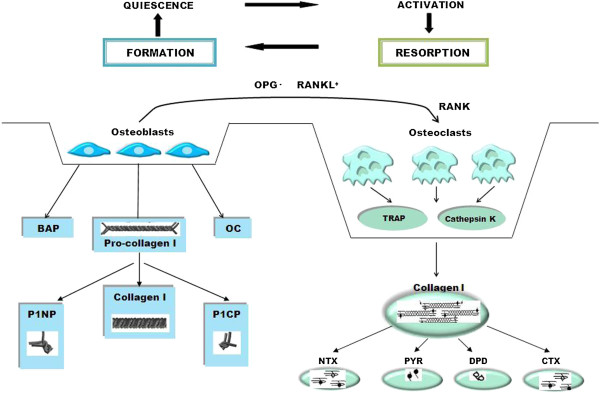
“OPG, a soluble receptor also produced by osteoblasts that acts as a decoy receptor and neutralizes RANKL, prevents RANKL from interacting with RANK and consequently inhibits osteoclast proliferation, activity, and survival [73, 74].”
From The Effect of Tobacco Smoking on Bone Mass: An Overview of Pathophysiologic Mechanisms (2018) · cites this paper as [74]
Experimental — accuracy not yet measuredThe source backs part of the claim, not all of it — or backs it for a different population, condition or comparison.
In the citing paper
“Examples of bone formation markers include alkaline phosphatase (ALP) and osteocalcin (OC), which quantify osteoblastic activity.”
From Osteoporosis: Molecular Pathology, Diagnostics, and Therapeutics (2023) · cites this paper as [54]
Experimental — accuracy not yet measuredThe source backs part of the claim, not all of it — or backs it for a different population, condition or comparison.
In the citing paper
“Of note, ALP has low sensitivity and specificity in metabolic bone disorders since it is secreted by various tissues, including the liver, bone, and placenta [54,55].”
From Osteoporosis: Molecular Pathology, Diagnostics, and Therapeutics (2023) · cites this paper as [54]
Experimental — accuracy not yet measuredIn the citing paper
“RANKL, released by osteoblasts, binds its receptor located on the surface of osteoclast precursor cells, promoting their differentiation and triggering bone resorption, whereas OPG, also released by osteoblasts, interacts with RANK, preventing the binding with its ligand and inhibiting the activity and proliferation of osteoclasts [47].”
From Skeletal System Biology and Smoke Damage: From Basic Science to Medical Clinic (2021) · cites this paper as [47]
Self-check
Percentages, sums and reported differences re-computed from the paper’s own numbers.
The self-check needs the paper’s full text.
Citations
Cites
Schuit, S. C. E., van der Klift, M., Weel, A. E. A. M., de Laet, C. E. D. H., Burger, H., Seeman, E., Hofman, A., Uitterlinden, A. G., van Leeuwen, J. P. T. M., & Pols, H. A. P. (2004) · Bone · doi:10.1016/j.bone.2003.10.001 · Cited by 1,651 · cited 1×
“threshold [84].”
Sclerostin Binds to LRP5/6 and Antagonizes Canonical Wnt Signaling
Li, X., Zhang, Y., Kang, H., Liu, W., Liu, P., Zhang, J., Harris, S. E., & Wu, D. (2005) · Journal of Biological Chemistry · doi:10.1074/jbc.m413274200 · Cited by 1,366
The epidemiology of corticosteroid-induced osteoporosis: a meta-analysis
Staa, T. P. V., Staa, T. P. V., Staa, T. P. V., Leufkens, H. G. M., & Cooper, C. (2002) · Osteoporosis International · doi:10.1007/s001980200108 · Cited by 1,294
A reference standard for the description of osteoporosis
Kanis, J. A., McCloskey, E. V., Johansson, H., Oden, A., Melton, L. J., & Khaltaev, N. (2008) · Bone · doi:10.1016/j.bone.2007.11.001 · Cited by 1,234 · cited 1×
“Currently the WHO recommends the use of BMD of the spine and proximal femur measured by DXA as the gold standard to diagnose osteoporosis and its severity [12].”
Methodfor the IOF-IFCC Bone Marker Standards Working Group, Vasikaran, S., Eastell, R., Bruyère, O., Foldes, A. J., Garnero, P., Griesmacher, A., McClung, M., Morris, H. A., Silverman, S., et al. (2011) · Osteoporosis International · doi:10.1007/s00198-010-1501-1 · Cited by 1,212
Kearns, A. E., Khosla, S., & Kostenuik, P. J. (2008) · Endocrine Reviews · doi:10.1210/er.2007-0014 · Cited by 824
Biochemical markers of bone turnover: part I: biochemistry and variability.
Seibel, M. J. (2005) · Europe PMC (PubMed Central) · Cited by 792
The Use of Biochemical Markers of Bone Turnover in Osteoporosis
Delmas, P. D., Eastell, R., Garnero, P., Seibel, M. J., & Stepan, J. (2000) · Osteoporosis International · doi:10.1007/s001980070002 · Cited by 722
Garnero, P., Sornay-Rendu, E., Claustrat, B., & Delmas, P. D. (2000) · Journal of Bone and Mineral Research · doi:10.1359/jbmr.2000.15.8.1526 · Cited by 709 · cited 4×
“associated with an increased fracture risk [28], but their use alone to predict fracture has yet to be established.”
BackgroundInfluentialBaim, S., Leonard, M. B., Bianchi, M.-L., Hans, D. B., Kalkwarf, H. J., Langman, C. B., & Rauch, F. (2008) · Journal of Clinical Densitometry · doi:10.1016/j.jocd.2007.12.002 · Cited by 707
Research works printed but not linked: 2
- Vesper H, Cosman F, Endres DB, Garnero P, Hoyle NR, Kleerekoper MK, Mallinak NJS: Application of biochemical markers of bone turnover in the assessment and monitoring of bone diseases; approved guideline. NCCLS document 2004, 24(22):1-37.
- The international society for clinical densitometry official position 2007. http://www.iscd.org/official-positions/4th-iscd-position-development- conference-adult/.
Cited by
Items 101–200 of 323
Majidi, Z., Ansari, M., Maghbooli, Z., Ghasemi, A., Ebrahimi, S. S. S., Hossein‐Nezhad, A., & Emamgholipour, S. (2020) · Phytomedicine · doi:10.1016/j.phymed.2020.153417 · Cited by 21
Ranganath, L. R., Khedr, M., Vinjamuri, S., & Gallagher, J. A. (2020) · Osteoporosis International · doi:10.1007/s00198-020-05671-y · Cited by 17
Stuss, M., Sewerynek, E., Król, I., Stępień-Kłos, W., & Jędrzejczyk, S. (2016) · Endokrynologia Polska · doi:10.5603/ep.a2016.0014 · Cited by 18
Chinnappan, S. M., George, A., Evans, M., & Anthony, J. S. (2020) · Food & Nutrition Research · doi:10.29219/fnr.v64.3665 · Cited by 17
“However, there was a nearly 10-fold decrease in NTX in the Nufemme™ group (reduced by 4.7”
BackgroundInfluentialElsaid, S., Frame, H., Ho, M., Mackinnon, E., Brown, J. P., & Cheung, A. M. (2016) · International Journal of Women s Health · doi:10.2147/ijwh.s112621 · Cited by 22
“This is due in part to a lack of standardization of BTM assays, and in part to the substantial intra- and inter-individual variability seen with these markers, including dietary and circadian effects.(35,58,62)”
Zhao, D., Wang, J., Liu, Y., & Liu, X. (2014) · Pakistan Journal of Medical Sciences · doi:10.12669/pjms.311.6143 · Cited by 17
Diagnostic performance of osteocalcin measurements in patients with endogenous Cushing’s syndrome
Belaya, Z. E., Iljin, A. V., Mel'nichenko, G. A., Solodovnikov, A. G., Rozhinskaya, L. Y., Dzeranova, L. K., & Dedov, I. I. (2016) · BoneKEy Reports · doi:10.1038/bonekey.2016.42 · Cited by 16
“BTMs do not control skeletal metabolism and are not disease specific; these markers simply reflect the entire skeleton remodeling regardless of the underlining cause.(7) In clinical practice on individual patients, BTMs could be used to evaluate the effectiveness of treatment with antiresorptive or anabolic compounds…”
BackgroundNoh, M., Che, X., Jin, X., Lee, D.-K., Kim, H., Park, D. R., Lee, S. Y., Lee, H., Gardella, T. J., Choi, J., et al. (2025) · eLife · doi:10.7554/elife.97579.5 · Cited by 11
Xiong, Y., He, T., Wang, Y., Liu, W. V., Hu, S., Zhang, Y., Wen, D., Hou, B., Li, Y., Zhang, P., et al. (2021) · Frontiers in Endocrinology · doi:10.3389/fendo.2021.775066 · Cited by 19
Sequetto, P. L., Gonçalves, R. V., Pinto, A. S., Oliveira, M. G. A., Maldonado, I. R. S. C., de Oliveira, T. T., & Novaes, R. D. (2017) · Microscopy and Microanalysis · doi:10.1017/s1431927617012363 · Cited by 18
“As ALP is synthesized in several organs, serum levels of this enzyme represent a non-specific marker of bone metabolism, and are therefore, a controversial indicator of therapeutic efficacy in bone diseases (Wheater et al., 2013; Hlaing & Compston, 2014).”
BackgroundYao, S., Laurent, C. A., Roh, J. M., Lo, J. C.-M., Tang, L., Hahn, T., Ambrosone, C. B., Kushi, L. H., & Kwan, M. L. (2020) · Breast Cancer Research and Treatment · doi:10.1007/s10549-019-05518-z · Cited by 15
Singh, S. V., Aggarwal, H., Gupta, V. S., Kumar, P., & Tripathi, A. (2015) · Journal of Clinical Densitometry · doi:10.1016/j.jocd.2015.03.004 · Cited by 15
Update on the Comprehensive Approach to Fragility Fractures
Cohn, M. R., Gianakos, A. L., Grueter, K., Rosen, N. S., Cong, T., & Lane, J. M. (2018) · Journal of Orthopaedic Trauma · doi:10.1097/bot.0000000000001244 · Cited by 14
Quintero-García, M., Gutiérrez-Cortez, E., Rojas‐Molina, A., Mendoza-Ávila, M., Real, A. D., Rubio, E., Jiménez-Mendoza, D., & Rojas-Molina, I. (2020) · Nutrients · doi:10.3390/nu12051431 · Cited by 16
“Osteocalcin is a peptide synthesized by osteoblasts in the last stages of bone formation in conjunction with vitamin D [66].”
BackgroundReduced Serum Levels of Bone Formation Marker P1NP in Psoriasis
Mentzel, J., Kynast, T., Kohlmann, J., Kirsten, H., Blüher, M., Simon, J. C., Kunz, M., & Saalbach, A. (2021) · Frontiers in Medicine · doi:10.3389/fmed.2021.730164 · Cited by 15
Mirfatahi, M., Imani, H., Tabibi, H., Nasrollahi, A., & Hedayati, M. (2018) · Iranian Journal of Kidney Diseases · Cited by 14
Al‐Rawaf, H. A., Gabr, S. A., Iqbal, A., & Alghadir, A. H. (2023) · BMC Women s Health · doi:10.1186/s12905-023-02626-3 · Cited by 14
“These include a lack of normative reference in population databases, poor standardized quality control, and poor sample handling [21], as well as having only a moderate association with bone-strength and fracture-risk conditions [22, 23].”
BackgroundMonjardino, T., Silva, P. C. A., Amaro, J. M. C., Carvalho, O., Guimarães, J. T., Santos, A. C., & Lucas, R. (2019) · PLoS ONE · doi:10.1371/journal.pone.0219423 · Cited by 13
Effect of Zishen Jiangtang Pill, a Chinese Herbal Product, on Rats with Diabetic Osteoporosis
Li, H.-L., Chu, S., Zhao, H., Liu, D., Liu, X., Qu, X., Chen, J., Li, Z., & Li, J. (2018) · Evidence-based Complementary and Alternative Medicine · doi:10.1155/2018/7201914 · Cited by 13
“TRACP-5b and CTX are normally used to diagnose osteoporosis, malignant bone tumours, or other pathology and to monitor antiresorptive therapy, which indicate the changes of bone resorption most satisfactorily [21, 22].”
BackgroundMunshi, R., Kumbhar, D. A., Panchal, F. H., & Varthakavi, P. (2019) · The Journal of Alternative and Complementary Medicine · doi:10.1089/acm.2019.0124 · Cited by 13
“33,34 Calcium and vitamin D intake plays an important role in determining bone health.”
Karesova, I., Simko, J., Fekete, S., Zimčíková, E., Maláková, J., Živná, H., Pavlíková, L., & Palička, V. (2018) · European Journal of Pharmacology · doi:10.1016/j.ejphar.2018.02.010 · Cited by 12
“Currently the WHO recommends a DEXA scan as the gold standard for estimation of BMD (Wheater et al., 2013).”
BackgroundWheater, G., Goodrum, C., Tuck, S. P., Datta, H. K., & van Laar, J. M. (2014) · Clinical Chemistry and Laboratory Medicine (CCLM) · doi:10.1515/cclm-2013-0934 · Cited by 12
Self-citationPTH assays in dialysis patients: Practical considerations
Soliman, M., Hassan, W., Yaseen, M., Rao, M., Sawaya, B. P., & El-Husseini, A. A. (2018) · Seminars in Dialysis · doi:10.1111/sdi.12743 · Cited by 11
“Although BSAP is highly specific bone biomarker, up to 20% may cross‐react with liver isoforms.(52) Moreover, high levels of BSAP were strongly associated with short‐term mortality in dialysis patients in observational prospective studies.”
BackgroundDeng, J., Abbas, U., Chang, O., Dhivagaran, T., Sanger, S., & Bozzo, A. (2020) · BMJ Open · doi:10.1136/bmjopen-2019-034741 · Cited by 11
Yari, Z. (2022) · Preventive Nutrition and Food Science · doi:10.3746/pnf.2022.27.4.347 · Cited by 11
“N-telopeptide, a marker of bone resorption (Nakashima et al., 2005), is released from bone as a result of osteoclast activity (Wheater et al., 2013).”
Backgroundvan der Spoel, E., van Vliet, N. A., & van Heemst, D. (2019) · Ageing Research Reviews · doi:10.1016/j.arr.2019.100964 · Cited by 12
Kostyshyn, L., Grzegotsky, M. R., & Servetnyk, M. I. (2018) · Current Issues in Pharmacy and Medical Sciences · doi:10.1515/cipms-2018-0029 · Cited by 11
“For generating the chemiluminescence reaction, derivatives of luminol with peroxydase and hydrogen peroxide were applied, and as a potentiator, n-iodophenol was used [25-27].”
MethodRelationship between Osteoporosis, Multiple Fractures, and Egg Intake in Healthy Elderly
Pujia, R., Ferro, Y., Maurotti, S., Mare, R., Arturi, F., Montalcini, T., Pujia, A., & Mazza, E. (2021) · Journal of Mid-life Health · doi:10.4103/jmh.jmh_118_21 · Cited by 13
“[39] Finally, we did not assess bone turnover markers; however, there is a large daily variation in the serum concentration of these markers, especially in patients with fractures,[40] which may limit their usefulness.”
BackgroundOsteoporosis: Investigations and Monitoring
Panchagnula, R., & Amarnath, S. S. (2023) · Indian Journal of Orthopaedics · doi:10.1007/s43465-023-01019-w · Cited by 10
Quinoa alleviates osteoporosis in ovariectomized rats by regulating gut microbiota imbalance
Dou, J., Liang, Z., Liu, J., Liu, N., Hu, X., Tao, S., Zhen, X., Yang, L., Zhang, J., & Jiang, G. (2024) · Journal of the Science of Food and Agriculture · doi:10.1002/jsfa.13339 · Cited by 13
Teekachunhatean, S., Mattawanon, N., & Khunamornpong, S. (2015) · Case Reports in Obstetrics and Gynecology · doi:10.1155/2015/962740 · Cited by 10
“Bone resorption markers, especially serum C-terminal telopeptide of type I collagen (CTx) and its degradation fragments that contain the beta-isomerized octapeptide EKAHDbeta-GGR (β-CTx), are therefore better indicators than bone formation markers for assessing the response to intervention in postmenopausal women [51,…”
BackgroundMethodBone turnover markers and bone mineral density in healthy mother–daughter pairs from South India
Shetty, S., Kapoor, N., Bondu, J. D., Antonisamy, B., Thomas, N., & Paul, T. V. (2016) · Clinical Endocrinology · doi:10.1111/cen.13173 · Cited by 10
Peppone, L. J., Ling, M. N., Huston, A. J., Reid, M. E., Janelsins, M. C., Puzas, J. E., Kamen, C. S., del Giglio, A., Asare, M., Peoples, A. R., et al. (2018) · Supportive Care in Cancer · doi:10.1007/s00520-018-4094-4 · Cited by 10
“For this pilot study, we used bone metabolism biomarkers as our main efficacy outcome in lieu of BMD because biomarkers respond more quickly to therapy, are non-invasive, and predict future outcomes, such as fractures [23, 40, 43].”
Teboul-Coré, S., Roux, C., Borderie, D., Kolta, S., Lefèvre‐Colau, M., Poiraudeau, S., Rannou, F., & Nguyen, C. (2018) · PLoS ONE · doi:10.1371/journal.pone.0196536 · Cited by 11
Evaluating Bone Loss with Bone Turnover Markers Following Acute Spinal Cord Injury
Thakkar, P., Prakash, N. B., Tharion, G., Shetty, S., Paul, T. V., Bondu, J. D., & Yadav, B. (2019) · Asian Spine Journal · doi:10.31616/asj.2019.0004 · Cited by 10
“Raised BTMs indicate rapid bone loss and are currently used for individual fracture risk assessment in postmenopausal females and for monitoring osteoporosis treatment, but they are not yet used in high risk groups such as SCI patients [18,19].”
BackgroundLiao, H., Hung, P., Hsiao, C., Liou, H., Lin, H.-S., Huang, T., Jou, I., & Tsai, K. (2015) · PLoS ONE · doi:10.1371/journal.pone.0133278 · Cited by 10
“The mean 1,25-(OH)2D3 levels in the CKD group was significantly lower than in the control group, while mean serum levels of CTX, a bone resorption marker [28], were significantly higher in the CKD group than in the control and PTX+CKD groups.”
BackgroundAghamohammadi, D., Dolatkhah, N., Shakouri, S. K., Hermann, A. P., & Eslamian, F. (2020) · Journal of Complementary and Integrative Medicine · doi:10.1515/jcim-2020-0017 · Cited by 12
“TheMenopause SpecificQuality of LifeQuestionnairewill be used to address QOL at baseline, after 2month and 4months of study, which measures QOL in the context of vasomotor, psychosocial, physical and sexual activities [21].”
MethodSurrati, A., Sergey, E., Jourdan, F., Kim, D., & Sottile, V. (2021) · Cellular Physiology and Biochemistry · doi:10.33594/000000377 · Cited by 11
Wong, G. L., Gane, E. J., Pan, C. Q., Fung, S. K., Ma, M. M., Izumi, N., Shalimar, S., Lim, S. G., Chuang, W., Mehta, R. M., et al. (2025) · Alimentary Pharmacology & Therapeutics · doi:10.1111/apt.70327 · Cited by 12
Li, S., Li, X., He, F., Jiao, R., Zhang, S., & Li, Z. (2019) · Archives of Medical Science · doi:10.5114/aoms.2019.89652 · Cited by 11
“CTX, OC, BSAP, and PINP are often used as markers of bone formation and resorption [15], and measurements of their levels are used to evaluate drugs designed for the management of osteoporosis [16].”
BackgroundGarrahy, A., Galloway, I., Hannon, A. M., Dineen, R., Javadpour, M., Tormey, W. P., Gan, K., Twomey, P. J., Kenna, M. J. M., Kilbane, M. T., et al. (2020) · Clinical Endocrinology · doi:10.1111/cen.14367 · Cited by 9
Longitudinal Assessment of Bone Mineral Density and Body Composition in Competitive Cyclists
Baker, B. S., & Reiser, R. F. (2017) · The Journal of Strength and Conditioning Research · doi:10.1519/jsc.0000000000002128 · Cited by 10
“The welldocumented negative relationship between age and bone mass was not demonstrated here, most likely because females were premenopausal, many participated in some form of ground-based training, and all participants were younger than 50 years (9,19,41).”
BackgroundDietary Patterns and Fractures Risk in the Elderly
Colica, C., Mazza, E., Ferro, Y., Fava, A., Bonis, D. D., Greco, M., FOTI, D. P., Gulletta, E., Romeo, S., Pujia, A., et al. (2017) · Frontiers in Endocrinology · doi:10.3389/fendo.2017.00344 · Cited by 9
Prevention of osteoporosis in ovariectomized mice with calcium yak caseinate
Yang, L., Zhou, H., Wang, Q., Wang, Z., Bai, L., Wei, J., Song, L. H., Zhang, F., Tian, X., & Liang, T. (2025) · Journal of Dairy Science · doi:10.3168/jds.2024-25711 · Cited by 8
Wang, B., Cheng, X., Fu, S., Sun, D., Zhang, W., Liu, W., Miao, X., Luo, Q., Li, H., Zhang, J., et al. (2022) · Nutrients · doi:10.3390/nu15010094 · Cited by 8
“The International Osteoporosis Foundation and the International Federation of Clinical Chemistry and Laboratory Medicine recommend P1NP as a marker of bone formation and β-CTX as a marker of bone resorption [2,3].”
BackgroundBiological variation in serum bone turnover markers
Wang, S., Mu, R., Zhang, X., Yun, K., Shang, H., & Zhao, M. (2019) · Annals of Clinical Biochemistry International Journal of Laboratory Medicine · doi:10.1177/0004563219899119 · Cited by 8
“For BTMs, BV information is important for doctors to consider whether true changes have occurred and when therapy should be started.(6) The current online BV database is on the homepage of the European Federation of Clinical Chemistry and Laboratory Medicine (EFLM).”
Promoting bone health in children and adolescents following solid organ transplantation
Kusumi, K., Shaikhkhalil, A. K., Patel, H. P., & Mahan, J. D. (2020) · Pediatric Transplantation · doi:10.1111/petr.13940 · Cited by 8
Zakaria, Z., Hamid, W. Z. W. A., & Mohamed, M. (2021) · Sains Malaysiana · doi:10.17576/jsm-2021-5007-12 · Cited by 8
“Bone Marker Standards Working Group has recommended procollagen type I amino-terminal propeptide (PINP) and carboxy-terminal crosslinked telopeptide of type I collagen (CTX) as specific markers for bone formation and bone resorption, respectively (Vasikaran et al. 2011; Wheater et al. 2013).”
Jawiarczyk-Przybyłowska, A., Halupczok-Żyła, J., Syrycka, J., Zembska, A., Kuliczkowska-Płaksej, J., & Bolanowski, M. (2022) · Frontiers in Endocrinology · doi:10.3389/fendo.2022.862845 · Cited by 12
“In addition, this molecule is unstable, and its half-life is only from several minutes to 1 h (40), which may also influence the determination of the concentration of this protein.”
BackgroundResultChanges in biomarkers of bone turnover in an aripiprazole add-on or switching study
Lodhi, R. J., Masand, S., Malik, A., Shivakumar, K., McAllister, V., O’Keane, V., Young, L. C., Heald, A. H., Sherwood, R. A., & Aitchison, K. J. (2016) · Schizophrenia Research · doi:10.1016/j.schres.2015.12.007 · Cited by 9
Correlation of plasma microRNA-21 expression and bone turnover markers in postmenopausal women
Perksanusak, T., Panyakhamlerd, K., Hirankarn, N., Suwan, A., Vasuratna, A., & Taechakraichana, N. (2018) · Climacteric · doi:10.1080/13697137.2018.1507020 · Cited by 10
Bone health in neuromyelitis optica: Bone mineral density and fractures
Kwon, Y. N., Im, S. Y., Park, Y.-S., Ahn, S. H., Seo, J.-Y., Kim, S. B., Yoon, S. S., Waters, P. J., Choi, H. J., Kong, S. H., et al. (2020) · Multiple Sclerosis and Related Disorders · doi:10.1016/j.msard.2020.102080 · Cited by 8
Jamka, K., Adamczuk, P., Skowrońska, A., Bojar, I., & Raszewski, G. (2021) · Annals of Agricultural and Environmental Medicine · doi:10.26444/aaem/135529 · Cited by 10
“Simultaneous application in tests of the markers of both synthesis and resorption of the bone cells allows visualization of the pace and intensity of opposing processes of bone formation and resorption, with the participation of bone tissue osteoblasts and osteoclasts [10, 11].”
BackgroundChai, H., Yue, W., Sun, L., Zhang, L., Kim, J., Lin, W., Yu, J., Yu, M.-A., Wang, N., Wang, H., et al. (2025) · International Journal of Surgery · doi:10.1097/js9.0000000000002510 · Cited by 7
Yari, Z., Tabibi, H., Najafi, I., Hedayati, M., & Movahedian, M. (2020) · International Urology and Nephrology · doi:10.1007/s11255-020-02523-w · Cited by 7
Wahlin, B., Ramnemark, A., Rantapää‐Dahlqvist, S., Wållberg‐Jonsson, S., & Södergren, A. (2021) · Clinical and Experimental Rheumatology · doi:10.55563/clinexprheumatol/5p7mb4 · Cited by 9
Zhao, T., Markevych, I., Standl, M., Lyu, Z., Schikowski, T., Berdel, D., Koletzko, S., Berg, A. V., & Heinrich, J. (2022) · Environmental Research · doi:10.1016/j.envres.2022.113784 · Cited by 7
Study on 41Ca-AMS for diagnosis and assessment of cancer bone metastasis in rats
Shen, H., Pang, F., Jiang, S., He, M., Dong, K., Dou, L., Pang, Y., Yang, X., Ruan, X., Liu, M., et al. (2015) · Nuclear Instruments and Methods in Physics Research Section B Beam Interactions with Materials and Atoms · doi:10.1016/j.nimb.2015.05.034 · Cited by 7
A Review on Osteoarthritis and Osteoporosis: Ongoing Challenges for Musculoskeletal Care
Hatta, N. N. K. N. M., & Hasan, M. K. C. (2019) · INTERNATIONAL JOURNAL OF CARE SCHOLARS · doi:10.31436/ijcs.v2i2.127 · Cited by 7
“The goal treatments for osteoporosis is to adjust imbalance between bone formation by osteoblasts and bone resorption by osteoclasts (32,33).”
BackgroundMatuszewski, A., Łukasiewicz, M., Niemiec, J., Jaworski, S., Kamaszewski, M., Szudrowicz, H., Puppel, K., Chwalibóg, A., & Sawosz, E. (2020) · Archives of Animal Nutrition · doi:10.1080/1745039x.2020.1803033 · Cited by 9
Ranganath, L. R., Khedr, M., Mistry, A., Vinjamuri, S., & Gallagher, J. A. (2021) · Bone Reports · doi:10.1016/j.bonr.2021.101151 · Cited by 8
Association between low C-peptide and fragility fractures in postmenopausal women without diabetes
Ferro, Y., Russo, C., Russo, D., Gazzaruso, C., Coppola, A., Gallotti, P., Zambianchi, V., Fodaro, M., Romeo, S., Galliera, E., et al. (2017) · Journal of Endocrinological Investigation · doi:10.1007/s40618-017-0672-4 · Cited by 8
OSTEOPOROSIS IN CHILDREN AND ITS RELEVANCE FOR PEDIATRIC SPORTS MEDICINE
Kljuchnikov, S. O., Kravchuk, D. A., & Ogannisyan, M. G. (2017) · Rossiyskiy Vestnik Perinatologii i Pediatrii (Russian Bulletin of Perinatology and Pediatrics) · doi:10.21508/1027-4065-2016-61-3-112-120 · Cited by 9
Idiopathic Growing Pains in Pediatric Patients: Review of Literature
Kanta, P., & Gopinathan, N. R. (2018) · Clinical Pediatrics · doi:10.1177/0009922818784956 · Cited by 7
Tan, Q., Møller, A. M. J., Qiu, C., Madsen, J. S., Shen, H., Bechmann, T., Delaissé, J., Kristensen, B. W., Deng, H., Karasik, D., et al. (2023) · Clinical Epigenetics · doi:10.1186/s13148-023-01449-1 · Cited by 8
“These include biological factors like age, gender, and menopausal status [10], but also life-style factors like alcohol overuse [11, 12] and tobacco smoking [12–15].”
BackgroundCarneiro, I., Krustrup, P., Castagna, C., Pereira, R., Jørgensen, N. R., Coelho, E., & Póvoas, S. C. A. (2023) · European Journal of Sport Science · doi:10.1080/17461391.2023.2222685 · Cited by 7
“Bone turnover biomarkers express the metabolic activity of osteoblasts and osteoclasts (Wheater et al., 2013), and its balance activity results in continuous life-long bone remodelling (Shetty et al., 2016).”
Singh, G., Ronald Darwin, C., Panda, K. C., Afzal, S. A., Katiyar, S., Dhakar, R. C., & Mani, S. (2024) · Journal of Biomaterials Science Polymer Edition · doi:10.1080/09205063.2024.2445376 · Cited by 7
HATATE, K., SHINYA, K., MATSUO-SATO, A., SASAKI, S., Devkota, B., Takahashi, M., Hirata, T.-I., & YAMAGISHI, N. (2015) · Journal of Veterinary Medical Science · doi:10.1292/jvms.15-0358 · Cited by 6
“The changes in the plasma levels of various bone markers with bone turnover are used in the diagnosis of human skeletal diseases [23, 25], while the clinical use of bone markers in veterinary medicine is limited.”
BackgroundThe circadian rhythm of calcium and bone homeostasis in Maasai
Schou, A., Jørgensen, N. R., Maro, V. P., Kilonzo, K., Ramaiya, K. L., Sironga, J., Jensen, A. K., Christensen, D. L., & Schwarz, P. (2022) · American Journal of Human Biology · doi:10.1002/ajhb.23756 · Cited by 6
“Blood samples were collected every 2nd hour for 24 h. Serum levels of total calcium, albumin, parathyroid hormone (PTH), 25(OH)D, creati- nine, C-terminal telopeptide (CTX), bone-specific alkaline phosphatase (BSAP), procollagen type 1 N-terminal propeptide (P1NP), and osteocalcin were measured.”
ResultInfluentialThe effects of short-term jump training on bone metabolism in females using oral contraceptives
Reiger, J., & Yingling, V. R. (2015) · Journal of Sports Sciences · doi:10.1080/02640414.2015.1048520 · Cited by 7
“The bone resorption markers measure the degradation of bone collagen, and C-terminal telopeptides of type I collagen (CTX) is currently a recommended marker (Bauer et al., 2012; Wheater et al., 2013).”
BackgroundXu, W. F., Zhu, X., Chen, C., Hu, R., Li, Y., Xu, R., & Li, Z. (2019) · Archives of Medical Science · doi:10.5114/aoms.2019.86816 · Cited by 6
“Next, we examined TRAP, which is an enzyme released in bone tissue by osteoclastic activity.”
BackgroundInfluentialBone turnover correlates with bone quantity but not bone microarchitecture in chronic hemodialysis
Dușceac, R., Niculescu, D., Dobre, R., Sorohan, M. C., Caragheorgheopol, A., Tacu, C., David, C., & Poiană, C. (2020) · Journal of Bone and Mineral Metabolism · doi:10.1007/s00774-020-01094-1 · Cited by 6
Effects of whole-body vibration training on bone density and turnover markers in adolescent swimmers
Marín-Puyalto, J., Gómez‐Cabello, A., González‐Agüero, A., Matute-Llorente, Á., Gómez‐Bruton, A., Jürimäe, J., Casajús, J. A., & Vicente‐Rodríguez, G. (2020) · Journal of Pediatric Endocrinology and Metabolism · doi:10.1515/jpem-2019-0400 · Cited by 6
Fritz, R., Edwards, L. R., & Jacob, R. (2021) · Southern Medical Journal · doi:10.14423/smj.0000000000001231 · Cited by 6
“In these patients, a common approach involves measuring BTMs before and 3 to 6 months after beginning bisphosphonate therapy.(57) Although there are many BTMs available, serum carboxy-terminal collagen crosslinks and fasting urinary N-telopeptide have been investigated in a multinational randomized controlled trial of…”
BackgroundHatta, N. N. K. N. M., Lokman, M., Mohd Said, N., Daud, A., Ibrahim, M., Sharifudin, M. A., & Deraman, S. (2018) · Enfermería Clínica · doi:10.1016/s1130-8621(18)30074-3 · Cited by 9
Razaly, N. I., Mohammad, A., Shamsir, M., Nadia, M. E., & Mohd Dzulkhairi, M. R. (2020) · IIUM Medical Journal Malaysia · doi:10.31436/imjm.v18i1.231 · Cited by 7
“can be assessed by measuring bone biochemical markers either bone formation markers including alkaline phosphatase (ALP), osteocalcin (OC), procollagen type 1 amino terminal propeptide (P1NP) or bone resorption markers which are osteoprotegerin (OPG), C-telopeptide of type 1 collagen (CTX-1), amino-Terminal cross link…”
BackgroundWen, Z., Zhen, M., Wang, J., Agudamu, A., & Zhang, Y. (2025) · Frontiers in Nutrition · doi:10.3389/fnut.2025.1713726 · Cited by 6
Su, M., Chai, J., Zheng, W., Jia, Q., Tan, J., He, Y., Zhang, R., Men, J., Liu, W., Shi, T., et al. (2024) · Frontiers in Endocrinology · doi:10.3389/fendo.2024.1301213 · Cited by 5
“Therefore, PINP is a high-quality new clinical diagnostic marker for bone metabolism-related diseases and has been recommended by the Bone Marker Standards Working Group (14).”
BackgroundWitkowska–Sędek, E., Stelmaszczyk‐Emmel, A., Kucharská, A., Demkow, U. A., & Pyrżak, B. (2017) · Advances in experimental medicine and biology · doi:10.1007/5584_2017_109 · Cited by 5
Surin, A. V., & Pohodenko-Chudakova, I. O. (2019) · Ukraïnsʹkij žurnal medicini bìologìï ta sportu · doi:10.26693/jmbs04.01.207 · Cited by 5
Omoike, O. E., Wang, L., Oke, A. O., & Johnson, K. R. (2020) · Biomarkers · doi:10.1080/1354750x.2020.1781260 · Cited by 5
Lipid and Bone Effects of Heparin Use During Hemodialysis
Stegmayr, B. G., Zuo, L., & Zadora, W. (2023) · Seminars in Nephrology · doi:10.1016/j.semnephrol.2023.151480 · Cited by 5
Commercial Laboratory Reproducibility of Serum CTX in Clinical Practice
Hindi, S. M., Vittinghoff, E., Schafer, A. L., Silverman, S. L., & Bauer, D. C. (2019) · JBMR Plus · doi:10.1002/jbm4.10225 · Cited by 5
Beattie, J. R., Feskanich, D., Caraher, M. C., & Towler, M. R. (2018) · Clinical Medicine Insights Arthritis and Musculoskeletal Disorders · doi:10.1177/1179544117754050 · Cited by 5
Rathnayake, H., Lekamwasam, S., Wickramatilake, C. M., & Lenora, J. (2020) · Archives of Osteoporosis · doi:10.1007/s11657-020-00722-7 · Cited by 5
Altered levels of BMD, PRL, BAP and TRACP-5b in male chronic patients with schizophrenia
Du, X., Ye, F., Li, J., Zhao, Y., Xiao, W., Tang, X., & Zhang, X. (2020) · Scientific Reports · doi:10.1038/s41598-020-70668-w · Cited by 5
Cirrincione, L. R., & Narla, R. R. (2020) · The Journal of Applied Laboratory Medicine · doi:10.1093/jalm/jfaa213 · Cited by 8
Stodtmann, S., Nader, A. M., Polepally, A. R., Suleiman, A. A., Winzenborg, I., Noertersheuser, P. A., Ng, J., Mostafa, N. M., & Shebley, M. (2021) · Clinical and Translational Science · doi:10.1111/cts.13040 · Cited by 5
Inderjeeth, C. A., & Inderjeeth, K. A. (2021) · Journal of Pharmacy Practice and Research · doi:10.1002/jppr.1743 · Cited by 8
Atencio, P., Conesa‐Buendía, F. M., Cabello, A., Llamas‐Granda, P., Pérez‐Tanoira, R., Prieto-Pérez, L., Álvarez, B., Acosta, I. C., Arboiro-Pinel, R., Díaz Curiel, M., et al. (2021) · Current HIV Research · doi:10.2174/1570162x19666210805094434 · Cited by 6
Bone Health Status among Postmenopausal Women in Malaysia
Nurumal, M. S., Isa, M., Hatta, N. N. K. N. M., Daud, A., Ibrahim, M., Sharifudin, M. A., & Deraman, S. (2019) · International Journal of Women s Health and Reproduction Sciences · doi:10.15296/ijwhr.2019.28 · Cited by 5
“An increased incidence rate of fracture among elderly individuals suggested that osteoporotic fracture serves as a substantial factor leading to health impairment and death at times (4).”
BackgroundFeng, L.-L., Lü, K., Li, C., Xu, M.-Z., Ye, Y.-W., Yin, Y. B., & Shan, H.-Q. (2024) · Frontiers in Medicine · doi:10.3389/fmed.2024.1415739 · Cited by 4
Peris, C. H., Selvam, S., Swaminathan, S., Rangarajan, R., Raj, T. D. S., & Thankachan, P. (2025) · Scientific Reports · doi:10.1038/s41598-025-27321-1 · Cited by 6
Rymuza, J., Gutowska, K., Kurpios-Piec, D., Struga, M., & Miśkiewicz, P. (2022) · Journal of Clinical Medicine · doi:10.3390/jcm11175005 · Cited by 4
“The measurement of P1NP provides information on the rate of the synthesis of type I collagen by osteoblasts during osteogenesis [27].”
BackgroundInfluentialThe specificities, influencing factors, and medical implications of bone circadian rhythms
Mei, G., Wang, J., Wang, J., Ye, L., Yi, M., Chen, G., Zhang, Y., Tang, Q., & Chen, L. (2024) · The FASEB Journal · doi:10.1096/fj.202302582rr · Cited by 9
Fosbøl, M. Ø., Jørgensen, N. R., Petersen, R. H., Kjær, A., & Mortensen, J. (2024) · EJNMMI Research · doi:10.1186/s13550-024-01155-w · Cited by 4
“Evidence regarding BMM levels and biological variation in mCRPC patients is scarce, and consequently the selected LSC was based on recommendations from other clinical settings [29].”
Impact of Dietary Intake on Bone Turnover in Patients with Phenylalanine Hydroxylase Deficiency
Coakley, K. E., Felner, E. I., Tangpricha, V., Wilson, P. W. F., & Singh, R. H. (2017) · JIMD Reports · doi:10.1007/8904_2016_39 · Cited by 4
“The byproducts of bone turnover may provide insight into acute bone metabolism (Wheater et al. 2013) including resorption by osteoclasts and formation by osteoblasts (Naylor and Eastell 2012; Burch et al.”
BackgroundBone alkaline phosphatase on the IDS-iSYS automated analyser; cross-reactivity with intestinal ALP
Brady, J. J., McGoldrick, D., O’Callaghan, K., McNamara, F., Mulready, K. J., Cullen, M. R., Denieffe, S., & Fitzgibbon, M. C. (2018) · Clinical Chemistry and Laboratory Medicine (CCLM) · doi:10.1515/cclm-2018-0991 · Cited by 4
Răduț, R. (2019) · Acta Clinica Croatica · doi:10.20471/acc.2019.58.04.19 · Cited by 4
Thisiadou, K., Liakopoulos, V., Dimas, G. G., Koliakos, G., & Karamouzis, M. (2017) · Europe PMC (PubMed Central) · Cited by 4
Metadata
- Authors
- Wheater, G., Elshahaly, M., Tuck, S. P., Datta, H. K., & van Laar, J. M.
- Affiliations
- James Cook University Hospital (GB)
- Newcastle University (GB)
- Corresponding author
- Wheater, Gillian
- Venue
- Journal of Translational Medicine
- Published
- 2013
- Volume
- 11
- Issue
- 1
- Pages
- 201
- ISSN
- 1479-5876 (ISSN-L)
- PMC
- PMC3765909
- OpenAlex
- W1967644150
- Cited by
- 322
- References
- 89
- Citations by year
- 2026: 13 · 2025: 17 · 2024: 23 · 2023: 25 · 2022: 12 · 2021: 30 · 2020: 34 · 2019: 32 · 2018: 45 · 2017: 27 · 2016: 32 · 2015: 23 · 2014: 8 · 2013: 1
- FWCI
- 3.50
- Type
- journal article
- Language
- en
- Open access
- gold
- doi.org
- Licence
- cc-by
- Locations
- Journal of Translational Medicine (publishedVersion, cc-by)
- Europe PMC (PubMed Central) (publishedVersion, cc-by)
- PubMed Central (publishedVersion, cc-by)
- PubMed (publishedVersion)
- Newcastle University ePrints (Newcastle Univesity) (cc-by)
- Funders
- James Cook University
- Topics
- Health Sciences › Medicine › Orthopedics and Sports Medicine › Bone health and osteoporosis research
- Life Sciences › Biochemistry, Genetics and Molecular Biology › Molecular Biology › Bone Metabolism and Diseases
- Health Sciences › Medicine › Oncology › Bone health and treatments
- Keywords
- osteoporosis, bone turnover markers, bone resorption markers, bone formation markers, osteocalcin, P1NP, CTX, osteoporotic fractures, bone mineral density, biological variation, treatment holidays, metabolic bone disease
- MeSH terms
- Bone and Bones, Diagnostic Tests, Routine, Humans, Osteoporosis, Biomarkers, Bone Remodeling
About these checks
Registry, retraction, Cites and statistics results are computed, not judged, with one exception: a printed reference that no index lists is read once by a model before it counts as a citation error. Claims are extracted by a model and kept only when their quote appears verbatim in the text; each cited source is then checked, with a model’s help, for whether it says what the claim relies on. Those verdicts can be wrong — read the claim’s quote and the cited source before relying on one.
Statistics and arithmetic are recomputed, not judged.
Confidence bands are shown only for fields calibrated on our annotated test set. None is calibrated yet, so no band is shown.
What counts as a claim ›How we measure confidence ›How we check this ›
Are you an author, or do you see a problem with this page? Request a review
Data sources
Bibliographic data: Semantic Scholar, OpenAlex, Crossref.
Contains information from the Semantic Scholar Academic Graph Datasets, made available under the ODC Attribution License (ODC-BY 1.0).
Semantic Scholar’s data is described in: Kinney, R., et al. (2023). The Semantic Scholar Open Data Platform. arXiv:2301.10140.
