

Low doses of caffeine reduce heart rate during submaximal cycle ergometry
Open accessThe DOI matches its Crossref record; 36 of the 40 references it cites were found in a registry or an index; 4 of the 61 sources its claims cite were checked for support.
Abstract
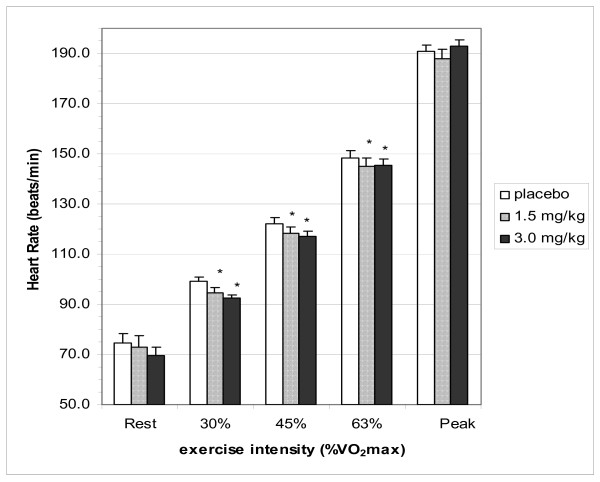
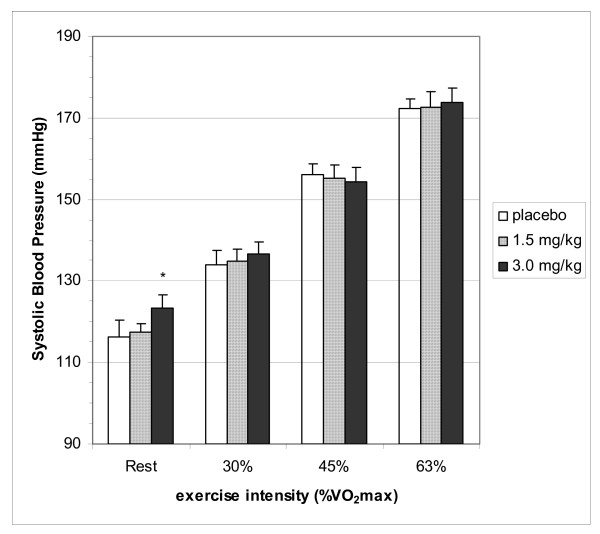
BACKGROUND: The purpose of this study was to examine the cardiovascular effects of two low-levels of caffeine ingestion in non habitual caffeine users at various submaximal and maximal exercise intensities. METHODS: Nine male subjects (19-25 yr; 83.3 +/- 3.1 kg; 184 +/- 2 cm), underwent three testing sessions administered in a randomized and double-blind fashion. During each session, subjects were provided 4 oz of water and a gelatin capsule containing a placebo, 1.5 mg/kg caffeine, or 3.0 mg/kg caffeine. After thirty minutes of rest, a warm-up (30 Watts for 2 min) the pedal rate of 60 rpm was maintained at a steady-state output of 60 watts for five minutes; increased to 120 watts for five minutes and to 180 watts for five minutes. After a 2 min rest the workload was 180 watts for one minute and increased by 30 watts every minute until exhaustion. Heart rate (HR) was measured during the last 15-seconds of each minute of submaximal exercise. Systolic blood pressure (BP) was measured at rest and during each of the three sub-maximal steady state power outputs. Minute ventilation (VE), Tidal volume (VT), Breathing frequency (Bf), Rating of perceived exertion (RPE), Respiratory exchange ratio (RER), and Oxygen consumption (VO2) were measured at rest and during each minute of exercise. RESULTS: Caffeine at 1.5 and 3.0 mg/kg body weight significantly lowered (p < 0.05) HR during all three submaximal exercise intensities compared to placebo (range - 4 to 7 bpm lower) but not at rest or maximal exercise. BP was significantly higher (p < 0.05) at rest and after the 3 mg/kg caffeine vs placebo (116 +/- 13 vs 123 +/- 10 mm Hg). Neither dose of caffeine had any effect on BP during submaximal exercise. Caffeine had no effect on VE, VT, VO2, RPE, maximal power output or time to exhaustion. CONCLUSION: In non habitual caffeine users it appears that consuming a caffeine pill (1.5 & 3.0 mg/kg) at a dose comparable to 1-3 cups of coffee lowers heart rate during submaximal exercise but not at near maximal and maximal exercise. In addition, this caffeine dose also only appears to affect systolic blood pressure at rest but not during cycling exercise.
Overview
CoChat Summary
TL;DR
In nine non-habitual caffeine-using male college students, low-dose caffeine (1.5 and 3.0 mg/kg) significantly reduced heart rate during submaximal cycle exercise by 4–7 bpm versus placebo, without affecting maximal exercise heart rate or performance. Resting systolic blood pressure was higher with 3.0 mg/kg caffeine, but caffeine had no blood pressure effect during submaximal exercise.
Key findings
- Heart rate was significantly lower (p < 0.05) with both CAF1.5 and CAF3 versus placebo at all three submaximal intensities, with a range of 4 to 7 bpm lower; there were no differences between CAF1.5 and CAF3 during submaximal or maximal exercise.
- Heart rate at rest tended to be lower after CAF3 versus placebo but was not statistically significant (p = 0.08); the lower heart rate effect was not present during the higher incremental test intensities or at maximal exercise.
- Resting systolic blood pressure was significantly higher (p < 0.05) after CAF3 versus placebo (116 ± 13 mmHg vs 123 ± 10 mmHg), but neither caffeine dose affected blood pressure during submaximal exercise.
- RER was significantly lower with CAF3 versus placebo at rest and at some exercise intensities; there were no significant differences in V_E, VO_2, V_T, RPE, peak workload, or time to exhaustion between trials. Bf was significantly lower (p < 0.05) at 45% VO_2max with CAF3 vs placebo.
Methods
- Double-blind, randomized, placebo-controlled, within-subject design with nine male college subjects, age 19–25 yr, body weight 83.3 ± 9.3 kg, height 184 ± 6 cm, VO_2max 49.7 ± 6.3 ml/kg/min; all were normotensive, non-habitual caffeine users, aerobically active, healthy, and non-smokers.
- Each subject completed three trials separated by at least 48 hours: placebo, 1.5 mg/kg caffeine (CAF1.5), or 3.0 mg/kg caffeine (CAF3). After 30 minutes of rest, subjects cycled at 60, 120, and 180 watts (~30%, ~46%, and ~64% VO_2max) for 5 minutes each, then completed an incremental test to exhaustion.
- Heart rate, blood pressure, metabolic variables, and RPE were measured; data were analyzed with repeated-measures ANOVA, Mauchly’s Test of Sphericity, Greenhouse-Geisser correction when needed, and post hoc pairwise comparisons, with significance set at p ≤ 0.05.
Limitations
- Stated: cardiac output was not measured, so the authors could only speculate that lower heart rate reflected increased or optimized stroke volume; they call for follow-up caffeine studies measuring stroke volume.
- Stated: comparing the current results with previous studies is difficult because of different caffeine doses, exercise types and intensities, and varied use of habituated versus non-habituated subjects; the role of habituation remains unclear.
- Evident: the sample was small (nine male college students), limiting generalizability; blood pressure was not measured during maximal exercise; and the study did not include women, older adults, or clinical populations.
Model-written summary. Check it against the paper before relying on it.
Integrity signals
Registry
Cites
Statistics
Figures
Verification
Claims the paper makes
2 Valid · 3 Not valid · 14 Not checked · 28 Own results and interpretations
Some cited sources support this claim and some don’t — read each source’s verdict below.
In the paper
“Our results are in contrast to a number of studies that have reported no effect of caffeine administration on exercise heart rate [ 13 - 28 ].”
What the sources say
- Not checked — no full text of the sourcecites [13] Bangsbo J Jacobsen K Nordberg K Christensen NJ Graham T Acute and habitual caffeine ingestion and metabolic responses to steady-state exercise J Appl Physiol 1992 72 1297 1303 1592718 10.1063/1.351736 source
- Not checked — no full text of the sourcecites [14] Bell DG McLellan TM Effect of repeated caffeine ingestion on repeated exhaustive exercise endurance Med Sci Sports Exerc 2003 35 1348 1354 12900689 10.1249/01.MSS.0000079071.92647.F2 source
- Not checked — no full text of the sourcecites [15] Casal DC Leon AS Failure of caffeine to affect substrate utilization during prolonged running Med Sci Sports Exerc 1985 17 174 179 3982273 10.1249/00005768-198502000-00029 source
- Not checked — no full text of the sourcecites [16] Daniels JW Mole PA Shaffrath JD Stebbins CL Effects of caffeine on blood pressure, heart rate, and forearm blood flow during dynamic leg exercise J Appl Physiol 1998 85 154 159 9655769 source
- Not checked — no full text of the sourcecites [17] Engels HJ Wirth JC Celik S Dorsey JL Influence of caffeine on metabolic and cardiovascular functions during sustained light intensity cycling and at rest Int J Sport Nutr 1999 9 361 370 10660867 source
- Not checked — no full text of the sourcecites [18] Flinn S Gregory J McNaughton LR Tristram S Davies P Caffeine ingestion prior to incremental cycling to exhaustion in recreational cyclists Int J Sports Nutr 1990 11 188 193 2373575 source
- Not checked — no full text of the sourcecites [19] French C McNaughton L Davies P Tristram S Caffeine ingestion during exercise to exhaustion in elite distance runners J Sports Med Phys Fitness 1991 31 425 433 1798317
- Supportedcites [20] Graham TE Helge JW MacLean DA Kiens B Richter EA Caffeine ingestion does not alter carbohydrate or fat metabolism in human skeletal muscle during exercise J Physiol 2000 529 837 847 11118510 10.1111/j.1469-7793.2000.00837.x PMC2270224 source
The Results (Cardiopulmonary results; page not provided) state that heart rate did not differ significantly between the caffeine and placebo treatments during the exercise trial. (LLM, conf=0.92)
- Disputedcites [21] Jacobson TL Febbario MA Arkinstall MJ Hawley JA Effect of caffeine co-ingested with carbohydrate or fat on metabolism and performance in endurance-trained men Exp Physiol 2001 86 137 144 11429627 10.1113/eph8602072 sourceExperimental — accuracy not yet measured
The discussion accompanying Figure 4 (p. 7) reports that caffeine elevated exercise heart rate in this study. It also says there is general agreement that caffeine increases exercise heart rate, contrary to attributing a no-effect finding to this paper. (LLM, conf=0.90)
Checked by a reasoning model — may be wrong.
- Not checked — no full text of the sourcecites [22] Kaminsky LA Martin CA Whaley MH Caffeine consumption habits do not influence the exercise blood pressure response following caffeine ingestion J Sports Med Phys Fitness 1998 38 53 58 9638033
plain- Asserted: passes — The authors put it forward as true.
- Checkable: passes — It can be checked against evidence.
- Load-bearing: unclear — It is unclear whether the paper’s conclusions depend on it.
- Based: passes — The paper gives a reason why it holds.
A result the paper reports from its own data — it cites no other source for it, so there is none to check. The quote shows it is in the paper.
In the paper
“There were no significant differences for V E , VO 2 , V T or RPE during the submaximal workloads or at maximal exercise between trials.”
plain- Asserted: passes — The authors put it forward as true.
- Checkable: passes — It can be checked against evidence.
- Load-bearing: passes — The paper’s conclusions depend on it.
- Based: passes — The paper gives a reason why it holds.
A result the paper reports from its own data — it cites no other source for it, so there is none to check. The quote shows it is in the paper.
In the paper
“Neither dose of caffeine had any effect on BP during submaximal exercise.”
plain- Asserted: passes — The authors put it forward as true.
- Checkable: passes — It can be checked against evidence.
- Load-bearing: unclear — It is unclear whether the paper’s conclusions depend on it.
- Based: passes — The paper gives a reason why it holds.
A result the paper reports from its own data — it cites no other source for it, so there is none to check. The quote shows it is in the paper.
In the paper
“However there were no significant differences for Bf during any other submaximal workloads or at maximal exercise.”
plain- Asserted: passes — The authors put it forward as true.
- Checkable: passes — It can be checked against evidence.
- Load-bearing: unclear — It is unclear whether the paper’s conclusions depend on it.
- Based: passes — The paper gives a reason why it holds.
A result the paper reports from its own data — it cites no other source for it, so there is none to check. The quote shows it is in the paper.
In the paper
“Resting systolic BP was significantly higher (p < 0.05) after the CAF3 dose vs placebo trial (116 ± 13 mmHg vs 123 ± 10 mmHg).”
plainstates a cause- Asserted: passes — The authors put it forward as true.
- Checkable: passes — It can be checked against evidence.
- Load-bearing: unclear — It is unclear whether the paper’s conclusions depend on it.
- Based: passes — The paper gives a reason why it holds.
21 more claims
Create a free account to see all 47 claims and to verify the 5 references still open.
- Probably not a substantial claim. 16
- Borderline: one of the tests for a substantial claim is unclear. 1
- It may state two separate claims as one. 11
Self-check
Percentages, sums and reported differences re-computed from the paper’s own numbers.
Each contradiction between two passages listed here was confirmed by an independent check.
Rated minor: it would not touch a result — a value no result rests on, a p-value that stays on the same side of the significance level, or a conflict that is clerical, resolved elsewhere in the paper, or outside its own findings.
In the paper
“Resting systolic BP was significantly higher (p < 0.05) after the CAF3 dose vs placebo trial”
“(116 ± 13 mmHg vs 123 ± 10 mmHg)”
Rated minor: it would not touch a result — a value no result rests on, a p-value that stays on the same side of the significance level, or a conflict that is clerical, resolved elsewhere in the paper, or outside its own findings.
In the paper
“five used habituated subjects [ 14 , 16 , 25 - 27 ]”
“The remaining studies did not report the habituation of their subjects [ 13 - 15 , 23 , 24 , 28 ].”
Rated minor: it would not touch a result — a value no result rests on, a p-value that stays on the same side of the significance level, or a conflict that is clerical, resolved elsewhere in the paper, or outside its own findings.
In the paper
“These low doses of caffeine did not significantly affect heart rate at rest nor did they affect performance, HR, and BP at maximal exercise.”
“BP was not measured during the second phase including maximal exercise.”
Citations
Cites
Caffeine and Exercise: Metabolism, Endurance and Performance
Graham, T. E. (2001) · Sports Medicine · doi:10.2165/00007256-200131110-00002 · Cited by 819
Effects of Caffeine on Plasma Renin Activity, Catecholamines and Blood Pressure
Robertson, D., Frölich, J. C., Carr, R. K., Watson, J. T., Hollifield, J. W., Shand, D. G., & Oates, J. A. (1978) · New England Journal of Medicine · doi:10.1056/nejm197801262980403 · Cited by 757
Tolerance to the humoral and hemodynamic effects of caffeine in man.
Robertson, D., Wade, D., Workman, R., Woosley, R. L., & Oates, J. A. (1981) · Journal of Clinical Investigation · doi:10.1172/jci110124 · Cited by 501 · cited 5×
“For example Robertson [30] reported that three days of caffeine administration abolished the pressor effect of caffeine in previously caffeine naive subjects.”
BackgroundInfluentialEffect of different protocols of caffeine intake on metabolism and endurance performance
Cox, G. R., Desbrow, B., Montgomery, P. G., Anderson, M. E., Bruce, C. R., Macrides, T. A., Martin, D. T., Moquin, A., Roberts, A., Hawley, J. A., et al. (2002) · Journal of Applied Physiology · doi:10.1152/japplphysiol.00249.2002 · Cited by 309 · cited 1×
“Further investigations of the cardiovascular effects of caffeine are especially warranted with the recognition that its performance enhancing effects on endurance exercise can occur at doses near or below 3 mg/kg [1,38,39].”
BackgroundExercise endurance 1, 3, and 6 h after caffeine ingestion in caffeine users and nonusers
Bell, D. G., & McLellan, T. M. (2002) · Journal of Applied Physiology · doi:10.1152/japplphysiol.00187.2002 · Cited by 288 · cited 7×
“Bell DG, McLellan TM: Exercise endurance 1, 3, and 6 h after caffeine ingestion in caffeine users and nonusers.”
BackgroundInfluentialEffect of caffeinated drinks on substrate metabolism, caffeine excretion, and performance
Kovacs, E. M. R., Stegen, J. H. C. H., & Brouns, F. (1998) · Journal of Applied Physiology · doi:10.1152/jappl.1998.85.2.709 · Cited by 265
Graham, T. E., Helge, J. W., MacLean, D. A., Kiens, B., & Richter, E. A. (2000) · The Journal of Physiology · doi:10.1111/j.1469-7793.2000.00837.x · Cited by 226 · cited 6×
“From our review of the caffeine studies in Table 3 the role of habituation is unclear: In the studies we cited finding no change in heart rate during submaximal exercise, five used habituated subjects [14,16,25-27] and five used non-habituated subjects [16,18-21].”
BackgroundResultInfluentialEffects of caffeine on vascular resistance, cardiac output and myocardial contractility in young men
Pincomb, G. A., Lovallo, W. R., Passey, R. B., Whitsett, T. L., Silverstein, S. M., & Wilson, M. F. (1985) · The American Journal of Cardiology · doi:10.1016/0002-9149(85)90578-8 · Cited by 137 · cited 1×
“Pincomb [31] at rest and both Engels [17] and Sullivan [11] during exercise measured cardiac output and found no difference on the caffeine compared to the placebo days.”
BackgroundDaniels, J. W., Molé, P. A., Shaffrath, J. D., & Stebbins, C. L. (1998) · Journal of Applied Physiology · doi:10.1152/jappl.1998.85.1.154 · Cited by 130 · cited 7×
“From our review of the caffeine studies in Table 3 the role of habituation is unclear: In the studies we cited finding no change in heart rate during submaximal exercise, five used habituated subjects [14,16,25-27] and five used non-habituated subjects [16,18-21].”
BackgroundResultInfluentialPaluska, S. A. (2003) · Current Sports Medicine Reports · doi:10.1249/00149619-200308000-00008 · Cited by 105
Cited by
Glade, M. J. (2010) · Nutrition · doi:10.1016/j.nut.2010.08.004 · Cited by 306
“Another group of healthy young men showed significantly smaller increases in heart rate, reflecting increased efficiency of energy utilization and decreased level of exertion, during a bout of submaximal exercise that began 30 min after the consumption of 90 to 150 mg of caffeine [9].”
BackgroundDuncan, M. J., Stanley, M., Parkhouse, N., Cook, K., & Smith, M. (2013) · European Journal of Sport Science · doi:10.1080/17461391.2011.635811 · Cited by 137
The Effect of Caffeine Ingestion on Mood State and Bench Press Performance to Failure
Duncan, M. J., & Oxford, S. W. (2011) · Journal of Strength and Conditioning Research · doi:10.1519/jsc.0b013e318201bddb · Cited by 111
Caffeine and Physiological Responses to Submaximal Exercise: A Meta-Analysis
Glaister, M., & Gissane, C. (2018) · International Journal of Sports Physiology and Performance · doi:10.1123/ijspp.2017-0312 · Cited by 81
Barreto, G., Grecco, B. H., Merola, P., Reis, C. E. G., Gualano, B., & Saunders, B. (2021) · European Journal of Applied Physiology · doi:10.1007/s00421-020-04571-7 · Cited by 78
Rana, N., Moond, M., Marthi, A., Bapatla, S., Sarvepalli, T., Chatti, K., & Challa, A. K. (2010) · Zebrafish · doi:10.1089/zeb.2009.0631 · Cited by 55
Duncan, M. J., Smith, M., Cook, K., & James, R. S. (2012) · Journal of Strength and Conditioning Research · doi:10.1519/jsc.0b013e318241e124 · Cited by 56
“5 mg kg(21)) to be ergogenic in aerobic tasks (23), but these have not been examined in relation to acute resistance exercise.”
BackgroundCoinciding exercise with peak serum caffeine does not improve cycling performance
Skinner, T. L., Jenkins, D. G., Taaffe, D. R., LEVERITT, M. D., & Coombes, J. S. (2012) · Journal of science and medicine in sport · doi:10.1016/j.jsams.2012.04.004 · Cited by 60
Hajsadeghi, S., Mohammadpour, F., Manteghi, M. J., Kordshakeri, K., Tokazebani, M., Rahmani, E., & Hassanzadeh, M. (2015) · The Anatolian Journal of Cardiology · doi:10.5152/akd.2015.5930 · Cited by 53
“(21), the final effect of caffeinecontaining products on HR varies with different stress levels such that the tendency to reduce HR is reversed when they are consumed during high-stress situations.”
BackgroundPruvot, B., Quiroz, Y., Voncken, A., Jeanray, N., Piot, A., MARTIAL, J. A., & Müller, M. (2012) · Reproductive Toxicology · doi:10.1016/j.reprotox.2012.07.010 · Cited by 56
Eckerson, J. M., Bull, A. J., Baechle, T. R., Fischer, C. A., O’Brien, D. C., Moore, G. A., Yee, J. C., & Pulverenti, T. S. (2012) · Journal of Strength and Conditioning Research · doi:10.1519/jsc.0b013e31827e14f2 · Cited by 41
Effect of caffeine ingestion on torque and muscle activity during resistance exercise in men
Duncan, M. J., Thake, D., & Downs, P. J. (2014) · Muscle & Nerve · doi:10.1002/mus.24179 · Cited by 35
The effect of a caffeinated energy drink on various psychological measures during submaximal cycling
Duncan, M. J., & Hankey, J. (2013) · Physiology & Behavior · doi:10.1016/j.physbeh.2013.03.020 · Cited by 31
Glaister, M., Williams, B. H., Muniz-Pumares, D., Balsalobre-Fernández, C., & Foley, P. (2016) · PLOS ONE · doi:10.1371/journal.pone.0161375 · Cited by 26
“Then again, it is difficult to reconcile that mechanism with the findings of McClaran &Wetter [45], who observed a significant reduction in RER at rest, albeit with a lower caffeine dose (3 mg kg), with no corresponding change in _ VE, or _ VO2.”
ResultShahabadi, N., & Moeini, N. (2015) · Journal of Coordination Chemistry · doi:10.1080/00958972.2015.1055259 · Cited by 20
Wang, W., Zhang, W., Duan, Y., Jiang, Y., Zhang, L., Zhao, B., & Tu, P. (2013) · Spectrochimica Acta Part A Molecular and Biomolecular Spectroscopy · doi:10.1016/j.saa.2013.05.036 · Cited by 20
Xanthine Derivatives in the Heart: Blessed or Cursed?
Szentmiklosi, A. J., Cseppentö, A., Gesztelyi, R., Zsuga, J., Körtvély, Á., Harmati, G., & Nánási, P. P. (2011) · Current Medicinal Chemistry · doi:10.2174/092986711796642391 · Cited by 23
“Recently, McClaran and Wetter [104] reported that in non-habitual caffeine users, low doses of caffeine decreased the heart rate during submaximal exercise, but not at near maximal and maximal exercise.”
BackgroundRatamess, N. A., Bush, J. A., STOHS, S. J., Ellis, N. L., Vought, I. T., O'Grady, E. A., Kuper, J. D., Hasan, S. B., Kang, J., & Faigenbaum, A. D. (2017) · Phytotherapy Research · doi:10.1002/ptr.5953 · Cited by 14
“…to various doses of caffeine consumption (up to ~400 mg), no changes in HR (Arciero, Gardner, Benowitz, & Poehlman, 1998; Kurtz et al., 2013; McClaran & Wetter, 2007), decreased HR (Myers & Reeves, 1991), delayed increase in HR (Passmore et al., 1987), and initial declines in HR with…”
BackgroundFernández-Sánchez, J., Trujillo-Colmena, D., Rodríguez-Castaño, A., Pérez, A. M. L., Coso, J. D., Casado, A., & Collado‐Mateo, D. (2024) · Nutrients · doi:10.3390/nu16020207 · Cited by 15
“…specified the exact moment when the meal was consumed before exercise (some studies only indicated that participants were in a fed state [53,55,57,59]), we have been unable to determine the best approach to use a pre-exercise meal to optimise the effect of caffeine on fat oxidation during…”
BackgroundColthorpe, K. L., Abraha, H. M., Zimbardi, K., Ainscough, L., Spiers, J. G., Chen, H. C., & Lavidis, N. A. (2017) · AJP Advances in Physiology Education · doi:10.1152/advan.00118.2016 · Cited by 11
Marinho, A. H., Lopes-Silva, J. P., Cristina-Souza, G., Sousa, F. A. D. B., Ataide-Silva, T., Lima-Silva, A. E., Araujo, G. G. D., & Silva‑Cavalcante, M. D. (2024) · Critical Reviews in Food Science and Nutrition · doi:10.1080/10408398.2022.2104807 · Cited by 8
“…conditions [e.g., different menstrual cycle phases (Lara et al. 2020a), different climate environments (Kruk et al. 2001), different times of day (McClaran and Wetter 2007)] and different doses (Dodd et al. 1991; Perkins and Williams, 1975) were combined, as suggested by the Cochrane Handbook…”
Marinho, A. H., da Silva, J. M., Brandão, V. F. D. N., Jatobá, S. G., Júnior, P. B., Ataide‐Silva, T., Sousa, F. A. D. B., Bastos‐Silva, V. J., & de Araújo, G. G. (2024) · Research Quarterly for Exercise and Sport · doi:10.1080/02701367.2023.2293121 · Cited by 7
“Studies that identified increases in heart rate after caffeine administration during exercise used graded exercise tests to assess cardiac response (Chapman & Stager, 2008; Lara et al., 2019; McClaran & Wetter, 2007).”
Does Caffeine Enhance Athletic Performance?
Juliana, M., & Rafaella-Maria, S. (2017) · Arab Journal of Nutrition and Exercise (AJNE) · doi:10.18502/ajne.v1i1.1223 · Cited by 7
Erickson, J. R., Camic, C. L., Jagim, A. R., Pellersels, P. M., WRIGHT, G. A., Henert, S. E., & Foster, C. (2020) · Sports · doi:10.3390/sports8040052 · Cited by 6
“VO2 and RER have been investigated [11,12,14,31,34] and show various results.”
BackgroundResultInfluentialConsideraciones actuales sobre el consumo de café en la actividad física y el deporte
Dallo, M. A. L. (2009) · Atención Primaria · doi:10.1016/j.aprim.2009.09.014 · Cited by 6
Brunetto, D., Ribeiro, J. L., & Fayh, A. P. T. (2010) · Revista Brasileira de Medicina do Esporte · doi:10.1590/s1517-86922010000300003 · Cited by 9
Aghajari, E., Khajehlandi, A., & Mohammadi, A. (2020) · Jundishapur Journal of Chronic Disease Care · doi:10.5812/jjcdc.97284 · Cited by 6
Damirchi, A., Rahmani‐Nia, F., Mirzaie, B., Hasannia, S., & Ebrahimi, M. (2009) · Biomedical Human Kinetics · doi:10.2478/v10101-009-0009-7 · Cited by 6
Jin, Y.-B., Kim, J., Song, C.-H., Park, C., & Kang, C. (2024) · Nutrients · doi:10.3390/nu16020228 · Cited by 5
“Based on the results of this study, establishing a safe caffeine consumption environment using various approaches, including monitoring and formulating an acceptable amount of caffeine that can be ingested considering the age of consumption, is necessary.”
BackgroundMarshall, K. (2010) · PEARL (University of Plymouth) · doi:10.24382/93hq-tq60 · Cited by 5
Efecto de la cafeína en el rendimiento deportivo
Gil-Antuñano, N. P., Iglesias‐Gutiérrez, E., & Úbeda, N. (2008) · Medicina Clínica · doi:10.1016/s0025-7753(08)75492-7 · Cited by 10
The Fundamentals of Second-Language Teaching.
LeBlanc, J.-M. (1997) · Cited by 4
Use of energy drinks and their impact on the body based on the view of student population
Milović, A., Pešić, M. B., Kostić, A. Ž., & Stanojević, S. P. (2021) · Hrana i ishrana · doi:10.5937/hraish2101037m · Cited by 3
Choi, M.-K., Ahn, H. K., Kim, D.-E., Lee, D. W., Park, C., & Kang, C. (2025) · Applied Sciences · doi:10.3390/app15041703 · Cited by 4
The Effects of Caffeine on Archery Performance: A Randomized, Double-Blind, Placebo-Controlled Study
Linoby, A., Nias, A., Husna, N., & Suun, A. (2014) · Springer eBooks · doi:10.1007/978-981-287-077-3_47 · Cited by 4
“Despite the commonly held perception that caffeine increases heart rate, the result of the current study is in agreement with the majority of the literature that has found no change in heart rate [ 23 ].”
ResultInterrater reliability of a customized submaximal cycle ergometer test
Kantor, M. A., Fretti, S. K., Gubler, C., Kramer, M., & Pettitt, R. W. (2022) · European Journal of Applied Physiology · doi:10.1007/s00421-022-05052-9 · Cited by 2
“2008), or caffeine consumption (McClaran and Wetter 2007; Glaister and Gissane 2018) prior to exercise.”
BackgroundFan Cooling Improves Submaximal Exercise Capacity in an Indoor Thermoneutral Environment
Fernandez, A., Wimer, G. S., Culver, M. N., Flatt, A. A., & Grosicki, G. J. (2022) · Research Quarterly for Exercise and Sport · doi:10.1080/02701367.2021.1946467 · Cited by 2
“…relationship between heart rate and workload within a given individual may be influenced by factors such as hydration status (Candas et al., 1986), supplement and/or medication use (McClaran & Wetter, 2007), and environmental conditions (e.g., temperature, humidity, and airflow) (No & Kwak, 2016).”
BackgroundEffects of Consumption of a Beverage Containing Caffeine on Running Time Trial Performance
Abu-Kasim, N. A., & Chen, C. K. (2013) · Cited by 2
Kashef, M., Moonikh, K., & Kashef, A. (2017) · DOAJ (DOAJ: Directory of Open Access Journals) · Cited by 1
Scherer, M. J., Weinreich, G., Kleibrink, B. E., et al. (2016) · Lung · doi:10.1007/s00408-016-9889-9 · Cited by 1
“Some studies show an increase in respiratory rate [23, 24] in association with caffeine, but others observed no association between caffeine intake and ventilatory regulation [25].”
Method validation and determination of caffeine in drinks in the Iranian market by the HPLC
Darani, H. S., Ziarati, P., Taherkhani, M., & Mousavi, Z. (2020) · فصلنامه علوم پزشکی دانشگاه آزاد اسلامی واحد پزشکی تهران · doi:10.29252/iau.30.4.425 · Cited by 1
Björkman, F., Engström, J., Helge, T., & Ekblom, Ö. (2026) · European Journal of Applied Physiology · doi:10.1007/s00421-026-06182-0
“…ranging from 1.5 to 5.0 mg·kg⁻¹ of body weight lowered HR during a wide range of sub-maximal work rates (Gaesser and Rich 1985; Glaister et al. 2021; McClaran and Wetter 2007; Turley and Gerst 2006), while other studies report increased HR using doses of 3–6 mg·kg⁻¹ in well-trained (Desbrow et…”
InfluentialCafeína no retardo da fadiga e melhora da performance
Ribas, S. F. (2011) · LA Referencia (Red Federada de Repositorios Institucionales de Publicaciones Científicas) · Cited by 7
Does caffeine affect the response of blood lactate to desensitization activities in young swimmers?
Rahbarghazi, A., Siahkouhian, M., & Bolboli, L. (2020) · Journal of Medicinal Plants · doi:10.29252/jmp.19.74.192
Gong, Z., Yu, S., Lyu, Z., Huang, W., & Zhang, T. (2026) · Journal of the International Society of Sports Nutrition · doi:10.1080/15502783.2026.2670558
“These changes aligned with previous studies on blood pressure [33,34].”
Metadata
- Authors
- McClaran, S. R., & Wetter, T. J.
- Affiliations
- University of Wisconsin–Oshkosh (US)
- University of Wisconsin–Stevens Point (US)
- Corresponding author
- McClaran, Steven R
- Venue
- Journal of the International Society of Sports Nutrition
- Publisher
- Informa UK Limited
- Published
- 2007-07-13
- Volume
- 4
- Issue
- 1
- Pages
- 11-11
- ISSN
- 1550-2783 (ISSN-L)
- PMC
- PMC2164943
- OpenAlex
- W2056941850
- Cited by
- 46
- References
- 40
- Citations by year
- 2026: 2 · 2025: 1 · 2024: 4 · 2022: 3 · 2021: 2 · 2020: 4 · 2017: 5 · 2016: 2 · 2015: 2 · 2014: 2 · 2013: 4 · 2012: 3
- FWCI
- 1.56
- Type
- journal article
- Language
- en
- Open access
- gold
- doi.org
- Licence
- Locations
- Journal of the International Society of Sports Nutrition (publishedVersion, cc-by)
- PubMed Central (publishedVersion, cc-by)
- PubMed (publishedVersion)
- DOAJ (DOAJ: Directory of Open Access Journals) (submittedVersion)
- Topics
- Health Sciences › Medicine › Pharmacology (medical) › Coffee research and impacts
- Health Sciences › Medicine › Physiology (medical) › Cardiovascular and exercise physiology
- Health Sciences › Medicine › Orthopedics and Sports Medicine › Sports Performance and Training
- Keywords
- caffeine, heart rate, submaximal exercise, cycle ergometry, systolic blood pressure, exercise intensity, oxygen consumption, respiratory exchange ratio, rating of perceived exertion, caffeine dose-response, time to exhaustion, maximum power, endurance exercise performance, thermoregulation, thermoregulatory sweating
About these checks
Registry, retraction, Cites and statistics results are computed, not judged, with one exception: a printed reference that no index lists is read once by a model before it counts as a citation error. Claims are extracted by a model and kept only when their quote appears verbatim in the text; each cited source is then checked, with a model’s help, for whether it says what the claim relies on. Those verdicts can be wrong — read the claim’s quote and the cited source before relying on one.
The claim verdicts this report counts are experimental: their accuracy is not yet measured.
A language model drew the claims from the paper on 2026-09-30, under version 3 of the claim definition (model deepseek-v4.1-flash, prompt extract-v3).
A second model labelled each claim on 2026-09-30 (model jev-1.13-20260917, definition revision gold-guideline-v0.2).
Cited sources are checked with a language model’s help (gpt-6-sol).
Statistics and arithmetic are recomputed, not judged.
Confidence bands are shown only for fields calibrated on our annotated test set. None is calibrated yet, so no band is shown.
What counts as a claim ›How we measure confidence ›How we check this ›
Are you an author, or do you see a problem with this page? Request a review
Data sources
Bibliographic data: Semantic Scholar, OpenAlex, Crossref.
Contains information from the Semantic Scholar Academic Graph Datasets, made available under the ODC Attribution License (ODC-BY 1.0).
Semantic Scholar’s data is described in: Kinney, R., et al. (2023). The Semantic Scholar Open Data Platform. arXiv:2301.10140.
