

The DOI matches its Crossref record; 79 of the 80 references it cites were found in a registry or an index.
Phenotype, donor age and gender affect function of human bone marrow-derived mesenchymal stromal cells
Open accessAbstract
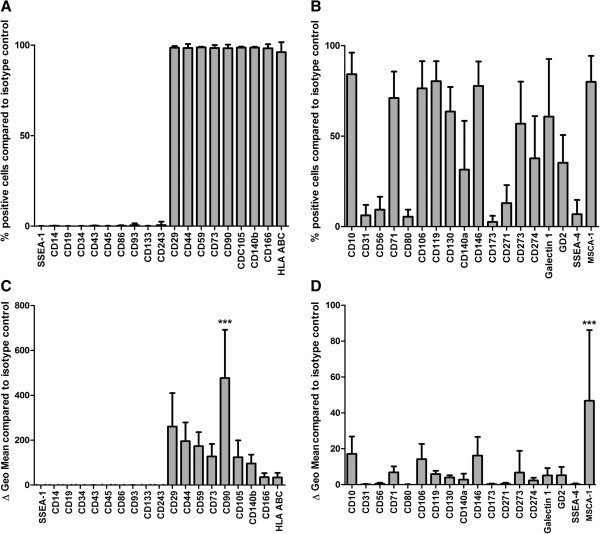
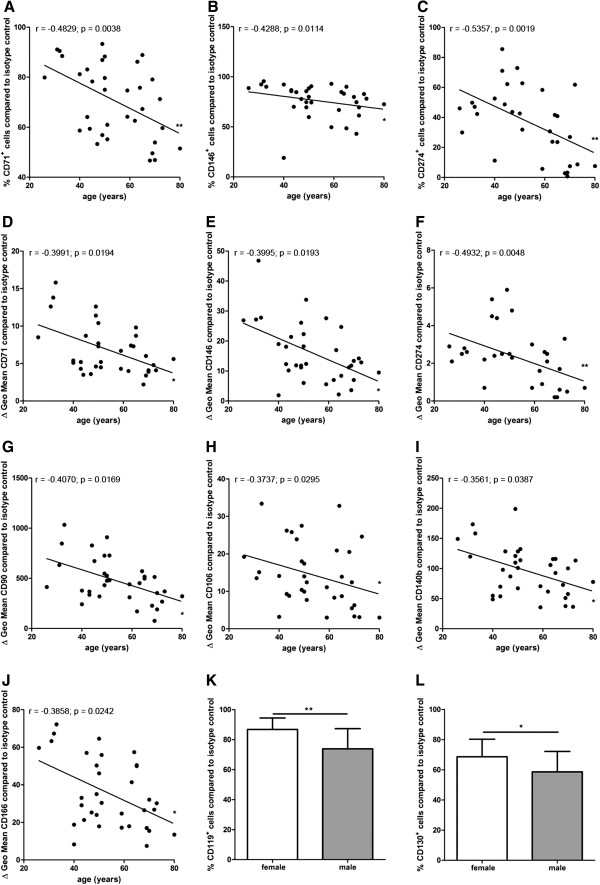
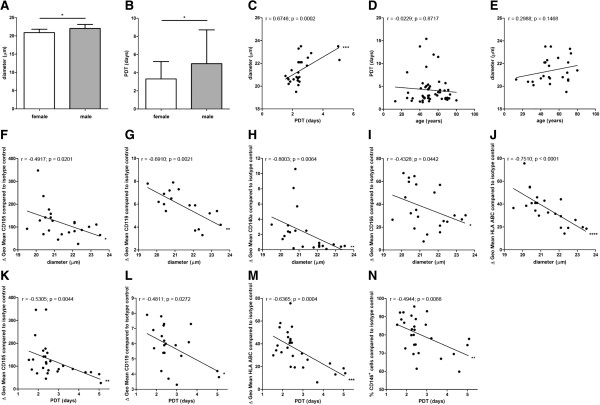
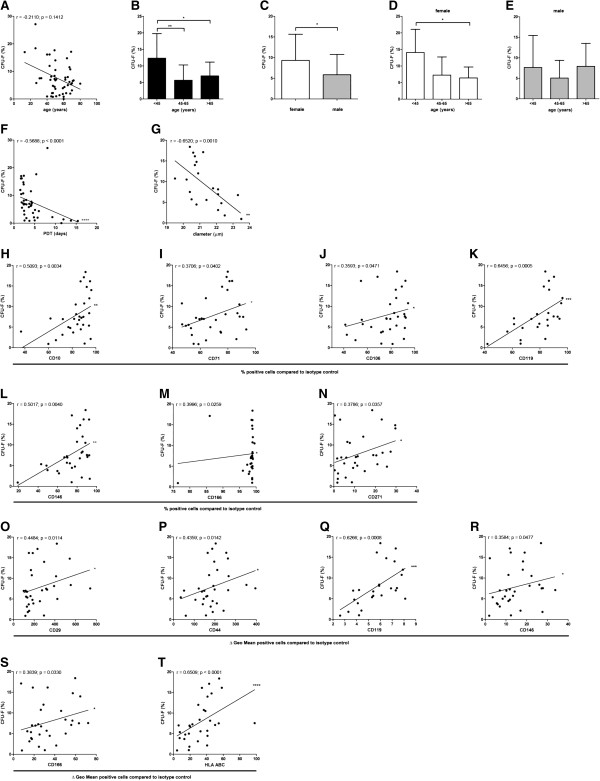
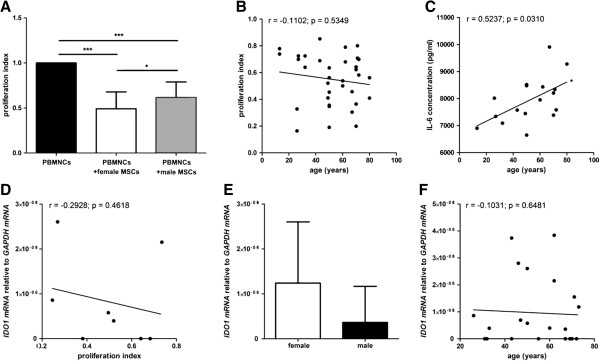
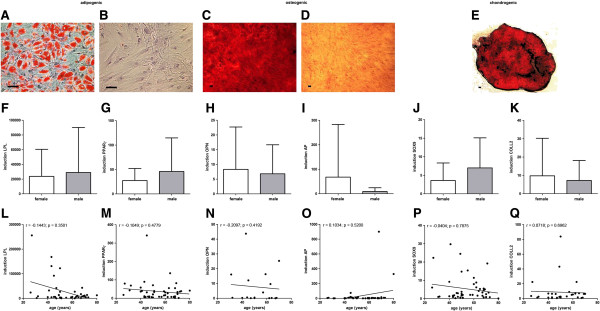
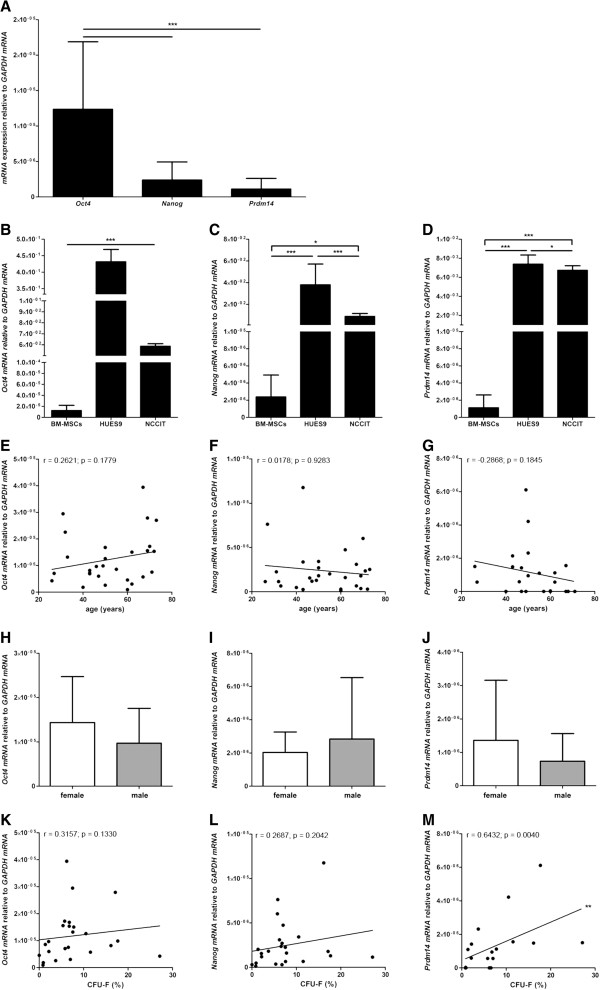
Background: Mesenchymal stromal cells (MSCs) are attractive for cell-based therapies ranging from regenerative medicine and tissue engineering to immunomodulation. However, clinical efficacy is variable and it is unclear how the phenotypes defining bone marrow (BM)-derived MSCs as well as donor characteristics affect their functional properties. Methods: BM-MSCs were isolated from 53 (25 female, 28 male; age: 13 to 80 years) donors and analyzed by: (1) phenotype using flow cytometry and cell size measurement; (2) in vitro growth kinetics using population doubling time; (3) colony formation capacity and telomerase activity; and (4) function by in vitro differentiation capacity, suppression of T cell proliferation, cytokines and trophic factors secretion, and hormone and growth factor receptor expression. Additionally, expression of Oct4 , Nanog , Prdm14 and SOX2 mRNA was compared to pluripotent stem cells. Results: BM-MSCs from younger donors showed increased expression of MCAM, VCAM-1, ALCAM, PDGFRβ, PDL-1, Thy1 and CD71, and led to lower IL-6 production when co-cultured with activated T cells. Female BM-MSCs showed increased expression of IFN-γR1 and IL-6β, and were more potent in T cell proliferation suppression. High-clonogenic BM-MSCs were smaller, divided more rapidly and were more frequent in BM-MSC preparations from younger female donors. CD10, β1integrin, HCAM, CD71, VCAM-1, IFN-γR1, MCAM, ALCAM, LNGFR and HLA ABC were correlated to BM-MSC preparations with high clonogenic potential and expression of IFN-γR1, MCAM and HLA ABC was associated with rapid growth of BM-MSCs. The mesodermal differentiation capacity of BM-MSCs was unaffected by donor age or gender but was affected by phenotype (CD10, IFN-γR1, GD2). BM-MSCs from female and male donors expressed androgen receptor and FGFR3, and secreted VEGF-A, HGF, LIF, Angiopoietin-1, basic fibroblast growth factor (bFGF) and NGFB. HGF secretion correlated negatively to the expression of CD71, CD140b and Galectin 1. The expression of Oct4, Nanog and Prdm14 mRNA in BM-MSCs was much lower compared to pluripotent stem cells and was not related to donor age or gender. Prdm14 mRNA expression correlated positively to the clonogenic potential of BM-MSCs . Conclusions: By identifying donor-related effects and assigning phenotypes of BM-MSC preparations to functional properties, we provide useful tools for assay development and production for clinical applications of BM-MSC preparations.
Overview
The claims and statistics of this paper haven’t been checked yet.
Run the check — free, no account needed. It reads the open-access text and checks the sources it cites.
Integrity signals
Registry
Cites
Statistics
Figures
Verification
Claims the paper makes
The claims and statistics of this paper haven’t been checked yet.
Run the check — free, no account needed. It reads the open-access text and checks the sources it cites.
Claims other papers make about this one
Each is checked against this paper’s own text: does it say what the citing paper says it does?
The source backs part of the claim, not all of it — or backs it for a different population, condition or comparison.
In the citing paper
“One study found more IL-6 from BMSCs from older adults than younger adults”
From Modulation of fracture healing by senescence-associated secretory phenotype (SASP): a narrative review of the current literature (2024) · cites this paper as [83]
Experimental — accuracy not yet measuredThe source backs part of the claim, not all of it — or backs it for a different population, condition or comparison.
In the citing paper
“BMSCs can regulate osteoblast and osteoclast activity through the secretion of SASP [83].”
From Modulation of fracture healing by senescence-associated secretory phenotype (SASP): a narrative review of the current literature (2024) · cites this paper as [83]
Experimental — accuracy not yet measuredThe cited source says what the claim attributes to it.
In the citing paper
“Siegel et al. (2013) showed that phenotype, donor age, and sex significantly affect the function of human bone marrow-derived MSCs.”
From Primary cell cultures versus immortalized cell lines: critical comparative insights into biological fidelity and translational applications (2026) · cites this paper as Siegel et al. (2013)
The cited source says what the claim attributes to it.
In the citing paper
“Their study of 50 MSC preparations demonstrated that younger donors (<45 years) had higher colony-forming efficiency compared to older donors (>65 years), and female donors exhibited greater colony-forming frequencies than male donors, highlighting the impact of donor characteristics on reproducibility and functional uniformity.”
From Primary cell cultures versus immortalized cell lines: critical comparative insights into biological fidelity and translational applications (2026) · cites this paper as Siegel et al. (2013)
Self-check
Percentages, sums and reported differences re-computed from the paper’s own numbers.
The self-check needs the paper’s full text.
Citations
Cites
1 retracted
RETRACTED ARTICLE: Pluripotency of mesenchymal stem cells derived from adult marrow
Jiang, Y., Jahagirdar, B., Reinhardt, R. L., Schwartz, R. E., Keene, C. D., Ortiz-Gonzalez, X. R., Reyes, M., Lenvik, T. R., Lund, T. C., Blackstad, M., et al. (2002) · Nature · doi:10.1038/nature00870 · Cited by 5,523
RetractedDominici, M., Le Blanc, K., Mueller, I., Slaper-Cortenbach, I., Marini, F. C., Krause, D. S., Deans, R. J., Keating, A., Prockop, D. J., & Horwitz, E. M. (2006) · Cytotherapy · doi:10.1080/14653240600855905 · Cited by 17,766
Mesenchymal stem cells as trophic mediators
Caplan, A. I., & Dennis, J. E. (2006) · Journal of Cellular Biochemistry · doi:10.1002/jcb.20886 · Cited by 2,992
Le Blanc, K., Rasmusson, I., Sundberg, B., Götherström, C., Hassan, M., Uzunel, M., & Ringdén, O. (2004) · The Lancet · doi:10.1016/s0140-6736(04)16104-7 · Cited by 2,734
Blanc, K. L., Frassoni, F., Ball, L. M., Locatelli, F., Roelofs, H., Lewis, I., Lanino, E., Sundberg, B., Bernardo, M. E., Remberger, M., et al. (2008) · The Lancet · doi:10.1016/s0140-6736(08)60690-x · Cited by 2,692
Ren, G., Zhang, L., Zhao, X., Xu, G., Zhang, Y., Roberts, A. I., Zhao, R. C., & Shi, Y. (2008) · Cell Stem Cell · doi:10.1016/j.stem.2007.11.014 · Cited by 2,101
Heterotopic of bone marrow. Analysis of precursor cells for osteogenic and hematopoietic tissues.
Friedenstein, A. J., Kv, P., KUROLESOVA, A. I., & Frolova, G. P. (1968) · PubMed · Cited by 1,921
Phinney, D. G., & Prockop, D. J. (2007) · Stem Cells · doi:10.1634/stemcells.2007-0637 · Cited by 1,910
HETEROTOPIC TRANSPLANTS OF BONE MARROW
Friedenstein, A. J., Kv, P., KUROLESOVA, A. I., & Frolova, G. P. (1968) · Transplantation · doi:10.1097/00007890-196803000-00009 · Cited by 1,703
Horwitz, E. M., Gordon, P. L., Koo, W. K. K., Marx, J. C., Neel, M. D., McNall, R. Y., Muul, L., & Hofmann, T. (2002) · Proceedings of the National Academy of Sciences · doi:10.1073/pnas.132252399 · Cited by 1,650
Cited by
Sorted by citations
Items 401–486 of 486
Mitani, K., Ito, Y., Takene, Y., & Inaba, T. (2024) · Research in Veterinary Science · doi:10.1016/j.rvsc.2024.105470 · Cited by 1
Impacts of Inorganic Arsenic Exposure on Genetic Stability of Human Mesenchymal Stromal Cells
Beal, M. A., Coughlan, M. C., Nunnikhoven, A., Corbane, R., Cummings‐Lorbetskie, C., Rowan‐Carroll, A., Sharma, T., Williams, A., Lavoie, J. R., Stalker, A., et al. (2025) · Journal of Applied Toxicology · doi:10.1002/jat.4785 · Cited by 1
Jafari, Z., Hamzehpour, Z., Faghihi, M., Derazi, R. A., Makoui, M. H., Makoui, R. H., Fekri, S. M., Ansari, N. E., & Athari, S. S. (2025) · Modern Rheumatology · doi:10.1093/mr/roaf112 · Cited by 1
Hong, Y., & Hao, G. G. (2025) · Journal of Genetic Engineering and Biotechnology · doi:10.1016/j.jgeb.2025.100638 · Cited by 1
Ardana, I. K. K. G., Maldonado, V. V., Barnes, C. L., & Samsonraj, R. M. (2026) · Scientific Reports · doi:10.1038/s41598-026-37517-8 · Cited by 1
Stem cell preservation with novel cryoprotectants
Abraham, A. N., Awad, M. N., Miłogrodzka, I., Greaves, T. L., Bryant, G., & Bryant, S. J. (2026) · Philosophical Transactions of the Royal Society A Mathematical Physical and Engineering Sciences · doi:10.1098/rsta.2024.0311 · Cited by 1
Donor age and sex program MSC secretome signaling: a quadrant framework for precision therapy
Azad, T., Hong, K., Wu, F., Mao, J., Zhou, X., Xie, H., Qiu, X., Li, B., Zhang, L., Tian, J., et al. (2026) · Stem Cell Research & Therapy · doi:10.1186/s13287-026-04976-9 · Cited by 1
Liu, L., Fandiño, J., Warren, A., Shi, R., Sallent, I., Du, S., McCarthy, S., Masterson, C. H., Angel, M., Rohde, C. B., et al. (2026) · International Journal of Molecular Sciences · doi:10.3390/ijms27094090 · Cited by 1
Donor-dependent immunomodulatory effects of human dental pulp stem cells on macrophages
da Costa, V. R., Souza, O. F., Teixeira, M. R., Alievi, A. L., Oliveira, M. M. D., Orikaza, C. M., Popi, A. F., Kerkis, I., & Araldi, R. P. (2026) · Frontiers in Immunology · doi:10.3389/fimmu.2026.1798470 · Cited by 1
Mesenchymal Stromal Cell Production in Academic Centers: Challenges and Opportunities
McKenna, D. H. (2016) · Elsevier eBooks · doi:10.1016/b978-0-12-802826-1.00005-2 · Cited by 1
Mesenchymal Stem Cells for Stroke Therapy
Guan, Y., Ji, X., Chen, J., Zhang, Y. A., & Chen, Z. (2016) · Springer eBooks · doi:10.1007/978-981-10-2929-5_5 · Cited by 1
Advances, Opportunities, and Challenges in Stem Cell-Based Therapy
Szydlak, R. (2022) · Springer eBooks · doi:10.1007/978-981-19-2655-6_23 · Cited by 1
Consideration of Biological Sex in Translating Regenerative Stem Cell Therapies
Shapiro, G., Pelled, G., & Gazit, D. (2017) · Principles of Gender-Specific Medicine · doi:10.1016/b978-0-12-803506-1.00019-x · Cited by 1
Use of Mesenchymal Stem/Stromal Cells for Pediatric Orthopedic Applications
Guess, A. J., Abzug, J. M., & Otsuru, S. (2018) · Techniques in Orthopaedics · doi:10.1097/bto.0000000000000351 · Cited by 1
OSTEOGROW – novel bone device for bone regeneration
Grgurević, L., & Vukičević, S. (2018) · Rad Hrvatske akademije znanosti i umjetnosti Medicinske znanosti · doi:10.21857/ygjwrcjnry · Cited by 1
Clinical Variables that Influence Properties of Human Mesenchymal Stromal Cells
Glowacki, J., Alm, J. J., & Zhou, S. (2019) · Regenerative Engineering and Translational Medicine · doi:10.1007/s40883-019-00123-4 · Cited by 1
Lasaviciute, G., Höbinger, A., Ujvári, D., Salamon, D., Yusuf, A., Sundin, M., Sverremark‐Ekström, E., Chikhi, R., Nilsson, A., & Saghafian‐Hedengren, S. (2021) · Hemato · doi:10.3390/hemato2010009 · Cited by 1
Advances, Opportunities, and Challenges in Stem Cell-Based Therapy
Szydlak, R. (2022) · Springer eBooks · doi:10.1007/978-981-16-6016-0_23-1 · Cited by 1
Iijima, H., Nakahara, R., & Ito, A. (2024) · Current Opinion in Biomedical Engineering · doi:10.1016/j.cobme.2024.100535 · Cited by 1
Burrow, K. L. (2014) · Research Explorer (The University of Manchester) · Cited by 1
Khurshid, M. (2014) · Libraries and Cultural Resources (University of Calgary) · doi:10.11575/prism/27759 · Cited by 1
Regenerative Potential of Cord Blood
Sun, J. M., & Kurtzberg, J. (2014) · Stem cell biology and regenerative medicine · doi:10.1007/978-3-319-06444-4_2
Qureshi, A., & Ali, S. (2015) · Annual Research & Review in Biology · doi:10.9734/arrb/2015/10480
Derivation of mesenchymal stem/stromal cells from induced pluripotent stem cells
Pelekanos, R. (2016) · Wiley eBooks · doi:10.1002/9781118907474.ch31
A physicochemical approach to design bioactive scaffolds for tissue engineering
Chen (2017) · Research Publications (Maastricht University) · doi:10.26481/dis.20170406hc
Mesenchymal Stromal Cells: Emerging Treatment Option for Diabetic Wounds
Balasubramanian, S., Rengasamy, M., Thej, C., Gupta, P. K., & Majumdar, A. S. (2017) · Springer eBooks · doi:10.1007/978-981-10-3701-6_28
Munshi, A. (2019) · uO Research (University of Ottawa) · doi:10.20381/ruor-23781
From cell to society: Bioengineering auricular cartilage for ear reconstruction
Otto, I. A. (2020) · Utrecht University Repository (Utrecht University) · doi:10.33540/4
KORKUT, B., Şen, E., & Balel, Y. (2020) · Atatürk Üniversitesi Diş Hekimliği Fakültesi Dergisi · doi:10.17567/ataunidfd.822569
Autologous mesenchymal stem cells in the treatment of spinal aneurysmal bone cyst
Bròdano, G. B., Griffoni, C., Facchini, G., Carretta, E., Salamanna, F., Gala, R. B., Tedesco, G., Evangelisti, G., Terzi, S., Ghermandi, R., et al. (2021) · Pathology - Research and Practice · doi:10.1016/j.prp.2021.153722
CALCULATION OF INELASTIC NUCLEON SCATTERING ON BASIS OF THE GENERALIZED OPTICAL MODEL OF NUCLEUS.
Aver'yanov, I. K., Dzyuba, B. M., & Rybachenko, V. F. (1968) · OSTI OAI (U.S. Department of Energy Office of Scientific and Technical Information)
Peripheral nerve tissue engineering
Kuna, V. K., & Kingham, P. J. (2021) · Elsevier eBooks · doi:10.1016/b978-0-12-820508-2.00006-4
Teunissen, M. (2022) · Utrecht University Repository (Utrecht University) · doi:10.33540/1077
Mesenchymal Stem Cell Aging in the Bone Marrow
Ho, Y., & Méndez‐Ferrer, S. (2020) · Elsevier eBooks · doi:10.1016/b978-0-12-801238-3.11571-5
Monterosso, M. E. (2022) · Queensland University of Technology · doi:10.5204/thesis.eprints.236375
Lapuente, J. P. (2022) · American Journal of Biomedical Science & Research · doi:10.34297/ajbsr.2022.16.002192
Consideration of biological sex in stem cell therapies
Krut, Z., Pelled, G., Gazit, D., & Gazit, Z. (2023) · Principles of Gender-Specific Medicine · doi:10.1016/b978-0-323-88534-8.00032-8
Eklem Ağrılarına Yenilikçi Çözümler
Menekşe, S. (2023) · Akademisyen Kitabevi eBooks · doi:10.37609/akya.2733
Александровна, С. Т., Учасова, Е. Г., Dyleva, Y. A., Belik, E. V., & Gruzdeva, O. V. (2024) · Fundamental and Clinical Medicine · doi:10.23946/2500-0764-2024-9-4-95-106
Wang, Z., Liu, W., Sim, H., Lee, J., Kook, S., & Kim, S. H. (2025) · Journal of Cachexia Sarcopenia and Muscle · doi:10.1002/jcsm.70047
Desterke, C., Martinaud, C., Bousse‐Kerdilès, M. L., Lataillade, J., Banzet, S., & Peltzer, J. (2025) · Stem Cells and Development · doi:10.1177/15473287251388411
Enzmann, S., Klaus, A. N., Matthys, R., Wehrle, E., Stoddart, M. J., & Verrier, S. (2025) · Cells · doi:10.3390/cells14221773
Kowal, J. M., Möller, S., Ali, D., Figeac, F., Barington, T., Schmal, H., & Kassem, M. S. (2021) · Figshare · doi:10.6084/m9.figshare.14532338
Zhao, L., Hu, C., Han, F., Chen, D., Cheng, J., Wu, J., Peng, W., & Chen, J. (2021) · Figshare · doi:10.6084/m9.figshare.14140276
Zhao, L., Hu, C., Han, F., Chen, D., Cheng, J., Wu, J., Peng, W., & Chen, J. (2021) · Figshare · doi:10.6084/m9.figshare.14140264
Zhao, Q., Hai, B., Kelly, J., Wu, S., & Liu, F. (2021) · Figshare · doi:10.6084/m9.figshare.13543942
Zhao, L., Hu, C., Han, F., Chen, D., Cheng, J., Wu, J., Peng, W., & Chen, J. (2021) · Figshare · doi:10.6084/m9.figshare.14140255
Zhao, L., Hu, C., Han, F., Chen, D., Cheng, J., Wu, J., Peng, W., & Chen, J. (2021) · Figshare · doi:10.6084/m9.figshare.14140252
Zhao, L., Hu, C., Han, F., Chen, D., Cheng, J., Wu, J., Peng, W., & Chen, J. (2021) · Figshare · doi:10.6084/m9.figshare.14140267
Zhou, P., Shi, J.-M., Song, J.-E., Han, Y., Li, H.-J., Song, Y.-M., Feng, F., Wang, J.-L., Zhang, R., & Lan, F. (2021) · Figshare · doi:10.6084/m9.figshare.13544585
Kowal, J. M., Möller, S., Ali, D., Figeac, F., Barington, T., Schmal, H., & Kassem, M. S. (2021) · Figshare · doi:10.6084/m9.figshare.14532332
Zhao, L., Hu, C., Han, F., Chen, D., Cheng, J., Wu, J., Peng, W., & Chen, J. (2021) · Figshare · doi:10.6084/m9.figshare.14140279
Zhao, L., Hu, C., Han, F., Chen, D., Cheng, J., Wu, J., Peng, W., & Chen, J. (2021) · Figshare · doi:10.6084/m9.figshare.14140261
Zhao, L., Hu, C., Han, F., Chen, D., Cheng, J., Wu, J., Peng, W., & Chen, J. (2021) · Figshare · doi:10.6084/m9.figshare.14140270
Kowal, J. M., Möller, S., Ali, D., Figeac, F., Barington, T., Schmal, H., & Kassem, M. S. (2021) · Figshare · doi:10.6084/m9.figshare.14532335
Xu, W., Ni, C., Wang, Y., Zheng, G., Zhang, J., & Xu, Y. (2021) · Figshare · doi:10.6084/m9.figshare.14498816
Fitzgerald, J. C., Shaw, G., Murphy, J. M., & Barry, F. (2024) · Figshare · doi:10.6084/m9.figshare.24798124
Zhao, L., Hu, C., Han, F., Chen, D., Cheng, J., Wu, J., Peng, W., & Chen, J. (2021) · Figshare · doi:10.6084/m9.figshare.14140258
Epah, J., Spohn, G., Preiß, K., Müller, M. M., Dörr, J., Bauer, R., Daqiq‐Mirdad, S., Schwäble, J., Bernas, S. N., Schmidt, A. H., et al. (2023) · Figshare · doi:10.6084/m9.figshare.24165199
Self-citationTee, C. A., Roxby, D. N., Othman, R. B., Denslin, V., Bhat, K. S., Yang, Z., Han, J., Tucker‐Kellogg, L., & Boyer, L. A. (2024) · Figshare · doi:10.6084/m9.figshare.27042392
Kowal, J. M., Möller, S., Ali, D., Figeac, F., Barington, T., Schmal, H., & Kassem, M. S. (2021) · Figshare · doi:10.6084/m9.figshare.14532329
Li, Y., Gao, H., Brunner, T. M., Hu, X., Yan, Y., Liu, Y., Qiao, L., Wu, P., Li, M., Liu, Q., et al. (2022) · Figshare · doi:10.6084/m9.figshare.19582531
Zhao, L., Hu, C., Han, F., Chen, D., Cheng, J., Wu, J., Peng, W., & Chen, J. (2021) · Figshare · doi:10.6084/m9.figshare.14140273
Fitzgerald, J. C., Shaw, G., Murphy, J. M., & Barry, F. (2023) · Figshare · doi:10.6084/m9.figshare.24797932
Moldaschl, J., Danilchenko, S., Sagar, I., Brandt, V.-P., Holland, H., Handschuh, S., Glösmann, M., Toegel, S., May, T., Egger, D., et al. (2026) · Frontiers in Bioengineering and Biotechnology · doi:10.3389/fbioe.2025.1719466
Wang, L., Yen, B. L., Wang, H.-H., Lin, Y.-F., Liao, C., Hsu, P., & Yen, M.-L. (2026) · Materials Today Bio · doi:10.1016/j.mtbio.2026.103012
Impact of aging on cardiac mesenchymal stromal cells
Martini, H. (2019) · theses.fr (ABES) · doi:10.70675/bb7ddcb3z0b6az4c39za6eczc94e0563f0a3
Wang, K., Zeng, X., Zhang, Y., Zou, Y., Ye, J., zhao, Y., jin, H., Zhang, J., Nie, X., & Cheng, G. (2026) · Stem Cell Research & Therapy · doi:10.1186/s13287-026-05052-y
Muñoz-García, C. C., Soriano-Campos, M. D. P., Luis‐Calero, M., Gallardo, A., González‐Fernández, L., & Macías‐García, B. (2026) · Theriogenology · doi:10.1016/j.theriogenology.2026.118003
Mesenchymal stem cell therapy for skin repair and rejuvenation
Raitman, I., Kang, L., Gosiewska, A., Koppisetti, S., & HARIRI, R. J. (2026) · Discover Immunity. · doi:10.1007/s44368-026-00031-0
Tang, S., Han, M., Wang, P., Lu, F., Zhang, Y., Li, Z., Zhou, S., Zhang, Y., Wang, Z., Zhao, J., et al. (2026) · BMC Medicine · doi:10.1186/s12916-026-05035-z
Trębińska-Stryjewska, A., Dobrzyńska, M., Lewandowski, R. B., Kasprzycka, W., Stępińska, M., Osuchowska, P. N., Osuchowski, Ł. P., Starzyński, J., Mierczyk, Z., & Trafny, E. A. (2026) · Frontiers in Cell and Developmental Biology · doi:10.3389/fcell.2026.1873951
Beaumont, H., Guest, S., Pathak, S., Premjit, Y., Jones, E., & Ganguly, P. (2026) · Biology · doi:10.3390/biology15161377
Mesenchymal Stromal Cell Rejuvenation Strategies to Enhance Clinical Translation in Cell Therapy
Sodomaco, A., Bernardi, I., Rambaldi, A., Lombardi, P., Rossi, M., Paris, F., Manzoli, L., Ratti, S., & Alviano, F. (2026) · Aging Cell · doi:10.1111/acel.70672
Metadata
- Authors
- Siegel, G., Kluba, T., Hermanutz-Klein, U., Bieback, K., Northoff, H., & Schäfer, R.
- Affiliations
- Universitätsklinikum Tübingen (DE)
- Heidelberg University (DE)
- Corresponding author
- Schäfer, Richard
- Venue
- BMC Medicine
- Published
- 2013-06-11
- Volume
- 11
- Issue
- 1
- Pages
- 146-146
- ISSN
- 1741-7015 (ISSN-L)
- PMC
- PMC3694028
- OpenAlex
- W2043060398
- Cited by
- 493
- References
- 80
- Citations by year
- 2026: 19 · 2025: 32 · 2024: 42 · 2023: 33 · 2022: 33 · 2021: 69 · 2020: 51 · 2019: 49 · 2018: 28 · 2017: 30 · 2016: 44 · 2015: 32 · 2014: 26 · 2013: 4
- FWCI
- 17.40
- Type
- journal article
- Language
- en
- Open access
- gold
- doi.org
- Licence
- Locations
- BMC Medicine (publishedVersion, cc-by)
- Europe PMC (PubMed Central) (publishedVersion, cc-by)
- PubMed Central (publishedVersion, cc-by)
- PubMed (publishedVersion)
- Funders
- Deutsche Forschungsgemeinschaft
- Eberhard Karls Universität Tübingen
- Harvard Stem Cell Institute
- Topics
- Life Sciences › Biochemistry, Genetics and Molecular Biology › Cell Biology › Mesenchymal stem cell research
- Health Sciences › Medicine › Hematology › Hematopoietic Stem Cell Transplantation
- Life Sciences › Biochemistry, Genetics and Molecular Biology › Molecular Biology › Pluripotent Stem Cells Research
- Keywords
- bone marrow-derived mesenchymal stromal cells, donor age, donor gender, cell phenotype, clonogenicity, T cell proliferation inhibition, immunomodulation, mesoderm differentiation, IFN-gamma receptor 1, hepatocyte growth factor, Oct4, Nanog, pluripotency genes, cell therapy
- MeSH terms
- Adolescent, Adult, Age Factors, Aged, Aged, 80 and over, Cell Differentiation, Cells, Cultured, Female, Humans, Male, Middle Aged, Sex Factors, Immunophenotyping, Living Donors, Young Adult, Mesenchymal Stem Cells
About these checks
Registry, retraction, Cites and statistics results are computed, not judged, with one exception: a printed reference that no index lists is read once by a model before it counts as a citation error. Claims are extracted by a model and kept only when their quote appears verbatim in the text; each cited source is then checked, with a model’s help, for whether it says what the claim relies on. Those verdicts can be wrong — read the claim’s quote and the cited source before relying on one.
Statistics and arithmetic are recomputed, not judged.
Confidence bands are shown only for fields calibrated on our annotated test set. None is calibrated yet, so no band is shown.
What counts as a claim ›How we measure confidence ›How we check this ›
Are you an author, or do you see a problem with this page? Request a review
