

Is network meta-analysis as valid as standard pairwise meta-analysis? It all depends on the distribution of effect modifiers
Open accessThe DOI matches its Crossref record; 26 of the 26 references it cites were found in a registry or an index.
Abstract
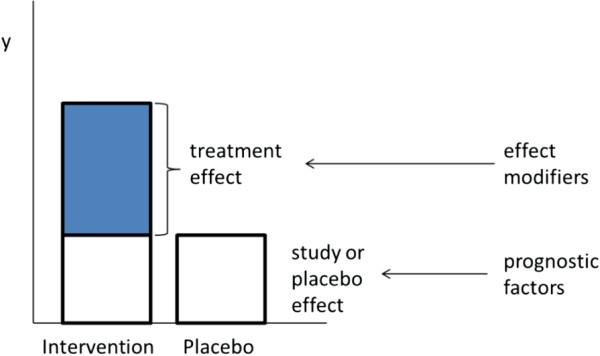
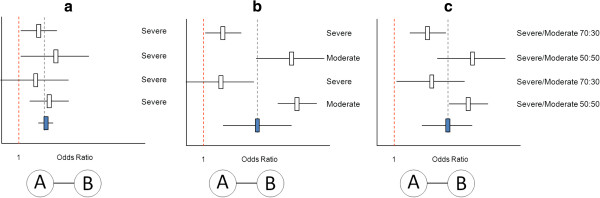
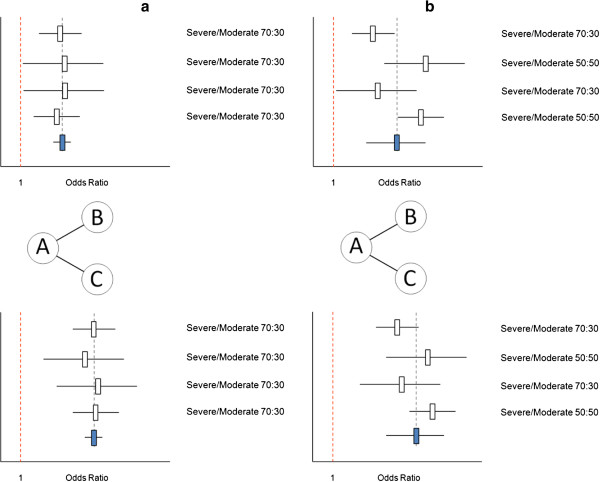
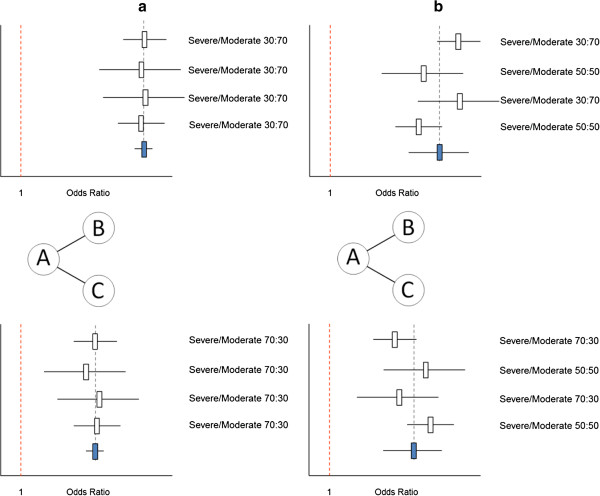
BACKGROUND: In the last decade, network meta-analysis of randomized controlled trials has been introduced as an extension of pairwise meta-analysis. The advantage of network meta-analysis over standard pairwise meta-analysis is that it facilitates indirect comparisons of multiple interventions that have not been studied in a head-to-head fashion. Although assumptions underlying pairwise meta-analyses are well understood, those concerning network meta-analyses are perceived to be more complex and prone to misinterpretation. DISCUSSION: In this paper, we aim to provide a basic explanation when network meta-analysis is as valid as pairwise meta-analysis. We focus on the primary role of effect modifiers, which are study and patient characteristics associated with treatment effects. Because network meta-analysis includes different trials comparing different interventions, the distribution of effect modifiers cannot only vary across studies for a particular comparison (as with standard pairwise meta-analysis, causing heterogeneity), but also between comparisons (causing inconsistency). If there is an imbalance in the distribution of effect modifiers between different types of direct comparisons, the related indirect comparisons will be biased. If it can be assumed that this is not the case, network meta-analysis is as valid as pairwise meta-analysis. SUMMARY: The validity of network meta-analysis is based on the underlying assumption that there is no imbalance in the distribution of effect modifiers across the different types of direct treatment comparisons, regardless of the structure of the evidence network.
Overview
The claims and statistics of this paper haven’t been checked yet.
Free: it reads the open-access text and checks the first 5 claims that cite a source we can check. Create a free account to check every claim.
Integrity signals
Registry
Cites
Statistics
Figures
Verification
Claims the paper makes
The claims and statistics of this paper haven’t been checked yet.
Free: it reads the open-access text and checks the first 5 claims that cite a source we can check. Create a free account to check every claim.
Claims other papers make about this one
Each is checked against this paper’s own text: does it say what the citing paper says it does?
The source backs part of the claim, not all of it — or backs it for a different population, condition or comparison.
In the citing paper
“The design of this study had several strengths including the use of validated evidence-based analytical methods for study search and selection, and data extraction and synthesis, following PRISMA guidelines and the extension for NMAs (42–44).”
From Examining the role of AI technology in online mental healthcare: opportunities, challenges, and implications, a mixed-methods review (2024) · cites this paper as [43]
Experimental — accuracy not yet measuredThe check wasn’t confident either way, so it gives no verdict — never disputed.
In the citing paper
“We registered this mixed methods systematic review with PROSPERO (CRD42023443575, https://www.crd.york.ac.uk/prospero/display_record.php?RecordID=443575) and followed the Preferred Reporting Items for Systematic Reviews and Meta-analysis (PRISMA) guidelines, including the extension for NMAs (42–44).”
From Examining the role of AI technology in online mental healthcare: opportunities, challenges, and implications, a mixed-methods review (2024) · cites this paper as [43]
Experimental — accuracy not yet measuredThe check wasn’t confident either way, so it gives no verdict — never disputed.
In the citing paper
“Analysis of heterogeneity showed that for the meta-analysis and the NMA, the main effects outcome had the highest degree of heterogeneity (I2>50%).”
From Examining the role of AI technology in online mental healthcare: opportunities, challenges, and implications, a mixed-methods review (2024) · cites this paper as [43]
Experimental — accuracy not yet measuredThe check wasn’t confident either way, so it gives no verdict — never disputed.
In the citing paper
“In the NMA, the depression outcome also had a significant degree of heterogeneity (I2>50%) ( Table 2 ) (43, 59–62).”
From Examining the role of AI technology in online mental healthcare: opportunities, challenges, and implications, a mixed-methods review (2024) · cites this paper as [43]
Experimental — accuracy not yet measuredThe check wasn’t confident either way, so it gives no verdict — never disputed.
In the citing paper
“In addition, without a defined standard or guidelines for the study and implementation of AI tools in online mental healthcare, most research teams opted for the study and development of their own AI tools, comparator interventions, outcome metrics, and intervention designs (43, 59–62).”
From Examining the role of AI technology in online mental healthcare: opportunities, challenges, and implications, a mixed-methods review (2024) · cites this paper as [43]
Experimental — accuracy not yet measured
Self-check
Percentages, sums and reported differences re-computed from the paper’s own numbers.
The self-check needs the paper’s full text.
Citations
Cites
Quantifying heterogeneity in a meta‐analysis
Higgins, J. P. T., & Thompson, S. G. (2002) · Statistics in Medicine · doi:10.1002/sim.1186 · Cited by 36,763 · cited 1×
“[13].”
How should meta‐regression analyses be undertaken and interpreted?
Thompson, S. G., & Higgins, J. P. T. (2002) · Statistics in Medicine · doi:10.1002/sim.1187 · Cited by 3,026
Combination of direct and indirect evidence in mixed treatment comparisons
Lu, G., & Ades, A. E. (2004) · Statistics in Medicine · doi:10.1002/sim.1875 · Cited by 2,166 · cited 1×
“If a network meta-analysis consists of an evidence base where for some interventions there is both direct and indirect evidence, inconsistency can be evaluated by comparing the treatment effect estimates obtained from the direct comparison, with those obtained from the indirect comparisons for the same contrast [18-21…”
MethodConsistency and inconsistency in network meta-analysis: concepts and models for multi-arm studies
Higgins, J. P. T., Jackson, D., Barrett, J. K., Lu, G., Ades, A. E., & White, I. R. (2012) · Research Synthesis Methods · doi:10.1002/jrsm.1044 · Cited by 2,098
Bucher, H. C., Guyatt, G. H., Griffith, L. E., & Walter, S. D. (1997) · Journal of Clinical Epidemiology · doi:10.1016/s0895-4356(97)00049-8 · Cited by 2,052 · cited 1×
“between treatments B and C [3-5].”
(2000) · Queen Mary Research Online (Queen Mary University of London) · Cited by 1,795
Simultaneous comparison of multiple treatments: Combining direct and indirect evidence.
Caldwell, D. M., Ades, A. E., & Higgins, J. P. T. (2005) · BMJ · doi:10.1136/bmj.331.7521.897 · Cited by 1,600 · cited 1×
“Such a network allows for indirect comparisons of interventions not studied in a head-to-head fashion [2].”
BackgroundNetwork meta‐analysis for indirect treatment comparisons
Lumley, T. (2002) · Statistics in Medicine · doi:10.1002/sim.1201 · Cited by 1,206 · cited 1×
“between treatments B and C [3-5].”
Evaluation of networks of randomized trials
Salanti, G., Higgins, J. P., Ades, A., & Ioannidis, J. P. (2008) · Statistical Methods in Medical Research · doi:10.1177/0962280207080643 · Cited by 1,078 · cited 1×
“means of network meta-analysis [8].”
Savović, J., Jones, H. E., Altman, D. G., Harris, R. J., Jüni, P., Pildal, J., Als-Nielsen, B., Balk, E. M., Gluud, C., Gluud, L. L., et al. (2012) · Annals of Internal Medicine · doi:10.7326/0003-4819-157-6-201209180-00537 · Cited by 1,049 · cited 1×
“By doing so, the difference in observed outcomes in randomized trials, defined as the treatment effect (or effect size), can be attributed to differences in interventions compared (assuming that there are no other systematic differences resulting in bias, such as issues in concealment of treatment allocation) [12].”
Background
Cited by
Hutton, B., Salanti, G., Caldwell, D. M., Chaimani, A., Schmid, C. H., Cameron, C., Ioannidis, J. P. A., Straus, S., Thorlund, K., Jansen, J. P., et al. (2015) · Annals of Internal Medicine · doi:10.7326/m14-2385 · Cited by 8,269
Self-citationSurviving Sepsis Campaign: International guidelines for management of sepsis and septic shock: 2016.
Rhodes, A., Evans, L. E., Alhazzani, W., Levy, M. M., Antonelli, M., Ferrer, R., Kumar, A., Sevransky, J. E., Sprung, C. L., Nunnally, M. E., et al. (2017) · Intensive Care Medicine · doi:10.1007/s00134-017-4683-6 · Cited by 6,621
“A recent Cochrane meta-analysis did not find strong evidence that DSI alters the duration of mechanical ventilation, mortality, ICU or hospital LOS, adverse event rates, or drug consumption for critically ill adults receiving mechanical ventilation compared to sedation strategies that do not include DSI; however, inte…”
BackgroundSurviving Sepsis Campaign: International guidelines for management of sepsis and septic shock: 2016.
Rhodes, A., Evans, L. E., Alhazzani, W., Levy, M. M., Antonelli, M., Ferrer, R., Kumar, A., Sevransky, J. E., Sprung, C. L., Nunnally, M. E., et al. (2017) · Critical Care Medicine · doi:10.1097/ccm.0000000000002255 · Cited by 3,652
Puhan, M. A., Schunemann, H. J., Murad, M. H., Li, T., Brignardello-Petersen, R., Singh, J. A., Kessels, A. G., Guyatt, G. H., & for the GRADE Working Group (2014) · BMJ · doi:10.1136/bmj.g5630 · Cited by 1,812
Evaluating the quality of evidence from a network meta-analysis
Salanti, G., Del Giovane, C., Chaimani, A., Caldwell, D. M., & Higgins, J. P. T. (2014) · PLoS ONE · doi:10.1371/journal.pone.0099682 · Cited by 1,402
“by using directed acyclic graphs see [18]) can also be employed (for a review see [19]).”
Method
Metadata
- Authors
- Jansen, J. P., & Naci, H.
- Affiliations
- Tufts University (US)
- London School of Economics and Political Science (GB)
- Corresponding author
- Jansen, Jeroen P
- Venue
- BMC Medicine
- Published
- 2013-07-04
- Volume
- 11
- Issue
- 1
- Pages
- 159-159
- ISSN
- 1741-7015 (ISSN-L)
- PMC
- PMC3707819
- OpenAlex
- W2004474087
- Cited by
- 656
- References
- 26
- Citations by year
- 2026: 53 · 2025: 57 · 2024: 52 · 2023: 51 · 2022: 77 · 2021: 57 · 2020: 48 · 2019: 49 · 2018: 45 · 2017: 52 · 2016: 40 · 2015: 48 · 2014: 22 · 2013: 5
- FWCI
- 42.23
- Type
- journal article
- Language
- en
- Open access
- gold
- doi.org
- Licence
- Locations
- BMC Medicine (publishedVersion, cc-by)
- Europe PMC (PubMed Central) (publishedVersion, cc-by)
- PubMed Central (publishedVersion, cc-by)
- PubMed (publishedVersion)
- London School of Economics and Political Science Research Online (London School of Economics and Political Science) (acceptedVersion)
- London School of Economics and Political Science Theses Online (London School of Economics and Political Science) (acceptedVersion)
- RePEc: Research Papers in Economics (submittedVersion)
- LSE Research Online Documents on Economics (submittedVersion)
- Funders
- Brown University
- Centers for Disease Control and Prevention
- Topics
- Social Sciences › Decision Sciences › Statistics, Probability and Uncertainty › Meta-analysis and systematic reviews
- Physical Sciences › Mathematics › Statistics and Probability › Statistical Methods in Clinical Trials
- Social Sciences › Sociology and Political Science › Delphi Technique in Research
- Keywords
- network meta-analysis, effect modifiers, indirect comparison, inconsistency, heterogeneity, validity, treatment effect heterogeneity
- MeSH terms
- Humans, Meta-Analysis as Topic, Effect Modifier, Epidemiologic, Randomized Controlled Trials as Topic, Treatment Outcome
About these checks
Registry, retraction, Cites and statistics results are computed, not judged, with one exception: a printed reference that no index lists is read once by a model before it counts as a citation error. Claims are extracted by a model and kept only when their quote appears verbatim in the text; each cited source is then checked, with a model’s help, for whether it says what the claim relies on. Those verdicts can be wrong — read the claim’s quote and the cited source before relying on one.
Statistics and arithmetic are recomputed, not judged.
Confidence bands are shown only for fields calibrated on our annotated test set. None is calibrated yet, so no band is shown.
What counts as a claim ›How we measure confidence ›How we check this ›
Are you an author, or do you see a problem with this page? Request a review
Data sources
Bibliographic data: Semantic Scholar, OpenAlex, Crossref.
Contains information from the Semantic Scholar Academic Graph Datasets, made available under the ODC Attribution License (ODC-BY 1.0).
Semantic Scholar’s data is described in: Kinney, R., et al. (2023). The Semantic Scholar Open Data Platform. arXiv:2301.10140.
