

Physical activity and depressive symptoms in adolescents: a prospective study
Open accessThe DOI matches its Crossref record; 39 of the 41 references it cites were found in a registry or an index.
Abstract
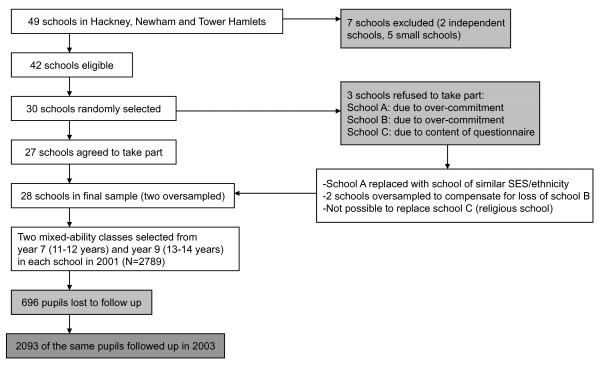
Background: The frequency of mental illness amongst adolescents and its potential long-term consequences make it an important topic to research in relation to risk and protective factors. Research on the relationship between physical activity and depressive symptoms in adolescents is limited. There is a particular lack of evidence from longitudinal studies. This study examines the relationship between depression and physical activity using the Research with East London Adolescents: Community Health Survey (RELACHS). Methods: This was a prospective cohort study. Participants were recruited from three Local Education Authority boroughs in East London in 2001 from year 7 (aged 11-12) and year 9 (aged 13-14) and were followed-up in 2003. All pupils in the 28 schools that took part were eligible for the study. Of the total 3,322 pupils eligible for the survey the overall response rate was 84% (2,789 pupils). A total of 2,093 (75%) pupils were also followed-up in 2003. The sample was multiethnic (73% of respondents were non-white) and deprived. Just under half of the sample was male (49%). Depressive symptoms were measured using the Short Moods and Feelings Questionnaire (SMFQ). Logistic regression analyses were used to examine the association between physical activity and depressive symptoms both cross-sectionally and longitudinally. Results: After adjustments, there was evidence for a cross-sectional association between physical activity and depressive symptoms for both boys and girls at baseline, with a decrease in the odds of depressive symptoms of about 8% for each additional hour of exercise undertaken per week (boys: odds ratio (OR) = 0.92, 95% CI 0.85 to 0.99; girls: OR = 0.92, 95% CI 0.85 to 1.00). There was no evidence for an association between a change in physical activity from baseline to follow-up and depressive symptoms at follow-up. Conclusions: This study provides some evidence for an association between level of physical activity and decreased depressive symptoms in adolescents. Further longitudinal research of these associations is required before physical activity can be recommended as an intervention for depression in adolescents.
Overview
The claims and statistics of this paper haven’t been checked yet.
Free: it reads the open-access text and checks the first 5 claims that cite a source we can check. Create a free account to check every claim.
Integrity signals
Registry
Cites
Statistics
Figures
Verification
Claims the paper makes
The claims and statistics of this paper haven’t been checked yet.
Free: it reads the open-access text and checks the first 5 claims that cite a source we can check. Create a free account to check every claim.
Claims other papers make about this one
Each is checked against this paper’s own text: does it say what the citing paper says it does?
In the citing paper
“In Britain, children under the age of 15 had an 8% reduction in depression symptoms for every hour of exercise completed/week (448).”
From Lack of Exercise Is a Major Cause of Chronic Diseases (2012) · cites this paper as [448]
Self-check
Percentages, sums and reported differences re-computed from the paper’s own numbers.
The self-check needs the paper’s full text.
Citations
Cites
The environment and disease: association or causation?
Hill, A. B. (2015) · Journal of the Royal Society of Medicine · doi:10.1177/0141076814562718 · Cited by 7,285
The Environment and Disease: Association or Causation?
Hill, A. B. (1965) · Proceedings of the Royal Society of Medicine · doi:10.1177/003591576505800503 · Cited by 6,974 · cited 1×
“Although it is impossible to prove a causal association with observational data, the Bradford Hill criteria provide a framework for making an overall judgement about whether a causal association is likely [34].”
(1995) · International Journal of Methods in Psychiatric Research · Cited by 1,847
The influence of physical activity on mental well-being
Fox, K. R. (1999) · Public Health Nutrition · doi:10.1017/s1368980099000567 · Cited by 1,415 · cited 1×
“Through participation in exercise classes or team sports, social support may become more readily available [9-11].”
Psychiatric Diagnosis in Child and Adolescent Suicide
Shaffer, D. (1996) · Archives of General Psychiatry · doi:10.1001/archpsyc.1996.01830040075012 · Cited by 1,252 · cited 1×
“Without effective treatment, adolescents with mental health difficulties are at increased risk of academic underachievement, substance abuse, isolation and suicide [3,4].”
Mental Health of Children and Young People in Great Britain, 2004: (557702010-001)
Green, H., McGinnity, A., Meltzer, H., Ford, T., & Goodman, R. (2005) · PsycEXTRA Dataset · doi:10.1037/e557702010-001 · Cited by 1,216 · cited 2×
“Those with emotional disorders were more likely to be adolescents (aged 11-16) than children (aged 5-10) and were more often girls than boys [ 2 ].”
Costello, E. J., Egger, H., & Angold, A. (2005) · Journal of the American Academy of Child & Adolescent Psychiatry · doi:10.1097/01.chi.0000172552.41596.6f · Cited by 1,134 · cited 1×
“In a review of child and adolescent psychiatric disorders, the median prevalence estimate worldwide for an impairing mental health condition was 12%, although estimates varied widely [1].”
Depressed Adolescents Grown Up
Weissman, M. M. (1999) · JAMA · doi:10.1001/jama.281.18.1707 · Cited by 952 · cited 1×
“Without effective treatment, adolescents with mental health difficulties are at increased risk of academic underachievement, substance abuse, isolation and suicide [3,4].”
The Mental Health of Children and Adolescents in Great Britain: (622732007-001)
Meltzer, H., Gatward, R., Goodman, R., & Ford, T. (2000) · PsycEXTRA Dataset · doi:10.1037/e622732007-001 · Cited by 905
The Ethics of Social Research with Children: An Overview1
Morrow, V., & Richards, M. (1996) · Children & Society · doi:10.1111/j.1099-0860.1996.tb00461.x · Cited by 825
Research works printed but not linked: 4
- Health Education Authority Young people and health: health behaviour in school-aged children 1997 London, UK: Health Education Authority
- Prescott-Clarke P Primatesta P Health survey for England: the health of young people '95-'97 1998 London, UK: The Stationary Office
- McCormick A Fleming D Charlton J Morbidity statistics from general practice, fourth national study 1991-1992. Series MB5 no. 3 1995 London, UK: HMSO
- Wardle J Sutton S Jarvis M HABITS - The Health and Behaviours of Teenagers Study 1998 London, UK: Health Behaviour Unit, Department of Epidemiology and Public Health, University College London
Cited by
Items 101–200 of 203
Public Health Perspectives on Depressive Disorders
Cohen, N. L. (2017) · Johns Hopkins University Press eBooks · doi:10.1353/book.52762 · Cited by 99
Atkins, R., Deatrick, J. A., Bowman, C., Bolick, A., McCurry, I. J., & Lipman, T. H. (2018) · Behavioral Sciences · doi:10.3390/bs8120113 · Cited by 19
“High levels of depressive symptoms are often inversely associated with general physical activity in diverse ethnic groups of women [72], including African American women [73] and in youth [74,75].”
BackgroundPhysical activity and depressed mood in primary and secondary school-children
McKercher, C., Schmidt, M. D., Sanderson, K. A., Dwyer, T., & Venn, A. (2012) · Mental health and physical activity · doi:10.1016/j.mhpa.2012.03.004 · Cited by 24
Inatividade física e sintomas de depressão, ansiedade e estresse em adolescentes estudantes
Costa, M. P. D. S., Schmidt, A., Vitorino, P. V. D. O., & Corrêa, K. D. S. (2021) · Acta Paulista de Enfermagem · doi:10.37689/acta-ape/2021ao03364 · Cited by 55
Physical activity levels during adventure-physical education lessons
Gehris, J. S., Myers, E., & Whitaker, R. C. (2012) · European Physical Education Review · doi:10.1177/1356336x12440365 · Cited by 24
Popper, C. W. (2013) · Child and Adolescent Psychiatric Clinics of North America · doi:10.1016/j.chc.2013.05.001 · Cited by 15
Using Physical Activity to Tackle Depression: The Neglected Positive Psychology Intervention
Lambert, L., D'Cruz, A., Schlatter, M. C., & Barron, F. (2016) · Middle East Journal of Positive Psychology · Cited by 20
Rose, L. T., & Soundy, A. (2020) · Behavioral Sciences · doi:10.3390/bs10110171 · Cited by 24
“[63] also found that higher MVPA had a greater impact on depression in boys than girls, as the likelihood of depression was nearly twice as high in the girls (OR = 1.”
BackgroundResultInfluentialEarly adolescent physical activity, sleep and symptoms of depression at 16 years of age
Slykerman, R. F., Thompson, J., Coomarasamy, C., Wall, C. R., Waldie, K. E., Murphy, R., & Mitchell, E. A. (2020) · Acta Paediatrica · doi:10.1111/apa.15140 · Cited by 14
Allcott-Watson, H., Chater, A., Troop, N., & Howlett, N. (2023) · Health Psychology Review · doi:10.1080/17437199.2023.2173631 · Cited by 20
“…bone strength (Christo ff ersen et al., 2015) and metabolism (Bell et al., 2018), in addition to positive e ff ects on mental health including fewer depressive symptoms (Rothon et al., 2010), better executive functioning (Vanhelst et al., 2016) and higher self-esteem (Kristjánsson et al., 2010).”
BackgroundYang, R., Tan, S., Abdukerima, G., Lu, T. R., Chen, C., Song, L., Ji, B., Lv, Y., & Shi, J. (2025) · Frontiers in Psychiatry · doi:10.3389/fpsyt.2024.1473752 · Cited by 15
Ishii, K., Shibata, A., Adachi, M., & Oka, K. (2016) · Perceptual and Motor Skills · doi:10.1177/0031512516662645 · Cited by 18
“There is substantial evidence that psychological well-being may be improved by physical activity; this has been demonstrated in both cross-sectional (Ahn & Fedewa, 2011; Biddle & Asare, 2011; Hoare, Skouteris, FullerTyszkiewicz, Millar, & Allender, 2014) and longitudinal and intervention studies (Ahn & Fedewa, 2011; B…”
Obesity, physical activity and traumatic dental injuries in adolescents from East London
Aswathikutty, A., Marcenes, W. S., Stansfeld, S. A., & Bernabé, E. (2017) · Dental Traumatology · doi:10.1111/edt.12318 · Cited by 14
“Even though less variation in intensity and duration of physical activity occurs among adolescents during physical education classes, some students may be more active than others during free times at school (27).”
BackgroundSelf-citationPhysical activity for adolescents with severe mental illness: a systematic scoping review
Anthony, J., Kinnafick, F., Papathomas, A., & Breen, K. C. (2020) · International Review of Sport and Exercise Psychology · doi:10.1080/1750984x.2020.1833360 · Cited by 15
“For example, PA has been associated with improved mental health (Biddle et al., 2019; Dale et al., 2019), with increased PA also protecting against the development of mental illness in adulthood (Rodriguez-Ayllon et al., 2019; Rothon et al., 2010).”
Obesogenic behaviours and depressive symptoms in children: a narrative literature review
Dennison, M., Sisson, S. B., & Morris, A. S. (2016) · Obesity Reviews · doi:10.1111/obr.12419 · Cited by 14
“(29,33,34,38,42,43) Two PA studies included both cross-sectional and longitudinal outcomes.(38,52) Within © 2016 World Obesity the 12 studies that included ST behaviours, there were 46 distinct analyses of different ST measures.”
BackgroundMethodInfluentialLifestyle Practices, Psychological Well-Being, and Substance Use among Chinese-Canadian Youth
Fang, L., Zhang, V. F., Poon, H. L. M., Fung, W. L. A., & Katakia, D. (2014) · Journal of Ethnic & Cultural Diversity in Social Work · doi:10.1080/15313204.2014.932732 · Cited by 12
“Studies have shown that poor lifestyle practices such as the lack of physical activity (Nang et al., 2010; Rothon et al., 2010; ten Have, de Graaf, & Monshouwer, 2011; Wiles et al., 2008), sedentary behaviors (Biddle & Asare, 2011; Cao et al., 2011; Cui, Hardy, Dibley, & Bauman, 2011; Iannotti et…”
BackgroundIntelligent Knowledge Service System Based on Depression Monitoring of College Students
Yu, H., Guihong, Z., Liu, J., & Li, K. (2019) · International Journal of Emerging Technologies in Learning (iJET) · doi:10.3991/ijet.v14i12.10702 · Cited by 11
“It has been found that the onset of depression is closely related to sleeping, exercise and heart rate [3-8].”
BackgroundNuevo, C. E. L., Sánchez-Molina, J., & Ureña, G. D. (2021) · Retos · doi:10.47197/retos.v42i0.87138 · Cited by 24
“…119 -Retos, número 42, 2021 (4º trimestre) adequate levels of physical activity provide optimal physiological development during growth stages, help prevent childhood depressive symptoms (Rothon et al., 2010) and allow this age population to keep numerous health benefits (Janssen & LeBlanc, 2010).”
BackgroundRaufelder, D., Waak, S., Melchior, A., & Ittel, A. (2013) · Child Development Research · doi:10.1155/2013/835149 · Cited by 13
“In addition, physical activities are able to decrease depressive symptoms [77] and have positive effects on school achievement [78].”
BackgroundZhang, Y., Wang, Z., Zhang, R., Wang, Y., Yang, J., Wang, F., & Liu, Z. (2025) · International Journal of Behavioral Nutrition and Physical Activity · doi:10.1186/s12966-025-01848-y · Cited by 13
Biopsychosocial Benefits of Physical Activity in Children and Adolescents
Meydanlıoğlu, A. (2014) · Psikiyatride Guncel Yaklasimlar - Current Approaches in Psychiatry · doi:10.5455/cap.20140714124129 · Cited by 12
Tian, F., Yang, X., Xu, F., Dong, R., Song, Y., Fan, C., & Zhou, Z. (2023) · Journal of Affective Disorders · doi:10.1016/j.jad.2023.10.065 · Cited by 9
Association of a Behaviorally Based High School Health Education Curriculum With Increased Exercise
Annesi, J. J., Trinity, J., Mareno, N., & Walsh, S. (2014) · The Journal of School Nursing · doi:10.1177/1059840514536993 · Cited by 8
“Email: jamesa@ymcaatlanta.org Participation in vigorous exercise was associated with lower levels of depression symptoms among adolescents of both sexes (Prasad et al., 2009; Rothon et al., 2010).”
BackgroundResultInfluentialDepressive symptoms and traumatic dental injuries among adolescents
Randhawa, S. S., Marcenes, W. S., Stansfeld, S. A., & Bernabé, E. (2019) · Dental Traumatology · doi:10.1111/edt.12524 · Cited by 8
Self-citationCao, Y., & Luo, L. (2024) · Frontiers in Behavioral Neuroscience · doi:10.3389/fnbeh.2024.1428347 · Cited by 9
The reciprocal relationship between physical activity and depression in older European adults
Owiti, J. A., & Bhui, K. S. (2012) · Evidence-Based Nursing · doi:10.1136/ebnurs-2011-100294 · Cited by 8
Self-citationRodríguez‐Rodríguez, F., Miranda, M. S., Rozas, G. M., Ramírez, F. C., & Solis‐Urra, P. (2016) · Universidad y Salud · doi:10.22267/rus.161803.52 · Cited by 7
Park, J.-H., Seo, M.-W., Jung, H. C., & Lee, J. M. (2020) · International Journal of Environmental Research and Public Health · doi:10.3390/ijerph17228350 · Cited by 7
“demonstrated that participating in PAs could help to promote positive mental health and reduce depression in adults in the United Kingdom [8].”
BackgroundKoç, K., Arslan, T., Pepe, O., Kaynak, K., Yüce, M. S., Dalbudak, İ., Atar, Ö., KOÇYİĞİT, B., Bayıroğlu, G. B., Ünver, Ş., et al. (2025) · Children · doi:10.3390/children12040404 · Cited by 7
“Rothon et al. [39] observed that each additional hour of weekly exercise reduced depressive symptoms by 8%.”
Lu, J., Sun, H., Zhou, J., & Xiong, J. (2022) · Children · doi:10.3390/children9091286 · Cited by 7
Oddie, S., Fredeen, D., Williamson, B., DeClerck, D., Doe, S., & Moslenko, K. (2014) · Psychology · doi:10.4236/psych.2014.519217 · Cited by 10
“2154 indirect effects PA has on mood by means of increased access to social factors (Rothon et al., 2010).”
BackgroundResultInfluentialCommentary: Emotional Problems and Depression among Children and Adolescents in Today’s Society
Shavers, C. A. (2014) · Open Journal of Depression · doi:10.4236/ojd.2014.32012 · Cited by 7
“3) Across-sectional association was identified between physical activity and depressive symptoms for both boys and girls at baseline, with a decrease in the odds of depressive symptoms of about 8% for each additional hour of exercise undertaken per week (Rothon et al., 2010).”
BackgroundInfluentialRoche, K. M., Ehrlich, K. B., Vaquera, E. G., & Little, T. D. (2023) · Journal of Adolescent Health · doi:10.1016/j.jadohealth.2023.08.026 · Cited by 7
Determinants and prevalence of Depressive Symptoms in Secondary School Students in Dubai
Ali, S., Hasan Mahdy, N., & Hussein, H. H. (2014) · Middle East Journal of Psychiatry and Alzheimers · doi:10.5742/mejpa.2014.92526 · Cited by 6
“Other ttudies beside this research have confirmed an inverse relationship between physical activity and depressive symptoms.(28,29)”
ResultYu, L., Li, J., Zou, L., Chen, Y., Werneck, A. O., Herold, F., Taylor, A., & Tari, B. (2025) · International Journal of Mental Health Promotion · doi:10.32604/ijmhp.2025.061237 · Cited by 6
“More specifically, comparable to our study, PA was associated with a lower likelihood of developing symptoms of depression and anxiety, with stronger associations observed with higher PA [42].”
Wu, L.-Y., Hsu, H., Ni, L., Yan, Y.-J., & Hwang, R.-J. (2024) · Behavioral Sciences · doi:10.3390/bs14040338 · Cited by 7
“Exercise plays a crucial role in positively improving neuropsychological functions [14,58].”
BackgroundArazi, H., Benar, N., Esfanjani, R. M., & Yeganegi, S. (2012) · Cited by 13
Yu, H., & Mu, Q. (2023) · Research Square · doi:10.21203/rs.3.rs-3162324/v1 · Cited by 4
Moksnes, U. K., & Lillefjell, M. (2014) · Journal of Child and Adolescent Behaviour · doi:10.4172/2375-4494.1000120 · Cited by 5
“As described, stress, physical activity and psychological health are highly related, and therefore likely to show changes during adolescence based on the impact of developmental shifts, challenges and transitions occurring in this period [3-6,17,18].”
BackgroundInfluentialCanbay, Ö., Hüzmeli, E. D., Duman, F., Hüzmeli̇, İ., Katayıfçı, N., Kokaçya, M. H., & LAÇİN, Ö. (2020) · Uluslararası İnsan Çalışmaları Dergisi · doi:10.35235/uicd.618313 · Cited by 3
Rachele, J. N., Jaakkola, T. T., Washington, T. L., Cuddihy, T. F., & McPhail, S. (2015) · Jyväskylä University Digital Archive (University of Jyväskylä) · Cited by 10
Rognmo, K., Opdal, I. M., Handegård, B. H., Horsch, A., Lillevoll, K. R., Furberg, A., Nielsen, C. S., & Morseth, B. (2025) · BMC Public Health · doi:10.1186/s12889-025-23902-x · Cited by 3
“While some longitudinal studies find a small, significant effect over time [12–17], others fail to find a significant effect [18–20].”
Effects of high-intensity interval training on cognitive flexibility among female teenagers
Jabbar, N., Awan, M. A. M., Khokhar, S., Toseef, A., Ayub, H., Masooma, B., & Iqbal, Q. (2024) · The Rehabilitation Journal · doi:10.52567/trehabj.v8i01.54 · Cited by 5
Kaneko, F., Lee, H., Shim, J., & Kim, H. C. (2025) · Clinical Hypertension · doi:10.5646/ch.2025.31.e16 · Cited by 2
“Second, previous studies have demonstrated a 2-way pathway between physical activity and depression: a sufficient amount of physical activity reduces the risk of depression [39,40], and depressed people tend to be physically inactive [41].”
Soto, F. C., & Burgos, E. V. (2015) · Journal of Movement & Health · doi:10.5027/jmh-vol16-issue2(2015)art90 · Cited by 2
Physical activity and Suicidal thoughts in male and female adolescents
Kwon, M. J., & Lee, J.-H. (2017) · Journal of the Korean Society of School Health · doi:10.15434/kssh.2017.30.3.325 · Cited by 3
Sedentary lifestyle among adolescents living in the city of Ribeirão Preto (SP)
Ciampo, L. A. D., Louro, A. L., Ciampo, I. R. L. D., & Ferraz, I. S. (2019) · Journal of Human Growth and Development · doi:10.7322/jhgd.v29.9539 · Cited by 2
Health risk behaviors among university students: the role of outdoor sports and electronic sports
Anwar, S., Noor, S., & Asrar‐ul‐Haq, M. (2021) · Journal of Humanities and Applied Social Sciences · doi:10.1108/jhass-06-2021-0104 · Cited by 8
“Rothon et al. (2010) conducted study on adolescent of London and found that outdoor sports overcome the symptoms of depression.”
BackgroundPhillips, K. L. (2017) · ProQuest LLC eBooks · Cited by 4
Li, C., & Han, X.-Z. (2024) · Frontiers in Public Health · doi:10.3389/fpubh.2024.1506432 · Cited by 5
Bevan, E., Sheridan, C., Botchey, S., Kelly, P., & Reid, H. A. B. (2025) · Clinical Journal of Sport Medicine · doi:10.1097/jsm.0000000000001311 · Cited by 4
Lu, X., Zhu, L., Chen, L., Wen, M., & Yao, L. (2026) · PeerJ · doi:10.7717/peerj.21498 · Cited by 1
“Such stressors may influence both changes in activity and changes in mood, thereby obscuring any underlying co-change at the group level ( Rothon et al., 2010 ).”
Prevalence of Depression among Patients with Chronic Hepatitis B
İnci, A., Fıncancı, M., Kesmezacar, O., Soysal, F., & Fidan, M. K. (2014) · Istanbul Medical Journal · doi:10.5152/imj.2014.23008 · Cited by 1
“Depresyon, özellikle son yıllarda yaygın görülen, kronikleşme ve tekrarlama oranı yüksek ve iş gücü kaybına yol açan, intihar riski olan bireysel ve toplumsal önemli bir sağlık sorunudur (5).”
Exercise, Depression-Anxiety Disorders and Sex Hormones
Crowley, S. K. (2016) · Springer eBooks · doi:10.1007/978-3-319-44558-8_10 · Cited by 1
Promotion of physical activity among children: Can we learn from New Zealand recess practices?
Pawlowski, C. S., Schipperijn, J., Duncan, S., & Troelsen, J. (2015) · Forum for idræt · doi:10.7146/ffi.v31i0.109037 · Cited by 1
Kanagavelu, A. S. K., Chidambaram, V., & Jayachandar, S. (2019) · International Journal of Contemporary Pediatrics · doi:10.18203/2349-3291.ijcp20194733
Conway, J. R. (2020) · CAND Journal · doi:10.54434/candj.49 · Cited by 1
Çocuk Oyun Alanlarının Farklı Değişkenler Açısından Değerlendirmesi Üzerine Bir Alan Çalışması
Öcal, T., Metin, S. N., & Çar, B. (2022) · Gaziantep Üniversitesi Spor Bilimleri Dergisi · doi:10.31680/gaunjss.1074597 · Cited by 3
Pastor-Cisneros, R., Denche-Zamorano, Á. M., la Osa, A. R.-D., & Pereira-Payo, D. (2025) · Psychology Health & Medicine · doi:10.1080/13548506.2025.2496999 · Cited by 1
Counselling and Its Effect on Conflict Resolution Skills among Young Adults
Reddy, S., Devi, M., & Banu, N. (2018) · Journal of Education Society and Behavioural Science · doi:10.9734/jesbs/2018/42230 · Cited by 3
“She proposed a higher need for a provision in the schools for the children suffering from the psychological difficulties as it is seen that low achievement in school can have a substantial effect on opportunities in adult life, therefore, it implies in order to achieve the best possible outcomes in the long-term [11].”
BackgroundTiwari, R. R., Doddaiah, S. K., & Bheemaiah, A. K. (2022) · International Journal of Community Medicine and Public Health · doi:10.18203/2394-6040.ijcmph20222913 · Cited by 1
The Nature of Self-Representations Related to Physical Activity in Adolescence
Moyer, D. L. (2011) · Deep Blue (University of Michigan) · Cited by 1
Novel Methods of Measuring and Visualising Youths’ Physical Activity
Crossley, S. G. M. (2019) · Cronfa (Swansea University) · doi:10.23889/suthesis.50756 · Cited by 1
Burkart, S. A. (2015) · Scholarworks (University of Massachusetts Amherst) · doi:10.7275/7031807
Larsson, C., & Lauterbach, H. M. (2011) · Lund University Publications Student Papers (Lund University)
Stanton, C. A., Highland, K. B., & Tercyak, K. P. (2015) · The Journal of Early Adolescence · doi:10.1177/0272431614564058
“Among depression resilience factors amenable to change, physical activity has been associated with a reduced risk of depression among youth (Birkeland, Torsheim, & Wold, 2009; Rothon et al., 2010).”
BackgroundResultInfluentialMinder middelengebruik door sport?
de Bruijn, D., van Wezep, M., van Hasselt, N., & Onrust, S. A. (2013) · Verslaving · doi:10.1007/s12501-013-0027-6
SEDENTARISMO, OBESIDAD Y SALUD MENTAL EN LA POBLACIÓN ESPAÑOLA DE 4 A 15 AÑOS DE EDAD
Unibertsitatea, E. H. (2011)
Alvaro, P. K. (2014) · Adelaide Research & Scholarship (AR&S) (University of Adelaide) · Cited by 2
Kronik Hepatit B Hastalarında Depresyon Düzeyinin Araştırılması
İNCİ, A. (2013) · Viral Hepatitis Journal · doi:10.4274/vhd.52714
Bador, K., Bador, N., & Kerekes, N. (2016) · Psychology · doi:10.4236/psych.2016.76079 · Cited by 1
“Frequent physical exercise has been associated with good mental health, the prevention of depression and anxiety, and the promotion and maintenance of positive self-esteem and sense of well-being in teenagers (Rees & Sabia, 2010; Rothon et al., 2010) and in adults (Arciero & Ormsbee, 2009; Baldwin, 2010; Hawker, 2012).”
BackgroundPsychopharmacological Treatment for Depression in Children and Adolescents
Chapman, M. R., Hughes, J. L., Kennard, B. D., Mayes, T. L., & Emslie, G. J. (2016) · Elsevier eBooks · doi:10.1016/b978-0-12-804394-3.00011-5
Louro, A. L. (2016) · Digital Library of Theses and Dissertations (Universidade de São Paulo) · doi:10.11606/d.17.2016.tde-14092015-110010
Kann, V. (2017) · Research Publications (Maastricht University) · doi:10.26481/dis.20170309dvk · Cited by 2
Physical activity and depression from childhood to young adulthood
McKercher, C. (2012) · UTAS Research Repository · doi:10.25959/23205152
Serinolli, M. I., de Julho, N., Francisco, A., & Matarazzo, N. (2015)
Droege, J. R. (2017) · Digital Commons-DePaul (DePaul University)
The Relationship Between Diet Quality and Mental Health in Canadian Children
McMartin, S. E. (2012) · ERA: Education and Research Archive (University of Alberta) · doi:10.7939/r3qm5g
Eddolls, W. T. B. (2018) · Cronfa (Swansea University) · doi:10.23889/suthesis.48137
Hoff, B. F. (2018) · Illinois Digital Environment for Access to Learning and Scholarship (University of Illinois at Urbana-Champaign)
Physical Activity and Depression Among Young Adults in Islamabad: A Cross-sectional Study
Ali, R. S., Javed, N., Shah, S. M. H., Naqvi, R., Farrukh, Z., Jadoon, M. S. K., Tahir, T., & Iqbal, S. (2019) · Cureus · doi:10.7759/cureus.5791 · Cited by 2
“A study reported an 8% decrease in depressive symptoms by engaging in one hour a week of PA [6].”
BackgroundDepression and Leisure-Time Physical Activity in Pubertal Girls
Hussien, N. N., & Eldin, R. M. B. (2020) · Journal of Family Medicine and Health Care · doi:10.11648/j.jfmhc.20200604.11
Linde, B. D. (2013) · Cited by 1
Children and teens moving towards mental health
Pires, S. X., Vieira, D. B., & Castello-Branco, M. (2020) · Scientific Repository of Open Access of Portugal (RCAAP) · doi:10.25753/birthgrowthmj.v30.i3.20048
Hilte, M. (2013) · Utrecht University Repository (Utrecht University)
Effect of Micronutrients Intake and Physical Activity on Depression and Anxiety: A Review
Patel, G., Shah, A., & Baxi, N. (2022) · Asian Pacific Journal of Health Sciences · doi:10.21276/apjhs.2022.9.3.13
Mi, X., Zhang, M., & Zhang, G. (2023) · Research Square · doi:10.21203/rs.3.rs-2681617/v1
Exercise, Depression–Anxiety Disorders, and Sex Hormones
Crowley, S. K. (2023) · Springer eBooks · doi:10.1007/978-3-031-21881-1_19
Bezborodovs, N. (2024) · doi:10.25143/prom-rsu_2024-12_pd · Cited by 1
Indoor Environment Design to Promote the Rehabilitation Efficiency of Patients with Depression
Tianfu, Z. H. O. U., & Yuxuan, W. E. I. (2024) · Industrial Construction · doi:10.3724/j.gyjzg23110115 · Cited by 1
O'Connor, J. E. (2015) · Scholars Archive - University at Albany (University at Albany, State University of New York) · doi:10.54014/jpqa-n9en · Cited by 1
Wang, Y., Wang, P., Tousey-Pfarrer, M., Ran, M., Ge, F., & Zhang, J. (2025) · BMJ Open · doi:10.1136/bmjopen-2024-085703
“Also, most of the covariates (eg, household financial difficulty and family support) were measured using a single item and have not been validated.”
Major Depressive Disorder and Cardiovascular Disease Risk in Children and Adolescents
Muha, J., Campisi, S. C., Tsujimoto, K. C., Tu, E., Agarwal, S. M., Toulany, A., Hamza, C. A., & Korczak, D. J. (2025) · Academic Pediatrics · doi:10.1016/j.acap.2025.103112 · Cited by 1
Smirnova, N. V., & Ivanova, O. S. (2023) · Journal of Medical Sciences and Interdisciplinary Research · doi:10.51847/f1q1dcz1iq
Wahl-Alexander, Z., Butler, J., Charles, J., & Jacobs, J. M. (2026) · Residential Treatment for Children & Youth · doi:10.1080/0886571x.2026.2687511
Du, Y., Wang, J., Liu, Z. F., Chen, S., & Li, Y. (2026) · Research Square · doi:10.21203/rs.3.rs-9918843/v1
Zhang, L., Hang, C., Ding, S., & Wu, J. (2026) · BMC Public Health · doi:10.1186/s12889-026-28458-y
“International research has also shown that physical exercise in early adolescence predicts internalizing and externalizing problem behaviors in mid-to-late adolescence, remaining significant and independent even after controlling for demographic variables [49].”
Metadata
- Authors
- Rothon, C., Edwards, P., Bhui, K., Viner, R. M., Taylor, S., & Stansfeld, S. A.
- Affiliations
- Queen Mary University of London (GB)
- London School of Hygiene & Tropical Medicine (GB)
- University of London (GB)
- Corresponding author
- Stansfeld, Stephen A
- Venue
- BMC Medicine
- Published
- 2010-05-28
- Volume
- 8
- Issue
- 1
- Pages
- 32-32
- ISSN
- 1741-7015 (ISSN-L)
- PMC
- PMC2895574
- OpenAlex
- W2122949714
- Cited by
- 204
- References
- 41
- Citations by year
- 2026: 6 · 2025: 11 · 2024: 8 · 2023: 10 · 2022: 10 · 2021: 9 · 2020: 15 · 2019: 15 · 2018: 8 · 2017: 17 · 2016: 15 · 2015: 16 · 2014: 22 · 2013: 18 · 2012: 14
- FWCI
- 9.10
- Type
- journal article
- Language
- en
- Open access
- gold
- doi.org
- Licence
- Locations
- BMC Medicine (publishedVersion, cc-by)
- PubMed Central (publishedVersion, cc-by)
- PubMed (publishedVersion)
- LSHTM Research Online (London School of Hygiene and Tropical Medicine) (acceptedVersion)
- DOAJ (DOAJ: Directory of Open Access Journals) (submittedVersion)
- UCL Discovery (University College London) (submittedVersion)
- Queen Mary Research Online (Queen Mary University of London) (submittedVersion, cc-by)
- Funders
- Medical Research Council
- Topics
- Health Sciences › Medicine › Public Health, Environmental and Occupational Health › Physical Activity and Health
- Social Sciences › Psychology › Clinical Psychology › Child and Adolescent Psychosocial and Emotional Development
- Social Sciences › Life-span and Life-course Studies › Recreational Sport and Physical Activity
- Keywords
- physical activity, depressive symptoms, adolescents, depression prevention, sex differences
- MeSH terms
- Adolescent, Child, Depression, Female, Follow-Up Studies, Humans, London, Male, Motor Activity, Prospective Studies, Students, Cohort Studies, In Vitro Techniques
About these checks
Registry, retraction, Cites and statistics results are computed, not judged, with one exception: a printed reference that no index lists is read once by a model before it counts as a citation error. Claims are extracted by a model and kept only when their quote appears verbatim in the text; each cited source is then checked, with a model’s help, for whether it says what the claim relies on. Those verdicts can be wrong — read the claim’s quote and the cited source before relying on one.
Statistics and arithmetic are recomputed, not judged.
Confidence bands are shown only for fields calibrated on our annotated test set. None is calibrated yet, so no band is shown.
What counts as a claim ›How we measure confidence ›How we check this ›
Are you an author, or do you see a problem with this page? Request a review
Data sources
Bibliographic data: Semantic Scholar, OpenAlex, Crossref.
Contains information from the Semantic Scholar Academic Graph Datasets, made available under the ODC Attribution License (ODC-BY 1.0).
Semantic Scholar’s data is described in: Kinney, R., et al. (2023). The Semantic Scholar Open Data Platform. arXiv:2301.10140.
