

Physical activity and depressive symptoms in adolescents: a prospective study
Open accessThe DOI matches its Crossref record; 39 of the 41 references it cites were found in a registry or an index.
Abstract
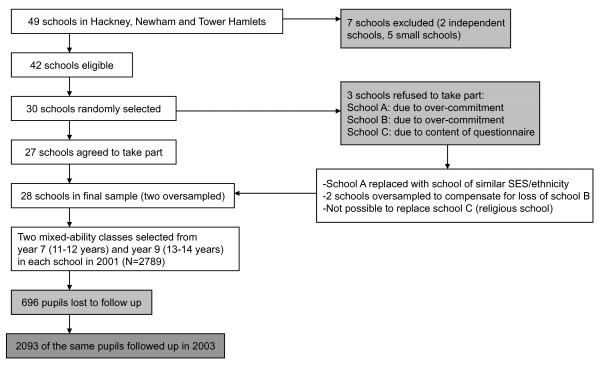
Background: The frequency of mental illness amongst adolescents and its potential long-term consequences make it an important topic to research in relation to risk and protective factors. Research on the relationship between physical activity and depressive symptoms in adolescents is limited. There is a particular lack of evidence from longitudinal studies. This study examines the relationship between depression and physical activity using the Research with East London Adolescents: Community Health Survey (RELACHS). Methods: This was a prospective cohort study. Participants were recruited from three Local Education Authority boroughs in East London in 2001 from year 7 (aged 11-12) and year 9 (aged 13-14) and were followed-up in 2003. All pupils in the 28 schools that took part were eligible for the study. Of the total 3,322 pupils eligible for the survey the overall response rate was 84% (2,789 pupils). A total of 2,093 (75%) pupils were also followed-up in 2003. The sample was multiethnic (73% of respondents were non-white) and deprived. Just under half of the sample was male (49%). Depressive symptoms were measured using the Short Moods and Feelings Questionnaire (SMFQ). Logistic regression analyses were used to examine the association between physical activity and depressive symptoms both cross-sectionally and longitudinally. Results: After adjustments, there was evidence for a cross-sectional association between physical activity and depressive symptoms for both boys and girls at baseline, with a decrease in the odds of depressive symptoms of about 8% for each additional hour of exercise undertaken per week (boys: odds ratio (OR) = 0.92, 95% CI 0.85 to 0.99; girls: OR = 0.92, 95% CI 0.85 to 1.00). There was no evidence for an association between a change in physical activity from baseline to follow-up and depressive symptoms at follow-up. Conclusions: This study provides some evidence for an association between level of physical activity and decreased depressive symptoms in adolescents. Further longitudinal research of these associations is required before physical activity can be recommended as an intervention for depression in adolescents.
Overview
The claims and statistics of this paper haven’t been checked yet.
Free: it reads the open-access text and checks the first 5 claims that cite a source we can check. Create a free account to check every claim.
Integrity signals
Registry
Cites
Statistics
Figures
Verification
Claims the paper makes
The claims and statistics of this paper haven’t been checked yet.
Free: it reads the open-access text and checks the first 5 claims that cite a source we can check. Create a free account to check every claim.
Claims other papers make about this one
Each is checked against this paper’s own text: does it say what the citing paper says it does?
In the citing paper
“In Britain, children under the age of 15 had an 8% reduction in depression symptoms for every hour of exercise completed/week (448).”
From Lack of Exercise Is a Major Cause of Chronic Diseases (2012) · cites this paper as [448]
Self-check
Percentages, sums and reported differences re-computed from the paper’s own numbers.
The self-check needs the paper’s full text.
Citations
Cites
The environment and disease: association or causation?
Hill, A. B. (2015) · Journal of the Royal Society of Medicine · doi:10.1177/0141076814562718 · Cited by 7,285
The Environment and Disease: Association or Causation?
Hill, A. B. (1965) · Proceedings of the Royal Society of Medicine · doi:10.1177/003591576505800503 · Cited by 6,974 · cited 1×
“Although it is impossible to prove a causal association with observational data, the Bradford Hill criteria provide a framework for making an overall judgement about whether a causal association is likely [34].”
(1995) · International Journal of Methods in Psychiatric Research · Cited by 1,847
The influence of physical activity on mental well-being
Fox, K. R. (1999) · Public Health Nutrition · doi:10.1017/s1368980099000567 · Cited by 1,415 · cited 1×
“Through participation in exercise classes or team sports, social support may become more readily available [9-11].”
Psychiatric Diagnosis in Child and Adolescent Suicide
Shaffer, D. (1996) · Archives of General Psychiatry · doi:10.1001/archpsyc.1996.01830040075012 · Cited by 1,252 · cited 1×
“Without effective treatment, adolescents with mental health difficulties are at increased risk of academic underachievement, substance abuse, isolation and suicide [3,4].”
Mental Health of Children and Young People in Great Britain, 2004: (557702010-001)
Green, H., McGinnity, A., Meltzer, H., Ford, T., & Goodman, R. (2005) · PsycEXTRA Dataset · doi:10.1037/e557702010-001 · Cited by 1,216 · cited 2×
“Those with emotional disorders were more likely to be adolescents (aged 11-16) than children (aged 5-10) and were more often girls than boys [ 2 ].”
Costello, E. J., Egger, H., & Angold, A. (2005) · Journal of the American Academy of Child & Adolescent Psychiatry · doi:10.1097/01.chi.0000172552.41596.6f · Cited by 1,134 · cited 1×
“In a review of child and adolescent psychiatric disorders, the median prevalence estimate worldwide for an impairing mental health condition was 12%, although estimates varied widely [1].”
Depressed Adolescents Grown Up
Weissman, M. M. (1999) · JAMA · doi:10.1001/jama.281.18.1707 · Cited by 952 · cited 1×
“Without effective treatment, adolescents with mental health difficulties are at increased risk of academic underachievement, substance abuse, isolation and suicide [3,4].”
The Mental Health of Children and Adolescents in Great Britain: (622732007-001)
Meltzer, H., Gatward, R., Goodman, R., & Ford, T. (2000) · PsycEXTRA Dataset · doi:10.1037/e622732007-001 · Cited by 905
The Ethics of Social Research with Children: An Overview1
Morrow, V., & Richards, M. (1996) · Children & Society · doi:10.1111/j.1099-0860.1996.tb00461.x · Cited by 825
Research works printed but not linked: 4
- Health Education Authority Young people and health: health behaviour in school-aged children 1997 London, UK: Health Education Authority
- Prescott-Clarke P Primatesta P Health survey for England: the health of young people '95-'97 1998 London, UK: The Stationary Office
- McCormick A Fleming D Charlton J Morbidity statistics from general practice, fourth national study 1991-1992. Series MB5 no. 3 1995 London, UK: HMSO
- Wardle J Sutton S Jarvis M HABITS - The Health and Behaviours of Teenagers Study 1998 London, UK: Health Behaviour Unit, Department of Epidemiology and Public Health, University College London
Cited by
Lack of Exercise Is a Major Cause of Chronic Diseases
Booth, F. W., Roberts, C. K., & Laye, M. J. (2012) · Comprehensive Physiology · doi:10.1002/cphy.c110025 · Cited by 2,575
Physical Activity and the Prevention of Depression
Mammen, G., & Faulkner, G. (2013) · American Journal of Preventive Medicine · doi:10.1016/j.amepre.2013.08.001 · Cited by 1,122
Role of Inactivity in Chronic Diseases: Evolutionary Insight and Pathophysiological Mechanisms
Booth, F. W., Roberts, C. K., Thyfault, J. P., Ruegsegger, G. N., & Toedebusch, R. G. (2017) · Physiological Reviews · doi:10.1152/physrev.00019.2016 · Cited by 696
Inflamed moods: A review of the interactions between inflammation and mood disorders
Rosenblat, J. D., Cha, D. S., Mansur, R. B., & McIntyre, R. S. (2014) · Progress in Neuro-Psychopharmacology and Biological Psychiatry · doi:10.1016/j.pnpbp.2014.01.013 · Cited by 609
Wu, X., Tao, S., Zhang, Y., Zhang, S., & Tao, F. (2015) · PLOS ONE · doi:10.1371/journal.pone.0119607 · Cited by 364
Physical activity during school recess
Ridgers, N. D., Salmon, J., Parrish, A.-M., Stanley, R. M., & Okely, A. D. (2012) · American Journal of Preventive Medicine · doi:10.1016/j.amepre.2012.05.019 · Cited by 332
Physical activity, leisure-time screen use and depression among children and young adolescents
Kremer, P., Elshaug, C., Leslie, E., Toumbourou, J. W., Patton, G. C., & Williams, J. (2014) · Journal of Science and Medicine in Sport · doi:10.1016/j.jsams.2013.03.012 · Cited by 287
Children’s Physical Activity and Depression: A Meta-analysis
Korczak, D. J., Madigan, S., & Colasanto, M. (2017) · Pediatrics · doi:10.1542/peds.2016-2266 · Cited by 269
Bell, S. L., Audrey, S., Gunnell, D., Cooper, A., & Campbell, R. (2019) · International Journal of Behavioral Nutrition and Physical Activity · doi:10.1186/s12966-019-0901-7 · Cited by 262
Sleep deprivation leads to mood deficits in healthy adolescents
Short, M. A., & Louca, M. (2015) · Sleep Medicine · doi:10.1016/j.sleep.2015.03.007 · Cited by 212
“Finally, there is uncertainty over the degree to which confounding factors known to affect both mood and sleep, such as physical activity [27] or exposure to bright light [28], are present.”
BackgroundNeuroimmunological effects of physical exercise in depression
Eyre, H., & Baune, B. T. (2012) · Brain, Behavior, and Immunity · doi:10.1016/j.bbi.2011.09.015 · Cited by 187
Resilience, lifestyle and symptoms of anxiety and depression in adolescence: the Young-HUNT study
Skrove, M., Romundstad, P., & Indredavik, M. S. (2013) · Social Psychiatry and Psychiatric Epidemiology · doi:10.1007/s00127-012-0561-2 · Cited by 210
“Adolescents with high levels of physical activity had lower risk for depressive symptoms in some longitudinal studies [40, 45], but not in others [11, 37].”
BackgroundResultHrafnkelsdottir, S. M., Brychta, R. J., Rognvaldsdottir, V., Gestsdottir, S., Chen, K. Y., Johannsson, E., Guðmundsdottir, S. L., & Arngrimsson, S. A. (2018) · PLOS ONE · doi:10.1371/journal.pone.0196286 · Cited by 159
Neurotrophins Role in Depression Neurobiology: A Review of Basic and Clinical Evidence
L. Neto, F., Borges, G., Torres-Sanchez, S., A. Mico, J., & Berrocoso, E. (2011) · Current Neuropharmacology · doi:10.2174/157015911798376262 · Cited by 149
“Indeed, these findings might be related with the beneficial effect that physical exercise seems to have on depressed patients [142-147].”
BackgroundPinto Pereira, S. M., Geoffroy, M.-C., & Power, C. (2014) · JAMA Psychiatry · doi:10.1001/jamapsychiatry.2014.1240 · Cited by 146
Hughes, C. W., Barnes, S., Barnes, C., DeFina, L. F., Nakonezny, P., & Emslie, G. J. (2013) · Mental Health and Physical Activity · doi:10.1016/j.mhpa.2013.06.006 · Cited by 132
“A variety of evidence supports the use of exercise as an alternative to antidepressant treatment (Dunn, Trivedi, Kampert, Clark, & Chambliss, 2005; Rothon et al., 2010; Sund, Larsson, & Wichstrom, 2010; Trivedi et al., 2006).”
BackgroundBarriers for recess physical activity: a gender specific qualitative focus group exploration
Pawlowski, C. S., Tjørnhøj‐Thomsen, T., Schipperijn, J., & Troelsen, J. (2014) · BMC Public Health · doi:10.1186/1471-2458-14-639 · Cited by 193
“Engaging in PA has positive effects on both the physical and mental health of children [3-6].”
BackgroundAssociations between obesogenic risk factors and depression among adolescents: a systematic review
Hoare, E., Skouteris, H., Fuller‐Tyszkiewicz, M., Millar, L., & Allender, S. (2014) · Obesity Reviews · doi:10.1111/obr.12069 · Cited by 124
“, 2010 United Kingdom (44) Aim: to examine the association between depression and physical activity in adolescents Depressive symptoms: Short Moods and Feelings Questionnaire (59) Physical Activity: questions relating to the amount of physical activity outside of school during a typical week Participants: year 7 and y…”
BackgroundInfluentialÅberg, M. A. I., Waern, M., Nyberg, J., Pedersen, N. L., Bergh, Y., Åberg, N. D., Nilsson, M., Kuhn, H. G., & Torén, K. (2012) · British Journal of Psychiatry · doi:10.1192/bjp.bp.111.103416 · Cited by 130
Exercise and Depressive Symptoms in Adolescents: A Longitudinal Cohort Study
Toseeb, U., Brage, S., Corder, K., Dunn, V. J., Jones, P. B., Owens, M., St Clair, M. C., van Sluijs, E. M. F., & Goodyer, I. M. (2014) · JAMA Pediatrics · doi:10.1001/jamapediatrics.2014.1794 · Cited by 100
Lifestyle Behavior and Mental Health in Early Adolescence
Loewen, O. K., Maximova, K., Ekwaru, J. P., Faught, E. L., Asbridge, M., Ohinmaa, A., & Veugelers, P. J. (2019) · Pediatrics · doi:10.1542/peds.2018-3307 · Cited by 102
“Our finding that adherence to PA recommendations in early adolescence is associated with 47% fewer mental health visits in subsequent years is corroborated by some(13,25,26) but not all prospective studies.(27,28) Ströhle et al(26) reported for a prospective sample of older TABLE 2 Characteristics of Fifth-Grade Stude…”
ResultBrunet, J., Sabiston, C. M., Chaiton, M., Barnett, T. A., O’Loughlin, E. K., Low, N. C. P., & O’Loughlin, J. L. (2012) · Annals of Epidemiology · doi:10.1016/j.annepidem.2012.10.006 · Cited by 127
“[25] found a negative association between physical activity and depressive symptoms at baseline in 11- to 12year-old boys and girls; however, change in physical activity from baseline to follow-up at 13e14 years of age was not statistically significantly associated with depressive symptoms at follow-up.”
BackgroundResultAdeniyi, A. F., Okafor, N., & Adeniyi, C. Y. (2011) · Child and Adolescent Psychiatry and Mental Health · doi:10.1186/1753-2000-5-16 · Cited by 114
“In Norwegian adolescents, Sagatun et al [9] had reported that emotional symptoms at age 18-19 were inversely associated with physical activity at age 15-16 in both genders, while a study carried out in an East London community found that there was evidence for a cross-sectional association between physical activity an…”
BackgroundSocial support, stress, health, and academic success in Ghanaian adolescents: A path analysis
Glozah, F. N., & Pevalin, D. J. (2014) · Journal of Adolescence · doi:10.1016/j.adolescence.2014.03.010 · Cited by 85
“Less social support on the other hand has been reported to influence school failure (Domaga1aZy sk, 2006) and poor academic performance (Rothon et al., 2010).”
BackgroundInfluence of Physical Exercise on Neuroimmunological Functioning and Health: Aging and Stress
Archer, T., Fredriksson, A., Schϋtz, E., & Kostrzewa, R. M. (2010) · Neurotoxicity Research · doi:10.1007/s12640-010-9224-9 · Cited by 95
Garcia, D., Archer, T., Moradi, S., & Arntén, A.-C. A. (2012) · Psychology · doi:10.4236/psych.2012.34047 · Cited by 94
Husárová, D., Veselská, Z. D., Klein, D., Hamřík, Z., Sigmundová, D., van Dijk, J. P., Reijneveld, S. A., & Gecková, A. M. (2014) · International Journal of Public Health · doi:10.1007/s00038-014-0627-x · Cited by 92
Physical activity, resilience, and depressive symptoms in adolescence
Moljord, I. E. O., Moksnes, U. K., Espnes, G. A., Hjemdal, O., & Eriksen, L. (2014) · Mental health and physical activity · doi:10.1016/j.mhpa.2014.04.001 · Cited by 103
Physical activity in adolescents with psychiatric disorders and in the general population
Mangerud, W. L., Bjerkeset, O. A., Lydersen, S., & Indredavik, M. S. (2014) · Child and Adolescent Psychiatry and Mental Health · doi:10.1186/1753-2000-8-2 · Cited by 90
“These numbers correspond with other findings of low levels of physical activity in adults and adolescents with depression and anxiety [37-40].”
ResultSabiston, C. M., O’Loughlin, E. K., Brunet, J., Chaiton, M., Low, N. C. P., Barnett, T. A., & O’Loughlin, J. L. (2012) · Preventive Medicine · doi:10.1016/j.ypmed.2012.11.013 · Cited by 89
McKercher, C., Sanderson, K. A., Schmidt, M. D., Otáhal, P., Patton, G. C., Dwyer, T., & Venn, A. (2014) · Social Psychiatry and Psychiatric Epidemiology · doi:10.1007/s00127-014-0863-7 · Cited by 90
“While some studies indicate an inverse association between leisure-time physical activity and risk of emotional [11] and psychological distress [9], depressive symptoms [12–15], dysthymic disorder [12], and major depressive disorder [8, 12], other results are equivocal [7, 10, 16].”
Pawlowski, C. S., Ergler, C. R., Tjørnhøj‐Thomsen, T., Schipperijn, J., & Troelsen, J. (2014) · European Physical Education Review · doi:10.1177/1356336x14561533 · Cited by 87
“The health benefits of sufficient childhood PA include improved psychological wellbeing, bone density, and motor skill development (Lubans et al., 2010; Rothon et al., 2010; Tobias et al., 2007), reduced waist circumference, less clustering of cardiovascular disease risk factors (Andersen et al.”
BackgroundWang, R., Bishwajit, G., Zhou, Y., Wu, X. L., Feng, D., Tang, S., Chen, Z., SHAW, I. F., Wu, T., Song, H., et al. (2019) · PLoS ONE · doi:10.1371/journal.pone.0221430 · Cited by 77
Wu, X., Bastian, K., Öhinmaa, A., & Veugelers, P. J. (2017) · Annals of Epidemiology · doi:10.1016/j.annepidem.2017.12.002 · Cited by 66
Wunram, H. L., Hamacher, S., Hellmich, M., Volk, M., Jänicke, F., Reinhard, F., Bloch, W., Zimmer, P., Graf, C., Schönau, E., et al. (2018) · European Child & Adolescent Psychiatry · doi:10.1007/s00787-017-1071-2 · Cited by 56
“Studies either lack a sufficient number of participants or hold methodological weaknesses making findings inconsistent [33, 47, 66].”
BackgroundStraatmann, V. S., Oliveira, A. J., Rostila, M., & Lopes, C. S. (2016) · BMC Public Health · doi:10.1186/s12889-016-3606-8 · Cited by 50
“[22] with adolescents from East London indicated no significant association between changes in level of physical activity and odds of depressive symptoms at follow-up.”
BackgroundRidgers, N. D., Timperio, A. F., Crawford, D. A., & Salmon, J. (2013) · PLoS ONE · doi:10.1371/journal.pone.0056838 · Cited by 55
“Regular physical activity during adolescence is important for physical and mental health [1,2].”
BackgroundChow, S. K. Y., & Choi, E. K. Y. (2019) · International Journal of Environmental Research and Public Health · doi:10.3390/ijerph16173210 · Cited by 67
Cardiorespiratory Fitness May Help in Protecting Against Depression Among Middle School Adolescents
Ruggero, C. J., Petrie, T., Sheinbein, S., Greenleaf, C., & Martin, S. (2015) · Journal of Adolescent Health · doi:10.1016/j.jadohealth.2015.03.016 · Cited by 52
“25) between physical activity on depression over the long-term, but two others [24,27] reported no such connection, and a sixth [29] found only a partial effect.”
Rank, job stress, psychological distress and physical activity among military personnel
Martins, L., & Lopes, C. D. S. (2013) · BMC Public Health · doi:10.1186/1471-2458-13-716 · Cited by 78
“There is abundant literature concerning the direction of the association, showing physical activity benefits mental health, and each day brings further evidence [24-26].”
BackgroundPoulsen, P. H., Biering, K., & Andersen, J. H. (2015) · BMC Public Health · doi:10.1186/s12889-015-2658-5 · Cited by 62
“Several prospective studies have examined the association between PA and the risk of future depression, where some studies show a weak association between a higher level of PA during adolescence and lower risk of future depression/symptoms of depression [9, 30] in boys [11, 31] and in girls [32], but others do not [10…”
BackgroundDepressive Symptoms and Cardiorespiratory Fitness in Obese Adolescents
Shomaker, L. B., Tanofsky‐Kraff, M., Zocca, J. M., Field, S. E., Drinkard, B. E., & Yanovski, J. A. (2011) · Journal of Adolescent Health · doi:10.1016/j.jadohealth.2011.05.015 · Cited by 69
Zhang, Y., Wu, X., Tao, S., Li, S., Ma, L., Yu, Y., Sun, G., Li, T., & Tao, F. (2021) · Environmental Health and Preventive Medicine · doi:10.1186/s12199-021-01025-0 · Cited by 58
Arat, G., & Wong, P. W.-C. (2017) · Child & Youth Services · doi:10.1080/0145935x.2017.1297202 · Cited by 48
“On the contrary, low levels of exercising for 60min per daywithin aweek strongly associated with lower odds of depression in Chinese adolescents, which contrasts existing studies (Dopp, Mooney, Armitage, & King, 2012; Rothon et al., 2010).”
Resultda Costa, B. G. G., Chaput, J., Lopes, M. V. V., Malheiros, L. E. A., & da Silva, K. S. (2020) · Journal of sport and health science/Journal of Sport and Health Science · doi:10.1016/j.jshs.2020.08.003 · Cited by 59
Weekly sport practice and adolescent well-being
Merglen, A., Flatz, A., Bélanger, R. E., Michaud, P., & Surís, J.-C. (2013) · Archives of Disease in Childhood · doi:10.1136/archdischild-2013-303729 · Cited by 49
Haapala, H. L., Hirvensalo, M. H., Laine, K., Laakso, L., Hakonen, H., Lintunen, T., & Tammelin, T. (2014) · Health Education Research · doi:10.1093/her/cyu030 · Cited by 92
“Physical activity (PA) has multiple positive benefits for the physical and mental health of adolescents [1, 2], as well as their cognition and academic perform-”
BackgroundAndersen, H. B., Christiansen, L. B., Pawlowski, C. S., & Schipperijn, J. (2019) · Landscape and Urban Planning · doi:10.1016/j.landurbplan.2019.103617 · Cited by 53
“…other western countries do not meet the recommendation of at least 60 min of PA each day (Andersen et al., 2006; Fedewa and Ahn, 2011; Lubans, Morgan, Cliff, Barnett & Okely, 2010; Tobias, Steer, Mattocks, Riddoch, & Ness, 2007; Rothon et al., 2010; Jo Inchley & Young, 2013; Troiano et al., 2008).”
BackgroundFerreira, V. R., Jardim, T. V., Póvoa, T. I. R., Viana, R. B., Sousa, A. L. L., & Jardim, P. C. B. V. (2020) · Revista de Saúde Pública · doi:10.11606/s1518-8787.2020054001888 · Cited by 113
Buchan, M. C., Romano, I., Butler, A. E., Laxer, R. E., Patte, K. A., & Leatherdale, S. T. (2021) · International Journal of Behavioral Nutrition and Physical Activity · doi:10.1186/s12966-021-01201-z · Cited by 50
Larsson, B. S., Ingul, J. M., Jozefiak, T., Leikanger, E., & Sund, A. M. (2016) · Nordic Journal of Psychiatry · doi:10.3109/08039488.2015.1109137 · Cited by 48
“It should be noted that recommended optimal cut-off points for total SMFQ scores based mostly on ROC analyses have varied greatly from 4 to 12 in various studies (11,13,15,26,27).”
BackgroundSedentarismo, obesidad y salud mental en la población española de 4 a 15 años de edad
Rodríguez-Hernández, A., Sánchez, E. D. L. C., Molina, S. F., & Martínez-Santos, R. (2011) · Revista Española de Salud Pública · doi:10.1590/s1135-57272011000400006 · Cited by 90
Brown, D. M. Y., KWAN, M. Y. W., Arbour‐Nicitopoulos, K. P., & Cairney, J. (2020) · Preventive Medicine · doi:10.1016/j.ypmed.2020.106352 · Cited by 47
Decline in physical activity during adolescence is not associated with changes in mental health
van Dijk, M. L., Savelberg, H. H. C. M., Verboon, P., Kirschner, P. A., & de Groot, R. H. M. (2016) · BMC Public Health · doi:10.1186/s12889-016-2983-3 · Cited by 47
“Most of the studies use cross-sectional designs [14]; however, * Correspondence: Martin.”
BackgroundInfluentialBrunet, J., Sabiston, C. M., O’Loughlin, E. K., Chaiton, M., Low, N. C. P., & O’Loughlin, J. L. (2013) · Preventive Medicine · doi:10.1016/j.ypmed.2013.12.003 · Cited by 42
“While the association between symptoms of depression and physical activity has been investigated in numerous publications (Dunn et al., 2001; Lawlor and Hopker, 2001; Rothon et al., 2010; Strawbridge et al., 2002; Teychenne et al., 2008a; Teychenne et al., 2008b), the association between symptoms of depression and sed…”
BackgroundIncreases in Use and Activity Due to Urban Renewal: Effect of a Natural Experiment
Andersen, H. B., Christiansen, L. B., Klinker, C. D., Ersbøll, A. K., Troelsen, J., Kerr, J., & Schipperijn, J. (2017) · American Journal of Preventive Medicine · doi:10.1016/j.amepre.2017.03.010 · Cited by 41
Khan, Y., Taghdisi, M. H., & Nourijelyani, K. (2015) · PubMed Central · Cited by 70
Cost-utility analysis of a dance intervention for adolescent girls with internalizing problems
Philipsson, A., Duberg, A., Möller, M., & Hagberg, L. (2013) · Cost Effectiveness and Resource Allocation · doi:10.1186/1478-7547-11-4 · Cited by 53
“In addition to an increase in QOL, sustained new healthy habits for this target group might prevent future psychiatric illness [41].”
BackgroundZhang, F., Yin, X., Bi, C., Ji, L., Wu, H., Li, Y., Sun, Y., Ren, S., Wang, G., Yang, X., et al. (2020) · BMC Public Health · doi:10.1186/s12889-020-09819-7 · Cited by 39
Kleppang, A. L., Thurston, M., Hartz, I., & Hagquist, C. (2019) · Scandinavian Journal of Public Health · doi:10.1177/1403494817716374 · Cited by 33
Bursnall, P. (2014) · Worldviews on Evidence-Based Nursing · doi:10.1111/wvn.12064 · Cited by 33
Suetani, S., Mamun, A. A., Williams, G. M., Najman, J. M., McGrath, J. J., & Scott, J. G. (2017) · Journal of Psychiatric Research · doi:10.1016/j.jpsychires.2017.06.013 · Cited by 40
“…association between baseline PAE and subsequent mental health status (Birkeland et al., 2009; Brunet et al., 2013; Gunnell et al., 2016; Rothon et al., 2010; Toseeb et al., 2014), while others found an inverse association between PAE and anxiety/ depressive symptoms (Ashdown-Franks et…”
BackgroundInfluentialLuo, X., Liu, H., Sun, Z., Wei, Q., Zhang, J., Zhang, T., & Liu, Y. (2025) · Scientific Reports · doi:10.1038/s41598-025-95186-5 · Cited by 43
Fong, B. Y. F., Wong, M. C. S., Law, V., Lo, M. F., Ng, T. K. C., Yee, H. H. L., Leung, T. C. H., & Ho, W. T. (2020) · International Journal of Environmental Research and Public Health · doi:10.3390/ijerph17186653 · Cited by 33
“An increase in physical activity was associated with a decrease in depressive symptoms which implied that physical activity at home could potentially relieve stress and depressive symptoms [43].”
BackgroundAssociations between physical activity and mental health and behaviour in early adolescence
Booth, J. N., Ness, A., Joinson, C. J., Tomporowski, P. D., Boyle, J. M. E., Leary, S. D., & Reilly, J. J. (2022) · Mental health and physical activity · doi:10.1016/j.mhpa.2022.100497 · Cited by 45
Pawlowski, C. S., Andersen, H. B., Tjørnhøj‐Thomsen, T., Troelsen, J., & Schipperijn, J. (2015) · BMC Public Health · doi:10.1186/s12889-015-2687-0 · Cited by 39
“multitude of short- and long-term health benefits by its preventive effects on numerous physical conditions, and ability to stimulate cognitive performance and mental wellbeing [1–5].”
BackgroundYıldızer, G., Bılgın, E., Korur, E. N., Novak, D., & Demirhan, G. (2017) · Journal of sport and health science/Journal of Sport and Health Science · doi:10.1016/j.jshs.2017.10.008 · Cited by 33
“The IPAQ consists of 3 PA sections: vigorous, moderate, and walking PA. Based on PA recommendations calling for 60 min/day of PA in adolescents,22 the PA score was dichotomized into “yes” or “no” for at least 60 min daily participation for overall PAP.”
ResultInfluentialOpdal, I. M., Morseth, B., Handegård, B. H., Lillevoll, K. R., Ask, H., Nielsen, C. S., Horsch, A., Furberg, A., Rosenbaum, S., & Rognmo, K. (2019) · BMC Public Health · doi:10.1186/s12889-019-7271-6 · Cited by 35
“The majority of the studies in the field are crosssectional [16], with the overall result indicating that higher levels of physical activity are related to lower levels of depressive symptoms [17].”
ResultSampasa‐Kanyinga, H., Colman, I., Dumuid, D., Janssen, I., Goldfield, G. S., Wang, J., Patte, K. A., Leatherdale, S. T., & Chaput, J. (2021) · PLoS ONE · doi:10.1371/journal.pone.0256867 · Cited by 35
“In parallel, research has shown that physical activity is prospectively associated with lower depressive symptoms among adolescents [58].”
BackgroundKhan, A., & Burton, N. W. (2017) · Mental Health and Physical Activity · doi:10.1016/j.mhpa.2017.03.001 · Cited by 27
Abdelbasset, W. K., Alrawaili, S. M., Nambi, G. S., Yassen, E., Moawd, S. A. A., & Ahmed, A. (2020) · Clinical Rheumatology · doi:10.1007/s10067-020-05086-4 · Cited by 32
“Also, it is considered an important risk factor for self-murder and causes workforce absence [11].”
BackgroundRanøyen, I., Stenseng, F., Klöckner, C. A., Wallander, J. L., & Jozefiak, T. (2015) · BMC Public Health · doi:10.1186/s12889-015-1431-0 · Cited by 39
“Furthermore, the psychosocial mechanisms explaining the links between physical activity and anxiety/depression need to be examined [50].”
BackgroundThe Association of Sports Participation With Depressive Symptoms and Anxiety Disorder in Adolescents
Chi, G., & Wang, L. (2022) · Frontiers in Public Health · doi:10.3389/fpubh.2022.860994 · Cited by 35
“Despite evidence having convincingly demonstrated the significance of sports participation for preventing risks of depressive symptoms and anxiety disorders among adolescents (15), to date, no study has yet used a China-based data set, In turn, this has made researchers uncertain about the association between sports p…”
BackgroundDeng, G.-F., Wen, Y., Cheng, J., Huang, B., & Liu, N. (2024) · BMC Psychiatry · doi:10.1186/s12888-024-05945-3 · Cited by 30
van Kann, D., de Vries, S. I., Schipperijn, J., de Vries, N. K., Jansen, M. W. J., & Kremers, S. (2017) · Journal of Physical Activity and Health · doi:10.1123/jpah.2016-0656 · Cited by 36
Luo, L., Zeng, X., Cao, Y., Hu, Y., Wen, S., Tang, K., Ding, L., Wang, X., & Song, N. (2023) · International Journal of Environmental Research and Public Health · doi:10.3390/ijerph20043167 · Cited by 26
“2% prevalence of anxiety in children and adolescents aged 5–17 years [15].”
Physical activity and affect in elementary school children's daily lives
Kühnhausen, J., Leonhardt, A., Dirk, J., & Schmiedek, F. (2013) · Frontiers in Psychology · doi:10.3389/fpsyg.2013.00456 · Cited by 30
“ORIGINAL RESEARCH ARTICLE published: 22 July 2013 doi: 10.3389/fpsyg.2013.00456 Physical activity and affect in elementary school children’s daily lives”
BackgroundInfluentialTacchi, M. J., Heggelund, J., & Scott, J. (2019) · Early Intervention in Psychiatry · doi:10.1111/eip.12783 · Cited by 24
“However, links between physical activity and the development of specific mental disorders are less certain; with some, but not all, studies reporting significant associations (eg, Kaseva et al., 2016; Rothon et al., 2010; Veses et al., 2014).”
Wu, X., Kirk, S., Öhinmaa, A., & Veugelers, P. J. (2017) · BMC Psychology · doi:10.1186/s40359-017-0208-x · Cited by 27
“Based on established literature we identified diet quality, PA and sedentary behaviour as potentially relevant health behaviours, and sociodemographics as potential confounders [7, 8, 13, 17, 24, 27].”
BackgroundLi, Y., Su, S., Luo, B., Wang, J., & Liao, S. (2022) · International Journal of Disaster Risk Reduction · doi:10.1016/j.ijdrr.2022.102793 · Cited by 30
“[22] has found that physical activity does not protect depression longitudinally, although a cross-sectional effect was identified.”
Lang, C., Brand, S., Colledge, F., Ludyga, S., Pühse, U., & Gerber, M. (2018) · Journal of sport and health science/Journal of Sport and Health Science · doi:10.1016/j.jshs.2018.03.002 · Cited by 35
Effect of exercise on therapeutic response in depression treatment
Taşçı, G., Baykara, S., Gürok, M. G., & Atmaca, M. (2018) · Psychiatry and Clinical Psychopharmacology · doi:10.1080/24750573.2018.1426159 · Cited by 33
“and recurrence, is a significant risk factor for suicide, and causes workforce loss [2].”
BackgroundActivating schoolyards: study design of a quasi-experimental schoolyard intervention study
Andersen, H. B., Pawlowski, C. S., Scheller, H. B., Troelsen, J., Toftager, M., & Schipperijn, J. (2015) · BMC Public Health · doi:10.1186/s12889-015-1828-9 · Cited by 28
“Physical activity (PA) in childhood is associated with a multitude of positive short- and long-term health consequences due to its stimulating influence on physical conditions, cognitive performance and mental well-being [1–5].”
BackgroundCheng, F. K. (2016) · International Journal of Africa Nursing Sciences · doi:10.1016/j.ijans.2016.01.001 · Cited by 34
Lysfjord, E. M., Hjemdal, O., & Aune, T. K. (2021) · Scandinavian Journal of Child and Adolescent Psychiatry and Psychology · doi:10.21307/sjcapp-2021-008 · Cited by 38
“≥4 (55), ≥6 (56), ≥8 (42, 57, 58), ≥10 (59), ≥11 (40, 48) and ≥12 (60).”
Pindus, D. M., Cumming, S. P., Sherar, L. B., Gammon, C., Coelho-e-Silva, M. J., & Malina, R. M. (2013) · International Journal of Behavioral Medicine · doi:10.1007/s12529-013-9344-8 · Cited by 24
“Previous research indicates that mood or mood-related psychopathologies (anxiety, depression) are associated with HRQoL [31, 32], as well as PA [74, 75].”
BackgroundOpdal, I. M., Morseth, B., Handegård, B.-H., Lillevoll, K. R., Nilsen, W., Nielsen, C., Furberg, A.-S., Rosenbaum, S., & Rognmo, K. (2020) · BMJ Open · doi:10.1136/bmjopen-2019-035549 · Cited by 20
Hou, J., Deng, Q., Sha, L., Zhu, J., Xiang, R., Zhao, X., Xiao, C., Qin, C., Qu, Y., Han, T., et al. (2024) · Journal of Affective Disorders · doi:10.1016/j.jad.2024.11.065 · Cited by 33
Stival, C., Lugo, A., Barone, L., Fattore, G., Odone, A., Salvatore, S., Santoro, E., Scaglioni, S., van den Brandt, P. A., Gallus, S., et al. (2022) · Nutrients · doi:10.3390/nu14112258 · Cited by 28
Hamer, M., Patalay, P., Bell, S., & Batty, G. D. (2020) · Journal of Epidemiology & Community Health · doi:10.1136/jech-2019-213399 · Cited by 23
Qiu, F., Peng, W., Li, M., Zhang, L., Zhu, H., Tan, X., Li, H., & Zhang, J. (2019) · Brain Research · doi:10.1016/j.brainres.2019.146382 · Cited by 18
THE EFFECTS OF CROSS-FIT, PILATES AND ZUMBA EXERCISE ON BODY COMPOSITION AND BODY IMAGE OF WOMEN
Baştuğ, G., Özcan, R., GÜLTEKİN, D., & GÜNAY, Ö. (2016) · International Journal of Sport Exercise & Training Sciences · doi:10.18826/ijsets.25037 · Cited by 34
“Rothon et al. (2010) by reviewing the relation between physical activity and depression among east London adolescent boys and girls show that participating in sport activities can reduce depression among adolescents.”
BackgroundArat, G. (2015) · Vulnerable Children and Youth Studies · doi:10.1080/17450128.2015.1045437 · Cited by 25
“…topic in existing literature, particularly in terms of depression and anxiety (Biddle & Asare, 2011; DeMoor, Boomsma, Stubbe, Willemsen, & De Geus, 2008; Hallal, Victora, Azevedo, & Wells, 2006; Molt, Birnbaum, Kubik, & Dishman, 2004; Ortega, Ruiz, Castillo, & Sjöström, 2008; Rothon et al.,2010).”
Park, J.-H., Prochnow, T. M., Amo, C., Curran, L. S., & Smith, M. L. (2023) · International Journal of Environmental Research and Public Health · doi:10.3390/ijerph20031726 · Cited by 24
“Previous research reports have shown that participating in PA reduces anxiety and depression [24], but, importantly, people aged 65 years and older are more vulnerable to depression compared to those under 65, partially due to physical inactivity.”
BackgroundWu, X., Veugelers, P. J., & Öhinmaa, A. (2021) · Frontiers in Nutrition · doi:10.3389/fnut.2021.638259 · Cited by 20
Correlates of depression among school going adolescents in the urban area of Patna in eastern India
Bharati, D. R., Kumari, S., Prasad, N., Choudhary, S., Kumar, S., & Pal, R. (2022) · Journal of Family Medicine and Primary Care · doi:10.4103/jfmpc.jfmpc_125_21 · Cited by 18
“[29] However, two other UK‐based studies had noted the association of reduction of depressive symptoms with the adolescents who were more physically active had lesser depressive symptoms.[30,31]”
BackgroundSingh, M., Sharma, P., Raj, D., Sharma, S., Kaushal, A., & Raina, S. K. (2018) · Indian Journal of Psychological Medicine · doi:10.4103/ijpsym.ijpsym_85_18 · Cited by 18
“Majority of highly paid jobs are sedentary as compared to active work.[27]”
BackgroundJeopardized mental health of children and adolescents in coronavirus disease 2019 pandemic
Jin, B., Lee, S., & Chung, U. (2022) · Korean Journal of Pediatrics · doi:10.3345/cep.2021.01753 · Cited by 15
Depression und Risikoverhalten bei Jugendlichen
Heger, J., Brunner, R. M., Parzer, P., Fischer, G., Resch, F., & Kaess, M. (2014) · Praxis der Kinderpsychologie und Kinderpsychiatrie · doi:10.13109/prkk.2014.63.3.177 · Cited by 18
Won, D., Bang, H., Davis, L., & Park, S. (2023) · Asia Pacific Journal of Education · doi:10.1080/02188791.2023.2243650 · Cited by 20
“Studies examining the association between PA and adolescent depressive symptoms found that adolescents who were more physically active had reduced odds of depressive symptoms (Rothon et al., 2010; Wiles et al., 2012).”
Metadata
- Authors
- Rothon, C., Edwards, P., Bhui, K., Viner, R. M., Taylor, S., & Stansfeld, S. A.
- Affiliations
- Queen Mary University of London (GB)
- London School of Hygiene & Tropical Medicine (GB)
- University of London (GB)
- Corresponding author
- Stansfeld, Stephen A
- Venue
- BMC Medicine
- Published
- 2010-05-28
- Volume
- 8
- Issue
- 1
- Pages
- 32-32
- ISSN
- 1741-7015 (ISSN-L)
- PMC
- PMC2895574
- OpenAlex
- W2122949714
- Cited by
- 204
- References
- 41
- Citations by year
- 2026: 6 · 2025: 11 · 2024: 8 · 2023: 10 · 2022: 10 · 2021: 9 · 2020: 15 · 2019: 15 · 2018: 8 · 2017: 17 · 2016: 15 · 2015: 16 · 2014: 22 · 2013: 18 · 2012: 14
- FWCI
- 9.10
- Type
- journal article
- Language
- en
- Open access
- gold
- doi.org
- Licence
- Locations
- BMC Medicine (publishedVersion, cc-by)
- PubMed Central (publishedVersion, cc-by)
- PubMed (publishedVersion)
- LSHTM Research Online (London School of Hygiene and Tropical Medicine) (acceptedVersion)
- DOAJ (DOAJ: Directory of Open Access Journals) (submittedVersion)
- UCL Discovery (University College London) (submittedVersion)
- Queen Mary Research Online (Queen Mary University of London) (submittedVersion, cc-by)
- Funders
- Medical Research Council
- Topics
- Health Sciences › Medicine › Public Health, Environmental and Occupational Health › Physical Activity and Health
- Social Sciences › Psychology › Clinical Psychology › Child and Adolescent Psychosocial and Emotional Development
- Social Sciences › Life-span and Life-course Studies › Recreational Sport and Physical Activity
- Keywords
- physical activity, depressive symptoms, adolescents, depression prevention, sex differences
- MeSH terms
- Adolescent, Child, Depression, Female, Follow-Up Studies, Humans, London, Male, Motor Activity, Prospective Studies, Students, Cohort Studies, In Vitro Techniques
About these checks
Registry, retraction, Cites and statistics results are computed, not judged, with one exception: a printed reference that no index lists is read once by a model before it counts as a citation error. Claims are extracted by a model and kept only when their quote appears verbatim in the text; each cited source is then checked, with a model’s help, for whether it says what the claim relies on. Those verdicts can be wrong — read the claim’s quote and the cited source before relying on one.
Statistics and arithmetic are recomputed, not judged.
Confidence bands are shown only for fields calibrated on our annotated test set. None is calibrated yet, so no band is shown.
What counts as a claim ›How we measure confidence ›How we check this ›
Are you an author, or do you see a problem with this page? Request a review
Data sources
Bibliographic data: Semantic Scholar, OpenAlex, Crossref.
Contains information from the Semantic Scholar Academic Graph Datasets, made available under the ODC Attribution License (ODC-BY 1.0).
Semantic Scholar’s data is described in: Kinney, R., et al. (2023). The Semantic Scholar Open Data Platform. arXiv:2301.10140.
