

The DOI matches its Crossref record; 93 of the 93 references it cites were found in a registry or an index.
Intermittent fasting attenuates lipopolysaccharide-induced neuroinflammation and memory impairment.
Open accessAbstract
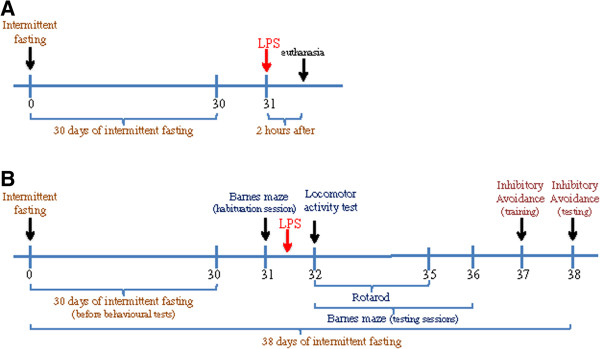
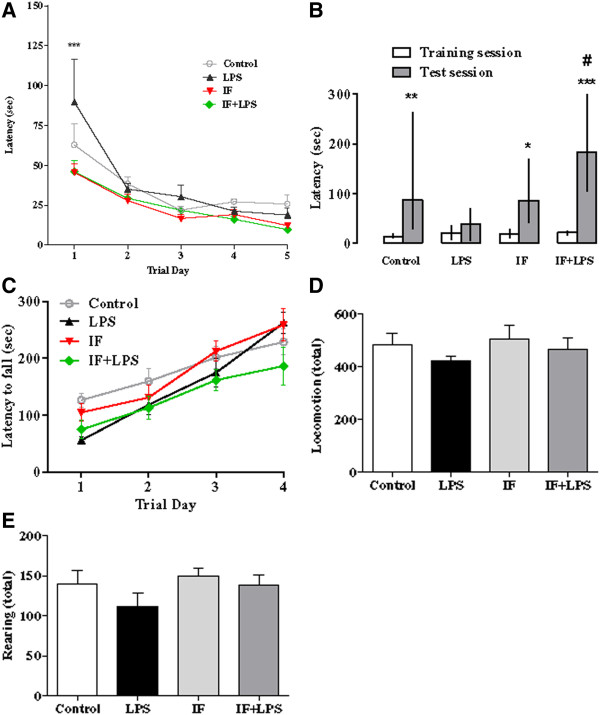
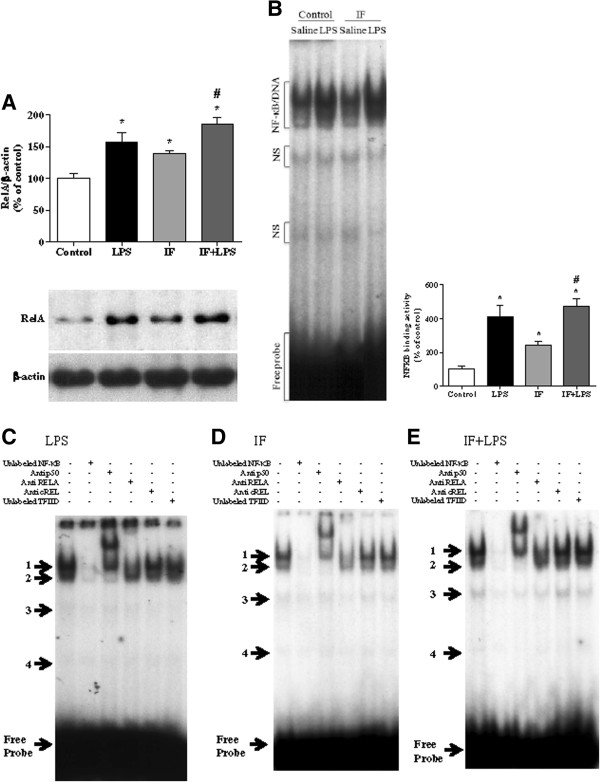
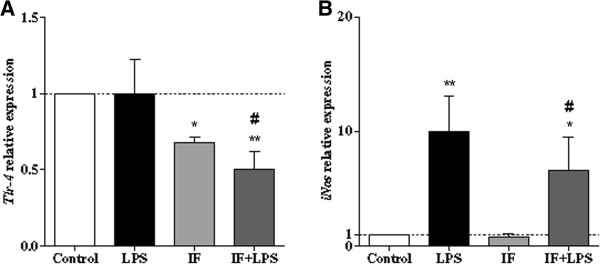
BACKGROUND: Systemic bacterial infections often result in enduring cognitive impairment and are a risk factor for dementia. There are currently no effective treatments for infection-induced cognitive impairment. Previous studies have shown that intermittent fasting (IF) can increase the resistance of neurons to injury and disease by stimulating adaptive cellular stress responses. However, the impact of IF on the cognitive sequelae of systemic and brain inflammation is unknown. METHODS: Rats on IF for 30 days received 1 mg/kg of lipopolysaccharide (LPS) or saline intravenously. Half of the rats were subjected to behavioral tests and the other half were euthanized two hours after LPS administration and the hippocampus was dissected and frozen for analyses. RESULTS: Here, we report that IF ameliorates cognitive deficits in a rat model of sepsis by a mechanism involving NF-κB activation, suppression of the expression of pro-inflammatory cytokines, and enhancement of neurotrophic support. Treatment of rats with LPS resulted in deficits in cognitive performance in the Barnes maze and inhibitory avoidance tests, without changing locomotor activity, that were ameliorated in rats that had been maintained on the IF diet. IF also resulted in reduced levels of mRNAs encoding the LPS receptor TLR4 and inducible nitric oxide synthase (iNOS) in the hippocampus. Moreover, IF prevented LPS-induced elevation of IL-1α, IL-1β and TNF-α levels, and prevented the LPS-induced reduction of BDNF levels in the hippocampus. IF also significantly attenuated LPS-induced elevations of serum IL-1β, IFN-γ, RANTES, TNF-α and IL-6 levels. CONCLUSIONS: Taken together, our results suggest that IF induces adaptive responses in the brain and periphery that can suppress inflammation and preserve cognitive function in an animal model of systemic bacterial infection.
Overview
The claims and statistics of this paper haven’t been checked yet.
Run the check — free, no account needed. It reads the open-access text and checks the sources it cites.
Integrity signals
Registry
Cites
Statistics
Figures
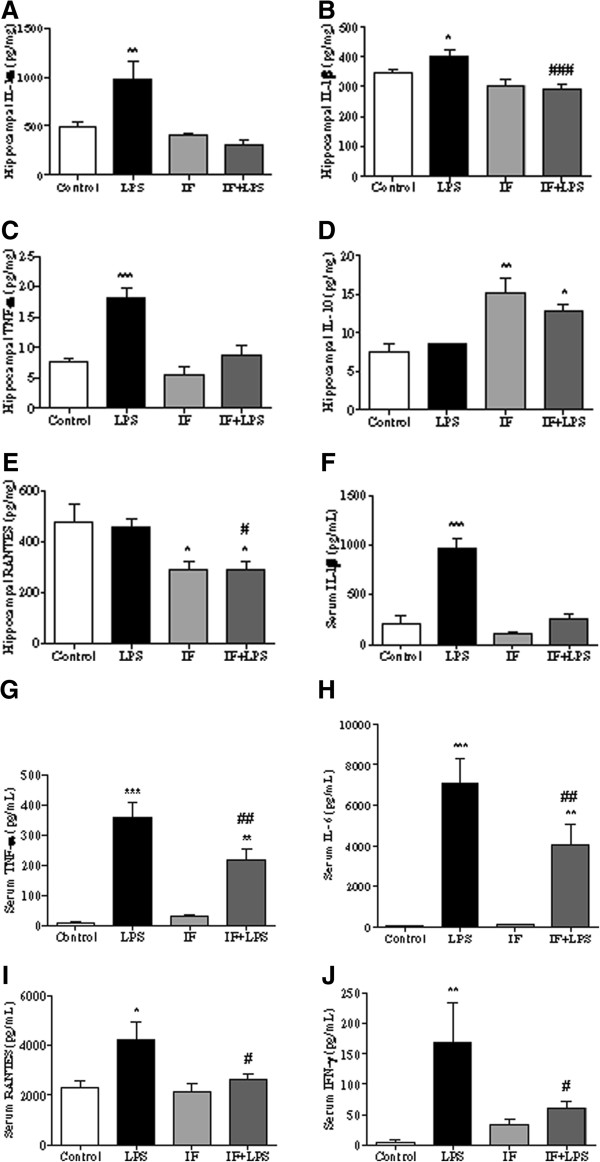
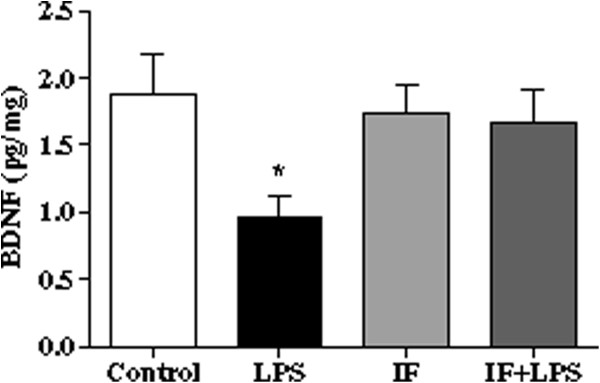
Verification
Claims the paper makes
The claims and statistics of this paper haven’t been checked yet.
Run the check — free, no account needed. It reads the open-access text and checks the sources it cites.
Claims other papers make about this one
Each is checked against this paper’s own text: does it say what the citing paper says it does?
In the citing paper
“Prolonged fasting reduces inflammation, with β-HB selectively suppressing inflammasome activation in response to lipotoxic fatty acids (Vasconcelos et al., 2014).”
From Microtubule-associated protein 1 light chain 3B, (LC3B) is necessary to maintain lipid-mediated homeostasis in the retinal pigment epithelium (2018) · cites this paper as Vasconcelos et al., 2014
Self-check
Percentages, sums and reported differences re-computed from the paper’s own numbers.
The self-check needs the paper’s full text.
Citations
Cites
Bradford, M. M. (1976) · Analytical Biochemistry · doi:10.1016/0003-2697(76)90527-3 · Cited by 255,302
The role of pattern-recognition receptors in innate immunity: update on Toll-like receptors
Kawai, T., & Akira, S. (2010) · Nature Immunology · doi:10.1038/ni.1863 · Cited by 9,304
Pfaffl, M. W. (2002) · Nucleic Acids Research · doi:10.1093/nar/30.9.e36 · Cited by 7,377
Interleukin-10 and the Interleukin-10 Receptor
Moore, K. W., de Waal Malefyt, R., Coffman, R. L., & O'Garra, A. (2001) · Annual Review of Immunology · doi:10.1146/annurev.immunol.19.1.683 · Cited by 6,737
NF-κB AND REL PROTEINS: Evolutionarily Conserved Mediators of Immune Responses
Ghosh, S., May, M. J., & Kopp, E. B. (1998) · Annual Review of Immunology · doi:10.1146/annurev.immunol.16.1.225 · Cited by 5,182
Missing Pieces in the NF-κB Puzzle
Ghosh, S., & Karin, M. (2002) · Cell · doi:10.1016/s0092-8674(02)00703-1 · Cited by 3,638 · cited 2×
“Inducers of NFκB act by intracellular signaling pathways that activate the IκB kinases (IKKs), which phosphorylate two specific N-terminal serines of IκBα, resulting in IκBα polyubiquitination and degradation in the 26S protease [14].”
Systemic LPS causes chronic neuroinflammation and progressive neurodegeneration
Qin, L., Wu, X., Block, M. L., Liu, Y., Breese, G. R., Hong, J., Knapp, D. J., & Crews, F. T. (2007) · Glia · doi:10.1002/glia.20467 · Cited by 2,144
Memory deficits associated with senescence: A neurophysiological and behavioral study in the rat.
Barnes, C. A. (1979) · Journal of Comparative and Physiological Psychology · doi:10.1037/h0077579 · Cited by 2,088
Brain interleukin 1 and S-100 immunoreactivity are elevated in Down syndrome and Alzheimer disease.
Griffin, W. S., Stanley, L. C., Ling, C., White, L., MacLeod, V, Perrot, L. J., White, C. L., & Araoz, C. (1989) · Proceedings of the National Academy of Sciences · doi:10.1073/pnas.86.19.7611 · Cited by 1,777
Nitric oxide in the central nervous system: neuroprotection versus neurotoxicity
Calabrese, V., Mancuso, C., Calvani, M., Rizzarelli, E., Butterfield, D. A., & Giuffrida Stella, A. M. (2007) · Nature Reviews Neuroscience · doi:10.1038/nrn2214 · Cited by 1,543 · cited 2×
“In fact, it is known that high concentrations of NO, unlike low concentrations [42,43], may promote excitotoxicity, which may contribute to cognitive impairment [43,62-64].”
BackgroundMethod
Cited by
Sorted by citations
Effects of intermittent fasting on health, aging, and disease
de Cabo, R., & Mattson, M. P. (2019) · New England Journal of Medicine · doi:10.1056/nejmra1905136 · Cited by 1,605
Self-citationImpact of intermittent fasting on health and disease processes
Mattson, M. P., Longo, V. D., & Harvie, M. (2017) · Ageing Research Reviews · doi:10.1016/j.arr.2016.10.005 · Cited by 1,187
Self-citationIntermittent Fasting Confers Protection in CNS Autoimmunity by Altering the Gut Microbiota
Cignarella, F., Cantoni, C., Ghezzi, L., Salter, A., Dorsett, Y., Chen, L., Phillips, D., Weinstock, G. M., Fontana, L., Cross, A. H., et al. (2018) · Cell Metabolism · doi:10.1016/j.cmet.2018.05.006 · Cited by 568
Gut microbiota mediates intermittent-fasting alleviation of diabetes-induced cognitive impairment
Liu, Z., Dai, X., Zhang, H., Shi, R., Hui, Y., Jin, X., Zhang, W., Wang, L., Wang, Q., Wang, D., et al. (2020) · Nature Communications · doi:10.1038/s41467-020-14676-4 · Cited by 549
Narici, M. V., VITO, G. D., Franchi, M. V., Paoli, A., Moro, T., Marcolin, G., Grassi, B., Baldassarre, G., Zuccarelli, L., Biolo, G., et al. (2020) · European Journal of Sport Science · doi:10.1080/17461391.2020.1761076 · Cited by 494
Metadata
- Authors
- Vasconcelos, A. R., Yshii, L. M., Viel, T. A., Buck, H. S., Mattson, M. P., Scavone, C., & Kawamoto, E. M.
- Affiliations
- Universidade de São Paulo (BR)
- Faculdade de Ciências Médicas da Santa Casa de São Paulo (BR)
- National Institute on Aging (US)
- Venue
- Journal of Neuroinflammation
- Published
- 2014-05-06
- Volume
- 11
- Issue
- 1
- Pages
- 85-85
- ISSN
- 1742-2094 (ISSN-L)
- PMC
- PMC4041059
- OpenAlex
- W2097170254
- Cited by
- 210
- References
- 93
- Citations by year
- 2026: 8 · 2025: 16 · 2024: 27 · 2023: 21 · 2022: 19 · 2021: 19 · 2020: 20 · 2019: 15 · 2018: 22 · 2017: 13 · 2016: 14 · 2015: 15 · 2014: 1
- FWCI
- 9.53
- Type
- journal article
- Language
- en
- Open access
- gold
- doi.org
- Licence
- cc-by
- Locations
- Journal of Neuroinflammation (publishedVersion, cc-by)
- Europe PMC (PubMed Central) (publishedVersion, cc-by)
- PubMed Central (publishedVersion, cc-by)
- PubMed (publishedVersion)
- Portuguese National Funding Agency for Science, Research and Technology (RCAAP Project by FCT) (publishedVersion)
- Funders
- Fundação de Amparo à Pesquisa do Estado de São Paulo (08/58865-9, 06/57729-9, 2011.1.9333.1.3)
- Conselho Nacional de Desenvolvimento Científico e Tecnológico (2011.1.9333.1.3)
- Universidade de São Paulo (#2011.1.9333.1.3)
- National Institutes of Health
- National Institute on Aging
- Topics
- Health Sciences › Medicine › Physiology (medical) › Dietary Effects on Health
- Life Sciences › Neuroscience › Neurology › Neuroinflammation and Neurodegeneration Mechanisms
- Life Sciences › Neuroscience › Neurology › Neurological Disease Mechanisms and Treatments
- Keywords
- intermittent fasting, lipopolysaccharide, neuroinflammation, memory impairment, sepsis, NF-κB, inflammatory cytokines, TLR4, inducible nitric oxide synthase, brain-derived neurotrophic factor, hippocampus, cognitive impairment, systemic bacterial infection, dementia
- MeSH terms
- Animals, Avoidance Learning, Brain, Disease Models, Animal, Fasting, Gene Expression Regulation, Inflammation, Lipopolysaccharides, Male, Memory Disorders, Motor Activity, Psychomotor Performance, Cytokines, NF-kappa B, Rats, Wistar, Maze Learning, Electrophoretic Mobility Shift Assay, Toll-Like Receptor 4, Rats, Nitric Oxide Synthase Type II
About these checks
Registry, retraction, Cites and statistics results are computed, not judged, with one exception: a printed reference that no index lists is read once by a model before it counts as a citation error. Claims are extracted by a model and kept only when their quote appears verbatim in the text; each cited source is then checked, with a model’s help, for whether it says what the claim relies on. Those verdicts can be wrong — read the claim’s quote and the cited source before relying on one.
Statistics and arithmetic are recomputed, not judged.
Confidence bands are shown only for fields calibrated on our annotated test set. None is calibrated yet, so no band is shown.
What counts as a claim ›How we measure confidence ›How we check this ›
Are you an author, or do you see a problem with this page? Request a review
