

Facilitators and barriers to facility-based delivery in low- and middle-income countries: a qualitative evidence synthesis
Open accessThe DOI matches its Crossref record; 57 of the 57 references it cites were found in a registry or an index; 400 of the 1,301 sources its claims cite were checked for support.
Abstract
High-quality obstetric delivery in a health facility reduces maternal and perinatal morbidity and mortality. This systematic review synthesizes qualitative evidence related to the facilitators and barriers to delivering at health facilities in low- and middle-income countries. We aim to provide a useful framework for better understanding how various factors influence the decision-making process and the ultimate location of delivery at a facility or elsewhere. We conducted a qualitative evidence synthesis using a thematic analysis. Searches were conducted in PubMed, CINAHL and gray literature databases. Study quality was evaluated using the CASP checklist. The confidence in the findings was assessed using the CERQual method. Thirty-four studies from 17 countries were included. Findings were organized under four broad themes: (1) perceptions of pregnancy and childbirth; (2) influence of sociocultural context and care experiences; (3) resource availability and access; (4) perceptions of quality of care. Key barriers to facility-based delivery include traditional and familial influences, distance to the facility, cost of delivery, and low perceived quality of care and fear of discrimination during facility-based delivery. The emphasis placed on increasing facility-based deliveries by public health entities has led women and their families to believe that childbirth has become medicalized and dehumanized. When faced with the prospect of facility birth, women in low- and middle-income countries may fear various undesirable procedures, and may prefer to deliver at home with a traditional birth attendant. Given the abundant reports of disrespectful and abusive obstetric care highlighted by this synthesis, future research should focus on achieving respectful, non-abusive, and high-quality obstetric care for all women. Funding for this project was provided by The United States Agency for International Development (USAID) and the UNDP/UNFPA/UNICEF/WHO/World Bank Special Programme of Research, Development and Research Training in Human Reproduction, Department of Reproductive Health and Research, World Health Organization.
Overview
CoChat Summary
TL;DR
This qualitative evidence synthesis of 34 studies from 17 low- and middle-income countries identifies facilitators and barriers to facility-based delivery across four broad themes: perceptions of pregnancy and childbirth, sociocultural context and care experiences, resource availability and access, and perceptions of quality of care. Key barriers include traditional and familial influences, distance, cost, low perceived quality of care, and fear of discrimination, while facility delivery is mainly valued for obstetric complications.
Key findings
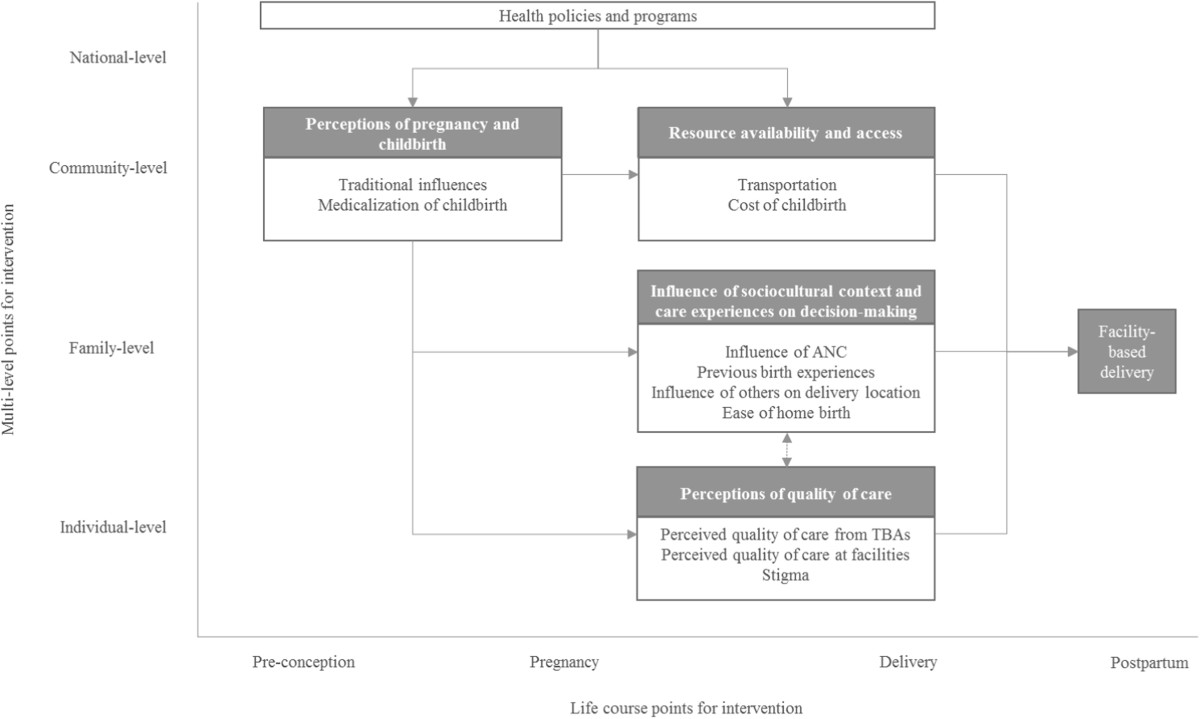
- The review included 34 studies from 17 LMICs in Africa (8 countries), Asia (7 countries), South America (1 country), and the Middle East (1 country), and organized findings under four broad themes: (1) perceptions of pregnancy and childbirth; (2) influence of sociocultural context and care experiences; (3) resource availability and access; (4) perceptions of quality of care.
- High-confidence barriers included facilities being deemed unnecessary for the “natural event” of birth, unfamiliar and undesirable birth practices in facilities, too many people involved in decision-making leading to delays, elder women’s influence, poor proximity and access, perceived high cost of facility birth compared to home birth, indirect and hidden costs, utilization of TBAs as first-line providers, facilities perceived as providing low quality of care, and mistreatment and abuse by health workers.
- High-confidence facilitators included facility delivery valued for obstetric complications, previous birth experiences acting as either facilitator or barrier, and facilities perceived as providing high quality care.
- Low-confidence findings included fear of compulsory HIV testing, fear of HIV-status disclosure, fear of treatment disparities among HIV-positive women (from studies in Kenya), and stigmatization of unwed pregnant women (from Sierra Leone, Tanzania, and Vietnam).
Methods
- Qualitative evidence synthesis using thematic analysis; searches were conducted in PubMed, CINAHL, and gray literature databases in December 2012 and updated in April 2013, with no date limitations. Inclusion criteria required analysis of primary data, English or French language, LMIC setting, objectives related to barriers/facilitators to facility-based delivery, qualitative data collection and analysis methods, and full text availability.
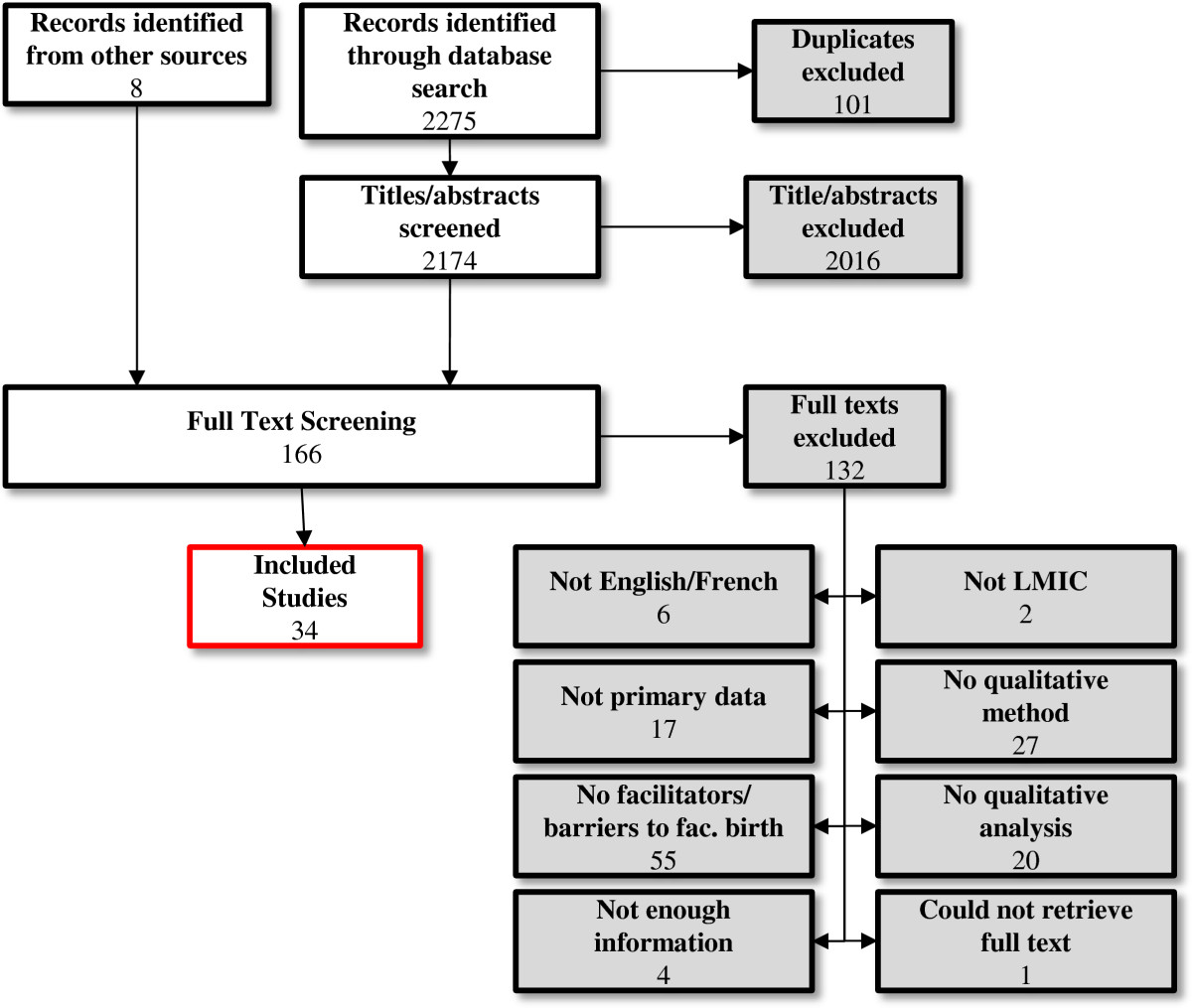
- The original PubMed and CINAHL search yielded 2,275 articles, from which 101 duplicates were excluded; 34 studies from 17 countries were included. Study quality was assessed using an adapted Critical Appraisal Skills Programme (CASP) tool, and confidence in findings was assessed using the first version of CERQual, which included methodological quality and coherence.
- Analysis involved open coding, axial coding, and development of first-, second-, and third-order themes; a multi-level life course conceptual framework was developed after the review findings and themes were finalized.
Limitations
- The paper states that it did not differentiate between types of health facilities, did not include studies examining perspectives on having skilled birth attendants, and presents a landscape of factors influencing delivery choices but not an evaluation of which factors are most influential to an individual. It also states that six studies were excluded because they were not published in English or French.
- The text makes evident that the CERQual version used assessed only two components (methodological quality and coherence) rather than the current four-component version, and several findings were rated low confidence because they came from few studies or countries, such as HIV-related stigma findings from Kenya and stigmatization of unwed pregnant women from three countries.
Model-written summary. Check it against the paper before relying on it.
Integrity signals
Registry
Cites
Statistics
Figures
Verification
Claims the paper makes
108 Valid · 6 Not valid · 73 Not checked · 63 Own results and interpretations
Some cited sources support this claim and some don’t — read each source’s verdict below.
In the paper
“In contrast, a husband may prohibit a facility visit altogether due to financial or cultural constraints.”
§ Facilitators and barriers to facility-based delivery in low- and middle-income countries: a qualitative evidence synthesis > Methods > Assessing the confidence of the findings
What the sources say
- Not checked yetcites [16] Moyer CA Adongo PB Aborigo RA Hodgson A Engmann CM Devries R “It’s up to the Woman’s People”: How Social Factors Influence Facility-Based Delivery in Rural Northern Ghana Matern Child Health J 2013 23423857
- Not checked yetcites [17] Oyerinde K Harding Y Philip A Garbrah-Aidoo N Kanu R Oulare M Shoo R Daoh K Barriers to Uptake of Emergency Obstetric and Newborn Care Services in Sierra Leone: A Qualitative Study J Commun Med Health Educ 2012 2 5 1 8
- Disputedcites [18] Gebrehiwot T Goicolea I Edin K Sebastian MS Making pragmatic choices: women's experiences of delivery care in Northern Ethiopia BMC Pregnancy Childbirth 2012 12 1 113 10.1186/1471-2393-12-113 23078068 PMC3542090 sourceExperimental — accuracy not yet measured
The Results section (‘Husbands’ support’; page unavailable) reports that husbands encouraged facility delivery and arranged transportation, rather than prohibiting visits. The Discussion says that other studies portrayed husbands as financial barriers, but contrasts those studies with this paper’s findings. (LLM, conf=0.87)
Checked by a reasoning model — may be wrong.
- Not checked yetcites [19] Magoma M Requejo J Campbell OM Cousens S Filippi V High ANC coverage and low skilled attendance in a rural Tanzanian district: a case for implementing a birth planintervention BMC Pregnancy Childbirth 2010 10 13 1 12 20302625 PMC2850322
- Not checked yetcites [20] Spangler SA Bloom SS Use of biomedical obstetric care in rural Tanzania: the role of social and material inequalities Soc Sci Med 2010 71 4 760 768 10.1016/j.socscimed.2010.05.025 20579797 source
- Not checked yetcites [21] Duong DV Binns CW Lee AH Utilization of delivery services at the primary health care level in rural Vietnam Soc Sci Med 2004 59 12 2585 2595 10.1016/j.socscimed.2004.04.007 15474211 source
- Not checked yetcites [22] Osubor KM Fatusi AO Chiwuzie JC Maternal health-seeking behavior and associated factors in a rural Nigerian community Matern Child Health J 2006 10 2 159 169 10.1007/s10995-005-0037-z 16362233 source
- Partly supportedcites [24] Afsana K Rashid SF The challenges of meeting rural Bangladeshi women's needs in delivery care Reprod Health Matters 2001 9 18 79 89 10.1016/S0968-8080(01)90094-1 11765404 sourceExperimental — accuracy not yet measured
In “Decision about where to give birth” (page unavailable), the paper says women had little control over clinic or hospital delivery because of their economic and social dependence on men, and describes a husband who approved a visit only after prolonged labour. It also identifies costs and cultural stigma as barriers. It does not establish that a husband prohibited a facility visit altogether, or specify those barriers as that husband’s reasons. (LLM, conf=0.83)
- Partly supportedcites [25] Story WT Burgard SA Lori JR Taleb F Ali NA Hoque DE Husbands' involvement in delivery care utilization in rural Bangladesh: A qualitative study BMC Pregnancy Childbirth 2012 12 1 28 10.1186/1471-2393-12-28 22494576 PMC3364886 sourceExperimental — accuracy not yet measured
The Results (‘Lack of money’) describe a husband delaying a hospital visit because of cost, and the Results (‘Medicalization of Childbirth’) describe husbands who preferred home delivery and were reluctant to involve a doctor. These passages support financial and cultural barriers to facility care, but do not show a husband prohibiting a visit altogether. (LLM, conf=0.86)
- Partly supportedcites [28] Turan JM Hatcher AH Medema-Wijnveen J Onono M Miller S Bukusi EA Turan B Cohen C The role of HIV-related stigma in utilization of skilled childbirth services in rural Kenya: a prospective mixed-methods study PLoS Med 2012 9 8 e1001295 10.1371/journal.pmed.1001295 22927800 PMC3424253 sourceExperimental — accuracy not yet measured
In Results, under “Relationship factors” (page unavailable), an interviewee describes a husband trying to stop his wife from visiting an antenatal clinic because he fears harm to the family. The Results also describe financial barriers to facility delivery, but do not link those barriers to a husband prohibiting a visit. (LLM, conf=0.86)
hedgedstates a possible cause- Asserted: passes — The authors put it forward as true.
- Checkable: passes — It can be checked against evidence.
- Load-bearing: unclear — It is unclear whether the paper’s conclusions depend on it.
- Based: passes — The paper gives a reason why it holds.
Some cited sources support this claim and some don’t — read each source’s verdict below.
In the paper
“In other settings, the husband may play a more neutral role and place the decision to seek care in someone else’s hands, such as elder female family members.”
§ Facilitators and barriers to facility-based delivery in low- and middle-income countries: a qualitative evidence synthesis > Methods > Assessing the confidence of the findings
What the sources say
- Not checked yetcites [16] Moyer CA Adongo PB Aborigo RA Hodgson A Engmann CM Devries R “It’s up to the Woman’s People”: How Social Factors Influence Facility-Based Delivery in Rural Northern Ghana Matern Child Health J 2013 23423857
- Not checked yetcites [17] Oyerinde K Harding Y Philip A Garbrah-Aidoo N Kanu R Oulare M Shoo R Daoh K Barriers to Uptake of Emergency Obstetric and Newborn Care Services in Sierra Leone: A Qualitative Study J Commun Med Health Educ 2012 2 5 1 8
- Partly supportedcites [18] Gebrehiwot T Goicolea I Edin K Sebastian MS Making pragmatic choices: women's experiences of delivery care in Northern Ethiopia BMC Pregnancy Childbirth 2012 12 1 113 10.1186/1471-2393-12-113 23078068 PMC3542090 sourceExperimental — accuracy not yet measured
The Results sections “Ascendancy of elderly women” and “Husbands’ support” say that elderly women strongly influenced delivery-care decisions and that husbands had less decision-making power than they did (page not specified). But husbands were described as active supporters who advocated for institutional delivery and arranged transportation, not as neutral or as handing the decision to elderly relatives. (LLM, conf=0.86)
- Not checked yetcites [19] Magoma M Requejo J Campbell OM Cousens S Filippi V High ANC coverage and low skilled attendance in a rural Tanzanian district: a case for implementing a birth planintervention BMC Pregnancy Childbirth 2010 10 13 1 12 20302625 PMC2850322
- Not checked yetcites [20] Spangler SA Bloom SS Use of biomedical obstetric care in rural Tanzania: the role of social and material inequalities Soc Sci Med 2010 71 4 760 768 10.1016/j.socscimed.2010.05.025 20579797 source
- Not checked yetcites [21] Duong DV Binns CW Lee AH Utilization of delivery services at the primary health care level in rural Vietnam Soc Sci Med 2004 59 12 2585 2595 10.1016/j.socscimed.2004.04.007 15474211 source
- Not checked yetcites [22] Osubor KM Fatusi AO Chiwuzie JC Maternal health-seeking behavior and associated factors in a rural Nigerian community Matern Child Health J 2006 10 2 159 169 10.1007/s10995-005-0037-z 16362233 source
- Disputedcites [24] Afsana K Rashid SF The challenges of meeting rural Bangladeshi women's needs in delivery care Reprod Health Matters 2001 9 18 79 89 10.1016/S0968-8080(01)90094-1 11765404 sourceExperimental — accuracy not yet measured
In “Decision about where to give birth” (page unavailable), the paper says women had little control over clinic or hospital delivery because of their dependence on men. It gives an example in which a husband approved a hospital visit only after prolonged labour, rather than leaving the care-seeking decision to elder female relatives. (LLM, conf=0.82)
Checked by a reasoning model — may be wrong.
- Supportedcites [25] Story WT Burgard SA Lori JR Taleb F Ali NA Hoque DE Husbands' involvement in delivery care utilization in rural Bangladesh: A qualitative study BMC Pregnancy Childbirth 2012 12 1 28 10.1186/1471-2393-12-28 22494576 PMC3364886 source
The Results section (“Uninvolved during childbirth”; page unavailable) describes husbands who gave no input or believed their presence was unnecessary once female family members took control. The Background section (page unavailable) also notes that mothers-in-law and other female in-laws give opinions on delivery-care decisions. (LLM, conf=0.90)
- Partly supportedcites [28] Turan JM Hatcher AH Medema-Wijnveen J Onono M Miller S Bukusi EA Turan B Cohen C The role of HIV-related stigma in utilization of skilled childbirth services in rural Kenya: a prospective mixed-methods study PLoS Med 2012 9 8 e1001295 10.1371/journal.pmed.1001295 22927800 PMC3424253 sourceExperimental — accuracy not yet measured
The Results section on relationship factors reports that some women decided where to deliver with their husband or others, supporting the narrower point that other people can take part in the decision. It does not say that husbands took a neutral role or handed the decision to elder female family members; the Discussion instead emphasizes male-partner involvement. (LLM, conf=0.83)
hedgedstates a possible cause- Asserted: passes — The authors put it forward as true.
- Checkable: passes — It can be checked against evidence.
- Load-bearing: unclear — It is unclear whether the paper’s conclusions depend on it.
- Based: passes — The paper gives a reason why it holds.
Some cited sources support this claim and some don’t — read each source’s verdict below.
In the paper
“Women emphasized the close bond they felt with TBAs, due to their status in the community and their trustworthiness [18, 23, 24, 30, 32, 33, 37, 39, 40, 43–46].”
§ Facilitators and barriers to facility-based delivery in low- and middle-income countries: a qualitative evidence synthesis > Methods > Perceived quality of care from TBAs
What the sources say
- Supportedcites [18] Gebrehiwot T Goicolea I Edin K Sebastian MS Making pragmatic choices: women's experiences of delivery care in Northern Ethiopia BMC Pregnancy Childbirth 2012 12 1 113 10.1186/1471-2393-12-113 23078068 PMC3542090 source
In Results (‘TBAs as gate-openers’), women describe TBAs as relatives who were strongly attached to them and their communities and influential in delivery decisions. The Discussion also calls TBAs ‘gate-openers trusted by women,’ supporting the claim about closeness and trustworthiness. (LLM, conf=0.90)
- Disputedcites [23] Ghazi Tabatabaie M Moudi Z Vedadhir A Home birth and barriers to referring women with obstetric complications to hospitals: a mixed-methods study in Zahedan, southeastern Iran Reprod Health 2012 9 5 10.1186/1742-4755-9-5 22433468 PMC3353872 sourceExperimental — accuracy not yet measured
In Results > Socio-cultural deterrents (page unavailable), a mother says she feared the TBA would bring disgrace on her family, and a midwife explains that families treated TBAs tolerantly to avoid gossip and preserve future help. The Discussion (page unavailable) likewise describes showing respect to prevent ostracism. These passages give fear of social consequences, rather than a close bond or trustworthiness, as the reason for the behaviour described. (LLM, conf=0.82)
Checked by a reasoning model — may be wrong.
- Partly supportedcites [24] Afsana K Rashid SF The challenges of meeting rural Bangladeshi women's needs in delivery care Reprod Health Matters 2001 9 18 79 89 10.1016/S0968-8080(01)90094-1 11765404 sourceExperimental — accuracy not yet measured
The Conclusion describes rural women’s trust in and reliance on TBAs, and ‘How obstetric complications were dealt with’ refers to TBAs’ traditional authority. But the passage describing women as feeling a family-like bond concerns BRAC health workers, not TBAs. The paper does not establish that women emphasized a close bond with TBAs because of their community status. (LLM, conf=0.83)
- Partly supportedcites [30] Izugbara CO Kabiru CW Zulu EM Urban poor Kenyan women and hospital-based delivery Public Health Rep 2009 124 4 585 589 19618796 PMC2693173 sourceExperimental — accuracy not yet measured
The Results describe TBAs as dependable providers whom women expected to keep using, and the Discussion identifies their caring, respectful services and traditional role in delivery. These passages support women's confidence in TBAs, but they do not report a close personal bond or say that community status and trustworthiness caused one. Page numbers were not available in our copy. (LLM, conf=0.82)
- Not checked yetcites [32] Parkhurst JO Rahman SA Ssengooba F Overcoming access barriers for facility-based delivery in low-income settings: insights from Bangladesh and Uganda J Health Popul Nutr 2006 24 4 438 445 17591340 PMC3001147
- Supportedcites [33] Titaley CR Hunter CL Dibley MJ Heywood P Why do some women still prefer traditional birth attendants and home delivery?: a qualitative study on delivery care services in West Java Province, Indonesia BMC Pregnancy Childbirth 2010 10 43 10.1186/1471-2393-10-43 20701762 PMC2928756 source
In Results, under “Reasons for using the service of traditional birth attendants” (page unavailable), a health-office interviewee describes TBAs as respected, close to the community, and more trusted than midwives. The Discussion, under “The role of traditional birth attendants” (page unavailable), likewise attributes their valued role to social and emotional closeness and intimacy with villagers. (LLM, conf=0.88)
- Partly supportedcites [37] Jeffery P Jeffery R Only when the boat has started sinking: a maternal death in rural north India Soc Sci Med 2010 71 10 1711 1718 10.1016/j.socscimed.2010.05.002 20561728 PMC2981873 sourceExperimental — accuracy not yet measured
In “Razia’s experiences in a longer timeframe” (page not provided), the paper says village women preferred home deliveries with local dāīs and other practitioners. It does not report that women emphasized a close bond with TBAs or attributed that preference to their community status or trustworthiness. (LLM, conf=0.82)
- Not checked yetcites [39] Sorensen BL Nielsen BB Rasch V Elsass P User and provider perspectives on emergency obstetric care in a Tanzanian rural setting: A qualitative analysis of the three delays model in a field study Afr J Reprod Health 2011 15 2 2 22590898
- Not checked yetcites [40] Iyengar SD Iyengar K Martines JC Dashora K Deora KK Childbirth practices in rural Rajasthan, India: implications for neonatal health and survival J Perinatol 2008 28 Suppl 2 S23 S30 10.1038/jp.2008.174 19057565 source
- Supportedcites [43] Shiferaw S Spigt M Godefrooij M Melkamu Y Tekie M Why do women prefer home births in Ethiopia? BMC Pregnancy Childbirth 2013 13 1 5 10.1186/1471-2393-13-5 23324550 PMC3562506 source
The Results (page not specified) say families were familiar with TBAs and trusted their ability to handle normal deliveries. They also describe the respect and trust TBAs earned in their communities and report that women valued their supportive care. Together, these support the claim’s description of a close, trusting relationship. (LLM, conf=0.86)
plainstates a cause- Asserted: passes — The authors put it forward as true.
- Checkable: passes — It can be checked against evidence.
- Load-bearing: passes — The paper’s conclusions depend on it.
- Based: passes — The paper gives a reason why it holds.
- Supported
The sources with a verdict support this claim; the rest weren’t checked yet, have no full text we could read, or their verdicts aren’t rated yet.
In the paper
“Facilitator: Facility delivery valued for obstetric complications”
- Also stated in: § Assessing the confidence of the findings · plain
“Facilitator: Facility delivery valued for obstetric complications”
§ Facilitators and barriers to facility-based delivery in low- and middle-income countries: a qualitative evidence synthesis > Methods > Synthesis
What the sources say
- Supportedcites [18] Gebrehiwot T Goicolea I Edin K Sebastian MS Making pragmatic choices: women's experiences of delivery care in Northern Ethiopia BMC Pregnancy Childbirth 2012 12 1 113 10.1186/1471-2393-12-113 23078068 PMC3542090 source
In Results (‘Awareness of risks of delivery’), a participant says hospitals can treat complications such as bleeding. Results (‘Appreciating medical resources’) reports that women came to value facilities’ potentially life-saving care, and the Discussion identifies that appreciation as a possible basis for increasing access, while noting that service barriers remained. (LLM, conf=0.91)
- Not checked yetcites [19] Magoma M Requejo J Campbell OM Cousens S Filippi V High ANC coverage and low skilled attendance in a rural Tanzanian district: a case for implementing a birth planintervention BMC Pregnancy Childbirth 2010 10 13 1 12 20302625 PMC2850322
- Not checked yetcites [26] Øxnevad M Perceptions and Practices Related to Home Based and Facility Based Birth. A Qualitative Study from Agemssa 2011
- Not checked yetcites [29] Bedford J Gandhi M Admassu M Girma A 'A Normal Delivery Takes Place at Home': A Qualitative Study of the Location of Childbirth in Rural Ethiopia Matern Child Health J 2012 17 2 230 239 10.1007/s10995-012-0965-3 22359241 source
- Supportedcites [30] Izugbara CO Kabiru CW Zulu EM Urban poor Kenyan women and hospital-based delivery Public Health Rep 2009 124 4 585 589 19618796 PMC2693173 source
The Results say participants valued hospitals for their ability to manage emergencies and difficult deliveries. The Conclusion calls this recognition a key entry point for facilitating use of formal obstetric care, while noting that these women generally viewed hospitals as appropriate for delivery only when they anticipated difficulty. (LLM, conf=0.93)
- Supportedcites [31] Otis KE Brett JA Barriers to hospital births: why do many Bolivian women give birth at home? Rev Panam Salud Publica 2008 24 1 46 53 10.1590/S1020-49892008000700006 18764994 source
The Results (page not available) report that some interviewees saw no need for facility care after uncomplicated births, but would go if a birth were difficult. This supports the claim that the ability to address complications can motivate facility delivery. (LLM, conf=0.91)
- Not checked yetcites [32] Parkhurst JO Rahman SA Ssengooba F Overcoming access barriers for facility-based delivery in low-income settings: insights from Bangladesh and Uganda J Health Popul Nutr 2006 24 4 438 445 17591340 PMC3001147
- Supportedcites [33] Titaley CR Hunter CL Dibley MJ Heywood P Why do some women still prefer traditional birth attendants and home delivery?: a qualitative study on delivery care services in West Java Province, Indonesia BMC Pregnancy Childbirth 2010 10 43 10.1186/1471-2393-10-43 20701762 PMC2928756 source
The Abstract’s Results report that some respondents viewed institutional delivery as appropriate for women experiencing obstetric complications. This supports the claim that perceived need for complication care can favor facility delivery, though the paper also describes that perception as a lack of awareness about routine skilled care. (LLM, conf=0.90)
- Not checked yetcites [34] Wild K Barclay L Kelly P Martins N Birth choices in Timor-Leste: a framework for understanding the use of maternal health services in low resource settings Soc Sci Med 2010 71 11 2038 2045 10.1016/j.socscimed.2010.09.012 20971540 source
- Not checked yetcites [35] Griffiths P Stephenson R UNDERSTANDING USERS’PERSPECTIVES OF BARRIERS TO MATERNAL HEALTH CARE USE IN MAHARASHTRA, INDIA J Biosoc Sci 2001 33 03 339 359 10.1017/S002193200100339X 11446398 source
plainstates a cause- Asserted: passes — The authors put it forward as true.
- Checkable: passes — It can be checked against evidence.
- Load-bearing: passes — The paper’s conclusions depend on it.
- Based: passes — The paper gives a reason why it holds.
- Also stated in: § Assessing the confidence of the findings · plain
The cited sources support only part of this claim — read each source’s verdict below.
In the paper
“Barrier: Facilities deemed unnecessary for the “natural event” of birth”
- Also stated in: § Assessing the confidence of the findings · plain
“Barrier: Facilities deemed unnecessary for the “natural event” of birth”
§ Facilitators and barriers to facility-based delivery in low- and middle-income countries: a qualitative evidence synthesis > Methods > Synthesis
What the sources say
- Partly supportedcites [18] Gebrehiwot T Goicolea I Edin K Sebastian MS Making pragmatic choices: women's experiences of delivery care in Northern Ethiopia BMC Pregnancy Childbirth 2012 12 1 113 10.1186/1471-2393-12-113 23078068 PMC3542090 sourceExperimental — accuracy not yet measured
The Results section (‘Awareness of risks of delivery’; page not specified) says participants viewed birth as a natural event managed at home for generations. It does not say they deemed facilities unnecessary: participants recognized delivery risks and considered facilities better prepared for complications. The ‘Embedded in tradition’ section also describes traditional pressure to deliver at home, but not a blanket rejection of facilities. (LLM, conf=0.86)
- Not checked yetcites [19] Magoma M Requejo J Campbell OM Cousens S Filippi V High ANC coverage and low skilled attendance in a rural Tanzanian district: a case for implementing a birth planintervention BMC Pregnancy Childbirth 2010 10 13 1 12 20302625 PMC2850322
- Supportedcites [24] Afsana K Rashid SF The challenges of meeting rural Bangladeshi women's needs in delivery care Reprod Health Matters 2001 9 18 79 89 10.1016/S0968-8080(01)90094-1 11765404 source
In “Decision about where to give birth,” the paper says most women and their families were reluctant to spend money on birth because they perceived it as a natural event that could take place at home at negligible expense. It adds that most felt facility care was worth the cost only for an emergency or complicated birth, supporting the stated barrier. (LLM, conf=0.93)
- Supportedcites [25] Story WT Burgard SA Lori JR Taleb F Ali NA Hoque DE Husbands' involvement in delivery care utilization in rural Bangladesh: A qualitative study BMC Pregnancy Childbirth 2012 12 1 28 10.1186/1471-2393-12-28 22494576 PMC3364886 source
In Results, under “Medicalization of Childbirth” (page unavailable), the paper describes a traditional view in Bangladesh that birth is a natural process to be experienced at home. It also says idealizing natural childbirth can keep women from access to emergency obstetric care, supporting the described barrier to facility delivery. (LLM, conf=0.88)
- Not checked yetcites [26] Øxnevad M Perceptions and Practices Related to Home Based and Facility Based Birth. A Qualitative Study from Agemssa 2011
- Supportedcites [27] Doctor HV Findley SE Ager A Cometto G Afenyadu GY Adamu F Green C Using community-based research to shape the design and delivery of maternal health services in Northern Nigeria Reprod Health Matters 2012 20 39 104 112 10.1016/S0968-8080(12)39615-8 22789087 source
The “Delivery in a facility” section reports that women viewed childbirth as a normal, safe process and that many saw skilled attendance or facility delivery as unnecessary or not customary. It identifies these beliefs among reasons for not delivering at a facility. No page number is provided in our copy. (LLM, conf=0.92)
- Supportedcites [28] Turan JM Hatcher AH Medema-Wijnveen J Onono M Miller S Bukusi EA Turan B Cohen C The role of HIV-related stigma in utilization of skilled childbirth services in rural Kenya: a prospective mixed-methods study PLoS Med 2012 9 8 e1001295 10.1371/journal.pmed.1001295 22927800 PMC3424253 source
In Results, under “Factors Associated with Delivery in a Health Facility” (page unavailable), participants described facilities as most appropriate for complicated births and often as a last resort for births expected to be abnormal or risky. This supports the paraphrase that viewing ordinary birth as not requiring a facility can be a barrier to facility-based delivery; the paper does not use the phrase “natural event.” (LLM, conf=0.88)
- Not checked yetcites [29] Bedford J Gandhi M Admassu M Girma A 'A Normal Delivery Takes Place at Home': A Qualitative Study of the Location of Childbirth in Rural Ethiopia Matern Child Health J 2012 17 2 230 239 10.1007/s10995-012-0965-3 22359241 source
- Supportedcites [30] Izugbara CO Kabiru CW Zulu EM Urban poor Kenyan women and hospital-based delivery Public Health Rep 2009 124 4 585 589 19618796 PMC2693173 source
The Results say participants considered hospital birth unreasonable unless they anticipated a difficult delivery, and one respondent said taking a normal delivery there meant spending money for nothing. The Discussion likewise describes hospitals as a last resort rather than a site for normal deliveries. This supports the paraphrase, although the paper does not use the phrase “natural event.” (LLM, conf=0.91)
- Supportedcites [31] Otis KE Brett JA Barriers to hospital births: why do many Bolivian women give birth at home? Rev Panam Salud Publica 2008 24 1 46 53 10.1590/S1020-49892008000700006 18764994 source
The Results section reports that some interviewees viewed birth as a natural, easy process and therefore saw no need to go to a health service. The paper identifies this perception as a reason women chose to give birth at home. (LLM, conf=0.94)
plainstates a cause- Asserted: passes — The authors put it forward as true.
- Checkable: passes — It can be checked against evidence.
- Load-bearing: passes — The paper’s conclusions depend on it.
- Based: passes — The paper gives a reason why it holds.
- Also stated in: § Assessing the confidence of the findings · plain
132 more claims · 75 with their cited sources checked
Create a free account to see all 250 claims and to verify the 901 references still open.
- It may state two separate claims as one. 94
- The quote only partly states this claim. 2
- Probably not a substantial claim. 31
Claims other papers make about this one
Each is checked against this paper’s own text: does it say what the citing paper says it does?
The source backs part of the claim, not all of it — or backs it for a different population, condition or comparison.
In the citing paper
“A recent qualitative evidence synthesis [4] and several recent studies [6–11] and reports [12,13] clearly indicate that many women globally experience poor treatment during childbirth, including abusive, neglectful, or disrespectful care.”
From The Mistreatment of Women during Childbirth in Health Facilities Globally: A Mixed-Methods Systematic Review (2015) · cites this paper as [4]
Experimental — accuracy not yet measuredThe source backs part of the claim, not all of it — or backs it for a different population, condition or comparison.
In the citing paper
“Perspectives of women, their families and communities, on the quality of maternity care services influence decisions to seek care and are essential components for creating a demand for and access to quality maternal and newborn services.6”
From Quality of care for pregnant women and newborns—the WHO vision (2015) · cites this paper as [6]
Experimental — accuracy not yet measuredThe source backs part of the claim, not all of it — or backs it for a different population, condition or comparison.
In the citing paper
“Moreover, there is a complex interplay of experiences of mistreatment and lack of support that impact women's childbirth experiences and outcomes.6”
From Quality of care for pregnant women and newborns—the WHO vision (2015) · cites this paper as [6]
Experimental — accuracy not yet measuredThe cited source says what the claim attributes to it.
In the citing paper
“Therefore, mistreatment during childbirth can represent a violation of women’s fundamental human rights [17–20] and can serve as a powerful disincentive for women to seek care in facilities for their subsequent deliveries [4,6,10,21].”
From The Mistreatment of Women during Childbirth in Health Facilities Globally: A Mixed-Methods Systematic Review (2015) · cites this paper as [4]
Citations
Cites
Using thematic analysis in psychology
Braun, V., & Clarke, V. (2006) · Qualitative Research in Psychology · doi:10.1191/1478088706qp063oa · Cited by 194,414
Basics of Qualitative Research: Grounded Theory Procedures and Techniques.
Ellis, C., Strauss, A., & Corbin, J. (1992) · Contemporary Sociology · doi:10.2307/2074814 · Cited by 29,249
(2014) · Cited by 15,747
Enhancing transparency in reporting the synthesis of qualitative research: ENTREQ
Tong, A., Flemming, K., McInnes, E., Oliver, S., & Craig, J. (2012) · BMC Medical Research Methodology · doi:10.1186/1471-2288-12-181 · Cited by 3,569 · cited 1×
“This systematic review is reported following the ENTREQ statement guidelines to enhance transparency in reporting qualitative evidence synthesis [56].”
MethodToo far to walk: Maternal mortality in context
Thaddeus, S., & Maine, D. (1994) · Social Science & Medicine · doi:10.1016/0277-9536(94)90226-7 · Cited by 3,240
Strategies for reducing maternal mortality: getting on with what works
Campbell, O. M., & Graham, W. J. (2006) · The Lancet · doi:10.1016/s0140-6736(06)69381-1 · Cited by 1,785 · cited 1×
“Evidenc e-based clinical and preventative interventions aimed at reducing maternal and neonat al morbidity and mortality are well documented [2-5].”
BackgroundTrends in maternal mortality, 1990–2008
(2011) · Population and Development Review · doi:10.1111/j.1728-4457.2011.00406.x · Cited by 1,593
Evidence-based, cost-effective interventions: How many newborn babies can we save?
Darmstadt, G. L., Bhutta, Z. A., Cousens, S., Adam, T., Walker, N., & de Bernis, L. (2005) · The Lancet · doi:10.1016/s0140-6736(05)71088-6 · Cited by 1,541 · cited 1×
“maternal and neonatal morbidity and mortality are well documented [2-5].”
Backgroundthe GAPPS Review Group, Lawn, J. E., Gravett, M. G., Nunes, T. M., Rubens, C. E., & Stanton, C. (2010) · BMC Pregnancy and Childbirth · doi:10.1186/1471-2393-10-s1-s1 · Cited by 784
Glenton, C., Colvin, C., Carlsen, B., Swartz, A., Lewin, S., Noyes, J., & Rashidian, A. (2013) · Cochrane Database of Systematic Reviews · doi:10.1002/14651858.cd010414.pub2 · Cited by 454 · cited 1×
“The CERQual tool is under development and the version of CERQual that we used includes two elements, methodological quality and coherence (the current version of CERQual is comprised of four components) [50-55].”
Method
Research works printed but not linked: 5
- World Health Organization Proportion of Births Attended by a Skilled Attendant: 2008 Updates 2008 Factsheet Geneva Department of Reproductive Health and Research, WHO
- World Health Organization Making Pregnancy Safer: the Critical Role of the Skilled Attendant. Joint Statement by WHO, ICM and FIGO 2004 Geneva WHO
- UNICEF The State of the World's Children 2014 in Numbers: Every Child Counts 2014
- Muhr T ATLAS/ti-Computer Aided Text Interpretation & Theory Building, Release 1.1E. User’s Manual 1994 2 Berlin Thomas Muhr
- Assessing How Much Confidence to Place in the Evidence from Reviews of Qualitative Research. Developing and Evaluating Communication strategies to support Informed Decisions and practice based on Evidence. 2014, Edinburgh: International Conference, Royal College of Physicians of Edinburgh
Cited by
Items 101–200 of 815
Coast, E., Jones, E., Lattof, S. R., & Portela, A. G. (2016) · Health Policy and Planning · doi:10.1093/heapol/czw065 · Cited by 80
“Studies have shown that cultural factors can affect uptake of maternity care services, and addressing them has been recognized as an important step in increasing the use of services (Thaddeus and Maine 1994; WHO 2003; UNFPA 2005; Camacho et al. 2006; Gabrysch and Campbell 2009; Castro 2012; Bohren et al. 2014).”
BackgroundDevkota, H. R., Murray, E. T., Kett, M. E., & Groce, N. E. (2018) · PLoS ONE · doi:10.1371/journal.pone.0200370 · Cited by 72
Jolly, Y., Aminu, M., Mgawadere, F., & van den Broek, N. R. (2019) · BMC Pregnancy and Childbirth · doi:10.1186/s12884-019-2189-7 · Cited by 71
Woldegiorgis, M. A., Hiller, J. E., Mekonnen, W., Meyer, D., & Bhowmik, J. (2019) · Health Services Research · doi:10.1111/1475-6773.13163 · Cited by 74
Qureshi, Z. P., Mehrtash, H., Kouanda, S., Griffin, S., Filippi, V., Govule, P., Thwin, S. S., Bello, F. A., Gadama, L. A., Msusa, A. T., et al. (2021) · BMJ Global Health · doi:10.1136/bmjgh-2020-003702 · Cited by 71
Self-citationMunabi-Babigumira, S. K., Glenton, C., Willcox, M. L., & Nabudere, H. (2019) · PLoS ONE · doi:10.1371/journal.pone.0213511 · Cited by 70
“Mothers’ experiences of maternity care can influence their decisions on where to seek care, their demand for maternity services, and ultimately health outcomes for mothers and their babies [15].”
BackgroundSacks, E., Finlayson, K. W., Brizuela, V., Crossland, N., Ziegler, D., Sauvé, C., Langlois, É. V., Javadi, D., Downe, S. M., & Bonet, M. (2022) · PLoS ONE · doi:10.1371/journal.pone.0270264 · Cited by 78
Malatji, R., & Madiba, S. (2020) · International Journal of Environmental Research and Public Health · doi:10.3390/ijerph17103667 · Cited by 70
“The failure to arrange suitable transportation for women during labor is a barrier to equitable, accessible quality maternal and child health services [49,50].”
BackgroundMeasuring experiences of facility-based care for pregnant women and newborns: a scoping review
Larson, E., Sharma, J., Nasiri, K., Bohren, M. A., & Tunçalp, Ö. (2020) · BMJ Global Health · doi:10.1136/bmjgh-2020-003368 · Cited by 60
Self-citationGeldsetzer, P., Reinmuth, M., Ouma, P., Lautenbach, S., Okiro, E. A., Bärnighausen, T., & Zipf, A. (2020) · The Lancet Healthy Longevity · doi:10.1016/s2666-7568(20)30010-6 · Cited by 71
Sudhinaraset, M., Beyeler, N., Barge, S., & Diamond‐Smith, N. (2016) · BMC Pregnancy and Childbirth · doi:10.1186/s12884-016-0942-8 · Cited by 57
“A recent systematic review explored multiple domains of mistreatment that women experience during childbirth and found that mistreatment is prevalent in many countries across the globe [13].”
BackgroundOjelade, O. A., Titiloye, M. A., Bohren, M. A., Olutayọ, A. Ọ., Olalere, A. A., Akintan, A., Oladapo, O. T., & Fawole, B. (2017) · International Journal of Gynecology & Obstetrics · doi:10.1002/ijgo.12380 · Cited by 63
Self-citationAsefa, A., Morgan, A., Gebremedhin, S., Tekle, E., Abebe, S., Magge, H., & Kermode, M. (2020) · BMJ Open · doi:10.1136/bmjopen-2020-038871 · Cited by 61
Banke-Thomas, A. O., Balogun, M. R., Wright, O., Ajayi, B. M., Abejirinde, I. O., Olaniran, A., Giwa-Ayedun, R. O., Odusanya, B., & Afolabi, B. B. (2020) · Reproductive Health · doi:10.1186/s12978-020-00996-7 · Cited by 65
Perception of Women regarding Respectful Maternity Care during Facility-Based Childbirth
Pathak, P., & Ghimire, B. (2020) · Obstetrics and Gynecology International · doi:10.1155/2020/5142398 · Cited by 72
“Many studies have also concluded the fear of such discrimination to be a key barrier to facilitybased deliveries in low- and middle-income countries [27].”
BackgroundRespectful Maternity Care Framework and Evidence-Based Clinical Practice Guideline
(2022) · Journal of Obstetric, Gynecologic & Neonatal Nursing · doi:10.1016/j.jogn.2022.01.001 · Cited by 58
Toward the development of a short multi‐country person‐centered maternity care scale
Afulani, P. A., Feeser, K. R., Sudhinaraset, M., Aborigo, R., Montagu, D., & Chakraborty, N. M. (2019) · International Journal of Gynecology & Obstetrics · doi:10.1002/ijgo.12827 · Cited by 58
Ayoubi, S., Pazandeh, F., Simbar, M., Moridi, M., Zare, E., & Potrata, B. (2019) · Midwifery · doi:10.1016/j.midw.2019.102573 · Cited by 63
Birth stories from South Africa: Voices unheard
Hastings‐Tolsma, M., Nolte, A., & Temane, A. M. (2017) · Women and Birth · doi:10.1016/j.wombi.2017.06.015 · Cited by 64
Chaka, E. E., Parsaeian, M., & Majdzadeh, R. (2019) · International Journal of Preventive Medicine · doi:10.4103/ijpvm.ijpvm_26_19 · Cited by 59
Maung, T. M., Mon, N. O., Mehrtash, H., Adu‐Bonsaffoh, K., Vogel, J. P., Aderoba, A. K., Irinyenikan, T. A., Baldé, M. D., Pattanittum, P., Tunçalp, Ö., et al. (2021) · BMJ Global Health · doi:10.1136/bmjgh-2020-003688 · Cited by 67
Self-citationCrooks, R., Bedwell, C., & Lavender, T. (2022) · BMC Pregnancy and Childbirth · doi:10.1186/s12884-022-05022-1 · Cited by 81
“Disrespectful attitudes and behaviours of health care providers and other service users, were all reported from sub-Saharan Africa [39, 62, 63, 68–71, 76], which reflects the findings of other authors that disrespectful care remains a considerable challenge in this region [96].”
ResultOosthuizen, S. J., Bergh, A., Pattinson, R. C., & Grimbeek, J. (2017) · Reproductive Health · doi:10.1186/s12978-017-0411-5 · Cited by 62
“This study, like many others, highlighted the lack of respectful care during childbirth, especially in LMICs, influenced by the attitudes and behaviours of maternal health professionals [20], interlinked with contextual factors in the health system [12, 52, 53] and sociodemographic characteristics of the mothers [5, 5…”
BackgroundAdeniran, A. S., Aboyeji, A. P., & Fawole, A. A. (2015) · International Journal of Health Sciences · doi:10.12816/0024697 · Cited by 49
Moyer, C. A., Rominski, S., Nakua, E. K., Dzomeku, V. M., Agyei‐Baffour, P., & Lori, J. R. (2016) · Midwifery · doi:10.1016/j.midw.2016.07.009 · Cited by 58
Påfs, J., Musafili, A., Binder‐Finnema, P., Klingberg‐Allvin, M., Rulisa, S., & Essén, B. (2016) · BMC Pregnancy and Childbirth · doi:10.1186/s12884-016-1051-4 · Cited by 61
“This might have contributed to the ban on homebirths and the usage of traditional medicine, causing conflict with local reasoning [45, 46].”
BackgroundBarriers to Institutional Childbirth in Rumbek North County, South Sudan: A Qualitative Study
Wilunda, C., Scanagatta, C., Putoto, G., Takahashi, R., Montalbetti, F., Segafredo, G., & Betrán, A. P. (2016) · PLoS ONE · doi:10.1371/journal.pone.0168083 · Cited by 58
Austad, K., Chary, A. N., Martinez, B., Juarez, M., Martin, Y. J., Coyote, E., & Rohloff, P. J. (2017) · Reproductive Health · doi:10.1186/s12978-017-0410-6 · Cited by 61
“A strong body of literature demonstrates that dissatisfaction with maternity care is an important deterrent to facility-based births [4, 5].”
BackgroundHasan, M. M., Magalhães, R. J. S., Fatima, Y., Ahmed, S., & Mamun, A. A. (2021) · Global Health Science and Practice · doi:10.9745/ghsp-d-20-00533 · Cited by 61
“care, and fear of discrimination play a key role in inadequate utilization of facility-based delivery.(19)”
BackgroundSheikh, J., Allotey, J., Kew, T., Khalil, H., Galadanci, H., Hofmeyr, G. J., Abalos, E., Vogel, J. P., Lavin, T., Souza, J. P., et al. (2024) · eClinicalMedicine · doi:10.1016/j.eclinm.2023.102264 · Cited by 48
Self-citationGouda, H., Hodge, A., Bermejo, R., Zeck, W., & Jimenez‐Soto, E. (2016) · PLoS ONE · doi:10.1371/journal.pone.0167268 · Cited by 57
A critical interpretive synthesis of informal payments in maternal health care
Schaaf, M., & Topp, S. M. (2019) · Health Policy and Planning · doi:10.1093/heapol/czz003 · Cited by 59
“It appears that many women experience requests for payments for maternity care as extremely coercive and disrespectful (Bowser and Hill, 2010; Jeffery and Jeffery, 2010; Bohren et al., 2014; 2015; Coffey, 2014; Freedman and Kruk, 2014).”
BackgroundA qualitative study on acceptability of the mistreatment of women during childbirth in Myanmar
Maung, T. M., Show, K. L., Mon, N. O., Tunçalp, Ö., Aye, N. S., Soe, Y. Y., & Bohren, M. A. (2020) · Reproductive Health · doi:10.1186/s12978-020-0907-2 · Cited by 50
Self-citationAsefa, A., McPake, B., Langer, A., Bohren, M. A., & Morgan, A. (2020) · Sexual and Reproductive Health Matters · doi:10.1080/26410397.2020.1854153 · Cited by 58
Self-citationChildbirth violence-based negative health consequences: a qualitative study in Iranian women
Taghizadeh, Z., Ebadi, A., & Jaafarpour, M. (2021) · BMC Pregnancy and Childbirth · doi:10.1186/s12884-021-03986-0 · Cited by 60
Eliminating abusive 'care': A criminal law response to obstetric violence in South Africa
Pickles, C. (2015) · South African Crime Quarterly · doi:10.4314/sacq.v54i1.1 · Cited by 69
Toews, I., Glenton, C., Lewin, S. A., Berg, R. C., Noyes, J., Booth, A., Marušić, A., Malički, M., Munthe‐Kaas, H. M., & Meerpohl, J. J. (2016) · PLoS ONE · doi:10.1371/journal.pone.0159290 · Cited by 62
Self-citationA Secondary Analysis of Mistreatment of Women During Childbirth in Health Care Facilities
Beck, C. T. (2017) · Journal of Obstetric, Gynecologic & Neonatal Nursing · doi:10.1016/j.jogn.2016.08.015 · Cited by 57
“A systematic review of qualitative evidence regarding barriers and facilitators to facilitybased births from 34 studies in 17 low- and middle-income countries was conducted by Bohren et al. (2014).”
BackgroundPeca, E., & Sandberg, J. (2018) · Reproductive Health · doi:10.1186/s12978-017-0448-5 · Cited by 53
“The qualitative data suggest respondents must balance sub-optimal quality of services with believing health facilities are safer, which is concurrent with other research indicating acceptability of facility birth in the event of an obstetric complication [19].”
BackgroundResultInfluentialAhmed, M., Demissie, M., Worku, A., Medhanyie, A. A., & Berhane, Y. (2019) · Reproductive Health · doi:10.1186/s12978-019-0833-3 · Cited by 59
Mselle, L. T., & Eustace, L. (2020) · BMC Pregnancy and Childbirth · doi:10.1186/s12884-020-2726-4 · Cited by 57
“over their birthing positions, while at the hospital, they feared unfamiliar birthing positions, including the supine position [34].”
BackgroundPromoting a global culture of respectful maternity care
Puthussery, S., Bayih, W. A., Brown, H. K., & Aborigo, R. (2023) · BMC Pregnancy and Childbirth · doi:10.1186/s12884-023-06118-y · Cited by 78
“It has been indicated that such practices can hamper mothers’ trust in the health system, leading to poor health-seeking behavior, delayed access to health facilities and an increase in the rate of births with unskilled attendants [5, 10].”
BackgroundExploring midwives’ understanding of respectful maternal care in Kumasi, Ghana: Qualitative inquiry
Dzomeku, V. M., Mensah, A. B. B., Nakua, E. K., Agbadi, P., Lori, J. R., & Donkor, P. (2020) · PLoS ONE · doi:10.1371/journal.pone.0220538 · Cited by 51
Sacks, E., Vail, D. G., Austin-Evelyn, K., Greeson, D., Atuyambe, L. M., Macwan’gi, M., Kruk, M. E., & Grépin, K. A. (2015) · Health Policy and Planning · doi:10.1093/heapol/czv057 · Cited by 47
“Among women who wish to deliver in a health facility, a number of obstacles have been identified, including cost, distance and geographic barriers to reach a facility (Moyer and Mustafa 2013; Bohren et al. 2014).”
BackgroundHunter, B. M., & Murray, S. F. (2017) · BMC Pregnancy and Childbirth · doi:10.1186/s12884-017-1445-y · Cited by 55
“Background Women and their families can face multiple barriers to accessing maternity care services, and financial barriers are a well-documented concern [1, 2].”
BackgroundBhattacharyya, S., Srivastava, A., Saxena, M., Gogoi, M., Dwivedi, P., & Giessler, K. (2018) · Global Health Action · doi:10.1080/16549716.2018.1527971 · Cited by 58
“addition to whether she will access institutional delivery for subsequent births [6,7,10].”
BackgroundBuultjens, M., Farouque, A., Karimi, L., Whitby, L., Milgrom, J., & Erbas, B. (2020) · Women and Birth · doi:10.1016/j.wombi.2020.12.004 · Cited by 53
Mirkuzie, A. H. (2014) · International Journal for Equity in Health · doi:10.1186/s12939-014-0110-6 · Cited by 51
Yalley, A. A., Abioye, D., Appiah, S. C. Y., & Hoeffler, A. (2023) · Frontiers in Public Health · doi:10.3389/fpubh.2023.988961 · Cited by 66
Global initiatives in maternal and newborn health
Brizuela, V., & Tunçalp, Ö. (2017) · Obstetric Medicine · doi:10.1177/1753495x16684987 · Cited by 49
Creanga, A. A., Gullo, S., Kuhlmann, A. S., Msiska, T., & Galavotti, C. (2017) · BMC Pregnancy and Childbirth · doi:10.1186/s12884-017-1331-7 · Cited by 56
Kaiser, J. L., Fong, R. M., Hamer, D. H., Biemba, G., Ngoma, T., Tusing, B., & Scott, N. (2018) · Social Science & Medicine · doi:10.1016/j.socscimed.2018.11.011 · Cited by 60
Afulani, P. A., Ogolla, B. A., Oboke, E. N., Ongeri, L., Weiss, S. J., Lyndon, A., & Mendes, W. B. (2021) · Health Policy and Planning · doi:10.1093/heapol/czaa190 · Cited by 51
“In particular, many women shun giving birth in health facilities because of fear of poor PCMC manifested as mistreatment (Bohren et al., 2014).”
BackgroundMinckas, N., Gram, L., Smith, C. J., & Mannell, J. (2021) · BMJ Global Health · doi:10.1136/bmjgh-2020-004698 · Cited by 48
Dunlop, C. L., Beňová, L., & Campbell, O. M. R. (2018) · BMJ Open · doi:10.1136/bmjopen-2017-020231 · Cited by 55
Bobo, F. T., Asante, A. D., Woldie, M. K., Dawson, A. J., & Hayen, A. D. (2021) · BMJ Global Health · doi:10.1136/bmjgh-2021-007074 · Cited by 61
Tiruneh, G. T., Demissie, M., Worku, A., & Berhane, Y. (2021) · PLoS ONE · doi:10.1371/journal.pone.0255404 · Cited by 46
“Previous studies also documented poor quality of primary care limits the utilization of continuous maternal health services [11, 13, 15].”
BackgroundOladapo, O. T., Souza, J. P., Bohren, M. A., Tunçalp, Ö., Vogel, J. P., Fawole, B., Mugerwa, K. Y., & Gülmezoglu, A. M. (2015) · Reproductive Health · doi:10.1186/s12978-015-0027-6 · Cited by 48
Self-citationToews, I., Booth, A., Berg, R. C., Lewin, S. A., Glenton, C., Munthe‐Kaas, H. M., Noyes, J., Schroter, S., & Meerpohl, J. J. (2017) · Journal of Clinical Epidemiology · doi:10.1016/j.jclinepi.2017.04.010 · Cited by 60
Self-citationMoshi, F. V., & Nyamhanga, T. M. (2017) · Reproductive Health · doi:10.1186/s12978-017-0397-z · Cited by 47
“[21] showed that some women had a sense of fatalism, as they believed that delivery complications were beyond their control.”
BackgroundAdinew, Y. M., & Asseffa, N. A. (2017) · Journal of Pregnancy · doi:10.1155/2017/7938371 · Cited by 41
Shobo, O. G., Umar, N., Gana, A., Longtoe, P., Idogho, O., & Anyanti, J. (2020) · BMJ Open · doi:10.1136/bmjopen-2019-032835 · Cited by 53
Stollak, I., Valdez, M., Rivas, K., & Perry, H. (2016) · Global Health: Science and Practice · doi:10.9745/ghsp-d-15-00266 · Cited by 40
“A recent review synthesizing the qualitative evidence regarding facilitating factors and barriers to facility-based deliveries in low- and middle-income countries concluded that women and their families in many settings have come to believe that ‘‘childbirth has become medicalized and dehumanized’’ and that families a…”
BackgroundCarstensen, K., Lou, S., Jensen, L. G., Nissen, N. K., Ørtenblad, L., Pfau, M., & Ankersen, P. V. (2017) · Nordic Journal of Psychiatry · doi:10.1080/08039488.2017.1288759 · Cited by 42
Kananura, R. M., Kiwanuka, S. N., Kiracho, E. E., & Waiswa, P. (2017) · Reproductive Health · doi:10.1186/s12978-017-0402-6 · Cited by 45
“This is consistent with one of the studies done in African countries [37].”
BackgroundResultLeite, T. H., de Carvalho, T. D. G., Marques, E. S., Pereira, A. P. E., da Sílva, A. A. M., Nakamura‐Pereira, M., & Leal, M. D. C. (2021) · Women and Birth · doi:10.1016/j.wombi.2021.02.006 · Cited by 53
Higgins‐Steele, A., Burke, J. M., Foshanji, A. I., Farewar, F., Naziri, M., Seddiqi, S., & Edmond, K. M. (2018) · BMC Pregnancy and Childbirth · doi:10.1186/s12884-018-1890-2 · Cited by 41
“Distance to the closest health facility is an important barrier to in-facility births in rural areas in Afghanistan and in other developing countries within the region and in other regions [22, 23].”
BackgroundWebber, G. C., Chirangi, B., & Magatti, N. (2018) · BMC Health Services Research · doi:10.1186/s12913-018-3463-5 · Cited by 45
Afulani, P. A., Dyer, J., Calkins, K., Aborigo, R., McNally, B., & Cohen, S. R. (2020) · Midwifery · doi:10.1016/j.midw.2020.102667 · Cited by 44
Birth companionship in a government health system: a pilot study in Kigoma, Tanzania
Chaote, P., Mwakatundu, N., Dominico, S. A., Mputa, A., Mbanza, A., Metta, M., Lobis, S., Dynes, M. M., Mbuyita, S., McNab, S., et al. (2021) · BMC Pregnancy and Childbirth · doi:10.1186/s12884-021-03746-0 · Cited by 51
Empowerment and health care access barriers among currently married women in Myanmar
Htun, N. M. M., Hnin, Z. L., & Khaing, W. (2021) · BMC Public Health · doi:10.1186/s12889-021-10181-5 · Cited by 50
Lythgoe, C., Lowe, K., McCauley, M., & McCauley, H. B. (2021) · BMC Pregnancy and Childbirth · doi:10.1186/s12884-021-03910-6 · Cited by 38
“Disrespectful care during childbirth has been well documented [53] and is a known barrier to women choosing to give birth in healthcare facilities [54].”
BackgroundGage, A. J., Ilombu, O., & Akinyemi, A. I. (2016) · BMC Pregnancy and Childbirth · doi:10.1186/s12884-016-1097-3 · Cited by 53
“These explanations include transportation difficulties; attitudes of health workers; affordability, especially if supply constraints lead to women being required to bring their own supplies such as gloves; lack of privacy; women’s perception of being in good health; gender norms that constrain women’s mobility; spouse…”
BackgroundOrpin, J., Puthussery, S., & Burden, B. (2019) · International Journal of Public Health · doi:10.1007/s00038-019-01306-0 · Cited by 52
“Poor health-seeking behaviour following experiences of D&A was also seen to be a consequence (Bohren et al. 2014; Burrowes et al. 2017; D’Ambruoso et al. 2005) which could lead to obstetric complications, and subsequently morbidity and mortality (National Population Commission 2014).”
BackgroundBohren, M. A., Mehrtash, H., Fawole, B., Maung, T. M., Baldé, M. D., Maya, E. T., Thwin, S. S., Aderoba, A. K., Vogel, J. P., Irinyenikan, T. A., et al. (2020) · Obstetrical & Gynecological Survey · doi:10.1097/01.ogx.0000659624.79175.0c · Cited by 41
Self-citationGebeyehu, N. A., Adella, G. A., & Tegegne, K. D. (2023) · Frontiers in Medicine · doi:10.3389/fmed.2023.1117116 · Cited by 54
Baji, P., Rubashkin, N. A., Szebik, I., Stoll, K. H., & Vedam, S. (2017) · Social Science & Medicine · doi:10.1016/j.socscimed.2017.07.015 · Cited by 47
Dynes, M. M., Twentyman, E., Kelly, L., Maro, G., Msuya, A., Dominico, S. A., Chaote, P., Rusibamayila, R., & Serbanescu, F. (2018) · Reproductive Health · doi:10.1186/s12978-018-0486-7 · Cited by 41
Mistreatment of women in public health facilities of Ethiopia
Sheferaw, E. D., Kim, Y. M., van den Akker, T., & Stekelenburg, J. (2019) · Reproductive Health · doi:10.1186/s12978-019-0781-y · Cited by 47
Implementing the skilled birth attendance strategy in Uganda: a policy analysis
Munabi-Babigumira, S. K., Nabudere, H., Asiimwe, D., Fretheim, A., & Sandberg, K. I. (2019) · BMC Health Services Research · doi:10.1186/s12913-019-4503-5 · Cited by 45
“care at health facilities and, in turn influence skilled birth attendance rates [47, 48].”
BackgroundKisiangani, I., Mohamed, E., Bakibinga, P., Mohamed, S. F., Kisia, L., Kibe, P., Otieno, P., Afeich, N., Nyaga, A. A., Njoroge, N., et al. (2020) · BMC Pregnancy and Childbirth · doi:10.1186/s12884-020-02955-3 · Cited by 50
Dagnaw, F. T., Tiruneh, S. A., Azanaw, M. M., et al. (2020) · BMC Pregnancy and Childbirth · doi:10.1186/s12884-020-03221-2 · Cited by 36
Kruk, M. E., Vail, D. G., Austin-Evelyn, K., Atuyambe, L. M., Greeson, D., Grépin, K. A., Kibira, S. P. S., Macwan’gi, M., Masvawure, T. B., Rabkin, M., et al. (2016) · Health Affairs · doi:10.1377/hlthaff.2015.0902 · Cited by 42
Quality of Midwife-provided Intrapartum Care in Amhara Regional State, Ethiopia
Yigzaw, T., Eyowas, F. A., Belay, L., Assaye, Y., Misganaw, E., Kidane, A., Ademie, D., van Roosmalen, J., Stekelenburg, J., & Kim, Y. M. (2017) · BMC Pregnancy and Childbirth · doi:10.1186/s12884-017-1441-2 · Cited by 40
Atukunda, E. C., Mugyenyi, G. R., Obua, C., Musiimenta, A., Agaba, E., Najjuma, J. N., Ware, N. C., & Matthews, L. T. (2020) · Journal of Pregnancy · doi:10.1155/2020/6596394 · Cited by 51
Exploring factors contributing to mistreatment of women during childbirth in West Bank, Palestine
Dwekat, I. M. M., Ismail, T. A. T., Ibrahim, M. I., & Ghrayeb, F. A. (2020) · Women and Birth · doi:10.1016/j.wombi.2020.07.004 · Cited by 37
Sacks, E., Mehrtash, H., Bohren, M. A., Baldé, M. D., Vogel, J. P., Adu‐Bonsaffoh, K., Portela, A. G., Aderoba, A. K., Irinyenikan, T. A., Maung, T. M., et al. (2020) · The Lancet Global Health · doi:10.1016/s2214-109x(20)30422-8 · Cited by 42
Self-citationOkedo‐Alex, I. N., Akamike, I. C., Nwafor, J. I., Abateneh, D. D., & Uneke, C. J. (2020) · International Journal of Women s Health · doi:10.2147/ijwh.s277827 · Cited by 39
Akter, S., Forbes, G., Corona, M. V., Miller, S., Althabe, F., Coomarasamy, A., Gallos, I. D., Oladapo, O. T., Vogel, J. P., Lorencatto, F., et al. (2023) · Cochrane Database of Systematic Reviews · doi:10.1002/14651858.cd013795.pub2 · Cited by 65
Self-citationUmar, N., Quaife, M., Exley, J., Shuaibu, A., Hill, Z. E., & Marchant, T. (2020) · BMJ Global Health · doi:10.1136/bmjgh-2019-002135 · Cited by 41
Konje, E. T., Hatfield, J. M., Kuhn, S., Sauve, R. S., Magoma, M., & Dewey, D. (2020) · BMC Pregnancy and Childbirth · doi:10.1186/s12884-020-02967-z · Cited by 45
Udenigwe, O., Okonofua, F. E., Ntoimo, L. F. C., Imongan, W., Igboin, B., & Yaya, S. (2021) · BMC Pregnancy and Childbirth · doi:10.1186/s12884-020-03493-8 · Cited by 50
Shifraw, T., Berhane, Y., Gulema, H., Kendall, T., & Austin, A. (2016) · BMC Pregnancy and Childbirth · doi:10.1186/s12884-016-1105-7 · Cited by 39
“In other studies, cost has been cited as a clear barrier to women seeking facility based care [16, 18].”
BackgroundResultInfluentialMorof, D. F., Serbanescu, F., Goodwin, M. M., Hamer, D. H., Asiimwe, A. R., Hamomba, L., Musumali, M., Binzen, S., Kekitiinwa, A., Picho, B., et al. (2019) · Global Health Science and Practice · doi:10.9745/ghsp-d-18-00272 · Cited by 38
“Understandably, stories like these influence other women’s decisions about whether to deliver in a facility.(21) SMGL documented numerous quality-of-care improvements, including increased availability and use of evidence-based protocols and practices.”
BackgroundAfulani, P. A., Buback, L., McNally, B., Mbuyita, S., Mwanyika‐Sando, M., & Peca, E. (2020) · Global Health Science and Practice · doi:10.9745/ghsp-d-19-00323 · Cited by 40
“In addition, it deters childbirth in health facilities andmay havemore direct effects onmaternal and neonatal outcomes.(1,2) Because addressing disrespect and abuse (D&A) is”
BackgroundDoyle, K., Kazimbaya, S., Levtov, R., Banerjee, J., Betron, M. L., Sethi, R., Kayirangwa, M. R., Vlahovicova, K., Sayinzoga, F., & Morgan, R. (2021) · BMC Pregnancy and Childbirth · doi:10.1186/s12884-021-03592-0 · Cited by 36
Houghton, Báscolo, E., Cohen, Vilcarromero, C., González, R., Albrecht, Koller, & Fitzgerald (2023) · Rural and Remote Health · doi:10.22605/rrh7822 · Cited by 69
Applegate, J. A., Ahmed, S., Harrison, M., Callaghan‐Koru, J. A., Mousumi, M., Begum, N., Moin, M. I., Joarder, T., Ahmed, S., George, J., et al. (2020) · PLoS ONE · doi:10.1371/journal.pone.0231490 · Cited by 37
Health Care Workers’ Perspectives of the Influences of Disrespectful Maternity Care in Rural Kenya
Lusambili, A. M., Wisofschi, S., Shumba, C. S., Obure, J., Mulama, K., Nyaga, L., Wade, T. J., & Temmerman, M. (2020) · International Journal of Environmental Research and Public Health · doi:10.3390/ijerph17218218 · Cited by 35
“Fear of stigma and discrimination, for example toward the age or wealth of the mother, has been reported by HCWs as an important factor that make women less likely to use health facilities in LMICs during facility-based delivery [1,2,15].”
BackgroundResultKiti, G., Prata, N., & Afulani, P. A. (2021) · Maternal and Child Health Journal · doi:10.1007/s10995-021-03259-4 · Cited by 39
Metadata
- Authors
- Bohren, M. A., Hunter, E. C., Munthe-Kaas, H. M., Souza, J. P., Vogel, J. P., & Gülmezoglu, A. M.
- Affiliations
- Johns Hopkins University (US)
- Universidade de São Paulo (BR)
- World Health Organization (CH)
- Corresponding author
- Bohren, Meghan A
- Venue
- Reproductive Health
- Published
- 2014-09-19
- Volume
- 11
- Issue
- 1
- Pages
- 71-71
- ISSN
- 1742-4755 (ISSN-L)
- PMC
- PMC4247708
- OpenAlex
- W2155261642
- Semantic Scholar
- 5e29ebc941a71469bffc720179851acb852f457d
- Cited by
- 823
- References
- 57
- Citations by year
- 2026: 43 · 2025: 63 · 2024: 76 · 2023: 75 · 2022: 85 · 2021: 102 · 2020: 100 · 2019: 79 · 2018: 63 · 2017: 62 · 2016: 43 · 2015: 28 · 2014: 3
- FWCI
- 6.73
- Type
- journal article
- Language
- en
- Open access
- gold
- doi.org
- Licence
- Locations
- Reproductive Health (publishedVersion, cc-by)
- Europe PMC (PubMed Central) (publishedVersion, cc-by)
- PubMed Central (publishedVersion, cc-by)
- PubMed (publishedVersion)
- Minerva Access (University of Melbourne) (submittedVersion, cc-by)
- UWA Profiles and Research Repository (UWA) (submittedVersion, other-oa)
- Figshare (submittedVersion, cc-by)
- Funders
- United States Agency for International Development
- World Health Organization
- UNICEF
- Topics
- Health Sciences › Medicine › Pediatrics, Perinatology and Child Health › Global Maternal and Child Health
- Health Sciences › Medicine › Obstetrics and Gynecology › Maternal and Perinatal Health Interventions
- Health Sciences › Medicine › Public Health, Environmental and Occupational Health › Reproductive Health and Contraception
- Keywords
- institutional delivery, facilitators, low- and middle-income countries, maternal health, childbirth decision-making, traditional birth attendants, home birth, quality of care, sociocultural factors, medicalization of childbirth, distance to health facility
- MeSH terms
- Attitude to Health, Developing Countries, Female, Health Facilities, Health Services Accessibility, Humans, Maternal Health Services, Patient Acceptance of Health Care, Pregnancy, Quality of Health Care, Qualitative Research, Delivery, Obstetric
About these checks
Registry, retraction, Cites and statistics results are computed, not judged, with one exception: a printed reference that no index lists is read once by a model before it counts as a citation error. Claims are extracted by a model and kept only when their quote appears verbatim in the text; each cited source is then checked, with a model’s help, for whether it says what the claim relies on. Those verdicts can be wrong — read the claim’s quote and the cited source before relying on one.
The claim verdicts this report counts are experimental: their accuracy is not yet measured.
A language model drew the claims from the paper on 2026-10-10, under version 3 of the claim definition (model deepseek-v4.1-flash, prompt extract-v3).
A second model labelled each claim on 2026-10-10 (model jev-1.13-20260917, definition revision gold-guideline-v0.2).
Cited sources are checked with a language model’s help (gpt-6-sol).
Statistics and arithmetic are recomputed, not judged.
Confidence bands are shown only for fields calibrated on our annotated test set. None is calibrated yet, so no band is shown.
What counts as a claim ›How we measure confidence ›How we check this ›
Are you an author, or do you see a problem with this page? Request a review
Data sources
Bibliographic data: Semantic Scholar, OpenAlex, Crossref.
Contains information from the Semantic Scholar Academic Graph Datasets, made available under the ODC Attribution License (ODC-BY 1.0).
Semantic Scholar’s data is described in: Kinney, R., et al. (2023). The Semantic Scholar Open Data Platform. arXiv:2301.10140.
