

Enhancing access to reports of randomized trials published world-wide – the contribution of EMBASE records to the Cochrane Central Register of Controlled Trials (CENTRAL) in The Cochrane Library
Open accessThe DOI matches its Crossref record; 67 of the 68 references it cites were found in a registry or an index.
Abstract
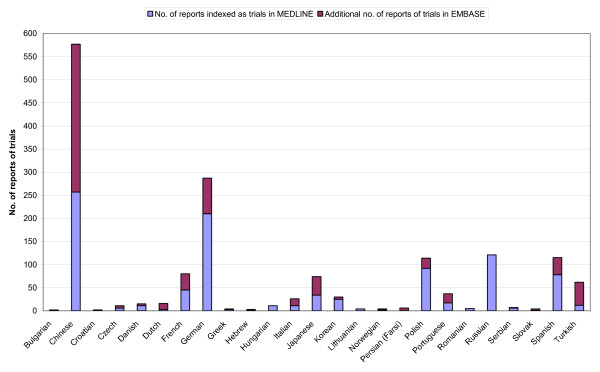
Background: Randomized trials are essential in assessing the effects of healthcare interventions and are a key component in systematic reviews of effectiveness. Searching for reports of randomized trials in databases is problematic due to the absence of appropriate indexing terms until the 1990s and inconsistent application of these indexing terms thereafter. Objectives: The objectives of this study are to devise a search strategy for identifying reports of randomized trials in EMBASE which are not already indexed as trials in MEDLINE and to make these reports easily accessible by including them in the Cochrane Central Register of Controlled Trials (CENTRAL) in The Cochrane Library, with the permission of Elsevier, the publishers of EMBASE. Methods: A highly sensitive search strategy was designed for EMBASE based on free-text and thesaurus terms which occurred frequently in the titles, abstracts, EMTREE terms (or some combination of these) of reports of trials indexed in EMBASE. This search strategy was run against EMBASE from 1980 to 2005 (1974 to 2005 for four of the terms) and records retrieved by the search, which were not already indexed as randomized trials in MEDLINE, were downloaded from EMBASE, printed and read. An analysis of the language of publication was conducted for the reports of trials published in 2005 (the most recent year completed at the time of this study). Results: Twenty-two search terms were used (including nine which were later rejected due to poor cumulative precision). More than a third of a million records were downloaded and scanned and approximately 80,000 reports of trials were identified which were not already indexed as randomized trials in MEDLINE. These are now easily identifiable in CENTRAL, in The Cochrane Library. Cumulative sensitivity ranged from 0.1% to 60% and cumulative precision ranged from 8% to 61%. The truncated term 'random$' identified 60% of the total number of reports of trials but only 35% of the more than 130,000 records retrieved by this term were reports of trials. The language analysis for the sample year 2005 indicated that of the 18,427 reports indexed as randomized trials in MEDLINE, 959 (5%) were in languages other than English. The EMBASE search identified an additional 658 reports in languages other than English, of which the highest number were in Chinese (320). Conclusion: The results of the search to date have greatly increased access to reports of trials in EMBASE, especially in some languages other than English. The search strategy used was subjectively derived from a small 'gold standard' set of test records and was not validated in an independent test set. We intend to design an objectively-derived validated search strategy using logistic regression based on the frequency of occurrence of terms in the approximately 80,000 reports of randomized trials identified compared with the frequency of these terms across the entire EMBASE database.
Overview
The claims and statistics of this paper haven’t been checked yet.
Free: it reads the open-access text and checks the first 5 claims that cite a source we can check. Create a free account to check every claim.
Integrity signals
Registry
Cites
Statistics
Figures
Verification
Claims the paper makes
The claims and statistics of this paper haven’t been checked yet.
Free: it reads the open-access text and checks the first 5 claims that cite a source we can check. Create a free account to check every claim.
Claims other papers make about this one
Each is checked against this paper’s own text: does it say what the citing paper says it does?
The cited source says what the claim attributes to it.
In the citing paper
“However, the methodological details of trials are often inadequately described by authors in the titles or abstracts, and not all records contain an abstract [ 4 ].”
From Better duplicate detection for systematic reviewers: evaluation of Systematic Review Assistant-Deduplication Module (2015) · cites this paper as [4]
Self-check
Percentages, sums and reported differences re-computed from the paper’s own numbers.
The self-check needs the paper’s full text.
Citations
Cites
Moher, D., Schulz, K. F., & Altman, D. G. (2001) · The Lancet · doi:10.1016/s0140-6736(00)04337-3 · Cited by 5,373
Improving the Quality of Reporting of Randomized Controlled Trials: The CONSORT Statement
Begg, C. (1996) · JAMA · doi:10.1001/jama.1996.03540080059030 · Cited by 3,127
Moher, D., Schulz, K. F., & Altman, D. G. (2001) · BMC Medical Research Methodology · doi:10.1186/1471-2288-1-2 · Cited by 2,755 · cited 1×
“CONSORT was introduced in 1996 [67] and revised in 2001 [68].”
Systematic Reviews in Health Care : Meta-Analysis in Context
Egger, M., Smith, G. D., & Altman, D. G. (2000) · Cited by 2,415
Systematic Reviews: Identifying relevant studies for systematic reviews
Dickersin, K., Scherer, R., & Lefebvre, C. (1994) · BMJ · doi:10.1136/bmj.309.6964.1286 · Cited by 2,256 · cited 6×
“Free-text terms were selected, including those included in the Cochrane Highly Sensitive Search Strategy for randomized trials [ 31 ] and finally, members of The Cochrane Collaboration, including those involved in devising Emerging Themes in Epidemiology 2008, 5:13 http://www.ete-online.com/content/5/1/13”
InfluentialSelf-citationEgger, M., Jüni, P., Bartlett, C., Holenstein, F., & Sterne, J. (2003) · Health Technology Assessment · doi:10.3310/hta7010 · Cited by 1,181 · cited 1×
“Although there is evidence that exclusion of studies in languages other than English from reviews might make no significant difference to the overall estimates of the effects of treatments [5-7], some subject areas (for example, complementary and alternative medicine) have been shown to require a more comprehensive se…”
Moher, D., Jones, A., Lepage, L., & for the CONSORT Group (2001) · JAMA · doi:10.1001/jama.285.15.1992 · Cited by 1,027 · cited 1×
“There is evidence that there has been an increase over time in the number of checklist items included in reports of randomized trials [69-71] which has led to reports of trials being more easily identified [59].”
Direction and impact of language bias in meta-analyses of controlled trials: empirical study
Jüni, P., Holenstein, F., Sterne, J., Bartlett, C., & Egger, M. (2002) · International Journal of Epidemiology · doi:10.1093/ije/31.1.115 · Cited by 892 · cited 1×
“Although there is evidence that exclusion of studies in languages other than English from reviews might make no significant difference to the overall estimates of the effects of treatments [5-7], some subject areas (for example, complementary and alternative medicine) have been shown to require a more comprehensive se…”
Plint, A. C., Moher, D., Morrison, A., Schulz, K., Altman, D. G., Hill, C., & Gaboury, I. (2006) · Medical Journal of Australia · doi:10.5694/j.1326-5377.2006.tb00557.x · Cited by 872
How to identify randomized controlled trials in MEDLINE: ten years on.
Glanville, J., Lefebvre, C., Miles, J. N. V., & Camosso‐Stefinovic, J. (2006) · Europe PMC (PubMed Central) · Cited by 837
Self-citationRobinson, K. A., & Dickersin, K. (2002) · International Journal of Epidemiology · doi:10.1093/ije/31.1.150 · Cited by 833 · cited 1×
“Many methodological search strategies or 'filters' have been developed in MEDLINE to make it easier to find studies of systematic reviews [41-44] and randomized controlled trials [31,36,45-62] and, more recently, in EMBASE [63,64].”
Developing Optimal Search Strategies for Detecting Clinically Sound Studies in MEDLINE
Haynes, R. B., Wilczynski, N., McKibbon, K. A., Walker, C. J., & Sinclair, J. C. (1994) · Journal of the American Medical Informatics Association · doi:10.1136/jamia.1994.95153434 · Cited by 765 · cited 1×
“Since 1996 when the search strategy reported here was derived, methods of search strategy design have developed from subjectively derived strategies that were not performance tested [31] to subjectively derived strategies performance tested on data sets of relevant reports [58,63,65], such as this strategy, and object…”
Cha, M., Eastwaad, S., Hartan, R., Maher, D., Olkin, I., Pitkin, R., Rennie, D., Schulz, K. F., Simel, D. L., & Straup, D. F. (1996) · Cited by 737
Hopewell, S., Clarke, M., Moher, D., Wager, E., Middleton, P., Altman, D. G., Schulz, K. F., & and the CONSORT Group (2008) · PLoS Medicine · doi:10.1371/journal.pmed.0050020 · Cited by 674
Lefebvre, C., Manheimer, E., & Glanville, J. (2008) · Cochrane Handbook for Systematic Reviews of Interventions · doi:10.1002/9780470712184.ch6 · Cited by 559
Self-citationHaynes, R. B., & Wilczynski, N. L. (2004) · BMJ · doi:10.1136/bmj.38068.557998.ee · Cited by 547
Moher, D., Pham, B., Lawson, M., & Klassen, T. (2003) · Health Technology Assessment · doi:10.3310/hta7410 · Cited by 500 · cited 1×
“Although there is evidence that exclusion of studies in languages other than English from reviews might make no significant difference to the overall estimates of the effects of treatments [5-7], some subject areas (for example, complementary and alternative medicine) have been shown to require a more comprehensive se…”
CONSORT for reporting randomised trials in journal and conference abstracts
Hopewell, S., Clarke, M., Moher, D., Wager, E., Middleton, P., Altman, D. G., & Schulz, K. F. (2008) · The Lancet · doi:10.1016/s0140-6736(07)61835-2 · Cited by 458 · cited 1×
“The CONSORT initiative was further enhanced by the publication in January 2008 of CONSORT for Abstracts which includes a checklist of 17 items designed to improve the consistency and quality of reporting of randomized trials in conference abstracts and abstracts in journal articles [72,73].”
Haynes, R. B., McKibbon, K. A., Wilczynski, N. L., Walter, S. D., & Werre, S. R. (2005) · BMJ · doi:10.1136/bmj.38446.498542.8f · Cited by 439 · cited 3×
“Since 1996 when the search strategy reported here was derived, methods of search strategy design have developed from subjectively derived strategies that were not performance tested [31] to subjectively derived strategies performance tested on data sets of relevant reports [58,63,65], such as this strategy, and object…”
Optimal search strategies for retrieving systematic reviews from Medline: analytical survey
Montori, V. M., Wilczynski, N. L., Morgan, D., & Haynes, R. B. (2005) · BMJ · doi:10.1136/bmj.38336.804167.47 · Cited by 422 · cited 1×
“Many methodological search strategies or 'filters' have been developed in MEDLINE to make it easier to find studies of systematic reviews [41-44] and randomized controlled trials [31,36,45-62] and, more recently, in EMBASE [63,64].”
Developing optimal search strategies for detecting clinically sound treatment studies in EMBASE.
Wong, S. S.-L., Wilczynski, N. L., & Haynes, R. B. (2006) · PubMed Central · Cited by 304
Handsearching versus electronic searching to identify reports of randomized trials
Hopewell, S., Clarke, M. J., Lefebvre, C., & Scherer, R. W. (2007) · Cochrane Database of Systematic Reviews · doi:10.1002/14651858.mr000001.pub2 · Cited by 247 · cited 2×
“To identify these reports of trials it is necessary to handsearch the journal [1] or to read the full text of articles retrieved by terms in the search strategy or found by other means.”
Self-citationPham, B., Klassen, T. P., Lawson, M. L., & Moher, D. (2005) · Journal of Clinical Epidemiology · doi:10.1016/j.jclinepi.2004.08.021 · Cited by 206 · cited 1×
“Although there is evidence that exclusion of studies in languages other than English from reviews might make no significant difference to the overall estimates of the effects of treatments [5-7], some subject areas (for example, complementary and alternative medicine) have been shown to require a more comprehensive se…”
Gattellari, M., Ward, J. E., & Solomon, M. J. (2001) · Diseases of the Colon & Rectum · doi:10.1007/bf02234591 · Cited by 201 · cited 1×
“Many methodological search strategies or 'filters' have been developed in MEDLINE to make it easier to find studies of systematic reviews [41-44] and randomized controlled trials [31,36,45-62] and, more recently, in EMBASE [63,64].”
Development of The Cochrane Collaboration's Central Register of Controlled Clinical Trials
Dickersin, K., Manheimer, E., Wieland, S., Robinson, K. A., Lefebvre, C., & McDonald, S. (2002) · Evaluation & the Health Professions · doi:10.1177/0163278702025001004 · Cited by 198
Self-citationIdentifying Clinical Trials in the Medical Literature with Electronic Databases
Suarez-Almazor, M. E., Belseck, E., Homik, J., Dorgan, M., & Ramos-Remus, C. (2000) · Controlled Clinical Trials · doi:10.1016/s0197-2456(00)00067-2 · Cited by 180 · cited 1×
“The impact of the contribution may vary considerably – the overlap of EMBASE and MEDLINE has been estimated to be 10% to 87% depending on the topic under investigation [13-18] – but searchers comparing the databases have concluded that relevant studies would be missed if only MEDLINE were searched for studies in pharm…”
Taking advantage of the explosion of systematic reviews: an efficient MEDLINE search strategy.
Shojania, K. G., & Bero, L. A. (2001) · PubMed · Cited by 176
Devereaux, P. J., Manns, B. J., Ghali, W. A., Quan, H., & Guyatt, G. H. (2002) · Controlled Clinical Trials · doi:10.1016/s0197-2456(02)00214-3 · Cited by 166 · cited 1×
“There is evidence that there has been an increase over time in the number of checklist items included in reports of randomized trials [69-71] which has led to reports of trials being more easily identified [59].”
Should meta-analysts search Embase in addition to Medline?
Sampson, M. (2003) · Journal of Clinical Epidemiology · doi:10.1016/s0895-4356(03)00110-0 · Cited by 160 · cited 1×
“There is some evidence of added value in searching EMBASE, as well as MEDLINE, for studies for inclusion in systematic reviews, as the additional studies identified contribute to the overall findings of the review; this may be attributed in part to the greater coverage of some languages other than English in EMBASE [1…”
Adams, C. E., Power, A., Frederick, K., & Lefebvre, C. (1994) · Psychological Medicine · doi:10.1017/s0033291700027896 · Cited by 122 · cited 1×
“Many methodological search strategies or 'filters' have been developed in MEDLINE to make it easier to find studies of systematic reviews [41-44] and randomized controlled trials [31,36,45-62] and, more recently, in EMBASE [63,64].”
Self-citationWilczynski, N. L., & Haynes, R. B. (2006) · Journal of Clinical Epidemiology · doi:10.1016/j.jclinepi.2006.04.001 · Cited by 120 · cited 1×
“Many methodological search strategies or 'filters' have been developed in MEDLINE to make it easier to find studies of systematic reviews [41-44] and randomized controlled trials [31,36,45-62] and, more recently, in EMBASE [63,64].”
Boynton, J., Glanville, J., McDaid, D., & Lefebvre, C. (1998) · Journal of Information Science · doi:10.1177/016555159802400301 · Cited by 111 · cited 4×
“Since 1996 when the search strategy reported here was derived, methods of search strategy design have developed from subjectively derived strategies that were not performance tested [31] to subjectively derived strategies performance tested on data sets of relevant reports [58,63,65], such as this strategy, and object…”
InfluentialSelf-citationLefebvre, C., & Clarke, M. J. (2001) · Systematic Reviews in Health Care · doi:10.1002/9780470693926.ch4 · Cited by 109 · cited 2×
“Over 100,000 additional reports of randomized trials have been identified in MEDLINE back to 1966 through this electronic search, begun in 1994 by the UK Cochrane Centre and continued by the US Cochrane Center (formerly the New England Cochrane Center, which was formerly the Baltimore Cochrane Center) [32] [33].”
Self-citationWhich resources should be used to identify RCT/CCTs for systematic reviews: a systematic review
Crumley, E. T., Wiebe, N., Cramer, K., Klassen, T. P., & Hartling, L. (2005) · BMC Medical Research Methodology · doi:10.1186/1471-2288-5-24 · Cited by 95 · cited 1×
“To minimize bias due to the selective availability of data, authors of systematic reviews of healthcare interventions need to identify as many relevant randomized studies as possible to provide reliable evidence on which to base healthcare decisions [1,2].”
White, V. J., Glanville, J. M., Lefebvre, C., & Sheldon, T. A. (2001) · Journal of Information Science · doi:10.1177/016555150102700601 · Cited by 92 · cited 4×
“Since 1996 when the search strategy reported here was derived, methods of search strategy design have developed from subjectively derived strategies that were not performance tested [31] to subjectively derived strategies performance tested on data sets of relevant reports [58,63,65], such as this strategy, and object…”
InfluentialSelf-citationKleijnen, J., & Knipschild, P. (1992) · Pharmaceutisch Weekblad Scientific Edition · doi:10.1007/bf01977620 · Cited by 89
Searching the right database. A comparison of four databases for psychiatry journals
Mcdonald, S., Taylor, L., & Adams, C. (1999) · Health Libraries Review · doi:10.1046/j.1365-2532.1999.00222.x · Cited by 86 · cited 2×
“The impact of the contribution may vary considerably – the overlap of EMBASE and MEDLINE has been estimated to be 10% to 87% depending on the topic under investigation [13-18] – but searchers comparing the databases have concluded that relevant studies would be missed if only MEDLINE were searched for studies in pharm…”
Self-citationMedline and Embase complement each other in literature searches
Woods, D., & Trewheellar, K. (1998) · BMJ · doi:10.1136/bmj.316.7138.1166 · Cited by 85
A high-yield strategy to identify randomized controlled trials for systematic reviews.
Jadad, A. R., & McQuay, H. J. (1993) · PubMed · Cited by 78
Robustness of empirical search strategies for clinical content in MEDLINE.
Wilczynski, N. L., & Haynes, R. B. (2002) · PubMed · Cited by 65
Marson, A. G., & Chadwick, D. W. (1996) · Epilepsia · doi:10.1111/j.1528-1157.1996.tb00575.x · Cited by 60 · cited 1×
“Many methodological search strategies or 'filters' have been developed in MEDLINE to make it easier to find studies of systematic reviews [41-44] and randomized controlled trials [31,36,45-62] and, more recently, in EMBASE [63,64].”
Topfer, L.-A., Parada, A., Menon, D., Noorani, H., Perras, C., & Serra-Prat, M. (1999) · International Journal of Technology Assessment in Health Care · doi:10.1017/s0266462399015226 · Cited by 59 · cited 1×
“The impact of the contribution may vary considerably – the overlap of EMBASE and MEDLINE has been estimated to be 10% to 87% depending on the topic under investigation [13-18] – but searchers comparing the databases have concluded that relevant studies would be missed if only MEDLINE were searched for studies in pharm…”
Searching for rehabilitation articles on MEDLINE and EMBASE. An example with cross-over design
Minozzi, S., Pistotti, V., & Forni, M. (2000) · Archives of Physical Medicine and Rehabilitation · doi:10.1016/s0003-9993(00)90099-6 · Cited by 55 · cited 1×
“The impact of the contribution may vary considerably – the overlap of EMBASE and MEDLINE has been estimated to be 10% to 87% depending on the topic under investigation [13-18] – but searchers comparing the databases have concluded that relevant studies would be missed if only MEDLINE were searched for studies in pharm…”
Royle, P., & Waugh, N. (2005) · BMC Medical Research Methodology · doi:10.1186/1471-2288-5-23 · Cited by 55
Optimizing search strategies to identify randomized controlled trials in MEDLINE
Zhang, L., Ajiferuke, I., & Sampson, M. (2006) · BMC Medical Research Methodology · doi:10.1186/1471-2288-6-23 · Cited by 53
Watson, R. J. D., & Richardson, P. H. (1999) · British Journal of Medical Psychology · doi:10.1348/000711299160220 · Cited by 53 · cited 1×
“Many methodological search strategies or 'filters' have been developed in MEDLINE to make it easier to find studies of systematic reviews [41-44] and randomized controlled trials [31,36,45-62] and, more recently, in EMBASE [63,64].”
Modern methods of searching the medical literature
Lance, G. N. (1993) · Medical Journal of Australia · doi:10.5694/j.1326-5377.1993.tb121808.x · Cited by 53
Systematic reviews of epidemiology in diabetes: finding the evidence
Royle, P., Bain, L., & Waugh, N. (2005) · BMC Medical Research Methodology · doi:10.1186/1471-2288-5-2 · Cited by 51
14. Modern methods of searching the medical literature
Smith, B. J., Darzins, P. J., Quinn, M., & Heller, R. F. (1992) · Medical Journal of Australia · doi:10.5694/j.1326-5377.1992.tb137403.x · Cited by 49
Brazier, H., Murphy, A. W., Lynch, C., & Bury, G. (1999) · Emergency Medicine Journal · doi:10.1136/emj.16.1.18 · Cited by 43 · cited 1×
“The impact of the contribution may vary considerably – the overlap of EMBASE and MEDLINE has been estimated to be 10% to 87% depending on the topic under investigation [13-18] – but searchers comparing the databases have concluded that relevant studies would be missed if only MEDLINE were searched for studies in pharm…”
Handsearching versus electronic searching to identify reports of randomized trials
Hopewell, S., Clarke, M. J., Lefebvre, C., & Scherer, R. W. (2002) · Cochrane Database of Systematic Reviews · doi:10.1002/14651858.mr000001 · Cited by 39
Self-citationSearching MEDLINE for Randomized Clinical Trials Involving Care of the Newborn
Kirpalani, H., Schmidt, B., McKibbon, K. A., Haynes, R. B., & Sinclair, J. C. (1989) · Pediatrics · doi:10.1542/peds.83.4.543 · Cited by 35 · cited 1×
“Many methodological search strategies or 'filters' have been developed in MEDLINE to make it easier to find studies of systematic reviews [41-44] and randomized controlled trials [31,36,45-62] and, more recently, in EMBASE [63,64].”
Assessment of MEDLINE search strategies for randomized controlled trials in prosthodontics
Dumbrigue, H. B., Esquivel, J. F., & Jones, J. S. (2000) · Journal of Prosthodontics · doi:10.1111/j.1532-849x.2000.00008.x · Cited by 34 · cited 1×
“Many methodological search strategies or 'filters' have been developed in MEDLINE to make it easier to find studies of systematic reviews [41-44] and randomized controlled trials [31,36,45-62] and, more recently, in EMBASE [63,64].”
Nearly half of dental randomized controlled trials published in German are not included in Medline
Türp, J. C., Schulte, J., & Antes, G. (2002) · European Journal of Oral Sciences · doi:10.1034/j.1600-0722.2002.21343.x · Cited by 33 · cited 1×
“Variations in the journals indexed in databases indicate a need to search more than one database to ensure optimal coverage of the published literature both in subject scope and language of report [3,4].”
Eisinga, A., Siegfried, N., & Clarke, M. J. (2007) · Health Information & Libraries Journal · doi:10.1111/j.1471-1842.2007.00698.x · Cited by 33 · cited 1×
“In a recent study, 20 (7%) additional reports of randomized controlled trials were identified only by obtaining the full text of the article [39].”
Self-citationComparison and Evaluation of Nine Bibliographic Databases concerning Adverse Drug Reactions
Biarez, O., Sarrut, B., Doreau, C. G., & Etienne, J. (1991) · DICP · doi:10.1177/106002809102501005 · Cited by 33 · cited 1×
“The impact of the contribution may vary considerably – the overlap of EMBASE and MEDLINE has been estimated to be 10% to 87% depending on the topic under investigation [13-18] – but searchers comparing the databases have concluded that relevant studies would be missed if only MEDLINE were searched for studies in pharm…”
"No Language Restrictions" in Database Searches: What Does This Really Mean?
Pilkington, K., Boshnakova, A., Clarke, M., & Richardson, J. (2005) · The Journal of Alternative and Complementary Medicine · doi:10.1089/acm.2005.11.205 · Cited by 31 · cited 1×
“There is some evidence of added value in searching EMBASE, as well as MEDLINE, for studies for inclusion in systematic reviews, as the additional studies identified contribute to the overall findings of the review; this may be attributed in part to the greater coverage of some languages other than English in EMBASE [1…”
Evaluation of Drug Interaction Document Citation in Nine On-Line Bibliographic Databases
Barillot, M. J., Sarrut, B., & Doreau, C. G. (1997) · Annals of Pharmacotherapy · doi:10.1177/106002809703100106 · Cited by 30
Quality and retrieval of obstetrical anaesthesia randomized controlled trials
Bender, J. S., Halpern, S. H., Thangaroopan, M., Jadad, A. R., & Ohlsson, A. (1997) · Canadian Journal of Anesthesia/Journal canadien d anesthésie · doi:10.1007/bf03014317 · Cited by 28 · cited 1×
“Many methodological search strategies or 'filters' have been developed in MEDLINE to make it easier to find studies of systematic reviews [41-44] and randomized controlled trials [31,36,45-62] and, more recently, in EMBASE [63,64].”
(1994) · PubMed · Cited by 26
Sources of evidence for systematic reviews of interventions in diabetes
Royle, P. L., Bain, L., & Waugh, N. R. (2005) · Diabetic Medicine · doi:10.1111/j.1464-5491.2005.01645.x · Cited by 24 · cited 1×
“The impact of the contribution may vary considerably – the overlap of EMBASE and MEDLINE has been estimated to be 10% to 87% depending on the topic under investigation [13-18] – but searchers comparing the databases have concluded that relevant studies would be missed if only MEDLINE were searched for studies in pharm…”
Corrao, S., Colomba, D., Arnone, S., Argano, C., Di Chiara, T., Scaglione, R., & Licata, G. (2006) · Journal of the American Medical Informatics Association · doi:10.1197/jamia.m2084 · Cited by 23
McDonald, S., Lefebvre, C., Antes, G., Galandi, D., Gøtzsche, P., Hammarquist, C., Haugh, M., Jensen, K. L., Kleijnen, J., Loep, M., et al. (2002) · Evaluation & the Health Professions · doi:10.1177/0163278702025001005 · Cited by 22 · cited 1×
“These journals had already been handsearched under another project co-ordinated by two of the authors (CL and SM) at the UK Cochrane Centre and funded by the European Union under the BIOMED Programme [37].”
Self-citationCrossover Comparison of Drug Information Online Database Vendors: Dialog and Medlars
Rovers, J. P., Janosik, J. E., & Souney, P. F. (1993) · Annals of Pharmacotherapy · doi:10.1177/106002809302700519 · Cited by 16 · cited 1×
“The impact of the contribution may vary considerably – the overlap of EMBASE and MEDLINE has been estimated to be 10% to 87% depending on the topic under investigation [13-18] – but searchers comparing the databases have concluded that relevant studies would be missed if only MEDLINE were searched for studies in pharm…”
Odaka, T., Nakayama, A., Akazawa, K., Sakamoto, M., Kinukawa, N., Kamakura, T., Nishioka, Y., Itasaka, H., Watanabe, Y., & Nose, Y. (1992) · Journal of Medical Systems · doi:10.1007/bf00999380 · Cited by 15 · cited 1×
“The impact of the contribution may vary considerably – the overlap of EMBASE and MEDLINE has been estimated to be 10% to 87% depending on the topic under investigation [13-18] – but searchers comparing the databases have concluded that relevant studies would be missed if only MEDLINE were searched for studies in pharm…”
Duggan, L., Morris, M. E., & Adams, C. E. (1997) · Journal of Intellectual Disability Research · doi:10.1111/j.1365-2788.1997.tb00702.x · Cited by 13
Wolf, F. M., Grum, C. M., Bara, A., Milan, S. J., & Jones, P. W. (1995) · Lancaster EPrints (Lancaster University) · Cited by 3
Research works printed but not linked: 12
- Paul N, Lefebvre C: Reports of controlled trials in EMBASE: an important contribution to The Cochrane Controlled Trials Register [abstract]. In Sixth International Cochrane Colloquium: 22-26 October 1998; Baltimore The Baltimore Cochrane Center. Bal- timore: The Cochrane Collaboration; 1998:85.
- Bara AI, Milan S, Jones PW: Identifying asthma RCTs with MEDLINE and EMBASE [abstract]. In Third International Cochrane Colloquium: 4-8 October 1995; Oslo the Nordic Cochrane Centre, Copenhagen and the Health Services Research Unit, National Institute of Public Health, Oslo. Oslo: The Cochrane Collaboration; 1995:V-31.
- Mitchell R, McDonald S, Craig J: How useful is searching Biologi- cal Abstracts (BIOSIS) for reports of randomized trials? A comparison with MEDLINE and EMBASE in renal disease [abstract]. In Ninth International Cochrane Colloquium: 9-13 October 2001; Lyon the French Cochrane Centre. Lyon: The Cochrane Collab- oration; 2001:22.
- Lefebvre C: Identification of randomized controlled trials using MEDLINE: the situation in 1993. In An Evidence-based Health Care System: the Case for Clinical Registries Edited by: Armstrong C. Bethesda: National Institutes of Health, Office of Medical Applica- tions of Research; 1994:23-28.
- PROFILE: Excerpta Medica Newsl 1994, 11:2.
- Lefebvre C, McDonald S: Development of a sensitive search strategy for reports of randomized controlled trials in EMBASE. In Fourth International Cochrane Colloquium: 20-24 October 1996; Adelaide the Australasian Cochrane Centre. Adelaide: The Cochrane Collaboration; 1996:A-28.
- Eisinga A, Lefebvre C: Closing the gap: identifying reports of randomized trials in EMBASE for inclusion in the Cochrane Central Register of Controlled Trials (CENTRAL) [abstract]. In Twelfth International Cochrane Colloquium: 2-6 October 2004; Ottawa the Canadian Cochrane Centre. Ottawa: The Cochrane Collaboration; 2004:150-151.
- Wu T, Li Y, Liu G, Bian Z, Li J, Zhang J, Xie L, Ni J: Investigation of authenticity of 'claimed' randomized controlled trials (RCTs) and quality assessment of RCT reports published in China [abstract]. In XIV International Cochrane Colloquium: 23-26 October 2006; Dublin the UK Cochrane Centre. Oxford: The Cochrane Collaboration; 2006:52.
- Solomon MJ, Laxamana A, Devore L, McLeod RS: Randomized con- trolled trials in surgery. Surgery 1994, 115:707-712.
- Brand M, Gonzalez J, Aguilar C: Identifying RCTs in MEDLINE by publication type and through the Cochrane strategy: the case in hypertension [abstract]. In Sixth International Cochrane Colloquium: 22-26 October 1998; Baltimore the Baltimore Cochrane Center. Baltimore: The Cochrane Collaboration; 1998:89.
- Chow T, To E, Goodchild C, McNeil J: Improved indexing of ran- domised controlled trials has enabled computer search strategies to identify them with high sensitivity and specifi- city in pain relief research [abstract]. In Eighth International Cochrane Colloquium: 25-29 October 2000; Cape Town the South Afri- can Cochrane Centre. Cape Town: The Cochrane Collaboration; 2000:41-42.
- Heran BS, White JM: Development of an optimal search strat- egy for finding trials demonstrating ACE inhibitor blood pressure lowering efficacy. In Tenth International Cochrane Collo- quium: 31 July-3 August 2002; Stavanger the Nordic Cochrane Centre. Stavanger: The Cochrane Collaboration; 2002:23.
Cited by
Grossman, J. M., Gordon, R., Ranganath, V. K., Deal, C., Caplan, L., Chen, W., Curtis, J. R., Furst, D. E., McMahon, M., Patkar, N. M., et al. (2010) · Arthritis Care & Research · doi:10.1002/acr.20295 · Cited by 708
Searching for and selecting studies
Lefebvre, C., Glanville, J., Briscoe, S., Littlewood, A., Marshall, C., Metzendorf, M., Noel‐Storr, A., Rader, T., Shokraneh, F., Thomas, J., et al. (2019) · Cochrane Handbook for Systematic Reviews of Interventions · doi:10.1002/9781119536604.ch4 · Cited by 647
Self-citationIntra-articular corticosteroid for knee osteoarthritis
Jüni, P., Hari, R., Rutjes, A. W., Fischer, R., Silletta, M. G., Reichenbach, S., & da Costa, B. R. (2015) · Cochrane Database of Systematic Reviews · doi:10.1002/14651858.cd005328.pub3 · Cited by 518
Interventions for preventing post-operative atrial fibrillation in patients undergoing heart surgery
Arsenault, K. A., Yusuf, A. M., Crystal, E., Healey, J. S., Morillo, C. A., Nair, G. M., & Whitlock, R. P. (2013) · Cochrane Database of Systematic Reviews · doi:10.1002/14651858.cd003611.pub3 · Cited by 509
Optimal literature search for systematic reviews in surgery
Goossen, K., Tenckhoff, S., Probst, P., Grummich, K., Mihaljevic, A. L., Büchler, M. W., & Diener, M. K. (2018) · Langenbeck's Archives of Surgery · doi:10.1007/s00423-017-1646-x · Cited by 248
Metadata
- Authors
- Lefebvre, C., Eisinga, A., McDonald, S., & Paul, N.
- Affiliations
- National Institute for Health and Care Research (GB)
- Monash University (AU)
- Corresponding author
- Lefebvre, Carol
- ORCID
- McDonald, Steve
- Venue
- Emerging Themes in Epidemiology
- Published
- 2008-09-30
- Volume
- 5
- Issue
- 1
- Pages
- 13-13
- ISSN
- 1742-7622 (ISSN-L)
- PMC
- PMC2586626
- OpenAlex
- W2043983323
- Cited by
- 93
- References
- 68
- Citations by year
- 2025: 2 · 2024: 3 · 2023: 6 · 2022: 4 · 2021: 2 · 2020: 5 · 2019: 7 · 2018: 5 · 2017: 10 · 2016: 9 · 2015: 3 · 2014: 5 · 2013: 6 · 2012: 3
- FWCI
- 7.94
- Type
- journal article
- Language
- en
- Open access
- gold
- doi.org
- Licence
- cc-by
- creativecommons.org/licenses/by/2.0 (tdm)
- creativecommons.org/licenses/by/2.0 (vor)
- Locations
- Emerging Themes in Epidemiology (publishedVersion, cc-by)
- PubMed Central (publishedVersion, cc-by)
- PubMed (publishedVersion)
- DOAJ (DOAJ: Directory of Open Access Journals) (submittedVersion, cc-by-sa)
- Funders
- National Institute for Health and Care Research
- Topics
- Social Sciences › Decision Sciences › Statistics, Probability and Uncertainty › Meta-analysis and systematic reviews
- Social Sciences › Library and Information Sciences › scientometrics and bibliometrics research
- Physical Sciences › Computer Science › Information Systems › Information Retrieval and Search Behavior
- Keywords
- Embase, MEDLINE, search strategies, index terms, Central, clinical trial registration, bibliographic database searching, sensitivity and precision, systematic reviews, Cochrane Library
About these checks
Registry, retraction, Cites and statistics results are computed, not judged, with one exception: a printed reference that no index lists is read once by a model before it counts as a citation error. Claims are extracted by a model and kept only when their quote appears verbatim in the text; each cited source is then checked, with a model’s help, for whether it says what the claim relies on. Those verdicts can be wrong — read the claim’s quote and the cited source before relying on one.
Statistics and arithmetic are recomputed, not judged.
Confidence bands are shown only for fields calibrated on our annotated test set. None is calibrated yet, so no band is shown.
What counts as a claim ›How we measure confidence ›How we check this ›
Are you an author, or do you see a problem with this page? Request a review
Data sources
Bibliographic data: Semantic Scholar, OpenAlex, Crossref.
Contains information from the Semantic Scholar Academic Graph Datasets, made available under the ODC Attribution License (ODC-BY 1.0).
Semantic Scholar’s data is described in: Kinney, R., et al. (2023). The Semantic Scholar Open Data Platform. arXiv:2301.10140.
