

Phylostratigraphic profiles reveal a deep evolutionary history of the vertebrate head sensory systems
Open accessThe DOI matches its Crossref record; 92 of the 93 references it cites were found in a registry or an index, and 1 are not checked yet.
Abstract
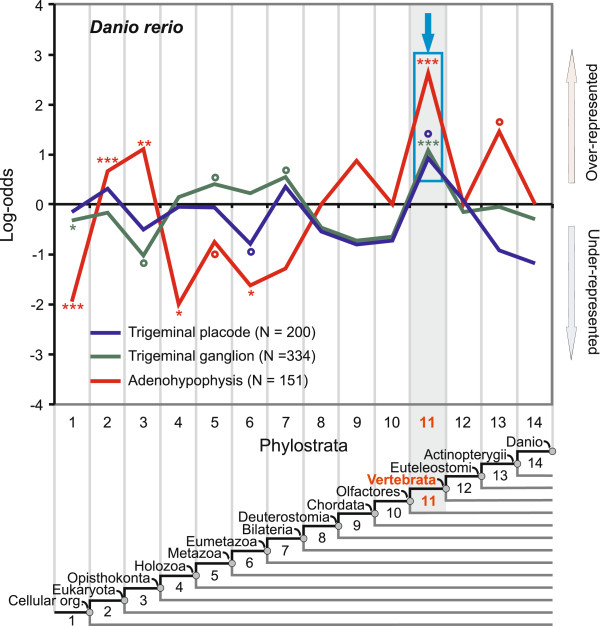
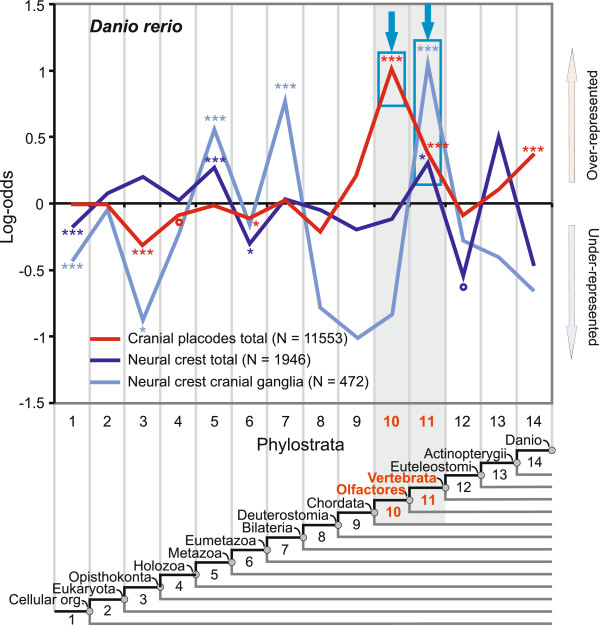
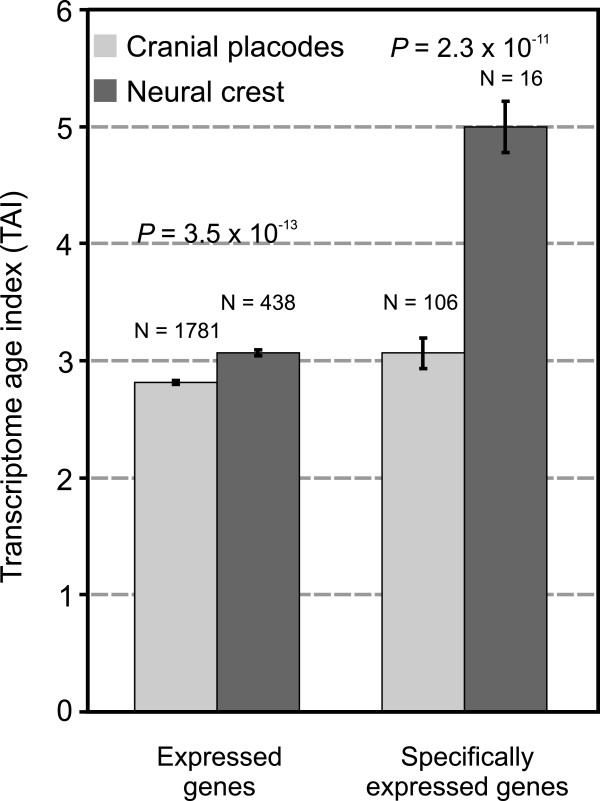
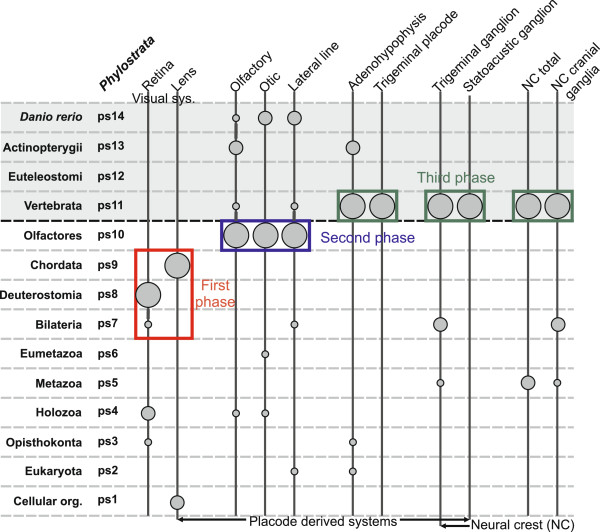
Background: The vertebrate head is a highly derived trait with a heavy concentration of sophisticated sensory organs that allow complex behaviour in this lineage. The head sensory structures arise during vertebrate development from cranial placodes and the neural crest. It is generally thought that derivatives of these ectodermal embryonic tissues played a central role in the evolutionary transition at the onset of vertebrates. Despite the obvious importance of head sensory organs for vertebrate biology, their evolutionary history is still uncertain. Results: To give a fresh perspective on the adaptive history of the vertebrate head sensory organs, we applied genomic phylostratigraphy to large-scale in situ expression data of the developing zebrafish Danio rerio. Contrary to traditional predictions, we found that dominant adaptive signals in the analyzed sensory structures largely precede the evolutionary advent of vertebrates. The leading adaptive signals at the bilaterian-chordate transition suggested that the visual system was the first sensory structure to evolve. The olfactory, vestibuloauditory, and lateral line sensory organs displayed a strong link with the urochordate-vertebrate ancestor. The only structures that qualified as genuine vertebrate innovations were the neural crest derivatives, trigeminal ganglion and adenohypophysis. We also found evidence that the cranial placodes evolved before the neural crest despite their proposed embryological relatedness. Conclusions: Taken together, our findings reveal pre-vertebrate roots and a stepwise adaptive history of the vertebrate sensory systems. This study also underscores that large genomic and expression datasets are rich sources of macroevolutionary information that can be recovered by phylostratigraphic mining.
Overview
The claims and statistics of this paper haven’t been checked yet.
Free: it reads the open-access text and checks the first 5 claims that cite a source we can check. Create a free account to check every claim.
Integrity signals
Registry
Cites
Statistics
Figures
Verification
Claims the paper makes
The claims and statistics of this paper haven’t been checked yet.
Free: it reads the open-access text and checks the first 5 claims that cite a source we can check. Create a free account to check every claim.
Claims other papers make about this one
Each is checked against this paper’s own text: does it say what the citing paper says it does?
The source backs part of the claim, not all of it — or backs it for a different population, condition or comparison.
In the citing paper
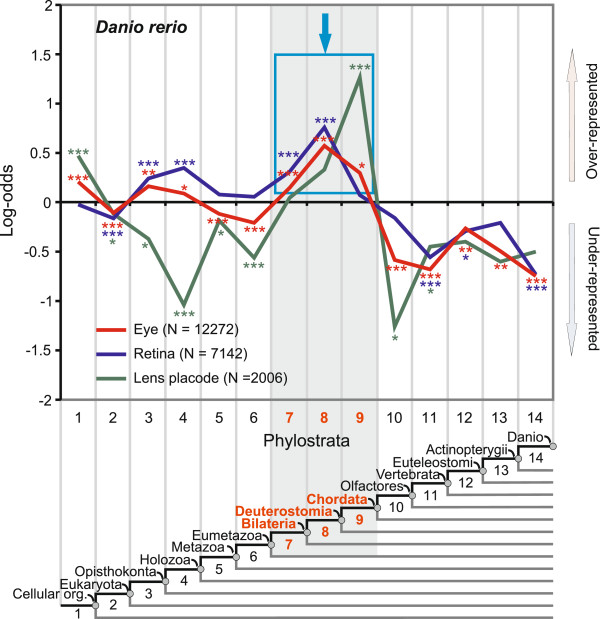
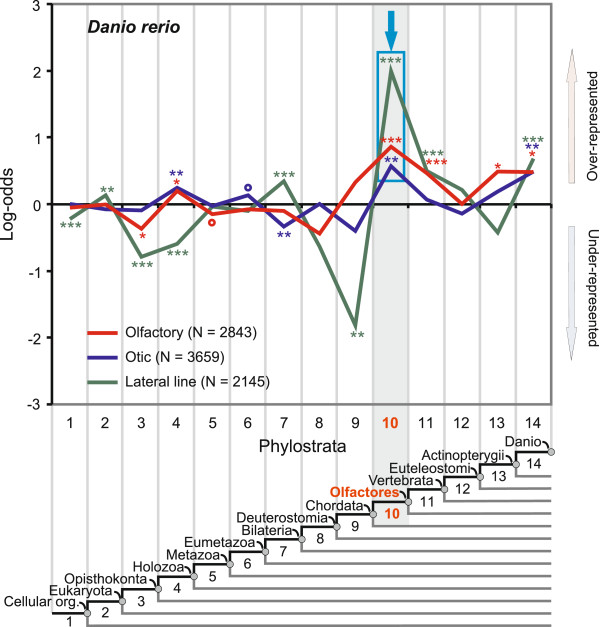
“Sestak et al. (2013) found that the surge of newly evolved retina- and lens-associated genes pre-dated that of new olfactory, otic, and lateral-line genes, having occurred before, vs. after, the appearance of the “tunicate + vertebrate” line of animals.”
From The evolutionary and genetic origins of consciousness in the Cambrian Period over 500 million years ago (2013) · cites this paper as Sestak et al. (2013)
Experimental — accuracy not yet measuredThe source backs part of the claim, not all of it — or backs it for a different population, condition or comparison.
In the citing paper
“which led him to conclude the crest and placodes evolved independently of one another from the dorsal ectoderm”
From The evolutionary and genetic origins of consciousness in the Cambrian Period over 500 million years ago (2013) · cites this paper as Sestak et al., 2013
Experimental — accuracy not yet measuredThe cited source says what the claim attributes to it.
In the citing paper
“A recent study of gene expression (Sestak et al., 2013) suggests that the placodes evolved slightly earlier than the neural crest, or at least got a head start (also see Wada et al., 1998).”
From The evolutionary and genetic origins of consciousness in the Cambrian Period over 500 million years ago (2013) · cites this paper as Sestak et al., 2013
The cited source says what the claim attributes to it.
In the citing paper
“Further buttressing the Light Switch and vision-first hypothesis, many new retina-associated genes seem to have been added in the earliest Bilateria and their immediate descendants (Sestak et al., 2013).”
From The evolutionary and genetic origins of consciousness in the Cambrian Period over 500 million years ago (2013) · cites this paper as Sestak et al., 2013
Self-check
Percentages, sums and reported differences re-computed from the paper’s own numbers.
The self-check needs the paper’s full text.
Citations
Cites
Controlling the False Discovery Rate: A Practical and Powerful Approach to Multiple Testing
Benjamini, Y., & Hochberg, Y. (1995) · Journal of the Royal Statistical Society Series B: Statistical Methodology · doi:10.1111/j.2517-6161.1995.tb02031.x · Cited by 109,482 · cited 1×
“05 level [89].”
Gapped BLAST and PSI-BLAST: a new generation of protein database search programs
Altschul, S. (1997) · Nucleic Acids Research · doi:10.1093/nar/25.17.3389 · Cited by 73,302 · cited 1×
“We compared sequences of these proteins against the nonredundant (nr) database (NCBI) by the blastp algorithm at the e-value cutoff of 1e-03 [85].”
MethodEvo-Devo and an Expanding Evolutionary Synthesis: A Genetic Theory of Morphological Evolution
Carroll, S. B. (2008) · Cell · doi:10.1016/j.cell.2008.06.030 · Cited by 2,067 · cited 1×
“tionary change [82-84].”
The genomic basis of adaptive evolution in threespine sticklebacks
Broad Institute Genome Sequencing Platform & Whole Genome Assembly Team, Jones, F. C., Grabherr, M. G., Chan, Y. F., Russell, P., Mauceli, E., Johnson, J., Swofford, R., Pirun, M., Zody, M. C., et al. (2012) · Nature · doi:10.1038/nature10944 · Cited by 1,777 · cited 1×
“tionary change [82-84].”
Tunicates and not cephalochordates are the closest living relatives of vertebrates
Delsuc, F., Brinkmann, H., Chourrout, D., & Philippe, H. (2006) · Nature · doi:10.1038/nature04336 · Cited by 1,651 · cited 2×
“Our choice of internodes in the phylogeny is a result of balancing between the robustness of these internodes in the phylogenetic studies [46-51], the availability of the sequence data for the sequence similarity”
BackgroundThe amphioxus genome and the evolution of the chordate karyotype
Putnam, N. H., Butts, T., Ferrier, D. E. K., Furlong, R. F., Hellsten, U., Kawashima, T., Robinson-Rechavi, M., Shoguchi, E., Terry, A., Yu, J.-K., et al. (2008) · Nature · doi:10.1038/nature06967 · Cited by 1,580 · cited 2×
“Our choice of internodes in the phylogeny is a result of balancing between the robustness of these internodes in the phylogenetic studies [46-51], the availability of the sequence data for the sequence similarity”
BackgroundThe genome of the choanoflagellate Monosiga brevicollis and the origin of metazoans
King, N., Westbrook, M. J., Young, S. L., Kuo, A., Abedin, M., Chapman, J., Fairclough, S., Hellsten, U., Isogai, Y., Letunic, I., et al. (2008) · Nature · doi:10.1038/nature06617 · Cited by 1,139 · cited 1×
“This is perhaps not surprising given that these phylostrata are known to be replete with transcription factors and patterning genes [42,53].”
BackgroundNeural Crest and the Origin of Vertebrates: A New Head
Gans, C., & Northcutt, R. G. (1983) · Science · doi:10.1126/science.220.4594.268 · Cited by 1,053 · cited 8×
“Northcutt RG, Gans C: The genesis of neural crest and epidermal placodes: a reinterpretation of vertebrate origins.”
BackgroundResultInfluentialCell fate determination in the vertebrate retina.
Cepko, C. L., Austin, C. P., Yang, X., Alexiades, M., & Ezzeddine, D. (1996) · Proceedings of the National Academy of Sciences · doi:10.1073/pnas.93.2.589 · Cited by 986
THE LOCUS OF EVOLUTION: EVO DEVO AND THE GENETICS OF ADAPTATION
Hoekstra, H. E., & Coyne, J. A. (2007) · Evolution · doi:10.1111/j.1558-5646.2007.00105.x · Cited by 976 · cited 1×
“tionary change [82-84].”
Research works printed but not linked: 1
- Perry SF Ekker M Farrell AP Brauner CJ Zebrafish 2010 1 San Diego, CA: Academic Press
Cited by
Coming of age: orphan genes in plants
Arendsee, Z. W., Li, L., & Wurtele, E. S. (2014) · Trends in Plant Science · doi:10.1016/j.tplants.2014.07.003 · Cited by 186
Feinberg, T. E., & Mallatt, J. (2013) · Frontiers in Psychology · doi:10.3389/fpsyg.2013.00667 · Cited by 158
Back to the Basics: Cnidarians Start to Fire
Bosch, T. C. G., Klimovich, A., Domazet-Lošo, T., Gründer, S., Holstein, T. W., Jékely, G., Miller, D. J., Murillo-Rincon, A. P., Rentzsch, F., Richards, G. S., et al. (2017) · Trends in Neurosciences · doi:10.1016/j.tins.2016.11.005 · Cited by 144
“Most Nervous System Components Have Ancient Origins Although phylostratigraphy [26] implies that vertebrate nervous systems have their origins in the common ancestor of Cnidaria and Bilateria (herein referred to as the Eumetazoa), individual molecular components clearly predate this.”
BackgroundSelf-citationPhylostratigraphic Bias Creates Spurious Patterns of Genome Evolution
Moyers, B. A., & Zhang, J. (2015) · Molecular Biology and Evolution · doi:10.1093/molbev/msu286 · Cited by 114
“The method has also been applied to investigate the modes of gene origination (Carvunis et al. 2012), the life cycle of genes (Abrus an 2013), and the evolution of developmental structures and cell types in a variety of taxa (Hemmrich et al. 2012; Sestak et al. 2013).”
BackgroundMethodThe evolutionary history of vertebrate cranial placodes – I: Cell type evolution
Patthey, C., Schlosser, G., & Shimeld, S. M. (2014) · Developmental Biology · doi:10.1016/j.ydbio.2014.01.017 · Cited by 94
“A recent analysis, which “dated” the origin of genes specific to placodes or placode-derived organs by phylostratigraphy (Sestak et al., 2013) also found that the vertebrate stem lineage is most enriched for origin events of genes associated with the adenohypophysis, in agreement with the idea that…”
BackgroundThe evolutionary history of vertebrate cranial placodes II. Evolution of ectodermal patterning
Schlosser, G., Patthey, C., & Shimeld, S. M. (2014) · Developmental Biology · doi:10.1016/j.ydbio.2014.01.019 · Cited by 80
“This is also supported by a recent phylostratigraphic study, which suggested that evolutionary origin events for olfactory, otic and lateral line specific genes are enriched in the tunicate–vertebrate stem lineage (Sestak et al., 2013).”
ResultDomazet‐Lošo, T., Carvunis, A., Albà, M. M., Šestak, M. S., Bakarić, R., Neme, R., & Tautz, D. (2016) · Molecular Biology and Evolution · doi:10.1093/molbev/msw284 · Cited by 81
“patterns (Domazet-Lošo and Tautz 2010b; Quint et al. 2012; Mendoza et al. 2013; Šestak et al. 2013; Šestak and Domazet-Lošo 2015; Drost et al. 2016).”
BackgroundMethodInfluentialSelf-citationNew Genes Interacted With Recent Whole-Genome Duplicates in the Fast Stem Growth of Bamboos
Jin, G., Ma, P., Wu, X., Gu, L., Long, M., Zhang, C., & Li, D.-Z. (2021) · Molecular Biology and Evolution · doi:10.1093/molbev/msab288 · Cited by 69
“The genes underlying innovation are thus hypothesized to be enriched in the corresponding phylostratum when innovation first emerged (Sestak et al. 2013; Sestak and Domazet-Loso 2015; Trigos et al. 2017; Shi et al. 2020).”
BackgroundAphid specialism as an example of ecological–evolutionary divergence
Loxdale, H. D., & Balog, A. (2017) · Biological reviews/Biological reviews of the Cambridge Philosophical Society · doi:10.1111/brv.12361 · Cited by 68
The origin and evolution of chordate nervous systems
Holland, L. Z. (2015) · Philosophical Transactions of the Royal Society B Biological Sciences · doi:10.1098/rstb.2015.0048 · Cited by 56
Further Simulations and Analyses Demonstrate Open Problems of Phylostratigraphy
Moyers, B. A., & Zhang, J. (2017) · Genome Biology and Evolution · doi:10.1093/gbe/evx109 · Cited by 53
“We simulated evolution using ROSE (Stoye et al. 1998), which allows the evolutionary rate for each site to be specified by the user.”
MethodSystematic errors in orthology inference and their effects on evolutionary analyses
Natsidis, P., Kapli, P., Schiffer, P. H., & Telford, M. J. (2021) · iScience · doi:10.1016/j.isci.2021.102110 · Cited by 51
Smith, S. A., & Pease, J. B. (2016) · Briefings in Bioinformatics · doi:10.1093/bib/bbw034 · Cited by 45
Foster thy young: enhanced prediction of orphan genes in assembled genomes
Li, J., Singh, U., Bhandary, P., Campbell, J. D., Arendsee, Z. W., Seetharam, A. S., & Wurtele, E. S. (2021) · Nucleic Acids Research · doi:10.1093/nar/gkab1238 · Cited by 34
Phylostratigraphic Profiles in Zebrafish Uncover Chordate Origins of the Vertebrate Brain
Šestak, M. S., & Domazet‐Lošo, T. (2014) · Molecular Biology and Evolution · doi:10.1093/molbev/msu319 · Cited by 32
“Together with previous results on the origin of complex visual system ( Sestak et al. 2013) this finding portrays the first chordate as fully equipped, brainwise, to participate in the evolutionary arms race with the other phyla in the early Cambrian ocean (Marshall 2006; Plotnick et al. 2010).”
BackgroundMethodResultSelf-citationEvolutionary Analysis of the Bacillus subtilis Genome Reveals New Genes Involved in Sporulation
Shi, L., Derouiche, A., Pandit, S., Rahimi, S., Kalantari, A., Futo, M., Ravikumar, V., Jers, C., Mokkapati, V. R. S. S., Vlahoviček, K., et al. (2020) · Molecular Biology and Evolution · doi:10.1093/molbev/msaa035 · Cited by 28
Toward Reducing Phylostratigraphic Errors and Biases
Moyers, B. A., & Zhang, J. (2018) · Genome Biology and Evolution · doi:10.1093/gbe/evy161 · Cited by 26
Plant organ evolution revealed by phylotranscriptomics in Arabidopsis thaliana
Li, L., Steffen, J. G., Osborne, E. J., & Toomajian, C. (2017) · Scientific Reports · doi:10.1038/s41598-017-07866-6 · Cited by 12
Multiple embryonic sources converge to form the pectoral girdle skeleton in zebrafish
Kuroda, S., Lalonde, R. L., Mansour, T. A., Mosimann, C., & Nakamura, T. (2024) · Nature Communications · doi:10.1038/s41467-024-50734-x · Cited by 12
“This result is consistent with the previously reported developmental fate of the post-otic placode 42,43 .”
ResultFoster thy young: Enhanced prediction of orphan genes in assembled genomesPreprint
Li, J., Singh, U., Bhandary, P., Campbell, J. D., Arendsee, Z., Seetharam, A. S., & Wurtele, E. S. (2019) · bioRxiv (Cold Spring Harbor Laboratory) · doi:10.1101/2019.12.17.880294 · Cited by 11
Orthoweb: a software package for evolutionary analysis of gene networks
Ivanov, R. A., Mukhin, A. M., Владимирович, К. Ф., Мустафин, З. С., Afonnikov, D. A., Matushkin, Y. G., & Lashin, S. A. (2025) · Vavilov Journal of Genetics and Breeding · doi:10.18699/vjgb-24-95 · Cited by 12
Zhang, L., Tan, Y., Fan, S., Zhang, X., & Zhang, Z. (2019) · Scientific Reports · doi:10.1038/s41598-019-40023-9 · Cited by 12
The mysterious orphans of Mycoplasmataceae
Tatarinova, T. V., Lysnyansky, I., Nikolsky, Y., & Bolshoy, A. (2016) · Biology Direct · doi:10.1186/s13062-015-0104-3 · Cited by 13
Neural crest and placode roles in formation and patterning of cranial sensory ganglia in lamprey
Yuan, T., York, J. R., & McCauley, D. W. (2020) · genesis · doi:10.1002/dvg.23356 · Cited by 10
Pai, V. P., Pio‐Lopez, L., Sperry, M. M., Erickson, P., Tayyebi, P., & Levin, M. G. (2025) · Communications Biology · doi:10.1038/s42003-025-08086-9 · Cited by 14
Lopes, K. D. P., Campos-Laborie, F. J., Vialle, R. A., Ortega, J. M., & Rivas, J. D. L. (2016) · BMC Genomics · doi:10.1186/s12864-016-3062-y · Cited by 8
“Phylostratigraphy is the usual methodology applied to find the origin and emergence of genes [10, 11].”
MethodEvolutionary trends in the emergence of skeletal cell types
Damatac, A. M., Koska, S., Ullrich, K. K., Domazet‐Lošo, T., Klimovich, A. V., & Kaucká, M. (2025) · Evolution Letters · doi:10.1101/2024.09.26.615131 · Cited by 6
Self-citationCapturing Evolutionary Signatures in Transcriptomes with myTAIPreprint
Drost, H., Gabel, A., Domazet‐Lošo, T., Quint, M., & Große, I. (2016) · bioRxiv (Cold Spring Harbor Laboratory) · doi:10.1101/051565 · Cited by 6
Self-citationFatieieva, Y., Galimullina, R., Isaev, S. V., Klimovich, A. V., Lemaire, L. A., & Adameyko, I. I. (2025) · Communications Biology · doi:10.1038/s42003-025-08502-0 · Cited by 8
Huang, W., Quan, M., Qi, W., Xiao, L., Fang, Y., Zhou, J., Ren, T., Li, P., Chen, Y., El-Kassaby, Y. A., et al. (2025) · New Phytologist · doi:10.1111/nph.70403 · Cited by 4
“…to a specific internode on the phylogenetic tree, termed phylostratum (PS) which is defined as the most ancient phylogenetic node that shows large-scale homology across diverse groups including prokaryotes, fungi, animals, algae, and plants (Domazet-Lo (cid:1) so et al ., 2007; Sestak et al ., 2013).”
Contrasting Macroevolutionary Patterns in the Human N-Glycosylation Pathway
Kifer, D., Čorak, N., Domazet-Lošo, M., Kasalo, N., Lauc, G., Klobučar, G. I. V., & Domazet‐Lošo, T. (2025) · Engineering · doi:10.1016/j.eng.2025.06.039 · Cited by 3
Self-citationМуртазина, А. Р., Fatieieva, Y., Waern, F., Maunsell, H. R., Thawani, A., Semsch, B., Boström, J., Reagor, C. C., Kameneva, P., Araslanova, K. R., et al. (2026) · bioRxiv (Cold Spring Harbor Laboratory) · doi:10.64898/2026.04.01.715621 · Cited by 2
“This approach 41 , assigns genes to evolutionary age classes, allowing us to infer when they emerged and when they were likely recruited into placodal identity programs.”
Adult zebrafish favor vision over flow sensing in increasingly complex hydrodynamic environments
Dave, S., & Liao, J. C. (2026) · Current Biology · doi:10.1016/j.cub.2026.08.047 · Cited by 1
McLennan, D. A. (2016) · Elsevier eBooks · doi:10.1016/b978-0-12-800049-6.00275-4
Bakalar, D. (2015) · CUNY Academic Works (City University of New York)
Correspondence Analysis Applied to Large Scale Evo-Devo Data
Široki, T., Koska, S., Čorak, N., Futo, M., Domazet‐Lošo, T., & Domazet-Lošo, M. (2019) · International Convention on Information and Communication Technology, Electronics and Microelectronics · doi:10.23919/mipro.2019.8756945
“to a categorical variable that can take one of the predefined values (called phylostrata [16]).”
BackgroundSelf-citationThe inductive brain in animal development
Cabej, N. R. (2021) · Elsevier eBooks · doi:10.1016/b978-0-323-85154-1.00004-7
McLennan, D. A. (2024) · Elsevier eBooks · doi:10.1016/b978-0-443-15750-9.00059-8
Gupta, S., Prabhu, P., Chaudhary, P., & Reddy, P. C. (2025) · Results and problems in cell differentiation · doi:10.1007/978-3-032-06766-1_12
Metadata
- Authors
- Šestak, M. S., Božičević, V., Bakarić, R., Dunjko, V., & Domazet-Lošo, T.
- Affiliations
- Ruđer Bošković Institute (HR)
- Venue
- Frontiers in Zoology
- Published
- 2013-04-12
- Volume
- 10
- Issue
- 1
- Pages
- 18-18
- ISSN
- 1742-9994 (ISSN-L)
- PMC
- PMC3636138
- OpenAlex
- W2169355027
- Semantic Scholar
- 064b06f0bd8dde722779ba6dd3009d58d8ecc5bb
- Cited by
- 42
- References
- 93
- Citations by year
- 2026: 2 · 2025: 7 · 2024: 3 · 2021: 4 · 2020: 3 · 2019: 3 · 2018: 1 · 2017: 3 · 2016: 7 · 2015: 3 · 2014: 5 · 2013: 1
- FWCI
- 2.39
- Type
- journal article
- Language
- en
- Open access
- gold
- doi.org
- Licence
- cc-by
- Locations
- Frontiers in Zoology (publishedVersion, cc-by)
- Europe PMC (PubMed Central) (publishedVersion, cc-by)
- PubMed Central (publishedVersion, cc-by)
- PubMed (publishedVersion)
- MPG.PuRe (Max Planck Society) (submittedVersion, other-oa)
- Open access LMU (Ludwid Maxmilian's Universitat Munchen) (submittedVersion)
- Zenodo (CERN European Organization for Nuclear Research) (submittedVersion, cc-by-nc-nd)
- Funders
- Unity through Knowledge Fund
- Topics
- Life Sciences › Biochemistry, Genetics and Molecular Biology › Molecular Biology › Developmental Biology and Gene Regulation
- Life Sciences › Agricultural and Biological Sciences › Animal Science and Zoology › Marine Invertebrate Physiology and Ecology
- Life Sciences › Biochemistry, Genetics and Molecular Biology › Molecular Biology › Genomics and Phylogenetic Studies
- Keywords
- phylostratigraphy, cranial placodes, neural crest, chordate evolution, visual system evolution, olfactory system, lateral line, zebrafish embryonic development, in situ gene expression, macroevolution, adaptive evolution, trigeminal ganglion, anterior pituitary
About these checks
Registry, retraction, Cites and statistics results are computed, not judged, with one exception: a printed reference that no index lists is read once by a model before it counts as a citation error. Claims are extracted by a model and kept only when their quote appears verbatim in the text; each cited source is then checked, with a model’s help, for whether it says what the claim relies on. Those verdicts can be wrong — read the claim’s quote and the cited source before relying on one.
Statistics and arithmetic are recomputed, not judged.
Confidence bands are shown only for fields calibrated on our annotated test set. None is calibrated yet, so no band is shown.
What counts as a claim ›How we measure confidence ›How we check this ›
Are you an author, or do you see a problem with this page? Request a review
Data sources
Bibliographic data: Semantic Scholar, OpenAlex, Crossref.
Contains information from the Semantic Scholar Academic Graph Datasets, made available under the ODC Attribution License (ODC-BY 1.0).
Semantic Scholar’s data is described in: Kinney, R., et al. (2023). The Semantic Scholar Open Data Platform. arXiv:2301.10140.
