

The DOI matches its Crossref record; 47 of the 48 references it cites were found in a registry or an index.
ISway: a sensitive, valid and reliable measure of postural control
Open accessAbstract
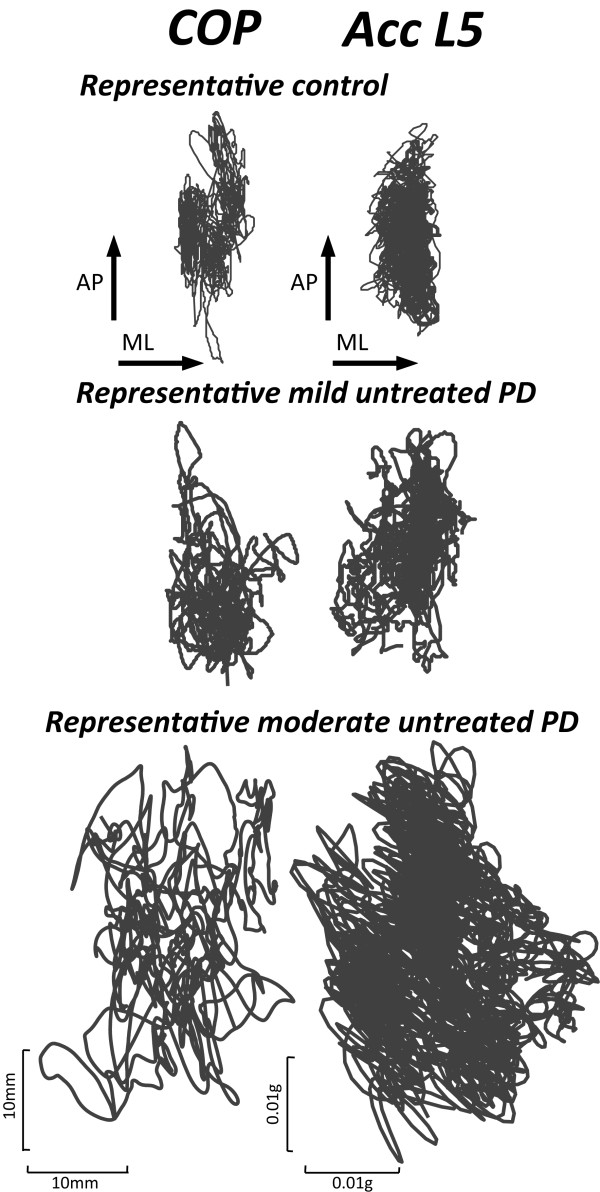
BACKGROUND: Clinicians need a practical, objective test of postural control that is sensitive to mild neurological disease, shows experimental and clinical validity, and has good test-retest reliability. We developed an instrumented test of postural sway (ISway) using a body-worn accelerometer to offer an objective and practical measure of postural control. METHODS: We conducted two separate studies with two groups of subjects. Study I: sensitivity and experimental concurrent validity. Thirteen subjects with early, untreated Parkinson's disease (PD) and 12 age-matched control subjects (CTR) were tested in the laboratory, to compare sway from force-plate COP and inertial sensors. Study II: test-retest reliability and clinical concurrent validity. A different set of 17 early-to-moderate, treated PD (tested ON medication), and 17 age-matched CTR subjects were tested in the clinic to compare clinical balance tests with sway from inertial sensors. For reliability, the sensor was removed, subjects rested for 30 min, and the protocol was repeated. Thirteen sway measures (7 time-domain, 5 frequency-domain measures, and JERK) were computed from the 2D time series acceleration (ACC) data to determine the best metrics for a clinical balance test. RESULTS: Both center of pressure (COP) and ACC measures differentiated sway between CTR and untreated PD. JERK and time-domain measures showed the best test-retest reliability (JERK ICC was 0.86 in PD and 0.87 in CTR; time-domain measures ICC ranged from 0.55 to 0.84 in PD and from 0.60 to 0.89 in CTR). JERK, all but one time-domain measure, and one frequency measure were significantly correlated with the clinical postural stability score (r ranged from 0.50 to 0.63, 0.01 < p < 0.05). CONCLUSIONS: Based on these results, we recommend a subset of the most sensitive, reliable, and valid ISway measures to characterize posture control in PD: 1) JERK, 2) RMS amplitude and mean velocity from the time-domain measures, and 3) centroidal frequency as the best frequency measure, as valid and reliable measures of balance control from ISway.
Overview
The claims and statistics of this paper haven’t been checked yet.
Run the check — free, no account needed. It reads the open-access text and checks the sources it cites.
Integrity signals
Registry
Cites
Statistics
Figures
Verification
Claims the paper makes
The claims and statistics of this paper haven’t been checked yet.
Run the check — free, no account needed. It reads the open-access text and checks the sources it cites.
Claims other papers make about this one
Each is checked against this paper’s own text: does it say what the citing paper says it does?
The source backs part of the claim, not all of it — or backs it for a different population, condition or comparison.
In the citing paper
“In addition, good agreement was found between sway and spatiotemporal gait measures from wearables and other established technologies [23, 31, 32].”
From Wearable sensors for clinical applications in epilepsy, Parkinson’s disease, and stroke: A mixed-methods systematic review (2018) · cites this paper as [23]
Experimental — accuracy not yet measuredIn the citing paper
“In PD, wearables were used to detect and quantify cardinal motor symptoms including bradykinesia [19], tremor [20, 21], and postural sway [22, 23] as well as medication-evoked adverse symptoms such as dyskinesia [24–27] and motor fluctuations [28, 29].”
From Wearable sensors for clinical applications in epilepsy, Parkinson’s disease, and stroke: A mixed-methods systematic review (2018) · cites this paper as [23]
In the citing paper
“Postural sway measures derived from wearables have been examined for test–retest reliability (ICC 0.55–0.86) [23] and the mediolateral sway and jerk were shown to be sensitive to detect progression of postural instability in PD over time [22].”
From Wearable sensors for clinical applications in epilepsy, Parkinson’s disease, and stroke: A mixed-methods systematic review (2018) · cites this paper as [23]
In the citing paper
“For example, the postural sway measures in PD have been shown to be reliable and sensitive to longitudinal changes in laboratory settings [22, 23].”
From Wearable sensors for clinical applications in epilepsy, Parkinson’s disease, and stroke: A mixed-methods systematic review (2018) · cites this paper as [23]
In the citing paper
“Predominantly acceleration signals were used in hospital and free-living settings, even though gyroscope signals have shown promise for increasing the sensitivity and specificity when measuring dyskinesia and postural instability in laboratory settings [23–26].”
From Wearable sensors for clinical applications in epilepsy, Parkinson’s disease, and stroke: A mixed-methods systematic review (2018) · cites this paper as [23]
Self-check
Percentages, sums and reported differences re-computed from the paper’s own numbers.
The self-check needs the paper’s full text.
Citations
Cites
Forming inferences about some intraclass correlation coefficients.
McGraw, K. O., & Wong, S. P. (1996) · Psychological Methods · doi:10.1037/1082-989x.1.1.30 · Cited by 6,903
Human balance and posture control during standing and walking
Winter, D. (1995) · Gait & Posture · doi:10.1016/0966-6362(96)82849-9 · Cited by 3,638
Unified Parkinson's Disease Rating Scale
(2012) · Springer eBooks · doi:10.1007/springerreference_184495 · Cited by 3,071
Sensorimotor Integration in Human Postural Control
Peterka, R. J. (2002) · Journal of Neurophysiology · doi:10.1152/jn.2002.88.3.1097 · Cited by 2,425
Recent developments in Parkinson's disease
Fahn, S., Elton, R., MARSDEN, C. D., Calne, D. B., & Goldstein, M. (1986) · Raven Press eBooks · Cited by 2,306
Members of the UPDRS Development Committee. Unified Parkinson's Disease Rating Scale
Fahn, S. (1987) · Medical Entomology and Zoology · Cited by 2,163
Measures of postural steadiness: differences between healthy young and elderly adults
Prieto, T. E., Myklebust, J. B., Hoffmann, R. G., Lovett, E. G., & Myklebust, B. M. (1996) · IEEE Transactions on Biomedical Engineering · doi:10.1109/10.532130 · Cited by 1,872
The Balance Evaluation Systems Test (BESTest) to Differentiate Balance Deficits
Horak, F. B., Wrisley, D. M., & Frank, J. (2009) · Physical Therapy · doi:10.2522/ptj.20080071 · Cited by 1,062
Self-citationPostural stability in the elderly: a comparison between fallers and non-fallers
Melzer, I. (2004) · Age and Ageing · doi:10.1093/ageing/afh218 · Cited by 736
The relevance of clinical balance assessment tools to differentiate balance deficits.
Mancini, M., & Horak, F. B. (2010) · PubMed · Cited by 695
Self-citation
Cited by
Sorted by citations
Items 401–499 of 499
Technologies to Prevent Falls and Their Consequences
Bohlke, K., Suri, A., Sejdcic, E., & Becker, C. (2023) · Practical issues in geriatrics · doi:10.1007/978-3-031-32246-4_9 · Cited by 1
Investigation of the Effects of Age-Related Changes in the Vestibular System on Balance: A Review
Kurt, A. K., Altunok, M. K., Kethüdaoğlu, M. O., Aydın, S., Albayrak, H. E., Göçen, H. B., & Özsezikli, B. A. (2024) · Dokuz Eylül Üniversitesi Tıp Fakültesi Dergisi · doi:10.18614/deutip.1330102 · Cited by 1
Skiba, M. B., El‐Gohary, M., Horak, F. B., Dieckmann, N. F., Guidarelli, C., Meyers, G., Hayes‐Lattin, B., & Winters‐Stone, K. M. (2024) · Archives of Physical Medicine and Rehabilitation · doi:10.1016/j.apmr.2024.01.019 · Cited by 1
Self-citationD’Emanuele, S., Nardello, F., Garau, F., Campaci, D., Schena, F. F., & Tarperi, C. (2024) · Measurement in Physical Education and Exercise Science · doi:10.1080/1091367x.2024.2403564 · Cited by 1
Arduino, C., Schubert, M. C., & Anson, E. R. (2024) · Experimental Brain Research · doi:10.1007/s00221-024-06923-7 · Cited by 1
Effects of deep brain stimulation amplitude on motor performance in Parkinson’s disease
Conovaloff, A., Krishnamurthi, Mahant, Samanta, & Abbas, J. J. (2012) · Journal of Parkinsonism and Restless Legs Syndrome · doi:10.2147/jprls.s38263 · Cited by 1
Baron, E. (2018) · EngagedScholarship @ Cleveland State University (Cleveland State University) · Cited by 1
Cognitive Enhancers as a Means to Reduce Falls in Older Adults
Bohnen, N. I., & Müller, M. L. T. M. (2019) · Springer eBooks · doi:10.1007/978-3-030-24233-6_19 · Cited by 1
METHODS EVALUATING UPPER ARM AND FOREARM MOVEMENT DURING A QUIET STANCE
Volf, P., Kutílek, P., Hejda, J., Černý, R., Milerská, I., & Hána, K. (2019) · Lékař a technika - Clinician and Technology · doi:10.14311/ctj.2019.2.04 · Cited by 1
Lima, F. P. S., Lima, M. O., Álvarez, N. L., Lopes‐Martins, R. Á. B., Lucareli, P. R. G., Bargalló, N., Falcón, C., Vidal, J., & Junqué, C. (2020) · Research on Biomedical Engineering · doi:10.1007/s42600-020-00056-w · Cited by 1
Gras, N., Brauner, T., Wearing, S. C., & Horstmann, T. (2020) · Applied Sciences · doi:10.3390/app10113893 · Cited by 1
Influence of age on kinematic analysis of functional reach test: a cross-sectional study
Merchán-Baeza, J. A., González‐Sánchez, M., & Cuesta‐Vargas, A. (2020) · Human Movement · doi:10.5114/hm.2021.98405 · Cited by 1
Cesarelli, G., Donisi, L., Caprio, G. D., Scioli, M., Biancardi, A., & D’Addio, G. (2021) · IEEE International Symposium on Medical Measurements and Applications (MeMeA) · doi:10.1109/memea52024.2021.9478776 · Cited by 1
Bens, S. M. (2014) · ProQuest Demo Repository · Cited by 1
Reactive Balance Control after Stroke: Towards Enhanced Clinical Understanding and Assessment
Inness, E. L. (2015) · TSpace (University of Toronto) · Cited by 1
Bargiotas, I., Kalogeratos, A., Limnios, M., Vidal, P., Ricard, D., & Vayatis, N. (2019) · arXiv (Cornell University) · doi:10.48550/arxiv.1907.06614 · Cited by 1
Sensor Integration for Gait Analysis
Çelik, Y., Vitório, R. R., Powell, D., Moore, J., Young, F., Coulby, G., Tung, J. Y., Nouredanesh, M., Ellis, R., Izmailova, E. S., et al. (2022) · Elsevier eBooks · doi:10.1016/b978-0-12-822548-6.00139-4 · Cited by 1
Self-paced treadmill controller algorithm based on position and speed of centre of massPreprint
Mokhtarzadeh, H., Richards, R. E., & Geijtenbeek, T. (2022) · bioRxiv (Cold Spring Harbor Laboratory) · doi:10.1101/2022.06.21.496740 · Cited by 1
Development of the hearing aid measurement system
Homton, A., Umchid, S., Leeudomwong, S., Thongboon, A., Kongthavorn, P., Juntarapaso, Y., & Plangsangmas, V. (2013) · Biomedical Engineering International Conference · doi:10.1109/bmeicon.2013.6687643
In-field quantitative assessment of static/dynamic stability in Prader–Willi syndrome children
Vannozzi, G., Summa, A., Ostellino, M., Marro, T., Morelli, D., & Cappozzo, A. (2015) · Gait & Posture · doi:10.1016/j.gaitpost.2015.07.023
Gregory, T. (2015) · SUNScholar (Stellenbosch University)
Rezzoug, N., & Gorce, P. (2015) · Computer Methods in Biomechanics & Biomedical Engineering · doi:10.1080/10255842.2015.1069612
Quantification of postural stability in Parkinson's disease patients using mobile technology
Ozinga, S. J. (2015) · OhioLink ETD Center (Ohio Library and Information Network)
THE EFFECTS OF AGING ON MULTIPLE POSTURAL MUSCLE CONTROL AND POSTURAL SWAY BEHAVIOR
Degani, A. M. (2016) · The Mathematics Enthusiast
The role of the prefrontal cortex in the control of dual-task gait
Wrightson, J. G. (2016)
Choi, J., Kang, D. W., Seo, J. W., Kim, T. H., Cho, H. M., & Tack, G. R. (2017) · Journal of Mechanics in Medicine and Biology · doi:10.1142/s0219519417400218
Neville, C., Rieger, B. P., Viterise, T., & Brindle, A. (2017) · Physical Medicine and Rehabilitation Research · doi:10.15761/pmrr.1000155
Bisi, M. C., & Stagni, R. (2018) · Gait & Posture · doi:10.1016/j.gaitpost.2018.07.106
Bansbach, H. M. (2017) · D-Scholarship@Pitt (University of Pittsburgh)
Clinical Reasoning by Expert Bobath Instructors
Vaughan‐Graham, J. (2016) · TSpace (University of Toronto)
Comparing biomechanical variables in older adult fallers and non-fallers
Ghadikolaei, O., & Roghieh (2018)
Mullin, T. M. (2017) · Sports Injuries & Medicine · doi:10.29011/2576-9596.100023
Adaptive Algorithms for Personalized Health Monitoring
Engelhard, M. (2016) · doi:10.18130/v3wk7w
Future perspectives on balance disorders in PD
Mancini, M., Nutt, J. G., & Horak, F. B. (2019) · Elsevier eBooks · doi:10.1016/b978-0-12-813874-8.00010-6
Self-citationMeasuring Sway with Markerless Depth Camera
Huang, K., Ofek, E., & Gilad-Bachrach, R. (2019)
Angus, J. (2020) · UVic’s Research and Learning Repository (University of Victoria)
Antonio, B. D. A., Teruya, T. T., & Mochizuki, L. (2020) · Revista Brasileira de Educação Física e Esporte · doi:10.11606/1807-5509202000030429
Wang, I., Wang, L.-I., Xue, S.-J., Hu, R., Su, Y., Jian, R.-J., & Ho, C.-S. (2020) · doi:10.21203/rs.3.rs-78823/v1 · Cited by 1
Skiba, M. B., Harker, G. R., Guidarelli, C., El‐Gohary, M., Horak, F. B., Roeland, E. J., Silbermann, R. W., Hayes‐Lattin, B., & Winters‐Stone, K. M. (2022) · doi:10.2196/preprints.39271
Self-citationYamanobe, Y., Fujioka, M., Ohashi, M., & Ozawa, H. (2022) · Research Square · doi:10.21203/rs.3.rs-1815008/v1
Yamanobe, Y., Fujioka, M., Ohashi, M., & Ozawa, H. (2022) · Research Square · doi:10.21203/rs.3.rs-1815008/v2
Objective assessment of postural instability in Parkinson’s disease under dynamic conditionsPreprint
Cardoso, M., Gonçalves, H. R., Rodrigues, M., & Santos, C. P. (2023) · Research Square · doi:10.21203/rs.3.rs-2686825/v1
Sakaguchi, K., Mehta, N. R., Maruyama, T., Correa, L. P., & Yokoyama, A. (2023) · SCIREA Journal of Clinical Medicine · doi:10.54647/cm321134
Sakaguchi, K., Mehta, N. R., Maruyama, T., Correa, L. P., & Yokoyama, A. (2023) · SCIREA Journal of Clinical Medicine · doi:10.54647/cm321157
Wodarski, P., Jurkojć, J., Chmura, M., Warmerdam, E., Romijnders, R., Hobert, M. A., Maetzler, W., Cygoń, K., & Hansen, C. (2024) · Research Square · doi:10.21203/rs.3.rs-3776085/v1
Investigation of Postural Stability in Patients Individuals Who Have Recovered COVID-19
Gençtürk, E., Taşcı, B., Yılmaz, O., Altın, G., & Şerbetçioğlu, M. B. (2024) · Indian Journal of Otolaryngology and Head & Neck Surgery · doi:10.1007/s12070-024-05048-1
Meyer, B. M., Agarwal, N., Gamboa, K. M., O’Learly, A., Solomon, A. J., McGinnis, R. S., & Ceruolo, M. (2024) · medRxiv · doi:10.1101/2024.11.05.24316692
Suttanon, P., Khanphed, W., Saadprai, S., & Apibantaweesakul, S. (2024) · PLoS ONE · doi:10.1371/journal.pone.0314357
Martins, H. M., Nogueira, M. G., Parik-Americano, P., Moura, R. T., Forner‐Cordero, A., & Camargo, C. P. (2024) · Annual International Conference of the IEEE Engineering in Medicine and Biology Society (EMBC) · doi:10.1109/embc53108.2024.10782169
Marchesi, G., Squeri, V., Bellitto, A., Pinna, G. D., Pierella, C., Canessa, A., Luca, A. D., & Casadio, M. (2025) · IEEE Access · doi:10.1109/access.2025.3540654
Postural Control in Adults With Age-Related Hearing Loss
Tobener, E., Doettl, S. M., Plyler, P. N., & McCaslin, D. L. (2025) · Journal of Speech Language and Hearing Research · doi:10.1044/2024_jslhr-24-00487
Objective Assessment of Pull Test Scores in Parkinson's Disease Under Dynamic Conditions
Cardoso, M., Pinheiro, C., Gonçalves, H. R., Rodrigues, M., & Santos, C. P. (2025) · IRBM · doi:10.1016/j.irbm.2025.100884
The principles of balance assessment and rehabilitation
Pavlou, M., & Whitney, S. L. (2025) · Oxford University Press eBooks · doi:10.1093/med/9780198834380.003.0016
Jiménez, J. E., Flores, A., Soto, C. E. R., Martínez-Méndez, R., Estévez-Pedraza, Á. G., & Jacinto‐Villegas, J. M. (2025) · World Congress on Medical Physics and Biomedical Engineering, September 7 - 12, 2009, Munich, Germany · doi:10.1007/978-3-031-89514-2_16
Shrestha, A., Herath, D. C., Fearon, A., & Ghahramani, M. (2025) · IEEE International Symposium on Medical Measurements and Applications (MeMeA) · doi:10.1109/memea65319.2025.11067995
Phuaklikhit, C., Shah, V. R., Muraki, S., Dixon, P. C., & Loh, P. Y. (2025) · Open Access Journal of Sports Medicine · doi:10.2147/oajsm.s523553
The effect of a pelvic compression belt on postural stability in postpartum women
Vatter, R. F., Segura-Velandia, D., Moore, I. S., & Mears, A. C. (2025) · Sports Engineering · doi:10.1007/s12283-025-00516-5 · Cited by 1
Jor’dan, A. J., Iloputaife, I., Yu, W., Zhou, J., Bean, J. F., & Manor, B. D. (2025) · Scientific Reports · doi:10.1038/s41598-025-26619-4
Bzdúšková, D., Kimijanová, J., Marko, M., Hirjaková, Z., & Riečanský, I. (2025) · Measurement · doi:10.1016/j.measurement.2025.119889
Arie, L., Cosetti, M. K., Kelly, J., Harel, D., Morris, B., Scigliano, K., & Lubetzky, A. V. (2025) · Gerontology · doi:10.1159/000549842
Kinematic Outcomes of Early-Stage Passive Rehabilitation in Subject Undergoing Knee Arthroplasty
Iaselli, G., Coccia, A., Rosa, A. D., Riano, F. C., Pagano, G., D’Addio, G., & Amato, F. (2025) · Annual International Conference of the IEEE Engineering in Medicine and Biology Society (EMBC) · doi:10.1109/embc58623.2025.11252748
Accurate Gait Assessment and Reduced Patient Burden from a Chest-Mounted Accelerometer
Meyer, B. M., Gurchiek, R. D., McGinnis, R. S., & Ceruolo, M. (2025) · Annual International Conference of the IEEE Engineering in Medicine and Biology Society (EMBC) · doi:10.1109/embc58623.2025.11252810
Wodarski, P., Jurkojć, J., Chmura, M., Warmerdam, E., Romijnders, R., Hobert, M. A., Maetzler, W., Cygoń, K., & Hansen, C. (2024) · Figshare · doi:10.6084/m9.figshare.26129707
Abdollah, V., Noamani, A., Ralston, J. D., Ho, C., & Rouhani, H. (2024) · Figshare · doi:10.6084/m9.figshare.26659552
Abdollah, V., Noamani, A., Ralston, J. D., Ho, C., & Rouhani, H. (2024) · Figshare · doi:10.6084/m9.figshare.26659555
IMU-Based System for Objective Assessment of Postural Stability in Older Adults
Kongsawasdi, S., Wantanajittikul, K., Somboonchai, N., Wongja, S., Osothsongkroh, Y., & Wiboonsuntharangkoon, C. (2025) · International Computer Science and Engineering Conference · doi:10.1109/icsec67360.2025.11297988
Postural control in assessing the effectiveness of motor recovery following total hip arthroplasty
Koroleva, S. V., Korolev, P. V., Mulyk, A. S., & Губин, А. В. (2026) · Genij Ortopedii · doi:10.18019/1028-4427-2026-32-1-38-47
Grouvel, G., Zimmermann, T., Cavuscens, S., Boutabla, A., Cugnot, J.-F., van de Berg, R., Guinand, N., Armand, S., Fornos, A. P., & Corre, J. (2026) · Journal of NeuroEngineering and Rehabilitation · doi:10.1186/s12984-026-01933-8
Cavazzuti, L., Damiano, B., Merlo, A., Bò, M. C., Scaltriti, S., Cavallieri, F., Rauso, G. D., Portaro, G., Argenziano, G., Fioravanti, V., et al. (2026) · Frontiers in Neurology · doi:10.3389/fneur.2026.1758979
Human postural stability analysis : application to Parkinsonian subjects
Safi, K. (2016) · theses.fr (ABES) · doi:10.70675/a8f31bfaz29a3z4183zb09cz9ad2f7c6d1d7 · Cited by 1
Physics-informed hierarchical transformer for wearable sensor-based gait fatigue assessment
Ding, K., Li, Z., Zou, X., Jia, J., Li, C., & Jiang, Z. (2026) · Frontiers in Public Health · doi:10.3389/fpubh.2026.1794241
Postural Control Determinants of Gait Dysfunction in Huntington’s Disease
Porciuncula, F., Wasserman, P., Marder, K. S., & Rao, A. K. (2026) · Neurorehabilitation and neural repair · doi:10.1177/15459683261445976
Thomsen, T. R., Pölhöšová, S., Bech, A. A., Mahalingasivam, A. A., Rasmussen, N. H.-H., & Oliveira, A. S. (2026) · Sensors · doi:10.3390/s26092899
Accuracy and reliability of the Kinect Version 2 for clinical measurement of motor functionPreprint
Kayser, B., Otte, K., & Mansow‐Model, S. (2016) · OSF Preprints (OSF Preprints)
Cross, K. A., Koenig, E., Wei, W., Whipple, L. R., Melin, M. D., Tolossa, M., Bari, A., & Pouratian, N. (2026) · Neurosurgery · doi:10.1227/neu.0000000000004101
Santos, F. Z., Son, C., Park, H., Xu, C., Yang, J., & Liang, N. (2026) · IISE Transactions on Occupational Ergonomics and Human Factors · doi:10.1080/24725838.2026.2680465
Shaikh, A. G., Antoniades, C. A., Arshad, Q., Bhatia, K. P., Bloem, B. R., Bohnen, N., Carpenter, M. G., D’Cruz, N., Doumas, M., Factor, S. A., et al. (2026) · Current Opinion in Neurology · doi:10.1097/wco.0000000000001502
Self-citationSchilling, A., Levine, D. F., & Richards, J. (2026) · Journal of Clinical Medicine · doi:10.3390/jcm15135113
Cui, X., Gao, J., Zhang, P., Yan, J., Chen, Y., Xu, G., Cheng, Y., Wang, X., & Fu, Y. (2026) · PLoS ONE · doi:10.1371/journal.pone.0337296
Yalçın, B., Gökhan, Y. C., Şirzai, H., Yavuzer, G., & Argunsah, H. (2026) · Journal of Clinical Medicine · doi:10.3390/jcm15156104
Nam, S.-H., Jeong, M.-J., Kim, K. J., & Kim, K.-M. (2026) · Measurement in Physical Education and Exercise Science · doi:10.1080/1091367x.2026.2723342
Pickunka, K., & Jones, S. (2026) · Experimental Brain Research · doi:10.1007/s00221-026-07389-5
Validation of a Smartphone Imu Against Force Plate for Postural Sway Assessment
Shrestha, A., Ghahramani, M., & French, J. (2026) · IEEE International Instrumentation and Measurement Technology Conference · doi:10.1109/i2mtc66907.2026.11694954
Pescaglia, F., Maruotto, I., Gelormini, C., Cioffo, F., Lorenzo, G. D., Jónsson, H., Malucelli, E., & Gargiulo, P. (2026) · World Congress on Medical Physics and Biomedical Engineering, September 7 - 12, 2009, Munich, Germany · doi:10.1007/978-3-032-39674-7_8
Postural Control Assessed Through Jerk Analysis Under Different Sensory Conditions
Inostroza, P., Ortega-Bastidas, P., Pinto, D., & Aqueveque, P. (2026) · Biosystems & biorobotics · doi:10.1007/978-3-032-18746-8_12
Detecting Parkinson's Disease with Postural Sway via Single IMU and Machine Learning
Rashid, F. A., Rojas, R. F., Dal, S., & Ghahramani, M. (2026) · Proceedings - IEEE Symposium on Computer-Based Medical Systems · doi:10.1109/cbms69103.2026.00203
Li, W., Tao, J., Zheng, G., Chen, J., & Song, L. (2026) · Frontiers in Psychology · doi:10.3389/fpsyg.2026.1948562
Soangra, R., Duff, S., & McKenzie, A. (2026) · Sensors · doi:10.3390/s26206467
Baradaran, Y., Shrestha, A., French, J., & Ghahramani, M. (2026) · Frontiers in Bioengineering and Biotechnology · doi:10.3389/fbioe.2026.1886164
Rogler, J., Krumpoch, S., Freiberger, E., Margalit, N., Zehavi, R., Melzer, I., Barak, S., Shapiro, A., Amir, D. J., Levi, S., et al. (2026) · BMC Geriatrics · doi:10.1186/s12877-026-08491-7
Pavel, M. S. R., Anjum, N., Cordova, A., Quarles, J. P., & Mahmud, M. R. (2026) · International ACM SIGACCESS Conference on Computers and Accessibility (ASSETS) · doi:10.1145/3797867.3828977
BALANCE ACCELEROMETRY MEASURE VS. BALANCE ERROR SCORING SYSTEM IN CHILDREN AFTER CONCUSSION
Furman, G. R. (2014) · D-Scholarship@Pitt (University of Pittsburgh)
Metadata
- Authors
- Mancini, M., Salarian, A., Carlson-Kuhta, P., Zampieri, C., King, L., Chiari, L., & Horak, F. B.
- Affiliations
- Oregon Health & Science University (US)
- National Institutes of Health (US)
- University of Bologna (IT)
- Corresponding author
- Mancini, Martina
- Venue
- Journal of NeuroEngineering and Rehabilitation
- Published
- 2012
- Volume
- 9
- Issue
- 1
- Pages
- 59
- ISSN
- 1743-0003 (ISSN-L)
- PMC
- PMC3481400
- OpenAlex
- W2093375256
- Cited by
- 499
- References
- 48
- Citations by year
- 2026: 29 · 2025: 32 · 2024: 39 · 2023: 34 · 2022: 56 · 2021: 43 · 2020: 50 · 2019: 46 · 2018: 36 · 2017: 33 · 2016: 35 · 2015: 35 · 2014: 21 · 2013: 9 · 2012: 1
- FWCI
- 52.06
- Type
- journal article
- Language
- en
- Open access
- gold
- doi.org
- Licence
- cc-by
- Locations
- Journal of NeuroEngineering and Rehabilitation (publishedVersion, cc-by)
- PubMed Central (publishedVersion, cc-by)
- PubMed (publishedVersion)
- Archivio istituzionale della ricerca (Alma Mater Studiorum Università di Bologna) (submittedVersion)
- DOAJ (DOAJ: Directory of Open Access Journals) (submittedVersion)
- Funders
- Kinetics Foundation
- National Institutes of Health (AG006457, 5r37ag006457-28)
- National Institute on Aging (R37-AG006457, R01AG006457)
- National Institute of Neurological Disorders and Stroke (RC1NS068678)
- NIH Clinical Center
- Topics
- Health Sciences › Health Professions › Physical Therapy, Sports Therapy and Rehabilitation › Balance, Gait, and Falls Prevention
- Life Sciences › Neuroscience › Cognitive Neuroscience › Motor Control and Adaptation
- Health Sciences › Medicine › Rehabilitation › Stroke Rehabilitation and Recovery
- Keywords
- postural sway, postural control, Parkinson's disease, wearable accelerometers, inertial sensors, balance assessment, test-retest reliability, concurrent validity, center of pressure, frequency domain analysis
- MeSH terms
- Acceleration, Aged, Algorithms, Biomechanical Phenomena, Data Interpretation, Statistical, Postural Balance, Female, Humans, Male, Middle Aged, Parkinson Disease, Reproducibility of Results
About these checks
Registry, retraction, Cites and statistics results are computed, not judged, with one exception: a printed reference that no index lists is read once by a model before it counts as a citation error. Claims are extracted by a model and kept only when their quote appears verbatim in the text; each cited source is then checked, with a model’s help, for whether it says what the claim relies on. Those verdicts can be wrong — read the claim’s quote and the cited source before relying on one.
Statistics and arithmetic are recomputed, not judged.
Confidence bands are shown only for fields calibrated on our annotated test set. None is calibrated yet, so no band is shown.
What counts as a claim ›How we measure confidence ›How we check this ›
Are you an author, or do you see a problem with this page? Request a review
