

The DOI matches its Crossref record; 47 of the 48 references it cites were found in a registry or an index.
ISway: a sensitive, valid and reliable measure of postural control
Open accessAbstract
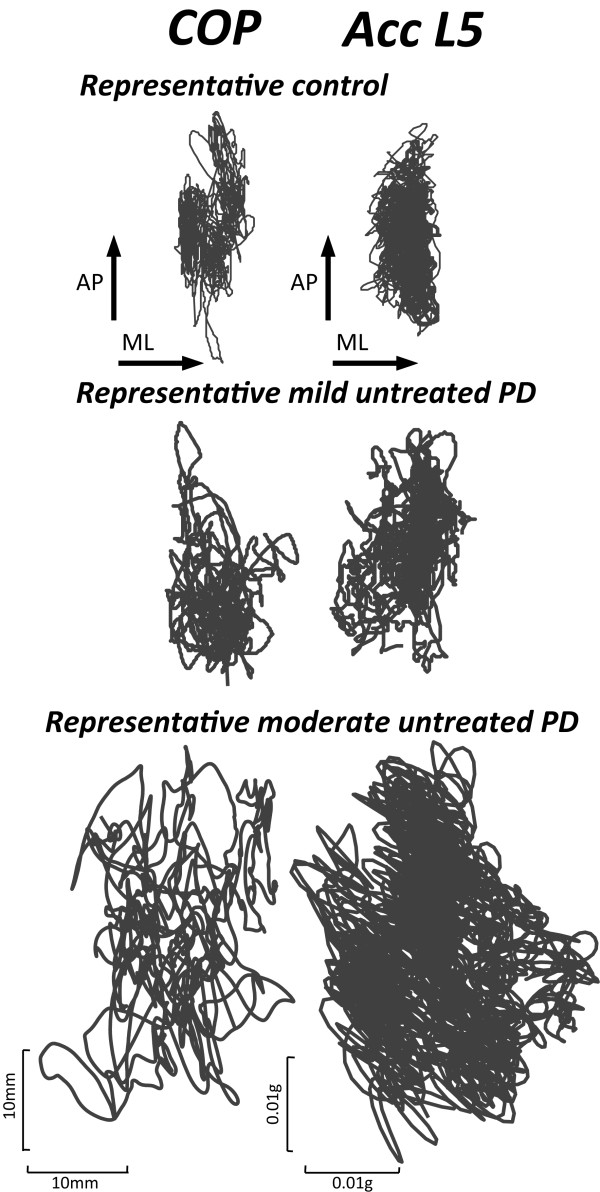
BACKGROUND: Clinicians need a practical, objective test of postural control that is sensitive to mild neurological disease, shows experimental and clinical validity, and has good test-retest reliability. We developed an instrumented test of postural sway (ISway) using a body-worn accelerometer to offer an objective and practical measure of postural control. METHODS: We conducted two separate studies with two groups of subjects. Study I: sensitivity and experimental concurrent validity. Thirteen subjects with early, untreated Parkinson's disease (PD) and 12 age-matched control subjects (CTR) were tested in the laboratory, to compare sway from force-plate COP and inertial sensors. Study II: test-retest reliability and clinical concurrent validity. A different set of 17 early-to-moderate, treated PD (tested ON medication), and 17 age-matched CTR subjects were tested in the clinic to compare clinical balance tests with sway from inertial sensors. For reliability, the sensor was removed, subjects rested for 30 min, and the protocol was repeated. Thirteen sway measures (7 time-domain, 5 frequency-domain measures, and JERK) were computed from the 2D time series acceleration (ACC) data to determine the best metrics for a clinical balance test. RESULTS: Both center of pressure (COP) and ACC measures differentiated sway between CTR and untreated PD. JERK and time-domain measures showed the best test-retest reliability (JERK ICC was 0.86 in PD and 0.87 in CTR; time-domain measures ICC ranged from 0.55 to 0.84 in PD and from 0.60 to 0.89 in CTR). JERK, all but one time-domain measure, and one frequency measure were significantly correlated with the clinical postural stability score (r ranged from 0.50 to 0.63, 0.01 < p < 0.05). CONCLUSIONS: Based on these results, we recommend a subset of the most sensitive, reliable, and valid ISway measures to characterize posture control in PD: 1) JERK, 2) RMS amplitude and mean velocity from the time-domain measures, and 3) centroidal frequency as the best frequency measure, as valid and reliable measures of balance control from ISway.
Overview
The claims and statistics of this paper haven’t been checked yet.
Run the check — free, no account needed. It reads the open-access text and checks the sources it cites.
Integrity signals
Registry
Cites
Statistics
Figures
Verification
Claims the paper makes
The claims and statistics of this paper haven’t been checked yet.
Run the check — free, no account needed. It reads the open-access text and checks the sources it cites.
Claims other papers make about this one
Each is checked against this paper’s own text: does it say what the citing paper says it does?
The source backs part of the claim, not all of it — or backs it for a different population, condition or comparison.
In the citing paper
“In addition, good agreement was found between sway and spatiotemporal gait measures from wearables and other established technologies [23, 31, 32].”
From Wearable sensors for clinical applications in epilepsy, Parkinson’s disease, and stroke: A mixed-methods systematic review (2018) · cites this paper as [23]
Experimental — accuracy not yet measuredIn the citing paper
“In PD, wearables were used to detect and quantify cardinal motor symptoms including bradykinesia [19], tremor [20, 21], and postural sway [22, 23] as well as medication-evoked adverse symptoms such as dyskinesia [24–27] and motor fluctuations [28, 29].”
From Wearable sensors for clinical applications in epilepsy, Parkinson’s disease, and stroke: A mixed-methods systematic review (2018) · cites this paper as [23]
In the citing paper
“Postural sway measures derived from wearables have been examined for test–retest reliability (ICC 0.55–0.86) [23] and the mediolateral sway and jerk were shown to be sensitive to detect progression of postural instability in PD over time [22].”
From Wearable sensors for clinical applications in epilepsy, Parkinson’s disease, and stroke: A mixed-methods systematic review (2018) · cites this paper as [23]
In the citing paper
“For example, the postural sway measures in PD have been shown to be reliable and sensitive to longitudinal changes in laboratory settings [22, 23].”
From Wearable sensors for clinical applications in epilepsy, Parkinson’s disease, and stroke: A mixed-methods systematic review (2018) · cites this paper as [23]
In the citing paper
“Predominantly acceleration signals were used in hospital and free-living settings, even though gyroscope signals have shown promise for increasing the sensitivity and specificity when measuring dyskinesia and postural instability in laboratory settings [23–26].”
From Wearable sensors for clinical applications in epilepsy, Parkinson’s disease, and stroke: A mixed-methods systematic review (2018) · cites this paper as [23]
Self-check
Percentages, sums and reported differences re-computed from the paper’s own numbers.
The self-check needs the paper’s full text.
Citations
Cites
Forming inferences about some intraclass correlation coefficients.
McGraw, K. O., & Wong, S. P. (1996) · Psychological Methods · doi:10.1037/1082-989x.1.1.30 · Cited by 6,903
Human balance and posture control during standing and walking
Winter, D. (1995) · Gait & Posture · doi:10.1016/0966-6362(96)82849-9 · Cited by 3,638
Unified Parkinson's Disease Rating Scale
(2012) · Springer eBooks · doi:10.1007/springerreference_184495 · Cited by 3,071
Sensorimotor Integration in Human Postural Control
Peterka, R. J. (2002) · Journal of Neurophysiology · doi:10.1152/jn.2002.88.3.1097 · Cited by 2,425
Recent developments in Parkinson's disease
Fahn, S., Elton, R., MARSDEN, C. D., Calne, D. B., & Goldstein, M. (1986) · Raven Press eBooks · Cited by 2,306
Members of the UPDRS Development Committee. Unified Parkinson's Disease Rating Scale
Fahn, S. (1987) · Medical Entomology and Zoology · Cited by 2,163
Measures of postural steadiness: differences between healthy young and elderly adults
Prieto, T. E., Myklebust, J. B., Hoffmann, R. G., Lovett, E. G., & Myklebust, B. M. (1996) · IEEE Transactions on Biomedical Engineering · doi:10.1109/10.532130 · Cited by 1,872
The Balance Evaluation Systems Test (BESTest) to Differentiate Balance Deficits
Horak, F. B., Wrisley, D. M., & Frank, J. (2009) · Physical Therapy · doi:10.2522/ptj.20080071 · Cited by 1,062
Self-citationPostural stability in the elderly: a comparison between fallers and non-fallers
Melzer, I. (2004) · Age and Ageing · doi:10.1093/ageing/afh218 · Cited by 736
The relevance of clinical balance assessment tools to differentiate balance deficits.
Mancini, M., & Horak, F. B. (2010) · PubMed · Cited by 695
Self-citation
Cited by
Sorted by citations
Techniques and Methods for Testing the Postural Function in Healthy and Pathological Subjects
Paillard, T., & Noé, F. (2015) · BioMed Research International · doi:10.1155/2015/891390 · Cited by 543
Levodopa I s a D ouble‐ E dged S word for B alance and G ait in P eople W ith P arkinson's D isease
Curtze, C., Nutt, J. G., Carlson‐Kuhta, P., Mancini, M., & Horak, F. B. (2015) · Movement Disorders · doi:10.1002/mds.26269 · Cited by 406
Self-citationPasluosta, C. F., Gassner, H., Winkler, J., Klucken, J., & Eskofier, B. M. (2015) · IEEE Journal of Biomedical and Health Informatics · doi:10.1109/jbhi.2015.2461555 · Cited by 323
Wearable inertial sensors for human movement analysis
Iosa, M., Picerno, P., Paolucci, S., & Morone, G. (2016) · Expert Review of Medical Devices · doi:10.1080/17434440.2016.1198694 · Cited by 282
Mobility Lab to Assess Balance and Gait with Synchronized Body-worn Sensors
King, M. M. L. (2013) · Journal of Bioengineering and Biomedical Sciences · doi:10.4172/2155-9538.s1-007 · Cited by 269
Objective biomarkers of balance and gait for Parkinson's disease using body‐worn sensors
Horak, F. B., & Mancini, M. (2013) · Movement Disorders · doi:10.1002/mds.25684 · Cited by 256
Self-citationAccuracy and Reliability of the Kinect Version 2 for Clinical Measurement of Motor Function
Otte, K., Kayser, B., Mansow‐Model, S., Verrel, J., Paul, F., Brandt, A. U., & Schmitz‐Hübsch, T. (2016) · PLoS ONE · doi:10.1371/journal.pone.0166532 · Cited by 255
Godinho, C., Domingos, J., Cunha, G., Santos, A. T., Fernandes, R. M., Abreu, D., Gonçalves, N., Matthews, H., Isaacs, T., Duffen, J., et al. (2016) · Journal of NeuroEngineering and Rehabilitation · doi:10.1186/s12984-016-0136-7 · Cited by 226
From A to Z: Wearable technology explained
Godfrey, A., Hetherington, V., Shum, H. P. H., Bonato, P., Lovell, N. H., & Stuart, S. (2018) · Maturitas · doi:10.1016/j.maturitas.2018.04.012 · Cited by 246
Instrumenting gait with an accelerometer: A system and algorithm examination
Godfrey, A., Din, S. D., Barry, G., Mathers, J. C., & Rochester, L. (2015) · Medical Engineering & Physics · doi:10.1016/j.medengphy.2015.02.003 · Cited by 215
Hubble, R. P., Naughton, G. A., Silburn, P. A., & Cole, M. H. (2015) · PLoS ONE · doi:10.1371/journal.pone.0123705 · Cited by 210
Wearable Inertial Sensors to Assess Standing Balance: A Systematic Review
Ghislieri, M., Gastaldi, L., Pastorelli, S., TADANO, S., & Agostini, V. (2019) · Sensors · doi:10.3390/s19194075 · Cited by 200
Buckley, C., Alcock, L., Ardle, R. M., Rehman, R. Z. U., Din, S. D., Mazzà, C., Yarnall, A. J., & Rochester, L. (2019) · Brain Sciences · doi:10.3390/brainsci9020034 · Cited by 204
Johansson, D., Malmgren, K., & Alt Murphy, M. (2018) · Journal of Neurology · doi:10.1007/s00415-018-8786-y · Cited by 188
Arm swing as a potential new prodromal marker of Parkinson's disease
Mirelman, A., Bernad‐Elazari, H., Thaler, A., Giladi, E., Gurevich, T., Gana‐Weisz, M., Saunders-Pullman, R. J., Raymond, D., Doan, N., Bressman, S., et al. (2016) · Movement Disorders · doi:10.1002/mds.26720 · Cited by 187
Force Steadiness: From Motor Units to Voluntary Actions
Enoka, R. M., & Farina, D. (2021) · Physiology · doi:10.1152/physiol.00027.2020 · Cited by 178
Ciuti, G., Ricotti, L., Menciassi, A., & Dario, P. (2015) · Sensors · doi:10.3390/s150306441 · Cited by 172
Overview on wearable sensors for the management of Parkinson’s disease
Moreau, C., Rouaud, T., Grabli, D., Bénatru, I., Rémy, P., Marquès, A., Drapier, S., Mariani, L., Roze, E. F., Devos, D., et al. (2023) · npj Parkinson s Disease · doi:10.1038/s41531-023-00585-y · Cited by 162
King, L. A., Horak, F. B., Mancini, M., Pierce, D., Priest, K. C., Chesnutt, J. C., Sullivan, P. M., & Chapman, J. C. (2013) · Archives of Physical Medicine and Rehabilitation · doi:10.1016/j.apmr.2013.10.015 · Cited by 150
Self-citationTowards measurement of the Healthy Ageing Phenotype in lifestyle-based intervention studies
Lara, J., Godfrey, A., Evans, E. H., Heaven, B., BROWN, L. J. E., Barron, E., Rochester, L., Meyer, T. D., & Mathers, J. C. (2013) · Maturitas · doi:10.1016/j.maturitas.2013.07.007 · Cited by 158
Potential of APDM mobility lab for the monitoring of the progression of Parkinson’s disease
Mancini, M., & Horak, F. B. (2016) · Expert Review of Medical Devices · doi:10.1586/17434440.2016.1153421 · Cited by 140
Self-citationFortaleza, A. C. D. S., Mancini, M., Carlson‐Kuhta, P., King, L. A., Nutt, J. G., Chagas, E. F., Júnior, I. F. F., & Horak, F. B. (2017) · Gait & Posture · doi:10.1016/j.gaitpost.2017.05.006 · Cited by 135
Self-citationCarpinella, I., Cattaneo, D., & Ferrarin, M. (2014) · Journal of NeuroEngineering and Rehabilitation · doi:10.1186/1743-0003-11-67 · Cited by 118
Fifteen Years of Wireless Sensors for Balance Assessment in Neurological Disorders
Zampogna, A., Mileti, I., Palermo, E., Celletti, C., Paoloni, M., Manoni, A., Mazzetta, I., Costa, G. D., Pérez‐López, C., Camerota, F., et al. (2020) · Sensors · doi:10.3390/s20113247 · Cited by 127
Lipsmeier, F., Taylor, K. I., Postuma, R. B., Volkova-Volkmar, E., Kilchenmann, T., Mollenhauer, B., Bamdadian, A., Popp, W., Cheng, W., Zhang, Y., et al. (2022) · Scientific Reports · doi:10.1038/s41598-022-15874-4 · Cited by 118
Fling, B. W., Gera, G., Schlueter, H., Cameron, M. H., & Horak, F. B. (2014) · Frontiers in Human Neuroscience · doi:10.3389/fnhum.2014.00814 · Cited by 112
Self-citationBalance and Gait Represent Independent Domains of Mobility in Parkinson Disease
Horak, F. B., Mancini, M., Carlson‐Kuhta, P., Nutt, J. G., & Salarian, A. (2016) · Physical Therapy · doi:10.2522/ptj.20150580 · Cited by 104
Self-citationRichmond, S. B., Fling, B. W., Lee, H., & Peterson, D. S. (2021) · Journal of Biomechanics · doi:10.1016/j.jbiomech.2021.110485 · Cited by 103
King, L. A., Mancini, M., Fino, P. C., Chesnutt, J. C., Swanson, C. W., Markwardt, S., & Chapman, J. C. (2017) · Annals of Biomedical Engineering · doi:10.1007/s10439-017-1856-y · Cited by 99
Self-citationClassification of gait disturbances: Distinguishing between continuous and episodic changes
Giladi, N., Horak, F. B., & Hausdorff, J. M. (2013) · Movement Disorders · doi:10.1002/mds.25672 · Cited by 97
Self-citationAutomated gait and balance parameters diagnose and correlate with severity in Parkinson disease
Dewey, D. C., Miocinovic, S., Bernstein, I. H., Khemani, P., Dewey, R. B., QUERRY, R. G., Chitnis, S., & Dewey, R. B. (2014) · Journal of the Neurological Sciences · doi:10.1016/j.jns.2014.07.026 · Cited by 90
The Effect of Prior Concussion History on Dual-Task Gait following a Concussion
Howell, D. R., Beasley, M. A., Vopat, L., & Meehan, W. P., III (2016) · Journal of Neurotrauma · doi:10.1089/neu.2016.4609 · Cited by 84
Gait and balance in the aging population: Fall prevention using innovation and technology
Khanuja, K., Joki, J., Bachmann, G. A., & Cuccurullo, S. J. (2018) · Maturitas · doi:10.1016/j.maturitas.2018.01.021 · Cited by 83
Degani, A. M., Leonard, C. T., & Danna‐dos‐Santos, A. (2017) · Journal of Biomechanics · doi:10.1016/j.jbiomech.2017.08.029 · Cited by 81
Measuring postural stability with an inertial sensor: validity and sensitivity
Neville, C., Ludlow, C., & Rieger, B. P. (2015) · Medical Devices Evidence and Research · doi:10.2147/mder.s91719 · Cited by 81
Ricci, M., Lazzaro, G. D., Pisani, A., Mercuri, N. B., Giannini, F., & Saggio, G. (2019) · IEEE Journal of Biomedical and Health Informatics · doi:10.1109/jbhi.2019.2903627 · Cited by 79
Hasegawa, N., Shah, V. V., Carlson‐Kuhta, P., Nutt, J. G., Horak, F. B., & Mancini, M. (2019) · Sensors · doi:10.3390/s19153320 · Cited by 77
Self-citationCortical activation during balancing on a balance board
Herold, F., Orlowski, K., Börmel, S., & Müller, N. G. (2016) · Human Movement Science · doi:10.1016/j.humov.2016.11.002 · Cited by 77
Heebner, N. R., Akins, J. S., Lephart, S. M., & Sell, T. C. (2014) · Gait & Posture · doi:10.1016/j.gaitpost.2014.12.009 · Cited by 75
Instrumented Test of Sensory Integration for Balance: A Validation Study
Freeman, L., Gera, G., Horak, F. B., Blackinton, M. T., Besch, M., & King, L. A. (2016) · Journal of Geriatric Physical Therapy · doi:10.1519/jpt.0000000000000110 · Cited by 75
Self-citationValidity of using wearable inertial sensors for assessing the dynamics of standing balance
Noamani, A., Nazarahari, M., Lewicke, J. C., Vette, A. H., & Rouhani, H. (2020) · Medical Engineering & Physics · doi:10.1016/j.medengphy.2019.10.018 · Cited by 75
Peripheral neuropathy in Parkinson’s disease: prevalence and functional impact on gait and balance
Corrà, M. F., Vila‐Chã, N., Sardoeira, A., Hansen, C., Sousa, A. P., Reis, I., Sambayeta, F., Damásio, J., Calejo, M., Schicketmueller, A., et al. (2022) · Brain · doi:10.1093/brain/awac026 · Cited by 74
Umer, W., Li, H., Lu, W., Szeto, G. P. Y., & Wong, A. Y. L. (2018) · Automation in Construction · doi:10.1016/j.autcon.2018.07.024 · Cited by 74
Kroneberg, D., Elshehabi, M., Meyer, A.-C., Otte, K., Doss, S., Paul, F., Nussbaum, S., Berg, D., Kühn, A. A., Maetzler, W., et al. (2019) · Frontiers in Aging Neuroscience · doi:10.3389/fnagi.2018.00435 · Cited by 76
Sun, R., Moon, Y., McGinnis, R. S., Seagers, K. A., Motl, R. W., Sheth, N., Wright, J. A., Ghaffari, R., Patel, S., & Sosnoff, J. J. (2018) · Digital Biomarkers · doi:10.1159/000485958 · Cited by 71
Video-Based Analyses of Parkinson’s Disease Severity: A Brief Review
Sibley, K. G., Girges, C., Hoque, M. E., & Foltynie, T. (2021) · Journal of Parkinson s Disease · doi:10.3233/jpd-202402 · Cited by 76
Kosse, N. M., Caljouw, S. R., Vervoort, D., Vuillerme, N., & Lamoth, C. J. C. (2014) · Annals of Biomedical Engineering · doi:10.1007/s10439-014-1232-0 · Cited by 69
Ilg, W., Milne, S., Schmitz‐Hübsch, T., Alcock, L., Beichert, L., Bertini, E., Ibrahim, N. M., Dawes, H., Gomez, C. M., Hanagasi, H. A., et al. (2023) · The Cerebellum · doi:10.1007/s12311-023-01625-2 · Cited by 68
Self-citationNear Point of Convergence and Gait Deficits in Adolescents After Sport-Related Concussion
Howell, D. R., O'Brien, M. J., Raghuram, A., Shah, A. S., & Meehan, W. P., III (2017) · Clinical Journal of Sport Medicine · doi:10.1097/jsm.0000000000000439 · Cited by 65
Agrawal, Y., Merfeld, D. M., Horak, F. B., Redfern, M. S., Manor, B. D., Westlake, K. P., Holstein, G. R., Smith, P. F., Bhatt, T. S., Bohnen, N. I., et al. (2020) · The Journals of Gerontology Series A · doi:10.1093/gerona/glaa097 · Cited by 64
Self-citationSpain, R., Mancini, M., Horak, F. B., & BOURDETTE, D. N. (2013) · Gait & Posture · doi:10.1016/j.gaitpost.2013.12.010 · Cited by 64
Self-citationPark, J., Mancini, M., Carlson‐Kuhta, P., Nutt, J. G., & Horak, F. B. (2016) · Experimental Gerontology · doi:10.1016/j.exger.2016.09.018 · Cited by 64
Self-citationCraig, J. J., Bruetsch, A. P., LYNCH, S. G., Horak, F. B., & Huisinga, J. M. (2017) · Journal of NeuroEngineering and Rehabilitation · doi:10.1186/s12984-017-0251-0 · Cited by 64
Self-citationEffect of expertise in ballet dance on static and functional balance
Michalska, J., Kamieniarz, A., Fredyk, A., Bacik, B. S., Juras, G., & Słomka, K. J. (2018) · Gait & Posture · doi:10.1016/j.gaitpost.2018.05.034 · Cited by 62
Ramdhani, R., Khojandi, A., Shylo, O. V., & Kopell, B. H. (2018) · Frontiers in Computational Neuroscience · doi:10.3389/fncom.2018.00072 · Cited by 61
Exploring Outcome Measures for Exercise Intervention in People with Parkinson’s Disease
King, L. A., Salarian, A., Mancini, M., Priest, K. C., Nutt, J. G., Serdar, A., Wilhelm, J., Schlimgen, J., Smith, M., & Horak, F. B. (2013) · Parkinson s Disease · doi:10.1155/2013/572134 · Cited by 60
Self-citationTechnical and clinical view on ambulatory assessment in Parkinson's disease
Hobert, M. A., Maetzler, W., Aminian, K., & Chiari, L. (2014) · Acta Neurologica Scandinavica · doi:10.1111/ane.12248 · Cited by 60
Self-citationThe Effect of Hearing Aids and Cochlear Implants on Balance During Gait
Weaver, T. S., Shayman, C. S., & Hullar, T. E. (2017) · Otology & Neurotology · doi:10.1097/mao.0000000000001551 · Cited by 60
Review—Emerging Portable Technologies for Gait Analysis in Neurological Disorders
Salchow-Hömmen, C., Skrobot, M., Jochner, M. C. E., Schauer, T., Kühn, A. A., & Wenger, N. (2022) · Frontiers in Human Neuroscience · doi:10.3389/fnhum.2022.768575 · Cited by 61
Solomon, A. J., Jacobs, J. V., Lomond, K. V., & Henry, S. M. (2015) · Journal of NeuroEngineering and Rehabilitation · doi:10.1186/s12984-015-0066-9 · Cited by 56
Howell, D. R., Oldham, J. R., DiFabio, M., Vallabhajosula, S., Hall, E. E., Ketcham, C. J., Meehan, W. P., III, & Buckley, T. A. (2016) · Journal of Applied Biomechanics · doi:10.1123/jab.2015-0323 · Cited by 55
Gera, G., Chesnutt, J., Mancini, M., Horak, F. B., & King, L. A. (2018) · Military Medicine · doi:10.1093/milmed/usx162 · Cited by 54
Self-citationTegegne, T. K., Rawstorn, J. C., Nourse, R. A., Kibret, K. T., Ahmed, K. Y., & Maddison, R. (2022) · Open Heart · doi:10.1136/openhrt-2021-001949 · Cited by 58
A Treatment-Response Index From Wearable Sensors for Quantifying Parkinson's Disease Motor States
Thomas, I., Westin, J., Alam, M., Bergquist, F., Nyholm, D., Senek, M., & Memedi, M. (2017) · IEEE Journal of Biomedical and Health Informatics · doi:10.1109/jbhi.2017.2777926 · Cited by 53
Vibrotactile Feedback for Improving Standing Balance
Ballardini, G., Florio, V., Canessa, A., Carlini, G., Morasso, P., & Casadio, M. (2020) · Frontiers in Bioengineering and Biotechnology · doi:10.3389/fbioe.2020.00094 · Cited by 53
A Systematic Survey of Research Trends in Technology Usage for Parkinson’s Disease
Deb, R., Bhat, G., An, S., Shill, H. A., & Ogras, U. Y. (2022) · Sensors · doi:10.3390/s22155491 · Cited by 52
Postural strategies assessed with inertial sensors in healthy and parkinsonian subjects
Baston, C., Mancini, M., Schoneburg, B., Horak, F. B., & Rocchi, L. (2014) · Gait & Posture · doi:10.1016/j.gaitpost.2014.02.012 · Cited by 50
Self-citationDeep neural networks for human’s fall-risk prediction using force-plate time series signal
Savadkoohi, M., Oladunni, T., & Thompson, L. A. (2021) · Expert Systems with Applications · doi:10.1016/j.eswa.2021.115220 · Cited by 47
Quantification of postural stability in older adults using mobile technology
Ozinga, S. J., & Alberts, J. L. (2014) · Experimental Brain Research · doi:10.1007/s00221-014-4069-8 · Cited by 46
Iluz, T., Weiss, A., Gazit, E., Tankus, A., Brozgol, M., Dorfman, M., Mirelman, A., Giladi, N., & Hausdorff, J. M. (2015) · The Journals of Gerontology Series A · doi:10.1093/gerona/glv049 · Cited by 46
Yang, K., Xiong, W.-X., Liu, F., Sun, Y., Luo, S., Ding, Z., Wu, J.-J., & Wang, J. (2016) · Annals of Translational Medicine · doi:10.21037/atm.2016.03.09 · Cited by 46
Dual-Task Tandem Gait and Average Walking Speed in Healthy Collegiate Athletes
Howell, D. R., Oldham, J. R., Meehan, W. P., III, DiFabio, M., & Buckley, T. A. (2017) · Clinical Journal of Sport Medicine · doi:10.1097/jsm.0000000000000509 · Cited by 46
Baron, E., Koop, M. M., Streicher, M. C., Rosenfeldt, A. B., & Alberts, J. L. (2017) · Parkinsonism & Related Disorders · doi:10.1016/j.parkreldis.2017.12.017 · Cited by 47
Merchán-Baeza, J. A., González‐Sánchez, M., & Vargas, A. I. C. (2014) · BioMed Research International · doi:10.1155/2014/637671 · Cited by 46
Validity of visual perceptive computing for static posturography in patients with multiple sclerosis
Behrens, J. R., Mertens, S., Krüger, T., Grobelny, A., Otte, K., Mansow‐Model, S., Gusho, E., Paul, F., Brandt, A. U., & Schmitz‐Hübsch, T. (2016) · Multiple Sclerosis Journal · doi:10.1177/1352458515625807 · Cited by 44
Automatically Evaluating Balance: A Machine Learning Approach
Bao, T., Klatt, B. N., Whitney, S. L., Sienko, K. H., & Wiens, J. (2019) · IEEE Transactions on Neural Systems and Rehabilitation Engineering · doi:10.1109/tnsre.2019.2891000 · Cited by 44
Postural sway, falls, and self-reported neuropathy in aging female cancer survivors
Fino, P. C., Horak, F. B., El‐Gohary, M., Guidarelli, C., Medysky, M. E., Nagle, S. J., & Winters‐Stone, K. M. (2019) · Gait & Posture · doi:10.1016/j.gaitpost.2019.01.025 · Cited by 44
Self-citationO’Brien, M. K., Hidalgo-Araya, M. D., Mummidisetty, C. K., Vallery, H., Ghaffari, R., Rogers, J. A., Lieber, R. L., & Jayaraman, A. (2019) · Sensors · doi:10.3390/s19204537 · Cited by 44
Dyskinesia detection and monitoring by a single sensor in patients with Parkinson's disease
Lopane, G., Mellone, S., Chiari, L., Cortelli, P., Calandra‐Buonaura, G., & Contin, M. (2015) · Movement Disorders · doi:10.1002/mds.26313 · Cited by 43
Self-citationTreatment options for postural instability and gait difficulties in Parkinson’s disease
Müller, M. L. T. M., Marušič, U., Boas, M. V. E., Weiß, D., & Bohnen, N. I. (2019) · Expert Review of Neurotherapeutics · doi:10.1080/14737175.2019.1656067 · Cited by 48
Bonora, G., Carpinella, I., Cattaneo, D., Chiari, L., & Ferrarin, M. (2015) · Journal of NeuroEngineering and Rehabilitation · doi:10.1186/s12984-015-0038-0 · Cited by 42
Self-citationRocchi, L., Palmerini, L., Weiss, A., Herman, T., & Hausdorff, J. M. (2014) · IEEE Transactions on Neural Systems and Rehabilitation Engineering · doi:10.1109/tnsre.2013.2292496 · Cited by 42
Sankarpandi, S. K., Baldwin, A., Ray, J., & Mazzà, C. (2017) · BMC Ear Nose and Throat Disorders · doi:10.1186/s12901-017-0034-z · Cited by 42
Consensus Paper: Neurophysiological Assessments of Ataxias in Daily Practice
Ilg, W., Branscheidt, M., Butala, A., Celnik, P. A., de Paola, L., Horak, F. B., Schöls, L. J., Teive, H. A. G., Vogel, A. P., Zee, D. S., et al. (2018) · The Cerebellum · doi:10.1007/s12311-018-0937-2 · Cited by 41
Self-citationGera, G., Fling, B. W., & Horak, F. B. (2019) · Archives of Physical Medicine and Rehabilitation · doi:10.1016/j.apmr.2019.07.011 · Cited by 42
Self-citationAudiffren, J., Bargiotas, I., Vayatis, N., Vidal, P., & Ricard, D. (2016) · PLoS ONE · doi:10.1371/journal.pone.0167456 · Cited by 43
Salisbury, J. P., Keshav, N. U., Sossong, A. D., & Sahin, N. T. (2018) · JMIR mhealth and uhealth · doi:10.2196/mhealth.8478 · Cited by 41
Postural sway in patients with early Parkinson’s disease performing cognitive tasks while standing
Chen, T., Fan, Y., Zhuang, X., Feng, D., Chen, Y., Chan, P., & Du, Y. (2018) · Neurological Research · doi:10.1080/01616412.2018.1451017 · Cited by 41
Mitigating Sports Injury Risks Using Internet of Things and Analytics Approaches
Wilkerson, G., Gupta, A., & Colston, M. A. (2018) · Risk Analysis · doi:10.1111/risa.12984 · Cited by 39
Ricci, M., Terribili, M., Giannini, F., Errico, V., Pallotti, A., Galasso, C., Tomasello, L., Sias, S., & Saggio, G. (2018) · Journal of Biomechanics · doi:10.1016/j.jbiomech.2018.12.005 · Cited by 40
In Vivo Brain Glutathione is Higher in Older Age and Correlates with Mobility
Hupfeld, K. E., Hyatt, H. W., Jerez, P. Á., Mikkelsen, M. E., Hass, C. J., Edden, R. A. E., Seidler, R. D., & Porges, E. C. (2021) · Cerebral Cortex · doi:10.1093/cercor/bhab107 · Cited by 37
Scataglini, S. (2019) · Elsevier eBooks · doi:10.1016/b978-0-12-816713-7.00026-x · Cited by 40
Estimation of Center of Mass Trajectory using Wearable Sensors during Golf Swing.
Najafi, B., Lee-Eng, J., Wrobel, J. S., & Goebel, R. T. (2015) · PubMed Central · Cited by 40
iCap: Instrumented assessment of physical capability
Godfrey, A., Lara, J., Din, S. D., Hickey, A., Munro, C. A., Wiuff, C., Chowdhury, S. A., Mathers, J. C., & Rochester, L. (2015) · Maturitas · doi:10.1016/j.maturitas.2015.04.003 · Cited by 38
Lazzaro, G. D., Ricci, M., Al-Wardat, M. S., Schirinzi, T., Scalise, S., Giannini, F., Mercuri, N. B., Saggio, G., & Pisani, A. (2019) · Journal of Parkinson s Disease · doi:10.3233/jpd-191758 · Cited by 39
Navarrete-Opazo, A. A., Alcayaga, J., Sepúlveda, O., & Varas, G. (2016) · Archives of Physical Medicine and Rehabilitation · doi:10.1016/j.apmr.2016.09.114 · Cited by 40
Dewan, B. M., James, C. R., Kumar, N. A., & Sawyer, S. F. (2019) · BioMed Research International · doi:10.1155/2019/8185710 · Cited by 38
Chen, T., Xu, G., Zhou, G., Wang, J., Chan, P., & Du, Y. (2014) · Brain Research · doi:10.1016/j.brainres.2014.02.040 · Cited by 38
Hasegawa, N., Shah, V., Harker, G., Carlson-Kuhta, P., Nutt, J., Lapidus, J., Jung, S.-H., Barlow, N., King, L. A., Horak, F., et al. (2020) · Frontiers in Neurology · doi:10.3389/fneur.2020.00940 · Cited by 27
Self-citationLipsmeier, F., Simillion, C., Bamdadian, A., Tortelli, R., Byrne, L. M., Zhang, Y., Wolf, D., Smith, A. V., Czech, C., Gossens, C., et al. (2022) · Journal of Medical Internet Research · doi:10.2196/32997 · Cited by 36
Metadata
- Authors
- Mancini, M., Salarian, A., Carlson-Kuhta, P., Zampieri, C., King, L., Chiari, L., & Horak, F. B.
- Affiliations
- Oregon Health & Science University (US)
- National Institutes of Health (US)
- University of Bologna (IT)
- Corresponding author
- Mancini, Martina
- Venue
- Journal of NeuroEngineering and Rehabilitation
- Published
- 2012
- Volume
- 9
- Issue
- 1
- Pages
- 59
- ISSN
- 1743-0003 (ISSN-L)
- PMC
- PMC3481400
- OpenAlex
- W2093375256
- Cited by
- 499
- References
- 48
- Citations by year
- 2026: 29 · 2025: 32 · 2024: 39 · 2023: 34 · 2022: 56 · 2021: 43 · 2020: 50 · 2019: 46 · 2018: 36 · 2017: 33 · 2016: 35 · 2015: 35 · 2014: 21 · 2013: 9 · 2012: 1
- FWCI
- 52.06
- Type
- journal article
- Language
- en
- Open access
- gold
- doi.org
- Licence
- cc-by
- Locations
- Journal of NeuroEngineering and Rehabilitation (publishedVersion, cc-by)
- PubMed Central (publishedVersion, cc-by)
- PubMed (publishedVersion)
- Archivio istituzionale della ricerca (Alma Mater Studiorum Università di Bologna) (submittedVersion)
- DOAJ (DOAJ: Directory of Open Access Journals) (submittedVersion)
- Funders
- Kinetics Foundation
- National Institutes of Health (AG006457, 5r37ag006457-28)
- National Institute on Aging (R37-AG006457, R01AG006457)
- National Institute of Neurological Disorders and Stroke (RC1NS068678)
- NIH Clinical Center
- Topics
- Health Sciences › Health Professions › Physical Therapy, Sports Therapy and Rehabilitation › Balance, Gait, and Falls Prevention
- Life Sciences › Neuroscience › Cognitive Neuroscience › Motor Control and Adaptation
- Health Sciences › Medicine › Rehabilitation › Stroke Rehabilitation and Recovery
- Keywords
- postural sway, postural control, Parkinson's disease, wearable accelerometers, inertial sensors, balance assessment, test-retest reliability, concurrent validity, center of pressure, frequency domain analysis
- MeSH terms
- Acceleration, Aged, Algorithms, Biomechanical Phenomena, Data Interpretation, Statistical, Postural Balance, Female, Humans, Male, Middle Aged, Parkinson Disease, Reproducibility of Results
About these checks
Registry, retraction, Cites and statistics results are computed, not judged, with one exception: a printed reference that no index lists is read once by a model before it counts as a citation error. Claims are extracted by a model and kept only when their quote appears verbatim in the text; each cited source is then checked, with a model’s help, for whether it says what the claim relies on. Those verdicts can be wrong — read the claim’s quote and the cited source before relying on one.
Statistics and arithmetic are recomputed, not judged.
Confidence bands are shown only for fields calibrated on our annotated test set. None is calibrated yet, so no band is shown.
What counts as a claim ›How we measure confidence ›How we check this ›
Are you an author, or do you see a problem with this page? Request a review
