

The DOI matches its Crossref record; 54 of the 56 references it cites were found in a registry or an index.
Influenza A penetrates host mucus by cleaving sialic acids with neuraminidase
Open accessAbstract
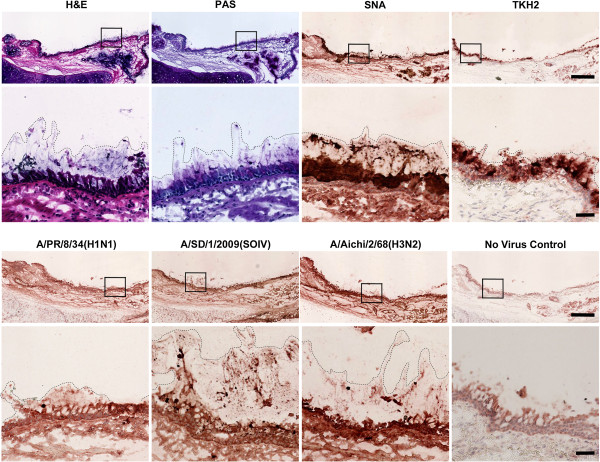
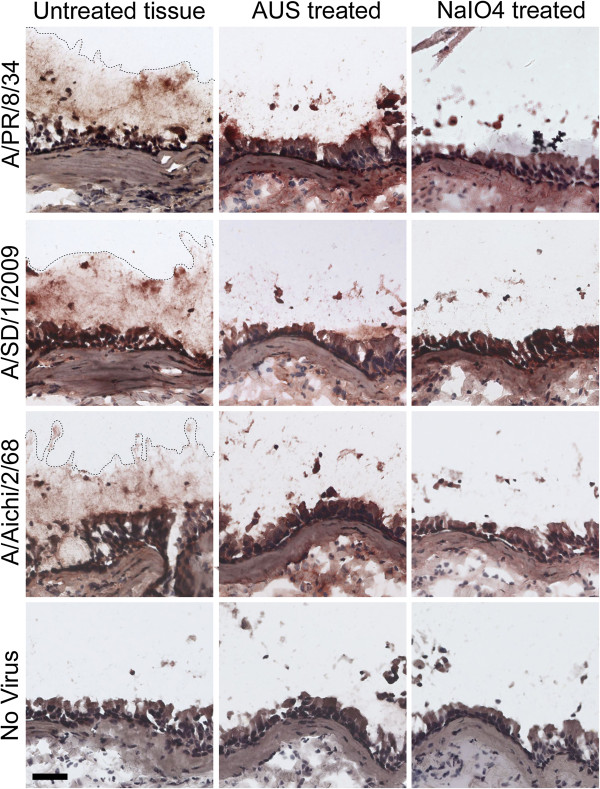
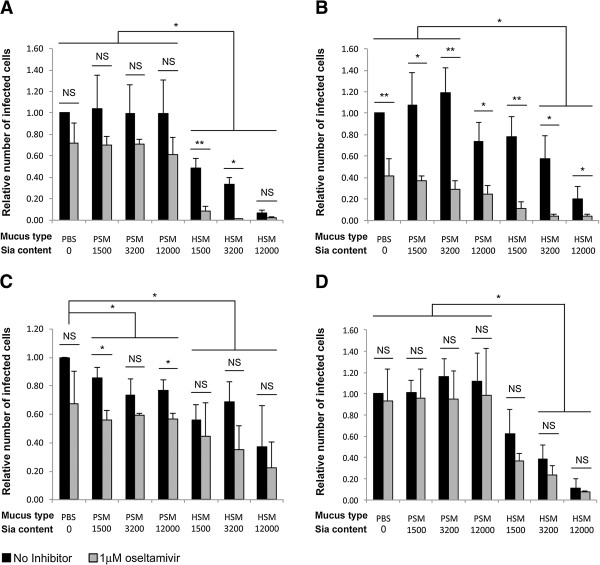
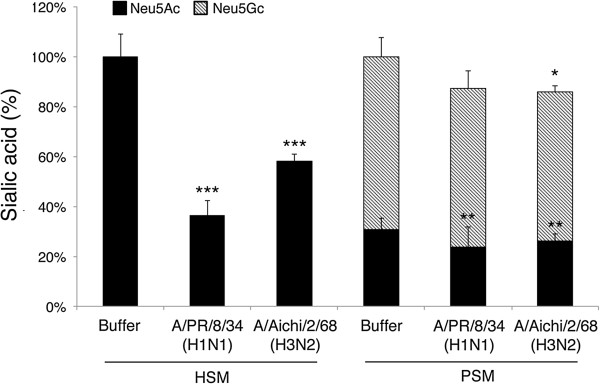
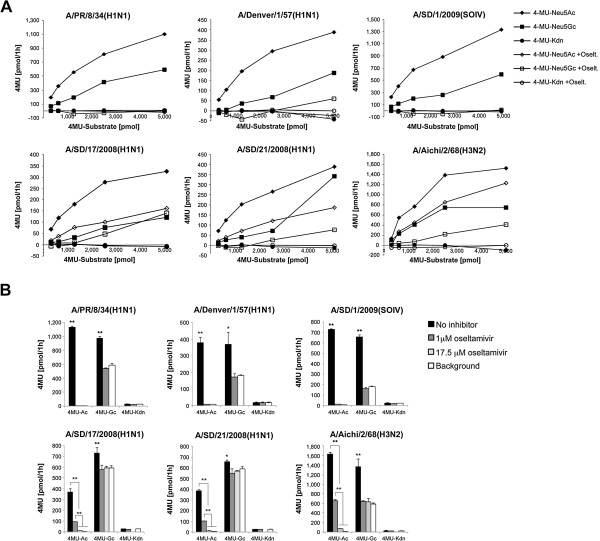
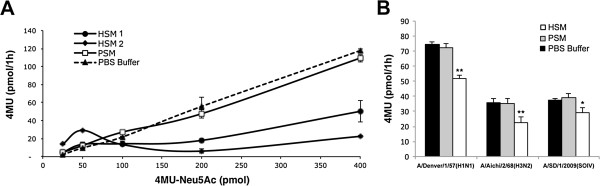
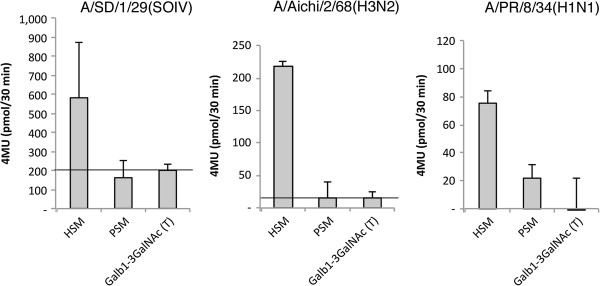
BACKGROUND: Influenza A virus (IAV) neuraminidase (NA) cleaves sialic acids (Sias) from glycans. Inhibiting NA with oseltamivir suppresses both viral infection, and viral release from cultured human airway epithelial cells. The role of NA in viral exit is well established: it releases budding virions by cleaving Sias from glycoconjugates on infected cells and progeny virions. The role of NA in viral entry remains unclear. Host respiratory epithelia secrete a mucus layer rich in heavily sialylated glycoproteins; these could inhibit viral entry by mimicking sialylated receptors on the cell surface. It has been suggested that NA allows influenza to penetrate the mucus by cleaving these sialylated decoys, but the exact mechanism is not yet established. METHODS: We tested IAV interaction with secreted mucus using frozen human trachea/bronchus tissue sections, and bead-bound purified human salivary mucins (HSM) and purified porcine submaxillary mucins (PSM). The protective effect of mucus was analyzed using MDCK cells coated with purified HSM and PSM with known Sia content. Oseltamivir was used to inhibit NA activity, and the fluorescent reporter substrate, 4MU-Neu5Ac, was used to quantify NA activity. RESULTS: IAV binds to the secreted mucus layer of frozen human trachea/bronchus tissues in a Sia dependent manner. HSM inhibition of IAV infection is Sia dose-dependent, but PSM cannot inhibit infection of underlying cells. HSM competitively inhibits NA cleavage of 4MU-Neu5Ac, reporter substrate. Human IAV effectively cleaves Sias from HSM but not from PSM, and binds to HSM but not to PSM. CONCLUSION: IAV interacts with human mucus on frozen tissue sections and mucus-coated beads. Inhibition of IAV infection by sialylated human mucus is dose-dependent, and enhanced when NA is inhibited with oseltamivir. Thus NA cleaves sialylated decoys during initial stages of infection. Understanding IAV interactions with host mucins is a promising new avenue for drug development.
Overview
The claims and statistics of this paper haven’t been checked yet.
Run the check — free, no account needed. It reads the open-access text and checks the sources it cites.
Integrity signals
Registry
Cites
Statistics
Figures
Verification
Claims the paper makes
The claims and statistics of this paper haven’t been checked yet.
Run the check — free, no account needed. It reads the open-access text and checks the sources it cites.
Self-check
Percentages, sums and reported differences re-computed from the paper’s own numbers.
The self-check needs the paper’s full text.
Citations
Cites
Wiederschain, G. Y. (2009) · Biochemistry (Moscow) · doi:10.1134/s0006297909090156 · Cited by 4,089
Varki, A. P., Cummings, R. D., Esko, J. D., Freeze, H. H., Stanley, P., Bertozzi, C. R., Hart, G. W., & Etzler, M. E. (1999) · Cited by 2,384
Airway Mucus Function and Dysfunction
Fahy, J. V., & Dickey, B. F. (2010) · New England Journal of Medicine · doi:10.1056/nejmra0910061 · Cited by 1,804
Cone, R. A. (2008) · Advanced Drug Delivery Reviews · doi:10.1016/j.addr.2008.09.008 · Cited by 1,459
Chemical Diversity in the Sialic Acids and Related α-Keto Acids: An Evolutionary Perspective
Angata, T., & Varki, A. P. (2002) · Chemical Reviews · doi:10.1021/cr000407m · Cited by 1,254
Mucus clearance as a primary innate defense mechanism for mammalian airways
Knowles, M. R., & Boucher, R. C. (2002) · Journal of Clinical Investigation · doi:10.1172/jci0215217 · Cited by 1,054
Structure and Function of the Polymeric Mucins in Airways Mucus
Thornton, D. J., Rousseau, K., & McGuckin, M. A. (2007) · Annual Review of Physiology · doi:10.1146/annurev.physiol.70.113006.100702 · Cited by 858
Human and avian influenza viruses target different cell types in cultures of human airway epithelium
Matrosovich, M. N., Matrosovich, T. Y., Gray, T. E., Roberts, N. A., & Klenk, H. (2004) · Proceedings of the National Academy of Sciences · doi:10.1073/pnas.0308001101 · Cited by 777
The airway epithelium: soldier in the fight against respiratory viruses
Vareille, M., Kieninger, E., Edwards, M. R., & Regamey, N. (2011) · Clinical Microbiology Reviews · doi:10.1128/cmr.00014-10 · Cited by 655
Matrosovich, M. N., Matrosovich, T. Y., Gray, T., Roberts, N. A., & Klenk, H.-D. (2004) · Journal of Virology · doi:10.1128/jvi.78.22.12665-12667.2004 · Cited by 606
Cited by
Sorted by citations
Varki, A. (2017) · Glycobiology · doi:10.1093/glycob/cww086 · Cited by 2,635
“For example, the sialic acid binding (“hemagglutinating”, H) activity of the influenza viruses is balanced by the activity of its sialic acid releasing enzyme (neuraminidase, N), the latter working both to allow the virus to gain access to cell surfaces by cutting through interfering molecules (788, 789), and also to…”
BackgroundBarua, S., & Mitragotri, S. (2014) · Nano Today · doi:10.1016/j.nantod.2014.04.008 · Cited by 1,288
The evolution of seasonal influenza viruses
Petrova, V. N., & Russell, C. A. (2017) · Nature Reviews Microbiology · doi:10.1038/nrmicro.2017.118 · Cited by 889
The human antibody response to influenza A virus infection and vaccination
Krammer, F. (2019) · Nature reviews. Immunology · doi:10.1038/s41577-019-0143-6 · Cited by 819
Influenza A Virus Cell Entry, Replication, Virion Assembly and Movement
Dou, D., Revol, R., Østbye, H., Wang, H., & Daniels, R. (2018) · Frontiers in Immunology · doi:10.3389/fimmu.2018.01581 · Cited by 621
Metadata
- Authors
- Cohen, M., Zhang, X.-Q., Senaati, H. P., Chen, H.-W., Varki, N. M., Schooley, R. T., & Gagneux, P.
- Affiliations
- University of California San Diego (US)
- National Taiwan University (TW)
- Corresponding author
- Gagneux, Pascal
- Venue
- Virology Journal
- Published
- 2013-11-22
- Volume
- 10
- Issue
- 1
- Pages
- 321-321
- ISSN
- 1743-422X (ISSN-L)
- PMC
- PMC3842836
- OpenAlex
- W2119621200
- Cited by
- 288
- References
- 56
- Citations by year
- 2026: 12 · 2025: 25 · 2024: 23 · 2023: 27 · 2022: 23 · 2021: 26 · 2020: 26 · 2019: 31 · 2018: 21 · 2017: 21 · 2016: 25 · 2015: 17 · 2014: 11
- FWCI
- 13.12
- Type
- journal article
- Language
- en
- Open access
- gold
- doi.org
- Licence
- cc-by
- Locations
- Virology Journal (publishedVersion, cc-by)
- Europe PMC (PubMed Central) (publishedVersion, cc-by)
- PubMed Central (publishedVersion, cc-by)
- PubMed (publishedVersion)
- eScholarship (California Digital Library) (submittedVersion)
- Funders
- University of California, San Diego (#NS047101, P30 CA23100, P30 NS047101)
- National Cancer Institute (P30-CA-23100, P30CA023100)
- National Institute of Allergy and Infectious Diseases (U01AI074521)
- National Institute of Neurological Disorders and Stroke (NS047101, P30NS047101)
- Topics
- Health Sciences › Medicine › Epidemiology › Influenza Virus Research Studies
- Life Sciences › Biochemistry, Genetics and Molecular Biology › Molecular Biology › Glycosylation and Glycoproteins Research
- Physical Sciences › Chemistry › Organic Chemistry › Carbohydrate Chemistry and Synthesis
- Keywords
- influenza A virus, neuraminidase, sialic acid, mucus, viral entry, salivary mucins, submaxillary mucin, oseltamivir, respiratory epithelium
- MeSH terms
- Animals, Bronchi, Cell Line, Dogs, Humans, Mucus, Neuraminidase, Influenza A virus, Saliva, Sialic Acids, Trachea, Viral Proteins, Virus Internalization
About these checks
Registry, retraction, Cites and statistics results are computed, not judged, with one exception: a printed reference that no index lists is read once by a model before it counts as a citation error. Claims are extracted by a model and kept only when their quote appears verbatim in the text; each cited source is then checked, with a model’s help, for whether it says what the claim relies on. Those verdicts can be wrong — read the claim’s quote and the cited source before relying on one.
Statistics and arithmetic are recomputed, not judged.
Confidence bands are shown only for fields calibrated on our annotated test set. None is calibrated yet, so no band is shown.
What counts as a claim ›How we measure confidence ›How we check this ›
Are you an author, or do you see a problem with this page? Request a review
