

Effects of beta-hydroxy-beta-methylbutyrate (HMB) on exercise performance and body composition across varying levels of age, sex, and training experience: A review
Open accessThe DOI matches its Crossref record; 123 of the 123 references it cites were found in a registry or an index.
Abstract
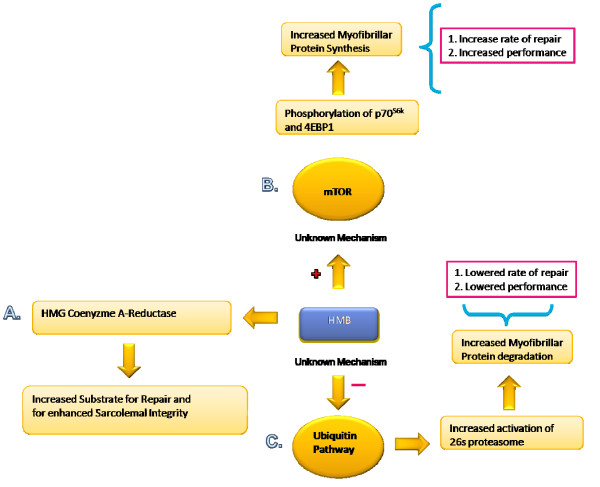
The leucine metabolite beta-hydroxy-beta-methylbutyrate (HMB) has been extensively used as an ergogenic aid; particularly among bodybuilders and strength/power athletes, who use it to promote exercise performance and skeletal muscle hypertrophy. While numerous studies have supported the efficacy of HMB in exercise and clinical conditions, there have been a number of conflicting results. Therefore, the first purpose of this paper will be to provide an in depth and objective analysis of HMB research. Special care is taken to present critical details of each study in an attempt to both examine the effectiveness of HMB as well as explain possible reasons for conflicting results seen in the literature. Within this analysis, moderator variables such as age, training experience, various states of muscle catabolism, and optimal dosages of HMB are discussed. The validity of dependent measurements, clustering of data, and a conflict of interest bias will also be analyzed. A second purpose of this paper is to provide a comprehensive discussion on possible mechanisms, which HMB may operate through. Currently, the most readily discussed mechanism has been attributed to HMB as a precursor to the rate limiting enzyme to cholesterol synthesis HMG-coenzyme A reductase. However, an increase in research has been directed towards possible proteolytic pathways HMB may operate through. Evidence from cachectic cancer studies suggests that HMB may inhibit the ubiquitin-proteasome proteolytic pathway responsible for the specific degradation of intracellular proteins. HMB may also directly stimulate protein synthesis, through an mTOR dependent mechanism. Finally, special care has been taken to provide future research implications.
Overview
The claims and statistics of this paper haven’t been checked yet.
Free: it reads the open-access text and checks the first 5 claims that cite a source we can check. Create a free account to check every claim.
Integrity signals
Registry
Cites
Statistics
Figures
Verification
Claims the paper makes
The claims and statistics of this paper haven’t been checked yet.
Free: it reads the open-access text and checks the first 5 claims that cite a source we can check. Create a free account to check every claim.
Claims other papers make about this one
Each is checked against this paper’s own text: does it say what the citing paper says it does?
The source backs part of the claim, not all of it — or backs it for a different population, condition or comparison.
In the citing paper
“It is well-documented that supplementing with 1.5 to 3 g/day of calcium HMB during resistance training can increase muscle mass (+ 0.5–1 kg greater than controls during 3–6 weeks of training) and strength particularly among untrained subjects initiating training [168–173] and the elderly [174].”
From ISSN exercise & sports nutrition review update: research & recommendations (2018) · cites this paper as [168]
Experimental — accuracy not yet measuredIn the citing paper
“The compound is also commonly used as a supplement by athletes to increase exercise-induced gains in muscle size, muscle strength, and lean body mass, reduce exercise-induced muscle damage, and speed recovery from highintensity exercise.[41]”
From The microbiome of professional athletes differs from that of more sedentary subjects in composition and particularly at the functional metabolic level (2018) · cites this paper as [41]
Self-check
Percentages, sums and reported differences re-computed from the paper’s own numbers.
The self-check needs the paper’s full text.
Citations
Cites
Statistical Power Analysis for the Behavioral Sciences
Muller, K. (1989) · Technometrics · doi:10.1080/00401706.1989.10488618 · Cited by 99,167
Statistical power analysis for the behavioral sciences
(1990) · Computers, Environment and Urban Systems · doi:10.1016/0198-9715(90)90050-4 · Cited by 65,269
The Ubiquitin-Proteasome Proteolytic Pathway: Destruction for the Sake of Construction
Glickman, M. H., & Ciechanover, A. (2002) · Physiological Reviews · doi:10.1152/physrev.00027.2001 · Cited by 4,237 · cited 2×
“Extra cellular proteins such as insulin receptors appear to be degraded through the lysosomal pathway [110], while the CAC system may have a role in the initial degradation of intracellular proteins [111].”
BackgroundIdentification of ubiquitin ligases required for skeletal muscle atrophy.
Bodine, S. C., Latres, E., Baumhueter, S., Lai, V. K.-M., Nunez, L., Clarke, B. A., Poueymirou, W. T., Panaro, F. J., Na, E., Dharmarajan, K., et al. (2001) · Science · doi:10.1126/science.1065874 · Cited by 3,521 · cited 1×
“Increased activity of the Ub-pathway is common in conditions which elicit increased muscular proteolysis [112,113] including: antigravity conditions [114,115], cancer [26,101], limb immobilization [75], starvation [112], denervation [116], lowering of activity [117], and a variety of exercise conditions [118,119].”
BackgroundThe statistical power of abnormal-social psychological research: A review.
Cohen, J. (1962) · The Journal of Abnormal and Social Psychology · doi:10.1037/h0045186 · Cited by 1,824 · cited 1×
“Scientists are also often limited to biased sampling, such as sampling by availability [77,78] and convenience [76].”
BackgroundFoundations of Sport and Exercise Psychology
Weinberg, R. S., & Gould, D. R. (1995) · Cited by 1,471
Designing Resistance Training Programs
Fleck, S. J., & Kraemer, W. J. (2014) · Human Kinetics eBooks · doi:10.5040/9781718225107 · Cited by 1,360
Branched-Chain Amino Acid Metabolism
Harper, A. E., Miller, R. H., & Block, K. P. (1984) · Annual Review of Nutrition · doi:10.1146/annurev.nu.04.070184.002205 · Cited by 1,009 · cited 1×
“Introduction The branched chain amino acids (BCAAs) leucine, isoleucine, and valine make up more than one third of muscle protein [1].”
BackgroundAdvanced Nutrition and Human Metabolism
Gropper, S. A. S., Smith, J. L., & Groff, J. L. (1990) · Cited by 947
Katsanos, C. S., Kobayashi, H., Sheffield-Moore, M., Aarsland, A., & Wolfe, R. R. (2006) · American Journal of Physiology-Endocrinology and Metabolism · doi:10.1152/ajpendo.00488.2005 · Cited by 923 · cited 1×
“Leucine appears to stimulate protein synthesis through activation of mammalian target of rapamysin (mTOR) [120-122], a protein kinase indicated to up-regulate protein synthesis at the level of translation initiation [121].”
Background
Research works printed but not linked: 17
- Van Koevering MT Gill DR Smith RA Owens FN Nissen S Ball RL Effect of β-hydroxy-β-methyl butyrate on the health and performance of shipping-stressed calves Oklahoma State Univ Res Rep 1993 312 31
- Nissen SL Panton L Wilhelm R Fuller JC Effect of β-hydroxy-β-methylbutyrate (HMB) supplementation on strength and body composition of trained and untrained males undergoing intense resistance training FASEB J 1996 10 287
- Baxter Jeffrey H 1 Mukerji Pradip 1 Voss Anne C 1 Tisdale Michael J 2 Wheeler Keith B Attenuating Protein Degradation and Enhancing Protein Synthesis in Skeletal Muscle in Stressed Animal Model Systems Medicine & Science in Sports & Exercise 2006 38 S550 S551 · DOI
- Thomson JS beta-Hydroxy-beta-Methylbutyrate (HMB) supplementation of resistance trained men Asia Pac J Clin Nutr 2004 13 S59
- Neighbors KL Ransone JW Jacobson BH LeFavi RG Effects of dietary β-hydroxy-β-methylbutyrate on body composition in collegiate football players Med & Sci in Sports & Exerc 2000 32 S60
- Rathmacher JA Zachwieja JJ Smith SR Lovejoy JL Bray GA The effect of the leucine metabolite β-hydroxy-β-methylbutyrate on lean body mass and muscle strength during prolonged bedrest FASEB J 1999 13 A909
- Cohen DD The effect of β-hydroxy-β-methylbutyrate (HMB) and resistance training on changes in body composition during positive and negative energy balance – a randomized double-blind study MSc Thesis 1997 St. Bartholomew's and Royal London School of Medicine and Dentistry – Queen Mary and Westfield College, University of London, London
- Cheng W Phillips B Abumrad N Beta-hydroxy-beta-methyl butyrate increases fatty acid oxidation by muscle cells FASEB J 1997 11 A381
- Ostaszewksi Grzelkowska PK Balasinska B Barej W Nissen S Effects of 3-hydroxy 3-methyl butyrate and 2-oxoisocaporate on body composition and cholesterol metabolism in rabbits VII Symposium on Protein Metabolism and Nutrition 1995 Vale de Santarim 162.
- Nissen SL Panton L Fuller J Rice D Ray M Sharp R Effect of feeding β-hydroxy-β-methylbutyrate (HMB) on body composition and strength of women FASEB J 1997 11 A150
- Wilson JM Hull's Quantitative Equation on Human Performance The Journal of Hyperplasia Research 2005 5
- Wilson J Wilson G The Specificity Hypothesis–A Critical Review The Journal of Hyperplasia Research 2005 5
- Rivenes R Sawyer D The specificity of motor performance: Reexamination of the Fleishman data Int Sports J 1999 3 22 29
- ISSA The Truth about HMB 2005
- Phillips B Sports Supplement Review 1997 Golden, CO: Mile High
- Nissen S Morrical D Fuller JC Jr The effects of the leucine catabolite β-hydroxy-β-methylbuyrate on the growth and health of growing lambs J Anim Sci 1994 77 243
- Anonymous Supplement Review – Calcium The Journal of Hyperplasia Research 2003 3
Cited by
Items 301–306 of 306
Wang, M., Wu, Y., Lv, X., Li, J., Liu, L., Du, G., Chen, J., & Liu, Y. (2026) · Food Bioscience · doi:10.1016/j.fbio.2026.108539
Khoo, C. M., Tan, M. Z.-W., Eng, S. K., Leong, C. K., Bee, Y. M., Tham, K. W., Bhaskaran, K., Lee, Y. V., Wong, G., Chan, S. L., et al. (2026) · Frontiers in Nutrition · doi:10.3389/fnut.2026.1810277
Beta‐hydroxy‐beta‐methylbutyrate によるマウス腸管免疫の修飾:静脈栄養管理,経口摂取時の影響の差異
高山, は., & 深柄, 和. (2026) · The Japanese Journal of SURGICAL METABOLISM and NUTRITION · doi:10.11638/jssmn.60.2_41
Biosynthesis of 3-Hydroxy-3-methylbutyrate by Probiotic Escherichia coli Nissle 1917
Hung, J. J.-C., Shih, T. W.-T., Du, A. P.-Y., & Lan, E. I. (2026) · Journal of Agricultural and Food Chemistry · doi:10.1021/acs.jafc.6c08735
Amino Acids and Nonhormonal Compounds for Doping in Athletes
Zadik, Z. (2010) · Endocrine updates · doi:10.1007/978-1-4419-7014-5_12
“It was demonstrated that HMB exerts its effect through increased conversion to 3-hydroxy-3-methylglutarylcoenzyme A and as a result repair of the sarcolemma following muscle damage that occurs during strenuous exercise [46, 49 ].”
Background
Metadata
- Authors
- Wilson, G. J., Wilson, J. M., & Manninen, A. H.
- Affiliations
- University of Illinois Urbana-Champaign (US)
- Florida State University (US)
- Corresponding author
- Wilson, Gabriel J
- Venue
- Nutrition & Metabolism
- Published
- 2008-01-03
- Volume
- 5
- Issue
- 1
- Pages
- 1-1
- ISSN
- 1743-7075 (ISSN-L)
- PMC
- PMC2245953
- OpenAlex
- W2035119825
- Cited by
- 306
- References
- 123
- Citations by year
- 2026: 6 · 2025: 7 · 2024: 11 · 2023: 7 · 2022: 13 · 2021: 22 · 2020: 16 · 2019: 22 · 2018: 25 · 2017: 20 · 2016: 24 · 2015: 27 · 2014: 24 · 2013: 22 · 2012: 18
- FWCI
- 6.13
- Type
- journal article
- Language
- en
- Open access
- gold
- doi.org
- Licence
- cc-by
- creativecommons.org/licenses/by/2.0 (tdm)
- Locations
- Nutrition & Metabolism (publishedVersion, cc-by)
- PubMed Central (publishedVersion, cc-by)
- PubMed (publishedVersion)
- DOAJ (DOAJ: Directory of Open Access Journals) (submittedVersion)
- Topics
- Health Sciences › Nursing › Nutrition and Dietetics › Muscle metabolism and nutrition
- Health Sciences › Medicine › Orthopedics and Sports Medicine › Sports Performance and Training
- Life Sciences › Biochemistry, Genetics and Molecular Biology › Molecular Biology › Muscle Physiology and Disorders
- Keywords
- beta-hydroxy-beta-methylbutyrate, ergogenic aids, exercise performance, body composition, skeletal muscle hypertrophy, leucine metabolites, HMG-CoA reductase, ubiquitin-proteasome system, mTOR, protein synthesis, muscle catabolism, age and sex differences, training experience, cancer cachexia
About these checks
Registry, retraction, Cites and statistics results are computed, not judged, with one exception: a printed reference that no index lists is read once by a model before it counts as a citation error. Claims are extracted by a model and kept only when their quote appears verbatim in the text; each cited source is then checked, with a model’s help, for whether it says what the claim relies on. Those verdicts can be wrong — read the claim’s quote and the cited source before relying on one.
Statistics and arithmetic are recomputed, not judged.
Confidence bands are shown only for fields calibrated on our annotated test set. None is calibrated yet, so no band is shown.
What counts as a claim ›How we measure confidence ›How we check this ›
Are you an author, or do you see a problem with this page? Request a review
Data sources
Bibliographic data: Semantic Scholar, OpenAlex, Crossref.
Contains information from the Semantic Scholar Academic Graph Datasets, made available under the ODC Attribution License (ODC-BY 1.0).
Semantic Scholar’s data is described in: Kinney, R., et al. (2023). The Semantic Scholar Open Data Platform. arXiv:2301.10140.
