

Anti-hyperglycemic and anti-hyperlipidemic effects of guava leaf extract
Open accessThe DOI matches its Crossref record; 40 of the 42 references it cites were found in a registry or an index.
Abstract
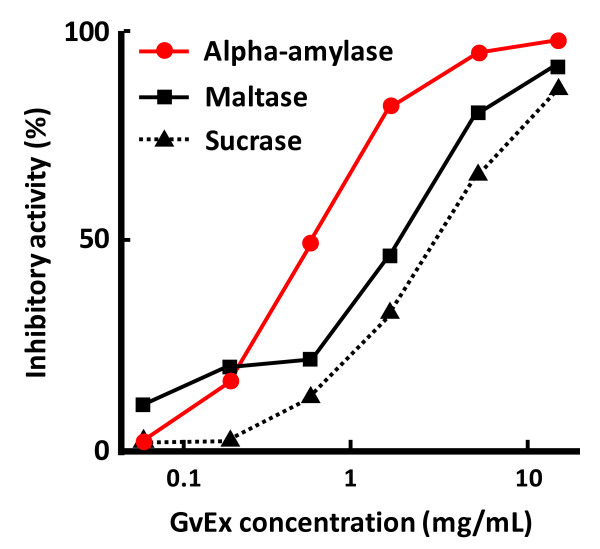
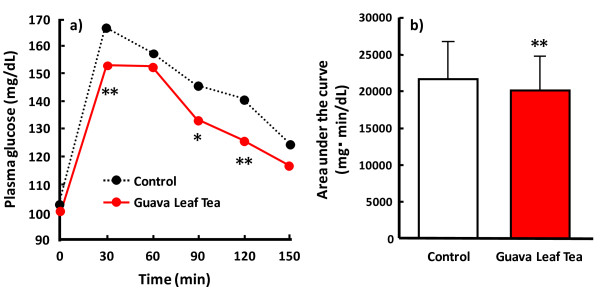
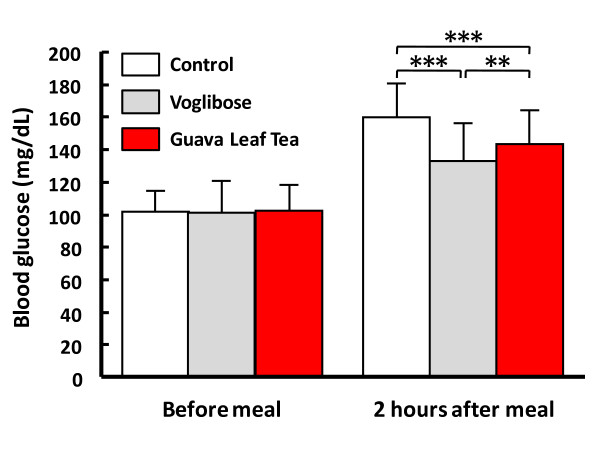
Psidium guajava Linn. (guava) is used not only as food but also as folk medicine in subtropical areas around the world because of its pharmacologic activities. In particular, the leaf extract of guava has traditionally been used for the treatment of diabetes in East Asia and other countries. Moreover, the anti-hyperglycemic activity of the extract has been reported in some animal models. However, little is known regarding the therapeutic activity of the extract in human clinical trials as well as its underlying therapeutic mechanisms and safety. In Japan, Guava Leaf Tea (Bansoureicha(R), Yakult Honsha, Tokyo, Japan) containing the aqueous leaf extract from guava has been approved as one of the Foods for Specified Health Uses and is now commercially available. This review describes the active component of the aqueous guava leaf extract and its inhibition of alpha-glucosidase enzymes in vitro, safety of the extract and Guava Leaf Tea, reduction of postprandial blood glucose elevation, and improvement of hyperglycemia, hyperinsulinemia, hypoadiponectinemia, hypertriglycemia and hypercholesterolemia in murine models and several clinical trials. It is suggested that the chronic suppression of postprandial blood glucose elevation is important in preventing type 2 diabetes mellitus, and that Guava Leaf Tea is considered useful as an alimentotherapy for chronic treatment.
Overview
The claims and statistics of this paper haven’t been checked yet.
Free: it reads the open-access text and checks the first 5 claims that cite a source we can check. Create a free account to check every claim.
Integrity signals
Registry
Cites
Statistics
Figures
Verification
Claims the paper makes
The claims and statistics of this paper haven’t been checked yet.
Free: it reads the open-access text and checks the first 5 claims that cite a source we can check. Create a free account to check every claim.
Claims other papers make about this one
Each is checked against this paper’s own text: does it say what the citing paper says it does?
The cited source doesn’t support the claim as written.
In the citing paper
“In metabolic syndrome, pine bark extract (150 mg/day, for 6 months) improved key risk factors: it lowered fasting glucose (~123 to ~105 mg/dL), reduced waist circumference (-7.9 cm in men and -7.3 cm in women), increased adiponectin, and reduced blood pressure and oxidative stress markers [213].”
From Nutritional Approaches to Enhance GLP-1 Analogue Therapy in Obesity: A Narrative Review (2025) · cites this paper as [213]
Checked by a reasoning model — may be wrong.
Experimental — accuracy not yet measuredThe cited source doesn’t support the claim as written.
In the citing paper
“Lipid profile also improved, with reductions in LDL and triglycerides, and a rise in HDL [213,214].”
From Nutritional Approaches to Enhance GLP-1 Analogue Therapy in Obesity: A Narrative Review (2025) · cites this paper as [213]
Checked by a reasoning model — may be wrong.
Experimental — accuracy not yet measuredIn the citing paper
“In metabolic syndrome, pine bark extract (150 mg/day, for 6 months) improved key risk factors: it lowered fasting glucose (~123 to ~105 mg/dL), reduced waist circumference (-7.9 cm in men and -7.3 cm in women), increased adiponectin, and reduced blood pressure and oxidative stress markers [213].”
From Nutritional Approaches to Enhance GLP-1 Analogue Therapy in Obesity: A Narrative Review (2025) · cites this paper as [213]
Self-check
Percentages, sums and reported differences re-computed from the paper’s own numbers.
The self-check needs the paper’s full text.
Citations
Cites
Wild, S., Roglic, G., Green, A., Sicree, R., & King, H. (2004) · Diabetes Care · doi:10.2337/diacare.27.5.1047 · Cited by 15,297 · cited 1×
“In 2000, the World Health Organization estimated a total of 171 million (2.8%) people with DM from the global population, and this figure has been projected to increase to 366 million (4.4%) by 2030 [ 1 ].”
BackgroundInfluentialRole of Insulin Resistance in Human Disease
Reaven, G. M. (1988) · Diabetes · doi:10.2337/diab.37.12.1595 · Cited by 12,154
Banting lecture 1988. Role of insulin resistance in human disease
Reaven, G. M. (1988) · Diabetes · doi:10.2337/diabetes.37.12.1595 · Cited by 3,811
Adiponectin and adiponectin receptors in insulin resistance, diabetes, and the metabolic syndrome
Kadowaki, T. (2006) · Journal of Clinical Investigation · doi:10.1172/jci29126 · Cited by 2,824 · cited 2×
“It has been hypothesized that an increase in adiponectin level in hypoadiponectinemia improves insulin resistance, T2DM and metabolic syndrome [5].”
BackgroundChiasson, J.-L., Josse, R. G., Gomis, R., Hanefeld, M., Karasik, A., Laakso, M., & for The STOP-NIDDM Trial Research Group (2003) · JAMA · doi:10.1001/jama.290.4.486 · Cited by 1,624 · cited 1×
“In a previous non-insulin-dependent diabetes mellitus trial (an international, multicenter, double-blind, placebo-controlled trial) in which about 1,400 pre-diabetic subjects with impaired glucose tolerance were enrolled [40,41], it was demonstrated that long-term treatment with acarbose decreases the risk of T2DM, hy…”
BackgroundThe deadly quartet. Upper-body obesity, glucose intolerance, hypertriglyceridemia, and hypertension
Kaplan, N. M. (1989) · Archives of Internal Medicine · doi:10.1001/archinte.149.7.1514 · Cited by 1,516 · cited 1×
“Coexistence of these diseases is well known as metabolic syndrome, a high risk factor for cardiovascular disease [2-4].”
BackgroundGlobal Prevalence of Diabetes: Estimates for the Year 2000 and Projections for 2030
Wild, S. H., Roglic, G., Green, A., Sicree, R., & King, H. (2004) · Diabetes Care · doi:10.2337/diacare.27.10.2569-a · Cited by 1,477
Psidium guajava: A review of its traditional uses, phytochemistry and pharmacology
Gutiérrez, R. M. P., Mitchell, S., & Solis, R. V. (2008) · Journal of Ethnopharmacology · doi:10.1016/j.jep.2008.01.025 · Cited by 937 · cited 1×
“[6] have reviewed the potential pharmacologic activities of the extract from the fruit, leaf, bark or roots; these activities include antioxidant, hepatoprotective, anti-allergy, anti-microbial, anti-genotoxic, anti-plasmodial, cytotoxic, anti-spasmodic, cardioactive, anti-cough, anti-diabetic, anti-inflammatory and a…”
BackgroundRole of Insulin Resistance in Human Disease
Reaven, G. M. (1992) · Medical Science Symposia Series · doi:10.1007/978-94-011-2700-4_10 · Cited by 865
Cavalot, F., Petrelli, A., Traversa, M., Bonomo, K., Fiora, E., Conti, M., Anfossi, G., Costa, G., & Trovati, M. (2006) · The Journal of Clinical Endocrinology & Metabolism · doi:10.1210/jc.2005-1005 · Cited by 569 · cited 1×
“Currently, there is ongoing debate as to whether postprandial blood glucose level is a stronger predictor of cardiovascular events than fasting blood glucose in T2DM [43,44].”
Background
Cited by
Items 101–183 of 183
Yoo, S., Lee, Y., Chung, J., Rha, C., Hong, Y., Park, M., & Shim, S. (2020) · Food & Function · doi:10.1039/c9fo03020d · Cited by 9
Effects of Psidium guajava on the metabolic profile of Wister rats
Farinazzi-Machado, F. M. V. (2012) · Journal of Medicinal Plants Research · doi:10.5897/jmpr12.033 · Cited by 12
“Deguchi and Miyazaki (2010) reported that guava leaves in the form of an infusion not only reduced postprandial glycemia and improved hyperinsulinemia in murine models but also contributed to reduce hypercholesterolemia, hypertriglyceridemia and hypoadiponectinemia in the animals of their study.”
BackgroundJayachandran, M., Vinayagam, R., & Xu, B. (2020) · Molecular Biology Reports · doi:10.1007/s11033-020-05399-2 · Cited by 10
“A study has shown the administration of Psidium guajava leaf extract induces anti-hyperglycemic and anti-hyperlipidemic effects [15].”
(2021) · Biointerface Research in Applied Chemistry · doi:10.33263/briac116.1409014102 · Cited by 9
Yamasaki, M., Matsuyama, Y., Hayasegawa, R., Hamada, K., Nishiyama, K., Kai, T., Kamenaga, K., Arakawa, T., Tari, H., Shimizu, Y., et al. (2015) · Food Science and Technology Research · doi:10.3136/fstr.21.827 · Cited by 9
Nutritional Approaches to Enhance GLP-1 Analogue Therapy in Obesity: A Narrative Review
Dias, D. D., Vasconcelos, A. R., Souza, A. C. R., Menezes, C. D., Silva, I. S. T. E., & Name, J. J. (2025) · Obesities · doi:10.3390/obesities5040088 · Cited by 8
“A clinical study reported it decreases postprandial glucose, an effect attributed to α -amylase, maltase, and sucrase inhibition observed in vitro [208,210].”
A REVIEW ON MULTIPURPOSE MEDICINAL PROPERTIES OF TRADITIONALLY USED PSIDIUM GUAJAVA LEAVES
Ahamad, A., & Ansari, S. H. (2022) · Asian Journal of Pharmaceutical and Clinical Research · doi:10.22159/ajpcr.2022.v15i8.43179 · Cited by 10
Amadi, G., Iwuji, S. C., Azeez, T. O., Nwaokoro, C. J., & Wodu, C. O. (2019) · International Journal of Translational Medical Research and Public Health · doi:10.21106/ijtmrph.76 · Cited by 8
Soni, S., & Paari, K. A. (2023) · Food Production Processing and Nutrition · doi:10.1186/s43014-023-00133-4 · Cited by 8
“…gallate (Cinatl et al. 2003), (Zhong et al. 2012) Blood sugar level Dextrin, guava polyphenol (Sharma et al. 2022; Aliasgharzadeh et al. 2015; (Deguchi & Miyazaki 2010) Tooth care Palatinose, mannitol, erythritol, xylitol, tea polyphenol (prevent streptococcus mutants (Gupta 2018) (Xu et al.…”
Ormiston, C. K. (2023) · Journal of Asian Health · doi:10.59448/jah.v3i2.36 · Cited by 7
“…remedies have exhibited effectiveness in treating T2D, with Panax ginseng (100–200 mg/day) 29,43 , Momordica charantia (50–100 mL/day; 18 g/day) 29,44,45 , Psidium gnajava (600 mL/day; 9 g/day) 29,46 , and Lagenaria siceraria (3 g/day) 29 all showing potential evidence in reducing glucose levels.”
BackgroundAlkofahi, A. S., Alzoubi, K. H., Khabour, O. F., & Mhaidat, N. M. (2016) · Industrial Crops and Products · doi:10.1016/j.indcrop.2016.02.059 · Cited by 7
do Nascimento, M. A., Higa, E. M. S., de Mello, M. T., Tufik, S., Oyama, L. M., dos Santos, R. V. T., Farfán, J. A., Risso, É. M., de Souza, C. T., Pimentel, G. D., et al. (2014) · e-SPEN Journal · doi:10.1016/j.clnme.2014.02.002 · Cited by 8
Toxicity of nanomaterials to biomedical applications— A review
Mala, R., & Selvaraj, R. C. A. (2018) · Elsevier eBooks · doi:10.1016/b978-0-08-102203-0.00015-9 · Cited by 7
Detection and Validation of Native Plants Traditionally Used as Medicine in Guatemala
Cáceres, A., & Cruz, S. M. (2019) · Current Traditional Medicine · doi:10.2174/2215083805666190327172409 · Cited by 7
Role of Natural Bio-active Compounds as Antidiabetic Agents
Jimenez-Garcia, S. N., García-Mier, L., Vazquez-Cruz, M. A., Ramírez-Gómez, X. S., Guevara-González, R. G., García‐Trejo, J. F., & Feregrino‐Pérez, A. A. (2020) · Advanced structured materials · doi:10.1007/978-3-030-54027-2_15 · Cited by 7
Tzatzani, T.-T., Michail, I., Boutsika, A., Sarrou, E., & Ganopoulos, I. V. (2023) · Biotechnology & Biotechnological Equipment · doi:10.1080/13102818.2022.2159524 · Cited by 6
Kapoor, S., Gandhi, N., & Kapoor, A. (2020) · Springer eBooks · doi:10.1007/978-981-15-7285-2_12 · Cited by 6
Khalifa, I., & Nawaz, A. (2022) · Springer eBooks · doi:10.1007/978-3-030-84436-3_35 · Cited by 6
Essa, H. A., ElMosbah, D. E., & Fahmy, H. A. (2026) · PLoS ONE · doi:10.1371/journal.pone.0339641 · Cited by 6
“Both extracts regulate blood glucose levels, enhance insulin sensitivity, and effectively manage hyperglycemia [93].”
Identification of Bacterial Endophytes Isolated from Different Medicinal Plants
Muhtari, K., Sailaja, I., Shekhawat, B. K., Kaura, S., & Mehta, S. (2024) · International Journal of Biomedical and Clinical Analysis · doi:10.61797/ijbca.v4i1.331 · Cited by 3
Medicinal and Nutritional Importance of Psidium guajava Linn. in Human Health
Kalyani, G. (2024) · Springer eBooks · doi:10.1007/978-981-97-6895-0_15 · Cited by 5
Antidiabetic potential of plants used in Cuba
Mesa, G. (2014) · Cited by 5
A Review on Some Indian Medicinal Plants useful in Hair Care
Bhargavi, M. N., & Pandya, D. J. (2022) · Current Traditional Medicine · doi:10.2174/2215083808666220510165110 · Cited by 5
Hsieh, P., Chen, W.-Y., Wang, T.-M., & Chu, Y. (2023) · Journal of Traditional and Complementary Medicine · doi:10.1016/j.jtcme.2023.01.006 · Cited by 6
Bhardwaj, A., & Modi, K. (2017) · International Journal of Pharmacy and Pharmaceutical Sciences · doi:10.22159/ijpps.2017v9i10.21455 · Cited by 5
Budianto, B., Arumsari, A. G., Inayah, N., Fatmaningrum, F., & Suparmi, A. (2021) · Revista Vitae · doi:10.17533/udea.vitae.v28n3a345386 · Cited by 5
Suthar, S. B. K., Deepthi, M. V., Munikumar, M., Preethi, K., Reddy, P., Goudar, G., & Rao, J. S. (2025) · Discover Food · doi:10.1007/s44187-025-00371-0 · Cited by 4
“Also the advantageous impact of guava leaf extracts in lowering postprandial glucose levels among human study has been reported [13].”
Review on Phytochemicals, Ethnobotanical and Pharmacological Activities of Psidium Guajava
Wagatkar, A., Murkar, S., Jadhav, N., Veer, S., & Swati Jogdhand, R. M. (2023) · International Journal of Pharmaceutical Sciences and Medicine · doi:10.47760/ijpsm.2023.v08i05.009 · Cited by 5
A REVIEW ON NUTRITIONAL COMPOSITION AND PHARMACOLOGICAL EFFECTS OF GUAVA; (Psidium Guajava L.)
(2024) · Carpathian Journal of Food Science and Technology · doi:10.34302/crpjfst/2024.16.1.12 · Cited by 4
Plant and endophyte-derived anti-hyperlipidemics: A comprehensive review with in silico studies
Shady, N. H., Zayed, A., Alaaeldin, R., Hisham, M., Gawesh, M., Mohammed, R., Elrehany, M. A., & Abdelmohsen, U. R. (2023) · South African Journal of Botany · doi:10.1016/j.sajb.2023.10.034 · Cited by 5
Journal, B. S. (2014) · Baghdad Science Journal · doi:10.21123/bsj.2014.11.3.1192-1200 · Cited by 4
Black Tea Inhibits Small Intestinal α-Glucosidase Activity in db/db Mouse
IGARASHI, M., Satoh, T. K., Yamashita, H., & Watanabe, K. (2014) · Japanese Journal of Complementary and Alternative Medicine · doi:10.1625/jcam.11.25 · Cited by 4
Chen, L. L., Tohit, N. M., Ludin, A. F. M., Manaf, Z. A., Wong, A., Kuan, K. L., Chien, H. W., & Shahar, S. (2025) · Diabetes Obesity and Metabolism · doi:10.1111/dom.16446 · Cited by 3
Mualla, S. A., & Bakain, R. Z. A. (2023) · Food Research · doi:10.26656/fr.2017.7(3).317 · Cited by 3
In Vitro Antidiabetic Effect Of Leptadenia Hastata Leaves Fractions
Ukwuani, A. N., & Igbokwu, M. O. (2015) · Zenodo (CERN European Organization for Nuclear Research) · doi:10.5281/zenodo.216517 · Cited by 3
“Biosciences Research in Today’s World | July 2015 | Volume 1 | Pages 40-46 45 The glycosylated haemoglobin is an important clinical marker in diabetes which helps to determine the degree of protein glycation during diabetes [23].”
BackgroundPeungvicha, P. (2018) · The Thai Journal of Pharmaceutical Sciences · doi:10.56808/3027-7922.2391 · Cited by 3
Potensi Daun Jambu Biji sebagai Agent Antidiabetik Tradisional
Gunata, A. F. (2021) · Jurnal Penelitian Perawat Profesional · doi:10.37287/jppp.v3i1.328 · Cited by 6
Kumar, V. K., & Lalitha, K. G. (2014) · Journal of Pharmaceutical Research · doi:10.18579/jpcrkc/2014/13/3/78393 · Cited by 3
Lim, T. K. (2011) · Springer eBooks · doi:10.1007/978-94-007-2534-8_95 · Cited by 4
Sánchez, J., Oliva, Y., & Marrero, E. (2014) · Redalyc (Universidad Autónoma del Estado de México) · Cited by 2
Aldeeri, A., Shwish, N. B., Khounganian, R. M., & Aldrees, A. M. (2025) · The Saudi Dental Journal · doi:10.1007/s44445-025-00028-9 · Cited by 2
Anti-Diabetic Property of Catharanthus roseusleaves and Psidium guajava Leaves
Shukla, M. (2020) · Journal of Advanced Research in Ayurveda Yoga Unani Sidhha & Homeopathy · doi:10.24321/2394.6547.202001 · Cited by 2
Formulation and evaluation of mouthwash using guava leaves for aphthous ulcer treatment
Ghuge, A. S., & Khandre, R. A. (2024) · World Journal of Biology Pharmacy and Health Sciences · doi:10.30574/wjbphs.2024.17.1.0029 · Cited by 2
Prabhakar, T., Selvi, D. B., Sreedhar, C., & Jha, D. K. (2024) · International Journal of Pharmaceutical Sciences and Drug Research · doi:10.25004/ijpsdr.2024.160410 · Cited by 2
Lee, J. H., Park, H. M., Nam, D., Chung, W., Shim, B. S., Cho, S. K., & Ahn, K. S. (2014) · Oriental Pharmacy and Experimental Medicine · doi:10.1007/s13596-014-0174-2 · Cited by 1
“A previous report stated that the ethanolic and aqueous extracts of the leaves of Psidium guajava has been shown to possess anti-inflammatory effect through unknown mechanism (Dutta and Das 2010; Ojewole 2006).”
BackgroundAk, S., & Krishna, K. L. (2013) · Cited by 1
Anti-hyperglycemic Effect of Psidium guajava Leaf Infusion
Zartiana, R. N., Surialaga, S., & Permana, H. (2015) · Althea Medical Journal · doi:10.15850/amj.v2n4.508 · Cited by 1
Wu, W.-J., Yan, W.-L., Yu, S.-C., Gunawan, G., Lin, C., Huang, C.-Y., Chang, C., Chen, H., Lii, C., Yu, A. L.-T., et al. (2018) · Journal of Pharmacy and Pharmacology · doi:10.17265/2328-2150/2018.10.002 · Cited by 1
“Deguchi and Miyazaki [9] suggested the”
BackgroundInfluentialVaidyanatahan, S., Sidiq, F., & Halim, N. B. A. (2023) · International Journal of Research in Community Service · doi:10.46336/ijrcs.v4i4.476 · Cited by 1
GOMETI, A. S., Ogugua, V. N., Odo, C. E., & Joshua, P. E. (2014) · AFRICAN JOURNAL OF BIOTECHNOLOGY · doi:10.5897/ajb2013.13406 · Cited by 1
“The overall performance of P. guajava in the reductions of blood lipids correlates with the findings of Deguchi and Miyazaki (2010) who reported that a single dose ingestion of P. guajava leaf tea for eight weeks resulted in decreases of serum concentrations of total cholesterol and triglycerides…”
ResultKo, E.-J., Liu, Y., & Kim, H. (2017) · Journal of Nutrition and Health · doi:10.4163/jnh.2017.50.3.236
Baso, B., Budu, B., Hatta, M., & Natzir, R. (2017) · International Journal of Sciences: Basic and Applied Research
ANTIMICROBIAL AND ANTIOXIDANT ACTIVITIES OF GUAVA AND POMEGRANATE LEAVES ETHANOLIC EXTRACTS
Hefnawy, T. H., & El-Shourbagy, G. (2016) · Journal of Agricultural Chemistry and Biotechnology · doi:10.21608/jacb.2016.40741
“(Martha et al. 2008 and Deguchi and Miyazaki, 2010), As a result of the foregoing he began thinking in the green leaves of many plants (because they contain natural anti-oxidant) is likely to be effective antimicrobial and disease Their bioactive substances and phytonutrients have a wide range of…”
BackgroundKUMAR, K., & G, L. K. (2021) · Asian Journal of Pharmaceutical and Clinical Research · doi:10.22159/ajpcr.2021v14i4.41523
“The HbA1C is an essential biochemical parameter in diabetes, which helps to establish the degree of protein glycation during diabetes [26].”
BackgroundAbarnadevika, A., KAVITHA, K., & GOPALASATHEESKUMAR, K. (2021) · Journal of Research in Pharmacy · doi:10.29228/jrp.111
“Glycosylated hemoglobin was increased in diabetic rats due to the non-enzymatic reaction between glucose and free amino groups of haemoglobin [19].”
BackgroundCunha, R. L., Hubinger, M. D., Sato, A. C. K., & Vieira, G. S. (2012) · Wiley eBooks · doi:10.1002/9781118324097.ch11
Yaqoob, Z., Iqbal, M. J., Nouren, A., Sohail, S., Ali, M., Fazal, T., Rustam, M., Ahmed, Z., Saeed, N., & Saeed, Q. (2022) · Pak-Euro Journal of Medical and Life Sciences · doi:10.31580/pjmls.v5i2.2464 · Cited by 3
Adamu, A. S., Muhammed, Y. G., Abdulbaseet, U., Atiku, M. K., Mashi, J. A., & Shehu, D. (2023) · Zenodo (CERN European Organization for Nuclear Research) · doi:10.5281/zenodo.8239868
Vaidyanatahan, S., Sidiq, F., & Halim, N. B. A. (2023) · International Journal of Global Operations Research · doi:10.47194/ijgor.v4i3.243
“In addition, guava does not cause food intolerance, so it is safe to use as an alternative in dealing with diarrhea due to certain food intolerances (Sriwilaijaroen et al., 2012; Deguchi, & Miyazaki, 2010).”
BackgroundPhytochemical and Mineral Content in Flesh of Psidium guajava Fruit
Oguazu, C. E., Japhet, N. J., Anajekwu, B. A., & Emmanuel, O. O. (2022) · Research Journal of Phytochemistry · doi:10.3923/rjphyto.2022.88.96
“Psidium guajava is consumed also as folk medicine in subtropical areas all over the world due to its pharmacologic activities 14 .”
BackgroundTác dụng hạ glucose máu của cao chiết lá ổi trên chuột nhắt trắng bị đái tháo đường týp 2
Minh, P. H., Khánh, Đ. T. H., Tuấn, L. A., Mậu, N. T. T., Đạt, T. T., Dung, H. T. T., & Thanh, M. P. (2024) · Tạp chí Nghiên cứu Y học · doi:10.52852/tcncyh.v176i3.2305
Tác dụng điều chỉnh rối loạn lipid máu của cao chiết lá ổi trên thực nghiệm
Minh, P. H., Dung, H. M., Tuấn, L. A., Huong, N. T. T., & Thanh, M. P. (2024) · Tạp chí Nghiên cứu Y học · doi:10.52852/tcncyh.v182i9.2642
Taiwo, O. F., Olugbuyiro, J. A. O., & Adebayo, A. H. (2024) · IOP Conference Series Earth and Environmental Science · doi:10.1088/1755-1315/1428/1/012015
Jonathan, Rahardja, T. S., Fatmawati, D., Rahmi, M. S., & Ridhoila, I. (2025) · Journal of Herbal Medicine · doi:10.1016/j.hermed.2025.101037
Lee, H., Lee, M., Park, Y. K., & Lee, J. (2025) · Journal of the Korean Society of Food Science and Nutrition · doi:10.3746/jkfn.2025.54.9.723
Formulation and Evaluation of Polyherbal Antidiabetic Cookies
Babar, A., Gole, V. R., & Jadhav, V. D. (2025) · International Journal of Pharmaceutical Sciences Review and Research · doi:10.47583/ijpsrr.2025.v85i8.009
Andalan, J. R., Mondejar, A. J. S., Sumaya, N. H. N., Guihawan, J. Q., Madamba, M. R. S. B., Baltazar Tabelin, C., Guilingen, D., Paglinawan, F. C., Maulas, K. M., Arquisal, I. B., et al. (2024) · Figshare · doi:10.6084/m9.figshare.26981858
Jadaun, P., Shah, P., Harshithkumar, R., Said, M. S., Bhoite, S. P., Bokuri, S., Ravindran, S., Mishra, N., & Mukherjee, A. (2023) · Figshare · doi:10.6084/m9.figshare.22624660
LONDOÑO, M. C. F. (2019) · Institutional Repository University of Antioquia (University of Antioquia)
Exploring the Hypoglycemic Effects of Guava Leaves
Bhattacharjee, M., Manisha, Kumari, M., & Mohapatra, P. P. (2025) · NG Agriculture Insights · doi:10.5281/zenodo.17557731
Akhter, S., Kasem, M. A., Munni, N. A., Sharmin, A., Sultana, S. P., & Jahan, I. (2025) · TAJ Journal of Teachers Association · doi:10.70818/taj.v38i02.0589
Wan, J., Meng, C., Yue, C., Zhao, D., Li, S., Gong, Y., & Shao, Y. (2026) · Food Science and Human Wellness · doi:10.26599/fshw.2026.9250915
Hien, N. T., Tươi, L. T., Ngan, T. T., & Hanh, N. T. H. (2026) · Journal of Science Natural Science · doi:10.18173/2354-1059.2026-0011
“The 50% glucose reduction with 400 mg/kg extract surpasses many reported plant extracts [20], [21] and likely involves multiple mechanisms.”
Hung, T.-C., Deng, Y.-H., Hung, Y.-H., Deng, W., Chiang, P.-C., Chan, C.-H., Chen, F.-P., Wei, H.-J., Singh, A. K., & Chiou, C. (2026) · BioMed Research International · doi:10.1155/bmri/8998340
Jesse, I., Dangana, M. D., & Aina, D. O. (2025) · UMYU Journal of Microbiology Research (UJMR) · doi:10.47430/ujmr.25102.013
“In many cultures, guava leaves are also used for their antiseptic qualities to treat hypertension, pain, fever, and respiratory disorders, supporting overall health (Deguchi and Miyazaki, 2010).”
Safe African medicinal plants for clinical studies
Obi, B. C., Onyeto, C. A., Uzor, P. F., & Akunne, T. C. (2026) · Elsevier eBooks · doi:10.1016/b978-0-443-45179-9.00019-7
Mahaldar, Y., Musale, H., Mhatre, K., More, A., Mali, B., & Pawar, K. (2026) · International Journal of Pharmaceutical Research and Development · doi:10.33545/26646862.2026.v8.i6a.369
Evidence-based insights into plant-derived antidiabetic foods and nutraceuticals
Ahda, M., Prastowo, I., & Nurani, L. H. (2026) · Food Research International Translational Research · doi:10.1016/j.frintr.2026.100012
Sadananda, K., Khurana, N., Singh, K. B., Kumar, R., Gupta, R., Thongam, B., & Sharma, N. (2026) · Research Square · doi:10.21203/rs.3.rs-10932192/v1
Vanivijay, Ramakrishna, C., Yannam, S. K., & Perumal, M. K. (2026) · Journal of Food Science and Technology · doi:10.1007/s13197-026-06930-2
Documentation Of Polyherbal Formulations In Dolo, Bansalan, Davao Del Sur, Philippines
Artucilla, A. J. A., Torres, M. A. J., Fuentes, A. E., & Pucot, J. (2025) · International Journal of Environmental Sciences · doi:10.64252/vrmwbq97
Documentation Of Polyherbal Formulations In Dolo, Bansalan, Davao Del Sur, Philippines
Artucilla, A. J. A., Torres, M. A. J., Fuentes, A. E., & Pucot, J. (2025) · International Journal of Environmental Sciences · doi:10.64252/jjcwbf34
Idwar, F. S., Nadia, L., Ridha, M. R., & Putri, G. (2026) · Grimsa Journal of Science Engineering and Technology · doi:10.61975/gjset.v4i2.114
Metadata
- Authors
- Deguchi, Y., & Miyazaki, K.
- Affiliations
- Yakult Central Institute (JP)
- Corresponding author
- Miyazaki, Kouji
- Venue
- Nutrition & Metabolism
- Published
- 2010
- Volume
- 7
- Issue
- 1
- Pages
- 9
- ISSN
- 1743-7075 (ISSN-L)
- PMC
- PMC2831039
- OpenAlex
- W2115462711
- Cited by
- 170
- References
- 42
- Citations by year
- 2026: 5 · 2025: 9 · 2024: 15 · 2023: 16 · 2022: 14 · 2021: 12 · 2020: 13 · 2019: 11 · 2018: 10 · 2017: 12 · 2016: 8 · 2015: 11 · 2014: 15 · 2013: 5 · 2012: 8
- FWCI
- 6.13
- Type
- journal article
- Language
- en
- Open access
- gold
- doi.org
- Licence
- cc-by
- Locations
- Nutrition & Metabolism (publishedVersion, cc-by)
- Europe PMC (PubMed Central) (publishedVersion, cc-by)
- PubMed Central (publishedVersion, cc-by)
- PubMed (publishedVersion)
- DOAJ (DOAJ: Directory of Open Access Journals) (submittedVersion, cc-by-sa)
- Topics
- Life Sciences › Pharmacology, Toxicology and Pharmaceutics › Pharmacology › Psidium guajava Extracts and Applications
- Health Sciences › Medicine › Endocrinology, Diabetes and Metabolism › Natural Antidiabetic Agents Studies
- Life Sciences › Agricultural and Biological Sciences › Plant Science › Medicinal Plant Research
- Keywords
- guava leaf extract, guava, hypoglycemic effect, hypolipidemic effect, α-glucosidase inhibition, postprandial blood glucose, type 2 diabetes, hyperinsulinemia, hypoadiponectinemia, hypertriglyceridemia, hypercholesterolemia, aqueous leaf extract, safety
About these checks
Registry, retraction, Cites and statistics results are computed, not judged, with one exception: a printed reference that no index lists is read once by a model before it counts as a citation error. Claims are extracted by a model and kept only when their quote appears verbatim in the text; each cited source is then checked, with a model’s help, for whether it says what the claim relies on. Those verdicts can be wrong — read the claim’s quote and the cited source before relying on one.
Statistics and arithmetic are recomputed, not judged.
Confidence bands are shown only for fields calibrated on our annotated test set. None is calibrated yet, so no band is shown.
What counts as a claim ›How we measure confidence ›How we check this ›
Are you an author, or do you see a problem with this page? Request a review
Data sources
Bibliographic data: Semantic Scholar, OpenAlex, Crossref.
Contains information from the Semantic Scholar Academic Graph Datasets, made available under the ODC Attribution License (ODC-BY 1.0).
Semantic Scholar’s data is described in: Kinney, R., et al. (2023). The Semantic Scholar Open Data Platform. arXiv:2301.10140.
