

Deposition and biokinetics of inhaled nanoparticles
Open accessThe DOI matches its Crossref record; 114 of the 115 references it cites were found in a registry or an index.
Abstract
Particle biokinetics is important in hazard identification and characterization of inhaled particles. Such studies intend to convert external to internal exposure or biologically effective dose, and may help to set limits in that way. Here we focus on the biokinetics of inhaled nanometer sized particles in comparison to micrometer sized ones.The presented approach ranges from inhaled particle deposition probability and retention in the respiratory tract to biokinetics and clearance of particles out of the respiratory tract. Particle transport into the blood circulation (translocation), towards secondary target organs and tissues (accumulation), and out of the body (clearance) is considered. The macroscopically assessed amount of particles in the respiratory tract and secondary target organs provides dose estimates for toxicological studies on the level of the whole organism. Complementary, microscopic analyses at the individual particle level provide detailed information about which cells and subcellular components are the target of inhaled particles. These studies contribute to shed light on mechanisms and modes of action eventually leading to adverse health effects by inhaled nanoparticles.We review current methods for macroscopic and microscopic analyses of particle deposition, retention and clearance. Existing macroscopic knowledge on particle biokinetics and microscopic views on particle organ interactions are discussed comparing nanometer and micrometer sized particles. We emphasize the importance for quantitative analyses and the use of particle doses derived from real world exposures.
Overview
The claims and statistics of this paper haven’t been checked yet.
Free: it reads the open-access text and checks the first 5 claims that cite a source we can check. Create a free account to check every claim.
Integrity signals
Registry
Cites
Statistics
Figures
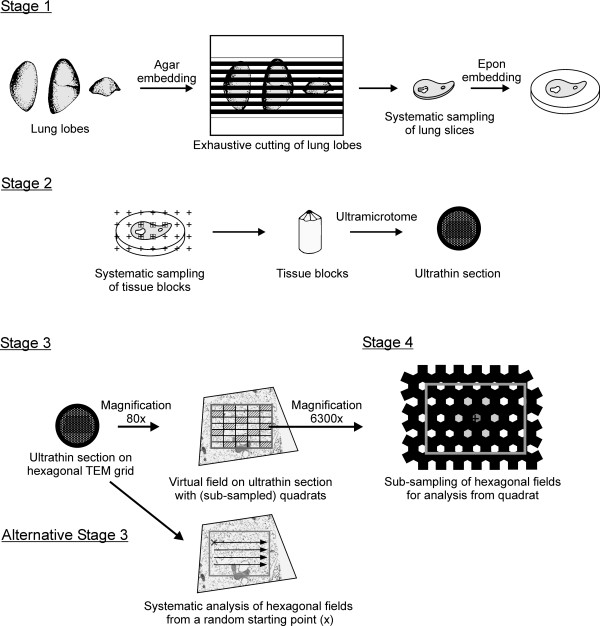
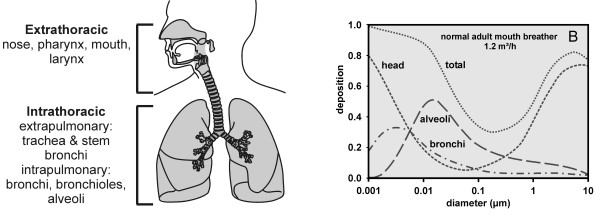
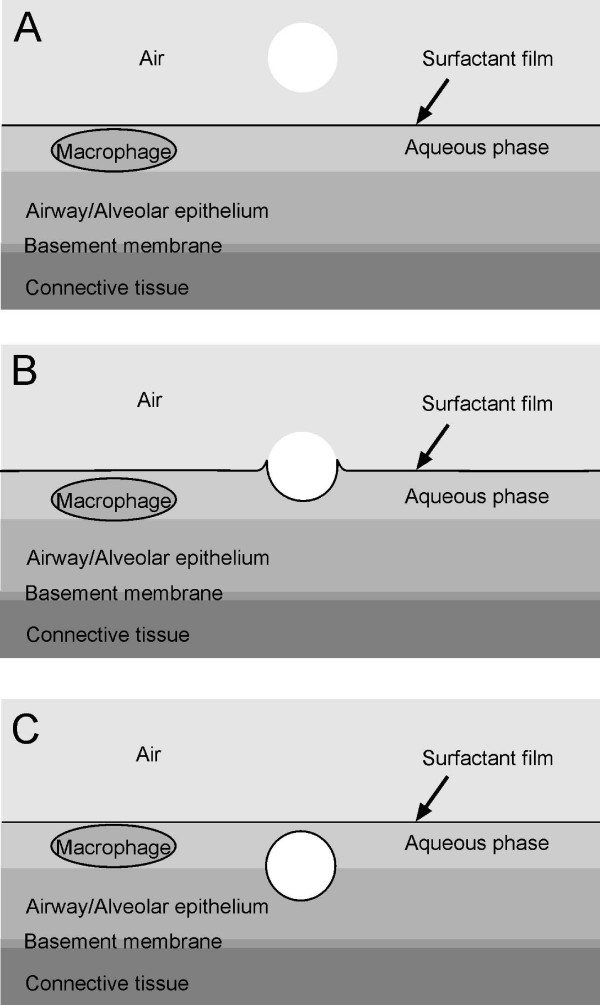
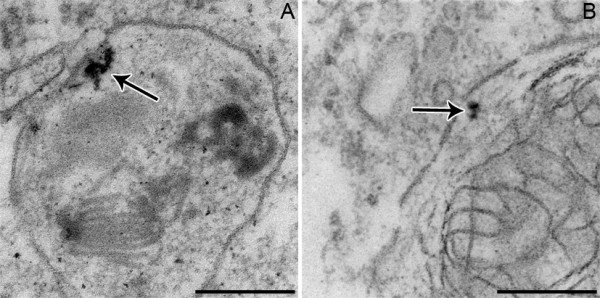
Verification
Claims the paper makes
The claims and statistics of this paper haven’t been checked yet.
Free: it reads the open-access text and checks the first 5 claims that cite a source we can check. Create a free account to check every claim.
Claims other papers make about this one
Each is checked against this paper’s own text: does it say what the citing paper says it does?
The source backs part of the claim, not all of it — or backs it for a different population, condition or comparison.
In the citing paper
“Lung clearance of particulate matter depends on the site of deposition as well as material characteristics including solubility and bioreactivity [9, 10].”
From Effects from a 90-day inhalation toxicity study with cerium oxide and barium sulfate nanoparticles in rats (2017) · cites this paper as [9]
Experimental — accuracy not yet measuredThe source backs part of the claim, not all of it — or backs it for a different population, condition or comparison.
In the citing paper
“In contrast, only 20% of 20-nm-sized NPs and about 30% of 70-nm-sized NP deposited during inhalation or instillation can be lavaged – see Fig. 2 [54–59].”
From Particle toxicology and health - where are we? (2019) · cites this paper as [57]
Experimental — accuracy not yet measuredThe cited source says what the claim attributes to it.
In the citing paper
“Nano-sized particles (< 100 nm) deposit in the whole respiratory tract, ending up in the alveolar region where its deposition is dominated by processes of diffusion [7–9].”
From Effects from a 90-day inhalation toxicity study with cerium oxide and barium sulfate nanoparticles in rats (2017) · cites this paper as [9]
The cited source says what the claim attributes to it.
In the citing paper
“In the alveolar space the most relevant route of particle clearance is phagocytosis by alveolar macrophages and subsequent elimination primarily via the mucociliary escalator or secondarily via the lymphatic system [9, 10].”
From Effects from a 90-day inhalation toxicity study with cerium oxide and barium sulfate nanoparticles in rats (2017) · cites this paper as [9]
Self-check
Percentages, sums and reported differences re-computed from the paper’s own numbers.
The self-check needs the paper’s full text.
Citations
Cites
Nanotoxicology: An Emerging Discipline Evolving from Studies of Ultrafine Particles
Oberdörster, G., Oberdörster, E., & Oberdörster, J. (2005) · Environmental Health Perspectives · doi:10.1289/ehp.7339 · Cited by 7,891 · cited 1×
“Cardiovascular effects observed in these studies triggered the discussion on increased transport of inhaled ultrafine particles from the epithelial surface towards the blood circulation and subsequently to target organs, like the heart, liver and brain, eventually adversely affecting the functions of these organs [69].”
BackgroundCedervall, T., Lynch, I., Lindman, S., Berggård, T., Thulin, E., Nilsson, H., Dawson, K. A., & Linse, S. (2007) · Proceedings of the National Academy of Sciences · doi:10.1073/pnas.0608582104 · Cited by 3,281 · cited 1×
“Microparticles would be excluded from this transport because of their larger size [70-72].”
BackgroundThe unbiased estimation of number and sizes of arbitrary particles using the disector
Sterio, D. C. (1984) · Journal of Microscopy · doi:10.1111/j.1365-2818.1984.tb02501.x · Cited by 2,519 · cited 1×
“[ 35-37 ]). We have implemented this technique to count micrometer sized particles and airway macrophages in lungs by light microscopy (e.g.”
MethodPolymer conjugates as anticancer nanomedicines
Duncan, R. (2006) · Nature Reviews Cancer · doi:10.1038/nrc1958 · Cited by 1,962 · cited 1×
“as diagnostic tools or therapeutics in medicine [6,7] health risk assessment is necessary.”
BackgroundHuman Respiratory Tract Model for Radiological Protection
Icrp (1994) · Annals of the ICRP · Cited by 1,767
Protein-nanoparticle interactions
Lynch, I., & Dawson, K. A. (2008) · Nano Today · doi:10.1016/s1748-0132(08)70014-8 · Cited by 1,727
Laden, F., Schwartz, J., Speizer, F. E., & Dockery, D. W. (2006) · American Journal of Respiratory and Critical Care Medicine · doi:10.1164/rccm.200503-443oc · Cited by 1,416 · cited 1×
“[ 1-5 ]). Also, for nanoparticles with anticipated beneficial use, e.g.”
BackgroundGeiser, M., Rothen-Rutishauser, B., Kapp, N., Schürch, S., Kreyling, W., Schulz, H., Semmler, M., Hof, V. I., Heyder, J., & Gehr, P. (2005) · Environmental Health Perspectives · doi:10.1289/ehp.8006 · Cited by 1,407
Self-citationLaden, F., Neas, L. M., Dockery, D. W., & Schwartz, J. (2000) · Environmental Health Perspectives · doi:10.1289/ehp.00108941 · Cited by 1,296 · cited 1×
“[ 1-5 ]). Also, for nanoparticles with anticipated beneficial use, e.g.”
BackgroundUnbiased Stereology: Three-Dimensional Measurement in Microscopy
Howard, C. V., & Reed, M. (1998) · Cited by 1,149
Research works printed but not linked: 3
- [14]Weibel ER Otis AB Morphometric and stereological methods in respiratory physiology including fixation techniques Techniques in the life sciences 1984 Ireland: Elsevier Scientific Publishers 1 35
- [94]Semmler-Behnke M Fertsch S Schmid O Wenk A Kreyling WG Uptake of 1.4 mm versus 18 mm gold particles by secondary target organs is size dependent in control and pregnants rats after intertracheal or intravenoiz application Euro Nanoforum - Nanotechnology in Industrial Applications 2007 102 104 http://www.euronanoforum2007.de/download/Proceedings%20ENF2007.pdf
- [101]Kuempel ED Tran CL Castranova V Bailer AJ Lung dosimetry and risk assessment of nanoparticles: evaluating and extending current models in rats and humans Inhal Toxicol 2006 18 717 724 10.1080/08958370600747887 16774860 · DOI
Cited by
Items 601–700 of 751
Meyer, T. J., Tekin, N., Hense, P., Kasemo, T. E., Lodes, N., Stöth, M., Ickrath, P., Gehrke, T. E., Hagen, R., Dembski, S., et al. (2023) · Toxicology Letters · doi:10.1016/j.toxlet.2023.03.004 · Cited by 2
Neurotoxicity of Aluminum and Its Compound Nanoparticles
Yuan, J., Nguyen, C. C., Mo, Y., Zhang, Y., Zhang, Y., & Zhang, Q. (2023) · Springer eBooks · doi:10.1007/978-981-99-1592-7_13 · Cited by 4
Waked, D., Veras, M. M., Saldiva, P. H. N., & Takano, A. P. C. (2024) · Atmosphere · doi:10.3390/atmos15091126 · Cited by 2
A nano perspective behind the COVID-19 pandemic
Silveira, C. P., Schneid, A. D. C., Ribeiro, I. R. S., Galdino, F. E., & Cardoso, M. B. (2021) · Nanoscale Horizons · doi:10.1039/d1nh00135c · Cited by 3
Liu, X., Zhu, H. J., Lu, H. J., Li, Y., Zhang, J. N., & Zhang, Y. (2013) · Advanced materials research · doi:10.4028/www.scientific.net/amr.651.24 · Cited by 2
Effect of Environment and Aging on the Pulmonary Surfactant System
Orgeig, S., Morrison, J. L., & Daniels, C. B. (2014) · Elsevier eBooks · doi:10.1016/b978-0-12-799941-8.00026-2 · Cited by 6
The Safety of Nanomaterials on Molecular and Cellular Scale
Kraegeloh, A., & Unfried, K. (2017) · CRC Press eBooks · doi:10.1201/9781315371795-22 · Cited by 2
Toxicological Hazard Analysis of Nanomaterials With Potential for Utilization in Consumer Goods
Kermanizadeh, A., Brown, D. M., & Möller, P. (2019) · Elsevier eBooks · doi:10.1016/b978-0-12-814130-4.00012-9 · Cited by 2
Toxicity of Nanomaterials to the Host and the Environment
Beamer, C. A. (2020) · AAPS advances in the pharmaceutical sciences series · doi:10.1007/978-3-030-35910-2_10 · Cited by 2
Risk of Adverse Health and Performance Effects of Celestial Dust Exposure
Scully, R. R., & Meyers, V. E. (2015) · NASA STI Repository (National Aeronautics and Space Administration) · Cited by 12
Chen, R., Luo, S., Zhang, Y., Mao, L., Diao, J., Cheng, S., Zou, Z., Chen, C., Qin, X., Jiang, X., et al. (2024) · Toxicological Sciences · doi:10.1093/toxsci/kfae146 · Cited by 2
The Influence of Exogenous Particles on the Behavior of Non-Newtonian Mucus Fluid
Penconek, A., Michalczuk, U., Magnuska, M., & Moskal, A. (2024) · Processes · doi:10.3390/pr12122765 · Cited by 1
Tsyupa, B., Campiglio, C. E., Carrara, E., Ripamonti, M., Mancini, A., Bonfanti, A., Introna, M., Juárez-Facio, A. T., Elihn, K., Raimondi, M. T., et al. (2025) · Environmental Toxicology and Pharmacology · doi:10.1016/j.etap.2025.104915 · Cited by 1
From prediction to adaptation: rethinking the epistemic role of inhalation toxicology
Dekali, S. (2026) · Frontiers in Toxicology · doi:10.3389/ftox.2026.1791543 · Cited by 1
“…temporal variability of airborne exposures, including particle size distributions, agglomeration, surface reactivity, chemical transformation during inhalation, and the frequent occurrence of multi-component mixtures rather than single substances (Carpenter et al., 2002; Geiser and Kreyling, 2010).”
Lan, M., Zhong, C., Xu, X., He, M., Fan, L., Lu, W., Qiu, L., Fang, J., Wang, J., Wang, S., et al. (2026) · Environment International · doi:10.1016/j.envint.2026.110211 · Cited by 1
Yao, W., Zheng, G., Xing, J., Wang, J., Dongbin, W., Jiang, J., & He, K. (2026) · ENGINEERING Environment · doi:10.1007/s11783-026-2179-8 · Cited by 1
Challenges in studying the toxicity of particulate air pollution on the respiratory system
Takano, A. P. C., Closs, J. G. V., Fajersztajn, L., & Veras, M. M. (2025) · Frontiers in Environmental Engineering · doi:10.3389/fenve.2025.1611782 · Cited by 1
Regulatory and Safety Aspects of Nanomedicine: Current Perspective in Managing Nanotoxicity
Garg, M., & Singhal, S. (2026) · Elsevier eBooks · doi:10.1016/b978-0-443-44119-6.00013-6 · Cited by 2
Milillo, C., Bruno, A., D’Ascanio, F., Gatta, M., Battistelli, M., Burattini, S., Carlo, P. D., Parrón‐Ballesteros, J., Niccolai, E., Dovizio, M., et al. (2026) · Toxicology · doi:10.1016/j.tox.2026.154533 · Cited by 2
Sedigeh, G., Hassanpour-Ezatti, M., Naji, T., & Safi, R. M. (2014) · Pathobiology Research · Cited by 3
Moshkin, M. P., Peltek, S. E., Gerlinskaya, L. A., Goryachkovskaya, T. N., Kontsevaya, G. V., Maslennikova, S. O., Popik, V. M., & Kolchanov, N. A. (2011) · Nanotechnologies in Russia · doi:10.1134/s1995078011060103 · Cited by 2
Kolling, J. (2014) · Cited by 1
Biopharmaceutics and pharmacokinetics of multifunctional nanoparticles
Yadav, V. K., Dibi, M., & Mohammed, A. (2018) · Elsevier eBooks · doi:10.1016/b978-0-12-813629-4.00006-1 · Cited by 1
Food Nanotechnologies: Purchasing a Double Edge Sword
Anand, A. S., Prasad, D. N., Mr, A., Singh, S. B., & Kohli, E. (2018) · Defence Life Science Journal · doi:10.14429/dlsj.3.12922 · Cited by 1
Air Pollution, Aging and Lifespan: Air Pollution Inside and Out Accelerates Aging
Saenz, J. L., & Finch, C. E. (2019) · Elsevier eBooks · doi:10.1016/b978-0-12-801238-3.11438-2 · Cited by 1
Kermanizadeh, A., Cassee, F. R., & de Jong, W. (2021) · Molecular and integrative toxicology · doi:10.1007/978-3-030-79808-6_2 · Cited by 2
Overview of Nanotoxicology in Humans and the Environment; Developments, Challenges and Impacts
Evans, S. J., Vecchiarelli, P. M., Clift, M. J. D., Doak, S. H., & Lead, J. R. (2021) · Molecular and integrative toxicology · doi:10.1007/978-3-030-79808-6_1 · Cited by 5
Kobza, J., Grajek, M. K., Geremek, M., & Działach, E. (2023) · Journal of Education Health and Sport · doi:10.12775/jehs.2023.13.05.011 · Cited by 1
Oxidative Stress and Inflammation Induced by Nanoparticles
Maku, A. M., Adamu, B. B., Oyewole, O. A., Alhassan, A. M., & Isibor, P. O. (2024) · Springer eBooks · doi:10.1007/978-3-031-54154-4_7 · Cited by 2
Unsworth, C., Savage, A. C., & Rannard, S. P. (2024) · Springer eBooks · doi:10.1007/978-3-031-59478-6_4 · Cited by 1
Nanotechnology safety in sensors and security industries
Hamzat, A. K., & Asmatulu, R. (2025) · Elsevier eBooks · doi:10.1016/b978-0-443-15904-6.00004-6 · Cited by 1
Kendall, R. L., Hamilton, R. F., Albright, J. M., Zhao, Y., Hang, Y., Tang, C., Porter, D. W., Wu, N., & Holian, A. (2025) · Toxicological Sciences · doi:10.1093/toxsci/kfaf133 · Cited by 1
“AMs are the primary lung innate immune cells and take up inhaled particles as part of the first line of defense (Geiser and Kreyling 2010; You et al. 2020; Hetzel et al. 2021).”
Nanopartikel – Gesundheitliche Gefahren
Simkó, M. (2014) · Springer eBooks · doi:10.1007/978-3-7091-1405-6_1 · Cited by 1
Bergamaschi, E., Gulumian, M., Kanno, J., & Savolainen, K. (2014) · Elsevier eBooks · doi:10.1016/b978-0-12-404630-6.00041-5 · Cited by 1
Donauer, J., & Schimmelpfeng, J. (2012) · Biologie in unserer Zeit · doi:10.1002/biuz.201210496 · Cited by 1
The Effect of Airborne Particles on Human Body Fluids
Penconek, A., Michalczuk, U., & Moskal, A. (2020) · Springer eBooks · doi:10.1007/978-3-030-39867-5_32 · Cited by 1
Olumayede, E. G., Babalola, B. M., & Oghenovo, I. (2021) · IntechOpen eBooks · doi:10.5772/intechopen.96364 · Cited by 1
Characterization of the toxic potential of nanomaterials using in vitro cell models
Pinhão, M. S. (2014) · Portuguese National Funding Agency for Science, Research and Technology (RCAAP Project by FCT) · Cited by 1
Air Pollution and Health and the Role of Aerosols
Goodman, P., & Hänninen, O. (2013) · Wiley eBooks · doi:10.1002/9781118682555.ch9 · Cited by 2
Kirch, J. (2012) · Publications of the UdS (Saarland University) · doi:10.22028/d291-22833 · Cited by 1
Nanomaterials Respiratory and Immunological Effects Following Inhalation of Engineered Nanoparticles
Gustafsson, Å. (2014) · DiVA (Digitala Vetenskapliga Arkivet) · Cited by 1
Kadir, L. D. (2016) · NORA - Norwegian Open Research Archives · Cited by 1
In Vitro Lung Models to Assess the Mechanistic Genotoxicity of Characterised Few-Layer Graphene
Burgum, M. J. (2019) · Cronfa (Swansea University) · doi:10.23889/suthesis.51928 · Cited by 2
CARDIOPULMONARY EFFECTS OF NANOMATERIALS THIS CHAPTER HAS BEEN WITHDRAWN
Saunders, E. L., Chen, L., Gordon, T., & Lippmann, M. (2020) · Wiley eBooks · doi:10.1002/9781119438922.ch19 · Cited by 2
studies, O. T. R. N. C. E. S. C. I. C., device, A. S. P. A. E. I. C. S. U. T. R. P. R. C. D. P. I. (. A. W. A. D. D., sensors, I. I. P. T. U. E. A. V. O. D. T. S. D. T. B. T. C. B. O. B. I. T. T. O. D. W. T. C. S. B. E. T. C. W. A. V. O. C. O. (., data, W. A. A. T. I. S. C. P. B. W. O. L. T., capsule, I. F. T. P. T., profile, I. F., instrumentation, O. O. I. T. A. C. O. S. C. E. T. E. A. T. I., studies, W. T. D. I. D. F. L. I. C., usage, R. A. S. I. I. T. L. O. U. D. C. I. I. A. C. T. T. Q. D. C. P. I. C. O. A., studies, P. I. W. D. O. C. B. D. F. D. E., et al. (2020) · Journal of Aerosol Medicine and Pulmonary Drug Delivery · doi:10.1089/jamp.2020.ab01.abstracts · Cited by 1
Formulation and Pharmacokinetic Challenges Associated with Targeted Pulmonary Drug Delivery
Okuda, T., & Chan, H. (2021) · Wiley eBooks · doi:10.1002/9781119772767.ch8 · Cited by 1
Metal Nanoparticles and Their Toxicity
Pacheco, I., & Buzea, C. (2017) · Wiley eBooks · doi:10.1002/9783527807093.ch9 · Cited by 2
Petriglieri, J. R., Pavan, C., Holian, A., & Turci, F. (2023) · Frontiers in Chemistry · doi:10.3389/fchem.2023.1233846 · Cited by 1
“The pathogenic potential of an inhalable poorly soluble mineral particle depends on some key minero-chemical aspects, specifically: i) the particle size and shape, which define the aerodynamic diameter and regulate the access to alveolar space and translocation to secondary target organs (Geiser and Kreyling, 2010); i…”
BackgroundCarey, K. (2015) · Arrow - TU Dublin (Technological University Dublin) · doi:10.21427/d7ck5c · Cited by 1
Societal Impact and Future Trends in Nanomaterials
Mukhopadhyay, S. M. (2011) · Wiley eBooks · doi:10.1002/9781118114063.ch2
Thermally efficient advanced diesel exhaust aftertreatment for cleaner vehicles
Lefort, I. (2015) · University of Birmingham Institutional Research Archive (University of Birmingham)
Uptake of palladium nanoparticles by epithelial MDCK cells and peritoneal macrophages
Razum, K. V., Troitskii, S. Y., Pyshnaya, I. A., Bukhtiyarov, V. I., & Ryabchikova, E. I. (2014) · Nanotechnologies in Russia · doi:10.1134/s1995078014060123
Toxicité des nanoparticules manufacturées
Guadagnini, R., & Marano, F. (2013) · EMC - Pathologie professionnelle et de l environnement · doi:10.1016/s1877-7856(12)55097-x
Nanomaterials in Commercial Aerosol Products on the
Market, D. (2014)
LOCATING URBAN HOT-SPOTS WITH MOBILE ON-LINE SIZE-RESOLVED NANOPARTICLE MEASUREMENT
Pechout, M., & Jitka (2014)
Tracheal Laceration Due to Elective Intubation and Its Treatment with Endotracheal Stenting
Kekeçoğlu, A., Özdemir, C., Karasulu, L., Koşar, F., & Dalar, L. (2014) · Eurasian Journal of Pulmonology · doi:10.5152/ejp.2014.48992
Bourdon, J. A. (2012) · uO Research (University of Ottawa) · doi:10.20381/ruor-5282
“, via the olfactory bulb) (Geiser and Kreyling 2010) warrant further toxicological”
BackgroundInfluentialBarbosa, S. F. (2014) · Digital Library of Theses and Dissertations (Universidade de São Paulo) · doi:10.11606/t.9.2014.tde-06112014-090209 · Cited by 1
Nanopartikeldetektion in Zellpräparaten mit dem Hyperspektral-Imaging-Verfahren
Erdenetsogt, U., Vennemann, A., Wiemann, M., & Lipinski, H.-G. (2016) · Informatik aktuell · doi:10.1007/978-3-662-49465-3_43
In vitro assays for hazard identification of nanoparticles
Kloet, S. K. (2016) · doi:10.18174/390912
Moraes, A. P. F. (2017) · Digital Library of Theses and Dissertations (Universidade de São Paulo) · doi:10.11606/d.85.2017.tde-23062017-103754
The Toxic Nature of the Three Smokes
Finch, C. E. (2018) · Elsevier eBooks · doi:10.1016/b978-0-12-813102-2.00002-9
Pearce, K. (2018) · Digital Archive @ GSU · doi:10.57709/12048409
Cleaner air in the operating room: The impact of surgical plume on healthcare providers and patients
Scroggins, R. C. (2017) · International Laser Safety Conference (ILSC) · doi:10.2351/1.5056895
DEVELOPMENT AND CHARACTERIZATION OF NANOMATERIALS FOR PULMONARY DRUG DELIVERY APPLICATIONS
Guzmán, E. A. T. (2019) · Digital Commons - URI (University of Rhode Island) · doi:10.23860/diss-torrico-guzman-elisa-2019
Chapter 13 Nanomaterials and Health
He, J. (2016) · Pan Stanford Publishing eBooks · doi:10.1201/9781315364940-14
Bergamaschi, E., & Magrini, A. (2012) · Elsevier eBooks · doi:10.1016/b978-0-12-386940-1.00003-9
Immune Toxicity of and Allergic Responses to Nanomaterials
Yoshioka, Y., Hirai, T., & Tsutsumi, Y. M. (2020) · Current topics in environmental health and preventive medicine · doi:10.1007/978-981-15-4735-5_3
Numerical investigation of muco-ciliary transport
Vanaki, S. M. (2020) · Queensland University of Technology · doi:10.5204/thesis.eprints.203744
Exposure assessment: an introduction for the respiratory physician
Basinas, I., Tinnerberg, H., & van Tongeren, M. (2020) · European Respiratory Society eBooks · doi:10.1183/2312508x.10035919
Grunwald, A. (2012) · Pan Stanford Publishing eBooks · doi:10.1201/b13147-13
Developmental toxicity of engineered nanomaterials
Campagnolo, L., Möller, P., Jacobsen, N. R., & Hougaard, K. S. (2022) · Elsevier eBooks · doi:10.1016/b978-0-323-89773-0.00016-3
Inhaled nanomaterials: dose metrics for risk assessment
Braakhuis, H. (2016) · Research Publications (Maastricht University) · doi:10.26481/dis.20160127hb
Berg, J. M., Goad, P. T., & Hesterberg, T. W. (2015) · John Wiley & Sons, Inc. eBooks · doi:10.1002/9781118834015.ch119
The Safety of Nanomaterials on Molecular and Cellular Scale
Kraegeloh, A., & Unfried, K. (2017) · Advanced materials and technologies series/Advanced materials and technologies · doi:10.1201/9781315371795-23
Bonner, J. C., & Brown, J. M. (2020) · Molecular and integrative toxicology · doi:10.1007/978-3-030-33962-3_1
Kermanizadeh, A., & Roberts, G. T. (2022) · Advances in experimental medicine and biology · doi:10.1007/978-3-030-88071-2_11
Andriamasinoro, S. N., Serventi, A. M., Veillette, R., Dieme, D., Haddad, S., & Bouchard, M. (2023) · Journal of Aerosol Science · doi:10.1016/j.jaerosci.2023.106165
Vanunu, Y., & Haber, S. (2023) · British journal of healthcare and medical research · doi:10.14738/bjhmr.103.14765
Effects of air pollution on haemostasis and atherosclerosis
Kılınç, E. (2011) · Research Publications (Maastricht University) · doi:10.26481/dis.20111222ek
Delgado-Saborit, J. M. (2023) · Toxicology Letters · doi:10.1016/s0378-4274(23)00409-5
Chen, S., Li, M., Zhang, R., Ye, L., Jiang, Y., Jiang, X., Peng, H., Wang, Z., Guo, Z., Chen, L., et al. (2023) · Figshare · doi:10.6084/m9.figshare.22649434
Ermolin, M. S., & Fedotov, P. S. (2023) · Journal of Analytical Chemistry · doi:10.31857/s0044450223090049
Association between long term air pollution and increased blood pressure and hypertension
Kumar, N., & Suman, S. (2024) · Elsevier eBooks · doi:10.1016/b978-0-443-16080-6.00002-1
Sánchez-García, S., Garriga‐Baraut, T., & Fernández-de-Alba, I. (2024) · European Respiratory Society eBooks · doi:10.1183/2312508x.10011923
Nanomaterials and Child Health
Sripada, K. (2024) · Oxford University Press eBooks · doi:10.1093/oso/9780197662526.003.0038 · Cited by 1
Kodali, V., Erdely, A., & Zeidler-Erdely, P. C. (2024) · Elsevier eBooks · doi:10.1016/b978-0-323-95488-4.00102-9
Effect of environment on the developing and adult pulmonary surfactant system and in the aging lung
McGillick, E. V., Morrison, J. L., & Orgeig, S. (2024) · Elsevier eBooks · doi:10.1016/b978-0-323-91824-4.00021-6 · Cited by 1
Toxicokinetics of nanoparticles under chronic inhalation exposure (literature review)
Shabardina, L. V., Bateneva, V. A., Sutunkova, M. P., Minigalieva, I. A., & Федотова, Л. А. (2025) · Hygiene and Sanitation · doi:10.47470/0016-9900-2025-104-5-674-679
Nurislamova, T. V., Zorina, A. S., Зайцева, Н. В., Krylov, A. A., & Zvereva, L. A. (2025) · Hygiene and Sanitation · doi:10.47470/0016-9900-2025-104-9-1223-1228
Abdulnasser Harfoush, S., Hannig, M., Le, D. D., Heck, S., Leitner, M., Omlor, A., Tavernaro, I., Kraegeloh, A., Kautenburger, R., Kickelbick, G., et al. (2020) · Figshare · doi:10.6084/m9.figshare.12607451
Gosens, I., Minnema, J., Boere, A. J. F., Duistermaat, E., Fokkens, P. H. B., Vidmar, J., Löschner, K., Bokkers, B. G. H., Costa, A. L., Peters, R., et al. (2024) · Figshare · doi:10.6084/m9.figshare.26777356
Gosens, I., Minnema, J., Boere, A. J. F., Duistermaat, E., Fokkens, P. H. B., Vidmar, J., Löschner, K., Bokkers, B. G. H., Costa, A. L., Peters, R., et al. (2024) · Figshare · doi:10.6084/m9.figshare.26777374
Additional file 1 of Respiratory and systemic impacts following MWCNT inhalation in B6C3F1/N mice
Migliaccio, C. T., Hamilton, R. F., Shaw, P. K., Rhoderick, J. F., Deb, S., Bhargava, R., Harkema, J. R., & Holian, A. (2021) · Figshare · doi:10.6084/m9.figshare.14329579
Metadata
- Authors
- Geiser, M., & Kreyling, W. G.
- Affiliations
- University of Bern (CH)
- Helmholtz Munich (DE)
- Corresponding author
- Geiser, Marianne
- Venue
- Particle and Fibre Toxicology
- Published
- 2010
- Volume
- 7
- Issue
- 1
- Pages
- 2
- ISSN
- 1743-8977 (ISSN-L)
- PMC
- PMC2826283
- OpenAlex
- W2020623049
- Cited by
- 747
- References
- 111
- Citations by year
- 2026: 44 · 2025: 37 · 2024: 44 · 2023: 36 · 2022: 39 · 2021: 56 · 2020: 51 · 2019: 50 · 2018: 40 · 2017: 57 · 2016: 48 · 2015: 52 · 2014: 54 · 2013: 45 · 2012: 48
- FWCI
- 7.44
- Type
- journal article
- Language
- en
- Open access
- gold
- doi.org
- Licence
- cc-by
- Locations
- Particle and Fibre Toxicology (publishedVersion, cc-by)
- PubMed Central (publishedVersion, cc-by)
- PubMed (publishedVersion)
- BORIS (University Library Bern) (submittedVersion, cc-by)
- DOAJ (DOAJ: Directory of Open Access Journals) (submittedVersion, cc-by-sa)
- Site cant be reached (submittedVersion, cc-by)
- Open Access CRIS of the University of Bern
- Funders
- National Science Foundation (310030)
- Deutsche Forschungsgemeinschaft (SPP1313)
- Schweizerischer Nationalfonds zur Förderung der Wissenschaftlichen Forschung (105419, 120763, 3200B0, 310030)
- National Institutes of Health
- National Heart, Lung, and Blood Institute (HL 070542, R01HL070542)
- Topics
- Health Sciences › Medicine › Pulmonary and Respiratory Medicine › Inhalation and Respiratory Drug Delivery
- Physical Sciences › Materials Science › Materials Chemistry › Nanoparticles: synthesis and applications
- Physical Sciences › Environmental Science › Health, Toxicology and Mutagenesis › Air Quality and Health Impacts
- Keywords
- inhaled nanoparticles, particle deposition, particle clearance, dose estimation, subcellular targeting, exposure assessment, hazard characterization
- MeSH terms
- Air Pollutants, Animals, Animals, Laboratory, Electron Probe Microanalysis, Lung, Metabolic Clearance Rate, Particle Size, Respiratory System, Inhalation Exposure, Nanoparticles
About these checks
Registry, retraction, Cites and statistics results are computed, not judged, with one exception: a printed reference that no index lists is read once by a model before it counts as a citation error. Claims are extracted by a model and kept only when their quote appears verbatim in the text; each cited source is then checked, with a model’s help, for whether it says what the claim relies on. Those verdicts can be wrong — read the claim’s quote and the cited source before relying on one.
Statistics and arithmetic are recomputed, not judged.
Confidence bands are shown only for fields calibrated on our annotated test set. None is calibrated yet, so no band is shown.
What counts as a claim ›How we measure confidence ›How we check this ›
Are you an author, or do you see a problem with this page? Request a review
Data sources
Bibliographic data: Semantic Scholar, OpenAlex, Crossref.
Contains information from the Semantic Scholar Academic Graph Datasets, made available under the ODC Attribution License (ODC-BY 1.0).
Semantic Scholar’s data is described in: Kinney, R., et al. (2023). The Semantic Scholar Open Data Platform. arXiv:2301.10140.
