

Chronic Morphine Administration Enhances Nociceptive Sensitivity and Local Cytokine Production after Incision
Open accessThe DOI matches its Crossref record; 66 of the 66 references it cites were found in a registry or an index.
Abstract
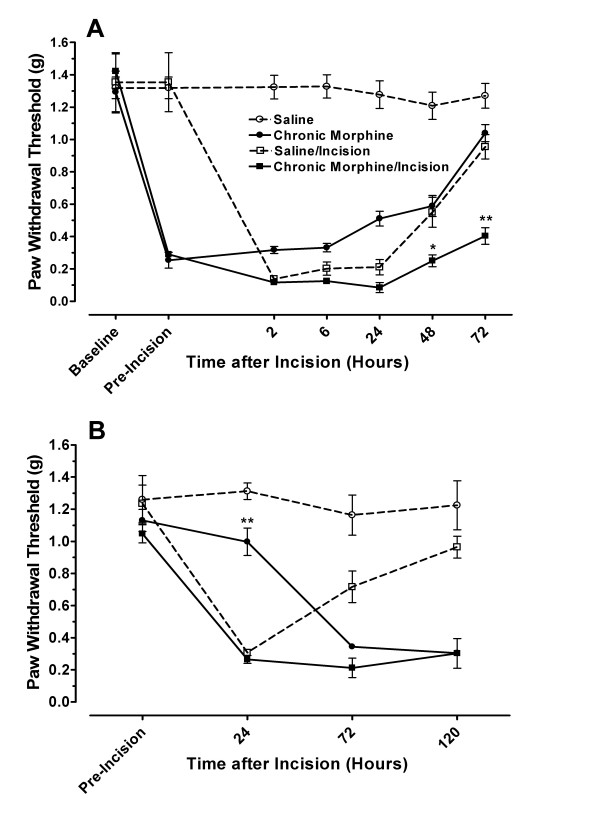
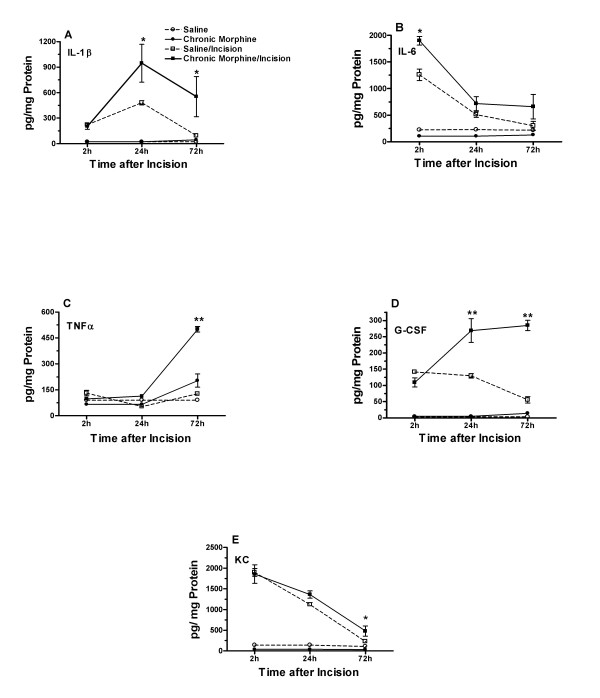
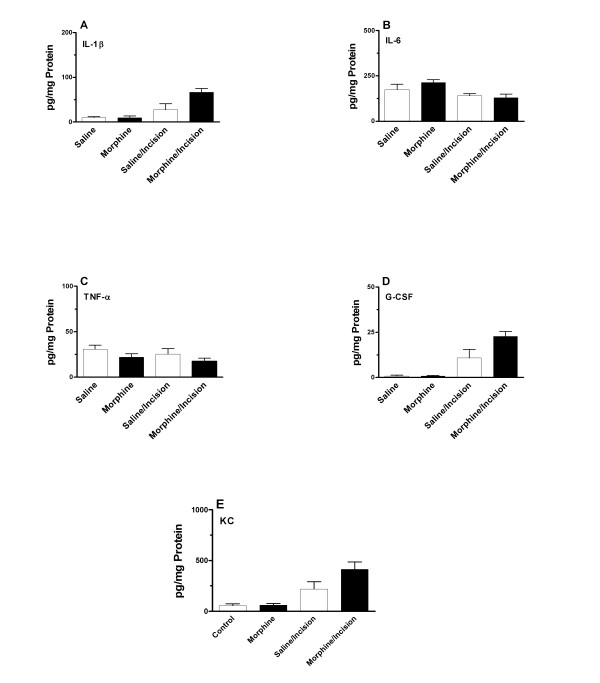
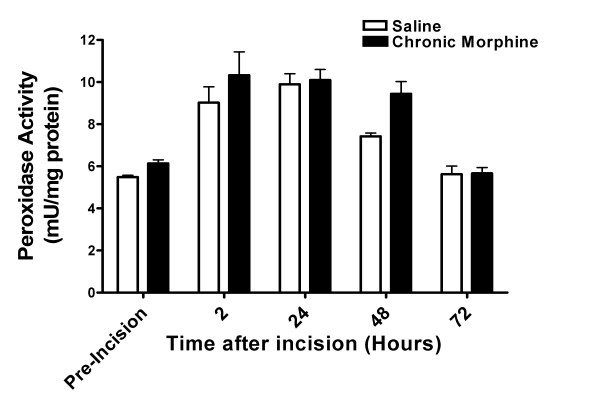
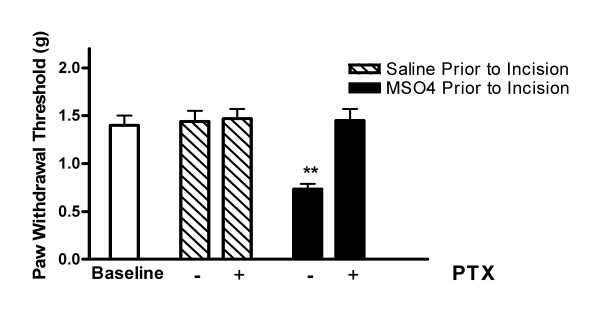
Background -: The chronic use of opioids prior to surgery leads to lowered pain thresholds and exaggerated pain levels after these procedures. Several mechanisms have been proposed to explain this heightened sensitivity commonly termed opioid-induced hyperalgesia (OIH). Most of these proposed mechanisms involve plastic events in the central or peripheral nervous systems. Alterations in the abundance of peripheral mediators of nociception have not previously been explored. Results -: In these experiments mice were treated with saline (control) or ascending daily doses of morphine to generate a state of OIH followed by hind paw incision. In other experiments morphine treatment was initiated at the time of incision. Both mechanical allodynia and peri-incisional skin cytokine levels were measured. Myeloperoxidase (MPO) assays were used to determine neutrophil activity near the wounds. The cytokine production inhibitor pentoxifylline was used to determine the functional significance of the excess cytokines in previously morphine treated animals. Mice treated chronically treated with morphine prior to incision were found to have enhanced skin levels of IL-1β, IL-6, G-CSF, KC and TNFα after incision at one or more time points compared to saline pretreated controls. The time courses of individual cytokines followed different patterns. There was no discernable effect of chronic morphine treatment on wound area neutrophil infiltration. Pentoxifylline reduced cytokine levels and reversed the excess mechanical sensitization caused by chronic morphine administration prior to incision. Morphine treatment initiated at the time of incision did not lead to a generalized enhancement of cytokine production or nociceptive sensitization in excess of the levels observed after incision alone. Conclusion -: The enhanced level of nociceptive sensitization seen after incision in animals chronically exposed to morphine is associated with elevated levels of several cytokines previously reported to be relevant to this incisional pain model. The cytokines may be functional in supporting nociceptive sensitization because pentoxifylline reverses both peri-incisional skin cytokine levels and OIH. Opioid administration beginning at the time of incision does not seem to have the same cytokine enhancing effect. Approaches to postoperative pain control involving a reduction of cytokines may be an effective way to control excessive pain in patients chronically using opioids prior to surgical procedures.
Overview
The claims and statistics of this paper haven’t been checked yet.
Free: it reads the open-access text and checks the first 5 claims that cite a source we can check. Create a free account to check every claim.
Integrity signals
Registry
Cites
Statistics
Figures
Verification
Claims the paper makes
The claims and statistics of this paper haven’t been checked yet.
Free: it reads the open-access text and checks the first 5 claims that cite a source we can check. Create a free account to check every claim.
Claims other papers make about this one
Each is checked against this paper’s own text: does it say what the citing paper says it does?
The cited source says what the claim attributes to it.
In the citing paper
“Growing evidence shows that repeated opioid use causes “opioid-induced hyperalgesia” (i.e. increased pain sensitivity caused by opioid exposure), making pain control even more difficult2021.”
From Acceptance and Commitment Therapy for Prevention of Chronic Postsurgical Pain and Opioid Use in At-Risk Veterans: A Pilot Randomized Controlled Study. (2018) · cites this paper as [21]
Self-check
Percentages, sums and reported differences re-computed from the paper’s own numbers.
The self-check needs the paper’s full text.
Citations
Cites
Quantitative assessment of tactile allodynia in the rat paw
Chaplan, S. R., Bach, F. W., Pogrel, J. W., Chung, J. M., & Yaksh, T. L. (1994) · Journal of Neuroscience Methods · doi:10.1016/0165-0270(94)90144-9 · Cited by 7,697
Opioid-induced Hyperalgesia: A Qualitative Systematic Review
Angst, M. S., & Clark, J. D. (2006) · Anesthesiology · doi:10.1097/00000542-200603000-00025 · Cited by 1,188 · cited 3×
“A range of mechanisms causing OIH have been proposed and recently reviewed [2].”
BackgroundSelf-citationRemifentanil-induced Postoperative Hyperalgesia and Its Prevention with Small-dose Ketamine
Joly, V., Richebe, P., Guignard, B., Fletcher, D., Maurette, P., Sessler, D. I., & Chauvin, M. (2005) · Anesthesiology · doi:10.1097/00000542-200507000-00022 · Cited by 618
Raghavendra, V., Rutkowski, M. D., & DeLeo, J. A. (2002) · The Journal of Neuroscience · doi:10.1523/jneurosci.22-22-09980.2002 · Cited by 469
Johnston, I. N., Milligan, E. D., Wieseler-Frank, J., Frank, M. G., Zapata, V., Campisi, J., Langer, S., Martin, D., Green, P., Fleshner, M., et al. (2004) · The Journal of Neuroscience · doi:10.1523/jneurosci.1850-04.2004 · Cited by 433
Chu, L. F., Clark, D. J., & Angst, M. S. (2006) · The Journal of Pain · doi:10.1016/j.jpain.2005.08.001 · Cited by 426
Self-citationAngst, M. S., Koppert, W., Pahl, I., Clark, D. J., & Schmelz, M. (2003) · Pain · doi:10.1016/s0304-3959(03)00276-8 · Cited by 425
Self-citationMao, J., Sung, B., Ji, R.-R., & Lim, G. (2002) · The Journal of Neuroscience · doi:10.1523/jneurosci.22-18-08312.2002 · Cited by 409
Rapp, S. E., Ready, B. L., & Nessly, M. L. (1995) · Pain · doi:10.1016/0304-3959(94)00168-e · Cited by 346
Vanderah, T. W., Suenaga, N. M. H., Ossipov, M. H., Malan, T. P., Lai, J., & Porreca, F. (2001) · The Journal of Neuroscience · doi:10.1523/jneurosci.21-01-00279.2001 · Cited by 335
Cited by
Opioid-induced hyperalgesia: Cellular and molecular mechanisms
Roeckel, L.-A., Le Coz, G.-M., Gavériaux-Ruff, C., & Simonin, F. (2016) · Neuroscience · doi:10.1016/j.neuroscience.2016.06.029 · Cited by 388
Cytokine and Chemokine Regulation of Sensory Neuron Function
Miller, R. J., Jung, H., Bhangoo, S. K., & White, F. A. (2009) · Handbook of Experimental Pharmacology · doi:10.1007/978-3-540-79090-7_12 · Cited by 364
Hutchinson, M. R., Lewis, S. S., Coats, B. D., Skyba, D. A., Crysdale, N. Y., Berkelhammer, D. L., Brzeski, A., Northcutt, A., Vietz, C. M., Judd, C. M., et al. (2009) · Brain, Behavior, and Immunity · doi:10.1016/j.bbi.2008.09.012 · Cited by 303
Peripheral mechanisms of pain and analgesia
Stein, C., Clark, J. D., Oh, U., Vasko, M. R., Wilcox, G. L., Overland, A. C., Vanderah, T. W., & Spencer, R. H. (2009) · Brain Research Reviews · doi:10.1016/j.brainresrev.2008.12.017 · Cited by 269
Self-citationTillu, D. V., Melemedjian, O. K., Asiedu, M. N., Qu, N., De Felice, M., Dussor, G., & Price, T. J. (2012) · Molecular Pain · doi:10.1186/1744-8069-8-5 · Cited by 165
“Furthermore, IL-6 levels have been shown to be elevated in skin around incision sites [10,11] and it has been implicated in preclinical incision-induced pain models [12-14].”
BackgroundOpioids and the skin – where do we stand?
Bigliardi, P. L., Tobin, D. J., Gavériaux‐Ruff, C., & Bigliardi‐Qi, M. (2009) · Experimental Dermatology · doi:10.1111/j.1600-0625.2009.00844.x · Cited by 150
Martin, J. L., Koodie, L., Krishnan, A., Charboneau, R., Barke, R. A., & Roy, S. (2009) · American Journal Of Pathology · doi:10.2353/ajpath.2010.090457 · Cited by 147
Deumens, R., Steyaert, A., Forget, P., Schubert, M., Lavand'homme, P. M., Hermans, E., & Kock, M. D. (2013) · Progress in Neurobiology · doi:10.1016/j.pneurobio.2013.01.002 · Cited by 142
Sahbaie, P., Shi, X., Guo, T., Qiao, Y., Yeomans, D. C., Kingery, W. S., & Clark, J. D. (2009) · Pain · doi:10.1016/j.pain.2009.06.037 · Cited by 135
Self-citationCabañero, D., Campillo, A., Célérier, E., Romero, A., & Puig, M. M. (2009) · Anesthesiology · doi:10.1097/aln.0b013e3181bfab61 · Cited by 118
Dindo, L., Zimmerman, M. B., Hadlandsmyth, K., StMarie, B., Embree, J., Marchman, J., Tripp-Reimer, T., & Rakel, B. (2018) · The Journal of Pain · doi:10.1016/j.jpain.2018.04.016 · Cited by 121
Lidocaine Infusion: A Promising Therapeutic Approach for Chronic Pain
Kandil, E. S., Melikman, E., & Adinoff, B. H. (2017) · Journal of Anesthesia & Clinical Research · doi:10.4172/2155-6148.1000697 · Cited by 98
CXCR4 signaling mediates morphine-induced tactile hyperalgesia
Wilson, N. M., Jung, H., Ripsch, M. S., Miller, R. J., & White, F. A. (2011) · Brain, Behavior, and Immunity · doi:10.1016/j.bbi.2010.12.014 · Cited by 94
Chen, Y., Yang, C., & Wang, Z. J. (2010) · Journal of Neuroscience · doi:10.1523/jneurosci.4346-09.2010 · Cited by 90
Opioid-induced hyperalgesia: a clinical challenge
Colvin, L., & Fallon, M. (2010) · British Journal of Anaesthesia · doi:10.1093/bja/aep392 · Cited by 84
Opioid-Induced Hyperalgesia and Burn Pain
Holtman, J. R., & Jellish, W. S. (2012) · Journal of Burn Care & Research · doi:10.1097/bcr.0b013e31825adcb0 · Cited by 77
Gene Expression in Skin, Muscle, and Dorsal Root Ganglion after Plantar Incision in the Rat
Spofford, C. M., & Brennan, T. J. (2012) · Anesthesiology · doi:10.1097/aln.0b013e31825a2a2b · Cited by 69
Horvath, R. J., Landry, R. P., Romero-Sandoval, E. A., & DeLeo, J. A. (2010) · Neuroscience · doi:10.1016/j.neuroscience.2010.05.030 · Cited by 68
Analgesia or Addiction?: Implications for Morphine Use after Spinal Cord Injury
Woller, S. A., Moreno, G. L., Hart, N., Wellman, P. J., Grau, J. W., & Hook, M. A. (2012) · Journal of Neurotrauma · doi:10.1089/neu.2011.2100 · Cited by 64
Lee, M. C., Wanigasekera, V., & Tracey, I. (2014) · Neuropharmacology · doi:10.1016/j.neuropharm.2013.06.035 · Cited by 56
“…animals, relatively few animal studies demonstrate opioid-induced hyperalgesia in the presence of tissue injury (Celerier et al., 2006; Li et al., 2001; Liang et al., 2008), inflammation (Rivat et al., 2009) or cancer (King et al., 2007), suggesting that these pathological states are protective.”
BackgroundIncreased local concentration of complement C5a contributes to incisional pain in mice
Jang, J. H., Liang, D., Kido, K., Sun, Y., Clark, J. D., & Brennan, T. J. (2011) · Journal of Neuroinflammation · doi:10.1186/1742-2094-8-80 · Cited by 55
Self-citationThe complement component C5a receptor mediates pain and inflammation in a postsurgical pain model
Liang, D., Li, X., Shi, X., Sun, Y., Sahbaie, P., Li, W., & Clark, J. D. (2011) · Pain · doi:10.1016/j.pain.2011.10.032 · Cited by 53
Self-citationFactors associated with high pain intensity during wound care procedures: A model
Gardner, S. E., Abbott, L., Fiala, C. A., & Rakel, B. A. (2017) · Wound Repair and Regeneration · doi:10.1111/wrr.12553 · Cited by 50
Endogenous opiates and behavior: 2008
Bodnar, R. J. (2009) · Peptides · doi:10.1016/j.peptides.2009.09.027 · Cited by 49
Han, Z., Koirala, A., Makkia, R., Cooper, M. J., & Naash, M. I. (2012) · Nanomedicine · doi:10.2217/nnm.11.158 · Cited by 41
Hematopoietic colony-stimulating factors: new players in tumor–nerve interactions
Stösser, S., Schweizerhof, M., & Kuner, R. (2010) · Journal of Molecular Medicine · doi:10.1007/s00109-010-0697-z · Cited by 42
A Novel Sex-Dependent Target for the Treatment of Postoperative Pain: The NLRP3 Inflammasome
Cowie, A. M., Dittel, B. N., & Stucky, C. L. (2019) · Frontiers in Neurology · doi:10.3389/fneur.2019.00622 · Cited by 41
Zhang, P., Moye, L. S., Southey, B. R., Dripps, I. J., Sweedler, J. V., Pradhan, A. A. A., & Rodriguez‐Zas, S. L. (2019) · Molecular Neurobiology · doi:10.1007/s12035-019-01650-5 · Cited by 40
Caspase-1 Modulates Incisional Sensitization and Inflammation
Liang, D., Li, X., Li, W., Fiorino, D. F., Qiao, Y., Sahbaie, P., Yeomans, D. C., & Clark, J. D. (2010) · Anesthesiology · doi:10.1097/aln.0b013e3181ee2f17 · Cited by 39
Self-citationPostoperative Pain Patterns in Chronic Pain Patients: A Pilot Study
Chapman, C. R., Donaldson, G. W., Davis, J. J., Ericson, D., & Billharz, J. (2008) · Pain Medicine · doi:10.1111/j.1526-4637.2008.00522.x · Cited by 38
Factors Associated with Opioid Use in a Cohort of Patients Presenting for Surgery
Hah, J. M., Sharifzadeh, Y., Wang, B. M., Gillespie, M., Goodman, S. B., Mackey, S., & Carroll, I. R. (2015) · Pain Research and Treatment · doi:10.1155/2015/829696 · Cited by 34
Morphine Self-Administration following Spinal Cord Injury
Woller, S. A., Malik, J. S., Aceves, M., & Hook, M. A. (2014) · Journal of Neurotrauma · doi:10.1089/neu.2013.3293 · Cited by 33
Li, W., Irvine, K., Sahbaie, P., Guo, T., Shi, X., Tawfik, V. L., Kingery, W. S., & Clark, J. D. (2018) · Anesthesiology · doi:10.1097/aln.0000000000002495 · Cited by 31
Self-citationHI-TENS Reduces Moderate-to-Severe Pain Associated With Most Wound Care Procedures: A Pilot Study
Gardner, S. E., Blodgett, N. P., Hillis, S. L., Borhart, E., Malloy, L., Abbott, L., Pezzella, P. A., Jensen, M., Sommer, T., Sluka, K. A., et al. (2013) · Biological Research For Nursing · doi:10.1177/1099800413498639 · Cited by 31
Liu, F., Jiang, H., Zhong, W., Wu, X., & Luo, J. (2010) · Neuroscience · doi:10.1016/j.neuroscience.2010.09.052 · Cited by 30
Opioid-Induced Hyperalgesia (OIH)
Leal, P. D. C., Clivatti, J., Garcia, J. B. S., & Sakata, R. K. (2010) · Brazilian Journal of Anesthesiology · doi:10.1016/s0034-7094(10)70080-5 · Cited by 29
Leal, P. D. C., Salomão, R., Brunialti, M. K. C., & Sakata, R. K. (2015) · Journal of Clinical Anesthesia · doi:10.1016/j.jclinane.2015.02.002 · Cited by 28
Opioids Enhance CXCL1 Expression and Function After Incision in Mice
Sun, Y., Sahbaie, P., Liang, D., Li, W., & Clark, J. D. (2014) · Journal of Pain · doi:10.1016/j.jpain.2014.05.003 · Cited by 27
Self-citationCabañero, D., Baker, A., Zhou, S., Hargett, G. L., Irie, T., Xia, Y., Beaudry, H., Gendron, L., Melyan, Z., Carlton, S. M., et al. (2013) · Neuropsychopharmacology · doi:10.1038/npp.2013.46 · Cited by 25
Li, Z., Li, C., Yin, P., Wang, Z. J., & Luo, F. (2016) · Journal of Pharmacology and Experimental Therapeutics · doi:10.1124/jpet.116.233817 · Cited by 24
Kandasamy, R., Lee, A. T., & Morgan, M. M. (2017) · Pharmacology Biochemistry and Behavior · doi:10.1016/j.pbb.2017.03.007 · Cited by 22
Sahbaie, P., Shi, X., Li, X., Liang, D., Guo, T., Qiao, Y., Yeomans, D. C., Kingery, W. S., & Clark, J. D. (2012) · Journal of Pain · doi:10.1016/j.jpain.2012.07.009 · Cited by 19
Self-citationKido, K., Toda, S., Shindo, Y., Miyashita, H., Sugino, S., & Masaki, E. (2019) · Journal of Pain Research · doi:10.2147/jpr.s177098 · Cited by 19
Crawford, J. A., Liu, S., Tao, R., Kramer, P. R., Bender, S. D., & Tao, F. (2024) · Pain · doi:10.1097/j.pain.0000000000003212 · Cited by 18
Salimi, A., Sabetkasaei, M., Raisi, H., Labibi, F., Ameli, H., Khazaei‐Poul, Y., Zarei, M., Mottaghi, K., Safari, F., Nazem-Bokaei, A., et al. (2017) · European Journal of Pharmacology · doi:10.1016/j.ejphar.2017.07.011 · Cited by 17
Serum IL-10 involved in morphine tolerance development during adjuvant-induced arthritis
Zaringhalam, J., Hormozi, A., Tekieh, E., Razavi, J., Khanmohammad, R., & Golabi, S. (2014) · Journal of Physiology and Biochemistry · doi:10.1007/s13105-014-0330-7 · Cited by 15
Epigenetic regulation in opioid induced hyperalgesia
Reddy, D., Wickman, J. R., & Ajit, S. K. (2023) · Neurobiology of Pain · doi:10.1016/j.ynpai.2023.100146 · Cited by 14
Hiperalgesia induzida por opioides (HIO)
Leal, P. D. C., Clivatti, J., Garcia, J. B. S., & Sakata, R. K. (2010) · Brazilian Journal of Anesthesiology · doi:10.1590/s0034-70942010000600011 · Cited by 14
Morphine promotes neovascularizing retinopathy in sickle transgeneic mice
Gupta, K., Chen, C., Lutty, G. A., & Hebbel, R. P. (2019) · Blood Advances · doi:10.1182/bloodadvances.2018026898 · Cited by 14
Hysterectomy and Predictors for Opioid Prescription in a Chronic Pain Clinic Sample
Darnall, B. D., & Li, H. (2011) · Pain Medicine · doi:10.1111/j.1526-4637.2010.01038.x · Cited by 14
Staikos-Byrne, L., Malellari, L., & Chang, S. L. (2008) · Journal of Neuroimmune Pharmacology · doi:10.1007/s11481-008-9111-9 · Cited by 13
Hiperalgesia asociada al tratamiento con opioides
Martín, A. G., Garcia, M. M., Ferrández, J. S.-R., & García, T. M. (2014) · Revista de la Sociedad Española del Dolor · doi:10.4321/s1134-80462014000500005 · Cited by 12
Charlet, A., Muller, A. H., Laux‐Biehlmann, A., Kemmel, V., Schweitzer, A., Deloulme, J., Stuber, D., Delalande, F., Bianchi, E., DORSSELAER, A. V., et al. (2010) · Molecular Pain · doi:10.1186/1744-8069-6-96 · Cited by 12
Vasheghani‐Farahani, A., Nouri, N., Seifirad, S., Fathollahi, M. S., Hakki, E., Alidoosti, M., Davoodi, G., Masoudkabir, F., & Poorhosseini, H. (2013) · PubMed Central · Cited by 11
Can morphine interfere in the healing process during chronic stress?
Egydio, F., Ruiz, F. S., Tomimori, J., Tufik, S. B., & Andersen, M. L. (2012) · Archives of Dermatological Research · doi:10.1007/s00403-012-1261-1 · Cited by 11
de Abreu, M. B., Aguado, D., Benito, J., Fernandez, F., & de Segura, I. Á. G. (2014) · European Journal of Anaesthesiology · doi:10.1097/eja.0000000000000188 · Cited by 11
Delgado, M. A., Ferreira, L. A., Gomes, B. J. D. S., Leite, I. K. O., Gomez, M. V., & Castro-Junior, C. (2023) · PAIN Reports · doi:10.1097/pr9.0000000000001062 · Cited by 6
Imaging opioid analgesia in the human brain
Lee, M., Wanigasekera, V., & Tracey, I. (2012) · Trends in Anaesthesia and Critical Care · doi:10.1016/j.tacc.2012.07.002 · Cited by 6
Morphine-induced hyperalgesia impacts small extracellular vesicle microRNA composition and function
Reddy, D., Lin, Z., Ramanathan, S., Luo, X., Pande, R., Tian, Y., Side, C. M., Barker, J. M., Saçan, A., Blendy, J. A., et al. (2025) · Journal of Pharmacology and Experimental Therapeutics · doi:10.1016/j.jpet.2025.103398 · Cited by 3
Opioid therapy: Optimizing analgesic outcomes
Cherny, N. I., & Fallon, M. (2021) · Oxford University Press eBooks · doi:10.1093/med/9780198821328.003.0039 · Cited by 3
Adults with Sickle‐Cell Disease: Implications of Increasing Longevity
Hagar, W., & Morris, C. R. (2011) · Wiley eBooks · doi:10.1002/9781119971603.ch7 · Cited by 1
Revision Lumber Decompressions
Hanscom, D. R., & Grunert, P. (2019) · Springer eBooks · doi:10.1007/978-3-030-20847-9_31 · Cited by 1
Perioperative Management of the Opioid-Tolerant Patient
Viscomi, C. M., & Pearson, J. K. (2009) · Advances in Anesthesia · doi:10.1016/j.aan.2009.07.004 · Cited by 1
AMPK as a Novel Target for Treatment of Neuropathic and Post-Surgical Pain
Tillu, D. V. (2014) · UA Campus Repository (The University of Arizona)
Boland, J. W. (2011) · White Rose eTheses Online (University of Leeds, The University of Sheffield, University of York)
The role of SDF1/CXCR4 signaling in opioid-induced hypernociception
Wilson, N. M. (2011) · Loyola eCommons (Loyola University of Chicago)
The efficacy of intraincisional local anesthesia on postoperative pain in varicocelectomy
Sari, U., Budak, S., Aksoy, E. E., Kumsar, Ş., Sonbahar, A. E., Sonbahar, T., Bayer, F., & Adsan, Ö. (2014) · Southern Clinics of Istanbul Eurasia · doi:10.5505/jkartaltr.2014.72621
López, R., & de la Paz, P. (2016) · LA Referencia (Red Federada de Repositorios Institucionales de Publicaciones Científicas)
Characterization of Morphine Self-Administration Following Spinal Cord Injury
Woller, S. A. (2013) · OakTrust (Texas A&M University Libraries)
Role of CaMKIIalpha Leading to Inflammatory and Neuropathic Pain
Chen, Y. (2012) · Figshare
Opioid Safety: We Are Not There Yet
Kepinski, I., Melikman, E., & Kandil, E. S. (2016) · Current anesthesiology reports · doi:10.1007/s40140-016-0189-y
Costa, A. L. D. A. (2014) · Portuguese National Funding Agency for Science, Research and Technology (RCAAP Project by FCT) · doi:10.34626/g465-1v41
Simões, R. R., Coelho, I. D. S., Gehm, A. Z., Frederico, M. J. S., Silva, F. R. M. B., Morel, A. F., Zanchet, E. M., & Santos, A. R. S. (2017) · Pharmaceutical and Biosciences Journal · doi:10.20510/ukjpb/5/i1/147023
Froentjes, L. S. (2020) · ERA: Education and Research Archive (University of Alberta) · doi:10.7939/r3-wb5d-9860
Zhang, P. (2021) · Illinois Digital Environment for Access to Learning and Scholarship (University of Illinois at Urbana-Champaign)
Animal models of spontaneous opioid withdrawal
Morgan, M. M., Yukhymets, M., & Voss, R. K. (2026) · Drug and Alcohol Dependence · doi:10.1016/j.drugalcdep.2026.113338
Metadata
- Authors
- Liang, D., Shi, X., Qiao, Y., Angst, M. S., Yeomans, D. C., & Clark, J. D.
- Affiliations
- Department of Anesthesia, Stanford University School of Medicine, Stanford, CA, USA
- VA Palo Alto Health Care System (US)
- Stanford Medicine (US)
- Corresponding author
- Shi, Xiaoyou
- Qiao, Yanli
- Angst, Martin S
- Yeomans, David C
- Clark, J David
- Venue
- Molecular Pain
- Publisher
- SAGE Publications
- Published
- 2008-01-01
- Volume
- 4
- Pages
- 7-7
- ISSN
- 1744-8069 (ISSN-L)
- PMC
- PMC2279109
- OpenAlex
- W2035167901
- Cited by
- 71
- References
- 65
- Citations by year
- 2026: 1 · 2025: 1 · 2024: 1 · 2023: 2 · 2021: 1 · 2020: 1 · 2019: 5 · 2018: 3 · 2017: 5 · 2016: 3 · 2015: 2 · 2014: 7 · 2013: 5 · 2012: 8
- FWCI
- 5.87
- Type
- journal article
- Language
- en
- Open access
- gold
- doi.org
- Licence
- cc-by
- journals.sagepub.com/page/policies/text-and-data-mining-license (tdm)
- Locations
- Molecular Pain (publishedVersion, cc-by)
- Europe PMC (PubMed Central) (publishedVersion, cc-by)
- PubMed Central (publishedVersion, cc-by)
- PubMed (publishedVersion)
- DOAJ (DOAJ: Directory of Open Access Journals) (submittedVersion, cc-by-sa)
- Funders
- National Institutes of Health
- National Institute on Drug Abuse (DA021332, R01DA021332)
- National Institute of General Medical Sciences (GM061260, R01GM061260)
- Topics
- Health Sciences › Medicine › Physiology (medical) › Pain Mechanisms and Treatments
- Health Sciences › Medicine › Anesthesiology and Pain Medicine › Anesthesia and Pain Management
- Health Sciences › Medicine › Anesthesiology and Pain Medicine › Pain Management and Opioid Use
- Keywords
- opioid-induced hyperalgesia, chronic morphine administration, incisional pain, postoperative pain, mechanical allodynia, nociceptive sensitization, pentoxifylline, neutrophil infiltration, myeloperoxidase, IL-1β, interleukin-6, TNF-α, granulocyte colony-stimulating factor, KC chemokine, opioid pretreatment
- MeSH terms
- Animals, Hindlimb, Male, Mice, Inbred C57BL, Morphine, Peroxidase, Nociceptors, Pain Measurement, Pentoxifylline, Cytokines, Pain Threshold, Mice
About these checks
Registry, retraction, Cites and statistics results are computed, not judged, with one exception: a printed reference that no index lists is read once by a model before it counts as a citation error. Claims are extracted by a model and kept only when their quote appears verbatim in the text; each cited source is then checked, with a model’s help, for whether it says what the claim relies on. Those verdicts can be wrong — read the claim’s quote and the cited source before relying on one.
Statistics and arithmetic are recomputed, not judged.
Confidence bands are shown only for fields calibrated on our annotated test set. None is calibrated yet, so no band is shown.
What counts as a claim ›How we measure confidence ›How we check this ›
Are you an author, or do you see a problem with this page? Request a review
Data sources
Bibliographic data: Semantic Scholar, OpenAlex, Crossref.
Contains information from the Semantic Scholar Academic Graph Datasets, made available under the ODC Attribution License (ODC-BY 1.0).
Semantic Scholar’s data is described in: Kinney, R., et al. (2023). The Semantic Scholar Open Data Platform. arXiv:2301.10140.
