

Local suffering and the global discourse of mental health and human rights: An ethnographic study of responses to mental illness in rural Ghana
Open accessThe DOI matches its Crossref record; 45 of the 51 references it cites were found in a registry or an index.
Abstract
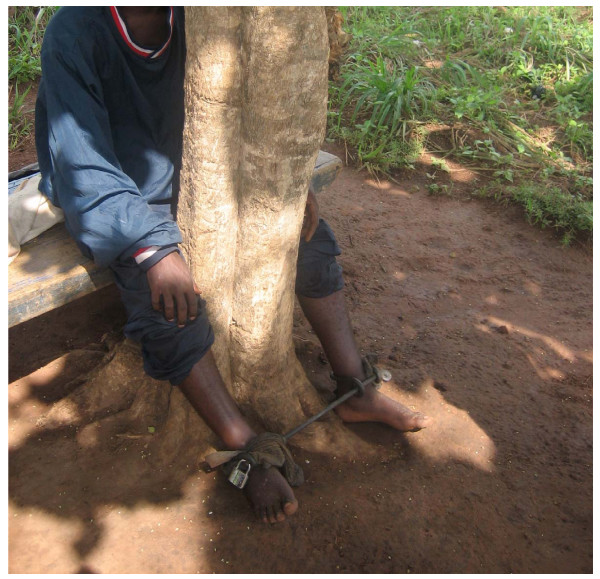
Background: The Global Movement for Mental Health has brought renewed attention to the neglect of people with mental illness within health policy worldwide. The maltreatment of the mentally ill in many low-income countries is widely reported within psychiatric hospitals, informal healing centres, and family homes. International agencies have called for the development of legislation and policy to address these abuses. However such initiatives exemplify a top-down approach to promoting human rights which historically has had limited impact at the level of those living with mental illness and their families. Methods: This research forms part of a longitudinal anthropological study of people with severe mental illness in rural Ghana. Visits were made to over 40 households with a family member with mental illness, as well as churches, shrines, hospitals and clinics. Ethnographic methods included observation, conversation, semi-structured interviews and focus group discussions with people with mental illness, carers, healers, health workers and community members. Results: Chaining and beating of the mentally ill was found to be commonplace in homes and treatment centres in the communities studied, as well as with-holding of food ('fasting'). However responses to mental illness were embedded within spiritual and moral perspectives and such treatment provoked little sanction at the local level. Families struggled to provide care for severely mentally ill relatives with very little support from formal health services. Psychiatric services were difficult to access, particularly in rural communities, and also seen to have limitations in their effectiveness. Traditional and faith healers remained highly popular despite the routine maltreatment of the mentally ill in their facilities. Conclusion: Efforts to promote the human rights of those with mental illness must engage with the experiences of mental illness within communities affected in order to grasp how these may underpin the use of practices such as mechanical restraint. Interventions which operate at the local level with those living with mental illness within rural communities, as well as family members and healers, may have greater potential to effect change in the treatment of the mentally ill than legislation or investment in services alone.
Overview
The claims and statistics of this paper haven’t been checked yet.
Free: it reads the open-access text and checks the first 5 claims that cite a source we can check. Create a free account to check every claim.
Integrity signals
Registry
Cites
Statistics
Figures
Verification
Claims the paper makes
The claims and statistics of this paper haven’t been checked yet.
Free: it reads the open-access text and checks the first 5 claims that cite a source we can check. Create a free account to check every claim.
Claims other papers make about this one
Each is checked against this paper’s own text: does it say what the citing paper says it does?
The check wasn’t confident either way, so it gives no verdict — never disputed.
In the citing paper
“First, there is increasing evidence that service users place greater value on improvements in social functioning than improvements in clinical status54-56”
From Effect of psychosocial interventions on social functioning in depression and schizophrenia: meta-analysis (2013) · cites this paper as [54]
Experimental — accuracy not yet measured
Self-check
Percentages, sums and reported differences re-computed from the paper’s own numbers.
The self-check needs the paper’s full text.
Citations
Cites
Research methods in anthropology: qualitative and quantitative approaches
(2002) · Choice Reviews Online · doi:10.5860/choice.39-4047 · Cited by 5,638 · cited 2×
“Anthropological fieldwork requires prolonged immersion in the community under study and participation in everyday life, typically for a period of at least one year, in order for the researcher to become familiar with local practices and to minimise the reactivity of informants [24].”
BackgroundMethodThe world health report 2001 - Mental health: new understanding, new hope
Sayers, J. G. (2001) · Europe PMC (PubMed Central) · doi:10.1590/s0042-96862001001100014 · Cited by 3,123
Arsdale, P. W. V. (1996) · Evaluation Practice · doi:10.1177/109821409601700112 · Cited by 2,539
Research methods in Anthropology: Qualitative and quantitative approaches
van Arsdale, P. W. (1996) · Evaluation Practice · doi:10.1016/s0886-1633(96)90044-6 · Cited by 2,526
Recapturing anthropology: working in the present
(1992) · Choice Reviews Online · doi:10.5860/choice.30-0374 · Cited by 2,123
Recovery from psychotic illness: A 15- and 25-year international follow-up study
Harrison, G., Hopper, K., Craig, T., Laska, E., Siegel, C., Wanderling, J., Dube, K. C., Ganev, K., Giel, R., Der Heiden, W. A., et al. (2001) · British Journal of Psychiatry · doi:10.1192/bjp.178.6.506 · Cited by 1,030 · cited 1×
“Many studies provide little detail about the socio-cultural world in which people live, and the ways in which people with mental illness are treated by their families, friends or the general population [18, 19, 21, 22].”
BackgroundAbu‐Lughod, L. (2008) · doi:10.4324/9780203931950-13 · Cited by 899 · cited 1×
“This study suffers from a number of limitations most of which are inherent in the anthropological approach with its focus on 'ethnographies of the particular' [48] and the use of key informants.”
BackgroundScale up services for mental disorders: a call for action
(2007) · The Lancet · doi:10.1016/s0140-6736(07)61242-2 · Cited by 835
Cultural Universals and Particulars: An African Perspective
Markovitz, I. L., & Wiredu, K. (1999) · The International Journal of African Historical Studies · doi:10.2307/220415 · Cited by 709
United Nations Convention on the Rights of Persons With Disabilities
Rasmussen, M., & Lewis, O. (2007) · International Legal Materials · doi:10.1017/s0020782900005039 · Cited by 669
Research works printed but not linked: 17
- WHO Global Burden of Disease 2004 Update 2008 Geneva: World Health Organization
- WHO Mental Health Atlas 2005 Geneva. World Health Organization
- United Nations Principles for the protection of persons with mental illness and the improvement of mental health care 1991 Office of the High Commissioner for Human Rights, Resolution 46/119
- WHO Mental Health Legislation and Human Rights Mental Health Policy and Service Guidance Package 2003 Geneva: World Health Organization
- Commonwealth Human Rights Initiative Africa Human Rights Violations in Prayer Camps and Access to Mental Health in Ghana 2008 Accra: CHRI
- WHO Ghana Country Summary Mental Health Improvement for Nations Development (MIND) Geneva 2007 Department of Mental Health and Substance Abuse
- Ministry of Health Ghana Creating Wealth Through Health: The Health Sector Programme of Work 2007-2011
- WHO Mental Health Gap Global Action Programme: Scaling Up Care for Mental, Neurological and Substance Use Disorders 2008 Geneva. World Health Organization 26290926
- Eaton J Agomoh AO Developing mental health services in Nigeria: the impact of a community-based mental health awareness programme Soc Psychiatry Psychiatr Epidemiol 2008 43 552 558 18288432 10.1111/j.1447-0349.2006.00403.x · doi:10.1111/j.1447-0349.2006.00403.x · Paper page
- Sierra Leone Insanity of War Unreported World, Channel 4 2009
- Doku V Ofori-Atta AL Akpalu B Read U Osei A Ae-Ngbise K Awenva D Lund C Flisher AJ Petersen I A Situation Analysis of Mental Health Policy Development and Implementation in Ghana 2008 Mental Health and Poverty Project
- Selby H Mental Illness, Prayer Camps And Society: A Factor of Human Rights Abuse The Ghanaian Chronicle Accra 2008
- Asiedu W Kwei R Patients chained at prayer camp The Mirror Accra 2004
- Vinorkor M-A Move to Protect Mental Patients The Daily Graphic Accra 2004
- WHO WHO Resource Book on Mental Health, Human Rights and Legislation 2005 Geneva. World Health Organization
- National Redemption Council Ghana Mental Health Decree NRCD 30 Ghana 1972
- Patkai I Relatives help abolish physical restraints in Northern Nigeria: The role of the family in inpatient psychiatric care Global Forum for Community Mental Health Accessed 6th May; 2009
Cited by
Drew, N., Funk, M., Tang, S., Lamichhane, J., Chávez, E., Katontoka, S., Pathare, S., Lewis, O., Gostin, L., & Saraceno, B. (2011) · The Lancet · doi:10.1016/s0140-6736(11)61458-x · Cited by 437
Tackling Africa’s chronic disease burden: from the local to the global
de-Graft Aikins, A., Unwin, N., Agyemang, C., Allotey, P., Campbell, C., & Arhinful, D. (2010) · Globalization and Health · doi:10.1186/1744-8603-6-5 · Cited by 334
“De-Graft Aikins, Boynton and Atanga provide a comprehensive overview of the structural, community and individual dimensions of tackling chronic disease in Ghana and Cameroon [36].”
BackgroundInfluentialBurns, J. K., & Tomita, A. (2015) · Social Psychiatry and Psychiatric Epidemiology · doi:10.1007/s00127-014-0989-7 · Cited by 244
Yang, L. H., Thornicroft, G., Alvarado, R., Vega, E., & Link, B. G. (2014) · International Journal of Epidemiology · doi:10.1093/ije/dyu039 · Cited by 191
“This study examined psychiatric stigma in rural Ghana, and rather than emphasizing religious factors as in other studies of African groups,(58,59) observed that the social ideals of ‘personhood’ lay in taking responsibility for others, such as parenting children and contributing to the well-being of kin and wider comm…”
ResultThe neglected burden of caregiving in low- and middle-income countries
Thrush, A., & Hyder, A. (2014) · Disability and Health Journal · doi:10.1016/j.dhjo.2014.01.003 · Cited by 181
The role of communities in advancing the goals of the Movement for Global Mental Health
Campbell, C., & Burgess, R. (2012) · Transcultural Psychiatry · doi:10.1177/1363461512454643 · Cited by 180
Prayer Camps and Biomedical Care in Ghana: Is Collaboration in Mental Health Care Possible?
Arias, D., Taylor, L., Ofori-Atta, A., & Bradley, E. H. (2016) · PLOS ONE · doi:10.1371/journal.pone.0162305 · Cited by 177
“Divergent perspectives on the underlying cause of and best treatment for mental illness, and concern over human rights violations in prayer camps—including the chaining and forced fasting of patients [12,15,17,18] have been previously identified as potential challenges for faith healer collaborations with biomedical p…”
Campbell, C. (2019) · Social Science & Medicine · doi:10.1016/j.socscimed.2019.02.004 · Cited by 167
“…in western psychiatry, communities come with expertise about their own lives and cultural understandings of health and healing, including expertise on the limits and potentials of psychotropic drug treatments and the feasibility of human rights interventions in extreme poverty (Read, 2009).”
BackgroundOptimizing mental health services in low-income and middle-income countries
Petersen, I., Lund, C., & Stein, D. J. (2011) · Current Opinion in Psychiatry · doi:10.1097/yco.0b013e3283477afb · Cited by 114
Asher, L., Fekadu, A., Teferra, S., De Silva, M., Pathare, S., & Hanlon, C. (2017) · Globalization and Health · doi:10.1186/s12992-017-0273-1 · Cited by 124
“This study is one of only a small number of reports [15, 19, 40, 41] that focus on restraint of individuals with mental disorders in private community settings in LMIC, rather than wholly or partly on traditional or spiritual healing centres [6, 16, 23] or mental health institutions [18, 20].”
BackgroundResultInfluentialDe Silva, M. J., Cooper, S., Li, H. L., Lund, C., & Patel, V. (2013) · British Journal of Psychiatry · doi:10.1192/bjp.bp.112.118018 · Cited by 125
“First, there is increasing evidence that service users place greater value on improvements in social functioning than improvements in clinical status 54–56 and that impairments in social functioning are often a key factor in an individual’s decision to seek care.”
Mental health research in Ghana: a literature review.
Read, U. M., & Doku, V. C. K. (2012) · Europe PMC (PubMed Central) · Cited by 122
Self-citationAtinga, R. A., Yarney, L., & Gavu, N. M. (2018) · PLoS ONE · doi:10.1371/journal.pone.0193995 · Cited by 113
Read, U. (2012) · Transcultural Psychiatry · doi:10.1177/1363461512447070 · Cited by 111
Self-citationAshdown‐Franks, G., Stubbs, B., Koyanagi, A., Schuch, F. B., Firth, J., Veronese, N., & Vancampfort, D. (2018) · Journal of Affective Disorders · doi:10.1016/j.jad.2018.09.036 · Cited by 107
Badu, E., O’Brien, A. P., & Mitchell, R. J. (2018) · Health Research Policy and Systems · doi:10.1186/s12961-018-0382-1 · Cited by 105
“Additionally, there is a lack of transportation for service users to access psychiatric facilities, thus presenting a geographic access barrier to mental health services [54].”
BackgroundInfluentialOsafo, J., Knizek, B. L., Akotia, C. S., & Hjelmeland, H. (2011) · International Journal of Nursing Studies · doi:10.1016/j.ijnurstu.2011.11.010 · Cited by 116
“Additionally, in Ghana mental health problems are already stigmatized (Quinn, 2007; Read et al., 2009), and thus this view could further deepen stigma toward suicidal persons.”
BackgroundKamuyu, G., Bottomley, C., Mageto, J. O., Lowe, B. S., Wilkins, P. P., Noh, J. C., Nutman, T. B., Ngugi, A. K., Odhiambo, R., Wagner, R. G., et al. (2014) · PLoS neglected tropical diseases · doi:10.1371/journal.pntd.0002908 · Cited by 100
“org) and the main inhabitants include a large migrant population from the north who are mainly Muslim[38].”
BackgroundInfluentialExploring Predictors of Subjective Well-Being in Ghana: A Micro-Level Study
Addai, I., Opoku-Agyeman, C., & Amanfu, S. K. (2013) · Journal of Happiness Studies · doi:10.1007/s10902-013-9454-7 · Cited by 96
“For instance, Read et al. (2009) has reported that in Ghana increasing dependence on family and significant others for medical care normally creates emotional conflict and breakdown in marital and intimate relationships, as well as family abandonment, all of which put the mental health of…”
The role of Pentecostal clergy in mental health-care delivery in Ghana
Asamoah, M. K., Osafo, J., & Agyapong, I. (2014) · Mental Health, Religion & Culture · doi:10.1080/13674676.2013.871628 · Cited by 69
Attempted Suicide in Ghana: Motivation, Stigma, and Coping
Osafo, J., Akotia, C. S., Andoh-Arthur, J., & Quarshie, E. N.-B. (2015) · Death Studies · doi:10.1080/07481187.2014.991955 · Cited by 88
Medicalization of global health 2: the medicalization of global mental health
Clark, J. (2014) · Global Health Action · doi:10.3402/gha.v7.24000 · Cited by 85
Influence of Religious Factors on Attitudes Towards Suicidal Behaviour in Ghana
Osafo, J., Knizek, B. L., Akotia, C. S., & Hjelmeland, H. (2013) · Journal of Religion and Health · doi:10.1007/s10943-011-9487-3 · Cited by 73
“Many religious groups (especially churches) offer spiritual healing for mental health problems, and a large number of Ghanaians access such services (Roberts 2001; Read et al. 2009 ).”
BackgroundLeone, T., Coast, E., Narayanan, S., & de Graft Aikins, A. (2012) · Globalization and Health · doi:10.1186/1744-8603-8-39 · Cited by 73
The Cambridge Handbook of Psychology and Human Rights
Dudgeon, P., Carey, T. A., Hammond, S., Hirvonen, T., Kyrios, M., Roufeil, L., & Smith, P. (2020) · Cambridge University Press eBooks · doi:10.1017/9781108348607 · Cited by 73
Seeking Paths for Collaboration between Religious Leaders and Mental Health Professionals in Ghana
Osafo, J. (2016) · Pastoral Psychology · doi:10.1007/s11089-016-0703-7 · Cited by 71
“, a prayer camp) may go through several rituals (some of which are dehumanizing) as a means of treating the illness (Human Rights Watch 2012; Read et al. 2009).”
BackgroundInfluentialCulturally prescribed beliefs about mental illness among the Akan of Ghana
Tutu, A. O., & Utsey, S. O. (2017) · Transcultural Psychiatry · doi:10.1177/1363461517708120 · Cited by 70
“Read, Adiibokah, and Nyame (2009) conducted an ethnographic study of people with mental illness, caregivers, healers, health workers, and community members across different settings including homes, shrines, and prayer camps in Ghana.”
BackgroundGuan, L., Liu, J., Wu, X. M., Chen, D., Wang, X., Ma, N., Wang, Y., Good, B. J., Ma, H., Yu, X., et al. (2015) · PLoS ONE · doi:10.1371/journal.pone.0121425 · Cited by 71
“Others are locked or chained in temples or compounds of traditional healers [17].”
BackgroundAbdulmalik, J. O., Fadahunsi, W., Kola, L., Nwefoh, E. C., Minas, H., Eaton, J., & Gureje, O. (2014) · International Journal of Mental Health Systems · doi:10.1186/1752-4458-8-5 · Cited by 70
“Introduction The five Anglophone West African countries of The Gambia, Ghana, Liberia, Nigeria and Sierra Leone share similar mental health profiles with each other and with many other low- and middle-income countries, with low policy priority for mental health, poor funding, inadequate human resources for mental heal…”
Laila, N. H., Mahkota, R., Krianto, T., & Shivalli, S. (2018) · International Journal of Mental Health Systems · doi:10.1186/s13033-018-0216-0 · Cited by 68
“Physical restraint was not restricted to domestic places but also reported in traditional or spiritual healing centers and mental hospitals [22, 23].”
BackgroundMascayano, F., Toso-Salman, J., Ho, Y. C. S., Dev, S., Tapia, T., Thornicroft, G., Cabassa, L. J., Khenti, A., Sapag, J., Bobbili, S. J., et al. (2020) · Transcultural Psychiatry · doi:10.1177/1363461519890964 · Cited by 66
“Read, Adiibokah, and Nyame (2009) suggested that the introduction of mental health programs in LMICs must be accompanied by efforts involving negotiation with sociocultural and traditional representations of mental illness, stigma, and healing treatments.”
BackgroundVanderschuren, M., & Nnene, O. A. (2021) · Health Research Policy and Systems · doi:10.1186/s12961-021-00775-1 · Cited by 67
McCauley, M., Brown, A., Ofosu, B., & van den Broek, N. R. (2019) · BMC Psychiatry · doi:10.1186/s12888-019-2261-x · Cited by 62
“This understanding is similar to other studies in low resource settings, where the term ‘madness’ was used to describe mental health, and people with mental illness being perceived as ‘dishevelled and homeless’ [20].”
ResultKrupchanka, D., Chrtková, D., Vítková, M., Munzel, D., Čihařová, M., Růžičková, T., Winkler, P., Janoušková, M., Albanese, E., & Sartorius, N. (2018) · Social Science & Medicine · doi:10.1016/j.socscimed.2018.07.015 · Cited by 61
Factors for success in mental health advocacy
Hann, K., Pearson, H., Campbell, D. W., Sesay, D., & Eaton, J. (2015) · Global Health Action · doi:10.3402/gha.v8.28791 · Cited by 59
Kpobi, L. N. A., & Swartz, L. M. (2019) · African Journal of Primary Health Care & Family Medicine · doi:10.4102/phcfm.v11i1.1941 · Cited by 57
Stigma, Discrimination, and Social Exclusion of the Mentally Ill: the Case of Ghana
Mfoafo-M’Carthy, M., & Sossou, M. (2017) · Journal of Human Rights and Social Work · doi:10.1007/s41134-017-0043-2 · Cited by 56
“Read et al. (2009) suggest that traditional healers and pastors of the Pentecostal churches continue to deal with the greatest proportion of persons with mental disorders in Ghana.”
BackgroundInfluentialAikins, A. D., Arhinful, D. K., Pitchforth, E., Ogedegbe, G. G., Allotey, P. A., & Agyemang, C. O. (2012) · Globalization and Health · doi:10.1186/1744-8603-8-29 · Cited by 52
“Eight papers focused on major areas of Africa’s chronic disease burden including cardiovascular and risk factors among African migrant populations in Europe [33], co-morbid relationships between diabetes, tuberculosis and ART [8], diabetes experiences in Dar-es-Salaam [34], the social-cultural context of CVD in Africa…”
BackgroundResearch on help-seeking for mental illness in Africa: Dominant approaches and possible alternatives
Cooper, S. (2016) · Transcultural Psychiatry · doi:10.1177/1363461515622762 · Cited by 33
Dako‐Gyeke, M., & Asumang, E. S. (2013) · Social work & society · Cited by 49
Badu, E., Mitchell, R. J., & O’Brien, A. P. (2019) · International Journal of Social Psychiatry · doi:10.1177/0020764019862305 · Cited by 49
Reasons for attempting suicide: An exploratory study in Ghana
Akotia, C. S., Knizek, B. L., Hjelmeland, H., Kinyanda, E., & Osafo, J. (2019) · Transcultural Psychiatry · doi:10.1177/1363461518802966 · Cited by 46
Indonesia free from pasung: a policy analysis
Hidayat, M. T., Oster, C., Muir‐Cochrane, E., & Lawn, S. (2023) · International Journal of Mental Health Systems · doi:10.1186/s13033-023-00579-6 · Cited by 44
Mathias, K. R., Bunkley, N., Pillai, P., Ae-Ngibise, K. A., Kpobi, L. N. A., Taylor, D., Joag, K., Rawat, M., Hammoudeh, W., Mitwalli, S., et al. (2024) · PLOS Global Public Health · doi:10.1371/journal.pgph.0002575 · Cited by 43
“…UK-based ‘Time to Change’ anti-stigma campaign trained mental health ‘champions’, which helped to expand and strengthen networks of people living with mental illness and forums for advocacy and peer support have arisen organically through grassroots actions by concerned individuals or groups [91].”
BackgroundSelf-citationMusyimi, C. W., Mutiso, V., Ndetei, D. M., Henderson, D. C., & Bunders, J. (2017) · Culture Medicine and Psychiatry · doi:10.1007/s11013-017-9527-x · Cited by 43
The use of pasung for people with mental illness: a systematic review and narrative synthesis
Hidayat, M. T., Lawn, S., Muir‐Cochrane, E., & Oster, C. (2020) · International Journal of Mental Health Systems · doi:10.1186/s13033-020-00424-0 · Cited by 42
“One study also reported that the person in chains was often tied without access to food [4].”
BackgroundInfluentialReviewing the Common Barriers to the Mental Healthcare Delivery in Africa
Essien, B., & Asamoah, M. K. (2020) · Journal of Religion and Health · doi:10.1007/s10943-020-01059-8 · Cited by 40
“Uncountable number of faith-based healers are playing this complementary role in Ghana already (Ae-Ngibise et al. 2010; Read et al. 2009).”
BackgroundCommunity Mental Health Competencies: A New Vision for Global Mental Health
Burgess, R. A., & Mathias, K. R. (2017) · Palgrave Macmillan UK eBooks · doi:10.1057/978-1-137-39510-8_11 · Cited by 39
Determinants of Psychological Help-Seeking Intentions of University Students in Ghana
Andoh–Arthur, J., Asante, K. O., & Osafo, J. (2015) · International Journal for the Advancement of Counselling · doi:10.1007/s10447-015-9247-2 · Cited by 38
Osafo, J., Agyapong, I., & Asamoah, M. K. (2015) · International Journal of Culture and Mental Health · doi:10.1080/17542863.2014.973428 · Cited by 37
“We opine that the prophetic deliverance approach potentially provides the platform for abuse of patients, as reported in other studies in Ghana (Read et al., 2009; Atindanbila & Thompson, 2011; Quayesi-Amakye, 2011, 2013).”
ResultNyame, S., Adiibokah, E., Mohammed, Y., Doku, V. C. K., Othieno, C. J., Harris, B. L., Gureje, O., Soraya, S., & Appiah‐Poku, J. (2021) · BMC Health Services Research · doi:10.1186/s12913-021-06313-7 · Cited by 40
“, 2009 who identified the lack of options for humane treatment for service users, both under family care and THPs [24, 31, 36].”
BackgroundResultSelf-citationWilliams, S. A., Baldeh, M., Bah, A. J., Dennis, F., Robinson, D. R., & Adeniyi, Y. E. (2025) · PLoS ONE · doi:10.1371/journal.pone.0324064 · Cited by 35
“Stakeholders in formal care pathways have raised concerns about the safety and efficacy of interventions employed by traditional or faith-based healers and reports of human rights abuses against people with mental disorders [18,85].”
Oña, G., Berrada, A., & Bouso, J. C. (2021) · Transcultural Psychiatry · doi:10.1177/13634615211038416 · Cited by 36
“Despite the enduring need for the GMH movement, it has been criticized by authors from a variety of disciplines, ranging from medical anthropology (Campbell & Burgess, 2012; Han, 2013; Read et al., 2009; Read, 2012) to psychiatry (Fernando, 2011; Summerfield, 2008, 2012, 2013).”
BackgroundJuma, K. O., Wekesah, F. M., Kabiru, C. W., & Izugbara, C. O. (2019) · Springer eBooks · doi:10.1007/978-3-030-21092-2_11 · Cited by 36
Moro, M. F., Kola, L., Fadahunsi, O., Jah, E. M., Kofie, H., Samba, D., Thomas, S., Drew, N., Nwefoh, E. C., Pathare, S., et al. (2022) · BJPsych Open · doi:10.1192/bjo.2021.1080 · Cited by 31
Read, U. M., & Nyame, S. (2019) · Africa Today · doi:10.2979/africatoday.65.3.02 · Cited by 30
Self-citationPredictors of Self-Appraised Health Status in Sub-Saharan Africa: The Case of Ghana
Addai, I., & Adjei, J. (2013) · Applied Research in Quality of Life · doi:10.1007/s11482-013-9220-3 · Cited by 29
“Existing literature has found validation to the assertion that attending to the needs of chronically ill patients especially a family member in non-institutionalized setting precipitates decline in the caregivers’well-being (de-Graft 2006; Read et al. 2009).”
BackgroundProviding mental healthcare through faith-based entities in Africa: a systematic review
Nanji, N., & Olivier, J. (2024) · Christian Journal for Global Health · doi:10.15566/cjgh.v11i1.795 · Cited by 28
“66 In some studies, the utilisation of prayers delayed seeking biomedical MHC as explained in a Rwandan study.”
BackgroundInfluentialSalifu Yendork, J., Kpobi, L., & Sarfo, E. A. (2016) · Mental Health, Religion & Culture · doi:10.1080/13674676.2017.1285877 · Cited by 26
Thinking beyond implementation: context and culture in global mental health
Montenegro, C., & Ortega, F. (2020) · BMJ Global Health · doi:10.1136/bmjgh-2020-004539 · Cited by 26
Xu, L., Xu, T., Tan, W. K., Yan, B., Wang, D., Li, H., Lin, Y. Q., Li, K., Wen, H., Qin, X., et al. (2019) · Epidemiology and Psychiatric Sciences · doi:10.1017/s2045796019000775 · Cited by 25
“This is a global phenomenon that has been described in Pakistan (Malik, 2001), Ghana (Read et al., 2009), Somalia (Ndetei and Mbwayo, 2010), Indonesia (Minas and Diatri, 2008; Puteh et al.”
BackgroundSaner, R., & Yiu, L. S. (2020) · Cambridge University Press eBooks · doi:10.1017/9781108348607.008 · Cited by 25
Social problems and social work in Ghana: Implications for sustainable development
Baffoe, M., & Dako‐Gyeke, M. (2013) · DOAJ (DOAJ: Directory of Open Access Journals) · Cited by 25
Yendork, J. S., Brew, G. B., Sarfo, E. A., & Kpobi, L. N. A. (2018) · Mental Health Religion & Culture · doi:10.1080/13674676.2018.1511694 · Cited by 25
Read, U. M., Sakyi, L., & Abbey, W. (2020) · PubMed · Cited by 25
Self-citationBen‐Zeev, D., Meller, S., Snyder, J., Attah, D. A., Albright, L., Le, H., Asafo, S. M., Collins, P. Y., & Ofori-Atta, A. L. (2021) · JMIR Mental Health · doi:10.2196/28526 · Cited by 25
“Depending on the region’s dominant religion, an individual with mental illness may receive services from fetish priests, Christian pastors, or Muslim mallams [5].”
BackgroundAsher, L., Birhanu, R., Baheretibeb, Y., & Fekadu, A. (2021) · Transcultural Psychiatry · doi:10.1177/13634615211015082 · Cited by 23
“In our study, in common with findings from Ghana and Ethiopia (Hailemariam et al., 2017; Read, 2012), family members’ treatment preferences were reportedly influenced by pragmatic concerns around medication side effects and inefficacy.”
BackgroundResultInfluentialCooper, S. (2014) · Health An Interdisciplinary Journal for the Social Study of Health Illness and Medicine · doi:10.1177/1363459314556905 · Cited by 23
Paul, S. (2018) · Social Work in Mental Health · doi:10.1080/15332985.2017.1361887 · Cited by 16
“The approach to rights enshrined within most human rights instruments is largely founded on Western concepts of the person as a self-determining individual (Read et al., 2009).”
BackgroundInfluentialden Hertog, T. N., & Gilmoor, A. R. (2016) · Health & Social Care in the Community · doi:10.1111/hsc.12339 · Cited by 22
The predictors of treatment pathways to mental health services among consumers in Ghana
Nartey, A. K., Badu, E., Agyei‐Baffour, P., Gyamfi, N., Opoku, M. P., O’Brien, A. P., & Mitchell, R. J. (2019) · Perspectives In Psychiatric Care · doi:10.1111/ppc.12350 · Cited by 21
Soori, B. I. P., Regmi, K., & Pappas, Y. (2024) · Community Mental Health Journal · doi:10.1007/s10597-024-01263-w · Cited by 20
“Qualitative designs were used by nine studies, and the methods used included longitudinal anthropological study/ethnographic methods (Read et al., 2009); qualitative study-situation analysis (Ae-Ngibise et al., 2010); qualitative key informant interviews of literature (Monteiro et al., 2014);…”
BackgroundMethodInfluentialGilbert, D. J., & Dako‐Gyeke, M. (2018) · Social Work Education · doi:10.1080/02615479.2018.1447102 · Cited by 20
“Otherwise, mental health care services will continue to be limited, they will often fail to reach those most in need, and the quality of those services will continue to be questionable (Fournier, 2011; Ofori-Atta, Read, & Lund, 2010; Read et al., 2009).”
BackgroundInfluentialOpare-Henaku, A. (2013) · VCU Scholars Compass (Virginia Commonwealth University) · doi:10.25772/2apx-dr47 · Cited by 20
Unchaining people with mental disorders: medication is not the solution
Patel, V., & Bhui, K. S. (2018) · The British Journal of Psychiatry · doi:10.1192/bjp.2017.3 · Cited by 20
“2 The reality is that the practice of chaining exists in many countries 3 – 5 and the global community of mental health practitioners, policymakers and civil society must find ways of partnering with communities, lay healers and religious providers to address this outrage.”
Gyimah, L., Ofori-Atta, A. L., Asafo, S. M., & Curry, L. A. (2022) · Journal of Religion and Health · doi:10.1007/s10943-022-01643-0 · Cited by 19
“The prayer camps provide accommodation where people sleep for the period of stay (Arias et al., 2016; Human Rights Watch, 2012; Read et al., 2009).”
BackgroundCelebrity worship: friend or foe of mental health? Qualitative evidence from Ghanaian adolescents
Morgan, A. K., Katey, D., Wadei, B., Forkuor, D., & Peprah, C. (2024) · International Journal of Adolescence and Youth · doi:10.1080/02673843.2024.2371396 · Cited by 20
“Mental health issues among young people are often overlooked, and there is a lack of resources and support for those who are struggling (Asare & Danquah, 2015; Read et al., 2009).”
The slippery and the sane: Decolonizing psychology through a study of the Indian girl-child
Dhar, A. (2020) · Feminism & Psychology · doi:10.1177/0959353520922419 · Cited by 20
“Concerning indigenous forms of dealing with mental distress, many proponents of the MGMH (Cohen et al., 2014) insist that faith healing sites are dehumanizing places of abuse where families shun the troubled individual and chain them (Read et al., 2009).”
BackgroundMaking space for embedded knowledge in Global Mental Health: a role for social work?
Orr, D. M. R., & Jain, S. (2014) · European Journal of Social Work · doi:10.1080/13691457.2014.948810 · Cited by 19
Hatala, A. R., & Roger, K. S. (2021) · Routledge eBooks · doi:10.4324/9781003043508 · Cited by 19
Patricides and Step-Patricides in Ghana: Victims, Offenders, and Offense Characteristics
Adinkrah, M. (2017) · Journal of Family Violence · doi:10.1007/s10896-017-9939-y · Cited by 17
“1 3 traditional healers and prayer camps, rather than from psychiatrists and mental health facilities (Read et al. 2009).”
BackgroundFalling, Dying Sheep, and the Divine: Notes on Thick Therapeutics in Peri-Urban Senegal
Lovell, A. M., & Diagne, P. M. (2019) · Culture Medicine and Psychiatry · doi:10.1007/s11013-019-09657-2 · Cited by 17
Ali, I., Benkwitz, A., & McDonald, P. (2022) · Journal of Psychosocial Rehabilitation and Mental Health · doi:10.1007/s40737-022-00295-3 · Cited by 17
“The discourses relating to mental health, illness and recovery are complex and multifaceted, from which many polarised views exist embedded within clinical, political, and academic philosophies (Read, Adiibokah, and Nyame 2009).”
BackgroundFrequency and risk factors of depression in type 1 diabetes in a developing country
Khater, D., & Omar, M. A. (2017) · Journal of Pediatric Endocrinology and Metabolism · doi:10.1515/jpem-2016-0414 · Cited by 17
Medical education and leadership: a call to action for Brazil’s mental health system
Bandeira, I. D., & Mendoza, J. A. (2018) · International Journal of Medical Education · doi:10.5116/ijme.5b1b.b0a2 · Cited by 17
Osafo, J., Akotia, C. S., Andoh–Arthur, J., Boakye, K. E., & Quarshie, E. N. (2017) · International Journal of Offender Therapy and Comparative Criminology · doi:10.1177/0306624x17692059 · Cited by 16
Kong, C., Campbell, M., Kpobi, L. N. A., Swartz, L. M., & Atuire, C. (2021) · Transcultural Psychiatry · doi:10.1177/13634615211000549 · Cited by 15
“Claims of cultural efficacy seem to constitute a performance of identity within a competitive health care domain but could also be reflective of experiences of the limits of biomedical psychiatric care (Read et al., 2009).”
Mental health reportage in Ghanaian newspapers between 2000 and 2015: A qualitative analysis
Dzokoto, V. A. A., Barnett, C., Tutu, A. O., & Briggs, A. S. (2018) · International Journal of Mental Health · doi:10.1080/00207411.2018.1488557 · Cited by 15
Adinkrah, M. (2019) · Transcultural Psychiatry · doi:10.1177/1363461518823950 · Cited by 13
Negotiating human rights narratives in Global Mental Health: Autism and ADHD controversies in Brazil
Ortega, F., & Müller, M. R. (2021) · Global Public Health · doi:10.1080/17441692.2021.1957493 · Cited by 13
Strategic planning in LAMIC mental health research: A Ghana case study
Anum, A., Washington‐Nortey, M., & Dzokoto, V. A. A. (2020) · International Journal of Mental Health · doi:10.1080/00207411.2020.1719621 · Cited by 13
Kong, C., & Singh, I. (2018) · American Journal of Medical Genetics Part B Neuropsychiatric Genetics · doi:10.1002/ajmg.b.32697 · Cited by 13
“…the prism of liberal rights-based language (Daniels, 2011), but whether it has sufficient normative power to express individual entitlements, empower advocacy work, and motivate systemic change in different cultural contexts is debatable (Flikschuh, 2014; Gostin &Gable, 2004; Read et al., 2009).”
BackgroundMurray, S. F., Bisht, R., Baru, R. V., & Pitchforth, E. (2012) · Globalization and Health · doi:10.1186/1744-8603-8-30 · Cited by 13
“(2009) exploring local suffering within global discourses on mental health and human rights [13].”
BackgroundPrayer Camps, Mental Health, and Human Rights Concerns in Ghana
Benyah, F. E. K. (2022) · Journal of Religion in Africa · doi:10.1163/15700666-12340207 · Cited by 12
Ae-Ngibise, K. A., Adiibokah, E., Nettey, O. E. A., Nyame, S., Doku, V. C. K., Asante, K. P., & Owusu‐Agyei, S. (2017) · International Journal of Mental Health Systems · doi:10.1186/s13033-017-0130-x · Cited by 12
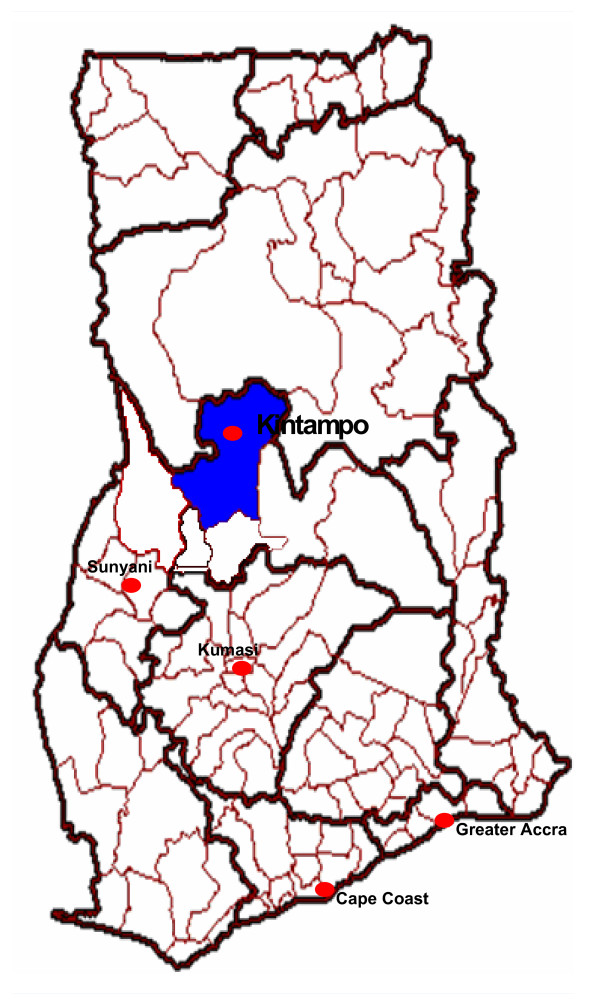
“Kintampo Health Research Centre established a mental health research unit In 2004 and has conducted a number of studies on neuro-psychiatric disorders that include; studies on psychosis [8, 17], mental disorders among older people, an epidemiology of postnatal depression [18–20] and the mental health and poverty proje…”
BackgroundSelf-citationHanlon, C., Smartt, C., Mutiso, V. N., Yaro, P., Misganaw, E., Read, U., Mayston, R., Birhanu, R., Dako-Gyeke, P., Ndetei, D. M., et al. (2025) · Epidemiology and Psychiatric Sciences · doi:10.1017/s2045796025000186 · Cited by 11
“In each study setting, social exclusion and stigmatisation of people who are homeless is common (UNICEF, MOLSA and Development Pathways, 2019), which intersects with stigma and discrimination experienced by persons with SMI (Forthal et al. , 2019; Mutiso et al. , 2019; Read et al. , 2009).”
Self-citationWeissbecker, I., Ventevogel, P., Hanna, F., & Pathare, S. (2020) · Cambridge University Press eBooks · doi:10.1017/9781108348607.026 · Cited by 11
Conceptualisation of mental illness among Christian clergy in Harare, Zimbabwe
Murambidzi, I. (2016) · Open University of Cape Town (University of Cape Town) · Cited by 11
Draicchio, C. (2020) · Politique africaine · doi:10.3917/polaf.157.0165 · Cited by 10
Montenegro, C., & Cornish, F. (2015) · Cambridge Prisms Global Mental Health · doi:10.1017/gmh.2015.20 · Cited by 10
“In the field of psychiatric disabilities, Read et al. (2009), in documenting abuse of those with severe mental illnesses in Ghana, note a marked contrast between a rights-based approach, heavily reliant on the state as the main driver of policy, and the actual practices through which communities…”
Metadata
- Authors
- Read, U. M., Adiibokah, E., & Nyame, S.
- Affiliations
- University College London (GB)
- Kintampo Health Research Centre (GH)
- Corresponding author
- Adiibokah, Edward
- Venue
- Globalization and Health
- Published
- 2009-10-14
- Volume
- 5
- Issue
- 1
- Pages
- 13-13
- ISSN
- 1744-8603 (ISSN-L)
- PMC
- PMC2770454
- OpenAlex
- W2110296339
- Cited by
- 239
- References
- 49
- Citations by year
- 2026: 5 · 2025: 15 · 2024: 15 · 2023: 29 · 2022: 10 · 2021: 14 · 2020: 55 · 2019: 11 · 2018: 22 · 2017: 12 · 2016: 5 · 2015: 9 · 2014: 12 · 2013: 8 · 2012: 11
- FWCI
- 7.37
- Type
- journal article
- Language
- en
- Open access
- gold
- doi.org
- Licence
- cc-by
- Locations
- Globalization and Health (publishedVersion, cc-by)
- PubMed Central (publishedVersion, cc-by)
- PubMed (publishedVersion)
- Open Access at Essex (University of Essex) (acceptedVersion)
- DOAJ (DOAJ: Directory of Open Access Journals) (submittedVersion)
- ENLIGHTEN (Jurnal Bimbingan dan Konseling Islam) (submittedVersion)
- Warwick Research Archive Portal (University of Warwick) (submittedVersion)
- Greater South Information System
- Funders
- Economic and Social Research Council
- Topics
- Health Sciences › Medicine › Psychiatry and Mental health › Mental Health Treatment and Access
- Social Sciences › Psychology › Clinical Psychology › Historical Psychiatry and Medical Practices
- Social Sciences › Psychology › Clinical Psychology › Family Caregiving in Mental Illness
- Keywords
- severe mental illness, physical restraint, mechanical restraint, family caregiving, traditional healers, faith healers, access to psychiatric services, rural Ghana, human rights of people with mental illness
About these checks
Registry, retraction, Cites and statistics results are computed, not judged, with one exception: a printed reference that no index lists is read once by a model before it counts as a citation error. Claims are extracted by a model and kept only when their quote appears verbatim in the text; each cited source is then checked, with a model’s help, for whether it says what the claim relies on. Those verdicts can be wrong — read the claim’s quote and the cited source before relying on one.
Statistics and arithmetic are recomputed, not judged.
Confidence bands are shown only for fields calibrated on our annotated test set. None is calibrated yet, so no band is shown.
What counts as a claim ›How we measure confidence ›How we check this ›
Are you an author, or do you see a problem with this page? Request a review
Data sources
Bibliographic data: Semantic Scholar, OpenAlex, Crossref.
Contains information from the Semantic Scholar Academic Graph Datasets, made available under the ODC Attribution License (ODC-BY 1.0).
Semantic Scholar’s data is described in: Kinney, R., et al. (2023). The Semantic Scholar Open Data Platform. arXiv:2301.10140.
