

The implications of trade liberalization for diet and health: a case study from Central America
Open accessThe DOI matches its Crossref record; 24 of the 26 references it cites were found in a registry or an index.
Abstract
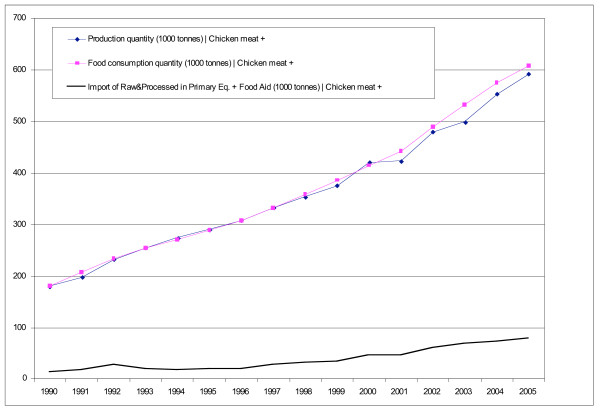
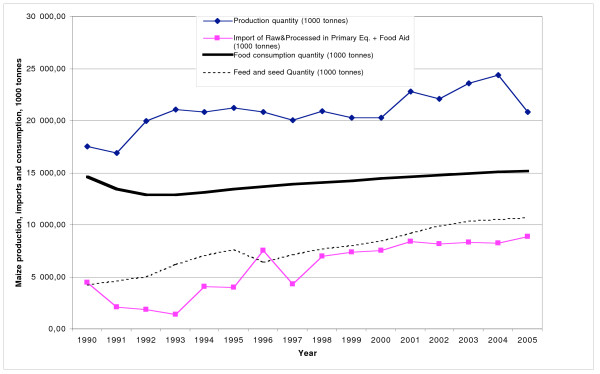
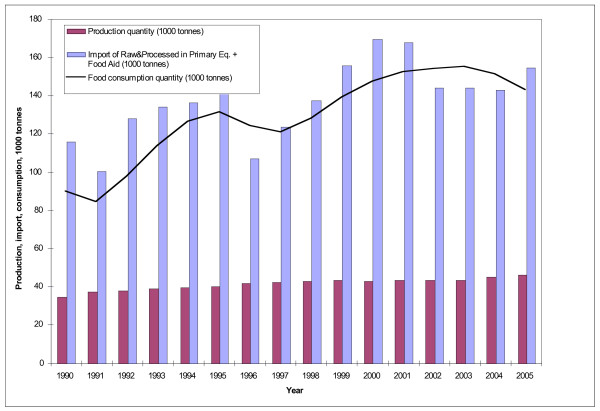
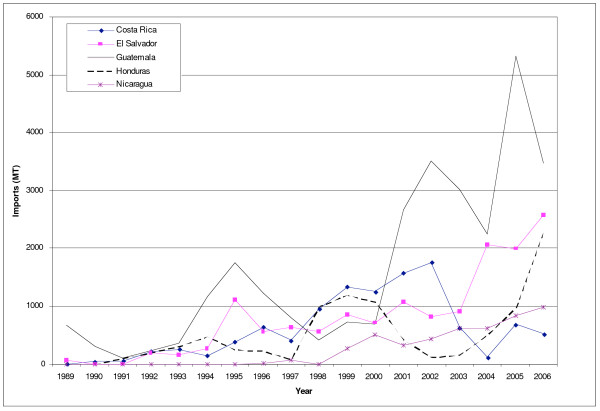
BACKGROUND: Central America has undergone extensive trade liberalization over the past two decades, and has recently signed a Free Trade Agreement with the United States. The region is also experiencing a dual burden of malnutrition with the growth of dietary patterns associated with the global 'nutrition transition'. This study describes the relationship between trade liberalization policies and food imports and availability, and draws implications for diet and health, using Central America as a case study region. METHODS: Changes in tariff and non-tariff barriers for each country were documented, and compared with time-series graphs of import, production and availability data to show the outcome of changes in trade policy in relation to food imports and food availability. RESULTS: Changes in trade policy in Central America have directly affected food imports and availability via three avenues. First, the lowering of trade barriers has promoted availability by facilitating higher imports of a wide range of foods. Second, trade liberalization has affected food availability through promoting domestic meat production. Third, reductions in barriers to investment appear to be critical in expansion of processed food markets. This suggests that changes in trade policies have facilitated rising availability and consumption of meat, dairy products, processed foods and temperate (imported fruits) in Central America. CONCLUSION: This study indicates that the policies of trade liberalization in Central American countries over the past two decades, particularly in relation to the United States, have implications for health in the region. Specifically, they have been a factor in facilitating the "nutrition transition", which is associated with rising rates of obesity and chronic diseases such as cardiovascular disease and cancer. Given the significant cost of chronic disease for the health care system, individuals and the wider community, it is critical that preventive health measures address such upstream determinants of poor nutrition.
Overview
The claims and statistics of this paper haven’t been checked yet.
Free: it reads the open-access text and checks the first 5 claims that cite a source we can check. Create a free account to check every claim.
Integrity signals
Registry
Cites
Statistics
Figures
Verification
Claims the paper makes
The claims and statistics of this paper haven’t been checked yet.
Free: it reads the open-access text and checks the first 5 claims that cite a source we can check. Create a free account to check every claim.
Claims other papers make about this one
Each is checked against this paper’s own text: does it say what the citing paper says it does?
The source backs part of the claim, not all of it — or backs it for a different population, condition or comparison.
In the citing paper
“Second, trade agreements and policies directly influence social determinants of health, affecting access to essential medicines, availability of nutritious foods, and safety of environments through economic development and regulatory frameworks (2–6).”
From Global Health Trade Summit: an AI-enhanced simulation of international trade and global health for undergraduate public health education (2025) · cites this paper as [5]
Experimental — accuracy not yet measured
Self-check
Percentages, sums and reported differences re-computed from the paper’s own numbers.
The self-check needs the paper’s full text.
Citations
Cites
Popkin, B. M. (2006) · The American Journal of Clinical Nutrition · doi:10.1093/ajcn/84.2.289 · Cited by 1,522 · cited 2×
“Consumption of foods high in fat, salt and sugar, as well as consumption of animal products, are associated with increased rates of obesity and diet-related chronic diseases – in particular, cardiovascular disease, cancer and diabetes [1].”
BackgroundHawkes, C. (2006) · Globalization and Health · doi:10.1186/1744-8603-2-4 · Cited by 895
Self-citationThe Rapid Rise of Supermarkets in Latin America: Challenges and Opportunities for Development
Reardon, T., & Berdegué, J. A. (2002) · Development Policy Review · doi:10.1111/1467-7679.00178 · Cited by 862 · cited 1×
“In addition, the growth of large supermarkets in the region – itself encouraged through the liberalization of investment policies – is likely to have increased the incentives for manufacturers to export into the region, particularly for commodities with low trade barriers [47-49].”
BackgroundThe nutrition transition and its health implications in lower-income countries
Popkin, B. M. (1998) · Public Health Nutrition · doi:10.1079/phn19980004 · Cited by 726
Rivera, J. A., Barquera, S., Campirano, F., Campos, I., Safdie, M., & Tovar, V. (2002) · Public Health Nutrition · doi:10.1079/phn2001282 · Cited by 384 · cited 1×
“Indeed, evidence from Latin America already shows that the shift from traditional diets largely comprised of plant foods towards diets high in animal products and processed foods is associated with obesity and the shift of the burden of disease towards cardiovascular disease and cancer [55-57].”
BackgroundRisk Factors for Acute Myocardial Infarction in Latin America: The INTERHEART Latin American Study
Lanas, F., Avezum, A., Bautista, L. E., Diaz, R., Luna, M., Islam, S., & Yusuf, S. (2007) · Circulation · doi:10.1161/circulationaha.106.633552 · Cited by 351
Obesity in Latin American Women and Children
Martorell, R., Khan, L. K., Hughes, M. L., & Grummer-Strawn, L. M. (1998) · The Journal of Nutrition · doi:10.1093/jn/128.9.1464 · Cited by 293 · cited 1×
“Such dietary patterns have been associated with the nutrition transition and the growing burden of obesity and noncommunicable disease reported in the region [53,54].”
BackgroundChi-Shih, C., & Po-Nien, L. (1970) · Chinese Economic Studies · doi:10.2753/ces1097-14750304267 · Cited by 244
Trends in dietary patterns of Latin American populations
Bermudez, O. I., & Tucker, K. L. (2003) · Cadernos de Saúde Pública · doi:10.1590/s0102-311x2003000700010 · Cited by 235 · cited 1×
“Second, health and dietary data from the region suggest that Central American countries are at varying stages of the nutrition transition and are experiencing rising rates of diet-related chronic disease, with associated health and economic implications [11-13].”
BackgroundTechnology, transport, globalization and the nutrition transition food policy
Popkin, B. M. (2006) · Food Policy · doi:10.1016/j.foodpol.2006.02.008 · Cited by 234
Research works printed but not linked: 1
- WTO Guatemala Trade Policy Review 2002
Cited by
Food consumption trends and drivers
Kearney, J. (2010) · Philosophical Transactions of the Royal Society B: Biological Sciences · doi:10.1098/rstb.2010.0149 · Cited by 1,987
Baker, P., Machado, P., Santos, T., Sievert, K., Backholer, K., Hadjikakou, M., Russell, C., Huse, O., Bell, C., Scrinis, G., et al. (2020) · Obesity Reviews · doi:10.1111/obr.13126 · Cited by 1,194
“tion capacity, raw materials and final products across borders, enabling TFBCs to more easily enter and drive consumption in emerging markets and connect these markets to their global sourcing and production networks.(91,92,118,120) Through greater investments, more”
BackgroundSweetening of the global diet, particularly beverages: patterns, trends, and policy responses
Popkin, B. M., & Hawkes, C. (2016) · The Lancet Diabetes & Endocrinology · doi:10.1016/s2213-8587(15)00419-2 · Cited by 737
Self-citationThe political origins of health inequity: prospects for change
Ottersen, O. P., Dasgupta, J., Blouin, C., Buss, P., Chongsuvivatwong, V., Frenk, J., Fukuda-Parr, S., Gawanas, B. P., Giacaman, R., Gyapong, J., et al. (2014) · The Lancet · doi:10.1016/s0140-6736(13)62407-1 · Cited by 683
Obesity and the food system transformation in Latin America
Popkin, B. M., & Reardon, T. (2018) · Obesity Reviews · doi:10.1111/obr.12694 · Cited by 629
Public health benefits of strategies to reduce greenhouse-gas emissions: food and agriculture
Friel, S., Dangour, A. D., Garnett, T., Lock, K., Chalabi, Z., Roberts, I., Butler, A., Butler, C. D., Waage, J., McMichael, A. J., et al. (2009) · The Lancet · doi:10.1016/s0140-6736(09)61753-0 · Cited by 498
Downs, S. M., Ahmed, S., Fanzo, J., & Herforth, A. (2020) · Foods · doi:10.3390/foods9040532 · Cited by 466
Ambikapathi, R., Schneider, K. R., Davis, B., Herrero, M., Winters, P., & Fanzo, J. C. (2022) · Nature Food · doi:10.1038/s43016-022-00588-7 · Cited by 263
Food systems and diets: Facing the challenges of the 21st century
Haddad, L. B., Hawkes, C., Waage, J. K., Webb, P., Godfray, H. C. J., & Toulmin, C. (2016) · City Research Online (City University London) · Cited by 333
Self-citationUnderstanding food systems drivers: A critical review of the literature
Béné, C., Prager, S. D., Achicanoy, H. A. E., Toro, P. A., Lamotte, L., Cedrez, C. B., & Mapes, B. R. (2019) · Global Food Security · doi:10.1016/j.gfs.2019.04.009 · Cited by 216
Kummu, M., Kinnunen, P., Lehikoinen, E., Porkka, M., Queiroz, C., Röös, E., Troell, M., & Weil, C. (2020) · Global Food Security · doi:10.1016/j.gfs.2020.100360 · Cited by 199
“Trade can also contribute to increase the diversity of food supply in a particular country or region (Thow, 2009; Thow and Hawkes, 2009; Kearney, 2010) and can therefore ensure the resilience of a food system in times of crisis or whenever the local conditions are too adverse (Seekell et al., 2017).”
BackgroundPopkin, B. M. (2014) · Obesity Reviews · doi:10.1111/obr.12120 · Cited by 198
“Notably, scholars have found that the nutrition transition, particularly the shift towards what is often called a Western diet, accounts for the growth in the animal-source food sector (22,23).”
BackgroundDuran, A. C., Diez Roux, A. V., Latorre, M. D. R. D. O., & Jaime, P. C. (2013) · Health & Place · doi:10.1016/j.healthplace.2013.05.001 · Cited by 191
“Such increase is likely related to society-wide changes in diet and physical activity, which in turn, are associated with economic growth, trade, mass agricultural production, and urbanization (Thow and Hawkes, 2009; Ruel et al., 2010).”
BackgroundThe Double Burden of Malnutrition
Shrimpton, R., & Rokx, C. (2012) · World Bank, Washington, DC eBooks · doi:10.1596/27417 · Cited by 187
“Trade liberalization affects the availability and consumption of meat, dairy products, and processed foods by removing barriers to foreign investment in food distribution and other types of food retail (Thow and Hawkes 2009).”
BackgroundObesity: Health and Economic Consequences of an Impending Global Challenge
Shekar, M., & Popkin, B. (2020) · World Bank, Washington, DC eBooks · doi:10.1596/978-1-4648-1491-4 · Cited by 181
Global drivers of food system (un)sustainability: A multi-country correlation analysis
Béné, C., Fanzo, J., Prager, S. D., Achicanoy, H., Mapes, B. R., Alvarez, P., & Bonilla, C. (2020) · PLoS ONE · doi:10.1371/journal.pone.0231071 · Cited by 196
De Vogli, R., Kouvonen, A., & Gimeno, D. (2014) · Bulletin of the World Health Organization · doi:10.2471/blt.13.120287 · Cited by 169
The nexus between international trade, food systems, malnutrition and climate change
Friel, S., Schram, A., & Townsend, B. (2020) · Nature Food · doi:10.1038/s43016-019-0014-0 · Cited by 160
Clark, S. E., Hawkes, C., Murphy, S. M. E., Hansen-Kuhn, K. A., & Wallinga, D. (2012) · International Journal of Occupational and Environmental Health · doi:10.1179/1077352512z.0000000007 · Cited by 158
Self-citationTrade and the Nutrition Transition: Strengthening Policy for Health in the Pacific
Thow, A. M., Heywood, P., Schultz, J. T., Quested, C., Jan, S., & Colagiuri, S. (2011) · Ecology of Food and Nutrition · doi:10.1080/03670244.2010.524104 · Cited by 150
“The main mechanisms through which trade influences diet are trade in goods and services, enabling investment and decreasing support/protection for domestic agriculture (including traditional food systems and subsistence agriculture; Thow 2009 ; Thow and Hawkes 2009 ).”
BackgroundSelf-citationFriel, S., Gleeson, D., Thow, A.-M., Labonte, R., Stuckler, D., Kay, A., & Snowdon, W. (2013) · Globalization and Health · doi:10.1186/1744-8603-9-46 · Cited by 137
“In Central America, reductions in barriers to investment were critical in the expansion of highly processed food markets [31].”
BackgroundSelf-citationMonitoring the impacts of trade agreements on food environments
Friel, S., Hattersley, L., Snowdon, W., Thow, A. ‐., Lobstein, T., Sanders, D., Barquera, S., Mohan, S., Hawkes, C., Kelly, B., et al. (2013) · Obesity Reviews · doi:10.1111/obr.12081 · Cited by 132
“Tariffs and domestic subsidies can play an important role in the income-earning capacity of communities in both high-income countries and LMICs, thus affecting food affordability.”
BackgroundInfluentialSelf-citationUrbanization, Food Security and Nutrition
Ruel, M. T., Garrett, J., Yosef, S., & Olivier, M. (2017) · Springer eBooks · doi:10.1007/978-3-319-43739-2_32 · Cited by 177
Trade policy and obesity prevention: challenges and innovation in the Pacific Islands
Snowdon, W., & Thow, A. M. (2013) · Obesity Reviews · doi:10.1111/obr.12090 · Cited by 131
“Imported foods and changes to agricultural and fisheries policies to encourage trade are strongly associated with dietary changes and NCDs in low- and middle-income countries (30,31).”
BackgroundSelf-citationBarlow, P., McKee, M., Basu, S., & Stuckler, D. (2017) · Globalization and Health · doi:10.1186/s12992-017-0240-x · Cited by 140
“The quality of research also varies considerably, as research designs span case study approaches to rigorous quasi-experimental methodologies, but most previous reviews and commentaries did not evaluate study quality [29, 30].”
BackgroundInfluentialThow, A. M., Snowdon, W., Labonté, R., Gleeson, D., Stückler, D., Hattersley, L. A., Schram, A., Kay, A., & Friel, S. (2014) · Health Policy · doi:10.1016/j.healthpol.2014.08.002 · Cited by 148
Self-citationTrade, investment and public health: compiling the evidence, assembling the arguments
Labonté, R. (2019) · Globalization and Health · doi:10.1186/s12992-018-0425-y · Cited by 95
Schram, A., Labonte, R., Baker, P., Friel, S., Reeves, A., & Stuckler, D. (2015) · Globalization and Health · doi:10.1186/s12992-015-0127-7 · Cited by 100
“production and increased investment in the processed food market [18].”
BackgroundSocioeconomic Position and Type 2 Diabetes Mellitus in Europe 1999- 2009: a Panorama of Inequalities
Espelt, A., Arriola, L., Borrell, C., Larranaga, I., Sandin, M., & Escolar-Pujolar, A. (2011) · Current Diabetes Reviews · doi:10.2174/157339911795843131 · Cited by 111
“In Central America, for example, it has been shown that trade liberalization has implications for diet and obesity (due to the increased availability and consumption of meat, dairy products, and processed food) [61].”
BackgroundFraming international trade and chronic disease
Labonté, R., Mohindra, K. S., & Lencucha, R. (2011) · Globalization and Health · doi:10.1186/1744-8603-7-21 · Cited by 99
“Liberalization of trade in food products can increase availability and lower retail prices [43,44].”
BackgroundSustainable Food Security: An Emerging Research and Policy Agenda
Sonnino, R., Moragues‐Faus, A., & Maggio, A. (2020) · International journal of sociology of agriculture and food · doi:10.48416/ijsaf.v21i1.161 · Cited by 102
Economic globalization, inequality and body mass index: a cross-national analysis of 127 countries
Vogli, R. D., Kouvonen, A. M., Elovainio, M. J., & Marmot, M. G. (2013) · Critical Public Health · doi:10.1080/09581596.2013.768331 · Cited by 97
“…advantage of global reforms of trade liberalization and FDI,3 TFCs have grown in terms of power and market shares, and have thus flooded foreign markets with highly processed food, fast food and other unhealthy food items (De Vogli, Kouvonen, and Gimeno 2011; Hawkes 2005; Thow and Hawkes 2009).”
Trade Policy and Public Health
Friel, S., Hattersley, L., & Townsend, R. (2015) · Annual Review of Public Health · doi:10.1146/annurev-publhealth-031914-122739 · Cited by 91
“Implications of the Central America-Dominican Republic-Free Trade Agreement for the nutrition transition in Central America.”
ResultInfluentialHungry for free trade? Food trade and extreme hunger in developing countries
Mary, S. (2019) · Food Security · doi:10.1007/s12571-019-00908-z · Cited by 112
“A few case studies support the existence of links between trade and nutrition (Madeley and Solagral 2001; FAO 2006; Thow and Hawkes 2009) but these qualitative analyses cannot disaggregate the effects of trade from other existing economic and nutritional shocks and policy changes.”
BackgroundLin, T. K., Teymourian, Y., & Tursini, M. S. (2018) · Globalization and Health · doi:10.1186/s12992-018-0344-y · Cited by 77
“A qualitative study analyzes the relationship between trade policies and import of different categories of food and finds that changes in trade policies facilitated growing availability and consumption of meat, dairy products, processed foods, and imported fruits in Central American countries [7].”
BackgroundInfluentialMiljković, D., Shaik, S., de Miranda, S. H. G., Barabanov, N., & Liogier, A. (2015) · World Economy · doi:10.1111/twec.12260 · Cited by 78
Mendez Lopez, A., Loopstra, R., McKee, M., & Stuckler, D. (2017) · Social Science & Medicine · doi:10.1016/j.socscimed.2016.11.001 · Cited by 73
Constantinides, S. V., Turner, C. J., Frongillo, E. A., Bhandari, S., Reyes, L. I., & Blake, C. E. (2021) · Global Food Security · doi:10.1016/j.gfs.2021.100511 · Cited by 84
Baker, P., Friel, S., Schram, A., & Labonté, R. (2016) · Globalization and Health · doi:10.1186/s12992-016-0161-0 · Cited by 76
“containing similar provisions) and these agreements had demonstrated impacts on processed food consumption in previous analyses [27, 40, 23].”
BackgroundResultOberländer, L., Disdier, A., & Étilé, F. (2017) · Health Economics · doi:10.1002/hec.3521 · Cited by 84
“…claim consists mostly of case studies that link observed changes in diets to substantial changes in national food systems following trade openness (Hawkes and Thow, 2008; Thow and Hawkes, 2009; Thow et al., 2011) and significant foreign direct investment (FDI) in the food industry (Hawkes, 2006).”
BackgroundInfluentialSchram, A., Rückert, A., VanDuzer, J. A., Friel, S., Gleeson, D., Thow, A. M., Stückler, D., & Labonté, R. (2017) · Health Policy and Planning · doi:10.1093/heapol/czx133 · Cited by 66
“The initial framework was generated by a core development team of three experts in trade and health and was modelled on an existing framework mapping the pathways between trade liberalization and nutrition transition (Thow 2009).”
InfluentialSelf-citationSchram, A., Labonté, R., & Sanders, D. M. (2013) · Progress in Cardiovascular Diseases · doi:10.1016/j.pcad.2013.09.016 · Cited by 75
“Under the World Trade Organization (WTO), treaties such as the General Agreement on Tariffs and Trade and the Agreement on Agriculture, can improve food availability through the reduction of import barriers, which help bring international food imports into the domestic market at lower prices.(36,37) Alternatively, inc…”
BackgroundRavuvu, A., Friel, S., Thow, A. M., Snowdon, W., & Wate, J. (2017) · Globalization and Health · doi:10.1186/s12992-017-0257-1 · Cited by 62
Self-citationPurchase trends of processed foods and beverages in urban India
Law, C., Green, R., Kadiyala, S., Shankar, B., Knai, C., Brown, K. A., Dangour, A. D., & Cornelsen, L. (2019) · Global Food Security · doi:10.1016/j.gfs.2019.05.007 · Cited by 71
“Literature attributes the nutrition transition often to increased globalization, trade and economic growth as well as to accompanying changes in labour markets and life styles more generally (Thow and Hawkes, 2009; Kearney, 2010; Baker and Friel, 2014).”
BackgroundFood policies and obesity in low- and middle-income countries
Abay, K. A., Ibrahim, H., & Breisinger, C. (2021) · World Development · doi:10.1016/j.worlddev.2021.105775 · Cited by 63
Health‐equity issues related to childhood obesity: a scoping review
Vargas, C. M., Stines, E. M., & Granado, H. S. (2017) · Journal of Public Health Dentistry · doi:10.1111/jphd.12233 · Cited by 54
Fayet‐Moore, F., Peters, V., McConnell, A., Petocz, P., & Eldridge, A. L. (2017) · Nutrition Journal · doi:10.1186/s12937-017-0288-8 · Cited by 59
“Several factors may play a role in changing meal patterns, including increased incomes and the ability to purchase more foods and beverages outside the home [68, 69], fewer family meals at home, dual-working parents [70], urbanisation [71, 72] and increased food availability and affordability [73].”
BackgroundThow, A. M., Annan, R. A., Mensah, L., & Chowdhury, S. N. (2014) · BMC Public Health · doi:10.1186/1471-2458-14-249 · Cited by 52
“Percentages of fat given in the standards were based on the association of high-fat meat consumption with NCDs, particularly cardiovascular disease, and the cutoffs for what constitutes 'high-fat' were derived from analysis of the fat content of local and imported meats.”
BackgroundInfluentialSelf-citationErokhin, V. L. (2017) · Sustainability · doi:10.3390/su9111939 · Cited by 52
“Thow and Hawkes found that the availability of processed food has risen in developing countries after foreign direct investment by multinational food companies [13].”
BackgroundThow, A. M., Sanders, D. M., Drury, E., Puoane, T. R., Chowdhury, S. N., Tsolekile, L. P., & Negin, J. (2015) · Global Health Action · doi:10.3402/gha.v8.28338 · Cited by 56
“(31, 32)] such as multiple probable effects on fruit and vegetable availability due to growth in imports and rising opportunities for exports examining trade in processed and packaged food provides timely insights into a key aspect of nutrition transition in the region and may pave the way for further research in this…”
BackgroundSelf-citationVogli, R. D., Kouvonen, A. M., & Gimeno, D. (2011) · Critical Public Health · doi:10.1080/09581596.2011.619964 · Cited by 48
“Email: rdevogli@umich.edu ISSN 0958–1596 print/ISSN 1469–3682 online 2011 Taylor & Francis http://dx.doi.org/10.1080/09581596.2011.619964 http://www.tandfonline.com (Thow and Hawkes 2009) seems to be one of the key contributing factors behind the sharp rise of obesity.”
BackgroundInfluentialHunt, D. (2020) · Public Health Nutrition · doi:10.1017/s1368980020003353 · Cited by 51
The relationship between income, economic freedom, and BMI
Lawson, R. A., Murphy, R., & Williamson, C. R. (2016) · Public Health · doi:10.1016/j.puhe.2016.01.020 · Cited by 50
Using a biocultural approach to examine migration/globalization, diet quality, and energy balance
Himmelgreen, D., Cantor, A. R., Arias, S. V., & Romero‐Daza, N. (2014) · Physiology & Behavior · doi:10.1016/j.physbeh.2013.12.012 · Cited by 57
Trade openness and the obesity epidemic: a cross-national study of 175 countries during 1975–2016
An, R., Guan, C., Liu, J., Chen, N., & Clarke, C. V. (2019) · Annals of Epidemiology · doi:10.1016/j.annepidem.2019.07.002 · Cited by 45
Healthy diets and the retail food environment: A sociological approach
Mattioni, D., Loconto, A. M., & Brunori, G. (2019) · Health & Place · doi:10.1016/j.healthplace.2019.102244 · Cited by 50
Laux, T. S., Bert, P. J., Ruiz, G. M. B., González-Quiroz, M., Unruh, M. L., Aragón, A., & Lacourt, C. T. (2011) · Journal of Nephrology · doi:10.5301/jn.5000028 · Cited by 42
Galal‐Khallaf, A., Ardura, A., Borrell, Y. J., & García‐Vázquez, E. (2015) · Food Control · doi:10.1016/j.foodcont.2015.09.027 · Cited by 43
Embedded Health Risk from Arsenic in Globally Traded Rice
Nunes, L. M., Li, G., Chen, W., Meharg, A. A., O’Connor, P., & Zhu, Y. (2022) · Environmental Science & Technology · doi:10.1021/acs.est.1c08238 · Cited by 41
Singh, U. K., Gautam, N., Bhandari, T. R., & Sapkota, N. (2020) · Journal of Nutrition and Metabolism · doi:10.1155/2020/7932324 · Cited by 48
Burgaz, C., Dam, I. V., Garton, K., Swinburn, B. A., Sacks, G., Asiki, G., Claro, R. M., Diouf, A., Martins, A. P. B., & Vandevijvere, S. (2024) · Globalization and Health · doi:10.1186/s12992-024-01060-w · Cited by 48
“…in the availability of less healthy foods and ultra-processed foods while exacerbating nutritional and environmental vulnerabilities [2, 16, 31, 36], particularly import volumes of animal products and ultra-processed foods in low-and middle-income countries (LMICs) [1, 10, 17, 18, 20, 34, 35].”
BackgroundFood Self-Sufficiency of the SEE Countries; Is the Region Prepared for a Future Crisis?
Brankov, T., Matkovski, B., Jeremić, M., & Đurić, I. (2021) · Sustainability · doi:10.3390/su13168747 · Cited by 39
“The analysis showed that negative correlation between population density and SSR [34,35], a positive correlation between trade openness and SSR [40,41], political stability, and SSR [6,36,37] from the previous research could not be applied to all countries and all food groups.”
BackgroundBandara, S., Kumara, T., Dharmadasa, S., & Samaraweera, W. G. R. L. (2021) · Open Journal of Social Sciences · doi:10.4236/jss.2021.910016 · Cited by 55
Health and Economic Impacts of Overweight/Obesity
Schneider, P., Popkin, B. M., Shekar, M., Eberwein, J. D., Block, C. F., & Okamura, K. S. (2020) · World Bank, Washington, DC eBooks · doi:10.1596/978-1-4648-1491-4_ch3 · Cited by 45
Targets and Timelines for Reducing Salt in Processed Food in the Americas
Campbell, N. R. C., Legowski, B., Legetić, B., Ferrante, D., Nilson, E. A. F., Campbell, C., & L’Abbé, M. R. (2014) · Journal of Clinical Hypertension · doi:10.1111/jch.12379 · Cited by 40
Effect of globalization on global dental caries trend
Alsuraim, B. S., & Han, D.-H. (2020) · Medicine · doi:10.1097/md.0000000000021767 · Cited by 35
“As economic freedom and policies of trade liberalization lead to raise the availability of sugar and processed food with low nutritional value, which associated with increased rates of obesity and other non-communicable diseases.([38,39]) The results of PLS-SEM also showed that the association between health service a…”
BackgroundDrivers of global nitrogen emissions
Malik, A., Oita, A., Shaw, E., Li, M., Ninpanit, P., Nandel, V., Lan, J., & Lenzen, M. (2021) · Environmental Research Letters · doi:10.1088/1748-9326/ac413c · Cited by 35
Trade rules, food security and the multilateral trade negotiations
Matthews, A. (2014) · European Review of Agricultural Economics · doi:10.1093/erae/jbu017 · Cited by 40
de Soysa, I., & de Soysa, A. K. H. (2017) · International Interactions · doi:10.1080/03050629.2017.1311259 · Cited by 37
Sylvester, J. M., Gutiérrez-Zapata, D. M., Pérez, L., Vanegas-Cubillos, M., Bruun, T. B., Mertz, O., & Castro-Nunez, A. C. (2024) · Scientific Reports · doi:10.1038/s41598-024-65397-3 · Cited by 37
“…of foreign investments, which surged following measures to reduce trade barriers via trade liberalization, has played a pivotal role in meeting escalating demands and, subsequently, facilitating increased consumption by influencing food production, supply and distribution dynamics 30,39 .”
Food Security and Transition towards Sustainability
Rabbi, M. F., Hasan, M., & Kovács, S. (2021) · Sustainability · doi:10.3390/su132212433 · Cited by 38
“The interconnected factors include rising global per capita incomes with incr ased animal-based and processed food i take, supplemented fat di ts, free trade and liberalization, lower cost f unhealthy foods, and adequate supply [75].”
BackgroundRoux, N., Kaufmann, L., Bhan, M., Noë, J. L., Matej, S., Laroche, P. C. S. J., Kästner, T., Bondeau, A., Haberl, H., & Erb, K. (2022) · The Science of The Total Environment · doi:10.1016/j.scitotenv.2022.158198 · Cited by 31
“Trade liberalization has also been described as an important driver of dietary changes, by increasing the availability and affordability of feed and animal products (Blouin et al., 2009; Thow, 2009; Thow and Hawkes, 2009; Kearney, 2010; Traill et al., 2014).”
Aid for Trade: an opportunity to increase fruit and vegetable supply
Thow, A. M., & Priyadarshi, S. (2012) · Bulletin of the World Health Organization · doi:10.2471/blt.12.106955 · Cited by 34
Self-citationDeterminants of obesity in Brazil: the effects of trade liberalization and socio-economic variables
Miljković, D., de Miranda, S. H. G., Kassouf, A. L., & de Oliveira, F. C. R. (2017) · Applied Economics · doi:10.1080/00036846.2017.1414939 · Cited by 28
“Thow and Hawkes (2009) describe the relationship between trade liberalization policies and food imports and availability, and draw implications for diet and health, using Central America as a case study region.”
BackgroundSeferidi, P., Laverty, A. A., Pearson‐Stuttard, J., Bandosz, P., Collins, B., Guzman-Castillo, M., Capewell, S., O’Flaherty, M., & Millett, C. J. (2019) · BMJ Open · doi:10.1136/bmjopen-2018-026966 · Cited by 26
An interpretive study of food, snack and beverage advertisements in rural and urban El Salvador
Amanzadeh, B., Sokal‐Gutierrez, K., & Barker, J. C. (2015) · BMC Public Health · doi:10.1186/s12889-015-1836-9 · Cited by 31
“[1, 2].”
Does agricultural trade liberalization increase obesity in developing countries?
Mary, S., & Stoler, A. (2021) · Review of Development Economics · doi:10.1111/rode.12757 · Cited by 25
Globalization and the “zero hunger” goal in Africa: Starving in an open world?
Ketu, I., & Nguea, S. M. (2024) · Journal of International Development · doi:10.1002/jid.3928 · Cited by 24
Craig, P., Gibson, M., Campbell, M., Popham, F., & Katikireddi, S. V. (2017) · Preventive Medicine · doi:10.1016/j.ypmed.2017.12.025 · Cited by 29
Globalization and obesity in the GCC countries
El‐Sahli, Z. (2023) · Middle East Development Journal · doi:10.1080/17938120.2022.2160182 · Cited by 22
“Within globalization, obesity is linked to liberalizing trade (Hawkes & Thow, 2008; Thow et al., 2010; Thow & Hawkes, 2009), foreign direct investment (FDI) in the food industry through the entry of transnational food corporations (TFCs) (Hawkes, 2006), and technical change (Popkin, 2006).”
BackgroundNyarko, E. N. Y., & Bartelmeß, T. (2024) · Globalization and Health · doi:10.1186/s12992-024-01027-x · Cited by 22
“Various supply chain processes facilitate the expansion of multinational corporations to low-income countries, including trade liberalization, market concentration in the food system, and foreign direct investment (FDI) [6–8].”
BackgroundPerspectives of Fijian Policymakers on the Obesity Prevention Policy Landscape
Hendriks, A.-M., Delai, M. Y., Thow, A. M., Gubbels, J. S., de Vries, N. K., Kremers, S., & Jansen, M. W. J. (2015) · BioMed Research International · doi:10.1155/2015/926159 · Cited by 23
“Research Article”
Self-citationLegowski, B., & Legetić, B. (2011) · Health Policy · doi:10.1016/j.healthpol.2011.06.008 · Cited by 24
“In lower and middle income economies that are experiencing trade liberalization, as studied for example in Central America [4], one of the consequences is a nutrition transition with increasing consumption of commercially prepared food products including those that come highly salted.”
BackgroundOakden, L., Bridge, G., Armstrong, B., Reynolds, C. J., Wang, C., Panzone, L., Rivera, X. C. S., Kause, A., Ffoulkes, C., Krawczyk, C., et al. (2021) · Frontiers in Sustainable Food Systems · doi:10.3389/fsufs.2021.596594 · Cited by 23
“Another example could be the liberalisation of food related trade policies such as those related to sugar, which could in turn negatively affect human health (Thow and Hawkes, 2009).”
BackgroundAsadi‐Lari, M., Teymourlouy, A. A., Maleki, M., & Afshari, M. (2021) · BMC Health Services Research · doi:10.1186/s12913-021-07240-3 · Cited by 20
Cowling, K., Thow, A. M., & Porter, K. M. P. (2018) · Globalization and Health · doi:10.1186/s12992-018-0371-8 · Cited by 21
“For example, while key effects of liberalized trade may occur through increased imports, the impacts of liberalizing investment may operate through increases in local production [58].”
BackgroundSelf-citationSchram, A., & Townsend, B. (2020) · International Journal of Health Policy and Management · doi:10.34172/ijhpm.2020.202 · Cited by 22
Milsom, P., Smith, R., Modisenyane, S. M., & Walls, H. (2022) · Globalization and Health · doi:10.1186/s12992-022-00814-8 · Cited by 20
Werner, M., Contreras, P. I., Mui, Y., & Stokes-Ramos, H. (2019) · Social Science & Medicine · doi:10.1016/j.socscimed.2019.112516 · Cited by 19
Precarious Lives: Work, food and care after the global food crisis
Scott‐Villiers, P., Chisholm, N., Kelbert, A. W., & Hossain, N. (2016) · doi:10.21201/2016.620020 · Cited by 19
Unintended consequence of trade on regional dietary patterns in rural India
Law, C. (2018) · World Development · doi:10.1016/j.worlddev.2018.09.014 · Cited by 17
“Thow (2009) demonstrates a trend towards reduced consumption of staples and an increase in consumption of meat and meat products, eggs and oils in China in the early 1990s when tariffs and non-tariff barriers were reduced markedly.”
BackgroundDiversity regained: Precautionary approaches to COVID-19 as a phenomenon of the total environment
Franco, M. P. V., Molnár, O., Dorninger, C., Laciny, A., Treven, M., Weger, J. O., Albuquerque, E. D. M. E., Gatti, R. C., Hernández, L. A. V., Jakab, M., et al. (2022) · The Science of The Total Environment · doi:10.1016/j.scitotenv.2022.154029 · Cited by 21
“…the 2020 increase in global military spending alone, US$ 50 billion [(SIPRI, 2021)], would be enough to fi nance a broad global vaccination project [(Tooze, 2021, p. 243)]); a disentanglement between innovation and pre-dation, as innovation is used as a means to overcome predatory techniques in…”
Framing the Latin American nutrition transition in a historical perspective, 1850 to the present
Ablard, J. D. (2021) · História Ciências Saúde-Manguinhos · doi:10.1590/s0104-59702021000100012 · Cited by 17
Urban Planning, Development and Non-communicable Diseases
Rao, M., Barten, F., Blackshaw, N., Lapitan, J. M., Galea, G., Jacoby, E., Samarth, A., & Buckley, E. J. (2011) · Planning Practice and Research · doi:10.1080/02697459.2011.585569 · Cited by 19
Thow, A. M., Ravuvu, A., ‘Ofa, S. V., Andrew, N. L., Reeve, E., Tutuo, J., & Brewer, T. (2022) · Globalization and Health · doi:10.1186/s12992-022-00891-9 · Cited by 15
“The implications of trade liberalization for diet and health: a case study from Central America.”
BackgroundSelf-citationSchortman, A. (2010) · Environmental Communication · doi:10.1080/17524032.2010.514430 · Cited by 13
“Indeed, frozen French fries used in fast food restaurants are almost entirely imported from the US and Canada, as are processed cheese slices (Thow & Hawkes, 2009) and the corn fed to chickens used in fast food establishments (USCS & U.S. Department of Commerce, 2009, p. 45).”
BackgroundSmoking Abstinence Rates and Reasons for Failure to Quit Smoking in Cancer Patients in Jordan
Hawari, F. I., Obeidat, N. A., Beano, H. M., Dawahrah, S., Al-Rimawi, D., & Ghonimat, I. M. (2011) · Respiration · doi:10.1159/000328759 · Cited by 13
Free trade agreements and world obesity
Baggio, M., & Chong, A. E. (2020) · Southern Economic Journal · doi:10.1002/soej.12447 · Cited by 13
“Thow and Hawkes (2009) consider 5 See for instance: https://www.nytimes.com/2018/07/14/world/americas/mexico-coca-cola-diabetes.html.”
Gender inclusive food systems for sustainable healthy diets in low and middle-income countries
Das, A., Kasala, K., & Kumar, S. (2023) · Agroecology and Sustainable Food Systems · doi:10.1080/21683565.2023.2215192 · Cited by 13
“…in LMICs can play a critical role in influencing food choices by shaping food availability at national (Baker and Friel 2016; Baker et al. 2016; Thow and Hawkes 2009), local (Bridle-Fitzpatrick 2015); Davies et al., 2017 (Turner 2020), and institutional levels (Pehlke et al. 2016; Rathi,…”
BackgroundProtocol to monitor trade agreement food-related aspects: the Fiji case study
Ravuvu, A., Friel, S., Thow, A. M., Snowdon, W., & Wate, J. (2017) · Health Promotion International · doi:10.1093/heapro/dax020 · Cited by 12
“Additionally, reductions in barriers to investment have seen an expansion of highly processed food markets in countries worldwide, including in Central America (Hawkes and Thow, 2008; Thow and Hawkes, 2009) and in some Asian countries (Hawkes, 2005; WTO, 2007; Sirikeratikul and Vasquez, 2011; Friel et al., 2013).”
BackgroundSelf-citation
Metadata
- Authors
- Thow, A. M., & Hawkes, C.
- Affiliations
- The University of Sydney (AU)
- International Food Policy Research Institute (US)
- Corresponding author
- Thow, Anne Marie
- Venue
- Globalization and Health
- Published
- 2009
- Volume
- 5
- Issue
- 1
- Pages
- 5
- ISSN
- 1744-8603 (ISSN-L)
- PMC
- PMC2729306
- OpenAlex
- W2091046994
- Cited by
- 185
- References
- 26
- Citations by year
- 2026: 5 · 2025: 10 · 2024: 12 · 2023: 2 · 2022: 14 · 2021: 15 · 2020: 26 · 2019: 16 · 2018: 7 · 2017: 15 · 2016: 8 · 2015: 10 · 2014: 11 · 2013: 13 · 2012: 6
- FWCI
- 12.41
- Type
- journal article
- Language
- en
- Open access
- gold
- doi.org
- Licence
- cc-by
- Locations
- Globalization and Health (publishedVersion, cc-by)
- PubMed Central (publishedVersion, cc-by)
- PubMed (publishedVersion)
- DOAJ (DOAJ: Directory of Open Access Journals) (submittedVersion, cc-by-sa)
- Topics
- Health Sciences › Medicine › Public Health, Environmental and Occupational Health › Global Public Health Policies and Epidemiology
- Social Sciences › Economics, Econometrics and Finance › Economics and Econometrics › Economics of Agriculture and Food Markets
- Social Sciences › Economics, Econometrics and Finance › General Economics, Econometrics and Finance › Global trade and economics
- Keywords
- trade liberalization, nutrition transition, food imports, food availability, Central America, tariffs, non-tariff barriers, meat production, processed foods, temperate fruit crops, obesity, chronic disease, diet and health, trade policy
About these checks
Registry, retraction, Cites and statistics results are computed, not judged, with one exception: a printed reference that no index lists is read once by a model before it counts as a citation error. Claims are extracted by a model and kept only when their quote appears verbatim in the text; each cited source is then checked, with a model’s help, for whether it says what the claim relies on. Those verdicts can be wrong — read the claim’s quote and the cited source before relying on one.
Statistics and arithmetic are recomputed, not judged.
Confidence bands are shown only for fields calibrated on our annotated test set. None is calibrated yet, so no band is shown.
What counts as a claim ›How we measure confidence ›How we check this ›
Are you an author, or do you see a problem with this page? Request a review
Data sources
Bibliographic data: Semantic Scholar, OpenAlex, Crossref.
Contains information from the Semantic Scholar Academic Graph Datasets, made available under the ODC Attribution License (ODC-BY 1.0).
Semantic Scholar’s data is described in: Kinney, R., et al. (2023). The Semantic Scholar Open Data Platform. arXiv:2301.10140.
