

The implications of trade liberalization for diet and health: a case study from Central America
Open accessThe DOI matches its Crossref record; 24 of the 26 references it cites were found in a registry or an index.
Abstract
BACKGROUND: Central America has undergone extensive trade liberalization over the past two decades, and has recently signed a Free Trade Agreement with the United States. The region is also experiencing a dual burden of malnutrition with the growth of dietary patterns associated with the global 'nutrition transition'. This study describes the relationship between trade liberalization policies and food imports and availability, and draws implications for diet and health, using Central America as a case study region. METHODS: Changes in tariff and non-tariff barriers for each country were documented, and compared with time-series graphs of import, production and availability data to show the outcome of changes in trade policy in relation to food imports and food availability. RESULTS: Changes in trade policy in Central America have directly affected food imports and availability via three avenues. First, the lowering of trade barriers has promoted availability by facilitating higher imports of a wide range of foods. Second, trade liberalization has affected food availability through promoting domestic meat production. Third, reductions in barriers to investment appear to be critical in expansion of processed food markets. This suggests that changes in trade policies have facilitated rising availability and consumption of meat, dairy products, processed foods and temperate (imported fruits) in Central America. CONCLUSION: This study indicates that the policies of trade liberalization in Central American countries over the past two decades, particularly in relation to the United States, have implications for health in the region. Specifically, they have been a factor in facilitating the "nutrition transition", which is associated with rising rates of obesity and chronic diseases such as cardiovascular disease and cancer. Given the significant cost of chronic disease for the health care system, individuals and the wider community, it is critical that preventive health measures address such upstream determinants of poor nutrition.
Overview
The claims and statistics of this paper haven’t been checked yet.
Free: it reads the open-access text and checks the first 5 claims that cite a source we can check. Create a free account to check every claim.
Integrity signals
Registry
Cites
Statistics
Figures
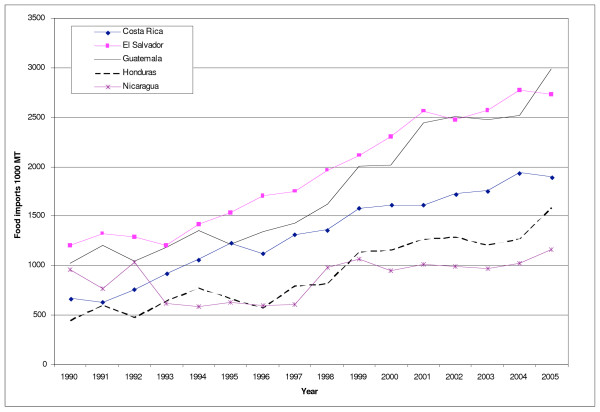
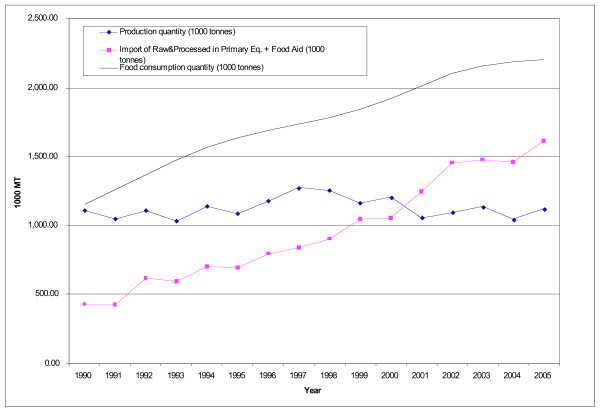
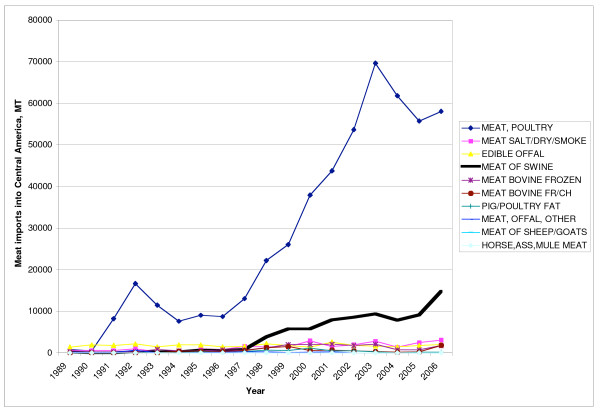
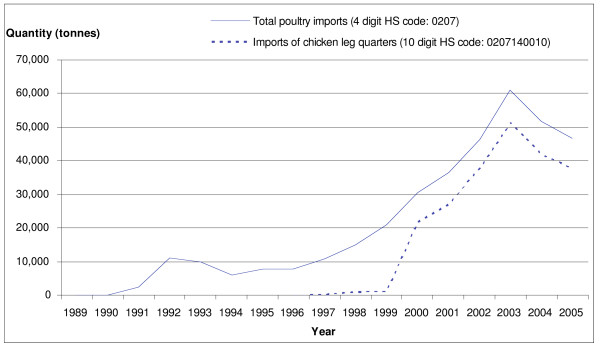
Verification
Claims the paper makes
The claims and statistics of this paper haven’t been checked yet.
Free: it reads the open-access text and checks the first 5 claims that cite a source we can check. Create a free account to check every claim.
Claims other papers make about this one
Each is checked against this paper’s own text: does it say what the citing paper says it does?
The source backs part of the claim, not all of it — or backs it for a different population, condition or comparison.
In the citing paper
“Second, trade agreements and policies directly influence social determinants of health, affecting access to essential medicines, availability of nutritious foods, and safety of environments through economic development and regulatory frameworks (2–6).”
From Global Health Trade Summit: an AI-enhanced simulation of international trade and global health for undergraduate public health education (2025) · cites this paper as [5]
Experimental — accuracy not yet measured
Self-check
Percentages, sums and reported differences re-computed from the paper’s own numbers.
The self-check needs the paper’s full text.
Citations
Cites
Popkin, B. M. (2006) · The American Journal of Clinical Nutrition · doi:10.1093/ajcn/84.2.289 · Cited by 1,522 · cited 2×
“Consumption of foods high in fat, salt and sugar, as well as consumption of animal products, are associated with increased rates of obesity and diet-related chronic diseases – in particular, cardiovascular disease, cancer and diabetes [1].”
BackgroundHawkes, C. (2006) · Globalization and Health · doi:10.1186/1744-8603-2-4 · Cited by 895
Self-citationThe Rapid Rise of Supermarkets in Latin America: Challenges and Opportunities for Development
Reardon, T., & Berdegué, J. A. (2002) · Development Policy Review · doi:10.1111/1467-7679.00178 · Cited by 862 · cited 1×
“In addition, the growth of large supermarkets in the region – itself encouraged through the liberalization of investment policies – is likely to have increased the incentives for manufacturers to export into the region, particularly for commodities with low trade barriers [47-49].”
BackgroundThe nutrition transition and its health implications in lower-income countries
Popkin, B. M. (1998) · Public Health Nutrition · doi:10.1079/phn19980004 · Cited by 726
Rivera, J. A., Barquera, S., Campirano, F., Campos, I., Safdie, M., & Tovar, V. (2002) · Public Health Nutrition · doi:10.1079/phn2001282 · Cited by 384 · cited 1×
“Indeed, evidence from Latin America already shows that the shift from traditional diets largely comprised of plant foods towards diets high in animal products and processed foods is associated with obesity and the shift of the burden of disease towards cardiovascular disease and cancer [55-57].”
BackgroundRisk Factors for Acute Myocardial Infarction in Latin America: The INTERHEART Latin American Study
Lanas, F., Avezum, A., Bautista, L. E., Diaz, R., Luna, M., Islam, S., & Yusuf, S. (2007) · Circulation · doi:10.1161/circulationaha.106.633552 · Cited by 351
Obesity in Latin American Women and Children
Martorell, R., Khan, L. K., Hughes, M. L., & Grummer-Strawn, L. M. (1998) · The Journal of Nutrition · doi:10.1093/jn/128.9.1464 · Cited by 293 · cited 1×
“Such dietary patterns have been associated with the nutrition transition and the growing burden of obesity and noncommunicable disease reported in the region [53,54].”
BackgroundChi-Shih, C., & Po-Nien, L. (1970) · Chinese Economic Studies · doi:10.2753/ces1097-14750304267 · Cited by 244
Trends in dietary patterns of Latin American populations
Bermudez, O. I., & Tucker, K. L. (2003) · Cadernos de Saúde Pública · doi:10.1590/s0102-311x2003000700010 · Cited by 235 · cited 1×
“Second, health and dietary data from the region suggest that Central American countries are at varying stages of the nutrition transition and are experiencing rising rates of diet-related chronic disease, with associated health and economic implications [11-13].”
BackgroundTechnology, transport, globalization and the nutrition transition food policy
Popkin, B. M. (2006) · Food Policy · doi:10.1016/j.foodpol.2006.02.008 · Cited by 234
Research works printed but not linked: 1
- WTO Guatemala Trade Policy Review 2002
Cited by
Items 101–197 of 197
Asian Economic Integration Report 2024: Decarbonizing Global Value Chains—Main Report
Bank, A. D. (2024) · doi:10.22617/sgp240085-2 · Cited by 27
The hidden cost of sophistication: economic complexity and obesity
Djeunankan, R., Tadadjeu, S., Njangang, H., & Mazhar, U. (2024) · The European Journal of Health Economics · doi:10.1007/s10198-024-01699-7 · Cited by 13
“The economic complexity index captures more information relevant to a country’s potential growth than traditional human capital metrics like per capita national income or education levels [99, 100].”
From theChacrato theTienda: Dietary delocalization in the Peruvian Andes
Cantor, A. R., Chan, I. L., & Baines, K. (2018) · Food and Foodways · doi:10.1080/07409710.2018.1490376 · Cited by 13
Duran, A. C. D. F. L. (2013) · Digital Library of Theses and Dissertations (Universidade de São Paulo) · doi:10.11606/t.6.2013.tde-02102013-164136 · Cited by 63
Singh, V., Stevanović, M., Bodirsky, B. L., Mishra, A., Ghosh, R., Popp, A., & Lotze‐Campen, H. (2025) · Food Policy · doi:10.1016/j.foodpol.2025.102898 · Cited by 9
“An assessment of trade liberalization policies on domestic diets and health outcomes in Central America has shown that trade policies can have significant impacts on regional food availability and consumption (Thow and Hawkes 2009).”
Integrating sufficiency in the trade and biodiversity agenda of the European Union
Roux, N., Coenen, J., Fleischmann, B., Cotta, B., Dorninger, C., Erb, K., Haberl, H., Kaufmann, L., Mayer, A. C. R., & Newig, J. (2025) · One Earth · doi:10.1016/j.oneear.2025.101347 · Cited by 8
Global food value chains and obesity in low- and middle-income countries
Hashad, R., Lim, S., & Abay, K. A. (2024) · Food Policy · doi:10.1016/j.foodpol.2024.102710 · Cited by 8
Cowling, K., Stuart, E. A., Neff, R., Magraw, D. B., Vernick, J. S., & Porter, K. M. P. (2018) · Bulletin of the World Health Organization · doi:10.2471/blt.18.218057 · Cited by 9
“vegetables consumption in the context of trade liberalization, but our findings support the results of an analysis showing that changes in trade policies led to an increase in imported fruit in five Central American countries.(10)”
BackgroundResultDoes food import contribute to rising obesity in low‐ and middle‐income countries?
Marson, M., Saccone, D., & Vallino, E. (2024) · Kyklos · doi:10.1111/kykl.12369 · Cited by 8
Hawari, F. I., Obeidat, N. A., Ayub, H. S., Dawahrah, S., & Hawari, S. (2013) · Asian Pacific Journal of Cancer Prevention · doi:10.7314/apjcp.2013.14.11.6875 · Cited by 7
Ramos-Martín, J., Falconí, F., & Cango, P. (2017) · Sustainability · doi:10.3390/su9112068 · Cited by 7
“This nutrition transition seems to be related to rising rates of obesity and cardiovascular diseases [42].”
Big Food without big diets? Food regimes and Kenyan diets
O’Neill, K. (2015) · Critical Public Health · doi:10.1080/09581596.2015.1007922 · Cited by 10
Mile, M. T., Ahure, D., & Eke, M. O. (2024) · European Journal of Nutrition & Food Safety · doi:10.9734/ejnfs/2024/v16i21383 · Cited by 6
Hendriks, A.-M., Habraken, J. M., Kremers, S., Jansen, M. W. J., van Oers, H., & Schuit, A. J. (2016) · BioMed Research International · doi:10.1155/2016/5739025 · Cited by 6
“, [25, 33, 34, 36, 44–56]).”
Social patterning of cardiovascular and metabolic risk in Colombian adults
Lucumí, D., LeBrón, A. M. W., Schulz, A. J., & Mentz, G. B. (2016) · Ethnicity and Health · doi:10.1080/13557858.2016.1244628 · Cited by 6
Pocket money and the risk of dental caries and oral pain in children
Trimble, M., Susarla, S. M., Campos, C., Turton, B. J., & Sokal‐Gutierrez, K. (2024) · Journal of Medicine Surgery and Public Health · doi:10.1016/j.glmedi.2024.100106 · Cited by 5
Globalisation and Rising Obesity in Low-Middle Income Countries
Obasuyi, O. C. (2022) · Advances in Research · doi:10.9734/air/2022/v23i6917 · Cited by 5
“Next, the resulting trade liberalisation leads to an influx of imported foods and the technology to set up manufacturing hubs in the host countries, leading to a broader range of food options [21].”
BackgroundResilient and inclusive rural transformation: Pathways towards improved nutrition
Ambikapathi, R., Baye, K., Cavatassi, R., Schneider, K., Davis, B. G., & Neufeld, L. M. (2025) · Global Food Security · doi:10.1016/j.gfs.2025.100871 · Cited by 6
Transformation of China's Agricultural Trade in Response to Emerging Tensions on the Global Market
Erokhin, V. L. (2019) · Advances in finance, accounting, and economics book series · doi:10.4018/978-1-5225-9566-3.ch001 · Cited by 5
Munir, M., Zakaria, Z. A., Alhajj, R., Mohamad, M. B., Baig, A. A., & Arshed, N. (2022) · Nutrition and Health · doi:10.1177/02601060221125146 · Cited by 5
“People worldwide are allegedly shifting away from consuming fresh foods favouring commodity foods, which are less expensive, more convenient, and have longer shelf lives (Thow and Hawkes, 2009).”
Sánchez‐Ortiz, N. A., Unar‐Munguía, M., Bautista-Arredondo, S. A., Shamah‐Levy, T., & Colchero, M. A. (2022) · PLOS Global Public Health · doi:10.1371/journal.pgph.0001144 · Cited by 7
“In Costa Rica, El Salvador, Guatemala, Honduras, and Nicaragua, the implementation of the Central America-Dominican Republic Free Trade Agreement (CAFTA-DR) was followed by an increase in the consumption of meat and processed foods [12,15].”
BackgroundPrevalence of hypertension and associated risk factors in six Nicaraguan communities.
Laux, T. S., Bert, P. J., González-Quiroz, M., Unruh, M. L., Aragón, A., & Lacourt, C. T. (2012) · PubMed · Cited by 5
Fuster, M., Houser, R. F., Messer, E., de Fulladolsa, P. P., Deman, H., & Bermúdez, O. I. (2013) · Journal of Nutrition Education and Behavior · doi:10.1016/j.jneb.2013.06.002 · Cited by 5
Eberwein, J. D., Oddo, V. M., Akuoku, J. K., Okamura, K. S., Popkin, B. M., & Shekar, M. (2020) · World Bank, Washington, DC eBooks · doi:10.1596/978-1-4648-1491-4_ch2 · Cited by 4
Pan, W., & Bonnet, G. (2022) · International handbooks of population · doi:10.1007/978-3-030-76433-3_15 · Cited by 5
The Economics of Diet and Obesity: Public Policy
Étilé, F. (2019) · Oxford University Press eBooks · doi:10.1093/acrefore/9780190625979.013.456 · Cited by 4
Hendriks, A.-M. (2016) · Research Publications (Maastricht University) · doi:10.26481/dis.20160304ah · Cited by 5
Patil, U., Terada, M., & Nelson-Hurwitz, D. C. (2025) · Frontiers in Public Health · doi:10.3389/fpubh.2025.1681199 · Cited by 3
Kwon, Y., Choi, S.-Y., Lee, Y., & Lee, J. (2025) · Scientific Reports · doi:10.1038/s41598-025-91271-x · Cited by 3
“Economic freedom and trade liberalization policies have increased the availability of sugary and processed foods with low nutritional value, contributing to the rise in obesity and other non-communicable diseases 29,30 .”
EL DERECHO EN LA CRISIS ALIMENTARIA DE LA EPIDEMIA DE SOBREPESO Y OBESIDAD
Colmenárez, P. J. M. (2017) · Revista de Direito Brasileira · doi:10.26668/indexlawjournals/2358-1352/2017.v18i7.3325 · Cited by 4
Addressing Overweight/Obesity: Lessons for Future Actions
Popkin, B. M., Schneider, P., & Shekar, M. (2020) · World Bank, Washington, DC eBooks · doi:10.1596/978-1-4648-1491-4_ch5 · Cited by 4
Erokhin, V. L. (2019) · IGI Global eBooks · doi:10.4018/978-1-5225-8063-8.ch001 · Cited by 3
Do Trade Reforms Promote Nutritional Status? Evidence from Indonesia
Kuncoro, A., Mansury, Y. S., Patunru, A. A., & Resosudarmo, B. P. (2019) · New frontiers in regional science: Asian perspectives · doi:10.1007/978-981-13-6268-2_7 · Cited by 3
Shekar, M. (2020) · World Bank, Washington, DC eBooks · doi:10.1596/978-1-4648-1491-4_ch1 · Cited by 3
Inequities in Noncommunicable DiseasesPreprint
Ortiz, D. A. P., Go, J. J., Duante, C. A., Gonzales, R. C., Mendoza, L. R., Reyes, C., Elgo, F. R., & Aldeon, M. P. (2012) · RePEc: Research Papers in Economics · Cited by 3
Grant, J. H., Boys, K. A., Giddens, J. C., & Loux, W. (2025) · Food Policy · doi:10.1016/j.foodpol.2025.102846 · Cited by 3
Schram, A., Garton, K., Vaillancourt, C., & Vanderlee, L. (2026) · Public Health Nutrition · doi:10.1017/s1368980026102122 · Cited by 2
Shen, H., Dai, X., Liu, C., & Li, H. (2026) · Journal of Integrative Agriculture · doi:10.1016/j.jia.2026.04.002 · Cited by 2
Contemporary Investigations of Pakistan Food Insecurity and Trends of Global Food Supply and Demand
Muhammad, Z.-U., Akhter, S. N., Hanif, M. I., & Ullah, M. K. (2014) · IOSR Journal of Business and Management · doi:10.9790/487x-16415461 · Cited by 2
“Similarly it encouraged the types of food retails such as multinational fast food outlets have been made investment developing countries [47].”
BackgroundBusiness Unusual: How Can Development Partners Support Countries to Fight Obesity?
Shekar, M., & Provo, A. M. (2020) · World Bank, Washington, DC eBooks · doi:10.1596/978-1-4648-1491-4_ch6 · Cited by 3
Health Ethics in a Global Context
Phillips, W., & Rathert, C. (2011) · IGI Global eBooks · doi:10.4018/978-1-61350-332-4.ch008 · Cited by 2
Food safety metrics relevant to low and middle income countries
Grace, D., Domínguez-Salas, P., Alonso, S., Fahrion, A. S., Häesler, B., Heilmann, M., Hoffmann, Kang’ethe, E. K., Roesel, K., & Lore, T. A. (2018) · RVC Research Online (Royal Veterinary College) · Cited by 6
Gleeson, D., & Labonté, R. (2020) · Springer eBooks · doi:10.1007/978-981-15-0485-3_4 · Cited by 2
Methods and Approaches for Measuring the Impact of Trade Agreements on Public Health
Gleeson, D., & Labonté, R. (2020) · Springer eBooks · doi:10.1007/978-981-15-0485-3_7 · Cited by 2
Front-of-Pack Labelling and International Trade Law: Revisiting the Health Star Rating SystemPreprint
Lai, J. C., & Becher, S. I. (2020) · SSRN Electronic Journal · doi:10.2139/ssrn.3593822 · Cited by 2
Rodriguez, J. (2022) · Chapman University Digital Commons (Chapman University) · doi:10.36837/chapman.000385 · Cited by 2
Nutritional quality of food imports in Caribbean small islands. Evidence from the French West Indies
Lamani, V., Drogué, S., Ducrot, A., Terrieux, P., Colombet, Z., & Méjean, C. (2024) · Review of Agricultural Food and Environmental Studies · doi:10.1007/s41130-024-00214-z · Cited by 1
“Based on conceptual frameworks initially developed by Labonté (2004) and Thow (2009), Thow and Hawkes (2009) and Thow et al. (2010, 2011) analyze the potential implications of trade liberalization and increasing FDI flows on nutrition and health outcomes in Central America and the Pacific,…”
Motives of college students for choice of traditional food in the UAE
Haroun, D., Ehsanallah, A., & Smail, L. (2025) · British Food Journal · doi:10.1108/bfj-10-2024-1082 · Cited by 1
Sánchez‐Ortiz, N. A., Unar‐Munguía, M., Bautista-Arredondo, S. A., Shamah‐Levy, T., & Colchero, M. A. (2025) · World Food Policy · doi:10.1002/wfp2.70014 · Cited by 1
Garton, K., da Cruz, G. L., & Swinburn, B. A. (2026) · Globalization and Health · doi:10.1186/s12992-026-01203-1 · Cited by 1
Treating trade: the case for clinical engagement with regional trade agreements
Wyber, R., & Gleeson, D. (2015) · The Lancet Diabetes & Endocrinology · doi:10.1016/s2213-8587(15)00125-4 · Cited by 1
The Impact of Trade Liberalization on Nutritional Status in Bangladesh
Afrin, S. (2014) · Cited by 1
Erokhin, V. L. (2017) · Advances in public policy and administration (APPA) book series · doi:10.4018/978-1-5225-2733-6.ch002 · Cited by 1
Factors Affecting Overweight/Obesity Prevalence
Popkin, B. M., Eberwein, J. D., & Okamura, K. S. (2020) · World Bank, Washington, DC eBooks · doi:10.1596/978-1-4648-1491-4_ch4 · Cited by 1
Better nutrition, better lives: Countries’ positioning to fight all forms of malnutrition
Coutinho, J. G., Coitinho, D. C., & Recine, E. (2020) · Revista Panamericana de Salud Pública · doi:10.26633/rpsp.2020.126 · Cited by 1
Barlow, P. (2020) · International Journal of Health Policy and Management · doi:10.34172/ijhpm.2020.220 · Cited by 2
Health Determinants: Nutrition-Related Facts
Drăgoi, M. C. (2018) · IGI Global eBooks · doi:10.4018/978-1-5225-5207-9.ch001 · Cited by 1
Urbanization, Transition in Diet and Voice
Nasreddine, L., Hamdan, A., Sataloff, R. T., & Hawkshaw, M. J. (2022) · Springer eBooks · doi:10.1007/978-3-031-15750-9_6 · Cited by 1
Aitsi-Selmi, A. (2013) · Doctoral thesis, UCL (University College London). · Cited by 1
Globalization and health scholarship in a time of pandemic: from critical past to uncertain future
Labonté, R. (2020) · Globalization and Health · doi:10.1186/s12992-020-00563-6 · Cited by 1
Riscos emergentes dos alimentos : regulação, conflitos e tensões; uma experiência brasileira
Figueiredo, A. V. A. (2014) · RIUnB Institutional Repository (University of Brasília) · doi:10.26512/2014.11.t.17746 · Cited by 6
Brecht, B. (2013) · Dialnet (Universidad de la Rioja)
Socioeconomic inequalities in type 2 diabetes mellitus in Europe
Hernández, E., & Albert (2011) · Repositori digital de la UPF (Universitat Pompeu Fabra)
The Trans Pacific Partnership: Global Nutrition at Risk
Greenberg, H., & Shiau, S. (2015) · Springer eBooks · doi:10.1007/978-3-319-22431-2_4
The impact of bovine spongiform encephalopathy (BSE) on world protein supply
Kersey, J. H. (2012) · Journal of the Arkansas Academy of Science
Health Determinants: Nutrition-Related Facts
Drăgoi, M. C. (2016) · Advances in environmental engineering and green technologies book series · doi:10.4018/978-1-5225-0341-5.ch017
Emerging Trade-Related Threats to Food Security: Evidence From China
Erokhin, V. L. (2019) · Advances in environmental engineering and green technologies book series · doi:10.4018/978-1-7998-1042-1.ch016
Nutritional Evaluation of Meat Biryani – a Popular and Most Consumed Delicacy
Kuna, A., Sreedhar, M., Jagan, C., Rani, D. S., Bhagyamma, M., & Sandhya, V. (2019) · Journal of Meat Science · doi:10.5958/2581-6616.2019.00006.9
Living well through food: Examining messages about food in popular Kenyan media
O'Neill, K. O. (2020) · Issue Lab (Candid) · doi:10.15868/socialsector.37229
Reframing the Nutrition Transition: Stabilizing Subsistence and Changing Diets
O'Neill, K. L. J. (2018) · TSpace (University of Toronto)
Mehta, S., & Vyas, S. (2021) · International Journal of Recent Technology and Engineering (IJRTE) · doi:10.35940/ijrte.d6569.1110421
Shrimpton, R., Sanders, D. A., & Thow, A. M. (2021) · doi:10.1093/med/9780198816805.003.0013
Self-citation(2011) · Éditions Quæ eBooks · doi:10.3917/quae.esnou.2011.01.0247
Popkin, B. M., & Shekar, M. (2020) · World Bank, Washington, DC eBooks · doi:10.1596/978-1-4648-1491-4_es
Popkin, B. M., & Shekar, M. (2020) · World Bank, Washington, DC eBooks · doi:10.1596/978-1-4648-1491-4_fm
Díaz, S. D. D., & Chuvileva, Y. E. (2022) · Issue Lab (Candid) · doi:10.15868/socialsector.41332
Vo, T. T., Phu-Duyen, T. T., Nguyen, D. X., & Truong, T.-H. (2025) · Food Security · doi:10.1007/s12571-025-01555-3
“…through three channels: (i) an increase in food availability (Barlow et al., 2017; Blouin et al., 2009; Hawkes et al., 2009; Rayner et al., 2006; Thow & Hawkes, 2009); (ii) changes in income and food prices (Behrman & Deola-likar, 1987; Blouin et al., 2009; Hawkes et al., 2015; Law, 2019); and…”
InfluentialHow Can Fiji Address its Food Policy Paradox? A Structured Analysis of Vegetable PolicyPreprint
Harris, J., Kumar, S., Naika, A., Goh, E. V., Goudet, S. M., Manger, M. S., & Thow, A. M. (2025) · SSRN Electronic Journal · doi:10.2139/ssrn.5380602
Self-citationBurgaz, C., Van-Dam, I., Garton, K., Swinburn, B. A., Sacks, G., Asiki, G., Claro, R. M., Diouf, A., Bartoletto Martins, A. P., & Vandevijvere, S. (2024) · Figshare · doi:10.6084/m9.figshare.26754535
Burgaz, C., Van-Dam, I., Garton, K., Swinburn, B. A., Sacks, G., Asiki, G., Claro, R. M., Diouf, A., Bartoletto Martins, A. P., & Vandevijvere, S. (2024) · Figshare · doi:10.6084/m9.figshare.26754544
Burgaz, C., Van-Dam, I., Garton, K., Swinburn, B. A., Sacks, G., Asiki, G., Claro, R. M., Diouf, A., Bartoletto Martins, A. P., & Vandevijvere, S. (2024) · Figshare · doi:10.6084/m9.figshare.26754547
Burgaz, C., Van-Dam, I., Garton, K., Swinburn, B. A., Sacks, G., Asiki, G., Claro, R. M., Diouf, A., Bartoletto Martins, A. P., & Vandevijvere, S. (2024) · Figshare · doi:10.6084/m9.figshare.26754538
Food systems and diets: Facing the challenges of the 21st century
Nutrition, G. P. O. A. A. F. S. F. (2016) · International Food Policy Research Institute (International Food Policy Research Institute) · doi:10.17037/pubs.04675675 · Cited by 213
Asadi-Lari, M., Teymourlouy, A. A., Maleki, M., & Afshari, M. (2021) · Figshare · doi:10.6084/m9.figshare.16935444
Burgaz, C., Van-Dam, I., Garton, K., Swinburn, B. A., Sacks, G., Asiki, G., Claro, R. M., Diouf, A., Bartoletto Martins, A. P., & Vandevijvere, S. (2024) · Figshare · doi:10.6084/m9.figshare.26754541
Yang, Y.-A., & Tsai, F. (2026) · Research Square · doi:10.21203/rs.3.rs-9052064/v1
Nutrition transition in emerging countries
Oberländer, L. (2019) · theses.fr (ABES) · doi:10.70675/569d1762z0ffaz49f0za3e5zb7ee1b5d14e9
Essays on the economics of body weight, nutrition and physical activity
Tzintzun, I. (2021) · theses.fr (ABES) · doi:10.70675/6265b20ezfe03z4c29zbbdaz6b36a9b6bd7e · Cited by 1
Remittance and its influence on food expenditure patterns in Nepal
Adhikari, M., & Thapa, G. (2026) · Social Sciences & Humanities Open · doi:10.1016/j.ssaho.2026.103123
Governance implications of trade-driven food environments for import-dependent economies
Necosia, R. I. M. T., & Necosia, J. V. B. (2026) · Public Health Nutrition · doi:10.1017/s1368980026103371
Yi-Ting, T.-Y. T. (2026) · Advances in management and applied economics · doi:10.47260/amae/1667
Brown, C. R., Guariguata, L., Guell, C., Campbell, M., & Murphy, M. M. (2026) · Foods · doi:10.3390/foods15224066
Metadata
- Authors
- Thow, A. M., & Hawkes, C.
- Affiliations
- The University of Sydney (AU)
- International Food Policy Research Institute (US)
- Corresponding author
- Thow, Anne Marie
- Venue
- Globalization and Health
- Published
- 2009
- Volume
- 5
- Issue
- 1
- Pages
- 5
- ISSN
- 1744-8603 (ISSN-L)
- PMC
- PMC2729306
- OpenAlex
- W2091046994
- Cited by
- 185
- References
- 26
- Citations by year
- 2026: 5 · 2025: 10 · 2024: 12 · 2023: 2 · 2022: 14 · 2021: 15 · 2020: 26 · 2019: 16 · 2018: 7 · 2017: 15 · 2016: 8 · 2015: 10 · 2014: 11 · 2013: 13 · 2012: 6
- FWCI
- 12.41
- Type
- journal article
- Language
- en
- Open access
- gold
- doi.org
- Licence
- cc-by
- Locations
- Globalization and Health (publishedVersion, cc-by)
- PubMed Central (publishedVersion, cc-by)
- PubMed (publishedVersion)
- DOAJ (DOAJ: Directory of Open Access Journals) (submittedVersion, cc-by-sa)
- Topics
- Health Sciences › Medicine › Public Health, Environmental and Occupational Health › Global Public Health Policies and Epidemiology
- Social Sciences › Economics, Econometrics and Finance › Economics and Econometrics › Economics of Agriculture and Food Markets
- Social Sciences › Economics, Econometrics and Finance › General Economics, Econometrics and Finance › Global trade and economics
- Keywords
- trade liberalization, nutrition transition, food imports, food availability, Central America, tariffs, non-tariff barriers, meat production, processed foods, temperate fruit crops, obesity, chronic disease, diet and health, trade policy
About these checks
Registry, retraction, Cites and statistics results are computed, not judged, with one exception: a printed reference that no index lists is read once by a model before it counts as a citation error. Claims are extracted by a model and kept only when their quote appears verbatim in the text; each cited source is then checked, with a model’s help, for whether it says what the claim relies on. Those verdicts can be wrong — read the claim’s quote and the cited source before relying on one.
Statistics and arithmetic are recomputed, not judged.
Confidence bands are shown only for fields calibrated on our annotated test set. None is calibrated yet, so no band is shown.
What counts as a claim ›How we measure confidence ›How we check this ›
Are you an author, or do you see a problem with this page? Request a review
Data sources
Bibliographic data: Semantic Scholar, OpenAlex, Crossref.
Contains information from the Semantic Scholar Academic Graph Datasets, made available under the ODC Attribution License (ODC-BY 1.0).
Semantic Scholar’s data is described in: Kinney, R., et al. (2023). The Semantic Scholar Open Data Platform. arXiv:2301.10140.
