

Improving creativity performance by short-term meditation
Open accessThe DOI matches its Crossref record; 73 of the 74 references it cites were found in a registry or an index.
Abstract
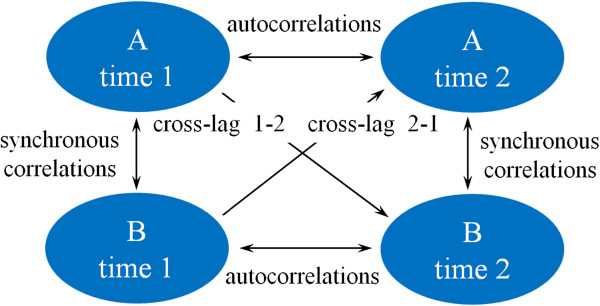
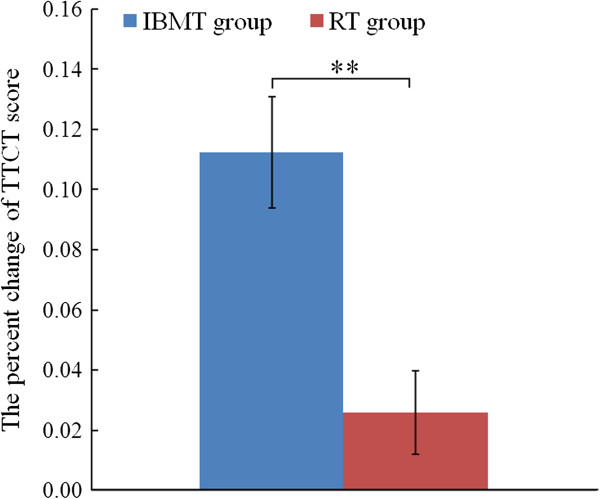
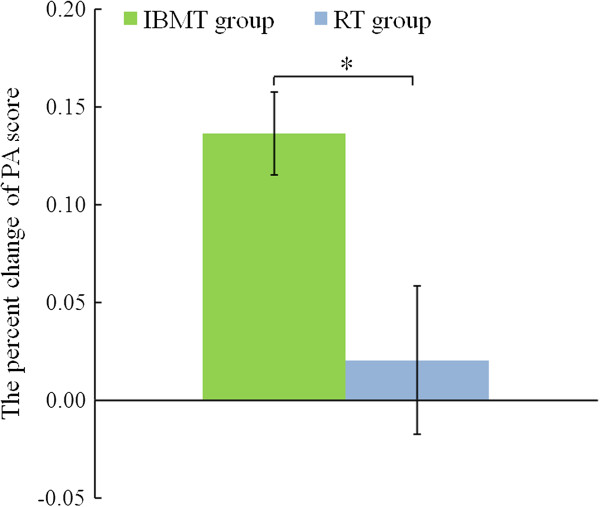
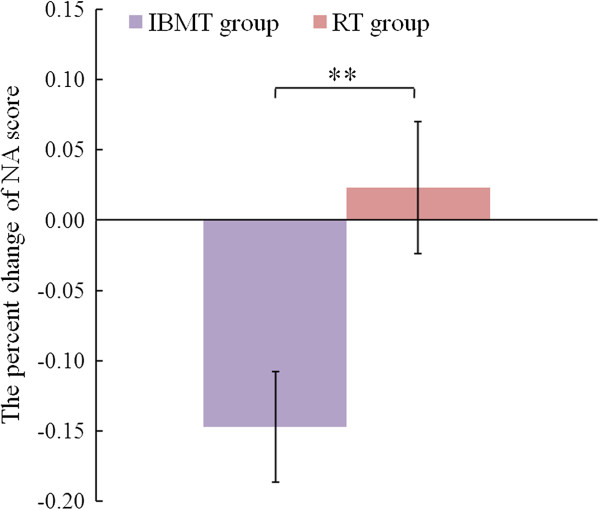
BACKGROUND: One form of meditation intervention, the integrative body-mind training (IBMT) has been shown to improve attention, reduce stress and change self-reports of mood. In this paper we examine whether short-term IBMT can improve performance related to creativity and determine the role that mood may play in such improvement. METHODS: Forty Chinese undergraduates were randomly assigned to short-term IBMT group or a relaxation training (RT) control group. Mood and creativity performance were assessed by the Positive and Negative Affect Schedule (PANAS) and Torrance Tests of Creative Thinking (TTCT) questionnaire respectively. RESULTS: As predicted, the results indicated that short-term (30 min per day for 7 days) IBMT improved creativity performance on the divergent thinking task, and yielded better emotional regulation than RT. In addition, cross-lagged analysis indicated that both positive and negative affect may influence creativity in IBMT group (not RT group). CONCLUSIONS: Our results suggested that emotion-related creativity-promoting mechanism may be attributed to short-term meditation.
Overview
The claims and statistics of this paper haven’t been checked yet.
Free: it reads the open-access text and checks the first 5 claims that cite a source we can check. Create a free account to check every claim.
Integrity signals
Registry
Cites
Statistics
Figures
Verification
Claims the paper makes
The claims and statistics of this paper haven’t been checked yet.
Free: it reads the open-access text and checks the first 5 claims that cite a source we can check. Create a free account to check every claim.
Claims other papers make about this one
Each is checked against this paper’s own text: does it say what the citing paper says it does?
The cited source says what the claim attributes to it.
In the citing paper
“improved positive mood states [6,44,45]”
From A translational neuroscience perspective on mindfulness meditation as a prevention strategy (2016) · cites this paper as [44]
In the citing paper
“lowered intensity and frequency of negative affect [43,44]”
From A translational neuroscience perspective on mindfulness meditation as a prevention strategy (2016) · cites this paper as [44]
Self-check
Percentages, sums and reported differences re-computed from the paper’s own numbers.
The self-check needs the paper’s full text.
Citations
Cites
Development and validation of brief measures of positive and negative affect: The PANAS scales.
Watson, D., Clark, L. A., & Tellegen, A. (1988) · Journal of Personality and Social Psychology · doi:10.1037/0022-3514.54.6.1063 · Cited by 32,433 · cited 3×
“The consent form explained that participants would complete the PANAS [44] to measure mood state, and the TTCT [10] to assess performance of creativity.”
BackgroundMethodApplied Multiple Regression/Correlation Analysis for the Behavioral Sciences
Cohen, P., Cohen, P., West, S. G., & Aiken, L. S. (2014) · Psychology Press eBooks · doi:10.4324/9781410606266 · Cited by 20,737
Applied Multiple Regression/Correlation Analysis for the Behavioral Sciences
Kemp, F. (2003) · Journal of the Royal Statistical Society: Series D (The Statistician) · doi:10.1046/j.1467-9884.2003.t01-2-00383_4.x · Cited by 9,293
The benefits of frequent positive affect: Does happiness lead to success?
Lyubomirsky, S., King, L., & Diener, E. (2005) · Psychological Bulletin · doi:10.1037/0033-2909.131.6.803 · Cited by 7,143 · cited 1×
“Hence, previous studies lead some researchers to conclude that PA promotes fluent and original thinking [21,22,24,30], while NA has the opposite effect [25,26].”
ResultThe Nature of Human Intelligence
Carroll, J. B., & Guilford, J. P. (1968) · American Educational Research Journal · doi:10.2307/1161820 · Cited by 4,657 · cited 1×
“TTCT is used to evaluate creativity through divergent thinking [55], which is a key aspect of creativity and predictor of creative ability [56].”
MethodThe associative basis of the creative process.
Mednick, S. (1962) · Psychological Review · doi:10.1037/h0048850 · Cited by 4,140
The nature of human intelligence
Fuilford, J. P. (1967) · McGraw-Hill eBooks · Cited by 3,864
The effect of emotion on cue utilization and the organization of behavior
Easterbrook, J. A. (1959) · Psychological Review · doi:10.1037/h0047707 · Cited by 3,090 · cited 1×
“cognitive control mechanisms [68,69], often inducing a narrow scope of attention [70].”
BackgroundJob Satisfaction and the Good Soldier: The Relationship Between Affect and Employee "Citizenship".
Bateman, T. S., & Organ, D. W. (1983) · Academy of Management Journal · doi:10.2307/255908 · Cited by 2,838
Mayberg, H. S., Liotti, M., Brannan, S. K., McGinnis, S., Mahurin, R. K., Jerabek, P. A., Silva, J. A., Tekell, J. L., Martin, C. C., Lancaster, J. L., et al. (1999) · American Journal of Psychiatry · doi:10.1176/ajp.156.5.675 · Cited by 2,416 · cited 1×
“cognitive control mechanisms [68,69], often inducing a narrow scope of attention [70].”
Background
Research works printed but not linked: 6
- Murphy M Donovan S Taylor E The Physical and Psychological Effects of Meditation: A Review of Contemporary Research 1997 San Francisco: Institute of Noetic Sciences
- Ball OE The Effect of TM and the TM-Sidhi Program on Verbal and Figural Creativity (TTCT), Auditory Creativity (S and I), and Hemispheric Dominance (SOLAT) 1980 Atlanta: University of Georgia
- Ding X Li S Tang YY Short-term meditation improves creativity [abstract] Second World Congr Positive Psychol Poster Abstr 2011 10
- Wu JJ Gao QD Wang JR Ding YX The Torrance Tests of Creative Thinking Norms-Technical Manual Figural Forms A 1981 Taiwan: Yuan Liu Publishing
- Torrance EP Ball OE Safter HT Torrance Tests of Creative Thinking 1981 Bensenville, IL: Scholastic Testing Service
- Csikszentmihalyi M Creativity: Flow and the Psychology of Discovery and Invention 1997 New York: Harper Collins
Cited by
Items 101–167 of 167
Arkhipova, A., Hok, P., Janata, P., & Hluštík, P. (2026) · Frontiers in Human Neuroscience · doi:10.3389/fnhum.2026.1632331 · Cited by 4
Introducing brief mindfulness practices to mitigate faculty burnout in the post-COVID era
Bitting, K. S., & Sweet, M. S. (2025) · The International Journal for Academic Development · doi:10.1080/1360144x.2025.2451318 · Cited by 4
“While not directly related to burnout or compassion fatigue in the literature, open-monitoring practices have been associated with outcomes related to creativity, such as divergent thinking (Colzato et al., 2012; Ding et al., 2014).”
Azari, Z., Aminimanesh, S., Mozafari, M., & Omidvar, B. (2022) · The Journal Of Psychological Science · doi:10.52547/jps.21.115.1427 · Cited by 5
Mindfulness Meditation as a Complementary Health Therapy: A Useful Import into Africa?
Ajari, E. E. (2020) · European Journal of Environment and Public Health · doi:10.29333/ejeph/8328 · Cited by 5
“, 2018), creativity (Ding et al., 2014), stamina (Robins et al.”
BackgroundStress, Pharmacology, and Creativity
Beversdorf, D. Q. (2018) · Cambridge University Press eBooks · doi:10.1017/9781316556238.006 · Cited by 5
A Mindfulness-Based Intervention on Verbal Insight and Social Problem-Solving in University Students
Elbably, Y., & Nemt-allah, M. A. (2024) · Journal of Palestine Ahliya University for Research and Studies · doi:10.59994/pau.2024.1.164 · Cited by 5
“The current study's findings align with the broader literature on the positive effects of mindfulness on creativity and innovative thinking (e.g., Ding et al., 2014; Lebuda et al., 2016).”
ResultBartolomeo, G. D., & Papa, S. (2016) · Studies in Microeconomics · doi:10.1177/2321022215624037 · Cited by 4
“(2007), and Ding et al. (2014) find that short-term meditation induces more attention and stress control.”
BackgroundMeditation to improve lateral and divergent thinking among older adults: a 2-year follow-up study
Pandya, S. P. (2019) · Aging Clinical and Experimental Research · doi:10.1007/s40520-019-01240-4 · Cited by 3
Rethinking Future Directions of the Mindfulness Field
Tang, Y. (2017) · Springer eBooks · doi:10.1007/978-3-319-46322-3_9 · Cited by 3
Self-citationThe Impact of Social Emotional Learning Skills on Creativity
Saygi, M. M., Yildirim, Y., & Taban, F. (2021) · Advances in educational technologies and instructional design book series · doi:10.4018/978-1-7998-8287-9.ch009 · Cited by 3
Availability for Learning:Effects of Mindfulness Meditation on Student Cognitive Abilities
Harne, A. (2017) · Digital Commons - PCOM (Philadelphia College of Osteopathic Medicine) · Cited by 5
The interactive effect of integral and incidental emotions on creative metaphor performance
Liu, X., Long, H., & Pang, W. (2024) · Thinking Skills and Creativity · doi:10.1016/j.tsc.2024.101683 · Cited by 2
Ó’Reilly, D., Bolam, J., Delis, I., & Utley, A. (2025) · Brain Sciences · doi:10.3390/brainsci15030226 · Cited by 3
“…conjecture here is that research on these nootropic compounds as performance enhancers among healthy adults should instead follow a similar vein as studies on meditation and mindfulness practises that consistently found significant effects on complex cognition (e.g., creativity, learning) [64,65].”
Xu, X., Gao, H., Li, X., Feng, Z., Wu, K., Qian, L., Hu, F., Wang, H., & Sun, Y. (2026) · International Journal of Neural Systems · doi:10.1142/s0129065726500280 · Cited by 3
Meditation(s) and the creative writing classroom: considering process
Cosgrove, S. (2024) · New Writing · doi:10.1080/14790726.2024.2424596 · Cited by 2
The Role of Slowing Down in Fast-Paced Game Jams
Falk, J., Spikol, D., Meda, D., & Melnykowycz, M. (2024) · International Conference on Game Jams, Hackathons, and Game Creation Events (ICGJ) · doi:10.1145/3697789.3697792 · Cited by 3
“From the research literature, there is support for introducing even short mindfulness and relaxation activities to improve creativity and wellbeing [3, 6], effects which can be observed immediately after a mindfulness activity [10].”
Gross, M. E., & Schooler, J. W. (2025) · The Journal of Positive Psychology · doi:10.1080/17439760.2025.2500566 · Cited by 3
“In the daily ‘mindful curiosity’ sessions, participants were trained to engage in continuous, open-ended, and non-judgmental inquiry into their immediate experiences with an attitude of open curiosity (Ding et al., 2014).”
ISDT Case Study of Cultivation of Employees’ Creativity in Cultural and Creative Industries
Chen, H., Liu, C., Liang, Y.-C., Lin, R., & Chiou, W. (2021) · Lecture notes in computer science · doi:10.1007/978-3-030-77077-8_2 · Cited by 2
Meditacija i kreativnost / Meditation and Creativity
Popadić, K. (2016) · AM Journal of Art and Media Studies · doi:10.25038/am.v0i11.154 · Cited by 1
How Do Competitive Neurocognitive Processes Contribute to Artistic Cognition? The Andras-Effect
Schipper, K., Janacsek, K., & Németh, D. (2020) · Leonardo · doi:10.1162/leon_a_02007 · Cited by 1
Sensorimotor cortex activity during basketball dribbling and its relation to creativity
Kanatschnig, T., Rominger, C., Fink, A., Wood, G. M. D. O., & Kober, S. E. (2023) · PLoS ONE · doi:10.1371/journal.pone.0284122 · Cited by 1
“This has been done, for instance through interventions such as meditation [8], computerized training [9], stimulation via the exposure to other people’s ideas [10] or different forms of electrical brain stimulation [7, 11, 12], which showed promising results for a positive effect on creativity.”
BackgroundЗЕЙІН ТӘЖІРИБЕСІ МЕН ШЫҒАРМАШЫЛЫҚ ӨЛШЕМІ АРАСЫНДАҒЫ БАЙЛАНЫС ТУРАЛЫ ЗЕРТТЕУЛЕРГЕ ШОЛУ
Tastanova, A. (2023) · Habaršy. Psihologiâ seriâsy · doi:10.51889/1728-7847.2023.1.74.025 · Cited by 1
Evaluating the impact and effectiveness of meditation in a dance conservatoire context
Petsilas, P., & Massarelli, L. (2024) · Journal of Dance & Somatic Practices · doi:10.1386/jdsp_00119_1 · Cited by 1
Kratz, M. E., Seckler, C., & Brocke, J. V. (2025) · Lecture notes in computer science · doi:10.1007/978-3-031-93976-1_5 · Cited by 1
Sah, R. K., Singh, D. R., Simkhada, B., Sah, L. K., Retzler, J., Smith, T., Khan, W., & Doyle, M. (2025) · Journal of Immigrant and Minority Health · doi:10.1007/s10903-025-01761-3 · Cited by 1
Mahasneh, A. M., & Gazo, A. M. (2025) · Creativity Studies · doi:10.3846/cs.2025.17474 · Cited by 1
Amygdala-putamen connectivity links gratitude to greater well-being
Liu, G., Yang, Y., Wang, F., Kong, F., Peng, K., & Sui, J. (2026) · Dialogues in Clinical Neuroscience · doi:10.1080/19585969.2026.2653597 · Cited by 1
Mindfulness Applications in Education
Tang, Y. (2017) · Springer eBooks · doi:10.1007/978-3-319-46322-3_6 · Cited by 1
Self-citationChenye, S. H. U., Shen, W., & Zhao, Y. (2018) · Advances in Psychological Science · doi:10.3724/sp.j.1042.2018.01807 · Cited by 2
“…(awareness)、注意与记住(remembering)的方式(汪 芬, 黄宇霞, 2011; Chiesa & Malinowski, 2011)。虽 在早期佛教文献中正念并不被视为心理功能或特 征(Grossman & van Dam, 2011), 但随着正念概念 的心理学化, 正念开始演化成一种复杂的多维系 统。正念的界定虽仍有争议——有些学者倾向于视 其为心理状态或特质, 也有的学者将其理解为一 种涉及注意维持、切换和精细加工抑制(Ovington, Saliba, & Goldring, 2017)等复杂自我调节方式的认知 训练(Zeng, Oei, Ye, & Liu,…”
Influential하석광, & Yoon, B. S. (2019) · Journal of the Korean society for quality management · doi:10.7469/jksqm.2019.47.4.667 · Cited by 3
“이러한 주의력은 장기적으로 창의적 사고의 근간이 되는 수렴하는 사고와 발산하는 사고를 선택 하여 사용할 수 있는 상태에 이를 수 있다(Ding et al., 2014).”
Lukačević, S. T., Cvitanušić, S., Filipčić, I., & Kosovic, M. (2021) · Socijalna psihijatrija · doi:10.24869/spsih.2020.257 · Cited by 1
“Mindfulness programi za redukciju stresa koji se temelje na usmjeravanju neosuđujuće pažnje na sadašnji trenutak i pozitivne emocije često se upotrebljavaju kao pomoć u promoviranju blagostanja i dobrog osjećanja (54,55).”
BackgroundLetting it go: The interplay between mind wandering, mindfulness, and creativity
Madhira, A., & Srinivasan, N. (2023) · Progress in brain research · doi:10.1016/bs.pbr.2022.12.003 · Cited by 3
Educating the mindful designer: Exploring Mindfulness Practices in Design Education
Iberbuden, A. (2023) · International Association of Societies of Design Research Congress (IASDR) · doi:10.21606/iasdr.2023.764 · Cited by 1
Baltic Journal of Psychology, Vol. 21, N 1&2
University of Latvia. Faculty of Education, D. O. P. (2020) · BALTIC JOURNAL OF PSYCHOLOGY · doi:10.22364/bjp.21.01-02 · Cited by 1
A Scoping Review of the Trends and Opportunities of Tangible Creativity Support Tools (T‐CSTs)Preprint
Wang, Y., Jiang, M., & Bai, Z. (2024) · Preprints.org · doi:10.20944/preprints202407.2615.v1 · Cited by 1
Mindfulness Meditation Improves Brain-Computer Interface (BCI) PerformancePreprint
Tan, Y. Q. (2017) · OSF Preprints (OSF Preprints)
Corpo sentido : corporeidade e a emergência de recursos subjetivos associados à criatividade
Bernardes, V. L. (2016) · RIUnB Institutional Repository (University of Brasília) · doi:10.26512/2016.03.d.20562
Brief Mindfulness Meditation Improves Attention in Novices.
Norris, C. J., & Creem, D. (2017) · eScholarship (California Digital Library) · Cited by 4
Neuropsychopharmacology of Flexible and Creative Thinking
Beversdorf, D. Q. (2018) · Oxford University Press eBooks · doi:10.1093/oxfordhb/9780190464745.013.38
Positive Design: A Positive Psychology Workout for Design Thinkers
Wessling, K. S. (2018) · ScholarlyCommons (University of Pennsylvania)
Stressors and creativity in Industrial Design practice
McCardle, J. (2019) · Conference Proceedings of the Academy for Design Innovation Management · doi:10.33114/adim.2019.10.392
“For example, a lack of time to relax, a known key environmental stressor (Ding et al., 2014) would in theory be exacerbated by an increase in time-pressure.”
BackgroundGenetic association with meditation learning and practice (outcomes)
Tang, Y., & Tang, R. (2020) · Elsevier eBooks · doi:10.1016/b978-0-12-818266-6.00005-8
Self-citationSympathetic and parasympathetic systems in meditation
Tang, Y., & Tang, R. (2020) · Elsevier eBooks · doi:10.1016/b978-0-12-818266-6.00006-x
Self-citationEMOTIONAL EDUCATION WORKSHOP AS A TOOL FOR CREATIVE DEVELOPMENT
(España), U. D. J., Aguayo, B. B., Mantas, L. P., & (España), U. A. D. B. (2020) · MLS Psychology Research · doi:10.33000/mlspr.v3i2.559
“Por su parte, Ding et al. (2014) ) encontraron que un taller de relajación de una semana para estudiantes universitarios, diseñado para mejorar su estado de ánimo (30 minutos cada día), aumentó significativamente el desempeño de la creatividad en una tarea de pensamiento divergente y produjo una…”
Does meditation lead to more selfish or pro-social behaviors in a trust game?Preprint
Giovanni, D. B., & Papa, S. (2015) · RePEc: Research Papers in Economics
Tejada-Simon, M. V., & Lodhi, S. (2022) · OBM Integrative and Complementary Medicine · doi:10.21926/obm.icm.2201009 · Cited by 1
“Additionally, multiple studies agree that mindfulness meditation can aid in cognitive inhibition [41-43], boosting problem solving [44-46] and creativity [47].”
Enhancing Our Ability to Design
Reis, J. (2022) · Springer eBooks · doi:10.1007/978-3-030-95782-7_8
The interplay between the genome and the exposome in psychosis spectrum
Pries, L.-K. (2020) · Research Publications (Maastricht University) · doi:10.26481/dis.20201211lp
(2017) · Elsevier eBooks · doi:10.1016/b978-0-12-810508-5.00020-1
The Impact of Positive Emotion Regulation on convergent creativity Evidence from ERPPreprint
Yin, M., Zhao, Y., Xing, Q., & Liu, D. (2022) · Research Square · doi:10.21203/rs.3.rs-1992124/v1 · Cited by 1
The future of psychology: Approaches to enhance therapeutic outcomes
Stapleton, P., Baumann, O., & Church, D. (2023) · Frontiers research topics · doi:10.3389/978-2-83251-265-4
A Comparison of Online and In-Person MBI Classes on Self-Compassion and Creativity
Jung, Y. M., & Kim, E. (2023) · Lecture notes in networks and systems · doi:10.1007/978-3-031-41637-8_20
Creativity Stimulation by Idea Generation: A Resting-state fMRI Study on Effective Connectivity
Abdul Hamid, K., Rahman, S., Osman, S. S., Azmi, N. H., Surat, S., Marzuki, A. M., & Yusoff, A. N. (2023) · Medicine & health · doi:10.17576/mh.2023.1802.06
Pharmacology of cognition-focus on cognitive flexibility and creativity
Beversdorf, D. Q. (2024) · Elsevier eBooks · doi:10.1016/b978-0-12-820480-1.00144-3
宋, 雨. (2024) · Advances in Psychology · doi:10.12677/ap.2024.147465
Zhang, H., & Estioko, E. D. (2025) · International Journal of Research Studies in Management · doi:10.5861/ijrsm.2025.25104
The effect of colour on students' learning experience and creativity in design schools
Dash, S. P., & Vittal, V. (2025) · Creativity Studies · doi:10.3846/cs.2025.20915
Beyond Divergent Thinking Assessment: Extending Creative Activity Areas in Creativity Training
Kawaji, T. (2025) · IEICE Transactions on Information and Systems · doi:10.1587/transinf.2025dkp0010
The Impact of Meditation on Student Writing in an Intensive English Context
Wurdak, N. E. (2015) · Cited by 2
Kıvrak, F. H. (2024) · Ibn Haldun University Institutional Repository (Yes) · Cited by 1
Zachowania innowacyjne i kreatywność w organizacji. Teoria, badania, praktyka
Dyrla-Mularczyk, K., & Borowiec, A. (2025) · doi:10.18559/978-83-8211-291-7 · Cited by 1
Bunjak, A., Hafenbrack, A., Černe, M., & Bortoluzzi, G. (2026) · Creativity and Innovation Management · doi:10.1111/caim.70056
Créativité responsable et états attentionnels de conscience : perspectives pour l'éducation
Rebecchi, K. (2022) · theses.fr (ABES) · doi:10.70675/ab1e7f09z7f22z42faz9e94zdff29dc3e381 · Cited by 1
Riazi, S. R., Baghdasarians, A., Golshani, F., & Roshan, M. J. (2024) · Longevity · doi:10.61838/kman.longevity.2.3.3
Ding, X., Cheng, X., Liu, Y., & Li, Q. (2026) · Mindfulness · doi:10.1007/s12671-026-02863-1
“Multiple studies have confirmed that mindfulness meditation significantly enhances divergent thinking (Ding et al., 2014, 2015a), remote association (Ding et al., 2015b), insight (Gvozden et al., 2025; Ostafin & Kassman, 2012), and employee innovative performance (Chen et al., 2022).”
Self-citationLa creatividad y el estrés: Revisión Bibliográfica e Implicaciones Educativas
Restrepo, K. J. G., Arias-Castro, C. C., Cuevas, J. C., & Fernández, V. L. (2026) · Estudios pedagógicos · doi:10.4067/s0718-07052026000100099
Metadata
- Authors
- Ding, X., Tang, Y.-Y., Tang, R., & Posner, M. I.
- Affiliations
- Dalian University of Technology (CN)
- Texas Tech University (US)
- The University of Texas at Austin (US)
- University of Oregon (US)
- Corresponding author
- Tang, Yi-Yuan
- Venue
- Behavioral and Brain Functions
- Published
- 2014-03-19
- Volume
- 10
- Issue
- 1
- Pages
- 9-9
- ISSN
- 1744-9081 (ISSN-L)
- PMC
- PMC3994657
- OpenAlex
- W2166479446
- Cited by
- 158
- References
- 74
- Citations by year
- 2026: 4 · 2025: 12 · 2024: 12 · 2023: 15 · 2022: 16 · 2021: 8 · 2020: 22 · 2019: 7 · 2018: 17 · 2017: 17 · 2016: 13 · 2015: 13 · 2014: 2
- FWCI
- 17.75
- Type
- journal article
- Language
- en
- Open access
- gold
- doi.org
- Licence
- cc-by
- Locations
- Behavioral and Brain Functions (publishedVersion, cc-by)
- Europe PMC (PubMed Central) (publishedVersion, cc-by)
- PubMed Central (publishedVersion, cc-by)
- PubMed (publishedVersion)
- Texas ScholarWorks (Texas Digital Library) (submittedVersion, cc-by)
- ThinkTech (Texas Tech University) (submittedVersion, cc-by)
- Funders
- Office of Naval Research
- Topics
- Social Sciences › Psychology › Clinical Psychology › Mindfulness and Compassion Interventions
- Social Sciences › Psychology › Experimental and Cognitive Psychology › Creativity in Education and Neuroscience
- Life Sciences › Neuroscience › Cognitive Neuroscience › Mind wandering and attention
- Keywords
- meditation, creativity, divergent thinking, mood, positive affect, negative affect, emotion regulation, relaxation training
- MeSH terms
- Affect, Attention, Creativity, Female, Humans, Male, Surveys and Questionnaires, Relaxation, Meditation, Young Adult
About these checks
Registry, retraction, Cites and statistics results are computed, not judged, with one exception: a printed reference that no index lists is read once by a model before it counts as a citation error. Claims are extracted by a model and kept only when their quote appears verbatim in the text; each cited source is then checked, with a model’s help, for whether it says what the claim relies on. Those verdicts can be wrong — read the claim’s quote and the cited source before relying on one.
Statistics and arithmetic are recomputed, not judged.
Confidence bands are shown only for fields calibrated on our annotated test set. None is calibrated yet, so no band is shown.
What counts as a claim ›How we measure confidence ›How we check this ›
Are you an author, or do you see a problem with this page? Request a review
Data sources
Bibliographic data: Semantic Scholar, OpenAlex, Crossref.
Contains information from the Semantic Scholar Academic Graph Datasets, made available under the ODC Attribution License (ODC-BY 1.0).
Semantic Scholar’s data is described in: Kinney, R., et al. (2023). The Semantic Scholar Open Data Platform. arXiv:2301.10140.
